EP4268071B1 - Procédé de configuration d'un logiciel de commande dans un véhicule ferroviaire - Google Patents
Procédé de configuration d'un logiciel de commande dans un véhicule ferroviaire Download PDFInfo
- Publication number
- EP4268071B1 EP4268071B1 EP22710520.2A EP22710520A EP4268071B1 EP 4268071 B1 EP4268071 B1 EP 4268071B1 EP 22710520 A EP22710520 A EP 22710520A EP 4268071 B1 EP4268071 B1 EP 4268071B1
- Authority
- EP
- European Patent Office
- Prior art keywords
- rail vehicle
- optional
- functions
- control software
- optional function
- Prior art date
- Legal status (The legal status is an assumption and is not a legal conclusion. Google has not performed a legal analysis and makes no representation as to the accuracy of the status listed.)
- Active
Links
Images



Classifications
-
- G—PHYSICS
- G06—COMPUTING OR CALCULATING; COUNTING
- G06F—ELECTRIC DIGITAL DATA PROCESSING
- G06F9/00—Arrangements for program control, e.g. control units
- G06F9/06—Arrangements for program control, e.g. control units using stored programs, i.e. using an internal store of processing equipment to receive or retain programs
- G06F9/44—Arrangements for executing specific programs
- G06F9/445—Program loading or initiating
- G06F9/44505—Configuring for program initiating, e.g. using registry, configuration files
- G06F9/4451—User profiles; Roaming
-
- B—PERFORMING OPERATIONS; TRANSPORTING
- B61—RAILWAYS
- B61L—GUIDING RAILWAY TRAFFIC; ENSURING THE SAFETY OF RAILWAY TRAFFIC
- B61L27/00—Central railway traffic control systems; Trackside control; Communication systems specially adapted therefor
- B61L27/50—Trackside diagnosis or maintenance, e.g. software upgrades
- B61L27/57—Trackside diagnosis or maintenance, e.g. software upgrades for vehicles or trains, e.g. trackside supervision of train conditions
-
- B—PERFORMING OPERATIONS; TRANSPORTING
- B61—RAILWAYS
- B61L—GUIDING RAILWAY TRAFFIC; ENSURING THE SAFETY OF RAILWAY TRAFFIC
- B61L27/00—Central railway traffic control systems; Trackside control; Communication systems specially adapted therefor
- B61L27/70—Details of trackside communication
Definitions
- the invention relates to a method for configuring control software in a rail vehicle, which is preferably already in operational use.
- the behavior of a rail vehicle is determined by vehicle software or control software. This is specially developed for a rail vehicle type and is referred to, tested and approved as a software release for that type.
- the software is installed on the rail vehicle before or during delivery and is an integral part of the rail vehicle when it is delivered to a customer.
- the modified vehicle or control software is "uploaded" to the respective rail vehicle or installed in the corresponding programmable components on site with the help of service personnel.
- the invention relates to a method for configuring vehicle software or control software in a rail vehicle and to a rail vehicle with control software.
- the software in addition to basic functions, also includes additional functions that can be optionally activated or deactivated and with which customer-specific wishes or a customer-specific requirement profile can be addressed on a vehicle-specific basis.
- the basic functions and the optional functions are tested, validated and approved in their forms, combinations and functional sequences by the manufacturer or by authorized bodies before implementation in the rail vehicle.
- the optional functions are activated or deactivated by individually assigned parameters and, if necessary, their sequence or result is influenced by set parameters.
- switching parameters are referred to below as switching parameters and are designed as value parameters or parameter fields.
- a value parameter is used to activate or deactivate an assigned optional function, while a parameter field is used to not only activate or deactivate an assigned optional function but also to influence its internal process.
- the activated optional function is subject to a predetermined period of use, at the end of which the optional function is deactivated via an associated switching parameter or at the end of which values of an associated optional function are set to predetermined (base) values.
- the software is therefore (re)set to a predetermined or previous state after the end of the usage period.
- a start date and/or an end date is assigned to the optional function in order to define the period of use.
- a warning message is displayed to the rail vehicle manufacturer before the end of the usage period in order to alert him to the impending expiry of the usage period.
- an initial display and, if applicable, a repetition frequency of the display of the warning message are specifically set.
- a permanent activation of an optional function is transferred to an original state of the control software, which is preferably stored on the rail vehicle concerned in order to maintain safety.
- every time the software is restarted on a control unit or units of the rail vehicle it is checked whether a warning message is present for an optional function.
- the warning message of an optional function causes the formation of similar warning messages for further optional functions. This prevents a foreseeable deactivation of an optional function from having undesirable effects on other optional functions or on the entire control software.
- a uniform warning message is created for all optional functions, which is preferably stored as a configuration component of the rail vehicle.
- a list of all optional functions including the associated period of use of a selected rail vehicle can be called up remotely.
- the switching parameters are selected or determined by the manufacturer or by the distributor of the rail vehicle. This enables intelligent fleet management in which selected rail vehicles are adapted to specific tasks according to customer specifications or according to a customer-specific requirement profile.
- the switching parameters are determined using software-supported tools, which, for example, enable sales staff to select permissible switching parameters for corresponding functions, fill them in as a switching parameter set and save them.
- the switching parameters are stored in the form of a file that can be processed directly by the control units of the rail vehicle.
- the file with the switching parameters is encrypted for each individual vehicle in order to prevent unauthorized manipulation or to prevent duplication of the file.
- the file with the switching parameters is transmitted via a communication channel for implementation in the rail vehicle.
- the transfer is either directed to a service technician who receives the file, for example, via email or cloud-based data transfer, or the file transfer is directed directly to the rail vehicle concerned, which receives the file and whose control units then preferably implement the file automatically.
- the transmission of the file with the switching parameters is carried out in encrypted form in order to prevent falsification, transmission errors or security attacks.
- a public key procedure is used for this purpose.
- the file with the switching parameters is temporarily stored on a computer in the rail vehicle. This serves to document the status of the software and forms a fallback level that increases vehicle safety.
- the entire control technology which includes several control units for parameterization, of a rail vehicle in question is addressed or influenced via the file.
- the file For each rail vehicle, exactly one file with switching parameters is then created and used in the rail vehicle, the content of which is distributed to the associated control units. This minimizes the necessary handling effort.
- control units query a central location of the rail vehicle or a land-based control station during restart or booting to see whether new switching parameters are available for the associated rail vehicle.
- this demand is coordinated with the help of a switching manager in order to prevent an uncoordinated activation of the switching parameters in the associated functions or to enable a reliable activation or deactivation of the optional functions with regard to time sequences.
- the switching manager uses a method to create fingerprints of a currently used switching parameter set and a newly received switching parameter set.
- a "Message Digest Algorithm 5, MD5" method or a CRC method can be used to create the fingerprints, with which a switching parameter set can be uniquely identified in terms of content.
- the fingerprints are transmitted to the central location together with an associated date of receipt. This location then selects the valid switching parameter set whose fingerprint is the same across all control units and has the most recent date of receipt and transmits the decision to the control unit of the rail vehicle or to the associated control units.
- the activation or deactivation of the optional function takes place in a safe state of the rail vehicle, preferably at a standstill and/or in a predefined vehicle environment.
- the new switching parameter set is loaded in order to make the configured range of functions available to the vehicle or control software.
- a train driver of the rail vehicle receives a message that the functionality of the software has been changed or configured.
- the train driver is granted a veto right so that he can accept or reject the software configuration.
- a rejection decision is preferably obtained once and then evaluated as a permanent rejection, i.e. a rejection decision remains in place even after a future restart of the control units.
- the driver's decision is queried again each time the vehicle's control units are restarted.
- a train driver of the rail vehicle is shown a list of the activated optional functions or the associated parameters on a display.
- a previous switching parameter set remains valid or active if not all control units uniformly adopt the new switching parameter set.
- the method according to the invention enables the sales department, the manufacturer or the fleet management of a rail vehicle to subsequently activate functions desired or required by the customer in vehicles that have already been delivered, without having to involve technical departments.
- the method according to the invention enables the sales department, the manufacturer or the fleet management of a rail vehicle to subsequently configure the control software for vehicles that have already been delivered within a predetermined framework and in a quick manner.
- the method according to the invention makes it possible to carry out or enable the software configuration either by on-site service personnel or by using remote data transmission.
- the method according to the invention enables the software configuration to be carried out reliably under both functional and security aspects.
- the method according to the invention makes it possible to respond to customer requests much more quickly by setting predefined parameters in functions or by activating already approved functions.
- the method according to the invention reduces costs because software configuration can be carried out directly, i.e. without the involvement of subsequent engineering services, as well as without subsequent validation of the software or without re-approval of the software.
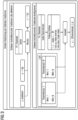
- a first step S1 basic functions required for the basic operation of the rail vehicles are implemented in a control software that is intended for a large number of rail vehicles.
- Optional functions that are required to implement customer-specific requests are implemented in the control software.
- a second step S2 the basic functions and the optional functions in their forms, combinations and functional sequences are tested, validated and approved by the manufacturer or by authorized bodies before the control software is implemented in the rail vehicles.
- a third step S3 the basic functions and the optional functions are implemented as control software in the rail vehicles.
- a fourth step S4 at least one optional function is activated or deactivated in a selected rail vehicle using a switching parameter that is individually assigned to the optional function.
- the required switching parameter is created outside the rail vehicle based on customer requirements and subsequently transferred to the selected rail vehicle.
- the activated optional function is assigned a predetermined usage period.
- the optional function is activated or deactivated on a rail vehicle that is in operational use.
- the switching parameters are determined using software-supported tools that only allow a permissible switching parameter selection for corresponding functions.
- the switching parameters are saved individually or in the form of a file that can be processed directly by control units of the selected rail vehicle.
- the switching parameters are encrypted so that decryption can only be carried out by the selected rail vehicle.
- the switching parameters are transmitted via a communication channel to a service technician who updates the control software in the selected rail vehicle, or are transmitted directly to the selected rail vehicle, with its control units automatically implementing them in the control software.
- the rail vehicle's control units query a central location on the rail vehicle or a land-based control station to determine whether new switching parameters are available for the associated rail vehicle.
- the demand is coordinated using a switching manager to enable coordinated activation or deactivation of optional functions or the switching parameters in associated optional functions.
- the optional function is activated or deactivated when the rail vehicle is in a safe state, preferably when it is at a standstill or in a predefined vehicle environment.
- the driver of the rail vehicle is granted a veto right to reject a control software configuration with respect to the optional function.
- a permanent activation of an optional function is transferred to an original state of the control software, which is stored on the rail vehicle to protect it.
- a rolling stock operator or rolling stock fleet manager or rolling stock manufacturer will be shown a warning message before the expiry of the usage period to alert them to the impending expiry of the usage period.
- the warning message of an optional function causes the generation of similar warning messages for other optional functions.
Landscapes
- Engineering & Computer Science (AREA)
- Software Systems (AREA)
- Mechanical Engineering (AREA)
- Theoretical Computer Science (AREA)
- Biomedical Technology (AREA)
- General Health & Medical Sciences (AREA)
- Health & Medical Sciences (AREA)
- Physics & Mathematics (AREA)
- General Engineering & Computer Science (AREA)
- General Physics & Mathematics (AREA)
- Stored Programmes (AREA)
- Electric Propulsion And Braking For Vehicles (AREA)
- Combined Controls Of Internal Combustion Engines (AREA)
- Management, Administration, Business Operations System, And Electronic Commerce (AREA)
Claims (20)
- Procédé de configuration d'un logiciel de commande dans un véhicule ferroviaire,- dans lequel des fonctions de base nécessaires pour l'exploitation de base des véhicules ferroviaires sont implémentées dans un logiciel de commande destiné à un grand nombre de véhicules ferroviaires,- dans lequel des fonctions optionnelles nécessaires pour la mise en oeuvre d'un grand nombre de profils de demande spécifiques au client sont implémentées dans le logiciel de commande,- dans lequel les fonctions de base et les fonctions optionnelles sont testées, validées et autorisées quant à leurs caractéristiques, combinaisons et déroulements fonctionnels avant la mise en oeuvre du logiciel de commande dans les véhicules ferroviaires,- dans lequel les fonctions de base et les fonctions optionnelles sont ensuite implémentées sous forme de logiciel de commande dans les véhicules ferroviaires,- dans lequel au moins une fonction optionnelle est activée ou désactivée pour un véhicule ferroviaire sélectionné en utilisant un paramètre de commutation associé individuellement à la fonction optionnelle,- dans lequel le paramètre de commutation nécessaire pour cela est créé à l'extérieur du véhicule ferroviaire en se basant sur un profil de demande spécifique au client et est ensuite transféré au véhicule ferroviaire sélectionné,- dans lequel des paramètres de commutation associés sont sélectionnés et définis quant à leur contenu par le fabricant du véhicule ferroviaire afin de permettre une gestion de flotte au sein de laquelle des véhicules ferroviaires sélectionnés sont adaptés à des tâches spécifiques après indication du profil de demande spécifique au client,- dans lequel une période d'utilisation prédéterminée est associée à la fonction optionnelle activée,- dans lequel une liste de toutes les fonctions optionnelles, y compris la période d'utilisation associée du véhicule ferroviaire sélectionné, est consultée à distance en utilisant un serveur Web,- dans lequel un message d'avertissement est indiqué au fabricant de véhicule ferroviaire avant la fin de la période d'utilisation afin de l'informer de la fin imminente de la période d'utilisation d'une fonction optionnelle,- dans lequel le message d'avertissement d'une fonction optionnelle entraîne la formation de messages d'avertissement similaires pour d'autres fonctions optionnelles afin d'éviter qu'une désactivation prévisible de la fonction optionnelle n'ait des effets indésirables sur d'autres fonctions optionnelles.
- Procédé selon la revendication 1, dans lequel l'activation ou la désactivation de la fonction optionnelle peut être effectuée sur un véhicule ferroviaire qui est en service opérationnel.
- Procédé selon la revendication 1 ou 2, dans lequel la détermination du paramètre de commutation est effectuée en utilisant des outils s'appuyant sur des logiciels et permettant seulement une sélection autorisée de paramètres de commutation pour des fonctions correspondantes.
- Procédé selon l'une quelconque des revendications précédentes, dans lequel les paramètres de commutation sont stockés individuellement ou sous la forme d'un fichier qui peut être traité directement pour des unités de commande du véhicule ferroviaire sélectionné.
- Procédé selon la revendication 4, dans lequel les paramètres de commutation sont cryptés de sorte qu'un décryptage ne peut être mis en oeuvre que par le véhicule ferroviaire sélectionné.
- Procédé selon l'une quelconque des revendications précédentes, dans lequel les paramètres de commutation sont transmis par l'intermédiaire d'un canal de communication,- et par l'intermédiaire d'une interface à un technicien de service qui met à jour le logiciel de commande dans le véhicule ferroviaire sélectionné, ou- directement au véhicule ferroviaire sélectionné, les unités de commande dudit véhicule les intégrant de manière automatisée dans le logiciel de commande.
- Procédé selon l'une quelconque des revendications précédentes, dans lequel, lors de la mise en service, les unités de commande du véhicule ferroviaire demandent à un emplacement central du véhicule ferroviaire ou à une station de contrôle au sol s'il existe de nouveaux paramètres de commutation pour le véhicule ferroviaire associé.
- Procédé selon la revendication 7, dans lequel la demande est coordonnée à l'aide d'un gestionnaire de commutation afin de permettre une activation ou une désactivation coordonnée des fonctions optionnelles ou des paramètres de commutation dans les fonctions optionnelles associées.
- Procédé selon l'une quelconque des revendications précédentes, dans lequel l'activation ou la désactivation de la fonction optionnelle a lieu dans un état de sécurité du véhicule ferroviaire, de manière préférée à l'arrêt ou dans un environnement de véhicule prédéfini.
- Procédé selon l'une quelconque des revendications précédentes, dans lequel un droit de veto est accordé à un conducteur d'engin de traction afin de refuser une configuration de logiciel de commande par rapport à la fonction optionnelle.
- Procédé selon l'une quelconque des revendications précédentes, dans lequel une activation permanente d'une fonction optionnelle, mémorisée dans le logiciel de commande afin de protéger le véhicule ferroviaire, est adoptée dans un état initial du logiciel de commande.
- Procédé selon la revendication 1, dans lequel le message d'avertissement d'une fonction optionnelle entraine la formation de messages d'avertissement similaires pour d'autres fonctions optionnelles.
- Véhicule ferroviaire avec un logiciel de commande,- dans lequel le logiciel de commande destiné à un grand nombre de véhicules ferroviaires présente des fonctions de base destinées au fonctionnement de base du véhicule ferroviaire,- dans lequel le logiciel de commande présente des fonctions optionnelles destinées à la mise en oeuvre d'un grand nombre de profils de demande spécifiques au client,- dans lequel les fonctions de base et les fonctions optionnelles sont testées, validées et autorisées quant à leurs caractéristiques, combinaisons et déroulements fonctionnels avant la mise en oeuvre du logiciel de commande dans le véhicules ferroviaire,- dans lequel au moins une fonction optionnelle peut être activée ou désactivée en utilisant un paramètre de commutation qui est associé individuellement à la fonction optionnelle,- dans lequel le paramètre de commutation nécessaire pour cela peut être créé à l'extérieur du véhicule ferroviaire en se basant sur un profil de demande spécial spécifique au client et peut ensuite être transféré au véhicule ferroviaire sélectionné afin de configurer le logiciel de commande,- dans lequel les paramètres de commutation associés sont sélectionnés et définis par le fabricant du véhicule ferroviaire quant à leur contenu afin de permettre une gestion de flotte au sein de laquelle les véhicules ferroviaires sélectionnés peuvent être adaptés à des tâches spécifiques après indication du profil de demande spécifique au client,- dans lequel une période d'utilisation prédéterminée est associée à la fonction optionnelle activée,- dans lequel une liste de toutes les fonctions optionnelles, y compris la période d'utilisation associée du véhicule ferroviaire sélectionné, peut être consultée à distance en utilisant un serveur Web,- dans lequel un message d'avertissement peut être indiqué au fabricant du véhicule ferroviaire avant la fin de la période d'utilisation afin de l'informer de la fin imminente de la période d'utilisation d'une fonction optionnelle,- dans lequel le message d'avertissement d'une fonction optionnelle entraîne la formation de messages d'avertissement similaires pour d'autres fonctions optionnelles afin d'éviter qu'une désactivation prévisible de la fonction optionnelle n'ait des effets indésirables sur d'autres fonctions optionnelles.
- Véhicule ferroviaire selon la revendication 13, dans lequel l'activation ou la désactivation de la fonction optionnelle peut être effectuée sur un véhicule ferroviaire qui est en service opérationnel.
- Véhicule ferroviaire selon la revendication 13 ou 14, dans lequel la détermination du paramètre de commutation peut être mise en oeuvre en utilisant des outils s'appuyant sur des logiciels et permettant seulement une sélection autorisée de paramètres de commutation pour des fonctions correspondantes.
- Véhicule ferroviaire selon l'une quelconque des revendications 13 à 15, dans lequel les paramètres de commutation sont stockés individuellement ou sous la forme d'un fichier qui peut être traité directement pour des unités de commande du véhicule ferroviaire sélectionné.
- Véhicule ferroviaire selon la revendication 16, dans lequel les paramètres de commutation sont cryptés, de sorte qu'un décryptage ne peut être mis en oeuvre que par le véhicule ferroviaire sélectionné.
- Véhicule ferroviaire selon l'une quelconque des revendications 13 à 17, dans lequel les paramètres de commutation sont transmis par l'intermédiaire d'un canal de communication,- et par l'intermédiaire d'une interface à un technicien de service qui met à jour le logiciel de commande dans le véhicule ferroviaire sélectionné, ou- directement au véhicule ferroviaire sélectionné, les unités de commande dudit véhicule les intégrant de manière automatisée dans le logiciel de commande.
- Véhicule ferroviaire selon l'une quelconque des revendications 13 à 18, dans lequel les unités de commande du véhicule ferroviaire sont commutées lors de la mise en service de telle manière qu'elles demandent à un emplacement central du véhicule ferroviaire ou à une station de contrôle au sol s'il existe de nouveaux paramètres de commutation pour le véhicule ferroviaire correspondant.
- Véhicule ferroviaire selon l'une quelconque des revendications 13 à 19, dans lequel une activation permanente d'une fonction optionnelle est adoptée dans un état initial du logiciel de commande et est enregistrée dans ledit logiciel de commande afin de protéger le véhicule ferroviaire.
Applications Claiming Priority (2)
| Application Number | Priority Date | Filing Date | Title |
|---|---|---|---|
| DE102021201834.3A DE102021201834A1 (de) | 2021-02-26 | 2021-02-26 | Verfahren zur Konfiguration einer Steuerungssoftware bei einem Schienenfahrzeug |
| PCT/EP2022/053919 WO2022179928A1 (fr) | 2021-02-26 | 2022-02-17 | Procédé de configuration d'un logiciel de commande dans un véhicule ferroviaire |
Publications (2)
| Publication Number | Publication Date |
|---|---|
| EP4268071A1 EP4268071A1 (fr) | 2023-11-01 |
| EP4268071B1 true EP4268071B1 (fr) | 2024-11-27 |
Family
ID=80780812
Family Applications (1)
| Application Number | Title | Priority Date | Filing Date |
|---|---|---|---|
| EP22710520.2A Active EP4268071B1 (fr) | 2021-02-26 | 2022-02-17 | Procédé de configuration d'un logiciel de commande dans un véhicule ferroviaire |
Country Status (7)
| Country | Link |
|---|---|
| US (1) | US20240140507A1 (fr) |
| EP (1) | EP4268071B1 (fr) |
| CN (1) | CN116897337A (fr) |
| DE (1) | DE102021201834A1 (fr) |
| ES (1) | ES3037435T3 (fr) |
| PL (1) | PL4268071T3 (fr) |
| WO (1) | WO2022179928A1 (fr) |
Families Citing this family (1)
| Publication number | Priority date | Publication date | Assignee | Title |
|---|---|---|---|---|
| DE102023200661A1 (de) | 2023-01-27 | 2024-08-01 | Siemens Mobility GmbH | Steuerung eines Funktionsumfangs mehrerer Fahrzeuge |
Family Cites Families (8)
| Publication number | Priority date | Publication date | Assignee | Title |
|---|---|---|---|---|
| DE102004049297A1 (de) | 2004-10-09 | 2006-04-27 | Bayerische Motoren Werke Ag | Verfahren zum Aktivieren und/oder Deaktivieren von Fahrzeug-Steuergerätefunktionen |
| DE102005034713A1 (de) | 2005-07-26 | 2007-02-01 | Robert Bosch Gmbh | System zur Bereitstellung von Funktionen für eine Fahrzeugkomponente |
| DE102006052048A1 (de) | 2006-11-04 | 2008-05-08 | Dr.Ing.H.C. F. Porsche Ag | Verfahren zur Aktivierung und/oder Deaktivierung von Funktionen eines Kraftfahrzeugs |
| DE102009022362A1 (de) | 2009-05-22 | 2010-11-25 | Wabco Gmbh | Aktivierbare und deaktivierbare Programmfunktionen |
| WO2014088567A1 (fr) | 2012-12-05 | 2014-06-12 | Bendix Commercial Vehicle Systems Llc | Procédés et appareil pour la mise à jour de composants de logiciel en coordination avec des modes opérationnels d'un véhicule automobile |
| US10402184B2 (en) | 2014-05-20 | 2019-09-03 | Ford Global Technologies, Llc | Module interface for vehicle updates |
| DE102017212109A1 (de) | 2017-07-14 | 2019-01-17 | Siemens Aktiengesellschaft | Verfahren zum Betreiben eines Schienenfahrzeugs |
| US10824700B2 (en) * | 2018-08-02 | 2020-11-03 | Arm Limited | Device, system, and method of selective activation, deactivation, and configuration of components |
-
2021
- 2021-02-26 DE DE102021201834.3A patent/DE102021201834A1/de not_active Withdrawn
-
2022
- 2022-02-17 WO PCT/EP2022/053919 patent/WO2022179928A1/fr not_active Ceased
- 2022-02-17 EP EP22710520.2A patent/EP4268071B1/fr active Active
- 2022-02-17 ES ES22710520T patent/ES3037435T3/es active Active
- 2022-02-17 PL PL22710520.2T patent/PL4268071T3/pl unknown
- 2022-02-17 CN CN202280017217.6A patent/CN116897337A/zh active Pending
- 2022-02-17 US US18/548,140 patent/US20240140507A1/en active Pending
Also Published As
| Publication number | Publication date |
|---|---|
| PL4268071T3 (pl) | 2025-04-28 |
| WO2022179928A1 (fr) | 2022-09-01 |
| EP4268071A1 (fr) | 2023-11-01 |
| CN116897337A (zh) | 2023-10-17 |
| DE102021201834A1 (de) | 2022-09-01 |
| ES3037435T3 (en) | 2025-10-02 |
| US20240140507A1 (en) | 2024-05-02 |
Similar Documents
| Publication | Publication Date | Title |
|---|---|---|
| EP2425333B1 (fr) | Méthode pour mettre à jour des composants logiciels | |
| EP2705410B1 (fr) | Procédé et système pour fournir des données d'exploitant, spécifiques d'un appareil, pour un appareil d'automatisation d'une installation d'automatisation | |
| DE112019003727T5 (de) | Elektronisches steuerungssystem für fahrzeug, programmaktualisierungsgenehmigungs-bestimmungsverfahren und programmaktualisierungsgenehmigungs-bestimmungsprogramm | |
| WO2019068375A1 (fr) | Procédé et dispositif central de traitement de données destinés à actualiser un logiciel dans une pluralité de véhicules | |
| WO2010054920A1 (fr) | Dispositif de commande d'une fonction d'un véhicule et procédé d'actualisation d'un appareil de commande | |
| CN113411311B (zh) | Ecu诊断授权验证方法、存储介质和系统 | |
| EP3080950B1 (fr) | Procédé et système d'auto-configuration déterministe d'un appareil | |
| EP4268070B1 (fr) | Procédé de configuration d'un logiciel de commande pour un véhicule ferroviaire | |
| EP4268071B1 (fr) | Procédé de configuration d'un logiciel de commande dans un véhicule ferroviaire | |
| EP2109041A1 (fr) | Procédé d'actualisation automatique de logiciels | |
| EP4267448B1 (fr) | Procédure de configuration d'un logiciel de contrôle sur un véhicule ferroviaire | |
| EP2707782B1 (fr) | Procédé et système pour fournir des données sur les propriétés spécifiques d'un appareil d'automatisation d'une installation d'automatisation | |
| DE102016116168A1 (de) | Fahrzeug, System und Verfahren zur Aktualisierung der Firmware einer Fahrzeugkomponente | |
| DE102019125393A1 (de) | Vorrichtungen, Verfahren und Computerprogramme für einen Server, ein Verwaltungssystem und ein Fahrzeug | |
| DE102018005550A1 (de) | Verfahren und Serveranordnung zum Herstellen einer Steuereinheit zur Verwendung in einem Fahrzeug | |
| DE102024120262B4 (de) | Computerimplementiertes Verfahren zur Steuerung des Betriebs von Fahrzeugsystemen einer Flotte von Kraftfahrzeugen, Kraftfahrzeug und Kommunikationssystem | |
| WO2025190876A1 (fr) | Procédé et dispositif de vérification de la validité et/ou de mise à jour d'une fonction mise en œuvre numériquement dans un véhicule | |
| Wenzel et al. | „SOVD–Service Oriented Vehicle Diagnostics,“ | |
| EP3693233A1 (fr) | Mode de sécurité en cas de calculateurs moteur remplacés | |
| DE102018126334A1 (de) | Verfahren, Fahrzeug und System zur Implementierung der End-of-Life-Phase des Produktlebenszyklus einer Fahrzeugkomponente | |
| DE102016219207A1 (de) | Verfahren und vorrichtung zum zertifizieren einer sicherheitskritischen funktionskette | |
| WO2026082529A1 (fr) | Démarrage de moyens de transport pendant la production | |
| WO2024261284A1 (fr) | Système de signature d'artéfacts logiciels | |
| WO2024022732A1 (fr) | Procédé de mise à jour d'un véhicule automobile | |
| DE102022206329A1 (de) | Betriebsverfahren und Netzwerk |
Legal Events
| Date | Code | Title | Description |
|---|---|---|---|
| STAA | Information on the status of an ep patent application or granted ep patent |
Free format text: STATUS: UNKNOWN |
|
| STAA | Information on the status of an ep patent application or granted ep patent |
Free format text: STATUS: THE INTERNATIONAL PUBLICATION HAS BEEN MADE |
|
| PUAI | Public reference made under article 153(3) epc to a published international application that has entered the european phase |
Free format text: ORIGINAL CODE: 0009012 |
|
| STAA | Information on the status of an ep patent application or granted ep patent |
Free format text: STATUS: REQUEST FOR EXAMINATION WAS MADE |
|
| 17P | Request for examination filed |
Effective date: 20230728 |
|
| AK | Designated contracting states |
Kind code of ref document: A1 Designated state(s): AL AT BE BG CH CY CZ DE DK EE ES FI FR GB GR HR HU IE IS IT LI LT LU LV MC MK MT NL NO PL PT RO RS SE SI SK SM TR |
|
| DAV | Request for validation of the european patent (deleted) | ||
| DAX | Request for extension of the european patent (deleted) | ||
| GRAP | Despatch of communication of intention to grant a patent |
Free format text: ORIGINAL CODE: EPIDOSNIGR1 |
|
| STAA | Information on the status of an ep patent application or granted ep patent |
Free format text: STATUS: GRANT OF PATENT IS INTENDED |
|
| INTG | Intention to grant announced |
Effective date: 20240802 |
|
| GRAS | Grant fee paid |
Free format text: ORIGINAL CODE: EPIDOSNIGR3 |
|
| GRAA | (expected) grant |
Free format text: ORIGINAL CODE: 0009210 |
|
| STAA | Information on the status of an ep patent application or granted ep patent |
Free format text: STATUS: THE PATENT HAS BEEN GRANTED |
|
| AK | Designated contracting states |
Kind code of ref document: B1 Designated state(s): AL AT BE BG CH CY CZ DE DK EE ES FI FR GB GR HR HU IE IS IT LI LT LU LV MC MK MT NL NO PL PT RO RS SE SI SK SM TR |
|
| REG | Reference to a national code |
Ref country code: GB Ref legal event code: FG4D Free format text: NOT ENGLISH |
|
| REG | Reference to a national code |
Ref country code: CH Ref legal event code: EP |
|
| REG | Reference to a national code |
Ref country code: IE Ref legal event code: FG4D Free format text: LANGUAGE OF EP DOCUMENT: GERMAN |
|
| REG | Reference to a national code |
Ref country code: DE Ref legal event code: R096 Ref document number: 502022002240 Country of ref document: DE |
|
| REG | Reference to a national code |
Ref country code: LT Ref legal event code: MG9D |
|
| REG | Reference to a national code |
Ref country code: NL Ref legal event code: MP Effective date: 20241127 |
|
| PG25 | Lapsed in a contracting state [announced via postgrant information from national office to epo] |
Ref country code: HR Free format text: LAPSE BECAUSE OF FAILURE TO SUBMIT A TRANSLATION OF THE DESCRIPTION OR TO PAY THE FEE WITHIN THE PRESCRIBED TIME-LIMIT Effective date: 20241127 Ref country code: PT Free format text: LAPSE BECAUSE OF FAILURE TO SUBMIT A TRANSLATION OF THE DESCRIPTION OR TO PAY THE FEE WITHIN THE PRESCRIBED TIME-LIMIT Effective date: 20250327 Ref country code: IS Free format text: LAPSE BECAUSE OF FAILURE TO SUBMIT A TRANSLATION OF THE DESCRIPTION OR TO PAY THE FEE WITHIN THE PRESCRIBED TIME-LIMIT Effective date: 20250327 |
|
| PG25 | Lapsed in a contracting state [announced via postgrant information from national office to epo] |
Ref country code: FI Free format text: LAPSE BECAUSE OF FAILURE TO SUBMIT A TRANSLATION OF THE DESCRIPTION OR TO PAY THE FEE WITHIN THE PRESCRIBED TIME-LIMIT Effective date: 20241127 Ref country code: NL Free format text: LAPSE BECAUSE OF FAILURE TO SUBMIT A TRANSLATION OF THE DESCRIPTION OR TO PAY THE FEE WITHIN THE PRESCRIBED TIME-LIMIT Effective date: 20241127 |
|
| PG25 | Lapsed in a contracting state [announced via postgrant information from national office to epo] |
Ref country code: BG Free format text: LAPSE BECAUSE OF FAILURE TO SUBMIT A TRANSLATION OF THE DESCRIPTION OR TO PAY THE FEE WITHIN THE PRESCRIBED TIME-LIMIT Effective date: 20241127 |
|
| PG25 | Lapsed in a contracting state [announced via postgrant information from national office to epo] |
Ref country code: NO Free format text: LAPSE BECAUSE OF FAILURE TO SUBMIT A TRANSLATION OF THE DESCRIPTION OR TO PAY THE FEE WITHIN THE PRESCRIBED TIME-LIMIT Effective date: 20250227 |
|
| PG25 | Lapsed in a contracting state [announced via postgrant information from national office to epo] |
Ref country code: LV Free format text: LAPSE BECAUSE OF FAILURE TO SUBMIT A TRANSLATION OF THE DESCRIPTION OR TO PAY THE FEE WITHIN THE PRESCRIBED TIME-LIMIT Effective date: 20241127 Ref country code: GR Free format text: LAPSE BECAUSE OF FAILURE TO SUBMIT A TRANSLATION OF THE DESCRIPTION OR TO PAY THE FEE WITHIN THE PRESCRIBED TIME-LIMIT Effective date: 20250228 |
|
| PG25 | Lapsed in a contracting state [announced via postgrant information from national office to epo] |
Ref country code: RS Free format text: LAPSE BECAUSE OF FAILURE TO SUBMIT A TRANSLATION OF THE DESCRIPTION OR TO PAY THE FEE WITHIN THE PRESCRIBED TIME-LIMIT Effective date: 20250227 |
|
| PG25 | Lapsed in a contracting state [announced via postgrant information from national office to epo] |
Ref country code: SM Free format text: LAPSE BECAUSE OF FAILURE TO SUBMIT A TRANSLATION OF THE DESCRIPTION OR TO PAY THE FEE WITHIN THE PRESCRIBED TIME-LIMIT Effective date: 20241127 |
|
| PGFP | Annual fee paid to national office [announced via postgrant information from national office to epo] |
Ref country code: DE Payment date: 20250417 Year of fee payment: 4 |
|
| PG25 | Lapsed in a contracting state [announced via postgrant information from national office to epo] |
Ref country code: DK Free format text: LAPSE BECAUSE OF FAILURE TO SUBMIT A TRANSLATION OF THE DESCRIPTION OR TO PAY THE FEE WITHIN THE PRESCRIBED TIME-LIMIT Effective date: 20241127 |
|
| PGFP | Annual fee paid to national office [announced via postgrant information from national office to epo] |
Ref country code: ES Payment date: 20250520 Year of fee payment: 4 |
|
| PG25 | Lapsed in a contracting state [announced via postgrant information from national office to epo] |
Ref country code: EE Free format text: LAPSE BECAUSE OF FAILURE TO SUBMIT A TRANSLATION OF THE DESCRIPTION OR TO PAY THE FEE WITHIN THE PRESCRIBED TIME-LIMIT Effective date: 20241127 |
|
| PGFP | Annual fee paid to national office [announced via postgrant information from national office to epo] |
Ref country code: CH Payment date: 20250512 Year of fee payment: 4 |
|
| PG25 | Lapsed in a contracting state [announced via postgrant information from national office to epo] |
Ref country code: RO Free format text: LAPSE BECAUSE OF FAILURE TO SUBMIT A TRANSLATION OF THE DESCRIPTION OR TO PAY THE FEE WITHIN THE PRESCRIBED TIME-LIMIT Effective date: 20241127 |
|
| PG25 | Lapsed in a contracting state [announced via postgrant information from national office to epo] |
Ref country code: SK Free format text: LAPSE BECAUSE OF FAILURE TO SUBMIT A TRANSLATION OF THE DESCRIPTION OR TO PAY THE FEE WITHIN THE PRESCRIBED TIME-LIMIT Effective date: 20241127 |
|
| REG | Reference to a national code |
Ref country code: DE Ref legal event code: R081 Ref document number: 502022002240 Country of ref document: DE Owner name: SIEMENS MOBILITY GMBH, DE Free format text: FORMER OWNER: SIEMENS MOBILITY GMBH, 81739 MUENCHEN, DE |
|
| REG | Reference to a national code |
Ref country code: DE Ref legal event code: R097 Ref document number: 502022002240 Country of ref document: DE |
|
| PG25 | Lapsed in a contracting state [announced via postgrant information from national office to epo] |
Ref country code: SE Free format text: LAPSE BECAUSE OF FAILURE TO SUBMIT A TRANSLATION OF THE DESCRIPTION OR TO PAY THE FEE WITHIN THE PRESCRIBED TIME-LIMIT Effective date: 20241127 |
|
| PG25 | Lapsed in a contracting state [announced via postgrant information from national office to epo] |
Ref country code: MC Free format text: LAPSE BECAUSE OF FAILURE TO SUBMIT A TRANSLATION OF THE DESCRIPTION OR TO PAY THE FEE WITHIN THE PRESCRIBED TIME-LIMIT Effective date: 20241127 |
|
| REG | Reference to a national code |
Ref country code: ES Ref legal event code: FG2A Ref document number: 3037435 Country of ref document: ES Kind code of ref document: T3 Effective date: 20251002 |
|
| PLBE | No opposition filed within time limit |
Free format text: ORIGINAL CODE: 0009261 |
|
| STAA | Information on the status of an ep patent application or granted ep patent |
Free format text: STATUS: NO OPPOSITION FILED WITHIN TIME LIMIT |
|
| RAP4 | Party data changed (patent owner data changed or rights of a patent transferred) |
Owner name: SIEMENS MOBILITY GMBH |
|
| PG25 | Lapsed in a contracting state [announced via postgrant information from national office to epo] |
Ref country code: LU Free format text: LAPSE BECAUSE OF NON-PAYMENT OF DUE FEES Effective date: 20250217 |
|
| 26N | No opposition filed |
Effective date: 20250828 |
|
| REG | Reference to a national code |
Ref country code: BE Ref legal event code: MM Effective date: 20250228 |
|
| PG25 | Lapsed in a contracting state [announced via postgrant information from national office to epo] |
Ref country code: BE Free format text: LAPSE BECAUSE OF NON-PAYMENT OF DUE FEES Effective date: 20250228 |
|
| PG25 | Lapsed in a contracting state [announced via postgrant information from national office to epo] |
Ref country code: IE Free format text: LAPSE BECAUSE OF NON-PAYMENT OF DUE FEES Effective date: 20250217 |
|
| PGFP | Annual fee paid to national office [announced via postgrant information from national office to epo] |
Ref country code: AT Payment date: 20260301 Year of fee payment: 5 |
|
| PGFP | Annual fee paid to national office [announced via postgrant information from national office to epo] |
Ref country code: IT Payment date: 20260225 Year of fee payment: 5 |
|
| PGFP | Annual fee paid to national office [announced via postgrant information from national office to epo] |
Ref country code: FR Payment date: 20260213 Year of fee payment: 5 |
|
| PGFP | Annual fee paid to national office [announced via postgrant information from national office to epo] |
Ref country code: CZ Payment date: 20260212 Year of fee payment: 5 |
|
| PGFP | Annual fee paid to national office [announced via postgrant information from national office to epo] |
Ref country code: PL Payment date: 20260205 Year of fee payment: 5 |