EP4268563A1 - Procédé de détermination d'un état d'usure d'une machine de travail agricole autonome - Google Patents
Procédé de détermination d'un état d'usure d'une machine de travail agricole autonome Download PDFInfo
- Publication number
- EP4268563A1 EP4268563A1 EP23155768.7A EP23155768A EP4268563A1 EP 4268563 A1 EP4268563 A1 EP 4268563A1 EP 23155768 A EP23155768 A EP 23155768A EP 4268563 A1 EP4268563 A1 EP 4268563A1
- Authority
- EP
- European Patent Office
- Prior art keywords
- autonomous agricultural
- machine
- working
- unit
- work
- Prior art date
- Legal status (The legal status is an assumption and is not a legal conclusion. Google has not performed a legal analysis and makes no representation as to the accuracy of the status listed.)
- Granted
Links
Images
Classifications
-
- A—HUMAN NECESSITIES
- A01—AGRICULTURE; FORESTRY; ANIMAL HUSBANDRY; HUNTING; TRAPPING; FISHING
- A01B—SOIL WORKING IN AGRICULTURE OR FORESTRY; PARTS, DETAILS, OR ACCESSORIES OF AGRICULTURAL MACHINES OR IMPLEMENTS, IN GENERAL
- A01B76/00—Parts, details or accessories of agricultural machines or implements, not provided for in groups A01B51/00 - A01B75/00
-
- A—HUMAN NECESSITIES
- A01—AGRICULTURE; FORESTRY; ANIMAL HUSBANDRY; HUNTING; TRAPPING; FISHING
- A01D—HARVESTING; MOWING
- A01D34/00—Mowers; Mowing apparatus of harvesters
- A01D34/006—Control or measuring arrangements
- A01D34/008—Control or measuring arrangements for automated or remotely controlled operation
-
- A—HUMAN NECESSITIES
- A01—AGRICULTURE; FORESTRY; ANIMAL HUSBANDRY; HUNTING; TRAPPING; FISHING
- A01D—HARVESTING; MOWING
- A01D41/00—Combines, i.e. harvesters or mowers combined with threshing devices
- A01D41/12—Details of combines
- A01D41/14—Mowing tables
- A01D41/141—Automatic header control
Definitions
- the present application relates to a method for determining a wear state of at least one working unit of an autonomous agricultural working machine and/or at least one working unit adapted to the autonomous agricultural working machine according to the preamble of independent patent claim 1.
- autonomous agricultural machines are used, which are characterized by the fact that there is no operator in a cabin to control them. Accordingly, in the case of autonomous agricultural machines, there is no operator available who knows an agricultural workflow to be carried out with a sequence of different work steps and can carry out individual control functions while the machine is operating on an agricultural area. Such autonomous agricultural machines are therefore also referred to as unmanned agricultural machines.
- manned agricultural machines there is an operator in the cab of the machine, who can visually, haptically and/or acoustically diagnose an operationally critical condition of a machine and can control the machine accordingly to avoid the critical operating situation. It is also possible for manned economic machines to have a wear condition on board of a work unit, which could lead to an operationally critical situation, is diagnosed by means of a processing device and displayed to the operator so that the operator can control the work machine accordingly to avoid the operationally critical situation.
- a method for diagnosing the state of wear of a hydraulically actuated clutch of a vehicle drive train of a manned agricultural machine is known.
- a pressure derivation in the piston actuation circuit which acts on the hydraulic clutch, is monitored by determining the time interval between a first point in time, which corresponds to the activation of the hydraulic clutch command, and a second point in time, in which the pressure derivation has a second diverging The trend is measured.
- the object of the present invention to provide a method by means of which the wear conditions of working units of an autonomous agricultural working machine and/or of working units adapted to the autonomous agricultural working machine are reliably determined and, based on this, a control of the autonomous agricultural work machine can be carried out, so that critical operating situations due to worn work units can be prevented while the autonomous agricultural work machine is carrying out a work step.
- the present invention relates to a method for determining a wear state of at least one working unit of an autonomous agricultural working machine and/or at least one working unit adapted to the autonomous agricultural working machine.
- a sensor device By means of a sensor device, data is determined at a variety of times before, during and/or after the autonomous agricultural working machine carries out a work step, the data representing operating parameters of the autonomous agricultural working machine and/or operating parameters of the working unit adapted to the autonomous agricultural working machine.
- the method is characterized in that the determined data is transmitted to a database at each point in time of the large number of points in time.
- the database communicates with the sensor device to transmit data and the determined data is stored in the database.
- the state of wear of the working unit of the autonomous agricultural working machine and/or the working unit adapted to the autonomous agricultural working machine is determined at each point in time of the plurality of points in time by processing the determined data in an analysis routine.
- the processing device communicates with the database to transmit data.
- an instruction for carrying out the work step by the autonomous agricultural working machine is generated, depending on the specific state of wear of the working unit of the autonomous agricultural working machine and/or the working unit adapted to the autonomous agricultural working machine.
- the generated instruction is transmitted to a control device of the autonomous agricultural machine and executed by it.
- the method according to the invention makes it possible to determine the state of wear of a working unit of the autonomous agricultural working machine and/or a working unit adapted to the autonomous agricultural working machine at the large number of times and thus to monitor the state of the working units essentially continuously, so that possible operationally critical situations, which occur due to wear and tear when carrying out a work step by the autonomous agricultural machine and could lead to reduced efficiency when carrying out the work step or, in the worst case, to a defect in the autonomous agricultural machine or work unit, can be reliably avoided.
- the sensor device by means of the sensor device, data is automatically determined at the large number of times before, during and/or after the execution of the work step, the operating parameters of the autonomous agricultural machine, in particular one or more working units of the autonomous agricultural working machine, and/or operating parameters of the represent work units adapted to the autonomous agricultural machine.
- the state of wear of the working unit of the autonomous and economical work machine is determined at each point in time of the large number of times at which the data was determined by means of the processing device, which can form a management system together with the database and/or the work unit adapted to the autonomous agricultural machine for which the data is available.
- the data determined is processed by the processing device in an analysis routine in such a way that an instruction for carrying out the work step is generated by the autonomous agricultural machine.
- This instruction for carrying out the work step by the autonomous agricultural working machine is characterized in that it is generated depending on the previously determined state of wear of the working unit of the autonomous agricultural working machine and/or the working unit adapted to the autonomous agricultural working machine for which the determined data is available.
- the instructions are therefore specifically tailored to the previously determined wear condition of the working unit.
- Transmitting the generated instruction to a control device of the autonomous agricultural working machine and executing the instruction by the control device then ensures that the autonomous agricultural working machine assumes a state or is transferred to a state that corresponds to the previously determined wear state of the working unit or the previously determined wear conditions of the working units are taken into account.
- an analysis algorithm is used which, from the determined data, determines the state of wear of the work unit that existed exactly at the time at which the data was determined.
- the analysis algorithm used in the analysis routine can also be a learning analysis algorithm, i.e. an analysis algorithm that is based on a artificial intelligence, preferably an artificial neural network.
- the adaptive analysis algorithm is defined by means of an initial data set, which defines assignments of data made by means of manual annotation relating to various operating parameters of work units of autonomous agricultural machines and/or of work units adapted to autonomous agricultural machines and corresponding states of wear of the work units, trained. The data and certain wear conditions determined while carrying out the method according to the invention can be used to further train the analysis algorithm.
- the method according to the invention therefore allows an extremely precise and reliable determination of wear conditions of the working units of the autonomous agricultural working machine and/or working units adapted to this and a dependent control of the autonomous agricultural working machine for or during the execution of the work step, whereby operationally critical situations, which in the worst case This could lead to a defect in a working unit and thus to a failure of the autonomous agricultural machine.
- the instruction for carrying out the work step includes a regulation which defines a control of the autonomous agricultural machine for the planned execution of the work step.
- the instruction for carrying out the work step includes a regulation that defines a control of the autonomous agricultural machine to stop the scheduled execution of the work step.
- the instruction for carrying out the work step is a regulation which requires the commissioning of a person responsible for maintenance of the autonomous agricultural working machine to maintain the working unit of the autonomous agricultural working machine and/or the one connected to the autonomous agricultural working machine adapted work unit, or a regulation that defines a changed route for the autonomous agricultural working machine to reach a place where the person responsible for the maintenance of the autonomous agricultural working machine carries out the maintenance of the working unit of the autonomous agricultural working machine and/or the the autonomous agricultural machine carries out an adapted work unit.
- an instruction is generated by the processing device, which includes corresponding regulations for controlling the autonomous agricultural machine, which take the corresponding previously determined state of wear into account. If the processing device determines a non-critical state of wear, i.e. a state of wear that would not lead to an operationally critical situation, the instruction contains the regulation that defines a control of the autonomous agricultural machine for the planned execution of the work step. However, if the processing device determines a critical state of wear, i.e. a state of wear that would lead to an operationally critical situation, the instruction contains the regulation that defines a control of the autonomous agricultural machine to stop the scheduled execution of the work step.
- the instruction with the rule that defines a control of the autonomous agricultural machine for the planned execution of the work step is generated
- Execution by the control device results in the autonomous agricultural machine being controlled by the control device in such a way that it begins carrying out the work step as planned.
- the state of wear of the working unit is determined immediately before the start of the execution of the work step and, on the other hand, a critical state of wear is determined by the processing device, the instruction with the rule that defines a control of the autonomous agricultural machine to stop the scheduled execution of the work step is generated , the execution of which by the control unit results in the autonomous agricultural machine being controlled by the control device in such a way that it does not start carrying out the work step as planned.
- the instruction with the regulation that defines a control of the autonomous agricultural machine for the planned execution of the work step is generated, its execution by the control device This results in the autonomous agricultural machine being controlled by the control device in such a way that it continues to carry out the work step as planned.
- the processing device determines whether the state of wear of the working unit is determined during the execution of the work step and, on the other hand, a critical state of wear is determined by the processing device. If the state of wear of the working unit is determined during the execution of the work step and, on the other hand, a critical state of wear is determined by the processing device, the instruction with the regulation that defines a control of the autonomous agricultural machine to stop the scheduled execution of the work step is generated, its execution through the control device leads to the autonomous agricultural machine being controlled by the control device in such a way that it stops or interrupts the execution of the work step.
- the instruction with the regulation that defines a control of the autonomous agricultural machine for the planned execution of the work step is generated, its execution by the control device results in the autonomous agricultural machine being controlled by the control device in such a way that a work step following the work step carried out is carried out according to plan.
- the state of wear of the working unit is determined after the execution of the work step and, on the other hand, a critical state of wear is determined by the processing device, the instruction with the regulation that defines a control of the autonomous agricultural machine to stop the scheduled execution of the work step is generated, its execution through the control device results in the autonomous agricultural machine being controlled by the control device in such a way that it does not start carrying out a work step following the work step carried out.
- the instruction may contain a further provision so that the work unit is either repaired on site by a service provider for maintenance
- the person responsible for the autonomous agricultural machine is serviced or the autonomous agricultural machine moves automatically, i.e. autonomously, to a place where the maintenance can then be carried out by the responsible person.
- this not only does not allow the autonomous agricultural machine to carry out the work step start or stop, but also to have maintenance carried out directly on the affected working unit, so that downtime of the autonomous agricultural machine is reduced to a minimum.
- a wear state of the working unit of the autonomous agricultural working machine and/or of the working unit adapted to the autonomous agricultural working machine which is determined at a time immediately before the execution of the work step, is compared with a state of wear determined at a time immediately before the execution of the working step
- the wear condition of the working unit of the autonomous agricultural working machine and/or the working unit adapted to the autonomous agricultural working machine is compared and based on this a wear index is determined for the working unit of the autonomous agricultural working machine and/or the working unit adapted to the autonomous agricultural working machine , which represents the wear of the working unit of the autonomous agricultural working machine and/or of the working unit adapted to the autonomous agricultural working machine, which occurs when the autonomous agricultural working machine carries out the work step, the determined wear index being stored in the database.
- the determined wear index for the working unit of the autonomous agricultural working machine and/or the working unit adapted to the autonomous agricultural working machine is processed to determine operating costs that arise when the autonomous agricultural working machine carries out the work step.
- the determined wear index for the working unit of the autonomous agricultural working machine and/or the working unit adapted to the autonomous agricultural working machine is sent to a person responsible for or the maintenance of the autonomous agricultural working machine for planning maintenance intervals of the working unit transmitted to the autonomous agricultural machine and/or the work unit adapted to the autonomous agricultural machine.
- a wear index which represents or defines the wear on a work unit that occurred during a work step, has a number of advantages.
- a work unit adapted to this and/or an agricultural area or farm on which the work step is to be carried out by the autonomous agricultural machine will or has become immediately apparent to what wear the implementation of the specific work step leads to the work units, which has an influence on the Planning future work steps can have.
- Determining a wear index is also advantageous for the person entrusted with the maintenance of the autonomous agricultural machine or the work unit adapted to it, who can plan maintenance intervals based on the wear indicators determined, so that the work units are always in one when a work step is to be carried out are in adequately maintained condition. This further reduces downtimes of the working machine, since maintenance of working units can take place at times when the autonomous agricultural working machine or working units adapted to it are not in operation.
- the sensor device comprises a plurality of sensors which are arranged on the autonomous agricultural working machine and/or on the working unit adapted to the autonomous agricultural working machine.
- the operating parameters of the autonomous agricultural working machine in particular a working unit of the autonomous represent an agricultural working machine, and/or a working unit adapted to the autonomous agricultural working machine, whereby a particularly precise and reliable determination of the state of wear is possible.
- the determination of the wear state of the working unit of the autonomous agricultural working machine and/or the one adapted to the autonomous agricultural working machine Work unit is carried out by means of the processing device taking into account reference data.
- the reference data preferably includes map data of the autonomous agricultural working machine stored in a storage unit of the control device of the autonomous agricultural working machine, the processing device communicating with the storage unit of the control device for the transmission of data.
- the reference data includes geometric data of the working unit of the autonomous agricultural working machine and/or of the working unit adapted to the autonomous agricultural working machine, load spectra of the working unit of the autonomous agricultural working machine and/or of the working unit adapted to the autonomous agricultural working machine, geodata, in particular data for Localization of the autonomous agricultural machine during the execution of the work step, weather data and / or agronomic data, in particular soil data, inventory data, yield data and / or area data, which are stored in the database and / or in a reference database independent of the database, the processing device with communicated with the reference database for the transfer of data.
- reference data as a further input variable in the analysis routine ensures a significant increase in the accuracy when determining the wear condition of the working unit.
- the state of wear of a large number of working units of the autonomous agricultural working machine and/or a large number of working units adapted to the autonomous agricultural working machine is simultaneously determined and the instruction for carrying out the work step is determined by the autonomous agricultural working machine is generated depending on the large number of specific wear conditions.
- the method according to the invention can not only be used to reliably determine the state of wear of exactly one work unit. Rather, data on a large number of working units of the autonomous agricultural working machine and/or a large number of working units adapted to the autonomous agricultural working machine can be determined by the sensor device at the same time, which can then be used to determine the state of wear of each by means of the processing device of these work aggregates at the corresponding point in time at which the data was determined. In this way, it can be ensured that a critical state of wear on a specific work unit of a large number of existing work units, which could or would lead to an operationally critical situation, is recognized, which under certain circumstances would not have been detected if only one work unit had been monitored.
- the database is designed as a central database or as a decentralized database, preferably as a blockchain database.
- the database is a cloud-based database.
- the database and the processing device together form an administration system.
- the management system is assigned to a first entity, which is independent of at least a second entity, which includes the autonomous agricultural working machine, the work unit adapted to the autonomous agricultural working machine and/or an agricultural area or farm on which the autonomous agricultural working machine carries out the work step , is assigned, whereby use of the management system to carry out the procedural steps is activated by the first entity if authorization is present.
- the administration system can therefore be assigned to the person, for example the farmer or the contractor, who is or was the autonomous agricultural machine, the work unit adapted to it and/or the agricultural area or farm on which the work step is to be carried out, or a service provider (first entity).
- the person (second entity), for example the farmer or contractor, can have the service provider activate the use of the administration system to carry out the method according to the invention by paying a fee.
- the execution of the procedural steps relating to determining the state of wear and the generation of the instruction is therefore offered as a paid service (i.e. as an as-a-service functionality).
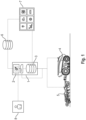
- FIG. 1 shows a database-based management system 1 that includes a processing device 2 and a database 3 connected to it for the transmission of data.
- the database 3 can be designed as a central database 3 or as a decentralized, i.e. distributed, database 3. If the database 3 is designed as a decentralized database 3, it can in particular also be designed as a blockchain database 3. It is also possible that the database 3 is implemented as a cloud-based database 3.
- Both the processing device 2 and the database 3 are connected to an autonomous agricultural machine 4 and, if necessary, to a work unit 5 adapted to the autonomous agricultural machine 4 for the transmission of data.
- the processing device 2 is provided with a - in FIG. 1 not shown - control device of the autonomous agricultural machine 4 and the database 3 with a - in FIG.
- the database-based management system 1 which includes the processing device 2 and the database 3, therefore forms an external management system 1, which is not located in the autonomous agricultural working machine 4 and/or a working unit 5 adapted to the autonomous agricultural working machine 4.
- the processing device 2 can also be connected to a so-called reference database 6 for the transmission of data, in which so-called reference data 7 can be stored, which the processing device 2 can access.
- the communication between the various devices, units, machines and aggregates 1, 2, 3, 4, 5, 6 with one another for the transmission of data can either be wired and/or wireless.
- the sensor device can use a variety of methods to determine the data FIG. 1 sensors, not shown, which are arranged either on the autonomous agricultural machine 4 and/or on the work unit 5 adapted to the autonomous agricultural machine 4.
- This data is transmitted from the sensor device to the database 3, a transmission being carried out at each time t of the plurality of times t 1,...,n at which the data was determined by the sensor device.
- the data determined is stored in the database 3 after it has been transmitted.
- the processing device 2 accesses this data, which is stored in the database 3 . Accordingly, at each time t of the plurality of times t 1,...,n at which the data was determined by the sensor device, the processing device 2 determines the state of wear of the corresponding work unit at this time t.
- the processing device 2 determines the state of wear by processing the determined data in an analysis routine.
- the analysis routine uses an analysis algorithm, by means of which the data determined by the sensor device is processed in such a way, that the wear status of the working unit is output. For example, a value between 0% and 100% can be output as a result of the determination in the analysis routine, where 0% defines no wear of the work unit and 100% defines the achievement of the maximum service life of the work unit and a critical state of wear that leads to an operationally critical state of the autonomous agricultural work machine 4 could lead, for example from a value greater than 60% wear.
- the aforementioned reference data 7 is preferably used as the input variable of the analysis algorithm.
- the analysis algorithm used in the analysis routine by the processing device 2 is a learning analysis algorithm, i.e. an analysis algorithm that is based on artificial intelligence, preferably an artificial neural network.
- the adaptive analysis algorithm is used by means of an initial data set, which contains assignments of data made by means of manual annotation relating to various operating parameters of work units of autonomous agricultural work machines 4 and/or of work units 5 adapted to autonomous agricultural work machines 4 and corresponding wear states of the Work aggregates defined and trained.
- the data and certain wear conditions determined while carrying out the method according to the invention can be used to further train the analysis algorithm.
- the processing device 2 As soon as the state of wear of the working unit has been determined by the processing device 2 in the analysis routine, the processing device 2 generates an instruction for the autonomous agricultural work machine 4 to carry out the work step.
- An instruction is characterized by the fact that it includes at least one regulation.
- the instruction is issued by the control device of the autonomous agricultural work machine 4 after transmission of the instruction by the processing device 2 to the control device of the autonomous agricultural work machine 4, whereby the autonomous agricultural work machine 4 is controlled by the control device in accordance with the regulation contained in the instruction.
- the instruction can include a variety of regulations.
- the instruction can thus include a regulation that defines a control of the autonomous agricultural machine 4 for the planned execution of the work step.
- the instruction can include a rule that defines a control of the autonomous agricultural machine 4 to stop the scheduled execution of the work step.
- the instruction can further include a regulation that commissions a person 8 responsible for maintaining the autonomous agricultural working machine 4 to maintain the working unit of the autonomous agricultural working machine 4 and/or the working unit 5 adapted to the autonomous agricultural working machine 4, or a regulation which defines a changed route for the autonomous agricultural working machine 4 to reach a place where the maintenance of the autonomous agricultural working machine 4 responsible person 8 carries out the maintenance of the working unit of the autonomous agricultural working machine 4 and/or the working unit 5 adapted to the autonomous agricultural working machine 4.
- the instruction with the rule that defines a control of the autonomous agricultural machine 4 for the planned execution of the work step is generated , the execution of which by the control device results in the autonomous agricultural machine 4 being controlled by the control device in such a way that it begins carrying out the work step as planned.
- the instruction with the regulation that controls the autonomous agricultural machine 4 for Stopping the planned execution of the work step is defined, generated, the execution of which by the control unit leads to the autonomous agricultural machine 4 being controlled by the control device in such a way that it does not start carrying out the work step as planned.
- the processing device 2 determines whether the state of wear of the working unit is determined during the execution of the work step and a non-critical state of wear is determined by the processing device 2, the instruction with the rule that defines a control of the autonomous agricultural machine 4 for the planned execution of the work step is generated, its execution by the control device causes the autonomous agricultural machine 4 to be controlled by the control device in such a way that it continues to carry out the work step as planned.
- the state of wear of the work unit is determined during the execution of the work step and, on the other hand, a critical state of wear is determined by the processing device 2, the instruction with the rule that defines a control of the autonomous agricultural machine 4 to stop the scheduled execution of the work step is generated, the execution of which by the control device results in the autonomous agricultural machine 4 being controlled by the control device in such a way that it stops or interrupts the execution of the work step.
- the instruction with the rule that defines a control of the autonomous agricultural machine 4 for the planned execution of the work step is generated, its execution by the control device causes the autonomous agricultural machine 4 to be controlled by the control device in such a way that a work step following the work step carried out is carried out as planned.
- the state of wear of the work unit is determined, for example, after carrying out the work step and, on the other hand, a critical state of wear is determined by the processing device 2, the instruction with the rule that defines a control of the autonomous agricultural machine 4 to stop the scheduled execution of the work step is generated , the execution of which by the control device results in the autonomous agricultural machine 4 of the control device is controlled in such a way that it does not start carrying out a work step following the work step carried out.
- the instruction can include a further regulation which leads to the work unit either being carried out on site the person 8 responsible for the maintenance of the autonomous agricultural machine 4 is serviced or the working unit is serviced at a remote location by the person 8 responsible for this, to which the autonomous agricultural machine 4 has moved independently, i.e. autonomously.
- a wear index can be determined by the processing device 2.
- the state of wear of the work unit determined by the processing device 2 at a time t 1 immediately before the work step is carried out by the autonomous agricultural work machine 4 is compared to a state of wear of the working unit at a time t n immediately after the work step is carried out by the autonomous agricultural work machine 4 by the processing device 2 compared certain wear condition of the working unit and based on this comparison the wear index for the working unit is determined by the processing device 2.
- the wear index represents the wear of the work unit that arises or has arisen when the autonomous agricultural machine 4 carries out the work step.
- the wear index determined by the processing device 2 is stored in the database 3.
- the wear index for the working unit determined by the processing device 2 can be used or processed to determine operating costs that arise or have arisen when the autonomous agricultural machine 4 carries out the work step. For example, the wear index can be used to determine which costs were incurred when the autonomous agricultural machine 4 carried out the work step. These costs can be taken into account when planning subsequent work steps or workflows. For example, a change in the management strategy of an agricultural area can be made based on the determined operating costs, which are based on the wear indicator.
- the wear index for the working unit determined by the processing device 2 can be sent to the person 8 responsible for the maintenance of the autonomous agricultural working machine 4 or the working unit of the autonomous agricultural working machine 4 and/or the working unit 5 that can be adapted to the autonomous agricultural working machine 4 be transmitted so that the wear index can be used to plan maintenance intervals of the autonomous agricultural machine 4 or the work unit of the autonomous agricultural machine 4 and/or the work unit 5 that can be adapted to the autonomous agricultural machine 4.
- the state of wear of a large number of working units of the autonomous agricultural working machine 4 and/or a large number of working units 5 adapted to the autonomous agricultural working machine 4 can be determined at the same time.
- the instruction for carrying out the work step by the autonomous agricultural machine 4 is then generated depending on the large number of specific wear conditions.
- the method according to the invention can therefore not only be used to reliably determine the state of wear of exactly one work unit. Rather, data on a large number of working units of the autonomous agricultural working machine 4 and/or a large number of working units 5 adapted to the autonomous agricultural working machine 4 can be determined by the sensor device at the same time, on the basis of which the wear state of each of these working units can then be determined by means of the processing device 2 to the corresponding one Time t at which the data was determined is determined.
- the management system 1 comprising the processing device 2 and the database 3 can be assigned to a first entity, for example a service provider, which is independent of a second entity, a person, for example a farmer or a contractor (can also be the person 8 responsible for maintenance ), to which the autonomous agricultural work machine 4, the work unit 5 adapted thereto and/or the agricultural area or farm on which the work step is to be, is or was carried out, is assigned.
- a first entity for example a service provider, which is independent of a second entity, a person, for example a farmer or a contractor (can also be the person 8 responsible for maintenance ), to which the autonomous agricultural work machine 4, the work unit 5 adapted thereto and/or the agricultural area or farm on which the work step is to be, is or was carried out.
- the management system 1 to carry out the procedural steps using the database 3 and the processing device 2 can be carried out by the first entity, i.e. the service provider, if authorization is available.
- the person can have the service provider activate the use of the administration system
Landscapes
- Life Sciences & Earth Sciences (AREA)
- Environmental Sciences (AREA)
- Engineering & Computer Science (AREA)
- Mechanical Engineering (AREA)
- Soil Sciences (AREA)
- Control Of Position, Course, Altitude, Or Attitude Of Moving Bodies (AREA)
- Management, Administration, Business Operations System, And Electronic Commerce (AREA)
Applications Claiming Priority (1)
| Application Number | Priority Date | Filing Date | Title |
|---|---|---|---|
| DE102022110117.7A DE102022110117A1 (de) | 2022-04-27 | 2022-04-27 | Verfahren zum Bestimmen eines Verschleißzustands einer autonomen landwirtschaftlichen Arbeitsmaschine |
Publications (2)
| Publication Number | Publication Date |
|---|---|
| EP4268563A1 true EP4268563A1 (fr) | 2023-11-01 |
| EP4268563B1 EP4268563B1 (fr) | 2026-04-15 |
Family
ID=85221818
Family Applications (1)
| Application Number | Title | Priority Date | Filing Date |
|---|---|---|---|
| EP23155768.7A Active EP4268563B1 (fr) | 2022-04-27 | 2023-02-09 | Procédé de détermination d'un état d'usure d'une machine de travail agricole autonome |
Country Status (2)
| Country | Link |
|---|---|
| EP (1) | EP4268563B1 (fr) |
| DE (1) | DE102022110117A1 (fr) |
Citations (6)
| Publication number | Priority date | Publication date | Assignee | Title |
|---|---|---|---|---|
| US20140105481A1 (en) * | 2012-10-17 | 2014-04-17 | Caterpillar Inc. | Methods and systems for determining part wear based on digital image of part |
| EP3482975A1 (fr) * | 2017-11-08 | 2019-05-15 | CLAAS Industrietechnik GmbH | Véhicule à chenille |
| EP3636063A1 (fr) * | 2018-09-10 | 2020-04-15 | PÖTTINGER Landtechnik GmbH | Procédé et dispositif de détection de l'usure d'un composant pour appareils agricoles |
| EP3738427A1 (fr) * | 2019-05-16 | 2020-11-18 | CLAAS Selbstfahrende Erntemaschinen GmbH | Dispositif de détection de tranchants |
| EP3913251A1 (fr) | 2020-05-21 | 2021-11-24 | CNH Industrial Italia S.p.A. | Système de surveillance de l'usure d'un embrayage hydraulique d'une transmission de véhicule |
| EP3970467A1 (fr) * | 2020-09-15 | 2022-03-23 | Deere & Company | Analyse sonore pour identifier un composant endommagé dans une machine de travail |
-
2022
- 2022-04-27 DE DE102022110117.7A patent/DE102022110117A1/de active Pending
-
2023
- 2023-02-09 EP EP23155768.7A patent/EP4268563B1/fr active Active
Patent Citations (6)
| Publication number | Priority date | Publication date | Assignee | Title |
|---|---|---|---|---|
| US20140105481A1 (en) * | 2012-10-17 | 2014-04-17 | Caterpillar Inc. | Methods and systems for determining part wear based on digital image of part |
| EP3482975A1 (fr) * | 2017-11-08 | 2019-05-15 | CLAAS Industrietechnik GmbH | Véhicule à chenille |
| EP3636063A1 (fr) * | 2018-09-10 | 2020-04-15 | PÖTTINGER Landtechnik GmbH | Procédé et dispositif de détection de l'usure d'un composant pour appareils agricoles |
| EP3738427A1 (fr) * | 2019-05-16 | 2020-11-18 | CLAAS Selbstfahrende Erntemaschinen GmbH | Dispositif de détection de tranchants |
| EP3913251A1 (fr) | 2020-05-21 | 2021-11-24 | CNH Industrial Italia S.p.A. | Système de surveillance de l'usure d'un embrayage hydraulique d'une transmission de véhicule |
| EP3970467A1 (fr) * | 2020-09-15 | 2022-03-23 | Deere & Company | Analyse sonore pour identifier un composant endommagé dans une machine de travail |
Also Published As
| Publication number | Publication date |
|---|---|
| EP4268563B1 (fr) | 2026-04-15 |
| DE102022110117A1 (de) | 2023-11-02 |
Similar Documents
| Publication | Publication Date | Title |
|---|---|---|
| EP4000018A1 (fr) | Maintenance prévisionnelle pour un dispositif de l'industrie des denrées alimentaires à l'aide d'un jumeau numérique et planification de production optimisée | |
| DE102019000794B4 (de) | Vorrichtung und System zum Wechseln eines Betriebszustands einer autonom betreibbaren landwirtschaftlichen Maschine | |
| DE102012017451A1 (de) | Telemetrievorrichtung | |
| EP4268556A1 (fr) | Procédé de surveillance de machines agricoles autonomes | |
| EP4275468B1 (fr) | Procédé de surveillance du fonctionnement d'une machine de travail agricole autonome | |
| DE102022110132A1 (de) | Autonome landwirtschaftliche Arbeitsmaschine | |
| EP3827655A1 (fr) | Tracteur | |
| EP4268563B1 (fr) | Procédé de détermination d'un état d'usure d'une machine de travail agricole autonome | |
| EP4268558B1 (fr) | Système d'assistance pour générer des plans de route pour des machines agricoles autonomes | |
| EP4270135A1 (fr) | Système d'assistance pour générer des limites de champ virtuel pour des machines agricoles autonomes | |
| EP4268557A1 (fr) | Procédé de génération de données pour commander une machine de travail agricole autonome | |
| EP3098672B1 (fr) | Dispositif de configuration et procede de configuration d'un systeme d'automatisation | |
| EP4331344B1 (fr) | Procédé de détermination d'un état d'usure d'une moissonneuse agricole automotrice | |
| DE102021101354A1 (de) | Modulares Montagesystem sowie Verfahren zum Betreiben des modularen Montagesystems | |
| EP4508973A1 (fr) | Procédé de détermination d'un état d'usure d'une presse à balles agricole | |
| DE102019132428A1 (de) | Funktionsorientierte Elektronik-Architektur | |
| EP3626040B1 (fr) | Système de travail agricole | |
| DE102023121767A1 (de) | Landwirtschaftliche Maschinenanordnung mit einem Fahrerassistenzsystem | |
| EP3251902B1 (fr) | Système d'autorisation de fonctionnement d'engins de travaux agricoles | |
| DE102023130887A1 (de) | Planungsportal zur Planung eines landwirtschaftlichen Einsatzes | |
| DE102024114799A1 (de) | Planungssystem | |
| EP4656024A1 (fr) | Système de planification | |
| EP4480294A1 (fr) | Système d'assistance au conducteur pour la commande d'un attelage agricole | |
| EP4552453A1 (fr) | Machine agricole autonome | |
| DE102022120327A1 (de) | Überwachung der unsicherheit für eine menschenähnliche verhaltensmodulation der trajektorienplanung |
Legal Events
| Date | Code | Title | Description |
|---|---|---|---|
| PUAI | Public reference made under article 153(3) epc to a published international application that has entered the european phase |
Free format text: ORIGINAL CODE: 0009012 |
|
| STAA | Information on the status of an ep patent application or granted ep patent |
Free format text: STATUS: THE APPLICATION HAS BEEN PUBLISHED |
|
| AK | Designated contracting states |
Kind code of ref document: A1 Designated state(s): AL AT BE BG CH CY CZ DE DK EE ES FI FR GB GR HR HU IE IS IT LI LT LU LV MC ME MK MT NL NO PL PT RO RS SE SI SK SM TR |
|
| P01 | Opt-out of the competence of the unified patent court (upc) registered |
Effective date: 20231102 |
|
| STAA | Information on the status of an ep patent application or granted ep patent |
Free format text: STATUS: REQUEST FOR EXAMINATION WAS MADE |
|
| 17P | Request for examination filed |
Effective date: 20240502 |
|
| RBV | Designated contracting states (corrected) |
Designated state(s): AL AT BE BG CH CY CZ DE DK EE ES FI FR GB GR HR HU IE IS IT LI LT LU LV MC ME MK MT NL NO PL PT RO RS SE SI SK SM TR |
|
| STAA | Information on the status of an ep patent application or granted ep patent |
Free format text: STATUS: EXAMINATION IS IN PROGRESS |
|
| 17Q | First examination report despatched |
Effective date: 20250522 |
|
| GRAP | Despatch of communication of intention to grant a patent |
Free format text: ORIGINAL CODE: EPIDOSNIGR1 |
|
| STAA | Information on the status of an ep patent application or granted ep patent |
Free format text: STATUS: GRANT OF PATENT IS INTENDED |
|
| RIC1 | Information provided on ipc code assigned before grant |
Ipc: A01B 76/00 20060101AFI20251117BHEP Ipc: A01D 34/00 20060101ALI20251117BHEP Ipc: A01D 41/14 20060101ALI20251117BHEP |
|
| INTG | Intention to grant announced |
Effective date: 20251126 |
|
| GRAS | Grant fee paid |
Free format text: ORIGINAL CODE: EPIDOSNIGR3 |
|
| GRAA | (expected) grant |
Free format text: ORIGINAL CODE: 0009210 |
|
| STAA | Information on the status of an ep patent application or granted ep patent |
Free format text: STATUS: THE PATENT HAS BEEN GRANTED |
|
| AK | Designated contracting states |
Kind code of ref document: B1 Designated state(s): AL AT BE BG CH CY CZ DE DK EE ES FI FR GB GR HR HU IE IS IT LI LT LU LV MC ME MK MT NL NO PL PT RO RS SE SI SK SM TR |
|
| REG | Reference to a national code |
Ref country code: CH Ref legal event code: F10 Free format text: ST27 STATUS EVENT CODE: U-0-0-F10-F00 (AS PROVIDED BY THE NATIONAL OFFICE) Effective date: 20260415 |
|
| REG | Reference to a national code |
Ref country code: DE Ref legal event code: R096 Ref document number: 502023003730 Country of ref document: DE |