EP4268829A1 - Muskelatrophiehemmer und verfahren zur hemmung von muskelatrophie - Google Patents
Muskelatrophiehemmer und verfahren zur hemmung von muskelatrophie Download PDFInfo
- Publication number
- EP4268829A1 EP4268829A1 EP21915297.2A EP21915297A EP4268829A1 EP 4268829 A1 EP4268829 A1 EP 4268829A1 EP 21915297 A EP21915297 A EP 21915297A EP 4268829 A1 EP4268829 A1 EP 4268829A1
- Authority
- EP
- European Patent Office
- Prior art keywords
- muscular atrophy
- acid
- dexamethasone
- uridine
- atrophy
- Prior art date
- Legal status (The legal status is an assumption and is not a legal conclusion. Google has not performed a legal analysis and makes no representation as to the accuracy of the status listed.)
- Pending
Links
Images



Classifications
-
- A—HUMAN NECESSITIES
- A61—MEDICAL OR VETERINARY SCIENCE; HYGIENE
- A61K—PREPARATIONS FOR MEDICAL, DENTAL OR TOILETRY PURPOSES
- A61K31/00—Medicinal preparations containing organic active ingredients
- A61K31/70—Carbohydrates; Sugars; Derivatives thereof
- A61K31/7042—Compounds having saccharide radicals and heterocyclic rings
- A61K31/7052—Compounds having saccharide radicals and heterocyclic rings having nitrogen as a ring hetero atom, e.g. nucleosides, nucleotides
- A61K31/706—Compounds having saccharide radicals and heterocyclic rings having nitrogen as a ring hetero atom, e.g. nucleosides, nucleotides containing six-membered rings with nitrogen as a ring hetero atom
- A61K31/7064—Compounds having saccharide radicals and heterocyclic rings having nitrogen as a ring hetero atom, e.g. nucleosides, nucleotides containing six-membered rings with nitrogen as a ring hetero atom containing condensed or non-condensed pyrimidines
- A61K31/7068—Compounds having saccharide radicals and heterocyclic rings having nitrogen as a ring hetero atom, e.g. nucleosides, nucleotides containing six-membered rings with nitrogen as a ring hetero atom containing condensed or non-condensed pyrimidines having oxo groups directly attached to the pyrimidine ring, e.g. cytidine, cytidylic acid
- A61K31/7072—Compounds having saccharide radicals and heterocyclic rings having nitrogen as a ring hetero atom, e.g. nucleosides, nucleotides containing six-membered rings with nitrogen as a ring hetero atom containing condensed or non-condensed pyrimidines having oxo groups directly attached to the pyrimidine ring, e.g. cytidine, cytidylic acid having two oxo groups directly attached to the pyrimidine ring, e.g. uridine, uridylic acid, thymidine, zidovudine
-
- A—HUMAN NECESSITIES
- A61—MEDICAL OR VETERINARY SCIENCE; HYGIENE
- A61P—SPECIFIC THERAPEUTIC ACTIVITY OF CHEMICAL COMPOUNDS OR MEDICINAL PREPARATIONS
- A61P21/00—Drugs for disorders of the muscular or neuromuscular system
-
- A—HUMAN NECESSITIES
- A23—FOODS OR FOODSTUFFS; TREATMENT THEREOF, NOT COVERED BY OTHER CLASSES
- A23L—FOODS, FOODSTUFFS OR NON-ALCOHOLIC BEVERAGES, NOT OTHERWISE PROVIDED FOR; PREPARATION OR TREATMENT THEREOF
- A23L33/00—Modifying nutritive qualities of foods; Dietetic products; Preparation or treatment thereof
- A23L33/10—Modifying nutritive qualities of foods; Dietetic products; Preparation or treatment thereof using additives
- A23L33/13—Nucleic acids or derivatives thereof
-
- A—HUMAN NECESSITIES
- A61—MEDICAL OR VETERINARY SCIENCE; HYGIENE
- A61K—PREPARATIONS FOR MEDICAL, DENTAL OR TOILETRY PURPOSES
- A61K31/00—Medicinal preparations containing organic active ingredients
- A61K31/70—Carbohydrates; Sugars; Derivatives thereof
- A61K31/7042—Compounds having saccharide radicals and heterocyclic rings
- A61K31/7052—Compounds having saccharide radicals and heterocyclic rings having nitrogen as a ring hetero atom, e.g. nucleosides, nucleotides
- A61K31/706—Compounds having saccharide radicals and heterocyclic rings having nitrogen as a ring hetero atom, e.g. nucleosides, nucleotides containing six-membered rings with nitrogen as a ring hetero atom
- A61K31/7064—Compounds having saccharide radicals and heterocyclic rings having nitrogen as a ring hetero atom, e.g. nucleosides, nucleotides containing six-membered rings with nitrogen as a ring hetero atom containing condensed or non-condensed pyrimidines
- A61K31/7068—Compounds having saccharide radicals and heterocyclic rings having nitrogen as a ring hetero atom, e.g. nucleosides, nucleotides containing six-membered rings with nitrogen as a ring hetero atom containing condensed or non-condensed pyrimidines having oxo groups directly attached to the pyrimidine ring, e.g. cytidine, cytidylic acid
Definitions
- the present invention relates to a muscular atrophy inhibitor and a method for inhibiting muscular atrophy.
- Skeletal muscle is the largest organ accounting for approximately 40% of the body weight of adults. Skeletal muscle plays an important role not only in exercise and postural maintenance, but also in maintenance of body temperature through heat production and in regulation of blood glucose levels as a target organ for insulin.
- the exercise is an effective means for quantitatively and qualitatively increasing skeletal muscle mass, but elderly persons and the like are often difficult to perform continuous exercise at a sufficient intensity. For this reason, nutritional approaches have been studied to improve skeletal muscle functions.
- Skeletal muscular atrophy is caused by a variety of factors and is classified into several types depending on the causes of symptoms and like.
- the Skeletal muscle is known to atrophy with ageing, and such age-related muscular atrophy is called sarcopenia (age-related muscle weakness).
- sarcopenia age-related muscular atrophy
- disuse muscular atrophy skeletal muscle atrophies due to prolonged disuse of muscle by being bedridden, excessive resting conditions, weightless environments, or the like, which is called disuse muscular atrophy.
- Atrogin-1 and MuRF1 are ubiquitin-proteasome proteolytic genes which are upregulated during various types of muscular atrophy including age-related loss of muscle mass, and play important roles in muscular atrophy (Non-Patent Literature 1).
- glucocorticoids are involved in the enhancement of the ubiquitin-proteasome proteolytic system.
- Dexamethasone a synthetic glucocorticoid, binds to glucocorticoid receptors in a muscle tissue and then increases the expression of Atrogin-1 and/or MuRF1 which is/are the ubiquitin-proteasome system, thereby inducing protein degradation and evoking muscular atrophy.
- the dexamethasone-induced metabolic change is similar to muscular atrophy in animal or human, and the dexamethasone-induced muscle atrophy model is commonly used in muscular atrophy research (Non-Patent Literature 2). Therefore, materials that inhibit the expression of the ubiquitin-proteasome system, such as Atrogin-1, in the dexamethasone-induced muscle atrophy model, may be effective to suppress the muscular atrophy.
- Patent Literature 1 discloses a peptide that exhibits a ubiquitin ligase inhibitory activity in vitro.
- Patent Literature 2 discloses a peptide that exhibits an effect of suppressing myotube atrophy induced by treating myotube cells derived from a mouse skeletal muscle cell line (C2C12) with dexamethasone, and an effect of suppressing Atrogin-1 expression in dexamethasone-administered model mice.
- Cytidylic acid and uridylic acid are a kind of nucleotides, and are substances widely contained in or added to living organisms and foods, and are extremely safe and ideal materials for addition to foods.
- Patent Literature 3 describes an agent for improving emotional disorders characterized by containing a nucleotide.
- Patent Literature 4 discloses an anti-fatigue agent or physical strength improving agent containing uridine, uracil, uridylic acid, or a uridine derivative, or a pharmaceutically acceptable salt thereof, and it also discloses that the running time limit during treadmill running is prolonged in mice that have orally administered uridine. Also, Non-Patent Literature 2 discloses that rats which have administered a mixture of cytidylic acid and uridylic acid tolerate prolonged treadmill exercise.
- Patent Literature 4 and Non-Patent Literature 2 refers to the improvement of the ability to continuously perform a certain exercise condition, such as on the treadmill, which can be an evaluation of a different phenomenon from the suppression of muscular atrophy associated with aging or disuse of muscle, and the like.
- Patent Literature 5 describes a composition containing uridine and/or uridylic acid and various other ingredients for use in preventing or treating weakness in mammals, and it also discloses that one specific example of the prevention or treatment of weakness is an increase in muscle mass.
- Examples of the Patent Literature 5 only demonstrate that, when a diet containing UMP and DHA was administered to Alzheimer's disease model mice, they had a higher rate of weight gain than mice that fed a control diet, and when a beverage supplemented with UMP, EPA, DHA, lecithin, choline, vitamin E, vitamin C, selenium, and B-vitamins were administered to elderly human patients suffering from cognitive disorders, the BMI value was increased as compared to patients receiving a control beverage, and the ADL (ADCS score) was improved especially in patients having BMI of less than 26.
- the patent Literature 5 mentions the muscle mass as one of the various symptoms of "weakness", it only evaluates the weight gain in both mouse and human studies, and it does not directly measure the muscle mass or examine the relevant gene expression at all. In addition, the patent Literature 5 only performs Examples that simulates the Alzheimer's disease, and it does not examine the effect of suppressing the entire muscular atrophy.
- the beverages administered to elderly patients contain various ingredients other than UMP, and it is not understood from the studies that UMP itself has an effect of improving weight loss.
- ADL is considered to be the ability to independently perform activities of daily living such as bathing, dressing, and moving, which cannot be an index that focuses on muscle strength at all.
- nucleotides such as cytidylic acid and uridylic acid or nucleosides such as cytidine and uridine actually have an effect of inhibiting muscular atrophy has not been conventionally examined and has not been revealed at all.
- An object of the present invention is to provide a novel and highly safe muscular atrophy inhibitor that exhibits a muscle atrophy inhibiting effect when it is used as a food, feed, drug, quasi-drug, or the like.
- pyrimidine nucleotides or precursors thereof have a clear effect of inhibiting muscular atrophy, in addition to the effect of improving physical strength which is conventionally known in the art, and they have completed the present invention.
- the present invention is a muscular atrophy inhibitor comprising at least one pyrimidine nucleotide or a precursor thereof as an active ingredient.
- the present invention is a method for inhibiting muscular atrophy, wherein the method comprises administrating at least one pyrimidine nucleotide or a precursor thereof.
- the muscular atrophy inhibitor comprising at least one pyrimidine nucleotide or a precursor thereof as an active ingredient according the present invention will provide a novel means for improving the quality of life of patients and elderly persons suffering from muscular atrophy. Further, by using the muscle atrophy inhibitor according to the present invention before the onset of muscle atrophy, its prevention is also possible.
- the present invention relates to a muscular atrophy inhibitor containing at least one pyrimidine nucleotide or a precursor thereof as an active ingredient.
- the muscular atrophy refers to reduction of muscle and loss of muscle mass due to decomposition of skeletal muscle making up the muscle.
- the inhibition of muscle atrophy refers to suppressing, delaying, reversing or preventing the progression of the muscle atrophy.
- the inhibition of muscle atrophy may also mean inhibition of the expression of genes relating to the ubiquitin-proteasome proteolytic system, and may also mean inhibition of the expression of the Atrogin-1 gene as a gene relating to the ubiquitin-proteasome proteolytic system. It is known, for example, from Non-Patent Literatures 1 and 2, that the inhibited expression of the genes relating to the ubiquitin-proteasome proteolytic system is involved in the inhibition of muscular atrophy.
- the muscular atrophy inhibitor according to the present invention contains at least one pyrimidine nucleotide or a precursor thereof as an active ingredient.
- the pyrimidine nucleotide or the precursor thereof is suitable as an active ingredient according to the present invention in terms of safety as food or the like, and ease of absorption into the body.
- the pyrimidine nucleotide means cytidylic acid and uridylic acid.
- cytidylic acid cytidine monophosphate, cytidine 5'-phosphate, CMP
- CMP cytidine 5'-phosphate
- a mass of cytidylic acid When a mass of cytidylic acid is described herein, it represents a mass when converted to disodium cytidylate (CMP,2Na). When a concentration (%) of cytidylic acid is mentioned herein, it is a mass volume percent concentration (w/v%) unless otherwise specified, and a mass converted to CMP,2Na is used as the mass of cytidylic acid. If a salt other than the disodium salt is selected, or if it is a free acid that does not form a salt, it is a mass when converted to CMP,2Na, based on the substance material of the cytidylic acid.
- Uridylic acid (uridine monophosphate, uridine 5'-phosphate, UMP) is a compound represented by CAS registration number 58-97-9 .
- uridylic acid it is concept also including salts of uridylic acid.
- a mass of uridylic acid When a mass of uridylic acid is described herein, it represents a mass when converted to disodium uridylate (UMP,2Na). When a concentration (%) of uridylic acid is mentioned herein, it is a mass volume percent concentration (w/v%) unless otherwise specified, and a mass converted to UMP,2Na is used as the mass of uridylic acid. If a salt other than the disodium salt is selected, or if it is a free acid that does not form a salt, it is a mass when converted to UMP,2Na, based on the substance material of the uridylic acid.
- a pyrimidine nucleotide precursor means a compound that can be metabolized to the pyrimidine nucleotide, i.e., cytidylic acid and/or uridylic acid. Whether a compound is included in the pyrimidine nucleotide precursor is determined by the presence or absence of knowledge that the compound is converted to the pyrimidine nucleotide.
- cytidine diphosphate, cytidine triphosphate, uridine diphosphate, and uridine triphosphate which are known to be degraded to cytidylic acid and/or uridylic acid by the action of ectonucleotidases and like ( Isao Matsuoka, "Ectonucleotidases in Nervous System", Clinical Chemistry 33: 11-18, 2004 ), and cytidine, cytosine, uridine, and uracil, which are known to be phosphorylated to cytidylic acid and/or uridylic acid by the action of kinases ( A Orengo, "Regulation of enzymic activity by metabolites.
- Uridine-cytidine kinase of Novikoff ascites rat tumor J Biol Chem. 1969 Apr 25; 244(8): 2204-9 .
- pyrimidine nucleotide precursors as used herein.
- Examples of the pyrimidine nucleotides or precursors thereof in the present invention include, as described above, cytidine, cytosine, cytidylic acid, cytidine diphosphate, cytidine triphosphate, uridine, uracil, uridylic acid, uridyl diphosphate, and uridyl triphosphate. Among them, cytidylic acid, uridylic acid, cytidine, and uridine are preferred.
- cytidylic acid includes salts as described above.
- the salts of cytidylic acid include alkali metal salts such as sodium and potassium salts; alkaline earth metal salts such as calcium, magnesium and barium salts; basic amino acid salts such as arginine and lysine; ammonium salts such as ammonium and tricyclohexylammonium salts; and various alkanolamine salts such as monoethanolamine salts, diethanolamine salts, triethanolamine salts, monoisopropanolamine salts, diisopropanolamine salts and triisopropanolamine salts.
- the salts may be alkali metal salts such as sodium salts.
- alkali metal salts include monosodium cytidylate and disodium cytidylate, disodium cytidylate being preferred from the standpoint of handleability.
- the concept of uridylic acid as used herein includes salts as described above.
- the salts of uridylic acid include alkali metal salts such as sodium and potassium salts; alkaline earth metal salts such as calcium, magnesium and barium salts; basic amino acid salts such as arginine and lysine; ammonium salts such as ammonium and tricyclohexylammonium salts; and various alkanolamine salts such as monoethanolamine salts, diethanolamine salts, triethanolamine salts, monoisopropanolamine salts, diisopropanolamine salts and triisopropanolamine salts.
- the salts may be alkali metal salts such as sodium salts. Specific examples of such alkali metal salts include monosodium uridylate and disodium uridylate, disodium uridylate being preferred from the standpoint of handleability.
- the above active ingredients may be used alone or in combination of two or more.
- the muscular atrophy inhibitor according to the present invention can be used for practical purposes as a composition for food and drink products, supplements, prepared milk powder, enteral nutritional supplements, healthy food and drink products (including Food for specified health uses and Food with function claims), additives for animal feed, and pharmaceutical products for humans or animals other than humans.
- the agent according to the present invention When the agent according to the present invention is provided as the food and drink product, health food and drink product or prepared milk powder, it can be made into a food or drink product having a muscular atrophy inihibiting function by adding the above active ingredients to the known food and drink product as appropriate.
- the food and drink products of interest include milk and dairy products, seasonings, beverages, confectioneries, breads, noodles, oils and fats, processed meat products, processed marine products, processed agricultural products, frozen foods, and instant foods.
- the novel food and drink products that have the muscular atrophy inhibiting effect can be produced by mixing with materials for the food and drink products.
- the shape of the food and drink products of interest can be selected from various forms, such as tablets, granules, capsules, powders, solutions, syrups, emulsions, and pastes.
- various excipients and seasoning ingredients that can be used as foods may be added as needed in the production of those food products.
- the food and drink product as described above may be provided and sold as a food and drink product labeled with the health application for inhibiting muscular atrophy.
- the act of "labeling” includes all acts to make the above application known to users, and all expressions that may evoke or analogize the above application fall under the act of "labeling" in this invention, regardless of the purpose of the labeling, the content of the labeling, and the object or medium to be labeled.
- the above "labeling” be made by means of expressions that enable users to directly recognize the above application.
- Specific examples include the act of assigning, delivering, displaying for the purpose of assignment or delivery, or importing of goods or packages of the goods in relation to the food and drink products, which describe the above application, or the act of displaying or distributing advertisement materials, price lists or transaction documents in relation to the goods, which describes the above application, and the act of providing information about these contents, which describes the above application, through electromagnetic means (e.g., through the internet).
- the contents of the labeling are those approved by the government or the like (e.g., labeling that has been approved based on various systems established by the government and is performed in a manner based on such approval). It is also desirable to attach such labeling to packages, containers, catalogs, pamphlets, POP, and other promotional materials at the places of sales, and other documents.
- the above active ingredient can be formulated alone or in combination with formulation aids or the like.
- the formulation may be orally or parenterally administered, and it is preferably orally or enterally administrated.
- the formulations as described above can be tablets, granules, capsules, granules, dispersions, solutions, syrups, emulsions, and the like for oral administration, and injections, sprays, ointments, patches, and the like, for parenteral administration.
- formulation aids such as excipients, binders, disintegrants, lubricants, taste masking agents, dissolution aids, suspending agents, coating agents, and the like, may be used in combination as appropriate according to each dosage form.
- the amount of the above active ingredient in the muscular atrophy inhibitor according to the present invention may be appropriately selected from the range of 0.1 to 30% (w/w), depending on the purpose of use (prevention, health or symptom relief, etc.), age of the subject, method of administration or intake, dosage form, and the like.
- the amount of administration or intake of the muscular atrophy inhibitor according to the present invention may be appropriately selected from the range of 1 mg to 800 g per a day, although it will vary depending on the subject's age, weight, the degree of muscular atrophy, the method of administration or intake, and the like.
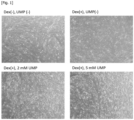
- Mouse myoblast cell line C2C12 cells (RIKEN BRC, RCB0987) were suspended in growth medium (Dulbecco's modified Eagle's Medium supplemented with 10% FBS, 100 units/ml of penicillin, 100 ⁇ g/ml of streptomycin), seeded in 24-well plates, and incubated in a 37°C, 5% COz incubator until the cell density reached 70-90%.
- growth medium Dulbecco's modified Eagle's Medium supplemented with 10% FBS, 100 units/ml of penicillin, 100 ⁇ g/ml of streptomycin
- the growth medium was removed, and exchanged to a differentiation induction medium (Dulbecco's modified Eagle's Medium supplemented with 2% adult bovine serum, 100 units/ml of penicillin, 100 ⁇ g/ml of streptomycin).
- the cells were cultured for 4 days while exchanging the medium once every 2 days and differentiated into myotube cells.
- the medium was removed and exchanged to the following four media.
- uridylic acid has an excellent effect on atrophy inhibition of myotube cells.
- Mouse myoblast cell line C2C12 cells (RIKEN BRC, RCB0987) were suspended in growth medium (Dulbecco's modified Eagle's Medium supplemented with 10% FBS, 100 units/ml of penicillin, 100 ⁇ g/ml of streptomycin), seeded in 24-well plates, and incubated in a 37°C, 5% COz incubator until the cell density reached 70-90%.
- growth medium Dulbecco's modified Eagle's Medium supplemented with 10% FBS, 100 units/ml of penicillin, 100 ⁇ g/ml of streptomycin
- the growth medium was removed, and exchanged to a differentiation induction medium (Dulbecco's modified Eagle's Medium supplemented with 2% adult bovine serum, 100 units/ml of penicillin, 100 ⁇ g/ml of streptomycin).
- the cells were cultured for 4 days while exchanging the medium once every 2 days and differentiated into myotube cells.
- the medium was removed and exchanged to the following media:
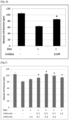
- the myotube cell diameter was reduced by the treatment with dexamethasone, while it was significantly increased by the treatments with cytidylic acid, uridylic acid, cytidine, and uridine.
- the myotube cell diameter was reduced by the treatment with dexamethasone, while the myotube cell diameter was increased by the treatment with cytidylic acid and cytidine.
- the myotube cell diameter was reduced by the treatment with dexamethasone, while the myotube cell diameter was increased by the treatment with uridylic acid.
- the myotube cell diameter was reduced by the treatment with dexamethasone, while the myotube cell diameter was increased by the treatment with uridine.
- Cytidylic acid and uridylic were added to the medium at the concentrations shown in Fig. 7 so that the total concentration of cytidylic acid and uridylic acid was 1000 ⁇ M. Otherwise, the same procedure as in Example 1-2 was used to evaluate the myotube cell atrophy inhibiting effect for the sample. The results are shown in Fig. 7 .
- the myotube cell diameter was reduced by the treatment with dexamethasone, while the cell diameter was increased for both samples treated with cytidylic acid and uridylic acid. All of the samples that showed the musclular atrophy inhibiting effect, and in particular, the sample in which cytidylic acid was used in an amount equivalent to or more than that of uridylic acid showed the most remarkable musclular atrophy inhibiting effect.
- Example 2 the total concentration of cytidylic acid/uridylic acid added to the medium was adjusted to 1000 ⁇ M and a ratio of the cytidylic acid/uridylic acid was varied.
- Example 3 the myotube cell atrophy inhibiting effect was evaluated when the total concentration was 2000 ⁇ M; 1 mM (1000 ⁇ M) of cytidylic acid + 1 mM (1000 ⁇ M) of uridylic acid.
- the myotube cell diameter was reduced by the treatment with dexamethasone, while it was significantly increased by the treatments with cytidylic acid, uridylic acid, cytidine, and uridine. Further, the combination of cytidylic acid and uridylic acid and the combination of cytidine and uridine significantly increased the myotube cell diameter.
- Mouse myoblast cell line C2C12 cells were suspended in growth medium, seeded in 24-well plates, and incubated in a 37°C, 5% COz incubator until the cell density reached 70-90%.
- the growth medium was removed, and exchanged to a differentiation induction medium.
- the cells were cultured for 6 days while exchanging the medium once every 2 days and differentiated into myotube cells.
- the medium was removed and exchanged to a differentiation induction medium or a differentiation induction medium containing a test substance.
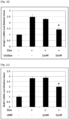
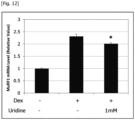
- the medium was removed and replaced with a differentiation induction medium, a differentiation induction medium supplemented only with 1 ⁇ M dexamethasone, or a medium supplemented with 1 ⁇ M dexamethasone and test substances (a certain amount of UMP (disodium uridylate), a certain amount of Urd (uridine), and a certain amount of UMP (disodium uridylate)).
- RNA expression levels were measured using the ⁇ -actin mRNA expression level as an endogenous control.
- the treatment with dexamethasone increased the mRNA expression level of Atrogin-1, while the treatment with uridylic acid decreased the mRNA expression level of Atrogin-1.
- the treatment with dexamethasone increased the mRNA expression level of Atrogin-1, while the treatment with uridine decreased the mRNA expression level of Atrogin-1.
- the treatment with dexamethasone increased the mRNA expression level of MuRF1, while the treatment with uridylic acid decreased the mRNA expression level of MuRF1.
- the treatment with dexamethasone increased the mRNA expression level of MuRF1, while the treatment with uridine decreased the mRNA expression level of MuRF1.
- the inhibiting effect on the expression of muscular atrophy-related genes shown in the Examples may not necessarily explain the entire mechanism of action of the inhibiting effect on muscular atrophy according to the present invention.
Landscapes
- Health & Medical Sciences (AREA)
- Life Sciences & Earth Sciences (AREA)
- Chemical & Material Sciences (AREA)
- Medicinal Chemistry (AREA)
- Pharmacology & Pharmacy (AREA)
- Animal Behavior & Ethology (AREA)
- General Health & Medical Sciences (AREA)
- Public Health (AREA)
- Veterinary Medicine (AREA)
- Molecular Biology (AREA)
- Epidemiology (AREA)
- Engineering & Computer Science (AREA)
- Bioinformatics & Cheminformatics (AREA)
- Neurology (AREA)
- Orthopedic Medicine & Surgery (AREA)
- Physical Education & Sports Medicine (AREA)
- Chemical Kinetics & Catalysis (AREA)
- General Chemical & Material Sciences (AREA)
- Nuclear Medicine, Radiotherapy & Molecular Imaging (AREA)
- Organic Chemistry (AREA)
- Biochemistry (AREA)
- Mycology (AREA)
- Nutrition Science (AREA)
- Food Science & Technology (AREA)
- Polymers & Plastics (AREA)
- Pharmaceuticals Containing Other Organic And Inorganic Compounds (AREA)
Applications Claiming Priority (2)
| Application Number | Priority Date | Filing Date | Title |
|---|---|---|---|
| JP2020218130 | 2020-12-28 | ||
| PCT/JP2021/048703 WO2022145439A1 (ja) | 2020-12-28 | 2021-12-27 | 筋萎縮抑制剤及び筋萎縮を抑制させる方法 |
Publications (2)
| Publication Number | Publication Date |
|---|---|
| EP4268829A1 true EP4268829A1 (de) | 2023-11-01 |
| EP4268829A4 EP4268829A4 (de) | 2024-11-27 |
Family
ID=82260733
Family Applications (1)
| Application Number | Title | Priority Date | Filing Date |
|---|---|---|---|
| EP21915297.2A Pending EP4268829A4 (de) | 2020-12-28 | 2021-12-27 | Muskelatrophiehemmer und verfahren zur hemmung von muskelatrophie |
Country Status (4)
| Country | Link |
|---|---|
| US (1) | US20240041910A1 (de) |
| EP (1) | EP4268829A4 (de) |
| JP (1) | JPWO2022145439A1 (de) |
| WO (1) | WO2022145439A1 (de) |
Families Citing this family (1)
| Publication number | Priority date | Publication date | Assignee | Title |
|---|---|---|---|---|
| CN116790701B (zh) * | 2023-07-21 | 2024-02-20 | 广东海洋大学 | 一种罗非鱼鱼皮多肽及其制备方法和在制备抗肌肉萎缩产品中的应用 |
Family Cites Families (8)
| Publication number | Priority date | Publication date | Assignee | Title |
|---|---|---|---|---|
| JP3343487B2 (ja) | 1997-01-27 | 2002-11-11 | ヤマサ醤油株式会社 | 情動障害の改善剤 |
| US6472378B2 (en) * | 1998-08-31 | 2002-10-29 | Pro-Neuron, Inc. | Compositions and methods for treatment of mitochondrial diseases |
| US7915233B1 (en) * | 1998-08-31 | 2011-03-29 | Wellstat Therapeutics Corporation | Compositions and methods for treatment of mitochondrial diseases |
| JP5426918B2 (ja) * | 2009-04-20 | 2014-02-26 | 株式会社 伊藤園 | ウリジンを含有する抗疲労剤又は体力向上剤 |
| WO2012091542A1 (en) * | 2010-12-28 | 2012-07-05 | N.V. Nutricia | Combination of components for the prevention and treatment of frailty |
| JP6369990B2 (ja) | 2015-02-27 | 2018-08-08 | 森永乳業株式会社 | 筋萎縮抑制剤及び筋萎縮抑制用飲食品 |
| EP3505174B1 (de) * | 2015-06-17 | 2020-04-29 | The Trustees of Columbia University in the City of New York | Deoxynukleosidtherapie für durch unausgeglichene nukleotidpools verursachte erkrankungen, einschliesslich mitochondrialer dna-depletionssyndrome |
| JP6785648B2 (ja) | 2016-12-27 | 2020-11-18 | 株式会社日立製作所 | 環境調整システム、移動体 |
-
2021
- 2021-12-27 EP EP21915297.2A patent/EP4268829A4/de active Pending
- 2021-12-27 WO PCT/JP2021/048703 patent/WO2022145439A1/ja not_active Ceased
- 2021-12-27 US US18/258,977 patent/US20240041910A1/en active Pending
- 2021-12-27 JP JP2022573094A patent/JPWO2022145439A1/ja active Pending
Also Published As
| Publication number | Publication date |
|---|---|
| EP4268829A4 (de) | 2024-11-27 |
| WO2022145439A1 (ja) | 2022-07-07 |
| US20240041910A1 (en) | 2024-02-08 |
| JPWO2022145439A1 (de) | 2022-07-07 |
Similar Documents
| Publication | Publication Date | Title |
|---|---|---|
| JP7063468B2 (ja) | がんに対する栄養処置 | |
| Yuan et al. | L-arginine upregulates the gene expression of target of rapamycin signaling pathway and stimulates protein synthesis in chicken intestinal epithelial cells | |
| JP2017061483A (ja) | β−ヒドロキシ−β−メチルブチラートを用いて脳の発達および認知機能を改善する方法 | |
| Weiland et al. | Effects of dietary milk-and soya-phospholipids on lipid-parameters and other risk indicators for cardiovascular diseases in overweight or obese men–two double-blind, randomised, controlled, clinical trials | |
| EP2510927A2 (de) | Verwendung von DHA, EPA oder DHA-angeleitetes EPA zur Behandlung einer Krankheitserscheinung im Zusammenhang mit Zelloxidationsschädigung | |
| KR20240057401A (ko) | 파라잔틴-기반 카페인 대용 조성물 및 느린 카페인 대사자에서의 이의 사용 방법 | |
| Nakagawara et al. | 5′-CMP and 5′-UMP alleviate dexamethasone-induced muscular atrophy in C2C12 myotubes | |
| US20240041910A1 (en) | Muscular atrophy inhibitor and method for inhibiting muscular atrophy | |
| US20200246335A1 (en) | Sleep improving agent | |
| CN118338897A (zh) | 使用氨基酸共混物用于在动物中提供健康益处的组合物和方法 | |
| JP2023553599A (ja) | 少なくとも1つのグリシン又はその誘導体と、少なくとも1つの大型中性アミノ酸及び/若しくはカチオン性アミノ酸又はそれらの前駆体と、を使用する組成物及び方法 | |
| EP4487699A1 (de) | Bdnf-produktionspromoter | |
| EP4268894A1 (de) | Pgc-1alpha-expressionsförderndes mittel, muskelaufbauendes mittel und mitochondrienaktivierungsmittel | |
| AU2003295777A1 (en) | Nucleotide based medicament and method of use for treatment of conditions in humans | |
| WO2022050230A1 (ja) | アデノシン受容体の活性化を抑制する組成物 | |
| JP6374682B2 (ja) | 筋萎縮抑制剤 | |
| KR20220164556A (ko) | 생체 기능 조정제, 표피 대사 촉진제, 지방 축적 억제제, 지방 분해 촉진제, 아디포넥틴 산생 촉진제, 기능성 식품, 화장료 및 생체 기능 조정제의 제조 방법 | |
| JP6426991B2 (ja) | 体脂肪減少促進剤 | |
| McNeal et al. | The role of arginine for treating obese youth | |
| WO2020066158A1 (ja) | 脂肪蓄積抑制剤および血中脂質改善剤 | |
| EP3544630B1 (de) | Ernährungszusammensetzung mit resistenter stärke zur behandlung von neoplastischen erkrankungen | |
| HK40097034A (zh) | 使用至少一种甘氨酸或其衍生物和至少一种大型中性氨基酸和/或阳离子氨基酸或其前体的组合物和方法 | |
| JP6420645B2 (ja) | PGC1α発現促進剤 | |
| CN108524678A (zh) | 一种茶粕用作角鲨烯合成酶抑制剂及用于降脂的用途 | |
| Fangmann | In Vivo evaluation of novel topical niacin nutriceuticals for improving gut microbiota and metabolic health |
Legal Events
| Date | Code | Title | Description |
|---|---|---|---|
| STAA | Information on the status of an ep patent application or granted ep patent |
Free format text: STATUS: THE INTERNATIONAL PUBLICATION HAS BEEN MADE |
|
| PUAI | Public reference made under article 153(3) epc to a published international application that has entered the european phase |
Free format text: ORIGINAL CODE: 0009012 |
|
| STAA | Information on the status of an ep patent application or granted ep patent |
Free format text: STATUS: REQUEST FOR EXAMINATION WAS MADE |
|
| 17P | Request for examination filed |
Effective date: 20230719 |
|
| AK | Designated contracting states |
Kind code of ref document: A1 Designated state(s): AL AT BE BG CH CY CZ DE DK EE ES FI FR GB GR HR HU IE IS IT LI LT LU LV MC MK MT NL NO PL PT RO RS SE SI SK SM TR |
|
| DAV | Request for validation of the european patent (deleted) | ||
| DAX | Request for extension of the european patent (deleted) | ||
| A4 | Supplementary search report drawn up and despatched |
Effective date: 20241028 |
|
| RIC1 | Information provided on ipc code assigned before grant |
Ipc: A61P 43/00 20060101ALI20241022BHEP Ipc: A61P 21/00 20060101ALI20241022BHEP Ipc: A23L 33/13 20160101ALI20241022BHEP Ipc: A61K 31/7068 20060101ALI20241022BHEP Ipc: A61K 31/7072 20060101AFI20241022BHEP |