EP4269264A2 - Konstruktion mit verriegelungsmerkmalen - Google Patents
Konstruktion mit verriegelungsmerkmalen Download PDFInfo
- Publication number
- EP4269264A2 EP4269264A2 EP23166937.5A EP23166937A EP4269264A2 EP 4269264 A2 EP4269264 A2 EP 4269264A2 EP 23166937 A EP23166937 A EP 23166937A EP 4269264 A2 EP4269264 A2 EP 4269264A2
- Authority
- EP
- European Patent Office
- Prior art keywords
- tray
- panel
- lid
- side panels
- tray side
- Prior art date
- Legal status (The legal status is an assumption and is not a legal conclusion. Google has not performed a legal analysis and makes no representation as to the accuracy of the status listed.)
- Pending
Links
Images



Classifications
-
- B—PERFORMING OPERATIONS; TRANSPORTING
- B65—CONVEYING; PACKING; STORING; HANDLING THIN OR FILAMENTARY MATERIAL
- B65D—CONTAINERS FOR STORAGE OR TRANSPORT OF ARTICLES OR MATERIALS, e.g. BAGS, BARRELS, BOTTLES, BOXES, CANS, CARTONS, CRATES, DRUMS, JARS, TANKS, HOPPERS, FORWARDING CONTAINERS; ACCESSORIES, CLOSURES, OR FITTINGS THEREFOR; PACKAGING ELEMENTS; PACKAGES
- B65D5/00—Rigid or semi-rigid containers of polygonal cross-section, e.g. boxes, cartons or trays, formed by folding or erecting one or more blanks made of paper
- B65D5/42—Details of containers or of foldable or erectable container blanks
- B65D5/64—Lids
- B65D5/68—Telescope flanged lids
-
- B—PERFORMING OPERATIONS; TRANSPORTING
- B65—CONVEYING; PACKING; STORING; HANDLING THIN OR FILAMENTARY MATERIAL
- B65D—CONTAINERS FOR STORAGE OR TRANSPORT OF ARTICLES OR MATERIALS, e.g. BAGS, BARRELS, BOTTLES, BOXES, CANS, CARTONS, CRATES, DRUMS, JARS, TANKS, HOPPERS, FORWARDING CONTAINERS; ACCESSORIES, CLOSURES, OR FITTINGS THEREFOR; PACKAGING ELEMENTS; PACKAGES
- B65D5/00—Rigid or semi-rigid containers of polygonal cross-section, e.g. boxes, cartons or trays, formed by folding or erecting one or more blanks made of paper
- B65D5/20—Rigid or semi-rigid containers of polygonal cross-section, e.g. boxes, cartons or trays, formed by folding or erecting one or more blanks made of paper by folding-up portions connected to a central panel from all sides to form a container body, e.g. of tray-like form
- B65D5/2038—Rigid or semi-rigid containers of polygonal cross-section, e.g. boxes, cartons or trays, formed by folding or erecting one or more blanks made of paper by folding-up portions connected to a central panel from all sides to form a container body, e.g. of tray-like form at least two opposed folded-up portions having a non-rectangular shape
- B65D5/2047—Rigid or semi-rigid containers of polygonal cross-section, e.g. boxes, cartons or trays, formed by folding or erecting one or more blanks made of paper by folding-up portions connected to a central panel from all sides to form a container body, e.g. of tray-like form at least two opposed folded-up portions having a non-rectangular shape trapezoidal, e.g. to form a body with diverging side walls
-
- B—PERFORMING OPERATIONS; TRANSPORTING
- B65—CONVEYING; PACKING; STORING; HANDLING THIN OR FILAMENTARY MATERIAL
- B65D—CONTAINERS FOR STORAGE OR TRANSPORT OF ARTICLES OR MATERIALS, e.g. BAGS, BARRELS, BOTTLES, BOXES, CANS, CARTONS, CRATES, DRUMS, JARS, TANKS, HOPPERS, FORWARDING CONTAINERS; ACCESSORIES, CLOSURES, OR FITTINGS THEREFOR; PACKAGING ELEMENTS; PACKAGES
- B65D5/00—Rigid or semi-rigid containers of polygonal cross-section, e.g. boxes, cartons or trays, formed by folding or erecting one or more blanks made of paper
- B65D5/20—Rigid or semi-rigid containers of polygonal cross-section, e.g. boxes, cartons or trays, formed by folding or erecting one or more blanks made of paper by folding-up portions connected to a central panel from all sides to form a container body, e.g. of tray-like form
- B65D5/24—Rigid or semi-rigid containers of polygonal cross-section, e.g. boxes, cartons or trays, formed by folding or erecting one or more blanks made of paper by folding-up portions connected to a central panel from all sides to form a container body, e.g. of tray-like form with adjacent sides interconnected by gusset folds
- B65D5/244—Rigid or semi-rigid containers of polygonal cross-section, e.g. boxes, cartons or trays, formed by folding or erecting one or more blanks made of paper by folding-up portions connected to a central panel from all sides to form a container body, e.g. of tray-like form with adjacent sides interconnected by gusset folds and the gussets folds connected to the outside of the container body
-
- B—PERFORMING OPERATIONS; TRANSPORTING
- B65—CONVEYING; PACKING; STORING; HANDLING THIN OR FILAMENTARY MATERIAL
- B65D—CONTAINERS FOR STORAGE OR TRANSPORT OF ARTICLES OR MATERIALS, e.g. BAGS, BARRELS, BOTTLES, BOXES, CANS, CARTONS, CRATES, DRUMS, JARS, TANKS, HOPPERS, FORWARDING CONTAINERS; ACCESSORIES, CLOSURES, OR FITTINGS THEREFOR; PACKAGING ELEMENTS; PACKAGES
- B65D5/00—Rigid or semi-rigid containers of polygonal cross-section, e.g. boxes, cartons or trays, formed by folding or erecting one or more blanks made of paper
- B65D5/20—Rigid or semi-rigid containers of polygonal cross-section, e.g. boxes, cartons or trays, formed by folding or erecting one or more blanks made of paper by folding-up portions connected to a central panel from all sides to form a container body, e.g. of tray-like form
- B65D5/24—Rigid or semi-rigid containers of polygonal cross-section, e.g. boxes, cartons or trays, formed by folding or erecting one or more blanks made of paper by folding-up portions connected to a central panel from all sides to form a container body, e.g. of tray-like form with adjacent sides interconnected by gusset folds
- B65D5/244—Rigid or semi-rigid containers of polygonal cross-section, e.g. boxes, cartons or trays, formed by folding or erecting one or more blanks made of paper by folding-up portions connected to a central panel from all sides to form a container body, e.g. of tray-like form with adjacent sides interconnected by gusset folds and the gussets folds connected to the outside of the container body
- B65D5/246—Rigid or semi-rigid containers of polygonal cross-section, e.g. boxes, cartons or trays, formed by folding or erecting one or more blanks made of paper by folding-up portions connected to a central panel from all sides to form a container body, e.g. of tray-like form with adjacent sides interconnected by gusset folds and the gussets folds connected to the outside of the container body the container body comprising a continuous rim or flange
-
- B—PERFORMING OPERATIONS; TRANSPORTING
- B65—CONVEYING; PACKING; STORING; HANDLING THIN OR FILAMENTARY MATERIAL
- B65D—CONTAINERS FOR STORAGE OR TRANSPORT OF ARTICLES OR MATERIALS, e.g. BAGS, BARRELS, BOTTLES, BOXES, CANS, CARTONS, CRATES, DRUMS, JARS, TANKS, HOPPERS, FORWARDING CONTAINERS; ACCESSORIES, CLOSURES, OR FITTINGS THEREFOR; PACKAGING ELEMENTS; PACKAGES
- B65D5/00—Rigid or semi-rigid containers of polygonal cross-section, e.g. boxes, cartons or trays, formed by folding or erecting one or more blanks made of paper
- B65D5/36—Rigid or semi-rigid containers of polygonal cross-section, e.g. boxes, cartons or trays, formed by folding or erecting one or more blanks made of paper specially constructed to allow collapsing and re-erecting without disengagement of side or bottom connections
- B65D5/3607—Rigid or semi-rigid containers of polygonal cross-section, e.g. boxes, cartons or trays, formed by folding or erecting one or more blanks made of paper specially constructed to allow collapsing and re-erecting without disengagement of side or bottom connections formed by folding or erecting a single blank
- B65D5/3635—Rigid or semi-rigid containers of polygonal cross-section, e.g. boxes, cartons or trays, formed by folding or erecting one or more blanks made of paper specially constructed to allow collapsing and re-erecting without disengagement of side or bottom connections formed by folding or erecting a single blank by folding-up portions connected to a central panel from all sides to form a container body
- B65D5/3642—Rigid or semi-rigid containers of polygonal cross-section, e.g. boxes, cartons or trays, formed by folding or erecting one or more blanks made of paper specially constructed to allow collapsing and re-erecting without disengagement of side or bottom connections formed by folding or erecting a single blank by folding-up portions connected to a central panel from all sides to form a container body the secured corners presenting diagonal, bissecting or similar folding lines, the central panel presenting no folding line
- B65D5/3657—Rigid or semi-rigid containers of polygonal cross-section, e.g. boxes, cartons or trays, formed by folding or erecting one or more blanks made of paper specially constructed to allow collapsing and re-erecting without disengagement of side or bottom connections formed by folding or erecting a single blank by folding-up portions connected to a central panel from all sides to form a container body the secured corners presenting diagonal, bissecting or similar folding lines, the central panel presenting no folding line the adjacent sides being interconnected by gusset folds
-
- B—PERFORMING OPERATIONS; TRANSPORTING
- B65—CONVEYING; PACKING; STORING; HANDLING THIN OR FILAMENTARY MATERIAL
- B65D—CONTAINERS FOR STORAGE OR TRANSPORT OF ARTICLES OR MATERIALS, e.g. BAGS, BARRELS, BOTTLES, BOXES, CANS, CARTONS, CRATES, DRUMS, JARS, TANKS, HOPPERS, FORWARDING CONTAINERS; ACCESSORIES, CLOSURES, OR FITTINGS THEREFOR; PACKAGING ELEMENTS; PACKAGES
- B65D2203/00—Decoration means, markings, information elements, contents indicators
- B65D2203/02—Labels
-
- B—PERFORMING OPERATIONS; TRANSPORTING
- B65—CONVEYING; PACKING; STORING; HANDLING THIN OR FILAMENTARY MATERIAL
- B65D—CONTAINERS FOR STORAGE OR TRANSPORT OF ARTICLES OR MATERIALS, e.g. BAGS, BARRELS, BOTTLES, BOXES, CANS, CARTONS, CRATES, DRUMS, JARS, TANKS, HOPPERS, FORWARDING CONTAINERS; ACCESSORIES, CLOSURES, OR FITTINGS THEREFOR; PACKAGING ELEMENTS; PACKAGES
- B65D5/00—Rigid or semi-rigid containers of polygonal cross-section, e.g. boxes, cartons or trays, formed by folding or erecting one or more blanks made of paper
- B65D5/36—Rigid or semi-rigid containers of polygonal cross-section, e.g. boxes, cartons or trays, formed by folding or erecting one or more blanks made of paper specially constructed to allow collapsing and re-erecting without disengagement of side or bottom connections
- B65D5/3607—Rigid or semi-rigid containers of polygonal cross-section, e.g. boxes, cartons or trays, formed by folding or erecting one or more blanks made of paper specially constructed to allow collapsing and re-erecting without disengagement of side or bottom connections formed by folding or erecting a single blank
- B65D5/3635—Rigid or semi-rigid containers of polygonal cross-section, e.g. boxes, cartons or trays, formed by folding or erecting one or more blanks made of paper specially constructed to allow collapsing and re-erecting without disengagement of side or bottom connections formed by folding or erecting a single blank by folding-up portions connected to a central panel from all sides to form a container body
- B65D5/3642—Rigid or semi-rigid containers of polygonal cross-section, e.g. boxes, cartons or trays, formed by folding or erecting one or more blanks made of paper specially constructed to allow collapsing and re-erecting without disengagement of side or bottom connections formed by folding or erecting a single blank by folding-up portions connected to a central panel from all sides to form a container body the secured corners presenting diagonal, bissecting or similar folding lines, the central panel presenting no folding line
-
- B—PERFORMING OPERATIONS; TRANSPORTING
- B65—CONVEYING; PACKING; STORING; HANDLING THIN OR FILAMENTARY MATERIAL
- B65D—CONTAINERS FOR STORAGE OR TRANSPORT OF ARTICLES OR MATERIALS, e.g. BAGS, BARRELS, BOTTLES, BOXES, CANS, CARTONS, CRATES, DRUMS, JARS, TANKS, HOPPERS, FORWARDING CONTAINERS; ACCESSORIES, CLOSURES, OR FITTINGS THEREFOR; PACKAGING ELEMENTS; PACKAGES
- B65D5/00—Rigid or semi-rigid containers of polygonal cross-section, e.g. boxes, cartons or trays, formed by folding or erecting one or more blanks made of paper
- B65D5/42—Details of containers or of foldable or erectable container blanks
- B65D5/4204—Inspection openings or windows
-
- B—PERFORMING OPERATIONS; TRANSPORTING
- B65—CONVEYING; PACKING; STORING; HANDLING THIN OR FILAMENTARY MATERIAL
- B65D—CONTAINERS FOR STORAGE OR TRANSPORT OF ARTICLES OR MATERIALS, e.g. BAGS, BARRELS, BOTTLES, BOXES, CANS, CARTONS, CRATES, DRUMS, JARS, TANKS, HOPPERS, FORWARDING CONTAINERS; ACCESSORIES, CLOSURES, OR FITTINGS THEREFOR; PACKAGING ELEMENTS; PACKAGES
- B65D5/00—Rigid or semi-rigid containers of polygonal cross-section, e.g. boxes, cartons or trays, formed by folding or erecting one or more blanks made of paper
- B65D5/42—Details of containers or of foldable or erectable container blanks
- B65D5/56—Linings or internal coatings, e.g. pre-formed trays provided with a blow- or thermoformed layer
- B65D5/563—Laminated linings; Coatings
Definitions
- German Utility Model Application No. 202022101893.6 which was filed on April 7, 2022 , is hereby incorporated by reference as if presented herein in its entirety and is incorporated by reference for all purposes.
- the present disclosure generally relates to cartons, trays, lids and/or other constructs for holding food products and/or other types of articles. More specifically, the present disclosure relates to assemblies of trays and lids with features for reducing loss of moisture and/or oils from the food products in the interiors of the assemblies.
- one aspect of the disclosure is generally directed to a carton (28) for holding one or more products.
- the carton (28) can comprise a lid (27) comprising at least a top panel (14).
- the carton can comprise a tray (12) comprising a bottom panel (2) and a plurality of tray side panels (3.1, 3.2, 3.3, 3.4) respectively foldably connected to the bottom panel (2).
- the plurality of tray side panels (3.1, 3.2, 3.3, 3.4) and the bottom panel (2) can extend at least partially around an interior (42) of the carton (28).
- the tray further can comprise a plurality of closure flaps (11.1, 11.2, 11.3, 11.4).
- Each closure flap (11.1, 11.2, 11.3, 11.4) of the plurality of closure flaps (11.1, 11.2, 11.3, 11.4) can be foldably connected to respective tray side panels (3.1, 3.2, 3.3., 3.4) of the plurality of tray side panels (3.1, 3.2, 3.3., 3.4).
- the tray (12) can be at least partially received within the lid (27) with each of the closure flaps (11.1, 11.2, 11.3, 11.4) at least partially in contact with the top panel (14) when the carton (28) is in a closed configuration.
- the disclosure is generally directed to, in combination, a tray blank (1) and a lid blank (13) for forming a carton (28) for holding one or more products.
- the lid blank (13) can comprise at least a top panel (14), and the lid blank (13) can be for at least partially forming a lid (27) of the carton (28).
- the tray blank (1) can comprise a bottom panel (2), a plurality of tray side panels (3.1, 3.2, 3.3, 3.4) respectively foldably connected to the bottom panel (2), and a plurality of closure flaps (11.1, 11.2, 11.3, 11.4).
- Each closure flap (11.1, 11.2, 11.3, 11.4) of the plurality of closure flaps (11.1, 11.2, 11.3, 11.4) can be foldably connected to respective tray side panels (3.1, 3.2, 3.3., 3.4) of the plurality of tray side panels (3.1, 3.2, 3.3., 3.4).
- the tray blank (1) can be for at least partially forming a tray (12) of the carton (28).
- the carton (28) is formed from the tray blank (1) and the lid blank (27) and is in a closed configuration
- the tray (12) formed from the tray blank (1) is at least partially received within the lid (27) formed from the lid blank (13) with each of the closure flaps (11.1, 11.2, 11.3, 11.4) at least partially in contact with the top panel (14).
- the disclosure is generally directed to a method of forming a carton (28) for holding one or more products.
- the method can comprise obtaining a lid blank (13) comprising at least a top panel (14), forming a lid (27) from the lid blank (13), and obtaining a tray blank (1).
- the tray blank can comprise a bottom panel (2), a plurality of tray side panels (3.1, 3.2, 3.3, 3.4) respectively foldably connected to the bottom panel (2), and a plurality of closure flaps (11.1, 11.2, 11.3, 11.4).
- Each closure flap (11.1, 11.2, 11.3, 11.4) of the plurality of closure flaps (11.1, 11.2, 11.3, 11.4) can be foldably connected to respective tray side panels (3.1, 3.2, 3.3., 3.4) of the plurality of tray side panels (3.1, 3.2, 3.3., 3.4).
- the method further can comprise forming a tray (12) from the tray blank (1) by folding the plurality of tray side panels (3.1, 3.2, 3.3, 3.4) relative to the bottom panel (2).
- the tray (12) can cooperate with the lid (27) to form the carton (28), and the plurality of tray side panels (3.1, 3.2, 3.3, 3.4) and the bottom panel (2) can extend at least partially around an interior (42) of the carton (28).
- the method also can comprise arranging the carton (28) in a closed configuration in which the tray (12) is at least partially received within the lid (27) with each of the closure flaps (11.1, 11.2, 11.3, 11.4) at least partially in contact with the top panel (14).
- the package or carton assembly of the present disclosure can be useful in containing one or more products (e.g., a food product) or other articles such as any suitable type of product that can be stored, transported, served, sold, cooled, frozen, heated, and/or cooked.
- a food product e.g., a food product
- Some suitable products could comprise sushi, a sandwich, hot dog, French fries, nachos, fruits, vegetables, popcorn, cuts of meat, or any other suitable food product or other article.
- the food items can be prepared food products, such as those that may include moisture and/or oils and that may benefit from protection against drying out, for example. It is understood that food products (or non-food products) other than the food products listed herein may be contained in the package or carton assembly.
- Constructs according to the present disclosure can accommodate one or more products or articles that may be generally cylindrical, rectangular, triangular, round, square, irregular, or any other shape.
- the terms “inner,” “interior,” “outer,” “exterior,” “lower,” “bottom,” “upper,” and “top” indicate orientations determined in relation to fully erected and upright constructs or packages.
- constructs can be formed with multiple walls, panels, portions, tabs, flaps, and/or other aspects, which may be designated herein in terms relative to one another, e.g., “first”, “second”, “third”, etc., in sequential or nonsequential reference, without departing from the disclosure.
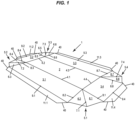
- Fig. 1 is a view of a tray blank, generally indicated at 1, used to form a lower part or tray 12 ( Figs. 2 and 8-12 ) of exemplary embodiments of the disclosure.
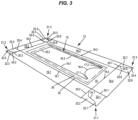
- Fig. 3 is a view of a lid blank, generally indicated at 13, used to form a lid 27 ( Figs. 7-12 ) of exemplary embodiments of the disclosure.
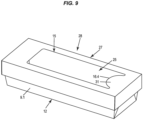
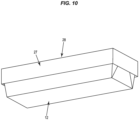
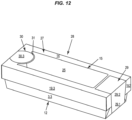
- the tray 12 and the lid 27 can cooperate to form a box or carton or assembly 28 ( Figs. 8-12 ).
- the carton assembly or container 28 can include features in the tray 12 and/or the lid 27 for preventing and/or reducing the loss of moisture, oils, and/or other suitable fluids, such as due to leaking, seeping/soaking through layers of material, evaporation, entrainment in air, etc.
- carton assembly 28 can be used to hold and/or support and/or cover a food product (not shown), such as sushi, a sandwich, a hot dog, a turnover, a burrito, meats, French fries, and/or any other food product, during serving, display, and/or sale of the food product (e.g., at a quick-service and/or takeout restaurant, at a supermarket, food store, convenience store, etc.) and/or during storage, cooking, refrigerating, freezing, etc. of the food product.
- the carton assembly 28 can hold and/or support and/or cover a non-food item or article.
- the tray blank 1 can be a single- or multi-layer material.
- the material of the tray blank can include cardboard or paperboard (e.g., made with bleached cellulose and/or refined pine fibers) with a starch layer on the inner side.
- the material can include a layer of uncoated kraft board with a layer of brown paper with a release action on the side that comes into contact with a food item in the tray.
- the material can include a middle layer located between the two layers so that the middle layer connects the two outer layers to one another.
- the inner, food-facing layer can be a water- and/or oil-tight material and can be similar to parchment paper, perlite paper, baking paper, butter bread paper, wax paper, etc.
- the inner, food contacting layer of the material could be a polymer barrier layer and/or another suitable material that is resistant and/or impervious to moisture and/or oils and/or other materials.
- the tray blank 1 can be formed from a multi-layer material with a layer of compacted cardboard or paper on its inner side with a density of at least 850 kg/m 3 (e.g., at least 50 kg/m 3 more than other cardboard or paperboard densities). This increased density can help prevent moisture and/or fat from penetrating into the blank material on the inside.
- the density of the board material can be at least 900 kg/m 3 , at least 1000 kg/m 3 , or at least 1200 kg/m 3 in order to further help reduce the penetration of moisture and/or fat.
- the lid blank 13 can be formed from a material that is different from the material of the tray blank 1.
- the lid blank 13 could be formed from a coated primary fiber board.
- the lid blank 13 could be formed from the same material as the tray blank 1.
- some or all of the paper-based materials of the tray and lid can be formed with primary (fresh) fibers (e.g., the food contacting layers).
- one or more layers of the lid or tray can be kraft board.
- the lid blank 13 and/or the tray blank 1 could be formed of any suitable material.
- the tray blank 1 includes a central or bottom panel 2 (a bottom wall) foldably connected to four tray side panels 3.1, 3.2, 3.3, 3.4 along respective bottom fold lines 4.1, 4.2, 4.3, 4.4.
- the bottom panel 2 is rectangular with the fold lines 4.1, 4.3 extending in a longitudinal direction and the fold lines 4.2, 4.4 extending in a lateral direction.
- the tray side panels 3.1, 3.2, 3.3, 3.4 can be trapezoidal so that they are wider opposite to the respective fold lines 4.1, 4.2, 4.3, 4.4 than they are along the fold lines 4.1, 4.2, 4.3, 4.4.
- the bottom panel 2 and/or the tray side panels 3.1, 3.2, 3.3, 3.4 could be otherwise shaped, arranged, positioned, and/or configured without departing from the disclosure.
- the bottom panel 2 could be square or any other suitable shape and/or the tray side panels 3.1, 3.2, 3.3, 3.4 could be rectangular, square, or any other suitable shape.
- the tray blank 1 includes corner connections or gussets 5.1, 5.2, 5.3, 5.4, each foldably connected to two adjacent tray side panels 3.1, 3.2, 3.3, 3.4 at respective corners of the bottom panel 2.
- each of the gussets 5.1, 5.2, 5.3, 5.4 includes two gusset panels 6.1, 6.2; 6.3, 6.4; 6.5, 6.6; 6.7, 6.8, respectively, wherein each pair of gusset panels is foldably connected along a respective central fold line or gusset fold line 7.1, 7.2, 7.3, 7.4, each of which extending in an oblique direction from the respective corners of the bottom panel 2.
- the gusset panels 6.1, 6.2 are foldably connected to the respective tray side panels 3.4, 3.1 along respective oblique fold lines 8.1, 8.2 so that the first gusset 5.1 is foldably connected to the respective tray side panels 3.4, 3.1 along the respective fold lines 8.1, 8.2.
- the gusset panels 6.3, 6.4 are foldably connected to the respective tray side panels 3.1, 3.2 along respective oblique fold lines 8.3, 8.4 so that the second gusset 5.2 is foldably connected to the respective tray side panels 3.1, 3.2 along the respective fold lines 8.3, 8.4.
- the gusset panels 6.5, 6.6 are foldably connected to the respective tray side panels 3.2, 3.3 along respective oblique fold lines 8.5, 8.6 so that the third gusset 5.3 is foldably connected to the respective tray side panels 3.2, 3.3 along the respective fold lines 8.5, 8.6.
- the gusset panels 6.7, 6.8 are foldably connected to the respective tray side panels 3.3, 3.4 along respective oblique fold lines 8.7, 8.8 so that the fourth gusset 5.4 is foldably connected to the respective tray side panels 3.3, 3.4 along the respective fold lines 8.7, 8.8. As shown in Fig.
- each of the gusset panels 6.1, 6.2, 6.3, 6.4, 6.5, 6.6, 6.7, 6.8 can be triangular and each of the gusset panels 6.1, 6.2, 6.3, 6.4, 6.5, 6.6, 6.7, 6.8, the gusset fold lines 7.1, 7.2, 7.3, 7.4, and the fold lines 8.1, 8.2, 8.3, 8.4, 8.5, 8.6, 8.7, 8.8 extend to the respective corners of the bottom panel 2 so that gaps are not formed at the corners of the tray 12 along the junctions between the tray side panels 3.4, 3.1, 3.2, 3.3 or at the corners of the bottom panel 2.
- any of the gussets 5.1, 5.2, 5.3, 5.4 could be omitted or could be otherwise shaped, arranged, positioned, and/or configured without departing from the disclosure.
- one or more of the gussets could be replaced by one or more adhesive tabs foldably connected to ends of one or more of the tray side panels and can be glued to other tray side panels to form the tray (e.g., using precise manufacturing to reduce or eliminate gaps to avoid leaks).
- each of the side panels 3.1, 3.2, 3.3, 3.4 is foldably connected to a respective sealing tab or closure flap 11.1, 11.2, 11.3, 11.4 along a respective closure fold line 9.1, 9.2, 9.3, 9.4.
- the closure flaps 11.1, 11.2, 11.3, 11.4 each can be trapezoidal with their wider sides extending along the respective closure fold lines 9.1, 9.2, 9.3, 9.4 and their outer free edges opposite to the respective fold lines 9.1, 9.2, 9.3, 9.4 being shorter.
- the closure flaps 11.1, 11.2, 11.3, 11.4 each have two oblique end edges 40, which can be free edges extending from the ends of the closure fold lines 9.1, 9.2, 9.3, 9.4, and the closure flaps each have a width that decreases with increasing distance from the respective closure fold lines 9.1, 9.2, 9.3, 9.4.
- the configuration (e.g., angle and length) of the oblique edges 40 can be arranged so that the closure flaps 11.1, 11.2, 11.3, 11.4 meet edge-to edge at the edges 49 at the corners of the erected tray 12 (e.g., as shown in Fig. 8 ). Any of the closure flaps 11.1, 11.2, 11.3, 11.4 could be omitted or could be otherwise shaped, arranged, positioned, and/or configured without departing from the disclosure.
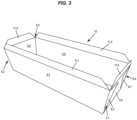
- the tray 12 can be formed from the tray blank 1, according to embodiments, by folding the tray side panels 3.1, 3.2, 3.3, 3.4 upwardly along respective fold lines 4.1, 4.2, 4.3, 4.4 while folding the gusset panels 6.1, 6.2; 6.3, 6.4; 6.5, 6.6; 6.7, 6.8 of the respective gusset panels 5.1, 5.2, 5.3, 5.4 are folded along the respective gusset fold lines 7.1, 7.2, 7.3, 7.4 respectively against one another (e.g., the gusset panels 6.1, 6.2 are folded into face-to-face contact, the gusset panels 6.3, 6.4 are folded into face-to-face contact, the gusset panels 6.5, 6.6 are folded into face-to-face contact, and the gusset panels 6.7, 6.8 are folded into face-to-face contact).
- the gusset panels 6.1, 6.2 are folded into face-to-face contact
- the gusset panels 6.3, 6.4 are folded
- the gussets 5.1, 5.4 are folded along the respective fold lines 8.1, 8.8 against the side panel 3.4 (e.g., with the gusset panels 6.1, 6.8 in face-to-face contact with the exterior face of the side panel 3.4).
- the gussets 5.2, 5.3 are folded along the respective fold lines 8.4, 8.5 against the side panel 3.2 (e.g., with the gusset panels 6.4, 6.5 in face-to-face contact with the exterior face of the side panel 3.2).
- the gusset panels 6.1, 6.8 can be glued in face-to-face contact with the side panel 3.4 and the gusset panels 6.4, 6.5 can be glued in face-to-face contact with the side panels 3.2 to secure the tray 12 in the erected configuration of Fig. 2 .
- gusset panels of each of the gussets 5.1, 5.2, 5.3, 5.4 can be glued together.
- the fold lines 8.1, 8.2; 8.3, 8.4; 8.5, 8.6; 8.7, 8.8 can be respectively brought together at the respective corners of the tray 12 with the gussets 5.1, 5.2, 5.3, 5.4 folded against the exterior of the tray 12 so that the side panels 3.1, 3.2, 3.3, 3.4 form a smooth sidewall along the interior of the tray 12 for ease of loading and unloading of items in the tray 12.
- the erected configuration of the tray 12 shown in Fig. 2 is stackable with other trays 12 in a nested configuration.
- the trapezoidal shape of the side panels 3.1, 3.2, 3.3, 3.4 can result in the side panels 3.1, 3.2, 3.3, 3.4 extending upwardly and outwardly from the bottom panel 2 so that the open top of the tray 12 is wider than its bottom (e.g., the lateral and longitudinal cross-sections of the tray 12 are upward widening).
- the unfolded closure flaps 11.1, 11.2, 11.3, 11.4 can extend upwardly and outwardly as extensions of the respective side panels 3.1, 3.2, 3.3, 3.4.
- a plurality of trays 12 can be stacked, one at least partially received within another, for storage and/or transportation of the trays 12.
- the tray(s) could be otherwise formed without departing from the disclosure.
- one or more of the gussets 5.1, 5.2, 5.3, 5.4 could be folded against the exterior surfaces of the side panels 3.1, 3.3 and/or one or more of the gussets 5.1, 5.2, 5.3, 5.4 could be folded to the interior of the tray 12.
- the lid blank 13 can include a central or top panel 14 (a top wall), which can be rectangular or any other suitable shape.
- An elongated window opening 15 can be formed in the top panel 14 and can be defined by three edges 16.1, 16.2, 16.3 that are parallel to the adjacent edges of the top panel 14 (e.g., the edges 16.1, 16.3 can extend in a longitudinal direction and the edge 16.2 can extend in a lateral direction of the lid blank 13).
- the edges 16.1, 16.3 can extend in a longitudinal direction and the edge 16.2 can extend in a lateral direction of the lid blank 13.
- the window opening 15 further can be defined by a circular, arc-shaped edge 16.4, wherein the ends of the arc-shaped edge 16.4 merge into the adjacent straight edges 16.2, 16.3 via radii 17.1, 17.2, which are curved in an opposite direction from the arc-shaped edge 16.4.
- the area of the window opening 15 can be two thirds or less of the area of the top panel 14 or can be half or less of the area of the top panel to help avoid deformations in the lid 27 (e.g., due to stresses in the film 25, such as those caused by moistening of the film material).
- the window opening 15 could be omitted or could be otherwise shaped, arranged, positioned, and/or configured without departing from the disclosure.
- the top panel 14 can be foldably connected to four lid side tabs or panels 19.1, 19.2, 19.3, 19.4 along respective top fold lines 18.1, 18.2, 18.3, 18.4.
- the lid side panels 19.1, 19.2, 19.3, 19.4 can be rectangular or any other suitable shape.
- the top fold lines 18.1, 18.3 can extend in a longitudinal direction and the top fold lines 18.2, 18.4 can extend in a lateral direction.
- the top panel 14 and/or the lid side panels 19.1, 19.2, 19.3, 19.4 could be otherwise shaped, arranged, positioned, and/or configured without departing from the disclosure.
- the lid blank 13 can include corner connections 21.1, 21.2, 21.3, 21.4, each foldably connected to two adjacent lid side panels 19.1, 19.2, 19.3, 19.4 at respective corners of the top panel 14 via respective fold lines 20.1, 20.2; 20.3, 20.4; 20.5, 20.6; 20.7, 20.8.
- each of the corner connections 21.1, 21.2, 21.3, 21.4 can include two connector tabs 22.1, 22.2; 22.3, 22.4; 22.5, 22.6; 22.7, 22.8, respectively, wherein each pair of connector tabs is foldably connected along a respective central fold line or connector fold line 23.1, 23.2, 23.3, 23.4, each of which extending in an oblique direction with respect to the top fold lines 18.1, 18.2, 18.3, 18.4.
- the respectively adjacent connector tabs 22.1, 22.2; 22.3, 22.4; 22.5, 22.6; 22.7, 22.8 can be separable from one another along respective cut lines 24.1, 24.2, 24.3, 24.4, which could be any suitable line of weakening (e.g., tear lines, cuts, etc.).
- the cut lines 24.1, 24.2, 24.3, 24.4 can be at least partially curved, e.g., so that connector tabs 22.1, 22.8 are curved away from the lid side panel 19.4 to which they are connected via respective fold lines 20.1, 20.8, and so that connector tabs 22.4, 22.5 are curved away from the lid side panel 19.2 to which they are connected via respective fold lines 20.4, 20.5.
- the connector tabs 22.1, 22.8; 22.4, 22.5 that are connected to the respective shorter lid side panels 19.4, 19.2 can be larger than the connector tabs 22.2, 22.3; 22.6, 22.7 that are connected to the longer lid side panels 19.1, 19.2.
- Any of the corner connections 21.1, 21.2, 21.3, 21.4 could be omitted or could be otherwise shaped, arranged, positioned, and/or configured without departing from the disclosure.
- one or more of the corner connections could be replaced by one or more adhesive tabs foldably connected to ends of one or more of the lid side panels and can be glued to other lid side panels to form the tray.
- such a configuration of the lid could be formed with inclined side panels so that the lids could be stacked (nested) for storage and/or transportation.
- a film 25 (e.g., a transparent film or a film that is semi-transparent, translucent, colored, opaque, etc.) can be applied to the inner face of the top panel 14 so that the film 25 covers (e.g., completely covers) the window opening 15.
- the film 25 is cellulose acetate or another suitable material.
- the film 25 can allow a potential buyer or others to view the article(s) within the package via the window opening 15.
- the film 25 can be adhered or otherwise attached to the inner face of the top wall 14 around a perimeter of the window opening 15 by an adhesive 26.
- the adhesive can be applied in an adhesive line 26, which can be a continuous, uninterrupted line of adhesive (e.g., so that the adhesive forms a continuous seal around the perimeter of the window opening) or can be a series of spaced lines or dots arranged around the perimeter of the window opening 15.
- the film 25 could be omitted or could be otherwise shaped, arranged, positioned, and/or configured without departing from the disclosure.
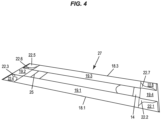
- the cover or lid 27 can be formed in a flattened configuration by folding the long lid side panels 19.1, 19.3 along the respective top fold lines 18.1, 18.3 over the inner face of the top panel 14 so that the lid side panels 19.1, 19.3 are in face-to-face contact with the top panel 14.
- the corner connections 21.1, 21.4 and 21.2, 21.3 are folded over the respective short lid side panels 19.2, 19.4 so that the corner connections 21.1, 21.4 are in face-to-face contact with the inner face of the lid side panel 19.4 and the corner connections 21.2, 21.3 are in face-to-face contact with the inner face of the lid side panel 19.2.
- the connector tabs 22.1, 22.8 can be glued to the lid side panel 19.4 and the connector tabs 22.4, 22.5 can be glued to the lid side panel 19.2.
- a plurality of the lids 27 in the flattened configuration of Figs. 4 and 5 can be stacked for storage and/or transportation.
- the lid 27 can be moved from the flattened configuration of Figs. 4 and 5 to an erected configuration, ready for assembly with a respective tray 12.
- the lid side panels 19.1, 19.2, 19.3, 19.4 are folded relative to the top panel 14 (e.g., the long lid side panels 19.1, 19.3 are folded away from the top panel 14 and the short lid side panels 19.2, 19.4 are folded toward one another) to extend vertically from the top panel 14.
- the connector tabs 22.2, 22.7 and 22.3, 22.6 fold along the respective fold lines 23.1, 20.2; 23.4, 20.7; 23.2, 20.3; 23.3, 20.6, separating from the respective connector tabs 22.1, 22.8 and 22.4, 22.5, so that the connector tabs 22.2, 22.7 and 22.3, 22.6 are folded over and in face-to-face contact with the respective connector tabs 22.1, 22.8 and 22.4, 22.5 ( Fig. 7 ).
- the lid 27 is shown in its erected configuration in Figs. 7 and 8 .
- the lid 27 could be otherwise formed without departing from the disclosure.
- the carton assembly 28 can be formed from the erected tray 12 and the erected lid 27 and can define an interior 42 of the carton 28 in which one or more food items can be placed.
- the closure flaps 11.1, 11.2, 11.3, 11.4 can be folded along the respective fold lines 9.1, 9.2, 9.3, 9.4 over the open top of the tray 12 so that the oblique edges 40 of the closure flaps 11.1, 11.2, 11.3, 11.4 are brought together in edge-to-edge contact.
- folded the closure flaps 11.1, 11.2, 11.3, 11.4 can be parallel to the bottom panel 2 on the inner side of the tray side panels 3.1, 3.2, 3.3, 3.4 and can form a continuous or at least partially continuous sealing feature at the top of the tray 12.
- the folded closure flaps 11.1, 11.2, 11.3, 11.4 can help align the closure fold lines 9.1, 9.2, 9.3, 9.4 of the tray 12 (e.g., for being tightly received in the lid 27) and can help stiffen the upper edges of the tray side panels 3.1, 3.2, 3.3, 3.4 along the fold lines 9.1, 9.2, 9.3, 9.4.
- the lid 27 can be moved over the tray 12 and lowered so that the inner faces of the lid side panels 19.1, 19.2, 19.3, 19.4 over the closure fold lines 9.1, 9.2, 9.3, 9.4 at the upper edges of the tray side panels 3.1, 3.2, 3.3, 3.4 until the top panel 14 rests tightly against the fold lines 9.1, 9.2, 9.3, 9.4.
- the fold lines 9.1, 9.2, 9.3, 9.4 of the tray 12 are enclosed precisely by the corners between the lid side panels 19.1, 19.2, 19.3, 19.4 and the top panel 14.
- the closure fold lines 9.1, 9.2, 9.3, 9.4 of the tray 12 can be positioned in contact with or in close proximity to the respective top fold lines 18.1, 18.2, 18.3, 18.4 of the lid 27 in the carton assembly 28 when the lid 27 is fully installed over the tray 12.
- this tight fitting between the lid 27 and the upper edges of the tray side panels 3.1, 3.2, 3.3, 3.4 e.g., aligned and stiffened by the folded and edge contacting closure flaps 11.1, 11.2, 11.3, 11.4 can help reduce or eliminate the movement of air, moisture, oil, and/or other fluids between the lid 27 and the tray 12.
- the closure flaps 11.1, 11.2, 11.3, 11.4 can be biased upwardly (e.g., according to the configuration of the respective fold lines 9.1, 9.2, 9.3, 9.4) so that the closure flaps 11.1, 11.2, 11.3, 11.4 are urged upwardly against the top panel 14 when the lid 27 is fully assembled onto the tray 12 to further help reduce or prevent fluid from moving in or out of the carton 28 at the juncture between the lid 27 and the tray 12.
- restoring forces can act on the closure fold lines 9.1, 9.2, 9.3, 9.4 to push the closure flaps 11.1, 11.2, 11.3, 11.4 upwardly.
- the closure flaps 11.1, 11.2, 11.3, 11.4 can be at least partially in contact (e.g., face-to-face contact) with the top panel 14.
- the stiffening of the tray 12 by the folded closure flaps 11.1, 11.2, 11.3, 11.4 also can help the top panel 14 to bear uniformly against (e.g., bear circumferentially tightly against) the closure flaps.
- the bias of the closure flaps against the top panel 14 can help compensate for production tolerances in the forming of the blanks 1, 13, the tray 12, and/or the lid 27.
- the carton assembly 28 is shown in its closed configuration in Figs. 9 and 10 .
- the carton assembly 28 could be otherwise formed without departing from the disclosure.
- labels 29, 30 can be attached (e.g., adhered) to the two narrow sides of the carton assembly 28.
- the labels 29, 30 can have respective lower label sections 29.1, 30.1 fixed on the outer surface of the tray 12 and can have respective upper label sections 29.2, 30.2 fixed on the outer surface of the lid 27.
- the label 29 is rectangular and the label 30 has a circular upper end portion 30.3 that is fixed to the circular projection 31 of the top panel 14 defined by the circular edge 16.4 of the window opening 15.
- the circular upper end portion 30.3 of the label 30 can have a similar or the same radius as the circular projection 31.
- the circular projection 31 can help create a uniform support for attachment of the label 30 to the lid 27 and can help guide the placement of the label on the lid for promoting proper placement of the label.
- the labels 29, 30 can serve as a tamper-evident closures and can be used as flexible information carriers, such as to display various manufacturers, marks, and contents of the folding box.
- the lid 27 and the tray 12 could be otherwise secured together in the carton assembly 28 without departing from the disclosure.
- the carton assembly 28 can help reduce moisture and/or oil loss from food items contained in the interior 42 over a period of time.
- sushi or other prepared food items may be on display in refrigerated cases for sale for up to 48 hours or any other suitable time period.
- It can be desirable to contain the sushi or other prepared food in containers that retain the moisture and/or oils of the food in the interior of the package.
- plastic (e.g., PET) containers can be impervious to moisture and oils and can be sealed against air flow to help retain moisture and oils and to prevent drying out of the food item (e.g., while it is on display in the refrigerated display case.
- the carton 28 can be formed from materials with barrier layers (e.g., parchment paper, films, etc.) that can help retain moisture and/or oils in the interior 42 of the carton 28.
- barrier layers e.g., parchment paper, films, etc.
- the gussets 5.1, 5.2, 5.3, 5.4 can help eliminate or avoid gaps or openings in the sides and bottom of the tray 12 to prevent or reduce leaking of moisture and/or oils from the interior 42 of the container.
- the tight fit of the lid 27 over the upper edges of the tray side panels 3.1, 3.2, 3.3, 3.4, which upper edges are stiffened by the folded closure flaps 11.1, 11.2, 11.3, 11.4 as described above, and the bias of the folded closure flaps 11.1, 11.2, 11.3, 11.4 that causes the top panel 14 of the lid 27 to bear against the closure flaps 11.1, 11.2, 11.3, 11.4 can help retain moisture and/or oil in the interior 42 of the carton 28 and can help prevent air from moving into and out of the package.
- the cool, dry air of a refrigerated display case could undesirably dry out sushi or other foods contained in the carton 28 if it were to flow through the container.
- the tight fit of the lid 27 against the fold lines 9.1, 9.2, 9.3, 9.4 and the closure flaps 11.1, 11.2, 11.3, 11.4 of the tray 12 can help prevent air flow at the interface between the tray 12 and the lid 27. Accordingly, the sealing features of the carton assembly 28 can help avoid drying out of the food items.
- the materials of the carton assembly 28 can be renewable materials that can replace the disposable plastic containers previously used to contain sushi and other food items. This can be beneficial, for example, in regions with high demand for renewable packaging materials and/or where single use plastics are banned or subject to limitations (e.g., the Single Use Plastic Directive in the European Union).
- the lid 27 and the tray 12 can be separated, which can facilitate loading items into the interior 42 of the container 28 and/or removal of the items. Also, the tray 12 can be used as a plate or bowl after the lid 27 is removed.
- the tray blank 1, the lid blank 13, the tray 12, the lid 27, and/or the carton 28 could be otherwise shaped, arranged, positioned, and/or configured without departing from the disclosure.
- the blanks and constructs described above are included by way of example.
- the shapes of the overall tray and lid could be any suitable shape.
- the shapes described above and included in the figures are included by way of example.
- the blank may be constructed from paperboard having a caliper so that it is heavier and more rigid than ordinary paper.
- the blank can also be constructed of other materials, such as cardboard, or any other material having properties suitable for enabling the carton to function at least generally as described above.
- the blank can be coated with, for example, a clay coating.
- the clay coating may then be printed over with product, advertising, and other information or images.
- the blank may then be coated with a varnish to protect information printed on the blanks.
- the blank may also be coated with, for example, a moisture barrier layer, on either or both sides of the blanks.
- the blank can also be laminated to or coated with one or more sheet-like materials at selected panels or panel sections.
- a fold line can be any substantially linear, although not necessarily straight, form of weakening that facilitates folding therealong. More specifically, but not for the purpose of narrowing the scope of the present disclosure, fold lines include: a score line, such as lines formed with a blunt scoring knife, or the like, which creates a crushed or depressed portion in the material along the desired line of weakness; a cut that extends partially into a material along the desired line of weakness, and/or a series of cuts that extend partially into and/or completely through the material along the desired line of weakness; and various combinations of these features. In situations where cutting is used to create a fold line, typically the cutting will not be overly extensive in a manner that might cause a reasonable user to incorrectly consider the fold line to be a tear line.
- the above embodiments may be described as having one or more panels adhered together by glue during erection of the carton embodiments.
- glue is intended to encompass all manner of adhesives commonly used to secure carton panels in place.
Landscapes
- Engineering & Computer Science (AREA)
- Mechanical Engineering (AREA)
- Cartons (AREA)
Applications Claiming Priority (1)
| Application Number | Priority Date | Filing Date | Title |
|---|---|---|---|
| DE202022101893.6U DE202022101893U1 (de) | 2022-04-07 | 2022-04-07 | Faltschachtel für Sushi oder andere wasser- und/oder fetthaltige Takeaways |
Publications (2)
| Publication Number | Publication Date |
|---|---|
| EP4269264A2 true EP4269264A2 (de) | 2023-11-01 |
| EP4269264A3 EP4269264A3 (de) | 2024-02-21 |
Family
ID=85980724
Family Applications (1)
| Application Number | Title | Priority Date | Filing Date |
|---|---|---|---|
| EP23166937.5A Pending EP4269264A3 (de) | 2022-04-07 | 2023-04-06 | Konstruktion mit verriegelungsmerkmalen |
Country Status (2)
| Country | Link |
|---|---|
| EP (1) | EP4269264A3 (de) |
| DE (1) | DE202022101893U1 (de) |
Cited By (2)
| Publication number | Priority date | Publication date | Assignee | Title |
|---|---|---|---|---|
| CN119873077A (zh) * | 2025-02-15 | 2025-04-25 | 广东联华环保科技有限公司 | 一种车牌包装盒及其制备装置 |
| US12570434B2 (en) | 2022-08-29 | 2026-03-10 | Graphic Packaging International, Llc | Carton with locking features |
Family Cites Families (6)
| Publication number | Priority date | Publication date | Assignee | Title |
|---|---|---|---|---|
| DE1217841B (de) * | 1962-02-16 | 1966-05-26 | Metal Box Co Ltd | Verfahren zum Verschliessen einer Faltschachtel mit einem Deckblatt |
| US5411204A (en) * | 1990-09-05 | 1995-05-02 | Fold-Pak Corp. | Reclosable food tray and tray blank |
| DE20117554U1 (de) * | 2001-10-30 | 2002-01-31 | Lanwehr GmbH, 89257 Illertissen | Präsentations- und Verkaufsschachtel |
| CN102259720A (zh) * | 2010-05-28 | 2011-11-30 | 鸿富锦精密工业(深圳)有限公司 | 包装盒盒盖及叠平包装盒盒盖的方法 |
| US8523049B2 (en) * | 2010-08-16 | 2013-09-03 | Graphic Packaging International, Inc. | Sealed clamshell carton |
| EP3174806B1 (de) * | 2014-08-01 | 2020-02-12 | Tiense Suikerraffinaderij N.V. | Lebensmittelverpackung |
-
2022
- 2022-04-07 DE DE202022101893.6U patent/DE202022101893U1/de active Active
-
2023
- 2023-04-06 EP EP23166937.5A patent/EP4269264A3/de active Pending
Cited By (2)
| Publication number | Priority date | Publication date | Assignee | Title |
|---|---|---|---|---|
| US12570434B2 (en) | 2022-08-29 | 2026-03-10 | Graphic Packaging International, Llc | Carton with locking features |
| CN119873077A (zh) * | 2025-02-15 | 2025-04-25 | 广东联华环保科技有限公司 | 一种车牌包装盒及其制备装置 |
Also Published As
| Publication number | Publication date |
|---|---|
| EP4269264A3 (de) | 2024-02-21 |
| DE202022101893U1 (de) | 2023-07-10 |
Similar Documents
| Publication | Publication Date | Title |
|---|---|---|
| US10017290B2 (en) | Carton with reclosable lock | |
| US8740050B2 (en) | Carton with lid | |
| US10053259B2 (en) | Construct with locking features | |
| US11661230B2 (en) | Stackable cartons, system, and methods of using the same | |
| US20240286790A1 (en) | Container With Lid | |
| EP4269264A2 (de) | Konstruktion mit verriegelungsmerkmalen | |
| US12497208B2 (en) | Tamper-evident container having release flap and closure tab | |
| US20250058928A1 (en) | Container With Divider | |
| US20190185202A1 (en) | Container with Surface Features | |
| US11603231B2 (en) | Container with liner | |
| US20250058930A1 (en) | Container With Lid | |
| US20260042570A1 (en) | Container with divider | |
| US20260116613A1 (en) | Tray with stacking features | |
| US20260015123A1 (en) | Tray with divider features | |
| US20250136319A1 (en) | Container With Flange | |
| WO2026096411A1 (en) | Tray with stacking features |
Legal Events
| Date | Code | Title | Description |
|---|---|---|---|
| PUAI | Public reference made under article 153(3) epc to a published international application that has entered the european phase |
Free format text: ORIGINAL CODE: 0009012 |
|
| STAA | Information on the status of an ep patent application or granted ep patent |
Free format text: STATUS: THE APPLICATION HAS BEEN PUBLISHED |
|
| AK | Designated contracting states |
Kind code of ref document: A2 Designated state(s): AL AT BE BG CH CY CZ DE DK EE ES FI FR GB GR HR HU IE IS IT LI LT LU LV MC ME MK MT NL NO PL PT RO RS SE SI SK SM TR |
|
| PUAL | Search report despatched |
Free format text: ORIGINAL CODE: 0009013 |
|
| AK | Designated contracting states |
Kind code of ref document: A3 Designated state(s): AL AT BE BG CH CY CZ DE DK EE ES FI FR GB GR HR HU IE IS IT LI LT LU LV MC ME MK MT NL NO PL PT RO RS SE SI SK SM TR |
|
| RIC1 | Information provided on ipc code assigned before grant |
Ipc: B65D 5/36 20060101ALI20240116BHEP Ipc: B65D 5/68 20060101ALI20240116BHEP Ipc: B65D 5/24 20060101ALI20240116BHEP Ipc: B65D 5/20 20060101AFI20240116BHEP |
|
| STAA | Information on the status of an ep patent application or granted ep patent |
Free format text: STATUS: REQUEST FOR EXAMINATION WAS MADE |
|
| 17P | Request for examination filed |
Effective date: 20240820 |
|
| RBV | Designated contracting states (corrected) |
Designated state(s): AL AT BE BG CH CY CZ DE DK EE ES FI FR GB GR HR HU IE IS IT LI LT LU LV MC ME MK MT NL NO PL PT RO RS SE SI SK SM TR |
|
| STAA | Information on the status of an ep patent application or granted ep patent |
Free format text: STATUS: EXAMINATION IS IN PROGRESS |
|
| 17Q | First examination report despatched |
Effective date: 20250625 |