EP4270167A1 - Procédé de réglage de capacité et dispositif associé - Google Patents
Procédé de réglage de capacité et dispositif associé Download PDFInfo
- Publication number
- EP4270167A1 EP4270167A1 EP22742128.6A EP22742128A EP4270167A1 EP 4270167 A1 EP4270167 A1 EP 4270167A1 EP 22742128 A EP22742128 A EP 22742128A EP 4270167 A1 EP4270167 A1 EP 4270167A1
- Authority
- EP
- European Patent Office
- Prior art keywords
- storage
- storage medium
- capacity
- data
- storage system
- Prior art date
- Legal status (The legal status is an assumption and is not a legal conclusion. Google has not performed a legal analysis and makes no representation as to the accuracy of the status listed.)
- Granted
Links
Images


Classifications
-
- G—PHYSICS
- G06—COMPUTING OR CALCULATING; COUNTING
- G06F—ELECTRIC DIGITAL DATA PROCESSING
- G06F3/00—Input arrangements for transferring data to be processed into a form capable of being handled by the computer; Output arrangements for transferring data from processing unit to output unit, e.g. interface arrangements
- G06F3/06—Digital input from, or digital output to, record carriers, e.g. RAID, emulated record carriers or networked record carriers
- G06F3/0601—Interfaces specially adapted for storage systems
- G06F3/0628—Interfaces specially adapted for storage systems making use of a particular technique
- G06F3/0629—Configuration or reconfiguration of storage systems
-
- G—PHYSICS
- G06—COMPUTING OR CALCULATING; COUNTING
- G06F—ELECTRIC DIGITAL DATA PROCESSING
- G06F11/00—Error detection; Error correction; Monitoring
- G06F11/30—Monitoring
- G06F11/3003—Monitoring arrangements specially adapted to the computing system or computing system component being monitored
- G06F11/3034—Monitoring arrangements specially adapted to the computing system or computing system component being monitored where the computing system component is a storage system, e.g. DASD based or network based
-
- G—PHYSICS
- G06—COMPUTING OR CALCULATING; COUNTING
- G06F—ELECTRIC DIGITAL DATA PROCESSING
- G06F11/00—Error detection; Error correction; Monitoring
- G06F11/30—Monitoring
- G06F11/3003—Monitoring arrangements specially adapted to the computing system or computing system component being monitored
- G06F11/3037—Monitoring arrangements specially adapted to the computing system or computing system component being monitored where the computing system component is a memory, e.g. virtual memory, cache
-
- G—PHYSICS
- G06—COMPUTING OR CALCULATING; COUNTING
- G06F—ELECTRIC DIGITAL DATA PROCESSING
- G06F11/00—Error detection; Error correction; Monitoring
- G06F11/30—Monitoring
- G06F11/34—Recording or statistical evaluation of computer activity, e.g. of down time, of input/output operation ; Recording or statistical evaluation of user activity, e.g. usability assessment
- G06F11/3409—Recording or statistical evaluation of computer activity, e.g. of down time, of input/output operation ; Recording or statistical evaluation of user activity, e.g. usability assessment for performance assessment
-
- G—PHYSICS
- G06—COMPUTING OR CALCULATING; COUNTING
- G06F—ELECTRIC DIGITAL DATA PROCESSING
- G06F12/00—Accessing, addressing or allocating within memory systems or architectures
- G06F12/02—Addressing or allocation; Relocation
- G06F12/08—Addressing or allocation; Relocation in hierarchically structured memory systems, e.g. virtual memory systems
-
- G—PHYSICS
- G06—COMPUTING OR CALCULATING; COUNTING
- G06F—ELECTRIC DIGITAL DATA PROCESSING
- G06F12/00—Accessing, addressing or allocating within memory systems or architectures
- G06F12/02—Addressing or allocation; Relocation
- G06F12/08—Addressing or allocation; Relocation in hierarchically structured memory systems, e.g. virtual memory systems
- G06F12/0802—Addressing of a memory level in which the access to the desired data or data block requires associative addressing means, e.g. caches
- G06F12/0866—Addressing of a memory level in which the access to the desired data or data block requires associative addressing means, e.g. caches for peripheral storage systems, e.g. disk cache
- G06F12/0873—Mapping of cache memory to specific storage devices or parts thereof
-
- G—PHYSICS
- G06—COMPUTING OR CALCULATING; COUNTING
- G06F—ELECTRIC DIGITAL DATA PROCESSING
- G06F16/00—Information retrieval; Database structures therefor; File system structures therefor
- G06F16/10—File systems; File servers
- G06F16/17—Details of further file system functions
- G06F16/1727—Details of free space management performed by the file system
-
- G—PHYSICS
- G06—COMPUTING OR CALCULATING; COUNTING
- G06F—ELECTRIC DIGITAL DATA PROCESSING
- G06F3/00—Input arrangements for transferring data to be processed into a form capable of being handled by the computer; Output arrangements for transferring data from processing unit to output unit, e.g. interface arrangements
- G06F3/06—Digital input from, or digital output to, record carriers, e.g. RAID, emulated record carriers or networked record carriers
- G06F3/0601—Interfaces specially adapted for storage systems
- G06F3/0602—Interfaces specially adapted for storage systems specifically adapted to achieve a particular effect
- G06F3/0608—Saving storage space on storage systems
-
- G—PHYSICS
- G06—COMPUTING OR CALCULATING; COUNTING
- G06F—ELECTRIC DIGITAL DATA PROCESSING
- G06F3/00—Input arrangements for transferring data to be processed into a form capable of being handled by the computer; Output arrangements for transferring data from processing unit to output unit, e.g. interface arrangements
- G06F3/06—Digital input from, or digital output to, record carriers, e.g. RAID, emulated record carriers or networked record carriers
- G06F3/0601—Interfaces specially adapted for storage systems
- G06F3/0628—Interfaces specially adapted for storage systems making use of a particular technique
- G06F3/0629—Configuration or reconfiguration of storage systems
- G06F3/0631—Configuration or reconfiguration of storage systems by allocating resources to storage systems
-
- G—PHYSICS
- G06—COMPUTING OR CALCULATING; COUNTING
- G06F—ELECTRIC DIGITAL DATA PROCESSING
- G06F3/00—Input arrangements for transferring data to be processed into a form capable of being handled by the computer; Output arrangements for transferring data from processing unit to output unit, e.g. interface arrangements
- G06F3/06—Digital input from, or digital output to, record carriers, e.g. RAID, emulated record carriers or networked record carriers
- G06F3/0601—Interfaces specially adapted for storage systems
- G06F3/0628—Interfaces specially adapted for storage systems making use of a particular technique
- G06F3/0655—Vertical data movement, i.e. input-output transfer; data movement between one or more hosts and one or more storage devices
- G06F3/0656—Data buffering arrangements
-
- G—PHYSICS
- G06—COMPUTING OR CALCULATING; COUNTING
- G06F—ELECTRIC DIGITAL DATA PROCESSING
- G06F3/00—Input arrangements for transferring data to be processed into a form capable of being handled by the computer; Output arrangements for transferring data from processing unit to output unit, e.g. interface arrangements
- G06F3/06—Digital input from, or digital output to, record carriers, e.g. RAID, emulated record carriers or networked record carriers
- G06F3/0601—Interfaces specially adapted for storage systems
- G06F3/0628—Interfaces specially adapted for storage systems making use of a particular technique
- G06F3/0662—Virtualisation aspects
- G06F3/0665—Virtualisation aspects at area level, e.g. provisioning of virtual or logical volumes
-
- G—PHYSICS
- G06—COMPUTING OR CALCULATING; COUNTING
- G06F—ELECTRIC DIGITAL DATA PROCESSING
- G06F3/00—Input arrangements for transferring data to be processed into a form capable of being handled by the computer; Output arrangements for transferring data from processing unit to output unit, e.g. interface arrangements
- G06F3/06—Digital input from, or digital output to, record carriers, e.g. RAID, emulated record carriers or networked record carriers
- G06F3/0601—Interfaces specially adapted for storage systems
- G06F3/0668—Interfaces specially adapted for storage systems adopting a particular infrastructure
- G06F3/0671—In-line storage system
- G06F3/0673—Single storage device
-
- G—PHYSICS
- G06—COMPUTING OR CALCULATING; COUNTING
- G06F—ELECTRIC DIGITAL DATA PROCESSING
- G06F3/00—Input arrangements for transferring data to be processed into a form capable of being handled by the computer; Output arrangements for transferring data from processing unit to output unit, e.g. interface arrangements
- G06F3/06—Digital input from, or digital output to, record carriers, e.g. RAID, emulated record carriers or networked record carriers
- G06F3/0601—Interfaces specially adapted for storage systems
- G06F3/0668—Interfaces specially adapted for storage systems adopting a particular infrastructure
- G06F3/0671—In-line storage system
- G06F3/0683—Plurality of storage devices
- G06F3/0685—Hybrid storage combining heterogeneous device types, e.g. hierarchical storage, hybrid arrays
-
- G—PHYSICS
- G06—COMPUTING OR CALCULATING; COUNTING
- G06F—ELECTRIC DIGITAL DATA PROCESSING
- G06F2201/00—Indexing scheme relating to error detection, to error correction, and to monitoring
- G06F2201/885—Monitoring specific for caches
-
- G—PHYSICS
- G06—COMPUTING OR CALCULATING; COUNTING
- G06F—ELECTRIC DIGITAL DATA PROCESSING
- G06F2212/00—Indexing scheme relating to accessing, addressing or allocation within memory systems or architectures
- G06F2212/10—Providing a specific technical effect
- G06F2212/1041—Resource optimization
- G06F2212/1044—Space efficiency improvement
-
- G—PHYSICS
- G06—COMPUTING OR CALCULATING; COUNTING
- G06F—ELECTRIC DIGITAL DATA PROCESSING
- G06F2212/00—Indexing scheme relating to accessing, addressing or allocation within memory systems or architectures
- G06F2212/15—Use in a specific computing environment
- G06F2212/154—Networked environment
-
- G—PHYSICS
- G06—COMPUTING OR CALCULATING; COUNTING
- G06F—ELECTRIC DIGITAL DATA PROCESSING
- G06F2212/00—Indexing scheme relating to accessing, addressing or allocation within memory systems or architectures
- G06F2212/21—Employing a record carrier using a specific recording technology
- G06F2212/217—Hybrid disk, e.g. using both magnetic and solid state storage devices
-
- G—PHYSICS
- G06—COMPUTING OR CALCULATING; COUNTING
- G06F—ELECTRIC DIGITAL DATA PROCESSING
- G06F2212/00—Indexing scheme relating to accessing, addressing or allocation within memory systems or architectures
- G06F2212/22—Employing cache memory using specific memory technology
- G06F2212/225—Hybrid cache memory, e.g. having both volatile and non-volatile portions
-
- G—PHYSICS
- G06—COMPUTING OR CALCULATING; COUNTING
- G06F—ELECTRIC DIGITAL DATA PROCESSING
- G06F2212/00—Indexing scheme relating to accessing, addressing or allocation within memory systems or architectures
- G06F2212/26—Using a specific storage system architecture
- G06F2212/261—Storage comprising a plurality of storage devices
-
- G—PHYSICS
- G06—COMPUTING OR CALCULATING; COUNTING
- G06F—ELECTRIC DIGITAL DATA PROCESSING
- G06F2212/00—Indexing scheme relating to accessing, addressing or allocation within memory systems or architectures
- G06F2212/28—Using a specific disk cache architecture
- G06F2212/283—Plural cache memories
- G06F2212/284—Plural cache memories being distributed
-
- G—PHYSICS
- G06—COMPUTING OR CALCULATING; COUNTING
- G06F—ELECTRIC DIGITAL DATA PROCESSING
- G06F2212/00—Indexing scheme relating to accessing, addressing or allocation within memory systems or architectures
- G06F2212/31—Providing disk cache in a specific location of a storage system
- G06F2212/313—In storage device
-
- G—PHYSICS
- G06—COMPUTING OR CALCULATING; COUNTING
- G06F—ELECTRIC DIGITAL DATA PROCESSING
- G06F2212/00—Indexing scheme relating to accessing, addressing or allocation within memory systems or architectures
- G06F2212/50—Control mechanisms for virtual memory, cache or TLB
- G06F2212/502—Control mechanisms for virtual memory, cache or TLB using adaptive policy
-
- G—PHYSICS
- G06—COMPUTING OR CALCULATING; COUNTING
- G06F—ELECTRIC DIGITAL DATA PROCESSING
- G06F2212/00—Indexing scheme relating to accessing, addressing or allocation within memory systems or architectures
- G06F2212/60—Details of cache memory
- G06F2212/601—Reconfiguration of cache memory
-
- G—PHYSICS
- G06—COMPUTING OR CALCULATING; COUNTING
- G06F—ELECTRIC DIGITAL DATA PROCESSING
- G06F2212/00—Indexing scheme relating to accessing, addressing or allocation within memory systems or architectures
- G06F2212/72—Details relating to flash memory management
- G06F2212/7204—Capacity control, e.g. partitioning, end-of-life degradation
-
- G—PHYSICS
- G06—COMPUTING OR CALCULATING; COUNTING
- G06F—ELECTRIC DIGITAL DATA PROCESSING
- G06F2212/00—Indexing scheme relating to accessing, addressing or allocation within memory systems or architectures
- G06F2212/72—Details relating to flash memory management
- G06F2212/7206—Reconfiguration of flash memory system
Definitions
- Embodiments of this application relate to the field of data storage technologies, and in particular, to a capacity adjustment method and a related apparatus.
- the high-performance storage medium may be used for two purposes. Because write hot data needs to be frequently rewritten, a persistent feature of a persistent storage may be used to perform an operation on the write hot data, and the write hot data does not need to be flushed to a cold data layer. However, read hot data changes frequently, and does not need to be synchronized with the cold data layer during swap-in and swap-out. Therefore, a cache may be used to perform an operation on the read hot data.
- a dynamic random access memory dynamic random access memory
- a non-volatile memory non-volatile memory
- the DRAM is dynamically used as a memory or a memory of the NVM based on a read/write hotspot ratio of data.
- a storage pool is constructed for a high-performance SSD medium.
- a ratio of a capacity of the SSD medium used as a cache to a capacity of the SSD medium used as a persistent storage in the storage pool is dynamically adjusted based on a read/write hotspot ratio.
- the first manner only a purpose of using the DRAM as the memory in the converged memory system is considered, and data in the NVM still needs to be flushed downwards to meet data persistence. This causes extra overheads.
- the second manner only a ratio of a capacity of a same storage medium used as persistent storage to a capacity of the same storage medium used as a cache at a same layer is considered.
- Embodiments of this application provide a capacity adjustment method and a related apparatus, to maximize utilization of various types of storage media and meet storage capacity requirements of storage media for different purposes in different services.
- corresponding data is stored by using storage capacities of the storage media for different purposes, thereby greatly improving system performance and effectively reducing storage costs.
- an embodiment of this application provides a capacity adjustment method.
- the method is applied to a storage system.
- the storage system may be a distributed storage system, or may be a centralized storage system.
- the method may include: analyzing cold and hot attributes of data stored in the storage system, to obtain an amount of hot data and an amount of cold data in the data; determining, based on the amount of hot data and the amount of cold data, a capacity of a cache required by the storage system and a capacity of a persistent storage required by the storage system, where the cache required by the storage system comes from a first storage medium set, the first storage medium set includes one or more different storage media, the persistent storage required by the storage system comes from a second storage medium set, and the second storage medium set includes one or more different storage media; and adjusting, based on the capacity of the cache and the capacity of the persistent storage, a purpose of a storage medium included in the storage system.
- the storage system includes one or more types of different storage media
- the capacity of the cache required by the storage system and the capacity of the persistent storage required by the storage system are determined, and the purpose of the storage medium included in the storage system is adjusted based on the capacity of the cache and the capacity of the persistent storage. That is, each type of storage medium used as the capacity of the cache and the capacity of the persistent storage is determined.
- a plurality of types of storage media included in the storage system can be properly considered for flushing the data into the storage system, and purposes of the various types of storage media can be properly adjusted based on the capacity of the cache required by the storage system and the capacity of the persistent storage required by the storage system, so that utilization of the various types of storage media is maximized, thereby meeting storage capacity requirements of storage media for different purposes in different services.
- corresponding data is stored by using storage capacities of the storage media for different purposes, thereby greatly improving system performance and effectively reducing storage costs.
- a type of a storage medium included in the first storage medium set include a dynamic random access memory DRAM, a storage class memory SCM, a solid-state drive SSD, or a read-only memory ROM
- a type of a storage medium included in the second storage medium set include an SCM, an SSD, or a hard disk drive HDD.
- the type of the storage medium included in the first storage medium set include the DRAM, the SCM, the SSD, or the ROM.
- the storage medium are not limited to the listed types.
- the storage medium may further include a RAM, an SRAM, or the like. This is not limited herein, and storage media with different performance are provided for subsequent application to different scenarios.
- the type of the storage medium included in the second storage medium set include the SCM, the SSD, or the HDD, but are not limited to the listed types in actual application.
- the second storage medium set may further include an Optane SSD, an NAND SSD, or the like. This is not limited herein.
- the type of the storage medium included in the first storage medium set is different from the type of the storage medium included in the second storage medium set.
- each type of storage medium includes only one storage medium, some types of storage media may be used as a cache, and the other types of storage media may be used as a persistent storage.
- a plurality of manners are provided to meet different storage requirements.
- the first storage medium set and the second storage medium set include storage media of a same type.
- each type of storage medium may include a plurality of storage media
- some types of storage media may be used as a cache
- the other types of storage media may be used as a persistent storage.
- the storage system includes two SCMs
- one SCM may be used as a cache
- the other SCM may be used as the persistent storage. This provides a plurality of manners to meet different storage requirements.
- the determining, based on the amount of hot data and the amount of cold data, a capacity of a cache required by the storage system and a capacity of a persistent storage required by the storage system includes: determining, based on the amount of hot data and the amount of cold data, and capacities of various types of storage media included in the storage system, the capacity of the cache required by the storage system and the capacity of the persistent storage required by the storage system.
- an embodiment of this application provides a capacity adjustment apparatus.
- the capacity adjustment apparatus may be located in a storage system.
- the storage system includes a first storage medium set and a second storage medium set.
- the first storage medium set includes one or more different storage media.
- the second storage medium may also include one or more different storage media.
- the foregoing capacity adjustment apparatus may include: an analysis module, configured to analyze cold and hot attributes of data stored in the storage system, to obtain an amount of hot data and an amount of cold data in the data; a processing module, configured to determine, based on the amount of hot data and the amount of cold data, a capacity of a cache required by the storage system and a capacity of a persistent storage required by the storage system, where the cache required by the storage system comes from the first storage medium set, and the persistent storage required by the storage system comes from the second storage medium set; and the processing module is configured to adjust, based on the capacity of the cache and the capacity of the persistent storage, a purpose of a storage medium included in the storage system.
- the foregoing storage system may be a distributed storage system, or may be a centralized storage system.
- the distributed storage system is used as an example.
- the distributed storage system includes one or more storage nodes, and the described capacity adjustment apparatus may be a storage node in the distributed storage system.
- the centralized storage system is used as an example.
- the centralized storage system includes a storage array. Therefore, the described capacity adjustment apparatus may also be a storage array or the like in the centralized storage system.
- the described capacity adjustment apparatus may also be an independent server, or may be a device having both a storage capability and a computing capability, such as a persistent storage enclosure. This is not limited herein.
- a type of a storage medium included in the first storage medium set includes a DRAM, an SSD, an SCM, or a ROM
- a type of a storage medium included in the second storage medium set includes an SCM, an SSD, or an HDD
- the type of the storage medium included in the first storage medium set is different from the type of the storage medium included in the second storage medium set.
- the first storage medium set and the second storage medium set include storage media of a same type.
- the processing module is specifically configured to determine, based on the amount of hot data and the amount of cold data, and capacities of various types of storage media included in the storage system, the capacity of the cache required by the storage system and the capacity of the persistent storage required by the storage system.
- an embodiment of this application provides a storage device.
- the storage device may be a storage node in the distributed storage system provided in the first aspect, or may be an independent server, or may be a device such as a persistent storage enclosure that has both a storage capability and a computing capability, or may be a storage array in a centralized storage system, or the like.
- the storage device may include a storage and a processor coupled to the storage.
- the storage may be configured to store computer-readable instructions.
- the processor may be specifically configured to: analyze cold and hot attributes of data stored in the storage system, to obtain an amount of hot data and an amount of cold data in the data; determine, based on the amount of hot data and the amount of cold data, a capacity of a cache required by the storage system and a capacity of a persistent storage required by the storage system, where the cache required by the storage system comes from a first storage medium set, the first storage medium set includes one or more different storage media, the persistent storage required by the storage system comes from a second storage medium set, and the second storage medium set includes one or more different storage media; and adjust, based on the capacity of the cache and the capacity of the persistent storage, a purpose of a storage medium included in the storage system.
- a type of a storage medium included in the first storage medium set include a dynamic random access memory DRAM, a storage class memory SCM, a solid-state drive SSD, or a read-only memory ROM
- a type of a storage medium included in the second storage medium set include an SCM, an SSD, or a hard disk drive HDD.
- the type of the storage medium included in the first storage medium set is different from the type of the storage medium included in the second storage medium set.
- the first storage medium set and the second storage medium set include storage media of a same type.
- the processor is further specifically configured to determine, based on the amount of hot data and the amount of cold data, and capacities of various types of storage media included in the storage system, the capacity of the cache required by the storage system and the capacity of the persistent storage required by the storage system.
- an embodiment of this application provides a computer-readable storage medium, including instructions.
- the instructions When the instructions are run on a computer, the computer is enabled to perform the method in any one of the first aspect or the possible implementations of the first aspect.
- an embodiment of this application provides a computer program product, including instructions.
- the computer program product runs on a computer, the computer is enabled to perform the method in any one of the first aspect or the possible implementations of the first aspect.
- embodiments of this application have the following advantages:
- the storage system includes one or more types of different storage media
- the capacity of the cache required by the storage system and the capacity of the persistent storage required by the storage system are determined, and the purpose of the storage medium included in the storage system is adjusted based on the capacity of the cache and the capacity of the persistent storage. That is, each type of storage medium used as the capacity of the cache and the capacity of the persistent storage is determined.
- a plurality of types of storage media included in the storage system can be properly considered for flushing the data into the storage system, and purposes of the various types of storage media can be properly adjusted based on the capacity of the cache required by the storage system and the capacity of the persistent storage required by the storage system, so that utilization of the various types of storage media is maximized, thereby meeting storage capacity requirements of storage media for different purposes in different services.
- corresponding data is stored by using storage capacities of storage media for different purposes, thereby greatly improving system performance and effectively reducing storage costs.
- Embodiments of this application provide a capacity adjustment method and a related apparatus, to maximize utilization of various types of storage media and meet storage capacity requirements of storage media for different purposes in different services.
- corresponding data is stored by using storage capacities of the storage media for different purposes, thereby greatly improving system performance and effectively reducing storage costs.
- a and/or B may represent the following cases: Only A exists, both A and B exist, and only B exists, where A and B may be singular or plural.
- the character "/" generally indicates an "or" relationship between the associated objects. At least one of the following items (pieces) or a similar expression thereof indicates any combination of these items, including a single item (piece) or any combination of a plurality of items (pieces). For example, at least one of a, b, or c may represent: a, b, c, a and b, a and c, b and c, or a, b, and c, where a, b, and c may be singular or plural. It should be noted that "at least one item (piece)” may also be explained as “one item (piece) or more items (pieces)”.
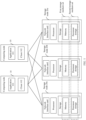
- FIG. 1 is a schematic diagram of a structure of a storage system according to an embodiment of this application.
- the storage system includes a computer node cluster and a storage node cluster.
- the computing node cluster includes one or more computing nodes 10 ( FIG. 1 shows two computing nodes 10, but there are not limited to the two computing nodes 10).
- the computing node 10 is a computing device on a user side, for example, a server or a desktop computer.
- a processor and a memory are disposed in the computing node 10.
- an application (application) program application for short
- client program client for short
- the application 101 is a general term of various applications presented to a user.
- the client 102 is configured to: receive a data access request triggered by the application 101, interact with a storage node 20, and send the data access request to the storage node 20.
- the client 102 is further configured to: receive data from a storage node, and forward the data to the application 101. It may be understood that, when the client 102 is a software program, functions of the client 102 are implemented by a processor included in the computing node 10 by running a program in a memory.
- the client 102 may alternatively be implemented by a hardware component located inside the computing node 10. Any client 102 in the computing node cluster may access any storage node 20 in the storage node cluster.
- the storage node cluster includes one or more storage nodes 20 ( FIG. 1 shows three storage nodes 20, such as a storage node 20a, a storage node 20b, and a storage node 20c, but is not limited to the three storage nodes 20 in practice), and the storage nodes 20 may be interconnected.
- the storage node may be a server, a desktop computer, a controller of a storage array, or a persistent storage enclosure.
- the storage node 20 is mainly configured to perform computation, processing, or the like on data.
- the storage node 20 includes at least a processor, a storage, and a network interface card.
- the processor is a central processing unit (central processing unit, CPU), and is configured to process data from the outside of the storage node 20 or data generated inside the storage node 20.
- the storage is an apparatus configured to store data. In this embodiment of this application, the storage includes a memory and a persistent storage.
- the memory is an internal storage that directly exchanges data with the processor.
- the storage can read and write the data at a fast speed at any time, and serves as a temporary data storage of an operating system or another running program.
- the storage has higher access performance.
- the memory may include one or more types of different storage media.
- the memory may be a random access memory, or may be a read-only memory (read only memory, ROM).
- the described random access memory may be a dynamic random access memory (dynamic random access memory, DRAM), or may be a storage class memory (storage class memory, SCM).
- DRAM is a semiconductor memory, and is a volatile memory (volatile memory) device like most random access memories (random access memory, RAM).
- the SCM is a composite storage technology that combines both a conventional storage apparatus feature and a storage feature.
- the SCM can provide a faster read/write speed than the persistent storage, but is slower than the DRAM in terms of a computing speed and cheaper than the DRAM in terms of costs.
- the processor may directly access the memory.
- the processor may directly access the DRAM and the SCM.
- the memory described in this application may be a special form of a cache (cache).
- Data in the cache may be quickly accessed in short time, and has high access performance.
- the data in the cache may be directly discarded.
- a storage medium such as an SSD or an HDD may also be used as the cache. This is not limited herein.
- only an example in which the memory is used as the cache is used for description.
- the DRAM and the SCM are merely examples for description in this embodiment.
- the memory may alternatively include one of the DRAM and the SCM, or may further include a storage medium such as a ROM.
- the memory may include another random access memory, for example, a static random access memory (static random access memory, SRAM).
- the read-only memory may be a programmable read-only memory (programmable read only memory, PROM), an erasable programmable read-only memory (erasable programmable read only memory, EPROM), or the like.
- the memory may also be a dual in-line memory module or a dual line memory module (dual in-line memory module, DIMM), that is, a module formed by a dynamic random access memory (DRAM).
- DIMM dual in-line memory module
- DIMM dual in-line memory module
- DRAM dynamic random access memory
- an example in which the storage medium such as the DRAM or the SCM is used as the cache is used for description.
- the persistent storage reads and writes data at a slower speed than the cache, and is usually used to store data persistently.
- the storage node 20a is used as an example, and one or more persistent storages are disposed inside the storage node 20a.
- a persistent storage enclosure (as shown in FIG. 2 ) is mounted outside the storage node 20, and a plurality of persistent storages are disposed in the persistent storage enclosure. Regardless of a deployment manner, these persistent storages may be considered as persistent storages included in the storage node 20.
- the persistent storage herein may be a physical persistent storage, or may be a logical domain or a fault domain that includes a plurality of physical persistent storages. This is not limited in this embodiment of this application.
- a type of the physical persistent storage is a solid state persistent storage, a mechanical persistent storage, or a persistent storage of another type.
- the storage included in the cache and the persistent storage may be storage media of a same type, or may be two storage media of different types. Compared with the persistent storage, cached data is read faster and has a shorter delay, that is, performance of the cache is better than performance of the persistent storage.
- a first storage medium set may be considered as a source of a cache required by each storage node 20.
- a second storage medium set may be considered as a source of a persistent storage required by each storage node 20.
- each storage medium may also be used as a medium layer, for example, a storage medium such as a DRAM and an SCM shown in FIG. 2 .
- DRAMs in each storage node form a medium layer
- SCMs form a medium layer.
- the second storage medium set described above may also include a plurality of types of different storage media, for example, a storage medium such as an SCM, an SSD, and an HDD shown in FIG. 2 .
- an example in which the first storage medium set includes one or more different storage media and the second storage medium set includes one or more different storage media is used for description.
- the network interface card is configured to communicate with another storage node, or is configured to communicate with a disk enclosure coupled to the storage node.
- the network interface card may directly access the memory in the storage node. As shown in FIG. 2 , the network interface card may directly access the DRAM and the SCM.
- FIG. 3 is a schematic diagram of a structure of another storage system according to an embodiment of this application.
- the storage system shown in FIG. 3 is a storage array, and the storage array includes at least one controller (a controller 11 shown in FIG. 3 ) and a plurality of persistent storages 22.
- the controller 11 is connected to a host (not shown in the figure) by using a storage area network (storage area network, SAN).
- the controller 11 may be a computing device such as a server and a desktop computer.
- An operating system and an application are installed in the controller 11.
- the controller 11 may receive an input/output (I/O) request from the host.
- the controller 11 may further store data (if exists) carried in the I/O request, and write the data into the persistent storage 22.
- the persistent storage 22 may be a hard disk drive or a solid-state drive.
- the solid-state drive is a storage using a flash memory (flash memory) chip as medium, and may also be referred to as an SSD.
- FIG. 3 is merely an example for description.
- the storage array may include two or more controllers. A physical structure and a function of each controller are similar to those of the controller 11.
- a connection manner between controllers and a connection manner between any controller and the persistent storage 22 are not limited in this embodiment, provided that the controllers can communicate with each other and the controllers and the persistent storage 22 can communicate with each other.
- the persistent storage may be a physical hard disk, or may be a logical domain or a fault domain that includes a plurality of physical hard disks. This is not limited in this embodiment of this application.
- the controller 11 includes an interface card 110, a processor 112, and an interface card 113.
- the interface card 110 is configured to communicate with the host, and the controller 11 receives an operation instruction of the host through the interface card 110.
- the processor 112 may be a central processing unit (central processing unit, CPU). In this embodiment of this application, the processor 112 is configured to: receive an I/O request from the host and process the I/O request.
- the I/O request is a data write request or a data read request, and the processor 112 may further send data in the data write request to the persistent storage 22.
- the interface card 113 is configured to communicate with the persistent storage 22.
- the controller 11 sends, through the interface card 113, the data write request (including the data, a logical address of the data, and a virtual address of the data) to the persistent storage 22 for storage.
- the controller 11 further includes a memory 111.
- the memory 111 is configured to temporarily store data received from the host or data read from the persistent storage 22.
- the controller 11 may temporarily store, in the memory 111, data in the plurality of data write requests.
- a capacity of the memory 111 reaches a specific threshold, the data stored in the memory 111, the virtual address of the data, and the logical address allocated to the data are sent to the persistent storage 22.
- the persistent storage 22 stores the received data.
- the memory 111 may include a volatile memory, a flash memory chip, or a combination thereof.
- the volatile memory is, for example, a random-access memory (random-access memory, RAM).
- the flash memory chip is any machine-readable medium that can store program code, such as a floppy disk or an optical disc.
- the memory 111 has a power protection function.
- the power protection function means that the data stored in the memory 111 is not lost when the system is powered off and then powered on again.
- a ratio of read hot data to write hot data changes continuously, and read/write performance and costs of storage media vary accordingly.
- the read hot data can be stored by using a feature of the cache, and access performance is high. This provides high access efficiency for subsequent read hot data reading, and reduces access overheads.
- the write hot data can also be stored by using a persistence feature of the persistent storage. If there is a large amount of the read hot data in the data, it is expected that more storage media that can be used as the cache can be allocated from a plurality of types of storage media in the storage system to store the read hot data. Similarly, if there is a large amount of the write hot data in the data, it is also expected that more storage media that can be used as the persistent storage can be allocated from a plurality of types of storage media in the storage system to store the write hot data.
- either the DRAM is directly used as a memory or a memory used for the NVM dynamically based on a read/write hotspot ratio of data, or only allocation of a capacity of a same storage medium used as the cache and a capacity of the same storage medium used as the persistent storage at a same layer is considered.
- Overall impact of various types of storage media in the storage system is not globally considered.
- the capacity adjustment method in this embodiment may further be applicable to another system architecture. This is not specifically limited herein.
- FIG. 4 is a flowchart of a capacity adjustment method according to an embodiment of this application. The method may include the following steps.
- the storage system includes the first storage medium set and the second storage medium set.
- the first storage medium set includes one or more different storage media
- the second storage medium set includes one or more different storage media.
- the capacity adjustment method is described by using an example in which the first storage medium set includes a DRAM and an SCM, and the second storage medium set includes an SSD and an HDD.
- the data is generally stored in the storage system described in FIG. 1 to FIG. 3 .
- the data may be stored in the memory or the persistent storage in the distributed storage system shown in FIG. 1 or FIG. 2 , or stored in the memory 111 or the persistent storage 22 in the centralized storage system shown in FIG. 3 .
- This is not limited herein. Therefore, after the stored data is obtained from the storage system, cold and hot attributes analysis may be performed on the data stored in the storage system, to obtain the amount of hot data and the amount of cold data in the data.
- the data stored in the storage system may include but is not limited to service data, metadata, and intermediate data.
- the described service data may be understood as service data obtained for a service access requirement proposed by a user.
- the metadata may be understood as data used to describe the data, including description of a definition, a structure, and the like of the data.
- the intermediate data may be understood as data between source data and result data.
- the described cold and hot attributes of the data may include but are not limited to access frequency of the data and the like.
- the hot data and the cold data may be distinguished from each other based on the access frequency of the data.
- data corresponding to access frequency that is of a user for data and that is higher than a preset access threshold is referred to as the hot data
- data corresponding to access frequency that is of a user for data and that is lower than the preset access threshold is referred to as the cold data.
- the hot data and the cold data may be further distinguished from each other based on an access proportion, an access mode, update frequency, and the like of the data. This is not limited herein.
- any one of the plurality of storage nodes (for example, the storage node 20a, the storage node 20b, or the storage node 20c) in the storage system or a node, in the storage system, that is independent of the storage node and that is configured to manage the storage nodes may be used to analyze the cold and hot attributes of the data stored in the memory and the persistent storage. Then, the amount of hot data and the amount of cold data in the data are obtained.
- a controller in the centralized storage system may perform cold and hot attributes analysis on the data stored in the storage system, to obtain the amount of hot data and the amount of cold data in the data. Specifically, this is not limited in embodiments of this application.
- the described capacity of the cache required by the storage system comes from the first storage medium set. It may be understood that a capacity of one or more different storage media in the first storage medium set may be used as the capacity of the cache. Similarly, the capacity of the persistent storage required by the storage system comes from the second storage medium set. It may also be understood that a capacity of one or more different storage media in the second storage medium set may be used as the capacity of the persistent storage.
- the hot data has high access frequency
- the cold data has low access frequency.
- the cache may read and write the data at any time, and a read/write speed of the cache is faster than a read/write speed of the persistent storage.
- the read hot data in the hot data may be stored by using the cache, and the write hot data in the hot data may be stored persistently by using the persistent storage.
- the capacity of the cache and the capacity of the persistent storage that are required by the storage system may be determined based on the amount of hot data and the amount of cold data, and then a purpose of each storage medium in the storage system can be dynamically adjusted based on the capacity of the cache and the capacity of the persistent storage. In other words, a ratio of a capacity of the cache to a capacity of the persistent storage in the storage medium is adjusted. In this way, the capacity of each storage medium can be properly used to store the read hot data and the write hot data. This provides a better access basis for different service scenarios.
- step 402 may be performed by any storage node in the plurality of storage nodes in the storage system shown in FIG. 1 or FIG. 2 , or the controller in the storage system shown in FIG. 3 , so that a capacity of a cache required by a corresponding storage system and a capacity of a persistent storage required by the storage system can be determined based on the amount of hot data and the amount of cold data.
- step 402 may also be performed by a node that is in the storage system shown in FIG. 1 or FIG. 2 and that is independent of the storage node and that can be configured to manage each storage node. This is not limited herein.
- a type of a storage medium included in the first storage medium set described above may include but are not limited to a DRAM, an SCM, an SSD, a ROM, or the like.
- Types of storage media included in the second storage medium set described above may include but are not limited to an SCM, an SSD, an HDD, or the like.
- the SSD may further include but is not limited to an Optane SSD, an NAND SSD, or the like. This is not specifically limited herein.
- the storage medium included in the storage system may be used as both the cache and the persistent storage, the following two cases may specifically exist.
- the type of the storage medium included in the first storage medium set is different from the type of the storage medium included in the second storage medium set.
- the storage medium in the first storage medium set may be used as the cache, and then the read hot data in the hot data is stored by using a feature of the cache.
- the storage medium in the second storage medium set is used as the persistent storage, and then the write hot data in the hot data is stored by using a feature of the persistent storage. For example, in the storage system shown in FIG.
- the memory DRAM and the SCM may be used as caches to store the read hot data
- the SSD, the HDD, or the like may be used as persistent storages to store the write hot data. This is not limited herein.
- the first storage medium set and the second storage medium set include storage media of a same type. It is understood that the storage media of the same type may also have different purposes.
- the storage medium of the same type may be used as the cache, so that the read hot data in the hot data can be stored by using the feature of the cache, or may be synchronously used as the persistent storage, and write hot data in the hot data can be stored by using a persistent feature.
- the storage system shown in FIG. 2 may include at least two SCMs, one SCM may be used as the cache to store the read hot data in the hot data, and the remaining SCM is used as the persistent storage to store the write hot data in the hot data. This is not limited herein.
- the storage system may further include storage medium such as a plurality of DRAMs, a plurality of SSDs, and a plurality of HDDs.
- storage medium such as a plurality of DRAMs, a plurality of SSDs, and a plurality of HDDs.
- one or more DRAMs and one or more SSDs may be used as caches, and remaining SSDs and one or more HDDs are used as persistent storages. Details are not described herein.
- the following manner may be used: determining, based on the amount of hot data and the amount of cold data, and capacities of various types of storage media included in the storage system, the capacity of the cache required by the storage system and the capacity of the persistent storage required by the storage system.
- the required capacity of the cache and the required capacity of the persistent storage may be further determined with reference to capacities of various types of storage media included in the storage system.
- both the required cache capacity and the required persistent storage capacity come from various types of storage media included in the storage system, and performance changes of the various types of the storage media can reflect comprehensive system performance of the storage system when the amount of hot data and the amount of cold data are flushed into the various types of storage media. Therefore, an optimal ratio between the capacity that can be used as the cache and the capacity that can be used as the persistent storage in the various storage media may be determined from a rule of comprehensive system performance of the storage system.
- a hot data proportion and a cold data proportion are determined based on the amount of hot data and the amount of cold data.
- Access proportions of the various types of the storage media included in the storage system when the storage system is accessed are evaluated based on the hot data proportion and the cold data proportion.
- the described access proportions may be understood as a ratio of a capacity actually used as the cache and a capacity actually used as the persistent storage to an entire storage medium when each type of storage medium is accessed.
- the comprehensive system performance of the storage system is determined based on the access proportions. In this way, when the access proportions of the various types of storage media change, a regular change of comprehensive system performance of the storage system can be determined, and then a target comprehensive performance is determined from the regular change of the comprehensive system performance. Capacities of the various types of storage media corresponding to the target comprehensive performance are used as finally required cache capacities and persistent storage capacities.
- the first storage medium set shown in FIG. 2 includes the DRAM and the SCM
- the second storage medium set includes the SSD and the HDD.
- the amount of hot data in the data obtained through analysis is a data amount of 800 units
- the amount of cold data in the data is a data amount of 200 units.
- a corresponding hot data proportion is 80%
- a corresponding cold data proportion is 20%.
- the access proportions when the storage medium is accessed are 50%, 40%, 5%, and 5% respectively.
- performance changes of the various types of storage media may be specifically understood with reference to the following Table 1.
- f11, f12, f13, and f14 can respectively reflect performance of the DRAM, the SCM, the SSD, and the HDD when the access proportions are 50%, 40%, 5%, and 5%.
- performance of the storage system under different access proportions of the various types of storage media may be determined based on the foregoing manner of determining the average latency of accessing the storage medium, to determine a regular change of comprehensive system performance.
- the regular change of comprehensive system performance may be understood as a performance change curve corresponding to the storage system when an access proportion of data falling on storage media of different types changes.
- the access proportions of accessing the DRAM, the SCM, the SSD, and the HDD respectively change from 50%, 40%, 5%, and 5% to 70%, 10%, 10%, and 10%.
- the access proportions of accessing the DRAM, the SCM, the SSD, and the HDD respectively change from 70%, 10%, 10%, and 10% to 60%, 20%, 15%, and 5%.
- a maximum comprehensive performance value may be determined from the regular change of an integrated system performance by using an algorithm such as a preset gradient method.
- the maximum comprehensive performance value is used as the target comprehensive performance. For example, in the example shown in Table 1, if the target comprehensive performance determined from the regular change of comprehensive system performance is F1, the capacity proportion of the DRAM, the SCM, the SSD, and the HDD corresponding to F1 may be used as a target proportion capacity of the various types of storage media, to determine a required cache capacity and a required persistent storage capacity.
- Table 1 uses only one or more storage media included in the first storage medium set and one or more storage media included in the second storage medium set as an example for description.
- the performance change of the storage system may be determined only from a perspective of different access proportions of each storage medium in the first storage medium set, or the performance change of the storage system may be determined only from a perspective of different access proportions of each storage medium in the second storage medium set. This is not specifically limited herein.
- step 403 may be performed by any storage node in the storage system shown in FIG. 1 or FIG. 2 , or the controller in the storage system shown in FIG. 3 .
- the storage node 20a may adjust, based on the capacity of the cache and the capacity of the persistent storage, the purpose of a storage medium included in the distributed storage system.
- the controller 11 may adjust, based on the capacity of the cache and the capacity of the persistent storage, the purpose of the storage medium included in the distributed storage system.
- FIG. 5 is an example diagram of an application scenario according to an embodiment of this application. It can be learned from FIG. 5 that a storage system includes two SCMs. Storage media used as caches include a DRAM and an SCM. Storage media used as persistent storages include an SCM, an SSD, and an HDD. If the capacity of the cache and the capacity of the persistent storage are obtained based on the foregoing steps 401 to 403, a capacity that can be used as a cache in the entire DRAM and a capacity that can be used as a cache in the entire SCM may be separately adjusted based on the capacity of the cache.
- step 402 50% of the capacity may be configured from the DRAM as the capacity of the cache, and 40% of the capacity may be configured from the SCM as the capacity of the cache.
- a capacity that can be used as a persistent storage in the entire SSD and a capacity that can be used as a persistent storage in the entire HDD may be respectively adjusted.
- 5% of the capacity may be configured from the SSD as the capacity of the persistent storage, and 5% of the capacity may be configured from the HDD as the capacity of the persistent storage. This is not specifically limited herein.
- the storage system includes one or more types of different storage media
- the capacity of the cache required by the storage system and the capacity of the persistent storage required by the storage system are determined, and the purpose of the storage medium included in the storage system is adjusted based on the capacity of the cache and the capacity of the persistent storage. That is, each type of storage medium used as the capacity of the cache and the capacity of the persistent storage is determined.
- a plurality of types of storage media included in the storage system can be properly considered for flushing the data into the storage system, and purposes of the various types of storage media can be properly adjusted based on the capacity of the cache required by the storage system and the capacity of the persistent storage required by the storage system, so that utilization of the various types of storage media is maximized, thereby meeting storage capacity requirements of storage media for different purposes in different services.
- corresponding data is stored by using storage capacities of the storage media for different purposes, thereby greatly improving system performance and effectively reducing storage costs.
- the foregoing mainly describes the solutions provided in embodiments of this application from the perspective of the methods. It may be understood that, to implement the foregoing functions, the foregoing capacity adjustment apparatus includes corresponding hardware structures and/or software modules for performing the functions.
- the foregoing capacity adjustment apparatus includes corresponding hardware structures and/or software modules for performing the functions.
- Persons skilled in the art should be easily aware that, in combination with the functions described in embodiments disclosed in this specification, this application can be implemented by hardware or a combination of hardware and computer software. Whether a function is performed by hardware or hardware driven by computer software depends on particular applications and design constraints of the technical solutions. Persons skilled in the art may use different methods to implement the described functions for each particular application, but it should not be considered that the implementation goes beyond the scope of this application.
- the capacity adjustment apparatus may be divided into functional units based on the foregoing method embodiment.
- each functional unit may be obtained through division based on a corresponding function, or two or more functions may be integrated into one functional unit.
- the integrated functional unit may be implemented in a form of hardware, or may be implemented in a form of a software functional unit.
- FIG. 6 An embodiment of this application provides a capacity adjustment apparatus.
- the capacity adjustment apparatus is located in the storage systems shown in FIG. 1 to FIG. 3 .
- the capacity adjustment apparatus may be any storage node in the plurality of storage nodes in the distributed storage system, for example, the storage node 20a, the storage node 20b, or the storage node 20c.
- the capacity adjustment apparatus may also be a controller, a storage array, or the like in the centralized storage system.
- the foregoing storage system may include the first storage medium set and the second storage medium set.
- the first storage medium set includes one or more different storage media
- the second storage medium set includes one or more different storage media.
- the described capacity adjustment apparatus may include:
- the processing module 602 is configured to adjust, based on the capacity of the cache and the capacity of the persistent storage, a purpose of a storage medium included in the storage system.
- a type of a storage medium included in the first storage medium set includes a DRAM, an SSD, an SCM, or a ROM
- a type of a storage medium included in the second storage medium set includes an SCM, an SSD, or an HDD
- the type of the storage medium included in the first storage medium set is different from the type of the storage medium included in the second storage medium set.
- the first storage medium set and the second storage medium set include storage media of a same type.
- the processing module 602 is configured to determine, based on the amount of hot data and the amount of cold data, and capacities of various types of storage media included in the storage system, the capacity of the cache required by the storage system and the capacity of the persistent storage required by the storage system.
- the analysis module 601 analyzes the cold and hot attributes of the data, so that a plurality of types of storage media included in the storage system can be properly considered for flushing the data into the storage system, and purposes of the various types of storage media can be properly adjusted by the processing module 602 based on the capacity of the cache required by the storage system and the capacity of the persistent storage required by the storage system, so that utilization of the various types of storage media is maximized, thereby meeting storage capacity requirements of storage media for different purposes in different services.
- corresponding data is stored by using storage capacities of storage media for different purposes, thereby greatly improving system performance and effectively reducing storage costs.
- the disclosed system, apparatus, and method may be implemented in other manners.
- the described apparatus embodiment is merely an example.
- division into the units is merely logical function division and may be other division in actual implementation.
- a plurality of units or components may be combined or integrated into another system, or some features may be ignored or not performed.
- the displayed or discussed mutual couplings or direct couplings or communication connections may be implemented by using some interfaces.
- the indirect couplings or communication connections between the apparatuses or units may be implemented in electronic, mechanical, or other forms.
- the units described as separate parts may or may not be physically separate, and parts displayed as units may or may not be physical units, may be located in one position, or may be distributed on a plurality of network units. Some or all of the units may be selected based on actual requirements to achieve the objectives of the solutions of embodiments.
- each of the units may exist independently physically, or two or more units may be integrated into one unit.
- the integrated unit may be implemented in a form of hardware, or may be implemented in a form of a software functional unit.
- the integrated unit When the integrated unit is implemented in the form of a software functional unit and sold or used as an independent product, the integrated unit may be stored in a computer-readable storage medium. Based on such an understanding, the technical solutions of this application essentially, or the part contributing to the prior art, or all or some of the technical solutions may be implemented in the form of a software product.
- the computer software product is stored in a storage medium and includes several instructions for instructing a computer device (which may be a personal computer, a server, a network device, or the like) to perform all or some of the steps of the methods described in embodiments of this application.
- the foregoing storage medium includes any medium that can store program code, such as a USB flash drive, a removable hard disk, a read-only memory (read-only memory, ROM), a random access memory (random access memory, RAM), a magnetic disk, or an optical disc.
- program code such as a USB flash drive, a removable hard disk, a read-only memory (read-only memory, ROM), a random access memory (random access memory, RAM), a magnetic disk, or an optical disc.
- All or some of the foregoing embodiments may be implemented by using software, hardware, firmware, or any combination thereof.
- the software is used for implementation, all or some of embodiments may be implemented in a form of a computer program product.
- the computer program product includes one or more computer instructions.
- the computer may be a general-purpose computer, a dedicated computer, a computer network, or other programmable apparatuses.
- the computer instructions may be stored in a computer-readable storage medium or may be transmitted from a computer-readable storage medium to another computer-readable storage medium.
- the computer instructions may be transmitted from a website, computer, server, or data center to another website, computer, server, or data center in a wired (for example, a coaxial cable, an optical fiber, or a digital subscriber line (DSL)) or wireless (for example, infrared, radio, or microwave) manner.
- a wired for example, a coaxial cable, an optical fiber, or a digital subscriber line (DSL)
- wireless for example, infrared, radio, or microwave
- the computer-readable storage medium may be any usable medium accessible by a computer, or a data storage device, such as a server or a data center, integrating one or more usable media.
- the usable medium may be a magnetic medium (for example, a floppy disk, a hard disk, or a magnetic tape), an optical medium (for example, a DVD), a semiconductor medium (for example, an SSD), or the like.
Landscapes
- Engineering & Computer Science (AREA)
- Theoretical Computer Science (AREA)
- Physics & Mathematics (AREA)
- General Engineering & Computer Science (AREA)
- General Physics & Mathematics (AREA)
- Human Computer Interaction (AREA)
- Computing Systems (AREA)
- Quality & Reliability (AREA)
- Mathematical Physics (AREA)
- Computer Hardware Design (AREA)
- Databases & Information Systems (AREA)
- Data Mining & Analysis (AREA)
- Memory System Of A Hierarchy Structure (AREA)
- Information Retrieval, Db Structures And Fs Structures Therefor (AREA)
Applications Claiming Priority (2)
| Application Number | Priority Date | Filing Date | Title |
|---|---|---|---|
| CN202110071074.4A CN114816216A (zh) | 2021-01-19 | 2021-01-19 | 一种容量调整的方法以及相关装置 |
| PCT/CN2022/072411 WO2022156649A1 (fr) | 2021-01-19 | 2022-01-17 | Procédé de réglage de capacité et dispositif associé |
Publications (3)
| Publication Number | Publication Date |
|---|---|
| EP4270167A1 true EP4270167A1 (fr) | 2023-11-01 |
| EP4270167A4 EP4270167A4 (fr) | 2024-05-15 |
| EP4270167B1 EP4270167B1 (fr) | 2025-12-31 |
Family
ID=82524829
Family Applications (1)
| Application Number | Title | Priority Date | Filing Date |
|---|---|---|---|
| EP22742128.6A Active EP4270167B1 (fr) | 2021-01-19 | 2022-01-17 | Procédé de réglage de capacité et dispositif associé |
Country Status (4)
| Country | Link |
|---|---|
| US (1) | US12271609B2 (fr) |
| EP (1) | EP4270167B1 (fr) |
| CN (1) | CN114816216A (fr) |
| WO (1) | WO2022156649A1 (fr) |
Cited By (1)
| Publication number | Priority date | Publication date | Assignee | Title |
|---|---|---|---|---|
| CN118259837A (zh) * | 2024-03-30 | 2024-06-28 | 苏州元脑智能科技有限公司 | 一种固态硬盘缓存管理方法及装置 |
Families Citing this family (2)
| Publication number | Priority date | Publication date | Assignee | Title |
|---|---|---|---|---|
| CN118034901A (zh) * | 2022-11-11 | 2024-05-14 | 华为技术有限公司 | 内存管理方法、装置和相关设备 |
| US20250110862A1 (en) * | 2023-09-29 | 2025-04-03 | Dropbox, Inc. | Fragment tiering |
Family Cites Families (15)
| Publication number | Priority date | Publication date | Assignee | Title |
|---|---|---|---|---|
| US8190832B2 (en) * | 2009-01-29 | 2012-05-29 | International Business Machines Corporation | Data storage performance enhancement through a write activity level metric recorded in high performance block storage metadata |
| KR101717644B1 (ko) * | 2009-09-08 | 2017-03-27 | 샌디스크 테크놀로지스 엘엘씨 | 고체-상태 저장 디바이스 상에서 데이터를 캐싱하는 장치, 시스템, 및 방법 |
| US8156304B2 (en) * | 2009-12-04 | 2012-04-10 | Oracle International Corporation | Dynamic data storage repartitioning |
| US20130238851A1 (en) * | 2012-03-07 | 2013-09-12 | Netapp, Inc. | Hybrid storage aggregate block tracking |
| US9892150B2 (en) * | 2015-08-03 | 2018-02-13 | Sap Se | Unified data management for database systems |
| US10120582B1 (en) * | 2016-03-30 | 2018-11-06 | Amazon Technologies, Inc. | Dynamic cache management in storage devices |
| CN107193500A (zh) * | 2017-05-26 | 2017-09-22 | 郑州云海信息技术有限公司 | 一种分布式文件系统分层存储方法及系统 |
| US10353596B2 (en) * | 2017-09-28 | 2019-07-16 | International Business Machines Corporation | Data storage system performance management |
| CN109344092B (zh) * | 2018-09-11 | 2023-06-23 | 天津易华录信息技术有限公司 | 一种提高冷存储数据读取速度的方法和系统 |
| CN110515549B (zh) * | 2019-08-16 | 2022-03-22 | 浪潮电子信息产业股份有限公司 | 一种数据迁移方法及装置 |
| CN110569002B (zh) * | 2019-09-18 | 2022-12-27 | 得一微电子股份有限公司 | 一种基于混合模式的闪存设备可变容量装置和方法 |
| CN113821158B (zh) * | 2020-06-20 | 2025-07-11 | 华为技术有限公司 | 一种快闪存储器、存储介质转换方法及计算装置 |
| CN112506445B (zh) * | 2020-12-29 | 2022-05-20 | 杭州电子科技大学 | 一种同质混合固态硬盘的分区比例自适应调整方法 |
| CN112783448B (zh) * | 2021-01-24 | 2022-07-08 | 苏州浪潮智能科技有限公司 | 一种数据存储方法和系统 |
| US11816359B2 (en) * | 2021-12-16 | 2023-11-14 | Netapp, Inc. | Scalable solid-state storage system and methods thereof |
-
2021
- 2021-01-19 CN CN202110071074.4A patent/CN114816216A/zh active Pending
-
2022
- 2022-01-17 EP EP22742128.6A patent/EP4270167B1/fr active Active
- 2022-01-17 WO PCT/CN2022/072411 patent/WO2022156649A1/fr not_active Ceased
-
2023
- 2023-07-19 US US18/355,233 patent/US12271609B2/en active Active
Cited By (1)
| Publication number | Priority date | Publication date | Assignee | Title |
|---|---|---|---|---|
| CN118259837A (zh) * | 2024-03-30 | 2024-06-28 | 苏州元脑智能科技有限公司 | 一种固态硬盘缓存管理方法及装置 |
Also Published As
| Publication number | Publication date |
|---|---|
| US20230367493A1 (en) | 2023-11-16 |
| CN114816216A (zh) | 2022-07-29 |
| EP4270167B1 (fr) | 2025-12-31 |
| EP4270167A4 (fr) | 2024-05-15 |
| WO2022156649A1 (fr) | 2022-07-28 |
| US12271609B2 (en) | 2025-04-08 |
Similar Documents
| Publication | Publication Date | Title |
|---|---|---|
| US12271609B2 (en) | Capacity adjustment method and related apparatus | |
| US10866905B2 (en) | Access parameter based multi-stream storage device access | |
| WO2023035646A1 (fr) | Procédé et appareil d'extension de mémoire et dispositif associé | |
| US9891835B2 (en) | Live configurable storage | |
| US10860494B2 (en) | Flushing pages from solid-state storage device | |
| CN112632069B (zh) | 哈希表数据存储管理方法、装置、介质和电子设备 | |
| US20170344470A1 (en) | Range based stream detection for flash memory device | |
| US20160085585A1 (en) | Memory System, Method for Processing Memory Access Request and Computer System | |
| US10198180B2 (en) | Method and apparatus for managing storage device | |
| CN111639037B (zh) | 一种缓存的动态分配方法、装置及DRAM-Less固态硬盘 | |
| US12131052B2 (en) | Stripe management method, storage system, stripe management apparatus, and storage medium to improve data storage reliability | |
| US12524154B2 (en) | System and method using metadata to directly read target data in storage nodes | |
| US20240160528A1 (en) | Data Storage Method and Apparatus in Storage System | |
| WO2021179575A1 (fr) | Procédé et appareil de stockage pour une machine tout-en-un de base de données, dispositif et support | |
| KR20170002866A (ko) | 분산 환경에서 사용자 애플리케이션의 액세스 특성에 따른 적응형 캐시 관리 방법 | |
| US10572464B2 (en) | Predictable allocation latency in fragmented log structured file systems | |
| US12386786B2 (en) | Data processing method and apparatus | |
| US12223171B2 (en) | Metadata processing method to improve data read/write efficiency of a storage device | |
| CN110515562A (zh) | 一种磁盘访问方法及装置 | |
| US20240104014A1 (en) | Data management method, and storage space management method and apparatus | |
| US9043533B1 (en) | Sizing volatile memory cache based on flash-based cache usage | |
| CN119718165A (zh) | 一种数据访问方法、cxl存储设备及cxl控制器 | |
| KR102701385B1 (ko) | 플래시 메모리 저장장치의 동작방법 | |
| CN116670656A (zh) | 分层持久存储器分配 | |
| Kinoshita et al. | Cost-performance evaluation of heterogeneous tierless storage management in a public cloud |
Legal Events
| Date | Code | Title | Description |
|---|---|---|---|
| STAA | Information on the status of an ep patent application or granted ep patent |
Free format text: STATUS: THE INTERNATIONAL PUBLICATION HAS BEEN MADE |
|
| PUAI | Public reference made under article 153(3) epc to a published international application that has entered the european phase |
Free format text: ORIGINAL CODE: 0009012 |
|
| STAA | Information on the status of an ep patent application or granted ep patent |
Free format text: STATUS: REQUEST FOR EXAMINATION WAS MADE |
|
| 17P | Request for examination filed |
Effective date: 20230727 |
|
| AK | Designated contracting states |
Kind code of ref document: A1 Designated state(s): AL AT BE BG CH CY CZ DE DK EE ES FI FR GB GR HR HU IE IS IT LI LT LU LV MC MK MT NL NO PL PT RO RS SE SI SK SM TR |
|
| DAV | Request for validation of the european patent (deleted) | ||
| DAX | Request for extension of the european patent (deleted) | ||
| A4 | Supplementary search report drawn up and despatched |
Effective date: 20240415 |
|
| RIC1 | Information provided on ipc code assigned before grant |
Ipc: G06F 12/0873 20160101ALI20240409BHEP Ipc: G06F 12/08 20160101ALI20240409BHEP Ipc: G06F 3/06 20060101AFI20240409BHEP |
|
| STAA | Information on the status of an ep patent application or granted ep patent |
Free format text: STATUS: EXAMINATION IS IN PROGRESS |
|
| 17Q | First examination report despatched |
Effective date: 20250324 |
|
| GRAP | Despatch of communication of intention to grant a patent |
Free format text: ORIGINAL CODE: EPIDOSNIGR1 |
|
| STAA | Information on the status of an ep patent application or granted ep patent |
Free format text: STATUS: GRANT OF PATENT IS INTENDED |
|
| RIC1 | Information provided on ipc code assigned before grant |
Ipc: G06F 3/06 20060101AFI20250807BHEP Ipc: G06F 12/08 20160101ALI20250807BHEP Ipc: G06F 12/0873 20160101ALI20250807BHEP Ipc: G06F 11/30 20060101ALI20250807BHEP Ipc: G06F 11/34 20060101ALI20250807BHEP |
|
| INTG | Intention to grant announced |
Effective date: 20250818 |
|
| GRAS | Grant fee paid |
Free format text: ORIGINAL CODE: EPIDOSNIGR3 |
|
| GRAA | (expected) grant |
Free format text: ORIGINAL CODE: 0009210 |
|
| STAA | Information on the status of an ep patent application or granted ep patent |
Free format text: STATUS: THE PATENT HAS BEEN GRANTED |
|
| AK | Designated contracting states |
Kind code of ref document: B1 Designated state(s): AL AT BE BG CH CY CZ DE DK EE ES FI FR GB GR HR HU IE IS IT LI LT LU LV MC MK MT NL NO PL PT RO RS SE SI SK SM TR |
|
| REG | Reference to a national code |
Ref country code: CH Ref legal event code: F10 Free format text: ST27 STATUS EVENT CODE: U-0-0-F10-F00 (AS PROVIDED BY THE NATIONAL OFFICE) Effective date: 20251231 Ref country code: GB Ref legal event code: FG4D |
|
| REG | Reference to a national code |
Ref country code: DE Ref legal event code: R096 Ref document number: 602022027919 Country of ref document: DE |
|
| REG | Reference to a national code |
Ref country code: IE Ref legal event code: FG4D |
|
| PGFP | Annual fee paid to national office [announced via postgrant information from national office to epo] |
Ref country code: GB Payment date: 20260112 Year of fee payment: 5 |
|
| REG | Reference to a national code |
Ref country code: LT Ref legal event code: MG9D |
|
| PG25 | Lapsed in a contracting state [announced via postgrant information from national office to epo] |
Ref country code: NO Free format text: LAPSE BECAUSE OF FAILURE TO SUBMIT A TRANSLATION OF THE DESCRIPTION OR TO PAY THE FEE WITHIN THE PRESCRIBED TIME-LIMIT Effective date: 20260331 |
|
| PGFP | Annual fee paid to national office [announced via postgrant information from national office to epo] |
Ref country code: DE Payment date: 20260114 Year of fee payment: 5 |
|
| PG25 | Lapsed in a contracting state [announced via postgrant information from national office to epo] |
Ref country code: FI Free format text: LAPSE BECAUSE OF FAILURE TO SUBMIT A TRANSLATION OF THE DESCRIPTION OR TO PAY THE FEE WITHIN THE PRESCRIBED TIME-LIMIT Effective date: 20251231 Ref country code: HR Free format text: LAPSE BECAUSE OF FAILURE TO SUBMIT A TRANSLATION OF THE DESCRIPTION OR TO PAY THE FEE WITHIN THE PRESCRIBED TIME-LIMIT Effective date: 20251231 |
|
| PGFP | Annual fee paid to national office [announced via postgrant information from national office to epo] |
Ref country code: AT Payment date: 20260301 Year of fee payment: 5 |
|
| PG25 | Lapsed in a contracting state [announced via postgrant information from national office to epo] |
Ref country code: RS Free format text: LAPSE BECAUSE OF FAILURE TO SUBMIT A TRANSLATION OF THE DESCRIPTION OR TO PAY THE FEE WITHIN THE PRESCRIBED TIME-LIMIT Effective date: 20260331 |
|
| PG25 | Lapsed in a contracting state [announced via postgrant information from national office to epo] |
Ref country code: LV Free format text: LAPSE BECAUSE OF FAILURE TO SUBMIT A TRANSLATION OF THE DESCRIPTION OR TO PAY THE FEE WITHIN THE PRESCRIBED TIME-LIMIT Effective date: 20251231 |