EP4271017A2 - Réseau domestique sécurisé - Google Patents
Réseau domestique sécurisé Download PDFInfo
- Publication number
- EP4271017A2 EP4271017A2 EP23194966.0A EP23194966A EP4271017A2 EP 4271017 A2 EP4271017 A2 EP 4271017A2 EP 23194966 A EP23194966 A EP 23194966A EP 4271017 A2 EP4271017 A2 EP 4271017A2
- Authority
- EP
- European Patent Office
- Prior art keywords
- detection logic
- secured
- malware detection
- malware
- message
- Prior art date
- Legal status (The legal status is an assumption and is not a legal conclusion. Google has not performed a legal analysis and makes no representation as to the accuracy of the status listed.)
- Granted
Links
Images


Classifications
-
- H—ELECTRICITY
- H04—ELECTRIC COMMUNICATION TECHNIQUE
- H04L—TRANSMISSION OF DIGITAL INFORMATION, e.g. TELEGRAPHIC COMMUNICATION
- H04L63/00—Network architectures or network communication protocols for network security
- H04L63/14—Network architectures or network communication protocols for network security for detecting or protecting against malicious traffic
- H04L63/1441—Countermeasures against malicious traffic
- H04L63/145—Countermeasures against malicious traffic the attack involving the propagation of malware through the network, e.g. viruses, trojans or worms
-
- H—ELECTRICITY
- H04—ELECTRIC COMMUNICATION TECHNIQUE
- H04L—TRANSMISSION OF DIGITAL INFORMATION, e.g. TELEGRAPHIC COMMUNICATION
- H04L63/00—Network architectures or network communication protocols for network security
- H04L63/14—Network architectures or network communication protocols for network security for detecting or protecting against malicious traffic
- H04L63/1408—Network architectures or network communication protocols for network security for detecting or protecting against malicious traffic by monitoring network traffic
- H04L63/1416—Event detection, e.g. attack signature detection
-
- H—ELECTRICITY
- H04—ELECTRIC COMMUNICATION TECHNIQUE
- H04W—WIRELESS COMMUNICATION NETWORKS
- H04W12/00—Security arrangements; Authentication; Protecting privacy or anonymity
- H04W12/12—Detection or prevention of fraud
-
- H—ELECTRICITY
- H04—ELECTRIC COMMUNICATION TECHNIQUE
- H04W—WIRELESS COMMUNICATION NETWORKS
- H04W12/00—Security arrangements; Authentication; Protecting privacy or anonymity
- H04W12/12—Detection or prevention of fraud
- H04W12/128—Anti-malware arrangements, e.g. protection against SMS fraud or mobile malware
Definitions
- the present disclosure is generally related to home networks, and is more specifically related to systems and methods for providing protection to home networks.
- the home network may be an IEEE 802.11 (WiFi) network provided by and installed by a cable television provider, a fiber optic telephone service provider, a satellite network service provider, etc.
- WiFi IEEE 802.11
- Devices may be connected in the home network through a router, which provides connectivity with one or more external networks.
- the router may be provided with encryption software for encrypting messages with compatible devices that also employ the same type of encryption using an encryption client.
- home networks provided with encryption software may still be subject to attacks, leading users to feel that their home network is exposed and unsecure. It is difficult for the users of home networks to install and maintain tools available to restore trust, e.g., firewalls, antivirus, etc. In addition, many users do not have sufficient expertise to install, maintain, and configure these tools. This leads to additional user distrust when the user desires to install devices such as baby cams, web cams, door and window security systems, etc., that can be pirated. Users may be very hesitant to add unsecure devices to their home network. Users do not want to see their baby-cam or door and window security system hacked.
- malware may refer to any software used to disrupt computer operations, gather sensitive information, or gain access to private computer systems.
- Malware may be defined by its malicious intent, acting against the requirements of the computer user, and does not include software that causes unintentional harm due to some deficiency.
- 'Malware' is an umbrella term used to refer to a variety of forms of hostile or intrusive software, including, but not limited to computer viruses, worms, Trojan horses, ransomware, spyware, adware, scareware, and other malicious programs. It can take the form of executable code, scripts, active content, and other software.
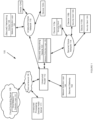
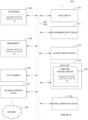
- FIG. 1 is a block diagram that illustrates an example network 100 in which examples of the present disclosure may operate.
- the network 100 may include a secured processing device/host/server 102 (hereinafter the "secured gateway 102") provided with malware detection logic 104, according to examples of the present disclosure.
- malware detection logic may refer to processing logic intended to detect the presence of malware.
- computer “computer platform”, processing device, host, server are intended to include any data processing device, such as a desktop computer, a laptop computer, a tablet computer, a mainframe computer, a server, a handheld device, a digital signal processor (DSP), an embedded processor (an example of which is described in connection with Figure 10 ), or any other device able to process data.
- DSP digital signal processor
- the computer/computer platform is configured to include one or more microprocessors communicatively connected to one or more non-transitory computer-readable media and one or more networks.
- the term "communicatively connected” is intended to include any type of connection, whether wired or wireless, in which data may be communicated.
- the term "communicatively connected” is intended to include, but not limited to, a connection between devices and/or programs within a single computer or between devices and/or separate computers over a network.
- network is intended to include, but not limited to, OTA (over-the-air transmission, ATSC, DVB-T), packet-switched networks (TCP/IP, e.g., the Internet), satellite (microwave, MPEG transport stream or IP), direct broadcast satellite, analog cable transmission systems (RF), and digital video transmission systems (ATSC, HD-SDI, HDMI, DVI, VGA), etc.
- the secured gateway 102 may be communicatively connected to an unsecured external network 106, such as the Internet, to one or more unsecured processing devices/hosts/servers 111, and to a cloud computing system/server 108 (hereinafter the "cloud computing server 108") having cloud malware detection logic 110 thereon.
- the secured gateway 102 may be communicatively connected to the unsecured external network 106 by a router 112 provided by a cable, fiber, satellite, etc. based Internet service provider.
- the router 112 may be configured to have one or more encryption protocols (not shown) and/or malware detection software (not shown).
- the network 100 may further include a secured home sub-network 114 (hereinafter the "secured home network 114") and an unsecured home sub-network 116 (hereinafter the "unsecured home network 116") communicatively connected to the unsecured external network 106.
- the secured home network 114 may include one or more devices 118a-118n, wherein all of the one or more secured devices 118a-118n are provided with security clients 120a-120n.
- the secured home network 114 may be further provided with a networking device 122 having malware detection logic 126, through which the one or more secured devices 118a-118n may communicate with the external network 106 directly or through the router 112.
- the unsecured home network 116 may include one or more unsecured devices 124a-124n, wherein at least one of the untrusted devices 124a-124n is not provided with a security client and hence may be referred to as an unsecured device (e.g., 124a).
- the one or more secured devices 118a-118n and the one or more unsecured devices 124a-124n may include, but are not limited to, advanced sensors, cameras, Internet-of-Things machines, home appliance, etc.
- the unsecured home network 116 may include a networking device 128 having malware detection logic 130, through which the one or more unsecured devices 124a-124n may communicate with the external network 106 directly or through the router 112.
- the malware detection logic 104, 110, 126, 130 and the security clients 120a-120n may have one or more components of a type of firewall and security layer (hereinafter a "Security Wall") configured to perform a plurality of malware detection, protection, and other security functions including, but not limited to, one or move validation tests comprising at least one of a port verification, content verification for virus detection, a deep packet inspection for detection of known attacks, or generation of alarms.
- the security clients 120a-120n may be further configured to receive only encrypted message.
- the malware detection logic 104, 110, 126, 130 and the security clients 120a-120n may be implemented in either hardware as an external device or in software as a plug-in, installed, or downloaded module.
- the Security Wall may be configured to provide a secure booting process, a secure download process, and/or a generation process for generating one or more keys for encrypting messages.
- the Security Wall may be configured to encrypt/decrypt messages to create a secure channel between less-powerful Security Wall-equipped security clients (e.g., 120a), to provide communication channels between various instances of the Security Wall in the network 100, for dynamic reaction and threat reporting, communicated between the Security Wall and cloud services provided by the cloud malware detection logic 110 residing on the cloud server 108 when more detailed expertise is required, and rerouting of messages/streams through the cloud malware detection logic 110 residing on the cloud server 108 for threat detection or highly sensitive data transfer.
- less-powerful Security Wall-equipped security clients e.g. 120a
- the malware detection logic 104 executed by a secured device (e.g., the secured gateway 102) residing in the network 100 may be configured to receive a message from an unsecured device (e.g., the router 112) of a first network (e.g., the untrusted external network 106) intended for a destination device (e.g., 118a or 102) of the home network (e.g., the secured home network 114).
- the destination device e.g., 118a or 102
- the destination device may comprise a security client (e.g., 120a).
- the malware detection logic 104 may be configured to establish a secure communication channel between the malware detection logic 104 of the secured device (e.g., the secured gateway 102) and the security client (e.g., 120a) of the destination device (e.g., 118a or 102).
- the malware detection logic 104 may be configured to execute a validation test on the message to determine that the message includes malware.
- the malware detection logic may be configured to report an alarm to the security client (e.g., 120a) of the destination device (e.g., 118a or 102).
- the malware detection logic 104 may be configured to transmit information related to the malware to the cloud malware detection logic 110 of the cloud computing server 108.
- the malware detection logic 104 may be configured to prevent an application associated with the destination device (e.g., 118a or 102) from processing the message.
- the secured device may transmit the message over the secured home network 114 to the destination device (e.g., 118a).
- the malware detection logic 104 may encrypt the message.
- the application may reside on the secured device (e.g., the secured gateway 102).
- the malware detection logic 104 may conduct one or more validation tests comprising at least one of a port verification, content verification for virus detection, or a deep packet inspection for detection of known attacks.
- the malware detection logic 104 may transmit an indication of the presence of the malware to the cloud malware detection logic 110 of the cloud computing server 108.
- the malware detection logic 104 may transmit an alarm indicative of the presence of the malware to the security client (e.g., 120a) of the destination device (e.g., 118a).
- the malware detection logic 104 may be operable to provide one or more of a secure booting process, a secure download process, or a generation process for generating one or more keys for encrypting the message.
- the secured device may be configured to receive a message from an unsecured device (e.g., the router 112) of a first network (e.g., the unsecured external network 106) intended for a destination device (e.g., 118a or 102) of the home network (e.g., the secured home network 114), wherein the determination of the presence of malware is made by the cloud malware detection logic 110 of the cloud computer server 108.
- the malware detection logic 104 executed by the secured device (e.g., the secured gateway 102) residing in the network 100 may receive the message intended for the destination device (e.g., 118a or 102) of the network 100. If the malware detection logic 104 decides not to determine whether the message includes malware, then the malware detection logic 104 may be configured to transmit the message to cloud malware detection logic 110 of the cloud computing server 108.
- the malware detection logic 104 may determine that the secured device (e.g., the secured gateway 102) has insufficient processing power or needs more expertise to determine whether the message includes malware.
- the malware detection logic 104 may receive an indication (e.g., from one of the secured device (e.g., the secured gateway 102, the cloud computing server 108, the networking device 124, or one of the security clients 120a-120n)) that an alert level of the secured home network 114 has increased.
- the determination of whether the message includes malware may be based on the security sensitivity of one of the secured device (e.g., the secured gateway 102), the cloud computing server 108, the networking device 124, or one of the security clients 120a-120n.
- the malware detection logic 104 may be configured to receive from the cloud malware detection logic 110 of the cloud computing server 108, an indication that the message contains malware.
- the malware detection logic 104 may be configured to report an alarm to the security client (e.g., 120a) of the destination device (e.g., 118a).
- the malware detection logic 104 may be configured to prevent an application (not shown) associated with the destination device (e.g., 118a) from processing the message.
- the malware detection logic 104 may be configured to receive from the cloud malware detection logic 110 of the cloud computing server 108, an indication that the message does not contain malware. Accordingly, the malware detection logic 104 may be configured to permit the application associated with the destination device (e.g., 118a) to process the message.
- the secured device may transmit the message over the secured home network 114 to the destination device (e.g., 118a).
- the malware detection logic 104 may encrypt the message.
- the application may reside on the secured device (e.g., the secured gateway 102).
- the malware detection logic 104 of the secured device may conduct one or move validation tests comprising at least one of a port verification, content verification for virus detection, or a deep packet inspection for detection of known attacks.
- the malware detection logic 104 of the secured device may transmit an indication of the presence of the malware to the cloud malware detection logic 110 of the cloud computing server 108.
- the malware detection logic 104 may transmit an alarm indicative of the presence of the malware to the security client (e.g., 120a) of the destination device (e.g., 118a).
- the malware detection logic 104 may be operable to provide one or more of a secure booting process, a secure download process, or a generation process for generating one or more keys for encrypting the message.
- the malware detection logic 104 of the secured device may be configured to route all incoming messages received from the router 112 and originating in the untrusted external network 106 to the cloud malware detection logic 110 of the cloud computing server 108.
- the malware detection logic 104 of the secured device e.g., the secured gateway 102 routing all incoming messages may be the result of the sensitivity of the security client (e.g., 120a), or because the alert level of the network has been increased.
- sensitivity may be determined by the type of device and/or by the consequence of a successful attack.
- a door lock has a higher sensitivity than a webcam, because a successful attack on the door lock may result in opening the door to intruders.
- a heating regulator in Canada may have higher sensitivity in winter than in summer. If the heating is stopped in winter, the water pipes may freeze and become damaged. The same regulator in Florida may be less sensitive.
- the alert level may be increased by security services located in the cloud computing server 108 as a result of monitoring activities of the cloud malware detection logic 110.
- a first secured device (e.g., the secured gateway 102) having malware detection logic 104 may configure a secure communication session with a second secured device (e.g., the device 118b) having a security client (e.g., 120b).
- the malware detection logic 104 may be configured to establish a secure communication channel with the second secured device (e.g., 118b) in view of a security level associated with the malware detection logic 104 or a threat level associated with the message.
- the malware detection logic 104 may employ at least one of a session key creation mechanism, creating one or more certificates, a cloud-generated session key, or one or more home domain keys.
- the malware detection logic 104 may be configured to receive an indication that the security level associated with the malware detection logic 104 or the threat level associated with the message has changed.
- the security level change may be the result of one or more alarms triggered by the detection of the presence of malware in the message or a change in the secured home network 114 requiring new authentication.
- the malware detection logic 104 may be configured to discontinue a session associated with the secure communication channel in view of the indication.
- the malware detection logic 104 may be configured to prevent an application (not shown) of a secured device (e.g., the device 118b) from processing the message.
- the malware detection logic 104 may permit the application of the second secured device (e.g., the device 118b) to process the message.
- the secured gateway 102 may transmit the message over the secured home network 114 to the second secured device (e.g., the device 118b).
- the malware detection logic 104 may encrypt the message.
- the malware detection logic 104 may be configured to report the creation of the session to the cloud malware detection logic 110 of the cloud computing server 108.
- the malware detection logic 104 may be configured to provide approval to start the session. In an example, providing approval may be based on a security level of the secured home network 114 or a security sensitivity of the secured device (e.g., the secured gateway 102) or the second secured device (e.g., the device 118b).
- the malware detection logic 104 of the secured gateway 102 may be informed about the security level of its correspondents (e.g., 118a-118n) and may decide if the session can continue or if the session is to be interrupted based on the security level.
- the security level can be a consequence of alarms triggered during the execution of the setup in the examples above.
- the security level may change if there is a change in the environment that requires a new authentication. The change in the environment may be triggered by messages issued by the cloud malware detection logic 110.
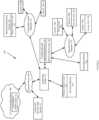
- FIG 2 is a block diagram of the elements of Figure 1 adapted for adding an unsecured device 132 to the secured home network 114, wherein messages are routed through an existing secured device (e.g., the networking device 122) having malware detection logic 126 in the secured home network 114.
- malware detection logic 126 of the existing secured device (e.g., the networking device 124) in the secured home network 114 may be configured to receive an identifier associated with an unsecured device (e.g., 132) of the secured home network 114.
- the malware detection logic 126 may be configured to inform one or more other secured devices (e.g., 118a-118n, 102) in the secured home network 114 to re-route messages through the malware detection logic 126 of the existing device (e.g., the networking device 122) in the secured home network 114 in view of the identifier.
- the malware detection logic 126 may receive a message intended for the unsecured device (e.g., 132) from one of the one or more other secured devices (e.g., 118a) in the secured home network 114.
- the malware detection logic 126 may be configured to execute a validation test on the message to determine whether the message includes malware.
- the malware detection logic 126 may transmit the message to the cloud malware detection logic 110 of the cloud computing server 108 and receive from the cloud malware detection logic 110 of the cloud computing server 108 an indication of whether the message includes malware.
- the malware detection logic 126 may conduct one or more validation tests comprising at least one of a port verification, content verification for virus detection, or a deep packet inspection for detection of known attacks.
- the malware detection logic 126 may transmit an indication of the presence of the malware to a cloud computing server 108.
- the malware detection logic 126 may transmit the message over the secured home network 114 to the unsecured device (e.g., 132). If the malware detection logic 126 determines that the message does include malware, then the malware detection logic 126 does not transmit the message over the secured home network 114 to the unsecured device (e.g., 132).
- the malware detection logic 126 may report the presence of the unsecured device (e.g., 132) to the cloud malware detection logic 110 of the cloud computing server 108.
- the malware detection logic 126 Before the malware detection logic 126 transmits the message to the unsecured device (e.g., 132), the malware detection logic 126 may be configured to encrypt the message.
- the malware detection logic 126 may route all communications to the cloud malware detection logic 110 of the cloud computing server 108, for recording, inspection, logging, etc.
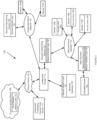
- Figure 3 is a block diagram of the elements of Figure 1 adapted to add an unsecured device 134 to the secured home network 114, wherein messages are routed through a secured device (e.g., 136) having malware detection logic (e.g., 138) in the secured home network 114.
- a secured device e.g., 136 having malware detection logic (e.g., 138) in the secured home network 114.
- An unsecured device e.g., 132, e.g., a baby cam
- the secured device (e.g., 136) having malware detection logic (e.g., 138) is added to the secured home network 114.
- the malware detection logic (e.g., 138) of the secured device may be configured to receive an identifier associated with the unsecured device 134 inserted in the secured home network 114.
- the malware detection logic (e.g., 138) of the secured device may be configured to inform one or more other secured devices (e.g., 118a-118n) in the secured home network 114 to re-route messages through the malware detection logic (e.g., 138) of the secured device (e.g., 136) in view of the identifier.
- the malware detection logic (e.g., 138) of the secured device may be configured to receive a message intended for the unsecured device 134 from one of the one or more other secured devices (e.g., 118a) in the secured home network 114.
- the malware detection logic (e.g., 138) of the secured device (e.g., 136) may be configured to execute a validation test on the message to determine whether the message includes malware.
- malware detection logic e.g., 138 of the secured device (e.g., 136) determines that the message does not include malware, then the malware detection logic 138 of the secured device 136 transmits the message over the secured home network 114 to the unsecured device 134. If the malware detection logic 138 of the secured device 136 determines that the message does include malware, then the malware detection logic 138 of the new secured device 136 does not transmit the message over the secured home network 114 to the unsecured device 134.
- the malware detection logic 138 may be configured to report the presence of the new networking device 136 to the cloud malware detection logic 110 of the cloud computing server 108.
- the malware detection logic 138 may transmit the message to the cloud malware detection logic 110 of the cloud computing server 108 and receive from the cloud malware detection logic 110 of the cloud computing server 108 an indication of whether the message includes malware.
- the malware detection logic 138 of the new secured device 136 may be configured to encrypt the message.
- the malware detection logic 138 of the secured device 136 may conduct one or more validation tests comprising at least one of a port verification, content verification for virus detection, or a deep packet inspection for detection of known attacks.
- the malware detection logic 138 may transmit an indication of the presence of the malware to the cloud malware detection logic 110 of the cloud computing server 108.
- a configuration of a secured device may change in the secured home network 114.
- the malware detection logic (e.g., 104) executed by the secured device (e.g., the secured gateway 102) in the secured home network 114 may be configured to receive an indication that a first signature associated with the secured device (e.g., of the secured gateway 102) has changed in view of a change in configuration of the secured device (e.g., the secured gateway 102).
- the malware detection logic (e.g., 104) executed by a secured device may be configured to calculate a second signature associated with the secured device (e.g., of the secured gateway 102) in view of the indication.
- the malware detection logic may be configured to transmit the second signature to malware detection logic 110 of the cloud computing server 108.
- the malware detection logic may be configured to receive from the malware detection logic 110 of the cloud computing server 108 an update of a security status of the secured device (e.g., the secured gateway 102) in view of the second signature.
- the first signature may be determined based on a configuration of the secured device (e.g., of the secured gateway 102), one or more features of secured device (e.g., of the secured gateway 102), or one or more behaviors of the secured device (e.g., of the secured gateway 102).
- the malware detection logic 110 of the cloud computing server 108 receives and prohibits further communications with the secured device (e.g., the secured gateway 102).
- the malware detection logic 110 of the cloud computing server 108 may inform other secured devices (e.g., 118a-118n) in the secured home network 114 about the change in security status of the secured device (e.g., the secured gateway 102).
- the other secured devices (e.g., 118a-118n) in the secured home network 114 may take one or more individual actions.
- Example of what actions the other secured devices (e.g., 118a-118n) may take may include, but are not limited to, deciding to stop communicating with the secured device (e.g., the secured gateway 102), reinitialize the communication with the secured device (e.g., the secured gateway 102), reset themselves and/or rollback to a known configuration or to known parameters, etc.
- the individual action may lead to the malware detection logic 110 of the cloud computing server 108 prohibiting any further communications (e.g., by the other secured devices (118a-118n)) with the secured device that was modified (e.g., the secured gateway 102).
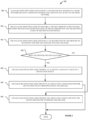
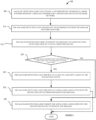
- FIG 4 is a diagram illustrating an exemplary method 400 to permit a secured device (e.g., the secured gateway 102) of Figure 1 to receive a message from an unsecured device (e.g., the server 111) of a first network (e.g., the untrusted external network 106) and intended for a destination device (e.g., 118a or 102) of the home network (e.g., the secured home network 114), wherein the determination of the presence of malware is made by the malware detection logic 104 executed by a processing device of a secured device (e.g., the secured gateway 102).
- an unsecured device e.g., the server 111
- a first network e.g., the untrusted external network 106
- a destination device e.g., 118a or 102
- the home network e.g., the secured home network 114
- the method 400 may be performed by malware detection logic (e.g., 104) of the secured device (e.g., the secured gateway 102) of Figure 1 and may comprise hardware (e.g., circuitry, dedicated logic, programmable logic, microcode, etc.), software (e.g., instructions run on a processing device), or a combination thereof.
- malware detection logic e.g., 104
- the secured device e.g., the secured gateway 102
- Figure 1 may comprise hardware (e.g., circuitry, dedicated logic, programmable logic, microcode, etc.), software (e.g., instructions run on a processing device), or a combination thereof.
- the malware detection logic 104 executed by the secured device (e.g., the secured gateway 102) residing in the network 100, may receive the message intended for the destination device (e.g., 118a or 102) of the network 100.
- the destination device e.g., 118a or 102
- the security client e.g., 120a
- the malware detection logic 104 may establish a secure communication channel between the malware detection logic 104 of the secured device (e.g., the secured gateway 102) and the security client (e.g., 120a) of the destination device (e.g., 118a).
- the malware detection logic 104 may execute a validation test on the message to determine whether the message includes malware.
- the malware detection logic 104 may report an alarm to the security client (e.g., 120a) of the destination device (e.g., 118a).
- the malware detection logic 104 may transmit information related to the malware to a cloud computing server 108.
- the malware detection logic 104 may prevent an application (not shown) associated with the destination device (e.g., 118a) from processing (e.g., receiving, reading, extracting information from, and/or executing portions of, etc.) the message. If, at block 420, the malware detection logic 104 determines that the message does not include malware, then at block 435, the malware detection logic 104 may permit the application associated with the destination device (e.g., 118a) to process the message.
- Permitting the application to process the message may comprise transmitting, by the secured device (e.g., the secured gateway 102), the message over the secured home network 114 to the destination device (e.g., 118a). Before transmitting the message, the malware detection logic 104 may encrypt the message.
- the application may reside on the secured device (e.g., the secured gateway 102).
- the malware detection logic 104 may conduct one or more validation tests comprising at least one of a port verification, content verification for virus detection, or a deep packet inspection for detection of known attacks. In another example, the malware detection logic 104 may transmit an indication of the presence of the malware to the cloud malware detection logic 110 of the cloud computing server 108.
- the malware detection logic 104 may transmit an alarm indicative of the presence of the malware to the security client (e.g., 120a) of the destination device (e.g., 118a).
- the malware detection logic 104 may provide one or more of a secure booting process, a secure download process, or a generation process for generating one or more keys for encrypting the message.
- FIG 5 is a diagram illustrating an exemplary method 500 to permit the secured device (e.g., the secured gateway 102 of Figure 1 ) to manage communication between an unsecured device (e.g., 122) of a first network (e.g., the external network 106) and a destination device (e.g., 118a) of a home network (e.g., the secured home network 114).
- the method 500 may be performed by malware detection logic (e.g., 104) of the secured device (e.g., the secured gateway 102) of Figure 1 and may comprise hardware (e.g., circuitry, dedicated logic, programmable logic, microcode, etc.), software (e.g., instructions run on a processing device), or a combination thereof.
- malware detection logic 104 executed by a secured device (e.g., the secured gateway 102) residing in a home network (e.g., the secured home network 114) receives message intended for the destination device (e.g., 118a or 102) of the home network (e.g., the secured home network 114).
- the malware detection logic 104 decides not to determine whether the message includes malware.
- the malware detection logic 104 may transmit the message to cloud malware detection logic 110 of the cloud computing server 108.
- the malware detection logic 104 may determine that the secured device (e.g., the secured gateway 102) has insufficient processing power or needs more expertise to determine whether the message includes malware.
- the malware detection logic 104 may receive an indication (e.g., from one of the secured device (e.g., the secured gateway 102), the cloud computing server 108, the networking device 124, or one of the security clients 120a-120n) that an alert level of the secured home network 114 has increased.
- the determination of whether the message includes malware may be based on the security sensitivity of one of the secured device (e.g., the secured gateway 102), the cloud computing server 108, the networking device 124, or one of the security clients 120a-120n.
- the malware detection logic 104 may report an alarm to the security client (e.g., 120a) of the destination device (e.g., 118a).
- the malware detection logic 104 may prevent an application (not shown) associated with the destination device (e.g., 118a) from processing the message.
- the malware detection logic 104 may permit the application associated with the destination device (e.g., 118a) to process the message.
- a secured device may transmit the message over the secured home network 114 to the destination device (e.g., 118a).
- the malware detection logic 104 may encrypt the message.
- the application may reside on the secured device (e.g., the secured gateway 102).
- the malware detection logic 104 of the secured device e.g., the secured gateway 102
- the cloud malware detection logic 110 of the cloud computing server 108 may conduct one or more validation tests comprising at least one of a port verification, content verification for virus detection, or a deep packet inspection for detection of known attacks.
- the malware detection logic 104 of the secured device may transmit an indication of the presence of the malware to the cloud malware detection logic 110 of the cloud computing server 108.
- the malware detection logic 104 may transmit an alarm indicative of the presence of the malware to the security client (e.g., 120a) of the destination device (e.g., 118a).
- the malware detection logic 104 may be operable to provide one or more of a secure booting process, a secure download process, or a generation process for generating one or more keys for encrypting the message.
- the malware detection logic 104 of the secured device may be configured to route all incoming messages received from the router 112 and originating in the unsecured external network 106 to the cloud malware detection logic 110 of the cloud computing server 108.
- routing all incoming messages may be the result of the sensitivity of the security client (e.g., 120a), or because the alert level of the network has been increased.
- Alert level can be increased by the security services located in the cloud computing server 108 as a result of monitoring activities of the cloud malware detection logic 110.
- FIG 6 is a diagram illustrating an exemplary method 600 to configure a secure communication session between two secured devices in the network of Figure 1 , a first secured device (e.g., the secured gateway 102) having malware detection logic 104 and a second secured device (e.g., the device 118b) having a security client (e.g., 120b).
- the method 600 may be performed by malware detection logic (e.g., 104) of the first secured device (e.g., the secured gateway 102) of Figure 1 and may comprise hardware (e.g., circuitry, dedicated logic, programmable logic, microcode, etc.), software (e.g., instructions run on a processing device), or a combination thereof.
- the malware detection logic 104 executed by the first secured device (e.g., the secured gateway 102), residing in the network 100, may receive the message intended for the second secured device (e.g., 118b) of the network 100 from an unsecured device (e.g., 122) of an untrusted network (e.g., the external network 106).
- the malware detection logic 104 may establish a secure communication channel with the unsecured device (e.g., the server 111) in view of a security level associated with the malware detection logic 104 or a threat level associated with the message.
- the malware detection logic 104 may employ at least one of a session key creation mechanism, creating one or more certificates, a cloud-generated session key, or one or more home domain keys.
- the malware detection logic 104 may receive an indication that the security level associated with the malware detection logic 104 or the threat level associated with the message has changed.
- the security level change may be the result of one or more alarms triggered by the detection of the presence of malware in the message or a change in the secured home network 114 requiring new authentication.
- the malware detection logic 104 may discontinue a session associated with the secure communication channel in view of the indication.
- the malware detection logic 104 may prevent an application (not shown) of the second secured device (e.g., 118b) from processing the message.
- the malware detection logic 104 may permit the application of the second secured device (e.g., 118b) to process the message.
- the first secured device e.g., the secured gateway 102
- the malware detection logic 104 may encrypt the message before the first secured device (e.g., the secured gateway 102) transmits the message.
- the malware detection logic 104 may report the creation of the session to the cloud malware detection logic 110 of the cloud computing server 108.
- the malware detection logic 104 may give approval to start the session. Giving approval may be based on a security level of the secured home network 114 or a security sensitivity of the secured gateway 102 or the second secured device 118b.
- the malware detection logic 104 of the first secured device may be informed about the security level of its correspondents (e.g., 118a-118n) and may decide if the session can continue and/or if the session is to be interrupted based on the security level.
- the security level can be a consequence of alarms triggered in during the execution of the setup of Figures 2 or 3 .
- the security level may change if there is a change in the environment that may require new authentication.
- FIG 7 is a diagram illustrating an exemplary method 700 to add an unsecured device (e.g., 122) to a home network (e.g., the secured home network 114) of Figure 2 , wherein messages are routed through a secured device (e.g., the networking device 124) having malware detection logic (e.g., 116) in home network (e.g., the secured home network 114).
- the method 600 may be performed by malware detection logic (e.g., 116) of the secured device (e.g., the networking device 124) of Figure 2 and may comprise hardware (e.g., circuitry, dedicated logic, programmable logic, microcode, etc.), software (e.g., instructions run on a processing device), or a combination thereof.
- the malware detection logic 126 of the secured device (e.g., the networking device 124) in the secured home network 114 may be receive an identifier associated with an unsecured device (e.g., 128) inserted in the secured home network 114.
- the malware detection logic 126 may inform one or more other secured devices (e.g., 118a-118n, 102) in the secured home network 114 to re-route messages through the malware detection logic 126 of the secured device (e.g., the networking device 124) in the secured home network 114 in view of the identifier.
- the malware detection logic 126 may receive a message intended for the unsecured device (e.g., 128) from one of the one or more other secured devices (e.g., 118a) in the secured home network 114.
- the malware detection logic 126 may execute a validation test on the message to determine whether the message includes malware.
- the malware detection logic 126 may transmit the message to the cloud malware detection logic 110 of the cloud computing server 108 and receive from the cloud malware detection logic 110 of the cloud computing server 108 an indication of whether the message includes malware.
- the malware detection logic 126 may conduct one or more validation tests comprising at least one of a port verification, content verification for virus detection, or a deep packet inspection for detection of known attacks.
- the malware detection logic 126 may transmit an indication of the presence of the malware to a cloud computing server 108.
- the malware detection logic 126 may transmit the message over the secured home network 114 to the unsecured device (e.g., 128). If, at block 725, the malware detection logic 126 determines that the message does include malware, then at block 735, the malware detection logic 126 does not transmit the message over the secured home network 114 to the unsecured device (e.g., 128).
- the malware detection logic 126 may report the presence of the unsecured device (e.g., 128) to the cloud malware detection logic 110 of the cloud computing server 108.
- the malware detection logic 126 Before the malware detection logic 126 transmits the message to the unsecured device (e.g., 128), the malware detection logic 126 may be configured to encrypt the message.
- the malware detection logic 126 may route all communications to the cloud malware detection logic 110 of the cloud computing server 108, for recording, inspection, logging, etc.
- FIG 8 is a diagram illustrating an exemplary method 800 to add an unsecured device (e.g., 132) to a home network (e.g., the secured home network 114), wherein messages are routed through a new secured device (e.g., 136) having malware detection logic (e.g., 132) in the home network (e.g., the secured home network 114).
- the method 800 may be performed by the secured device (e.g., 136) having malware detection logic (e.g., 134) of Figure 3 and may comprise hardware (e.g., circuitry, dedicated logic, programmable logic, microcode, etc.), software (e.g., instructions run on a processing device), or a combination thereof.
- an unsecured device e.g., 132, e.g., a baby cam
- the secured device e.g., 136 having malware detection logic (e.g., 138)
- the malware detection logic e.g., 138
- the secured device may receive an identifier associated with the unsecured device 132 inserted in the secured home network 114.
- the malware detection logic (e.g., 138) of the secured device may inform one or more other secured devices (e.g., 118a-118n) in the secured home network 114 to re-route messages through the malware detection logic (e.g., 138) of the new secured device (e.g., 136) in view of the identifier.
- the malware detection logic (e.g., 138) of the secured device may receive a message intended for the unsecured device 132 from one of the one or more other secured devices (e.g., 118a) in the secured home network 114.
- the malware detection logic (e.g., 138) of the secured device may execute a validation test on the message to determine whether the message includes malware.
- the malware detection logic (e.g., 138) of the secured device determines that the message does not include malware
- the malware detection logic (e.g., 138) of the secured device (e.g., 136) may transmit the message over the secured home network 114 to the unsecured device 132.
- the malware detection logic (e.g., 138) of the new secured device determines that the message does include malware
- the malware detection logic (e.g., 138) of the new secured device (e.g., 136) does not transmit the message over the secured home network 114 to the unsecured device 132.
- the malware detection logic (e.g., 138) may be configured to report the presence of the new secured device (e.g., 136) to the cloud malware detection logic 110 of the cloud computing server 108.
- the malware detection logic (e.g., 138) may transmit the message to the cloud malware detection logic 110 of the cloud computing server 108 and receive from the cloud malware detection logic 110 of the cloud computing server 108, an indication of whether the message includes malware.
- the malware detection logic (e.g., 138) of the new secured device (e.g., 136) may be configured to encrypt the message.
- the malware detection logic (e.g., 138) of secured device may conduct one or move validation tests comprising at least one of a port verification, content verification for virus detection, or a deep packet inspection for detection of known attacks.
- the malware detection logic (e.g., 138) may transmit an indication of the presence of the malware to the cloud malware detection logic 110 of the cloud computing server 108.
- FIG 9 is a diagram illustrating an exemplary method 900 of a home network (secured home network 114) responding to a change in configuration of a secured device (e.g., the secured gateway 102) in the home network (e.g., the secured home network 114).
- the method 900 may be performed by malware detection logic (e.g., 104) executed by a processing device (e.g., of the secured gateway 102) of Figure 1 and may comprise hardware (e.g., circuitry, dedicated logic, programmable logic, microcode, etc.), software (e.g., instructions run on a processing device), or a combination thereof.
- the malware detection logic (e.g., 104) executed by a secured device (e.g., the secured gateway 102) in the secured home network 114 may receive an indication that a first signature associated with the secured device (e.g., of the secured gateway 102) has changed in view of a modification of a configuration of the secured device (e.g., the secured gateway 102).
- the malware detection logic (e.g., 104) executed by a secured device (e.g., of the secured gateway 102) may calculate a second signature associated with the secured device (e.g., of the secured gateway 102) in view of the indication.
- the malware detection logic may transmit the second signature to malware detection logic 110 of the cloud computing server 108.
- the malware detection logic may receive from the malware detection logic 110 of the cloud computing server 108 an update of a security status of the secured device (e.g., the secured gateway 102) in view of the second signature.
- the first signature may be determined based on a configuration of the secured device (e.g., of the secured gateway 102), one or more features of the secured device (e.g., of the secured gateway 102), or one or more behaviors of the secured device (e.g., of the secured gateway 102).
- the malware detection logic 110 of the cloud computing server 108 may not permit further communications with the secured device (e.g., the secured gateway 102) in view of the updated security status.
- the malware detection logic 110 of the cloud computing server 108 may inform other secured devices (e.g., 118a-118n) in the secured home network 114 about the change in security status of the secured device (e.g., the secured gateway 102).
- the other secured devices (e.g., 118a-118n) in the secured home network 114 may take individual actions. The individual action may lead to the malware detection logic 110 of the cloud computing server 108 not permitting any further communications (e.g., by the other secured devices (118a-118n) with the secured device that was modified (e.g., the secured gateway 102).
- Figure 10 illustrates a diagrammatic representation of a machine in the example form of a computer system 1000 within which a set of instructions, for causing the machine to perform any one or more of the methodologies discussed herein, may be executed.
- the machine may be connected (e.g., networked) to other machines in a LAN, an intranet, an extranet, or the Internet.
- the machine may operate in the capacity of a server machine in client-server network environment.
- the machine may be a personal computer (PC), a set-top box (STB), a server, a network router, switch or bridge, or any machine capable of executing a set of instructions (sequential or otherwise) that specify actions to be taken by that machine.
- PC personal computer
- STB set-top box
- STB set-top box
- server a server
- network router switch or bridge
- the example computer system 1000 includes a processing device (processor) 1002, a main memory 1004 (e.g., read-only memory (ROM), flash memory, dynamic random access memory (DRAM) such as synchronous DRAM (SDRAM)), a static memory 1006 (e.g., flash memory, static random access memory (SRAM)), and a data storage device 1016, which communicate with each other via a bus 1008.
- processor processing device
- main memory 1004 e.g., read-only memory (ROM), flash memory, dynamic random access memory (DRAM) such as synchronous DRAM (SDRAM)
- DRAM dynamic random access memory
- SDRAM synchronous DRAM
- static memory 1006 e.g., flash memory, static random access memory (SRAM)
- SRAM static random access memory
- Processor 1002 represents one or more general-purpose processing devices such as a microprocessor, central processing unit, or the like. More particularly, the processor 702 may be a complex instruction set computing (CISC) microprocessor, reduced instruction set computing (RISC) microprocessor, very long instruction word (VLIW) microprocessor, or a processor implementing other instruction sets or processors implementing a combination of instruction sets.
- the processor 1002 may also be one or more special-purpose processing devices such as an application specific integrated circuit (ASIC), a field programmable gate array (FPGA), a digital signal processor (DSP), network processor, or the like.
- ASIC application specific integrated circuit
- FPGA field programmable gate array
- DSP digital signal processor
- the malware detection logic 104, 110, 126, 130, 138 in Figures 1 and 3 may be executed by processor 1002 configured to perform the operations and steps discussed herein.
- the computer system 1000 may further include a network interface device 1022.
- the computer system 1000 also may include a video display unit 1010 (e.g., a liquid crystal display (LCD) or a cathode ray tube (CRT)), an alphanumeric input device 1012 (e.g., a keyboard), a cursor control device 1014 (e.g., a mouse), and a signal generation device 1020 (e.g., a speaker).
- a video display unit 1010 e.g., a liquid crystal display (LCD) or a cathode ray tube (CRT)
- an alphanumeric input device 1012 e.g., a keyboard
- a cursor control device 1014 e.g., a mouse
- a signal generation device 1020 e.g., a speaker
- a drive unit 1016 may include a computer-readable medium 1024 on which is stored one or more sets of instructions (e.g., instructions of the malware detection logic 104, 110, 126, 130, 138 in Figures 1 and 3 ) embodying any one or more of the methodologies or functions described herein.
- the instructions of the malware detection logic 104, 110, 126, 130, 138 in Figures 1 and 3 may also reside, completely or at least partially, within the main memory 1004 and/or within the processor 1002 during execution thereof by the computer system 1000, the main memory 1004 and the processor 1002 also constituting computer-readable media.
- the instructions of the malware detection logic 104, 110, 126, 130, 138 in Figures 1 and 3 may further be transmitted or received over a network 1026 via the network interface device 1022.
- While the computer-readable storage medium 1024 is shown in an example to be a single medium, the term “computer-readable storage medium” should be taken to include a single non-transitory medium or multiple non-transitory media (e.g., a centralized or distributed database, and/or associated caches and servers) that store the one or more sets of instructions.
- the term “computer-readable storage medium” shall also be taken to include any medium that is capable of storing, encoding or carrying a set of instructions for execution by the machine and that cause the machine to perform any one or more of the methodologies of the present disclosure.
- the term “computer-readable storage medium” shall accordingly be taken to include, but not be limited to, solid-state memories, optical media, and magnetic media.
- Example 1 is a method comprising receiving, by malware detection logic executed by a secured device residing in a home network, a message from an unsecured device of a first network and intended for a destination device of the home network, the destination device comprising a security client; establishing, by the malware detection logic, a secure communication channel between the malware detection logic of the secured device and the security client of the destination device; executing, by the malware detection logic, a validation test on the message to determine that the message includes malware; reporting, by the malware detection logic, an alarm to the security client of the destination device; transmitting, by the malware detection logic, information related to the malware to a cloud computing server; and preventing, by the malware detection logic, an application associated with the destination device from processing the message.
- Example 2 may optionally extend the subject matter of example 1.
- the method may further comprise before the transmitting, encrypting, by the malware detection logic, the message.
- Example 3 may optionally extend the subject matter of any of examples 1-2.
- the application resides on the secured device.
- Example 4 may optionally extend the subject matter of any of examples 1-3.
- determining that the message includes malware comprises conducting one or more validation tests comprising at least one of a port verification, content verification for virus detection, or a deep packet inspection for detection of known attacks.
- Example 5 may optionally extend the subject matter of any of examples 1-4.
- the method further comprises transmitting, by the malware detection logic, an indication of the presence of the malware to a cloud computing server.
- Example 6 may optionally extend the subject matter of any of examples 1-5.
- the method further comprises transmitting, by the malware detection logic, an alarm indicative of the presence of the malware to the security client of the destination device.
- Example 7 may optionally extend the subject matter of any of examples 1-6.
- the malware detection logic is to provide one or more of a secure booting process, a secure download process, or a generation process for generating one or more keys to encrypt the message.
- Example 8 is a system comprising a memory to store instructions; and a processing device operatively coupled to the memory; the processing device residing in a home network, the processing device to: receive a message from an unsecured device of a first network and intended for a destination device of the home network, the destination device comprising a security client; establish a secure communication channel between the secured device and the security client of the destination device; execute a validation test on the message to determine that the message includes malware; report an alarm to the security client of the destination device; transmit information related to the malware to a cloud computing server; and prevent an application associated with the destination device from processing the message.
- Example 9 is a method comprising receiving, by malware detection logic executed by a secured device residing in a home network, a message from an unsecured device of a first network and intended for a destination device of the home network, the destination device comprising a security client; responsive to the malware detection logic not determining whether the message includes malware: transmitting, by the malware detection logic, the message to a cloud computing server; responsive to receiving, from the cloud computing server, an indication that the message contains malware: reporting, by the malware detection logic, an alarm to the security client of the destination device; and preventing, by the malware detection logic, an application associated with the destination device from processing the message.
- Example 10 may optionally extend the subject matter of example 9.
- the method may further comprise before the transmitting, encrypting, by the malware detection logic, the message.
- Example 11 may optionally extend the subject matter of any of examples 9-10.
- the method may further comprise determining that the secured device has insufficient processing power or needs more expertise to determine whether the message includes malware.
- Example 12 may optionally extend the subject matter of any of examples 9-11.
- the method may further comprise receiving an indication that an alert level of the home network has increased.
- Example 13 may optionally extend the subject matter of any of examples 9-12. In example 13, not determining whether the message includes malware is in view of the security sensitivity of the secured device.
- Example 14 may optionally extend the subject matter of any of examples 9-13.
- the application resides on the secured device.
- Example 15 may optionally extend the subject matter of any of examples 9-14.
- the method may further comprise conducting one or more validation tests comprising at least one of a port verification, content verification for virus detection, or a deep packet inspection for detection of known attacks.
- Example 16 may optionally extend the subject matter of any of examples 9-15.
- the method may further comprise transmitting, by the malware detection logic, an indication of the presence of the malware to a cloud computing server.
- Example 17 may optionally extend the subject matter of any of examples 9-16.
- the method may further comprise transmitting, by the malware detection logic, an alarm indicative of the presence of the malware to the security client of the destination device.
- Example 18 may optionally extend the subject matter of any of examples 9-17.
- the malware detection logic is to provide one or more of a secure booting process, a secure download process, or a generation process for generating one or more keys to encrypt the message.
- Example 19 is a system comprising a memory to store instructions; and a processing operatively coupled to the memory; the processing device residing in a home network, the processing device to: receive a message from an unsecured device of a first network and intended for a destination device of the home network, the destination device comprising a security client; responsive to the malware detection logic not determining whether the message includes malware: transmit the message to a cloud computing server; responsive to receiving, from the cloud computing server, an indication that the message contains malware: report an alarm to the security client of the destination device; and prevent an application associated with the destination device from processing the message.
- Example 20 may optionally extend the subject matter of example 19.
- the system may further comprise the processing device to: before the transmitting, encrypt the message.
- Example 21 is a method comprising receiving, by malware detection logic executed by a secured device residing in a home network, a message from an unsecured device of a first network, the message intended for a destination device of the home network, the destination device comprising a security client; establishing, by the malware detection logic, a secure communication channel with at least one of the unsecured device in view of a security level associated with the malware detection logic or a threat level associated with the message; receiving, by the malware detection logic, an indication that the at least one of the security level associated with the malware detection logic or the threat level associated with the message has changed; discontinuing a session associated with the secure communication channel in view of the indication; and preventing, by the malware detection logic, an application of the destination device from processing the message.
- Example 22 may optionally extend the subject matter of example 21.
- the method may further comprise before the transmitting, encrypting, by the malware detection logic, the message.
- Example 23 may optionally extend the subject matter of any of examples 21-22.
- the security level change is the result of one or more alarms triggered by the detection of the presence of malware in the message or a change in the home network requiring new authentication.
- Example 24 may optionally extend the subject matter of any of examples 21-23.
- the method may further comprise employing at least one of a session key creation mechanism, creating one or more certificates, a cloud-generated session key, or one or more home domain keys.
- Example 25 may optionally extend the subject matter of any of examples 21-24.
- malware detection logic reports the creation of the session to a cloud computing server.
- Example 26 may optionally extend the subject matter of any of examples 21-25.
- the method may further comprise, giving approval, by the malware detection logic, to start the session.
- Example 26 may optionally extend the subject matter of example 25.
- giving approval is in view of a security level of the home network or a security sensitivity of the secured device.
- Example 27 may optionally extend the subject matter of any of examples 21-25.
- the malware detection logic is to provide one or more of a secure booting process, a secure download process, or a generation process for generating one or more keys to encrypt the message.
- Example 28 is a system comprising a memory to store instructions; and a processing device operatively coupled to the memory; the processing device residing in a home network, processing device to: receive from an unsecured device of a first network, the message intended for a destination device of the home network, the destination device comprising a security client; establish a secure communication channel with at least one of the unsecured device in view of a security level associated with the malware detection logic or a threat level associated with the message; receive an indication that the at least one of the security level associated with the malware detection logic or the threat level associated with the message has changed; discontinue a session associated with the secure communication channel in view of the indication; and prevent an application of the destination device from processing the message.
- Example 29 is a method comprising receiving, by malware detection logic executed by an existing secured device residing in a home network, an identifier associated with an unsecured device inserted in the home network; informing, by the malware detection logic, one or more other secured devices in the home network to re-route messages through the malware detection logic of the secured device in view of the identifier; receiving, by the malware detection logic, a message intended for the unsecured device from one of the one or more other secured devices in the home network; executing, by the malware detection logic, a validation test on the message to determine whether the message includes malware; and responsive to the malware detection logic detecting that the message does not include malware: transmitting, by the malware detection logic, the message over the home network to the unsecured device.
- Example 30 may optionally extend the subject matter of example 29.
- the method may further comprise wherein executing a validation test further comprises: transmitting the message to a cloud computing server; and receiving, by the malware detection logic from the cloud computing server, an indication of whether the message includes malware.
- Example 31 may optionally extend the subject matter of any of examples 29-30.
- the method may further comprise before the transmitting, encrypting, by the malware detection logic, the message.
- Example 32 may optionally extend the subject matter of any of examples 29-31.
- the method may further comprise conducting one or move validation tests comprising at least one of a port verification, content verification for virus detection, or a deep packet inspection for detection of known attacks.
- Example 33 may optionally extend the subject matter of any of examples 29-32.
- the method may further comprise transmitting, by the malware detection logic, an indication of the presence of the malware to a cloud computing server.
- Example 34 may optionally extend the subject matter of any of examples 29-33.
- the malware detection logic is to provide one or more of a secure booting process, a secure download process, or a generation process for generating one or more keys to encrypt the message.
- Example 35 is a system comprising a memory to store instructions; and a processing device operatively coupled to the memory; the processing device residing in a home network, the processing device to: receive an identifier associated with an unsecured device inserted in the home network; inform one or more other secured devices in the home network to re-route messages through the malware detection logic of the secured device in view of the identifier; receive a message intended for the unsecured device from one of the one or more other secured devices in the home network; execute a validation test on the message to determine whether the message includes malware; and responsive to detecting that the message does not include malware: transmit the message over the home network to the unsecured device.
- Example 36 is a method comprising inserting an unsecured device in a home network; adding a new secured device having malware detection logic in the home network; receiving, by the malware detection logic, an identifier associated with the unsecured device inserted in the home network; informing, by the malware detection logic, one or more other secured devices in the home network to re-route messages through the malware detection logic of the new secured device in view of the identifier; receiving, by the malware detection logic, a message intended for the unsecured device from one of the one or more other secured devices in the home network; executing, by the malware detection logic, a validation test on the message to determine whether the message includes malware; and responsive to the malware detection logic detecting that the message does not include malware: transmitting, by the malware detection logic, the message over the home network to the unsecured device.
- Example 37 may optionally extend the subject matter of example 36.
- the method may further comprise wherein: responsive to the malware detection logic detecting that the message includes malware, not transmitting, by the malware detection logic, the message over the home network to the unsecured device.
- Example 38 may optionally extend the subject matter of any of examples 36-37.
- the method may further comprise reporting, by the malware detection logic, the presence of the processing device to a cloud computing server.
- Example 39 may optionally extend the subject matter of any of examples 36-38.
- executing a validation test further comprises: transmitting the message to a cloud computing server; and receiving, by the malware detection logic from the cloud computing server, an indication of whether the message includes malware.
- Example 40 may optionally extend the subject matter of any of examples 36-39.
- the method may further comprise before the transmitting, encrypting, by the malware detection logic, the message.
- Example 41 may optionally extend the subject matter of any of examples 36-40.
- the method may further comprise conducting one or move validation tests comprising at least one of a port verification, content verification for virus detection, or a deep packet inspection for detection of known attacks.
- Example 42 may optionally extend the subject matter of any of examples 36-41.
- the method may further comprise transmitting, by the malware detection logic, an indication of the presence of the malware to a cloud computing server.
- Example 43 may optionally extend the subject matter of any of examples 36-42.
- the malware detection logic is to provide one or more of a secure booting process, a secure download process, or a generation process for generating one or more keys to encrypt the message.
- Example 44 is a system comprising a secured device having malware detection logic added to a home network; an unsecured device inserted in the home network; a memory to store instructions; and a processing device operatively coupled to the memory; the processing device residing in the secured device of a home network, the processing device to: receive an identifier associated with the unsecured device inserted in the home network; inform one or more other secured devices in the home network to re-route messages through the malware detection logic of the new secured device in view of the identifier; receive a message intended for the unsecured device from one of the one or more other secured devices in the home network; execute a validation test on the message to determine whether the message includes malware; and responsive to detecting that the message does not include malware: transmit the message over the home network to the unsecured device.
- Example 45 is a method comprising receiving, by malware detection logic executed by a secured device in a home network, an indication that a first signature associated with the secured device has changed in view of a modification of a configuration of the trusted first device; calculating, by the malware detection logic of the secured device a second signature associated with the secured device in view of the indication; transmitting, by the malware detection logic, the second signature to a cloud computing server; and receiving, by the malware detection logic from the cloud computing server, an update of a security status of the secured device in view of the second signature.
- Example 46 may optionally extend the subject matter of example 45.
- the first signature is determined in view of at least one of a configuration of the secured device, one or more features of the secured device, or one or more behaviors of the secured device.
- Example 47 may optionally extend the subject matter of any of examples 45-46.
- receiving an update of a security status comprises not permitting further communications with the secured device.
- Example 48 is a system comprising a memory to store instructions; a processing device operatively coupled to the memory; and the processor residing in a home network, the processing device to: receive an indication that a first signature associated with the secured device has changed in view of a modification of a configuration of the trusted first device; calculate a second signature associated with the secured device in view of the indication; transmit the second signature to a cloud computing server; and receive, from the cloud computing server, an update of a security status of the secured device in view of the second signature.
- Examples of the disclosure also relate to an apparatus for performing the operations herein.
- This apparatus may be specially constructed for the required purposes, or it may comprise a general purpose computer selectively activated or reconfigured by a computer program stored in the computer.
- a computer program may be stored in a computer readable storage medium, such as, but not limited to, any type of disk including floppy disks, optical disks, CD-ROMs, and magnetic-optical disks, read-only memories (ROMs), random access memories (RAMs), EPROMs, EEPROMs, magnetic or optical cards, or any type of media suitable for storing electronic instructions.
- an efficient method and system provides protection to home networks.
- Innovation resides in the use of cloud computing server and groups of devices having malware detection logic to increase the capability of detecting attacks and intrusions and preventing the attacks and intrusions.
- the development of dedicated device malware detection logic helps in securing devices that are exposed, such as Internet of Things (IoT) devices (e.g., webcams, media devices, etc.).
- IoT Internet of Things
Landscapes
- Engineering & Computer Science (AREA)
- Computer Security & Cryptography (AREA)
- Computer Networks & Wireless Communication (AREA)
- Signal Processing (AREA)
- Computer Hardware Design (AREA)
- Computing Systems (AREA)
- General Engineering & Computer Science (AREA)
- Health & Medical Sciences (AREA)
- General Health & Medical Sciences (AREA)
- Virology (AREA)
- Data Exchanges In Wide-Area Networks (AREA)
- Computer And Data Communications (AREA)
- Alarm Systems (AREA)
- Small-Scale Networks (AREA)
- Telephonic Communication Services (AREA)
Applications Claiming Priority (4)
| Application Number | Priority Date | Filing Date | Title |
|---|---|---|---|
| US14/976,441 US10257223B2 (en) | 2015-12-21 | 2015-12-21 | Secured home network |
| EP16820357.8A EP3381168B1 (fr) | 2015-12-21 | 2016-12-16 | Réseau domestique sécurisé |
| PCT/IB2016/057733 WO2017109659A1 (fr) | 2015-12-21 | 2016-12-16 | Réseau domestique sécurisé |
| EP21162572.8A EP3860084B1 (fr) | 2015-12-21 | 2016-12-16 | Réseau domestique sécurisé |
Related Parent Applications (2)
| Application Number | Title | Priority Date | Filing Date |
|---|---|---|---|
| EP21162572.8A Division EP3860084B1 (fr) | 2015-12-21 | 2016-12-16 | Réseau domestique sécurisé |
| EP16820357.8A Division EP3381168B1 (fr) | 2015-12-21 | 2016-12-16 | Réseau domestique sécurisé |
Publications (3)
| Publication Number | Publication Date |
|---|---|
| EP4271017A2 true EP4271017A2 (fr) | 2023-11-01 |
| EP4271017A3 EP4271017A3 (fr) | 2024-01-17 |
| EP4271017B1 EP4271017B1 (fr) | 2026-04-15 |
Family
ID=57708625
Family Applications (3)
| Application Number | Title | Priority Date | Filing Date |
|---|---|---|---|
| EP16820357.8A Active EP3381168B1 (fr) | 2015-12-21 | 2016-12-16 | Réseau domestique sécurisé |
| EP23194966.0A Active EP4271017B1 (fr) | 2015-12-21 | 2016-12-16 | Réseau domestique sécurisé |
| EP21162572.8A Active EP3860084B1 (fr) | 2015-12-21 | 2016-12-16 | Réseau domestique sécurisé |
Family Applications Before (1)
| Application Number | Title | Priority Date | Filing Date |
|---|---|---|---|
| EP16820357.8A Active EP3381168B1 (fr) | 2015-12-21 | 2016-12-16 | Réseau domestique sécurisé |
Family Applications After (1)
| Application Number | Title | Priority Date | Filing Date |
|---|---|---|---|
| EP21162572.8A Active EP3860084B1 (fr) | 2015-12-21 | 2016-12-16 | Réseau domestique sécurisé |
Country Status (5)
| Country | Link |
|---|---|
| US (6) | US10257223B2 (fr) |
| EP (3) | EP3381168B1 (fr) |
| CN (1) | CN108463980B (fr) |
| ES (2) | ES2967622T3 (fr) |
| WO (1) | WO2017109659A1 (fr) |
Families Citing this family (17)
| Publication number | Priority date | Publication date | Assignee | Title |
|---|---|---|---|---|
| US10282719B1 (en) | 2015-11-12 | 2019-05-07 | Sprint Communications Company L.P. | Secure and trusted device-based billing and charging process using privilege for network proxy authentication and audit |
| US9817992B1 (en) | 2015-11-20 | 2017-11-14 | Sprint Communications Company Lp. | System and method for secure USIM wireless network access |
| US10257223B2 (en) | 2015-12-21 | 2019-04-09 | Nagravision S.A. | Secured home network |
| US11327737B2 (en) | 2017-04-21 | 2022-05-10 | Johnson Controls Tyco IP Holdings LLP | Building management system with cloud management of gateway configurations |
| US10868857B2 (en) * | 2017-04-21 | 2020-12-15 | Johnson Controls Technology Company | Building management system with distributed data collection and gateway services |
| US10739028B2 (en) | 2017-06-09 | 2020-08-11 | Johnson Controls Technology Company | Thermostat with efficient wireless data transmission |
| US10499249B1 (en) * | 2017-07-11 | 2019-12-03 | Sprint Communications Company L.P. | Data link layer trust signaling in communication network |
| US20190166502A1 (en) * | 2017-11-29 | 2019-05-30 | Mojo Networks, LLC. | Security monitoring for wireless sensor nodes |
| KR102461707B1 (ko) | 2017-12-07 | 2022-11-02 | 삼성전자주식회사 | 서버 및 이를 이용한 악성 코드 방어 방법 |
| US11271955B2 (en) * | 2017-12-28 | 2022-03-08 | Fireeye Security Holdings Us Llc | Platform and method for retroactive reclassification employing a cybersecurity-based global data store |
| US10944820B2 (en) * | 2018-11-07 | 2021-03-09 | Phacil, Llc | System and method for secure deployment and information mobility |
| US11171960B2 (en) | 2018-12-03 | 2021-11-09 | At&T Intellectual Property I, L.P. | Network security management based on collection and cataloging of network-accessible device information |
| CN111698252B (zh) * | 2020-06-11 | 2021-04-30 | 邦尼集团有限公司 | 云平台数据加密传输方法及系统 |
| US12058152B2 (en) | 2021-11-30 | 2024-08-06 | Cyber Adapt, Inc. | Cloud-based implementation of dynamic threat detection |
| US12039043B2 (en) | 2021-11-30 | 2024-07-16 | Cyber Adapt, Inc. | Customer premises equipment implementation of dynamic residential threat detection |
| US12063232B2 (en) * | 2022-06-16 | 2024-08-13 | Cyber Adapt, Inc. | Hybrid customer premises equipment and cloud-based implementation of dynamic residential threat detection |
| US20250307416A1 (en) * | 2024-03-28 | 2025-10-02 | Motorola Mobility Llc | Source device autonomous security from security threat on peered receiving device during peer-to-peer application streaming |
Family Cites Families (73)
| Publication number | Priority date | Publication date | Assignee | Title |
|---|---|---|---|---|
| US6160796A (en) * | 1998-01-06 | 2000-12-12 | Sony Corporation Of Japan | Method and system for updating device identification and status information after a local bus reset within a home audio/video network |
| GB9915427D0 (en) * | 1999-07-01 | 1999-09-01 | Nokia Telecommunications Oy | Number portability service in a telecommunication system |
| KR100438696B1 (ko) * | 2001-04-13 | 2004-07-05 | 삼성전자주식회사 | 홈네트워크 환경에서의 디바이스 제어 시스템 및 방법 |
| US9503470B2 (en) | 2002-12-24 | 2016-11-22 | Fred Herz Patents, LLC | Distributed agent based model for security monitoring and response |
| US7328340B2 (en) | 2003-06-27 | 2008-02-05 | Intel Corporation | Methods and apparatus to provide secure firmware storage and service access |
| US8627457B2 (en) * | 2003-06-30 | 2014-01-07 | Verizon Business Global Llc | Integrated security system |
| US9286457B2 (en) * | 2004-06-14 | 2016-03-15 | Rodney Beatson | Method and system for providing password-free, hardware-rooted, ASIC-based authentication of a human to a mobile device using biometrics with a protected, local template to release trusted credentials to relying parties |
| US20060174343A1 (en) * | 2004-11-30 | 2006-08-03 | Sensory Networks, Inc. | Apparatus and method for acceleration of security applications through pre-filtering |
| US7498936B2 (en) * | 2005-04-01 | 2009-03-03 | Strauss Acquisitions, L.L.C. | Wireless event status communication system, device and method |
| KR100714050B1 (ko) * | 2005-11-18 | 2007-05-04 | 린나이코리아 주식회사 | 분산형 홈 네트워크용 통합형 게이트웨이 및 이를 위한소프트웨어 프레임워크 구조 |
| US20070280453A1 (en) * | 2006-05-30 | 2007-12-06 | Motorola, Inc. | Method and system to provide access network information to a service |
| US20080068127A1 (en) * | 2006-08-31 | 2008-03-20 | Cheng-Ru Lin | System and method thereof of a remotely controllable home network system for domestic appliances |
| US8769674B2 (en) * | 2006-09-07 | 2014-07-01 | Symantec Corporation | Instant message scanning |
| US7768921B2 (en) * | 2006-10-30 | 2010-08-03 | Juniper Networks, Inc. | Identification of potential network threats using a distributed threshold random walk |
| US8010093B2 (en) * | 2007-03-08 | 2011-08-30 | Infineon Technologies Ag | Communication network unit and method for exchanging capability information |
| KR20080085513A (ko) * | 2007-03-20 | 2008-09-24 | 삼성전자주식회사 | 홈네트워크 제어장치 및 이를 이용하는 홈네트워크 서비스시스템과 그 제어방법 |
| US7945787B2 (en) * | 2007-04-13 | 2011-05-17 | Computer Associates Think, Inc. | Method and system for detecting malware using a remote server |
| US8321936B1 (en) * | 2007-05-30 | 2012-11-27 | M86 Security, Inc. | System and method for malicious software detection in multiple protocols |
| US8189577B2 (en) * | 2007-06-15 | 2012-05-29 | Silver Spring Networks, Inc. | Network utilities in wireless mesh communications networks |
| KR101478621B1 (ko) * | 2008-01-15 | 2015-01-02 | 삼성전자주식회사 | UPnP 네트워크에 다중으로 원격 접속 서비스를제공하는 UPnP 장치 및 그 방법 |
| US8839431B2 (en) * | 2008-05-12 | 2014-09-16 | Enpulz, L.L.C. | Network browser based virus detection |
| US9609015B2 (en) * | 2008-05-28 | 2017-03-28 | Zscaler, Inc. | Systems and methods for dynamic cloud-based malware behavior analysis |
| US8347073B2 (en) * | 2008-09-05 | 2013-01-01 | Cisco Technology, Inc. | Inspection and rewriting of cryptographically protected data from group VPNs |
| US8180917B1 (en) * | 2009-01-28 | 2012-05-15 | Trend Micro, Inc. | Packet threshold-mix batching dispatcher to counter traffic analysis |
| US20110113230A1 (en) * | 2009-11-12 | 2011-05-12 | Daniel Kaminsky | Apparatus and method for securing and isolating operational nodes in a computer network |
| US20110161452A1 (en) * | 2009-12-24 | 2011-06-30 | Rajesh Poornachandran | Collaborative malware detection and prevention on mobile devices |
| US8863279B2 (en) * | 2010-03-08 | 2014-10-14 | Raytheon Company | System and method for malware detection |
| US9087189B1 (en) * | 2011-05-03 | 2015-07-21 | Symantec Corporation | Network access control for cloud services |
| US8869279B2 (en) * | 2011-05-13 | 2014-10-21 | Imperva, Inc. | Detecting web browser based attacks using browser response comparison tests launched from a remote source |
| US8555388B1 (en) * | 2011-05-24 | 2013-10-08 | Palo Alto Networks, Inc. | Heuristic botnet detection |
| ES2755780T3 (es) * | 2011-09-16 | 2020-04-23 | Veracode Inc | Análisis estático y de comportamiento automatizado mediante la utilización de un espacio aislado instrumentado y clasificación de aprendizaje automático para seguridad móvil |
| US8776242B2 (en) * | 2011-11-29 | 2014-07-08 | Raytheon Company | Providing a malware analysis using a secure malware detection process |
| EP2795511A4 (fr) * | 2011-12-22 | 2015-12-16 | Intel Corp | Déclencheur de niveau plateforme commandable par l'utilisateur pour établir une politique pour protéger une plateforme contre des programmes malveillants |
| US9043903B2 (en) * | 2012-06-08 | 2015-05-26 | Crowdstrike, Inc. | Kernel-level security agent |
| CN102694817B (zh) * | 2012-06-08 | 2016-08-03 | 北京奇虎科技有限公司 | 一种识别程序的网络行为是否异常的方法、装置及系统 |
| CN102694820B (zh) * | 2012-06-13 | 2015-01-21 | 华为技术有限公司 | 签名规则的处理方法、服务器及入侵防御系统 |
| US9088606B2 (en) * | 2012-07-05 | 2015-07-21 | Tenable Network Security, Inc. | System and method for strategic anti-malware monitoring |
| US9424432B2 (en) * | 2012-09-20 | 2016-08-23 | Nasdaq, Inc. | Systems and methods for secure and persistent retention of sensitive information |
| US9711036B2 (en) * | 2012-09-21 | 2017-07-18 | Google Inc. | Leveraging neighborhood to handle potential visitor at a smart-home |
| US20150156030A1 (en) * | 2012-09-21 | 2015-06-04 | Google Inc. | Handling specific visitor behavior at an entryway to a smart-home |
| US9407557B2 (en) * | 2012-12-22 | 2016-08-02 | Edgewater Networks, Inc. | Methods and systems to split equipment control between local and remote processing units |
| US9495552B2 (en) * | 2012-12-31 | 2016-11-15 | Microsoft Technology Licensing, Llc | Integrated data deduplication and encryption |
| US9491187B2 (en) * | 2013-02-15 | 2016-11-08 | Qualcomm Incorporated | APIs for obtaining device-specific behavior classifier models from the cloud |
| US9749336B1 (en) * | 2013-02-26 | 2017-08-29 | Palo Alto Networks, Inc. | Malware domain detection using passive DNS |
| US9710646B1 (en) * | 2013-02-26 | 2017-07-18 | Palo Alto Networks, Inc. | Malware detection using clustering with malware source information |
| US9148446B2 (en) * | 2013-05-07 | 2015-09-29 | Imperva, Inc. | Selective modification of encrypted application layer data in a transparent security gateway |
| US9705919B1 (en) * | 2013-07-12 | 2017-07-11 | Palo Alto Networks, Inc. | Security policy enforcement for mobile devices based on device state |
| CN103400076B (zh) * | 2013-07-30 | 2016-01-06 | 腾讯科技(深圳)有限公司 | 一种移动终端上的恶意软件检测方法、装置和系统 |
| US9633081B1 (en) * | 2013-09-30 | 2017-04-25 | Google Inc. | Systems and methods for determining application installation likelihood based on user network characteristics |
| US20150139074A1 (en) * | 2013-11-15 | 2015-05-21 | Ryan H. Bane | Adaptive Generation of Network Scores From Crowdsourced Data |
| CN103634306B (zh) * | 2013-11-18 | 2017-09-15 | 北京奇虎科技有限公司 | 网络数据的安全检测方法和安全检测服务器 |
| US8910283B1 (en) * | 2013-11-21 | 2014-12-09 | Kaspersky Lab Zao | Firmware-level security agent supporting operating system-level security in computer system |
| EP3084667A4 (fr) * | 2013-12-19 | 2017-07-26 | Intel Corporation | Inspection sécurisée basée sur une politique d'un contenu géré par des droits |
| US9083677B1 (en) * | 2013-12-19 | 2015-07-14 | Fortinet, Inc. | Human user verification of high-risk network access |
| US9672728B2 (en) * | 2014-04-07 | 2017-06-06 | Google Inc. | Smart hazard detector drills |
| US9609018B2 (en) * | 2014-05-08 | 2017-03-28 | WANSecurity, Inc. | System and methods for reducing impact of malicious activity on operations of a wide area network |
| US9489516B1 (en) * | 2014-07-14 | 2016-11-08 | Palo Alto Networks, Inc. | Detection of malware using an instrumented virtual machine environment |
| US9654507B2 (en) * | 2014-07-31 | 2017-05-16 | Zscaler, Inc. | Cloud application control using man-in-the-middle identity brokerage |
| US9438609B2 (en) * | 2014-08-29 | 2016-09-06 | Microsoft Technology Licensing, Llc | Device verification prior to registration |
| US9495188B1 (en) * | 2014-09-30 | 2016-11-15 | Palo Alto Networks, Inc. | Synchronizing a honey network configuration to reflect a target network environment |
| CN104239797B (zh) * | 2014-10-13 | 2017-07-07 | 北京奇虎科技有限公司 | 主动防御方法及装置 |
| IL235423A0 (en) * | 2014-10-30 | 2015-01-29 | Ironscales Ltd | Method and system for mitigating targeted phishing attacks |
| US10432984B2 (en) * | 2014-12-19 | 2019-10-01 | Dish Ukraine L.L.C. | Context-sensitive notification display |
| CN104780177B (zh) * | 2015-04-29 | 2018-03-23 | 西安电子科技大学 | 物联网感知设备云端仿真系统的信息安全保障方法 |
| US9754217B2 (en) * | 2015-05-01 | 2017-09-05 | Cirius Messaging Inc. | Data leak protection system and processing methods thereof |
| US10095634B2 (en) * | 2015-05-22 | 2018-10-09 | Nxp B.V. | In-vehicle network (IVN) device and method for operating an IVN device |
| US9268938B1 (en) * | 2015-05-22 | 2016-02-23 | Power Fingerprinting Inc. | Systems, methods, and apparatuses for intrusion detection and analytics using power characteristics such as side-channel information collection |
| US9667657B2 (en) * | 2015-08-04 | 2017-05-30 | AO Kaspersky Lab | System and method of utilizing a dedicated computer security service |
| US10728239B2 (en) * | 2015-09-15 | 2020-07-28 | Mimecast Services Ltd. | Mediated access to resources |
| US10318746B2 (en) * | 2015-09-25 | 2019-06-11 | Mcafee, Llc | Provable traceability |
| US10327095B2 (en) * | 2015-11-18 | 2019-06-18 | Interactive Intelligence Group, Inc. | System and method for dynamically generated reports |
| US10257223B2 (en) | 2015-12-21 | 2019-04-09 | Nagravision S.A. | Secured home network |
| US12105816B2 (en) * | 2019-06-20 | 2024-10-01 | Proofpoint, Inc. | Dynamically controlling access to linked content in electronic communications |
-
2015
- 2015-12-21 US US14/976,441 patent/US10257223B2/en active Active
-
2016
- 2016-12-16 EP EP16820357.8A patent/EP3381168B1/fr active Active
- 2016-12-16 CN CN201680075354.XA patent/CN108463980B/zh active Active
- 2016-12-16 ES ES21162572T patent/ES2967622T3/es active Active
- 2016-12-16 ES ES16820357T patent/ES2871067T3/es active Active
- 2016-12-16 EP EP23194966.0A patent/EP4271017B1/fr active Active
- 2016-12-16 EP EP21162572.8A patent/EP3860084B1/fr active Active
- 2016-12-16 WO PCT/IB2016/057733 patent/WO2017109659A1/fr not_active Ceased
-
2019
- 2019-02-21 US US16/281,963 patent/US10728278B2/en active Active
-
2020
- 2020-06-17 US US16/903,712 patent/US11457039B2/en active Active
-
2022
- 2022-08-24 US US17/894,276 patent/US11838315B2/en active Active
-
2023
- 2023-10-27 US US18/495,956 patent/US12316670B2/en active Active
-
2025
- 2025-04-29 US US19/192,604 patent/US20250260717A1/en active Pending
Also Published As
| Publication number | Publication date |
|---|---|
| US20240129336A1 (en) | 2024-04-18 |
| CN108463980A (zh) | 2018-08-28 |
| US12316670B2 (en) | 2025-05-27 |
| EP3860084A1 (fr) | 2021-08-04 |
| CN108463980B (zh) | 2021-05-11 |
| US11457039B2 (en) | 2022-09-27 |
| EP4271017B1 (fr) | 2026-04-15 |
| US11838315B2 (en) | 2023-12-05 |
| EP3381168A1 (fr) | 2018-10-03 |
| US20220407869A1 (en) | 2022-12-22 |
| EP3381168B1 (fr) | 2021-04-21 |
| EP4271017A3 (fr) | 2024-01-17 |
| US10728278B2 (en) | 2020-07-28 |
| US20190260765A1 (en) | 2019-08-22 |
| WO2017109659A1 (fr) | 2017-06-29 |
| ES2967622T3 (es) | 2024-05-03 |
| US20210099466A1 (en) | 2021-04-01 |
| US20250260717A1 (en) | 2025-08-14 |
| ES2871067T3 (es) | 2021-10-28 |
| US20170180395A1 (en) | 2017-06-22 |
| EP3860084B1 (fr) | 2023-09-27 |
| US10257223B2 (en) | 2019-04-09 |
Similar Documents
| Publication | Publication Date | Title |
|---|---|---|
| US12316670B2 (en) | Secured home network | |
| US11176459B2 (en) | Extracting encryption metadata and terminating malicious connections using machine learning | |
| US20230388349A1 (en) | Policy enforcement using host information profile | |
| JP6106780B2 (ja) | マルウェア解析システム | |
| US20170310703A1 (en) | Detecting triggering events for distributed denial of service attacks | |
| CN109688153B (zh) | 使用主机应用/程序到用户代理的映射的零日威胁检测 | |
| US10205738B2 (en) | Advanced persistent threat mitigation | |
| GB2570543A (en) | Detecting triggering events for distributed denial of service attacks | |
| WO2019047693A1 (fr) | Procédé et dispositif permettant de réaliser une surveillance de sécurité de réseau wifi | |
| US20250007885A1 (en) | Tunneling with fully qualified domain name hosts | |
| US20250254149A1 (en) | Systems and methods for processing network communications | |
| CA3039795C (fr) | Extraction de metadonnees de cryptage et terminaison de connexions malveillantes a l'aide d'un apprentissage automatique |
Legal Events
| Date | Code | Title | Description |
|---|---|---|---|
| PUAI | Public reference made under article 153(3) epc to a published international application that has entered the european phase |
Free format text: ORIGINAL CODE: 0009012 |
|
| STAA | Information on the status of an ep patent application or granted ep patent |
Free format text: STATUS: THE APPLICATION HAS BEEN PUBLISHED |
|
| AC | Divisional application: reference to earlier application |
Ref document number: 3381168 Country of ref document: EP Kind code of ref document: P Ref document number: 3860084 Country of ref document: EP Kind code of ref document: P |
|
| AK | Designated contracting states |
Kind code of ref document: A2 Designated state(s): AL AT BE BG CH CY CZ DE DK EE ES FI FR GB GR HR HU IE IS IT LI LT LU LV MC MK MT NL NO PL PT RO RS SE SI SK SM TR |
|
| REG | Reference to a national code |
Ref country code: DE Ref legal event code: R079 Free format text: PREVIOUS MAIN CLASS: H04W0012128000 Ipc: H04W0012120000 Ref document number: 602016095246 Country of ref document: DE |
|
| PUAL | Search report despatched |
Free format text: ORIGINAL CODE: 0009013 |
|
| AK | Designated contracting states |
Kind code of ref document: A3 Designated state(s): AL AT BE BG CH CY CZ DE DK EE ES FI FR GB GR HR HU IE IS IT LI LT LU LV MC MK MT NL NO PL PT RO RS SE SI SK SM TR |
|
| RIC1 | Information provided on ipc code assigned before grant |
Ipc: H04W 12/128 20210101ALI20231212BHEP Ipc: H04L 9/40 20220101ALI20231212BHEP Ipc: H04W 12/12 20210101AFI20231212BHEP |
|
| STAA | Information on the status of an ep patent application or granted ep patent |
Free format text: STATUS: REQUEST FOR EXAMINATION WAS MADE |
|
| 17P | Request for examination filed |
Effective date: 20240227 |
|
| RBV | Designated contracting states (corrected) |
Designated state(s): AL AT BE BG CH CY CZ DE DK EE ES FI FR GB GR HR HU IE IS IT LI LT LU LV MC MK MT NL NO PL PT RO RS SE SI SK SM TR |
|
| GRAP | Despatch of communication of intention to grant a patent |
Free format text: ORIGINAL CODE: EPIDOSNIGR1 |
|
| STAA | Information on the status of an ep patent application or granted ep patent |
Free format text: STATUS: GRANT OF PATENT IS INTENDED |
|
| INTG | Intention to grant announced |
Effective date: 20250708 |
|
| GRAJ | Information related to disapproval of communication of intention to grant by the applicant or resumption of examination proceedings by the epo deleted |
Free format text: ORIGINAL CODE: EPIDOSDIGR1 |
|
| STAA | Information on the status of an ep patent application or granted ep patent |
Free format text: STATUS: REQUEST FOR EXAMINATION WAS MADE |
|
| GRAJ | Information related to disapproval of communication of intention to grant by the applicant or resumption of examination proceedings by the epo deleted |
Free format text: ORIGINAL CODE: EPIDOSDIGR1 |
|
| GRAP | Despatch of communication of intention to grant a patent |
Free format text: ORIGINAL CODE: EPIDOSNIGR1 |
|
| GRAP | Despatch of communication of intention to grant a patent |
Free format text: ORIGINAL CODE: EPIDOSNIGR1 |
|
| STAA | Information on the status of an ep patent application or granted ep patent |
Free format text: STATUS: GRANT OF PATENT IS INTENDED |
|
| INTC | Intention to grant announced (deleted) | ||
| INTG | Intention to grant announced |
Effective date: 20251107 |
|
| GRAS | Grant fee paid |
Free format text: ORIGINAL CODE: EPIDOSNIGR3 |
|
| GRAA | (expected) grant |
Free format text: ORIGINAL CODE: 0009210 |
|
| STAA | Information on the status of an ep patent application or granted ep patent |
Free format text: STATUS: THE PATENT HAS BEEN GRANTED |
|
| AC | Divisional application: reference to earlier application |
Ref document number: 3860084 Country of ref document: EP Kind code of ref document: P Ref document number: 3381168 Country of ref document: EP Kind code of ref document: P |
|
| AK | Designated contracting states |
Kind code of ref document: B1 Designated state(s): AL AT BE BG CH CY CZ DE DK EE ES FI FR GB GR HR HU IE IS IT LI LT LU LV MC MK MT NL NO PL PT RO RS SE SI SK SM TR |
|
| REG | Reference to a national code |
Ref country code: CH Ref legal event code: F10 Free format text: ST27 STATUS EVENT CODE: U-0-0-F10-F00 (AS PROVIDED BY THE NATIONAL OFFICE) Effective date: 20260415 |
|
| REG | Reference to a national code |
Ref country code: DE Ref legal event code: R096 Ref document number: 602016095246 Country of ref document: DE |