EP4272040B1 - Détermination d'anomalies de système d'entraînement sur la base de variations de puissance et/ou de courant dans un système d'irrigation - Google Patents
Détermination d'anomalies de système d'entraînement sur la base de variations de puissance et/ou de courant dans un système d'irrigation Download PDFInfo
- Publication number
- EP4272040B1 EP4272040B1 EP22701741.5A EP22701741A EP4272040B1 EP 4272040 B1 EP4272040 B1 EP 4272040B1 EP 22701741 A EP22701741 A EP 22701741A EP 4272040 B1 EP4272040 B1 EP 4272040B1
- Authority
- EP
- European Patent Office
- Prior art keywords
- drive system
- sensor
- machine learning
- maintenance
- learning model
- Prior art date
- Legal status (The legal status is an assumption and is not a legal conclusion. Google has not performed a legal analysis and makes no representation as to the accuracy of the status listed.)
- Active
Links
Images









Classifications
-
- G—PHYSICS
- G05—CONTROLLING; REGULATING
- G05B—CONTROL OR REGULATING SYSTEMS IN GENERAL; FUNCTIONAL ELEMENTS OF SUCH SYSTEMS; MONITORING OR TESTING ARRANGEMENTS FOR SUCH SYSTEMS OR ELEMENTS
- G05B23/00—Testing or monitoring of control systems or parts thereof
- G05B23/02—Electric testing or monitoring
- G05B23/0205—Electric testing or monitoring by means of a monitoring system capable of detecting and responding to faults
- G05B23/0259—Electric testing or monitoring by means of a monitoring system capable of detecting and responding to faults characterized by the response to fault detection
- G05B23/0283—Predictive maintenance, e.g. involving the monitoring of a system and, based on the monitoring results, taking decisions on the maintenance schedule of the monitored system; Estimating remaining useful life [RUL]
-
- G—PHYSICS
- G05—CONTROLLING; REGULATING
- G05B—CONTROL OR REGULATING SYSTEMS IN GENERAL; FUNCTIONAL ELEMENTS OF SUCH SYSTEMS; MONITORING OR TESTING ARRANGEMENTS FOR SUCH SYSTEMS OR ELEMENTS
- G05B2219/00—Program-control systems
- G05B2219/20—Pc systems
- G05B2219/24—Pc safety
- G05B2219/24001—Maintenance, repair
-
- G—PHYSICS
- G05—CONTROLLING; REGULATING
- G05B—CONTROL OR REGULATING SYSTEMS IN GENERAL; FUNCTIONAL ELEMENTS OF SUCH SYSTEMS; MONITORING OR TESTING ARRANGEMENTS FOR SUCH SYSTEMS OR ELEMENTS
- G05B2219/00—Program-control systems
- G05B2219/20—Pc systems
- G05B2219/24—Pc safety
- G05B2219/24019—Computer assisted maintenance
-
- G—PHYSICS
- G05—CONTROLLING; REGULATING
- G05B—CONTROL OR REGULATING SYSTEMS IN GENERAL; FUNCTIONAL ELEMENTS OF SUCH SYSTEMS; MONITORING OR TESTING ARRANGEMENTS FOR SUCH SYSTEMS OR ELEMENTS
- G05B2219/00—Program-control systems
- G05B2219/20—Pc systems
- G05B2219/24—Pc safety
- G05B2219/24075—Predict control element state changes, event changes
-
- G—PHYSICS
- G05—CONTROLLING; REGULATING
- G05B—CONTROL OR REGULATING SYSTEMS IN GENERAL; FUNCTIONAL ELEMENTS OF SUCH SYSTEMS; MONITORING OR TESTING ARRANGEMENTS FOR SUCH SYSTEMS OR ELEMENTS
- G05B2219/00—Program-control systems
- G05B2219/20—Pc systems
- G05B2219/26—Pc applications
- G05B2219/2625—Sprinkler, irrigation, watering
Definitions
- This invention relates to irrigation systems and, more particularly, to structures and methods for effectuating predictive maintenance of irrigation systems.
- Irrigation systems such as pivots, lateral move systems, drip irrigation systems, etc. breakdown on average three times per year out of 40 uses. These breakdowns occur during critical growing steps and in many cases in the middle of the field.
- US 9 874 489 B1 relates to detection of water leak and other anomalies in pumping plants that irrigate farmed lands by analysis of energy consumption data captured from a utility power meter by also using machine learning algorithms.
- US 2020/383283 A1 discloses predictive and machine learning analytics for a center pivot irrigation system, wherein collected sensor data is analysed to determine if an event has occurred or is predicted to occur, and machine learning and other data analysis tools are applied to detect maintenance patterns, geographic trends, environmental trends, and to provide predictive analysis for future events.
- WO 2019/216975 A1 relates to an industrial machine predictive maintenance system, that generates streams of industrial machine health monitoring data by applying machine learning to data received via a data collection network.
- Industrial machine service recommendations responsive to the health monitoring data are produced by applying machine fault detection and classification algorithms thereto.
- this disclosure details a solution including digital observation of the irrigation system during normal operation and set parameters that indicate abnormal operation.
- sensors may be added to the irrigation system to provide data for algorithms to process. These algorithms may be logic or analytics based. Existing operational data from off the shelf may be used in some cases. In aspects, other data sources may be external to the system such as National Oceanic and Atmospheric Administration (NOAA) weather, topographical maps, soil moisture, etc., or combinations thereof.
- NOAA National Oceanic and Atmospheric Administration
- a predictive maintenance system for an irrigation system according to claim 1 is provided.
- the instructions when executed by the processor, may further cause the predictive maintenance system to display on a display the predicted maintenance requirement of the drive system.
- the senor may be configured to further measure at least one of a real power, an apparent power, or a current within the irrigation system.
- the signal indicative of abnormal operation may include at least one of an indication of movement or positioning of the drive system over a period of time.
- the signal indicative of abnormal operation may be further based on at least one of the real power, the apparent power, or the current being above or below a predetermined threshold.
- the senor may include a current sensor, a power sensor, a voltage sensor, or combinations thereof.
- the instructions when executed by the processor, may further cause the predictive maintenance system to transmit an indication of the predicted maintenance requirement, to a user device for display and display, on a display of the user device, the indication of the predicted maintenance requirement.
- the machine learning model may be based on a deep learning network, a classical machine learning model, or combinations thereof.
- the instructions when executed by the processor, may further cause the predictive maintenance system to receive data from at least one of a weather station, a field soil moisture sensor, a terrain and soil map, a temperature sensor, or National Oceanic and Atmospheric Administration weather.
- the prediction may be based on comparing a reactive power and/or a duty cycle sensed by the sensor to an expected reactive power and/or duty cycle.
- a computer-implemented method for predictive maintenance for an irrigation system according to claim 11 is provided.
- the method may further include displaying on a display the predicted maintenance requirement of the drive system.
- the senor may be configured to further measure an amount of at least one of a real power, an apparent power, or a current within the irrigation system.
- the signal indicating a condition of abnormal operation may include an indication of movement or positioning of the drive system over a period of time.
- the signal indicating a condition of abnormal operation may be further based on an end gun turn frequency being above or below a predetermined threshold.
- the senor may include a current sensor, a power sensor, a voltage sensor, or combinations thereof.
- the method may further include transmitting an indication of the predicted maintenance requirement, to a user device for display and displaying, on a display of the user device, the indication of the predicted maintenance requirement.
- the machine learning model may be based on a deep learning network, a classical machine learning model, or combinations thereof.
- the prediction may be based on comparing a reactive power sensed by the sensor to an expected reactive power based on at least one of a soil moisture directly measured, a soil moisture inferred from weather data from the field and/or regional weather stations, a topographical map, a soil map, a motor RPM, a gearbox ratio, a tower weight, a span weight, an operating condition of the drive system, or combinations thereof.
- a non-transitory computer-readable medium according to claim 20 is provided.
- the disclosed system predicts common unexpected downtime versus notification that it occurred after the fact.
- the disclosed system provides better insight than a team driving around to observe operation (which can be subjective).
- Technology today only notifies of failure after the failure has occurred, whereas the disclosed system predicts a maintenance requirement before the failure occurs.
- an end gun predictive maintenance system 100 includes an irrigation system 106 and a controller 200 configured to execute instructions controlling the operation of the end gun predictive maintenance system 100.
- the irrigation system 106 may include a pump 10 (e.g., a compressor, see FIG. 11 ), a pivot 20, one or more towers 30, an end tower 40, a corner tower 50, an air compressor 60, and an end gun 70 (e.g., a movable nozzle, big gun, or movable gun which may be mounted on a pivot and/or an operably associated movable cart).
- the pump 10 may include one or more current sensors and a wireless communication device 104 configured to transmit data wirelessly to the controller 200 (e.g., sensed current data).
- the pivot 20 may include one or more sensors 102 and a wireless communication device 104 configured to transmit data wirelessly to the controller 200.
- Each tower 30, corner tower 50, and end tower 40 may include one or more sensors 102 and a wireless communication device 104 configured to transmit data wirelessly to the controller 200.
- the wireless communication device may include, for example, 3G, LTE, 4G, 5G, Bluetooth, and/or Wi-Fi, etc.
- the sensors 102 may include at least one of a current sensor, a voltage sensor, and/or a power sensor configured to sense, for example, current, voltage, and/or power, respectively.
- the one or more sensors 102 can include any suitable sensors such as, for example, an encoder (e.g., an angular encoder), pressure sensor, flow meter, etc., or combinations thereof.
- An angular encoder is a form of position sensor that measures the angular position of a rotating shaft.
- the one or more sensors may be connected (e.g., directly) and/or may be standalone components that may be connected via wide area network (WAN).
- WAN wide area network
- the one or more sensors may be aggregated in the cloud based on provisioning settings.
- the one or more sensors may include, for example, low-power wide area network technology (LPWAN) which may be long-range (LoRa).
- LPWAN low-power wide area network technology
- LiRa long-range
- the controller 200 may determine changes in the condition of the at least one component based on comparing the generated signal to predetermined data.
- the controller 200 is configured to receive data from the sensors 102 as well as from external data sources such as weather stations 82, field soil moisture sensors 86, terrain and soil maps 88, temperature sensors 89, and/or National Oceanic and Atmospheric Administration (NOAA) weather 84 to make and/or refine predictions indicative of a condition of at least one component (e.g., a pivot 20, an end gun 70, a tower 30, etc.) of the plurality of components of the irrigation system 106.
- NOAA National Oceanic and Atmospheric Administration
- This prediction enables the controller 200 to determine changes in the condition of the at least one component and predict maintenance requirements of the at least one component based on predetermined data (e.g., historical data).
- the prediction may be based on comparing the determined changes in the condition of at least one component of the irrigation system 106 to predetermined data.
- the sensor 102 of a tower 30 may sense the typical current draw of that tower 30.
- the sensed current draw may then be compared by the controller 200 to historical and/or typical tower current draw.
- the controller may determine that the sensed current draw of this tower 30 is considerably higher than the historical current draw by a predetermined number (e.g., about 30%) for a particular set of conditions (sunny day, dry soil, etc.). Based on this determination, the controller 200 may predict that this tower 30 needs maintenance. Additionally, the specific type of maintenance may be able to be predicted.
- the system 100 may additionally predict the number of hours typically taken to repair such an occurrence.
- the system may sense, by the sensor 102 that the current on a pump 10 is low, and accordingly, predict that there is a pump 10 failure.
- Data from the external data sources may be used to improve model predictions. For example, by processing data such as higher power use to motors of the towers 30 because the field is muddy due to recent rain, such processed data can be used to improve model predictions.
- the pivot end gun predictive maintenance system 100 may display field maps for terrain, soil types, etc. that help the model explain variation in power use.
- the predictions may be transmitted to a user device 120, by the controller 200, for display and/or further analysis.
- the data and/or predictions may be processed by a data visualization system 110.
- Data visualization is the graphical representation of information and data. By using visual elements like charts, graphs, and maps, data visualization tools provide an accessible way to see and understand trends, outliers, and patterns in data.
- the pivot end gun predictive maintenance system 100 may be implemented in the cloud.
- Linux which may run a Python script, for example, can be utilized to effectuate prediction.
- FIG. 2 illustrates that controller 200 includes a processor 220 connected to a computer-readable storage medium or a memory 230.
- the computer-readable storage medium or memory 230 may be a volatile type of memory, e.g., RAM, or a non-volatile type of memory, e.g., flash media, disk media, etc.
- the processor 220 may be another type of processor such as a digital signal processor, a microprocessor, an ASIC, a graphics processing unit (GPU), a field-programmable gate array (FPGA), or a central processing unit (CPU).
- network inference may also be accomplished in systems that have weights implemented as memristors, chemically, or other inference calculations, as opposed to processors.
- the memory 230 can be random access memory, read-only memory, magnetic disk memory, solid-state memory, optical disc memory, and/or another type of memory. In some aspects of the disclosure, the memory 230 can be separate from the controller 200 and can communicate with the processor 220 through communication buses of a circuit board and/or through communication cables such as serial ATA cables or other types of cables.
- the memory 230 includes computer-readable instructions that are executable by the processor 220 to operate the controller 200.
- the controller 200 may include a network interface 240 to communicate with other computers or to a server.
- a storage device 210 may be used for storing data.
- the disclosed method may run on the controller 200 or on a user device, including, for example, on a mobile device, an IoT device, or a server system.
- FIG. 3 illustrates a machine learning model 300 and dataflow ⁇ storage ⁇ feedback of the pivot predictive maintenance system.
- the machine learning model 300 can be hosted at the pivot 20 or in the cloud (e.g., a remote server).
- the machine learning model 300 may include one or more convolutional neural networks (CNN).
- CNN convolutional neural networks
- CNN convolutional neural network
- ANN artificial neural network
- the convolutional aspect of a CNN relates to applying matrix processing operations to localized portions of an image, and the results of those operations (which can involve dozens of different parallel and serial calculations) are sets of many features that are used to train neural networks.
- a CNN typically includes convolution layers, activation function layers, and pooling (typically max pooling) layers to reduce dimensionality without losing too many features. Additional information may be included in the operations that generate these features. Providing unique information that yields features that give the neural networks information can be used to ultimately provide an aggregate way to differentiate between different data input to the neural networks.
- the machine learning model 300 may include a combination of one or more deep learning networks (e.g., a CNN), and classical machine learning models (e.g., an SVM, a decision tree, etc.).
- the machine learning model 300 may include two deep learning networks.
- two labeling methods for the training data may be used, one based on a connection with a computer maintenance system (CMMS) and one based on user input.
- CMMS computer maintenance system
- the user can be prompted to label data, or can provide the data manually (e.g., at the "time of service” events).
- FIG. 4A illustrates an exemplary flow chart of a typical farm operation 400a.
- pre-season maintenance is performed on the irrigation equipment.
- the irrigation equipment is used in season.
- step 440 if equipment is determined to have broken down, it is sent in for repair at step 430.
- step 450 post-season maintenance is performed (step 460).
- FIG. 4B illustrates an exemplary flow chart 400b of a farm operation including an end gun predictive maintenance system 100 in accordance with the principles of this disclosure.
- pre-season maintenance is performed on the irrigation equipment.
- the end gun predictive maintenance system 100 predicts whether maintenance is needed for a particular piece of the irrigation equipment. If maintenance is predicted at step 415, then at step 430, the equipment is examined and repaired.
- the irrigation equipment is used in season.
- the equipment is sent in for repair at step 430.
- post-season maintenance is performed (step 460).
- FIG. 5 illustrates a data science work-flow with various models of the predictive maintenance system illustrated in FIG. 4B .
- the five models include an end gun prediction model 502, a tower drive prediction model 504, a sequencing prediction model 506, an air compression prediction model 508, and an electrical prediction model 510.
- the models may be implemented via logic and/or machine learning.
- the end gun prediction model 502 may count the number of times the end gun 70 ( FIG. 1 ) takes to pass from left to right and back. Expected time to pass left and right may be based on pressure, bearing condition, tension, etc., or combinations thereof.
- the end gun prediction model 502 can consider expected power based on soil moisture directly measured or inferred from weather data from the field or regional weather stations, topographical maps, soil maps, motor RPM, gearbox ratio, tower weight, span weight, operating condition, etc., or combinations thereof.
- the end gun 70 includes instrumentation which can measure each cycle using a proximity switch, encoder, capacitance, and/or image system. Aspects of the end gun predictive maintenance system 100 predictive maintenance system 100 can be mounted on or off the irrigation system 106, for example, a moisture sensor that logs when the moisture sensor is splashed remotely by the water being distributed to the field. If an electronic gun is used, energy use and duty cycle can be used.
- the one or more sensors can include any suitable sensors such as, for example an encoder (e.g., angular), pressure sensor, flow meter, magnetometer, gyroscope, accelerometer, camera, gesture sensor, microphone, laser range finder, reed/magnetic/optical switch, etc., or combinations thereof.
- the end gun prediction model 502 may also include as inputs the pump pressure, the model number of the end gun, the end gun nozzle diameter, the drive arm spring setting, the diffuser type, a flow measurement, a drive arm spring K-factor, a drive arm balance, a drive arm bearing condition, a base bearing condition, a base seal condition, a drive arm alignment, and/or a mounting base rigidity.
- the nozzle type can be inferred from a measured flow and measured pressure.
- the end gun prediction model 502 may predict a drive arm impact frequency, an acceleration magnitude per drive arm impact, an angular rate forward, an angular rate reverse, a heading change rate forward or reverse, a time per pass, and/or a time to flip a reversing lever .
- the model outputs can be used to further predict abnormal operation.
- Abnormal operation of the end gun may be further based on movement and/or positioning of the movable end gun 70 relative to the pivot 20 over time.
- the system 100 may monitor the drive arm frequency using an accelerometer and/or gyroscope, and/or the heading change of the end gun 70 may be determined by a magnetometer.
- the end gun 70 may typically be "on" for about fifteen degrees of rotation from the time it is started to the time it is stopped.
- the sensor 102 may sense that the end gun 70 was on for about three degrees of rotation and the controller may determine that this was abnormal operation and that the end gun 70 may need maintenance.
- the logic for determining abnormal operation may be based on a sliding window over seconds, minutes, hours, days, and/or years.
- Monitoring output parameters such as end gun 70 timing, flow, an/or pressure can also help infer air compressor health.
- the pressure sensor may sense that the end gun pressure was dropping to about 40 psi from a normal 71 psi.
- the end gun prediction model 502 may predict that the system is operating abnormally based on the pressure measurement over time. The pressure may have been initially high, and then drop about 10 psi over the next hour. The farmer may have been operating at too high of a pressure because the booster pump was dropping out and restarting frequently. The pump restarting is very detrimental to the health of the irrigation system 106, as it may wear out the electrical components well ahead of their rated life.
- the system may also monitor contactors, commutator rings, motor windings, electrical connections, and/or wiring failures. Monitoring electrical transients or power metrics such as THD, Power Factor, current balance can help infer electrical system health.
- a predictive maintenance system such as a predictive maintenance system for monitoring farm operation can include any number of electrical and/or mechanical components such as sensors, computing devices, and the like that monitor equipment failure (e.g., electrically).
- equipment failure e.g., electrically
- tires of drive systems of irrigation systems, such as a pivot may lose air and/or flatten due to puncturing, prolonged use, uneven terrain, etc., preventing the pivot from operating efficiently and adding superfluous stress and strain on various components of the pivot.
- the predictive maintenance system monitors reactive power within the system via the various components to determine when such drive system anomalies occur in real-time.
- Drive system anomalies may include, for example, defects and/or failures in drive system components such as transfer cases, drive shafts, bearings, tires, contactors, guide wire alignment, etc., one or more of which can induce power and/or current changes in the system of the present disclosure that the presently disclosed system can detect, for instance, via a single sensor, and which can be assigned via a controller in communication with the single sensor.
- power as used herein, may include reactive power, real power, and/or apparent power.
- current balance, power factor, and/or neutral current may be indicators of drive system anomalies.
- the predictive maintenance system can include memory having instructions stored thereon, which when executed by a processor, cause the computing system of the predictive maintenance system to indicate (e.g., via an alarm, warning, etc.) when power and/or current changes meet one or more thresholds indicative of drive system anomalies (e.g., tire flattening) so that the anomaly (e.g., deflated tire) can be fixed as quickly as possible.
- drive system anomalies e.g., tire flattening
- the disclosed technology provides the benefit of deploying a single sensor which may be installed for identifying an electrical anomaly on multiple drive systems.
- the irrigation pivot or straight drive system is a group of independently operating drive systems that turn on and off to caterpillar the system across or around the field.
- the disclosed technology enables a single sensor to monitor anywhere from one to more than sixteen tower drive systems with a single measurement point.
- a power factor (PFa) for the pivot being monitored has a good clean signal for indicating a direction (e.g., forward and/or reverse).
- the data may indicate how many towers the system has based on the power in KW (P_KW).
- P_KW indicates six general power levels with twelve unique power states.
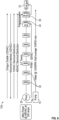
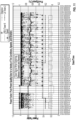
- FIGS. 11-14 graphs depicting the power factor for an example six tower system for a variety of tire conditions, speeds, and directions are shown.
- FIG. 11 depicts a power factor for the six tower system.
- the data shows a clear PFa signal when the system is switching between forward and reverse.
- the trace with the dot indicates the speed of the end gun system.
- the sensed data over time may show the end gun system turning on and off, which, for example, may be used for booster pump diagnostics.
- the LDRU Tower 6 trace represents the last regular drive unit (LRDU) tower number 6.
- LRDU last regular drive unit
- the system may include one or more machine learning networks (e.g., a convolutional neural network) configured to determine component failure (e.g., tire, sensor, and/or pivot) based on the data (e.g., the PFa data).
- machine learning networks e.g., a convolutional neural network
- component failure e.g., tire, sensor, and/or pivot
- the user interface may enable predictive analysis using machine learning networks (e.g., a neural network). It is contemplated that the machine learning network may be trained based on prior data including fault and no fault conditions. In aspects, portions of the machine learning network may operate on the controller, or may operate on a remote system (e.g., a server and/or the cloud). Training may include supervised or non-supervised learning. In some aspects, a user can initiate a training session while watching operation to simplify setup on each unique end gun and pivot combination since pressures and flows may differ.
- machine learning networks e.g., a neural network
- a remote system e.g., a server and/or the cloud.
- Training may include supervised or non-supervised learning.
- a user can initiate a training session while watching operation to simplify setup on each unique end gun and pivot combination since pressures and flows may differ.
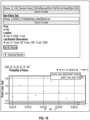
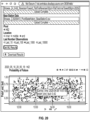
- the user interface enables the entry of meter data (e.g., from a delimited file) and/or base station data (e.g., from a second delimited file).
- the user interface may include the type of pivot (e.g., H62).
- the user interface may include controls to select a location (e.g., inner, middle, and/or end).
- the user interface may include controls to select the last number of observations, for example, the last 10, the last 100, the last 1000, etc. ( FIG. 15 ).
- the system may predict a component failure (e.g., a tire failure) and/or a fault based on the data using a probability (e.g., 0.72). For example, if a middle location is selected and the last number of observations is set to "last 10", then based on the machine learning networks analysis of the meter data and base station data the user interface may provide an indication such as "probability of a middle fault 0.72" ( FIG. 16 ). In another example, if an inner location is selected and the last number of observations is set to "last 10", then based on the machine learning networks analysis of the meter data and base station data, the user interface may provide an indication such as "probability of an inner fault 0.26" ( FIG. 19 ).
- a probability e.g., 0.72
- the disclosed structure can include any suitable mechanical, electrical, and/or chemical components for operating the disclosed pivot predictive maintenance system or components thereof.
- electrical components can include, for example, any suitable electrical and/or electromechanical, and/or electrochemical circuitry, which may include or be coupled to one or more printed circuit boards.
- controller includes "processor,” “digital processing device” and like terms, and are used to indicate a microprocessor or central processing unit (CPU).
- the CPU is the electronic circuitry within a computer that carries out the instructions of a computer program by performing the basic arithmetic, logical, control and input/output (I/O) operations specified by the instructions, and by way of non-limiting examples, include server computers.
- the controller includes an operating system configured to perform executable instructions.
- suitable server operating systems include, by way of non-limiting examples, FreeBSD, OpenBSD, NetBSD ® , Linux, Apple ® Mac OS X Server ® , Oracle ® Solaris ® , Windows Server ® , and Novell ® NetWare ® .
- the operating system is provided by cloud computing.
- controller may be used to indicate a device that controls the transfer of data from a computer or computing device to a peripheral or separate device and vice versa, and/or a mechanical and/or electromechanical device (e.g., a lever, knob, etc.) that mechanically operates and/or actuates a peripheral or separate device.
- a mechanical and/or electromechanical device e.g., a lever, knob, etc.
- the controller includes a storage and/or memory device.
- the storage and/or memory device is one or more physical apparatus used to store data or programs on a temporary or permanent basis.
- the controller includes volatile memory and requires power to maintain stored information.
- the controller includes non-volatile memory and retains stored information when it is not powered.
- the non-volatile memory includes flash memory.
- the non-volatile memory includes dynamic random-access memory (DRAM).
- the non-volatile memory includes ferroelectric random-access memory (FRAM).
- the non-volatile memory includes phase-change random access memory (PRAM).
- the controller is a storage device including, by way of non-limiting examples, CD-ROMs, DVDs, flash memory devices, magnetic disk drives, magnetic tapes drives, optical disk drives, and cloud computing-based storage.
- the storage and/or memory device is a combination of devices such as those disclosed herein.
- the controller includes a display to send visual information to a user.
- the display is a cathode ray tube (CRT).
- the display is a liquid crystal display (LCD).
- the display is a thin film transistor liquid crystal display (TFT-LCD).
- the display is an organic light emitting diode (OLED) display.
- OLED organic light emitting diode
- on OLED display is a passive-matrix OLED (PMOLED) or active-matrix OLED (AMOLED) display.
- the display is a plasma display.
- the display is a video projector.
- the display is interactive (e.g., having a touch screen or a sensor such as a camera, a 3D sensor, a LiDAR, a radar, etc.) that can detect user interactions/gestures/responses and the like.
- the display is a combination of devices such as those disclosed herein.
- the controller may include or be coupled to a server and/or a network.
- server includes “computer server,” “central server,” “main server,” and like terms to indicate a computer or device on a network that manages the system, components thereof, and/or resources thereof.
- network can include any network technology including, for instance, a cellular data network, a wired network, a fiber optic network, a satellite network, and/or an IEEE 802.11a/b/g/n/ac wireless network, among others.
- the controller can be coupled to a mesh network.
- a “mesh network” is a network topology in which each node relays data for the network. All mesh nodes cooperate in the distribution of data in the network. It can be applied to both wired and wireless networks.
- Wireless mesh networks can be considered a type of "Wireless ad hoc" network.
- wireless mesh networks are closely related to Mobile ad hoc networks (MANETs).
- MANETs are not restricted to a specific mesh network topology, Wireless ad hoc networks or MANETs can take any form of network topology.
- Mesh networks can relay messages using either a flooding technique or a routing technique.
- the message With routing, the message is propagated along a path by hopping from node to node until it reaches its destination.
- the network must allow for continuous connections and must reconfigure itself around broken paths, using self-healing algorithms such as Shortest Path Bridging.
- Self-healing allows a routing-based network to operate when a node breaks down or when a connection becomes unreliable.
- the network is typically quite reliable, as there is often more than one path between a source and a destination in the network. This concept can also apply to wired networks and to software interaction.
- a mesh network whose nodes are all connected to each other is a fully connected network.
- the controller may include one or more modules.
- module and like terms are used to indicate a self-contained hardware component of the central server, which in turn includes software modules.
- a module is a part of a program. Programs are composed of one or more independently developed modules that are not combined until the program is linked. A single module can contain one or several routines, or sections of programs that perform a particular task.
- the controller includes software modules for managing various aspects and functions of the disclosed system or components thereof.
- the disclosed structure may also utilize one or more controllers to receive various information and transform the received information to generate an output.
- the controller may include any type of computing device, computational circuit, or any type of processor or processing circuit capable of executing a series of instructions that are stored in memory.
- the controller may include multiple processors and/or multicore central processing units (CPUs) and may include any type of processor, such as a microprocessor, digital signal processor, microcontroller, programmable logic device (PLD), field programmable gate array (FPGA), or the like.
- the controller may also include a memory to store data and/or instructions that, when executed by the one or more processors, cause the one or more processors to perform one or more methods and/or algorithms.
- programming language and "computer program,” as used herein, each include any language used to specify instructions to a computer, and include (but is not limited to) the following languages and their derivatives: Assembler, Basic, Batch files, BCPL, C, C+, C++, Delphi, Fortran, Java, JavaScript, machine code, operating system command languages, Pascal, Perl, PL1, scripting languages, Visual Basic, metalanguages which themselves specify programs, and all first, second, third, fourth, fifth, or further generation computer languages. Also included are database and other data schemas, and any other meta-languages.
- the machine learning (“ML”) model may be the most efficient for complex failures. However, basic logic can be used for simpler failure modes. Likely signals of abnormal operation may come from increases in energy required to move the irrigation system, changes in speed of the system, or changes in sequence of the towers moving, end gun turn frequency, or power quality metrics such as phase balance, inrush current, power factor, THD. Since these vary with a complex inference space, ML can assist in predicting abnormal operation and simplify user and subject matter expert input by giving a simple labeling method.
- the abnormal operation is predicted by generating, based on the received first set of sensor signals, a data structure that is formatted to be processed through one or more layers of a machine learning model.
- the data structure has one or more fields structuring data.
- the abnormal operation is further predicted by processing data that includes the data structure, through each of the one or more layers of the machine learning model that has been trained to predict a likelihood that a particular piece of equipment may require maintenance; and generating, by an output layer of the machine learning model, an output data structure.
- the output data structure includes one or more fields structuring data indicating a likelihood that a particular piece of equipment may require maintenance.
- the abnormal operation requirement may further be predicted by processing the output data structure to determine whether data organized by the one or more fields of the output data structure satisfies a predetermined threshold.
- the output data structure includes one or more fields structuring data indicating a likelihood that a particular piece of equipment may require maintenance.
- the prediction may be generated based on the output data of the machine learning model.
- the prediction includes the abnormal operation.
- securement of any of the components of the disclosed apparatus can be effectuated using known securement techniques such welding, crimping, gluing, fastening, etc.
Landscapes
- Physics & Mathematics (AREA)
- General Physics & Mathematics (AREA)
- Engineering & Computer Science (AREA)
- Automation & Control Theory (AREA)
- Testing And Monitoring For Control Systems (AREA)
- Measuring Volume Flow (AREA)
- Control Of Non-Positive-Displacement Pumps (AREA)
- Feedback Control In General (AREA)
- Medicines Containing Plant Substances (AREA)
Claims (20)
- Système de maintenance prédictive destiné à un système d'irrigation incluant un système d'entraînement, le système de maintenance prédictive comprenant :au moins un capteur configuré pour mesurer une quantité de puissance réactive et générer un signal indiquant un fonctionnement anormal dans le système d'irrigation, le capteur étant couplé électriquement au système d'entraînement ;un processeur ; etune mémoire, incluant des instructions qui, lorsqu'elles sont exécutées par le processeur, amènent le système de maintenance prédictive à :recevoir le signal généré ;déterminer un fonctionnement anormal du système d'entraînement sur la base du signal généré, dans lequel le fonctionnement anormal est une anomalie du système d'entraînement due à un pneu dégonflé ou aplati du système d'entraînement ; etprédire, à l'aide d'un modèle d'apprentissage automatique, un besoin de maintenance du système d'entraînement sur la base du fonctionnement anormal déterminé,dans lequel le besoin de maintenance est prévu en :générant, sur la base du signal de capteur reçu, une structure de données formatée pour être traitée par une ou plusieurs couches d'un modèle d'apprentissage automatique, dans lequel la structure de données inclut un ou plusieurs champs structurant les données ;traitant les données qui incluent la structure de données, à travers chacune de la une ou de plusieurs couches du modèle d'apprentissage automatique qui ont été formées pour prédire la probabilité qu'une pièce particulière du système d'entraînement puisse avoir besoin d'une maintenance ; etgénérant, par une couche de sortie du modèle d'apprentissage automatique, une structure de données de sortie, dans laquelle la structure de données de sortie inclut un ou plusieurs champs structurant des données indiquant la probabilité qu'une pièce d'équipement particulière nécessite une maintenance.
- Système de maintenance prédictive selon la revendication 1, dans lequel les instructions, lorsqu'elles sont exécutées par le processeur, amènent, en outre, le système de maintenance prédictive à :
afficher sur un écran le besoin de maintenance prévu pour le système d'entraînement. - Système de maintenance prédictive selon la revendication 1, dans lequel le capteur est configuré pour mesurer, en outre, au moins une puissance réelle, une puissance apparente ou un courant dans le système d'irrigation.
- Système de maintenance prédictive selon la revendication 3, dans lequel le signal indiquant un fonctionnement anormal inclut au moins une indication de mouvement ou de positionnement du système d'entraînement sur une période de temps.
- Système de maintenance prédictive selon la revendication 4, dans lequel le signal indiquant un fonctionnement anormal est, en outre, basé sur au moins l'un des éléments suivants : la puissance réelle, la puissance apparente ou le courant, qui est supérieur ou inférieur à un seuil prédéterminé.
- Système de maintenance prédictive selon la revendication 1, dans lequel le capteur inclut un capteur de courant, un capteur de puissance, un capteur de tension, ou des combinaisons de ceux-ci.
- Système de maintenance prédictive selon la revendication 1, dans lequel les instructions, lorsqu'elles sont exécutées par le processeur, amènent, en outre, le système de maintenance prédictive à :transmettre une indication du besoin de maintenance prévu pour un dispositif utilisateur aux fins d'affichage ; etafficher, sur un écran du dispositif utilisateur, l'indication du besoin de maintenance prévu.
- Système de maintenance prédictive selon la revendication 1, dans lequel le modèle d'apprentissage automatique est basé sur un réseau d'apprentissage profond, un modèle d'apprentissage automatique classique ou des combinaisons de ceux-ci.
- Système de maintenance prédictive selon la revendication 8, dans lequel les instructions, lorsqu'elles sont exécutées par le processeur, amènent, en outre, le système de maintenance prédictive à recevoir des données d'au moins une station météorologique, d'un capteur d'humidité du sol, d'une carte du terrain et du sol, d'un capteur de température ou des données météorologiques de la National Oceanic and Atmospheric Administration (Administration Nationale des Océans et de l'Atmosphère).
- Système de maintenance prédictive selon la revendication 8, dans lequel la prédiction est basée sur la comparaison d'une puissance réactive ou d'un cycle de travail détecté(e) par le capteur à une puissance réactive ou un cycle de travail prévu(e).
- Procédé mis en œuvre par ordinateur pour la maintenance prédictive d'un système d'irrigation, le procédé mis en œuvre par ordinateur comprenant :la réception d'un signal, détecté par un capteur couplé à un système d'entraînement du système d'irrigation, le signal indiquant une condition de fonctionnement anormal du système d'entraînement, le système d'irrigation étant configuré pour irriguer une zone prédéterminée, le capteur étant configuré pour mesurer une quantité de puissance réactive ;la détermination d'un fonctionnement anormal du système d'entraînement sur la base du signal reçu, le fonctionnement anormal étant une anomalie du système d'entraînement due à un pneu dégonflé ou aplati du système d'entraînement ; etla prédiction, à l'aide d'un modèle d'apprentissage automatique, d'un besoin de maintenance du système d'entraînement sur la base du fonctionnement anormal déterminé,dans lequel le besoin de maintenance est prévu en :générant, sur la base du signal de capteur reçu, une structure de données formatée pour être traitée par une ou plusieurs couches d'un modèle d'apprentissage automatique, dans lequel la structure de données inclut un ou plusieurs champs structurant les données ;traitant les données qui incluent la structure de données, à travers chacune de la une ou de plusieurs couches du modèle d'apprentissage automatique qui ont été formées pour prédire la probabilité qu'une pièce particulière du système d'entraînement puisse avoir besoin d'une maintenance ; etgénérant, par une couche de sortie du modèle d'apprentissage automatique, une structure de données de sortie, dans laquelle la structure de données de sortie inclut un ou plusieurs champs structurant des données indiquant la probabilité qu'une pièce d'équipement particulière puisse avoir besoin d'une maintenance.
- Procédé mis en œuvre par ordinateur selon la revendication 11, comprenant, en outre :
l'affichage sur un écran du besoin de maintenance prévu pour le système d'entraînement. - Procédé mis en œuvre par ordinateur selon la revendication 11, dans lequel le capteur est configuré pour mesurer, en outre, une quantité d'au moins une puissance réelle, une puissance apparente ou un courant dans le système d'irrigation.
- Procédé mis en œuvre par ordinateur selon la revendication 13, dans lequel le signal indiquant une condition de fonctionnement anormal inclut une indication du mouvement ou du positionnement du système d'entraînement sur une période de temps.
- Procédé mis en œuvre par ordinateur selon la revendication 14, dans lequel le signal indiquant une condition de fonctionnement anormal est, en outre, basé sur une fréquence de rotation finale du canon, supérieure ou inférieure à un seuil prédéterminé.
- Procédé mis en œuvre par ordinateur selon la revendication 11, dans lequel le capteur inclut un capteur de courant, un capteur de puissance, un capteur de tension, ou des combinaisons de ceux-ci.
- Procédé mis en œuvre par ordinateur selon la revendication 11, comprenant, en outre :la transmission d'une indication du besoin de maintenance prévu pour un dispositif utilisateur, aux fins d'affichage ; etl'affichage, sur un écran du dispositif utilisateur, de l'indication du besoin de maintenance prévu.
- Procédé mis en œuvre par ordinateur selon la revendication 11, dans lequel le modèle d'apprentissage automatique est basé sur un réseau d'apprentissage profond, un modèle d'apprentissage automatique classique, ou des combinaisons de ceux-ci.
- Procédé mis en œuvre par ordinateur selon la revendication 18, dans lequel la prédiction est basée sur la comparaison d'une puissance réactive détectée par le capteur à une puissance réactive attendue basée sur au moins l'un des éléments suivants : une humidité du sol directement mesurée, une humidité du sol déduite des données météorologiques du terrain ou des stations météorologiques régionales, une carte topographique, une carte du sol, un régime moteur, un rapport de boîte de vitesses, un poids de la tour, un poids de la portée, un état de fonctionnement du système d'entraînement, ou des combinaisons de ces éléments.
- Support non transitoire lisible par ordinateur stockant des instructions qui, lorsqu'elles sont exécutées par un processeur, amènent le processeur à exécuter un procédé de maintenance prédictive pour un système d'irrigation, le procédé comprenant :la réception d'un signal, détecté par un capteur couplé à un système d'entraînement du système d'irrigation, le signal indiquant une condition de fonctionnement anormal du système d'entraînement, le système d'irrigation étant configuré pour irriguer une zone prédéterminée, le capteur étant configuré pour mesurer une quantité de puissance réactive ;la détermination d'un fonctionnement anormal du système d'entraînement sur la base du signal reçu, le fonctionnement anormal étant une anomalie du système d'entraînement due à un pneu dégonflé ou aplati du système d'entraînement ;la prédiction, à l'aide d'un modèle d'apprentissage automatique, d'un besoin de maintenance du système d'entraînement sur la base du fonctionnement anormal déterminé ; etl'affichage sur un écran du besoin de maintenance prévus pour le système d'entraînement,dans lequel le besoin de maintenance est prévu en :générant, sur la base du signal de capteur reçu, une structure de données formatée pour être traitée par une ou plusieurs couches d'un modèle d'apprentissage automatique, dans lequel la structure de données inclut un ou plusieurs champs structurant les données ;traitant les données qui incluent la structure de données, à travers chacune de la une ou de plusieurs couches du modèle d'apprentissage automatique qui ont été formées pour prédire la probabilité qu'une pièce particulière du système d'entraînement puisse avoir besoin d'une maintenance ; etgénérant, par une couche de sortie du modèle d'apprentissage automatique, une structure de données de sortie, dans laquelle la structure de données de sortie inclut un ou plusieurs champs structurant des données indiquant la probabilité qu'une pièce d'équipement particulière puisse avoir besoin d'une maintenance.
Applications Claiming Priority (2)
| Application Number | Priority Date | Filing Date | Title |
|---|---|---|---|
| US202163133542P | 2021-01-04 | 2021-01-04 | |
| PCT/US2022/011114 WO2022147530A1 (fr) | 2021-01-04 | 2022-01-04 | Détermination d'anomalies de système d'entraînement sur la base de variations de puissance et/ou de courant dans un système d'irrigation |
Publications (3)
| Publication Number | Publication Date |
|---|---|
| EP4272040A1 EP4272040A1 (fr) | 2023-11-08 |
| EP4272040B1 true EP4272040B1 (fr) | 2024-11-20 |
| EP4272040C0 EP4272040C0 (fr) | 2024-11-20 |
Family
ID=80123112
Family Applications (1)
| Application Number | Title | Priority Date | Filing Date |
|---|---|---|---|
| EP22701741.5A Active EP4272040B1 (fr) | 2021-01-04 | 2022-01-04 | Détermination d'anomalies de système d'entraînement sur la base de variations de puissance et/ou de courant dans un système d'irrigation |
Country Status (7)
| Country | Link |
|---|---|
| US (1) | US11681285B2 (fr) |
| EP (1) | EP4272040B1 (fr) |
| CN (1) | CN117280290B (fr) |
| AU (1) | AU2022205056B2 (fr) |
| CA (1) | CA3206489C (fr) |
| WO (1) | WO2022147530A1 (fr) |
| ZA (1) | ZA202306908B (fr) |
Families Citing this family (2)
| Publication number | Priority date | Publication date | Assignee | Title |
|---|---|---|---|---|
| WO2021188731A1 (fr) * | 2020-03-17 | 2021-09-23 | Heartland Ag Tech, Inc. | Systèmes et procédés pour l'entretien prédictif d'un système d'irrigation |
| CN119111211B (zh) * | 2024-11-14 | 2025-02-14 | 吉林省星月生态科技有限公司 | 一种玉米种植的智能精准水肥灌溉方法及系统 |
Family Cites Families (21)
| Publication number | Priority date | Publication date | Assignee | Title |
|---|---|---|---|---|
| US4176395A (en) * | 1977-11-16 | 1979-11-27 | Clemar Manufacturing Corporation | Interactive irrigation control system |
| US9179612B2 (en) | 2010-07-21 | 2015-11-10 | Rodney Lee Nelson | Area-programmable sprinkler |
| US9823156B1 (en) * | 2013-10-08 | 2017-11-21 | Powwow Energy, Inc. | Methods to detect water leaks in irrigation systems using a pump energy consumption data |
| US10384557B2 (en) | 2016-06-02 | 2019-08-20 | Irrovation LLC | Irrigation system with position-based predictive analytics |
| NO20161986A1 (en) | 2016-12-14 | 2018-06-15 | 7Sense Products As | Flow meter |
| CA3064038A1 (fr) * | 2017-06-01 | 2018-12-06 | Valmont Industries, Inc. | Systeme et procede de gestion d'irrigation faisant appel a des flux de travaux d'apprentissage automatique |
| GB2571120B (en) * | 2018-02-18 | 2020-05-13 | Faraday Predictive Ltd | System and method for monitoring an operating condition of at least one electrical device using a data server arrangement |
| US20190259108A1 (en) * | 2018-02-20 | 2019-08-22 | Osram Gmbh | Controlled Agricultural Systems and Methods of Managing Agricultural Systems |
| US11663414B2 (en) * | 2018-02-20 | 2023-05-30 | Fluence Bioengineering, Inc. | Controlled agricultural systems and methods of managing agricultural systems |
| JP7445928B2 (ja) * | 2018-05-07 | 2024-03-08 | ストロング フォース アイオーティ ポートフォリオ 2016,エルエルシー | 産業用のモノのインターネットを利用した解析及びメンテナンスのための機械信号のデータ収集、学習、ストリーミングのための方法並びにシステム |
| CN109191074A (zh) * | 2018-08-27 | 2019-01-11 | 宁夏大学 | 智慧果园种植管理系统 |
| WO2020120973A2 (fr) * | 2018-12-12 | 2020-06-18 | Pentair Plc | Systèmes de maintenance prédictive et préventive pour dispositifs d'eau connectés |
| WO2020198391A1 (fr) * | 2019-03-25 | 2020-10-01 | Realmfive, Inc. | Système d'irrigation intelligent |
| US11596963B2 (en) | 2019-04-19 | 2023-03-07 | Kansas State University Research Foundation | In-canopy sprinkler monitoring system for center pivot irrigation systems |
| MX2021013170A (es) * | 2019-06-07 | 2021-12-10 | Valmont Industries | Sistema y metodo para el uso integrado de analisis predictivo y aprendizaje automatico para un sistema de riego por pivote central. |
| US11357180B2 (en) * | 2019-06-20 | 2022-06-14 | Reinke Manufacturing Co., Inc. | Monitoring and control of a movable tower in an irrigation system |
| AU2020344501B2 (en) * | 2019-09-12 | 2026-01-08 | Valmont Industries, Inc. | System and method for analysis of current and voltage levels within a center pivot irrigation system |
| CA3150536A1 (fr) * | 2019-12-09 | 2021-06-17 | Valmont Industries, Inc. | Systeme, procede et appareil pour l'integration de donnees sur le champ, la recolte et l'equipement d'irrigation pour la gestion de l'irrigation |
| CN111239481A (zh) * | 2020-03-10 | 2020-06-05 | 苏州倍加福电气自动化有限公司 | 一种农业用水智能化计量终端 |
| US11632918B2 (en) * | 2020-07-29 | 2023-04-25 | Lindsay Corporation | System and method for detecting ponding in irrigated fields |
| WO2022026166A1 (fr) | 2020-07-30 | 2022-02-03 | Valmont Industries, Inc. | Système et procédé de détection d'état de pistolet d'extrémité |
-
2022
- 2022-01-04 EP EP22701741.5A patent/EP4272040B1/fr active Active
- 2022-01-04 CA CA3206489A patent/CA3206489C/fr active Active
- 2022-01-04 US US17/568,191 patent/US11681285B2/en active Active
- 2022-01-04 AU AU2022205056A patent/AU2022205056B2/en active Active
- 2022-01-04 WO PCT/US2022/011114 patent/WO2022147530A1/fr not_active Ceased
- 2022-01-04 CN CN202280013884.7A patent/CN117280290B/zh active Active
-
2023
- 2023-07-07 ZA ZA2023/06908A patent/ZA202306908B/en unknown
Also Published As
| Publication number | Publication date |
|---|---|
| AU2022205056A1 (en) | 2023-07-13 |
| CN117280290B (zh) | 2024-03-29 |
| EP4272040A1 (fr) | 2023-11-08 |
| AU2022205056A9 (en) | 2024-07-25 |
| AU2022205056B2 (en) | 2024-02-01 |
| US20220214682A1 (en) | 2022-07-07 |
| CA3206489A1 (fr) | 2022-07-07 |
| CA3206489C (fr) | 2023-10-24 |
| ZA202306908B (en) | 2024-03-27 |
| US11681285B2 (en) | 2023-06-20 |
| EP4272040C0 (fr) | 2024-11-20 |
| CN117280290A (zh) | 2023-12-22 |
| WO2022147530A1 (fr) | 2022-07-07 |
Similar Documents
| Publication | Publication Date | Title |
|---|---|---|
| CA3183142C (fr) | Systemes et procedes de maintenance predictive pour determiner la sante d'un pistolet d'extremite | |
| US12422867B2 (en) | Irrigation maintenance system | |
| US20250028316A1 (en) | Systems and methods for predictive irrigation system maintenance | |
| EP4272040B1 (fr) | Détermination d'anomalies de système d'entraînement sur la base de variations de puissance et/ou de courant dans un système d'irrigation | |
| US12022780B2 (en) | Condition based monitoring of irrigation | |
| US20230309472A1 (en) | Irrigation system including electronic independent observer integration with fertigation system | |
| BR112023013333B1 (pt) | Sistema de manutenção preditiva para um sistema de irrigação, método implementado por computador para manutenção preditiva para um sistema de irrigação e meio legível por computador não transitório | |
| US20250386779A1 (en) | An irrigation maintenance system for determining irrigation valve and booster pump health | |
| BR112022023051B1 (pt) | Sistema de manutenção preditiva para um sistema de irrigação,método implementado por computador para manutenção preditiva para um sistema de irrigação e meio legível por computador não transitório |
Legal Events
| Date | Code | Title | Description |
|---|---|---|---|
| STAA | Information on the status of an ep patent application or granted ep patent |
Free format text: STATUS: UNKNOWN |
|
| STAA | Information on the status of an ep patent application or granted ep patent |
Free format text: STATUS: THE INTERNATIONAL PUBLICATION HAS BEEN MADE |
|
| PUAI | Public reference made under article 153(3) epc to a published international application that has entered the european phase |
Free format text: ORIGINAL CODE: 0009012 |
|
| STAA | Information on the status of an ep patent application or granted ep patent |
Free format text: STATUS: REQUEST FOR EXAMINATION WAS MADE |
|
| 17P | Request for examination filed |
Effective date: 20230628 |
|
| AK | Designated contracting states |
Kind code of ref document: A1 Designated state(s): AL AT BE BG CH CY CZ DE DK EE ES FI FR GB GR HR HU IE IS IT LI LT LU LV MC MK MT NL NO PL PT RO RS SE SI SK SM TR |
|
| DAV | Request for validation of the european patent (deleted) | ||
| DAX | Request for extension of the european patent (deleted) | ||
| GRAP | Despatch of communication of intention to grant a patent |
Free format text: ORIGINAL CODE: EPIDOSNIGR1 |
|
| STAA | Information on the status of an ep patent application or granted ep patent |
Free format text: STATUS: GRANT OF PATENT IS INTENDED |
|
| INTG | Intention to grant announced |
Effective date: 20240709 |
|
| GRAS | Grant fee paid |
Free format text: ORIGINAL CODE: EPIDOSNIGR3 |
|
| GRAA | (expected) grant |
Free format text: ORIGINAL CODE: 0009210 |
|
| STAA | Information on the status of an ep patent application or granted ep patent |
Free format text: STATUS: THE PATENT HAS BEEN GRANTED |
|
| AK | Designated contracting states |
Kind code of ref document: B1 Designated state(s): AL AT BE BG CH CY CZ DE DK EE ES FI FR GB GR HR HU IE IS IT LI LT LU LV MC MK MT NL NO PL PT RO RS SE SI SK SM TR |
|
| REG | Reference to a national code |
Ref country code: GB Ref legal event code: FG4D |
|
| REG | Reference to a national code |
Ref country code: CH Ref legal event code: EP |
|
| REG | Reference to a national code |
Ref country code: DE Ref legal event code: R096 Ref document number: 602022007932 Country of ref document: DE |
|
| REG | Reference to a national code |
Ref country code: IE Ref legal event code: FG4D |
|
| U01 | Request for unitary effect filed |
Effective date: 20241220 |
|
| U07 | Unitary effect registered |
Designated state(s): AT BE BG DE DK EE FI FR IT LT LU LV MT NL PT RO SE SI Effective date: 20250107 |
|
| U20 | Renewal fee for the european patent with unitary effect paid |
Year of fee payment: 4 Effective date: 20250127 |
|
| PG25 | Lapsed in a contracting state [announced via postgrant information from national office to epo] |
Ref country code: HR Free format text: LAPSE BECAUSE OF FAILURE TO SUBMIT A TRANSLATION OF THE DESCRIPTION OR TO PAY THE FEE WITHIN THE PRESCRIBED TIME-LIMIT Effective date: 20241120 Ref country code: IS Free format text: LAPSE BECAUSE OF FAILURE TO SUBMIT A TRANSLATION OF THE DESCRIPTION OR TO PAY THE FEE WITHIN THE PRESCRIBED TIME-LIMIT Effective date: 20250320 |
|
| PG25 | Lapsed in a contracting state [announced via postgrant information from national office to epo] |
Ref country code: ES Free format text: LAPSE BECAUSE OF FAILURE TO SUBMIT A TRANSLATION OF THE DESCRIPTION OR TO PAY THE FEE WITHIN THE PRESCRIBED TIME-LIMIT Effective date: 20241120 |
|
| PG25 | Lapsed in a contracting state [announced via postgrant information from national office to epo] |
Ref country code: NO Free format text: LAPSE BECAUSE OF FAILURE TO SUBMIT A TRANSLATION OF THE DESCRIPTION OR TO PAY THE FEE WITHIN THE PRESCRIBED TIME-LIMIT Effective date: 20250220 |
|
| PG25 | Lapsed in a contracting state [announced via postgrant information from national office to epo] |
Ref country code: GR Free format text: LAPSE BECAUSE OF FAILURE TO SUBMIT A TRANSLATION OF THE DESCRIPTION OR TO PAY THE FEE WITHIN THE PRESCRIBED TIME-LIMIT Effective date: 20250221 |
|
| PG25 | Lapsed in a contracting state [announced via postgrant information from national office to epo] |
Ref country code: PL Free format text: LAPSE BECAUSE OF FAILURE TO SUBMIT A TRANSLATION OF THE DESCRIPTION OR TO PAY THE FEE WITHIN THE PRESCRIBED TIME-LIMIT Effective date: 20241120 |
|
| PG25 | Lapsed in a contracting state [announced via postgrant information from national office to epo] |
Ref country code: RS Free format text: LAPSE BECAUSE OF FAILURE TO SUBMIT A TRANSLATION OF THE DESCRIPTION OR TO PAY THE FEE WITHIN THE PRESCRIBED TIME-LIMIT Effective date: 20250220 |
|
| PG25 | Lapsed in a contracting state [announced via postgrant information from national office to epo] |
Ref country code: SM Free format text: LAPSE BECAUSE OF FAILURE TO SUBMIT A TRANSLATION OF THE DESCRIPTION OR TO PAY THE FEE WITHIN THE PRESCRIBED TIME-LIMIT Effective date: 20241120 |
|
| PG25 | Lapsed in a contracting state [announced via postgrant information from national office to epo] |
Ref country code: SK Free format text: LAPSE BECAUSE OF FAILURE TO SUBMIT A TRANSLATION OF THE DESCRIPTION OR TO PAY THE FEE WITHIN THE PRESCRIBED TIME-LIMIT Effective date: 20241120 |
|
| PG25 | Lapsed in a contracting state [announced via postgrant information from national office to epo] |
Ref country code: CZ Free format text: LAPSE BECAUSE OF FAILURE TO SUBMIT A TRANSLATION OF THE DESCRIPTION OR TO PAY THE FEE WITHIN THE PRESCRIBED TIME-LIMIT Effective date: 20241120 |
|
| REG | Reference to a national code |
Ref country code: CH Ref legal event code: PL |
|
| PG25 | Lapsed in a contracting state [announced via postgrant information from national office to epo] |
Ref country code: MC Free format text: LAPSE BECAUSE OF FAILURE TO SUBMIT A TRANSLATION OF THE DESCRIPTION OR TO PAY THE FEE WITHIN THE PRESCRIBED TIME-LIMIT Effective date: 20241120 |
|
| PLBE | No opposition filed within time limit |
Free format text: ORIGINAL CODE: 0009261 |
|
| STAA | Information on the status of an ep patent application or granted ep patent |
Free format text: STATUS: NO OPPOSITION FILED WITHIN TIME LIMIT |
|
| PG25 | Lapsed in a contracting state [announced via postgrant information from national office to epo] |
Ref country code: CH Free format text: LAPSE BECAUSE OF NON-PAYMENT OF DUE FEES Effective date: 20250131 |
|
| 26N | No opposition filed |
Effective date: 20250821 |
|
| PG25 | Lapsed in a contracting state [announced via postgrant information from national office to epo] |
Ref country code: IE Free format text: LAPSE BECAUSE OF NON-PAYMENT OF DUE FEES Effective date: 20250104 |
|
| U20 | Renewal fee for the european patent with unitary effect paid |
Year of fee payment: 5 Effective date: 20260127 |