EP4274221A1 - Anzeigeverfahren und -vorrichtung mit spezialeffekten sowie vorrichtung und medium - Google Patents
Anzeigeverfahren und -vorrichtung mit spezialeffekten sowie vorrichtung und medium Download PDFInfo
- Publication number
- EP4274221A1 EP4274221A1 EP22749151.1A EP22749151A EP4274221A1 EP 4274221 A1 EP4274221 A1 EP 4274221A1 EP 22749151 A EP22749151 A EP 22749151A EP 4274221 A1 EP4274221 A1 EP 4274221A1
- Authority
- EP
- European Patent Office
- Prior art keywords
- special effect
- image
- target
- effect image
- images
- Prior art date
- Legal status (The legal status is an assumption and is not a legal conclusion. Google has not performed a legal analysis and makes no representation as to the accuracy of the status listed.)
- Pending
Links
Images





Classifications
-
- H—ELECTRICITY
- H04—ELECTRIC COMMUNICATION TECHNIQUE
- H04N—PICTORIAL COMMUNICATION, e.g. TELEVISION
- H04N5/00—Details of television systems
- H04N5/222—Studio circuitry; Studio devices; Studio equipment
- H04N5/262—Studio circuits, e.g. for mixing, switching-over, change of character of image, other special effects ; Cameras specially adapted for the electronic generation of special effects
- H04N5/2621—Cameras specially adapted for the electronic generation of special effects during image pickup, e.g. digital cameras, camcorders, video cameras having integrated special effects capability
-
- H—ELECTRICITY
- H04—ELECTRIC COMMUNICATION TECHNIQUE
- H04N—PICTORIAL COMMUNICATION, e.g. TELEVISION
- H04N5/00—Details of television systems
- H04N5/222—Studio circuitry; Studio devices; Studio equipment
- H04N5/262—Studio circuits, e.g. for mixing, switching-over, change of character of image, other special effects ; Cameras specially adapted for the electronic generation of special effects
-
- G—PHYSICS
- G06—COMPUTING OR CALCULATING; COUNTING
- G06T—IMAGE DATA PROCESSING OR GENERATION, IN GENERAL
- G06T11/00—Two-dimensional [2D] image generation
- G06T11/20—Drawing from basic elements
- G06T11/23—Drawing from basic elements using straight lines or curves
-
- G—PHYSICS
- G06—COMPUTING OR CALCULATING; COUNTING
- G06T—IMAGE DATA PROCESSING OR GENERATION, IN GENERAL
- G06T5/00—Image enhancement or restoration
- G06T5/20—Image enhancement or restoration using local operators
-
- G—PHYSICS
- G06—COMPUTING OR CALCULATING; COUNTING
- G06T—IMAGE DATA PROCESSING OR GENERATION, IN GENERAL
- G06T5/00—Image enhancement or restoration
- G06T5/50—Image enhancement or restoration using two or more images, e.g. averaging or subtraction
-
- G—PHYSICS
- G06—COMPUTING OR CALCULATING; COUNTING
- G06T—IMAGE DATA PROCESSING OR GENERATION, IN GENERAL
- G06T7/00—Image analysis
- G06T7/70—Determining position or orientation of objects or cameras
-
- H—ELECTRICITY
- H04—ELECTRIC COMMUNICATION TECHNIQUE
- H04N—PICTORIAL COMMUNICATION, e.g. TELEVISION
- H04N21/00—Selective content distribution, e.g. interactive television or video on demand [VOD]
- H04N21/40—Client devices specifically adapted for the reception of or interaction with content, e.g. set-top-box [STB]; Operations thereof
- H04N21/43—Processing of content or additional data, e.g. demultiplexing additional data from a digital video stream; Elementary client operations, e.g. monitoring of home network or synchronising decoder's clock; Client middleware
- H04N21/431—Generation of visual interfaces for content selection or interaction; Content or additional data rendering
-
- H—ELECTRICITY
- H04—ELECTRIC COMMUNICATION TECHNIQUE
- H04N—PICTORIAL COMMUNICATION, e.g. TELEVISION
- H04N5/00—Details of television systems
- H04N5/222—Studio circuitry; Studio devices; Studio equipment
- H04N5/262—Studio circuits, e.g. for mixing, switching-over, change of character of image, other special effects ; Cameras specially adapted for the electronic generation of special effects
- H04N5/265—Mixing
-
- H—ELECTRICITY
- H04—ELECTRIC COMMUNICATION TECHNIQUE
- H04N—PICTORIAL COMMUNICATION, e.g. TELEVISION
- H04N5/00—Details of television systems
- H04N5/222—Studio circuitry; Studio devices; Studio equipment
- H04N5/262—Studio circuits, e.g. for mixing, switching-over, change of character of image, other special effects ; Cameras specially adapted for the electronic generation of special effects
- H04N5/268—Signal distribution or switching
-
- H—ELECTRICITY
- H04—ELECTRIC COMMUNICATION TECHNIQUE
- H04N—PICTORIAL COMMUNICATION, e.g. TELEVISION
- H04N5/00—Details of television systems
- H04N5/222—Studio circuitry; Studio devices; Studio equipment
- H04N5/262—Studio circuits, e.g. for mixing, switching-over, change of character of image, other special effects ; Cameras specially adapted for the electronic generation of special effects
- H04N5/272—Means for inserting a foreground image in a background image, i.e. inlay, outlay
-
- G—PHYSICS
- G06—COMPUTING OR CALCULATING; COUNTING
- G06T—IMAGE DATA PROCESSING OR GENERATION, IN GENERAL
- G06T2207/00—Indexing scheme for image analysis or image enhancement
- G06T2207/20—Special algorithmic details
- G06T2207/20212—Image combination
- G06T2207/20221—Image fusion; Image merging
-
- G—PHYSICS
- G06—COMPUTING OR CALCULATING; COUNTING
- G06T—IMAGE DATA PROCESSING OR GENERATION, IN GENERAL
- G06T2207/00—Indexing scheme for image analysis or image enhancement
- G06T2207/30—Subject of image; Context of image processing
- G06T2207/30196—Human being; Person
- G06T2207/30201—Face
Definitions
- the present disclosure relates to the field of internet technology, in particular to a special effect display method and apparatus, a device, and a medium.
- Terminals can provide various special effects to attract users.
- the current special effects lack richness and entertaining, and thus cannot meet users' needs for special effects.
- a special effect display method is provided according to an embodiment of the present disclosure.
- the method includes:
- a special effect display apparatus is provided according to an embodiment of the present disclosure.
- the apparatus includes:
- the electronic device includes: a processor; and a memory for storing instructions executable by the processor.
- the processor is configured to read the instructions from the memory and execute the instructions to implement the special effect display method according to the embodiments of the present disclosure.
- a computer readable storage medium is provided according to an embodiment of the present disclosure.
- the storage medium stores a computer program for performing the special effect display method according to the embodiments of the present disclosure.
- a computer program product is provided according to an embodiment of the present disclosure.
- the computer program product when running on a computer, causes the computer to perform the special effect display method according to the embodiments of the present disclosure.
- the technical solution according to the embodiments of the present disclosure has the following advantages compared to the conventional technology.
- images of a captured video are obtained; position information of a recognition object is determined based on the images of the captured video, and a trajectory recording image is drawn based on the position information of the recognition object; superposition processing is performed on the trajectory recording image and a preset special effect material image to obtain a unit special effect image; transformation processing is performed on the unit special effect image to generate a target special effect image, and the target special effect image is added to the images of the captured video for display.
- the target special effect image is combined by multiple unit special effect images.
- the trajectory recording image is generated based on the position change of the recognition object in the images of the captured video. Then, the trajectory recording image and the special effect material image may be superimposed to obtain the unit special effect image, and a special effect image may be obtained by performing transformation processing on the unit special effect image.
- the special effect image may be displayed to the user, achieving the special effect display based on the user's actions. As the displayed special effect image is generated by combining multiple unit special effect images, the richness and entertaining of special effect display are improved, and thus the user's interactive experience is enhanced.
- Figure 1 is a schematic flowchart of a special effect display method according to an embodiment of the present disclosure.
- the method may be performed by a special effect display apparatus.
- the special effect display apparatus may be implemented using software and/or hardware and may generally be integrated into an electronic device. As shown in Figure 1 , the method includes S101 to S 104.
- Step 101 images of a captured video are obtained.
- the images of the captured video are images including a part or all of user's body parts within a current image acquisition range.
- the images captured video may include user's face, head, limbs, and background and the like.
- a client acquires and displays the images of the captured video through an image acquisition module, in response to a special effect display instruction from a user.
- the special effect display instruction refers to an instruction to start special effect display, which is generated by the user's triggering operation on a preset button.
- the mode of the triggering operation is not limited herein, such as clicking on a preset button.
- the preset button may be set in hardware or software manners.
- the special effect display instruction may also be generated based on a voice instruction inputted by a user. For example, after receiving a voice inputted by the user, it may be determined whether the voice is a preset voice. If the voice is determined to be a preset voice, a special effect display instruction is generated.
- Step 102 position information of a recognition object is determined based on the images of the captured video, and a trajectory recording image is drawn based on the position information of the recognition object.
- the recognition object may be a preset body part of the user.
- the recognition object may include a nose and eyes in a human face, and fingers, which can be set according to the actual situation.
- the recognition object being a preset part of a human face is taken as an example.
- the preset part may be any part of the face, such as a nose, a mouth, and eyes.
- the trajectory recording graph is an image used to record an action trajectory of the preset part of the user's face.
- the client after obtaining the images of the captured video, the client detects a human face in the images of the captured video in an image recognition algorithm, and determines position information of the preset part of the face, that is, determines the position information of the recognition object. Then, the client draws a trajectory recording graph based on the position information of the recognition object.
- the position information of the recognition object may be coordinates of the recognition object in the images of the captured video, and the origin of the coordinates is determined based on the actual situation.
- the process of drawing the trajectory recording image based on the position information of the recognition object includes: creating a canvas, and drawing in the canvas circular areas at two positions corresponding to the recognition object based on the position information of the recognition object in the first and second frame images of the captured video; determining a target line connecting the two positions, and determining a trajectory area based on the target line, where a distance of points in the trajectory area to the target line is less than or equal to a radius of the circular area; setting transparencies of the two circular areas and the trajectory area to transparent to obtain the trajectory recording image.
- the process of determining the trajectory area based on the target line includes: determining target points between the two positions; filtering and drawing the target points based on a distance of each target point to the target line, to obtain the trajectory area, where an angle between a first line corresponding to the target point and the target line and an angle between a second line corresponding to the target point and the target line are both acute angles, and the first line and the second line are lines respectively connecting the target point and the two positions.
- the canvas is a foundation used to generate a trajectory recording image through drawing. Color and size of the canvas are not limited.
- the canvas may be a black canvas.
- the client determines the position information of the recognition object in each frame image of the captured video; and draws circular areas with a preset radius at two positions of the recognition object, based on the position information of the recognition object in the first and second frame images.
- the preset radius may be a brush radius in the case that the brush is a circular brush.
- the client determines an angle between the first line corresponding to each point between the two positions and the target line and an angle between the second line corresponding to each point between the two positions and the target line, to determine points with two corresponding acute angles as target points; filters and draws target points with a distance to the target line less than or equal to the radius of the circular area, to obtain a trajectory area.
- the trajectory area may be a rectangular area.
- the two circular areas and a trajectory area obtained from the above process are an action drawing area of the recognition object in the first and second frame images.
- the transparency of the two circular areas and a trajectory area is set to transparent on the canvas, to obtain the trajectory recording image.
- the two circular areas and the trajectory area may be filled with a preset color on the canvas to obtain the trajectory recording image.
- the preset color refers to a color different from the canvas color. For example, when the canvas is black, the preset color may be white.
- Step 103 superposition processing is performed on the trajectory recording image and a preset special effect material image to obtain a unit special effect image.
- the special effect material image may be understood as a basic image used to generate a unit special effect image.
- the special effect material image may be regarded as an initial paper in analogy with paper-cuts.
- the special effect material image may be a sector diagram filled with a fixed color. The color, shape and angle of the sector diagram may be set according to the actual situation. For example, the special effect material image may be a red sector diagram with an angle of 30 degrees.
- the shape and size of the trajectory recording image may be the same as or different from those of the special effect material image, which will not be limited herein.
- the superposition processing is used to replace a background of the trajectory recording image with the special effect material image.
- the client after obtaining a trajectory recording image, the client obtains the preset special effect material image and replaces the background of the trajectory recording image with the special effect material image to obtain a unit special effect image. Then, the unit special effect image may be displayed, and the trajectory recording area in the unit special effect image may be highlighted.
- Step 104 transformation processing is performed on the unit special effect image to generate a target special effect image, and the target special effect image is added to the images of the captured video for display, where the target special effect image is combined by multiple unit special effect images.
- the target special effect image refers to a complete special effect image generated based on the unit special effect image, which may be obtained by combining multiple unit special effect images.
- the target special effect image being a special effect image of paper-cuts as an example, the target special effect image may be understood as a special effect image similar to paper-cuts obtained by paper cutting.
- Transformation processing includes an operation for transforming the unit special effect image, which may include a first transformation operation or a second transformation operation.
- the first transformation operation includes a replication operation and a mirroring operation.
- the second transformation operation includes a rotation operation and a moving operation.
- the replication operation refers to an operation of making multiple identical images for the unit special effect image.
- the mirroring operation refers to an operation of making, for the unit special effect image, an image arranged in a reverse order relative to an axis interleaved with the unit special effect image or a plane interleaved with the unit special effect image.
- the rotation operation refers to rotating the unit special effect image at a certain angle.
- the transformation parameter corresponding to the transformation processing is adjustable.
- the transformation parameter includes at least one of replication times corresponding to the replication operation, a rotation angle corresponding to the rotation operation, an image position, and an image size.
- the dynamic control of transformation parameter may be achieved by developers, implementing a diversity of the generated target special effect images.
- the superposition processing may be performed on the trajectory recording image and the preset special effect material image, to obtain the unit special effect image, and the transformation processing is performed on the unit special effect image to generate the target special effect image.
- the above superposition processing and transformation processing may be carried out synchronously, or the superposition processing is performed first and then the transformation processing is performed according to actual needs.
- the client After acquiring the images of the captured video, the client displays the images of the captured video on an image display interface, and draws a trajectory recording image based on the position information of the reorganization object in the images of the captured video.
- a target special effect image is generated after the trajectory recording image is drawn, and the target special effect image is added to the images of the captured video in a set animation mode for display.
- the target special effect image may be superimposed on the images of the captured video to be fully displayed, and the images of the captured video are partially covered to highlight the target special effect image.
- a process of adding the target special effect image to the images of the captured video for display includes: adding the target special effect image to the images of the captured video in a set animation mode for display after the trajectory recording image is drawn.
- the set animation mode refers to a preset dynamic effect display mode, which may be set according to the actual situation.
- the set animation mode includes: moving the target special effect image up a preset distance, and then displaying the target special effect one by one from a unit special effect image to both sides until the target special effect image is fully displayed.
- the generated target special effect image is inputted into a set animation program to display the target special effect image to the user in the set animation mode.
- the target special effect image may be displayed in the preset animation mode after it is generated, so that users feel the target special effect image with animation effects, improving the entertaining of the special effect display.
- Figure 2 is a schematic diagram showing special effect display according to an embodiment of the present disclosure
- Figure 3 is a schematic diagram showing special effect display according to another embodiment of the present disclosure
- Figures 2 and 3 are two schematic diagrams showing a display process of the generated target special effect image in a set animation mode.
- the target special effect image is a special effect image of paper-cut. Only the upper half of the paper-cut pieces is displayed in Figure 2 , and the displayed paper-cut pieces have different transparency. Other paper-cut pieces have not been displayed yet.
- the target special effect image has been fully displayed in the set animation mode, and all paper-cut pieces have the same transparency.
- Figures 2 and 3 above show only examples of the target special effect image, and the parameter, such as the shape, size, position, of the target special effect image may be dynamically adjusted according to actual needs.
- images of a captured video are obtained; position information of a recognition object is determined based on the images of the captured video, and a trajectory recording image is drawn based on the position information of the recognition object.
- Superposition processing is performed on the trajectory recording image and a preset special effect material image to obtain a unit special effect image. Transformation processing is performed on the unit special effect image to generate a target special effect image, and the target special effect image is added to the images of the captured video for display.
- the target special effect image is combined by multiple unit special effect images.
- the trajectory recording image and the special effect material image may be superimposed to obtain the unit special effect image, and a special effect image may be obtained by performing transformation processing on the unit special effect image.
- the special effect image may be displayed to the user, achieving the special effect display based on the user's actions. As the displayed special effect image is generated by combining multiple unit special effect images, the richness and entertaining of special effect display are improved, and thus the user's interactive experience is enhanced.
- the special effect display method may further include: displaying the unit special effect image in real-time on the images of the captured video in the process of drawing the trajectory recording image.
- the process of displaying the unit special effect image in real-time in the process of drawing the trajectory recording image may include: setting transparency of other areas in the target special effect image except the unit special effect image to transparent in the process of drawing the trajectory recording image, to obtain a special effect image to be displayed; superimposing the special effect image to be displayed on the images of the captured video for display.
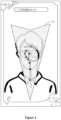
- Figure 4 is a schematic diagram showing special effect display according to another embodiment of the present disclosure.
- Figure 4 shows a schematic diagram of an image display interface in the process of generating the target special effect.
- a unit special effect image 10 is shown, and the unit special effect image 10 is superimposed on the image of the captured video for display.
- a transparent action trajectory recording area generated based on user actions is shown in the unit special effect image 10. This area constantly changes with user actions.
- a progress bar for generating the special effect image may be display at the top of the image display interface in Figure 4 . The progress bar continues to advance with time and stop until the preset time is reached and the progress bar is filled.
- atmosphere effect elements may also displayed on interface borders to match the current special effect image, enhancing the user's immersive experience.
- real-time display is performed in the process of generating the special effect image, so that users can feel in real time the changes in special effects with the action change, further improving the richness and entertaining of the special effect display, and enhancing the user's interactive experience.
- the special effect display method may further include: receiving a recording instruction from the user, and recording a special effect video for the processes of generating and displaying the target special effect image.
- the recording instruction is an instruction to perform video recording on the target special effect image.
- the recording instruction includes the special effect display instruction in the above embodiment.
- the client generates a recording instruction in response to a triggering operation of the user on a recording button, and then performs the process of generating the target special effect image mentioned above, and records the processes of generating and displaying the target special effect image to obtain a special effect video.
- the recording time may be a fixed time, which may be set according to the actual situation. For example, the fixed time may be 15 seconds.
- the special effect display method may further include: controlling the generation and display of the target special effect image based on a timestamp in the process of recording the special effect video.
- the generation step of the target special effect image is performed, and the generation step ends when a preset timestamp is reached. Then, the target special effect image is displayed.
- Figure 5 is a schematic flowchart of a special effect display method according to another embodiment of the present disclosure. Based on the above embodiment, the present embodiment further optimizes the special effect display method described above. As shown in Figure 5 , the method includes Step 201 to Step 206.
- Step 201 images of a captured video are obtained.
- Step 202 position information of a recognition object is determined based on the images of the captured video.
- the recognition object is a preset part of a human face.
- Step 203 a trajectory recording image is drawn based on the position information of the recognition object.
- a process of drawing a trajectory recording image based on the position information of the recognition object includes: creating a canvas, and drawing in the canvas circular areas at two positions corresponding to the recognition object based on the position information of the recognition object in the first and second frame images of the captured video; determining a target line connecting the two positions, and determining a trajectory area based on the target line, where a distance of each point in the trajectory area to the target line is less than or equal to a radius of the circular area; setting transparencies of the two circular areas and the trajectory area to transparent to obtain the trajectory recording image.
- a process of determining a trajectory area based on the target line includes: determining a target point between the two positions; filtering and drawing the target point based on a distance of the target point to the target line, to obtain the trajectory area, where an angle between a first line corresponding to the target point and the target line and an angle between a second line corresponding to the target point and the target line are both acute angles, and the first line and the second line are lines respectively connecting the target point and the two positions.
- Step 204 superposition processing is performed on the trajectory recording image and a preset special effect material image to obtain a unit special effect image.
- Superposition processing is used to replace a background of the trajectory recording image with the special effect material image.
- Step 205 transformation processing is performed on the unit special effect image to generate a target special effect image.
- the target special effect image is a special effect image of paper-cut.
- the transformation processing includes a first transformation operation or a second transformation operation.
- the first transformation operation includes a replication operation and a mirroring operation.
- the second transformation operation includes a rotation operation and a moving operation.
- a transformation parameter corresponding to the transformation processing is adjustable.
- the transformation parameter includes at least one of replication times corresponding to the replication operation, a rotation angle corresponding to the rotation operation, an image position, and an image size.
- the special effect display method in an embodiment of the present disclosure may further include: displaying the unit special effect image in real-time on the images of the captured video in the process of drawing the trajectory recording image.
- the displaying the unit special effect image in real-time in the process of drawing the trajectory recording image includes: setting transparency of other areas in the target special effect image except the unit special effect image to transparent in the process of drawing the trajectory recording image, to obtain a special effect image to be displayed; superposing the special effect image to be displayed on the images of the captured video for display.
- a method of implementing the target special effect image may include the following steps.
- a black canvas is created, that is, a texture map is generated and the actual texture map coordinates of the special effect material image are restored.
- Drawing is performed on the black canvas based on the user's actions, that is, a current point in a current frame and a previous point in a previous frame are determined (in the initial state, the two points are the same).
- Circles with a brush radius (in the case of a circular brush) are created.
- the target points between two points are filtered out and drawn, to obtain two circular areas and a rectangular area as the area drawn from the previous frame to the current frame, where a distance of the target points to the line is less than or equal to a length of the brush radius.
- connection line of the target point and the current point and the connection line of the current point and the previous point and an angle between the connection line of the target point and the previous point and the connection line of the current point and the previous point, are both acute angles.
- values are assigned to the points in these areas to obtain a black and white image, in which the white area represents the drawn part.
- the image is transferred into a functional module of the general special effect algorithm.
- the special effect material image is transferred to the render cache and is obtained through a functional module of general special effect algorithm.
- the actual texture map coordinates are restored, and an interface at a customized position and with a customized size and rotation angle is retained, a varying array is established, and the established varying array is repeated and stored, specifically repeated 11 times to obtain 12 varying arrays.
- Superposition processing may be performed on the previous black and white image and the special effect material image subject to processes such as replication in the rendering cache and rotation. If some pixels of special effect material image are white at the position of the black and white image, the pixels become transparent on the material canvas
- Step 206 the target special effect image is added to the images of the captured video for display.
- the target special effect image is combined by multiple unit special effect images.
- adding the target special effect image to the images of the captured video for display includes: adding the target special effect image to the images of the captured video in a set animation mode for display after the trajectory recording image is drawn.
- images of a captured video are obtained; position information of a recognition object is determined based on the images of the captured video, and a trajectory recording image is drawn based on the position information of the recognition object.
- Superposition processing is performed on the trajectory recording image and a preset special effect material image to obtain a unit special effect image. Transformation processing is performed on the unit special effect image to generate a target special effect image, and the target special effect image is added to the images of the captured video for display.
- the target special effect image is combined by multiple unit special effect images.
- the trajectory recording image and the special effect material image may be superimposed to obtain the unit special effect image, and a special effect image may be obtained by performing transformation processing on the unit special effect image.
- the special effect image may be displayed to the user, achieving the special effect display based on the user's actions. As the displayed special effect image is generated by combining multiple unit special effect images, the richness and entertaining of special effect display are improved, and thus the user's interactive experience is enhanced.
- Figure 6 is a schematic structural diagram of a special effect display apparatus according to an embodiment of the present disclosure.
- the apparatus may be implemented by software and/or hardware, which may generally be integrated into an electronic device.
- the apparatus may include: an image obtaining module 301, a trajectory recording module 302, a first special effect module 303 and a second special effect module 304.
- the image obtaining module 301 is configured to obtain images of a captured video.
- the trajectory recording module 302 is configured to determine position information of a recognition object based on the images of the captured video, and draw a trajectory recording image based on the position information of the recognition object.
- the first special effect module 303 is configured to perform superposition processing on the trajectory recording image and a preset special effect material image to obtain a unit special effect image.
- the second special effect module 304 is configured to perform transformation processing on the unit special effect image to generate a target special effect image, and add the target special effect image to the images of the captured video for display, where the target special effect image is combined by multiple unit special effect images.
- the trajectory recording module 302 is specifically configured to: create a canvas, and draw in the canvas circular areas at two positions corresponding to the recognition object based on the position information of the recognition object in first and second frame images of the captured video; determine a target line connecting the two positions, and determine a trajectory area based on the target line, where a distance of each point in the trajectory area to the target line is less than or equal to a radius of the circular area; set transparencies of the two circular areas and the trajectory area to transparent to obtain the trajectory recording image.
- the trajectory recording module 302 is further configured to: determine a target point between the two positions, filter out and draw the target point based on a distance of the target point and the target line, to obtain the trajectory area, where an angle between a first line corresponding to the target point and the target line and an angle between a second line corresponding to the target point and the target line are both acute angles, and the first line and the second line are lines respectively connecting the target point and two positions.
- the superposition processing is used to replace a background of the trajectory recording image with the special effect material image.
- the transformation processing includes a first transformation operation or a second transformation operation.
- the first transformation operation includes a replication operation and a mirroring operation.
- the second transformation operation includes a rotation operation and a moving operation.
- a transformation parameter corresponding to the transformation processing is adjustable.
- the transformation parameter includes at least one of replication times corresponding to the replication operation, a rotation angle corresponding to the rotation operation, an image position, and an image size.
- the apparatus further includes: a real-time display module configured to display the unit special effect image in real-time on the images of the captured video in the process of drawing the trajectory recording image.
- the real-time display module is further is configured to: set transparency of other areas in the target special effect image except the unit special effect image to transparent in the process of drawing the trajectory recording image, to obtain a special effect image to be displayed, and superpose the special effect image to be displayed on the images of the captured video for display.
- the second special effect module 304 is further configured to add the target special effect image to the images of the captured video in a set animation mode for display, after the trajectory recording image is drawn.
- the recognition object is a preset part of a human face.
- the target special effect image is a special effect image of paper-cut.
- the special effect display apparatus can perform the special effect display method according to any one embodiment of the present disclosure, and has corresponding functional modules and beneficial effects for performing the method.
- a computer program product including computer programs/instructions is provided according to the embodiment of the present disclosure.
- the computer programs/instructions when executed by a processor, cause the processor to perform the special effect display method according to any one embodiment of the present disclosure.
- FIG. 7 is a schematic structural diagram of an electronic device according to an embodiment of the present disclosure.
- Reference is made to Figure 7 which shows a schematic structural diagram of an electronic device 400 suitable for implementing the embodiments of the present disclosure.
- the electronic device 400 in the embodiments of the present disclosure may include, but not limited to, mobile terminals such as a mobile phone, a notebook computer, a digital broadcast receiver, a personal digital assistance (PDA), a portable android device (PAD), a portable media player (PMP) and a vehicle terminal (such as a vehicle navigation terminal); and fixed terminals such as digital television (TV) and a desktop computer.
- PDA personal digital assistance
- PAD portable android device
- PMP portable media player
- vehicle terminal such as a vehicle navigation terminal
- TV digital television
- the electronic device shown in Figure 7 is only exemplary, and should not indicate any limitation to the function and application scope of the embodiments of the present disclosure.
- the electronic device 400 may include a processing apparatus (such as a central processing unit or a graphics processor) 401, which may execute various appropriate operations and processing based on a program stored in a Read Only Memory (ROM) 402 or a program loaded from a storage apparatus 408 into a Random Access Memory (RAM) 403.
- the RAM 403 is further configured to store various programs and data required by the electronic device 400.
- the processing apparatus 401, the ROM 402 and the RAM 403 are connected to each other through a bus 404.
- An Input/output (I/O) interface 405 is also connected to the bus 404.
- the I/O interface 405 may be connected to: an input apparatus 406, such as a touch screen, a touch panel, a keyboard, a mouse, a camera, a microphone, an accelerometer, and a gyroscope; an output apparatus 407, such as a liquid crystal display (LCD), a speaker, and a vibrator; a storage apparatus 408 such as a magnetic tape and a hard disk; and a communication apparatus 409.
- the communication apparatus 409 enables wireless or wired communication between the electronic device 400 and other devices for data exchanging.
- Figure 7 shows an electronic device 400 having various apparatus, it should be understood that the illustrated apparatus are not necessarily required to all be implemented or embodied. Alternatively, more or fewer apparatuses may be implemented or included.
- the process described above in conjunction with flowcharts may be implemented as a computer software program.
- a computer program product is further provided as an embodiment in the present disclosure, including a computer program carried on a non-transitory computer readable medium.
- the computer program includes program code for performing the method shown in the flowchart.
- the computer program may be downloaded and installed from the network via the communication apparatus 409, or installed from the storage apparatus 408, or installed from the ROM 402.
- the processing apparatus 401 When the computer program is executed by the processing apparatus 401, the functions defined in the special effect display method according to the embodiment of the present disclosure are performed.
- the computer readable medium mentioned in the present disclosure may be a computer readable signal medium or a computer readable storage medium or any combination thereof.
- the computer readable storage medium may be but is not limited to, a system, an apparatus, or a device in an electronic, magnetic, optical, electromagnetic, infrared, or semi-conductive form, or any combination thereof.
- the computer readable storage medium may include, but is not limited to, an electrical connection with one or more wires, a portable computer disk, a hard disk, a random access memory (RAM), a read-only memory (ROM), an erasable programmable read-only memory (EPROM or flash memory), an optical fiber, a portable compact disc read-only memory (CD-ROM), a light storage device, a magnetic storage device or any suitable combination thereof.
- the computer readable storage medium may be any tangible medium containing or storing a program, and the program may be used by or in combination with an instruction execution system, apparatus, or device.
- the computer readable signal medium may be a data signal transmitted in a baseband or transmitted as a part of a carrier wave and carrying computer readable program codes.
- the transmitted data signal may be in various forms, including but not limited to an electromagnetic signal, an optical signal or any proper combination thereof.
- the computer readable signal medium may also be any computer readable medium other than the computer readable storage medium, and can send, propagate or transmit programs to be used by or in combination with an instruction execution system, apparatus or device.
- the program codes stored in the computer readable medium may be transmitted via any proper medium including but not limited to: a wire, an optical cable, RF (radio frequency) and the like, or any proper combination thereof.
- the client and the server may perform communication using any currently known or future developed network protocol such as HTTP (HyperText Transfer Protocol), and may be interconnected with any form or medium of digital data communication (for example, a communication network).
- HTTP HyperText Transfer Protocol
- Examples of a communication network include a local area network ("LAN”), a wide area network ("WAN”), the Internet Work (for example, the Internet), and a peer-to-peer network (for example, an ad hoc peer-to-peer network), as well as any currently known network or a future developed network.
- LAN local area network
- WAN wide area network
- the Internet Work for example, the Internet
- peer-to-peer network for example, an ad hoc peer-to-peer network
- the computer readable medium may be incorporated in the electronic device, or may exist alone without being assembled into the electronic device.
- the computer-readable medium mentioned above carries one or more programs.
- One or more programs when executed by the electronic device, cause the electronic device to: obtain images of a captured video; determine position information of a recognition object based on the images of the captured video, and draw a trajectory recording image based on the position information of the recognition object; perform superposition processing on the trajectory recording image and a preset special effect material image to obtain a unit special effect image; perform transformation processing on the unit special effect image to generate a target special effect image, and add the target special effect image to the images of the captured video for display, where the target special effect image is combined by multiple unit special effect images.
- Computer program code for performing operations of the present disclosure may be written in one or more programming languages, including but not limited to object-oriented programming languages, such as Java, Smalltalk, and C++, and conventional procedural programming languages, such as the "C" language or similar programming languages.
- the program code may be executed entirely on a user computer, partially on the user computer, as a standalone software package, partially on the user computer and partially on a remote computer, or entirely on the remote computer or a server.
- the remote computer may be connected to a user computer or an external computer through any kind of network including local area network (LAN) or wide area network (WAN).
- LAN local area network
- WAN wide area network
- the remote computer may be connected through Internet connection by an Internet service provider.
- each block in the flowchart or the block diagram may represent a module, a program segment, or a part of code.
- the module, the program segment, or the part of code includes one or more executable instructions used for implementing specified logic functions.
- the functions marked in blocks may be performed in an order different from the order shown in the drawings. For example, two blocks shown in succession may actually be executed in parallel, or sometimes may be executed in a reverse order, which depends on the functions involved.
- each of the block in the block diagram and/or flowchart and a combination of the blocks in the block diagram and/or flowchart may be implemented by a dedicated hardware-based system that performs specified functions or actions, or may be realized by a combination of dedicated hardware and computer instructions.
- the units involved in the embodiments of the present disclosure may be implemented in a software manner, and may also be implemented in a hardware manner.
- the name of the unit does not constitute a limitation of the unit under any circumstances.
- exemplary types of hardware logic components include: Field Programmable Gate Array (FPGA), Application Specific Integrated Circuit (ASIC), Application Specific Standard Product (ASSP), System on Chip (SOC), Complex Programmable Logical device (CPLD) and the like.
- FPGA Field Programmable Gate Array
- ASIC Application Specific Integrated Circuit
- ASSP Application Specific Standard Product
- SOC System on Chip
- CPLD Complex Programmable Logical device
- the machine readable medium may be a tangible medium that may contain or store a program, and the program may be used by or in connection with an instruction execution system, apparatus or device.
- the machine readable medium may be a machine readable signal medium or a machine readable storage medium.
- the machine readable medium may include, but is not limited to, system, an apparatus, or a device in an electronic, magnetic, optical, electromagnetic, infrared, or semi-conductive form, or any suitable combination thereof.
- machine readable storage medium may include, one or more wire based electrical connections, a portable computer disk, a hard disk, a random access memory (RAM), a read-only memory (ROM), an erasable programmable read-only memory (EPROM or Fast flash memory), an optical fiber, a portable compact disc read-only memory (CD-ROM), an optical storage device, a magnetic storage device or any suitable combination thereof.
- RAM random access memory
- ROM read-only memory
- EPROM or Fast flash memory erasable programmable read-only memory
- CD-ROM compact disc read-only memory
- magnetic storage device or any suitable combination thereof.
- a special effect method is provided according to one or more embodiments of the present disclosure.
- the method includes:
- the drawing a trajectory recording image based on the position information of the recognition object includes:
- the determining a trajectory area based on the target line includes: determining a target point between the two positions, filtering out and drawing the target point based on a distance of the target point to the target line, to obtain the trajectory area, where an angle between a first line corresponding to the target point and the target line and an angle between a second line corresponding to the target point and the target line are both acute angles, and the first line and the second line are lines respectively connecting the target point and the two positions.
- the superposition processing is used to replace a background of the trajectory recording image with the special effect material image.
- the transformation processing included a first transformation operation or a second transformation operation, where the first transformation operation includes a replication operation and a mirroring operation, and the second transformation operation includes a rotation operation and a moving operation.
- a transformation parameter corresponding to the transformation processing is adjustable, and the transformation parameter includes at least one of replication times corresponding to the replication operation, a rotation angle corresponding to the rotation operation, an image position, and an image size.
- the special effect display method may further includes: displaying the unit special effect image in real-time on the images of the captured video in a process of drawing the trajectory recording image.
- the displaying the unit special effect image in real-time in a process of drawing the trajectory recording image includes:
- the adding the target special effect image to the images of the captured video for display includes: adding the target special effect image to the images of the captured video in a set animation mode for display, after the trajectory recording image is drawn.
- the recognition object is a preset part of a human face
- the target special effect image is a special effect image of paper-cut.
- a special effect display apparatus is provided according to one or more embodiments of the present disclosure.
- the special effect display apparatus includes:
- the trajectory recording module is further configured to:
- the trajectory recording module is further configured to: determine a target point between the two positions, filter out and draw the target point based on a distance of the target point to the target line, to obtain the trajectory area, where an angle between a first line corresponding to the target point and the target line and an angle between a second line corresponding to the target point and the target line are both acute angles, and the first line and the second line are lines respectively connecting the target point and the two positions.
- the superposition processing is used to replace a background of the trajectory recording image with the special effect material image.
- the transformation processing includes a first transformation operation or a second transformation operation, where the first transformation operation includes a replication operation and a mirroring operation, and the second transformation operation includes a rotation operation and a moving operation.
- a transformation parameter corresponding to the transformation processing is adjustable, and the transformation parameter includes at least one of replication times corresponding to the replication operation, a rotation angle corresponding to the rotation operation, an image position, and an image size.
- the special effect display apparatus further includes: a real-time display module configured to display the unit special effect image in real-time on the images of the captured video, in a process of drawing the trajectory recording image.
- the real-time display module is further configured to:
- the second special effect module is further configured to: add the target special effect image to the images of the captured video in a set animation mode for display, after the trajectory recording image is drawn.
- the recognition object is a preset part of a human face
- the target special effect image is a special effect image of paper-cuts.
- the electronic device includes:
- the processor is configured to read the instructions from the memory and execute the instructions to implement the special effect display method according to any one of the embodiments of the present disclosure.
- a computer readable storage medium is provided according to one or more embodiments of the present disclosure.
- the storage medium stores a computer program for performing the special effect display method according to any one of the embodiments of the present disclosure.
- a computer program product is provided according to one or more embodiments of the present disclosure.
- the computer program product when running on a computer, causes the computer to perform the special effect display method according to the embodiments of the present disclosure.
Landscapes
- Engineering & Computer Science (AREA)
- Multimedia (AREA)
- Signal Processing (AREA)
- Physics & Mathematics (AREA)
- General Physics & Mathematics (AREA)
- Theoretical Computer Science (AREA)
- Computer Vision & Pattern Recognition (AREA)
- Processing Or Creating Images (AREA)
- Studio Devices (AREA)
- Image Analysis (AREA)
- Studio Circuits (AREA)
Applications Claiming Priority (2)
| Application Number | Priority Date | Filing Date | Title |
|---|---|---|---|
| CN202110157069.5A CN112929582A (zh) | 2021-02-04 | 2021-02-04 | 一种特效展示方法、装置、设备及介质 |
| PCT/CN2022/074919 WO2022166872A1 (zh) | 2021-02-04 | 2022-01-29 | 一种特效展示方法、装置、设备及介质 |
Publications (2)
| Publication Number | Publication Date |
|---|---|
| EP4274221A1 true EP4274221A1 (de) | 2023-11-08 |
| EP4274221A4 EP4274221A4 (de) | 2024-07-10 |
Family
ID=76170483
Family Applications (1)
| Application Number | Title | Priority Date | Filing Date |
|---|---|---|---|
| EP22749151.1A Pending EP4274221A4 (de) | 2021-02-04 | 2022-01-29 | Anzeigeverfahren und -vorrichtung mit spezialeffekten sowie vorrichtung und medium |
Country Status (6)
| Country | Link |
|---|---|
| US (1) | US20240022681A1 (de) |
| EP (1) | EP4274221A4 (de) |
| JP (1) | JP7604669B2 (de) |
| CN (2) | CN118301261A (de) |
| BR (1) | BR112023015684A2 (de) |
| WO (1) | WO2022166872A1 (de) |
Cited By (1)
| Publication number | Priority date | Publication date | Assignee | Title |
|---|---|---|---|---|
| EP4459977A4 (de) * | 2022-01-25 | 2025-04-09 | Beijing Zitiao Network Technology Co., Ltd. | Materialanzeigeverfahren und -vorrichtung, elektronische vorrichtung, speichermedium und programmprodukt |
Families Citing this family (20)
| Publication number | Priority date | Publication date | Assignee | Title |
|---|---|---|---|---|
| CN118301261A (zh) * | 2021-02-04 | 2024-07-05 | 北京字跳网络技术有限公司 | 一种特效展示方法、装置、设备及介质 |
| CN115546368A (zh) * | 2021-06-29 | 2022-12-30 | 北京字跳网络技术有限公司 | 环绕动画特效处理方法、装置及可读存储介质 |
| CN115550682A (zh) * | 2021-06-29 | 2022-12-30 | 上海数字电视国家工程研究中心有限公司 | 一种图文视频的合成方法和系统 |
| CN113810536B (zh) * | 2021-08-02 | 2023-12-12 | 惠州Tcl移动通信有限公司 | 基于视频中人肢体动作轨迹展示信息方法、装置、终端 |
| CN113763246A (zh) * | 2021-08-25 | 2021-12-07 | 复旦大学 | 一种博物馆展览用纱幕全息投影显示方法 |
| CN113923355B (zh) * | 2021-09-30 | 2024-08-13 | 上海商汤临港智能科技有限公司 | 一种车辆及图像拍摄方法、装置、设备、存储介质 |
| CN114419237B (zh) * | 2021-12-22 | 2025-08-01 | 网易(杭州)网络有限公司 | 一种贴图处理方法、装置、计算机设备及存储介质 |
| CN114401443B (zh) * | 2022-01-24 | 2023-09-01 | 脸萌有限公司 | 特效视频处理方法、装置、电子设备及存储介质 |
| CN115098000B (zh) * | 2022-02-22 | 2023-10-10 | 北京字跳网络技术有限公司 | 图像处理方法、装置、电子设备及存储介质 |
| CN114598823B (zh) * | 2022-03-11 | 2024-06-14 | 北京字跳网络技术有限公司 | 特效视频生成方法、装置、电子设备及存储介质 |
| CN114742856B (zh) * | 2022-04-08 | 2024-11-26 | 北京字跳网络技术有限公司 | 一种视频处理方法、装置、设备及介质 |
| CN117035892A (zh) * | 2022-04-29 | 2023-11-10 | 北京有竹居网络技术有限公司 | 一种互动方法、装置、设备及介质 |
| CN114881901B (zh) * | 2022-04-29 | 2024-12-13 | 北京字跳网络技术有限公司 | 视频合成方法、装置、设备、介质及产品 |
| CN115278107B (zh) * | 2022-07-20 | 2025-11-07 | 北京字跳网络技术有限公司 | 视频处理方法、装置、电子设备及存储介质 |
| CN116363239A (zh) * | 2022-12-20 | 2023-06-30 | 北京字跳网络技术有限公司 | 特效图的生成方法、装置、设备及存储介质 |
| CN115858077A (zh) * | 2022-12-22 | 2023-03-28 | 北京字跳网络技术有限公司 | 用于创建特效的方法、装置、设备和介质 |
| CN115953504A (zh) * | 2022-12-23 | 2023-04-11 | 北京字跳网络技术有限公司 | 特效处理方法、装置、电子设备及存储介质 |
| CN116074639B (zh) * | 2023-01-17 | 2025-04-29 | 北京达佳互联信息技术有限公司 | 图像生成方法、装置、电子设备及存储介质 |
| CN116883456A (zh) * | 2023-07-13 | 2023-10-13 | 影石创新科技股份有限公司 | 全景视频数据的处理方法、装置、计算机设备、存储介质 |
| CN119211663A (zh) * | 2024-09-10 | 2024-12-27 | 北京字跳网络技术有限公司 | 视频生成方法、装置、设备、介质以及产品 |
Family Cites Families (24)
| Publication number | Priority date | Publication date | Assignee | Title |
|---|---|---|---|---|
| JP2007079887A (ja) * | 2005-09-14 | 2007-03-29 | Fuji Xerox Co Ltd | 電子ペン、画像記録システム及び情報消去方法 |
| CN102081803B (zh) * | 2011-01-20 | 2012-10-10 | 北京壹人壹本信息科技有限公司 | 一种手写原笔迹的笔锋实现方法 |
| US20140368455A1 (en) * | 2011-03-15 | 2014-12-18 | Logitech Europe Sa | Control method for a function of a touchpad |
| CN105765502B (zh) * | 2013-11-19 | 2019-10-08 | 株式会社和冠 | 用于墨水数据生成、墨水数据呈现、墨水数据操纵以及墨水数据通信的方法和系统 |
| CN104714743B (zh) * | 2013-12-12 | 2018-08-03 | 鸿合科技股份有限公司 | 一种基于触屏的软笔实现方法及装置 |
| CN105278794B (zh) * | 2014-06-20 | 2019-11-15 | 鸿合科技股份有限公司 | 基于电磁白板的多人同步手写识别方法、装置及电磁笔 |
| US10032249B2 (en) * | 2014-09-05 | 2018-07-24 | Sakai Display Products Corporation | Image generating apparatus, image generating method, and computer program |
| US10997754B2 (en) * | 2015-05-27 | 2021-05-04 | Adobe Inc. | Freeform drawing beautification |
| CN105574814A (zh) * | 2016-01-06 | 2016-05-11 | 华南理工大学 | 一种肖像剪纸特效的生成方法 |
| CN106792078A (zh) * | 2016-07-12 | 2017-05-31 | 乐视控股(北京)有限公司 | 视频处理方法及装置 |
| CN106385591B (zh) * | 2016-10-17 | 2020-05-15 | 腾讯科技(上海)有限公司 | 视频处理方法及视频处理装置 |
| CN107888845B (zh) * | 2017-11-14 | 2022-10-21 | 腾讯数码(天津)有限公司 | 一种视频图像处理方法、装置及终端 |
| CN208993365U (zh) * | 2018-05-23 | 2019-06-18 | 浙江工业大学 | 一种带刻度的圆规 |
| CN110163932B (zh) * | 2018-07-12 | 2024-11-19 | 腾讯数码(天津)有限公司 | 图像处理方法、装置、计算机可读介质及电子设备 |
| CN109068053B (zh) * | 2018-07-27 | 2020-12-04 | 香港乐蜜有限公司 | 图像特效展示方法、装置和电子设备 |
| CN108973509B (zh) * | 2018-08-09 | 2020-12-08 | 广东智媒云图科技股份有限公司 | 绘画装置及绘画装置控制方法 |
| CN109241956B (zh) * | 2018-11-19 | 2020-12-22 | Oppo广东移动通信有限公司 | 合成图像的方法、装置、终端及存储介质 |
| CN109698914B (zh) * | 2018-12-04 | 2022-03-01 | 广州方硅信息技术有限公司 | 一种闪电特效渲染方法、装置、设备及存储介质 |
| CN109688346B (zh) * | 2018-12-28 | 2021-04-27 | 广州方硅信息技术有限公司 | 一种拖尾特效渲染方法、装置、设备及存储介质 |
| KR102057713B1 (ko) * | 2019-05-21 | 2019-12-19 | 주식회사 코어닷투데이 | 인식 영역의 스타일을 트랜스퍼하는 시스템 및 방법 |
| CN110650368B (zh) * | 2019-09-25 | 2022-04-26 | 新东方教育科技集团有限公司 | 视频处理方法、装置和电子设备 |
| CN111954055B (zh) * | 2020-07-01 | 2022-09-02 | 北京达佳互联信息技术有限公司 | 视频特效的展示方法、装置、电子设备及存储介质 |
| US11452939B2 (en) * | 2020-09-21 | 2022-09-27 | Snap Inc. | Graphical marker generation system for synchronizing users |
| CN118301261A (zh) * | 2021-02-04 | 2024-07-05 | 北京字跳网络技术有限公司 | 一种特效展示方法、装置、设备及介质 |
-
2021
- 2021-02-04 CN CN202410545027.2A patent/CN118301261A/zh active Pending
- 2021-02-04 CN CN202110157069.5A patent/CN112929582A/zh active Pending
-
2022
- 2022-01-29 WO PCT/CN2022/074919 patent/WO2022166872A1/zh not_active Ceased
- 2022-01-29 EP EP22749151.1A patent/EP4274221A4/de active Pending
- 2022-01-29 BR BR112023015684A patent/BR112023015684A2/pt unknown
- 2022-01-29 JP JP2023547261A patent/JP7604669B2/ja active Active
-
2023
- 2023-08-02 US US18/364,003 patent/US20240022681A1/en active Pending
Cited By (2)
| Publication number | Priority date | Publication date | Assignee | Title |
|---|---|---|---|---|
| EP4459977A4 (de) * | 2022-01-25 | 2025-04-09 | Beijing Zitiao Network Technology Co., Ltd. | Materialanzeigeverfahren und -vorrichtung, elektronische vorrichtung, speichermedium und programmprodukt |
| US12401758B2 (en) | 2022-01-25 | 2025-08-26 | Beijing Zitiao Network Technology Co., Ltd. | Material display method and apparatus, electronic device, storage medium, and program product |
Also Published As
| Publication number | Publication date |
|---|---|
| WO2022166872A1 (zh) | 2022-08-11 |
| JP7604669B2 (ja) | 2024-12-23 |
| JP2024505995A (ja) | 2024-02-08 |
| CN112929582A (zh) | 2021-06-08 |
| CN118301261A (zh) | 2024-07-05 |
| BR112023015684A2 (pt) | 2023-10-17 |
| EP4274221A4 (de) | 2024-07-10 |
| US20240022681A1 (en) | 2024-01-18 |
Similar Documents
| Publication | Publication Date | Title |
|---|---|---|
| EP4274221A1 (de) | Anzeigeverfahren und -vorrichtung mit spezialeffekten sowie vorrichtung und medium | |
| US20250225620A1 (en) | Special effect image processing method and apparatus, electronic device, and storage medium | |
| US12223624B2 (en) | Image display method and apparatus, and device and medium | |
| CN110766777A (zh) | 虚拟形象的生成方法、装置、电子设备及存储介质 | |
| US20240242310A1 (en) | Target object display method, apparatus and electronic device | |
| EP4206982B1 (de) | Bildverarbeitungsverfahren und -vorrichtung sowie vorrichtung und medium | |
| US20230360184A1 (en) | Image processing method and apparatus, and electronic device and computer-readable storage medium | |
| US12159362B2 (en) | Facial model reconstruction method and apparatus, and medium and device | |
| CN112051961A (zh) | 虚拟交互方法、装置、电子设备及计算机可读存储介质 | |
| EP4156702A1 (de) | Videoerzeugungsverfahren und -vorrichtung, vorrichtung und medium | |
| US12367554B2 (en) | Effect image processing method and apparatus, electronic device, and storage medium | |
| EP4319139B1 (de) | Verfahren und vorrichtung zum hinzufügen von animation zu video sowie vorrichtung und medium | |
| JP2023533295A (ja) | 拡張現実の画像処理方法、装置、電子機器及び記憶媒体 | |
| US20240168615A1 (en) | Image display method and apparatus, device, and medium | |
| EP4503589A1 (de) | Verfahren und vorrichtung zur bestimmung von videos mit spezialeffekten, elektronische vorrichtung und speichermedium | |
| CN114598823A (zh) | 特效视频生成方法、装置、电子设备及存储介质 | |
| WO2024051540A1 (zh) | 特效处理方法、装置、电子设备及存储介质 | |
| WO2023211364A2 (zh) | 图像处理方法、装置、电子设备及存储介质 | |
| WO2023075677A1 (zh) | 视频处理方法、装置、设备及存储介质 | |
| CN116527993A (zh) | 视频的处理方法、装置、电子设备、存储介质和程序产品 | |
| WO2024027819A1 (zh) | 图像处理方法、装置、设备及存储介质 | |
| US20220319062A1 (en) | Image processing method, apparatus, electronic device and computer readable storage medium | |
| EP4170599B1 (de) | Zeichenanzeigeverfahren und -vorrichtung, elektronische vorrichtung und speichermedium | |
| CN116152046A (zh) | 图像处理方法、装置、电子设备及存储介质 | |
| US20250245914A1 (en) | Image display method and apparatus, device, and storage medium |
Legal Events
| Date | Code | Title | Description |
|---|---|---|---|
| STAA | Information on the status of an ep patent application or granted ep patent |
Free format text: STATUS: THE INTERNATIONAL PUBLICATION HAS BEEN MADE |
|
| PUAI | Public reference made under article 153(3) epc to a published international application that has entered the european phase |
Free format text: ORIGINAL CODE: 0009012 |
|
| STAA | Information on the status of an ep patent application or granted ep patent |
Free format text: STATUS: REQUEST FOR EXAMINATION WAS MADE |
|
| 17P | Request for examination filed |
Effective date: 20230803 |
|
| AK | Designated contracting states |
Kind code of ref document: A1 Designated state(s): AL AT BE BG CH CY CZ DE DK EE ES FI FR GB GR HR HU IE IS IT LI LT LU LV MC MK MT NL NO PL PT RO RS SE SI SK SM TR |
|
| DAV | Request for validation of the european patent (deleted) | ||
| DAX | Request for extension of the european patent (deleted) | ||
| A4 | Supplementary search report drawn up and despatched |
Effective date: 20240606 |
|
| RIC1 | Information provided on ipc code assigned before grant |
Ipc: H04N 21/431 20110101ALI20240531BHEP Ipc: G06T 3/00 20060101ALI20240531BHEP Ipc: H04N 5/262 20060101AFI20240531BHEP |
|
| STAA | Information on the status of an ep patent application or granted ep patent |
Free format text: STATUS: EXAMINATION IS IN PROGRESS |
|
| 17Q | First examination report despatched |
Effective date: 20250129 |