EP4274930B1 - Traitement à l'oxygène des fibres à haute valeur kappa - Google Patents
Traitement à l'oxygène des fibres à haute valeur kappa Download PDFInfo
- Publication number
- EP4274930B1 EP4274930B1 EP21840694.0A EP21840694A EP4274930B1 EP 4274930 B1 EP4274930 B1 EP 4274930B1 EP 21840694 A EP21840694 A EP 21840694A EP 4274930 B1 EP4274930 B1 EP 4274930B1
- Authority
- EP
- European Patent Office
- Prior art keywords
- bleaching
- cellulosic fiber
- stage
- recycled cellulosic
- fiber mix
- Prior art date
- Legal status (The legal status is an assumption and is not a legal conclusion. Google has not performed a legal analysis and makes no representation as to the accuracy of the status listed.)
- Active
Links
Images

Classifications
-
- D—TEXTILES; PAPER
- D21—PAPER-MAKING; PRODUCTION OF CELLULOSE
- D21C—PRODUCTION OF CELLULOSE BY REMOVING NON-CELLULOSE SUBSTANCES FROM CELLULOSE-CONTAINING MATERIALS; REGENERATION OF PULPING LIQUORS; APPARATUS THEREFOR
- D21C9/00—After-treatment of cellulose pulp, e.g. of wood pulp, or cotton linters ; Treatment of dilute or dewatered pulp or process improvement taking place after obtaining the raw cellulosic material and not provided for elsewhere
- D21C9/10—Bleaching ; Apparatus therefor
- D21C9/16—Bleaching ; Apparatus therefor with per compounds
- D21C9/163—Bleaching ; Apparatus therefor with per compounds with peroxides
-
- D—TEXTILES; PAPER
- D21—PAPER-MAKING; PRODUCTION OF CELLULOSE
- D21C—PRODUCTION OF CELLULOSE BY REMOVING NON-CELLULOSE SUBSTANCES FROM CELLULOSE-CONTAINING MATERIALS; REGENERATION OF PULPING LIQUORS; APPARATUS THEREFOR
- D21C5/00—Other processes for obtaining cellulose, e.g. cooking cotton linters ; Processes characterised by the choice of cellulose-containing starting materials
- D21C5/02—Working-up waste paper
-
- D—TEXTILES; PAPER
- D21—PAPER-MAKING; PRODUCTION OF CELLULOSE
- D21C—PRODUCTION OF CELLULOSE BY REMOVING NON-CELLULOSE SUBSTANCES FROM CELLULOSE-CONTAINING MATERIALS; REGENERATION OF PULPING LIQUORS; APPARATUS THEREFOR
- D21C9/00—After-treatment of cellulose pulp, e.g. of wood pulp, or cotton linters ; Treatment of dilute or dewatered pulp or process improvement taking place after obtaining the raw cellulosic material and not provided for elsewhere
- D21C9/10—Bleaching ; Apparatus therefor
-
- D—TEXTILES; PAPER
- D21—PAPER-MAKING; PRODUCTION OF CELLULOSE
- D21C—PRODUCTION OF CELLULOSE BY REMOVING NON-CELLULOSE SUBSTANCES FROM CELLULOSE-CONTAINING MATERIALS; REGENERATION OF PULPING LIQUORS; APPARATUS THEREFOR
- D21C9/00—After-treatment of cellulose pulp, e.g. of wood pulp, or cotton linters ; Treatment of dilute or dewatered pulp or process improvement taking place after obtaining the raw cellulosic material and not provided for elsewhere
- D21C9/10—Bleaching ; Apparatus therefor
- D21C9/1026—Other features in bleaching processes
-
- D—TEXTILES; PAPER
- D21—PAPER-MAKING; PRODUCTION OF CELLULOSE
- D21C—PRODUCTION OF CELLULOSE BY REMOVING NON-CELLULOSE SUBSTANCES FROM CELLULOSE-CONTAINING MATERIALS; REGENERATION OF PULPING LIQUORS; APPARATUS THEREFOR
- D21C9/00—After-treatment of cellulose pulp, e.g. of wood pulp, or cotton linters ; Treatment of dilute or dewatered pulp or process improvement taking place after obtaining the raw cellulosic material and not provided for elsewhere
- D21C9/10—Bleaching ; Apparatus therefor
- D21C9/1057—Multistage, with compounds cited in more than one sub-group D21C9/10, D21C9/12, D21C9/16
-
- D—TEXTILES; PAPER
- D21—PAPER-MAKING; PRODUCTION OF CELLULOSE
- D21C—PRODUCTION OF CELLULOSE BY REMOVING NON-CELLULOSE SUBSTANCES FROM CELLULOSE-CONTAINING MATERIALS; REGENERATION OF PULPING LIQUORS; APPARATUS THEREFOR
- D21C9/00—After-treatment of cellulose pulp, e.g. of wood pulp, or cotton linters ; Treatment of dilute or dewatered pulp or process improvement taking place after obtaining the raw cellulosic material and not provided for elsewhere
- D21C9/10—Bleaching ; Apparatus therefor
- D21C9/1068—Bleaching ; Apparatus therefor with O2
-
- D—TEXTILES; PAPER
- D21—PAPER-MAKING; PRODUCTION OF CELLULOSE
- D21C—PRODUCTION OF CELLULOSE BY REMOVING NON-CELLULOSE SUBSTANCES FROM CELLULOSE-CONTAINING MATERIALS; REGENERATION OF PULPING LIQUORS; APPARATUS THEREFOR
- D21C9/00—After-treatment of cellulose pulp, e.g. of wood pulp, or cotton linters ; Treatment of dilute or dewatered pulp or process improvement taking place after obtaining the raw cellulosic material and not provided for elsewhere
- D21C9/10—Bleaching ; Apparatus therefor
- D21C9/147—Bleaching ; Apparatus therefor with oxygen or its allotropic modifications
-
- D—TEXTILES; PAPER
- D21—PAPER-MAKING; PRODUCTION OF CELLULOSE
- D21H—PULP COMPOSITIONS; PREPARATION THEREOF NOT COVERED BY SUBCLASSES D21C OR D21D; IMPREGNATING OR COATING OF PAPER; TREATMENT OF FINISHED PAPER NOT COVERED BY CLASS B31 OR SUBCLASS D21G; PAPER NOT OTHERWISE PROVIDED FOR
- D21H11/00—Pulp or paper, comprising cellulose or lignocellulose fibres of natural origin only
- D21H11/14—Secondary fibres
-
- D—TEXTILES; PAPER
- D21—PAPER-MAKING; PRODUCTION OF CELLULOSE
- D21C—PRODUCTION OF CELLULOSE BY REMOVING NON-CELLULOSE SUBSTANCES FROM CELLULOSE-CONTAINING MATERIALS; REGENERATION OF PULPING LIQUORS; APPARATUS THEREFOR
- D21C9/00—After-treatment of cellulose pulp, e.g. of wood pulp, or cotton linters ; Treatment of dilute or dewatered pulp or process improvement taking place after obtaining the raw cellulosic material and not provided for elsewhere
- D21C9/10—Bleaching ; Apparatus therefor
- D21C9/1026—Other features in bleaching processes
- D21C9/1036—Use of compounds accelerating or improving the efficiency of the processes
-
- Y—GENERAL TAGGING OF NEW TECHNOLOGICAL DEVELOPMENTS; GENERAL TAGGING OF CROSS-SECTIONAL TECHNOLOGIES SPANNING OVER SEVERAL SECTIONS OF THE IPC; TECHNICAL SUBJECTS COVERED BY FORMER USPC CROSS-REFERENCE ART COLLECTIONS [XRACs] AND DIGESTS
- Y02—TECHNOLOGIES OR APPLICATIONS FOR MITIGATION OR ADAPTATION AGAINST CLIMATE CHANGE
- Y02W—CLIMATE CHANGE MITIGATION TECHNOLOGIES RELATED TO WASTEWATER TREATMENT OR WASTE MANAGEMENT
- Y02W30/00—Technologies for solid waste management
- Y02W30/50—Reuse, recycling or recovery technologies
- Y02W30/64—Paper recycling
Definitions
- the present invention relates to bleaching cellulosic pulps, especially bleaching wastepaper recycled pulp for manufacture of absorbent sheet such as tissue or towel products.
- the bleaching method includes a mild oxygen pre-treatment step on high Kappa content pulp derived from mixed paper, preferably blending the pre-treated fiber with a lower lignin content recycled fiber mix, followed by oxidative and/or reductive bleaching.
- the process is advantageously implemented with multi-stage bleaching protocols.
- United States Patent No. 5,011,572 to Parthasarathy et al. describes a process for a two-stage oxygen delignification (i.e. with molecular oxygen) of chemical pulp in which 0.01% to 1% hydrogen peroxide is incorporated into the first and, optionally the second stage.
- the invention is particularly suitable when the pulp is subsequently bleached with at least one chlorine dioxide stage and at least one hydrogen peroxide stage.
- United States Patent No. 5,211,809 to Naddeo et al. relates to oxygen color stripping of secondary fibers.
- Color from dyes is removed from secondary pulps with non-chlorine based bleaching agents in treating sequences using oxygen with combinations of peroxide, ozone, and/or hydrosulfite at controlled pH conditions (less than 8 or greater than 10).
- acid treatment prior to bleaching steps improves color removal and protects fibers from damage at more severe bleaching conditions.
- United States Patent No. 5,486,268 to Nguyen relates to delignification of pulp derived from old corrugated containers (OCC) which has Kappa numbers on the order of 70 or 80 prior to treatment.
- OCC old corrugated containers
- the OCC are recycled employing oxygen delignification in the presence of an alkaline material to produce a recycled pulp of lower kappa number, while maintaining adequate strength in the pulp.
- the recycling process preferably employs an acid pretreatment in combination with the oxygen delignification, and exposure of the waste product to the alkaline material is preferably controlled so that at any point in the delignification the waste product is exposed to not more than 50%, by dry weight, of the alkaline material based on the weight of residual lignin in the waste paper product.
- the treated pulp has Kappa numbers of from 15 to 35 according to the reference.
- United States Patent No. 5,958,179 to Gehr et al. discloses a process for increasing brightness of pulp derived from printed wastepaper.
- the process may include using paper fiber pulp, derived in part from printed waste paper, into a suspension with water.
- the suspension may be mixed with bleaching aids and bleaching chemicals, including molecular oxygen.
- Pre-treatment includes intensely mechanically treating the pulp, e.g., at least 20 kWh/ton, prior to bleaching the pulp suspension with or without bleaching chemicals. See Col 7, lines 3-32.
- United States Patent No. 5,997,689 to Bokstrom is directed to a method of bleaching secondary fibers.
- a secondary fiber pulp is first slushed and then transferred at a consistency of 20-40% to a disperser.
- the secondary fiber pulp is mechanically treated and mixed so that ink particles in the secondary fiber pulp are dispersed throughout the secondary fiber pulp.
- oxygen is delivered to the disperser so as to distribute the oxygen within the secondary fiber pulp which is then delivered to a bleaching tower.
- United States Patent No. 6,059,927 to Wan et al. describes a method for reducing brightness reversion and yellowness (b*) of bleached mechanical wood pulps.
- the pulp is digested in an aqueous formaldehyde solution containing carbonate, preferably in an amount up to 30% by weight of pulp.
- Paper made from the digested pulp can be further improved by treating with a reversion inhibitor such as a polyethylene glycol bisthiol.
- United States Patent No. 6,632,328 to Wan et al. is directed to a method for bleaching unbleached softwood or hardwood pulps using hydrogen peroxide without added alkali for activation.
- the aqueous hydrogen peroxide solution contains an alkaline earth metal carbonate, preferably magnesium carbonate and can be used at elevated temperatures. Bleached hardwood or softwood mechanical pulps with high brightness, low yellowness (b*) and reduced reversion properties are reported.
- Mixed paper is primarily sourced from residential curbside recycling.
- the paper can be both sorted and unsorted/raw. Typically, the sorting operation will remove both non-paper contaminants and selected paper grades that have significant market value. Currently much of the old corrugated container (OCC) is removed. While varying greatly, mixed paper is comprised of a mixture of printing grade white paper, brown Kraft paper, higher brightness mechanical grades and newsprint. Both the mechanical grades and newsprint contain high amounts of lignin. With a high lignin content (Kappa # 60 - 65) this fiber source is not typically considered a suitable replacement for sorted office waste.
- Sorted office waste is comprised substantially of white paper and, as received, has a high brightness (67 ISO) and low lignin content (Kappa # 20 or less). Mixed paper has the high Kappa # and a low brightness (38 ISO). It is commonplace to utilize a peroxide stage followed by hydrosulfite (dithionite) reductive bleaching stage to brighten the sorted office paper to a brightness sufficient for re-use in a consumer product. This approach becomes inadequate when introducing substantial amounts of brown fiber into the supply.
- a mild oxygen treatment renders brown fibers bleachable by hydrogen peroxide and other suitable secondary fiber bleaching technologies.
- the oxygen step delignifies the pulp to a modest extent to a level that would not be considered bleachable by known processes.
- the limited amount of lignin removal indicates an "activation" step rather than a conventional delignification step. The activation allows significant brightening in subsequent bleaching steps despite the presence of significant amounts of alkali darkened lignin.
- a method of pre-treating and bleaching papermaking pulp from recycled cellulosic fiber comprising: (a) pre-treating a recycled cellulosic fiber mix with oxygen, said recycled cellulosic fiber mix having a first high Kappa number prior to pre-treatment and a reduced Kappa number after pre-treatment that is lower than said first high Kappa number; and (b) bleaching the pre-treated recycled cellulosic fiber mix of step (a).
- the activation step has a significant yellowing effect on lower Kappa SOW and is preferably not used for treating this fiber source to produce high brightness bleached furnish.
- the yellowing of already brightened fiber causes reversion/resistance to further brightening and prevents achieving target brightness.
- This discovery allows the oxygen step to be much more targeted in a commercial installation because only the mixed/brown fiber need be treated, while the lower Kappa sorted office waste fiber need not, indeed should not, be pre-treated prior to bleaching. This results in savings both in capital and operating expense.
- a method of making a high brightness papermaking pulp from recycled cellulose fiber comprising: (a) pre-treating a first recycled cellulosic fiber mix with oxygen, said first recycled cellulosic fiber mix having a first high Kappa number prior to pre-treatment and a reduced Kappa number after pre-treatment that is lower than said first high Kappa number; and (b) blending the pre-treated first recycled cellulosic fiber mix with the reduced Kappa number with a second recycled cellulosic fiber mix having a second Kappa number lower than the first high Kappa number of the first recycled cellulosic fiber mix; and (c) oxidatively bleaching the blended recycled cellulosic fiber mix of step (b); and optionally (d) reductively bleaching the blended recycled cellulosic fiber mix of step (c).
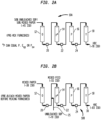
- This aspect of the invention is better appreciated with reference to Figures 2A, and 2B .
- FIG. 2A there is shown in Figure 2A and Figure 2B multi-stage bleaching systems which may be employed in accordance with the present invention.
- system 10A includes an oxygen pre-treatment stage 12, an oxidative bleaching stage 14 which may be an EOP stage, a P stage or an extended duration bleaching stage; a peroxide bleaching (P) stage 16 and a reductive bleaching stage 18. Between each of the stages may have a wash stage 20, 22, 24 as indicated.
- a 50/50 mix of MP and SOP with an ISO Brightness of around 45 is fed to oxygen pre-treatment stage 12, processed as described herein and fed to wash stage 20.
- the pre-treated pulp is fed to oxidative bleach stage 14 and bleached as described herein.
- the partially bleached pulp is fed to wash stage 22 and then to peroxide stage 16 where the pulp is further brightened.
- the pulp is fed from stage 16 to wash stage 24 and then to reductive bleaching stage 18 as shown.
- stage 18 the pulp is color stripped further and recovered as high bright clean (HBC) recycle pulp with an ISO Brightness of about 78.
- HBC high bright clean
- System 10B of Figure 2B is constructed and operated in substantially the same manner as Figure 2A , except that the MP is pre-treated in stage 12 with oxygen prior to being blended with SOP, the MP having an initial ISO Brightness of about 38. After oxygen pre-treatment, unbleached SOP is then blended in, as indicated at 25, prior to further processing in the system as described above. After reductive bleaching in stage 18, finished pulp is recovered at 30 having an ISO Brightness of about 83, five (5) points better than processing in system Figure 2A using the same materials.
- a plurality of sequential oxidative bleaching stages may be employed in order to brighten the recycle fibers.
- the invention addresses many long felt needs in the industry and allows for the use of relatively low brightness recycle pulp which is increasingly available at relatively low cost.
- An alkaline agent means a compound used to adjust the pH of the bleaching liquor to relatively high values. Hydroxides such as caustic, sodium hydroxide are preferred.
- Bleaching temperature and like terminology refers to the temperature maintained in a bleaching stage or a vessel over the retention time of bleaching, and may be referred to as retention temperature.
- ISO Brightness or simply brightness as used herein refers to the measured brightness of the pulp made into handsheets in accordance with TAPPI Test Method T 525 om-17 or equivalent, with C-illumination. Diffuse reflectance is measured in the wavelength range of 400-520 nm with an effective wavelength of 457 nm by using a suitable filter set or an equivalent device for modifying the spectral response and an instrument having diffuse illumination and perpendicular observation geometry. The measurements are made in terms of absolute reflectance factors. Brightness testing is done on handsheets using a MacBeth Ci5 instrument. Brightness gain is expressed as a percentage relative to the brightness of the pulp prior to bleaching.
- “Chemical wash”, “wash” or like terminology refers to a washing step with water to remove chemicals and bleaching residues from the pulp.
- a washing step is usually advisable following a peroxy bleaching step, before a subsequent stage, and is usually required between peroxy bleaching steps to optimize results.
- a wash is provided between pre-treatment and bleaching stages unless otherwise indicated.
- compositions refers to the recited components and excludes other ingredients which would substantially change the basic and novel characteristics of the composition, article or process. Unless otherwise indicated or readily apparent, a composition or article consists essentially of the recited or listed components when the composition or article includes 90% or more by weight of the recited or listed components, optionally on a dry basis, that is, without water. The terminology thus excludes more than 10% unrecited components.
- the terminology consisting essentially of recited steps excludes additional bleaching or oxidative treatments, but does not exclude washing steps interposed between bleaching or oxygen treatment steps.
- Consistency refers to percent solids of a pulp slurry calculated on a dry basis. A slurry having 80 percent water and 20 percent dry pulp has a consistency of 20 percent. Unless otherwise indicated, dry pulp, dried pulp and like terminology means oven dry pulp, which may have up to a few percent water.
- a Kappa number is determined in accordance with TAPPI Method T236-0M-99 or equivalent.
- the Kappa number is the volume (in millimeters) of 0.1N potassium permanganate solution consumed by one gram of moisture-free pulp. The results are corrected to 50% consumption of the permanganate added. Kappa numbers are commonly used to determine lignin content and used to determine bleachability of pulp.
- Oxidative bleaching and like terminology refers to bleaching or oxidative brightening operations with oxidative beaching agents such as oxygen, ozone, peroxy compounds, chlorine, chlorine dioxide, hypochlorite; for example P stages, EOP stages, Paa stages and so forth.
- Percent on pulp refers to the weight ratio of a hydrogen peroxide/dried pulp X100% in a charge to a bleaching stage.
- Percent consumed on pulp and like terminology refers to the weight ratio of hydrogen peroxide actually consumed in a bleaching stage/dried pulp content in the charge to the bleaching stage X100%.
- Percent on pulp OP, "Percent consumed on pulp” may likewise be expressed for hydrogen peroxide and other peroxy bleaching agents as kg-moles/metric ton of dried pulp, it being noted that 1% OP or 1% Percent consumed on pulp corresponds to 0.295 kg-moles bleaching agent/metric ton of dried pulp.
- a bleaching or delignification "stage” refers to bleaching or otherwise treating pulp in a vessel under a specified set of conditions. Subsequent stages may be undertaken in the same vessel for batch or semi-batch processes and in downstream vessels for continuous processes.
- Peroxy compound and like terminology refers to compounds having a peroxo group. Typically one employs hydrogen peroxide in the bleaching method of the invention; however, one may utilize other peroxy compounds as a bleaching agent or for delignification if so desired.
- Other suitable peroxy bleaching compounds include peroxyacetic acid, peroxyformic acid, potassium peroxymonosulfate, dimethyldioxirane, peroxymonophosphoric acid and so forth.
- a “reductive bleaching agent” refers to a reducing agent used to bleach pulp.
- Commercial systems may employ a mix of sodium borohydride and sodium bisulfite that form sodium hydrosulfite either in situ with the pulp or in a mixing step prior to addition to a reductive bleaching stage.
- sodium hydrosulfite as such may be used as available.
- These bleaching agents and equivalents are referred to as hydrosulfite bleaching agents.
- Additional reductive bleaching agents which may be used include formamidine sulfinic acid (FAS) and hydroxymethane sulfinic acid (HAS), as well as dithionites. See United States Patent No. 4,871, 423 to Grimsley et al . When a reductive bleaching agent is used in a bleaching stage, the stage is referred to as a reductive bleaching stage, a Y stage or with like terminology.
- Retention time and like terminology refers to the duration of bleaching under a specified set of conditions in a bleaching stage. Temperatures, retention temperatures and the like refer to temperatures maintained during the retention time in a bleaching vessel.
- Y stages Conventional pulp bleaching stages are commonly referred to as Y stages, EO stages, EOP stages, Paa stages or P stages.
- a "Y" stage refers to a reductive bleaching stage utilizing a reductive bleaching agent.
- An "EO” stage refers to an alkaline, oxygen based bleaching stage carried out under oxygen pressure of from 0.25 to 1 Mpa in most cases.
- An "EOP" stage refers to an EO stage with a peroxy bleaching agent present.
- a "P” stage refers to a conventional alkaline peroxy bleaching stage, usually with hydrogen peroxide, referred to as peroxide.
- Representative operating parameters for a P stage appear in Table 1.
- Table 1- Operating Parameters for P Stage bleaching Peroxide NaOH Temperature Retention % OP % OP °F/°C Minutes 1% 1% 185/85 60 3% 3% 185/85 60
- a P(A,B) stage refers to the caustic OP (A) and hydrogen peroxide OP (B) during treatment.
- a P(3,5) stage indicates peroxide bleaching with 3% caustic OP and 5% peroxide OP unless otherwise indicated.
- the parentheses are omitted.
- a Paa stage refers to treatment of the pulp with a peroxyacid or related compound which is operative to remove lignin and optionally, to bleach the pulp. See United States Patent No. 6,007,678 to Linsten et al.
- a P/Y regimen indicates a P stage followed by a Y stage and so forth.
- Each of these conventional processes is carried out for a retention time of from about 5 minutes to about 3.5 hours, typically from 10 minutes to 2.5 hours of retention time and in many cases for a retention time of from 15 minutes to 1 hour.
- These processes are likewise carried out at relatively elevated temperatures, generally from 50°C to about 150°C, with from 65°C to about 125°C being typical. Bleaching at over 100°C requires a pressurized reactor, which involves high capital costs.
- Recycle pulps such as SOW and MP are composed of papermaking fibers that have been separated by chemical or mechanical treatment.
- the fibres may be of hardwood or softwood.
- chemical pulp relates to pulps digested according to the Kraft (sulphate), sulphite, soda or organosolv process.
- mechanical pulp refers to pulp produced by refining chips in a disc refiner (refiner mechanical pulp) or by grinding logs in a grinder (groundwood pulp).
- mechanical pulps also relates to pulps produced by modifications or combinations of the above-mentioned methods or processes. Examples of such pulps are thermomechanical, chemimechanical and chemithermo mechanical pulps. Prior to recycling, the pulps may have been already bleached, for example, bleached chemithermo mechanical pulps (BCTMP) are sometimes present in the recycled material.
- BCTMP bleached chemithermo mechanical pulps
- EOP oxygen alkaline peroxide
- Y reductive bleaching
- Still further advantages are seen with 3-stage EOP/P/Y sequences.
- the Psv, or High Efficiency Fiber bleaching process utilizes extended duration, low temperature peroxy bleaching which is also effective to decolorize brown fiber. This bleaching process allows as much as 20-30% mixed paper when utilized as part of a three-stage bleaching process (both with and without an oxygen stage in the sequence).
- an alkaline oxygen (EO) bleaching stage was inserted prior to two-stages of peroxide bleaching to activate the brown fiber towards brightening by the peroxide bleach.
- EO alkaline oxygen
- Suitable conditions are for example, treating the pulp at 10-30% consistency for 10-200 minutes at 80 to 90 or 95°C temperature and an oxygen pressure of 0.25 to 1 Mpa (36-145 PSIG).
- the oxygen charged amounts to approximately 1% oxygen on oven dry (OD) fiber on a weight basis; the actual consumption of oxygen is significantly less.
- Specific conditions may include EO bleaching for 60 minutes at 80- 87.5°C temperature at 60 PSIG (0.414 MPa) charge of oxygen at the beginning of the retention and the oxygen vented and recharged at 15 minutes.
- EO bleaching is carried out, for example, with 3-9% NaOH OP in the process.
- the NaOH dose during pretreatment is suitably 1-15 % OP, more typically 3-9% OP.
- Mixed paper contains significant unbleached Kraft fiber that is dark brown in color and contains significant lignin.
- the alkali dose is selected to provide brightening without excessive delignification, that is a Kappa Reduction of less than 50% based on the Kappa number prior to oxygen pretreatment.
- the Kappa number after oxygen pre-treatment is greater than 30.
- the Kappa Reduction is less than 40%, 35%, 30%, 25% or 20% based on the Kappa number prior to oxygen pretreatment. This limited reduction in lignin contrasts the invention with conventional oxygen delignification, where the Kappa Reduction is typically well in excess of 50%.
- Table 2 Suitable conditions for pre-treating mixed paper with oxygen and caustic prior to further bleaching appear in Table 2 below.
- Baled MP was likewise obtained.
- the bale was sorted into segregated printing & writing grade (P&W), OCC, and assorted mechanical grades (ONP was used as the acronym for this mixed grade).
- P&W segregated printing & writing grade
- OCC assorted mechanical grades
- ONP assorted mechanical grades
- the recycle pulp was received having not been deinked while the baled material was whole post-consumer waste. Both were pulped and washed to remove ink as described below and then bleached by the Q/O/EOP/P/Y process. As described herein.
- Hi-con pulping was performed in the LaMort laboratory pulper at a total volume of 20 L and a consistency of 11-14% varying water addition as visibly necessary to achieve optimal mixing.
- Rotor speed was 480 rpm
- power output was 27%
- pulping time was generally 25-30 min. Pulping time was controlled to a VSI (Visible Specks Index) of 5-6.
- acid chelation was performed at 5% solids and a pH 2-3 for the purpose of removing counterions, particularly transition metals which reduce the stability of H 2 O 2 .
- a pH 2-3 for the purpose of removing counterions, particularly transition metals which reduce the stability of H 2 O 2 .
- 70°C moderately high temperature
- Table 4 provides a comparison of the primary ions of interest before and after the chelation. As can be seen the chelation was highly effective in reducing the number of counter ions present in the pulp and specifically the transition metals. However, transition metals content before chelation was already fairly low compared to literature values and bleaching species may be stable without the acid chelation step.
- First stage or later peroxide bleaching can be done at atmospheric or low pressure in containers that cannot tolerate oxygen pressures.
- 30 g OD pulp were added to a Hobart mixer and the peroxide solution as described above was added to the bowl and the pulp compounded for 1 minute on speed 1 and then the hydroxide solution was added to the Hobart and the pulp was compounded for 2 minutes on speed 2.
- the pulp was then transferred to a bleach bag, the bag sealed and mixed by hand and placed in the water set at 92°C to achieve 80°C in the bag. Bags were again mixed every 20 min or so for 2 hours.
- Second stage peroxide stage bleaches were performed identically as described above. Table 6. Range of conditions for final P-brightening stage P %C 12 H 2 O 2 , % 2-4 NaOH, % 2-3 Na 2 SiO 3 , % 1-1.5 temp, °C 80 time, min 120
- First or later stage peroxide bleaching with oxygen is carried out as follows: 200 g OD pulp were placed in the pre-heated Quantum mixer bowl. H 2 O 2 was added to a quantity of water and dispersed and Cinburst 2350 (chelant) was added to that same water. The Na 2 SiO 3 and then the NaOH was dissolved in the remainder of the water at a concentration per Table 7. The peroxide solution was first added to the Quantum mixer and then the hydroxide. The lid was quickly attached to the top of the bowl and the same procedure as above was followed. The mixer was pressurized to 70 psi and the pulp was allowed to react for 90 min at 80°C. The pulp was tested at the end for residual pH and peroxide consumption and washed 2L H 2 O. Table 7. Conditions range for oxygen reinforced peroxide bleaching EOP %C 12 H 2 O 2 , % 8 NaOH, % 3-4 Na 2 SiO 3 , % 0.5 O 2 , psi 70 temp, °C 80 time, min 90
- P sv Extended duration oxidative bleaching , or P sv is a new type of bleaching stage developed by Applicant.
- P sv literally means "under vacuum” but in actual application it represents a low temperature, long cook stage. This technology can be retrofit for little cost to essentially achieve high brightness at low operating cost. Low temperature, long retention produced a brightness that was 2-3 points lower other options , but has advantages of lower energy costs and minimal additional capital investment.
- P sv can whiten colored fibers that conventional high temperature applications do not. What is likely occurring is the longer residence time is allowing the slower reaction pathways to be completed rendering the slow to oxidize moieties to be brightened.
- Psv stages are carried out for a bleaching retention time in an extended duration bleaching stage for a retention time of least 6 hours; suitably from 6 to 90 hours or more, such as for at least 9 or 12 hours up to 90 hours or more.
- the reductive bleaching step is essentially performed to color strip (deactivate dyes in the pulp). This is done in the glove box purged for 30 min with low purity N 2 . All of the bleached pulp samples were made up to 6% solids and placed in the glovebox prior to the purge to ensure that there is no oxygen to react with the hydrosulfite reactant. In rapid succession, 0.2 g of the sodium hydrosulfite was added to ⁇ 30 mL of water in a 250 mL beaker and quickly added to the bleached pulps and the bags sealed. Once all bags were sealed, they were transferred to the water bath at 80°C and reacted for 60 min. Table 9. Reductive bleaching conditions Y %C 6 HSO 3 - 1 temp, °C 80 time, min 60
- Table 10 Exemplary brightness gains from Y/W treatments appear in Table 10 below.
- Table 10 Brightness gains from Y and W stages Scheme Y W O/P 2-2/P 6.30 0.70 O/P 4-4/P 5.20 1.90 O/P 4-8/P 5.60 1.60 O/EOP/P 2-2 2.60 2.80 O/EOP/P 3-3 3.50 2.70 O/EOP/P 3-4 4.60 3.10 O/Psv/P 4.70 2.10 Average 4.64 2.13
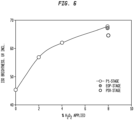
- Blending prior to oxygen bleaching would require larger capital size to accommodate throughput of the entire wastepaper furnish but provide better homogeneity of product and less modification to existing bleach plant operations. Blending after oxygen would require modifying operations somewhat but require smaller capital and reduced chemical consumption for the O 2 stage. ( Figure 2B ) This option would also allow the oxygen bleach tower to be installed and treated as a modular add-on fitting into an existing bleach plant. Results indicate that the latter is the preferred option.
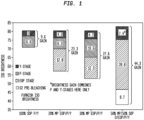
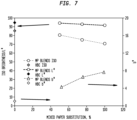
- Figure 7 Even with all of our blends having a L* value >90, we could barely achieve an 80 brightness with 50% SOP.
- the 100% SOP has a 9 point differential between L* and ISO and this differential increases with increasing MP substitution.
- the 100% MP pulp lags 3 points behind the 100% SOP pulp on the whiteness scale and 15 points on the ISO brightness scale. Given the slopes of the two lines, it is apparent that there were are other factors limiting brightness.
- Yellowing is well known to papermaking and it has long been understood as the result of chromophoric (light absorbing) functional groups in the lignin and but also the cellulose in some cases.
- Chromophores are unsaturated chemical bonds (double bonds) that can absorb light, photo-oxidize and react with other chemical moieties to induce instability and reflect in the yellow range of the visible spectrum. Chromophoric yellowing is prevalent in mechanical grades, particularly newsprint, when left in the sun, the newspaper will quickly yellow due to high lignin contents.
- Lignin is a heteroaromatic polymer (i.e., it has a lot of unsaturated chemical bonds) and can contain resonance stabilized quinone methide structures that are well known to express color. Previously we reported that mixed paper contains about 1/3 each of mechanical pulp and brown Kraft fibers; it would make sense that the lignin content in mixed paper would contribute to a yellow appearance.
- the cellulose-rich SOP pulp may undergo undesirable reactions at the high pH encountered in the oxygen bleaching stage. If one were to determine the makeup of the SOP it would be overwhelmingly white copy grade paper with some contaminant brown Kraft and mechanical fibers. The overall pulp tested out at a Kappa number of 19, indicating the SOP has ⁇ 3% lignin in its totality. That lignin content is likely concentrated in the minor content of brown and mechanical grades contained therein. In the oxygen bleach once the oxidizable lignin compounds are reacted, the selectivity of the oxidants to the lignin dramatically decreases and competing side reactions with the cellulose become more prevalent.
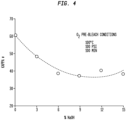
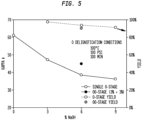
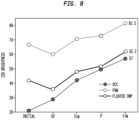
- Sorted OCC benefitted from the O 2 prebleach in terms of lignin removal and brightness improvement. Given the slope of the brightness gain, the OCC could potentially be bleached further than what was accomplished at 6% caustic.
- Literature indicates that the 12+% NaOH is required to reduce OCC to a bleachable grade secondary fiber by traditional Kraft bleaching sequences. See United States Patent No. 5,350,493 to Nguyen. Old news print pulp (ONP) does not appear to be very reactive to oxygen in an alkaline environment but on its own brightened gradually. The P&W is known to be bleachable by a P/Y system to 86-88 ISO so the decline in brightness from the alkali darkening was never completely reversed.
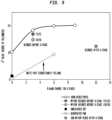
- Figure 9 is summative of the effect of caustic charge and fiber furnish on the b* value of the resultant pulp.
- the upper curve above represents the yellowing impact that the alkali has on 100% mixed paper; the brown Kraft fiber particularly has already undergone alkali darkening and yellowing during the Kraft pulping process and overall the MP pulp carries with it a b* value of ⁇ 10. This value seems to plateau around 20 for mixed paper after the O 2 -stage but with the 100% OCC pulp we did see a value of 23.
- the b* value of the MP/SOP blends made prior to oxygen treatment is also shown. Needless to say, the b* of the pulps is predictable based upon the ratio and final b* of the MP and SOP (20 and 9) by themselves. If anything, the actual value runs slightly higher than the predicted.
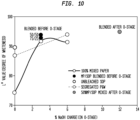
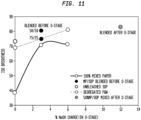
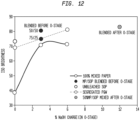
- Figures 10 and 11 illustrate the preferred path to high brightness with high mixed paper blends.
- the 50/50 pulp blended before the O 2 stage did wind up with a b* value of 3.99 and an ISO of 80.5.
- the 50/50 blend post-O 2 had a b* of 3.75 and an L* a point higher than the pre-blend (94.9 versus 94.0) and that translates into a 2.5 point brightness gain.
- a method of making a high brightness papermaking pulp from recycled cellulosic fiber comprises: (a) pre-treating a first recycled cellulosic fiber mix with oxygen; said first recycled cellulosic fiber mix having a first high Kappa number prior to pre-treatment and a reduced Kappa number after pre-treatment that is lower than said first high Kappa number; and (b) blending the pre-treated first recycled cellulosic fiber mix with the reduced Kappa number with a second recycled cellulosic fiber mix having a second Kappa number lower than the first high Kappa number of the first high Kappa number of the first recycled cellulosic fiber mix; and (c) oxidatively bleaching the blended recycled cellulosic fiber mix of step (b); and optionally (d) reductively bleaching the blended recycled cellulosic fiber mix of step (c).
- the step of pre-treating the first cellulosic fiber mix with oxygen is carried out at an oxygen pressure of from 0.25-1 MPa.
- the step of pre-treating the first cellulosic fiber mix with oxygen is carried out in the presence of an alkaline agent.
- the step of pre-treating the first cellulosic fiber mix with oxygen is carried out at a pH of from 8 to 13.
- the step of pre-treating the first cellulosic fiber mix with oxygen is carried out for a residence time in a bleaching vessel of from 30 to 150 minutes.
- the step of pre-treating the first cellulosic fiber mix with oxygen is carried out while applying from 1% to 15% NaOH to the first cellulosic fiber mix based on the dry weight of the first cellulosic fiber mix.
- the step of pre-treating the first cellulosic fiber mix with oxygen is effective to reduce the Kappa number of the first cellulosic fiber mix of from 5 to 35 points.
- the step of pre-treating the first cellulosic fiber mix with oxygen is effective to increase the ISO Brightness of the first cellulosic fiber mix by from 3-12 points.
- the step of blending the pre-treated first recycled cellulosic fiber mix with the reduced Kappa number with the second recycled cellulosic fiber mix having a second Kappa number lower than the first high Kappa number of the first recycled cellulosic fiber mix comprises blending at least 30% by weight of the pre-treated first recycled cellulosic fiber mix with the reduced Kappa number with the second recycled cellulosic fiber mix having a second Kappa number lower than the first high Kappa number of the first recycled cellulosic fiber mix, based on the weight of the blend.
- the step of blending the pre-treated first recycled cellulosic fiber mix with the reduced Kappa number with the second recycled cellulosic fiber mix having a second Kappa number lower than the first high Kappa number of the first recycled cellulosic fiber mix comprises blending at least 40% by weight of the pre-treated first recycled cellulosic fiber mix with the reduced Kappa number with the second recycled cellulosic fiber mix having a second Kappa number lower than the first high Kappa number of the first recycled cellulosic fiber mix, based on the weight of the blend.
- the step of blending the pre-treated first recycled cellulosic fiber mix with the reduced Kappa number with the second recycled cellulosic fiber mix having a second Kappa number lower than the first high Kappa number of the first recycled cellulosic fiber mix comprises blending at least 50% by weight of the pre-treated first recycled cellulosic fiber mix with the reduced Kappa number with the second recycled cellulosic fiber mix having a second Kappa number lower than the first high Kappa number of the first recycled cellulosic fiber mix, based on the weight of the blend.
- the step of blending the pre-treated first recycled cellulosic fiber mix with the reduced Kappa number with the second recycled cellulosic fiber mix having a second Kappa number lower than the first high Kappa number of the first recycled cellulosic fiber mix comprises blending at least 60% by weight of the pre-treated first recycled cellulosic fiber mix with the reduced Kappa number with the second recycled cellulosic fiber mix having a second Kappa number lower than the first high Kappa number of the first recycled cellulosic fiber mix, based on the weight of the blend.
- oxidatively bleaching the pre-treated recycled cellulosic fiber mix comprises bleaching the pre-treated recycled cellulosic fiber mix in an extended duration bleaching stage including: (i) providing the pre-treated recycled cellulosic fiber mix in aqueous form to the extended duration bleaching stage at a consistency of from 10% to 30% along with a peroxy bleaching agent and an alkaline agent effective to adjust pH of the charge to 9.5 to 12.5; (ii) bleaching the pulp in the bleaching vessel while maintaining an extended duration bleaching temperature of from 110°F(43°C) to 135°F (57°C) and a pH of the charge from 9.5 to 12.5 for a bleaching retention time in the extended duration bleaching stage of at least 6 hours.
- bleaching the blended pre-treated recycled cellulosic fiber mix comprises oxidatively bleaching the blended pre-treated recycled cellulosic fiber mix, followed by reductively bleaching the blended pre-treated recycled cellulosic fiber mix.
- oxidatively bleaching the blended pre-treated recycled cellulosic fiber mix includes bleaching in one or more of an EO stage, an EOP stage, a P stage, a Paa stage or an extended duration bleaching stage which includes (i) providing the blended pre-treated recycled cellulosic fiber mix in aqueous form to the extended duration bleaching stage at a consistency of from 10% to 30% along with a peroxy bleaching agent and an alkaline agent effective to adjust pH of the charge to 9.5 to 12.5; (ii) bleaching the blended pre-treated recycled cellulosic fiber mix in the bleaching vessel while maintaining an extended duration bleaching temperature of from 110°F(43°C) to 135°F (57°C) and a pH of the charge from 9.5 to 12.5 for a bleaching retention time in the extended duration bleaching stage of at least 6 hours.
- bleaching the blended pre-treated recycled cellulosic fiber mix comprises sequentially bleaching the recycled cellulosic fiber mix in an EOP stage, followed by a P stage, followed by a Y stage.
- bleaching the blended pre-treated recycled cellulosic fiber mix comprises sequentially bleaching the blended recycled cellulosic fiber mix in a P stage, followed by another P stage, followed by a Y stage.
- bleaching the blended pre-treated recycled cellulosic fiber mix comprises sequentially bleaching the blended recycled cellulosic fiber mix in an extended duration bleaching stage which includes (i) providing the blended pre-treated recycled cellulosic fiber mix in aqueous form to the extended duration bleaching stage at a consistency of from 10% to 30% along with a peroxy bleaching agent and an alkaline agent effective to adjust pH of the charge to 9.5 to 12.5; (ii) bleaching the pulp in the bleaching vessel while maintaining an extended duration bleaching temperature of from 110°F(43°C) to 135°F (57°C) and a pH of the charge from 9.5 to 12.5 for a bleaching retention time in the extended duration bleaching stage of at least 6 hours, followed by a P stage, followed by a Y stage.
- bleaching the blended pre-treated recycled cellulosic fiber mix in comprises sequentially bleaching the recycled cellulosic fiber mix in an extended duration bleaching stage which includes (i) providing the blended pre-treated recycled cellulosic fiber mix in aqueous form to the extended duration bleaching stage at a consistency of from 10% to 30% along with a peroxy bleaching agent and an alkaline agent effective to adjust pH of the charge to 9.5 to 12.5; (ii) bleaching the pulp in the bleaching vessel while maintaining an extended duration bleaching temperature of from 110°F(43°C) to 135°F (57°C) and a pH of the charge from 9.5 to 12.5 for a bleaching retention time in the extended duration bleaching stage of at least 6 hours, followed by a Y stage.
- bleaching the blended pre-treated recycled cellulosic fiber mix comprises sequentially bleaching the blended recycled cellulosic fiber mix in a P stage, followed by an EOP stage, followed by a Y stage.
- bleaching the blended pre-treated recycled cellulosic fiber mix comprises sequentially bleaching the blended recycled cellulosic fiber mix in an EOP stage, followed by a Y stage.
- bleaching the blended pre-treated recycled cellulosic fiber mix comprises sequentially bleaching the blended pre-treated recycled cellulosic fiber mix in an EOP stage, followed by a Paa stage, followed by a Y stage.
- a papermaking pulp consists essentially of recycled cellulosic fiber having a Kappa number higher than 15 and an ISO Brightness of more than 80 prepared by the method of the before described example of the invention.
- a method of pre-treating and bleaching papermaking pulp from recycled cellulosic fiber comprises: (a) pre-treating a recycled cellulosic fiber mix with oxygen, said recycled cellulosic fiber mix having a first high Kappa number prior to pre-treatment and a reduced Kappa number after pre-treatment that is lower than said first high Kappa number; and (b) bleaching the pre-treated recycled cellulosic fiber mix of step (a).
- the step of pre-treating the recycled cellulosic fiber mix with oxygen is carried out at an oxygen pressure of from 0.25-1 MPa.
- the step of pre-treating the recycled cellulosic fiber mix with oxygen is carried out in the presence of an alkaline agent.
- the step of pre-treating the recycled cellulosic fiber mix with oxygen is carried out at a pH of from 8 to 13.
- the step of pre-treating the recycled cellulosic fiber mix with oxygen is carried out for a residence time in a bleaching vessel of from 30 to 150 minutes.
- the step of pre-treating the recycled cellulosic fiber mix with oxygen is carried out while applying from 1% to 15% NaOH to the recycled cellulosic fiber mix based on the dry weight of the first cellulosic fiber mix.
- the step of pre-treating the recycled cellulosic fiber mix with oxygen is effective to reduce the Kappa number of the first cellulosic fiber mix of from 5 to 35 points.
- the step of pre-treating the first cellulosic fiber mix with oxygen is effective to increase the ISO Brightness of the first cellulosic fiber mix by from 3-12 points.
- bleaching the pre-treated recycled cellulosic fiber mix comprises bleaching the pre-treated recycled cellulosic fiber mix in an extended duration bleaching stage including: (i) providing the aqueous cellulosic pulp to the extended duration bleaching stage at a consistency of from 10% to 30% along with a peroxy bleaching agent and an alkaline agent effective to adjust pH of the charge to 9.5 to 12.5; (ii) bleaching the pulp in the bleaching vessel while maintaining an extended duration bleaching temperature of from 110°F(43°C) to 135°F (57°C) and a pH of the charge from 9.5 to 12.5 for a bleaching retention time in the extended duration bleaching stage of at least 6 hours.
- bleaching the pre-treated recycled cellulosic fiber mix comprises bleaching the pre-treated recycled cellulosic fiber mix in a plurality of bleaching stages.
- the plurality of bleaching stages include one or more of an EO stage, an EOP stage, a P stage, a Paa stage, a Y stage or an extended duration bleaching stage which includes (i) providing the aqueous cellulosic pulp to the extended duration bleaching stage at a consistency of from 10% to 30% along with a peroxy bleaching agent and an alkaline agent effective to adjust pH of the charge to 9.5 to 12.5; (ii) bleaching the pulp in the bleaching vessel while maintaining an extended duration bleaching temperature of from 110°F(43°C) to 135°F (57°C) and a pH of the charge from 9.5 to 12.5 for a bleaching retention time in the extended duration bleaching stage of from 6 to 90 hours.
- bleaching the pre-treated recycled cellulosic fiber mix in a plurality of bleaching stages comprises sequentially bleaching the recycled cellulosic fiber mix in an EOP stage, followed by a P stage, followed by a Y stage.
- bleaching the pre-treated recycled cellulosic fiber mix in a plurality of bleaching stages comprises sequentially bleaching the recycled cellulosic fiber mix in a P stage, followed by another P stage, followed by a Y stage.
- bleaching the pre-treated recycled cellulosic fiber mix in a plurality of bleaching stages comprises sequentially bleaching the recycled cellulosic fiber mix in an extended duration bleaching stage which includes (i) providing the aqueous cellulosic pulp to the extended duration bleaching stage at a consistency of from 10% to 30% along with a peroxy bleaching agent and an alkaline agent effective to adjust pH of the charge to 9.5 to 12.5; (ii) bleaching the pulp in the bleaching vessel while maintaining an extended duration bleaching temperature of from 110°F(43°C) to 135°F (57°C) and a pH of the charge from 9.5 to 12.5 for a bleaching retention time in the extended duration bleaching stage of at least 6 hours, followed by a P stage, followed by a Y stage.
- bleaching the pre-treated recycled cellulosic fiber mix in a plurality of bleaching stages comprises sequentially bleaching the recycled cellulosic fiber mix in an extended duration bleaching stage which includes (i) providing the aqueous cellulosic pulp to the extended duration bleaching stage at a consistency of from 10% to 30% along with a peroxy bleaching agent and an alkaline agent effective to adjust pH of the charge to 9.5 to 12.5; (ii) bleaching the pulp in the bleaching vessel while maintaining an extended duration bleaching temperature of from 110°F(43°C) to 135°F (57°C) and a pH of the charge from 9.5 to 12.5 for a bleaching retention time in the extended duration bleaching stage of at least 6 hours, followed by a Y stage.
- bleaching the pre-treated recycled cellulosic fiber mix in a plurality of bleaching stages comprises sequentially bleaching the recycled cellulosic fiber mix in a P stage, followed by an EOP stage, followed by a Y stage.
- bleaching the pre-treated recycled cellulosic fiber mix in a plurality of bleaching stages comprises sequentially bleaching the recycled cellulosic fiber mix in an EOP stage, followed by a Y stage.
- bleaching the pre-treated recycled cellulosic fiber mix in a plurality of bleaching stages comprises sequentially bleaching the recycled cellulosic fiber mix in an EOP stage, followed by a Paa stage, followed by a Y stage.
- papermaking pulp consists essentially of recycled cellulosic fiber having a Kappa number higher than 15 and an ISO Brightness of more than 80.
- the papermaking pulp has a Kappa number higher than 15 and less than 40.
- the papermaking pulp has a Kappa number higher than 15 and less than 35.
- the papermaking pulp has a Kappa number higher than 15 and less than 30.
- the papermaking pulp has a Kappa number higher than 15 and less than 25.
- the papermaking pulp has a Kappa number higher than 20 and less than 40.
- the papermaking pulp has a Kappa number higher than 20 and less than 35.
- the papermaking pulp has a Kappa number higher than 20 and less than 30.
- the papermaking pulp is prepared from a recycled cellulosic fiber mixture containing less than 50 wt. % mechanical pulp, based on the dry weight of the fiber mixture.
- the papermaking pulp is prepared from a recycled cellulosic fiber mixture containing less than 40 wt. % mechanical pulp, based on the dry weight of the fiber mixture.
- the papermaking pulp is prepared from a recycled cellulosic fiber mixture containing less than 30 wt. % mechanical pulp, based on the dry weight of the fiber mixture.
- the papermaking pulp is prepared from a recycled cellulosic fiber mixture containing less than 25 wt. % mechanical pulp, based on the dry weight of the fiber mixture.
- the papermaking pulp is prepared from a recycled cellulosic fiber mixture containing less than 30 wt. % mechanical pulp, based on the dry weight of the fiber mixture.
- the papermaking pulp is prepared from a recycled cellulosic fiber mixture containing less than 30 wt. % mechanical pulp, based on the dry weight of the fiber mixture.
Landscapes
- Life Sciences & Earth Sciences (AREA)
- Engineering & Computer Science (AREA)
- Wood Science & Technology (AREA)
- Paper (AREA)
Claims (15)
- Procédé de fabrication d'une pâte à papier à haute brillance à partir de fibre de cellulose recyclée comprenant :(a) le prétraitement d'un premier mélange de fibre de cellulose recyclée avec de l'oxygène, dans lequel l'étape de prétraitement du premier mélange de fibre de cellulose avec de l'oxygène est réalisée en présence d'un agent alcalin à un pH de 8 à 13, à une pression d'oxygène de 0,25-1 MPa pendant un temps de séjour dans une cuve de blanchiment de 30 à 150 minutes, et dans lequel l'étape de prétraitement du premier mélange de fibre de cellulose avec de l'oxygène est efficace pour réduire l'indice Kappa du premier mélange de fibre de cellulose de 5 à 35 points ;
ledit premier mélange de fibre de cellulose recyclée présentant ainsi un premier indice Kappa élevé avant le prétraitement et un indice Kappa réduit après le prétraitement, qui est inférieur audit premier indice Kappa élevé ; et(b) la combinaison du premier mélange de fibre de cellulose recyclée prétraité ayant l'indice Kappa réduit avec d'un second mélange de fibre de cellulose recyclée présentant un second indice Kappa inférieur au premier indice Kappa élevé du premier mélange de fibre de cellulose recyclée, dans lequel l'étape de combinaison comprend la combinaison d'au moins 30 % en poids du premier mélange de fibre de cellulose recyclée prétraité ayant l'indice Kappa réduit avec le second mélange de fibre de cellulose recyclée présentant un second indice Kappa inférieur au premier indice Kappa élevé du premier mélange de fibre de cellulose recyclée, sur la base du poids de la combinaison ; et(c) le blanchiment par oxydation du mélange de fibre de cellulose recyclée combiné de l'étape (b) ; et éventuellement(d) le blanchiment par réduction du mélange de fibre de cellulose recyclée combiné de l'étape (c). - Procédé de fabrication d'une pâte à papier à haute brillance à partir de fibre de cellulose recyclée selon la revendication 1, dans lequel l'étape de prétraitement du premier mélange de fibre de cellulose avec de l'oxygène est efficace pour augmenter la brillance ISO du premier mélange de fibre de cellulose de 3-12 points.
- Procédé de fabrication d'une pâte à papier à haute brillance à partir de fibre de cellulose recyclée selon la revendication 1, dans lequel l'étape de combinaison du premier mélange de fibre de cellulose recyclée prétraité ayant l'indice Kappa réduit avec le second mélange de fibre de cellulose recyclée présentant un second indice Kappa inférieur au premier indice Kappa élevé du premier mélange de fibre de cellulose recyclée comprend la combinaison d'au moins 50 % en poids du premier mélange de fibre de cellulose recyclée prétraité ayant l'indice Kappa réduit avec le second mélange de fibre de cellulose recyclée présentant un second indice Kappa inférieur au premier indice Kappa élevé du premier mélange de fibre de cellulose recyclée, sur la base du poids de la combinaison.
- Procédé de fabrication d'une pâte à papier à haute brillance à partir de fibre de cellulose recyclée selon la revendication 1, dans lequel le blanchiment par oxydation du mélange de fibre de cellulose recyclée prétraité comprend le blanchiment du mélange de fibre de cellulose recyclée prétraité au cours d'une étape de blanchiment à durée prolongée incluant : (i) la fourniture du mélange de fibre de cellulose recyclée prétraité sous forme aqueuse à l'étape de blanchiment à durée prolongée à une consistance de 10 % à 30 % en même temps qu'un agent de blanchiment au péroxy et un agent alcalin efficace pour ajuster le pH de la charge pour atteindre 9,5 à 12,5 ; (ii) le blanchiment de la pâte dans la cuve de blanchiment tout en maintenant une température de blanchiment à durée prolongée de 110 °F (43 °C) à 135 °F (57 °C) et un pH de la charge de 9,5 à 12,5 pendant un temps de rétention de blanchiment au cours de l'étape de blanchiment à durée prolongée d'au moins 6 heures.
- Procédé de fabrication d'une pâte à papier à haute brillance à partir de fibre de cellulose recyclée selon la revendication 1, dans lequel le blanchiment du mélange de fibre de cellulose recyclée prétraité combiné comprend le blanchiment par oxydation du mélange de fibre de cellulose recyclée prétraité combiné, suivi du blanchiment par réduction du mélange de fibre de cellulose recyclée prétraité combiné.
- Procédé de fabrication d'une pâte à papier à haute brillance à partir de fibre de cellulose recyclée selon la revendication 1, dans lequel le blanchiment par oxydation du mélange de fibre de cellulose recyclée prétraité combiné inclut le blanchiment au cours d'une ou plusieurs parmi une étape EO, une étape EOP, une étape P, une étape Paa, ou une étape de blanchiment à durée prolongée qui inclut (i) la fourniture du mélange de fibre de cellulose recyclée prétraité combiné sous forme aqueuse à l'étape de blanchiment à durée prolongée à une consistance de 10 % à 30 % en même temps qu'un agent de blanchiment au péroxy et un agent alcalin efficace pour ajuster le pH de la charge pour atteindre 9,5 à 12,5 ; (ii) le blanchiment du mélange de fibre de cellulose recyclée prétraité combiné dans la cuve de blanchiment tout en maintenant une température de blanchiment à durée prolongée de 110 °F (43 °C) à 135 °F (57 °C) et un pH de la charge de 9,5 à 12,5 pendant un temps de rétention de blanchiment au cours de l'étape de blanchiment à durée prolongée d'au moins 6 heures.
- Procédé de fabrication d'une pâte à papier à haute brillance à partir de fibre de cellulose recyclée selon la revendication 1, dans lequel le blanchiment du mélange de fibre de cellulose recyclée prétraité combiné comprend le blanchiment successif du mélange de fibre de cellulose recyclée au cours d'une étape EOP, suivie d'une étape P, suivie d'une étape Y.
- Procédé de fabrication d'une pâte à papier à haute brillance à partir de fibre de cellulose recyclée selon la revendication 1, dans lequel le blanchiment du mélange de fibre de cellulose recyclée prétraité combiné comprend le blanchiment successif du mélange de fibre de cellulose recyclée combiné au cours d'une étape P, suivie d'une étape EOP, suivie d'une étape Y.
- Procédé de fabrication d'une pâte à papier à haute brillance à partir de fibre de cellulose recyclée selon la revendication 1, dans lequel la pâte obtenue est une pâte à papier consistant essentiellement en une fibre de cellulose recyclée présentant un indice Kappa supérieur à 15 et une brillance ISO supérieure à 80.
- Procédé de prétraitement et de blanchiment d'une pâte à papier à partir de fibre de cellulose recyclée comprenant :(a) le prétraitement d'un premier mélange de fibre de cellulose recyclée avec de l'oxygène, dans lequel l'étape de prétraitement du premier mélange de fibre de cellulose avec de l'oxygène est réalisée en présence d'un agent alcalin à un pH de 8 à 13, à une pression d'oxygène de 0,25-1 MPa pendant un temps de séjour dans une cuve de blanchiment de 30 à 150 minutes, et dans lequel l'étape de prétraitement du premier mélange de fibre de cellulose avec de l'oxygène est efficace pour réduire l'indice Kappa du premier mélange de fibre de cellulose de 5 à 35 points ;
ledit premier mélange de fibre de cellulose recyclée présentant ainsi un premier indice Kappa élevé avant le prétraitement et un indice Kappa réduit après le prétraitement, qui est inférieur audit premier indice Kappa élevé ; et(b) le blanchiment du mélange de fibre de cellulose recyclée prétraité de l'étape (a). - Procédé de prétraitement et de blanchiment d'une pâte à papier à partir de fibre de cellulose recyclée selon la revendication 10, dans lequel le blanchiment du mélange de fibre de cellulose recyclée prétraité comprend le blanchiment du mélange de fibre de cellulose recyclée prétraité au cours d'une pluralité d'étapes de blanchiment.
- Procédé de prétraitement et de blanchiment d'une pâte à papier à partir de fibre de cellulose recyclée selon la revendication 11, dans lequel la pluralité d'étapes de blanchiment incluent une ou plusieurs parmi une étape EO, une étape EOP, une étape P, une étape Paa, une étape Y ou une étape de blanchiment à durée prolongée qui inclut (i) la fourniture de la pâte de cellulose aqueuse à l'étape de blanchiment à durée prolongée à une consistance de 10 % à 30 % en même temps qu'un agent de blanchiment au péroxy et un agent alcalin efficace pour ajuster le pH de la charge pour atteindre 9,5 à 12,5 ; (ii) le blanchiment de la pâte dans la cuve de blanchiment tout en maintenant une température de blanchiment à durée prolongée de 110 °F (43 °C) à 135 °F (57 °C) et un pH de la charge de 9,5 à 12,5 pendant un temps de rétention de blanchiment au cours de l'étape de blanchiment à durée prolongée de 6 à 90 heures.
- Procédé de prétraitement et de blanchiment d'une pâte à papier à partir de fibre de cellulose recyclée selon la revendication 11, dans lequel le blanchiment du mélange de fibre de cellulose recyclée prétraité au cours d'une pluralité d'étapes de blanchiment comprend le blanchiment successif du mélange de fibre de cellulose recyclée au cours d'une étape EOP, suivie d'une étape P, suivie d'une étape Y.
- Pâte à papier consistant essentiellement en une fibre de cellulose recyclée présentant un indice Kappa supérieur à 15 et une brillance ISO supérieure à 80.
- Pâte à papier consistant essentiellement en une fibre de cellulose recyclée présentant un indice Kappa supérieur à 15 et une brillance ISO supérieure à 80 selon la revendication 14, contenant moins de 50 % en poids de pâte mécanique, sur la base du poids sec du mélange de fibre.
Applications Claiming Priority (2)
| Application Number | Priority Date | Filing Date | Title |
|---|---|---|---|
| US202163134222P | 2021-01-06 | 2021-01-06 | |
| PCT/IB2021/062425 WO2022149044A1 (fr) | 2021-01-06 | 2021-12-29 | Traitement à l'oxygène de fibres à kappa élevé |
Publications (2)
| Publication Number | Publication Date |
|---|---|
| EP4274930A1 EP4274930A1 (fr) | 2023-11-15 |
| EP4274930B1 true EP4274930B1 (fr) | 2025-01-29 |
Family
ID=79316957
Family Applications (1)
| Application Number | Title | Priority Date | Filing Date |
|---|---|---|---|
| EP21840694.0A Active EP4274930B1 (fr) | 2021-01-06 | 2021-12-29 | Traitement à l'oxygène des fibres à haute valeur kappa |
Country Status (9)
| Country | Link |
|---|---|
| US (1) | US12286751B2 (fr) |
| EP (1) | EP4274930B1 (fr) |
| CN (1) | CN116457529A (fr) |
| CL (1) | CL2023001628A1 (fr) |
| ES (1) | ES3013584T3 (fr) |
| FI (1) | FI4274930T3 (fr) |
| MX (1) | MX2023007613A (fr) |
| PL (1) | PL4274930T3 (fr) |
| WO (1) | WO2022149044A1 (fr) |
Family Cites Families (48)
| Publication number | Priority date | Publication date | Assignee | Title |
|---|---|---|---|---|
| US2514503A (en) | 1947-07-30 | 1950-07-11 | Buffalo Electro Chem Co | Method of bleaching moist felted groundwood pulp |
| GB1100709A (en) | 1965-06-25 | 1968-01-24 | Pulp Paper Res Inst | Two-stage purification of fibrous cellulose material |
| US3462344A (en) | 1966-05-31 | 1969-08-19 | Fmc Corp | Superbleaching of wood pulps |
| US3811995A (en) | 1972-09-05 | 1974-05-21 | Westvaco Corp | Method of high yield semichemical pulp production |
| US4116758A (en) | 1976-05-14 | 1978-09-26 | Canadian International Paper Co. | Method of producing high yield chemimechanical pulps |
| US4372812A (en) | 1978-04-07 | 1983-02-08 | International Paper Company | Chlorine free process for bleaching lignocellulosic pulp |
| US4295929A (en) | 1979-07-03 | 1981-10-20 | International Telephone And Telegraph Corp. | Process for acid sulfite digestion of wood |
| CA1249402A (fr) | 1984-12-21 | 1989-01-31 | Pulp And Paper Research Institute Of Canada | Avivage multi-etage des pates a fort et tres fort rendement |
| US4869783A (en) | 1986-07-09 | 1989-09-26 | The Mead Corporation | High-yield chemical pulping |
| GB8620222D0 (en) | 1986-08-20 | 1986-10-01 | Abitibi Price Inc | Peroxide bleaching |
| US4871423A (en) | 1987-08-10 | 1989-10-03 | Hoechst Celanese Corporation | Enhanced dithionite bleaching |
| JPH0197291A (ja) | 1987-10-05 | 1989-04-14 | Fmc Corp | 機械パルプの漂白方法 |
| US5217575A (en) | 1988-10-18 | 1993-06-08 | Kamyr Ab | Process for oxygen bleaching using two vertical reactors |
| US5179021A (en) | 1989-02-10 | 1993-01-12 | Gil Inc. (Now Ici Canada Inc.) | Pulp bleaching process comprising oxygen delignification and xylanase enzyme treatment |
| US5011572A (en) | 1989-05-19 | 1991-04-30 | Fmc Corporation | Two stage process for the oxygen delignification of lignocellulosic fibers with peroxide reinforcement in the first stage |
| US5234544A (en) * | 1989-10-18 | 1993-08-10 | Air Products And Chemicals, Inc. | Cleaning and bleaching of secondary fiber |
| FR2659363B1 (fr) | 1990-03-07 | 1996-04-19 | Atochem | Procede de preparation de pates a haut rendement blanchies. |
| FR2661430B1 (fr) | 1990-04-30 | 1992-07-17 | Atochem | Procede de blanchiment au peroxyde d'hydrogene de pates a papier a haut rendement. |
| CA2053035C (fr) | 1990-10-12 | 1997-09-30 | Repap Enterprises Inc. | Pates de bois sans chlore, et procede de fabrication |
| US5352332A (en) | 1991-01-28 | 1994-10-04 | Maples Gerald E | Process for recycling bleach plant filtrate |
| US5211809A (en) | 1991-05-21 | 1993-05-18 | Air Products And Chemicals, Inc,. | Dye removal in oxygen color stripping of secondary fibers |
| US5302244A (en) * | 1992-02-18 | 1994-04-12 | Domtar Inc. | Oxygen delignification of waste cellulosic paper products |
| CA2133406A1 (fr) * | 1992-04-23 | 1993-11-11 | Xuan Truong Nguyen | Pulpe ne contenant pas de bois et produit de papier blanc |
| US6007678A (en) | 1992-11-27 | 1999-12-28 | Eka Nobel Ab | Process for delignification of lignocellulose-containing pulp with an organic peracid or salts thereof |
| AU7243594A (en) | 1993-09-15 | 1995-04-03 | Kamyr Inc. | Eop stage for chlorine free bleaching |
| US6153300A (en) * | 1994-04-18 | 2000-11-28 | Ahlstrom Machinery, Inc. | Bleaching cellulose pulp having cleanliness which varies significantly over time using at least two different bleaching stages and bleaching chemicals |
| US5582681A (en) | 1994-06-29 | 1996-12-10 | Kimberly-Clark Corporation | Production of soft paper products from old newspaper |
| US5503709A (en) | 1994-07-27 | 1996-04-02 | Burton; Steven W. | Environmentally improved process for preparing recycled lignocellulosic materials for bleaching |
| SE9403494L (sv) | 1994-10-13 | 1996-04-14 | Aga Ab | Sätt och anordning vid blekning av returfiber |
| US5772847A (en) * | 1995-10-24 | 1998-06-30 | Stone-Consolidated (Us) Corporation | Method for forming pulp from processed recycled fibers |
| DE19614947B4 (de) | 1996-04-16 | 2004-04-08 | Voith Paper Fiber Systems Gmbh & Co. Kg | Verfahren zur Erhöhung des Weißgrades von Papierfaserstoff |
| US6059927A (en) | 1997-09-23 | 2000-05-09 | Queen's University At Kingston | Method of reducing brightness reversion and yellowness (B*) of bleached mechanical wood pulps |
| US6273994B1 (en) | 1998-01-30 | 2001-08-14 | Iogen Corporation | Method and device for measuring bleach requirement, bleachability, and effectivenss of hemicellulase enzyme treatment of pulp |
| JP2000027085A (ja) * | 1998-07-10 | 2000-01-25 | Oji Paper Co Ltd | 古紙からの漂白パルプの製造方法 |
| US20020012912A1 (en) | 1999-05-25 | 2002-01-31 | Tingyu Li | Parallel combinatorial libraries for chiral selectors |
| CA2319223A1 (fr) * | 2000-09-13 | 2002-03-13 | Alfred Wong | Methode amelioree de blanchiment de vieilles boites en carton ondule et d'autres pates de dechets de papier |
| US20040000012A1 (en) | 2002-06-26 | 2004-01-01 | Borregaard Chemcell | Treatment of a mixture containing cellulose |
| US7914646B2 (en) * | 2006-07-21 | 2011-03-29 | Nalco Company | Compositions and processes for paper production |
| FI122626B (fi) | 2006-03-31 | 2012-04-30 | Laennen Tutkimus Western Res Inc Oy | Kemiallisen massan valkaisumenetelmä |
| US20080087390A1 (en) * | 2006-10-11 | 2008-04-17 | Fort James Corporation | Multi-step pulp bleaching |
| WO2008153565A1 (fr) | 2007-06-12 | 2008-12-18 | Meadwestvaco Corporation | Mélange de fibres présentant un rendement élevé et des performances de pâte améliorées, et son procédé de fabrication |
| US9512237B2 (en) | 2009-05-28 | 2016-12-06 | Gp Cellulose Gmbh | Method for inhibiting the growth of microbes with a modified cellulose fiber |
| US8845860B2 (en) | 2010-09-16 | 2014-09-30 | Georgia-Pacific Consumer Products Lp | High brightness pulps from lignin rich waste papers |
| CA2860609C (fr) | 2012-01-12 | 2021-02-16 | Gp Cellulose Gmbh | Fibre kraft a faible viscosite ayant des proprietes de jaunissement reduites et ses procedes de fabrication et d'utilisation |
| CN103132358A (zh) * | 2013-03-14 | 2013-06-05 | 福建益源废物利用股份有限公司 | 一种含荧光染料废纸的处理工艺 |
| US9556558B2 (en) | 2014-01-07 | 2017-01-31 | Api Intellectual Property Holdings, Llc | Processes for producing high-yield pulp and paper products |
| US11591751B2 (en) | 2019-09-17 | 2023-02-28 | Gpcp Ip Holdings Llc | High efficiency fiber bleaching process |
| EP4077798B1 (fr) | 2019-12-19 | 2026-02-04 | Kemira Oyj | Procédé de fabrication d'une nappe fibreuse |
-
2021
- 2021-12-11 US US17/548,503 patent/US12286751B2/en active Active
- 2021-12-29 WO PCT/IB2021/062425 patent/WO2022149044A1/fr not_active Ceased
- 2021-12-29 EP EP21840694.0A patent/EP4274930B1/fr active Active
- 2021-12-29 ES ES21840694T patent/ES3013584T3/es active Active
- 2021-12-29 FI FIEP21840694.0T patent/FI4274930T3/fi active
- 2021-12-29 MX MX2023007613A patent/MX2023007613A/es unknown
- 2021-12-29 PL PL21840694.0T patent/PL4274930T3/pl unknown
- 2021-12-29 CN CN202180077314.XA patent/CN116457529A/zh active Pending
-
2023
- 2023-06-06 CL CL2023001628A patent/CL2023001628A1/es unknown
Also Published As
| Publication number | Publication date |
|---|---|
| US12286751B2 (en) | 2025-04-29 |
| FI4274930T3 (fi) | 2025-03-06 |
| CL2023001628A1 (es) | 2024-01-19 |
| CA3196489A1 (fr) | 2022-07-14 |
| US20220213648A1 (en) | 2022-07-07 |
| ES3013584T3 (en) | 2025-04-14 |
| MX2023007613A (es) | 2023-07-12 |
| EP4274930A1 (fr) | 2023-11-15 |
| CN116457529A (zh) | 2023-07-18 |
| WO2022149044A1 (fr) | 2022-07-14 |
| PL4274930T3 (pl) | 2025-03-31 |
Similar Documents
| Publication | Publication Date | Title |
|---|---|---|
| EP0514901B1 (fr) | Enlèvement de colorants pendant la décoloration à l'oxygène de fibres de récupération | |
| EP1095184B1 (fr) | Procede de production de pate lignocellulosique a partir d'especes non ligneuses | |
| US5074960A (en) | Lignin removal method using ozone and acetic acid | |
| US11840805B2 (en) | High efficiency fiber bleaching process | |
| EP0777011A2 (fr) | Procédé de désencrage de pâte à papier | |
| Kubes et al. | Alkaline pulping with additives. A review | |
| CZ193894A3 (en) | Removing of lignin by oxygen from waste cellulose and paper products | |
| EP4274930B1 (fr) | Traitement à l'oxygène des fibres à haute valeur kappa | |
| CA3196489C (fr) | Traitement a l'oxygene de fibres a kappa eleve | |
| USH1690H (en) | Process for bleaching kraft pulp | |
| AU653467B2 (en) | Bleaching of sulphate pulp | |
| US20080087390A1 (en) | Multi-step pulp bleaching | |
| US12435469B2 (en) | High yield chemical pulping and bleaching process | |
| CA2150810A1 (fr) | Procede servant a blanchir la pate | |
| RU2495177C2 (ru) | Перекисно-щелочная обработка отходов на интегрированном нейтрально-щелочном целлюлозно-бумажном комбинате | |
| EP0960235B1 (fr) | Procede de delignification a l'oxygene de pate a papier | |
| JP2000027085A (ja) | 古紙からの漂白パルプの製造方法 | |
| US6325892B1 (en) | Method of delignifying sulphite pulp with oxygen and borohydride | |
| EP1161593A1 (fr) | Delignification a l'oxygene de la pate a papier en presence de carbonates comme alcali | |
| JP3697335B2 (ja) | 化学パルプの酸性漂白白水による処理方法 | |
| CA2258443A1 (fr) | Procede de blanchiment de pate comprenant une etape finale d'avivage a l'aide de sel d'acide peroxymonosulfurique | |
| JP2006283237A (ja) | 機械パルプの製造方法 | |
| US20030024664A1 (en) | Eop & Ep process for bleaching of chemical pulp | |
| IE922752A1 (en) | Oxygen color stripping in secondary fiber recovery | |
| JPH06294087A (ja) | 漂白クラフトパルプ |
Legal Events
| Date | Code | Title | Description |
|---|---|---|---|
| STAA | Information on the status of an ep patent application or granted ep patent |
Free format text: STATUS: UNKNOWN |
|
| STAA | Information on the status of an ep patent application or granted ep patent |
Free format text: STATUS: THE INTERNATIONAL PUBLICATION HAS BEEN MADE |
|
| PUAI | Public reference made under article 153(3) epc to a published international application that has entered the european phase |
Free format text: ORIGINAL CODE: 0009012 |
|
| STAA | Information on the status of an ep patent application or granted ep patent |
Free format text: STATUS: REQUEST FOR EXAMINATION WAS MADE |
|
| 17P | Request for examination filed |
Effective date: 20230531 |
|
| AK | Designated contracting states |
Kind code of ref document: A1 Designated state(s): AL AT BE BG CH CY CZ DE DK EE ES FI FR GB GR HR HU IE IS IT LI LT LU LV MC MK MT NL NO PL PT RO RS SE SI SK SM TR |
|
| DAV | Request for validation of the european patent (deleted) | ||
| DAX | Request for extension of the european patent (deleted) | ||
| STAA | Information on the status of an ep patent application or granted ep patent |
Free format text: STATUS: EXAMINATION IS IN PROGRESS |
|
| 17Q | First examination report despatched |
Effective date: 20240503 |
|
| GRAJ | Information related to disapproval of communication of intention to grant by the applicant or resumption of examination proceedings by the epo deleted |
Free format text: ORIGINAL CODE: EPIDOSDIGR1 |
|
| STAA | Information on the status of an ep patent application or granted ep patent |
Free format text: STATUS: GRANT OF PATENT IS INTENDED |
|
| GRAP | Despatch of communication of intention to grant a patent |
Free format text: ORIGINAL CODE: EPIDOSNIGR1 |
|
| INTG | Intention to grant announced |
Effective date: 20241008 |
|
| GRAS | Grant fee paid |
Free format text: ORIGINAL CODE: EPIDOSNIGR3 |
|
| GRAA | (expected) grant |
Free format text: ORIGINAL CODE: 0009210 |
|
| STAA | Information on the status of an ep patent application or granted ep patent |
Free format text: STATUS: THE PATENT HAS BEEN GRANTED |
|
| AK | Designated contracting states |
Kind code of ref document: B1 Designated state(s): AL AT BE BG CH CY CZ DE DK EE ES FI FR GB GR HR HU IE IS IT LI LT LU LV MC MK MT NL NO PL PT RO RS SE SI SK SM TR |
|
| REG | Reference to a national code |
Ref country code: GB Ref legal event code: FG4D |
|
| REG | Reference to a national code |
Ref country code: CH Ref legal event code: EP |
|
| REG | Reference to a national code |
Ref country code: DE Ref legal event code: R096 Ref document number: 602021025620 Country of ref document: DE |
|
| P01 | Opt-out of the competence of the unified patent court (upc) registered |
Free format text: CASE NUMBER: APP_1230/2025 Effective date: 20250109 |
|
| REG | Reference to a national code |
Ref country code: IE Ref legal event code: FG4D |
|
| REG | Reference to a national code |
Ref country code: FI Ref legal event code: FGE |
|
| REG | Reference to a national code |
Ref country code: SE Ref legal event code: TRGR |
|
| REG | Reference to a national code |
Ref country code: ES Ref legal event code: FG2A Ref document number: 3013584 Country of ref document: ES Kind code of ref document: T3 Effective date: 20250414 |
|
| REG | Reference to a national code |
Ref country code: NL Ref legal event code: MP Effective date: 20250129 |
|
| PG25 | Lapsed in a contracting state [announced via postgrant information from national office to epo] |
Ref country code: NL Free format text: LAPSE BECAUSE OF FAILURE TO SUBMIT A TRANSLATION OF THE DESCRIPTION OR TO PAY THE FEE WITHIN THE PRESCRIBED TIME-LIMIT Effective date: 20250129 |
|
| PG25 | Lapsed in a contracting state [announced via postgrant information from national office to epo] |
Ref country code: RS Free format text: LAPSE BECAUSE OF FAILURE TO SUBMIT A TRANSLATION OF THE DESCRIPTION OR TO PAY THE FEE WITHIN THE PRESCRIBED TIME-LIMIT Effective date: 20250429 |
|
| REG | Reference to a national code |
Ref country code: LT Ref legal event code: MG9D |
|
| PG25 | Lapsed in a contracting state [announced via postgrant information from national office to epo] |
Ref country code: IS Free format text: LAPSE BECAUSE OF FAILURE TO SUBMIT A TRANSLATION OF THE DESCRIPTION OR TO PAY THE FEE WITHIN THE PRESCRIBED TIME-LIMIT Effective date: 20250529 Ref country code: NO Free format text: LAPSE BECAUSE OF FAILURE TO SUBMIT A TRANSLATION OF THE DESCRIPTION OR TO PAY THE FEE WITHIN THE PRESCRIBED TIME-LIMIT Effective date: 20250429 |
|
| PG25 | Lapsed in a contracting state [announced via postgrant information from national office to epo] |
Ref country code: HR Free format text: LAPSE BECAUSE OF FAILURE TO SUBMIT A TRANSLATION OF THE DESCRIPTION OR TO PAY THE FEE WITHIN THE PRESCRIBED TIME-LIMIT Effective date: 20250129 |
|
| PG25 | Lapsed in a contracting state [announced via postgrant information from national office to epo] |
Ref country code: PT Free format text: LAPSE BECAUSE OF FAILURE TO SUBMIT A TRANSLATION OF THE DESCRIPTION OR TO PAY THE FEE WITHIN THE PRESCRIBED TIME-LIMIT Effective date: 20250529 Ref country code: LV Free format text: LAPSE BECAUSE OF FAILURE TO SUBMIT A TRANSLATION OF THE DESCRIPTION OR TO PAY THE FEE WITHIN THE PRESCRIBED TIME-LIMIT Effective date: 20250129 |
|
| PG25 | Lapsed in a contracting state [announced via postgrant information from national office to epo] |
Ref country code: GR Free format text: LAPSE BECAUSE OF FAILURE TO SUBMIT A TRANSLATION OF THE DESCRIPTION OR TO PAY THE FEE WITHIN THE PRESCRIBED TIME-LIMIT Effective date: 20250430 |
|
| PG25 | Lapsed in a contracting state [announced via postgrant information from national office to epo] |
Ref country code: SM Free format text: LAPSE BECAUSE OF FAILURE TO SUBMIT A TRANSLATION OF THE DESCRIPTION OR TO PAY THE FEE WITHIN THE PRESCRIBED TIME-LIMIT Effective date: 20250129 |
|
| PG25 | Lapsed in a contracting state [announced via postgrant information from national office to epo] |
Ref country code: DK Free format text: LAPSE BECAUSE OF FAILURE TO SUBMIT A TRANSLATION OF THE DESCRIPTION OR TO PAY THE FEE WITHIN THE PRESCRIBED TIME-LIMIT Effective date: 20250129 |
|
| PG25 | Lapsed in a contracting state [announced via postgrant information from national office to epo] |
Ref country code: EE Free format text: LAPSE BECAUSE OF FAILURE TO SUBMIT A TRANSLATION OF THE DESCRIPTION OR TO PAY THE FEE WITHIN THE PRESCRIBED TIME-LIMIT Effective date: 20250129 Ref country code: CZ Free format text: LAPSE BECAUSE OF FAILURE TO SUBMIT A TRANSLATION OF THE DESCRIPTION OR TO PAY THE FEE WITHIN THE PRESCRIBED TIME-LIMIT Effective date: 20250129 |
|
| PG25 | Lapsed in a contracting state [announced via postgrant information from national office to epo] |
Ref country code: RO Free format text: LAPSE BECAUSE OF FAILURE TO SUBMIT A TRANSLATION OF THE DESCRIPTION OR TO PAY THE FEE WITHIN THE PRESCRIBED TIME-LIMIT Effective date: 20250129 |
|
| PG25 | Lapsed in a contracting state [announced via postgrant information from national office to epo] |
Ref country code: SK Free format text: LAPSE BECAUSE OF FAILURE TO SUBMIT A TRANSLATION OF THE DESCRIPTION OR TO PAY THE FEE WITHIN THE PRESCRIBED TIME-LIMIT Effective date: 20250129 |
|
| REG | Reference to a national code |
Ref country code: DE Ref legal event code: R097 Ref document number: 602021025620 Country of ref document: DE |
|
| PLBE | No opposition filed within time limit |
Free format text: ORIGINAL CODE: 0009261 |
|
| STAA | Information on the status of an ep patent application or granted ep patent |
Free format text: STATUS: NO OPPOSITION FILED WITHIN TIME LIMIT |
|
| 26N | No opposition filed |
Effective date: 20251030 |
|
| PGFP | Annual fee paid to national office [announced via postgrant information from national office to epo] |
Ref country code: DE Payment date: 20251104 Year of fee payment: 5 |
|
| PGFP | Annual fee paid to national office [announced via postgrant information from national office to epo] |
Ref country code: GB Payment date: 20251114 Year of fee payment: 5 |
|
| PGFP | Annual fee paid to national office [announced via postgrant information from national office to epo] |
Ref country code: AT Payment date: 20260113 Year of fee payment: 5 |
|
| PGFP | Annual fee paid to national office [announced via postgrant information from national office to epo] |
Ref country code: FI Payment date: 20251211 Year of fee payment: 5 Ref country code: IT Payment date: 20251121 Year of fee payment: 5 |
|
| PGFP | Annual fee paid to national office [announced via postgrant information from national office to epo] |
Ref country code: FR Payment date: 20251110 Year of fee payment: 5 |
|
| PGFP | Annual fee paid to national office [announced via postgrant information from national office to epo] |
Ref country code: SE Payment date: 20251112 Year of fee payment: 5 |
|
| PGFP | Annual fee paid to national office [announced via postgrant information from national office to epo] |
Ref country code: PL Payment date: 20251014 Year of fee payment: 5 Ref country code: BG Payment date: 20251016 Year of fee payment: 5 |
|
| REG | Reference to a national code |
Ref country code: AT Ref legal event code: UEP Ref document number: 1763539 Country of ref document: AT Kind code of ref document: T Effective date: 20250129 |
|
| PGFP | Annual fee paid to national office [announced via postgrant information from national office to epo] |
Ref country code: ES Payment date: 20260113 Year of fee payment: 5 |