EP4276232B1 - Procédé de détermination d'un état d'un filtre d'un appareil ménager à circulation d'eau et appareil ménager à circulation d'eau - Google Patents
Procédé de détermination d'un état d'un filtre d'un appareil ménager à circulation d'eau et appareil ménager à circulation d'eau Download PDFInfo
- Publication number
- EP4276232B1 EP4276232B1 EP23166543.1A EP23166543A EP4276232B1 EP 4276232 B1 EP4276232 B1 EP 4276232B1 EP 23166543 A EP23166543 A EP 23166543A EP 4276232 B1 EP4276232 B1 EP 4276232B1
- Authority
- EP
- European Patent Office
- Prior art keywords
- filter
- information
- treatment
- water
- articles
- Prior art date
- Legal status (The legal status is an assumption and is not a legal conclusion. Google has not performed a legal analysis and makes no representation as to the accuracy of the status listed.)
- Active
Links
Images
Classifications
-
- C—CHEMISTRY; METALLURGY
- C02—TREATMENT OF WATER, WASTE WATER, SEWAGE, OR SLUDGE
- C02F—TREATMENT OF WATER, WASTE WATER, SEWAGE, OR SLUDGE
- C02F1/00—Treatment of water, waste water, or sewage
- C02F1/008—Control or steering systems not provided for elsewhere in subclass C02F
-
- B—PERFORMING OPERATIONS; TRANSPORTING
- B01—PHYSICAL OR CHEMICAL PROCESSES OR APPARATUS IN GENERAL
- B01D—SEPARATION
- B01D35/00—Filtering devices having features not specifically covered by groups B01D24/00 - B01D33/00, or for applications not specifically covered by groups B01D24/00 - B01D33/00; Auxiliary devices for filtration; Filter housing constructions
- B01D35/28—Strainers not provided for elsewhere
-
- A—HUMAN NECESSITIES
- A47—FURNITURE; DOMESTIC ARTICLES OR APPLIANCES; COFFEE MILLS; SPICE MILLS; SUCTION CLEANERS IN GENERAL
- A47L—DOMESTIC WASHING OR CLEANING; SUCTION CLEANERS IN GENERAL
- A47L15/00—Washing or rinsing machines for crockery or tableware
- A47L15/42—Details
- A47L15/4202—Water filter means or strainers
-
- B—PERFORMING OPERATIONS; TRANSPORTING
- B01—PHYSICAL OR CHEMICAL PROCESSES OR APPARATUS IN GENERAL
- B01D—SEPARATION
- B01D35/00—Filtering devices having features not specifically covered by groups B01D24/00 - B01D33/00, or for applications not specifically covered by groups B01D24/00 - B01D33/00; Auxiliary devices for filtration; Filter housing constructions
- B01D35/14—Safety devices specially adapted for filtration; Devices for indicating clogging
- B01D35/143—Filter condition indicators
-
- B—PERFORMING OPERATIONS; TRANSPORTING
- B01—PHYSICAL OR CHEMICAL PROCESSES OR APPARATUS IN GENERAL
- B01D—SEPARATION
- B01D37/00—Processes of filtration
- B01D37/04—Controlling the filtration
-
- C—CHEMISTRY; METALLURGY
- C02—TREATMENT OF WATER, WASTE WATER, SEWAGE, OR SLUDGE
- C02F—TREATMENT OF WATER, WASTE WATER, SEWAGE, OR SLUDGE
- C02F1/00—Treatment of water, waste water, or sewage
- C02F1/001—Processes for the treatment of water whereby the filtration technique is of importance
-
- D—TEXTILES; PAPER
- D06—TREATMENT OF TEXTILES OR THE LIKE; LAUNDERING; FLEXIBLE MATERIALS NOT OTHERWISE PROVIDED FOR
- D06F—LAUNDERING, DRYING, IRONING, PRESSING OR FOLDING TEXTILE ARTICLES
- D06F33/00—Control of operations performed in washing machines or washer-dryers
- D06F33/30—Control of washing machines characterised by the purpose or target of the control
- D06F33/43—Control of cleaning or disinfection of washing machine parts, e.g. of tubs
-
- D—TEXTILES; PAPER
- D06—TREATMENT OF TEXTILES OR THE LIKE; LAUNDERING; FLEXIBLE MATERIALS NOT OTHERWISE PROVIDED FOR
- D06F—LAUNDERING, DRYING, IRONING, PRESSING OR FOLDING TEXTILE ARTICLES
- D06F39/00—Details of washing machines not specific to a single type of machines covered by groups D06F9/00 - D06F27/00
- D06F39/10—Filtering arrangements
-
- G—PHYSICS
- G06—COMPUTING OR CALCULATING; COUNTING
- G06F—ELECTRIC DIGITAL DATA PROCESSING
- G06F16/00—Information retrieval; Database structures therefor; File system structures therefor
- G06F16/20—Information retrieval; Database structures therefor; File system structures therefor of structured data, e.g. relational data
- G06F16/24—Querying
- G06F16/245—Query processing
- G06F16/2457—Query processing with adaptation to user needs
-
- G—PHYSICS
- G06—COMPUTING OR CALCULATING; COUNTING
- G06F—ELECTRIC DIGITAL DATA PROCESSING
- G06F16/00—Information retrieval; Database structures therefor; File system structures therefor
- G06F16/20—Information retrieval; Database structures therefor; File system structures therefor of structured data, e.g. relational data
- G06F16/24—Querying
- G06F16/245—Query processing
- G06F16/2458—Special types of queries, e.g. statistical queries, fuzzy queries or distributed queries
- G06F16/2474—Sequence data queries, e.g. querying versioned data
-
- G—PHYSICS
- G06—COMPUTING OR CALCULATING; COUNTING
- G06F—ELECTRIC DIGITAL DATA PROCESSING
- G06F30/00—Computer-aided design [CAD]
- G06F30/20—Design optimisation, verification or simulation
-
- G—PHYSICS
- G06—COMPUTING OR CALCULATING; COUNTING
- G06Q—INFORMATION AND COMMUNICATION TECHNOLOGY [ICT] SPECIALLY ADAPTED FOR ADMINISTRATIVE, COMMERCIAL, FINANCIAL, MANAGERIAL OR SUPERVISORY PURPOSES; SYSTEMS OR METHODS SPECIALLY ADAPTED FOR ADMINISTRATIVE, COMMERCIAL, FINANCIAL, MANAGERIAL OR SUPERVISORY PURPOSES, NOT OTHERWISE PROVIDED FOR
- G06Q10/00—Administration; Management
- G06Q10/20—Administration of product repair or maintenance
-
- A—HUMAN NECESSITIES
- A47—FURNITURE; DOMESTIC ARTICLES OR APPLIANCES; COFFEE MILLS; SPICE MILLS; SUCTION CLEANERS IN GENERAL
- A47L—DOMESTIC WASHING OR CLEANING; SUCTION CLEANERS IN GENERAL
- A47L15/00—Washing or rinsing machines for crockery or tableware
- A47L15/0018—Controlling processes, i.e. processes to control the operation of the machine characterised by the purpose or target of the control
- A47L15/0021—Regulation of operational steps within the washing processes, e.g. optimisation or improvement of operational steps depending from the detergent nature or from the condition of the crockery
- A47L15/0039—Filter cleaning phases
-
- C—CHEMISTRY; METALLURGY
- C02—TREATMENT OF WATER, WASTE WATER, SEWAGE, OR SLUDGE
- C02F—TREATMENT OF WATER, WASTE WATER, SEWAGE, OR SLUDGE
- C02F2209/00—Controlling or monitoring parameters in water treatment
- C02F2209/001—Upstream control, i.e. monitoring for predictive control
-
- C—CHEMISTRY; METALLURGY
- C02—TREATMENT OF WATER, WASTE WATER, SEWAGE, OR SLUDGE
- C02F—TREATMENT OF WATER, WASTE WATER, SEWAGE, OR SLUDGE
- C02F2209/00—Controlling or monitoring parameters in water treatment
- C02F2209/005—Processes using a programmable logic controller [PLC]
- C02F2209/006—Processes using a programmable logic controller [PLC] comprising a software program or a logic diagram
-
- C—CHEMISTRY; METALLURGY
- C02—TREATMENT OF WATER, WASTE WATER, SEWAGE, OR SLUDGE
- C02F—TREATMENT OF WATER, WASTE WATER, SEWAGE, OR SLUDGE
- C02F2209/00—Controlling or monitoring parameters in water treatment
- C02F2209/005—Processes using a programmable logic controller [PLC]
- C02F2209/008—Processes using a programmable logic controller [PLC] comprising telecommunication features, e.g. modems or antennas
-
- C—CHEMISTRY; METALLURGY
- C02—TREATMENT OF WATER, WASTE WATER, SEWAGE, OR SLUDGE
- C02F—TREATMENT OF WATER, WASTE WATER, SEWAGE, OR SLUDGE
- C02F2209/00—Controlling or monitoring parameters in water treatment
- C02F2209/02—Temperature
-
- C—CHEMISTRY; METALLURGY
- C02—TREATMENT OF WATER, WASTE WATER, SEWAGE, OR SLUDGE
- C02F—TREATMENT OF WATER, WASTE WATER, SEWAGE, OR SLUDGE
- C02F2209/00—Controlling or monitoring parameters in water treatment
- C02F2209/03—Pressure
-
- C—CHEMISTRY; METALLURGY
- C02—TREATMENT OF WATER, WASTE WATER, SEWAGE, OR SLUDGE
- C02F—TREATMENT OF WATER, WASTE WATER, SEWAGE, OR SLUDGE
- C02F2209/00—Controlling or monitoring parameters in water treatment
- C02F2209/05—Conductivity or salinity
- C02F2209/055—Hardness
-
- C—CHEMISTRY; METALLURGY
- C02—TREATMENT OF WATER, WASTE WATER, SEWAGE, OR SLUDGE
- C02F—TREATMENT OF WATER, WASTE WATER, SEWAGE, OR SLUDGE
- C02F2209/00—Controlling or monitoring parameters in water treatment
- C02F2209/10—Solids, e.g. total solids [TS], total suspended solids [TSS] or volatile solids [VS]
- C02F2209/105—Particle number, particle size or particle characterisation
-
- C—CHEMISTRY; METALLURGY
- C02—TREATMENT OF WATER, WASTE WATER, SEWAGE, OR SLUDGE
- C02F—TREATMENT OF WATER, WASTE WATER, SEWAGE, OR SLUDGE
- C02F2209/00—Controlling or monitoring parameters in water treatment
- C02F2209/11—Turbidity
-
- C—CHEMISTRY; METALLURGY
- C02—TREATMENT OF WATER, WASTE WATER, SEWAGE, OR SLUDGE
- C02F—TREATMENT OF WATER, WASTE WATER, SEWAGE, OR SLUDGE
- C02F2209/00—Controlling or monitoring parameters in water treatment
- C02F2209/40—Liquid flow rate
-
- C—CHEMISTRY; METALLURGY
- C02—TREATMENT OF WATER, WASTE WATER, SEWAGE, OR SLUDGE
- C02F—TREATMENT OF WATER, WASTE WATER, SEWAGE, OR SLUDGE
- C02F2209/00—Controlling or monitoring parameters in water treatment
- C02F2209/44—Time
-
- C—CHEMISTRY; METALLURGY
- C02—TREATMENT OF WATER, WASTE WATER, SEWAGE, OR SLUDGE
- C02F—TREATMENT OF WATER, WASTE WATER, SEWAGE, OR SLUDGE
- C02F2209/00—Controlling or monitoring parameters in water treatment
- C02F2209/44—Time
- C02F2209/445—Filter life
-
- C—CHEMISTRY; METALLURGY
- C02—TREATMENT OF WATER, WASTE WATER, SEWAGE, OR SLUDGE
- C02F—TREATMENT OF WATER, WASTE WATER, SEWAGE, OR SLUDGE
- C02F2303/00—Specific treatment goals
- C02F2303/16—Regeneration of sorbents, filters
-
- C—CHEMISTRY; METALLURGY
- C02—TREATMENT OF WATER, WASTE WATER, SEWAGE, OR SLUDGE
- C02F—TREATMENT OF WATER, WASTE WATER, SEWAGE, OR SLUDGE
- C02F2307/00—Location of water treatment or water treatment device
- C02F2307/12—Location of water treatment or water treatment device as part of household appliances such as dishwashers, laundry washing machines or vacuum cleaners
-
- D—TEXTILES; PAPER
- D06—TREATMENT OF TEXTILES OR THE LIKE; LAUNDERING; FLEXIBLE MATERIALS NOT OTHERWISE PROVIDED FOR
- D06F—LAUNDERING, DRYING, IRONING, PRESSING OR FOLDING TEXTILE ARTICLES
- D06F2103/00—Parameters monitored or detected for the control of domestic laundry washing machines, washer-dryers or laundry dryers
- D06F2103/02—Characteristics of laundry or load
-
- D—TEXTILES; PAPER
- D06—TREATMENT OF TEXTILES OR THE LIKE; LAUNDERING; FLEXIBLE MATERIALS NOT OTHERWISE PROVIDED FOR
- D06F—LAUNDERING, DRYING, IRONING, PRESSING OR FOLDING TEXTILE ARTICLES
- D06F2103/00—Parameters monitored or detected for the control of domestic laundry washing machines, washer-dryers or laundry dryers
- D06F2103/18—Washing liquid level
-
- D—TEXTILES; PAPER
- D06—TREATMENT OF TEXTILES OR THE LIKE; LAUNDERING; FLEXIBLE MATERIALS NOT OTHERWISE PROVIDED FOR
- D06F—LAUNDERING, DRYING, IRONING, PRESSING OR FOLDING TEXTILE ARTICLES
- D06F2103/00—Parameters monitored or detected for the control of domestic laundry washing machines, washer-dryers or laundry dryers
- D06F2103/20—Washing liquid condition, e.g. turbidity
-
- D—TEXTILES; PAPER
- D06—TREATMENT OF TEXTILES OR THE LIKE; LAUNDERING; FLEXIBLE MATERIALS NOT OTHERWISE PROVIDED FOR
- D06F—LAUNDERING, DRYING, IRONING, PRESSING OR FOLDING TEXTILE ARTICLES
- D06F2103/00—Parameters monitored or detected for the control of domestic laundry washing machines, washer-dryers or laundry dryers
- D06F2103/70—Number of operational cycles
-
- D—TEXTILES; PAPER
- D06—TREATMENT OF TEXTILES OR THE LIKE; LAUNDERING; FLEXIBLE MATERIALS NOT OTHERWISE PROVIDED FOR
- D06F—LAUNDERING, DRYING, IRONING, PRESSING OR FOLDING TEXTILE ARTICLES
- D06F2105/00—Systems or parameters controlled or affected by the control systems of washing machines, washer-dryers or laundry dryers
- D06F2105/34—Filtering, e.g. control of lint removal devices
-
- G—PHYSICS
- G06—COMPUTING OR CALCULATING; COUNTING
- G06F—ELECTRIC DIGITAL DATA PROCESSING
- G06F2119/00—Details relating to the type or aim of the analysis or the optimisation
- G06F2119/04—Ageing analysis or optimisation against ageing
-
- G—PHYSICS
- G06—COMPUTING OR CALCULATING; COUNTING
- G06F—ELECTRIC DIGITAL DATA PROCESSING
- G06F2119/00—Details relating to the type or aim of the analysis or the optimisation
- G06F2119/08—Thermal analysis or thermal optimisation
-
- G—PHYSICS
- G06—COMPUTING OR CALCULATING; COUNTING
- G06F—ELECTRIC DIGITAL DATA PROCESSING
- G06F2119/00—Details relating to the type or aim of the analysis or the optimisation
- G06F2119/12—Timing analysis or timing optimisation
-
- G—PHYSICS
- G06—COMPUTING OR CALCULATING; COUNTING
- G06F—ELECTRIC DIGITAL DATA PROCESSING
- G06F2119/00—Details relating to the type or aim of the analysis or the optimisation
- G06F2119/14—Force analysis or force optimisation, e.g. static or dynamic forces
Definitions
- the invention relates to a method for determining a condition of a filter of a water-conducting household appliance and to a water-conducting household appliance.
- a filter in a water-conducting household appliance to filter contaminants, particularly solids, from a fluid.
- the filter used must be cleaned or replaced regularly.
- the cleaning or replacement, or in other words, a change, of the filter usually takes place after a certain time interval.
- the time intervals are usually chosen to ensure that the filter has not reached its maximum capacity to absorb contaminants. This is to prevent the filter from reaching a state in which it has absorbed so many contaminants that no more fluid can be filtered and/or the water-conducting household appliance can no longer pump out water, thus preventing the treatment process in the water-conducting household appliance from having to be interrupted.
- replacing or cleaning the filter at short intervals has the disadvantage that the filter may be cleaned or replaced at a time when it has not yet reached its maximum capacity. Changing or cleaning the filter too frequently involves unnecessarily high levels of labor, time, and expense.
- the KR 101 715 802 B1 discloses a washing machine with a drain pump and a filter in the drain line, in which an unspecified abnormality is detected during operation during draining and a message is then displayed.
- the KR 2004 0110 807 A This image shows a washing machine with a filter and a filter monitoring system. The system counts the number of times the washing machine is used. If a certain number of uses is exceeded, the user is prompted to inspect the filter, or, if the number of uses exceeds a certain number, to replace the filter.
- the KR 2014 0008 707 A concerns the regeneration of solvents used in dry cleaning by means of a filter.
- the goal is to ensure that these expensive and environmentally harmful solvents can be used for as long as possible.
- a process is proposed that monitors the chemical composition of the solvent and, when a certain proportion of individual components or their reagents is reached, provides information about replacing the filter and/or the solvent.
- the WO 2016/45554 A1 discloses a washing machine with a filter arranged in a circulation circuit. The flow through the filter is monitored, and if it falls below a certain value, the user is prompted to start a filter cleaning program.
- a method for determining a condition of a filter of a water-conducting household appliance, wherein the filter is configured to filter particles from a fluid.
- the method comprises obtaining operating information of the water-conducting household appliance and determining the condition of the filter based on the operating information.
- the method comprises determining a particle load to be filtered by the filter based on the operating information, wherein the condition of the filter is determined based on the particle load and the operating information comprises information about: b) a load of the water-conducting household appliance with articles to be treated, c) a nature of the articles to be treated, d) a nature of an available treatment medium, e) a nature of one or more treatment agents, f) a type of treatment process, g) a turbidity of the fluid, and/or h) a quantity of water.
- the method further comprises outputting the information about the state of the filter to a user.
- the condition of the filter can be determined using operating information obtained from the water-conducting household appliance.
- the current, actual condition of the filter in a water-conducting household appliance can be individually determined. This can be done by obtaining information about the operation and/or during operation of the water-conducting household appliance and taking this information into account when determining the filter condition.
- Obtaining operating information can be done using sensors or information already present in the water-conducting household appliance. Determining the actual filter condition has the advantage of ensuring that the filter can be replaced and/or cleaned before the filter has reached its maximum capacity, in other words, before the filter is full.
- the method and the water-conducting household appliance according to the invention make it possible to determine how many treatment processes remain until the filter needs to be replaced and/or cleaned. This prevents the filter from being replaced and/or cleaned more often than necessary.
- the method and water-conducting household appliance according to the invention enable a longer filter service life by determining the optimal time for filter replacement and avoiding excessively frequent, unnecessary filter changes.
- the filter service life i.e., the time between filter replacement and/or cleaning and the next replacement and/or cleaning, can surprisingly be increased by 25%, thereby reducing maintenance effort for the customer and associated costs. Furthermore, in the case of disposable filters, waste is avoided and unnecessary environmental pollution is prevented.
- the water-using household appliance can be a laundry treatment appliance, a washer-dryer, or a tumble dryer.
- the water-using household appliance can also be a dishwasher. It is conceivable to use the process with any water-using household appliance that has a filter.
- the particles may include solids, in particular abrasion from articles to be treated such as textiles, dishes, etc.
- the particles may include lint, Fibers and/or microplastics.
- the particles may include sand, grease, hair, skin flakes, and/or objects such as hair clips, coins, nuts, screws, jewelry, needles, and/or nails.
- the fluid can be a gas, a liquid, or a mixture.
- the fluid can be a treatment medium.
- the treatment medium can comprise water, in particular tap water, and/or air.
- the fluid can comprise a mixture of water, tap water, and/or air with one or more treatment agents, in particular agents for the care, cleaning, and/or treatment of textiles and/or tableware.
- the filter can be designed to retain, capture, and/or filter particles from a fluid.
- the filter can comprise a housing, a fluid inlet, a filter outlet, and a filter surface.
- the fluid can enter the filter through the filter inlet and then impinge on the filter surface, where the fluid is cleaned of particles.
- a filtrate i.e., the cleaned fluid
- the filter surface can be designed such that the filtrate can exit the filter surface and the particles to be filtered are retained in the filter.
- the filtrate can be a filtered fluid.
- the filter surface can be a filter membrane.
- the filter membrane can be a flexible filter membrane.
- the flexible filter membrane can comprise a fabric, a paper, a textile, and/or a nonwoven. Furthermore, the filter can comprise one or more rigid and/or porous filter membranes.
- the rigid filter membrane can comprise plastic, metal, and/or ceramic.
- the filter can be a small parts trap, a foreign body trap, a microplastic filter, a lint filter, a lint sieve and/or a drain filter.
- the condition of the filter may include a fill level.
- the fill level may include a quantity of particles in the filter.
- the quantity of particles in the filter may be understood as the number, mass, and/or volume of the particles.
- the fill level may be a relative fill level and/or an absolute fill level.
- the relative fill level may be the quantity of particles in the filter in relation to a maximum absorption capacity.
- the maximum absorption capacity may be the maximum amount of particles that the filter can absorb.
- the absolute fill level can be a concrete numerical value for the number, mass (e.g., in grams), and/or volume (e.g., in mL or cm 3 ) of the particles.
- condition of the filter can include the hydraulic pressure applied to the filter and/or the hydraulic pressure applied to the filter relative to the hydraulic pressure of an empty filter.
- the empty filter can be a filter that is free of particles—in other words, a new filter or a freshly cleaned filter.
- the operating information of the water-conducting household appliance can include information about the current treatment process and/or about the treatment processes performed since the last filter change and/or the last filter cleaning.
- the treatment process can be a wash cycle and/or a rinse cycle.
- Operating information within the meaning of the invention can, in particular, include all or some information and/or data about parameters and/or conditions that can influence the condition of the filter.
- the particle load can be an absolute or a relative particle load.
- the absolute particle load can comprise the number, mass and/or volume of particles that are fed to the filter.
- the relative particle load can be the number, mass and/or volume of particles per unit volume (e.g. one liter) of fluid. Determining the particle load to be filtered by the filter makes it possible to determine the quantity of particles that hit the filter. In other words, it can be determined how heavily the filter is loaded. Furthermore, it can be determined the quantity of particles that are fed to the filter per treatment process and/or per unit of time. Determining the particle load to be filtered by the filter based on the operating information has the advantage that it allows the condition of the filter (i.e. the filling level of the filter) to be determined with high accuracy.
- High accuracy can be understood as a small deviation between the determined condition of the filter and the actual condition of the filter.
- the small deviation can comprise a difference between the determined value for the filter condition and the actual filter condition of less than or equal to 25%, preferably less than or equal to 15%, more preferably less than or equal to 10%, and particularly preferably less than or equal to 5%.
- the determined condition of the filter for example the mass of the particles in the filter, can deviate by ⁇ 25%, preferably ⁇ 15%, more preferably ⁇ 10%, particularly preferably ⁇ 5% from the actual filter condition, for example the actual mass of the particles in the filter.
- the determined mass may, for example, be up to 25%, preferably up to 15%, more preferably up to 10%, and particularly preferably up to 5% smaller or larger than the actual mass of the particles in the filter.
- the operational information may include information about a) a number of treatment processes.
- the information about a), namely the number of treatment processes, can include the number of treatment processes since the last filter change and/or the last filter cleaning. Obtaining information about the number of treatment processes has the advantage that information can be obtained about how often the filter has been exposed to a particle load. Based on this operating information, the condition of the filter can be easily determined. Furthermore, based on the information about the number of treatment processes, information about the condition of other components can be obtained, for example which component or components of the water-using household appliance need to be repaired, replaced and/or cleaned.
- the component can include a drain pump, a shock absorber, a heating element, a motor and/or a fluid-conducting plain bearing.
- the information about b), namely the load of the water-using household appliance, may include the number, mass and/or volume of the articles to be treated.
- the articles to be treated may include objects that are treated, cleaned, cared for and/or dried by the water-using household appliance during a treatment process.
- the load of the water-using household appliance The relationship between the particle load of a household appliance and the articles to be treated may be non-linear. With a low load, the absolute particle load may be low, as only a small number, mass and/or volume of particles to be filtered articles to be treated in the water-using household appliance.
- the relative particle load can be low because the volume of treatment medium used (e.g. supplied water) is large in relation to the number, mass and/or volume of the articles to be treated.
- the articles to be treated can themselves act as filters and/or protect each other from abrasion and/or friction during a treatment process and reduce the particle load to be filtered in the fluid.
- the particle load can be low.
- the particle load can be highest in relation to the number, mass and/or volume of articles to be treated.
- the articles to be treated may include one or more objects that can be treated (e.g., cleaned) during a treatment process in a water-using household appliance.
- the articles to be treated may, in particular, include textiles and/or tableware.
- Obtaining information about the load of the water-using household appliance has the advantage of providing information about the absolute and/or relative particle load based on the quantity of articles. Obtaining information about the load can be done using sensors and/or an analysis of measurement data (further details follow below).
- the information about c), namely the nature of the articles to be treated, may include information about the material from which the articles to be treated are made, in whole or in part.
- the textiles may include all or some types of materials made of interwoven fibers.
- the textiles may include various materials, in particular cotton, wool, cashmere, linen, natural silk, viscose, microfibers, plastics, chemical fibers (in particular polyester, polyamide, polyacrylic, elastane and/or nylon) and/or metallic silk.
- the tableware may be made of porcelain, ceramic, glass, stainless steel and/or plastic (in particular melamine, polypropylene, Resylin and/or styrene-acrylonitrile).
- the amount of abraded material per treatment process in other words the amount of lint, and thus the particle load to be filtered, varies for different materials.
- cotton textiles produce a lower particle load per treatment process than microfiber textiles.
- Obtaining information about the nature of the articles to be treated has the advantage that it allows the particle load to be filtered to be determined very precisely and/or the condition of the filter to be determined with high accuracy.
- the information about d), namely the nature of the available treatment medium, may include information about the type of treatment medium and/or ingredients of the treatment medium.
- the treatment medium may include water, in particular tap water. Furthermore, the treatment medium may include air.
- the treatment medium may include ingredients, in particular minerals and/or compounds containing minerals.
- the treatment medium may contain dissolved calcium bicarbonate (Ca( HCO3 ) 2) .
- the calcium bicarbonate may lead to the precipitation of calcium carbonate ( CaCO3 ), a water-insoluble solid known as limescale.
- the precipitation of calcium carbonate may lead to the formation of limescale deposits.
- the limescale deposits may be particles.
- the limescale deposits may form in the filter of the water-bearing household appliance.
- the treatment medium may have various degrees of hardness.
- Information about the degree of hardness can be obtained based on the concentration of calcium compounds and/or magnesium compounds in the treatment medium.
- a concentration of less than 1.5 millimoles of calcium carbonate per liter (mmol/l) corresponds to the degree of "soft" hardness.
- a concentration of 1.5 to 2.5 mmol/l calcium carbonate corresponds to the degree of "medium” hardness.
- a concentration of more than 2.5 mmol/l calcium carbonate corresponds to the degree of "hard”.
- a treatment medium of a higher A higher degree of hardness can lead to more severe limescale deposits than a treatment medium with a lower degree of hardness.
- a hard treatment medium causes a higher mass and/or volume of limescale to precipitate than a soft treatment medium.
- the increased limescale deposits can result in the filter of the water-using household appliance needing to be cleaned and/or replaced sooner and/or more frequently.
- Obtaining information about the degree of hardness of the treatment medium makes it possible to obtain information about the amount, mass and/or volume of limescale that comes into contact with the filter.
- Obtaining information about the hardness of the treatment medium has the advantage that the condition of the filter can be determined with a high degree of accuracy.
- higher degrees of hardness of the treatment medium require larger amounts of treatment agent on average. For example, fabric softener can be omitted if the treatment medium is soft.
- Obtaining information about the nature of the treatment medium makes it possible to obtain information about the treatment agent used, in particular about the amount of treatment agent used.
- the treatment agent used can precipitate, contribute to the particle load to be filtered and/or deposit in the filter.
- Obtaining information about the amount of treatment agent used has the advantage that the condition of the filter can be determined with a high degree of accuracy.
- the information about e), namely the nature of the one or more treatment agents, can include information about the type, chemical composition, and/or consistency of the treatment agent.
- the treatment agent can include a laundry treatment agent and/or a dishwashing agent.
- the type of treatment agent can include laundry detergent, heavy-duty detergent, color detergent, mild detergent, special detergent, fabric softener, bleach, dishwashing agent, and/or rinse aid. Depending on the nature of the articles to be treated, different treatment agents can be used. Based on the information about the type of treatment agent, information about the nature of the articles to be treated and/or about the dosage of the treatment agent can be obtained. For example, functional clothing and/or sportswear containing microfibers should not be washed with fabric softener.
- microfibers can contribute particularly strongly to the particle load to be filtered, in other words, they can increase the amount of particles to be filtered.
- the chemical composition may include the components of the treatment agent and/or their proportions.
- the components of the treatment agent may include surfactants, water softeners, detergent alkalis, enzymes, and/or fragrances.
- the different components can contribute differently to the particle load to be filtered.
- the surfactants and/or washing alkalis can precipitate, contribute to the particle load to be filtered and/or deposit in the filter.
- the water softeners can lower the hardness of the treatment medium and reduce limescale deposits in the filter.
- the consistency of the treatment agent can be solid, liquid and/or gel-like.
- the solid treatment agents can be incompletely dissolved in the treatment agent and/or precipitate, contribute to the particle load to be filtered and/or deposit in the filter.
- the gel-like and/or liquid treatment agents can lead to a lower particle load than the solid treatment agents.
- Obtaining information about the nature of the one or more treatment agents in particular obtaining information about the type and/or chemical composition of the treatment agent and/or the nature of the articles to be treated, enables information about the quantity of particles to be filtered.
- Obtaining information about the nature of one or more treatment agents has the advantage that, based on this information, the condition of the filter can be determined with high accuracy.
- the information about f), namely the type of treatment process, can comprise four basic parameters of the Sinner circle. These basic parameters can be mechanics, chemistry, time, and/or temperature.
- the basic parameter "mechanics” can comprise the speed and/or rotation of a drum in the treatment chamber.
- the basic parameter "chemistry” can comprise the type of treatment agent(s), the nature of the treatment medium, and/or the nature of the articles to be treated.
- the basic parameter "time” can comprise the duration of the treatment process.
- the basic parameter "temperature” can comprise the temperature of the treatment medium.
- the type of treatment process can comprise the options of gentle wash cycle, colored wash cycle, delicate wash cycle, energy-saving eco wash cycle, boil wash cycle, wool wash cycle, and/or wash cycle for easy-care textiles.
- the type of treatment process can further comprise the options of pre-rinse cycle, main rinse cycle, and/or final rinse cycle.
- the type of treatment process can comprise the duration of the treatment process, the temperature of the treatment medium, and/or the speed of the drum in the treatment chamber of the water-using household appliance. Based on the information about the type of treatment procedure, information about the duration of the treatment procedure, the temperature of the treatment medium and/or the speed of the drum in the treatment chamber of the water-conducting household appliance. If the treatment process lasts longer, the items to be treated may be subjected to greater mechanical stress. In other words, the items to be treated may be subjected to greater abrasion and a higher particle load.
- the treatment chamber may be designed to accommodate the items to be treated.
- the treatment chamber may comprise a washing drum and/or a drying drum.
- the items to be treated may be subjected to greater mechanical stress, in particular greater friction and/or greater abrasion, and the particle load may be increased.
- the particle load can be determined precisely. Obtaining information on the type of treatment process has the advantage that the abrasion .
- the information about g), namely the turbidity of the fluid, can include information about the concentration of the turbidity substances in the fluid.
- the turbidity can be optical turbidity.
- the optical turbidity can be caused by light refraction and/or absorption by the turbidity substances in the fluid. Light refraction can occur if the turbidity substances have a different refractive index than the fluid.
- the turbidity substances can include substances that are soluble, poorly soluble, and/or insoluble in water.
- the turbidity substances can include the treatment agent and/or the particles. In other words, the turbidity can also be based on the amount of particles in the fluid.
- the concentration of the particles to be filtered and/or the particle load to be filtered can be determined.
- a higher concentration of turbidity substances can increase the turbidity of the fluid through light refraction and/or absorption of light.
- strong optical turbidity can indicate a high concentration of particles and/or a high particle load to be filtered.
- a weak optical turbidity or the absence of optical turbidity may indicate a low particle load.
- the turbidity of the fluid can be measured upstream and/or downstream of the treatment chamber. Obtaining information about the turbidity of the fluid has the advantage that the filtering particle load can be precisely determined and/or the condition of the filter can be determined with high accuracy.
- the information about d), namely the water volume, can be used to determine a so-called liquor ratio.
- the liquor ratio is the ratio of laundry load to water volume in a washing machine.
- the liquor ratio has a significant influence on the particle release from the laundry.
- the information about a), namely the number of treatment processes can be obtained from a counting unit and/or from a database.
- the counting unit can be configured to count the number of treatment processes.
- the counting unit can comprise a manual counting unit configured to allow a user to operate a switch and/or a button before or after the treatment process in order to add the currently being performed or performed treatment process to the number of previous treatment processes.
- the counting unit can be an automatic counting unit.
- the automatic counting unit can be configured to automatically add the treatment process to the number of previous treatment processes.
- An automatic counting unit can be configured to add the treatment process to the number of previous treatment processes as soon as the counting unit receives information from the water-conducting household appliance and/or the user that the treatment process is starting or ending.
- the information about the number of treatment processes can be obtained from a database.
- the database can comprise an organized collection of structured information.
- the database can be configured to be controlled by a database management system.
- the database can comprise an open-source database, a cloud database, and/or a multimodal database.
- the database management system can be configured to add a treatment session to the number of previous treatment sessions as soon as the counting unit receives information from the water-using household appliance and/or the user that the treatment session has begun or ended.
- Obtaining information about the number of treatment sessions from the counting unit and/or database has the advantage that the information about the number of treatment sessions can be obtained reliably and efficiently.
- the counting unit can be configured to count the number of treatment processes since the last filter change and/or the last filter cleaning.
- the counting unit can be configured to reset the number of treatment processes to zero after each filter change and/or each filter cleaning.
- the counting unit can be configured to delete the data and/or information regarding the number of treatment processes performed after each filter change and/or each filter cleaning and to count the first treatment process after the filter change and/or filter cleaning as the first treatment process and/or treatment process number 1.
- the counting unit can be configured so that the number of treatment processes can be reset to zero manually by the user actuating a switch and/or button and/or automatically.
- the counting unit can further be configured to receive information from a sensor in the water-conducting household appliance that the filter has been removed for cleaning and/or replacement by the user.
- Obtaining information about the number of treatment processes since the last filter change and/or the last filter cleaning by the counting unit has the advantage that, based on this operating information, the condition of the filter can be determined very efficiently, easily and with high accuracy.
- the information about b), namely the loading of the water-conducting household appliance can be determined based on the gravimetric data of the water-conducting household appliance, the suction behavior of the articles, and/or the liquid release behavior of the articles.
- the information about the gravimetric data can be obtained using one or more sensors.
- the sensors can include gravimetric sensors, for example, dampers, and/or acceleration sensors (3G sensors).
- the at least one sensor can be configured to determine the mass of the articles to be treated when loading the treatment chamber of the water-conducting household appliance.
- the at least one sensor can further be configured to obtain information about the mass of the articles to be treated based on their gravitational force.
- the sensor can be configured to determine acceleration forces acting on the treatment chamber.
- the sensor can be configured to determine the acceleration forces during rotation, in other words, the spinning of the treatment chamber.
- the sensor can be configured to determine the mass of the treatment chamber based on the acceleration forces.
- the sensor can be configured to determine the mass of the articles to be treated based on a difference between the mass of the treatment chamber and the mass of the treatment medium.
- the sensor can be configured to determine the load of the water-conducting household appliance based on the absorption behavior of the articles to be treated, in other words, to determine the liquid absorption behavior of the articles.
- the sensor can be configured to determine the mass and/or volume of the articles to be treated.
- the sensor can comprise a gravimetric sensor and/or an optical sensor.
- the senor can be configured to determine the liquid release behavior of the articles to be treated based on a difference in the mass of the articles to be treated before and after the rotation of the treatment chamber, in other words before or after a spin cycle.
- the liquid released by the articles to be treated can comprise the treatment medium and/or the treatment agent.
- the sensor can be configured to determine the load of the water-conducting household appliance based on the liquid release behavior of the articles to be treated.
- the sensor can be configured to determine the suction behavior of the articles to be treated based on a difference in the mass of the articles to be treated before and after contact with the treatment medium.
- the mass and/or volume of the treatment medium can be determined using volume flow sensors, based on stored data and/or based on user inputs.
- the information about the mass and/or volume of the treatment medium can be determined using one or more pressure sensors.
- the at least one pressure sensor can be configured to determine information about the volume of fluid in the treatment chamber, the suction behavior, and/or liquid discharge behavior of the articles to be treated based on the pressure of an air column.
- An air column can be a quantity of air contained in a cylindrical or tubular container or piston. The quantity of air can comprise the volume and/or mass of the air.
- the pressure of the air column can be increased by compressing the air in the container or piston.
- Increasing or decreasing the volume of fluid in the treatment chamber i.e., the fill level of the treatment chamber
- the pressure of the air column can change in the frequency of reversing.
- the direction of rotation of the treatment chamber in other words the direction of rotation of the treatment chamber, can include a clockwise and/or counterclockwise rotational movement.
- information about the load can be obtained and/or the suction behavior and/or liquid release behavior of the articles can be determined.
- the gravimetric data can include information obtained by means of motor load detection.
- the motor load detection can be configured to obtain information about the loading of the treatment chamber with articles to be treated based on the current consumed by a motor.
- the motor can be configured to set the treatment chamber in rotational motion. In other words, the motor can be configured to set the treatment chamber in rotational motion at a predetermined speed. Based on the information about the motor's current consumption, information about the load can be obtained.
- Determining the load of the water-using household appliance based on the gravimetric data of the water-using household appliance has the advantage that information about the load of the water-using household appliance can be obtained using sensors already present in the water-using household appliance, and the condition of the filter can be determined quickly and with high accuracy.
- the information about c), namely the nature of the articles to be treated is determined based on the absorbency of the articles, the liquid release behavior of the articles and/or the type of treatment process.
- the information about the nature of the articles to be treated can be obtained by means of one or more sensors.
- the sensors can be designed to be to determine the absorption behavior and/or the liquid release behavior of the articles.
- the sensors can be designed to determine the nature of the articles based on the absorption behavior and/or the liquid release behavior of the articles. For example, cotton textiles can have a higher absorption behavior and/or liquid release behavior than microfiber textiles.
- the sensors can be designed to determine the nature of the articles based on the absorption behavior and/or the liquid release behavior of the articles.
- Determining the nature of the articles to be treated based on the absorption behavior and/or the liquid release behavior has the advantage that information about the nature of the articles can be obtained using sensors already present in the water-conducting household appliance and the condition of the filter can be determined quickly and with high accuracy.
- the information about the nature of the articles to be treated can also be obtained based on the type of treatment process. For example, based on the information that a wool wash cycle has been selected, the information that the articles to be treated comprise wool can be obtained. Furthermore, based on the information that an additional and/or longer treatment process has been selected, information can be obtained that the particle load to be filtered may be increased.
- the information about d can be determined based on the user input and/or the stored data.
- the user input may include information about the hardness of the treatment medium.
- the information about the hardness may include a specific numerical value for the hardness and/or information about a hardness category.
- the hardness category may include "soft,”"medium,” and "hard.”
- the user input may include information about the location of the water-using household appliance.
- the information about the location of the water-using household appliance may include the user's zip code, coordinates, and/or place of residence.
- the information about the nature of the treatment medium may be obtained based on the location information.
- the nature of the available treatment medium may be determined based on stored data.
- the stored data may be stored on a memory chip of the water-using household appliance and/or in a database.
- the condition of the filter may be determined based on the hardness of the treatment medium. Furthermore, information about the amount and/or type of treatment agent used may be obtained based on the information about the hardness of the treatment medium. At lower degrees of hardness of the treatment medium, a smaller amount of treatment agent can be used and fabric softener can be omitted. Based on the information about the amount of treatment agent used, the particle load can be determined and/or the condition of the filter can be determined.
- the user input can also include information about the type of treatment process. Based on the information about the type of treatment process, information about the amount of treatment fluid used and/or the degree of soiling of the items to be treated can be obtained.
- information about the particle load to be filtered can be obtained. Determining the nature of the available treatment medium based on user input and/or stored data has the advantage that this information can be obtained without additional sensors and the condition of the filter can be determined with high accuracy.
- the information about e), namely the nature of the one or more treatment agents, can be determined based on the user input and/or the stored data.
- the user input can Information about the type and/or nature of the at least one treatment agent.
- the nature of the available treatment agent can be determined based on the stored data.
- the stored data can be stored on a memory chip of the water-conducting household appliance and/or in a database.
- the condition of the filter can be determined based on the nature of the treatment agent.
- the user input and/or the stored data can include the mass and/or volume of the treatment agent.
- the particle load can be determined and/or the condition of the filter, in particular the treatment agent residues and/or the treatment agent deposits in the filter, can be determined. Determining the nature of the treatment agent based on the user input and/or the stored data has the advantage that this information can be obtained without additional sensors and the condition of the filter can be determined with high accuracy.
- the information about f can be determined based on the duration of the treatment process, the amount of treatment agent to be used, the treatment temperature, and/or the mechanical stress on the articles to be treated during the treatment process.
- the information about the duration of the treatment process can be obtained using sensors and/or time-determining devices, in particular clocks.
- the information about the amount of treatment agent to be used can be obtained using sensors, in particular gravimetric sensors.
- the treatment temperature can be the temperature of the treatment medium.
- the information about the treatment temperature can be obtained using sensors and/or thermometers.
- the information about the mechanical stress on the articles to be treated during the treatment process can be obtained using sensors and/or based on information about the rotational speed of the drum of the treatment chamber.
- the type of treatment process can be determined based on the options selected by the user.
- the options selected by a user may include information on the nature and/or quantity of the items to be treated, the nature and/or quantity of the treatment medium, the nature and/or quantity and/or number of treatment agents used, the type of treatment process, the duration of the treatment process, the rotational speed of the treatment chamber drum, and/or the treatment temperature.
- Determining the type of treatment process based on the duration of the treatment process, the amount of treatment agent to be used, the treatment temperature, the mechanical stress on the items during the treatment process, and/or based on user input has the advantage that the operating information can be obtained individually for each user and/or for each treatment process using existing or a few additional sensors, and the condition of the filter can be determined with very high accuracy based on this operating information.
- the information about g), namely the turbidity of the fluid can be determined based on data from the turbidity sensor.
- the turbidity sensor can be an optical sensor.
- the turbidity sensor can be configured to determine the refraction and/or absorption of light in the fluid.
- the light can comprise infrared light, white light, and/or ultraviolet light.
- determining the condition of the filter comprises determining a filter area of the filter.
- the filter area can be the area of the filter that is designed to be permeable to the fluid and/or the treatment medium.
- the filter area can comprise pores.
- the pores of the filter can have an average diameter of 10-100 micrometers ( ⁇ m), preferably 30-100 ⁇ m, particularly preferably 40-80 ⁇ m.
- the filter area can further be designed to filter particles whose average diameter is larger than the average pore diameter from the fluid. In other words, the filter area is impermeable to particles that are larger than the pores of the filter.
- the condition of the filter can depend on the filter area. With a larger filter area, a higher particle load can be absorbed before the maximum absorption capacity is reached.
- the filter area can be based based on user input and/or stored data.
- the filter area can include a filter diameter, a total filter area, an effective filter area, and/or a filter manufacturer's brand. Determining the filter area based on user input and/or stored data has the advantage that no additional sensors are required and the actual filter condition can be determined with high accuracy.
- the condition of the filter is determined based on the hydraulic resistance of the filter.
- the hydraulic resistance can be the resistance to which the fluid and/or the treatment medium is exposed when it passes through the filter surface.
- the hydraulic resistance is a pressure loss that occurs when the fluid and/or the treatment medium flows through the pores of the filter. The greater the amount of separated, precipitated, and/or filtered particles in the filter, the higher the hydraulic resistance.
- the information about the hydraulic resistance can be obtained using sensors, in particular pressure sensors.
- the information can be output via a display unit, for example, a screen, and/or acoustically, for example, via a loudspeaker. Furthermore, the information about the filter status can be output via a database and/or electronic transmission of the data to the user. Electronic transmission can include notification of the user via email, SMS, and/or a smartphone app.
- the method comprises obtaining several different operating information items of the water-conducting household appliance and determining Determining the filter status based on the acquired operating information.
- the method can comprise information about user behavior based on multiple treatment processes.
- the information based on the user behavior can comprise information from at least 3, preferably at least 10, and particularly preferably at least 30 treatment processes.
- the information about the user behavior can be acquired, processed, stored, and/or transmitted to a display unit by means of a learning system.
- the learning system can be updated and/or improved by means of a software update.
- the learning system can comprise artificial intelligence. Processing the information can comprise statistical calculations, calculating a mean value (in other words: an average), regression analysis, and/or multidimensional regression.
- processing the data can comprise extrapolating the data.
- Extrapolating the data can comprise estimating future operating information.
- information about future user behavior can be obtained, the particle load to be filtered in the future can be determined, and/or the future status of the filter can be ascertained.
- Obtaining future operating information, determining a future particle load, and/or determining a future filter condition can be done based on experimental laboratory values, tests, and/or data from simulations.
- the laboratory values and/or data from simulations can include the particle loads and/or the filter conditions as a function of specific operating information and/or a combination of several different operating information items.
- the laboratory values and/or data from simulations can be displayed and/or stored in a table.
- the table can be stored in the water-conducting household appliance, for example on a chip, and/or in a database.
- the table can be updated and/or optimized.
- the data can be processed using a comparator unit.
- the comparator unit can be configured to compare voltages.
- the comparator unit can also be configured to output, in binary and/or digital form, the information as to which of the two voltages is higher.
- the comparator unit can further be configured to compare operating information with stored data, in particular with laboratory values and/or data from simulations.
- the comparator unit can be configured to determine the condition of the filter based on the comparison of the operating information with the stored data. Obtaining several different operating information items and/or user behavior has the advantage that the filter condition can be determined with greater accuracy than by simply counting the number of treatment cycles performed.
- the high accuracy of the filter condition determination allows the filter to be replaced and/or cleaned at the optimal time, increasing filter life, reducing maintenance requirements, and saving costs.
- a water-conducting household appliance comprising a filter configured to filter particles from a fluid, a control unit configured to carry out the method according to one of the preceding claims to determine the condition of the filter, and a display unit.
- the control unit is further configured to transmit the determined condition of the filter to the display unit, and the display unit is configured to obtain the determined condition of the filter from the control unit and to output the condition of the filter.
- the condition of the filter can be output, for example, via an acoustic message. This makes it particularly easy for the user to be informed about the condition of the filter.
- the water-conducting household appliance can be a washing machine or a washer-dryer.
- the advantage of the water-conducting household appliance is that the condition of the filter can be determined with high accuracy and the user can be informed about the condition of the filter, so that the user can clean and/or replace the filter at the optimal time. This can avoid unnecessary filter changes and/or cleaning and ensure that the filter is changed and/or cleaned in a timely manner.
- the water-conducting household appliance comprises an automatic dosing system, wherein the automatic dosing system is designed to automatically dose a treatment agent.
- the treatment agent can comprise a solid, liquid and/or gel-like treatment agent.
- the automatic dosing system can be designed to automatically determine information about the nature of the treatment medium, the load of the water-conducting household appliance, the nature of the articles to be treated and/or the degree of soiling of the articles to be treated and to dose the treatment agent and/or treatment medium based on this information.
- the advantage of the water-conducting household appliance with an automatic dosing system is that the treatment medium and/or treatment agent can be saved, the particle load can be reduced, the filter needs to be changed and/or cleaned less frequently and the service life of the filter is increased.
- the water-using household appliance is a washing machine or a dryer.
- the information about the number of wash cycles includes the number of wash programs completed so far.
- the washing machine is designed to count the wash programs completed so far.
- Counting wash cycles can be introduced, for example, in water-using household appliances in order to obtain a significantly better rating in the repair index with little effort. However, the counter would only count the total wash cycles completed. Additionally, the number of cycles that have passed since the last filter change can be counted. This counting can be initiated, for example, via a special filter change program.
- the number of wash cycles completed so far is a key factor for the amount of fiber material, dirt, and detergent (i.e., particles) accumulated. In order to obtain the most meaningful result possible regarding the condition of the filter, further operating information can be taken into account in addition to the number of wash cycles completed.
- Information about the washing machine's load can be obtained using load detection. Textiles are primarily understood to mean laundry (i.e., clothing). Full, half, and quarter loads can be detected based on suction behavior. With the help of motor load detection, this detection accuracy increases to approximately 250 g. If a 3G sensor is installed on the drum, it can be used in various situations, for example, during loading or spinning. When loading the washing machine (the washing machine must already be switched on for this to happen), the downward force component can be used directly as a scale. When spinning the laundry in the washing machine's drum, the acceleration forces occurring can be used to approximately determine the mass in the loaded drum and, if the water content is known, to determine the washing machine's load.
- Additional gravimetric sensors e.g., in the steamer, can be used to detect the acceleration and thus the load.
- the load size has a significant influence on the resulting Water quantity and fiber quantity, although this influence is nonlinear.
- Very large loads require a lot of water to wash.
- relatively few fibers are released per kg of laundry, as the laundry itself acts as a filter and the mechanical stress on the textile is reduced.
- very small loads on the other hand, only a small amount of fiber material can be released, as only a small amount of laundry is available. The maximum amount of released fibers is assumed for medium loads.
- Information about the material of the textiles to be washed can be obtained based on the absorbency of the fabrics in the laundry.
- Material type detection can be achieved by inferring the material from the absorbency of the laundry.
- the water inflow via a volume flow meter in the inlet valve
- the pressure via the pressure sensor, which detects the fill level of the free wash solution
- the signals differ depending on the material (or material proportion) of the laundry.
- Cotton absorbs a lot of water, so for the same amount of water entering the treatment chamber, the pressure of the fluid is lower.
- Synthetic fibers i.e., chemical fibers
- the change in the pressure sensor signal can be measured during spinning and draining. Cotton releases more water at the same speed, synthetic fibers less. Different fiber materials (the most commonly used fiber materials, namely cotton and synthetic fibers, are shown here purely as examples) result in varying fiber accumulation under otherwise identical ambient conditions, thus influencing the filter fill level.
- the pressure sensor signal should change in the reversing frequency. This can provide information about the type and quantity of the load.
- the information on water hardness includes information on the lime content of the water. Lime itself can cause additional, faster filter clogging, which depends on the filter design and its drying conditions. This influence is particularly important for long-term or lifetime filters (those in use for one or more years).
- the recommended detergent dosage which is tailored to the water hardness, has an even greater impact on filter clogging. With hard water, approximately twice as much detergent is often used as with soft water. Since detergent residues, and especially undissolved detergent residues, can cause considerable additional clogging of the filter, this influence is essential. for predicting filter usage. To take water hardness into account, measurements can be taken using internal and/or external sensors. Input can be made by the user on the device (i.e., the washing machine) or in an app. (Automatic) detection can be performed via Wi-Fi access, which can determine the location and thus the typical water hardness for that area.
- Information about the detergent's consistency includes information about whether a liquid, gel-like, or solid (i.e., powder) detergent was used.
- a washing machine with an automatic dosing system allows for automatic dosing of liquid detergent.
- Liquid detergent extends the filter's lifespan. Powder detergent clogs the filter significantly more than liquid detergent. With liquid detergent, the filter fills up later and needs to be changed or cleaned later.
- the "Speed Perfect” option results in more washing action and/or higher temperatures.
- the "Eco Perfect” option results in less washing action and/or lower temperatures.
- the "Prewash” option indicates a higher level of soiling in the laundry, more washing action, and more water (and, in each case, faster filter clogging).
- the program and option selection can partly determine the degree of soiling of the fabrics and thus the amount of detergent used. For example, “Prewash” and “Stains” assume a higher amount of detergent due to the increased level of soiling.
- the turbidity sensor in the lye sump detects turbidity in the lye/lye liquid (i.e., wash liquor). Powder detergents dissolve more slowly than liquid detergents. This can be detected by the turbidity sensor. Furthermore, the turbidity sensor detects other particles and fibers that could lead to filter clogging.
- the condition of the filter is determined based on the particle load.
- the condition of the filter is determined by the filter fill level. Knowing the fill level of a filter, especially a microplastic filter in a washing machine, is advantageous in order to empty or replace it at an optimal time. If the filter is not yet full, changing it would be unnecessary or expensive. If the filter is changed too late, the wash program may be aborted because, for example, draining is no longer possible (if the filter is installed in the drain line).
- the released fibers proportionally significantly more cotton than synthetic fibers
- the detergent strongly dependent on the type and amount used
- dirt sand, grease, hair, etc.
- the present invention makes it possible to estimate the number of remaining cycles of a washing machine filter until it needs to be replaced or cleaned, especially a microplastic filter. This is achieved without the need for additional sensors.
- the advantages of the invention are that the filter lifespan can be extended further than with simply counting the cycles (since qualified counting is used). For example, a 25% longer service life can be achieved, thus correspondingly reducing maintenance effort for the user.
- Disposable filters i.e., single-use filters
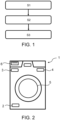
- FIG. 2 shows a washing machine 1 with a rotatable washing drum 5, which is designed to accommodate textiles to be washed, and a filter 2, which is designed to filter particles from the tap water and/or the wash water.
- the washing machine comprises a dispenser tray 6, which is designed to hold a treatment agent
- the washing machine has a control unit 3, which is designed to carry out the method according to the invention.
- the washing machine includes a display 4, which is designed to output the condition of the filter 2 determined by the control unit 3.
Landscapes
- Engineering & Computer Science (AREA)
- Theoretical Computer Science (AREA)
- Physics & Mathematics (AREA)
- Chemical & Material Sciences (AREA)
- General Physics & Mathematics (AREA)
- Business, Economics & Management (AREA)
- Chemical Kinetics & Catalysis (AREA)
- General Engineering & Computer Science (AREA)
- Computational Linguistics (AREA)
- Databases & Information Systems (AREA)
- Human Resources & Organizations (AREA)
- Textile Engineering (AREA)
- Organic Chemistry (AREA)
- Water Supply & Treatment (AREA)
- Environmental & Geological Engineering (AREA)
- Hydrology & Water Resources (AREA)
- Life Sciences & Earth Sciences (AREA)
- Data Mining & Analysis (AREA)
- Probability & Statistics with Applications (AREA)
- Economics (AREA)
- Mathematical Physics (AREA)
- Geometry (AREA)
- Software Systems (AREA)
- Evolutionary Computation (AREA)
- Computer Hardware Design (AREA)
- Fuzzy Systems (AREA)
- Entrepreneurship & Innovation (AREA)
- Marketing (AREA)
- Operations Research (AREA)
- Quality & Reliability (AREA)
- Strategic Management (AREA)
- Tourism & Hospitality (AREA)
- General Business, Economics & Management (AREA)
- Filtering Materials (AREA)
Claims (10)
- Procédé de détermination d'un état d'un filtre (2) d'un appareil ménager à circulation d'eau (1), dans lequel le filtre (2) est aménagé pour filtrer des particules d'un fluide, dans lequel le procédé comprend :- l'obtention d'informations sur le fonctionnement de l'appareil ménager à circulation d'eau (1) ; et- l'établissement de l'état du filtre (2) sur la base des informations sur le fonctionnement,dans lequel l'état du filtre (2) est établi sur la base de la charge de particules à filtrer par le filtre (2),laquelle charge de particules est déterminée sur la base des informations sur le fonctionnement,- dans lequel les informations sur le fonctionnement comprennent des informations surb) un chargement de l'appareil ménager à circulation d'eau (1) en articles à traiter ;c) une propriété des articles à traiter ;d) une propriété d'un milieu de traitement disponible ;e) une propriété d'un ou plusieurs agent(s) de traitement ;f) une nature d'un processus de traitement ;g) une turbidité du fluide et/ouh) une quantité d'eau- l'émission à un utilisateur d'informations sur l'état du filtre (2).
- Procédé selon la revendication 1, dans lequel les informations sur le fonctionnement comprennent en outre des informations sur a) un nombre de processus de traitement.
- Procédé selon la revendication 2, dans lequel les informations sur a) sont obtenues d'une unité de comptage et/ou d'une base de données.
- Procédé selon l'une des revendications 1 à 3, dans lequel les informations sur b) sont déterminées sur la base de données gravimétriques de l'appareil ménager à circulation d'eau (1), d'un comportement d'absorption des articles et/ou d'un comportement de libération de liquide des articles.
- Procédé selon l'une des revendications 1 à 4, dans lequel les informations sur c) sont déterminées sur la base d'un comportement d'absorption des articles, d'un comportement de libération de liquide des articles et/ou d'une nature du processus de traitement.
- Procédé selon l'une quelconque des revendications 1 à 5, dans lequel les informations sur d) sont déterminées sur la base d'une saisie d'utilisateur et/ou de données enregistrées.
- Procédé selon l'une quelconque des revendications 1 à 6, dans lequel les informations sur e) sont déterminées sur la base d'une saisie d'utilisateur et/ou de données enregistrées.
- Procédé selon l'une quelconque des revendications 1 à 7, dans lequel les informations sur f) sont déterminées sur la base d'une durée du processus de traitement, d'une quantité d'un agent de traitement à utiliser, d'une température de traitement, d'une charge mécanique des articles durant le processus de traitement, et/ou d'options sélectionnées par un utilisateur.
- Procédé selon l'une quelconque des revendications 1 à 8, dans lequel les informations sur g) sont déterminées sur la base de données d'un capteur de turbidité.
- Appareil ménager à circulation d'eau (1) comprenant :un filtre (2) aménagé pour filtrer les particules d'un fluide ;une unité de commande (3) aménagée pour exécuter le procédé selon l'une des revendications précédentes pour établir l'état du filtre (2) ; etune unité d'affichage (4) ;dans lequel l'unité de commande (3) est en outre aménagée pour transmettre l'état établi du filtre (2) à l'unité d'affichage (4),et dans lequel l'unité d'affichage (4) est aménagée pour obtenir l'état établi du filtre (2) de l'unité de commande (3) et pour émettre l'état du filtre (2).
Applications Claiming Priority (1)
| Application Number | Priority Date | Filing Date | Title |
|---|---|---|---|
| DE102022204525.4A DE102022204525A1 (de) | 2022-05-09 | 2022-05-09 | Verfahren zum Bestimmen eines Zustands eines Filters eines wasserführenden Haushaltsgeräts und wasserführendes Haushaltsgerät |
Publications (2)
| Publication Number | Publication Date |
|---|---|
| EP4276232A1 EP4276232A1 (fr) | 2023-11-15 |
| EP4276232B1 true EP4276232B1 (fr) | 2025-06-11 |
Family
ID=85873788
Family Applications (1)
| Application Number | Title | Priority Date | Filing Date |
|---|---|---|---|
| EP23166543.1A Active EP4276232B1 (fr) | 2022-05-09 | 2023-04-04 | Procédé de détermination d'un état d'un filtre d'un appareil ménager à circulation d'eau et appareil ménager à circulation d'eau |
Country Status (3)
| Country | Link |
|---|---|
| EP (1) | EP4276232B1 (fr) |
| CN (1) | CN117035718A (fr) |
| DE (1) | DE102022204525A1 (fr) |
Families Citing this family (2)
| Publication number | Priority date | Publication date | Assignee | Title |
|---|---|---|---|---|
| DE102024200889A1 (de) * | 2024-01-31 | 2025-07-31 | BSH Hausgeräte GmbH | Verfahren zur Ermittlung eines Beladungsgrads einer Partikelfiltereinrichtung eines Haushaltsgeräts |
| DE102024201044A1 (de) * | 2024-02-06 | 2025-08-07 | BSH Hausgeräte GmbH | Verfahren zur Ermittlung eines Beladungsgrades eines Partikelspeichers eines Haushaltsgeräts |
Citations (10)
| Publication number | Priority date | Publication date | Assignee | Title |
|---|---|---|---|---|
| DE19745428A1 (de) | 1996-10-22 | 1998-05-14 | Honeywell Inc | Verfahren zum Waschen eines in einem Behälter befindlichen Gegenstandes |
| KR20040110807A (ko) | 2003-06-20 | 2004-12-31 | 엘지전자 주식회사 | 세탁기의 필터 상태 안내 방법 |
| CN102548905A (zh) | 2009-10-14 | 2012-07-04 | 夏普株式会社 | 净水器 |
| DE102011086137A1 (de) | 2011-11-11 | 2013-05-16 | BSH Bosch und Siemens Hausgeräte GmbH | Waschmaschine mit Filtrationsvorrichtung und Verfahren zu ihrem Betrieb |
| DE102012205827A1 (de) | 2012-04-11 | 2013-10-17 | BSH Bosch und Siemens Hausgeräte GmbH | Verfahren zur Beurteilung einer in einem Hausgerät zu speichernden oder gespeicherten wässrigen Flüssigkeit und hierfür geeignetes Hausgerät |
| CN105384273A (zh) | 2015-11-27 | 2016-03-09 | 贵阳时代沃顿科技有限公司 | 一种家用净水系统及水处理方法 |
| CN107764705A (zh) | 2017-09-28 | 2018-03-06 | 珠海格力电器股份有限公司 | 净水机及其清洁度的检测方法、装置和系统 |
| WO2019139461A2 (fr) | 2019-02-01 | 2019-07-18 | 엘지전자 주식회사 | Serveur communiquant avec un lave-vaisselle |
| CN111879010A (zh) | 2020-06-18 | 2020-11-03 | 华帝股份有限公司 | 一种具有水质监测功能的热水器及其控制方法 |
| EP3909917A1 (fr) | 2020-05-15 | 2021-11-17 | Tapp Water S.L. | Filtrage et surveillance de la qualité de liquide en temps réel |
Family Cites Families (7)
| Publication number | Priority date | Publication date | Assignee | Title |
|---|---|---|---|---|
| KR100925908B1 (ko) | 2005-07-28 | 2009-11-09 | 샤프 가부시키가이샤 | 드럼식 건조 세탁기 |
| KR100844617B1 (ko) | 2006-12-26 | 2008-07-07 | 엘지전자 주식회사 | 건조기의 안전 장치 |
| KR101715802B1 (ko) * | 2010-01-12 | 2017-03-28 | 동부대우전자 주식회사 | 세탁기의 운전제어 방법 |
| EP2455533B1 (fr) | 2010-11-22 | 2014-06-18 | Electrolux Home Products Corporation N.V. | Procédé de fonctionnement d'une machine à laver et machine à laver |
| KR20140008707A (ko) * | 2012-07-11 | 2014-01-22 | 주식회사 엘지생활건강 | 용제 및 필터의 교체정보 검출 시스템 및 이를 포함하는 세탁기 |
| CN105506932B (zh) * | 2014-09-22 | 2019-05-07 | 青岛海尔智能技术研发有限公司 | 对洗衣机的过滤组件进行清洗的控制方法 |
| TR202010178A1 (tr) | 2020-06-29 | 2022-01-21 | Arçeli̇k Anoni̇m Şi̇rketi̇ | Fi̇ltre i̇çeren bi̇r çamaşir kurutucu |
-
2022
- 2022-05-09 DE DE102022204525.4A patent/DE102022204525A1/de active Pending
-
2023
- 2023-04-04 EP EP23166543.1A patent/EP4276232B1/fr active Active
- 2023-05-09 CN CN202310518104.0A patent/CN117035718A/zh active Pending
Patent Citations (10)
| Publication number | Priority date | Publication date | Assignee | Title |
|---|---|---|---|---|
| DE19745428A1 (de) | 1996-10-22 | 1998-05-14 | Honeywell Inc | Verfahren zum Waschen eines in einem Behälter befindlichen Gegenstandes |
| KR20040110807A (ko) | 2003-06-20 | 2004-12-31 | 엘지전자 주식회사 | 세탁기의 필터 상태 안내 방법 |
| CN102548905A (zh) | 2009-10-14 | 2012-07-04 | 夏普株式会社 | 净水器 |
| DE102011086137A1 (de) | 2011-11-11 | 2013-05-16 | BSH Bosch und Siemens Hausgeräte GmbH | Waschmaschine mit Filtrationsvorrichtung und Verfahren zu ihrem Betrieb |
| DE102012205827A1 (de) | 2012-04-11 | 2013-10-17 | BSH Bosch und Siemens Hausgeräte GmbH | Verfahren zur Beurteilung einer in einem Hausgerät zu speichernden oder gespeicherten wässrigen Flüssigkeit und hierfür geeignetes Hausgerät |
| CN105384273A (zh) | 2015-11-27 | 2016-03-09 | 贵阳时代沃顿科技有限公司 | 一种家用净水系统及水处理方法 |
| CN107764705A (zh) | 2017-09-28 | 2018-03-06 | 珠海格力电器股份有限公司 | 净水机及其清洁度的检测方法、装置和系统 |
| WO2019139461A2 (fr) | 2019-02-01 | 2019-07-18 | 엘지전자 주식회사 | Serveur communiquant avec un lave-vaisselle |
| EP3909917A1 (fr) | 2020-05-15 | 2021-11-17 | Tapp Water S.L. | Filtrage et surveillance de la qualité de liquide en temps réel |
| CN111879010A (zh) | 2020-06-18 | 2020-11-03 | 华帝股份有限公司 | 一种具有水质监测功能的热水器及其控制方法 |
Also Published As
| Publication number | Publication date |
|---|---|
| CN117035718A (zh) | 2023-11-10 |
| EP4276232A1 (fr) | 2023-11-15 |
| DE102022204525A1 (de) | 2023-11-09 |
Similar Documents
| Publication | Publication Date | Title |
|---|---|---|
| EP4276232B1 (fr) | Procédé de détermination d'un état d'un filtre d'un appareil ménager à circulation d'eau et appareil ménager à circulation d'eau | |
| DE19855503B4 (de) | Wäschebehandlungsmaschine | |
| EP3268529B1 (fr) | Procédé pour faire fonctionner un lave-linge avec un capteur électrochimique et lave-linge pour la mise en oeuvre dudit procédé | |
| EP2776618A1 (fr) | Machine à laver équipée d'un dispositif de filtration et son procédé de fonctionnement | |
| DE102010028445A1 (de) | Wasserführendes Hausgerät mit einer Dosiereinrichtung und mehreren Dosierpumpen | |
| DE102010039552A1 (de) | Wäschebehandlungsgerät mit Siebaufnahme und Verfahren zum Betreiben eines Wäschebehandlungsgeräts mit einem Flusensieb | |
| DE102009026773A1 (de) | Verfahren zur Ausrüstung von Wäsche und zur Durchführung geeignetes Wäschebehandlungsgerät | |
| DE19650915B4 (de) | Flüssigkeitsführendes Hausgerät mit einer Programmsteuerung | |
| DE102020210389A1 (de) | Fluidführendes Haushaltsgerät | |
| DE112015006237T5 (de) | Waschmaschine | |
| EP2383381B1 (fr) | Procédé de traitement du linge dans un lave-linge | |
| DE102007033493A1 (de) | Verfahren zur Behandlung von Wäsche sowie hierzu geeignete programmgesteuerte Waschmaschine | |
| DE202007018460U1 (de) | Dosiervorrichtung für die Dosierung von Reinigungs-, Wasch- oder Spülmitteln in Haushaltsmaschinen, insbesondere Geschirrspülmaschinen | |
| DE19629806B4 (de) | Wasch- oder Spülmaschine | |
| DE10145601A1 (de) | Haushaltsmaschine | |
| EP2408958B1 (fr) | Procédé pour optimiser une phase de rinçage d'une machine à laver, ainsi que machine à laver convenant à ce procédé | |
| DE102014214351A1 (de) | Haushaltsgerät mit einem Umpumpsystem | |
| DE102012109840A1 (de) | Verfahren zum Betreiben einer Waschmaschine | |
| EP3268531B1 (fr) | Procédé de détermination du degré d'hygiène d'un lave-linge comprenant un capteur d'impédance, ainsi que lave-linge pour la mise en oeuvre de ce procédé | |
| EP4157054B1 (fr) | Système avec lave-vaisselle, procédé et produit-programme informatique | |
| DE102016225113A1 (de) | Verfahren zum Betrieb eines Wäschebehandlungsgeräts mit verbesserter Steuerung sowie hierzu geeignetes Wäschebehandlungsgerät | |
| Hazlehurst et al. | Quantifying Microfibre Release from Textiles during Domestic Laundering Challenges and Progress | |
| DE102017221425B4 (de) | Haushaltsgerät mit einem saugfähigen Schwamm | |
| EP3896208B1 (fr) | Lave-linge ou sèche-linge comprenant un déflecteur | |
| DE102019132351A1 (de) | Verfahren zur Verwendung von Verbrauchsmaterialbehältnissen |
Legal Events
| Date | Code | Title | Description |
|---|---|---|---|
| PUAI | Public reference made under article 153(3) epc to a published international application that has entered the european phase |
Free format text: ORIGINAL CODE: 0009012 |
|
| STAA | Information on the status of an ep patent application or granted ep patent |
Free format text: STATUS: THE APPLICATION HAS BEEN PUBLISHED |
|
| AK | Designated contracting states |
Kind code of ref document: A1 Designated state(s): AL AT BE BG CH CY CZ DE DK EE ES FI FR GB GR HR HU IE IS IT LI LT LU LV MC ME MK MT NL NO PL PT RO RS SE SI SK SM TR |
|
| STAA | Information on the status of an ep patent application or granted ep patent |
Free format text: STATUS: REQUEST FOR EXAMINATION WAS MADE |
|
| 17P | Request for examination filed |
Effective date: 20240515 |
|
| RBV | Designated contracting states (corrected) |
Designated state(s): AL AT BE BG CH CY CZ DE DK EE ES FI FR GB GR HR HU IE IS IT LI LT LU LV MC ME MK MT NL NO PL PT RO RS SE SI SK SM TR |
|
| GRAP | Despatch of communication of intention to grant a patent |
Free format text: ORIGINAL CODE: EPIDOSNIGR1 |
|
| STAA | Information on the status of an ep patent application or granted ep patent |
Free format text: STATUS: GRANT OF PATENT IS INTENDED |
|
| RIC1 | Information provided on ipc code assigned before grant |
Ipc: D06F 105/34 20200101ALN20241107BHEP Ipc: D06F 103/70 20200101ALN20241107BHEP Ipc: D06F 103/20 20200101ALN20241107BHEP Ipc: D06F 103/18 20200101ALN20241107BHEP Ipc: D06F 103/02 20200101ALN20241107BHEP Ipc: B01D 35/143 20060101ALN20241107BHEP Ipc: D06F 39/10 20060101ALI20241107BHEP Ipc: D06F 33/00 20200101ALI20241107BHEP Ipc: C02F 1/00 20230101ALI20241107BHEP Ipc: B01D 37/04 20060101ALI20241107BHEP Ipc: A47L 15/42 20060101ALI20241107BHEP Ipc: A47L 15/00 20060101ALI20241107BHEP Ipc: D06F 33/43 20200101AFI20241107BHEP |
|
| INTG | Intention to grant announced |
Effective date: 20241122 |
|
| GRAS | Grant fee paid |
Free format text: ORIGINAL CODE: EPIDOSNIGR3 |
|
| GRAA | (expected) grant |
Free format text: ORIGINAL CODE: 0009210 |
|
| STAA | Information on the status of an ep patent application or granted ep patent |
Free format text: STATUS: THE PATENT HAS BEEN GRANTED |
|
| AK | Designated contracting states |
Kind code of ref document: B1 Designated state(s): AL AT BE BG CH CY CZ DE DK EE ES FI FR GB GR HR HU IE IS IT LI LT LU LV MC ME MK MT NL NO PL PT RO RS SE SI SK SM TR |
|
| REG | Reference to a national code |
Ref country code: GB Ref legal event code: FG4D Free format text: NOT ENGLISH |
|
| REG | Reference to a national code |
Ref country code: CH Ref legal event code: EP |
|
| REG | Reference to a national code |
Ref country code: IE Ref legal event code: FG4D Free format text: LANGUAGE OF EP DOCUMENT: GERMAN |
|
| REG | Reference to a national code |
Ref country code: DE Ref legal event code: R096 Ref document number: 502023001116 Country of ref document: DE |
|
| PG25 | Lapsed in a contracting state [announced via postgrant information from national office to epo] |
Ref country code: FI Free format text: LAPSE BECAUSE OF FAILURE TO SUBMIT A TRANSLATION OF THE DESCRIPTION OR TO PAY THE FEE WITHIN THE PRESCRIBED TIME-LIMIT Effective date: 20250611 Ref country code: ES Free format text: LAPSE BECAUSE OF FAILURE TO SUBMIT A TRANSLATION OF THE DESCRIPTION OR TO PAY THE FEE WITHIN THE PRESCRIBED TIME-LIMIT Effective date: 20250611 |
|
| REG | Reference to a national code |
Ref country code: LT Ref legal event code: MG9D |
|
| PG25 | Lapsed in a contracting state [announced via postgrant information from national office to epo] |
Ref country code: NO Free format text: LAPSE BECAUSE OF FAILURE TO SUBMIT A TRANSLATION OF THE DESCRIPTION OR TO PAY THE FEE WITHIN THE PRESCRIBED TIME-LIMIT Effective date: 20250911 Ref country code: GR Free format text: LAPSE BECAUSE OF FAILURE TO SUBMIT A TRANSLATION OF THE DESCRIPTION OR TO PAY THE FEE WITHIN THE PRESCRIBED TIME-LIMIT Effective date: 20250912 |
|
| REG | Reference to a national code |
Ref country code: NL Ref legal event code: MP Effective date: 20250611 |
|
| PG25 | Lapsed in a contracting state [announced via postgrant information from national office to epo] |
Ref country code: BG Free format text: LAPSE BECAUSE OF FAILURE TO SUBMIT A TRANSLATION OF THE DESCRIPTION OR TO PAY THE FEE WITHIN THE PRESCRIBED TIME-LIMIT Effective date: 20250611 |
|
| PG25 | Lapsed in a contracting state [announced via postgrant information from national office to epo] |
Ref country code: HR Free format text: LAPSE BECAUSE OF FAILURE TO SUBMIT A TRANSLATION OF THE DESCRIPTION OR TO PAY THE FEE WITHIN THE PRESCRIBED TIME-LIMIT Effective date: 20250611 |
|
| PG25 | Lapsed in a contracting state [announced via postgrant information from national office to epo] |
Ref country code: RS Free format text: LAPSE BECAUSE OF FAILURE TO SUBMIT A TRANSLATION OF THE DESCRIPTION OR TO PAY THE FEE WITHIN THE PRESCRIBED TIME-LIMIT Effective date: 20250911 |
|
| PG25 | Lapsed in a contracting state [announced via postgrant information from national office to epo] |
Ref country code: LV Free format text: LAPSE BECAUSE OF FAILURE TO SUBMIT A TRANSLATION OF THE DESCRIPTION OR TO PAY THE FEE WITHIN THE PRESCRIBED TIME-LIMIT Effective date: 20250611 |
|
| PG25 | Lapsed in a contracting state [announced via postgrant information from national office to epo] |
Ref country code: NL Free format text: LAPSE BECAUSE OF FAILURE TO SUBMIT A TRANSLATION OF THE DESCRIPTION OR TO PAY THE FEE WITHIN THE PRESCRIBED TIME-LIMIT Effective date: 20250611 |
|
| PG25 | Lapsed in a contracting state [announced via postgrant information from national office to epo] |
Ref country code: PT Free format text: LAPSE BECAUSE OF FAILURE TO SUBMIT A TRANSLATION OF THE DESCRIPTION OR TO PAY THE FEE WITHIN THE PRESCRIBED TIME-LIMIT Effective date: 20251013 |
|
| PG25 | Lapsed in a contracting state [announced via postgrant information from national office to epo] |
Ref country code: IS Free format text: LAPSE BECAUSE OF FAILURE TO SUBMIT A TRANSLATION OF THE DESCRIPTION OR TO PAY THE FEE WITHIN THE PRESCRIBED TIME-LIMIT Effective date: 20251011 |
|
| PG25 | Lapsed in a contracting state [announced via postgrant information from national office to epo] |
Ref country code: SM Free format text: LAPSE BECAUSE OF FAILURE TO SUBMIT A TRANSLATION OF THE DESCRIPTION OR TO PAY THE FEE WITHIN THE PRESCRIBED TIME-LIMIT Effective date: 20250611 |
|
| PG25 | Lapsed in a contracting state [announced via postgrant information from national office to epo] |
Ref country code: CZ Free format text: LAPSE BECAUSE OF FAILURE TO SUBMIT A TRANSLATION OF THE DESCRIPTION OR TO PAY THE FEE WITHIN THE PRESCRIBED TIME-LIMIT Effective date: 20250611 |
|
| PG25 | Lapsed in a contracting state [announced via postgrant information from national office to epo] |
Ref country code: PL Free format text: LAPSE BECAUSE OF FAILURE TO SUBMIT A TRANSLATION OF THE DESCRIPTION OR TO PAY THE FEE WITHIN THE PRESCRIBED TIME-LIMIT Effective date: 20250611 |
|
| PG25 | Lapsed in a contracting state [announced via postgrant information from national office to epo] |
Ref country code: EE Free format text: LAPSE BECAUSE OF FAILURE TO SUBMIT A TRANSLATION OF THE DESCRIPTION OR TO PAY THE FEE WITHIN THE PRESCRIBED TIME-LIMIT Effective date: 20250611 |
|
| PG25 | Lapsed in a contracting state [announced via postgrant information from national office to epo] |
Ref country code: SK Free format text: LAPSE BECAUSE OF FAILURE TO SUBMIT A TRANSLATION OF THE DESCRIPTION OR TO PAY THE FEE WITHIN THE PRESCRIBED TIME-LIMIT Effective date: 20250611 |
|
| REG | Reference to a national code |
Ref country code: DE Ref legal event code: R026 Ref document number: 502023001116 Country of ref document: DE |
|
| PLBI | Opposition filed |
Free format text: ORIGINAL CODE: 0009260 |
|
| REG | Reference to a national code |
Ref country code: CH Ref legal event code: L10 Free format text: ST27 STATUS EVENT CODE: U-0-0-L10-L00 (AS PROVIDED BY THE NATIONAL OFFICE) Effective date: 20260318 |
|
| PLAX | Notice of opposition and request to file observation + time limit sent |
Free format text: ORIGINAL CODE: EPIDOSNOBS2 |
|
| PG25 | Lapsed in a contracting state [announced via postgrant information from national office to epo] |
Ref country code: DK Free format text: LAPSE BECAUSE OF FAILURE TO SUBMIT A TRANSLATION OF THE DESCRIPTION OR TO PAY THE FEE WITHIN THE PRESCRIBED TIME-LIMIT Effective date: 20250611 |
|
| 26 | Opposition filed |
Opponent name: BRITA SE Effective date: 20260309 |
|
| PG25 | Lapsed in a contracting state [announced via postgrant information from national office to epo] |
Ref country code: IT Free format text: LAPSE BECAUSE OF FAILURE TO SUBMIT A TRANSLATION OF THE DESCRIPTION OR TO PAY THE FEE WITHIN THE PRESCRIBED TIME-LIMIT Effective date: 20250611 |