EP4277372B1 - Vorrichtung, verfahren und computerprogramm - Google Patents
Vorrichtung, verfahren und computerprogramm Download PDFInfo
- Publication number
- EP4277372B1 EP4277372B1 EP22172946.0A EP22172946A EP4277372B1 EP 4277372 B1 EP4277372 B1 EP 4277372B1 EP 22172946 A EP22172946 A EP 22172946A EP 4277372 B1 EP4277372 B1 EP 4277372B1
- Authority
- EP
- European Patent Office
- Prior art keywords
- synchronization
- user equipment
- sidelink
- reference user
- coverage
- Prior art date
- Legal status (The legal status is an assumption and is not a legal conclusion. Google has not performed a legal analysis and makes no representation as to the accuracy of the status listed.)
- Active
Links
Images




Classifications
-
- H—ELECTRICITY
- H04—ELECTRIC COMMUNICATION TECHNIQUE
- H04W—WIRELESS COMMUNICATION NETWORKS
- H04W56/00—Synchronisation arrangements
- H04W56/001—Synchronization between nodes
-
- H—ELECTRICITY
- H04—ELECTRIC COMMUNICATION TECHNIQUE
- H04W—WIRELESS COMMUNICATION NETWORKS
- H04W56/00—Synchronisation arrangements
- H04W56/001—Synchronization between nodes
- H04W56/0015—Synchronization between nodes one node acting as a reference for the others
-
- H—ELECTRICITY
- H04—ELECTRIC COMMUNICATION TECHNIQUE
- H04W—WIRELESS COMMUNICATION NETWORKS
- H04W56/00—Synchronisation arrangements
- H04W56/0055—Synchronisation arrangements determining timing error of reception due to propagation delay
Definitions
- the present disclosure relates to an apparatus, a method, and a computer program for determining whether to operate as a sidelink synchronization reference user equipment and extend the synchronization coverage of another sidelink synchronization reference user equipment in a communication system.
- a communication system can be seen as a facility that enables communication sessions between two or more entities such as communication devices, base stations and/or other nodes by providing carriers between the various entities involved in the communications path.
- the communication system may be a wireless communication system.
- wireless systems comprise public land mobile networks (PLMN) operating based on radio standards such as those provided by 3GPP, satellite based communication systems and different wireless local networks, for example wireless local area networks (WLAN).
- PLMN public land mobile networks
- WLAN wireless local area networks
- the wireless systems can typically be divided into cells, and are therefore often referred to as cellular systems.
- the communication system and associated devices typically operate in accordance with a given standard or specification which sets out what the various entities associated with the system are permitted to do and how that should be achieved. Communication protocols and/or parameters which shall be used for the connection are also typically defined. Examples of standard are the so-called 5G standards.
- an apparatus comprising: means for determining that a second sidelink synchronization reference user equipment extends synchronization coverage of a first sidelink synchronization reference user equipment; means for determining a first synchronization error between the first sidelink synchronization reference user equipment and the second sidelink synchronization reference user equipment and a second synchronization error between the first sidelink synchronization reference user equipment and the apparatus; and means for determining whether to operate the apparatus as a sidelink synchronization reference user equipment and extend the synchronization coverage of the first sidelink synchronization reference user equipment based on the first synchronization error and the second synchronization error or means for reporting the first synchronization error and the second synchronization error to another apparatus to allow the other apparatus to determine whether to operate the apparatus as a sidelink synchronization reference user equipment and extend the synchronization coverage of the first sidelink synchronization reference user equipment based on the first synchronization error and the second synchronization error.
- the first sidelink synchronization reference user equipment may be in coverage or out of coverage of a base station or a global navigation satellite system.
- Determining that the second sidelink synchronization reference user equipment extends the synchronization coverage of the first sidelink synchronization reference user equipment may be based on at least one of: a first sidelink synchronization identifier transmitted by the first sidelink synchronization reference user equipment; a second sidelink synchronization identifier transmitted by the second sidelink synchronization reference user equipment; a first in coverage indicator indicating whether the first sidelink synchronization reference user equipment is in coverage of a base station or a global navigation synchronization system; or a second in coverage indicator indicating whether the second sidelink synchronization reference user equipment is in coverage of a base station or a global navigation synchronization system.
- Determining that the second sidelink synchronization reference user equipment extends the synchronization coverage of the first sidelink synchronization reference user equipment may comprise: determining that the second sidelink synchronization identifier of the second sidelink synchronization reference user equipment is the same as the first sidelink synchronization identifier of the first sidelink synchronization reference user equipment; determining that the first in coverage indicator of the first sidelink synchronization reference user equipment indicates that the first sidelink synchronization reference user equipment is in coverage of a base station or a global navigation synchronization system; and determining that the second in coverage indicator of the second sidelink synchronization reference user equipment indicates that the second sidelink synchronization reference user equipment is out of coverage of a base station or a global navigation synchronization system.
- Determining that the second sidelink synchronization reference user equipment extends the synchronization coverage of the first sidelink synchronization reference user equipment may comprise: determining that the second sidelink synchronization identifier of the second sidelink synchronization reference user equipment is equal to the first sidelink synchronization identifier of the first sidelink synchronization reference user equipment plus a known value; determining that the first in coverage indicator of the first sidelink synchronization reference user equipment indicates that the first sidelink synchronization reference user equipment is out of coverage of a base station or a global navigation synchronization system; and determining that the second in coverage indicator of the second sidelink synchronization reference user equipment indicates that the second sidelink synchronization reference user equipment is out of coverage of a base station or a global navigation synchronization system.
- Determining the first synchronization error between the first sidelink synchronization reference user equipment and the second sidelink synchronization reference user equipment may comprise: receiving a first sidelink synchronization signal in a first sidelink synchronization signal block from the first sidelink synchronization reference user equipment; receiving a second sidelink synchronization signal in a second sidelink synchronization signal block from the second sidelink synchronization reference user equipment; determining the first synchronization error based on the first sidelink synchronization signal and the second sidelink synchronization signal.
- Determining the second synchronization error between the first sidelink synchronization reference user equipment and the apparatus may be based on a first sidelink synchronization signal and/or a level of synchronization accuracy of the apparatus.
- Determining whether to operate the apparatus as a sidelink synchronization reference user equipment and extend the synchronization coverage of the first sidelink synchronization reference user equipment based on the first synchronization error and the second synchronization error may comprise: determining that the second synchronization error is greater than the first synchronization error by a threshold; and determining to not operate the apparatus as a sidelink synchronization reference user equipment and not extend the synchronization coverage of the first sidelink synchronization reference user equipment.
- Determining to not operate the apparatus as a sidelink synchronization reference user equipment and not extend the synchronization coverage of the first sidelink synchronization reference user equipment may comprise: determining to stop operating the apparatus as a sidelink synchronization reference user equipment and to stop extending the synchronization coverage of the first sidelink synchronization reference user equipment.
- Determining whether to operate the apparatus as a sidelink synchronization reference user equipment and extend the synchronization coverage of the first sidelink synchronization reference user equipment based on the first synchronization error and the second synchronization error may comprise: determining that the second synchronization error is greater than the first synchronization error by a threshold; and determining to operate the apparatus as a sidelink synchronization reference user equipment and extend the synchronization coverage of the first sidelink synchronization reference user equipment.
- Determining whether to operate the apparatus as a sidelink synchronization reference user equipment and extend the synchronization coverage of the first sidelink synchronization reference user equipment based on the first synchronization error and the second synchronization error may comprise: determining that the second synchronization error is lower than the first synchronization error by a threshold; and determine to operate the apparatus as a sidelink synchronization reference user equipment and extend the synchronization coverage of the first sidelink synchronization reference user equipment.
- Determining whether to operate the apparatus as a sidelink synchronization reference user equipment and extend the synchronization coverage of the first sidelink synchronization reference user equipment based on the first synchronization error and the second synchronization error may further comprise: determining that a signal for the second sidelink synchronization reference user equipment is lower than a signal threshold, wherein the signal threshold is dependent on the first synchronization error or on a difference between the first synchronization error and the second synchronization error; and determine to operate the apparatus as a sidelink synchronization reference user equipment and extend the synchronization coverage of the first sidelink synchronization reference user equipment.
- the apparatus may comprise means for: adjusting at least one sidelink synchronization information or transmission parameter of a sidelink synchronization signal block to increase or reduce the probability of being selected as a synchronization source by a neighboring user equipment.
- the sidelink synchronization information may comprise an in coverage indicator a or a sidelink synchronization signal identifier.
- the transmission parameter may comprise a transmission power.
- Adjusting at least one sidelink synchronization information or transmission parameter to increase or reduce the probability of being selected as a synchronization source by a neighboring user equipment may comprise: changing an in coverage indicator to indicate that the apparatus is in coverage of a base station or a global navigation synchronization system to increase the probability of being selected as a synchronization source by a neighboring user equipment; changing an in coverage indicator to indicate that the apparatus is out of coverage of a base station or a global navigation synchronization system to reduce the probability of being selected as a synchronization source by a neighboring user equipment; increasing a transmission power to increase the probability of being selected as a synchronization source by a neighboring user equipment; or reducing a transmission power to reduce the probability of being selected as a synchronization source by a neighboring user equipment.
- Operating the apparatus as synchronization reference user equipment may comprise: transmitting sidelink synchronization information in a sidelink synchronization signal block.
- the sidelink synchronization information may comprise at least one of a sidelink synchronization signal or a physical sidelink broadcast channel.
- the sidelink synchronization signal may comprise at least one of a sidelink primary synchronization signal or a sidelink secondary synchronization signal.
- Extending the synchronization coverage of the first sidelink synchronization reference user equipment may comprise: selecting the first sidelink synchronization reference user equipment as a synchronization source to provide a sidelink timing reference.
- Operating the apparatus as synchronization reference user equipment may comprise: transmitting a cause indicator indicating a cause for operating the apparatus as synchronization reference user equipment; and/or transmitting an availability indicator indicating the availability of the second synchronization reference user equipment extending the synchronization coverage of the first synchronization reference user equipment.
- the cause may comprise that the apparatus provides a reduced synchronization error compared to the second synchronization reference user equipment (i.e the second synchronization error is lower than the first synchronization error by a threshold).
- the means may comprise: at least one processor; and at least one memory storing instructions that, when executed by the at least one processor, cause the performance of the apparatus.
- an apparatus comprising at least one processor; and at least one memory storing instructions that, when executed by the at least one processor, cause the apparatus at least to: determine that a second sidelink synchronization reference user equipment extends synchronization coverage of a first sidelink synchronization reference user equipment; determine a first synchronization error between the first sidelink synchronization reference user equipment and the second sidelink synchronization reference user equipment and a second synchronization error between the first sidelink synchronization reference user equipment and an apparatus; and determine whether to operate the apparatus as a sidelink synchronization reference user equipment and extend the synchronization coverage of the first sidelink synchronization reference user equipment based on the first synchronization error and the second synchronization error or report the first synchronization error and the second synchronization error to another apparatus to allow the other apparatus to determine whether to operate the apparatus as a sidelink synchronization reference user equipment and extend the synchronization coverage of the first sidelink synchronization reference user equipment based on the first synchronization error and the second synchronization error.
- the first sidelink synchronization reference user equipment may be in coverage or out of coverage of a base station or a global navigation satellite system.
- Determining that the second sidelink synchronization reference user equipment extends the synchronization coverage of the first sidelink synchronization reference user equipment may be based on at least one of: a first sidelink synchronization identifier transmitted by the first sidelink synchronization reference user equipment; a second sidelink synchronization identifier transmitted by the second sidelink synchronization reference user equipment; a first in coverage indicator indicating whether the first sidelink synchronization reference user equipment is in coverage of a base station or a global navigation synchronization system; or a second in coverage indicator indicating whether the second sidelink synchronization reference user equipment is in coverage of a base station or a global navigation synchronization system.
- Determining that the second sidelink synchronization reference user equipment extends the synchronization coverage of the first sidelink synchronization reference user equipment may comprise: determining that the second sidelink synchronization identifier of the second sidelink synchronization reference user equipment is the same as the first sidelink synchronization identifier of the first sidelink synchronization reference user equipment; determining that the first in coverage indicator of the first sidelink synchronization reference user equipment indicates that the first sidelink synchronization reference user equipment is in coverage of a base station or a global navigation synchronization system; and determining that the second in coverage indicator of the second sidelink synchronization reference user equipment indicates that the second sidelink synchronization reference user equipment is out of coverage of a base station or a global navigation synchronization system.
- Determining that the second sidelink synchronization reference user equipment extends the synchronization coverage of the first sidelink synchronization reference user equipment may comprise: determining that the second sidelink synchronization identifier of the second sidelink synchronization reference user equipment is equal to the first sidelink synchronization identifier of the first sidelink synchronization reference user equipment plus a known value; determining that the first in coverage indicator of the first sidelink synchronization reference user equipment indicates that the first sidelink synchronization reference user equipment is out of coverage of a base station or a global navigation synchronization system; and determining that the second in coverage indicator of the second sidelink synchronization reference user equipment indicates that the second sidelink synchronization reference user equipment is out of coverage of a base station or a global navigation synchronization system.
- Determining the first synchronization error between the first sidelink synchronization reference user equipment and the second sidelink synchronization reference user equipment may comprise: receiving a first sidelink synchronization signal in a first sidelink synchronization signal block from the first sidelink synchronization reference user equipment; receiving a second sidelink synchronization signal in a second sidelink synchronization signal block from the second sidelink synchronization reference user equipment; determining the first synchronization error based on the first sidelink synchronization signal and the second sidelink synchronization signal.
- Determining the second synchronization error between the first sidelink synchronization reference user equipment and the apparatus may be based on a first sidelink synchronization signal and/or a level of synchronization accuracy of the apparatus.
- Determining whether to operate the apparatus as a sidelink synchronization reference user equipment and extend the synchronization coverage of the first sidelink synchronization reference user equipment based on the first synchronization error and the second synchronization error may comprise: determining that the second synchronization error is greater than the first synchronization error by a threshold; and determining to not operate the apparatus as a sidelink synchronization reference user equipment and not extend the synchronization coverage of the first sidelink synchronization reference user equipment.
- Determining to not operate the apparatus as a sidelink synchronization reference user equipment and not extend the synchronization coverage of the first sidelink synchronization reference user equipment may comprise: determining to stop operating the apparatus as a sidelink synchronization reference user equipment and to stop extending the synchronization coverage of the first sidelink synchronization reference user equipment.
- Determining whether to operate the apparatus as a sidelink synchronization reference user equipment and extend the synchronization coverage of the first sidelink synchronization reference user equipment based on the first synchronization error and the second synchronization error may comprise: determining that the second synchronization error is greater than the first synchronization error by a threshold; and determining to operate the apparatus as a sidelink synchronization reference user equipment and extend the synchronization coverage of the first sidelink synchronization reference user equipment.
- Determining whether to operate the apparatus as a sidelink synchronization reference user equipment and extend the synchronization coverage of the first sidelink synchronization reference user equipment based on the first synchronization error and the second synchronization error may comprise: determining that the second synchronization error is lower than the first synchronization error by a threshold; and determine to operate the apparatus as a sidelink synchronization reference user equipment and extend the synchronization coverage of the first sidelink synchronization reference user equipment.
- Determining whether to operate the apparatus as a sidelink synchronization reference user equipment and extend the synchronization coverage of the first sidelink synchronization reference user equipment based on the first synchronization error and the second synchronization error may further comprise: determining that a signal for the second sidelink synchronization reference user equipment is lower than a signal threshold, wherein the signal threshold is dependent on the first synchronization error or on a difference between the first synchronization error and the second synchronization error; and determine to operate the apparatus as a sidelink synchronization reference user equipment and extend the synchronization coverage of the first sidelink synchronization reference user equipment.
- the at least one memory and the computer code may be configured, with the at least one processor, to cause the apparatus at least to perform: adjust at least one sidelink synchronization information or transmission parameter of a sidelink synchronization signal block to increase or reduce the probability of being selected as a synchronization source by a neighboring user equipment.
- the sidelink synchronization information may comprise an in coverage indicator a or a sidelink synchronization signal identifier.
- the transmission parameter may comprise a transmission power.
- Adjusting at least one sidelink synchronization information or transmission parameter to increase or reduce the probability of being selected as a synchronization source by a neighboring user equipment may comprise: changing an in coverage indicator to indicate that the apparatus is in coverage of a base station or a global navigation synchronization system to increase the probability of being selected as a synchronization source by a neighboring user equipment; changing an in coverage indicator to indicate that the apparatus is out of coverage of a base station or a global navigation synchronization system to reduce the probability of being selected as a synchronization source by a neighboring user equipment; increasing a transmission power to increase the probability of being selected as a synchronization source by a neighboring user equipment; or reducing a transmission power to reduce the probability of being selected as a synchronization source by a neighboring user equipment.
- Operating the apparatus as synchronization reference user equipment may comprise: transmitting sidelink synchronization information in a sidelink synchronization signal block.
- the sidelink synchronization information may comprise at least one of a sidelink synchronization signal or a physical sidelink broadcast channel.
- the sidelink synchronization signal may comprise at least one of a sidelink primary synchronization signal or a sidelink secondary synchronization signal.
- Extending the synchronization coverage of the first sidelink synchronization reference user equipment may comprise: selecting the first sidelink synchronization reference user equipment as a synchronization source to provide a sidelink timing reference.
- Operating the apparatus as synchronization reference user equipment may comprise: transmitting a cause indicator indicating a cause for operating the apparatus as synchronization reference user equipment; and/or transmitting an availability indicator indicating the availability of the second synchronization reference user equipment extending the synchronization coverage of the first synchronization reference user equipment.
- the cause may comprise that the apparatus provides a reduced synchronization error compared to the second synchronization reference user equipment (i.e the second synchronization error is lower than the first synchronization error by a threshold).
- an apparatus comprising circuitry configured to perform: determine that a second sidelink synchronization reference user equipment extends synchronization coverage of a first sidelink synchronization reference user equipment; determine a first synchronization error between the first sidelink synchronization reference user equipment and the second sidelink synchronization reference user equipment and a second synchronization error between the first sidelink synchronization reference user equipment and the apparatus; and determine whether to operate the apparatus as a sidelink synchronization reference user equipment and extend the synchronization coverage of the first sidelink synchronization reference user equipment based on the first synchronization error and the second synchronization error or report the first synchronization error and the second synchronization error to another apparatus to allow the other apparatus to determine whether to operate the apparatus as a sidelink synchronization reference user equipment and extend the synchronization coverage of the first sidelink synchronization reference user equipment based on the first synchronization error and the second synchronization error.
- a method comprising: determining that a second sidelink synchronization reference user equipment extends synchronization coverage of a first sidelink synchronization reference user equipment; determining a first synchronization error between the first sidelink synchronization reference user equipment and the second sidelink synchronization reference user equipment and a second synchronization error between the first sidelink synchronization reference user equipment and an apparatus; and determining whether to operate the apparatus as a sidelink synchronization reference user equipment and extend the synchronization coverage of the first sidelink synchronization reference user equipment based on the first synchronization error and the second synchronization error or reporting the first synchronization error and the second synchronization error to another apparatus to allow the other apparatus to determine whether to operate the apparatus as a sidelink synchronization reference user equipment and extend the synchronization coverage of the first sidelink synchronization reference user equipment based on the first synchronization error and the second synchronization error.
- the first sidelink synchronization reference user equipment may be in coverage or out of coverage of a base station or a global navigation satellite system.
- Determining that the second sidelink synchronization reference user equipment extends the synchronization coverage of the first sidelink synchronization reference user equipment may be based on at least one of: a first sidelink synchronization identifier transmitted by the first sidelink synchronization reference user equipment; a second sidelink synchronization identifier transmitted by the second sidelink synchronization reference user equipment; a first in coverage indicator indicating whether the first sidelink synchronization reference user equipment is in coverage of a base station or a global navigation synchronization system; or a second in coverage indicator indicating whether the second sidelink synchronization reference user equipment is in coverage of a base station or a global navigation synchronization system.
- Determining that the second sidelink synchronization reference user equipment extends the synchronization coverage of the first sidelink synchronization reference user equipment may comprise: determining that the second sidelink synchronization identifier of the second sidelink synchronization reference user equipment is the same as the first sidelink synchronization identifier of the first sidelink synchronization reference user equipment; determining that the first in coverage indicator of the first sidelink synchronization reference user equipment indicates that the first sidelink synchronization reference user equipment is in coverage of a base station or a global navigation synchronization system; and determining that the second in coverage indicator of the second sidelink synchronization reference user equipment indicates that the second sidelink synchronization reference user equipment is out of coverage of a base station or a global navigation synchronization system.
- Determining that the second sidelink synchronization reference user equipment extends the synchronization coverage of the first sidelink synchronization reference user equipment may comprise: determining that the second sidelink synchronization identifier of the second sidelink synchronization reference user equipment is equal to the first sidelink synchronization identifier of the first sidelink synchronization reference user equipment plus a known value; determining that the first in coverage indicator of the first sidelink synchronization reference user equipment indicates that the first sidelink synchronization reference user equipment is out of coverage of a base station or a global navigation synchronization system; and determining that the second in coverage indicator of the second sidelink synchronization reference user equipment indicates that the second sidelink synchronization reference user equipment is out of coverage of a base station or a global navigation synchronization system.
- Determining the first synchronization error between the first sidelink synchronization reference user equipment and the second sidelink synchronization reference user equipment may comprise: receiving a first sidelink synchronization signal in a first sidelink synchronization signal block from the first sidelink synchronization reference user equipment; receiving a second sidelink synchronization signal in a second sidelink synchronization signal block from the second sidelink synchronization reference user equipment; determining the first synchronization error based on the first sidelink synchronization signal and the second sidelink synchronization signal.
- Determining the second synchronization error between the first sidelink synchronization reference user equipment and the apparatus may be based on a first sidelink synchronization signal and/or a level of synchronization accuracy of the apparatus.
- Determining whether to operate the apparatus as a sidelink synchronization reference user equipment and extend the synchronization coverage of the first sidelink synchronization reference user equipment based on the first synchronization error and the second synchronization error may comprise: determining that the second synchronization error is greater than the first synchronization error by a threshold; and determining to not operate the apparatus as a sidelink synchronization reference user equipment and not extend the synchronization coverage of the first sidelink synchronization reference user equipment.
- Determining to not operate the apparatus as a sidelink synchronization reference user equipment and not extend the synchronization coverage of the first sidelink synchronization reference user equipment may comprise: determining to stop operating the apparatus as a sidelink synchronization reference user equipment and to stop extending the synchronization coverage of the first sidelink synchronization reference user equipment.
- Determining whether to operate the apparatus as a sidelink synchronization reference user equipment and extend the synchronization coverage of the first sidelink synchronization reference user equipment based on the first synchronization error and the second synchronization error may comprise: determining that the second synchronization error is greater than the first synchronization error by a threshold; and determining to operate the apparatus as a sidelink synchronization reference user equipment and extend the synchronization coverage of the first sidelink synchronization reference user equipment.
- Determining whether to operate the apparatus as a sidelink synchronization reference user equipment and extend the synchronization coverage of the first sidelink synchronization reference user equipment based on the first synchronization error and the second synchronization error may comprise: determining that the second synchronization error is lower than the first synchronization error by a threshold; and determine to operate the apparatus as a sidelink synchronization reference user equipment and extend the synchronization coverage of the first sidelink synchronization reference user equipment.
- Determining whether to operate the apparatus as a sidelink synchronization reference user equipment and extend the synchronization coverage of the first sidelink synchronization reference user equipment based on the first synchronization error and the second synchronization error may further comprise: determining that a signal for the second sidelink synchronization reference user equipment is lower than a signal threshold, wherein the signal threshold is dependent on the first synchronization error or on a difference between the first synchronization error and the second synchronization error; and determine to operate the apparatus as a sidelink synchronization reference user equipment and extend the synchronization coverage of the first sidelink synchronization reference user equipment.
- the method may comprise: adjusting at least one sidelink synchronization information or transmission parameter of a sidelink synchronization signal block to increase or reduce the probability of being selected as a synchronization source by a neighboring user equipment.
- the sidelink synchronization information may comprise an in coverage indicator a or a sidelink synchronization signal identifier.
- the transmission parameter may comprise a transmission power.
- Adjusting at least one sidelink synchronization information or transmission parameter to increase or reduce the probability of being selected as a synchronization source by a neighboring user equipment may comprise: changing an in coverage indicator to indicate that the apparatus is in coverage of a base station or a global navigation synchronization system to increase the probability of being selected as a synchronization source by a neighboring user equipment; changing an in coverage indicator to indicate that the apparatus is out of coverage of a base station or a global navigation synchronization system to reduce the probability of being selected as a synchronization source by a neighboring user equipment; increasing a transmission power to increase the probability of being selected as a synchronization source by a neighboring user equipment; or reducing a transmission power to reduce the probability of being selected as a synchronization source by a neighboring user equipment.
- Operating the apparatus as synchronization reference user equipment may comprise: transmitting sidelink synchronization information in a sidelink synchronization signal block.
- the sidelink synchronization information may comprise at least one of a sidelink synchronization signal or a physical sidelink broadcast channel.
- the sidelink synchronization signal may comprise at least one of a sidelink primary synchronization signal or a sidelink secondary synchronization signal.
- Extending the synchronization coverage of the first sidelink synchronization reference user equipment may comprise: selecting the first sidelink synchronization reference user equipment as a synchronization source to provide a sidelink timing reference.
- Operating the apparatus as synchronization reference user equipment may comprise: transmitting a cause indicator indicating a cause for operating the apparatus as synchronization reference user equipment; and/or transmitting an availability indicator indicating the availability of the second synchronization reference user equipment extending the synchronization coverage of the first synchronization reference user equipment.
- the cause may comprise that the apparatus provides a reduced synchronization error compared to the second synchronization reference user equipment (i.e the second synchronization error is lower than the first synchronization error by a threshold).
- a computer program comprising computer executable code which when run on at least one processor is configured to: determine that a second sidelink synchronization reference user equipment extends synchronization coverage of a first sidelink synchronization reference user equipment; determine a first synchronization error between the first sidelink synchronization reference user equipment and the second sidelink synchronization reference user equipment and a second synchronization error between the first sidelink synchronization reference user equipment and an apparatus; and determine whether to operate the apparatus as a sidelink synchronization reference user equipment and extend the synchronization coverage of the first sidelink synchronization reference user equipment based on the first synchronization error and the second synchronization error or report the first synchronization error and the second synchronization error to another apparatus to allow the other apparatus to determine whether to operate the apparatus as a sidelink synchronization reference user equipment and extend the synchronization coverage of the first sidelink synchronization reference user equipment based on the first synchronization error and the second synchronization error.
- a computer readable medium comprising program instructions stored thereon for performing at least one of the above methods.
- a non-transitory computer readable medium comprising program instructions stored thereon for performing at least one of the above methods.
- non-volatile tangible memory medium comprising program instructions stored thereon for performing at least one of the above methods.
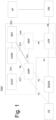
- FIG. 1 shows a schematic representation of a 5G system (5GS).
- the 5GS may comprises a user equipment (UE), a (radio) access network ((R)AN), a 5G core network (5GC), one or more application functions (AF) and one or more data networks (DN).
- UE user equipment
- R radio access network
- GC 5G core network
- AF application functions
- DN data networks
- the 5G (R)AN may comprise one or more gNodeB (gNB) distributed unit functions connected to one or more gNodeB (gNB) centralized unit functions.
- gNB gNodeB
- gNB gNodeB
- the 5GC may comprise an access and mobility management function (AMF), a session management function (SMF), an authentication server function (AUSF), a user data management (UDM), a user plane function (UPF) and/or a network exposure function (NEF).
- AMF access and mobility management function
- SMF session management function
- AUSF authentication server function
- UDM user data management
- UPF user plane function
- NEF network exposure function
- FIG 2 illustrates an example of a control apparatus 200 for controlling a function of the (R)AN or the 5GC as illustrated on Figure 1 .
- the control apparatus may comprise at least one random access memory (RAM) 211a, at least on read only memory (ROM) 211b, at least one processor 212, 213 and an input/output interface 214.
- the at least one processor 212, 213 may be coupled to the RAM 211a and the ROM 211b.
- the at least one processor 212, 213 may be configured to execute an appropriate software code 215.
- the software code 215 may for example allow to perform one or more steps to perform one or more of the present aspects.
- the software code 215 may be stored in the ROM 211b.
- the control apparatus 200 may be interconnected with another control apparatus 200 controlling another function of the 5G (R)AN or the 5GC.
- each function of the (R)AN or the 5GC comprises a control apparatus 200.
- two or more functions of the (R)AN or the 5GC may share a control apparatus.
- FIG 3 illustrates an example of a UE 300, such as the UE illustrated on Figure 1 .
- the UE 300 may be provided by any device capable of sending and receiving radio signals.
- Non-limiting examples comprise a user equipment, a mobile station (MS) or mobile device such as a mobile phone or what is known as a 'smart phone', a computer provided with a wireless interface card or other wireless interface facility (e.g., USB dongle), a personal data assistant (PDA) or a tablet provided with wireless communication capabilities, a machine-type communications (MTC) device, a Cellular Internet of things (CloT) device or any combinations of these or the like.
- the UE 300 may provide, for example, communication of data for carrying communications.
- the communications may be one or more of voice, electronic mail (email), text message, multimedia, data, machine data and so on.
- the UE 300 may receive signals over an air or radio interface 307 via appropriate apparatus for receiving and may transmit signals via appropriate apparatus for transmitting radio signals.
- transceiver apparatus is designated schematically by block 306.
- the transceiver apparatus 306 may be provided for example by means of a radio part and associated antenna arrangement.
- the antenna arrangement may be arranged internally or externally to the mobile device.
- the UE 300 may be provided with at least one processor 301, at least one memory ROM 302a, at least one RAM 302b and other possible components 303 for use in software and hardware aided execution of tasks it is designed to perform, including control of access to and communications with access systems and other communication devices.
- the at least one processor 301 is coupled to the RAM 302b and the ROM 302a.
- the at least one processor 301 may be configured to execute an appropriate software code 308.
- the software code 308 may for example allow to perform one or more of the present aspects.
- the software code 308 may be stored in the ROM 302a.
- the processor, storage and other relevant control apparatus can be provided on an appropriate circuit board and/or in chipsets. This feature is denoted by reference 304.
- the device may optionally have a user interface such as keypad 305, touch sensitive screen or pad, combinations thereof or the like.
- a user interface such as keypad 305, touch sensitive screen or pad, combinations thereof or the like.
- one or more of a display, a speaker and a microphone may be provided depending on the type of the device.
- One or more aspects of this disclosure relate to NR sidelink (SL) communications.
- SL NR sidelink
- One or more aspects of this disclosure relate to conditions for determining whether to operate a UE to transmit SL synchronization information, for example to support industrial internet of things (HoT)-like use cases that require high precision synchronization.
- HoT internet of things
- SL communications may be organized in frames identified by a direct frame number (DFN).
- the DFN may enable a UE to synchronize its SL communications according to a SL timing reference.
- UEs may perform SL synchronization to have the same SL timing reference for SL communications among nearby UEs.
- SL timing reference There may be four sources for providing a SL timing reference: a global navigation satellite system (GNSS), a base station (gNB or eNB), a synchronization reference (SyncRef) UE or a UE's own internal clock.
- GNSS global navigation satellite system
- gNB base station
- SyncRef synchronization reference
- a SyncRef UE may broadcast SL synchronization information to provide a SL timing reference.
- a SyncRef UE may broadcast the SL synchronization information in a SL synchronization signal block (S-SSB).
- S-SSB SL synchronization signal block
- a SyncRef UE may be synchronized with a source (i.e. the SyncRef may be provided the SL timing reference originating from the source by the source).
- a UE may then select the SyncRef UE as a source and the UE may be synchronized with the SyncRef (i.e. the UE may be provided the SL timing reference originating from the source from the SyncRef UE).
- the source may have a synchronization coverage (i.e. area within which a UE may be provided the SL timing reference originating from the source by the source).
- the SyncRef UE may have a synchronization coverage (i.e. area within which a UE may be provided the SL timing reference originating from the source by the SyncRef UE).
- the SyncRef UE may extend the synchronization coverage of the source (i.e. the area within which a UE may be provided the SL timing reference originating from the source is extended by the SyncRef UE).
- the SL synchronization information may comprise a SL primary synchronization signal (S-PSS), a SL secondary synchronization signal (S-SSS) and a physical SL broadcast channel (PSBCH).
- S-PSS SL primary synchronization signal
- S-SSS SL secondary synchronization signal
- PSBCH physical SL broadcast channel
- the S-PSS and the S-SSS may be jointly referred to as a SL synchronization signal (SLSS).
- the S-PSS and the S-SSS may be used for time and frequency synchronization.
- the S-PSS and S-SSS may be selected out of candidate sequences based on an SLSS ID.
- the SLSS ID may identify a SyncRef UE.
- the SLSS ID may indicate a priority group of a SyncRef UE. The concept of priority group of a SyncRef UE is discussed further below.
- the PSBCH may carry a master information block SL (MIB-SL).
- the MIB-SL may include a DFN, a slot index and an inCoverage indicator.
- the inCoverage indicator may be a one bit indicator.
- the inCoverage may indicate whether a SyncRef UE is in coverage of a base station or a GNSS.
- MIB-SL information element An example of a MIB-SL information element is provided below.
- inCoverage Value true may indicate that the UE transmitting the MIB-SL is in coverage of a BS or a GNSS (i.e. uses a BS or a GNSS as a source for providing a SL timing reference).
- directFrameNumber May indicate the frame number in which S-SSB transmitted.
- slotlndex May indicate the slot index in which S-SSB transmitted.
- SI-TDD-Config May indicates a time division duplex (TDD) configuration.
- S-SSBs may be transmitted by a SyncRef UE with a fixed period of 160ms (i.e. 16 radio frames). Within each S-SSB period, multiple S-SSBs can be transmitted by the SyncRef UE. The number of S-SSBs transmitted may be (pre-)configured depending on a subcarrier spacing (SCS) and a frequency range.
- SCS subcarrier spacing
- a SyncRef UE may select a slot to transmit S-SSB according to a S-SSB time allocation (sl-SSB-TimeAllocation1 or sl-SSB-TimeAllocation2).
- the S-SSB time allocation provides a time-offset (sl-TimeOffsetSSB) from the start of a SL SSB period to the first S-SSB, a slot interval (sl-Timelnterval) between two neighboring S-SSBs if there are more than one S-SSBs within one S-SSB period and number of S-SSB transmissions (SI-NumSSB-WithinPeriod) within each S-SSB period.
- sl-TimeOffsetSSB a time-offset from the start of a SL SSB period to the first S-SSB
- a slot interval sl-Timelnterval
- sl-NumSSB-WithinPeriod May indicate the number of sidelink SSB transmissions within one S-SSB period.
- the applicable values may be related to the subcarrier spacing and frequency as follows:
- sl-TimeOffsetSSB May indicate the slot offset from the start of S-SSB period to the first S-SSB.
- sl-Timelnterval May indicate the slot interval between neighboring S-SSBs. This value may be applicable when there are more than one sidelink SSBs within one S-SSB period.
- TS 38.331, Section 5.8.5.2 read as follows: "A UE capable of NR sidelink communication and SLSS / PSBCH transmission shall, when transmitting NR sidelink communication, and if the conditions for NR sidelink communication operation are met and when the following conditions are met:
- TS 38.331 section 5.8.5.2 specifies that a UE may determine to operate as SyncRef UE (i.e. transmits SL synchronization information in a S-SSB) if:
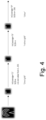
- Figure 4 shows a schematic representation of a SL synchronization chain comprising a gNB and three UEs.
- TS 38.331 section 5.8.5.3 describes a SLSS ID selection at a SyncRef UE within such SL synchronization chain.
- a first SyncRef UE may be one hop away from a gNB.
- the first SyncRef UE may be in coverage of the gNB and a second SyncRef UE may be out of coverage of the gNB and extends the synchronization coverage of the first SyncRef UE (i.e. the first SyncRef UE is selected as a source by the second SyncRef UE), the second SyncRef UE may use the same SLSS ID (e.g. x) than the first SyncRef UE.
- a S-SSB from the first SyncRef UE may comprise an inCoverage set to true in MIB-SL and a SLSS ID comprised between 1 and 335.
- a first SyncRef UE may be two hops away from a gNB.
- the first SyncRef UE may be out of coverage of the gNB and a second SyncRef UE may be out of coverage of the gNB as well.
- the second SyncRef UE may use a different SLSS ID (e.g. x +336) than the first SyncRef UE.
- a S-SSB from the first SyncRef UE may comprise an inCoverage set to false in MIB-SL and a SLSS ID comprised between 1 and 335.
- a UE may select a source to provide a SL timing reference selects based on a priority group of the source and whether the synchronization is a GNSS-based synchronization (GNSS is part of the highest priority group) or gNB/eNB-based synchronization (gNB/eNB is part of the highest priority group).
- GNSS is part of the highest priority group
- gNB/eNB is part of the highest priority group
- P0 may refer to the highest priority group.
- P6 may refer to the lowest priority group.
- a UE may select the gNB/eNB or a GNSS to be selected as a source.
- the DFN may be derived from a system frame number (SFN).
- SFN provides an indexing of the frames based on a cell timing reference
- the DFN, the subframe number within a frame and slot number within a frame used for SL communications may be derived from current coordinated universal time (UTC) provided by the GNSS (see TS 38.331 section. 5.8.12).
- UTC current coordinated universal time
- a UE may not select the gNB/eNB or a GNSS to be selected as a source.
- the UE may performs a full search (i.e. covering all subframes and all possible SL SSIDs) to detect candidate SLSS and therefore to detect candidate SyncRef UEs to be selected as a source.
- a UE by detecting the SLSS sent by a SyncRef UE, a UE is able to synchronize to the SyncRef UE and estimate a beginning of a frame and a carrier frequency. Upon successful SLSS detection, a UE may proceed with decoding the PSBCH.
- the UE may select the SyncRef UE with the highest PSBCH-RSRP to operate as the source considering the priority groups in the table above.
- the UE may reselect a SyncRef UE if:
- the UE uses the SL sync information carried in the S-SSB broadcast by the SyncRef UE to derive a SL timing reference and synchronize with the SyncRef UE.
- robots coordinating their actions or executing at specific time instances) but it can also be used to timestamp events (packets, actions, transactions, etc.) that is then useful to determine a global order of events as is so critical for e.g., bitcoin generations and financial transactions.
- 5GS accurate time synchronization may be enabled by a framework with two aspects:
- the air interface events timestamped by the gNB may be the ending boundary of a reference SFN.
- the timestamp may be carried in a ReferenceTimelnfo-r16 IE (RTI) that can be transmitted in a SIB9 (ideal for broadcasting) or RTI can be delivered via dedicated RRC signalling as a part of DLInformationTransfer.
- RTI ReferenceTimelnfo-r16 IE
- SIB9 ideal for broadcasting
- RTI can be delivered via dedicated RRC signalling as a part of DLInformationTransfer.
- the reference SFN that the timestamp refers to may be explicitly given (can be back or forth in time).
- SIB9 carried the reference SFN may be implicitly given by the SFN in which the ongoing system information window (Sl-window) ends (see TS 38.331).
- a UE may perform SL synchronization by synchronizing with a SyncRef UE.
- a UE may operate as a SyncRef UE by extending the synchronization coverage of another SyncRef UE (which may be in coverage with the gNB/eNB or out of coverage with the gNB/eNB). In this way, the UE may be selected as a source and may provide a SL timing reference to UEs in the vicinity.
- the synchronization coverage extension of a source via series of SyncRef UEs (where one SyncRef UE extends the synchronization coverage of another SyncRef UE) is referred as a sync chain as illustrated 4.
- a UE may determine to operate as a SyncRef UE (i.e., transmits SL synchronization information in a S-SSB) and extend the synchronization coverage of another SyncRef UE (i.e. be part of a synchronization chain), if the other SyncRef UE is in coverage of a gNB/eNB, the UE is out of coverage of the gNB/eNB and the PSBCH-RSRP from the other SyncRef UE is below a threshold (syncTxThreshOoC).
- SyncRef UEs may have different synchronization accuracies (including clock's stability, variance and/or drift) depending for example on implementation error of the SyncRef UEs, synchronization accuracies at the source of the SyncRef UEs, etc.
- any error introduced by the SyncRef UEs will be carried further down in the synchronization chain, and the synchronization inaccuracy may compound along the synchronization chain leading to highly inaccurate and unstable SL timing reference.
- Such synchronization inaccuracy and instability of the SL timing reference may be unacceptable for IloT UEs. It may affect the frame boundary timing and hence degrading the understanding of accurate ToD by IloT UEs.
- FIG. 5 shows a schematic representation of a SL synchronization chain.
- a SyncRef UE-B extends the synchronization coverage of a SyncRef UE-A.
- UE-C may be synchronized with SyncRef UE-B. That is, SyncRef UE-B is selected as a source by UE-C.
- UE-X (which is considered to be stable and accurate) may receive a S-SSB from both SyncRef UE-A and SyncRef UE-B and may select SyncRef UE-A to be selected as a source for UE-X (considering the priority group of SyncRef UE-A and SyncRef UE-B and existing standard procedure).
- UE-X When the PSBCH-RSRP from SyncRef UE-B is above syncTxThreshOoC, UE-X may not operate as SyncRef UE and hence UE-C may not select UE-X to be selected as a source for UE-C.
- SyncRef UEs may have different synchronization accuracies, let alone that the UE should determine whether to operate as a SyncRef UE based on these synchronization accuracies.
- One or more aspects of this disclosure relate to configuring a UE to operate as a SyncRef UE and extend the synchronization coverage of a first SyncRef UE when a second SyncRef UE that is already extending the synchronization coverage of the first SyncRef UE increases synchronization inaccuracy and instability of the SL timing reference.
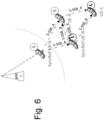
- Figure 6 shows a schematic representation of another sidelink synchronization chain. A method is described to determine whether to operate a UE-X as a SyncRef UE.
- the UE-X may monitor a SL synchronization resource pool in a S-SSB period to receive S-SSBs from SyncRef UEs (e.g. following Rel.16 legacy procedures).
- the UE-X may determine that the UE-X is the synchronization coverage of at least two SyncRef UEs.
- the UE-X may determine that a second SyncRef UE-B extends the synchronization coverage of a first SyncRef UE-A.
- the UE-X may determine that the second SyncRef UE-B extends the synchronization coverage of the first SyncRef UE-A based on the SLSS ID and inCoverage indicator indicated in the S-SSBs received from the first SyncRef UE-A and the second SyncRef UE-B.
- the first SyncRef UE-A may be one hop away from a gNB.
- the first SyncRef UE-A may be in coverage of the gNB and the second SyncRef UE-B may be out of coverage of the gNB and extends the synchronization coverage of the first SyncRef UE-A (i.e. the first SyncRef UE is selected as a source for the second SyncRef UE-B), the second SyncRef UE-B may use the same SLSS ID (e.g. x) than the first SyncRef UE-A.
- a S-SSB from the first SyncRef UE-A may comprise an inCoverage set to true in MIB-SL and a SLSS ID comprised between 1 and 335.
- the first SyncRef UE-B may be two hops away from a gNB.
- the first SyncRef UE-B may be out of coverage of the gNB and the second SyncRef UE-C may be out of coverage of the gNB as well.
- the second SyncRef UE-C may use a different SLSS ID (e.g. x +336) than the first SyncRef UE-B.
- a S-SSB from the first SyncRef UE may comprise an inCoverage set to false in MIB-SL and a SLSS ID comprised between 1 and 335.
- the UE-X may determine a first synchronization error between the first SyncRef UE-A and the second SyncRef UE-B and a second sync error between the first SyncRef UE-A source and the UE-X.
- the first synchronization error may be due to the second SyncRef UE-B.
- the second synchronization error may be due to the UE-X
- the UE-X may determine the first synchronization error based on the S-SSBs received from the first SyncRef UE-A and the second SyncRef UE-B.
- the UE-X may compare the S-SSBs received from the first SyncRef UE-A and the second SyncRef UE-B.
- the UE-X may evaluate how stable the timing of the S-SSBs received from the first SyncRef UE-A is compared to the timing of the S-SSBs received from the first SyncRef UE-B.
- the UE-X may determine a synchronization misalignment between the first SyncRef UE-A and the second SyncRef UE-B.
- the UE-X may identify the misalignment in DFN boundaries indicated by the S-SSBs received from the SyncRef UE-A and the SyncRef UE-B as the first synchronization error.
- the UE-X may determine the second synchronization error based on the S-SSB received from the first SyncRef UE-A and/or the UE-X's own level of accuracy.
- the UE-X may already be aware of (e.g. based on UE capability or hardware limitations) the synchronization error it may introduce while extending the synchronization coverage of a SyncRef source. Then, this synchronization error may be considered as the second synchronization error by the UE-X.
- the UE-X may determine whether to operate as a SyncRef UE (i.e. transmit SL synchronization information in a S-SSB) and extend the synchronization coverage of the first SyncRef UE-A based on the first synchronization error and the second synchronization error.
- a SyncRef UE i.e. transmit SL synchronization information in a S-SSB
- the UE-X may operate as a SyncRef UE (i.e. transmit SL synchronization information in a S-SSB) and extend the synchronization coverage of the first SyncRef UE-A.
- an additional condition may be used to determine whether to extend the synchronization coverage of the first SyncRef UE-A.
- the UE-X may operate as a SyncRef UE and may extend the synchronization coverage of the SyncRef UE-A.
- the PSBCH-RSRP-threshold the higher the first synchronization error, the lower is the PSBCH-RSRP-threshold.
- the UE-X may operate as a SyncRef UE and may extend the synchronization coverage of the SyncRef UE-A.
- the higher the error difference the lower is the PSBCH-RSRP-threshold.
- the UE-X may not operate as a SyncRef UE (i.e. transmit SL synchronization information in a S-SSB) and may not extend the synchronization coverage of the first SyncRef UE-A.
- the UE-X may stop operating as a SyncRef UE (i.e. transmit SL synchronization information in a S-SSB) and may stop extending the synchronization coverage of the first SyncRef UE-A.
- step 5 assuming that the UE-X determines to operate as a SyncRef UE (i.e. transmit SL synchronization information in a S-SSB) and extend the synchronization coverage of the first SyncRef UE-A, the UE-X may determine SL synchronization information and transmission parameters of a S-SSB.
- a SyncRef UE i.e. transmit SL synchronization information in a S-SSB
- the UE-X may determine SL synchronization information and transmission parameters of a S-SSB.
- the UE-X may change the inCoverage indicator and/or SLSS ID to be part of a higher or lower priority group and therefore to increase or decrease the probability of being selected as a source by a neighbouring UE.
- the priority group of a SyncRef UE may be determined using the inCoverage indicator and/or SLSS ID. For example, a SyncRef UE with an inCoverage indicator set to 1 is considered to be part of a higher priority group than a SyncRef UE with an inCoverage indicator set to 0, and vice versa.
- the UE-X determines to operate as a SyncRef UE (i.e.
- the UE-X may increase or decrease a transmission power of the UE-X in order to more or less likely to be selected as a source by neighboring UE for providing a SL time reference.
- the UE may operate as a SyncRef UE (i.e. transmit SL synchronization information in a S-SSB) and extend the synchronization coverage of the first SyncRef UE-A.
- a SyncRef UE i.e. transmit SL synchronization information in a S-SSB
- the SL synchronization information may comprise a cause indicator (e.g. one bit) indicating a cause for operating as a SyncRef UE (i.e. transmit SL synchronization information in a S-SSB) and extending the synchronization coverage of the first SyncRef UE-A.
- the cause may be that the UE-X provides a reduced synchronization error compared to the second SyncRef UE-B (i.e. the second synchronization error is lower than the first synchronization error by a threshold).
- the cause indicator may be useful in that a neighboring UE may preferably select the UE-X as a source to provide a SL timing reference because the cause indicator implicitly or explicitly indicates a higher synchronization accuracy and stability than the second SyncRef UE-B.
- the SL synchronization information may comprise an availability indicator (e.g. one bit) indicating an availability of the second SyncRef UE-B extending the synchronization coverage of the first SyncRef UE-A.
- an availability indicator e.g. one bit
- the UE-X may establish sidelink relay connection with the UE-C and provide RTI via SIB9 forwarding.
- the UE-C may preferably select the UE-X as a source to provide a SL timing reference.
- the UE-X determines to operate as a SyncRef UE (i.e. transmit SL synchronization information in a S-SSB) and extend the synchronization coverage of the first SyncRef UE-A when the second SyncRef UE-B is observed to be increasing a synchronization inaccuracy compared to the UE-X.
- the above method is particularly beneficial when the first SyncRef UE-A is in coverage of the gNB or in case the SL synchronization chain up to three hops when the first SyncRef UE-A is in coverage of the gNB.
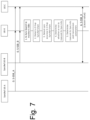
- Figure 7 shows a signaling diagram of a process for determining whether to operate a UE-X (S-SSB_X on Figure 7 ) as a SL synchronization reference UE.
- the SyncRef UE-A may transmit a S-SSB A (S-SSB_A on Figure 7 ) with a SLSS ID set to x and an inCoverage indicator set to 1.
- the second SyncRef UE-B (S-SSB_B on Figure 7 ) may be synchronized with the first SyncRef UE-A and may extend the synchronization coverage of the first SyncRef UE-A.
- the second SyncRef UE-B may transmit a S-SSB B with a SLSS ID set to x and an inCoverage indicator set to 0.
- the UE-X may receive the S-SSB A and the S-SSB B transmitted by the first SyncRef UE-A and the second SyncRef UE-B (e.g. as per the Release-16 legacy procedure).
- the UE-X may perform a SL synchronization search during each S-SSB period when there is no gNB/eNB or GNSS available to be selected as a source for providing a SL timing reference.
- the UE-X may determine that the UE-X is in synchronization coverage of the first SyncRef UE-A and the second SyncRef UE-B.
- the UE-X may determine that the second SyncRef UE-B extends the synchronization coverage of first SyncRef UE-A.
- the UE-X may determine that the same SLSS ID (i.e. ⁇ x') is used by the first SyncRef UE-A and the second SyncRef UE-B and a change in inCoverage indicator (from 1 to 0).
- the UE-X may determine a first synchronization error between the first SyncRef UE-A and the second SyncRef UE-B and a second synchronization error between the first SyncRef UE-A and the UE-X.
- the UE-X may determine whether to operate as a SyncRef UE (i.e. transmit SL synchronization information in a S-SSB X) and extend the synchronization coverage of the SyncRef UE-A.
- the UE may operate as a SL synchronization reference UE (i.e. transmit SL synchronization information in a S-SSB X) and may extend the synchronization coverage of the SyncRef UE-A.
- step 5 assuming that the UE-X determines to operate as a SyncRef UE (i.e. transmit SL synchronization information in a S-SSB X) and extend the synchronization coverage of the SyncRef UE-A, the UE-X may determine SL synchronization information and transmission parameters of a S-SSB.
- a SyncRef UE i.e. transmit SL synchronization information in a S-SSB X
- the UE-X may determine SL synchronization information and transmission parameters of a S-SSB.
- the UE-X may operate as a SyncRef UE (i.e. transmit SL synchronization information in a S-SSB X) and extend the synchronization coverage of the SyncRef UE-A.
- the SL synchronization information may comprise a cause indicator (e.g. one bit) indicating a cause for operating as a SyncRef UE (i.e. transmit SL synchronization information in a S-SSB) and extending the synchronization coverage of the first SyncRef UE-A.
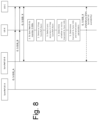
- Figure 8 shows a signaling diagram of another process for determining whether to operate a UE-X as a SL synchronization reference UE.
- the SyncRef UE-X may already operate as a SL synchronization reference UE (i.e. transmit SL synchronization information in a S-SSB) and may extend the synchronization coverage of the SyncRef UE-A.
- the SyncRef UE-A may transmit a S-SSB A with a SLSS ID set to x and an inCoverage indicator set to 1.
- the second SyncRef UE-B may be synchronized with the first SyncRef UE-A and may extend the synchronization coverage of the first SyncRef UE-A.
- the second SyncRef UE-B may transmit a S-SSB B with a SLSS ID set to x and an inCoverage indicator set to 0.
- the SyncRef UE-X may also be synchronized with the first SyncRef UE-A and may extend the synchronization coverage of the first SyncRef UE-A.
- the SyncRef UE-X may transmit a S-SSB X with a SLSS ID set to x and an inCoverage indicator set to 0.
- the UE-X may receive the S-SSB A and the S-SSB B transmitted by the first SyncRef UE-A and the second SyncRef UE-B (e.g. as per the Release-16 legacy procedure).
- the UE-X may perform a SL synchronization search during each S-SSB period when there is no gNB/eNB or GNSS available to be selected as a source for providing a SL timing reference.
- the UE-X may determine that the UE-X is in synchronization coverage of the first SyncRef UE-A and the second SyncRef UE-B.
- the UE-X may determine that the second SyncRef UE-B extends the synchronization coverage of first SyncRef UE-A.
- the UE-X may determine that the same SLSS ID (i.e. ⁇ x') is used by the first SyncRef UE-A and the second SyncRef UE-B and a change in inCoverage indicator (from 1 to 0).
- the UE-X may determine a first synchronization error between the first SyncRef UE-A and the second SyncRef UE-B and a second synchronization error between the first SyncRef UE-A and the UE-X.
- the UE-X may determine whether to operate as a SyncRef UE (i.e. transmit SL synchronization information in a S-SSB X) and extend the synchronization coverage of the SyncRef UE-A.
- the UE may stop operating as a SL synchronization reference UE (i.e. transmitting SL synchronization information in a S-SSB X) and may stop extending the synchronization coverage of the SyncRef UE-A.
- the UE may continue operating as a SL synchronization reference UE (i.e. transmitting SL synchronization information in a S-SSB X) and may continue extending the synchronization coverage of the SyncRef UE-A.
- the UE-X may determine SL synchronization information and transmission parameters of a S-SSB.
- the UE-X may adjust the SL synchronization information and/or a transmission parameter of a S-SSB to reduce the probability of being selected as a source by a neighboring UE.
- the UE-X may continue operating as a SyncRef UE (i.e. transmit SL synchronization information in a S-SSB X) and extending the synchronization coverage of the SyncRef UE-A.
- the SL synchronization information may comprise an availability cause indicator (e.g. one bit) indicating the availability of the second SyncRef UE-B that is extending the synchronization coverage of the first SyncRef UE-A.
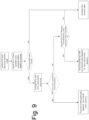
- Figure 9 shows a flow chart of a process for determining whether to operate as a SL SyncRef UE in a communication system as per Figures 7 and 8 .
- One or more aspects of this disclosure enable accurate and stable UE to operate as a SyncRef UE and extend the synchronization coverage of a first SyncRef UE when a second SyncRef UE in the vicinity is already extending the synchronization coverage of a first SyncRef UE but is introducing synchronization inaccuracy and instability. This prevents synchronization inaccuracy and instability being carried down in a synchronization chain and avoids compounding of synchronization inaccuracies and instabilities along the synchronization chain. This allows to cater IloT devices which demand very higher synchronization accuracy and stability.
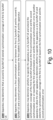
- Figure 10 shows a block diagram of a method for determining whether to operate as a SL SyncRef UE in a communication system. The method is performed by an apparatus (e.g. UE-X).
- an apparatus e.g. UE-X
- step 1000 the apparatus determines that a second SL SyncRef UE (e.g. SL SyncRef UE-B) extends synchronization coverage of a first SL SyncRef UE (e.g. SL SyncRef UE-A).
- a second SL SyncRef UE e.g. SL SyncRef UE-B
- a first SL SyncRef UE e.g. SL SyncRef UE-A
- step 1002 the apparatus determines a first synchronization error between the first SL SyncRef UE and the second SL SyncRef UE and a second synchronization error between the first SL SyncRef UE and the apparatus.
- step 1004 the apparatus determines whether to operate the apparatus as a SL SyncRef UE and extend the synchronization coverage of the first SL SyncRef UE based on the first synchronization error and the second synchronization error.
- the apparatus reports the first synchronization error and the second synchronization error to another apparatus to allow the other apparatus to determine whether to operate the apparatus as a SL SyncRef UE and extend the synchronization coverage of the first SL SyncRef UE based on the first synchronization error and the second synchronization error.
- the other apparatus may be a UE, a road side unit, a base station or other.
- the apparatus receives an indication from the other apparatus to operate the apparatus as a SL SyncRef UE and extend the synchronization coverage of the first SL SyncRef UE.
- the apparatus may determine to operate the apparatus as a SL SyncRef UE and extend the synchronization coverage of the first SL SyncRef UE based on the indication.
- the first sidelink SL SyncRef UE may be in coverage or out of coverage of a BS or a GNSS.
- Determining that the second SL SyncRef UE extends the synchronization coverage of the first SL SyncRef UE may be based on at least one of: a first sidelink synchronization identifier transmitted by the first SL SyncRef UE; a second sidelink synchronization identifier transmitted by the second SL SyncRef UE; a first in coverage indicator indicating whether the first SL SyncRef UE is in coverage of a BS or a GNSS; or a second in coverage indicator indicating whether the second SL SyncRef UE is in coverage of a BS or a GNSS.
- Determining that the second SL SyncRef UE extends the synchronization coverage of the first SL SyncRef UE may comprise: determining that the second sidelink synchronization identifier of the second SL SyncRef UE is the same as the first sidelink synchronization identifier of the first SL SyncRef UE; determining that the first in coverage indicator of the first SL SyncRef UE indicates that the first SL SyncRef UE is in coverage of a base station or a global navigation synchronization system; and determining that the second in coverage indicator of the second SL SyncRef UE indicates that the second SL SyncRef UE is out of coverage of a BS or a GNSS.
- Determining that the second SL SyncRef UE extends the synchronization coverage of the first SL SyncRef UE may comprise: determining that the second sidelink synchronization identifier of the second SL SyncRef UE is equal to the first sidelink synchronization identifier of the first SL SyncRef UE plus a known value; determining that the first in coverage indicator of the first SL SyncRef UE indicates that the first SL SyncRef UE is out of coverage of a base station or a global navigation synchronization system; and determining that the second in coverage indicator of the second SL SyncRef UE indicates that the second SL SyncRef UE is out of coverage of a BS or a GNSS.
- Determining the first synchronization error between the first SL SyncRef UE and the second SL SyncRef UE may comprise: receiving a first SLSS in a first S-SSB from the first SL SyncRef UE; receiving a second SLSS in a second S-SSB from the second SL SyncRef UE; and determining the first synchronization error based on the first SLSS and the second SLSS.
- Determining the second synchronization error between the first SL SyncRef UE and the apparatus may be based on a first SLSS and/or a level of synchronization accuracy of the apparatus.
- Determining whether to operate the apparatus as a SL SyncRef UE and extend the synchronization coverage of the first SL SyncRef UE based on the first synchronization error and the second synchronization error may comprise: determining that the second synchronization error is greater than the first synchronization error by a threshold; and determining to not operate the apparatus as a SL SyncRef UE and not extend the synchronization coverage of the first SL SyncRef UE.
- Determining to not operate the apparatus as a SL SyncRef UE and not extend the synchronization coverage of the first s SL SyncRef UE may comprise: determining to stop operating the apparatus as a SL SyncRef UE and to stop extending the synchronization coverage of the first SL SyncRef UE.
- Determining whether to operate the apparatus as a SL SyncRef UE and extend the synchronization coverage of the first SL SyncRef UE based on the first synchronization error and the second synchronization error may comprise: determining that the second synchronization error is greater than the first synchronization error by a threshold; and determining to operate the apparatus as a SL SyncRef UE and extend the synchronization coverage of the first SL SyncRef UE.
- Determining whether to operate the apparatus as a SL SyncRef UE and extend the synchronization coverage of the first SL SyncRef UE based on the first synchronization error and the second synchronization error may comprise: determining that the second synchronization error is lower than the first synchronization error by a threshold; and determine to operate the apparatus as a SL SyncRef UE and extend the synchronization coverage of the first SL SyncRef UE.
- Determining whether to operate the apparatus as a SL SyncRef UE and extend the synchronization coverage of the first SL SyncRef UE based on the first synchronization error and the second synchronization error may further comprise: determining that a signal for the second SL SyncRef UE is lower than a signal threshold, wherein the signal threshold is dependent on the first synchronization error or on a difference between the first synchronization error and the second synchronization error; and determine to operate the apparatus as a SL SyncRef UE and extend the synchronization coverage of the first SL SyncRef UE.
- the apparatus may adjusting at least one sidelink synchronization information or transmission parameter of a S-SSB to increase or reduce the probability of being selected as a synchronization source by a neighboring user equipment.
- the sidelink synchronization information may comprise an in coverage indicator a or a SLSS ID.
- the transmission parameter may comprise a transmission power.
- Adjusting at least one sidelink synchronization information or transmission parameter to increase or reduce the probability of being selected as a synchronization source by a neighboring user equipment may comprise: changing an in coverage indicator to indicate that the apparatus is in coverage of a BS or a GNSS to increase the probability of being selected as a synchronization source by a neighboring user equipment; changing an in coverage indicator to indicate that the apparatus is out of coverage of a BS or a GNSS to reduce the probability of being selected as a synchronization source by a neighboring user equipment; increasing a transmission power to increase the probability of being selected as a synchronization source by a neighboring user equipment; or reducing a transmission power to reduce the probability of being selected as a synchronization source by a neighboring user equipment.
- Operating the apparatus as SyncRef UE may comprise: transmitting sidelink synchronization information in a S-SSB.
- the sidelink synchronization information may comprise at least one of a SLSS or PSBCH.
- the SLSS may comprise at least one of a S-PSS or a S-SSS.
- Extending the synchronization coverage of the first SyncRef UE may comprise: selecting the first SyncRef UE as a synchronization source to provide a sidelink timing reference.
- Operating the apparatus as SyncRef UE may comprise: transmitting a cause indicator indicating a cause for operating the apparatus as SyncRef UE; and/or transmitting an availability indicator indicating the availability of the second SyncRef UE extending the synchronization coverage of the first SyncRef UE.
- the cause may comprise that the apparatus provides a reduced synchronization error compared to the second SyncRef UE (i.e the second synchronization error is lower than the first synchronization error by a threshold).
- Figure 11 shows a schematic representation of non-volatile memory media 1100 storing instructions and/or parameters which when executed by a processor allow the processor to perform one or more of the steps of the method of Figure 10 .
- some embodiments may be implemented in hardware or special purpose circuits, software, logic or any combination thereof.
- some aspects may be implemented in hardware, while other aspects may be implemented in firmware or software which may be executed by a controller, microprocessor or other computing device, although embodiments are not limited thereto.
- firmware or software which may be executed by a controller, microprocessor or other computing device, although embodiments are not limited thereto. While various embodiments may be illustrated and described as block diagrams, flow charts, or using some other pictorial representation, it is well understood that these blocks, apparatus, systems, techniques or methods described herein may be implemented in, as non-limiting examples, hardware, software, firmware, special purpose circuits or logic, general purpose hardware or controller or other computing devices, or some combination thereof.
- the embodiments may be implemented by computer software stored in a memory and executable by at least one data processor of the involved entities or by hardware, or by a combination of software and hardware. Further in this regard it should be noted that any procedures, e.g., as in Figure 10 , may represent program steps, or interconnected logic circuits, blocks and functions, or a combination of program steps and logic circuits, blocks and functions.
- the software may be stored on such physical media as memory chips, or memory blocks implemented within the processor, magnetic media such as hard disk or floppy disks, and optical media such as for example DVD and the data variants thereof, CD.
- the memory may be of any type suitable to the local technical environment and may be implemented using any suitable data storage technology, such as semiconductor-based memory devices, magnetic memory devices and systems, optical memory devices and systems, fixed memory and removable memory.
- the data processors may be of any type suitable to the local technical environment, and may include one or more of general purpose computers, special purpose computers, microprocessors, digital signal processors (DSPs), application specific integrated circuits (ASIC), gate level circuits and processors based on multi-core processor architecture, as non-limiting examples.
- circuitry may be configured to perform one or more of the functions and/or method steps previously described. That circuitry may be provided in the base station and/or in the communications device.
- circuitry may refer to one or more or all of the following:
- circuitry also covers an implementation of merely a hardware circuit or processor (or multiple processors) or portion of a hardware circuit or processor and its (or their) accompanying software and/or firmware.
- circuitry also covers, for example integrated device.
Landscapes
- Engineering & Computer Science (AREA)
- Computer Networks & Wireless Communication (AREA)
- Signal Processing (AREA)
- Mobile Radio Communication Systems (AREA)
Claims (16)
- Vorrichtung, die Folgendes umfasst:Mittel zum Bestimmen (1000), dass eine zweite Sidelinksynchronisationsreferenzteilnehmereinrichtung eine Synchronisationsabdeckung einer ersten Sidelinksynchronisationsreferenzteilnehmereinrichtung erweitert;Mittel zum Bestimmen (1002) eines ersten Synchronisationsfehlers zwischen der ersten Sidelinksynchronisationsreferenzteilnehmereinrichtung und der zweiten Sidelinksynchronisationsreferenzteilnehmereinrichtung und eines zweiten Synchronisationsfehlers zwischen der ersten Sidelinksynchronisationsreferenzteilnehmereinrichtung und der Vorrichtung; undMittel zum Bestimmen (1004), ob die Vorrichtung als eine Sidelinksynchronisationsreferenzteilnehmereinrichtung zu betreiben und die Synchronisationsabdeckung der ersten Sidelinksynchronisationsreferenzteilnehmereinrichtung auf Basis des ersten Synchronisationsfehlers und des zweiten Synchronisationsfehlers zu erweitern ist, oder Mittel zum Melden des ersten Synchronisationsfehlers und des zweiten Synchronisationsfehlers bei einer anderen Vorrichtung, um es der anderen Vorrichtung zu erlauben zu bestimmen, ob die Vorrichtung als eine Sidelinksynchronisationsreferenzteilnehmereinrichtung zu betreiben und die Synchronisationsabdeckung der ersten Sidelinksynchronisationsreferenzteilnehmereinrichtung auf Basis des ersten Synchronisationsfehlers und des zweiten Synchronisationsfehlers zu erweitern ist.
- Vorrichtung nach Anspruch 1, wobei das Bestimmen (1000), dass eine zweite Sidelinksynchronisationsreferenzteilnehmereinrichtung die Synchronisationsabdeckung der ersten Sidelinksynchronisationsreferenzteilnehmereinrichtung erweitert, auf mindestens einem von Folgendem basiert:einer ersten Sidelinksynchronisationskennung, die von der ersten Sidelinksynchronisationsreferenzteilnehmereinrichtung übertragen wird;einer zweiten Sidelinksynchronisationskennung, die von der zweiten Sidelinksynchronisationsreferenzteilnehmereinrichtung übertragen wird;einem ersten Abdeckungsindikator, der anzeigt, ob die erste Sidelinksynchronisationsreferenzteilnehmereinrichtung von einer Basisstation oder einem globalen Navigationssynchronisationssystem abgedeckt wird; odereinem zweiten Abdeckungsindikator, der anzeigt, ob die zweite Sidelinksynchronisationsreferenzteilnehmereinrichtung von einer Basisstation oder einem globalen Navigationssynchronisationssystem abgedeckt wird.
- Vorrichtung nach Anspruch 1 oder Anspruch 2, wobei das Bestimmen (1002) des ersten Synchronisationsfehlers zwischen der ersten Sidelinksynchronisationsreferenzteilnehmereinrichtung und der zweiten Sidelinksynchronisationsreferenzteilnehmereinrichtung Folgendes umfasst:Empfangen eines ersten Sidelinksynchronisationssignals in einem ersten Sidelinksynchronisationssignalblock von der ersten Sidelinksynchronisationsreferenzteilnehmereinrichtung;Empfangen eines zweiten Sidelinksynchronisationssignals in einem zweiten Sidelinksynchronisationssignalblock von der zweiten Sidelinksynchronisationsreferenzteilnehmereinrichtung; undBestimmen des ersten Synchronisationsfehlers auf Basis des ersten Sidelinksynchronisationssignals und des zweiten Sidelinksynchronisationssignals.
- Vorrichtung nach einem der Ansprüche 1 bis 3, wobei das Bestimmen (1002) des zweiten Synchronisationsfehlers zwischen der ersten Sidelinksynchronisationsreferenzteilnehmereinrichtung und der Vorrichtung auf einem ersten Sidelinksynchronisationssignal und/oder einem Maß einer Synchronisationsgenauigkeit der Vorrichtung basiert.
- Vorrichtung nach einem der Ansprüche 1 bis 4, wobei das Bestimmen (1004), ob die Vorrichtung als eine Sidelinksynchronisationsreferenzteilnehmereinrichtung zu betreiben und die Synchronisationsabdeckung der ersten Sidelinksynchronisationsreferenzteilnehmereinrichtung auf Basis des ersten Synchronisationsfehlers und des zweiten Synchronisationsfehlers zu erweitern ist, Folgendes umfasst:Bestimmen, dass der zweite Synchronisationsfehler um einen Schwellwert größer ist als der erste Synchronisationsfehler; undBestimmen, die Vorrichtung nicht als eine Sidelinksynchronisationsreferenzteilnehmereinrichtung zu betreiben und die Synchronisationsabdeckung der ersten Sidelinksynchronisationsreferenzteilnehmereinrichtung nicht zu erweitern.
- Vorrichtung nach Anspruch 5, wobei das Bestimmen, die Vorrichtung nicht als eine Sidelinksynchronisationsreferenzteilnehmereinrichtung zu betreiben und die Synchronisationsabdeckung der ersten Sidelinksynchronisationsreferenzteilnehmereinrichtung nicht zu erweitern, Folgendes umfasst:
Bestimmen, das Betreiben der Vorrichtung als eine Sidelinksynchronisationsreferenzteilnehmereinrichtung zu beenden und das Erweitern der Synchronisationsabdeckung der ersten Sidelinksynchronisationsreferenzteilnehmereinrichtung zu beenden. - Vorrichtung nach einem der Ansprüche 1 bis 4, wobei das Bestimmen (1004), ob die Vorrichtung als eine Sidelinksynchronisationsreferenzteilnehmereinrichtung zu betreiben und die Synchronisationsabdeckung der ersten Sidelinksynchronisationsreferenzteilnehmereinrichtung auf Basis des ersten Synchronisationsfehlers und des zweiten Synchronisationsfehlers zu erweitern ist, Folgendes umfasst:Bestimmen, dass der zweite Synchronisationsfehler um einen Schwellwert größer ist als der erste Synchronisationsfehler; undBestimmen, die Vorrichtung als eine Sidelinksynchronisationsreferenzteilnehmereinrichtung zu betreiben und die Synchronisationsabdeckung der ersten Sidelinksynchronisationsreferenzteilnehmereinrichtung zu erweitern.
- Vorrichtung nach einem der Ansprüche 1 bis 4, wobei das Bestimmen (1004), ob die Vorrichtung als eine Sidelinksynchronisationsreferenzteilnehmereinrichtung zu betreiben und die Synchronisationsabdeckung der ersten Sidelinksynchronisationsreferenzteilnehmereinrichtung auf Basis des ersten Synchronisationsfehlers und des zweiten Synchronisationsfehlers zu erweitern ist, Folgendes umfasst:Bestimmen, dass der zweite Synchronisationsfehler um einen Schwellwert kleiner ist als der erste Synchronisationsfehler; undBestimmen, die Vorrichtung als eine Sidelinksynchronisationsreferenzteilnehmereinrichtung zu betreiben und die Synchronisationsabdeckung der ersten Sidelinksynchronisationsreferenzteilnehmereinrichtung zu erweitern.
- Vorrichtung nach Anspruch 8, wobei das Bestimmen (1004), ob die Vorrichtung als eine Sidelinksynchronisationsreferenzteilnehmereinrichtung zu betreiben und die Synchronisationsabdeckung der ersten Sidelinksynchronisationsreferenzteilnehmereinrichtung auf Basis des ersten Synchronisationsfehlers und des zweiten Synchronisationsfehlers zu erweitern ist, ferner Folgendes umfasst:Bestimmen, dass ein Signal für die zweite Sidelinksynchronisationsreferenzteilnehmereinrichtung kleiner ist als ein Signalschwellwert, wobei der Signalschwellwert vom ersten Synchronisationsfehler oder von einer Differenz zwischen dem ersten Synchronisationsfehler und dem zweiten Synchronisationsfehler abhängig ist; undBestimmen, die Vorrichtung als eine Sidelinksynchronisationsreferenzteilnehmereinrichtung zu betreiben und die Synchronisationsabdeckung der ersten Sidelinksynchronisationsreferenzteilnehmereinrichtung zu erweitern.
- Vorrichtung nach einem der Ansprüche 1 bis 9, die Folgendes umfasst:
Mittel zum Anpassen mindestens von Sidelinksynchronisationsinformationen oder einem Übertragungsparameter eines Sidelinksynchronisationssignalblocks, um die Wahrscheinlichkeit, von einer benachbarten Teilnehmereinrichtung als eine Synchronisationsquelle ausgewählt zu werden, zu erhöhen oder zu verringern. - Vorrichtung nach Anspruch 10, wobei das Anpassen mindestens von Sidelinksynchronisationsinformationen oder einem Übertragungsparameter, um die Wahrscheinlichkeit, von einer benachbarten Teilnehmereinrichtung als eine Synchronisationsquelle ausgewählt zu werden, zu erhöhen oder zu verringern, Folgendes umfasst:Ändern eines Abdeckungsindikators zum Anzeigen, dass die Vorrichtung von einer Basisstation oder einem globalen Navigationssynchronisationssystem abgedeckt wird, um die Wahrscheinlichkeit, von einer benachbarten Teilnehmereinrichtung als eine Synchronisationsquelle ausgewählt zu werden, zu erhöhen;Ändern eines Abdeckungsindikators zum Anzeigen, dass die Vorrichtung nicht von einer Basisstation oder einem globalen Navigationssynchronisationssystem abgedeckt wird, um die Wahrscheinlichkeit, von einer benachbarten Teilnehmereinrichtung als eine Synchronisationsquelle ausgewählt zu werden, zu verringern;Erhöhen einer Übertragungsleistung, um die Wahrscheinlichkeit, von einer benachbarten Teilnehmereinrichtung als eine Synchronisationsquelle ausgewählt zu werden, zu erhöhen; oderVerringern einer Übertragungsleistung, um die Wahrscheinlichkeit, von einer benachbarten Teilnehmereinrichtung als eine Synchronisationsquelle ausgewählt zu werden, verringern.
- Vorrichtung nach einem der Ansprüche 1 bis 11, wobei das Betreiben der Vorrichtung als eine Synchronisationsreferenzteilnehmereinrichtung Folgendes umfasst:
Übertragen von Sidelinksynchronisationsinformationen in einem Sidelinksynchronisationssignalblock. - Vorrichtung nach Anspruch 12, wobei das Betreiben der Vorrichtung als eine Synchronisationsreferenzteilnehmereinrichtung Folgendes umfasst:Übertragen eines Grundindikators, der einen Grund für das Betreiben der Vorrichtung als eine Synchronisationsreferenzteilnehmereinrichtung anzeigt; und/oderÜbertragen eines Verfügbarkeitsindikators, der die Verfügbarkeit der zweiten Synchronisationsreferenzteilnehmereinrichtung anzeigt, die die Synchronisationsabdeckung der ersten Synchronisationsreferenzteilnehmereinrichtung erweitert.
- Vorrichtung nach einem der Ansprüche 1 bis 13, wobei die Mittel Folgendes umfassen: mindestens einen Prozessor; und mindestens einen Speicher, in dem Anweisungen gespeichert sind, die, wenn sie von dem mindestens einen Prozessor ausgeführt werden, die Durchführung der Vorrichtung veranlassen.
- Verfahren, das Folgendes umfasst:Bestimmen (1000), dass eine zweite Sidelinksynchronisationsreferenzteilnehmereinrichtung eine Synchronisationsabdeckung einer ersten Sidelinksynchronisationsreferenzteilnehmereinrichtung erweitert;Bestimmen (1002) eines ersten Synchronisationsfehlers zwischen der ersten Sidelinksynchronisationsreferenzteilnehmereinrichtung und der zweiten Sidelinksynchronisationsreferenzteilnehmereinrichtung und eines zweiten Synchronisationsfehlers zwischen der ersten Sidelinksynchronisationsreferenzteilnehmereinrichtung und der Vorrichtung; undBestimmen (1004), ob die Vorrichtung als eine Sidelinksynchronisationsreferenzteilnehmereinrichtung zu betreiben und die Synchronisationsabdeckung der ersten Sidelinksynchronisationsreferenzteilnehmereinrichtung auf Basis des ersten Synchronisationsfehlers und des zweiten Synchronisationsfehlers zu erweitern ist, oder Melden des ersten Synchronisationsfehlers und des zweiten Synchronisationsfehlers bei einer anderen Vorrichtung, um es der anderen Vorrichtung zu erlauben zu bestimmen, ob die Vorrichtung als eine Sidelinksynchronisationsreferenzteilnehmereinrichtung zu betreiben und die Synchronisationsabdeckung der ersten Sidelinksynchronisationsreferenzteilnehmereinrichtung auf Basis des ersten Synchronisationsfehlers und des zweiten Synchronisationsfehlers zu erweitern ist.
- Computerprogramm, das computerausführbare Anweisungen umfasst, die, wenn sie auf einem oder mehreren Prozessoren ausgeführt werden, die Schritte des Verfahrens nach Anspruch 15 durchführen.
Priority Applications (2)
| Application Number | Priority Date | Filing Date | Title |
|---|---|---|---|
| EP22172946.0A EP4277372B1 (de) | 2022-05-12 | 2022-05-12 | Vorrichtung, verfahren und computerprogramm |
| US18/195,594 US12610331B2 (en) | 2022-05-12 | 2023-05-10 | Apparatus, method, and computer program for use in sidelink synchronization |
Applications Claiming Priority (1)
| Application Number | Priority Date | Filing Date | Title |
|---|---|---|---|
| EP22172946.0A EP4277372B1 (de) | 2022-05-12 | 2022-05-12 | Vorrichtung, verfahren und computerprogramm |
Publications (2)
| Publication Number | Publication Date |
|---|---|
| EP4277372A1 EP4277372A1 (de) | 2023-11-15 |
| EP4277372B1 true EP4277372B1 (de) | 2024-08-14 |
Family
ID=81648845
Family Applications (1)
| Application Number | Title | Priority Date | Filing Date |
|---|---|---|---|
| EP22172946.0A Active EP4277372B1 (de) | 2022-05-12 | 2022-05-12 | Vorrichtung, verfahren und computerprogramm |
Country Status (2)
| Country | Link |
|---|---|
| US (1) | US12610331B2 (de) |
| EP (1) | EP4277372B1 (de) |
Families Citing this family (1)
| Publication number | Priority date | Publication date | Assignee | Title |
|---|---|---|---|---|
| WO2025086149A1 (zh) * | 2023-10-25 | 2025-05-01 | 上海移远通信技术股份有限公司 | 用于无线通信的节点中的方法和装置 |
Family Cites Families (11)
| Publication number | Priority date | Publication date | Assignee | Title |
|---|---|---|---|---|
| US9763208B2 (en) * | 2014-03-21 | 2017-09-12 | Samsung Electronics Co., Ltd. | Method and apparatus for supporting synchronization in D2D communication |
| US10091746B2 (en) * | 2015-05-14 | 2018-10-02 | Industrial Technology Research Institute | Synchronization source device for synchronization coverage extension and method and system using the same |
| US10785735B2 (en) | 2017-10-02 | 2020-09-22 | Apple Inc. | Vehicle to everything synchronization reference selection and reselection |
| WO2019154518A1 (en) * | 2018-02-12 | 2019-08-15 | Intel IP Corporation | Methods and devices for device-to-device communications |
| EP3629639A1 (de) * | 2018-09-28 | 2020-04-01 | Intel IP Corporation | Verfahren und vorrichtung für kommunikationen in vorrichtung-zu-vorrichtung-netzwerken |
| DE112019005501T5 (de) * | 2018-11-02 | 2021-09-23 | Lg Electronics Inc. | Verfahren zum senden und empfangen von synchronisationssignalen in drahtloser kommunikation zwischen endgeräten und vorrichtung dafür |
| US11641629B2 (en) | 2020-01-10 | 2023-05-02 | Qualcomm Incorporated | Sidelink synchronization assistance |
| CN115136682A (zh) | 2020-02-11 | 2022-09-30 | 三星电子株式会社 | 用于在无线通信系统中发送和接收广播信息的方法和装置 |
| WO2021162709A1 (en) | 2020-02-14 | 2021-08-19 | Nokia Technologies Oy | Synchronization priority for sidelink wireless communications |
| US11778572B2 (en) * | 2020-05-22 | 2023-10-03 | Qualcomm Incorporated | Lite SL-SS (sidelink synchronization signal) transmission for on demand S-SSB (sidelink synchronization signal block) |
| US12041564B2 (en) | 2020-05-22 | 2024-07-16 | Qualcomm Incorporated | Demand and response for sidelink synchronization signal block (S-SSB) transmission |
-
2022
- 2022-05-12 EP EP22172946.0A patent/EP4277372B1/de active Active
-
2023
- 2023-05-10 US US18/195,594 patent/US12610331B2/en active Active
Also Published As
| Publication number | Publication date |
|---|---|
| US20230370986A1 (en) | 2023-11-16 |
| US12610331B2 (en) | 2026-04-21 |
| EP4277372A1 (de) | 2023-11-15 |
Similar Documents
| Publication | Publication Date | Title |
|---|---|---|
| US11503515B2 (en) | User equipment and base station for mobile communication system | |
| US20220150866A1 (en) | Positioning method, device, system, terminal, lmf entity, and medium | |
| US11956860B2 (en) | Signal transmission method, signal detection method and apparatuses thereof and communication system | |
| RU2554078C2 (ru) | Межчастотные измерения позиционирования | |
| JP4246270B2 (ja) | 移動局において時分割セルラー・ネットワークの基地局を識別する方法並びに移動局 | |
| US20180295600A1 (en) | Dynamic measurement gap configuration for inter-frequency positioning measurements | |
| CN112399546A (zh) | 公共定时提前的指示方法、装置、设备及存储介质 | |
| US9942009B2 (en) | Measurement gap configuration | |
| MX2012004863A (es) | Deteccion ciega de henb para configuracion de jerarquia. | |
| US11997559B2 (en) | Location measurement device for measuring location of target terminal in wireless communication system and location measurement method thereof | |
| US20150004972A1 (en) | Method and apparatus for managing carriers | |
| US10764848B2 (en) | Inter-base-station synchronization method and device | |
| EP3855826A1 (de) | Informationsverarbeitungsverfahren, vorrichtung und speichermedium | |
| EP4665016A1 (de) | Taktsynchronisationsverfahren und -vorrichtung | |
| US20250133583A1 (en) | Sidelink transmission and reception | |
| US20210185636A1 (en) | Method and device for controlling uplink interference of terminal information-collecting device in wireless communication system | |
| US20190174456A1 (en) | Methods and Apparatus for Positioning of a Wireless Communication Device using Timing Advance Multilateration | |
| WO2021003596A1 (en) | Reducing unsuccessful paging | |
| US12610331B2 (en) | Apparatus, method, and computer program for use in sidelink synchronization | |
| CN114745680A (zh) | 无线基站时间同步方法、装置、设备及存储介质 | |
| US12294883B2 (en) | Apparatus, method, and computer program | |
| US20130136057A1 (en) | Base Station Aided Synchronization | |
| CN108632842A (zh) | 失步确定方法及装置 | |
| WO2022027189A1 (en) | Enhancements for sl synchronization | |
| US12413288B2 (en) | Method, apparatus and computer program for beam reporting |
Legal Events
| Date | Code | Title | Description |
|---|---|---|---|
| PUAI | Public reference made under article 153(3) epc to a published international application that has entered the european phase |
Free format text: ORIGINAL CODE: 0009012 |
|
| STAA | Information on the status of an ep patent application or granted ep patent |
Free format text: STATUS: THE APPLICATION HAS BEEN PUBLISHED |
|
| AK | Designated contracting states |
Kind code of ref document: A1 Designated state(s): AL AT BE BG CH CY CZ DE DK EE ES FI FR GB GR HR HU IE IS IT LI LT LU LV MC MK MT NL NO PL PT RO RS SE SI SK SM TR |
|
| STAA | Information on the status of an ep patent application or granted ep patent |
Free format text: STATUS: REQUEST FOR EXAMINATION WAS MADE |
|
| 17P | Request for examination filed |
Effective date: 20231127 |
|
| RBV | Designated contracting states (corrected) |
Designated state(s): AL AT BE BG CH CY CZ DE DK EE ES FI FR GB GR HR HU IE IS IT LI LT LU LV MC MK MT NL NO PL PT RO RS SE SI SK SM TR |
|
| GRAP | Despatch of communication of intention to grant a patent |
Free format text: ORIGINAL CODE: EPIDOSNIGR1 |
|
| STAA | Information on the status of an ep patent application or granted ep patent |
Free format text: STATUS: GRANT OF PATENT IS INTENDED |
|
| RIC1 | Information provided on ipc code assigned before grant |
Ipc: H04W 56/00 20090101AFI20240405BHEP |
|
| INTG | Intention to grant announced |
Effective date: 20240502 |
|
| GRAS | Grant fee paid |
Free format text: ORIGINAL CODE: EPIDOSNIGR3 |
|
| GRAA | (expected) grant |
Free format text: ORIGINAL CODE: 0009210 |
|
| STAA | Information on the status of an ep patent application or granted ep patent |
Free format text: STATUS: THE PATENT HAS BEEN GRANTED |
|
| AK | Designated contracting states |
Kind code of ref document: B1 Designated state(s): AL AT BE BG CH CY CZ DE DK EE ES FI FR GB GR HR HU IE IS IT LI LT LU LV MC MK MT NL NO PL PT RO RS SE SI SK SM TR |
|
| REG | Reference to a national code |
Ref country code: GB Ref legal event code: FG4D |
|
| REG | Reference to a national code |
Ref country code: CH Ref legal event code: EP |
|
| REG | Reference to a national code |
Ref country code: DE Ref legal event code: R096 Ref document number: 602022005271 Country of ref document: DE |
|
| REG | Reference to a national code |
Ref country code: IE Ref legal event code: FG4D |
|
| REG | Reference to a national code |
Ref country code: LT Ref legal event code: MG9D |
|
| REG | Reference to a national code |
Ref country code: NL Ref legal event code: MP Effective date: 20240814 |
|
| PG25 | Lapsed in a contracting state [announced via postgrant information from national office to epo] |
Ref country code: NO Free format text: LAPSE BECAUSE OF FAILURE TO SUBMIT A TRANSLATION OF THE DESCRIPTION OR TO PAY THE FEE WITHIN THE PRESCRIBED TIME-LIMIT Effective date: 20241114 |
|
| REG | Reference to a national code |
Ref country code: AT Ref legal event code: MK05 Ref document number: 1714449 Country of ref document: AT Kind code of ref document: T Effective date: 20240814 |
|
| PG25 | Lapsed in a contracting state [announced via postgrant information from national office to epo] |
Ref country code: NL Free format text: LAPSE BECAUSE OF FAILURE TO SUBMIT A TRANSLATION OF THE DESCRIPTION OR TO PAY THE FEE WITHIN THE PRESCRIBED TIME-LIMIT Effective date: 20240814 Ref country code: PT Free format text: LAPSE BECAUSE OF FAILURE TO SUBMIT A TRANSLATION OF THE DESCRIPTION OR TO PAY THE FEE WITHIN THE PRESCRIBED TIME-LIMIT Effective date: 20241216 Ref country code: GR Free format text: LAPSE BECAUSE OF FAILURE TO SUBMIT A TRANSLATION OF THE DESCRIPTION OR TO PAY THE FEE WITHIN THE PRESCRIBED TIME-LIMIT Effective date: 20241115 Ref country code: PL Free format text: LAPSE BECAUSE OF FAILURE TO SUBMIT A TRANSLATION OF THE DESCRIPTION OR TO PAY THE FEE WITHIN THE PRESCRIBED TIME-LIMIT Effective date: 20240814 Ref country code: FI Free format text: LAPSE BECAUSE OF FAILURE TO SUBMIT A TRANSLATION OF THE DESCRIPTION OR TO PAY THE FEE WITHIN THE PRESCRIBED TIME-LIMIT Effective date: 20240814 |
|
| PG25 | Lapsed in a contracting state [announced via postgrant information from national office to epo] |
Ref country code: BG Free format text: LAPSE BECAUSE OF FAILURE TO SUBMIT A TRANSLATION OF THE DESCRIPTION OR TO PAY THE FEE WITHIN THE PRESCRIBED TIME-LIMIT Effective date: 20240814 |
|
| PG25 | Lapsed in a contracting state [announced via postgrant information from national office to epo] |
Ref country code: LV Free format text: LAPSE BECAUSE OF FAILURE TO SUBMIT A TRANSLATION OF THE DESCRIPTION OR TO PAY THE FEE WITHIN THE PRESCRIBED TIME-LIMIT Effective date: 20240814 |
|
| PG25 | Lapsed in a contracting state [announced via postgrant information from national office to epo] |
Ref country code: AT Free format text: LAPSE BECAUSE OF FAILURE TO SUBMIT A TRANSLATION OF THE DESCRIPTION OR TO PAY THE FEE WITHIN THE PRESCRIBED TIME-LIMIT Effective date: 20240814 Ref country code: IS Free format text: LAPSE BECAUSE OF FAILURE TO SUBMIT A TRANSLATION OF THE DESCRIPTION OR TO PAY THE FEE WITHIN THE PRESCRIBED TIME-LIMIT Effective date: 20241214 |
|
| PG25 | Lapsed in a contracting state [announced via postgrant information from national office to epo] |
Ref country code: HR Free format text: LAPSE BECAUSE OF FAILURE TO SUBMIT A TRANSLATION OF THE DESCRIPTION OR TO PAY THE FEE WITHIN THE PRESCRIBED TIME-LIMIT Effective date: 20240814 |
|
| PG25 | Lapsed in a contracting state [announced via postgrant information from national office to epo] |
Ref country code: RS Free format text: LAPSE BECAUSE OF FAILURE TO SUBMIT A TRANSLATION OF THE DESCRIPTION OR TO PAY THE FEE WITHIN THE PRESCRIBED TIME-LIMIT Effective date: 20241114 Ref country code: ES Free format text: LAPSE BECAUSE OF FAILURE TO SUBMIT A TRANSLATION OF THE DESCRIPTION OR TO PAY THE FEE WITHIN THE PRESCRIBED TIME-LIMIT Effective date: 20240814 |
|
| PG25 | Lapsed in a contracting state [announced via postgrant information from national office to epo] |
Ref country code: RS Free format text: LAPSE BECAUSE OF FAILURE TO SUBMIT A TRANSLATION OF THE DESCRIPTION OR TO PAY THE FEE WITHIN THE PRESCRIBED TIME-LIMIT Effective date: 20241114 Ref country code: PT Free format text: LAPSE BECAUSE OF FAILURE TO SUBMIT A TRANSLATION OF THE DESCRIPTION OR TO PAY THE FEE WITHIN THE PRESCRIBED TIME-LIMIT Effective date: 20241216 Ref country code: PL Free format text: LAPSE BECAUSE OF FAILURE TO SUBMIT A TRANSLATION OF THE DESCRIPTION OR TO PAY THE FEE WITHIN THE PRESCRIBED TIME-LIMIT Effective date: 20240814 Ref country code: NO Free format text: LAPSE BECAUSE OF FAILURE TO SUBMIT A TRANSLATION OF THE DESCRIPTION OR TO PAY THE FEE WITHIN THE PRESCRIBED TIME-LIMIT Effective date: 20241114 Ref country code: NL Free format text: LAPSE BECAUSE OF FAILURE TO SUBMIT A TRANSLATION OF THE DESCRIPTION OR TO PAY THE FEE WITHIN THE PRESCRIBED TIME-LIMIT Effective date: 20240814 Ref country code: LV Free format text: LAPSE BECAUSE OF FAILURE TO SUBMIT A TRANSLATION OF THE DESCRIPTION OR TO PAY THE FEE WITHIN THE PRESCRIBED TIME-LIMIT Effective date: 20240814 Ref country code: IS Free format text: LAPSE BECAUSE OF FAILURE TO SUBMIT A TRANSLATION OF THE DESCRIPTION OR TO PAY THE FEE WITHIN THE PRESCRIBED TIME-LIMIT Effective date: 20241214 Ref country code: HR Free format text: LAPSE BECAUSE OF FAILURE TO SUBMIT A TRANSLATION OF THE DESCRIPTION OR TO PAY THE FEE WITHIN THE PRESCRIBED TIME-LIMIT Effective date: 20240814 Ref country code: GR Free format text: LAPSE BECAUSE OF FAILURE TO SUBMIT A TRANSLATION OF THE DESCRIPTION OR TO PAY THE FEE WITHIN THE PRESCRIBED TIME-LIMIT Effective date: 20241115 Ref country code: FI Free format text: LAPSE BECAUSE OF FAILURE TO SUBMIT A TRANSLATION OF THE DESCRIPTION OR TO PAY THE FEE WITHIN THE PRESCRIBED TIME-LIMIT Effective date: 20240814 Ref country code: ES Free format text: LAPSE BECAUSE OF FAILURE TO SUBMIT A TRANSLATION OF THE DESCRIPTION OR TO PAY THE FEE WITHIN THE PRESCRIBED TIME-LIMIT Effective date: 20240814 Ref country code: BG Free format text: LAPSE BECAUSE OF FAILURE TO SUBMIT A TRANSLATION OF THE DESCRIPTION OR TO PAY THE FEE WITHIN THE PRESCRIBED TIME-LIMIT Effective date: 20240814 Ref country code: AT Free format text: LAPSE BECAUSE OF FAILURE TO SUBMIT A TRANSLATION OF THE DESCRIPTION OR TO PAY THE FEE WITHIN THE PRESCRIBED TIME-LIMIT Effective date: 20240814 |
|
| PG25 | Lapsed in a contracting state [announced via postgrant information from national office to epo] |
Ref country code: DK Free format text: LAPSE BECAUSE OF FAILURE TO SUBMIT A TRANSLATION OF THE DESCRIPTION OR TO PAY THE FEE WITHIN THE PRESCRIBED TIME-LIMIT Effective date: 20240814 Ref country code: SM Free format text: LAPSE BECAUSE OF FAILURE TO SUBMIT A TRANSLATION OF THE DESCRIPTION OR TO PAY THE FEE WITHIN THE PRESCRIBED TIME-LIMIT Effective date: 20240814 Ref country code: RO Free format text: LAPSE BECAUSE OF FAILURE TO SUBMIT A TRANSLATION OF THE DESCRIPTION OR TO PAY THE FEE WITHIN THE PRESCRIBED TIME-LIMIT Effective date: 20240814 |
|
| PG25 | Lapsed in a contracting state [announced via postgrant information from national office to epo] |
Ref country code: EE Free format text: LAPSE BECAUSE OF FAILURE TO SUBMIT A TRANSLATION OF THE DESCRIPTION OR TO PAY THE FEE WITHIN THE PRESCRIBED TIME-LIMIT Effective date: 20240814 |
|
| PG25 | Lapsed in a contracting state [announced via postgrant information from national office to epo] |
Ref country code: CZ Free format text: LAPSE BECAUSE OF FAILURE TO SUBMIT A TRANSLATION OF THE DESCRIPTION OR TO PAY THE FEE WITHIN THE PRESCRIBED TIME-LIMIT Effective date: 20240814 |
|
| PG25 | Lapsed in a contracting state [announced via postgrant information from national office to epo] |
Ref country code: SK Free format text: LAPSE BECAUSE OF FAILURE TO SUBMIT A TRANSLATION OF THE DESCRIPTION OR TO PAY THE FEE WITHIN THE PRESCRIBED TIME-LIMIT Effective date: 20240814 Ref country code: IT Free format text: LAPSE BECAUSE OF FAILURE TO SUBMIT A TRANSLATION OF THE DESCRIPTION OR TO PAY THE FEE WITHIN THE PRESCRIBED TIME-LIMIT Effective date: 20240814 |
|
| REG | Reference to a national code |
Ref country code: DE Ref legal event code: R097 Ref document number: 602022005271 Country of ref document: DE |
|
| PLBE | No opposition filed within time limit |
Free format text: ORIGINAL CODE: 0009261 |
|
| STAA | Information on the status of an ep patent application or granted ep patent |
Free format text: STATUS: NO OPPOSITION FILED WITHIN TIME LIMIT |
|
| PGFP | Annual fee paid to national office [announced via postgrant information from national office to epo] |
Ref country code: DE Payment date: 20250402 Year of fee payment: 4 |
|
| PGFP | Annual fee paid to national office [announced via postgrant information from national office to epo] |
Ref country code: FR Payment date: 20250401 Year of fee payment: 4 |
|
| 26N | No opposition filed |
Effective date: 20250515 |
|
| PG25 | Lapsed in a contracting state [announced via postgrant information from national office to epo] |
Ref country code: SE Free format text: LAPSE BECAUSE OF FAILURE TO SUBMIT A TRANSLATION OF THE DESCRIPTION OR TO PAY THE FEE WITHIN THE PRESCRIBED TIME-LIMIT Effective date: 20240814 |
|
| REG | Reference to a national code |
Ref country code: CH Ref legal event code: H13 Free format text: ST27 STATUS EVENT CODE: U-0-0-H10-H13 (AS PROVIDED BY THE NATIONAL OFFICE) Effective date: 20251223 |
|
| PG25 | Lapsed in a contracting state [announced via postgrant information from national office to epo] |
Ref country code: LU Free format text: LAPSE BECAUSE OF NON-PAYMENT OF DUE FEES Effective date: 20250512 |
|
| PG25 | Lapsed in a contracting state [announced via postgrant information from national office to epo] |
Ref country code: CH Free format text: LAPSE BECAUSE OF NON-PAYMENT OF DUE FEES Effective date: 20250531 |
|
| REG | Reference to a national code |
Ref country code: BE Ref legal event code: MM Effective date: 20250531 |
|
| PG25 | Lapsed in a contracting state [announced via postgrant information from national office to epo] |
Ref country code: MC Free format text: LAPSE BECAUSE OF FAILURE TO SUBMIT A TRANSLATION OF THE DESCRIPTION OR TO PAY THE FEE WITHIN THE PRESCRIBED TIME-LIMIT Effective date: 20240814 |
|
| PG25 | Lapsed in a contracting state [announced via postgrant information from national office to epo] |
Ref country code: IE Free format text: LAPSE BECAUSE OF NON-PAYMENT OF DUE FEES Effective date: 20250512 |
|
| PG25 | Lapsed in a contracting state [announced via postgrant information from national office to epo] |
Ref country code: BE Free format text: LAPSE BECAUSE OF NON-PAYMENT OF DUE FEES Effective date: 20250531 |