EP4284074A1 - Procédé et appareil de communication de liaison latérale - Google Patents
Procédé et appareil de communication de liaison latérale Download PDFInfo
- Publication number
- EP4284074A1 EP4284074A1 EP22752333.9A EP22752333A EP4284074A1 EP 4284074 A1 EP4284074 A1 EP 4284074A1 EP 22752333 A EP22752333 A EP 22752333A EP 4284074 A1 EP4284074 A1 EP 4284074A1
- Authority
- EP
- European Patent Office
- Prior art keywords
- timer
- communication device
- information
- harq feedback
- resource
- Prior art date
- Legal status (The legal status is an assumption and is not a legal conclusion. Google has not performed a legal analysis and makes no representation as to the accuracy of the status listed.)
- Pending
Links
- 238000004891 communication Methods 0.000 title claims abstract description 611
- 238000000034 method Methods 0.000 title claims abstract description 299
- 101000741965 Homo sapiens Inactive tyrosine-protein kinase PRAG1 Proteins 0.000 claims description 85
- 102100038659 Inactive tyrosine-protein kinase PRAG1 Human genes 0.000 claims description 85
- 238000012545 processing Methods 0.000 claims description 59
- 238000012913 prioritisation Methods 0.000 claims description 47
- 238000004590 computer program Methods 0.000 claims description 15
- 230000008569 process Effects 0.000 description 149
- 230000006870 function Effects 0.000 description 53
- 230000005540 biological transmission Effects 0.000 description 34
- 230000007246 mechanism Effects 0.000 description 12
- 238000010586 diagram Methods 0.000 description 11
- 238000013461 design Methods 0.000 description 10
- 230000004048 modification Effects 0.000 description 6
- 238000012986 modification Methods 0.000 description 6
- 239000002699 waste material Substances 0.000 description 5
- 238000005516 engineering process Methods 0.000 description 4
- 230000007774 longterm Effects 0.000 description 4
- 238000012544 monitoring process Methods 0.000 description 4
- 238000013468 resource allocation Methods 0.000 description 4
- 230000003213 activating effect Effects 0.000 description 3
- 238000004458 analytical method Methods 0.000 description 3
- 230000008901 benefit Effects 0.000 description 3
- 230000008859 change Effects 0.000 description 3
- 230000006872 improvement Effects 0.000 description 3
- 230000003287 optical effect Effects 0.000 description 3
- 230000003190 augmentative effect Effects 0.000 description 2
- 235000019800 disodium phosphate Nutrition 0.000 description 2
- 230000000977 initiatory effect Effects 0.000 description 2
- 239000013307 optical fiber Substances 0.000 description 2
- 238000012546 transfer Methods 0.000 description 2
- 206010039203 Road traffic accident Diseases 0.000 description 1
- 230000004913 activation Effects 0.000 description 1
- 238000003491 array Methods 0.000 description 1
- 230000006399 behavior Effects 0.000 description 1
- 230000001413 cellular effect Effects 0.000 description 1
- 239000003795 chemical substances by application Substances 0.000 description 1
- 238000013500 data storage Methods 0.000 description 1
- 230000003111 delayed effect Effects 0.000 description 1
- 230000009977 dual effect Effects 0.000 description 1
- 230000000694 effects Effects 0.000 description 1
- 239000004065 semiconductor Substances 0.000 description 1
- 230000011664 signaling Effects 0.000 description 1
- 230000001360 synchronised effect Effects 0.000 description 1
- XLYOFNOQVPJJNP-UHFFFAOYSA-N water Substances O XLYOFNOQVPJJNP-UHFFFAOYSA-N 0.000 description 1
Images


Classifications
-
- H—ELECTRICITY
- H04—ELECTRIC COMMUNICATION TECHNIQUE
- H04W—WIRELESS COMMUNICATION NETWORKS
- H04W72/00—Local resource management
- H04W72/20—Control channels or signalling for resource management
- H04W72/25—Control channels or signalling for resource management between terminals via a wireless link, e.g. sidelink
-
- H—ELECTRICITY
- H04—ELECTRIC COMMUNICATION TECHNIQUE
- H04W—WIRELESS COMMUNICATION NETWORKS
- H04W52/00—Power management, e.g. Transmission Power Control [TPC] or power classes
- H04W52/02—Power saving arrangements
- H04W52/0209—Power saving arrangements in terminal devices
- H04W52/0212—Power saving arrangements in terminal devices managed by the network, e.g. network or access point is leader and terminal is follower
- H04W52/0216—Power saving arrangements in terminal devices managed by the network, e.g. network or access point is leader and terminal is follower using a pre-established activity schedule, e.g. traffic indication frame
-
- H—ELECTRICITY
- H04—ELECTRIC COMMUNICATION TECHNIQUE
- H04W—WIRELESS COMMUNICATION NETWORKS
- H04W52/00—Power management, e.g. Transmission Power Control [TPC] or power classes
- H04W52/02—Power saving arrangements
- H04W52/0209—Power saving arrangements in terminal devices
- H04W52/0225—Power saving arrangements in terminal devices using monitoring of external events, e.g. the presence of a signal
-
- H—ELECTRICITY
- H04—ELECTRIC COMMUNICATION TECHNIQUE
- H04L—TRANSMISSION OF DIGITAL INFORMATION, e.g. TELEGRAPHIC COMMUNICATION
- H04L1/00—Arrangements for detecting or preventing errors in the information received
- H04L1/12—Arrangements for detecting or preventing errors in the information received by using return channel
- H04L1/16—Arrangements for detecting or preventing errors in the information received by using return channel in which the return channel carries supervisory signals, e.g. repetition request signals
- H04L1/18—Automatic repetition systems, e.g. Van Duuren systems
- H04L1/1812—Hybrid protocols; Hybrid automatic repeat request [HARQ]
-
- H—ELECTRICITY
- H04—ELECTRIC COMMUNICATION TECHNIQUE
- H04L—TRANSMISSION OF DIGITAL INFORMATION, e.g. TELEGRAPHIC COMMUNICATION
- H04L1/00—Arrangements for detecting or preventing errors in the information received
- H04L1/12—Arrangements for detecting or preventing errors in the information received by using return channel
- H04L1/16—Arrangements for detecting or preventing errors in the information received by using return channel in which the return channel carries supervisory signals, e.g. repetition request signals
- H04L1/18—Automatic repetition systems, e.g. Van Duuren systems
- H04L1/1829—Arrangements specially adapted for the receiver end
- H04L1/1848—Time-out mechanisms
- H04L1/1851—Time-out mechanisms using multiple timers
-
- H—ELECTRICITY
- H04—ELECTRIC COMMUNICATION TECHNIQUE
- H04L—TRANSMISSION OF DIGITAL INFORMATION, e.g. TELEGRAPHIC COMMUNICATION
- H04L5/00—Arrangements affording multiple use of the transmission path
- H04L5/003—Arrangements for allocating sub-channels of the transmission path
- H04L5/0053—Allocation of signalling, i.e. of overhead other than pilot signals
-
- H—ELECTRICITY
- H04—ELECTRIC COMMUNICATION TECHNIQUE
- H04L—TRANSMISSION OF DIGITAL INFORMATION, e.g. TELEGRAPHIC COMMUNICATION
- H04L5/00—Arrangements affording multiple use of the transmission path
- H04L5/003—Arrangements for allocating sub-channels of the transmission path
- H04L5/0053—Allocation of signalling, i.e. of overhead other than pilot signals
- H04L5/0055—Physical resource allocation for ACK/NACK
-
- H—ELECTRICITY
- H04—ELECTRIC COMMUNICATION TECHNIQUE
- H04W—WIRELESS COMMUNICATION NETWORKS
- H04W52/00—Power management, e.g. Transmission Power Control [TPC] or power classes
- H04W52/02—Power saving arrangements
- H04W52/0209—Power saving arrangements in terminal devices
- H04W52/0212—Power saving arrangements in terminal devices managed by the network, e.g. network or access point is leader and terminal is follower
- H04W52/0219—Power saving arrangements in terminal devices managed by the network, e.g. network or access point is leader and terminal is follower where the power saving management affects multiple terminals
-
- H—ELECTRICITY
- H04—ELECTRIC COMMUNICATION TECHNIQUE
- H04W—WIRELESS COMMUNICATION NETWORKS
- H04W52/00—Power management, e.g. Transmission Power Control [TPC] or power classes
- H04W52/02—Power saving arrangements
- H04W52/0209—Power saving arrangements in terminal devices
- H04W52/0225—Power saving arrangements in terminal devices using monitoring of external events, e.g. the presence of a signal
- H04W52/0229—Power saving arrangements in terminal devices using monitoring of external events, e.g. the presence of a signal where the received signal is a wanted signal
-
- H—ELECTRICITY
- H04—ELECTRIC COMMUNICATION TECHNIQUE
- H04W—WIRELESS COMMUNICATION NETWORKS
- H04W52/00—Power management, e.g. Transmission Power Control [TPC] or power classes
- H04W52/02—Power saving arrangements
- H04W52/0209—Power saving arrangements in terminal devices
- H04W52/0261—Power saving arrangements in terminal devices managing power supply demand, e.g. depending on battery level
- H04W52/0274—Power saving arrangements in terminal devices managing power supply demand, e.g. depending on battery level by switching on or off the equipment or parts thereof
- H04W52/028—Power saving arrangements in terminal devices managing power supply demand, e.g. depending on battery level by switching on or off the equipment or parts thereof switching on or off only a part of the equipment circuit blocks
-
- H—ELECTRICITY
- H04—ELECTRIC COMMUNICATION TECHNIQUE
- H04W—WIRELESS COMMUNICATION NETWORKS
- H04W72/00—Local resource management
- H04W72/12—Wireless traffic scheduling
- H04W72/1263—Mapping of traffic onto schedule, e.g. scheduled allocation or multiplexing of flows
-
- H—ELECTRICITY
- H04—ELECTRIC COMMUNICATION TECHNIQUE
- H04W—WIRELESS COMMUNICATION NETWORKS
- H04W72/00—Local resource management
- H04W72/20—Control channels or signalling for resource management
-
- H—ELECTRICITY
- H04—ELECTRIC COMMUNICATION TECHNIQUE
- H04L—TRANSMISSION OF DIGITAL INFORMATION, e.g. TELEGRAPHIC COMMUNICATION
- H04L1/00—Arrangements for detecting or preventing errors in the information received
- H04L1/12—Arrangements for detecting or preventing errors in the information received by using return channel
- H04L1/16—Arrangements for detecting or preventing errors in the information received by using return channel in which the return channel carries supervisory signals, e.g. repetition request signals
- H04L1/18—Automatic repetition systems, e.g. Van Duuren systems
- H04L1/1829—Arrangements specially adapted for the receiver end
- H04L1/1854—Scheduling and prioritising arrangements
-
- H—ELECTRICITY
- H04—ELECTRIC COMMUNICATION TECHNIQUE
- H04L—TRANSMISSION OF DIGITAL INFORMATION, e.g. TELEGRAPHIC COMMUNICATION
- H04L1/00—Arrangements for detecting or preventing errors in the information received
- H04L2001/0092—Error control systems characterised by the topology of the transmission link
-
- H—ELECTRICITY
- H04—ELECTRIC COMMUNICATION TECHNIQUE
- H04W—WIRELESS COMMUNICATION NETWORKS
- H04W76/00—Connection management
- H04W76/20—Manipulation of established connections
- H04W76/28—Discontinuous transmission [DTX]; Discontinuous reception [DRX]
-
- H—ELECTRICITY
- H04—ELECTRIC COMMUNICATION TECHNIQUE
- H04W—WIRELESS COMMUNICATION NETWORKS
- H04W92/00—Interfaces specially adapted for wireless communication networks
- H04W92/16—Interfaces between hierarchically similar devices
- H04W92/18—Interfaces between hierarchically similar devices between terminal devices
Definitions
- Embodiments of this application relate to the field of communication technologies, and in particular, to a sidelink communication method and apparatus.
- discontinuous reception In a wireless communication system, in order to reduce power consumption of user equipment (user equipment, UE) while ensuring that data can be effectively transmitted, discontinuous reception (discontinuous reception, DRX) is introduced.
- the DRX mechanism controls a behavior of the UE monitoring a physical downlink control channel (physical downlink control channel, PDCCH). If the DRX mechanism is unavailable, the UE keeps monitoring the PDCCH to check whether there is any information from a serving cell. However, in many cases in reality, the UE does not keep exchanging effective information with a network, does not keep performing an upload or download service, or does not keep transmitting voice data during a call. If the UE continuously monitors the PDCCH when there is no data exchange between the UE and the network, power consumption is obviously high.
- PDCCH physical downlink control channel
- DRX a designed mechanism for reducing UE power
- the UE may periodically enter a sleep state (sleep mode) at a specific time.
- the UE does not need to continuously monitor the PDCCH.
- the UE needs to monitor the PDCCH, the UE wakes up (wake up) from the sleep state.
- power saving can be achieved for the UE.
- This has certain impact on a data transmission delay.
- the delay is controlled within a range accepted by a user, performing DRX is meaningful to reduce power consumption.
- Uu DRX for short.
- a DRX mechanism is also proposed in a sidelink (sidelink, SL), which may be referred to as SL DRX for short.
- SL DRX sidelink
- How the UE uses the foregoing Uu DRX and/or SL DRX to reduce power consumption of the UE is a problem to be resolved in embodiments of this application.
- Embodiments of this application provide a sidelink communication method and apparatus, so that a communication device can better use Uu DRX and/or SL DRX, thereby reducing power consumption of a terminal device.
- a sidelink communication method including: receiving, by a first communication device, sidelink control information from a second communication device; starting, by the first communication device, a first timer based on a sidelink SL hybrid automatic repeat request HARQ feedback resource, where the SL HARQ feedback resource is used for transmitting a HARQ feedback of the sidelink control information or SL data scheduled by using the sidelink control information.
- the first communication device starts or does not start a second timer based on the first timer, where the first timer is used to indicate an expected minimum duration before resource configuration information or grant information for SL retransmission arrives, and the second timer is used to indicate a maximum duration required for receiving the resource configuration information or the grant information for the SL retransmission.
- the first communication device is RX UE
- the second communication device is TX UE.
- the TX UE and the RX UE can start the first timer and the second timer based on the SL HARQ feedback resource, so that starting of the first timer and starting of the second timer are aligned, thereby preventing starting of the first timer and the second timer when the TX UE sends a NACK to a base station.
- the RX UE side fails to send the HARQ feedback, the first timer and the second timer are not started, and therefore the RX UE is in a sleep state. As a result, the RX UE cannot receive SL data retransmitted by the TX UE, causing a packet loss on the RX UE side.
- the starting, by the first communication device, a first timer based on an SL HARQ feedback resource includes: starting, by the first communication device, the first timer in a first time unit in the SL HARQ feedback resource; or starting, by the first communication device, the first timer in a first time unit in a configured SL HARQ feedback resource; or starting, by the first communication device, the first timer in a first time unit after the SL HARQ feedback resource; or starting, by the first communication device, the first timer in a first time unit after a configured SL HARQ feedback resource.
- the method further includes: stopping, by the first communication device, the second timer.
- the starting, by the first communication device, a first timer based on an SL HARQ feedback resource includes: failing to send or skipping sending, by the first communication device, the HARQ feedback, where the HARQ feedback is an acknowledgment ACK or a negative acknowledgment NACK; starting, by the first communication device, the first timer based on the SL HARQ feedback resource.
- the starting or skipping starting, by the first communication device, a second timer based on the first timer includes: when the first timer expires, and the first communication device successfully decodes or fails to decode the sidelink control information or the SL data scheduled by using the sidelink control information, starting, by the first communication device, the second timer; or when the first timer expires, starting, by the first communication device, the second timer.
- the starting or skipping starting, by the first communication device, a second timer based on the first timer includes: when the first timer expires, and the first communication device fails to send or does not send the HARQ feedback, starting, by the first communication device, the second timer, where the HARQ feedback is an ACK or a NACK; or when the first timer expires, and the first communication device successfully sends or sends the HARQ feedback and the HARQ feedback is a NACK, starting, by the first communication device, the second timer.
- the failing to send or skipping sending, by the first communication device, the HARQ feedback includes: failing to send or skipping sending, by the first communication device, the HARQ feedback due to prioritization (prioritization) or a conflict.
- the starting, by the first communication device, a first timer based on an SL HARQ feedback resource includes: successfully sending or failing to send, by the first communication device, the HARQ feedback of the SCI or the SL data scheduled by using the SCI; and starting, by the first communication device, the first timer based on the SL HARQ feedback resource.
- the starting or skipping starting, by the first communication device, a second timer based on the first timer includes: when the first timer expires, starting, by the first communication device, the second timer. (The second timer is started regardless of whether the SL data is successfully decoded.)
- a sidelink communication method including: sending, by a second communication device, sidelink control information to a first communication device; starting, by the second communication device, a first timer based on an SL HARQ feedback resource; and starting or skipping starting, by the second communication device, a second timer based on the first timer; where the first timer is used to indicate an expected minimum duration before resource configuration information or grant information for SL retransmission arrives, and the second timer is used to indicate a maximum duration required for receiving the resource configuration information or the grant information for the SL retransmission.
- the starting, by the second communication device, a first timer based on an SL HARQ feedback resource includes: starting, by the second communication device, the first timer in a first time unit in the SL HARQ feedback resource; or starting, by the second communication device, the first timer in a first time unit in a configured SL HARQ feedback resource; or starting, by the second communication device, the first timer in a first time unit after the SL HARQ feedback resource; or starting, by the second communication device, the first timer in a first time unit after a configured SL HARQ feedback resource.
- the method further includes: stopping, by the second communication device, the second timer.
- the starting or skipping starting, by the second communication device, a second timer based on the first timer includes: when the first timer expires, starting, by the second communication device, the second timer.
- the starting or skipping starting, by the second communication device, a second timer based on the first timer includes: when the first timer expires, if the second communication device successfully receives a HARQ feedback, the HARQ feedback includes a HARQ feedback of the sidelink control information or SL data scheduled by using the sidelink control information, and the HARQ feedback is a NACK, or if the second communication device fails to receive a HARQ feedback, or if the second communication device sends the HARQ feedback to a third communication device and the HARQ feedback is a NACK, starting, by the second communication device, the second timer.
- the third communication device may be a network device of the second communication device.
- a sidelink communication method including: sending, by a first communication device, sidelink control information to a second communication device; determining, by the first communication device, that no HARQ feedback is received, where the HARQ feedback includes a HARQ feedback of sidelink control information or SL data scheduled by using the sidelink control information; and sending, by the first communication device, first information to the second communication device, where the first information indicates that the first communication device receives no HARQ feedback.
- the first communication device is TX UE
- the second communication device is RX UE.
- the TX UE may send indication information to the RX UE.
- the RX UE receives the indication information, and the first timer expires, the second timer is started regardless of whether the data is successfully decoded, so that the RX UE is in a wakeup state and receives retransmission sent by the TX UE, thereby avoiding a packet loss on the RX UE side.
- the determining, by the first communication device, that no HARQ feedback is received includes: failing to receive, by the first communication device, the HARQ feedback due to a sending and receiving conflict or prioritization (prioritization).
- a sidelink communication method including: receiving, by a second communication device, sidelink control information from a first communication device; sending, by the second communication device, a HARQ feedback to the first communication device, where the HARQ feedback includes a HARQ feedback of sidelink control information or SL data scheduled by using the sidelink control information; and receiving, by the second communication device, first indication information from the first communication device, where the first indication information indicates that the first communication device receives no HARQ feedback.
- the method further includes: after the second communication device sends the HARQ feedback, starting a fifth timer, where the second communication device is in an active time during running of the fifth timer.
- the failing to receive, by the first communication device, the HARQ feedback includes: failing to receive, by the first communication device, the HARQ feedback due to a sending and receiving conflict or prioritization (prioritization).
- the method further includes: when or after the second communication device sends the HARQ feedback, starting a first timer; or after the second communication device sends the HARQ feedback, starting the first timer in a first time unit.
- the method further includes: when the first timer expires, starting, by the second communication device, the second timer.
- a sidelink communication method including: sending, by a first communication device, sidelink control information to a second communication device; determining, by the first communication device, that no HARQ feedback is received, where the HARQ feedback includes a HARQ feedback of sidelink control information or SL data scheduled by using the sidelink control information; and sending, by a first communication device, second information, or a NACK and second information to a third communication device; where the second information indicates that the first communication device receives no HARQ feedback, or the second information indicates that the third communication device does not schedule, during running of the second timer of the HARQ process corresponding to the NACK, SL new transmission or retransmission of another HARQ process used for the SL, and the second timer is used to indicate a maximum duration required for receiving the resource configuration information or the grant information for the SL retransmission.
- the first communication device is TX UE
- the second communication device is RX UE
- the third communication device is a base station.
- the TX UE may report a NACK to the base station.
- An improvement of this application is as follows: In addition to reporting a NACK to the base station, the TX UE further reports second information to the base station, where the second information is used to instruct the base station to schedule only retransmission of a current HARQ process during running of the second timer of the HARQ process corresponding to the NACK.
- the RX UE may start the first timer.
- the RX UE fails to decode data, that is, the RX UE starts the second timer only when the HARQ feedback sent by the RX UE is a NACK.
- the RX UE successfully decodes data, that is, when the HARQ feedback sent by the RX UE indicates an ACK, the RX UE does not start the second timer.
- the TX UE because the TX UE receives no HARQ feedback of the RX UE, the TX UE does not know whether the HARQ feedback sent by the RX UE is a NACK or an ACK. Therefore, in embodiments of this application, in the foregoing case, the TX UE no longer determines whether the HARQ feedback sent by the RX UE indicates an ACK or a NACK, and the TX UE sends the second information to the base station in a unified manner, to instruct the base station to schedule only retransmission of a current SL HARQ process, and not to schedule SL new transmission or retransmission of another SL process.
- the TX UE sends only retransmission of the current SL HARQ process to the RX UE.
- the advantages are as follows: If the HARQ feedback sent by the RX UE is a NACK, the RX UE starts the second timer on the SL DRX, and the RX UE may receive the retransmission of the current SL HARQ process sent by the TX UE. If the HARQ feedback sent by the RX UE indicates an ACK, the RX UE may not receive the retransmission of the current SLHARQ process.
- the failure of receiving the retransmission during the current transmission does not matter.
- the third communication device may be a network device of the first communication device.
- a sidelink communication method including: receiving, by a third communication device, second information or a NACK and the second information from a first communication device; where the second information indicates that the first communication device receives no HARQ feedback, or the second information indicates that the third communication device does not schedule, during running of the second timer of the HARQ process corresponding to the NACK, SL new transmission or retransmission of another HARQ process used for the SL, and the second timer is used to indicate a maximum duration required for receiving the resource configuration information or the grant information for the SL retransmission; and skip scheduling, by the third communication device during running of the second timer of the HARQ process corresponding to the NACK, the SL new transmission or the retransmission of another HARQ process used for the SL.
- the third communication device may be a network device of the first communication device.
- a sidelink communication method including: receiving, by a first communication device, information about a first DRX configuration and/or information about a first interval from a second communication device, where the first DRX configuration is a DRX configuration between the first communication device and a third communication device, the first interval is an interval between a first resource and a second resource, the first resource is a resource for the second communication device to send an SL HARQ feedback to the third communication device, and the second resource is a resource for the first communication device to send an SL HARQ feedback to the second communication device; determining, by the first communication device, a second DRX configuration based on the information about the first DRX configuration and/or the information about the first interval, where the second DRX configuration is a DRX configuration between the first communication device and the second communication device; or sending, by the first communication device, the information about the first DRX configuration and/or the information about the first interval to the third communication device.
- the first communication device is RX UE
- the second communication device is TX UE. Therefore, through the method, a configuration of SL DRX can match a configuration of Uu DRX, thereby preventing a failure of the RX UE to receive SL retransmission and/or new transmission scheduled by a base station during running of a second timer of the Uu DRX.
- the third communication device may be a network device of the second communication device.
- the first interval includes a minimum value of the interval between the first resource and the second resource.
- the method further includes: when the first DRX configuration does not match the second DRX configuration, sending, by the first communication device, first information to the second communication device, where the first information notifies the second communication device that the first DRX configuration does not match the second DRX configuration.
- the method further includes: sending, by the first communication device, first request information to the second communication device, where the first request information is used to request the second communication device to send the information about the first DRX configuration and/or the information about the first interval to the first communication device.
- the first DRX configuration includes a configuration of a third timer and a configuration of a fourth timer
- the second DRX configuration includes a configuration of a first timer and a configuration of a second timer
- the first timer and/or the third timer is used to indicate an expected minimum duration before resource configuration information or grant information for SL retransmission arrives
- the second timer and/or the fourth timer is used to indicate a maximum duration required for receiving the resource configuration information or the grant information for the SL retransmission.
- a sidelink communication method including: determining, by a second communication device, information about a first DRX configuration and/or information about a first interval, where the first DRX configuration is a DRX configuration between the second communication device and a third communication device, the first interval is an interval between a first resource and a second resource, the first resource is a resource for the second communication device to send an SL HARQ feedback to the third communication device, and the second resource is a resource for the first communication device to send an SL HARQ feedback to the second communication device; and sending, by the second communication device, the information about the first DRX configuration and/or the information about the first interval to the first communication device.
- the third communication device may be a network device of the second communication device.
- the first interval includes a minimum value of the interval between the first resource and the second resource.
- the method further includes: receiving, by the second communication device, first information from the first communication device, where the first information notifies the second communication device that the first DRX configuration does not match a second DRX configuration, the second DRX configuration is DRX between the first communication device and the second communication device, and the second DRX configuration is used for SL communication between the first communication device and the second communication device, or the second DRX configuration is used for the first communication device to receive information sent by the second communication device.
- the step of sending, by the second communication device, the information about the first DRX configuration and/or the information about the first interval to the first communication device is performed.
- the first condition includes at least one of the following: the first interval changes; a variation of the first interval is greater than a first threshold; the information about the first DRX configuration changes; and a variation of the information about the first DRX configuration is greater than a second threshold.
- the method further includes: receiving, by the second communication device, first request information from the first communication device, where the first request information is used to request the second communication device to send the information about the first DRX configuration and/or the information about the first interval to the first communication device.
- the first DRX configuration includes a configuration of a third timer and a configuration of a fourth timer
- the second DRX configuration includes a configuration of a first timer and a configuration of a second timer
- the first timer and/or the third timer is used to indicate an expected minimum duration before resource configuration information or grant information for SL retransmission arrives
- the second timer and/or the fourth timer is used to indicate a maximum duration required for receiving the resource configuration information or the grant information for the SL retransmission.
- a sidelink communication method including: receiving, by a first communication device, second information from a third communication device, where the second information indicates whether an SL HARQ feedback resource exists, and the SL HARQ feedback resource is used by the first communication device to send an SL HARQ feedback to the third communication device; sending, by the first communication device, third information to a second communication device based on the second information, where the third information notifies whether to start, on a second DRX, a first timer and/or a second timer of a corresponding SL process, or the third information indicates whether the SL HARQ feedback resource exists; and/or determining, by the first communication device based on the second information, whether to start, on a first DRX, a third timer and/or a fourth timer of a corresponding SL process and/or determining whether to start, on the second DRX, the first timer and/or the second timer of the corresponding SL process.
- the first DRX is DRX between the first communication device and the third communication device
- the second DRX is DRX between the first communication device and the second communication device
- the first timer and/or the third timer is used to indicate an expected minimum duration before resource configuration information or grant information for SL retransmission arrives
- the second timer and/or the fourth timer is used to indicate a maximum duration required for receiving the resource configuration information or the grant information for the SL retransmission.
- the TX UE is the first communication device
- the RX UE is the second communication device. Therefore, a waste of power consumption of the RX UE caused when the RX UE does not know that the TX UE does not start a corresponding first timer and sl second timer on the Uu DRX since no PUCCH resource is configured for an SL HARQ process and therefore starts a corresponding second timer on the SL DRX can be avoided.
- the third communication device may be a network device of the first communication device.
- that the second information indicates whether an SL HARQ feedback resource exists includes: The second information indicates whether the SL HARQ feedback resource exists in a first SL process or a first SL transport block TB or does not exist.
- the third information is used to instruct to start the first timer and/or the second timer in an SL process corresponding to the second DRX, or the third information indicates that the SL HARQ feedback resource exists; and/or when a first condition is met, the first communication device starts, on the first DRX, the third timer and/or the fourth timer of the corresponding SL process, and/or when a second condition is met, the first communication device starts, on the second DRX, the first timer and/or the second timer of the corresponding SL process.
- the second information when the second information indicates that no SL HARQ feedback resource exists, the second information notifies that the first timer and/or the second timer in an SL process corresponding to the second DRX is not started; or the second information indicates that no SL HARQ feedback resource exists; and/or when the first condition is met, the first communication device does not start, on the first DRX, the third timer and/or the fourth timer of the corresponding SL process, and/or when the second condition is met, the first communication device does not start, on the second DRX, a first timer and/or a second timer of the corresponding SL process.
- a sidelink communication method including: receiving, by a second communication device, third information from a first communication device, where the third information notifies whether to start, on a second DRX, a first timer and/or a second timer of a corresponding SL process, or the third information indicates whether an SL HARQ feedback resource exists; and determining, by the second communication device, whether to start, on the second DRX, the first timer and/or the second timer of the corresponding SL process, where the second DRX is DRX between the first communication device and the second communication device, the first timer is used to indicate an expected minimum duration before resource configuration information or grant information for SL retransmission arrives, and the second timer is used to indicate a maximum duration required for receiving the resource configuration information or the grant information for the SL retransmission.
- a second terminal device starts the first timer and/or the second timer of the corresponding SL process.
- the second communication device when the third information notifies that the first timer and/or the second timer in the SL process corresponding to the second DRX is not started, or when the third information indicates that when the SL HARQ feedback resource exists, and the third condition is met, the second communication device does not start the first timer and/or the second timer of the corresponding SL process.
- a sidelink communication apparatus may be a first communication device, or may be a chip in the first communication device.
- the apparatus has a function of implementing the foregoing first aspect.
- the function may be implemented by hardware, or may be implemented by hardware executing corresponding software.
- the hardware or software includes one or more modules or units corresponding to the foregoing function.
- the apparatus includes: a transceiver unit, configured to receive sidelink control information from a second communication device; and a processing unit, configured to start a first timer based on a sidelink SL hybrid automatic repeat request HARQ feedback resource, where the SL HARQ feedback resource is used for transmitting a HARQ feedback of the sidelink control information or SL data scheduled by using the sidelink control information, where the processing unit is further configured to start or skip starting a second timer based on the first timer; and the first timer is used to indicate an expected minimum duration before resource configuration information or grant information for SL retransmission arrives, and the second timer is used to indicate a maximum duration required for receiving the resource configuration information or the grant information for the SL retransmission.
- the starting the first timer based on the SL HARQ feedback resource includes: starting the first timer in a first time unit in the SL HARQ feedback resource; or starting the first timer in a first time unit in a configured SL HARQ feedback resource; or starting the first timer in a first time unit after the SL HARQ feedback resource; or starting the first timer in a first time unit after a configured SL HARQ feedback resource.
- the starting the first timer based on the SL HARQ feedback resource includes: failing to send or skipping sending the HARQ feedback, where the HARQ feedback is an acknowledgment ACK or a negative acknowledgment NACK; and starting the first timer based on the SL HARQ feedback resource.
- the starting or skipping starting the second timer based on the first timer includes: when the first timer expires, and the sidelink control information or the SL data scheduled by using the sidelink control information is successfully decoded or fails to be decoded, starting, by the first communication device, the second timer, or when the first timer expires, starting the second timer.
- the starting or skipping starting the second timer based on the first timer includes: when the first timer expires, and the HARQ feedback fails to be sent or is not sent, starting, by the first communication device, the second timer, where the HARQ feedback is an ACK or a NACK; or when the first timer expires, and the HARQ feedback is successfully sent or sent and the HARQ feedback is a NACK, starting, by the first communication device, the second timer.
- a sidelink communication apparatus may be a second communication device, or may be a chip in the second communication device.
- the apparatus has a function of implementing the foregoing second aspect.
- the function may be implemented by hardware, or may be implemented by hardware executing corresponding software.
- the hardware or software includes one or more modules or units corresponding to the foregoing function.
- the apparatus includes: a transceiver unit, configured to send sidelink control information to a first communication device; and a processing unit, configured to start a first timer based on an SL HARQ feedback resource; where the processing unit is further configured to start or skip starting a second timer based on the first timer; and the first timer is used to indicate an expected minimum duration before resource configuration information or grant information for SL retransmission arrives, and the second timer is used to indicate a maximum duration required for receiving the resource configuration information or the grant information for the SL retransmission.
- the starting or skipping starting the second timer based on the first timer includes: when the first timer expires, if the second communication device successfully receives a HARQ feedback, the HARQ feedback includes a HARQ feedback of the sidelink control information or SL data scheduled by using the sidelink control information, and the HARQ feedback is a NACK, or if the second communication device fails to receive a HARQ feedback, or if the second communication device sends the HARQ feedback to a third communication device and the HARQ feedback is a NACK, starting, by the second communication device, the second timer.
- a sidelink communication apparatus may be a first communication device, or may be a chip in the first communication device.
- the apparatus has a function of implementing the foregoing third aspect.
- the function may be implemented by hardware, or may be implemented by hardware executing corresponding software.
- the hardware or software includes one or more modules or units corresponding to the foregoing function.
- the apparatus includes: a transceiver unit, configured to send sidelink control information to a second communication device; and a processing unit, configured to determine that no HARQ feedback is received, where the HARQ feedback includes a HARQ feedback of the sidelink control information or SL data scheduled by using the sidelink control information; where the transceiver unit is further configured to send first information to the second communication device, where the first information indicates that the first communication device receives no HARQ feedback.
- a sidelink communication apparatus may be a second communication device, or may be a chip in the second communication device.
- the apparatus has a function of implementing the foregoing fourth aspect.
- the function may be implemented by hardware, or may be implemented by hardware executing corresponding software.
- the hardware or software includes one or more modules or units corresponding to the foregoing function.
- the apparatus includes: a transceiver unit, configured to receive sidelink control information from a first communication device; where the transceiver unit is further configured to send a HARQ feedback to the first communication device, where the HARQ feedback includes a HARQ feedback of the sidelink control information or SL data scheduled by using the sidelink control information; and the transceiver unit is further configured to receive first indication information from the first communication device, where the first indication information indicates that the first communication device receives no HARQ feedback.
- the apparatus further includes: a processing unit, configured to: after the HARQ feedback is sent, start a fifth timer, where the second communication device is in an active time during running of the fifth timer.
- the failing to receive the HARQ feedback includes: failing to receive the HARQ feedback due to a sending and receiving conflict or prioritization (prioritization).
- the processing unit is further configured to: when or after the HARQ feedback is sent, start a first timer; or start the first timer in a first time unit after the HARQ feedback is sent.
- the processing unit is further configured to: when the first timer expires, start a second timer.
- a sidelink communication apparatus may be a first communication device, or may be a chip in the first communication device.
- the apparatus has a function of implementing the foregoing fifth aspect.
- the function may be implemented by hardware, or may be implemented by hardware executing corresponding software.
- the hardware or software includes one or more modules or units corresponding to the foregoing function.
- the apparatus includes: a transceiver unit, configured to send sidelink control information to a second communication device; and a processing unit, configured to determine that no HARQ feedback is received, where the HARQ feedback includes a HARQ feedback of the sidelink control information or SL data scheduled by using the sidelink control information; where the transceiver unit is further configured to send second information or a NACK and the second information to a third communication device; where the second information indicates that the first communication device receives no HARQ feedback, or the second information indicates that the third communication device does not schedule, during running of the second timer of the HARQ process corresponding to the NACK, SL new transmission or retransmission of another HARQ process used for the SL, and the second timer is used to indicate a maximum duration required for receiving the resource configuration information or the grant information for the SL retransmission.
- a sidelink communication apparatus may be a third communication device, or may be a chip in the third communication device.
- the apparatus has a function of implementing the foregoing sixth aspect.
- the function may be implemented by hardware, or may be implemented by hardware executing corresponding software.
- the hardware or software includes one or more modules or units corresponding to the foregoing function.
- the apparatus includes: a transceiver unit, configured to receive second information or a NACK and the second information from a first communication device; where the second information indicates that the first communication device receives no HARQ feedback, or the second information indicates that the third communication device does not schedule, during running of the second timer of the HARQ process corresponding to the NACK, SL new transmission or retransmission of another HARQ process used for the SL, and the second timer is used to indicate a maximum duration required for receiving the resource configuration information or the grant information for the SL retransmission; and a processing unit, configured to: during running of the second timer of the HARQ process corresponding to the NACK, not to schedule SL new transmission or retransmission of another HARQ process used for the SL.
- a transceiver unit configured to receive second information or a NACK and the second information from a first communication device
- the second information indicates that the first communication device receives no HARQ feedback, or the second information indicates that the third communication device does not schedule,
- a sidelink communication apparatus may be a first communication device, or may be a chip in the first communication device.
- the apparatus has a function of implementing the foregoing seventh aspect.
- the function may be implemented by hardware, or may be implemented by hardware executing corresponding software.
- the hardware or software includes one or more modules or units corresponding to the foregoing function.
- the apparatus includes: a transceiver unit, configured to receive information about a first DRX configuration and/or information about a first interval from a second communication device, where the first DRX configuration is a DRX configuration between the communication device and a third communication device, the first interval is an interval between a first resource and a second resource, the first resource is a resource for the second communication device to send an SL HARQ feedback to the third communication device, and the second resource is a resource for the first communication device to send an SL HARQ feedback to the second communication device; and a processing unit, configured to determine a second DRX configuration based on the information about the first DRX configuration and/or the information about the first interval, where the second DRX configuration is a DRX configuration between the first communication device and the second communication device; where the transceiver unit is further configured to send the information about the first DRX configuration and/or the information about the first interval to the third communication device of the transceiver unit.
- the first interval includes a minimum value of the interval between the first resource and the second resource.
- the transceiver unit is further configured to: when the first DRX configuration does not match the second DRX configuration, send first information to the second communication device, where the first information notifies the second communication device that the first DRX configuration does not match the second DRX configuration.
- the transceiver unit is further configured to send first request information to the second communication device, where the first request information is used to request the second communication device to send the information about the first DRX configuration and/or the information about the first interval to the first communication device.
- the first DRX configuration includes a configuration of a third timer and a configuration of a fourth timer
- the second DRX configuration includes a configuration of a first timer and a configuration of a second timer
- the first timer and/or the third timer is used to indicate an expected minimum duration before resource configuration information or grant information for SL retransmission arrives
- the second timer and/or the fourth timer is used to indicate a maximum duration required for receiving the resource configuration information or the grant information for the SL retransmission.
- a sidelink communication apparatus may be a second communication device, or may be a chip in the second communication device.
- the apparatus has a function of implementing the foregoing eighth aspect.
- the function may be implemented by hardware, or may be implemented by hardware executing corresponding software.
- the hardware or software includes one or more modules or units corresponding to the foregoing function.
- the apparatus includes: a processing unit, configured to determine information about a first DRX configuration and/or information about a first interval, where the first DRX configuration is a DRX configuration between a second communication device and a third communication device, the first interval is an interval between a first resource and a second resource, the first resource is a resource for the second communication device to send an SL HARQ feedback to the third communication device, and the second resource is a resource for a first communication device to send the SL HARQ feedback to the second communication device; and a transceiver unit, configured to send the information about the first DRX configuration and/or the information about the first interval to the first communication device.
- a processing unit configured to determine information about a first DRX configuration and/or information about a first interval, where the first DRX configuration is a DRX configuration between a second communication device and a third communication device, the first interval is an interval between a first resource and a second resource, the first resource is a resource for the second communication device to send an
- the first interval includes a minimum value of the interval between the first resource and the second resource.
- the transceiver unit is further configured to: receive first information from the first communication device, where the first information notifies the second communication device that the first DRX configuration does not match a second DRX configuration, the second DRX configuration is DRX between the first communication device and the second communication device, and the second DRX configuration is used for SL communication between the first communication device and the second communication device, or the second DRX configuration is used for the first communication device to receive information sent by the second communication device.
- a sidelink communication apparatus may be a first communication device, or may be a chip in the first communication device.
- the apparatus has a function of implementing the foregoing ninth aspect.
- the function may be implemented by hardware, or may be implemented by hardware executing corresponding software.
- the hardware or software includes one or more modules or units corresponding to the foregoing function.
- the apparatus includes: a transceiver unit, configured to receive carried second information from a third communication device, where the second information indicates whether an SL HARQ feedback resource exists, and the SL HARQ feedback resource is used by the first communication device to send an SL HARQ feedback to the third communication device; and a processing unit, configured to send third information to a second communication device based on the second information, where the third information notifies whether to start, on a second DRX, a first timer and/or a second timer of a corresponding SL process, or the third information indicates whether the SL HARQ feedback resource exists; and/or the processing unit is further configured to: based on the second information, determine whether to start, on a first DRX, a third timer and/or a fourth timer of a corresponding SL process and/or determine whether to start, on the second DRX, the first timer and/or the second timer of the corresponding SL process.
- a transceiver unit configured to receive carried second information from
- that the second information indicates whether an SL HARQ feedback resource exists includes: the second information indicates whether the SL HARQ feedback resource exists in a first SL process or a first SL transport block TB or does not exist.
- a sidelink communication apparatus may be a second communication device, or may be a chip in the second communication device.
- the apparatus has a function of implementing the foregoing tenth aspect.
- the function may be implemented by hardware, or may be implemented by hardware executing corresponding software.
- the hardware or software includes one or more modules or units corresponding to the foregoing function.
- the apparatus includes: a transceiver unit, configured to receive third information from a first communication device, where the third information notifies whether to start, on a second DRX, a first timer and/or a second timer of a corresponding SL process, or the third information indicates whether an SL HARQ feedback resource exists; and a processing unit, configured to determine, based on the third information, whether to start, on the second DRX, the first timer and/or the second timer of the corresponding SL process, where the second DRX is DRX between the first communication device and the second communication device, the first timer is used to indicate an expected minimum duration before resource configuration information or grant information for SL retransmission arrives, and the second timer is used to indicate a maximum duration required for receiving the resource configuration information or the grant information for the SL retransmission.
- a transceiver unit configured to receive third information from a first communication device, where the third information notifies whether to start, on a second DRX, a first timer and
- embodiments of this application provide a communication apparatus, including a processor and a memory, where the memory is configured to store a computer execution command, and when the apparatus runs, the processor executes the computer execution command stored in the memory, so that the apparatus performs functions of implementing methods in the foregoing first aspect to the tenth aspect.
- embodiments of this application provide a communication apparatus, including units or means (means) configured to perform steps of implementing methods of the foregoing first aspect to the tenth aspect.
- embodiments of this application provide a communication apparatus, including a processor and an interface circuit.
- the processor is configured to communicate with another apparatus through the interface circuit, and perform implementing methods of the foregoing first aspect to the tenth aspect.
- embodiments of this application provide a communication apparatus, including a processor.
- the processor is connected to a memory, and configured to invoke a program stored in the memory to perform implementing methods of the foregoing first aspect to the tenth aspect.
- the memory may be located inside or outside the apparatus. There are one or more processors.
- embodiments of this application further provide a computer-readable storage medium.
- the computer-readable storage medium stores an instruction.
- the instruction is run on a computer, implementing methods of the foregoing first aspect to the tenth aspect are performed.
- embodiments of this application further provide a computer program product.
- the computer product includes a computer program.
- the computer program is run, implementing methods of the foregoing first aspect to the tenth aspect are performed.
- embodiments of this application further provide a chip system, including: a processor, configured to perform implementing methods of the first aspect to the tenth aspect.
- embodiments of this application further provide a communication system, including a first communication device configured to perform any one of the foregoing aspects and a second communication device configured to perform any one of the foregoing aspects.
- the third communication device according to any one of the foregoing aspects may be further included.
- FIG. 1 shows a communication system 100 to which an embodiment of this application can be applied.
- the communication system 100 may be a long term evolution (long term evolution, LTE) system, a fifth generation (5 th generation, 5G) communication system, a new radio (new radio, NR) communication system, or may be a machine to machine (machine to machine, M2M) communication system, an Internet of Vehicles communication system, a device to device (device to device, D2D) communication system, a sixth generation communication system and a future evolved communication system, and the like.
- the communication system 100 may include: two or more terminal devices 101.
- the terminal device 101 may communicate with the terminal device 101 through a wireless interface (for example, a PCS interface).
- a wireless interface for example, a PCS interface
- SL link for transmitting data between the terminal device 101 and the terminal device 101
- SL link for transmitting data between the terminal device 101 and the terminal device 101
- V2X refers to connecting vehicles to a network, and includes 4 different types of applications, namely, vehicle to vehicle (vehicle to vehicle, V2V), vehicle to infrastructure (vehicle to infrastructure, V2I), vehicle to network (vehicle to network, V2N), vehicle to pedestrian (vehicle to pedestrian, V2P), and the like.
- V2V vehicle to vehicle
- V2I vehicle to infrastructure
- V2N vehicle to network
- V2P vehicle to pedestrian
- V2P vehicle to pedestrian
- vehicles, roadside infrastructure, application servers, and pedestrians can collect, process, and share status information about surrounding vehicles and environments to provide more intelligent services, such as unmanned driving (unmanned driving), autonomous driving (automated driving), driver assistance (driver assistance), intelligent driving (intelligent driving), connected driving (connected driving), intelligent network driving (intelligent network driving), and car sharing (car sharing), or the like.
- unmanned driving unmanned driving
- autonomous driving automated driving
- driver assistance driver assistance
- intelligent driving intelligent driving
- connected driving connected driving
- intelligent network driving intelligent network driving
- car sharing car sharing
- the terminal device 101 in a V2V scenario may be a vehicle-mounted terminal.
- the vehicle-mounted terminal and the vehicle-mounted terminal may exchange data through the SL, for example, data indicating vehicle dynamics, such as a vehicle location, a vehicle speed, and a driving direction.
- the vehicle-mounted terminal A may send SL data to another vehicle-mounted terminal B through the SL, where the SL data indicates content expressed by the foregoing data.
- content displayed in a user interface of the vehicle-mounted terminal B may be "a license plate number ("FAF787") of the rear vehicle A", a driving operation being performed by the rear vehicle A ("Rear vehicle FAF787 is performing overtaking operation”), and a current speed of the rear vehicle A (“80 km/h”), and the like.
- FAF787 license plate number
- Rear vehicle FAF787 is performing overtaking operation
- 80 km/h current speed of the rear vehicle A
- the communication system 100 shown in FIG. 1 may further include a network device 102.
- a communication interface between the network device 102 and the terminal device 101 is a Uu air interface.
- the network device 102 may communicate with the terminal device 101 through a Uu air interface under control of a network device controller (not shown), such as a base station controller (base station controller, BSC).
- a network device controller not shown
- BSC base station controller
- a main resource allocation manner of SL communication is a resource allocation manner based on network device (for example, a base station) scheduling.
- the base station delivers downlink control information (downlink control information, DCI) on a PDCCH to dynamically allocate a resource, and transmit user equipment (transmit user equipment, TX UE) needs to monitor the PDCCH to obtain an SL grant (grant) delivered by the base station.
- DCI downlink control information
- TX UE transmit user equipment
- a solution currently used by the 3GPP is a discontinuous reception (discontinuous reception, DRX) mechanism.
- DRX discontinuous reception
- a network device configures a DRX cycle (DRX cycle) for UE in a radio resource control (radio control resource, RRC) connected state.
- the DRX cycle includes two periods: "On Duration” and "Opportunity for DRX".
- "On Duration” may be referred to as a duration
- "Opportunity for DRX” may be referred to as a DRX opportunity.
- the UE monitors and receives the PDCCH.
- the UE does not monitor the PDCCH to reduce power consumption.
- On Duration (for example, 10 ms) specifies a time during which the UE needs to monitor the PDCCH from a start location of the DRX cycle.
- On Duration can be greater than 1 ms or less than 1 ms.
- the UE is in a wakeup state, that is, the UE monitors the PDCCH.
- the UE is in a sleep state, that is, the UE does not monitor the PDCCH.
- the sleep state is only for monitoring the PDCCH, and indicates that the UE does not monitor the PDCCH.
- the UE in the sleep state is still in a RRC connected state, and on the Uu air interface, can transmit uplink data through a physical uplink control channel (physical uplink control channel, PUCCH), a physical uplink shared channel (physical uplink shared channel, PUSCH), or the like to or receive, through a physical downlink shared channel (physical downlink shared channel, PDSCH), downlink data sent by a base station, and can further transmit SL data on the PCS interface through a physical sidelink shared channel (physical sidelink shared channel, PSSCH), a physical sidelink control channel (physical sidelink control channel, PSCCH), or the like.
- a physical uplink control channel physical uplink control channel
- PUCCH physical uplink shared channel
- PUSCH physical uplink shared channel
- PDSCH physical downlink shared channel
- PSSCH physical sidelink control channel
- PSCCH physical sidelink control channel
- a round trip time (round trip time, RTT) timer and a retransmission timer are introduced.
- a base station configures a retransmission mechanism of SL-based hybrid automatic repeat request (hybrid automatic repeat request, HARQ) feedback for TX UE
- HARQ hybrid automatic repeat request
- the base station schedules a retransmission resource for the TX UE based on HARQ feedback (feedback) of SL data transmission.
- the HARQ feedback may be a negative acknowledgment (negative acknowledgment, NACK) or an acknowledgment (acknowledgment, ACK).
- the base station schedules a resource for retransmission of the data a, and delivers, on a PDCCH, an SL grant (grant) used for retransmission of the data a.
- the Tx UE When the HARQ acknowledgment of the data a sent by the Tx UE to the base station is a NACK, the Tx UE subsequently needs to receive a PDCCH delivered by the base station and used to schedule retransmission of the data a, so as to perform the retransmission of the data.
- the TX UE when the base station delivers the PDCCH, the TX UE may have entered an "opportunity for DRX" state, and no longer monitors the PDCCH.
- the TX UE monitors the PDCCH, receives the PDCCH delivered by the base station for scheduling the retransmission of the data a, and then perform the retransmission of the data a.
- data retransmission of the TX UE on the SL is delayed, and a quality of service (quality of service, QoS) requirement of a service transmitted on the SL cannot be met.
- quality of service quality of service, QoS
- the following timer is introduced: an RTT timer and a retransmission timer.
- the TX UE starts the RTT timer.
- the RTT timer expires and the TX UE fails to decode data, that is, the sent HARQ feedback is a NACK
- the retransmission timer is started.
- the TX UE monitors the PDCCH during running of the retransmission timer, thereby avoiding that the TX UE can monitor the PDCCH only during the "on duration" in the next DRX cycle, thereby reducing the transmission delay of SL data.
- a DRX mechanism between the base station and the TX UE is described, and the DRX may be referred to as Uu DRX. It can be learned that in the Uu DRX, when the TX UE sends the HARQ feedback to the base station, the RTT timer is started. In addition, the retransmission timer is started only when the RTT timer expires and data decoding fails.
- an SL DRX mechanism is proposed between TX UE and receive user equipment (receive user equipment, RX UE). The RTT timer and a retransmission timer also exist in SLDRX.
- the RX UE may start the RTT timer when sending the HARQ feedback.
- the RTT timer expires and when the RX UE fails to decode data, the RX UE can start the retransmission timer.
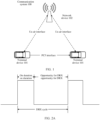
- the following problems exist. As shown in FIG.
- the TX UE feeds back a NACK to the base station.
- the base station reallocates an SL retransmission resource, and indicates the SL retransmission resource to the TX UE by using DCI. Subsequently, the TX UE retransmits SL data to the RX UE based on the allocated SL retransmission resource.
- the RX UE fails to send the HARQ feedback
- the RX UE fails to start the RTT timer and the retransmission timer, and the RX UE may be in a sleep state. Therefore, the RX UE cannot receive the SL data retransmitted by the TX UE, causing a packet loss on the RX UE side.
- the communication system 100 shown in FIG. 1 is merely intended to clearly describe the technical solutions of this application, but does not constitute a limitation on this application. A person of ordinary skill in the art may learn that the technical solutions provided in embodiments of this application are also applicable to a similar technical problem as a network architecture evolves and a new service scenario emerges.
- noun or term used in embodiments of this application is first described.
- the noun or term is also used as a part of the invention content of embodiments of this application.
- the communication device in embodiments of this application may be a terminal device, a network device, or the like.
- the first communication device and the second communication device may be terminal devices.
- the terminal device may be referred to as a terminal for short, and is a device with a wireless transceiver function.
- the terminal device may be deployed on land, including an indoor or outdoor, a handheld or vehicle-mounted device. It can also be deployed on water (for example, on a ship). It can also be deployed in the air (for example, on an aircraft, a balloon, or a satellite).
- the terminal device may be a mobile phone (mobile phone), a tablet computer (pad), a computer with a wireless transceiver function, a virtual reality (virtual reality, VR) terminal device, an augmented reality (augmented reality, AR) terminal device, a wireless terminal device in industrial control (industrial control), a wireless terminal device in self driving (self driving), a wireless terminal device in telemedicine (remote medical), a wireless terminal device in smart grid (smart grid), a wireless terminal device in transportation safety (transportation safety), a wireless terminal device in a smart city (smart city), a wireless terminal device in the Internet of Vehicles, and a wireless terminal device in a smart home (smart home), and may further include user equipment (user equipment, UE), and the like.
- UE user equipment
- the terminal device may also be a cellular phone, a cordless phone, a session initiation protocol (session initiation protocol, SIP) phone, a wireless local loop (wireless local loop, WLL) station, a personal digital assistant (personal digital assistant, PDA), a handheld device with a wireless communication function, a computing device, or another processing device connected to a wireless modem, a vehicle-mounted device, a wearable device, a terminal device in a fifth generation (5 th generation, 5G) or a future evolved network, or the like.
- SIP session initiation protocol
- WLL wireless local loop
- PDA personal digital assistant
- the terminal device may also be referred to as a terminal, an access terminal device, a vehicle-mounted terminal device, an industrial control terminal device, a UE unit, a UE station, a mobile station,, a remote station, a remote terminal device, a mobile device, a UE terminal device, a terminal device, a wireless communication device, a UE agent, or UE apparatus, or the like.
- the terminal device may also be fixed or mobile. Embodiments of this application are not limited thereto.
- the third communication device may be a network device.
- the following describes a concept of a network device.
- the network device may be an access network device.
- the access network device may also be referred to as a radio access network (radio access network, RAN) device, and is a device that provides a wireless communication function for a terminal device.
- the access network device includes but is not limited to: a next generation NodeB (generation NodeB, gNB) in 5G, an evolved NodeB (evolved NodeB, eNB), a radio network controller (radio network controller, RNC), a NodeB (NodeB, NB), a base station controller (base station controller, BSC), a base transceiver station (base transceiver station, BTS), a home base station (for example, home evolved NodeB, or home NodeB, HNB), a baseband unit (baseband unit, BBU), a transmitting and receiving point (transmitting and receiving point, TRP), a transmitting point (transmitting point, TP), a mobile switching center, and the like.
- generation NodeB generation
- the access network device may also be a radio controller, a central unit (central unit, CU), and/or a distributed unit (distributed unit, DU) in a cloud radio access network (cloud radio access network, CRAN) scenario, or the network device may be a relay station, an access point, a vehicle device, a wearable device, and a network device in a 5G network, or a future evolved network, or the like.
- the terminal device may communicate with a plurality of access network devices of different technologies. For example, the terminal device may communicate with an access network device that supports long term evolution (long term evolution, LTE), or may communicate with an access network device that supports 5G, and may also perform dual connection with the access network device that supports LTE and the access network device that supports 5G.
- LTE long term evolution
- 5G Fifth Generation
- Embodiments of this application are not limited thereto.
- the sidelink is used for communication between terminal devices, and a communication interface between the terminal devices is a PCS interface.
- Channels used in sidelink communication may include a physical sidelink shared channel (physical sidelink shared channel, PSSCH), a physical sidelink control channel (physical sidelink control channel, PSCCH) and a physical sidelink feedback channel (physical sidelink feedback channel, PSFCH).
- PSSCH physical sidelink shared channel
- PSCCH physical sidelink control channel
- PSFCH physical sidelink feedback channel
- the PSSCH is used to carry sidelink data (SL data), and the PSCCH is used to carry sidelink control information (sidelink control information, SCI).
- SCI may also be referred to as a sidelink scheduling assignment (sidelink scheduling assignment, SL SA).
- the SL SA is information for relevant data scheduling, for example, information used to carry a resource configuration and/or a modulation and coding scheme (modulation and coding scheme, MCS) of a PSSCH.
- the PSFCH may be used for transmitting sidelink feedback control information (sidelink feedback control information, SFCI).
- the sidelink feedback control information may include information such as channel state information (channel state information, CSI) and HARQ.
- the HARQ information may be specifically a negative acknowledgment (negative acknowledgment, NACK) or an acknowledgment (acknowledgment, ACK).
- a first timer and a second timer may be timers associated with SL DRX.
- the first timer may be referred to as sl-drx-HARQ-RTT-Timer
- the second timer may be referred to as sl-drx-RetransmissionTimer.
- the first timer is used to indicate an expected minimum duration before resource configuration information or grant information for SL retransmission arrives, that is, a value of the first timer may be "minimum duration before resource configuration information or grant information for SL retransmission arrives".
- the first timer is used to indicate an expected minimum duration before the resource configuration information or the grant information for SL retransmission arrives at a receiving end, that is, a value of the first timer may be "minimum duration before the resource configuration information or the grant information for SL retransmission arrives at a receiving end".
- the second timer is used to indicate a maximum duration required for receiving the resource configuration information or the grant information for the SL retransmission, that is, a value of the second timer may be "maximum duration until the resource configuration information or the grant information for the SL retransmission is received".
- the second timer is used to indicate a maximum duration required by a receiving end to receive the resource configuration information or the grant information for the SL retransmission, that is, a value of the second timer may be "maximum duration until the receiving end receives the resource configuration information or the grant information for the SL retransmission".
- a third timer and a fourth timer may be timers associated with Uu DRX.
- the third timer may be referred to as drx-HARQ-RTT-TimerSL, and the fourth timer may be referred to as drx-RetransmissionTimerSL.
- the third timer is used to indicate an expected minimum duration before resource configuration information or grant information for SL retransmission arrives, that is, a value of the third timer may be "minimum duration before resource configuration information or grant information for SL retransmission arrives".
- the third timer is used to indicate an expected minimum duration before the resource configuration information or the grant information for SL retransmission arrives at a receiving end, that is, a value of the third timer may be "minimum duration before the resource configuration information or the grant information for SL retransmission arrives at a receiving end".
- the fourth timer is used to indicate a maximum duration required for receiving the resource configuration information or the grant information for the SL retransmission, that is, a value of the fourth timer may be "maximum duration until the resource configuration information or the grant information for the SL retransmission is received".
- the fourth timer is used to indicate a maximum duration required by a receiving end to receive the resource configuration information or the grant information for the SL retransmission, that is, a value of the fourth timer may be "maximum duration until the receiving end receives the resource configuration information or the grant information for the SL retransmission".
- a time unit is a time-domain unit used for data transmission, and may include time-domain units such as a radio frame (radio frame), a subframe (subframe), a slot (slot), a mini-slot (mini-slot), and a time-domain symbol (symbol).
- radio frame radio frame
- subframe subframe
- slot slot
- mini-slot mini-slot
- symbol time-domain symbol
- one radio frame may include 10 subframes
- one subframe may include one or more timeslots.
- a quantity of timeslots included in a subframe is related to a sub-carrier space.
- Amini-slot also referred to as a mini-slot, may be a unit smaller than a slot, and one mini-slot may include one or more symbols.
- one mini-slot may include 2 symbols, 4 symbols, or 7 symbols.
- One slot may include one or more mini-slots.
- a sub-carrier space of 15 kHz is used as an example.
- One radio frame may last 10 ms, each subframe may last 1 ms, one radio frame includes 10 subframes, each timeslot lasts 1 ms, each subframe may include one timeslot, and each slot may include 14 symbols. Further, the mini-slot may include 4 symbols, 2 symbols, 7 symbols, or the like.
- a, b, or c may represent: a, b, c, a-b, a-c, b-c, or a-b-c, where a, b, and c may be one or more.
- terms such as “first” and “second” are used to distinguish between same objects or similar objects whose functions and purposes are basically the same. A person skilled in the art may understand that the terms such as “first” and “second” do not limit a quantity or an execution sequence, and the terms such as “first” and “second” do not indicate a definite difference.
- This application provides a plurality of SL DRX and Uu DRX alignment methods, which are separately described below by using the following embodiments. Some of these SL DRX and Uu DRX alignment methods are applicable only to some procedures in a process of SL DRX and Uu DRX alignment, and some may be applied to any one or more procedures in a process of SL DRX and Uu DRX alignment. It should be understood that these SL DRX and Uu DRX alignment methods may be used in combination with each other.
- one method may be used in a procedure and another method may be used in another procedure; or both one method and another method may be used in a procedure in which the SL DRX is aligned with the Uu DRX.
- determining prioritization by the communication device may be performed at a physical layer.
- the physical layer notifies the MAC layer of a prioritization result, so that the MAC layer determines a DRX-related timer (for example, starting an RTT timer and/or a retransmission timer in this embodiment of this application).
- a DRX-related timer for example, starting an RTT timer and/or a retransmission timer in this embodiment of this application.
- the physical layer of the RX UE may perform the foregoing prioritization determining process.
- the physical layer of the RX UE notifies the MAC layer of the prioritization result.
- the foregoing result may be that the priority of sending the SL HARQ feedback by the RX UE is relatively low, and in this case, the RX UE does not send the SL HARQ feedback.
- the expression of failing to send the HARQ feedback may be replaced with an expression of skipping sending (does not transmit) the HARQ feedback, or failing to send (fail to transmit) the HARQ feedback, or the like.
- the expression of successfully sending the HARQ may be replaced with an expression of sending the HARQ.
- the expression of failing to receive the HARQ feedback may be replaced with an expression of skipping receiving the HARQ feedback, failing to receive the HARQ feedback, or the like.
- the HARQ feedback may also be replaced with a PSFCH or the like.
- the expression of successfully receiving the HARQ may be replaced with an expression of receiving the HARQ or the like.
- Embodiment 1 of this application provides a sidelink communication method. Before the method is described, Embodiment 1 is first described as follows: 1. In the following description, the SL HARQ feedback resource may also be replaced with a PSFCH feedback resource. 2. In the following description, in a case in which a HARQ is not explicitly defined as a NACK or a HARQ is not explicitly defined as an ACK, the foregoing HARQ may be a NACK, an ACK, or the like. 3. Successfully sending the HARQ feedback may be replaced with: Sending the HARQ feedback. Unless otherwise specified, description is not repeated in the following description.
- a procedure of a sidelink communication method is provided.
- a first communication device is RX UE
- a second communication device is TX UE
- a first timer is an RTT timer
- a second timer is a retransmission timer.
- the method includes at least the following steps.
- Step 200 The RX UE receives sidelink control information from the TX UE.
- the sidelink control information may be SCI, PSCCH, first-level SCI, second-level SCI, or first-level SCI and second-level SCI, or the like. This is not limited. In the following description, for example, the sidelink control information is SCI.
- Step 201 The RX UE starts an RTT timer based on an SL HARQ feedback resource, where the SL HARQ feedback resource is used for transmitting a HARQ feedback of the SCI or SL data scheduled by using the SCI.
- the SL HARQ feedback resource may be a configured resource used for transmitting the HARQ feedback.
- the SL HARQ feedback resource may have been configured for the RX UE.
- the resource may be configured by the TX UE for the RX UE, or may be configured by the network device for the RX UE. This is not limited.
- This SL HARQ feedback resource may also be referred to as a PSFCH resource or the like.
- This SL HARQ feedback resource may include one or more time units. For a description of the time unit, refer to the description in the foregoing term explanation part. Details are not described again.
- the SCI when the RX UE receives the SCI sent by the TX UE, the SCI may be used as a trigger condition to trigger the RX UE to start the RTT timer.
- a specific time for starting the RTT timer may be determined based on the foregoing configured SL HARQ feedback resource.
- the RX UE may start the RTT timer in any one of the plurality of time units.
- the RX UE may start the RTT timer in a first time unit of the plurality of time units, that is, the RX UE starts the RTT timer in a first time unit included in the SL HARQ feedback resource.
- the RX UE may start the RTT timer after the SL HARQ feedback resource.
- the RX UE may start the RTT timer in any time unit after the SL HARQ feedback resource. This is not limited.
- the RX UE may start the RTT timer in the first time unit after the SL HARQ feedback resource.
- the RX UE may start the RTT timer in the first time unit in the SL HARQ feedback resource, or in the first time unit after the SL HARQ feedback resource.
- the SL HARQ feedback resource is configured. Therefore, the RX UE may start the RTT timer in a first time unit in the configured SL HARQ feedback resource, or in a first time unit after a configured SL HARQ feedback resource.
- the RX UE may further stop the running retransmission timer and the like, so as to subsequently start the retransmission timer based on the RTT timer. In this way, the RTT timer and the retransmission timer between the TX UE and the RX UE are synchronized.
- step 202 The RX UE starts or does not start the retransmission timer based on the RTT timer. Whether the RX UE starts the retransmission timer based on the RTT timer is described as follows: The TX UE can determine whether the RTT timer expires. If the RTT timer does not expire, the retransmission timer is not started. When the RTT timer expires, the RX UE can start the retransmission timer. Alternatively, when the RTT timer expires, the retransmission timer can be started only when another condition is further met. For details, refer to the following description.
- the RX UE may start the retransmission timer. That is, when the RTT timer expires, the retransmission timer is started regardless of whether the SCI or SL data scheduled by using the SCI is successfully decoded.
- whether decoding on the RX UE side is successful usually refers to whether the RX UE successfully decodes the SCI or SL data scheduled by using the SCI, or the like.
- the RX UE may determine whether a preset condition is met, and the RX UE starts the retransmission timer only when the preset condition is met.
- the foregoing preset condition may be that the RX UE fails to perform decoding, or the RX UE fails to send an SL HARQ feedback, or the like. The preset condition is described in detail in the following embodiments.
- the SCI may be used as a trigger condition, and the RX UE starts the RTT timer based on the time unit included in the configured SL HARQ feedback resource.
- the RTT timer expires, the RX UE starts the retransmission timer.
- the RTT timer expires and a preset condition is met, the RX UE starts the retransmission timer.
- the foregoing SCI is used as a trigger condition for starting the RTT timer.
- the RX UE may further need to meet another condition to start the RTT timer.
- the foregoing other conditions may include a case that the TX UE fails to send the HARQ feedback. That is, in Example 1:
- the RX UE may send a HARQ feedback of the SCI or SL data scheduled by using the SCI. Then, the RX UE determines whether the HARQ is successfully sent. If the RX UE fails to send the HARQ feedback, the RX UE may start the RTT timer in a first time unit included in an SL HARQ feedback resource used to send the HARQ feedback. Alternatively, the RX UE may start the RTT timer in a first time unit after the SL HARQ feedback resource used to send the HARQ feedback. When the RTT timer expires, the RX starts the retransmission timer.
- a case in which when the RX UE successfully sends the HARQ feedback, whether the solution in this embodiment of this application is still used to start the RTT timer is not limited.
- the RTT timer is started by using a Uu DRX configuration, that is, the RTT timer is started in a first symbol after the HARQ feedback is sent.
- a reason why the RX UE fails to send the HARQ feedback may include a reason such as prioritization (prioritization) or a conflict of the RX UE why the RX UE fails to send the HARQ feedback.
- prioritization Prioritize and select the higher priority.
- prioritization may be further understood as: When the RX UE needs to send two or more pieces of information at the same time (optionally, the foregoing information may be replaced with signals or signaling.), or when the RX UE needs to perform receiving and sending at the same time, or when the RX UE needs to perform sending on two or more physical channels at the same time, or when the RX UE needs to perform one transmission and one reception on two physical channels at the same time, the priorities of the information or channels are determined, the information or channel with the highest priority is selected for sending or receiving, and other information or channels are not sent or received.
- a specific implementation may be the following:
- the RX UE may send a HARQ feedback of the SCI or SL data scheduled by using the SCI. If the RX UE finds that the RX UE fails to send the HARQ feedback due to prioritization or a low priority of a conflict, the RX UE may start the RTT timer and stop the retransmission timer in a first symbol included in the SL HARQ feedback resource, or a first symbol after the SL HARQ feedback resource.
- the RX UE When the RTT timer expires, the RX UE starts the retransmission timer regardless of whether data is successfully decoded, so as to ensure that the RX UE can receive the new transmitted SCI or retransmission scheduled by the base station during this period, where the retransmission includes retransmission of a current HARQ process, and retransmission of another HARQ process.
- the newly transmitted SCI may also include newly transmitted SCI of a current HARQ process, or newly transmitted SCI of another HARQ process.
- the RX UE may receive data scheduled by the base station, which may be newly transmitted SCI, retransmission, or the like, thereby avoiding a packet loss on the RX UE.
- the RX UE when the RX UE starts the RTT timer, whether other conditions need to be met in addition to the triggering of the SCI is met.
- the RX UE may start the RTT timer in the first symbol in the SL HARQ feedback resource or in the first symbol after the SL HARQ feedback resource.
- the RTT timer expires, the RX UE does not start the retransmission timer.
- the RX UE further needs to determine whether the RX UE successfully sends the HARQ feedback, and starts the retransmission timer only when the RX UE fails to send the HARQ feedback.
- a process of starting the retransmission timer in the foregoing process may be as follows: When receiving the SCI from the TX UE, the RX UE may start the RTT timer in a first symbol in a resource used to send the HARQ feedback of the SCI or the SL data scheduled by using the SCI, or in a first symbol after a resource used to send the HARQ feedback of the SCI or the SL data scheduled by using the SCI.
- the RX UE may determine whether the HARQ feedback of the SCI or the SL data scheduled by using the SCI is successfully sent. If the message fails to be sent, the retransmission timer is started.
- the RX UE successfully sends the foregoing HARQ feedback whether the solution in this application is used is not limited. For example, in a possible manner, when the RX UE successfully sends the foregoing HARQ feedback, and the HARQ is a NACK, that is, when data fails to be decoded, the RX UE starts the retransmission timer.
- a reason why the RX UE fails to send the HARQ feedback may include a reason such as prioritization (prioritization) or a conflict of the RX UE why the RX UE fails to send the HARQ feedback.
- the RX UE after receiving the SCI, the RX UE starts an RTT timer and stops a retransmission timer in the first symbol in the SL HARQ feedback resource or in the first symbol after the SL HARQ feedback resource.
- the RTT timer expires, and the Rx UE successfully decodes the data but fails to send the HARQ due to a low priority of a conflict, the RX UE starts the retransmission timer.
- the RX UE when the RX UE starts the RTT timer, whether other conditions need to be met in addition to the triggering of the SCI is met.
- the RX UE may start the RTT timer in the first symbol in the SL HARQ feedback resource or in the first symbol after the SL HARQ feedback resource.
- the RTT timer expires, the RX UE starts the retransmission timer.
- the foregoing process may further be described as: After the RX UE receives the SCI, regardless of whether successfully sending the HARQ, the RX UE starts the RTT timer and stops the retransmission timer in the first symbol in the SL HARQ feedback resource or in the first symbol after the SL HARQ feedback resource. When the RTT timer expires (regardless of whether data is successfully decoded), the RX UE starts the retransmission timer.
- the RTT timer and the retransmission timer can still be started. Therefore, a waste of power consumption of the RX UE caused when the RX UE does not start the retransmission timer because the HARQ feedback fails to be sent or the HARQ feedback is not sent.
- Embodiment 1 of this application focuses on how the RX UE starts the RTT timer and the retransmission timer. How the TX UE starts the RTT timer and the retransmission timer is not limited. For example, in a possible implementation, the TX UE may start an RTT timer and a retransmission timer still by using a solution similar to that on the RX UE side. For example, in a possible embodiment, the procedure shown in FIG. 2C may further include the following steps.
- Step 203 The TX UE starts the RTT timer based on the SL HARQ feedback resource. After sending the SCI, the TX UE may start the RTT timer in a first time unit in the SL HARQ feedback resource or in a first time unit after the SL HARQ feedback resource.
- the SL HARQ feedback resource may be configured or the like. For example, the resource may be configured by the TX UE for the TX UE. Therefore, a specific location of the SL HARQ feedback resource may be learned by the TX UE. For example, the SL HARQ feedback resource is configured.
- the TX UE may start the RTT timer in a first time unit in a configured SL HARQ feedback resource, or in a first time unit after a configured SL HARQ feedback resource. Similar to the foregoing description, when the TX UE starts the RTT timer, and the retransmission timer is running, the TX UE may further stop the retransmission timer.
- step 201 It can be learned from the description in step 200 to step 201 that, for the manner in which the RX UE starts the foregoing description, the RTT timer and the retransmission timer are started, thereby avoiding a packet loss on the RX UE side.
- the TX UE and the RX UE use a same manner to start the RTT timer and the retransmission timer, that is, the solutions in step 203 and step 204, the TX UE and the RX UE use a same solution to start the RTT timer and the retransmission timer, so that an activation time of the RTT timer and the retransmission timer are aligned.
- Step 204 The TX UE may whether to start the retransmission timer based on the RTT timer. For example, in a possible implementation, when the RTT timer expires, the TX UE may start the retransmission timer. Alternatively, when the RTT timer expires, the TX UE may determine whether the TX UE meets a preset condition, and if yes, start the retransmission timer.
- the preset condition may include one or more of the following conditions. This is not limited.
- the TX UE and the RX UE can start the RTT timer and the retransmission timer based on the SL HARQ feedback resource, so that starting of the RTT timer and starting of the retransmission timer are aligned, thereby preventing starting of the RTT timer and the retransmission timer when the TX UE sends a NACK to a base station.
- the RX UE side fails to send the HARQ feedback, the RTT timer and the retransmission timer are not started, and therefore the RX UE is in a sleep state. As a result, the RX UE cannot receive SL data retransmitted by the TX UE, causing a packet loss on the RX UE side.
- An embodiment of this application further provides a sidelink communication method.
- a difference between the method and a manner of the foregoing procedure shown in FIG. 2C lies in:
- the UE when a specific condition is met, the UE first starts an RTT timer, and starts a retransmission timer based on the RTT timer.
- the UE when a specific condition is met, the UE starts the retransmission timer.
- the first communication device is RX UE
- the second communication device is TX UE
- the second timer is a retransmission timer.
- a procedure of a sidelink communication method is provided, and includes at least the following steps.
- Step 300 The RX UE receives sidelink control information from the TX UE.
- the sidelink control information may be SCI, PSCCH, first-level SCI, second-level SCI, or first-level SCI and second-level SCI, or the like.
- the sidelink control information is SCI.
- Step 301 The RX UE starts a retransmission timer based on an SL HARQ feedback resource, where the SL HARQ feedback resource is used for transmitting a HARQ feedback of the SCI or SL data scheduled by using the SCI.
- a process in which the RX UE starts the retransmission timer based on the SL HARQ feedback resource is similar to the process in which the RX UE starts the RTT timer based on the SL HARQ feedback resource, and details are not described again. For example, refer to the related description in the foregoing step 201.
- the RX UE when receiving the SCI, the RX UE may start the retransmission timer in the first symbol in the SL HARQ feedback resource or in the first symbol after the SL HARQ feedback resource.
- the RX UE may determine whether the preset condition is met currently, and if yes, start the retransmission timer.
- the RX UE does not start the retransmission timer.
- the preset condition may be that the TX UE fails to send the HARQ feedback of the SCI or the SL data scheduled by using the SCI, and a reason for skipping sending the HARQ feedback may be a reason such as a conflict or prioritization of the RX UE, or the like.
- the RX UE may start the retransmission timer in the first symbol in the SL HARQ feedback resource, or in the first symbol after the SL HARQ feedback resource.
- Embodiment 1 focuses on the following: A process how to the RX UE side starts the retransmission timer.
- the process how the TX UE side starts a retransmission timer is not limited.
- the procedure shown in FIG. 3 may further include the following steps.
- Step 302 The TX UE starts the retransmission timer based on the SL HARQ feedback resource. For example, when sending the SCI, the TX UE may start the retransmission timer in a first time unit in the SL HARQ feedback resource or a first time unit after the SL HARQ feedback resource. Alternatively, after the SCI is sent and when the preset condition is met, the TX UE starts the retransmission timer in a first time unit in the SL HARQ feedback resource or a first time unit after the SL HARQ feedback resource. For the preset condition that needs to be met, refer to the description in FIG. 2C . Details are not described again.
- the RX UE may start the retransmission timer. Therefore, a packet loss on the RX UE since the RX UE fails to send the HARQ feedback, the RX UE does not start the retransmission timer, and therefore the RX UE is in a sleep state can be avoided.
- the RX UE may further start the retransmission timer as early as possible.
- Embodiment 2 of this application provides a sidelink communication method. As shown in FIG. 4 , the method may be applied to a scenario in which RX UE successfully sends a HARQ feedback, but TX UE fails to receive the HARQ feedback due to a sending and receiving conflict of the TX UE.
- this embodiment is first described as follows: 1. In the following description, the TX UE receives no HARQ feedback or the TX UE receives no PSFCH. 2. In the following description, in a case in which the HARQ is not explicitly defined as a NACK, the following HARQ may be replaced with an ACK or a NACK. Unless otherwise specified, description is not repeated in the following description.
- the first communication device is TX UE
- the second communication device is RX UE
- the first timer is an RTT timer
- the second timer is a retransmission timer.
- a procedure of a sidelink communication method is provided and includes at least the following steps.
- Step 500 The TX UE sends sidelink control information to the RX UE.
- sidelink control information For description of the sidelink control information, refer to the description in the foregoing step 200, and details are not described herein again.
- the sidelink control information is SCI.
- Step 501 The RX UE sends HARQ feedback to the TX UE, where the HARQ feedback includes a HARQ feedback of the SCI or SL data scheduled by using the SCI.
- the HARQ feedback sent by the RX UE to the TX UE may be an ACK.
- the HARQ feedback sent by the RX UE to the TX UE may be a NACK.
- step 502 The TX UE determines that no HARQ feedback is received.
- the RX UE sends the HARQ feedback to the TX UE.
- the TX UE may not receive the foregoing HARQ feedback.
- a reason why the TX UE receives no HARQ feedback may include a case in which the TX UE receives no HARQ feedback due to a sending and receiving conflict or prioritization (prioritization).
- the sending and receiving conflict of the TX UE may include: A resource for the TX UE to send the HARQ feedback conflicts with a resource used to receive the HARQ feedback.
- the conflicting resource may include overlapping of time-domain resources, overlapping of frequency domain resources, overlapping of both time-domain resources and frequency domain resources, and the like. As a result, the TX UE fails to receive the HARQ feedback, or the like.
- Step 503 The TX UE sends first indication information to the RX UE, where the first indication information indicates that the TX UE receives no HARQ feedback.
- the RX UE when receiving the indication information used to indicate that the TX UE receives no HARQ feedback, the RX UE may perform the following operations.
- the RTT timer expires, the RX UE can start the retransmission timer without considering whether decoding is successful. The reasons are as follows: In a current solution, after sending the HARQ feedback, the RX UE starts the RTT timer. When the RTT timer expires and the RX UE fails to decode data, the retransmission timer can be started.
- the TX UE may send a NACK to the base station to request the base station to allocate the SL resource for retransmission, and send retransmitted SL data to the RX UE based on the SL resource for retransmission allocated by the base station.
- the TX UE may send the foregoing indication to the RX UE.
- the RX UE When the RX UE receives the foregoing indication, and the RTT timer expires, the RX UE starts the retransmission timer regardless of whether the data is successfully decoded, which ensures that the RX UE can start the retransmission timer and receive the SL data retransmitted by the TX UE, thereby avoiding packet loss on the RX UE.
- the RX UE may further start a fifth timer after sending the HARQ feedback.
- the RX UE is in an active time, that is, a wakeup state.
- the RX UE may further start an RTT timer. For example, the RX UE starts the RTT timer in a first time unit after the HARQ feedback is sent. When the RTT timer expires and the first indication information is received, the retransmission timer is started. If the RX UE receives no first indication information, and the RTT timer expires, whether the RX UE starts the retransmission timer is not limited. For example, in a possible implementation, if the RX UE receives no first indication information, the RTT timer expires, and the RX UE fails to decode the data, the retransmission timer is started. If the RX UE successfully decodes the data, the retransmission timer is not started.
- the TX UE sends SCI to the RX UE.
- the RX UE sends the HARQ feedback of the SCI or the SL data scheduled by using the SCI to the TX UE.
- the TX UE preferentially sends PSFCH because a resource used to send the PSFCH conflicts with a resource used to receive the PSFCH.
- the TX UE may not receive the PSFCH of the RX UE, and the TX UE may send indication information to the RX UE, where the indication information indicates that the RX UE receives no PSFCH.
- the RX UE After the RX UE receives the foregoing indication information, when the RTT timer expires (regardless of whether data is successfully decoded), the RX UE starts the retransmission timer, so as to ensure that SL data scheduled by the base station in this time period can be received, where the SL data includes newly transmitted SCI, retransmission of a current or another SL HARQ process, and the like.
- the RX UE may start a fifth timer, for example, a timer T1. During running of the fifth timer, the RX UE is in an active time, that is, a wakeup state.
- the TX UE may send indication information to the RX UE.
- the RX UE receives the indication information, and the RTT timer expires, the retransmission timer is started regardless of whether the data is successfully decoded, so that the RX UE is in a wakeup state and receives retransmission sent by the TX UE, thereby avoiding packet loss on the RX UE side.
- Embodiment 3 provides a sidelink communication method.
- An application scenario may be the following scenario.
- RX UE successfully sends HARQ feedback, but TX UE receives no HARQ feedback.
- the reason why the TX UE currently receives no HARQ feedback is not a sending and receiving conflict or prioritization (prioritization) of the TX UE.
- the HARQ feedback may be replaced with PSFCH. 2.
- the HARQ in a case in which the HARQ is not explicitly defined as a NACK, the HARQ may be replaced with an ACK or a NACK. Unless otherwise specified, description is not repeated.
- the first communication device is TX UE
- the second communication device is RX UE
- the third communication device is a network device
- the first timer is an RTT timer
- the second timer is a retransmission timer.
- a procedure of a sidelink communication method is provided and includes at least the following steps.
- Step 600 The TX UE sends sidelink control information to the RX UE.
- sidelink control information For description of the sidelink control information, refer to the description in the foregoing step 200, and details are not described herein again.
- the sidelink control information is SCI.
- Step 601 The RX UE sends HARQ feedback to the TX UE, where the HARQ feedback is a HARQ feedback of the SCI or SL data scheduled by using the SCI.
- the RX UE may determine whether the SCI or the SL data scheduled by using the SCI is successfully decoded. If decoding is successful, the HARQ feedback sent by the RX UE to the TX UE indicates an ACK. Otherwise, the HARQ feedback sent by the RX UE to the TX UE is a NACK.
- Step 602 The TX UE determines that no HARQ feedback is received.
- step 601 the RX UE sends the HARQ feedback to the TX UE, but in step 602, the TX UE receives no HARQ feedback.
- a reason why the TX UE receives no HARQ feedback is not limited.
- the TX UE may not receive the HARQ feedback due to a sending and receiving conflict or prioritization of the TX UE, or the TX UE may not receive the HARQ feedback due to other reasons than the foregoing reasons, such as poor transmission conditions.
- the solution in this embodiment of this application may be applied to a scenario in which the TX UE receives no HARQ feedback of the RX UE due to a reason other than a sending and receiving conflict or prioritization of the TX UE.
- Step 603 The TX UE sends second information to the network device.
- the TX UE may further send a NACK to the network device, where the NACK may be used to request an SL retransmission resource from the network device.
- the NACK and the second information may be sent separately, or may be carried in a same message for sending, which is not limited.
- the TX UE may send the second information to the network device, where the second information indicates that the TX UE receives no HARQ feedback.
- the network device may not schedule, during running of the retransmission timer of a corresponding HARQ process, SL new transmission or retransmission of another HARQ process used for the SL.
- the TX UE may request the network device not to schedule, during running of the retransmission timer of a corresponding HARQ process, SL new transmission or retransmission of another HARQ process used for the SL.
- the TX UE may send, to the network device, second information used to indicate that the network device does not to schedule, during running of the retransmission timer of the corresponding HARQ process, SL new transmission or retransmission of another HARQ process used for the SL.
- step 604 The network device does not schedule, during running of a second timer of the HARQ process corresponding to a NACK, SL new transmission or retransmission of another HARQ process used for the SL.
- the RX UE successfully sends the SL HARQ feedback, but the TX UE receives no SL HARQ feedback from the RX UE.
- the TX UE may determine the reason why the SL HARQ feedback is not received.
- the TX UE may instruct the base station not to schedule new SL transmissions or retransmissions of another HARQ processes during running of the retransmission timer of Uu DRX subsequently started by the TX UE.
- the retransmission timer of the Uu DRX subsequently started by the TX UE may be explained as follows:
- the TX UE sends the retransmission timer of the HARQ process corresponding to the NACK to the base station, where the foregoing HARQ process is a HARQ process on the Uu air interface, a corresponding SL process or SL HARQ process in the SL.
- the TX UE may report a NACK to the base station.
- An improvement of this application is as follows: In addition to reporting a NACK to the base station, the TX UE further reports second information to the base station, where the second information is used to instruct the base station to schedule only retransmission of a current HARQ process during running of the retransmission timer of the HARQ process corresponding to the NACK. The reasons are as follows: In a current solution, after the RX UE sends the HARQ feedback, the RX UE may start the RTT timer.
- the RX UE When the RTT timer expires and the RX UE fails to decode data, that is, the RX UE starts the retransmission timer only when the HARQ feedback sent by the RX UE is a NACK. However, when the RTT timer expires, and the RX UE successfully decodes data, that is, when the HARQ feedback sent by the RX UE is an ACK, the RX UE does not start the retransmission timer. In embodiments of this application, because the TX UE receives no HARQ feedback of the RX UE, the TX UE does not know whether the HARQ feedback sent by the RX UE is a NACK or an ACK.
- the TX UE no longer determines whether the HARQ feedback sent by the RX UE is an ACK or a NACK, and the TX UE sends the second information to the base station in a unified manner, to instruct the base station to schedule only retransmission of a current SLHARQ process, and not to schedule SL new transmission or retransmission of another SL process.
- the TX UE sends only retransmission of the current SL HARQ process to the RX UE.
- the RX UE If the HARQ feedback sent by the RX UE is a NACK, the RX UE starts the retransmission timer on the SL DRX, and the RX UE may receive the retransmission of the current SL HARQ process sent by the TX UE. If the HARQ feedback sent by the RX UE indicates an ACK, the RX UE may not receive the retransmission of the current SL HARQ process. However, since the HARQ feedback fed back by the RX UE indicates an ACK, which indicates that data of a corresponding SL process has been successfully decoded by the RX UE during last transmission, the failure of receiving the retransmission during the current transmission does not matter.
- Embodiment 4 provides a sidelink communication method.
- An application scenario of the method may be the following scenario. If an SL DRX configuration between TX UE and RX UE does not match a Uu DRX configuration between the TX UE and a base station, the RX UE may fail to receive SL data from the RX UE, causing packet loss on the RX UE.
- the RX UE when a retransmission timer of the SL DRX of the RX UE expires, the RX UE is in a sleep state and cannot monitor SCI, and in this case, the TX UE sends retransmitted SCI to the RX UE, the RX UE fails to receive the retransmitted SCI, causing packet loss on the RX UE.
- a first communication device is RX UE
- a second communication device is TX UE
- first DRX is Uu DRX
- second DRX is SL DRX
- a first timer is an RTT timer
- a second timer is a retransmission timer.
- Step 800 The RX UE receives information about a Uu DRX configuration and/or information about a first interval from the TX UE.
- the TX UE may independently send the information about a Uu DRX configuration and/or the information about the first interval to the RX UE.
- the TX UE may periodically send the information about a Uu DRX configuration and/or the information about the first interval to the RX UE.
- the first condition may include at least one of the following: the first interval changes; a variation of the first interval is greater than a first threshold; the information about a Uu DRX configuration changes; and a variation of the information about a Uu DRX configuration is greater than a second threshold.
- the first threshold and the second threshold may be specified in a protocol or preconfigured, which is not limited.
- the TX UE may send the information about a Uu DRX configuration and/or the information about the first interval to the RX UE based on a request of the RX UE.
- the RX UE may send a first request message to the TX UE, where the first request message is used to request the RX UE to send the information about a Uu DRX configuration and/or the information about the first interval to the TX UE.
- the TX UE receives the first request message, the TX UE sends the information about a Uu DRX configuration and/or the information about the first interval to the RX UE.
- the information about a Uu DRX configuration may include a configuration of an RTT timer and a configuration of a retransmission timer.
- configuration information of the RTT timer may be running duration of the RTT timer
- configuration information of the retransmission timer may be running duration of the retransmission timer.
- the information about the first interval is described as follows: A first interval may be an interval between a first resource and a second resource, or a minimum value of the interval between the first resource and the second resource.
- the first resource may be a PUCCH
- the second resource may be a PSFCH.
- the first interval is a minimum value of a PSFCH-PUCCH interval.
- the RX UE when the RX UE receives the information about a Uu DRX configuration and the minimum value of the PSFCH-PUCCH interval, the RX UE may perform the following operations.
- Step 801a The RX UE determines an SL DRX configuration based on the Uu DRX configuration and/or the minimum value of the PUCCH-PSFCF interval.
- the SL DRX configuration includes a configuration of an RTT timer and a configuration of a retransmission timer.
- step 802a When the Uu DRX configuration does not match the SL DRX configuration, or the minimum value of the PSFCH-PUCCH interval is inappropriate, the RX UE may send first information to the TX UE, where the first information notifies the TX UE that the Uu DRX configuration does not match the SL DRX configuration, or the minimum value of the PSFCH-PUCCH interval is inappropriate. Further, the TX UE may notify the network device that the network device adjusts the Uu DRX configuration and/or the minimum value of the PSFCH-PUCCH interval.
- the minimum value of the PSFCH-PUCCH interval is related to a sub-carrier space (sub-carrier space, SCS) configuration of an SL bandwidth part (bandwidth part, BWP) and an SCS configuration for activating a UL BWP in a primary cell. Therefore, in this embodiment of this application, the minimum value of the PSFCH-PUCCH interval may be adjusted by adjusting the SCS configuration of the SL BWP and/or the SCS configuration for activating the UL BWP in the primary cell.
- SCS sub-carrier space
- the RX UE may notify the network device of the information about a Uu DRX configuration and/or the minimum value of the PSFCH-PUCCH interval, for example:
- Step 801b The RX UE sends the information about a Uu DRX configuration and/or the minimum value of the PSFCH-PUCCH interval to a network device of the RX UE.
- the network device may perform the following subsequent operations. For example, the network device corresponding to the RX UE may determine the information about an SL DRX configuration based on the information about a Uu DRX configuration and/or the minimum value of the PSFCH-PUCCH interval. If the Uu DRX configuration does not match the SL DRX configuration, the SL DRX configuration may be adjusted.
- the RX UE is notified that the Uu DRX configuration does not match the SL DRX configuration, or that the minimum value of the PSFCH-PUCCH interval is inappropriate. Then, the RX UE notifies the TX UE of the information, and the TX UE notifies the network device of the RX UE of the information. After receiving the information, the network device corresponding to the TX UE adjusts the Uu DRX configuration and/or the minimum value of the PSFCH-PUCCH interval.
- the TX UE may send, to the RX UE, a Uu DRX configuration about the TX UE serving as a receiving end and a minimum value of a PSFCH-PUCCH interval, where the foregoing Uu DRX configuration may include a configuration of an RTT timer and a configuration of a retransmission timer.
- the TX UE may independently send the Uu DRX configuration and the minimum value of the PUCCHH-PSFCH interval to the RX UE.
- the TX UE when at least one of an RTT timer, a retransmission timer, or a minimum value of a PUCCH-PSFCH interval of the Uu DRX UE changes or a variation is less than a preset threshold, the TX UE sends the Uu DRX configuration and the minimum value of the PUCCH-PSFCH interval to the RX UE.
- the TX UE receives a request from the RX UE, the TX UE sends the Uu DRX configuration and the minimum value of the PSFCH-PUCCH interval to the RX UE.
- the RX UE may determine the SL DRX configuration. Then, the RX UE may determine whether the SL DRX configuration matches values of the RTT timer and the retransmission timer in the Uu DRX. If no, the RX UE may notify the TX UE.
- the TX UE may request a corresponding base station to change the values of the RTT timer and/or the retransmission timer in the Uu DRX; and/or the TX UE requests the base station to change the SCS configuration of the SL BWP or the SCS configuration for activating the UL BWP in the primary cell, or the like, so as to update the minimum value of the PSFCH-PUCCH interval or the like.
- the network device of the RX UE may further send, to the RX UE, the RX UE may further send, to the TX UE, or the TX UE may further send, to the network device of the TX UE, adjustment information about the Uu DRX configuration and/or adjustment information of the minimum value of the PSFCH-PUCCH interval, where the adjustment information and the "mismatch" notification may be sent together, or sent separately.
- the SL DRX configuration can match the Uu DRX configuration, thereby avoiding that the RX UE cannot receive SL retransmission and/or new transmission scheduled by the base station during running of the Uu DRX retransmission timer.
- Embodiment 5 of this application provides a sidelink communication method.
- An application scenario of the method may be the following scenario.
- DCI or RRC carrying SL grant and sent by a base station to the TX UE may include indication information about an SL HARQ feedback resource. If the SL HARQ feedback resource exists, it indicates that the TX UE may send an SL HARQ feedback to the base station. Otherwise, it indicates that the TX UE does not need to send the SL HARQ feedback to the base station. If there is no SL HARQ feedback resource, an RTT timer and a retransmission timer may not be started for Uu DRX between the TX UE and the base station.
- the RX UE does not know that an SL HARQ feedback resource is not configured for a current SL HARQ process. If the RX UE starts a corresponding retransmission timer on SL DRX, power consumption of the RX UE is wasted.
- a first communication device is TX UE
- a second communication device is RX UE
- a third communication device is a network device
- first DRX is Uu DRX
- second DRX is SL DRX
- a first timer and a second timer are respectively an RTT timer and a retransmission timer associated with the SL DRX
- a third timer and a fourth timer are respectively an RTT timer and a retransmission timer associated with the Uu DRX.
- a procedure of a sidelink communication method is provided and includes at least the following steps.
- Step 900 The TX UE receives second information from the network device, where the second information may be DCI, RRC, or the like, and the second information may carry SL grant information.
- the second information may carry indication information, and the indication information indicates whether an SL HARQ feedback resource exists, or is used to indicate whether an SL HARQ feedback resource exists (in this case, if the indication information is empty, it indicates that no SL HARQ feedback resource exists), where the SL HARQ feedback resource may be a PUCCH resource, a PUSCH resource, or the like.
- the SL HARQ feedback resource is used by the TX UE to send an SL HARQ feedback to the network device.
- the second information may further carry SL grant and the like, where the SL grant is used by the network device to allocate an SL resource to the base station.
- the second information carries indication information, where the indication information indicates whether an SL HARQ feedback resource exists, which may be specifically:
- the indication information indicates whether an SL HARQ feedback resource exists in a first SL process or a first SL transport block (transport block, TB).
- Step 901 The TX UE sends third information to the RX UE based on the second information, where the third information notifies whether to start, on SL DRX, an RTT timer and/or a retransmission timer of a corresponding SL process, and the SL process may be an SL HARQ process or the like; or the third information indicates whether the SL HARQ feedback resource exists.
- step 902 The RX UE determines, based on the third information, whether to start, on the SL DRX, the RTT timer and/or the retransmission timer of the corresponding SL process.
- the RX UE when the third information is used to instruct to start the RTT timer and/or the retransmission timer in an SL process corresponding to SL DRX, or when the third information indicates that an SL HARQ feedback resource exists, and a first condition is met, the RX UE starts, on the SL DRX, the RTT timer and/or the retransmission timer of the corresponding SL process.
- the first condition may be that after receiving the SCI, the RX UE starts the RTT timer in a first symbol in the PSFCH resource or in a first symbol after the PSFCH resource. When the RTT timer expires, the RX UE starts the retransmission timer.
- the first condition may be that the RX UE starts the RTT timer in a first symbol after the SL HARQ feedback is sent.
- the RTT timer expires, and SL data fails to be decoded, the retransmission timer is started.
- the RX UE when the third information is used to instruct not to start the RTT timer and/or the retransmission timer in the SL process corresponding to the SL DRX, or when the third information indicates that an SL HARQ feedback resource exists, and the first condition is met, the RX UE does not start, on the SL DRX, the RTT timer and/or the retransmission timer of the corresponding SL process.
- the first condition refer to the foregoing description. Details are not described again.
- step 903 The TX UE determines, based on the second information, whether to start, on Uu DRX, an RTT timer and/or a retransmission timer of a corresponding SL process, and/or determines whether to start, on the SL DRX, the RTT timer and/or the retransmission timer of the corresponding SL process.
- the TX UE when the second information indicates that the SL HARQ feedback resource exists, and the second condition is met, the TX UE starts, on the Uu DRX, the RTT timer and/or the retransmission timer of the corresponding SL process.
- the second condition may include: When or after receiving the DCI, the TX UE starts the RTT timer in a first symbol in an SL HARQ feedback resource used between the TX UE and the network, or in a first symbol after the SL HARQ feedback resource. When the RTT timer expires, the TX UE starts the retransmission timer.
- the second condition may include: The TX UE starts the RTT timer in a first symbol after the SL HARQ feedback is sent.
- the RTT timer expires, and the SL HARQ feedback received from the RX UE is a NACK, or no SL HARQ feedback of the RX UE is received (a resource is configured), the TX UE starts the retransmission timer.
- the TX UE may further start, on the SL DRX, the RTT timer and/or the retransmission timer of the corresponding SL process.
- the third condition may include: when sending the SCI to the RX UE, the TX UE starts the RTT timer in a first time unit in an SL HARQ feedback resource used between the TX UE and the RX UE, or a first time unit after the resource.
- the retransmission timer is started, or when the RTT timer expires, and the SL HARQ feedback received from the RX UE is a NACK, or no SL HARQ feedback of the RX UE is received (a resource is configured), the retransmission timer is started.
- the TX UE when the second information indicates that no SL HARQ feedback resource exists, and the second condition is met, the TX UE does not start, on the Uu DRX, the RTT timer and/or the retransmission timer of the corresponding SL process.
- the second condition refer to the foregoing description. Details are not described again.
- the TX UE does not start, on the SL DRX, the RTT timer and/or the retransmission timer of the corresponding SL process.
- the third condition refer to the foregoing description. Details are not described again.
- the TX UE may receive DCI or RRC from the base station, where the DCI or the RRC may carry an SL grant.
- the DCI may be DCI used in a DG or a CG type 2
- the RRC may be RRC used in a CG type 1, or the like.
- the TX UE if the DCI or RRC received by the TX UE from the base station indicates that there is a resource for the TX to send an SL HARQ feedback to the network (for example, a PUCCH resource or a PUSCH resource), the TX UE performs the following operations. When a current condition is met, the TX UE starts, on the Uu DRX and the SL DRX, the RTT timer and/or an sl retransmission timer of the corresponding HARQ process.
- a resource for the TX to send an SL HARQ feedback to the network for example, a PUCCH resource or a PUSCH resource
- the TX UE instructs the RX UE to start the RTT timer/the retransmission timer in the corresponding SL HARQ process (SL DRX), or instructs the RX UE that "there is a PUCCH resource in the corresponding sl HARQ process". Therefore, when the current condition is met, the RX UE starts the RTT timer and/or the retransmission timer of the corresponding sl HARQ process.
- the TX UE performs the following operations.
- the TX UE does not start, on the Uu DRX and the SL DRX, the RTT timer and/or retransmission timer of the corresponding HARQ process.
- the TX UE instructs the RX UE not to start the RTT timer and/or the retransmission timer in the corresponding SL HARQ process (SL DRX), or notifies the RX UE that "there is no PUCCH resource in the corresponding SL HARQ process". Accordingly, the RX UE determines not to start the RTT time and/or the retransmission timer of the corresponding SL HARQ process.
- a waste of power consumption of the RX UE caused when the RX UE does not know that the TX UE does not start a corresponding RTT timer and sl retransmission timer on the Uu DRX since no PUCCH resource is configured for an SL HARQ process and therefore starts a corresponding retransmission timer on the SL DRX can be avoided.
- the foregoing embodiments may be used alone, or may be used in combination, or the like. This is not limited.
- the foregoing Embodiment 2 and the foregoing Embodiment 3 may be used in combination.
- the solution in the foregoing Embodiment 2 may be used.
- the solution in the foregoing Embodiment 3 or the like may be used.
- FIG. 11 is a schematic diagram of an apparatus 1100 according to an embodiment of this application.
- the apparatus is configured to implement functions of the method executed by the first communication device, the second communication device, or the third communication device in the foregoing method embodiment.
- the apparatus 1100 includes a transceiver unit 1110 and a processing unit 1120.
- the apparatus 1100 may be a first communication device or a chip in the first communication device.
- the transceiver unit 1110 is configured to receive sidelink control information from a second communication device; the processing unit 1120 is configured to start a first timer based on a sidelink SL hybrid automatic repeat request HARQ feedback resource, where the SL HARQ feedback resource is used for transmitting a HARQ feedback of the sidelink control information or SL data scheduled by using the sidelink control information; and the processing unit 1120 is further configured to start or skip starting a second timer based on the first timer, where the first timer is used to indicate an expected minimum duration before resource configuration information or grant information for SL retransmission arrives, and the second timer is used to indicate a maximum duration required for receiving the resource configuration information or the grant information for the SL retransmission.
- the starting the first timer based on the SL HARQ feedback resource includes: starting the first timer in a first time unit in the SL HARQ feedback resource; or starting the first timer in a first time unit in a configured SL HARQ feedback resource; or starting the first timer in a first time unit after the SL HARQ feedback resource; or starting the first timer in a first time unit after a configured SL HARQ feedback resource.
- processing unit 1120 is further configured to: stop the second timer.
- the starting the first timer based on the SL HARQ feedback resource includes: failing to send or skipping sending the HARQ feedback, where the HARQ feedback is an acknowledgment ACK or a negative acknowledgment NACK; and starting the first timer based on the SL HARQ feedback resource.
- the starting or skipping starting the second timer based on the first timer includes: when the first timer expires, and the sidelink control information or the SL data scheduled by using the sidelink control information is successfully decoded or fails to be decoded, starting, by the first communication device, the second timer, or when the first timer expires, starting the second timer.
- the starting or skipping starting the second timer based on the first timer includes: when the first timer expires, and the HARQ feedback fails to be sent or is not sent, starting, by the first communication device, the second timer, where the HARQ feedback is an ACK or a NACK; or when the first timer expires, and the HARQ feedback is successfully sent or sent and the HARQ feedback is a NACK, starting, by the first communication device, the second timer.
- the failing to send or skipping sending the HARQ feedback includes: failing to send or skipping sending the HARQ feedback due to prioritization (prioritization) or a conflict.
- the starting the first timer based on the SL HARQ feedback resource includes: successfully sending or failing to send the HARQ feedback of the SCI or the SL data scheduled by using the SCI; and starting the first timer based on the SL HARQ feedback resource.
- the starting or skipping starting the second timer based on the first timer includes: when the first timer expires, starting the second timer. (The second timer is started regardless of whether the SL data is successfully decoded.)
- the apparatus 1100 may be a second communication device or a chip in the second communication device.
- the transceiver unit 1110 is configured to send sidelink control information to a first communication device; the processing unit 1120 is configured to start a first timer based on an SL HARQ feedback resource; and the processing unit 1120 is further configured to start or skip starting a second timer based on the first timer, where the first timer is used to indicate an expected minimum duration before resource configuration information or grant information for SL retransmission arrives, and the second timer is used to indicate a maximum duration required for receiving the resource configuration information or the grant information for the SL retransmission.
- the starting the first timer based on the SL HARQ feedback resource includes: starting the first timer in a first time unit in the SL HARQ feedback resource; or starting the first timer in a first time unit in a configured SL HARQ feedback resource; or starting the first timer in a first time unit after the SL HARQ feedback resource; or starting the first timer in a first time unit after a configured SL HARQ feedback resource.
- processing unit 1120 is further configured to: stop the second timer.
- the starting or skipping starting the second timer based on the first timer includes: when the first timer expires, starting the second timer.
- the starting or skipping starting the second timer based on the first timer includes: when the first timer expires, if the second communication device successfully receives a HARQ feedback, the HARQ feedback includes a HARQ feedback of the sidelink control information or SL data scheduled by using the sidelink control information, and the HARQ feedback is a NACK, or if the second communication device fails to receive a HARQ feedback, or if the second communication device sends the HARQ feedback to a third communication device and the HARQ feedback is a NACK, starting, by the second communication device, the second timer.
- the apparatus 1100 may be a first communication device or a chip in the first communication device.
- the transceiver unit 1110 is configured to send sidelink control information to a second communication device; the processing unit 1120 is configured to determine that no HARQ feedback is received, where the HARQ feedback includes a HARQ feedback of the sidelink control information or SL data scheduled by using the sidelink control information; and the transceiver unit 1110 is further configured to send first information to the second communication device, where the first information indicates that the first communication device receives no HARQ feedback.
- the determining that the HARQ feedback is not received includes: failing to receive the HARQ feedback due to a sending and receiving conflict or prioritization (prioritization).
- the apparatus 1100 may be a second communication device or a chip in the second communication device.
- the transceiver unit 1110 is configured to receive sidelink control information from a first communication device; the transceiver unit 1110 is further configured to send a HARQ feedback to the first communication device, where the HARQ feedback includes a HARQ feedback of the sidelink control information or SL data scheduled by using the sidelink control information; and The transceiver unit 1110 is further configured to receive first indication information from the first communication device, where the first indication information indicates that the first communication device receives no HARQ feedback.
- the apparatus further includes a processing unit.
- the processing unit 1120 is configured to: after the HARQ feedback is sent, start a third timer, where the second communication device is in an active time during running of the third timer.
- the failing to receive the HARQ feedback includes: failing to receive the HARQ feedback due to a sending and receiving conflict or prioritization (prioritization).
- the processing unit 1120 is further configured to: when or after the HARQ feedback is sent, start a first timer; or start the first timer in a first time unit after the HARQ feedback is sent.
- the processing unit 1120 is further configured to: when the first timer expires, start a second timer.
- the apparatus 1100 may be a first communication device or a chip in the first communication device.
- the transceiver unit 1110 is configured to send sidelink control information to a second communication device; the processing unit 1120 is configured to determine that no HARQ feedback is received, where the HARQ feedback includes a HARQ feedback of the sidelink control information or SL data scheduled by using the sidelink control information; and the transceiver unit 1110 is further configured to send second information or a NACK and the second information to the third communication device; where the second information indicates that the first communication device receives no HARQ feedback, or the second information indicates that the third communication device does not schedule, during running of the second timer of the HARQ process corresponding to the NACK, SL new transmission or retransmission of another HARQ process used for the SL, and the second timer is used to indicate a maximum duration required for receiving the resource configuration information or the grant information for the SL retransmission.
- the apparatus 1100 may be a first communication device or a chip in the first communication device.
- the transceiver unit 1110 is configured to receive second information or a NACK and the second information from the first communication device; where the second information indicates that the first communication device receives no HARQ feedback, or the second information indicates that the third communication device does not schedule, during running of the second timer of the HARQ process corresponding to the NACK, SL new transmission or retransmission of another HARQ process used for the SL, and the second timer is used to indicate a maximum duration required for receiving the resource configuration information or the grant information for the SL retransmission; and the processing unit 1120 is configured to: during running of the second timer of the HARQ process corresponding to the NACK, not to schedule SL new transmission or retransmission of another HARQ process used for the SL.
- the apparatus 1100 may be a first communication device or a chip in the first communication device.
- the transceiver unit 1110 is configured to receive information about a first DRX configuration and/or information about a first interval from a second communication device, where the first DRX configuration is a DRX configuration between the communication device and a third communication device, the first interval is an interval between a first resource and a second resource, the first resource is a resource for the second communication device to send an SL HARQ feedback to the third communication device, and the second resource is a resource for the first communication device to send an SL HARQ feedback to the second communication device; and the processing unit 1120 is configured to determine a second DRX configuration based on the information about the first DRX configuration and/or the information about the first interval, where the second DRX configuration is a DRX configuration between the first communication device and the second communication device.
- the transceiver unit 1110 is further configured to send the information about the first DRX configuration and/or the information about the first interval to the third communication device of the transceiver unit.
- the first interval includes a minimum value of the interval between the first resource and the second resource.
- the transceiver unit 1110 is further configured to: when the first DRX configuration does not match the second DRX configuration, send first information to the second communication device, where the first information notifies the second communication device that the first DRX configuration does not match the second DRX configuration.
- the transceiver unit 1110 is further configured to send first request information to the second communication device, where the first request information is used to request the second communication device to send the information about the first DRX configuration and/or the information about the first interval to the first communication device.
- the first DRX configuration includes a configuration of a third timer and a configuration of a fourth timer
- the second DRX configuration includes a configuration of a first timer and a configuration of a second timer
- the first timer and/or the third timer is used to indicate an expected minimum duration before resource configuration information or grant information for SL retransmission arrives
- the second timer and/or the fourth timer is used to indicate a maximum duration required for receiving the resource configuration information or the grant information for the SL retransmission.
- the apparatus 1100 may be a second communication device or a chip in the second communication device.
- the processing unit 1120 is configured to determine information about a first DRX configuration and/or information about a first interval, where the first DRX configuration is a DRX configuration between a second communication device and a third communication device, the first interval is an interval between a first resource and a second resource, the first resource is a resource for the second communication device to send an SL HARQ feedback to the third communication device, and the second resource is a resource for a first communication device to send the SL HARQ feedback to the second communication device; and the transceiver unit 1110 is configured to send the information about the first DRX configuration and/or the information about the first interval to the first communication device.
- the first interval includes a minimum value of the interval between the first resource and the second resource.
- the transceiver unit 1110 is further configured to: receive first information from the first communication device, where the first information notifies the second communication device that the first DRX configuration does not match a second DRX configuration, the second DRX configuration is DRX between the first communication device and the second communication device, and the second DRX configuration is used for SL communication between the first communication device and the second communication device, or the second DRX configuration is used for the first communication device to receive information sent by the second communication device.
- the transceiver unit 1110 when the first condition is met, performs the step of sending the information about the first DRX configuration and/or the information about the first interval to the first communication device.
- the first condition includes at least one of the following: the first interval changes; a variation of the first interval is greater than a first threshold; the information about the first DRX configuration changes; and a variation of the information about the first DRX configuration is greater than a second threshold.
- the transceiver unit 1110 is further configured to: receive first request information from the first communication device, where the first request information is used to request the second communication device to send the information about the first DRX configuration and/or the information about the first interval to the first communication device.
- the first DRX configuration includes a configuration of a third timer and a configuration of a fourth timer
- the second DRX configuration includes a configuration of a first timer and a configuration of a second timer
- the first timer and/or the third timer is used to indicate an expected minimum duration before resource configuration information or grant information for SL retransmission arrives
- the second timer and/or the fourth timer is used to indicate a maximum duration required for receiving the resource configuration information or the grant information for the SL retransmission.
- the apparatus 1100 may be a first communication device or a chip in the first communication device.
- the transceiver unit 1110 is configured to receive second information from a third communication device, where the second information indicates whether an SL HARQ feedback resource exists, and the SL HARQ feedback resource is used by the first communication device to send an SL HARQ feedback to the third communication device; and the processing unit 1120 is configured to send third information to a second communication device based on the second information, where the third information notifies whether to start, on a second DRX, a first timer and/or a second timer of a corresponding SL process, or the third information indicates whether the SL HARQ feedback resource exists; and/or the processing unit 1120 is further configured to: based on the second information, determine whether to start, on a first DRX, a third timer and/or a fourth timer of a corresponding SL process, and/or determine whether to start, on the second DRX, the first timer and/or the second timer of the corresponding SL process.
- the first DRX is DRX between the first communication device and the third communication device
- the second DRX is DRX between the first communication device and the second communication device
- the first timer and/or the third timer is used to indicate an expected minimum duration before resource configuration information or grant information for SL retransmission arrives
- the second timer and/or the fourth timer is used to indicate a maximum duration required for receiving the resource configuration information or the grant information for the SL retransmission.
- that the second information indicates whether an SL HARQ feedback resource exists includes: the second information indicates whether the SL HARQ feedback resource exists in a first SL process or a first SL transport block TB or does not exist.
- the third information is used to instruct to start the first timer and/or the second timer in an SL process corresponding to the second DRX, or the third information indicates that the SL HARQ feedback resource exists; and/or when a first condition is met, the first communication device starts, on the first DRX, the third timer and/or the fourth timer of the corresponding SL process, and/or when a second condition is met, the first communication device starts, on the second DRX, the first timer and/or the second timer of the corresponding SL process.
- the second information when the second information indicates that no SL HARQ feedback resource exists, the second information notifies that the first timer and/or the second timer in an SL process corresponding to the second DRX is not started; or the second information indicates that no SL HARQ feedback resource exists; and/or when the first condition is met, the first communication device does not start, on the first DRX, the third timer and/or the fourth timer of the corresponding SL process, and/or when the second condition is met, the first communication device does not start, on the second DRX, a first timer and/or a second timer of the corresponding SL process.
- the apparatus 1100 may be a third communication device or a chip in the third communication device.
- a transceiver unit 1110 is configured to receive third information from a first communication device, where the third information notifies whether to start, on a second DRX, a first timer and/or a second timer of a corresponding SL process, or the third information indicates whether an SL HARQ feedback resource exists; and
- a processing unit 1120 is configured to determine, based on the third information, whether to start, on the second DRX, the first timer and/or the second timer of the corresponding SL process, where the second DRX is DRX between the first communication device and the second communication device, the first timer is used to indicate an expected minimum duration before resource configuration information or grant information for SL retransmission arrives, and the second timer is used to indicate a maximum duration required for receiving the resource configuration information or the grant information for the SL retransmission.
- a second terminal device starts the first timer and/or the second timer of the corresponding SL process.
- the second communication device when the third information is used to instruct not to start the first timer and/or the second timer in the SL process corresponding to the second DRX, or when the third information indicates that when the SL HARQ feedback resource exists, and the third condition is met, the second communication device does not start the first timer and/or the second timer of the corresponding SL process.
- division of units in the apparatus is merely logical function division, and can be fully or partially integrated into a physical entity in actual implementation, or physically separated.
- all units in the apparatus may be implemented in a form of software invoking by a processing element; or can also be implemented in the form of hardware.
- some units may be implemented in a form of software invoking by a processing element, and some units may be implemented in a form of hardware.
- each unit may be a separately disposed processing element, or may be integrated into a chip of the apparatus for implementation.
- each unit may also be stored in a memory in a form of a program to be invoked by a processing element of the apparatus to perform a function of the unit.
- processing element described herein may also be a processor, and may be an integrated circuit having a signal processing capability.
- steps according to the foregoing methods or the foregoing units may be implemented by using a hardware integrated logic circuit in a processor element, or may be implemented in the form of software invoked by the processing element.
- a unit in any one of the foregoing apparatuses may be one or more integrated circuits configured to implement the foregoing method, for example, one or more application specific integrated circuits (application specific integrated circuit, ASIC), one or more microprocessors (digital signal processor, DSP), or one or more field programmable gate arrays (field programmable gate array, FPGA), or a combination of at least two of these integrated circuit forms.
- ASIC application specific integrated circuit
- DSP digital signal processor
- FPGA field programmable gate array
- the units in the apparatus may be implemented in a form of a program scheduled by the processing element
- the processing element may be a general-purpose processor, for example, a central processing unit (central processing unit, CPU) or another processor that can invoke the program.
- the units may be integrated and implemented in a form of a system-on-a-chip (system-on-a-chip, SOC).
- the transceiver unit 1110 may be an interface circuit of the apparatus, and is configured to receive a signal from another apparatus or send a signal to another apparatus.
- the transceiver unit 1110 is an interface circuit, of the chip, that is configured to receive a signal from another chip or apparatus, or an interface circuit configured to send a signal to another chip or apparatus.
- FIG. 12 is a schematic diagram of an apparatus 1200 according to an embodiment of this application.
- the apparatus is configured to implement a function of the first communication device, the second communication device, or the third communication device according to the foregoing method embodiment.
- the apparatus includes: a processor 1210 and an interface 1230.
- the apparatus may further include a memory 1220.
- the interface 1230 is configured to communicate with another device.
- the method executed by the first communication device and the second communication device in the foregoing embodiments may be implemented by the processor 1210 by invoking a program stored in the memory (which may be a memory 1220 in a first communication device, a second communication device, or a third communication device, or may be an external memory). That is, the first communication device, the second communication device, or the third communication device may include a processor 1210.
- the processor 1210 invokes a program in a memory to perform the method performed by the first communication device and the second communication device according to the foregoing method embodiments.
- the processor herein may be an integrated circuit having a signal processing capability, for example, a CPU.
- the first communication device or the second communication device may be implemented by one or more integrated circuits configured to implement the above methods. For example: one or more ASICs, one or more microprocessor DSPs, one or more FPGAs, or a combination of at least two of these integrated circuit forms. Alternatively, the foregoing implementations may be combined.
- a function/an implementation process of the transceiver unit 1110 and the processing unit 1120 in FIG. 11 may be implemented by the processor 1210 in the apparatus 1200 shown in FIG. 12 by invoking a computer execution command stored in the memory 1220.
- a function/an implementation process of the processing unit 1120 in FIG. 11 may be implemented by the processor 1210 in the apparatus 1200 shown in FIG. 12 by invoking a computer execution command stored in the memory 1220.
- a function/an implementation process of the transceiver unit 1110 in FIG. 11 may be implemented by using an interface 1230 in the apparatus 1200 shown in FIG. 12 .
- sequence numbers of the foregoing processes do not mean execution sequences in various embodiments of this application.
- the execution sequences of the processes should be determined according to functions and internal logic of the processes, and should not be construed as any limitation on the implementation processes of embodiments of the present invention.
- This application further provides a computer-readable medium, storing a computer program thereon.
- a computer program When the computer program is executed by a computer, a function of any one of the foregoing method embodiments is implemented.
- This application further provides a computer program product.
- the computer program product is executed by a computer, a function of any one of the foregoing method embodiments is implemented.
- All or a part of the foregoing embodiments may be implemented by software, hardware, firmware, or any combination thereof.
- software implementation all or a part of embodiments may be implemented in a form of a computer program product.
- the computer program product includes one or more computer instructions.
- the computer may be a general purpose computer, a dedicated computer, a computer network, or any other programmable apparatus.
- the computer instructions may be stored in a computer-readable storage medium or may be transmitted from a computer-readable storage medium to another computer-readable storage medium.
- the computer instructions may be transmitted from a website, computer, server, or data center to another website, computer, server, or data center in a wired (for example, a coaxial cable, an optical fiber, or a digital subscriber line (DSL)) or wireless (for example, infrared, radio, and microwave, or the like) manner.
- the computer-readable storage medium may be any usable medium accessible by the computer, or a data storage device integrating one or more usable media, such as a server or a data center.
- the usable medium may be a magnetic medium (for example, a floppy disk, a hard disk, or a magnetic tape), an optical medium (for example, a DVD), a semiconductor medium (for example, a solid-state disk (solid-state disk, SSD)), or the like.
- a magnetic medium for example, a floppy disk, a hard disk, or a magnetic tape
- an optical medium for example, a DVD
- a semiconductor medium for example, a solid-state disk (solid-state disk, SSD)
- the various illustrative logical units and circuits described in embodiments of this application may implement or operate the described functions by using a general-purpose processor, a digital signal processor, an application specific integrated circuit (ASIC), a field programmable gate array (FPGA) or another programmable logical apparatus, a discrete gate or transistor logic, a discrete hardware component, or a design of any combination thereof.
- the general-purpose processor may be a microprocessor.
- the general-purpose processor may also be any conventional processor, controller, microcontroller, or state machine.
- a processor may also be achieved through the combination of computing apparatuses, such as combination of a digital signal processor and a microprocessor, multiple microprocessors, one or more microprocessors and one digital signal processor core, or any other similar configurations.
- Steps of the methods or algorithms described in embodiments of this application may be directly embedded into hardware, a software unit executed by a processor, or a combination thereof.
- the software unit may be stored in a random access memory (random access memory, RAM), a flash memory, a read-only memory (read-only memory, ROM), EPROM memory, EEPROM memory, register, hard disk, removable disc, CD-ROM or any other form of storage media in the art.
- storage media may be connected to a processor so that the processor may read information from the storage media and may save the information in the storage media.
- the storage media may also be integrated into the processor.
- the processor and the storage media may be disposed in an ASIC.
- These computer program instructions may also be loaded onto a computer or another programmable data processing device, so that a series of operations and steps are performed on the computer or the another programmable device, thereby generating computer-implemented processing. Therefore, the instructions executed on the computer or the another programmable device provide steps for implementing a specific function in one or more processes in the flowcharts and/or in one or more blocks in the block diagrams.
- the foregoing functions described in this application may be implemented by hardware, software, firmware, or any combination of the three. If the present invention is implemented by software, these functions may be stored in computer-readable media or are transmitted to the computer-readable media in a form of one or more instructions or code.
- the computer-readable media includes computer storage media or communication media that facilitates transfer of a computer program from one place to another.
- the storage media may be an available medium that may be accessed by any general or special computer.
- Such computer-readable media may include but is not limited to a RAM, a ROM, an EEPROM, a CD-ROM, or another optical disc storage, a disk storage or another magnetic storage apparatus, or any other medium that may be used to carry or store program code, where the program code is in a form of an instruction or a data structure and in a form that can be read by a general or special computer or a general or special processing unit.
- any connection may be appropriately defined as computer-readable media.
- the software is included in defined computer-readable media.
- the disk (disk) and the disc (disc) include a compressed disc, a laser disc, an optical disc, a digital versatile disc (digital versatile disc, DVD), a floppy disk, and a Blu-ray disc.
- the disk usually copies data magnetically.
- Discs usually optically reproduce data by laser.
- the foregoing combination may also be included in the computer-readable media.
- the functions described in this application may be implemented by hardware, software, firmware, or any combination thereof.
- these functions may be stored in a computer-readable medium or transmitted as one or more instructions or code in a computer-readable medium.
- the computer-readable medium includes a computer storage medium and a communication medium, where the communication medium includes any medium that facilitates transfer of a computer program from one place to another.
- the storage medium may be any available medium accessible to a general purpose or a dedicated computer.
Landscapes
- Engineering & Computer Science (AREA)
- Signal Processing (AREA)
- Computer Networks & Wireless Communication (AREA)
- Mobile Radio Communication Systems (AREA)
- Communication Control (AREA)
Applications Claiming Priority (2)
| Application Number | Priority Date | Filing Date | Title |
|---|---|---|---|
| CN202110185648.0A CN114916048B (zh) | 2021-02-10 | 2021-02-10 | 一种侧行链路通信方法及装置 |
| PCT/CN2022/075845 WO2022171173A1 (fr) | 2021-02-10 | 2022-02-10 | Procédé et appareil de communication de liaison latérale |
Publications (2)
| Publication Number | Publication Date |
|---|---|
| EP4284074A1 true EP4284074A1 (fr) | 2023-11-29 |
| EP4284074A4 EP4284074A4 (fr) | 2024-07-24 |
Family
ID=82761155
Family Applications (1)
| Application Number | Title | Priority Date | Filing Date |
|---|---|---|---|
| EP22752333.9A Pending EP4284074A4 (fr) | 2021-02-10 | 2022-02-10 | Procédé et appareil de communication de liaison latérale |
Country Status (5)
| Country | Link |
|---|---|
| US (1) | US20230389047A1 (fr) |
| EP (1) | EP4284074A4 (fr) |
| JP (1) | JP7693818B2 (fr) |
| CN (1) | CN114916048B (fr) |
| WO (1) | WO2022171173A1 (fr) |
Families Citing this family (3)
| Publication number | Priority date | Publication date | Assignee | Title |
|---|---|---|---|---|
| EP4307827A4 (fr) * | 2021-03-05 | 2025-03-12 | LG Electronics Inc. | Procédé de fonctionnement d'un équipement utilisateur lié à un temporisateur de réception drx de liaison latérale dans un système de communication sans fil |
| EP4616667A1 (fr) * | 2022-11-11 | 2025-09-17 | Telefonaktiebolaget LM Ericsson (publ) | Communication de liaison latérale avec de multiples ressources de rétroaction |
| WO2024187476A1 (fr) * | 2023-03-16 | 2024-09-19 | 北京小米移动软件有限公司 | Procédé de démarrage ou de redémarrage de temporisateur de retransmission sl et appareil de communication |
Family Cites Families (11)
| Publication number | Priority date | Publication date | Assignee | Title |
|---|---|---|---|---|
| CA3014152C (fr) * | 2016-02-12 | 2023-02-14 | Nokia Technologies Oy | Appareil et procede pour mecanismes drx pour exploitation de processus harq seul dans l'ido-nb |
| US11233606B2 (en) * | 2017-08-10 | 2022-01-25 | Ofinno, Llc | HARQ retransmission and control channel monitoring |
| KR102220066B1 (ko) * | 2018-11-19 | 2021-02-25 | (주)토탈소프트뱅크 | 화물 선적 순서 설정 장치 |
| US11252753B2 (en) * | 2019-02-21 | 2022-02-15 | Asustek Computer Inc. | Method and apparatus for improving retransmission scheduling of sidelink communication in a wireless communication system |
| CN111800244A (zh) * | 2019-04-01 | 2020-10-20 | 英特尔公司 | Nr-v2x的物理侧链路反馈信道的设计 |
| US11528739B2 (en) * | 2020-01-07 | 2022-12-13 | Ofinno, Llc | Timer parameter handling with sidelink downlink control information |
| WO2021145745A1 (fr) * | 2020-01-17 | 2021-07-22 | 엘지전자 주식회사 | Procédé et dispositif permettant d'effectuer une communication de liaison latérale sur la base d'informations de rétroaction harq de liaison latérale dans nr v2x |
| KR20210118542A (ko) * | 2020-03-23 | 2021-10-01 | 주식회사 아이티엘 | 무선 통신 시스템에서 단말간 통신에 기초한 네트워크와 단말간 링크에 대한 drx 방법 및 장치 |
| WO2021194271A1 (fr) * | 2020-03-26 | 2021-09-30 | Lg Electronics Inc. | Transmission harq utilisant des minuteries pour des octrois configurés et une réception discontinue |
| CN111556590B (zh) * | 2020-04-13 | 2022-07-19 | 中国信息通信研究院 | 一种边链路非连续接收方法 |
| US12593331B2 (en) * | 2020-05-14 | 2026-03-31 | Lg Electronics Inc. | Method and device for receiving sidelink retransmission packet in NR V2X |
-
2021
- 2021-02-10 CN CN202110185648.0A patent/CN114916048B/zh active Active
-
2022
- 2022-02-10 EP EP22752333.9A patent/EP4284074A4/fr active Pending
- 2022-02-10 JP JP2023548360A patent/JP7693818B2/ja active Active
- 2022-02-10 WO PCT/CN2022/075845 patent/WO2022171173A1/fr not_active Ceased
-
2023
- 2023-08-09 US US18/446,784 patent/US20230389047A1/en active Pending
Also Published As
| Publication number | Publication date |
|---|---|
| JP2024507760A (ja) | 2024-02-21 |
| US20230389047A1 (en) | 2023-11-30 |
| CN114916048B (zh) | 2024-10-15 |
| WO2022171173A1 (fr) | 2022-08-18 |
| JP7693818B2 (ja) | 2025-06-17 |
| EP4284074A4 (fr) | 2024-07-24 |
| CN114916048A (zh) | 2022-08-16 |
Similar Documents
| Publication | Publication Date | Title |
|---|---|---|
| US11457494B2 (en) | Communication method, communications device, and network device | |
| US12063533B2 (en) | Discontinuous reception method, related apparatus and system | |
| CA2960215C (fr) | Controle d'acces au support dans la lte-u | |
| US20230389047A1 (en) | Sidelink communication method and apparatus | |
| EP4207830B1 (fr) | Procédé, appareil et système de communication | |
| EP4211980B1 (fr) | Considération de l'état de réception actif dans la sélection de ressources pour communication d2d | |
| US20240276528A1 (en) | Communication method and device | |
| WO2017041276A1 (fr) | Procédé de transmission de données, terminal et dispositif de réseau d'accès radio (ran) | |
| CN114286310B (zh) | 一种通信方法、装置及系统 | |
| WO2022027246A1 (fr) | Sélection adaptative de ressources basée sur la détection pour communication d2d | |
| EP4316166A1 (fr) | Procédures de réception discontinue de liaison latérale | |
| WO2022151449A1 (fr) | Procédé de communication, appareil et système | |
| WO2022178813A1 (fr) | Procédé et appareil de communication de liaison latérale | |
| WO2022021411A1 (fr) | Procédé et appareil de détermination de processus harq, dispositif et support | |
| CN117650874A (zh) | 一种通信方法及装置 | |
| CN121569566A (zh) | 抢占操作 |
Legal Events
| Date | Code | Title | Description |
|---|---|---|---|
| STAA | Information on the status of an ep patent application or granted ep patent |
Free format text: STATUS: THE INTERNATIONAL PUBLICATION HAS BEEN MADE |
|
| PUAI | Public reference made under article 153(3) epc to a published international application that has entered the european phase |
Free format text: ORIGINAL CODE: 0009012 |
|
| STAA | Information on the status of an ep patent application or granted ep patent |
Free format text: STATUS: REQUEST FOR EXAMINATION WAS MADE |
|
| 17P | Request for examination filed |
Effective date: 20230825 |
|
| AK | Designated contracting states |
Kind code of ref document: A1 Designated state(s): AL AT BE BG CH CY CZ DE DK EE ES FI FR GB GR HR HU IE IS IT LI LT LU LV MC MK MT NL NO PL PT RO RS SE SI SK SM TR |
|
| DAV | Request for validation of the european patent (deleted) | ||
| DAX | Request for extension of the european patent (deleted) | ||
| REG | Reference to a national code |
Ref country code: DE Ref legal event code: R079 Free format text: PREVIOUS MAIN CLASS: H04W0052020000 Ipc: H04L0001182900 |
|
| A4 | Supplementary search report drawn up and despatched |
Effective date: 20240626 |
|
| RIC1 | Information provided on ipc code assigned before grant |
Ipc: H04W 92/18 20090101ALN20240620BHEP Ipc: H04L 1/00 20060101ALN20240620BHEP Ipc: H04W 52/02 20090101ALI20240620BHEP Ipc: H04L 5/00 20060101ALI20240620BHEP Ipc: H04L 1/1829 20230101AFI20240620BHEP |