EP4285992A2 - Procédé d'assistance à la fonction mémorielle et/ou à la fonction cognitive - Google Patents
Procédé d'assistance à la fonction mémorielle et/ou à la fonction cognitive Download PDFInfo
- Publication number
- EP4285992A2 EP4285992A2 EP23191395.5A EP23191395A EP4285992A2 EP 4285992 A2 EP4285992 A2 EP 4285992A2 EP 23191395 A EP23191395 A EP 23191395A EP 4285992 A2 EP4285992 A2 EP 4285992A2
- Authority
- EP
- European Patent Office
- Prior art keywords
- vitamin
- composition
- uridine
- per
- selenium
- Prior art date
- Legal status (The legal status is an assumption and is not a legal conclusion. Google has not performed a legal analysis and makes no representation as to the accuracy of the status listed.)
- Pending
Links
Images


Classifications
-
- A—HUMAN NECESSITIES
- A61—MEDICAL OR VETERINARY SCIENCE; HYGIENE
- A61K—PREPARATIONS FOR MEDICAL, DENTAL OR TOILETRY PURPOSES
- A61K31/00—Medicinal preparations containing organic active ingredients
- A61K31/04—Nitro compounds
-
- A—HUMAN NECESSITIES
- A61—MEDICAL OR VETERINARY SCIENCE; HYGIENE
- A61K—PREPARATIONS FOR MEDICAL, DENTAL OR TOILETRY PURPOSES
- A61K31/00—Medicinal preparations containing organic active ingredients
- A61K31/185—Acids; Anhydrides, halides or salts thereof, e.g. sulfur acids, imidic, hydrazonic or hydroximic acids
- A61K31/19—Carboxylic acids, e.g. valproic acid
- A61K31/20—Carboxylic acids, e.g. valproic acid having a carboxyl group bound to a chain of seven or more carbon atoms, e.g. stearic, palmitic, arachidic acids
- A61K31/202—Carboxylic acids, e.g. valproic acid having a carboxyl group bound to a chain of seven or more carbon atoms, e.g. stearic, palmitic, arachidic acids having three or more double bonds, e.g. linolenic
-
- A—HUMAN NECESSITIES
- A61—MEDICAL OR VETERINARY SCIENCE; HYGIENE
- A61K—PREPARATIONS FOR MEDICAL, DENTAL OR TOILETRY PURPOSES
- A61K31/00—Medicinal preparations containing organic active ingredients
- A61K31/33—Heterocyclic compounds
- A61K31/335—Heterocyclic compounds having oxygen as the only ring hetero atom, e.g. fungichromin
- A61K31/365—Lactones
- A61K31/375—Ascorbic acid, i.e. vitamin C; Salts thereof
-
- A—HUMAN NECESSITIES
- A61—MEDICAL OR VETERINARY SCIENCE; HYGIENE
- A61K—PREPARATIONS FOR MEDICAL, DENTAL OR TOILETRY PURPOSES
- A61K31/00—Medicinal preparations containing organic active ingredients
- A61K31/70—Carbohydrates; Sugars; Derivatives thereof
- A61K31/7042—Compounds having saccharide radicals and heterocyclic rings
- A61K31/7052—Compounds having saccharide radicals and heterocyclic rings having nitrogen as a ring hetero atom, e.g. nucleosides, nucleotides
- A61K31/706—Compounds having saccharide radicals and heterocyclic rings having nitrogen as a ring hetero atom, e.g. nucleosides, nucleotides containing six-membered rings with nitrogen as a ring hetero atom
- A61K31/7064—Compounds having saccharide radicals and heterocyclic rings having nitrogen as a ring hetero atom, e.g. nucleosides, nucleotides containing six-membered rings with nitrogen as a ring hetero atom containing condensed or non-condensed pyrimidines
- A61K31/7068—Compounds having saccharide radicals and heterocyclic rings having nitrogen as a ring hetero atom, e.g. nucleosides, nucleotides containing six-membered rings with nitrogen as a ring hetero atom containing condensed or non-condensed pyrimidines having oxo groups directly attached to the pyrimidine ring, e.g. cytidine, cytidylic acid
-
- A—HUMAN NECESSITIES
- A61—MEDICAL OR VETERINARY SCIENCE; HYGIENE
- A61K—PREPARATIONS FOR MEDICAL, DENTAL OR TOILETRY PURPOSES
- A61K31/00—Medicinal preparations containing organic active ingredients
- A61K31/70—Carbohydrates; Sugars; Derivatives thereof
- A61K31/7042—Compounds having saccharide radicals and heterocyclic rings
- A61K31/7052—Compounds having saccharide radicals and heterocyclic rings having nitrogen as a ring hetero atom, e.g. nucleosides, nucleotides
- A61K31/706—Compounds having saccharide radicals and heterocyclic rings having nitrogen as a ring hetero atom, e.g. nucleosides, nucleotides containing six-membered rings with nitrogen as a ring hetero atom
- A61K31/7064—Compounds having saccharide radicals and heterocyclic rings having nitrogen as a ring hetero atom, e.g. nucleosides, nucleotides containing six-membered rings with nitrogen as a ring hetero atom containing condensed or non-condensed pyrimidines
- A61K31/7068—Compounds having saccharide radicals and heterocyclic rings having nitrogen as a ring hetero atom, e.g. nucleosides, nucleotides containing six-membered rings with nitrogen as a ring hetero atom containing condensed or non-condensed pyrimidines having oxo groups directly attached to the pyrimidine ring, e.g. cytidine, cytidylic acid
- A61K31/7072—Compounds having saccharide radicals and heterocyclic rings having nitrogen as a ring hetero atom, e.g. nucleosides, nucleotides containing six-membered rings with nitrogen as a ring hetero atom containing condensed or non-condensed pyrimidines having oxo groups directly attached to the pyrimidine ring, e.g. cytidine, cytidylic acid having two oxo groups directly attached to the pyrimidine ring, e.g. uridine, uridylic acid, thymidine, zidovudine
-
- A—HUMAN NECESSITIES
- A61—MEDICAL OR VETERINARY SCIENCE; HYGIENE
- A61P—SPECIFIC THERAPEUTIC ACTIVITY OF CHEMICAL COMPOUNDS OR MEDICINAL PREPARATIONS
- A61P25/00—Drugs for disorders of the nervous system
- A61P25/28—Drugs for disorders of the nervous system for treating neurodegenerative disorders of the central nervous system, e.g. nootropic agents, cognition enhancers, drugs for treating Alzheimer's disease or other forms of dementia
-
- A—HUMAN NECESSITIES
- A61—MEDICAL OR VETERINARY SCIENCE; HYGIENE
- A61P—SPECIFIC THERAPEUTIC ACTIVITY OF CHEMICAL COMPOUNDS OR MEDICINAL PREPARATIONS
- A61P3/00—Drugs for disorders of the metabolism
- A61P3/02—Nutrients, e.g. vitamins, minerals
-
- A—HUMAN NECESSITIES
- A61—MEDICAL OR VETERINARY SCIENCE; HYGIENE
- A61K—PREPARATIONS FOR MEDICAL, DENTAL OR TOILETRY PURPOSES
- A61K2300/00—Mixtures or combinations of active ingredients, wherein at least one active ingredient is fully defined in groups A61K31/00 - A61K41/00
Definitions
- the invention is in the field of medical nutrition and more particularly relates to a composition for use in supporting memory and/or cognitive function, improving or preserving synaptic connectivity and/or improving or preserving the brain network organization of a subject in need thereof; the composition is in particular for use in in adults, preferably elderly, for use in treating or preventing or reducing the risk of brain atrophy or brain shrinkage.
- the brain is a plastic organ. Both pre- and postnatally the brain undergoes rapid changes wherein brain connections are formed. Throughout life, the brain retains its plasticity and consequently new neurites and synapses are constantly formed.
- the hippocampi where memories are stored in response to experiences, are exemplary for the brain's continuous adaptation and development.
- Brain atrophy is a feature of the ageing brain, but also a common feature of many diseases affecting the brain, with the pattern and rate of progression of the atrophy being dependent on the disease involved. Brain atrophy or cerebral atrophy can be described as the loss of neurons and the connections in-between, causing shrinkage of the brain volume. Atrophy can be generalized, which means that all of the brain has shrunk, or it can be focal, affecting only a limited area of the brain and resulting in a decrease of the functions that area of the brain controls. Symptoms of significant brain atrophy include progressive cognitive and/or memory impairment involving multiple cognitive functions, otherwise known as dementia, seizures and aphasia, which is the disruption in the understanding or production of language or both.
- Some degree of cerebral shrinkage occurs naturally with age; after the brain completes growth and attains its maximum mass at around age 25, it gradually loses mass with each decade of life, although the rate of loss is comparatively tiny until the age of 60, when approximately 0.5 to 1% of brain volume is lost per year. By age 75, the brain is an average of 15% smaller than it was at 25. Some areas of the brain may shrink more than others, like the hippocampus, which is involved in memory.
- the inventors have observed that upon administering a combination or product comprising (a) (i) vitamin C and/or selenium and (ii) at least one of docosahexaenoic acid (22:6; DHA), eicosapentaenoic acid (20:5; EPA) and docosapentaenoic acid (22:5; DPA), or esters thereof; or (b) (i) vitamin C and/or selenium and (iii) one or more of uridine and cytidine, or salts, phosphates, acyl derivatives or esters thereof; or (c) a combination of (i), (ii) and (iii), where (a), (b) or (c) are optionally in combination with vitamin E, to a human subject, functional synaptic connectivity in a subject's brain can be improved and/or preserved and brain network organization can be preserved or improved using the composition of the invention, in particular memory and/or cognitive function can be supported in a subject in
- the invention thus pertains to a combination of (i) and (ii); or (i) and (iii); or (i), (ii) and (iii), for therapeutic use in a subject in need of improving synaptic connectivity, preventing/treating or reducing the risk of brain atrophy, and improving memory and/or cognitive function, preferably at least preventing or treating or reducing brain atrophy. It is preferred that therapeutically effective amounts of (i) and (ii) or (i) and (iii) or (i), (ii) and (iii) are part of a composition to be administered to said human subjects.
- the invention also pertains to a (therapeutic) method for improving synaptic connectivity, preventing brain atrophy and improving memory and/or cognitive function, said method comprising administering (therapeutically) effective amounts of (i) and (ii); or (i) and (iii); or (i), (ii) and (iii) to said human subjects, preferably healthy subjects,. Also, the invention pertains to the use of therapeutic amounts of (i) and (ii); or (i) and (iii); or (i), (ii) and (iii) in the manufacture of a composition or medicament (i.e. a product) for therapeutic use in human subjects with suspected or confirmed brain atrophy and subjects at risk of neurodegeneration and neurodegenerative disease.
- a composition or medicament i.e. a product
- the invention also pertains to a non-therapeutic method for supporting memory function and/or cognitive function in healthy adults, preferably elderly.
- the invention is particularly useful in elderly from 55 years onwards, preferably from 60 years onwards, with sub-clinical brain atrophy.
- the present inventors surprisingly found, through clinical study, that administration of a composition containing (i) vitamin C and/or selenium and either one or more of uridine and cytidine, or salts, phosphates, acyl derivatives or esters thereof; (ii) at least one of docosahexaenoic acid (22:6; DHA), eicosapentaenoic acid (20:5; EPA) and docosapentaenoic acid (22:5; DPA), or esters thereof; and (iii) one or more of uridine and cytidine, or salts, phosphates, acyl derivatives or esters thereof, optionally in combination with vitamin E, showed a significant improvement in memory and cognitive function in patients having brain atrophy and a mini mental state exam score (MMSE) of 20 or higher (i.e.
- MMSE mini mental state exam score
- Brain atrophy of cerebral atrophy is characterized by gradual loss of brain volume and loss of synapse connectivity. In the process of ageing the brain shrinks. The extend of brain atrophy is generally determined using MRI wherein the volume of the brain and specific brain regions is determined. Hippocampus atrophy refers to atrophy in the medial temporal brain region where the hippocampi are located. Hippocampal atrophy is usually accompanied by deficits in declarative, episodic, spatial and contextual memory performance, with a reliable relationship between the size of the hippocampus and memory function performance. Hippocampal atrophy is a key feature of both hippocampal sclerosis (HS) and Alzheimer's disease (AD).
- HS hippocampal sclerosis
- AD Alzheimer's disease
- Elderly are human subjects preferably above the age of 55 years, preferably above 60 years.
- Synaptic connectivity refers to connections formed between different neurons allowing transmission of signals between said neurons.
- the synapse plays a role in the formation of memory.
- Synaptogenesis is the formation of new synapses and synaptic connections.
- Atrophy may be caused by or associated with Alzheimer's disease, Cerebral palsy, Senile dementia, fronto-temporal dementia, and vascular dementia, Pick's disease, Huntington's disease, and other genetic disorders that cause build-up of toxic levels of proteins in neurons, Parkinson's disease and malnutrition.
- the invention pertains to brain atrophy (prophylactic) treatment of human subjects suffering from the aforementioned disorders, particularly Alzheimer's disease, Cerebral palsy, Senile dementia, fronto-temporal dementia, and vascular dementia, Pick's disease, Huntington's disease and Parkinson's disease.
- MTA score refers to a visual score determined on coronal T1w MRI images through the hippocampus at the level of the anterior pons and assesses 3 features: 1) width of the choroid fissure, 2) width of the temporal horn of the lateral ventricle and 3) height of the hippocampus, resulting in a score of 0 to 4 depending on the degree of widening of the choroid fissure, enlargement of the temporal horn and atrophy of the hippocampus., wherein a score ⁇ 2 is considered abnormal in people under the age of 75 years.
- ⁇ memory function' describes a set of abilities that allows a subject to retrieve information that is no longer present. Memory is part of a subject's cognitive functioning. In particular, memory is an organism's mental ability to store, retain and recall information. Memory phenomena that can be examined include: (1 ) knowledge (what to remember), (2) comprehension (what does it mean); (3) context/function (why to remember); and (4) strategy (how to remember). Memory is a complex psychological process that is not independent of a single memory domain process. Memory is related to several other cognition domains including, sensory memory, audio memory and visual memory
- Cognitive function refers to mental actions or processes of acquiring knowledge and understanding through thoughts, experience and the senses. Cognition encompasses processes such as knowledge, attention, memory and working memory, judgement, evaluation, reasoning, decision making, comprehension and production of language.
- Mini mental state exam refers to a 30 point questionnaire to measure cognitive impairment such as in the diagnosis and longitudinal assessment of Alzheimer's disease. Any score greater than or equal to 24 points (out of 30) indicates a normal cognition. Below this, scores can indicate severe ( ⁇ 9 points), moderate (10-18 points) or mild (19-23 points) cognitive impairment. The raw score may be corrected for educational attainment and age.
- NTB test refers to a Neuropsychological Test Battery which comprises a combination of several validated, cognitive tests, yielding measures of a subjects performance in the cognitive field. The NTB tests were used to assess memory function and cognitive function.
- composition or combination with (i) and (ii); or (i) and (iii); or (i), (ii) and (iii), which may be used as a pharmaceutical product comprising one or more pharmaceutically acceptable carrier materials.
- the composition or combination may further comprise vitamin E.
- (i) and (ii); or (i) and (iii); or (i), (ii) and (iii), are part of a composition which is used as a nutritional product, for example as a nutritional supplement, e.g., as an additive to a normal diet, as a fortifier, to add to a normal diet, or as a complete nutrition.
- the nutritional product preferably comprises at least one component selected from the group of fats, proteins, and carbohydrates. It preferably comprises between 30 - 60 en% carbohydrates, between 30 and 60 en% fat, and between 1 and 20 en% protein.
- a nutritional product differs from a pharmaceutical product by the presence of nutrients which provide nutrition to the subject to which the composition is administered, in particular the presence of protein, fat, digestible carbohydrates and dietary fibres. It is preferably a composition complying with food for special medical purposes requirements, preferably according to EC directive FSMP 1999/21/EC which is herewith incorporated by reference. It may further contain ingredients such as minerals, vitamins, organic acids, and flavouring agents.
- a first aspect of the invention provides for therapeutically improving memory function and/or cognitive function of human subjects having brain atrophy, which subjects may be at risk of neurodegenerative disease, by feeding said subject with:
- Another aspect of the invention provides for non-therapeutically improving memory function and/or cognitive function of human subjects, preferably adults, more preferably elderly, in need thereof, said subjects being in healthy condition, by feeding said subjects with:
- the invention is preferably for use in the support of memory and/or cognitive function of such healthy individuals.
- the method of the invention is a method of therapeutically treating or preventing cognitive and/or memory dysfunction, preferably treating or preventing a decline or impairment in cognitive and/or memory function of a subject, in particular a subject with brain atrophy, in particular a subject with brain atrophy at risk of neurodegenerative disease.
- Prophylactic treatment includes reducing the risk of occurrence of a decline or impairment in cognitive and/or memory function.
- the subject with brain atrophy may be at risk of or suffering from prodromal Alzheimer's disease.
- the subject may be an elderly person.
- the subject is a human subject, preferably an adult, more preferably an elderly person, preferably at least 55 years of age.
- the subject has a mini-mental state examination (MMSE) score equal to or above 24, in particular equal or above 26, more particularly equal or above 27.
- MMSE mini-mental state examination
- the method of the invention is a (non-therapeutic) method of supporting cognitive and/or memory function and/or improving synaptic connectivity in a subject in need thereof, the method is of particular use for human subjects wherein the brain is developing.
- the method of the invention is a method of supporting cognitive and/or memory function and/or improving synaptic connectivity in a subject in need thereof and of particular use for a subject with brain atrophy at risk of memory and/or cognitive impairment.
- Effective amounts of the composition according to the invention result in improved memory and/or cognitive function.
- the effective amount of the composition according to the invention result in increased synaptogenesis in said subjects in need thereof, more preferably results in physiological increases in brain volume and hippocampus volume.
- the method and composition for use according to the invention are of particular use for healthy subjects, more preferably elderly. Effective amounts of the composition are for use in said subjects.
- 'preventing' it is intended to mean that the drop in cognitive and/or memory functions is lower with the use of the composition according to the invention compared to a control group of treatment-na ⁇ ve subjects suffering from the same condition but not given the composition of the invention.
- the composition is provided as a nutritional product or nutritional supplement.
- the product of the invention is an enteral composition, intended for oral administration. It is preferably administered in liquid form.
- the food product is a liquid composition containing between 50 and 250 kcal per 100 ml, more preferably between 75 and 125 kcal per 100 ml.
- the composition is enterally administered to the patient at least one time per day for a period of at least 12 weeks, preferably at least 26 weeks, more preferably at least 1 year, or at least 2 years.
- the method or use of the invention comprises administering (therapeutically) effective amounts of the composition comprising the aforementioned ingredients(i)-(ii) or (i)-(iii) or (i)-(ii) and (iii), and as outlined above, to a subject in need thereof.
- the prophylactic or preventive aspect includes reducing the risk of occurring of memory and cognitive impairment.
- the method, composition or combination of the invention comprise (therapeutically) effective amounts of at least one omega-3 long-chain polyunsaturated fatty acid (LC PUFA; having a chain length of 18 and more carbon atoms) selected from the group consisting of docosahexaenoic acid (22:6; DHA), eicosapentaenoic acid (20:5; EPA) and docosapentaenoic acid (22:5 ⁇ -3; DPA), preferably at least one of DHA and EPA.
- the present composition or combination contains at least DHA, more preferably DHA and EPA.
- EPA is converted to DPA ( ⁇ -3), increasing subsequent conversion of DPA to DHA in the brain.
- the present composition or combination preferably also contains a significant amount of EPA, so to further stimulate in vivo DHA formation.
- the LCPUFAs are preferably provided as triglycerides, diglycerides, monoglycerides, free fatty acids or their salts or esters, phospholipids, lysophospholipids, glycerol ethers, lipoproteins, ceramides, glycolipids or combinations thereof.
- the present composition or combination comprises at least DHA in triglyceride form.
- Suitable ⁇ -3 LCPUFA and/or DHA sources include tuna oil, (other) fish oils, DHA-rich alkyl esters, algae oil, egg yolk, or phospholipids enriched with ⁇ -3 LCPUFA e.g. phosphatidylserine-DHA.
- a composition or combination according to the invention comprises fish oil providing the omega-3 LCPUFA(s).
- Another particularly suitable source for the omega-3 LCPUFA(s) is algae oil.
- the total daily dosage of DHA+EPA+DPA taken together is in the range of 0.25 - 5 g, preferably 0.5 - 5 g, more preferably 0.75 - 2.5 g, per 100 g of the composition, or in terms of daily dosage, in the range of 0.25 - 5 g, preferably 0.5 - 5 g, more preferably 0.75 - 2.5 g, per day. In a preferred embodiment, these amounts are based on the total sum of DHA and EPA if present.
- DHA is preferably administered in therapeutic amounts, preferably in an amount of at least 0.5 g per 100 g, more preferably 0.5 - 5 g per 100 g, most preferably 0.75 - 2 g per 100 g of the composition, or in terms of daily dosage, in the range of at least 0.5 g per 100 g, more preferably 0.5 - 5 g per 100 g, most preferably 0.75 - 2 g per day.
- the proportion of ⁇ -3 LCPUFA (more preferably DHA+EPA+DPA, most preferably DHA+EPA) of the total fatty acids in the composition is preferably 5 to 95 wt%, more preferably 10 to 80 wt%, most preferably 15 to 70 wt%, even more preferably 20 to 60 wt% of the total fatty acids.
- the present composition or combination preferably comprises 5 to 95 wt% DHA based on total fatty acids, preferably 10 to 75 wt% DHA based on total fatty acids, more preferably 10 to 60 wt%, even more preferably 10 - 50 wt%, more preferably 10-40 wt%, especially at least 20 wt% DHA, based on total fatty acids of the composition or combination.
- the present composition or combination preferably comprises 5 to 95 wt% EPA based on total fatty acids, preferably 5 to 75 wt% EPA, even more preferably 5 - 50 wt%, more preferably 5 - 25 wt%, most preferably 5 - 15 wt%, based on total fatty acids of the composition or combination.
- the ratio of the weight of DHA to EPA is preferably larger than 1, more preferably 2:1 to 10:1, more preferably 2:1 to 5:1.
- the ratios take into account and optimize the balance between DHA and precursors thereof to ensure optimal effectiveness while maintaining low-volume formulations.
- arachidonic acid If arachidonic acid (AA) is present or administered, it concerns a very low amount of AA, expressed in terms of a DHA/AA weight ratio in the present composition, combination or method of at least 5, preferably at least 6. If AA is administered, it preferably amounts to less than 5 g per 100 ml liquid product and/or less than 300 mg per 100 g dry weight of the composition or combination.
- the method, combination and composition according to the invention comprise (therapeutically) effective amounts of one or more of uridine, cytidine and/or an equivalent thereof, including salts, phosphates, acyl derivatives and/or esters.
- the method, combination and composition preferably comprises at least one uridine or an equivalent thereof selected from the group consisting of uridine (i.e. ribosyl uracil), deoxyuridine (deoxyribosyl uracil), uridine phosphates (UMP, dUMP, UDP, UTP), nucleobase uracil and acylated uridine derivatives.
- composition or combination to be administered according to the present invention comprises a source of uridine selected from the group consisting of uridine, deoxyuridine, uridine phosphates, uracil, and acylated uridine.
- the method, combination and composition according to the invention comprise an uridine phosphate selected from the group consisting of uridine monophosphate (UMP), uridine diphosphate (UDP) and uridine triphosphate (UTP); and/or a cytidine phosphate (CMP, CDP, CTP, preferably CMP).
- the composition or combination comprises at least one of the aforementioned uridine phosphates.
- the present composition or combination comprises UMP, as UMP is most efficiently being taken up by the body.
- inclusion of UMP in the present method, combination and composition enables a high effectivity or efficacy at the lowest dosage and/or the administration of a low volume to the subject.
- UMP Preferably at least 50 weight% of the uridine in the present method, combination and composition is provided by UMP, more preferably at least 75 weight%, most preferably at least 95 weight%.
- Doses administered are given as UMP.
- the amount of uracil sources can be calculated taking the molar equivalent to the UMP amount (molecular weight 324 Dalton).
- the present method preferably comprises the administration of uridine (the cumulative amount of uridine, deoxyuridine, uridine phosphates, nucleobase uracil and acylated uridine derivatives) in an amount of 0.1-5 g, preferably 0.2-2.5 g, more preferably 0.25-1 g per 100 g of the composition, or in terms of daily dosage, in the range of 0.1-5 g, preferably 0.2-2.5 g, more preferably 0.25-1 g per day.
- the present method, combination and compostion may comprise the administration a uridine source in a concentration of 0.1-5 g, preferably 0.2-2.5 g, more preferably 0.25-1 g per, calculated as UMP, per 100 kcal product.
- product, composition and combination are used interchangeably.
- Vitamin C Vitamin C, selenium and vitamin E
- the method, combination and composition according to the invention comprise (therapeutically) effective amounts of vitamin C and/or selenium, optionally in combination with vitamin E. It is especially preferred that the composition comprises both vitamin C and selenium, and optionally further comprises vitamin E, most preferably the composition according to the invention comprises vitamin C, vitamin E and selenium.
- Vitamin C includes functional equivalents thereof, and may be present in an amount in the range of 20 to 1000 mg, in particular in the range of 30 to 500 mg, more in particular in the range of 50 to 150 mg per 100 g of the composition, or in terms of daily dosage, in the range of 20 to 1000 mg, in particular in the range of 30 to 500 mg, more in particular in the range of 50 to150 mg per day.
- Selenium may be present in an amount of 0.01 - 0.5 mg, preferably 0.02 - 0.1 mg per 100 g of the composition, or in terms of daily dosage, in the range of 0.01 - 0.5 mg, preferably 0.02 - 0.1 mg per day.
- Vitamin E refers to compounds having vitamin E activity as known in the art, typically tocopherol and/or an equivalent thereof. Vitamin E may be present as tocopherol and tocopherol equivalents in an amount in the range of 10 to 200 mg, in particular in the range of 10 to 100 mg, more in particular in the range of 20 to 50 mg per 100 g of the composition, or in terms of daily dosage, in an amount in the range of 10 to 200 mg, in particular in the range of 10 to 100 mg, more in particular in the range of 20 to 50 mg per day.
- the term 'tocopherol and equivalent thereof comprises tocopherols (e.g. alpha- and gamma-), tocotrienols, pharmaceutical and/or nutritional acceptable derivatives thereof and any combination thereof.
- the above numbers are based on alpha-tocopherol equivalents (alpha-TE), as recognized in the art.
- the method, combination and composition according to the present invention comprise (therapeutically) effective amounts of choline, a choline salt and/or choline ester.
- choline a choline salt and/or choline ester.
- Choline salts are preferred.
- the choline salt is preferably selected from choline chloride, choline bitartrate, or choline stearate.
- the choline ester is preferably selected from the group consisting of phosphatidylcholine and lysophosphatidylcholine.
- the present method preferably comprises the administration of more than 0.1 g choline per 100 g, preferably 0.1 to 1 g choline per 100 g, more preferably 0.2 to 0.5 g choline per 100 g of the composition or combination, or in terms of daily dosage, more than 0.1 g choline per 100 g, preferably 0.1 to 1 g choline per 100 g, more preferably 0.2 to 0.5 g choline per day.
- the above numbers are based on choline, the amounts of choline equivalents or sources can be calculated taking the molar equivalent to choline into account, based on the molar mass of 104 g/mol choline.
- the method, combination and composition according to the present invention comprise (therapeutically) effective amounts of at least one B vitamin selected from the group consisting of vitamin B6 (pyridoxine, pyridoxal, or pyridoxamine, or pyridoxine hydrochloride), vitamin B9 (folic acid or folate), and vitamin B12 (cobalamins). Functional equivalents are encompassed within these terms.
- the present composition comprises at least vitamin B6 and/or vitamin B9, more preferably at least vitamins B6 and B9, most preferably vitamins B6, B9 and B12.
- Vitamin B6 is preferably administered to provide an amount of 100 - 500 mcg, preferably 150 - 300 mcg, based on 100 g of the composition or per day.
- Vitamin B9 is preferably administered to provide an amount to provide 50 to 1000 ⁇ g, in particular in the range of 100 to 1000 ⁇ g, more in particular in the range of 200 to 800 ⁇ g per 100 g of the composition or per day.
- Vitamin B9 may be present as folate, which includes folic acid, folinic acid, methylated, methenylated and formylated forms of folates, their salts or esters (e.g. C1-6 alkyl ester), as well as their derivatives with one or more glutamic acid, and all in either reduced or oxidized form.
- vitamin B9 is provided as folic acid.
- Vitamin B12 is preferably administered to provide an amount in the range of 0.5 to 20 ⁇ g, in particular in the range of 1 to 10 ⁇ g per 100 g of the composition or per day.
- Vitamin B12 incorporates all cobalbumin equivalents known in the art.
- the method, combination and composition according to the present invention further comprises choline and at least vitamin B6 and/or vitamin B9, more preferably at least vitamins B6 and B9, most preferably vitamins B6, B9 and B12.
- composition may further comprise a digestible carbohydrate fraction, preferably including a source of lactose and a source of polysaccharide.
- composition according to the invention active composition, per 125 ml: 300 mg EPA, 1200 mg DHA, 106 mg phospholipids, 400 mg choline, 625 mg UMP, 40 mg vitamin E, 80 mg vitamin C, 60 mcg selenium, 3 mcg vitamin B12, 1 mg vitamin B6, 400 mcg folic acid) or received an iso-caloric control.
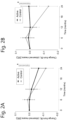
- Figure 2 shows the changes in cognitive function over time.
- Z-scores were calculated based on at least 4 out of 5 NTB tests relevant for cognitive function (CERAD immediate & delayed recall & recognition, Category Fluency, LDST). The calculation was performed for each of the NTB components by subtracting the baseline mean of the item (over the entire ITT population) and dividing by the baseline SD of the item (over the entire ITT population). The resultant z-scores were averaged to obtain the composite z-score. A clinical relevant trend of decreased cognitive function loss is observed in the group that received the active composition according to the invention.
- Figure 2A shows the itt group with all randomised subjects
- figure 2B shows the per protocol analysed subjects.
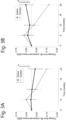
- Figure 3 shows the change in memory function of the same groups of subjects over time.
- the memory composite Z-scores were calculated based on the performance of a subject in 3 NTB components (CERAD immediate & delayed recall & recognition ). The calculation was performed for each of the NTB components by subtracting the baseline mean of the item (over the entire ITT population) and dividing by the baseline SD of the item (over the entire ITT population). The resultant z-scores were averaged to obtain the composite z-score.
- the memory domain Z-score was only calculated if all 3 NTB components were available. Slowing of the decline in memory function was observed for the group that received the active composition. Treatment adherence during the study period was > 90% for both groups and the study protocol was generally well tolerated without severe adverse effects being reported in either treatment group.
- Figure 3A shows the itt group with all randomised subjects
- figure 3B shows the per protocol analysed subjects.
- vitamin C The additional value of vitamin C, vitamin E and selenium according to the invention was assessed in healthy rats supplemented with uridine (as uridine-5'-monophosphate) and fish oil (FO), containing DHA and EPA.
- uridine as uridine-5'-monophosphate
- FO fish oil
- Rats were randomized to four treatment groups and fed 1 of the 4 intervention diets for 6 weeks (see Table 1). On completion of dietary treatment, rats were sacrificed, and brain samples were analyzed for levels of phospholipids, synaptic proteins, and 2 enzymes that are involved in the synthesis of phospholipids, i.e. choline-phosphate cytidylyltransferase (PCYT1A) and choline/ethanolamine phosphotransferase (CEPT1). Table 1: Diets comprising different amounts of the antioxidants, fish oil and UMP.
- PCYT1A choline-phosphate cytidylyltransferase
- CEPT1 choline/ethanolamine phosphotransferase
- Diet (grams/100 gram diet) Nutrient Diet 1 Diet 2 Diet 3 Diet 4 antioxidant low antioxidant high antioxidant low & fish oil+UMP antioxidant high & FO+UMP Vitamin C 0 0.160 0 0.160 Vitamin E 0.000385 0.160 0.000385 0.160 Selenium 0.000007 0.00012 0.000007 0.00012 Fish oil - - 3.2 3.2 UMP - - 1.0 1.0
- PC12 pheochromocytoma cells were grown in DMEM (Gibco), supplemented with 10% fetal bovine serum (FBS), penicillin (100 units/ml), and streptomycin (100 ⁇ g/ml) (Gibco), under a humidified atmosphere with 95% air and 5% CO2 at 37°C.
- Cells were seeded in a 96 well plates at a density of 2000 cells/well, and after 24 hours supplemented with medium containing 20ng/ml nerve growth factor (NGF). The cells were exposed to either a composition according to the invention or left unsupplemented (control). The composition the cells were supplemented with is indicated in table 3. Supplementation of cells was performed in triplicate. These conditions were compared to nonsupplemented cells.
- Example 4 A liquid composition according to the invention, comprising per 125 mL serving:
Landscapes
- Health & Medical Sciences (AREA)
- Life Sciences & Earth Sciences (AREA)
- Veterinary Medicine (AREA)
- Animal Behavior & Ethology (AREA)
- General Health & Medical Sciences (AREA)
- Public Health (AREA)
- Pharmacology & Pharmacy (AREA)
- Medicinal Chemistry (AREA)
- Chemical & Material Sciences (AREA)
- Epidemiology (AREA)
- Molecular Biology (AREA)
- Bioinformatics & Cheminformatics (AREA)
- Engineering & Computer Science (AREA)
- Biomedical Technology (AREA)
- Organic Chemistry (AREA)
- Neurosurgery (AREA)
- Neurology (AREA)
- Chemical Kinetics & Catalysis (AREA)
- General Chemical & Material Sciences (AREA)
- Nuclear Medicine, Radiotherapy & Molecular Imaging (AREA)
- Diabetes (AREA)
- Nutrition Science (AREA)
- Hospice & Palliative Care (AREA)
- Obesity (AREA)
- Hematology (AREA)
- Psychiatry (AREA)
- Acyclic And Carbocyclic Compounds In Medicinal Compositions (AREA)
- Pharmaceuticals Containing Other Organic And Inorganic Compounds (AREA)
- Coloring Foods And Improving Nutritive Qualities (AREA)
Applications Claiming Priority (3)
| Application Number | Priority Date | Filing Date | Title |
|---|---|---|---|
| PCT/NL2016/050161 WO2017155387A1 (fr) | 2016-03-08 | 2016-03-08 | Procédé d'assistance de la fonction de mémoire et/ou la fonction cognitive |
| PCT/NL2017/050140 WO2017155395A1 (fr) | 2016-03-08 | 2017-03-08 | Procédé d'assistance à la fonction mémorielle et/ou à la fonction cognitive |
| EP17716066.0A EP3426236B1 (fr) | 2016-03-08 | 2017-03-08 | Procédé d'assistance à la fonction mémorielle et/ou à la fonction cognitive |
Related Parent Applications (2)
| Application Number | Title | Priority Date | Filing Date |
|---|---|---|---|
| EP17716066.0A Division EP3426236B1 (fr) | 2016-03-08 | 2017-03-08 | Procédé d'assistance à la fonction mémorielle et/ou à la fonction cognitive |
| EP17716066.0A Division-Into EP3426236B1 (fr) | 2016-03-08 | 2017-03-08 | Procédé d'assistance à la fonction mémorielle et/ou à la fonction cognitive |
Publications (2)
| Publication Number | Publication Date |
|---|---|
| EP4285992A2 true EP4285992A2 (fr) | 2023-12-06 |
| EP4285992A3 EP4285992A3 (fr) | 2024-03-06 |
Family
ID=55861106
Family Applications (2)
| Application Number | Title | Priority Date | Filing Date |
|---|---|---|---|
| EP17716066.0A Active EP3426236B1 (fr) | 2016-03-08 | 2017-03-08 | Procédé d'assistance à la fonction mémorielle et/ou à la fonction cognitive |
| EP23191395.5A Pending EP4285992A3 (fr) | 2016-03-08 | 2017-03-08 | Procédé d'assistance à la fonction mémorielle et/ou à la fonction cognitive |
Family Applications Before (1)
| Application Number | Title | Priority Date | Filing Date |
|---|---|---|---|
| EP17716066.0A Active EP3426236B1 (fr) | 2016-03-08 | 2017-03-08 | Procédé d'assistance à la fonction mémorielle et/ou à la fonction cognitive |
Country Status (12)
| Country | Link |
|---|---|
| US (3) | US11123306B2 (fr) |
| EP (2) | EP3426236B1 (fr) |
| JP (2) | JP7000336B2 (fr) |
| CN (1) | CN109069446A (fr) |
| BR (1) | BR112018068072A2 (fr) |
| ES (1) | ES2965339T3 (fr) |
| FI (1) | FI3426236T3 (fr) |
| HR (1) | HRP20231584T1 (fr) |
| PL (1) | PL3426236T3 (fr) |
| PT (1) | PT3426236T (fr) |
| SI (1) | SI3426236T1 (fr) |
| WO (2) | WO2017155387A1 (fr) |
Families Citing this family (1)
| Publication number | Priority date | Publication date | Assignee | Title |
|---|---|---|---|---|
| AU2022345465A1 (en) | 2021-09-17 | 2024-03-21 | N.V. Nutricia | Solid composition suitable as a nutritional composition or supplement for animals that suffer from brain related disorders, decline or diseases |
Family Cites Families (16)
| Publication number | Priority date | Publication date | Assignee | Title |
|---|---|---|---|---|
| US6656947B2 (en) | 2001-04-26 | 2003-12-02 | Wyeth | Antidepressant azaheterocyclylmethyl derivatives of 2,3-dihydro-1,4-dioxino[2,3-f]quinazoline |
| PT1390378E (pt) | 2001-04-30 | 2009-07-23 | Trommsdorff Arzneimittel | Ésteres de uridina farmaceuticamente activos |
| NL1019368C2 (nl) | 2001-11-14 | 2003-05-20 | Nutricia Nv | Preparaat voor het verbeteren van receptorwerking. |
| EP1888081B1 (fr) * | 2005-05-23 | 2016-12-28 | Massachusetts Institute of Technology | Compositions contenant des acides gras polyinsaturés et leurs méthodes d'utilisation |
| EP1800675B1 (fr) * | 2005-12-23 | 2011-05-18 | N.V. Nutricia | Composition comprenant des acides gras polyinsaturés, des protéines, du manganèse et/ou du molybdène et des nucléosides/nucléotides, pour traiter la démence. |
| WO2009002148A1 (fr) * | 2007-06-27 | 2008-12-31 | N.V. Nutricia | Composition alimentaire pour des patients à démence prodromique |
| WO2009002146A1 (fr) | 2007-06-26 | 2008-12-31 | N.V. Nutricia | Procédé pour supporter des activités de la vie quotidienne |
| WO2009002145A1 (fr) * | 2007-06-26 | 2008-12-31 | N.V. Nutricia | Composition lipidique destinée à améliorer l'activité cérébrale |
| ES2697149T3 (es) * | 2007-12-20 | 2019-01-22 | Nutricia Nv | Producto líquido que contiene nucleótidos/nucleósidos |
| WO2012125020A1 (fr) | 2011-03-14 | 2012-09-20 | N.V. Nutricia | Méthode de traitement d'un traumatisme neurologique |
| WO2013066152A1 (fr) * | 2011-10-31 | 2013-05-10 | N.V. Nutricia | Procédé d'amélioration de la fonction exécutive |
| US20150044138A1 (en) * | 2012-03-02 | 2015-02-12 | N.V. Nutricia | Method for improving functional synaptic connectivity |
| WO2013129914A1 (fr) * | 2012-03-02 | 2013-09-06 | N.V. Nutricia | Procédé pour améliorer la connectivité synaptique fonctionnelle |
| WO2013149384A1 (fr) * | 2012-04-05 | 2013-10-10 | Nippon Suisan Kaisha, Ltd. | Agent de prévention d'atrophie cérébrale |
| GB201405033D0 (en) * | 2014-03-20 | 2014-05-07 | Isis Innovation | Combination therapy |
| WO2016083362A1 (fr) * | 2014-11-25 | 2016-06-02 | Fonden For Helene Elsass Centeret | Composition pour améliorer les fonctions cognitives |
-
2016
- 2016-03-08 WO PCT/NL2016/050161 patent/WO2017155387A1/fr not_active Ceased
-
2017
- 2017-03-08 CN CN201780028115.3A patent/CN109069446A/zh active Pending
- 2017-03-08 EP EP17716066.0A patent/EP3426236B1/fr active Active
- 2017-03-08 PL PL17716066.0T patent/PL3426236T3/pl unknown
- 2017-03-08 ES ES17716066T patent/ES2965339T3/es active Active
- 2017-03-08 WO PCT/NL2017/050140 patent/WO2017155395A1/fr not_active Ceased
- 2017-03-08 BR BR112018068072A patent/BR112018068072A2/pt not_active Application Discontinuation
- 2017-03-08 JP JP2018547886A patent/JP7000336B2/ja active Active
- 2017-03-08 US US16/083,399 patent/US11123306B2/en active Active
- 2017-03-08 PT PT177160660T patent/PT3426236T/pt unknown
- 2017-03-08 SI SI201731457T patent/SI3426236T1/sl unknown
- 2017-03-08 FI FIEP17716066.0T patent/FI3426236T3/fi active
- 2017-03-08 EP EP23191395.5A patent/EP4285992A3/fr active Pending
- 2017-03-08 HR HRP20231584TT patent/HRP20231584T1/hr unknown
-
2021
- 2021-08-11 US US17/399,160 patent/US11918546B2/en active Active
- 2021-12-23 JP JP2021208951A patent/JP7230166B2/ja active Active
-
2024
- 2024-01-23 US US18/419,590 patent/US12245992B2/en active Active
Non-Patent Citations (1)
| Title |
|---|
| NICK VAN WIJK ET AL: "Targeting synaptic dysfunction in Alzheimer's disease by administering a specific nutrient combination", JOURNAL OF ALZHEIMER'S DISEASE : JAD, 1 January 2014 (2014-01-01), Netherlands, pages 459 - 479, XP055190994, Retrieved from the Internet <URL:http://www.ncbi.nlm.nih.gov/pubmed/23985420> [retrieved on 20251104], DOI: 10.3233/JAD-130998 * |
Also Published As
| Publication number | Publication date |
|---|---|
| WO2017155387A1 (fr) | 2017-09-14 |
| PL3426236T3 (pl) | 2024-03-18 |
| US11918546B2 (en) | 2024-03-05 |
| JP7000336B2 (ja) | 2022-02-04 |
| EP3426236A1 (fr) | 2019-01-16 |
| US20190070126A1 (en) | 2019-03-07 |
| US12245992B2 (en) | 2025-03-11 |
| SI3426236T1 (sl) | 2024-02-29 |
| ES2965339T3 (es) | 2024-04-12 |
| EP4285992A3 (fr) | 2024-03-06 |
| US11123306B2 (en) | 2021-09-21 |
| JP2022058393A (ja) | 2022-04-12 |
| PT3426236T (pt) | 2023-12-04 |
| US20240156748A1 (en) | 2024-05-16 |
| FI3426236T3 (fi) | 2023-11-01 |
| US20210386682A1 (en) | 2021-12-16 |
| JP2019512487A (ja) | 2019-05-16 |
| CN109069446A (zh) | 2018-12-21 |
| WO2017155395A1 (fr) | 2017-09-14 |
| BR112018068072A2 (pt) | 2019-01-08 |
| JP7230166B2 (ja) | 2023-02-28 |
| EP3426236B1 (fr) | 2023-10-04 |
| HRP20231584T1 (hr) | 2024-03-15 |
Similar Documents
| Publication | Publication Date | Title |
|---|---|---|
| US11395810B2 (en) | Memory in subjects with mini-mental state examination of 24-26 | |
| AU2013226627B2 (en) | Method for improving functional synaptic connectivity | |
| WO2009002148A1 (fr) | Composition alimentaire pour des patients à démence prodromique | |
| RU2705208C2 (ru) | Способ для оценки и лечения или профилактики нарушенных уровней полярных липидов в плазме | |
| EP3426237B1 (fr) | Procédé de traitement d'une atrophie cérébrale | |
| WO2013129914A1 (fr) | Procédé pour améliorer la connectivité synaptique fonctionnelle | |
| WO2015115885A1 (fr) | Procédé pour réduire les lésions de la substance blanche, les hyperintensités de la substance blanche (wmh), la leucoaraiose ou la maladie de la substance blanche périventriculaire chez des personnes âgées | |
| US12245992B2 (en) | Method for supporting memory function and/or cognitive function | |
| WO2026008342A1 (fr) | Composition pour améliorer le sommeil |
Legal Events
| Date | Code | Title | Description |
|---|---|---|---|
| PUAI | Public reference made under article 153(3) epc to a published international application that has entered the european phase |
Free format text: ORIGINAL CODE: 0009012 |
|
| STAA | Information on the status of an ep patent application or granted ep patent |
Free format text: STATUS: REQUEST FOR EXAMINATION WAS MADE |
|
| 17P | Request for examination filed |
Effective date: 20230814 |
|
| AC | Divisional application: reference to earlier application |
Ref document number: 3426236 Country of ref document: EP Kind code of ref document: P |
|
| AK | Designated contracting states |
Kind code of ref document: A2 Designated state(s): AL AT BE BG CH CY CZ DE DK EE ES FI FR GB GR HR HU IE IS IT LI LT LU LV MC MK MT NL NO PL PT RO RS SE SI SK SM TR |
|
| REG | Reference to a national code |
Ref country code: DE Ref legal event code: R079 Free format text: PREVIOUS MAIN CLASS: A61P0003020000 Ipc: A61K0031040000 |
|
| PUAL | Search report despatched |
Free format text: ORIGINAL CODE: 0009013 |
|
| AK | Designated contracting states |
Kind code of ref document: A3 Designated state(s): AL AT BE BG CH CY CZ DE DK EE ES FI FR GB GR HR HU IE IS IT LI LT LU LV MC MK MT NL NO PL PT RO RS SE SI SK SM TR |
|
| RIC1 | Information provided on ipc code assigned before grant |
Ipc: A61P 3/02 20060101ALI20240126BHEP Ipc: A61P 25/28 20060101ALI20240126BHEP Ipc: A61K 31/7072 20060101ALI20240126BHEP Ipc: A61K 31/7068 20060101ALI20240126BHEP Ipc: A61K 31/375 20060101ALI20240126BHEP Ipc: A61K 31/202 20060101ALI20240126BHEP Ipc: A61K 31/04 20060101AFI20240126BHEP |
|
| STAA | Information on the status of an ep patent application or granted ep patent |
Free format text: STATUS: EXAMINATION IS IN PROGRESS |
|
| 17Q | First examination report despatched |
Effective date: 20251111 |