EP4287448A1 - Energiespeichersystem und detektionsverfahren für ein energiespeichersystem - Google Patents
Energiespeichersystem und detektionsverfahren für ein energiespeichersystem Download PDFInfo
- Publication number
- EP4287448A1 EP4287448A1 EP22752120.0A EP22752120A EP4287448A1 EP 4287448 A1 EP4287448 A1 EP 4287448A1 EP 22752120 A EP22752120 A EP 22752120A EP 4287448 A1 EP4287448 A1 EP 4287448A1
- Authority
- EP
- European Patent Office
- Prior art keywords
- power conversion
- battery
- control unit
- input voltage
- battery cluster
- Prior art date
- Legal status (The legal status is an assumption and is not a legal conclusion. Google has not performed a legal analysis and makes no representation as to the accuracy of the status listed.)
- Pending
Links
Images

Classifications
-
- G—PHYSICS
- G01—MEASURING; TESTING
- G01R—MEASURING ELECTRIC VARIABLES; MEASURING MAGNETIC VARIABLES
- G01R19/00—Arrangements for measuring currents or voltages or for indicating presence or sign thereof
- G01R19/25—Arrangements for measuring currents or voltages or for indicating presence or sign thereof using digital measurement techniques
- G01R19/2513—Arrangements for monitoring electric power systems, e.g. power lines or loads; Logging
-
- G—PHYSICS
- G01—MEASURING; TESTING
- G01R—MEASURING ELECTRIC VARIABLES; MEASURING MAGNETIC VARIABLES
- G01R31/00—Arrangements for testing electric properties; Arrangements for locating electric faults; Arrangements for electrical testing characterised by what is being tested not provided for elsewhere
- G01R31/36—Arrangements for testing, measuring or monitoring the electrical condition of accumulators or electric batteries, e.g. capacity or state of charge [SoC]
- G01R31/382—Arrangements for monitoring battery or accumulator variables, e.g. SoC
- G01R31/3835—Arrangements for monitoring battery or accumulator variables, e.g. SoC involving only voltage measurements
-
- G—PHYSICS
- G01—MEASURING; TESTING
- G01R—MEASURING ELECTRIC VARIABLES; MEASURING MAGNETIC VARIABLES
- G01R31/00—Arrangements for testing electric properties; Arrangements for locating electric faults; Arrangements for electrical testing characterised by what is being tested not provided for elsewhere
-
- G—PHYSICS
- G01—MEASURING; TESTING
- G01R—MEASURING ELECTRIC VARIABLES; MEASURING MAGNETIC VARIABLES
- G01R31/00—Arrangements for testing electric properties; Arrangements for locating electric faults; Arrangements for electrical testing characterised by what is being tested not provided for elsewhere
- G01R31/36—Arrangements for testing, measuring or monitoring the electrical condition of accumulators or electric batteries, e.g. capacity or state of charge [SoC]
-
- G—PHYSICS
- G01—MEASURING; TESTING
- G01R—MEASURING ELECTRIC VARIABLES; MEASURING MAGNETIC VARIABLES
- G01R31/00—Arrangements for testing electric properties; Arrangements for locating electric faults; Arrangements for electrical testing characterised by what is being tested not provided for elsewhere
- G01R31/36—Arrangements for testing, measuring or monitoring the electrical condition of accumulators or electric batteries, e.g. capacity or state of charge [SoC]
- G01R31/385—Arrangements for measuring battery or accumulator variables
-
- G—PHYSICS
- G01—MEASURING; TESTING
- G01R—MEASURING ELECTRIC VARIABLES; MEASURING MAGNETIC VARIABLES
- G01R31/00—Arrangements for testing electric properties; Arrangements for locating electric faults; Arrangements for electrical testing characterised by what is being tested not provided for elsewhere
- G01R31/36—Arrangements for testing, measuring or monitoring the electrical condition of accumulators or electric batteries, e.g. capacity or state of charge [SoC]
- G01R31/396—Acquisition or processing of data for testing or for monitoring individual cells or groups of cells within a battery
-
- H—ELECTRICITY
- H02—GENERATION; CONVERSION OR DISTRIBUTION OF ELECTRIC POWER
- H02J—ELECTRIC POWER NETWORKS; CIRCUIT ARRANGEMENTS OR SYSTEMS FOR SUPPLYING OR DISTRIBUTING ELECTRIC POWER; SYSTEMS FOR STORING ELECTRIC ENERGY
- H02J3/00—Circuit arrangements for AC mains or AC distribution networks
- H02J3/28—Arrangements for balancing of the load in networks by storage of energy
- H02J3/32—Arrangements for balancing of the load in networks by storage of energy using batteries or super capacitors with converting means
-
- H—ELECTRICITY
- H02—GENERATION; CONVERSION OR DISTRIBUTION OF ELECTRIC POWER
- H02J—ELECTRIC POWER NETWORKS; CIRCUIT ARRANGEMENTS OR SYSTEMS FOR SUPPLYING OR DISTRIBUTING ELECTRIC POWER; SYSTEMS FOR STORING ELECTRIC ENERGY
- H02J7/00—Circuit arrangements for charging or discharging batteries or for supplying loads from batteries
- H02J7/50—Circuit arrangements for charging or discharging batteries or for supplying loads from batteries acting upon multiple batteries simultaneously or sequentially
-
- H—ELECTRICITY
- H02—GENERATION; CONVERSION OR DISTRIBUTION OF ELECTRIC POWER
- H02J—ELECTRIC POWER NETWORKS; CIRCUIT ARRANGEMENTS OR SYSTEMS FOR SUPPLYING OR DISTRIBUTING ELECTRIC POWER; SYSTEMS FOR STORING ELECTRIC ENERGY
- H02J7/00—Circuit arrangements for charging or discharging batteries or for supplying loads from batteries
- H02J7/50—Circuit arrangements for charging or discharging batteries or for supplying loads from batteries acting upon multiple batteries simultaneously or sequentially
- H02J7/52—Circuit arrangements for charging or discharging batteries or for supplying loads from batteries acting upon multiple batteries simultaneously or sequentially for charge balancing, e.g. equalisation of charge between batteries
- H02J7/54—Passive balancing, e.g. using resistors or parallel MOSFETs
-
- H—ELECTRICITY
- H02—GENERATION; CONVERSION OR DISTRIBUTION OF ELECTRIC POWER
- H02J—ELECTRIC POWER NETWORKS; CIRCUIT ARRANGEMENTS OR SYSTEMS FOR SUPPLYING OR DISTRIBUTING ELECTRIC POWER; SYSTEMS FOR STORING ELECTRIC ENERGY
- H02J7/00—Circuit arrangements for charging or discharging batteries or for supplying loads from batteries
- H02J7/50—Circuit arrangements for charging or discharging batteries or for supplying loads from batteries acting upon multiple batteries simultaneously or sequentially
- H02J7/575—Parallel/serial switching of connection of batteries to charge or load circuit
-
- H—ELECTRICITY
- H02—GENERATION; CONVERSION OR DISTRIBUTION OF ELECTRIC POWER
- H02J—ELECTRIC POWER NETWORKS; CIRCUIT ARRANGEMENTS OR SYSTEMS FOR SUPPLYING OR DISTRIBUTING ELECTRIC POWER; SYSTEMS FOR STORING ELECTRIC ENERGY
- H02J7/00—Circuit arrangements for charging or discharging batteries or for supplying loads from batteries
- H02J7/60—Circuit arrangements for charging or discharging batteries or for supplying loads from batteries including safety or protection arrangements
- H02J7/685—Circuit arrangements for charging or discharging batteries or for supplying loads from batteries including safety or protection arrangements using connection detecting circuits
-
- H—ELECTRICITY
- H02—GENERATION; CONVERSION OR DISTRIBUTION OF ELECTRIC POWER
- H02J—ELECTRIC POWER NETWORKS; CIRCUIT ARRANGEMENTS OR SYSTEMS FOR SUPPLYING OR DISTRIBUTING ELECTRIC POWER; SYSTEMS FOR STORING ELECTRIC ENERGY
- H02J7/00—Circuit arrangements for charging or discharging batteries or for supplying loads from batteries
- H02J7/80—Circuit arrangements for charging or discharging batteries or for supplying loads from batteries including monitoring or indicating arrangements
- H02J7/82—Control of state of charge [SOC]
-
- H—ELECTRICITY
- H02—GENERATION; CONVERSION OR DISTRIBUTION OF ELECTRIC POWER
- H02J—ELECTRIC POWER NETWORKS; CIRCUIT ARRANGEMENTS OR SYSTEMS FOR SUPPLYING OR DISTRIBUTING ELECTRIC POWER; SYSTEMS FOR STORING ELECTRIC ENERGY
- H02J7/00—Circuit arrangements for charging or discharging batteries or for supplying loads from batteries
- H02J7/855—Circuit arrangements for charging or discharging batteries or for supplying loads from batteries with circuits adapted for supplying loads from the battery
-
- H—ELECTRICITY
- H02—GENERATION; CONVERSION OR DISTRIBUTION OF ELECTRIC POWER
- H02J—ELECTRIC POWER NETWORKS; CIRCUIT ARRANGEMENTS OR SYSTEMS FOR SUPPLYING OR DISTRIBUTING ELECTRIC POWER; SYSTEMS FOR STORING ELECTRIC ENERGY
- H02J7/00—Circuit arrangements for charging or discharging batteries or for supplying loads from batteries
- H02J7/80—Circuit arrangements for charging or discharging batteries or for supplying loads from batteries including monitoring or indicating arrangements
Definitions
- This application relates to the field of electronic technologies, and in particular, to an energy storage system and an energy storage system detection method.
- An energy storage system includes a plurality of battery clusters and a plurality of power conversion units.
- the battery clusters and the power conversion units are usually made as a whole, and a manner in which the battery clusters are connected to the power conversion units has been fixed. This is not conducive to maintenance and system expansion. If the battery clusters and the power conversion units are made as two modules, there may be a connection error during installation. If there is the connection error in the system, the energy storage system may not work properly, or may even explode and be damaged after the energy storage system is started. Therefore, if the battery clusters and the power conversion units are made as two modules, when installation or commissioning of the system is completed, how to identify a connection relationship between the battery clusters and the power conversion units in the energy storage system is an urgent problem to be resolved.
- This application provides an energy storage system and an energy storage system detection method, to detect a connection relationship between a plurality of battery clusters and a plurality of power conversion units in the energy storage system.
- an energy storage system includes: a first control unit, a plurality of battery clusters, and a plurality of power conversion units.
- the plurality of battery clusters are configured to output voltages to the plurality of power conversion units.
- the plurality of power conversion units are configured to: receive the input voltages from the plurality of battery clusters, and output electric energy after performing direct current conversion.
- the first control unit is configured to: send a first instruction to a first battery cluster, where the first instruction instructs to change an output voltage of the first battery cluster, and the first battery cluster is any one of the plurality of battery clusters; obtain a first input voltage and a second input voltage that are of each of the plurality of power conversion units, where the first input voltage is an input voltage of each power conversion unit before the first instruction is sent, and the second input voltage is an input voltage of each power conversion unit after the first instruction is sent; and determine, based on the first instruction, and the first input voltage and the second input voltage that are of each of the plurality of power conversion units, whether each of the plurality of power conversion units is connected to the first battery cluster.
- the first control unit in the energy storage system may detect whether the first battery cluster is connected to each of the plurality of power conversion units, to determine a connection relationship between the first battery cluster and the plurality of power conversion units.
- the first battery cluster includes a second control unit, a plurality of battery packs, and at least one switch circuit.
- a series circuit consists of the plurality of battery packs.
- the second control unit is configured to: receive the first instruction; and control, based on the first instruction, the at least one switch circuit to be turned on/off, to connect some battery packs in the first battery cluster to the series circuit or disconnect some battery packs in the first battery cluster from the series circuit.
- the first battery cluster is provided with the switch circuit and the second control unit. As a result, the output voltage of the first battery cluster can be quickly changed, and the solution provided in this application can be implemented.
- the first control unit is specifically configured to: determine a first voltage difference between voltages that are output by the first battery cluster before and after a voltage change instructed by the first instruction; determine a first threshold based on the first voltage difference, where the first threshold is less than or equal to the first voltage difference; determine a second voltage difference between a first input voltage and a second input voltage that are of a first power conversion unit, where the first power conversion unit is any one of the plurality of power conversion units; and when the second voltage difference is greater than the first threshold, determine that the first power conversion unit is connected to the first battery cluster; or when the second voltage difference is less than or equal to the first threshold, determine that the first power conversion unit is not connected to the first battery cluster.
- each of the plurality of power conversion units is further configured to send information about the first input voltage and information about the second input voltage to the first control unit.
- the first control unit is further configured to: obtain first information, where the first information includes a preset connection relationship between the first battery cluster and the plurality of power conversion units; and perform alarming when an actual connection relationship between the first battery cluster and the plurality of power conversion units is different from the preset connection relationship.
- the first control unit may further determine, based on the first information, whether there is a connection error in the energy storage system. Then, a problem in the system can be discovered in time, and a security risk in the system can be eliminated.
- An energy storage system includes: a first control unit, a plurality of battery clusters, and a plurality of power conversion units.
- the plurality of battery clusters are configured to output voltages to the plurality of power conversion units.
- the plurality of power conversion units are configured to: receive the input voltages from the plurality of battery clusters, and output electric energy after performing direct current conversion.
- the method includes: The first control unit sends a first instruction to a first battery cluster, where the first instruction instructs to change an output voltage of the first battery cluster, and the first battery cluster is any one of the plurality of battery clusters.
- the first control unit obtains a first input voltage and a second input voltage that are of each of the plurality of power conversion units, where the first input voltage is an input voltage of each power conversion unit before the first instruction is sent, and the second input voltage is an input voltage of each power conversion unit after the first instruction is sent.
- the first control unit determines, based on the first instruction, and the first input voltage and the second input voltage that are of each of the plurality of power conversion units, whether each of the plurality of power conversion units is connected to the first battery cluster.
- the first control unit in the energy storage system may detect whether the first battery cluster is connected to each of the plurality of power conversion units, to determine a connection relationship between the first battery cluster and the plurality of power conversion units.
- the first battery cluster includes a second control unit, a plurality of battery packs, and at least one switch circuit.
- a series circuit consists of the plurality of battery packs. That the first control unit sends a first instruction to a first battery cluster includes: The first control unit sends the first instruction to the second control unit, so that the second control unit controls, based on the first instruction, the at least one switch circuit to be turned on/off, to connect some battery packs in the first battery cluster to the series circuit or disconnect some battery packs in the first battery cluster from the series circuit.
- the first control unit determines whether each of the plurality of power conversion units is connected to the first battery cluster includes: The first control unit determines a first voltage difference between voltages that are output by the first battery cluster before and after a voltage change instructed by the first instruction. The first control unit determines a first threshold based on the first voltage difference, where the first threshold is less than or equal to the first voltage difference. The first control unit determines a second voltage difference between a first input voltage and a second input voltage that are of a first power conversion unit, where the first power conversion unit is any one of the plurality of power conversion units.
- the first control unit determines that the first power conversion unit is connected to the first battery cluster; or when the second voltage difference is less than or equal to the first threshold, the first control unit determines that the first power conversion unit is not connected to the first battery cluster.
- the method further includes: The first control unit obtains first information, where the first information includes a preset connection relationship between the first battery cluster and the plurality of power conversion units.
- the first control unit performs alarming when an actual connection relationship between the first battery cluster and the plurality of power conversion units is different from the preset connection relationship.
- the first control unit may further determine, based on the first information, whether there is a connection error in the energy storage system. Then, a problem in the system can be discovered in time, and a security risk in the system can be eliminated.
- a first control unit of an energy storage system is provided.
- the energy storage system further includes a plurality of battery clusters and a plurality of power conversion units.
- the plurality of battery clusters are configured to output voltages to the plurality of power conversion units.
- the plurality of power conversion units are configured to: receive the input voltages from the plurality of battery clusters, and output electric energy after performing direct current conversion.
- the first control unit includes: a transceiver unit, configured to send a first instruction to a first battery cluster, where the first instruction instructs to change an output voltage of the first battery cluster, and the first battery cluster is any one of the plurality of battery clusters; and the transceiver unit is further configured to obtain a first input voltage and a second input voltage that are of each of the plurality of power conversion units, the first input voltage is an input voltage of each power conversion unit before the first instruction is sent, and the second input voltage is an input voltage of each power conversion unit after the first instruction is sent; and a processing unit, configured to: determine, based on the first instruction, and the first input voltage and the second input voltage that are of each of the plurality of power conversion units, whether each of the plurality of power conversion units is connected to the first battery cluster.
- the first battery cluster includes a second control unit, a plurality of battery packs, and at least one switch circuit.
- a series circuit consists of the plurality of battery packs.
- the transceiver unit is configured to send the first instruction to the second control unit, so that the second control unit controls, based on the first instruction, the at least one switch circuit to be turned on/off, to connect some battery packs in the first battery cluster to the series circuit or disconnect some battery packs in the first battery cluster from the series circuit.
- the processing unit is further configured to: determine a first voltage difference between voltages that are output by the first battery cluster before and after a voltage change instructed by the first instruction; determine a first threshold based on the first voltage difference, where the first threshold is less than or equal to the first voltage difference; determine a second voltage difference between a first input voltage and a second input voltage that are of a first power conversion unit, where the first power conversion unit is any one of the plurality of power conversion units; and when the second voltage difference is greater than the first threshold, determine that the first power conversion unit is connected to the first battery cluster; or when the second voltage difference is less than or equal to the first threshold, determine that the first power conversion unit is not connected to the first battery cluster.
- the transceiver unit is further configured to obtain first information, where the first information includes a preset connection relationship between the first battery cluster and the plurality of power conversion units.
- the processing unit is further configured to perform alarming when an actual connection relationship between the first battery cluster and the plurality of power conversion units is different from the preset connection relationship.
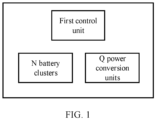
- the energy storage system includes: a first control unit, N battery clusters, and Q power conversion units, where N is greater than or equal to 2, and Q is greater than or equal to 2.
- the battery cluster is configured to output a voltage to the power conversion unit.
- One battery cluster usually includes m battery packs, and a series circuit consists of m battery packs, where m is greater than or equal to 1.
- a structure of the battery cluster is improved, so that an output voltage of the battery cluster can be quickly changed. The following describes manners of improving the battery cluster.
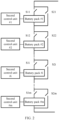
- a battery cluster is provided with a second control unit and at least one first switch circuit, and there may be one or more second control units.
- a battery pack #i in the battery cluster is used as an example.
- the first switch circuit includes a series circuit consisting of a single-pole single-throw switch S1i and the battery pack #i, and a parallel circuit consisting of a single-pole single-throw switch S2i, the battery pack #i, and the switch S1i.
- the switch S 1i is turned off and the switch S2i is turned on, the battery pack #i may be disconnected from a series circuit.
- the switch S 1i is turned on and the switch S2i is turned off, the battery pack #i may be connected to the series circuit.
- disconnecting a battery pack in this application means removing the battery pack from a series circuit, to reduce a quantity of battery packs included in the series circuit.
- Connecting a battery pack in this application means connecting the battery pack to a series circuit, to increase a quantity of battery packs included in the series circuit.
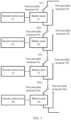
- a battery cluster is provided with a second control unit and at least one second switch circuit, and there may be one or more second control units.
- a battery pack #i in the battery cluster is used as an example.
- the second switch circuit includes a circuit consisting of a single-pole double-throw switch S3i and the battery pack #i.
- the battery pack #i may be disconnected from a series circuit.
- the movable terminal of the switch S3i is switched to connect to a non-movable terminal #3i, the battery pack #i may be connected to the series circuit.
- the power conversion unit is configured to: receive input voltages from the battery clusters, and output electric energy after performing direct current conversion.
- the power conversion unit in this system may be a DC-DC converter, and the DC-DC converter may also be referred to as a direct current-direct current converter. It should be understood that a sample value of the input voltage of the power conversion unit may be used to indicate an output voltage of the battery cluster.
- the buck converter is a step-down converter
- the boost converter is a step-up converter
- the buck-boost converter is a step-down/step-up converter.
- a person skilled in the art may select a proper type of DC-DC converter based on an actual situation.
- a connection relationship between a battery cluster and a power conversion unit may be that one battery cluster is connected to one power conversion unit, one battery cluster is connected to a plurality of power conversion units, or a plurality of battery clusters are connected to one power conversion unit. That is, Q may be less than, equal to, or greater than N. This is not limited in this application.
- An energy storage system is usually provided with one first control unit.
- the N battery clusters and the Q power conversion units are separately connected to the first control unit through communication cables.
- the first control unit may send an instruction to the battery cluster through the communication cable.
- the second control unit in the battery cluster receives the instruction, and controls the output voltage of the battery cluster based on the instruction.
- the power conversion unit may send the sample value of the input voltage to the first control unit through the communication cable. Accordingly, the first control unit receives the sample value of the input voltage of the power conversion unit.
- the energy storage system includes a first control unit, N battery clusters, and Q power conversion units.
- the first control unit may be configured to detect a connection relationship between the N battery clusters and the Q power conversion units.
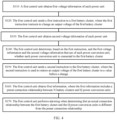
- the first battery cluster is any one of the N battery clusters, as shown in FIG. 4 .
- Each of the Q power conversion units sends first voltage information to the first control unit, and accordingly, the first control unit obtains the first voltage information of each power conversion unit.
- the first voltage information of each power conversion unit is used to indicate a first input voltage that is of each power conversion unit before a first instruction is sent.
- the first control unit sends the first instruction to a first battery cluster, where the first instruction instructs to change an output voltage of the first battery cluster; and accordingly, the first battery cluster receives the first instruction.
- a second control unit in the first battery cluster receives the first instruction, and decreases the output voltage of the first battery cluster.
- switches S11 to S1m are all in an on state, and switches S21 to S2m are all in an off state. That is, m battery packs are all connected to a series circuit.
- a second control unit #1 receives the first instruction, turns off the switch 511, and turns on the switch S21. That is, the second control unit #1 disconnects a battery pack #1 from the series circuit.
- switches S31 to S3i in the first battery cluster are connected to non-movable terminals #3i corresponding to the switches. That is, m battery packs are all connected to a series circuit.
- a second control unit #1 receives the first instruction, and switches the switch S31 to connect to a non-movable terminal #41. That is, the second control unit #1 disconnects a battery pack #1 from the series circuit.
- a decrease amount of the output voltage of the first battery cluster is associated with an output voltage of the battery pack #1.
- the decrease amount of the output voltage of the first battery cluster is equal to the output voltage of the battery pack #1.
- a manner of changing the output voltage of the first battery cluster may be alternatively as follows: A second control unit #1 and a second control unit #2 in the first battery cluster receive the first instruction, and disconnect a battery pack #1 and a battery pack #2 from the series circuit in the foregoing manner.
- a second control unit in the first battery cluster receives the first instruction, and increases the output voltage of the first battery cluster.
- a switch S11 is turned off, a switch S21 is turned on, switches S12 to S1m are in an on state, and switches S22 to S2m are in an off state. That is, a battery pack #1 is not connected to a series circuit.
- a second control unit #1 receives the first instruction, turns on the switch S11, and turns off the switch S21. That is, the second control unit #1 connects the battery pack #1 to the series circuit.
- a switch S31 is connected to a corresponding non-movable terminal #41, and S32 to S3m are connected to non-movable terminals #3i corresponding to the switches. That is, a battery pack #1 is not connected to a series circuit.
- the second control unit #1 receives the first instruction, and switches the switch S31 to connect to a non-movable terminal #31. That is, a battery pack #1 is connected to the series circuit.
- an increase amount of the output voltage of the first battery cluster is associated with an output voltage of the battery pack #1.
- the increase amount of the output voltage of the first battery cluster is equal to the output voltage of the battery pack #1.
- a manner of changing the output voltage of the first battery cluster may be alternatively as follows: Before the first instruction is received, a battery pack #1 and a battery pack #2 in the first battery cluster are not connected to the series circuit. A second control unit #1 and a second control unit #2 connect the battery pack #1 and the battery pack #2 to the series circuit based on the received first instruction in the foregoing manner.
- Each of the Q power conversion units sends second voltage information to the first control unit, and accordingly, the first control unit obtains the second voltage information of each power conversion unit.
- the second voltage information of each power conversion unit is used to indicate a second input voltage that is of each power conversion unit after the first instruction is sent.
- S130 is performed immediately after S120.
- S130 may be performed after an interval of T following S120.
- T is two seconds.
- the interval T is set to wait for the output voltage of the first battery cluster to stabilize, to improve accuracy of the second input voltage that is of each power conversion unit and that is obtained by the first control unit.
- the first control unit determines, Based on the first instruction, and the first voltage information and the second voltage information that are of each power conversion unit, whether each power conversion unit is connected to the first battery cluster.
- the first control unit determines a first voltage difference between voltages that are of the first battery cluster before and after a voltage change instructed by the first instruction.
- the first voltage difference is associated with a battery pack that is disconnected from the series circuit.
- the first instruction instructs the second control unit #1 in the first battery cluster to disconnect the battery pack #1 from the series circuit.
- the output voltage of the battery pack #1 is 50 V
- the first control unit determines that the first voltage difference is 50 V
- the first control unit determines a first threshold based on the first voltage difference, where the first threshold is less than or equal to the first voltage difference.
- the first threshold is 47 V
- the first control unit determines whether a decrease amount (an example of a second voltage difference) of the second input voltage of each power conversion unit compared to the first input voltage of each power conversion unit is greater than the first threshold. It is determined that a power conversion unit is connected to the first battery cluster, where a decrease amount of a second input voltage of the power conversion unit compared to a first input voltage of the power conversion unit is greater than the first threshold.
- Table 1 Power conversion unit #1 Power conversion unit #2 Power conversion unit #3 First input voltage/V 1000 1000 1000 Second input voltage/V 950 990 952 Voltage decrease amount/V 50 10 48
- a decrease amount of a second input voltage of a power conversion unit #1 compared to a first input voltage of the power conversion unit #1 is greater than the first threshold
- a decrease amount of a second input voltage of a power conversion unit #2 compared to a first input voltage of a power conversion unit #2 is less than the first threshold
- a decrease amount of a second input voltage of a power conversion unit #3 compared to a first input voltage of the power conversion unit #3 is greater than the first threshold.
- the first control unit determines a first voltage difference between voltages that are of the first battery cluster before and after a voltage change instructed by the first instruction.
- the first voltage difference is associated with a battery pack that is connected to the series circuit.
- the first instruction instructs the second control unit #1 in the first battery cluster to connect the battery pack #1 to the series circuit.
- the output voltage of the battery pack #1 is 50 V
- the first control unit determines that the first voltage difference is 50 V
- the first control unit determines a first threshold based on the first voltage difference, where the first threshold is less than or equal to the first voltage difference.
- the first threshold is 47 V
- the first control unit determines whether an increase amount (an example of a second voltage difference) of the second input voltage of each power conversion unit compared to the first input voltage of each power conversion unit is greater than the first threshold. It is determined that a power conversion unit is connected to the first battery cluster, where an increase amount of a second input voltage of the power conversion unit compared to a first input voltage of the power conversion unit is greater than the first threshold.
- Table 2 Power conversion unit #1 Power conversion unit #2 Power conversion unit #3 First voltage/V 1000 1000 1000 Second voltage/V 1050 1005 1048 Voltage increase amount/V 50 5 48
- an increase amount of a second input voltage of a power conversion unit #1 compared to a first input voltage of the power conversion unit #1 is greater than the first threshold
- an increase amount of a second input voltage of a power conversion unit #2 compared to a first input voltage of the power conversion unit #2 is less than the first threshold
- an increase amount of a second input voltage of a power conversion unit #3 compared to a first input voltage of the power conversion unit #3 is greater than the first threshold.
- the first control unit may determine the connection relationship between the first battery cluster and the Q power conversion units through S110 to S140. Similarly, the first control unit may determine a connection relationship between another battery cluster and the Q power conversion units in the energy storage system.
- the detection method further includes the following step.
- the first control unit sends a second instruction to the first battery cluster, where the second instruction is used to restore the output voltage of the first battery cluster to a value before the change.
- the second control unit #1 in the first battery cluster disconnects the battery pack #1 from the series circuit based on the received first instruction.
- the second control unit #1 in the first battery cluster connects the battery pack #1 to the series circuit based on the received second instruction.
- the second control unit #1 in the first battery cluster connects the battery pack #1 to the series circuit based on the received first instruction.
- the second control unit #1 in the first battery cluster disconnects the battery pack #1 from the series circuit based on the received second instruction.
- the first control unit obtains first information, where the first information includes a preset connection relationship between the N battery clusters and the Q power conversion units, that is, the first information includes a preset connection relationship between the first battery cluster and the Q power conversion units.
- the first information may be manually configured.
- the first control unit performs alarming when determining that an actual connection relationship between the first battery cluster and the Q power conversion units is different from the preset connection relationship.
- the preset connection relationship that is between the first battery cluster and the Q power conversion units and that is included in the first information is that the first battery cluster is connected to one power conversion unit.
- the first control unit performs alarming when determining, through S110 to S140, that the first battery cluster is connected to two power conversion units.
- the preset connection relationship that is between the first battery cluster and the Q power conversion units and that is included in the first information is that the first battery cluster is connected to the power conversion unit #1.
- the first control unit performs alarming when determining, through S110 to S140, that the first battery cluster is connected to the power conversion unit #2.
- connection relationship between the first battery cluster and the Q power conversion units in the energy storage system it may be further determined whether the actual connection relationship between the first battery cluster and the Q power conversion units is the same as the preset connection relationship. Then, a connection error in the system can be discovered in time, and a security risk in the system can be eliminated.
- the following describes another method for detecting a connection relationship between a first battery cluster and Q power conversion units provided in this application, as shown in FIG. 5 .
- Each of the Q power conversion units sends first voltage information to a first control unit, and accordingly, the first control unit obtains the first voltage information of each power conversion unit.
- This process may be similar to S110.
- the first control unit sends a first instruction to a first battery cluster, where the first instruction instructs to change an output voltage of the first battery cluster; and accordingly, the first battery cluster receives the first instruction.
- a manner of changing the output voltage of the first battery cluster may be similar to that in S 120.
- Each of the Q power conversion units sends second voltage information to the first control unit, and accordingly, the first control unit obtains the second voltage information of each power conversion unit.
- S240 Repeat S220 and S230 for a plurality of times.
- the first control unit determines whether each power conversion unit is connected to the first battery cluster.
- the first control unit determines a second threshold, where the second threshold is associated with a quantity of times for which S220 and S230 are repeated. For example, when S220 and S230 are repeated for three times, it may be determined that the second threshold is 2.
- battery packs #1 to #m in the first battery cluster are connected to a series circuit in the manner shown in FIG. 2 or FIG. 3 .
- An output voltage of each battery pack is 50 V
- a second control unit #1 receives the first instruction, and disconnects the battery pack #1 from the series circuit.
- the first control unit obtains a second input voltage #1 of each power conversion unit.
- a second control unit #2 receives the first instruction, and disconnects a battery pack #2 from the series circuit based on the first execution of S220.
- the first control unit obtains a second input voltage #2 of each power conversion unit.
- a second control unit #3 receives the first instruction, and disconnects a battery pack #3 from the series circuit based on the first execution and the second execution of S220.
- the first control unit obtains a second input voltage #3 of each power conversion unit.
- the first control unit determines a first voltage difference between voltages that are of the first battery cluster before and after a voltage change instructed by the first instruction.
- the first voltage difference is associated with a battery pack that is disconnected from the series circuit each time. One battery pack is disconnected each time, and the output voltage of each battery pack is 50 V Therefore, the first control unit determines that the first voltage difference is 50 V
- the first control unit determines a first threshold based on the first voltage difference, where the first threshold is less than or equal to the first voltage difference.
- the first threshold is 47 V
- a voltage decrease amount is a difference between two consecutive input voltages of each power conversion unit, for example, a voltage decrease amount of the second input voltage #1 compared to the first input voltage, a voltage decrease amount of the second input voltage #2 compared to the second input voltage #1, and a voltage decrease amount of the second input voltage #3 compared to the second input voltage #2. It should be understood that values in Table 3 are merely examples for description, and this is not limited in this application.
- the first control unit determines a quantity of voltage decrease amounts that are in the three voltage decrease amounts of each power conversion unit and that are greater than the first threshold. It is determined that a power conversion unit is connected to the first battery cluster, where a quantity is greater than or equal to the second threshold.
- a quantity of voltage decrease amounts that are in three voltage decrease amounts of the power conversion unit #1 and that are greater than the first threshold is greater than the second threshold
- a quantity of voltage decrease amounts that are in three voltage decrease amounts of the power conversion unit #2 and that are greater than the first threshold is less than the second threshold
- a quantity of voltage decrease amounts that are in the three voltage decrease amounts of the power conversion unit #3 and that are greater than the first threshold is equal to the second threshold. Therefore, the first control unit determines that the first battery cluster is connected to the power conversion unit #1 and the power conversion unit #3.
- S220 and S230 may be further repeated for three times in S240, and the battery pack #1, the battery pack #2, and the battery pack #3 of the first battery cluster are separately connected to the series circuit. It should be understood that when S220 and S230 are not performed, the battery pack #1, the battery pack #2, and the battery pack #3 are in a state of disconnected from the series circuit.
- the first control unit obtains three pieces of second voltage information corresponding to each power conversion unit.
- the first control unit determines a quantity of voltage increase amounts that are in three voltage increase amounts of each power conversion unit and that are greater than the first threshold. It is determined that a power conversion unit is connected to the first battery cluster, where a quantity is greater than or equal to the second threshold.
- the voltage increase amount is a voltage increase amount of the second input voltage #1 of each power conversion unit compared to the first input voltage of each power conversion unit, or a voltage increase amount of the second input voltage #2 of each power conversion unit compared to the second input voltage #1 of each power conversion unit, or a voltage increase amount of the second input voltage #3 of each power conversion unit compared to the second input voltage #2 of each power conversion unit.
- S220 and S230 may be further repeated for three times in S240.
- the battery pack #1 and the battery pack #2 that are of the first battery cluster are separately disconnected from the series circuit.
- the battery pack #1 is connected to the series circuit. It should be understood that when S220 and S230 are not performed, the battery pack #1 and the battery pack #2 are in a state of connected to the series circuit.
- the first control unit obtains three pieces of second voltage information of each power conversion unit.
- the first control unit determines a decrease amount of the second input voltage #1 of each power conversion unit compared to the first input voltage of each power conversion unit, a decrease amount of the second input voltage #2 of each power conversion unit compared to the second input voltage #1 of each power conversion unit, and an increase amount of the second input voltage #3 of each power conversion unit compared to the second input voltage #2 of each power conversion unit, and determines a quantity of voltage change amounts that are in the three voltage change amounts and that are greater than the first threshold. It is determined that a power conversion unit is connected to the first battery cluster, where a quantity is greater than or equal to the second threshold.
- S220 and S230 are repeated for a plurality of times, and the first control unit determines, based on results obtained by repeating S220 and S230 for the plurality of times, the power conversion unit connected to the first battery cluster in the Q power conversion units.
- this solution can improve detection accuracy and decrease a probability of erroneous determination.
- the first control unit may determine the connection relationship between the first battery cluster and the Q power conversion units through S210 to S250. Similarly, the first control unit may further determine a connection relationship between another battery cluster and the Q power conversion units in an energy storage system.
- the first control unit may further send a second instruction to the first battery cluster, where the second instruction is used to restore the output voltage of the first battery cluster to a value before the change, and obtain first information.
- the first control unit performs alarming when determining that an actual connection relationship between the first battery cluster and the Q power conversion units is different from a preset connection relationship. Details are not described herein again.
- FIG. 6 is a schematic block diagram of a first control unit according to an embodiment of this application.
- the first control unit includes a transceiver unit 310 and a processing unit 320.
- the transceiver unit 310 and the processing unit 320 can support actions performed by the first control unit in the foregoing method examples.
- the transceiver unit 310 can support the first control unit to perform S110, S120, and S130 in FIG. 4 , and/or another process of the technology described in this specification; and the processing unit 320 can support the first control unit to perform S140 and S170 in FIG. 4 , and/or another process of the technology described in this specification.
Landscapes
- Engineering & Computer Science (AREA)
- Power Engineering (AREA)
- Physics & Mathematics (AREA)
- General Physics & Mathematics (AREA)
- Charge And Discharge Circuits For Batteries Or The Like (AREA)
- Secondary Cells (AREA)
- Measurement Of Radiation (AREA)
- Stand-By Power Supply Arrangements (AREA)
Applications Claiming Priority (2)
| Application Number | Priority Date | Filing Date | Title |
|---|---|---|---|
| CN202110185168.4A CN114944675A (zh) | 2021-02-10 | 2021-02-10 | 储能系统、储能系统的检测方法 |
| PCT/CN2022/073597 WO2022170959A1 (zh) | 2021-02-10 | 2022-01-24 | 储能系统、储能系统的检测方法 |
Publications (2)
| Publication Number | Publication Date |
|---|---|
| EP4287448A1 true EP4287448A1 (de) | 2023-12-06 |
| EP4287448A4 EP4287448A4 (de) | 2024-08-14 |
Family
ID=82837466
Family Applications (1)
| Application Number | Title | Priority Date | Filing Date |
|---|---|---|---|
| EP22752120.0A Pending EP4287448A4 (de) | 2021-02-10 | 2022-01-24 | Energiespeichersystem und detektionsverfahren für ein energiespeichersystem |
Country Status (5)
| Country | Link |
|---|---|
| US (1) | US20230400520A1 (de) |
| EP (1) | EP4287448A4 (de) |
| CN (1) | CN114944675A (de) |
| AU (1) | AU2022220921A1 (de) |
| WO (1) | WO2022170959A1 (de) |
Families Citing this family (6)
| Publication number | Priority date | Publication date | Assignee | Title |
|---|---|---|---|---|
| CN113765177B (zh) * | 2021-07-30 | 2024-06-11 | 华为数字能源技术有限公司 | 一种电池模块和充电系统 |
| CN117039210A (zh) * | 2022-12-29 | 2023-11-10 | 华为数字能源技术有限公司 | 一种电池包 |
| CN116436114A (zh) * | 2023-03-09 | 2023-07-14 | 华为数字能源技术有限公司 | 一种储能系统及其漏电故障定位方法 |
| CN116073493B (zh) * | 2023-04-06 | 2023-07-04 | 西安图为电气技术有限公司 | 电力控制方法、电力储能系统、装置、设备和存储介质 |
| CN116660751A (zh) * | 2023-05-18 | 2023-08-29 | 国创巨湾(广州)能源科技有限公司 | 储能系统检测方法、装置、设备及可读存储介质 |
| CN119858519A (zh) * | 2023-10-20 | 2025-04-22 | 富泰京精密电子(烟台)有限公司 | 供电电路及供电方法 |
Family Cites Families (10)
| Publication number | Priority date | Publication date | Assignee | Title |
|---|---|---|---|---|
| CN103837766B (zh) * | 2013-10-30 | 2019-06-11 | 惠阳东美音响制品有限公司 | 一种连接电子组件的接点的自动搜寻方法 |
| US9837843B2 (en) * | 2015-11-13 | 2017-12-05 | General Electric Company | Voltage grouping of energy storage units |
| DE112017002637T5 (de) * | 2016-05-25 | 2019-04-11 | Milwaukee Electric Tool Corporation | In Reihe geschaltete Batteriepackungen, System und Verfahren |
| JP2017225270A (ja) * | 2016-06-16 | 2017-12-21 | 株式会社東芝 | 電力変換装置、電力補償装置、制御装置、制御方法 |
| CN106451798A (zh) * | 2016-09-20 | 2017-02-22 | 宁德时代新能源科技股份有限公司 | 一种启动方法和装置 |
| EP3358646B1 (de) * | 2017-02-03 | 2024-07-03 | Schneider Electric IT Corporation | Systeme und verfahren zur inbetriebnahme von energiespeichersystemen (ess) |
| CN110346682B (zh) * | 2019-07-12 | 2021-08-31 | 奇瑞新能源汽车股份有限公司 | 电动汽车dcdc变换器输出连接状态检测电路及方法 |
| CN110690721B (zh) * | 2019-08-30 | 2021-04-13 | 阳光电源股份有限公司 | 储能系统的开机自检测方法及其应用装置和系统 |
| CN111276989B (zh) * | 2020-02-26 | 2023-08-08 | 深圳市科陆电子科技股份有限公司 | 储能控制保护方法及系统 |
| CN111929619B (zh) * | 2020-08-17 | 2022-09-06 | 深圳市泰昂能源科技股份有限公司 | 一种电池连接异常的检测电路及其检测方法 |
-
2021
- 2021-02-10 CN CN202110185168.4A patent/CN114944675A/zh active Pending
-
2022
- 2022-01-24 EP EP22752120.0A patent/EP4287448A4/de active Pending
- 2022-01-24 AU AU2022220921A patent/AU2022220921A1/en active Pending
- 2022-01-24 WO PCT/CN2022/073597 patent/WO2022170959A1/zh not_active Ceased
-
2023
- 2023-08-09 US US18/447,043 patent/US20230400520A1/en active Pending
Also Published As
| Publication number | Publication date |
|---|---|
| EP4287448A4 (de) | 2024-08-14 |
| AU2022220921A1 (en) | 2023-09-07 |
| CN114944675A (zh) | 2022-08-26 |
| US20230400520A1 (en) | 2023-12-14 |
| WO2022170959A1 (zh) | 2022-08-18 |
Similar Documents
| Publication | Publication Date | Title |
|---|---|---|
| EP4287448A1 (de) | Energiespeichersystem und detektionsverfahren für ein energiespeichersystem | |
| US8054044B2 (en) | Apparatus and method for balancing of battery cell'S charge capacity | |
| EP3503282B1 (de) | Schnellladeverfahren für paralleles batteriepack und zugehörige vorrichtung | |
| CN108336431B (zh) | 电池模组的充电控制方法、装置和系统 | |
| US20140021925A1 (en) | Battery power supply apparatus and battery power supply system | |
| US11726133B2 (en) | Energy storage system and insulation detection method therefor | |
| EP2667479B1 (de) | Batteriesteuerungsvorrichtung | |
| US11158888B2 (en) | Management device and power storage system | |
| CN110323810B (zh) | 一种储能电源系统及其充放电控制方法 | |
| CN110710050B (zh) | 蓄电系统、管理装置 | |
| CN109245214B (zh) | 基于竞争机制的通信基站多路混用电池管理器 | |
| CN212486123U (zh) | 网状式功率分配系统 | |
| CN114928126B (zh) | 电池组的输出控制方法、输出控制装置及储能设备 | |
| KR102672050B1 (ko) | 회생형 배터리 충방전 시험 시스템 | |
| EP3443635B1 (de) | Ausgeglichenes batterieaufladesystem | |
| CN109167109B (zh) | 基于调频储能系统的双重多级功率限制保护系统 | |
| CN109149678B (zh) | 用于电池组的均衡充电方法及其装置 | |
| CN113541286B (zh) | 移动式x射线机的自适应供电方法及高压发生装置 | |
| KR101611597B1 (ko) | 징크-브로민 흐름 배터리의 충방전을 제어하는 방법 및 이를 수행하는 dc-dc 컨버터 | |
| CN110957543A (zh) | 一种免浮充蓄电池成组系统及充电方法 | |
| CN117277810B (zh) | 电压变换器及其控制方法、装置及存储介质 | |
| CN222356005U (zh) | 一种电化学储能系统 | |
| CN217181169U (zh) | 一种镍镉电池充放电测试台 | |
| CN213817329U (zh) | 一种电池合路器 | |
| KR102961140B1 (ko) | 배터리 관리 장치 및 방법 |
Legal Events
| Date | Code | Title | Description |
|---|---|---|---|
| STAA | Information on the status of an ep patent application or granted ep patent |
Free format text: STATUS: THE INTERNATIONAL PUBLICATION HAS BEEN MADE |
|
| PUAI | Public reference made under article 153(3) epc to a published international application that has entered the european phase |
Free format text: ORIGINAL CODE: 0009012 |
|
| STAA | Information on the status of an ep patent application or granted ep patent |
Free format text: STATUS: REQUEST FOR EXAMINATION WAS MADE |
|
| 17P | Request for examination filed |
Effective date: 20230830 |
|
| AK | Designated contracting states |
Kind code of ref document: A1 Designated state(s): AL AT BE BG CH CY CZ DE DK EE ES FI FR GB GR HR HU IE IS IT LI LT LU LV MC MK MT NL NO PL PT RO RS SE SI SK SM TR |
|
| DAV | Request for validation of the european patent (deleted) | ||
| DAX | Request for extension of the european patent (deleted) | ||
| A4 | Supplementary search report drawn up and despatched |
Effective date: 20240715 |
|
| RIC1 | Information provided on ipc code assigned before grant |
Ipc: G01R 31/36 20200101ALI20240709BHEP Ipc: G01R 19/25 20060101ALI20240709BHEP Ipc: H02J 7/00 20060101AFI20240709BHEP |