EP4287525A1 - Appareil comprenant au moins un processeur - Google Patents
Appareil comprenant au moins un processeur Download PDFInfo
- Publication number
- EP4287525A1 EP4287525A1 EP23170681.3A EP23170681A EP4287525A1 EP 4287525 A1 EP4287525 A1 EP 4287525A1 EP 23170681 A EP23170681 A EP 23170681A EP 4287525 A1 EP4287525 A1 EP 4287525A1
- Authority
- EP
- European Patent Office
- Prior art keywords
- network device
- exc
- res
- excess resources
- resources
- Prior art date
- Legal status (The legal status is an assumption and is not a legal conclusion. Google has not performed a legal analysis and makes no representation as to the accuracy of the status listed.)
- Pending
Links
Images


Classifications
-
- H—ELECTRICITY
- H04—ELECTRIC COMMUNICATION TECHNIQUE
- H04W—WIRELESS COMMUNICATION NETWORKS
- H04W72/00—Local resource management
- H04W72/04—Wireless resource allocation
- H04W72/044—Wireless resource allocation based on the type of the allocated resource
- H04W72/046—Wireless resource allocation based on the type of the allocated resource the resource being in the space domain, e.g. beams
-
- H—ELECTRICITY
- H04—ELECTRIC COMMUNICATION TECHNIQUE
- H04B—TRANSMISSION
- H04B7/00—Radio transmission systems, i.e. using radiation field
- H04B7/02—Diversity systems; Multi-antenna system, i.e. transmission or reception using multiple antennas
- H04B7/04—Diversity systems; Multi-antenna system, i.e. transmission or reception using multiple antennas using two or more spaced independent antennas
- H04B7/06—Diversity systems; Multi-antenna system, i.e. transmission or reception using multiple antennas using two or more spaced independent antennas at the transmitting station
- H04B7/0686—Hybrid systems, i.e. switching and simultaneous transmission
- H04B7/0695—Hybrid systems, i.e. switching and simultaneous transmission using beam selection
- H04B7/06952—Selecting one or more beams from a plurality of beams, e.g. beam training, management or sweeping
- H04B7/06958—Multistage beam selection, e.g. beam refinement
-
- H—ELECTRICITY
- H04—ELECTRIC COMMUNICATION TECHNIQUE
- H04W—WIRELESS COMMUNICATION NETWORKS
- H04W16/00—Network planning, e.g. coverage or traffic planning tools; Network deployment, e.g. resource partitioning or cells structures
- H04W16/24—Cell structures
- H04W16/28—Cell structures using beam steering
-
- H—ELECTRICITY
- H04—ELECTRIC COMMUNICATION TECHNIQUE
- H04W—WIRELESS COMMUNICATION NETWORKS
- H04W72/00—Local resource management
- H04W72/12—Wireless traffic scheduling
- H04W72/1263—Mapping of traffic onto schedule, e.g. scheduled allocation or multiplexing of flows
- H04W72/1268—Mapping of traffic onto schedule, e.g. scheduled allocation or multiplexing of flows of uplink data flows
Definitions
- Various example embodiments relate to an apparatus comprising at least one processor.
- a growing demand of high-speed wireless transmission drives an expansion of e.g. cellular communication to higher frequency bands such as millimeter waves (mmWave), where comparatively wide spectrum (e.g. hundreds of MHz) is available.
- mmWave millimeter waves
- Large antenna arrays can e.g. be used in 5G communication systems, and they may also be considered to be used with future 6G communication systems, for example in the mid and high frequency bands.
- Beam management and/or beam refinement of large antenna arrays can be complex.
- Some exemplary embodiments relate to an apparatus, comprising at least one processor, and at least one memory storing instructions, the at least one memory and the instructions configured to, with the at least one processor, cause a network device to determine excess resources available for uplink transmissions to the network device and to use at least a portion of the excess resources for a beam refinement process associated with at least one radio beam usable for an information exchange with at least one terminal device.
- the apparatus may be an apparatus for a wireless communications network, e.g. according to the 5G and/or 5G Advanced and/or 6G type or of other types.
- the apparatus and/or its functionality may e.g. be provided at a base station, e.g. gNB, e.g. for a cellular communications network.
- the excess resources are at least one of a) under-utilized resources, b) over-provisioned resources for uplink transmissions to the network device.
- a wireless network may e.g. be under-utilized, e.g. may comprise under-utilized resources, which e.g. allows to define a procedure to increase uplink allocations e.g. of terminal devices or mobile users, e.g. to allow a network device, e.g. gNB, to probe receive beams, e.g. additional receive beams, e.g. while the terminal device or mobile is transmitting.
- under-utilized resources which e.g. allows to define a procedure to increase uplink allocations e.g. of terminal devices or mobile users, e.g. to allow a network device, e.g. gNB, to probe receive beams, e.g. additional receive beams, e.g. while the terminal device or mobile is transmitting.
- resource overprovisioning may be given for a wireless network, e.g. using cellular communications, which may e.g. be driven by at least one of: 1) providing redundancy, e.g. to overcome uncertainties (e.g., fading, interference) in a link budget, e.g. to ensure reliable transmission at least most of the time; 2) underestimation of channel quality, e.g. during a CSI (channel state information) acquisition process.
- CSI channel state information
- Some exemplary embodiments may leverage such resources, e.g. excess resources, either under-utilized or over-provisioned, e.g. to perform beam refinement operations, e.g. without any additional complexity increase for the terminal device side.
- resources e.g. excess resources, either under-utilized or over-provisioned, e.g. to perform beam refinement operations, e.g. without any additional complexity increase for the terminal device side.
- the excess resources are associated with at least one of a) a control channel, b) a data channel.
- the instructions when executed by the at least one processor, cause the network device to determine an amount of the excess resources to be used for a beam refinement process associated with a specific terminal device, and to allocate the amount of the excess resources for at least one signal transmission by the specific terminal device.
- respective amounts of excess resources may e.g. be allocated to different specific terminal devices.
- the instructions when executed by the at least one processor, cause the network device to perform beam sweeping on the allocated amount of excess resources, and to determine a refined beam direction based on the beam sweeping, e.g. for at least one of the specific terminal devices.
- the instructions when executed by the at least one processor, cause the network device to instruct the at least one terminal device to perform at least one uplink transmission to the network device using the excess resources.
- the instructions when executed by the at least one processor, cause the network device to probe at least one radio beam associated with the at least one uplink transmission.
- the instructions when executed by the at least one processor, cause the network device to determine a beam sweeping set characterizing a plurality of different radio beams to be used for beam sweeping for the beam refinement process, to perform beam sweeping based on the beam sweeping set, and to determine a refined beam direction based on beam sweeping according to the beam sweeping set.
- the instructions when executed by the at least one processor, cause the network device to lower a modulation and coding scheme associated with the at least one terminal device, e.g. the modulation and coding scheme at which the at least one terminal device transmits, thus e.g. making these transmissions of the at least one terminal device using more resources, e.g. making these transmissions of the at least one terminal device more robust, e.g. for a data channel.
- a modulation and coding scheme associated with the at least one terminal device, e.g. the modulation and coding scheme at which the at least one terminal device transmits, thus e.g. making these transmissions of the at least one terminal device using more resources, e.g. making these transmissions of the at least one terminal device more robust, e.g. for a data channel.
- an increased number of uplink reference signals e.g. pilot signals, SRS
- can be allocated by the network device e.g. for control channel excess resources.
- Some exemplary embodiments relate to an apparatus comprising means for determining, by a network device, excess resources available for uplink transmissions to the network device and for using at least a portion of the excess resources for a beam refinement process associated with at least one radio beam usable for an information exchange with at least one terminal device.
- the means for determining, by a network device, excess resources available for uplink transmissions to the network device may e.g. comprise at least one processor, and at least one memory storing instructions, the at least one memory and the instructions configured to, with the at least one processor, perform the step of determining the excess resources available for uplink transmissions to the network device.
- Some exemplary embodiments relate to a method comprising: determining, by a network device, excess resources available for uplink transmissions to the network device, and using at least a portion of the excess resources for a beam refinement process associated with at least one radio beam usable for an information exchange with at least one terminal device.
- Some exemplary embodiments relate to an apparatus, comprising at least one processor, and at least one memory storing instructions, the at least one memory and the instructions configured to, with the at least one processor, cause a terminal device to receive an instruction to perform at least one uplink transmission to a network device using excess resources determined by the network device, and to perform the at least one uplink transmission to the network device using the excess resources determined by the network device.
- the apparatus may be an apparatus for a wireless communications network, e.g. according to the 5G and/or 5G Advanced and/or 6G type or of other types.
- the apparatus and/or its functionality may e.g. be provided at a terminal device, e.g. user equipment, e.g. for a cellular communications network.
- Some exemplary embodiments relate to an apparatus comprising means for receiving, by a terminal device, an instruction to perform at least one uplink transmission to a network device using excess resources determined by the network device, and for performing the at least one uplink transmission to the network device using the excess resources determined by the network device.
- the means for receiving the instruction may e.g. comprise at least one processor, and at least one memory storing instructions, the at least one memory and the instructions configured to, with the at least one processor, perform the step of receiving the instruction.
- Some exemplary embodiments relate to a method, comprising receiving, by a terminal device, an instruction to perform at least one uplink transmission to a network device using excess resources determined by the network device, and performing the at least one uplink transmission to the network device using the excess resources determined by the network device.
- a network device e.g. gNB, comprising at least one apparatus according to the embodiments.
- exemplary embodiments relate to a terminal device, e.g. user equipment, comprising at least one apparatus according to the embodiments.
- a wireless communication system comprising at least one of: a) an apparatus according to the embodiments, b) a network device according to the embodiments, c) a terminal device according to the embodiments.
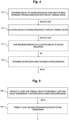
- FIG. 1 Some exemplary embodiments, see Fig. 1 , relate to an apparatus 100, comprising at least one processor 102, and at least one memory 104 storing instructions 106, e.g. in form of at least one computer program, the at least one memory 104 and the instructions 106 configured to, with the at least one processor 102, cause a network device 10 ( Fig. 3 ) to determine 300 ( Fig. 2 ) excess resources RES-EXC available for uplink transmissions ULT to the network device 10 and to use 302 ( Fig. 2 ) at least a portion of the excess resources RES-EXC for a beam refinement process BRP associated with at least one radio beam RB ( Fig. 3 ) usable for an information exchange INF-EXCH with at least one terminal device 20.
- the apparatus 100 may be an apparatus for a wireless communications network, e.g. according to the 5G and/or 5G Advanced and/or 6G type or of other types.
- the apparatus 100 and/or its functionality may e.g. be provided at a network device 10, e.g. base station, e.g. gNB, e.g. for a cellular communications network.
- the excess resources RES-EXC are at least one of a) under-utilized resources, b) over-provisioned resources for uplink transmissions ULT to the network device.
- a wireless network may e.g. be under-utilized, e.g. may comprise under-utilized resources, which e.g. allows to define a procedure to increase uplink allocations e.g. of terminal devices 20 or mobile users, e.g. to allow a network device, e.g. gNB, 10 to probe receive beams, e.g. additional receive beams, e.g. while the terminal device 20 or mobile is transmitting.
- under-utilized resources which e.g. allows to define a procedure to increase uplink allocations e.g. of terminal devices 20 or mobile users, e.g. to allow a network device, e.g. gNB, 10 to probe receive beams, e.g. additional receive beams, e.g. while the terminal device 20 or mobile is transmitting.
- the excess resources RES-EXC may e.g. comprise at least one of: a) time resources, b) frequency resources.
- resource overprovisioning may be given for a wireless network, e.g. using cellular communications, which may e.g. be driven by at least one of: 1) providing redundancy, e.g. to overcome uncertainties (e.g., fading, interference) in a link budget, e.g. to ensure reliable transmission at least most of the time; 2) underestimation of channel quality, e.g. during a CSI (channel state information) acquisition process.
- CSI channel state information
- Some exemplary embodiments may leverage such resources, e.g. excess resources RES-EXC, either under-utilized or over-provisioned, e.g. to perform beam refinement operations, e.g. without any additional complexity increase for the terminal device side.
- resources e.g. excess resources RES-EXC, either under-utilized or over-provisioned, e.g. to perform beam refinement operations, e.g. without any additional complexity increase for the terminal device side.
- the excess resources RES-EXC are associated with at least one of a) a control channel, b) a data channel.
- the instructions 106 when executed by the at least one processor 102, cause the network device 10 to determine 310 an amount RES-EXC-TD20 of the excess resources RES-EXC to be used for a beam refinement process associated with a specific terminal device 20, and to allocate 312 the amount RES-EXC-TD20 of the excess resources for at least one signal transmission by the specific terminal device 20. In some embodiments, this way, it may be controlled which terminal device 20 may be used for supporting the beam refinement process and/or to which degree a specific terminal device 20 may be used for supporting the beam refinement process.
- respective amounts of excess resources RES-EXC may e.g. be allocated to different specific terminal devices.
- the instructions 106 when executed by the at least one processor 102, cause the network device 10 to perform 314 beam sweeping BS on the allocated amount RES-EXC-TD20 of excess resources, and to determine 316 a refined beam direction BD-ref based on the beam sweeping BS, e.g. for at least one of the specific terminal devices 20.
- the instructions 106 when executed by the at least one processor 102, cause the network device 10 to instruct 320 the at least one terminal device 20 to perform at least one uplink transmission ULT to the network device 10 using the excess resources RES-EXC.
- the instructions 106 when executed by the at least one processor 102, cause the network device 10 to probe 322 at least one radio beam associated with the at least one uplink transmission ULT.
- the instructions 106 when executed by the at least one processor 102, cause the network device 10 to determine 330 a beam sweeping set BS-SET characterizing a plurality of different radio beams RB ( Fig. 3 ) to be used for beam sweeping for the beam refinement process BRP, to perform 332 beam sweeping BS based on the beam sweeping set BS-SET, and to determine 334 a refined beam direction BD-ref based on beam sweeping BS according to the beam sweeping set BS-SET.
- a beam sweeping set BS-SET characterizing a plurality of different radio beams RB ( Fig. 3 ) to be used for beam sweeping for the beam refinement process BRP
- the instructions 106 when executed by the at least one processor 102, cause the network device 10 to determine 330 a beam sweeping set BS-SET characterizing a plurality of different radio beams RB ( Fig. 3 ) to be used for beam sweeping for the beam refinement process BRP, to perform 332 beam sweeping
- the instructions 106 when executed by the at least one processor 102, cause the network device 10 to lower a modulation and coding scheme (see for example element E14 of Fig. 11 explained further below) associated with the at least one terminal device 20, e.g. the modulation and coding scheme at which the at least one terminal device 20 transmits, thus e.g. making these transmissions of the at least one terminal device 20 using more resources, e.g. making these transmissions of the at least one terminal device more robust, e.g. for a data channel.
- an increased number of uplink reference signals e.g. pilot signals, SRS
- Fig. 8A relate to an apparatus 100' comprising means 102' for determining 300 ( Fig. 3 ), by a network device 10, excess resources RES-EXC available for uplink transmissions ULT to the network device 10 and for using 302 at least a portion of the excess resources for a beam refinement process BRP associated with at least one radio beam RB usable for an information exchange INF-EXCH with at least one terminal device 20.
- the means 102' ( Fig. 8A ) for determining, by a network device, excess resources available for uplink transmissions to the network device may e.g. comprise at least one processor 102 ( Fig. 1A ), and at least one memory 104 storing instructions 106, the at least one memory 104 and the instructions 106 configured to, with the at least one processor 102, perform the step of determining the excess resources available for uplink transmissions to the network device.
- Fig. 2 relate to a method comprising: determining 300, by a network device, excess resources available for uplink transmissions to the network device, and using 302 at least a portion of the excess resources for a beam refinement process associated with at least one radio beam usable for an information exchange with at least one terminal device.
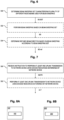
- Fig. 1B relate to an apparatus 200, comprising at least one processor 202, and at least one memory 204 storing instructions 206, the at least one memory 204 and the instructions 206 configured to, with the at least one processor 202, cause a terminal device 20 ( Fig. 3 ) to receive 350 ( Fig. 7 ) an instruction INSTR to perform at least one uplink transmission ULT to a network device 10 using excess resources RES-EXC determined by the network device 10, and to perform 352 the at least one uplink transmission ULT to the network device 10 using the excess resources RES-EXC determined by the network device 10.
- the apparatus 200 may be an apparatus for a wireless communications network, e.g. according to the 5G and/or 5G Advanced and/or 6G type or of other types.
- the apparatus 200 and/or its functionality may e.g. be provided at a terminal device 20 ( Fig. 3 ), e.g. user equipment, e.g. for a cellular communications network.
- Fig. 8B relate to an apparatus 200' comprising means 202' for receiving 350, by a terminal device 20, an instruction INSTR to perform at least one uplink transmission ULT to a network device 10 using excess resources RES-EXC determined by the network device 10, and for performing 352 the at least one uplink transmission ULT to the network device 10 using the excess resources RES-EXC determined by the network device 10.
- the means 202' for receiving the instruction may e.g. comprise at least one processor 202, and at least one memory 204 storing instructions 206, the at least one memory 204 and the instructions 206 configured to, with the at least one processor 202, perform the step of receiving 350 the instruction INSTR.
- Fig. 7 relate to a method, comprising receiving 350, by a terminal device 20, an instruction INSTR to perform at least one uplink transmission ULT to a network device 10 using excess resources RES-EXC determined by the network device 10, and performing 352 the at least one uplink transmission ULT to the network device 10 using the excess resources RES-EXC determined by the network device 10.
- a network device 10 e.g. gNB, comprising at least one apparatus 100, 100' according to the embodiments.
- FIG. 1 For exemplary embodiments, a terminal device 20, e.g. user equipment, comprising at least one apparatus 200, 200' according to the embodiments.
- FIG. 3 Further exemplary embodiments relate to a wireless communication system, see for example Fig. 3 , comprising at least one of: a) an apparatus 100, 100', 200, 200' according to the embodiments, b) a network device 10 according to the embodiments, c) a terminal device 20 according to the embodiments.
- the instructions may e.g. be provided in the form of at least one computer program.
- Fig. 9A schematically depicts a simplified diagram according to some embodiments, indicating a network device 10a using different radio beams, e.g. to find the best beam direction by first sweeping over a predefined beam set such as e.g. characterized by SSB beam broadcasting according to some accepted standard, e.g. in a downlink transmission direction, and then e.g. listening to a respective report from serving user terminals.
- a predefined beam set such as e.g. characterized by SSB beam broadcasting according to some accepted standard, e.g. in a downlink transmission direction, and then e.g. listening to a respective report from serving user terminals.
- radio beam 2 may e.g. be used for an information exchange between the network device 10a and a first terminal device 20a
- radio beam 6 may be used for an information exchange between the network device 10a and a second terminal device 20b.
- the dashed lines symbolize a field of view of the network device 10a.
- Fig. 9B schematically depicts a simplified diagram according to some embodiments, similar to Fig. 9A , but additionally depicting aspects of a beam refinement procedure, wherein refined beams 2', 6' - as e.g. compared to beams 2, 6 of Fig. 9A - may be obtained, e.g. using the principle according to the embodiments.
- the principle according to the embodiments enables to leverage e.g. overprovisioned resources, e.g. in uplink data channels (e.g. PUSCH in 5G) and/or uplink control channels to take measurements for beam refinement.
- SSB Synchronization Signal Block
- Fig. 10 schematically depicts a simplified flow chart according to some embodiments.
- Element E1 symbolizes identifying resources, either control channel (e.g., CSI-RS, Channel State Information Reference Signal) or data channel (e.g., PUSCH, Physical Uplink Shared Channel), that are either under-utilized or over-provisioned.
- Element E2 symbolizes determining an amount of (excess) resources that can e.g. be re-purposed, e.g. per terminal device or mobile, e.g. to perform beam refinement.
- Element Element Element E3 symbolizes allocating determined excess resources to uplink transmissions ULT for beam refinement by the terminal device(s) 20.
- Element E4 symbolizes the terminal device(s) performing the uplink transmissions ULT using the allocated excess resources.
- Element E5 symbolizes the gNB 10 probing e.g. additional beams (e.g., being associated with different angles and/or with different beam shapes), e.g. during the uplink transmission ULT by the terminal device(s) 20 using the allocated excess resources, e.g. measuring beam gains and/or beam coefficients.
- Element E6 symbolizes determining a new, e.g. refined, beam or beam direction to be used, e.g. for future uplink and/or downlink transmissions based on the measurements of block E5.
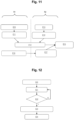
- Fig. 11 schematically depicts a simplified flow chart according to some embodiments, wherein a first region R1 indicates periodic aspects, and wherein a second region R2 indicates real time or near real time aspects according to some embodiments.
- Element E10 symbolizes determining a quality, e.g. based on CSI-RS.
- Element E11 symbolizes concluding that there is "redundant" or excess reference signal transmission, if the quality determined by block E10 is good, i.e. exceeds a threshold.
- Element E12 symbolizes determining redundant or excess transmissions.
- Element E13 symbolizes determining a modulation and coding scheme, MCS.
- Element E14 symbolizes determining to lower the used MCS, e.g. to increase redundancy, e.g. if there is a resource under-use.
- Element E15 symbolizes probing neighbor beams, e.g. upon reception of redundant signals, and determining a new beam or beam direction.
- Element E16 symbolizes finding a best serving beam.
- Element E17 symbolizes transmitting with a current best beam.
- over-provisioned resources are identified by periodically checking the quality of CSI-RS, see element E10, and under-utilized resources are identified and allocated for UL transmission with lower MCS using the aspects of Fig. 10 .
- some additional transmissions may be performed by the mobile 20 (e.g., for a procedure based on control channel measurements), and in some cases, this may slightly impact an energy consumption.
- the beam power gains due to better beam alignment based on the principle according to the embodiments can compensate for the potential (and e.g. minor) energy consumption increase.
- additional resources or excess resources associated with at least one data channel can be used, e.g. for the beam refinement process BRP ( Fig. 2 ).
- a wireless system may not be fully loaded.
- a resource utilization may be typically well below 500.
- resource under-utilization can e.g. be leveraged by the network for energy efficiency or interference stabilization.
- the network device 10 may e.g. identify excess resources or excess radio resources (either due to under-utilization over over-provision) and then instruct one or more user terminals 20 to transmit over the identified excess radio resources, e.g. to facilitate uplink beam refinement. For instance, if more resources are available, the network device may assign a more conservative Modulation and Coding Scheme (MCS) to a transmission. In this way, in some embodiments, the transmission would be more robust, being able to tolerate lower SINR on the whole transmission, or on few resource elements.
- MCS Modulation and Coding Scheme
- the network device 10 may e.g. receive the uplink transmission ULT as usual, e.g. for most of the symbols, and may e.g. use few of the received symbols to probe different beam(s), e.g. measuring at least one of: the received power, SINR (Signal to Interference plus Noise Ratio), or any other signal quality measure.
- SINR Signal to Interference plus Noise Ratio
- the transmission may e.g. be able to be decoded.
- a fraction (e.g., up to r 0 ⁇ r 1 r 0 ) of the total beams may be used for uplink beam refinement probing.
- an estimated signal quality may e.g. be input to a decoder, e.g. helping the decoder to discriminate a transmission part with good quality and bad quality. In some embodiments, this enables to improve the decoder's consideration of the good symbols and, on the other hand, to reject transmissions occurring on worse beams.
- different beams may be probed without lowering the MCS, which, however may have an impact on the transmission's reliability, e.g. degrading it and, in some cases, not allowing to keep a desired quality of service of the transmission.
- additional resources or excess resources can e.g. be determined and used in a control channel (e.g. SRS) .
- a control channel e.g. SRS
- these excess resources can be allocated to terminal devices 20. While the terminal devices 20 transmit over these additional resources, in some embodiments, the network device 10 may e.g. use the transmission, e.g. to probe new beams and measure their quality.
- the network device 10 may e.g. use the transmission, e.g. to probe new beams and measure their quality.
- the received information over these additional or excess resources can be used at the network device, e.g. after weighting based on the quality, like receive signal power, SINR, etc...
- the first beams to be probed should be the ones close to the currently selected SSB (e.g., wider) or refined beam (e.g., narrower).
- NAF Normalized Angular Domain
- a sampling of the angular space may be done uniformly, e.g. in a grid, along the two directions.
- a size of the beam sweeping set BS-SET ( Fig. 6 ), e.g. characterizing how many beams are to be probed, can be determined heuristically, e.g. based on at least some of the embodiments explained above.
- one example is to determine a number of beams based on a resource amount and on a beam sweeping speed.
- a beam sweeping set may be assigned with as many beams as the number of symbols supported by the identified excess resource. In some embodiments, more or fewer beams may be used or assigned, respectively, e.g. if the beam sweeping speed is faster/slower.
- an angular range of the beam sweeping may also be determined heuristically.
- all beams may be packed to cover e.g. only the SSB beam currently in use (i.e., the best beam identified after SSB beam sweeping according to some accepted standard).
- two neighboring beams may be covered by the angular range of the beam sweeping, e.g. if the terminal device 20 reported that a signal strength of the two neighboring beams are similar.
- beam patterns and/or beam pointing directions may e.g. be determined by uniform-in-angular domain methods, where the half power beam width (HPBW) is e.g. chosen such that the beams are uniformly spaced apart, e.g. by roughly HPBW distance in angular domain and cover e.g. the entire desired angular range.
- HPBW half power beam width
- beams may also be arranged in the normalized angular frequency (NAF) domain, e.g. with controlled beam overlapping.
- NAF normalized angular frequency
- the network device 10 may e.g. opt for using wider beams, e.g. SSB to probe a wider angular/NAF range and have higher chances to find a good alternative as serving beam.
- wider beams e.g. SSB
- the beam sweep or beam scan is done at the network device 10, e.g. gNB, it is not required to rely on any signaling from the terminal device 20, e.g. to report back measurements to the gNB 10.
- Fig. 12 schematically depicts a simplified flow chart according to some embodiments, illustrating aspects of beam refinement.
- Element E20 symbolizes the network device 10 ( Fig. 3 ) broadcasting SSB beams and the terminal device 20 reporting at least one of: a best SSB ID, CQI, etc.
- Element E21 symbolizes the network device 10 receiving uplink signal(s) from the terminal device 20 via the selected SSB beam.
- Element E22 symbolizes determining whether there are excess resources RES-EXC. If not, the procedure continues with Element E21. If the determination E22 yields that there are excess resources RES-EXC, the procedure continues with element E23, which symbolizes the network device 10 determining a beam sweeping set BS-SET for a beam refinement procedure based on the available excess resources as e.g. characterized by redundant uplink transmissions.
- Element E24 symbolizes the terminal device 20 performing uplink transmissions ULT, the network device 10 performing a beam scan or beam sweep, respectively, and determining a refined beam direction based on the beam sweep.
- excess resources e.g. usable for probing beams in the uplink direction, may be determined based on aspects of the procedure according to Fig. 11 .
- the principle according to the embodiments may be used to improve a beam refinement process.
- the gNB 10 can further refine the beam(s) used to serve the same mobile terminal 20 with additional procedures according to the embodiments.
- the beam direction and its confidence can be improved, allowing to use narrower beams thus improving a nominal directional gain.
- an improved beam direction's confidence may reduce an undesired misalignment error and, thus, further improves the overall beam gains.
- additional advantages can also be achieved due to a better matching of a beam pattern to a channel's angular dispersion.
- the principle according to the embodiments may help to avoid these disadvantages by determining excess resources, e.g. overprovisioned and/or underutilized uplink resources, and e.g. by repurposing and/or reusing them as uplink signals, e.g. in the sense of "pilots", e.g. to facilitate beam refinement.
Landscapes
- Engineering & Computer Science (AREA)
- Computer Networks & Wireless Communication (AREA)
- Signal Processing (AREA)
- Mobile Radio Communication Systems (AREA)
Applications Claiming Priority (1)
| Application Number | Priority Date | Filing Date | Title |
|---|---|---|---|
| FI20225482 | 2022-06-01 |
Publications (1)
| Publication Number | Publication Date |
|---|---|
| EP4287525A1 true EP4287525A1 (fr) | 2023-12-06 |
Family
ID=86282712
Family Applications (1)
| Application Number | Title | Priority Date | Filing Date |
|---|---|---|---|
| EP23170681.3A Pending EP4287525A1 (fr) | 2022-06-01 | 2023-04-28 | Appareil comprenant au moins un processeur |
Country Status (3)
| Country | Link |
|---|---|
| US (1) | US12341593B2 (fr) |
| EP (1) | EP4287525A1 (fr) |
| CN (1) | CN117156554A (fr) |
Citations (2)
| Publication number | Priority date | Publication date | Assignee | Title |
|---|---|---|---|---|
| US20180279150A1 (en) * | 2017-03-24 | 2018-09-27 | Qualcomm Incorporated | Techniques for buffer status report and scheduling request in new radio |
| WO2022051182A1 (fr) * | 2020-09-04 | 2022-03-10 | Qualcomm Incorporated | Ressources de liaison montante séparées pour rapport de rétroaction et rapport d'informations d'état de canal avec balayage de faisceau |
Family Cites Families (10)
| Publication number | Priority date | Publication date | Assignee | Title |
|---|---|---|---|---|
| US10582397B2 (en) * | 2016-11-09 | 2020-03-03 | Qualcomm Incorporated | Beam refinement reference signal transmissions during control symbol |
| US10743319B2 (en) | 2017-05-01 | 2020-08-11 | Qualcomm Incorporated | Method of base station beam refinement |
| US11246143B2 (en) | 2017-12-15 | 2022-02-08 | Google Llc | Beamforming enhancement via strategic resource utilization |
| US11956787B2 (en) | 2018-04-05 | 2024-04-09 | Qualcomm Incorporated | Power headroom reporting in coverage edge |
| US11258547B2 (en) | 2019-06-21 | 2022-02-22 | Qualcomm Incorporated | Techniques for performing retransmission based on a beam sweep |
| WO2020259838A1 (fr) | 2019-06-27 | 2020-12-30 | Apple Inc. | Techniques de formation de faisceau d'équipement utilisateur |
| US12022519B2 (en) * | 2020-02-21 | 2024-06-25 | Qualcomm Incorporated | Physical random access channel repetition and receive-beam sweep and associated beam refinement |
| CN116158049A (zh) | 2020-09-21 | 2023-05-23 | 高通股份有限公司 | 接收非周期性参考信号的ue行为 |
| US12028146B2 (en) * | 2021-02-04 | 2024-07-02 | Qualcomm Incorporated | Grouping of beams by user equipment |
| US11956835B2 (en) * | 2021-10-05 | 2024-04-09 | Qualcomm Incorporated | Beamforming configurations for random access channel configuration |
-
2023
- 2023-04-28 EP EP23170681.3A patent/EP4287525A1/fr active Pending
- 2023-05-31 CN CN202310631031.6A patent/CN117156554A/zh active Pending
- 2023-05-31 US US18/203,690 patent/US12341593B2/en active Active
Patent Citations (2)
| Publication number | Priority date | Publication date | Assignee | Title |
|---|---|---|---|---|
| US20180279150A1 (en) * | 2017-03-24 | 2018-09-27 | Qualcomm Incorporated | Techniques for buffer status report and scheduling request in new radio |
| WO2022051182A1 (fr) * | 2020-09-04 | 2022-03-10 | Qualcomm Incorporated | Ressources de liaison montante séparées pour rapport de rétroaction et rapport d'informations d'état de canal avec balayage de faisceau |
Also Published As
| Publication number | Publication date |
|---|---|
| CN117156554A (zh) | 2023-12-01 |
| US12341593B2 (en) | 2025-06-24 |
| US20230396306A1 (en) | 2023-12-07 |
Similar Documents
| Publication | Publication Date | Title |
|---|---|---|
| US11330457B2 (en) | Method for beam management with beam indication in wireless communication systems with beamforming | |
| JP6501318B2 (ja) | 無線通信システムにおいてマルチビームフォーミング送受信機を運用するための装置及び方法 | |
| US9591645B2 (en) | Method and apparatus for operating control channels for beamforming-based wireless communication | |
| EP2832010B1 (fr) | Procédé et appareil pour la production de signal de référence dans un système de formation de faisceau (bf) mixte analogique/numérique | |
| JP4906928B2 (ja) | アナログビームフォーミング通信システム | |
| US7668555B2 (en) | Method for computing beamforming weighting vectors with collaborated uplink sounding | |
| JP7414927B2 (ja) | 無線通信システムにおいて動作する装置 | |
| KR20130125903A (ko) | 통신시스템에서 빔포밍을 수행하는 방법 및 장치 | |
| US12362797B2 (en) | Uplink coverage using joint phase-time arrays | |
| CN113632385B (zh) | 下行链路参考信号的波束成形接收 | |
| EP3891901B1 (fr) | Procédés et appareils pour sélectionner les meilleurs faisceaux d'émission | |
| CN107105439B (zh) | 一种波束间协同传输方法,装置及系统 | |
| CN103974273B (zh) | 干扰关系的获取方法及系统 | |
| US12119908B2 (en) | Methods and systems for adapting beamwidth of beams on NR physical channels | |
| Lee et al. | mmWave cellular mobile communication for Giga Korea 5G project | |
| EP4287525A1 (fr) | Appareil comprenant au moins un processeur | |
| CN118160233A (zh) | 接收设备和发射设备 | |
| US20240372598A1 (en) | Scheduling and beam design in jpta | |
| KR20180087148A (ko) | 무선 통신 시스템에서 다중 안테나를 사용한 통신 방법 및 장치 | |
| US20240121767A1 (en) | Interference mitigation in multi-user multi-beam wireless communication | |
| US20170318590A1 (en) | Signal transmission method and device | |
| CN116471610A (zh) | 5g天线权值优化方法及系统 | |
| EP4032351B1 (fr) | Sélection de faisceau de transmission | |
| CN118202582A (zh) | 接收设备和发射设备 | |
| US20250150146A1 (en) | Method and radio base station comprising antennas for providing coverage in a cell |
Legal Events
| Date | Code | Title | Description |
|---|---|---|---|
| PUAI | Public reference made under article 153(3) epc to a published international application that has entered the european phase |
Free format text: ORIGINAL CODE: 0009012 |
|
| STAA | Information on the status of an ep patent application or granted ep patent |
Free format text: STATUS: THE APPLICATION HAS BEEN PUBLISHED |
|
| AK | Designated contracting states |
Kind code of ref document: A1 Designated state(s): AL AT BE BG CH CY CZ DE DK EE ES FI FR GB GR HR HU IE IS IT LI LT LU LV MC ME MK MT NL NO PL PT RO RS SE SI SK SM TR |
|
| STAA | Information on the status of an ep patent application or granted ep patent |
Free format text: STATUS: REQUEST FOR EXAMINATION WAS MADE |
|
| 17P | Request for examination filed |
Effective date: 20240606 |
|
| RBV | Designated contracting states (corrected) |
Designated state(s): AL AT BE BG CH CY CZ DE DK EE ES FI FR GB GR HR HU IE IS IT LI LT LU LV MC ME MK MT NL NO PL PT RO RS SE SI SK SM TR |
|
| STAA | Information on the status of an ep patent application or granted ep patent |
Free format text: STATUS: EXAMINATION IS IN PROGRESS |
|
| 17Q | First examination report despatched |
Effective date: 20250811 |