EP4287583B1 - Système de contrôleur de bordure de session (sbc) - Google Patents
Système de contrôleur de bordure de session (sbc) Download PDFInfo
- Publication number
- EP4287583B1 EP4287583B1 EP23176810.2A EP23176810A EP4287583B1 EP 4287583 B1 EP4287583 B1 EP 4287583B1 EP 23176810 A EP23176810 A EP 23176810A EP 4287583 B1 EP4287583 B1 EP 4287583B1
- Authority
- EP
- European Patent Office
- Prior art keywords
- terminal
- signaling
- sbc
- processing module
- media processing
- Prior art date
- Legal status (The legal status is an assumption and is not a legal conclusion. Google has not performed a legal analysis and makes no representation as to the accuracy of the status listed.)
- Active
Links
Images
Classifications
-
- H—ELECTRICITY
- H04—ELECTRIC COMMUNICATION TECHNIQUE
- H04M—TELEPHONIC COMMUNICATION
- H04M7/00—Arrangements for interconnection between switching centres
- H04M7/006—Networks other than PSTN/ISDN providing telephone service, e.g. Voice over Internet Protocol (VoIP), including next generation networks with a packet-switched transport layer
-
- H—ELECTRICITY
- H04—ELECTRIC COMMUNICATION TECHNIQUE
- H04L—TRANSMISSION OF DIGITAL INFORMATION, e.g. TELEGRAPHIC COMMUNICATION
- H04L65/00—Network arrangements, protocols or services for supporting real-time applications in data packet communication
- H04L65/10—Architectures or entities
- H04L65/1053—IP private branch exchange [PBX] functionality entities or arrangements
-
- H—ELECTRICITY
- H04—ELECTRIC COMMUNICATION TECHNIQUE
- H04L—TRANSMISSION OF DIGITAL INFORMATION, e.g. TELEGRAPHIC COMMUNICATION
- H04L65/00—Network arrangements, protocols or services for supporting real-time applications in data packet communication
- H04L65/10—Architectures or entities
- H04L65/102—Gateways
- H04L65/1033—Signalling gateways
- H04L65/1036—Signalling gateways at the edge
-
- H—ELECTRICITY
- H04—ELECTRIC COMMUNICATION TECHNIQUE
- H04L—TRANSMISSION OF DIGITAL INFORMATION, e.g. TELEGRAPHIC COMMUNICATION
- H04L65/00—Network arrangements, protocols or services for supporting real-time applications in data packet communication
- H04L65/1066—Session management
- H04L65/1073—Registration or de-registration
-
- H—ELECTRICITY
- H04—ELECTRIC COMMUNICATION TECHNIQUE
- H04L—TRANSMISSION OF DIGITAL INFORMATION, e.g. TELEGRAPHIC COMMUNICATION
- H04L65/00—Network arrangements, protocols or services for supporting real-time applications in data packet communication
- H04L65/1066—Session management
- H04L65/1083—In-session procedures
-
- H—ELECTRICITY
- H04—ELECTRIC COMMUNICATION TECHNIQUE
- H04L—TRANSMISSION OF DIGITAL INFORMATION, e.g. TELEGRAPHIC COMMUNICATION
- H04L65/00—Network arrangements, protocols or services for supporting real-time applications in data packet communication
- H04L65/80—Responding to QoS
-
- H—ELECTRICITY
- H04—ELECTRIC COMMUNICATION TECHNIQUE
- H04L—TRANSMISSION OF DIGITAL INFORMATION, e.g. TELEGRAPHIC COMMUNICATION
- H04L69/00—Network arrangements, protocols or services independent of the application payload and not provided for in the other groups of this subclass
- H04L69/40—Network arrangements, protocols or services independent of the application payload and not provided for in the other groups of this subclass for recovering from a failure of a protocol instance or entity, e.g. service redundancy protocols, protocol state redundancy or protocol service redirection
-
- H—ELECTRICITY
- H04—ELECTRIC COMMUNICATION TECHNIQUE
- H04M—TELEPHONIC COMMUNICATION
- H04M7/00—Arrangements for interconnection between switching centres
- H04M7/006—Networks other than PSTN/ISDN providing telephone service, e.g. Voice over Internet Protocol (VoIP), including next generation networks with a packet-switched transport layer
- H04M7/0066—Details of access arrangements to the networks
Definitions
- the present disclosure relates to the technical field of communications, and in particular, to a session border controller (SBC) system.
- SBC session border controller
- IP-PBX Internet Protocol Private Branch Exchange
- SIP Session initialization Protocol
- IP-PBX terminal is often disconnected from a network, which is normal (especially when an APP of a mobile terminal performs network switching).
- IP-PBX terminal is disconnected during a call, user experience is greatly affected. Therefore, after the terminal is disconnected from the network, it is very important to restore a connection to the network, as well as signaling and media during the call.
- reconnection of the IP-PBX terminal after the IP-PBX terminal is disconnected from the network is limited by a SIP standard, and is often not easy to implement or is implemented with a poor effect.
- the call is maintained, in other words, the media is still connected, but the signaling is not connected, which affects a PBX service during some calls.
- an INVITE request with Replaces is initiated after the terminal is successfully reconnected and registered, which is equivalent to restarting a new call. If a certain state of the call before the reconnection, such as a recording state, is considered, it cannot be guaranteed that the recording state before the reconnection can still be maintained after the reconnection. Additionally, some unexpected results are caused when IP-PBX terminals on both sides each trigger the INVITE request with Replaces at the same time.
- US 2017/251105 A1 discloses reconnection after disconnection of a user terminal to a service via an SBC system.
- the present disclosure provides an SBC system to resolve a prior-art technical problem that signaling and media cannot be restored after a terminal is reconnected upon disconnection from a network.
- an embodiment of the present disclosure provides an SBC system, including an SBC signaling and media processing module, and at least one SBC signaling access module, where
- the embodiments of the present disclosure can divide the SBC system into the SBC signaling access module and the SBC signaling and media processing module, to enable the terminal to perform re-registration with and reconnection to the SBC signaling access module when the terminal is reconnected upon the disconnection from the network, and enable, based on the information request sent by the terminal, the SBC signaling and media processing module to learn the transmission link to the terminal.
- This ensures that after the disconnection from the network, the signaling and media streams can be restored to the SBC signaling and media processing module of the call before the disconnection from the network, which avoids that signaling and media cannot be restored due to a new call caused by reconnection upon network disconnection in the prior art.
- the present disclosure improves user experience during a call.
- a process of re-registering and reconnecting the terminal when the terminal is disconnected from the network during the call is specifically as follows: when the terminal is disconnected from the network during the call, sequentially re-registering and reconnecting, by each of the plurality of SBC signaling access modules, the terminal based on a registration request sent by the terminal, until the terminal is successfully registered and connected to one of the plurality of SBC signaling access modules.
- the plurality of SBC signaling access modules can still ensure that the signaling of the terminal can be connected and transmitted to an SBC after the reconnection upon the disconnection from the network, improving a fault tolerance rate of a connection failure.
- the terminal switches the SBC signaling access module after being reconnected upon the disconnection from the network, which can ensure that the terminal can also switch to another IP-PBX system server, thereby achieving high scalability.
- the information request of the terminal during the call includes a source IP address and a port of the terminal.
- the source IP address and the port of the terminal in the information request sent by the terminal can enable the SBC signaling and media processing module in the SBC system to generate a transmission link from the terminal to the SBC signaling and media processing module via the SBC signaling access module. In this way, the SBC signaling and media processing module can reversely transmit signaling back to the terminal based on the transmission link.
- a process of receiving the information request from the terminal during the call and forwarding the information request to the SBC signaling and media processing module is specifically as follows: receiving the information request of the terminal during the call, adding an identifier (ID) of the SBC signaling access module to a custom header field of the information request, and forwarding the information request containing the added ID to the SBC signaling and media processing module.
- ID an identifier
- the ID of the SBC signaling access module is added to the custom header field of the information request sent by the terminal during the call.
- the SBC signaling and media processing module can send, based on the ID of the SBC signaling access module, the request to a corresponding SBC signaling access module connected to the terminal, such that the request and other information can be sent to the terminal.
- a process of learning, based on the information request, the transmission link for communication with the terminal after the terminal is reconnected upon the disconnection from the network is specifically as follows: generating, based on the source IP address and the port of the terminal in the received information request, a transmission link between the terminal and the SBC signaling access module after the terminal is reconnected upon the disconnection from the network; generating a transmission link between the SBC signaling access module and the SBC signaling and media processing module based on the ID of the SBC signaling access module in the received information request to obtain a signaling address of the terminal; and generating, based on the signaling address of the terminal, a transmission link for signaling interworking among the terminal, the SBC signaling access module, and the SBC signaling and media processing module after the terminal is reconnected upon the disconnection from the network.
- the SBC signaling and media processing module can obtain the signaling address of the signaling sent by the terminal, to further generate the transmission link from the terminal to the SBC signaling and media processing module via the SBC signaling access module. This can achieve signaling interworking between the SBC system and the terminal.
- following steps are further included: obtaining a media stream address of the terminal based on a symmetric Real-time Transport Protocol (RTP) mechanism of the SBC signaling and media processing module and the transmission link for signaling interworking; and learning and generating a transmission link for media stream interworking among the terminal, the SBC signaling access module, and the SBC signaling and media processing module based on the media stream address of the terminal.
- RTP Real-time Transport Protocol
- the symmetric RTP mechanism can ensure that the media stream address of the terminal can be obtained when the terminal sends the media stream to the SBC signaling and media processing module after being reconnected, so as to generate the transmission link from the terminal to the SBC signaling and media processing module via the SBC signaling access module. This can achieve media stream interworking between the SBC system and the terminal.
- the signaling further includes a re-negotiation request.
- the signaling is a control signal used between modules, and any request sent by the terminal is signaling.
- Different signaling for example, an update request and a re-invitation request included in the re-negotiation request, can trigger the SBC system to perform different operations, thereby ensuring smooth and accurate communication between the terminal and the SBC.
- the SBC signaling and media processing module when the update request or the re-invitation request of the terminal is received and forwarded to the SBC signaling and media processing module, the SBC signaling and media processing module is configured to learn and generate a transmission link for signaling and media stream interworking with the terminal, where Session Description Protocol (SDP) text information of the update request or the re-invitation request includes the media stream address of the terminal.
- SDP Session Description Protocol
- the SBC signaling and media processing module does not need to rely on the symmetric RTP mechanism, but can directly carry the media stream address of the terminal in the SDP text information of the update request or the re-invitation request, such that the SBC signaling and media processing module directly generates the transmission link for signaling and media stream interworking with the terminal. This improves efficiency of the SBC signaling and media processing module in learning and generating the transmission link, and also ensures stable and accurate communication between the terminal and the SBC system.
- the SBC signaling access module supports stateless access.
- the SBC signaling access module supporting the stateless access can ensure that the SBC signaling access module only forwards the received signaling or other messages and does not store any communication and signaling media processing information. In this way, when the terminal can perform re-registration and is efficiently connected to any SBC signaling access module after being disconnected from the network, the SBC signaling access module can still accurately and efficiently serve as a proxy of the terminal to send the signaling and media streams during the call to the SBC signaling and media processing module of the call before the terminal is disconnected from the network.
- IP-PBX is an IP-based telephone system that can fully integrate voice communication into a dedicated data network, to establish a unified voice and data network by connecting geographically distributed terminals.
- the SIP is a text-based application layer control protocol for creating, modifying, and releasing a session with one or more participants.
- the SIP is flexible, easy to implement, and easy to expand.
- An SBC is a device or software deployed at a network boundary to control a SIP session.
- the SBC serves as an access layer for a terminal in an IP-PBX system to provide compatibility, media penetration, security, and other capabilities.
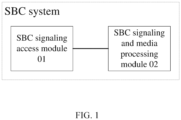
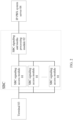
- an SBC system includes: an SBC signaling and media processing module 02, and at least one SBC signaling access module 01.
- the SBC signaling access module 01 is configured to: receive signaling sent by a terminal 03 and forward the signaling to the SBC signaling and media processing module; and when the terminal 03 is disconnected from a network during a call, re-register and reconnect the terminal 03, and after the terminal 03 is reconnected, receive an information request from the terminal 03 during the call and forward the information request to the SBC signaling and media processing module 02.
- the signaling includes the information request.
- the SBC signaling and media processing module 02 is configured to: process the signaling and media streams from the terminal 03, and when the terminal 03 is disconnected from the network during the call, learn, based on the information request, a transmission link for communication with the terminal 03 after the terminal 03 is reconnected upon the disconnection from the network, such that the signaling and media streams of the terminal 03 after the terminal 03 is reconnected upon the disconnection from the network are transmitted through the transmission link.
- the SBC signaling access module 01 supports stateless access.
- the SBC signaling access module 01 supporting the stateless access can ensure that the SBC signaling access module 01 only forwards the received signaling or other messages and does not store any communication and signaling media processing information. In this way, when the terminal can perform re-registration and is efficiently connected to any SBC signaling access module after being disconnected from the network, the SBC signaling access module 01 can still accurately and efficiently serve as a proxy of the terminal 03 to send the signaling and media streams during the call to the SBC signaling and media processing module 02 of the call before the terminal 03 is disconnected from the network.
- SIP signaling of the terminal 03 is directly connected to the SBC signaling access module 01.
- the SBC signaling access module 01 implements a stateless SIP proxy function to forward SIP messages of the terminal and the SBC signaling and media processing module 02.
- Media of the terminal 03 is connected to the SBC signaling and media processing module 02.
- Statuses of the SIP session, the media, and other information are maintained by the SBC signaling and media processing module 02.
- a process of re-registering and reconnecting the terminal 03 when the terminal 03 is disconnected from the network during the call is specifically as follows: when the terminal 03 is disconnected from the network during the call, sequentially re-registering and reconnecting, by each of the plurality of SBC signaling access modules 01, the terminal 03 based on a registration request sent by the terminal 03, until the terminal 03 is successfully registered and connected to one of the plurality of SBC signaling access modules 01.
- the plurality of SBC signaling access modules 01 can still ensure that the signaling of the terminal 03 can be connected and transmitted to an SBC after the reconnection upon the disconnection from the network, improving a fault tolerance rate of a connection failure.
- the terminal 03 switches the SBC signaling access module 01 after being reconnected upon the disconnection from the network, which can ensure that the terminal 03 can also switch to another IP-PBX system server 04, thereby achieving high scalability.
- one SBC signaling access module 01 can implement functions of re-registering and reconnecting the terminal 03, receiving the signaling and media streams sent by the terminal 03, and sending the signaling and media streams to the SBC signaling and media processing module.
- the plurality of SBC signaling access modules 01 can ensure that the terminal 03 can continuously attempt to perform registration and reconnection after being disconnected from the network, thereby improving a fault tolerance rate of a reconnection failure of the terminal 03.
- the information request of the terminal 03 during the call includes a source IP address and a port of the terminal.
- a process of receiving the information request from the terminal 03 during the call and forwarding the information request to the SBC signaling and media processing module 02 is specifically as follows: receiving the information request from the terminal 03 during the call, adding an ID of the SBC signaling access module 01 to a custom header field of the information request, and forwarding the information request containing the added ID to the SBC signaling and media processing module 02.
- the source IP address and the port of the terminal in the information request sent by the terminal 03 can enable the SBC signaling and media processing module 02 in the SBC system to generate a transmission link from the terminal 03 to the SBC signaling and media processing module 02 via the SBC signaling access module 01. In this way, the SBC signaling and media processing module 02 can reversely transmit signaling back to the terminal 03 based on the transmission link.
- the ID of the SBC signaling access module 01 is added to the custom header field of the information request sent by the terminal 03 during the call.
- the SBC signaling and media processing module 02 can send, based on the ID of the SBC signaling access module 01, the request to a corresponding SBC signaling access module 01 connected to the terminal 03, such that the request and other information can be sent to the terminal 03.
- a process of learning, based on the information request, the transmission link for communication with the terminal 03 after the terminal 03 is reconnected upon the disconnection from the network is specifically as follows: generating, based on the source IP address and the port of the terminal in the received information request, a transmission link between the terminal 03 and the SBC signaling access module 01 after the terminal 03 is reconnected upon the disconnection from the network; generating a transmission link between the SBC signaling access module 01 and the SBC signaling and media processing module 02 based on the ID of the SBC signaling access module 01 in the received information request to obtain a signaling address of the terminal 03; and generating, based on the signaling address of the terminal 03, a transmission link for signaling interworking among the terminal 03, the SBC signaling access module 01, and the SBC signaling and media processing module 02 after the terminal 03 is reconnected upon the disconnection from the network.
- the SBC signaling and media processing module 02 can obtain the signaling address of the signaling sent by the terminal 03, to further generate the transmission link from the terminal 03 to the SBC signaling and media processing module 02 via the SBC signaling access module 01. This can achieve signaling interworking between the SBC system and the terminal 03.
- following steps are further included: obtaining a media stream address of the terminal 03 based on a symmetric RTP mechanism of the SBC signaling and media processing module 02 and the transmission link for signaling interworking; and learning and generating a transmission link for media stream interworking among the terminal 03, the SBC signaling access module 01, and the SBC signaling and media processing module 02 based on the media stream address of the terminal.
- the symmetric RTP mechanism can ensure that the media stream address of the terminal 03 can be obtained when the terminal 03 sends the media stream to the SBC signaling and media processing module 02 after being reconnected, so as to learn and generate the transmission link from the terminal 03 to the SBC signaling and media processing module 02 via the SBC signaling access module 01. This can achieve signaling interworking between the SBC system and the terminal 03.
- the symmetric RTP is a universal mechanism and a standard behavior. After receiving an RTP media stream, the terminal 03 records a source IP address and a port. Next time, the terminal 03 sends an RTP media stream to the recorded source IP address and port of the received RTP media stream according to a same path. The same applies to the SBC signaling and media processing module 02.
- the symmetric RTP mechanism is designed to achieve network penetration.
- the terminal 03 is on an internal network
- an IP-PBX system server on which the SBC signaling and media processing module 02 is located is on an external network.
- the terminal 03 can directly communicate with the server, but the server cannot directly communicate with the terminal 03. Therefore, the symmetric RTP mechanism can only be used to communicate with the terminal 03 according to the same path.
- the signaling further includes a re-negotiation request.
- the re-negotiation request includes but is not limited to an update request and a re-invitation request.
- the signaling is a control signal used between modules, and any request sent by the terminal 03 is signaling.
- Different signaling for example, the update request UPDATE and the re-invitation request reINVITE included in the re-negotiation request, can trigger the SBC system to perform different operations, thereby ensuring smooth and accurate communication between the terminal 03 and the SBC.
- the SBC signaling and media processing module 02 learns and generates a transmission link for signaling and media stream interworking with the terminal.
- SDP text information of the re-negotiation request includes the media stream address of the terminal 03.
- the terminal 03 can also initiate the re-negotiation request including the update request UPDATE or the re-invitation request reINVITE, in other words, directly carries a latest signaling address and media address of the terminal 03 in an SDP text and transmits the SDP text to the SBC, without relying on the symmetric RTP mechanism.
- the SDP provides multimedia session descriptions for session notification, session invitation, and other forms of multimedia session initialization.
- the SDP text information includes but is not limited to a session name and intention, session duration, media constituting the session, and information about receiving the media (such as the media stream address).
- the SBC signaling and media processing module 02 does not need to rely on the symmetric RTP mechanism, but can directly carry the media stream address of the terminal 03 in the SDP text information of the re-negotiation request, such that the SBC signaling and media processing module 02 directly generates the transmission link for signaling and media stream interworking. This improves efficiency of the SBC signaling and media processing module 02 in learning and generating the transmission link, and also ensures stable and accurate communication between the terminal 03 and the SBC system.
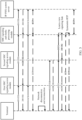
- FIG. 3 is a sequence chart of a process in which the terminal is disconnected from the network and reconnected in this embodiment.
- the terminal Before being disconnected from the network and reconnected, the terminal normally communicates with the IP-PBX system server through a first SBC signaling access module 01 and the SBC signaling and media processing module 02.
- the terminal When the terminal is disconnected from the network and reconnected, if the first SBC signaling access module is unable to register and connect the terminal, the terminal may switch to and re-register with a second SBC signaling access module. Specifically, the terminal sends a REGISTER request to the second SBC signaling access module for registration.
- the terminal After being reconnected upon the disconnection from the network, the terminal initiates an INFO request (information request) during a call to the newly accessed second SBC signaling access module.
- the SBC signaling access module is a stateless proxy, the SBC signaling access module can still send the signaling of the terminal during the call to the original signaling and media processing module.
- the original signaling and media processing module is the SBC signaling and media processing module with which the terminal communicates normally before being disconnected from the network and reconnected. That is, a state of the terminal before the terminal is disconnected from the network is saved in the SBC signaling and media processing module. In this way, after the terminal is reconnected upon the disconnection from the network, a call state and the signaling and media streams can be restored.
- the SBC signaling and media processing module can perform reverse learning and know how a request in a subsequent call is finally sent back to the terminal through a latest second SBC signaling access module. Based on one INFO request, signaling sent to the SBC signaling and media processing module and signaling sent to the terminal can be interworked again. However, due to the symmetric RTP mechanism of the SBC signaling and media processing module, after the terminal is reconnected, the media stream is sent to the SBC signaling and media processing module. The SBC signaling and media processing module can also learn the latest media stream address of the terminal, and the media stream can also be interworked.
- a key point of this embodiment of the present disclosure is to implement the SBC system based on the SIP standard to provide terminal access.
- the SBC system separates the SBC signaling access module and the SBC signaling and media processing module.
- the terminal can only switch to a different SBC signaling access module at most. Then, the terminal sends the information request to the SBC signaling and media processing module to learn and generate a latest transmission link to the terminal.
- the symmetric RTP mechanism of the SBC signaling and media processing module makes it possible to achieve signal and media interworking between the terminal and the SBC system, thereby restoring the signaling and the media.
- this embodiment of the present disclosure can divide the SBC system into the SBC signaling access module and the SBC signaling and media processing module, to enable the terminal to perform re-registration with and reconnection to the SBC signaling access module when the terminal is reconnected upon the disconnection from the network, and enable, based on the information request sent by the terminal, the SBC signaling and media processing module to learn the transmission link to the terminal.
- This ensures that after the disconnection from the network, the signaling and media streams can be restored to the SBC signaling and media processing module of the call before the disconnection from the network, which avoids that signaling and media cannot be restored due to a new call caused by reconnection upon network disconnection in the prior art.
- the present disclosure improves user experience during a call.
Landscapes
- Engineering & Computer Science (AREA)
- Computer Networks & Wireless Communication (AREA)
- Signal Processing (AREA)
- Multimedia (AREA)
- Business, Economics & Management (AREA)
- General Business, Economics & Management (AREA)
- Computer Security & Cryptography (AREA)
- Data Exchanges In Wide-Area Networks (AREA)
- Telephonic Communication Services (AREA)
- Computer And Data Communications (AREA)
- Telephone Function (AREA)
Claims (9)
- Un système de contrôleur de frontière de session (Session Border Controller, SBC), comprenant un module de signalisation et de traitement des médias SBC (02) et au moins un module d'accès à la signalisation SBC (01), dans lequelle module d'accès à la signalisation SBC (01) est configuré pour : recevoir la signalisation envoyée par un terminal (03) et transmettre la signalisation au module de signalisation et de traitement des médias SBC (02) ; et lorsque le terminal (03) est déconnecté d'un réseau pendant un appel, réenregistrer et reconnecter le terminal (03), et après la reconnexion du terminal (03), recevoir une demande d'information du terminal (03) pendant l'appel et transmettre la demande d'information au module de signalisation et de traitement des médias SBC (02), la signalisation comprenant la demande d'information ; etle module de signalisation et de traitement des médias SBC (02) est configuré pour : traiter la signalisation et les flux médias provenant du terminal (03), et lorsque le terminal (03) est déconnecté du réseau pendant l'appel, déterminer, sur la base de la demande d'information, un lien de transmission pour communiquer avec le terminal (03) après que le terminal (03) a été reconnecté suite à la déconnexion du réseau, de sorte que la signalisation et les flux médias du terminal (03) après que le terminal (03) a été reconnecté suite à la déconnexion du réseau soient transmis via le lien de transmission.
- Le système SBC selon la revendication 1, dans lequel, lorsqu'il existe une pluralité de modules d'accès à la signalisation SBC (01), un processus de réenregistrement et de reconnexion du terminal (03) lorsque le terminal (03) est déconnecté du réseau pendant l'appel est spécifiquement le suivant :
lorsque le terminal (03) est déconnecté du réseau pendant l'appel, chaque module de la pluralité de modules d'accès à la signalisation SBC (01) réenregistre et reconnecte séquentiellement le terminal (03) en fonction d'une demande d'enregistrement envoyée par le terminal (03), jusqu'à ce que le terminal (03) soit enregistré et connecté avec succès à l'un des modules d'accès à la signalisation SBC (01). - Le système SBC selon la revendication 1, dans lequel la demande d'information du terminal (03) pendant l'appel comprend une adresse de protocole Internet (IP) source et un port du terminal (03).
- Le système SBC selon la revendication 3, dans lequel le processus de réception de la demande d'information du terminal (03) pendant l'appel et de transmission de la demande d'information au module de signalisation et de traitement des médias SBC (02) est spécifiquement le suivant :
réception de la demande d'information du terminal (03) pendant l'appel, ajout d'un identifiant (ID) du module d'accès à la signalisation SBC (01) dans un champ d'en-tête personnalisé de la demande d'information, et transmission de la demande d'information contenant l'ID ajouté au module de signalisation et de traitement des médias SBC (02). - Le système SBC selon la revendication 4, dans lequel le processus de détermination du lien de transmission pour la communication avec le terminal (03) après la reconnexion du terminal (03) suite à la déconnexion du réseau sur la base de la demande d'information est spécifiquement le suivant :génération, sur la base de l'adresse IP source et du port du terminal (03) dans la demande d'information reçue, d'un lien de transmission entre le terminal (03) et le module d'accès à la signalisation SBC (01) après la reconnexion du terminal (03) suite à la déconnexion du réseau ;génération d'un lien de transmission entre le module d'accès à la signalisation SBC (01) et le module de signalisation et de traitement des médias SBC (02) sur la base de l'ID du module d'accès à la signalisation SBC (01) dans la demande d'information reçue pour obtenir une adresse de signalisation du terminal (03) ; etgénération, sur la base de l'adresse de signalisation du terminal (03), d'un lien de transmission pour l'interopérabilité de la signalisation entre le terminal (03), le module d'accès à la signalisation SBC (01) et le module de signalisation et de traitement des médias SBC (02) après la reconnexion du terminal (03) suite à la déconnexion du réseau.
- Le système SBC selon la revendication 5, dans lequel, après la génération du lien de transmission pour l'interopérabilité de la signalisation entre le terminal (03), le module d'accès à la signalisation SBC (01) et le module de signalisation et de traitement des médias SBC (02) après la reconnexion du terminal (03) suite à la déconnexion du réseau, les étapes suivantes sont en outre comprises :obtention d'une adresse de flux média du terminal (03) sur la base d'un mécanisme de protocole de transport en temps réel (RTP) symétrique du module de signalisation et de traitement des médias SBC (02) et du lien de transmission pour l'interopérabilité de la signalisation ; etapprentissage et génération d'un lien de transmission pour l'interopérabilité du flux média entre le terminal (03), le module d'accès à la signalisation SBC (01) et le module de signalisation et de traitement des médias SBC (02) sur la base de l'adresse de flux média du terminal (03).
- Le système SBC selon la revendication 1, dans lequel la signalisation comprend en outre une demande de renégociation.
- Le système SBC selon la revendication 7, dans lequel, lorsqu'une demande de mise à jour ou une demande de réinvitation du terminal (03) est reçue et transmise au module de signalisation et de traitement des médias SBC (02), le module de signalisation et de traitement des médias SBC (02) est configuré pour apprendre et générer un lien de transmission pour l'interopérabilité de la signalisation et du flux média avec le terminal (03), dans lequel les informations textuelles du protocole de description de session (SDP) de la demande de mise à jour ou de réinvitation comprennent l'adresse de flux média du terminal (03).
- Le système SBC selon l'une quelconque des revendications 1 à 8, dans lequel le module d'accès à la signalisation SBC (01) prend en charge un accès sans état.
Applications Claiming Priority (1)
| Application Number | Priority Date | Filing Date | Title |
|---|---|---|---|
| CN202210628537.7A CN115118825B (zh) | 2022-06-02 | 2022-06-02 | 一种会话边界控制器系统 |
Publications (2)
| Publication Number | Publication Date |
|---|---|
| EP4287583A1 EP4287583A1 (fr) | 2023-12-06 |
| EP4287583B1 true EP4287583B1 (fr) | 2024-12-04 |
Family
ID=83326254
Family Applications (1)
| Application Number | Title | Priority Date | Filing Date |
|---|---|---|---|
| EP23176810.2A Active EP4287583B1 (fr) | 2022-06-02 | 2023-06-01 | Système de contrôleur de bordure de session (sbc) |
Country Status (3)
| Country | Link |
|---|---|
| US (1) | US12526367B2 (fr) |
| EP (1) | EP4287583B1 (fr) |
| CN (1) | CN115118825B (fr) |
Family Cites Families (10)
| Publication number | Priority date | Publication date | Assignee | Title |
|---|---|---|---|---|
| US8676977B2 (en) * | 2009-12-14 | 2014-03-18 | Sonus Networks, Inc. | Method and apparatus for controlling traffic entry in a managed packet network |
| CN103200148B (zh) * | 2012-01-04 | 2017-04-26 | 华为技术有限公司 | 一种ip pbx注册方法、装置和系统 |
| EP3292675B1 (fr) * | 2015-05-05 | 2023-07-12 | Ipalive AB | Établissement de trajets de média dans des communications en temps réel |
| US10225401B2 (en) * | 2016-02-25 | 2019-03-05 | Avaya Inc. | Emergency call back for remote workers |
| CN105813228B (zh) * | 2016-03-14 | 2019-04-26 | 华为技术有限公司 | 基于SIP over TCP/TLS的通信方法及相关装置 |
| US10230609B2 (en) * | 2016-04-18 | 2019-03-12 | Nyansa, Inc. | System and method for using real-time packet data to detect and manage network issues |
| CN110391991B (zh) * | 2018-04-18 | 2022-04-29 | 华为技术有限公司 | 一种流量控制的方法及相关装置 |
| CN112584418B (zh) * | 2019-09-27 | 2024-12-31 | 中兴通讯股份有限公司 | 媒体流传输质量通知方法和会话边界控制实体 |
| CN110784943B (zh) * | 2019-10-30 | 2021-07-27 | 中国联合网络通信集团有限公司 | 一种VoWiFi语音业务断网重连的处理方法和装置 |
| CN114520805B (zh) * | 2022-01-20 | 2024-01-16 | 厦门亿联网络技术股份有限公司 | 一种会议系统 |
-
2022
- 2022-06-02 CN CN202210628537.7A patent/CN115118825B/zh active Active
-
2023
- 2023-06-01 EP EP23176810.2A patent/EP4287583B1/fr active Active
- 2023-06-02 US US18/205,492 patent/US12526367B2/en active Active
Also Published As
| Publication number | Publication date |
|---|---|
| CN115118825A (zh) | 2022-09-27 |
| CN115118825B (zh) | 2025-03-28 |
| EP4287583A1 (fr) | 2023-12-06 |
| US12526367B2 (en) | 2026-01-13 |
| US20230396714A1 (en) | 2023-12-07 |
Similar Documents
| Publication | Publication Date | Title |
|---|---|---|
| EP2150013B1 (fr) | Système, équipement et procédé de mise en uvre de services d'appel spéciaux | |
| US9106716B2 (en) | Method, apparatus, and system for cross-platform conference convergence | |
| KR101078676B1 (ko) | 호 전환 방법, 시스템, 및 디바이스 | |
| US20050033985A1 (en) | Firewall penetration system and method for real time media communications | |
| WO2003077512A1 (fr) | Appareil et procede pour une integration ordinateur-telephone dans des reseaux telephoniques commutes par paquets | |
| TW200304296A (en) | Apparatus and method for computer telephone integration in parkcet switched telephone networks | |
| EP2056556A1 (fr) | Procédé d'intercommunication et système de communication entre différents réseaux | |
| JP4757438B2 (ja) | ネットワーク、構内交換機及びそれに用いるマルチプロトコル通信端末制御方法 | |
| US8233400B2 (en) | Methods, systems, and computer readable media for verifying the availability of an internet protocol (IP) media router during a call setup | |
| WO2010069176A1 (fr) | Procédé de convocation d'une conférence lorsque des terminaux matériels ont été rattachés à des clients pc, à un serveur d'ouverture de session de ceux-ci, à un serveur de conférence de ceux-ci et à un client pc de ceux-ci | |
| US9071690B2 (en) | Call transfer processing in SIP mode | |
| US8554925B2 (en) | Method and device for the bidirectional address conversion in SIP-controlled data streams between IPv4 and IPv6 data terminals | |
| US20140298083A1 (en) | Method for sip proxy failover | |
| US12225064B2 (en) | Conference system | |
| EP4287583B1 (fr) | Système de contrôleur de bordure de session (sbc) | |
| CN112653661B (zh) | 一种VoIP网络限制下的媒体恢复方法和系统 | |
| CN100401692C (zh) | 分组语音网络的监听方法 | |
| US8606243B2 (en) | Mobile network system and guidance message providing method | |
| EP3136756A1 (fr) | Système, dispositif et procédé de mise en uvre d'un service de tonalité de retour d'appel | |
| CN113746865B (zh) | 一种VoIP终端通信业务的故障转移方法及装置 | |
| US20080137647A1 (en) | VoIP terminal and method for providing multi-call service | |
| CN109067659B (zh) | 一种会话建立方法、路由器及会话系统 | |
| JP4017592B2 (ja) | VoIPシステム及びVoIP電話機 | |
| CN101330640B (zh) | 一种ip多媒体子系统集中业务呼叫保持业务的实现方法 | |
| US20100167706A1 (en) | Mobile network system and guidance message providing method |
Legal Events
| Date | Code | Title | Description |
|---|---|---|---|
| PUAI | Public reference made under article 153(3) epc to a published international application that has entered the european phase |
Free format text: ORIGINAL CODE: 0009012 |
|
| STAA | Information on the status of an ep patent application or granted ep patent |
Free format text: STATUS: REQUEST FOR EXAMINATION WAS MADE |
|
| 17P | Request for examination filed |
Effective date: 20230601 |
|
| AK | Designated contracting states |
Kind code of ref document: A1 Designated state(s): AL AT BE BG CH CY CZ DE DK EE ES FI FR GB GR HR HU IE IS IT LI LT LU LV MC ME MK MT NL NO PL PT RO RS SE SI SK SM TR |
|
| RIC1 | Information provided on ipc code assigned before grant |
Ipc: H04L 65/1033 20220101ALI20240513BHEP Ipc: H04L 65/1083 20220101ALI20240513BHEP Ipc: H04L 69/40 20220101ALI20240513BHEP Ipc: H04L 65/80 20220101ALI20240513BHEP Ipc: H04L 65/1073 20220101ALI20240513BHEP Ipc: H04L 65/1053 20220101AFI20240513BHEP |
|
| GRAP | Despatch of communication of intention to grant a patent |
Free format text: ORIGINAL CODE: EPIDOSNIGR1 |
|
| STAA | Information on the status of an ep patent application or granted ep patent |
Free format text: STATUS: GRANT OF PATENT IS INTENDED |
|
| INTG | Intention to grant announced |
Effective date: 20240627 |
|
| RIN1 | Information on inventor provided before grant (corrected) |
Inventor name: PAN, JIANBIAO Inventor name: WANG, BIN |
|
| GRAS | Grant fee paid |
Free format text: ORIGINAL CODE: EPIDOSNIGR3 |
|
| GRAA | (expected) grant |
Free format text: ORIGINAL CODE: 0009210 |
|
| STAA | Information on the status of an ep patent application or granted ep patent |
Free format text: STATUS: THE PATENT HAS BEEN GRANTED |
|
| AK | Designated contracting states |
Kind code of ref document: B1 Designated state(s): AL AT BE BG CH CY CZ DE DK EE ES FI FR GB GR HR HU IE IS IT LI LT LU LV MC ME MK MT NL NO PL PT RO RS SE SI SK SM TR |
|
| REG | Reference to a national code |
Ref country code: CH Ref legal event code: EP |
|
| REG | Reference to a national code |
Ref country code: DE Ref legal event code: R096 Ref document number: 602023001237 Country of ref document: DE |
|
| P01 | Opt-out of the competence of the unified patent court (upc) registered |
Free format text: CASE NUMBER: APP_62571/2024 Effective date: 20241124 |
|
| REG | Reference to a national code |
Ref country code: IE Ref legal event code: FG4D |
|
| REG | Reference to a national code |
Ref country code: LT Ref legal event code: MG9D |
|
| REG | Reference to a national code |
Ref country code: NL Ref legal event code: MP Effective date: 20241204 |
|
| PG25 | Lapsed in a contracting state [announced via postgrant information from national office to epo] |
Ref country code: HR Free format text: LAPSE BECAUSE OF FAILURE TO SUBMIT A TRANSLATION OF THE DESCRIPTION OR TO PAY THE FEE WITHIN THE PRESCRIBED TIME-LIMIT Effective date: 20241204 |
|
| PG25 | Lapsed in a contracting state [announced via postgrant information from national office to epo] |
Ref country code: FI Free format text: LAPSE BECAUSE OF FAILURE TO SUBMIT A TRANSLATION OF THE DESCRIPTION OR TO PAY THE FEE WITHIN THE PRESCRIBED TIME-LIMIT Effective date: 20241204 |
|
| PG25 | Lapsed in a contracting state [announced via postgrant information from national office to epo] |
Ref country code: BG Free format text: LAPSE BECAUSE OF FAILURE TO SUBMIT A TRANSLATION OF THE DESCRIPTION OR TO PAY THE FEE WITHIN THE PRESCRIBED TIME-LIMIT Effective date: 20241204 |
|
| PG25 | Lapsed in a contracting state [announced via postgrant information from national office to epo] |
Ref country code: ES Free format text: LAPSE BECAUSE OF FAILURE TO SUBMIT A TRANSLATION OF THE DESCRIPTION OR TO PAY THE FEE WITHIN THE PRESCRIBED TIME-LIMIT Effective date: 20241204 |
|
| PG25 | Lapsed in a contracting state [announced via postgrant information from national office to epo] |
Ref country code: NO Free format text: LAPSE BECAUSE OF FAILURE TO SUBMIT A TRANSLATION OF THE DESCRIPTION OR TO PAY THE FEE WITHIN THE PRESCRIBED TIME-LIMIT Effective date: 20250304 |
|
| PG25 | Lapsed in a contracting state [announced via postgrant information from national office to epo] |
Ref country code: GR Free format text: LAPSE BECAUSE OF FAILURE TO SUBMIT A TRANSLATION OF THE DESCRIPTION OR TO PAY THE FEE WITHIN THE PRESCRIBED TIME-LIMIT Effective date: 20250305 Ref country code: LV Free format text: LAPSE BECAUSE OF FAILURE TO SUBMIT A TRANSLATION OF THE DESCRIPTION OR TO PAY THE FEE WITHIN THE PRESCRIBED TIME-LIMIT Effective date: 20241204 |
|
| PG25 | Lapsed in a contracting state [announced via postgrant information from national office to epo] |
Ref country code: RS Free format text: LAPSE BECAUSE OF FAILURE TO SUBMIT A TRANSLATION OF THE DESCRIPTION OR TO PAY THE FEE WITHIN THE PRESCRIBED TIME-LIMIT Effective date: 20250304 |
|
| PG25 | Lapsed in a contracting state [announced via postgrant information from national office to epo] |
Ref country code: NL Free format text: LAPSE BECAUSE OF FAILURE TO SUBMIT A TRANSLATION OF THE DESCRIPTION OR TO PAY THE FEE WITHIN THE PRESCRIBED TIME-LIMIT Effective date: 20241204 |
|
| REG | Reference to a national code |
Ref country code: AT Ref legal event code: MK05 Ref document number: 1749359 Country of ref document: AT Kind code of ref document: T Effective date: 20241204 |
|
| PG25 | Lapsed in a contracting state [announced via postgrant information from national office to epo] |
Ref country code: SM Free format text: LAPSE BECAUSE OF FAILURE TO SUBMIT A TRANSLATION OF THE DESCRIPTION OR TO PAY THE FEE WITHIN THE PRESCRIBED TIME-LIMIT Effective date: 20241204 |
|
| PG25 | Lapsed in a contracting state [announced via postgrant information from national office to epo] |
Ref country code: PL Free format text: LAPSE BECAUSE OF FAILURE TO SUBMIT A TRANSLATION OF THE DESCRIPTION OR TO PAY THE FEE WITHIN THE PRESCRIBED TIME-LIMIT Effective date: 20241204 |
|
| PGFP | Annual fee paid to national office [announced via postgrant information from national office to epo] |
Ref country code: DE Payment date: 20250426 Year of fee payment: 3 |
|
| PG25 | Lapsed in a contracting state [announced via postgrant information from national office to epo] |
Ref country code: IS Free format text: LAPSE BECAUSE OF FAILURE TO SUBMIT A TRANSLATION OF THE DESCRIPTION OR TO PAY THE FEE WITHIN THE PRESCRIBED TIME-LIMIT Effective date: 20250404 |
|
| PG25 | Lapsed in a contracting state [announced via postgrant information from national office to epo] |
Ref country code: PT Free format text: LAPSE BECAUSE OF FAILURE TO SUBMIT A TRANSLATION OF THE DESCRIPTION OR TO PAY THE FEE WITHIN THE PRESCRIBED TIME-LIMIT Effective date: 20250404 |
|
| PG25 | Lapsed in a contracting state [announced via postgrant information from national office to epo] |
Ref country code: EE Free format text: LAPSE BECAUSE OF FAILURE TO SUBMIT A TRANSLATION OF THE DESCRIPTION OR TO PAY THE FEE WITHIN THE PRESCRIBED TIME-LIMIT Effective date: 20241204 |
|
| PG25 | Lapsed in a contracting state [announced via postgrant information from national office to epo] |
Ref country code: AT Free format text: LAPSE BECAUSE OF FAILURE TO SUBMIT A TRANSLATION OF THE DESCRIPTION OR TO PAY THE FEE WITHIN THE PRESCRIBED TIME-LIMIT Effective date: 20241204 Ref country code: RO Free format text: LAPSE BECAUSE OF FAILURE TO SUBMIT A TRANSLATION OF THE DESCRIPTION OR TO PAY THE FEE WITHIN THE PRESCRIBED TIME-LIMIT Effective date: 20241204 |
|
| PG25 | Lapsed in a contracting state [announced via postgrant information from national office to epo] |
Ref country code: SK Free format text: LAPSE BECAUSE OF FAILURE TO SUBMIT A TRANSLATION OF THE DESCRIPTION OR TO PAY THE FEE WITHIN THE PRESCRIBED TIME-LIMIT Effective date: 20241204 |
|
| PG25 | Lapsed in a contracting state [announced via postgrant information from national office to epo] |
Ref country code: CZ Free format text: LAPSE BECAUSE OF FAILURE TO SUBMIT A TRANSLATION OF THE DESCRIPTION OR TO PAY THE FEE WITHIN THE PRESCRIBED TIME-LIMIT Effective date: 20241204 |
|
| PG25 | Lapsed in a contracting state [announced via postgrant information from national office to epo] |
Ref country code: IT Free format text: LAPSE BECAUSE OF FAILURE TO SUBMIT A TRANSLATION OF THE DESCRIPTION OR TO PAY THE FEE WITHIN THE PRESCRIBED TIME-LIMIT Effective date: 20241204 |
|
| REG | Reference to a national code |
Ref country code: DE Ref legal event code: R097 Ref document number: 602023001237 Country of ref document: DE |
|
| PG25 | Lapsed in a contracting state [announced via postgrant information from national office to epo] |
Ref country code: SE Free format text: LAPSE BECAUSE OF FAILURE TO SUBMIT A TRANSLATION OF THE DESCRIPTION OR TO PAY THE FEE WITHIN THE PRESCRIBED TIME-LIMIT Effective date: 20241204 |
|
| PG25 | Lapsed in a contracting state [announced via postgrant information from national office to epo] |
Ref country code: DK Free format text: LAPSE BECAUSE OF FAILURE TO SUBMIT A TRANSLATION OF THE DESCRIPTION OR TO PAY THE FEE WITHIN THE PRESCRIBED TIME-LIMIT Effective date: 20241204 |
|
| PLBE | No opposition filed within time limit |
Free format text: ORIGINAL CODE: 0009261 |
|
| STAA | Information on the status of an ep patent application or granted ep patent |
Free format text: STATUS: NO OPPOSITION FILED WITHIN TIME LIMIT |
|
| 26N | No opposition filed |
Effective date: 20250905 |
|
| PG25 | Lapsed in a contracting state [announced via postgrant information from national office to epo] |
Ref country code: MC Free format text: LAPSE BECAUSE OF FAILURE TO SUBMIT A TRANSLATION OF THE DESCRIPTION OR TO PAY THE FEE WITHIN THE PRESCRIBED TIME-LIMIT Effective date: 20241204 |
|
| PG25 | Lapsed in a contracting state [announced via postgrant information from national office to epo] |
Ref country code: LU Free format text: LAPSE BECAUSE OF NON-PAYMENT OF DUE FEES Effective date: 20250601 |
|
| REG | Reference to a national code |
Ref country code: BE Ref legal event code: MM Effective date: 20250630 |
|
| PG25 | Lapsed in a contracting state [announced via postgrant information from national office to epo] |
Ref country code: IE Free format text: LAPSE BECAUSE OF NON-PAYMENT OF DUE FEES Effective date: 20250601 |
|
| PG25 | Lapsed in a contracting state [announced via postgrant information from national office to epo] |
Ref country code: BE Free format text: LAPSE BECAUSE OF NON-PAYMENT OF DUE FEES Effective date: 20250630 |
|
| PG25 | Lapsed in a contracting state [announced via postgrant information from national office to epo] |
Ref country code: FR Free format text: LAPSE BECAUSE OF NON-PAYMENT OF DUE FEES Effective date: 20250630 |