EP4287698A1 - Procédé et appareil de configuration de ressources, dispositif, et support de stockage - Google Patents
Procédé et appareil de configuration de ressources, dispositif, et support de stockage Download PDFInfo
- Publication number
- EP4287698A1 EP4287698A1 EP22745086.3A EP22745086A EP4287698A1 EP 4287698 A1 EP4287698 A1 EP 4287698A1 EP 22745086 A EP22745086 A EP 22745086A EP 4287698 A1 EP4287698 A1 EP 4287698A1
- Authority
- EP
- European Patent Office
- Prior art keywords
- identifier
- cell
- target identifier
- mapping relationship
- target
- Prior art date
- Legal status (The legal status is an assumption and is not a legal conclusion. Google has not performed a legal analysis and makes no representation as to the accuracy of the status listed.)
- Pending
Links
Images



Classifications
-
- H—ELECTRICITY
- H04—ELECTRIC COMMUNICATION TECHNIQUE
- H04W—WIRELESS COMMUNICATION NETWORKS
- H04W28/00—Network traffic management; Network resource management
- H04W28/02—Traffic management, e.g. flow control or congestion control
- H04W28/0278—Traffic management, e.g. flow control or congestion control using buffer status reports
-
- H—ELECTRICITY
- H04—ELECTRIC COMMUNICATION TECHNIQUE
- H04W—WIRELESS COMMUNICATION NETWORKS
- H04W72/00—Local resource management
- H04W72/20—Control channels or signalling for resource management
- H04W72/21—Control channels or signalling for resource management in the uplink direction of a wireless link, i.e. towards the network
-
- H—ELECTRICITY
- H04—ELECTRIC COMMUNICATION TECHNIQUE
- H04W—WIRELESS COMMUNICATION NETWORKS
- H04W24/00—Supervisory, monitoring or testing arrangements
- H04W24/10—Scheduling measurement reports ; Arrangements for measurement reports
-
- H—ELECTRICITY
- H04—ELECTRIC COMMUNICATION TECHNIQUE
- H04W—WIRELESS COMMUNICATION NETWORKS
- H04W72/00—Local resource management
- H04W72/12—Wireless traffic scheduling
- H04W72/1263—Mapping of traffic onto schedule, e.g. scheduled allocation or multiplexing of flows
- H04W72/1268—Mapping of traffic onto schedule, e.g. scheduled allocation or multiplexing of flows of uplink data flows
-
- H—ELECTRICITY
- H04—ELECTRIC COMMUNICATION TECHNIQUE
- H04W—WIRELESS COMMUNICATION NETWORKS
- H04W72/00—Local resource management
- H04W72/20—Control channels or signalling for resource management
- H04W72/23—Control channels or signalling for resource management in the downlink direction of a wireless link, i.e. towards a terminal
- H04W72/231—Control channels or signalling for resource management in the downlink direction of a wireless link, i.e. towards a terminal the control data signalling from the layers above the physical layer, e.g. RRC or MAC-CE signalling
-
- H—ELECTRICITY
- H04—ELECTRIC COMMUNICATION TECHNIQUE
- H04W—WIRELESS COMMUNICATION NETWORKS
- H04W72/00—Local resource management
- H04W72/50—Allocation or scheduling criteria for wireless resources
- H04W72/51—Allocation or scheduling criteria for wireless resources based on terminal or device properties
-
- H—ELECTRICITY
- H04—ELECTRIC COMMUNICATION TECHNIQUE
- H04W—WIRELESS COMMUNICATION NETWORKS
- H04W72/00—Local resource management
- H04W72/50—Allocation or scheduling criteria for wireless resources
- H04W72/54—Allocation or scheduling criteria for wireless resources based on quality criteria
-
- H—ELECTRICITY
- H04—ELECTRIC COMMUNICATION TECHNIQUE
- H04W—WIRELESS COMMUNICATION NETWORKS
- H04W72/00—Local resource management
- H04W72/50—Allocation or scheduling criteria for wireless resources
- H04W72/54—Allocation or scheduling criteria for wireless resources based on quality criteria
- H04W72/543—Allocation or scheduling criteria for wireless resources based on quality criteria based on requested quality, e.g. QoS
-
- H—ELECTRICITY
- H04—ELECTRIC COMMUNICATION TECHNIQUE
- H04W—WIRELESS COMMUNICATION NETWORKS
- H04W84/00—Network topologies
- H04W84/02—Hierarchically pre-organised networks, e.g. paging networks, cellular networks, WLAN [Wireless Local Area Network] or WLL [Wireless Local Loop]
- H04W84/04—Large scale networks; Deep hierarchical networks
- H04W84/06—Airborne or Satellite Networks
Definitions
- the disclosure relates to the field of mobile communication technologies, and specifically to, a method and an apparatus for resource configuration, a device and a storage medium.
- Space-earth integration communication is a development direction in a future mobile communication system.
- a future terminal may access different types of cells simultaneously, for example, access a terrestrial cell and a satellite cell simultaneously or access different types of satellite cells simultaneously. Therefore, there is a need for a communication mode of how to perform a resource allocation in a multi-connection scenario.
- a method and an apparatus for resource configuration, a device and a storage medium are provided in the disclosure for the resource allocation in the multi-connection scenario.
- a method for resource configuration is provided.
- the method for resource configuration is applicable to a terminal device.
- the method includes: determining a first mapping relationship between a first target identifier and a second target identifier, in which the first target identifier includes at least one of: a Quality of Service (QoS) parameter identifier, a logical channel identifier or a bearer identifier; and the second target identifier includes at least one of: a cell type identifier or a cell identifier list; and performing a buffer status report (BSR) and/or an uplink resource allocation based on the first mapping relationship.
- QoS Quality of Service
- BSR buffer status report
- the cell type identifier includes at least one of: a terrestrial cell, a satellite cell, a low earth orbit (LEO) satellite cell, a medium earth orbit (MEO) satellite cell, a geostationary earth orbit (GEO) satellite cell, a highly elliptical orbit (HEO) satellite cell or an unmanned aircraft systems (UAS) platform cell.
- LEO low earth orbit
- MEO medium earth orbit
- GEO geostationary earth orbit
- HEO highly elliptical orbit
- UAS unmanned aircraft systems
- determining the first mapping relationship between the first target identifier and the second target identifier includes: determining the first mapping relationship between the first target identifier and the second target identifier based on a preset protocol.
- determining the first mapping relationship between the first target identifier and the second target identifier includes: receiving a radio resource control (RRC) signaling or a media access control (MAC) signaling from a network side, in which the RRC signaling or the MAC signaling includes the first target identifier and the second target identifier corresponding to the first target identifier.
- RRC radio resource control
- MAC media access control
- determining the first mapping relationship between the first target identifier and the second target identifier includes: receiving a physical layer signaling from a network side, in which the physical layer signaling includes resource allocation information carrying the second target identifier and the first target identifier corresponding to the resource allocation information.
- the method further includes: receiving a MAC signaling or a physical layer signaling from the network side, in which the MAC signaling or the physical layer signaling is configured to indicate a second mapping relationship between the first target identifier and the second target identifier used at a current moment.
- the method further includes: receiving a physical layer signaling from the network side, in which the physical layer signaling is configured to indicate a second mapping relationship between the first target identifier and the second target identifier used at a current moment.
- an apparatus for resource configuration is provided.
- the apparatus for resource configuration is applicable to a terminal device.
- the apparatus includes a determining module and a resource processing module.
- the determining module is configured to determine a first mapping relationship between a first target identifier and a second target identifier, in which the first target identifier includes at least one of: a QoS parameter identifier, a logical channel identifier or a bearer identifier; and the second target identifier includes at least one of: a cell type identifier or a cell identifier list.
- the resource processing module is configured to perform a BSR and/or an uplink resource allocation based on the first mapping relationship.
- a terminal device includes: a memory, a transceiver and a processor.
- the memory is configured to store a computer program.
- the transceiver is configured to transmit and receive data under a control of the processor.
- the processor is configured to read the computer program stored in the memory and perform operations of:
- the cell type identifier includes at least one of: a terrestrial cell, a satellite cell, an LEO satellite cell, an MEO satellite cell, a GEO satellite cell, an HEO satellite cell or a UAS platform cell.
- determining the first mapping relationship between the first target identifier and the second target identifier includes: determining the first mapping relationship between the first target identifier and the second target identifier based on a preset protocol.
- determining the first mapping relationship between the first target identifier and the second target identifier includes: receiving an RRC signaling or an MAC signaling from a network side, in which the RRC signaling or the MAC signaling includes the first target identifier and the second target identifier corresponding to the first target identifier.
- determining the first mapping relationship between the first target identifier and the second target identifier includes: receiving a physical layer signaling from a network side, in which the physical layer signaling includes resource allocation information carrying the second target identifier and the first target identifier corresponding to the resource allocation information.
- the processor is further configured to read the computer program stored in the memory and perform an operation of: receiving a MAC signaling or a physical layer signaling from the network side, in which the MAC signaling or the physical layer signaling is configured to indicate a second mapping relationship between the first target identifier and the second target identifier used at a current moment.
- the processor is further configured to read the computer program stored in the memory and perform an operation of: receiving a physical layer signaling from the network side, in which the physical layer signaling is configured to indicate a second mapping relationship between the first target identifier and the second target identifier used at a current moment.
- a processor-readable storage medium stored with a computer program in which the computer program is configured to cause a processor to perform the method for resource configuration as described in the above embodiments.
- a computer program product including a computer program code is provided, in which when the computer program code is running on a computer, the method for resource configuration as described in the above embodiments is performed.
- a computer program including a computer program code in which when the computer program code is running on a computer, the computer is caused to perform the method for resource configuration as described in the above embodiments.
- the method and the apparatus for resource configuration, the device and the storage medium provided in the disclosure have the following additional technical effects.
- the first mapping relationship between the first target identifier and the second target identifier is determined; and the BSR and/or the uplink resource allocation is performed according to the first mapping relationship.
- the method it may be ensured that different services of the terminal may be transmitted by selecting an appropriate cell type during radio transmission, thereby ensuring the QoS of the service better and improving the user experience.
- the content described in the part is not intended to identify key or important features of embodiments of the disclosure, nor intended to limit the scope of the disclosure. Other features of the disclosure will be easy to understand through the following specification.
- association relationships of associated objects may indicate that there may be three types of relationships, for example, A and/or B, which may mean: A exists alone, A and B exist at the same time, and B exists alone.
- a and/or B may mean: A exists alone, A and B exist at the same time, and B exists alone.
- the character "/” generally indicates that the associated objects before and after are in an "or” relationship.
- plurality or “multiple” in embodiments of the disclosure may refer to two or more, which is similar to other quantifiers.
- a method and an apparatus for resource configuration, a device and a storage medium are provided in embodiments of the disclosure, to satisfy requirements for resource allocation in a multi-connection scenario.
- the method for resource configuration in embodiments of the disclosure is applicable to a terminal device side.
- the terminal device referred in embodiments of the disclosure may refer to a device that provides voice and/or data connectivity to a user, a handheld device with a radio connection function or other processing devices connected to a radio modem.
- the name of the terminal device may be different.
- the terminal device may be referred to a user equipment (UE) in a fifth generation (5G) system.
- the radio terminal device may communicate with one or more core networks via a radio access network (RAN).
- RAN radio access network
- the radio terminal device may be a mobile terminal device, for example, a mobile phone (or referred to as a cellular phone) and a computer having a mobile terminal device such as a portable, compact, handheld, computer built-in or vehicle-mounted mobile apparatus, which may exchange voice and/or data with a radio access network.
- the device may be a personal communication service (PCS) phone, a cordless telephone, a session initiated protocol (SIP) phone, a wireless local loop (WLL) station, a personal digital assistant (PDA) and the like.
- PCS personal communication service
- SIP session initiated protocol
- WLL wireless local loop
- PDA personal digital assistant
- the radio terminal device may also be referred to as a remote terminal, an access terminal and a user terminal, which is not limited in the embodiments of the disclosure.
- a multi-connection scenario in embodiments of the disclosure may include that the terminal accesses different types of cells simultaneously.
- the terminal accesses a terrestrial cell and a satellite cell/high-altitude platform simultaneously or accesses different types of satellite cells/high-altitude platforms simultaneously.
- a communication scenario of the satellite cell/high-altitude platform it refers to a system that forwards a communication signal by using a satellite or a high-altitude platform (such as an unmanned aerial vehicle (UAS)) as an intermediate node.
- the satellite/high-altitude platform communication system may provide a radio access service for the terminal.
- a typical schematic diagram of a satellite/high-altitude platform communication scenario is as follows. As illustrated in FIG.
- the related links include: a service link, that is, a radio link between the terminal and the satellite/high-altitude platform, a feeder link, that is, a radio link between the satellite/high-altitude platform and a gateway station, and an inter-satellite link (ISL), that is, a link between the satellites/ high-altitude platforms.
- a service link that is, a radio link between the terminal and the satellite/high-altitude platform
- a feeder link that is, a radio link between the satellite/high-altitude platform and a gateway station
- ISL inter-satellite link
- satellites mentioned in the above embodiments include several types in Table 1.
- FIG. 2 is a flowchart illustrating a method for resource configuration according to a first implementation solution of the disclosure. As illustrated in FIG. 2 , the method for resource configuration includes step 201 and step 202.
- a first mapping relationship between a first target identifier and a second target identifier is determined.
- the first target identifier includes but not limited to at least one of: a Quality of Service (QoS) parameter identifier, a logical channel identifier or a bearer identifier.
- QoS Quality of Service
- the second target identifier includes but not limited to at least one of: a cell type identifier or a cell identifier list.
- the cell type identifier includes at least one of: a terrestrial cell, a satellite cell, a low earth orbit (LEO) satellite cell, a medium earth orbit (MEO) satellite cell, a Geostationary earth orbit (GEO) satellite cell, a highly elliptical orbit (HEO) satellite cell or an unmanned aircraft systems (UAS) platform cell.
- LEO low earth orbit
- MEO medium earth orbit
- GEO Geostationary earth orbit
- HEO highly elliptical orbit
- UAS unmanned aircraft systems
- the corresponding relationship between the first target identifier and the second target identifier is illustrated by taking the QoS parameter identifier being 5QI and the cell type being the terrestrial cell or the satellite cell for an example.
- the first mapping relationship includes a corresponding relationship between the QoS parameter identifier and the cell type identifier.
- the first target identifier is the QoS parameter identifier 5QI
- the second target identifier is the cell type of the terrestrial cell and the cell type of the satellite cell.
- the first mapping relationship includes a corresponding relationship between the QoS parameter identifier and the cell identifier list.
- the first target identifier is the QoS parameter identifier 5QI
- the second target identifier is the cell identifier list (cell list).
- the first mapping relationship includes a corresponding relationship between the logical channel identifier and the cell type identifier.
- the first target identifier is the logical channel identifier (LCID)
- the second target identifier is the cell type of the terrestrial cell and the cell type of the satellite cell.
- the first mapping relationship includes a corresponding relationship between the LCID and the cell identifier list.
- the first target identifier is the LCID
- the second target identifier is the cell identifier list (cell list).
- the first mapping relationship includes a corresponding relationship between the bearer identifier and the cell type identifier.
- the first target identifier is the bearer identifier
- the second target identifier is the cell type of the terrestrial cell and the cell type of the satellite cell.
- the first mapping relationship includes a corresponding relationship between the bearer identifier and the cell identifier list.
- the first target identifier is the bearer identifier
- the second target identifier is the cell identifier list (cell list).
- a buffer status report (BSR) and/or an uplink resource allocation is performed based on the first mapping relationship.
- the first mapping relationship includes the first target identifier and the second target identifier that are needed in the multi-connection scenario. Therefore, the BSR and/or the uplink resource allocation may be performed based on the first mapping relationship.
- the BSR and/or the uplink resource allocation is performed based on the first mapping relationship.
- the BSR and/or the uplink resource allocation is performed based on the first mapping relationship.
- the first mapping relationship includes the corresponding relationship between the LCID and the cell type identifier.
- the first target identifier is the LCID
- the second target identifier is the cell type identifier, in which a cell type 1 is the terrestrial cell, and a cell type 2 is the satellite cell.
- the terminal device also needs to consider the first mapping relationship between the first target identifier and the second target identifier when performing the uplink resource allocation.
- the BSR and/or the uplink resource allocation is performed based on the first mapping relationship.
- the first mapping relationship includes the corresponding relationship between the LCID and the cell identifier list.
- the first target identifier is the LCID
- the second target identifier is the cell identifier list, in which each cell identifier list is a list of a plurality of cell identifiers, and includes one or more cell identifiers that may be used by the LCID.
- the BSR and/or the uplink resource allocation is performed based on the first mapping relationship.
- the first mapping relationship includes the corresponding relationship between the QoS parameter identifier and the cell type identifier.
- the first target identifier is the QoS parameter identifier
- the second target identifier is the cell type identifier, in which a cell type 1 is the terrestrial cell, and a cell type 2 is the satellite cell.
- the terminal needs to consider the first mapping relationship between the first target identifier and the second target identifier when performing the uplink resource allocation.
- the BSR and/or the uplink resource allocation is performed based on the first mapping relationship.
- the first mapping relationship includes the corresponding relationship between the QoS parameter identifier and the cell identifier list.
- the first target identifier is the QoS parameter identifier
- the second target identifier is the cell identifier list.
- Each cell identifier list is a list of a plurality of cell identifiers, and includes one or more cell identifiers that may be used by the LCID.
- the terminal device needs to consider the first mapping relationship between the first target identifier and the second target identifier when performing the uplink resource allocation.
- the BSR and/or the uplink resource allocation is performed based on the first mapping relationship.
- the first mapping relationship includes the corresponding relationship between the bearer identifier and the cell type identifier.
- the first target identifier is the bearer identifier
- the second target identifier is the cell type identifier.
- a cell type identifier 1 is the terrestrial cell
- a cell type identifier 2 is the satellite cell.
- the terminal device needs to consider the first mapping relationship between the first target identifier and the second target identifier when performing the uplink resource allocation.
- the BSR and/or the uplink resource allocation is performed based on the first mapping relationship.
- the first mapping relationship includes the corresponding relationship between the bearer identifier and the cell identifier list.
- the first target identifier is the bearer identifier
- the second target identifier includes the cell identifier list.
- Each cell identifier list is a list of a plurality of cell identifiers, and includes one or more cell identifiers that may be used by the LCID.
- the terminal device needs to consider the first mapping relationship between the first target identifier and the second target identifier when performing the uplink resource allocation.
- the terminal device may determine the first mapping relationship between the first target identifier and the second target identifier; and perform the BSR and/or the uplink resource allocation according to the first mapping relationship.
- it may be ensured that different services of the terminal may be transmitted by selecting an appropriate cell type during radio transmission, thereby ensuring the QoS of the service better and improving the user experience.
- a network device corresponding to a network side referred in the below embodiments may be a base station.
- the base station may include a plurality of cells that provide services for the terminal device.
- the base station may also be referred to as an access point, a device in an access network that communicates with a radio terminal device via one or more sectors on an air interface in the access network, or other names.
- the network device may be configured to replace a received air frame with an Internet Protocol (IP) packet as a router between a radio UE and a remainder of the access network.
- IP Internet Protocol
- the network device may further coordinate attribute management of the air interface.
- the network device involved in embodiments of the disclosure may be a base transceiver station (BTS) in a global system for mobile communications (GSM) or code division multiple access (CDMA), or may be a network device (NodeB) in wide-band code division multiple access (WCDMA), or may be an evolutional Node B (eNB or e-NodeB) in a long term evolution (LTE) system, or may be a 5G base station (gNB) in a next generation system, or may be a home evolved Node B (HeNB), a relay node, a femto, and a pico, which is not limited in embodiments of the disclosure.
- the network device may include a centralized unit (CU) node and a distributed unit (DU) node that may also be geographically separated.
- CU centralized unit
- DU distributed unit
- the first mapping relationship between the first target identifier and the second target identifier is determined based on a preset protocol.
- the first mapping relationship between the first target identifier and the second target identifier is specified based on a protocol.
- the first mapping relationship may refer to the above embodiments.
- a radio resource control (RRC) signaling or a media access control (MAC) signaling is received from a network side.
- the RRC signaling or the MAC signaling includes the first target identifier and the second target identifier corresponding to the first target identifier.
- the first mapping relationship between the first target identifier and the second target identifier may be determined based on the RRC signaling or the MAC signaling.
- the RRC signaling or the MAC signaling may include a logic channel identifier and a second target identifier corresponding to the logic channel identifier; a bearer identifier and a second target identifier corresponding to the bearer identifier; or a QoS parameter identifier and a second target identifier corresponding to the QoS parameter identifier.
- the terminal device may determine the first mapping relationship between the first target identifier (for example, the logic channel identifier, the bearer identifier) and the second target identifier (for example, the cell type) based on the network allocation.
- the first target identifier for example, the logic channel identifier, the bearer identifier
- the second target identifier for example, the cell type
- the network notifies the terminal of the first mapping relationship based on the RRC signaling or the MAC signaling. If the RRC signaling or the MAC signaling includes the logic channel identifier and the second target identifier corresponding to the logic channel identifier; or the bearer identifier and the second target identifier corresponding to the bearer identifier, taking the RRC signaling for an example, second identifier information may be carried in a logic channel (LCH) restriction corresponding to the logic channel identifier or the bearer identifier.
- LCH logic channel
- a physical layer signaling is received from a network side.
- the physical layer signaling includes resource allocation information carrying the second target identifier and the first target identifier corresponding to the resource allocation information.
- the logic channel identifier or the bearer identifier corresponds to the resource allocation information.
- the first mapping relationship between the first target identifier and the second target identifier may be determined based on the received physical layer signaling.
- the network side notifies the terminal device of the first mapping relationship between the first target identifier and the second target identifier based on the physical layer signaling.
- the first mapping relationship between the bearer identifier and the cell identifier list may be determined based on the preset protocol.
- an RRC signaling or an MAC signaling may be further received from a network side and the RRC signaling or the MAC signaling includes the bearer identifier and the cell identifier list corresponding to the bearer identifier.
- a physical layer signaling may be further received from a network side and the physical layer signaling includes resource allocation information carrying the cell identifier list and the bearer identifier corresponding to the resource allocation information.
- the way for determining the first mapping relationship may be flexibly selected based on a scenario requirement, which ensures the practicability of the method for resource allocation.
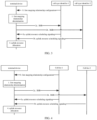
- the method for resource configuration further includes step 501 and step 502.
- a signaling from a network side is received.
- the signaling is configured to indicate a second mapping relationship between the first target identifier and the second target identifier used at a current moment.
- the terminal device receives a MAC signaling or a physical layer signaling from the network side.
- the MAC signaling or the physical layer signaling is configured to indicate the second mapping relationship between the first target identifier and the second target identifier used at the current moment.
- the terminal device receives a physical layer signaling from the network side.
- the physical layer signaling is configured to indicate the second mapping relationship between the first target identifier and the second target identifier used at the current moment.
- the network side further indicates the second mapping relationship between the first target identifier and the second target identifier used at the current moment via the physical layer signaling.
- a BSR and/or an uplink resource allocation is performed based on the second mapping relationship.
- the second mapping relationship includes the first target identifier and the second target identifier that are needed in a multi-connection scenario. Therefore, the BSR and/or the uplink resource allocation may be performed based on the second mapping relationship.
- the first mapping relationship includes the corresponding relationship between the LCID and the cell type identifier.
- the network device further indicates the second mapping relationship between the first target identifier and the second target identifier used at the current moment via a MAC signaling or a physical layer signaling, and the terminal device determines whether to report the data of the LCID to the terrestrial cell or the satellite cell based on the second mapping relationship.
- the first mapping relationship includes the corresponding relationship between the LCID and the cell identifier list.
- the network device further indicates the second mapping relationship between the first target identifier and the second target identifier used at the current moment via a MAC signaling or a physical layer signaling, and the terminal device determines whether to report the data of the LCID to the cell corresponding to the cell list 1 or the cell corresponding to the cell list 2 based on the second mapping relationship.
- the first mapping relationship includes the corresponding relationship between the QoS parameter identifier and the cell type identifier.
- the first mapping relationship includes the corresponding relationship between the QoS parameter identifier and the cell identifier list.
- the first mapping relationship includes the corresponding relationship between the bearer identifier and the cell type identifier.
- Table 18 first target identifier second target identifier ... ... bearer identifier 5 terrestrial cell, terrestrial cell
- the first mapping relationship includes the corresponding relationship between the bearer identifier and the cell identifier list.
- each cell identifier list is a list of a plurality of cell identifiers, and includes one or more cell identifiers that may be used by the bearer identifier.
- Table 19 first target identifier second target identifier ... ... bearer identifier 5 Cell list 1 ⁇ Cell 3, Cell 4 ⁇ ; Cell list 2 ⁇ Cell 1, Cell 2 ⁇
- the first target identifier based on the first mapping relationship corresponds to the plurality of second target identifiers simultaneously.
- the method for resource configuration may further indicate the second mapping relationship between the first target identifier and the second target identifier used at the current moment based on related configuration information, thereby ensuring the flexibility and practicality of resource allocation in a connection scenario.
- FIG. 6 is a block diagram illustrating an apparatus for resource configuration according to an embodiment of the disclosure. As illustrated in FIG. 6 , the apparatus for resource configuration includes a determining module 610 and a resource processing module 620.
- the determining module 610 is configured to determine a first mapping relationship between a first target identifier and a second target identifier.
- the first target identifier includes at least one of: a QoS parameter identifier, a logical channel identifier or a bearer identifier.
- the second target identifier includes at least one of: a cell type identifier or a cell identifier list.
- the resource processing module 620 is configured to perform a BSR and/or an uplink resource allocation based on the first mapping relationship.
- the first target identifier includes at least one of: a QoS parameter identifier, a logical channel identifier or a bearer identifier.
- the second target identifier includes at least one of: a cell type identifier or a cell identifier list.
- the cell type identifier includes at least one of: a terrestrial cell, a satellite cell, an LEO satellite cell, an MEO satellite cell, a GEO satellite cell, an HEO satellite cell or a UAS platform cell.
- the determining module 610 is specifically configured to determine the first mapping relationship between the first target identifier and the second target identifier based on a preset protocol.
- the determining module 610 is specifically configured to receive an RRC signaling or an MAC signaling from a network side, in which the RRC signaling or the MAC signaling includes the first target identifier and the second target identifier corresponding to the first target identifier.
- the determining module 610 is specifically configured to receive a physical layer signaling from a network side, in which the physical layer signaling includes resource allocation information carrying the second target identifier and the first target identifier corresponding to the resource allocation information.
- the apparatus for resource configuration includes a determining module 710, a resource processing module 720 and a first receiving module 730.
- the first receiving module 730 is configured to receive a MAC signaling or a physical layer signaling from the network side, in which the MAC signaling or the physical layer signaling is configured to indicate a second mapping relationship between the first target identifier and the second target identifier used at a current moment.
- the determining module 710 is configured to determine the second mapping relationship between the first target identifier and the second target identifier used at the current moment.
- the resource processing module 720 is further configured to perform a BSR and/or an uplink resource allocation based on the second mapping relationship.
- the apparatus for resource configuration includes a determining module 810, a resource processing module 820 and a second receiving module 830.
- the second the receiving module 830 is configured to receive a physical layer signaling from the network side, in which the physical layer signaling is configured to indicate a second mapping relationship between the first target identifier and the second target identifier used at a current moment.
- the determining module 810 is configured to determine the second mapping relationship between the first target identifier and the second target identifier used at the current moment.
- the resource processing module 820 is further configured to perform a BSR and/or an uplink resource allocation based on the second mapping relationship.
- division of units in embodiments of the disclosure is illustrative and only a logical function division. There may be another division manner in the actual implementation.
- functional units in various embodiments of the disclosure may be integrated in a processing unit, or may be physically existed separately, or two or more units may be integrated in one unit.
- the above integrated unit may be implemented in the form of hardware or in the form of software functional unit.
- the integrated units may be stored in a processor-readable storage medium if implemented as software functional units and sold or used as stand-alone products.
- the technical solution of the disclosure in nature or the part that contributes to the related art or the whole or part of the technical solution can be implemented in the form of software products.
- the computer software product is stored in a storage medium and includes instructions used to cause a computer device (which may be a personal computer, a server, or a network-side device) or a processor to perform all or part of the steps of the method of each embodiment of the disclosure.
- the above-mentioned storage medium includes: a U disk, a portable hard disk, a Read-Only Memory (ROM), a Random Access Memory (RAM), a magnetic disk or an optical disc and other mediums for storing program codes.
- the apparatus for resource configuration provided in embodiments of the disclosure may implement all method steps achieved by the method embodiments, and may achieve the same technical effects, and the same part as the method embodiments and the beneficial effects are not repeated in embodiments of the disclosure.
- the terminal device includes: a memory 910, a transceiver 920 and a processor 930.
- the transceiver 920 is configured to transmit and receive data under a control of the processor 930.
- a bus architecture may include any number of interconnected buses and bridges, and specifically link various circuits including one or more processors represented by the processor 930 and memories represented by the memory 910.
- the bus architecture may further link various other circuits such as peripheral equipments, voltage regulators and power management circuits, which are well known in the art, which will not be further described herein.
- the bus interface provides an interface.
- the transceiver 920 may be a plurality of elements, i.e., include a transmitter and a receiver, and units for communicating with various other apparatuses on transmission media.
- the transmission media include a wireless channel, a wired channel, an optic cable and other transmission media.
- the processor 930 is in charge of managing the bus architecture and general processings, and the memory 910 may store data used by processor 930 in performing operations.
- the processor 930 may be a central processing unit (CPU), an application specific integrated circuit (CPU), a field-programmable gate array (FPGA) or a complex programmable logic device (CPLD).
- the processor 910 may also adopt a multi-core architecture.
- the processor is configured to perform any one of the methods for resource configuration provided in embodiments of the disclosure based on an acquired executable instruction by calling a computer program stored in a memory.
- the processor and the memory may also be physically separated.
- the processor is configured to read the computer program stored in the memory and perform operations of: determining a first mapping relationship between a first target identifier and a second target identifier, in which the first target identifier includes at least one of: a QoS parameter identifier, a logical channel identifier or a bearer identifier; and the second target identifier includes at least one of: a cell type identifier or a cell identifier list; and performing a BSR and/or an uplink resource allocation based on the first mapping relationship.
- first mapping relationship there may be one or more corresponding relationships between the first target identifier and the second target identifier included in the first mapping relationship:
- the first mapping relationship includes the first target identifier and the second target identifier that are needed in the multi-connection scenario. Therefore, the BSR and/or the uplink resource allocation may be performed based on the first mapping relationship.
- the BSR and/or the uplink resource allocation is performed based on the first mapping relationship.
- the BSR and/or the uplink resource allocation is performed based on the first mapping relationship.
- the first mapping relationship includes the corresponding relationship between the LCID and the cell type identifier.
- the first target identifier is the LCID
- the second target identifier is the cell type identifier, in which a cell type 1 is the terrestrial cell, and a cell type 2 is the satellite cell.
- the terminal device also needs to consider the first mapping relationship between the first target identifier and the second target identifier when performing the uplink resource allocation.
- the BSR and/or the uplink resource allocation is performed based on the first mapping relationship.
- the first mapping relationship includes the corresponding relationship between the LCID and the cell identifier list.
- the first target identifier is the LCID
- the second target identifier is the cell identifier list, in which each cell identifier list may be a list of a plurality of cell identifiers, and each cell identifier list includes one or more cell identifiers that may be used by the LCID.
- the terminal device needs to consider the first mapping relationship between the first target identifier and the second target identifier when performing the uplink resource allocation.
- the BSR and/or the uplink resource allocation is performed based on the first mapping relationship.
- the first mapping relationship includes the corresponding relationship between the QoS parameter identifier and the cell type identifier.
- the first target identifier is the QoS parameter identifier
- the second target identifier is the cell type identifier, in which a cell type 1 is the terrestrial cell, and a cell type 2 is the satellite cell.
- the terminal device needs to consider the first mapping relationship between the first target identifier and the second target identifier when performing the uplink resource allocation.
- the BSR and/or the uplink resource allocation is performed based on the first mapping relationship.
- the first mapping relationship includes the corresponding relationship between the QoS parameter identifier and the cell identifier list.
- the first target identifier is the QoS parameter identifier
- the second target identifier is the cell identifier list.
- Each cell identifier list is a list of a plurality of cell identifiers, and includes cell identifiers that may be used by one or more of the LCIDs.
- the terminal device needs to consider the first mapping relationship between the first target identifier and the second target identifier when performing the uplink resource allocation.
- the BSR and/or the uplink resource allocation is performed based on the first mapping relationship.
- the first mapping relationship includes the corresponding relationship between the bearer identifier and the cell type identifier.
- the first target identifier is the bearer identifier
- the second target identifier is the cell type identifier.
- a cell type 1 is the terrestrial cell
- a cell type 2 is the satellite cell.
- the terminal needs to consider the first mapping relationship between the first target identifier and the second target identifier when performing the uplink resource allocation.
- the BSR and/or an uplink resource allocation is performed based on the first mapping relationship.
- the first mapping relationship includes the corresponding relationship between the bearer identifier and the cell identifier list.
- the first target identifier is the bearer identifier
- the second target identifier includes the cell identifier list.
- Each cell identifier list is a list of a plurality of cell identifiers, and includes one or more cell identifiers that may be used by the LCID.
- the terminal device needs to consider the first mapping relationship between the first target identifier and the second target identifier when performing the uplink resource allocation.
- the terminal device may determine the first mapping relationship between the first target identifier and the second target identifier; and perform the BSR and/or the uplink resource allocation according to the first mapping relationship.
- it may be ensured that different services of the terminal may be transmitted by selecting an appropriate cell type during radio transmission, thereby ensuring the QoS of the service better and improving the user experience.
- the processor determines the first mapping relationship between the first target identifier and the second target identifier based on a preset protocol.
- the processor receives an RRC signaling or an MAC signaling from a network side.
- the RRC signaling or the MAC signaling includes the first target identifier and the second target identifier corresponding to the first target identifier.
- the processor receives a physical layer signaling from a network side.
- the physical layer signaling includes resource allocation information carrying the second target identifier and the first target identifier corresponding to the resource allocation information.
- resource allocation information For example, a LCID or a bearer identifier corresponding to the resource allocation information.
- the processor receives a MAC signaling or a physical layer signaling from the network side.
- the MAC signaling or the physical layer signaling is configured to indicate a second mapping relationship between the first target identifier and second target identifier used at a current moment.
- the processor receives a physical layer signaling from the network side.
- the physical layer signaling is configured to indicate a second mapping relationship between the first target identifier and second target identifier used at a current moment.
- the second mapping relationship includes the first target identifier and the second target identifier that are needed in a multi-connection scenario. Therefore, a BSR and/or an uplink resource allocation may be performed based on the second mapping relationship.
- the first mapping relationship includes the corresponding relationship between the LCID and the cell type identifier.
- the network device further indicates the second mapping relationship between the first target identifier and the second target identifier used at the current moment via a MAC signaling or a physical layer signaling, and the terminal device determines whether to report data of the LCID to the terrestrial cell or the satellite cell based on the second mapping relationship.
- the first mapping relationship includes the corresponding relationship between the LCID and the cell identifier list.
- the network device further indicates the second mapping relationship between the first target identifier and the second target identifier used at the current moment via a MAC signaling or a physical layer signaling, and the terminal device determines whether to report the data of the LCID to the cell corresponding to the cell list 1 or the cell corresponding to the cell list 2 based on the second mapping relationship.
- the first mapping relationship includes the corresponding relationship between the QoS parameter identifier and the cell type identifier.
- the first mapping relationship includes the corresponding relationship between the QoS parameter identifier and the cell identifier list.
- the first mapping relationship includes the corresponding relationship between the bearer identifier and the cell type identifier.
- the first mapping relationship includes the corresponding relationship between the bearer identifier and the cell identifier list.
- each cell identifier list is a list of a plurality of cell identifiers, and includes one or more cell identifiers that may be used by the bearer identifier.
- the processor in embodiments of the disclosure may ensure that different services of the terminal may be transmitted by selecting an appropriate cell type during radio transmission, thereby ensuring the QoS of the service better and improving the user experience.
- a processor-readable storage medium stored with a computer program is further proposed.
- the computer program is configured to cause a processor to perform the method for resource configuration as described in the above embodiments.
- the above processor-readable storage medium may be any available medium or data storage device that the processor may access, including but not limited to a magnetic memory (e.g., a floppy disk, a hard disk, a magnetic tape, a magnetic optical disk (MO)), an optical memory (e.g., a CD, a DVD, a BD, a HVD), and a semiconductor memory (e.g., a ROM, an EPROM, an EEPROM, a non-volatile memory (a NAND a FLASH), a solid state drive (SSD)).
- a magnetic memory e.g., a floppy disk, a hard disk, a magnetic tape, a magnetic optical disk (MO)
- an optical memory e.g., a CD, a DVD, a BD, a HVD
- a semiconductor memory e.g., a ROM, an EPROM, an EEPROM, a non-volatile memory (a NAND a FLASH), a
- a computer program product including a computer program code is further provided.
- the computer program code is running on a computer, the method for resource configuration as described in the above embodiments is performed.
- a computer program including a computer program code is further provided.
- the computer program code is running on a computer, the computer is caused to perform the method for resource configuration as described in the above embodiments.
- the embodiments of the disclosure may provide a method, a system, or a computer program product. Therefore, the disclosure may provide the embodiment in the form of entire hardware, the embodiment in the form of entire software, or the embodiment in the form of software and hardware. Moreover, the disclosure may take the form of a computer program product implemented on one or more computer-usable storage mediums (including, but not limited to, a disk memory and an optical memory) that contain computer-usable program codes therein.
- a computer-usable storage mediums including, but not limited to, a disk memory and an optical memory
- processor-executable instructions may also be stored in a processor-readable memory capable of directing a computer or other programmable data processing device to operate in a particular manner, such that the instructions stored in the processor-readable memory produce an article of manufacture including a command device.
- the command device implements the functions specified in one or more processes of the flowchart and/or one or more boxes of the block diagram.
- processor-executable instructions may also be loaded onto a computer or other programmable data processing device, such that a series of operational steps are performed on the computer or other programmable device to produce computer-implemented processing.
- the instructions executed on the computer or other programmable device provide steps for implementing the functions specified in one or more processes of the flowchart and/or one or more boxes of the block diagram.
Landscapes
- Engineering & Computer Science (AREA)
- Computer Networks & Wireless Communication (AREA)
- Signal Processing (AREA)
- Quality & Reliability (AREA)
- Mobile Radio Communication Systems (AREA)
Applications Claiming Priority (2)
| Application Number | Priority Date | Filing Date | Title |
|---|---|---|---|
| CN202110133444.2A CN114828073B (zh) | 2021-01-29 | 2021-01-29 | 资源配置方法、装置、设备以及存储介质 |
| PCT/CN2022/072509 WO2022161210A1 (fr) | 2021-01-29 | 2022-01-18 | Procédé et appareil de configuration de ressources, dispositif, et support de stockage |
Publications (2)
| Publication Number | Publication Date |
|---|---|
| EP4287698A1 true EP4287698A1 (fr) | 2023-12-06 |
| EP4287698A4 EP4287698A4 (fr) | 2024-06-12 |
Family
ID=82526395
Family Applications (1)
| Application Number | Title | Priority Date | Filing Date |
|---|---|---|---|
| EP22745086.3A Pending EP4287698A4 (fr) | 2021-01-29 | 2022-01-18 | Procédé et appareil de configuration de ressources, dispositif, et support de stockage |
Country Status (4)
| Country | Link |
|---|---|
| US (1) | US12538166B2 (fr) |
| EP (1) | EP4287698A4 (fr) |
| CN (1) | CN114828073B (fr) |
| WO (1) | WO2022161210A1 (fr) |
Families Citing this family (2)
| Publication number | Priority date | Publication date | Assignee | Title |
|---|---|---|---|---|
| CN115499930B (zh) * | 2022-10-28 | 2023-04-07 | 北京太极疆泰科技发展有限公司 | 一种卫星网络通信资源分配方法及系统 |
| CN116133164B (zh) * | 2023-01-30 | 2025-08-08 | 浪潮通信技术有限公司 | 一种多连接资源的分配方法 |
Family Cites Families (22)
| Publication number | Priority date | Publication date | Assignee | Title |
|---|---|---|---|---|
| CN104780569B (zh) | 2015-04-02 | 2018-08-21 | 南京邮电大学 | 多层卫星网络信道资源管理方法 |
| CN107295562A (zh) | 2016-04-01 | 2017-10-24 | 中兴通讯股份有限公司 | 资源配置方法、装置及系统、ue和基站 |
| JP6538273B2 (ja) * | 2016-04-22 | 2019-07-03 | 京セラ株式会社 | 無線端末及び基地局 |
| CN113038552B (zh) * | 2016-09-30 | 2022-02-01 | 华为技术有限公司 | 通信方法、基站以及终端 |
| CN106506061B (zh) * | 2016-11-08 | 2019-09-20 | 中国电子科技集团公司第七研究所 | 卫星通信系统的数据传输方法和系统 |
| CN108391286B (zh) * | 2017-02-03 | 2019-09-17 | 电信科学技术研究院 | 获得和上报缓冲区状态的方法、网络侧设备以及终端 |
| US10856174B2 (en) * | 2017-03-16 | 2020-12-01 | Ofinno, Llc | Buffer status report control |
| US10736116B2 (en) * | 2017-06-15 | 2020-08-04 | Samsung Electronics Co., Ltd. | Method and apparatus for an uplink transmission based on a characteristic of physical resources |
| CN116782398A (zh) * | 2017-08-10 | 2023-09-19 | 夏普株式会社 | 基站、用户设备和相关方法 |
| CN109392175B (zh) * | 2017-08-11 | 2023-08-08 | 华为技术有限公司 | 调度请求的发送方法、调度请求的处理方法及相关设备 |
| CN109756986B (zh) * | 2017-11-03 | 2021-07-13 | 大唐移动通信设备有限公司 | 一种上行数据包资源分配方法和用户终端 |
| CN110312285B (zh) * | 2018-03-27 | 2023-02-07 | 华为技术有限公司 | 一种通信方法及相关设备 |
| CN110838899B (zh) | 2018-08-16 | 2021-12-24 | 大唐移动通信设备有限公司 | 一种直接通信链路资源分配方法及终端 |
| KR20200034921A (ko) * | 2018-09-21 | 2020-04-01 | 주식회사 케이티 | 5G IoT를 위한 데이터 중복 전송 방법 및 장치 |
| CN110972257B (zh) | 2018-09-29 | 2021-06-08 | 华为技术有限公司 | 通信方法、相关设备及计算机存储介质 |
| US11082903B2 (en) * | 2018-12-03 | 2021-08-03 | Electronics And Telecommunications Research Institute | Method for handover in non-terrestrial network, and apparatus for the same |
| CN111417211B (zh) | 2019-01-08 | 2022-02-18 | 华为技术有限公司 | 触发调度请求的方法、设备及系统 |
| US10939408B2 (en) * | 2019-02-12 | 2021-03-02 | Samsung Electronics Co., Ltd. | Method and system for positioning low altitude platform station (LAPS) drone cells |
| WO2020197259A1 (fr) * | 2019-03-25 | 2020-10-01 | 삼성전자 주식회사 | Procédé et appareil permettant la commande de l'activation d'une pluralité de dispositifs de couche rlc dans un système de communication sans fil |
| CN110536477B (zh) * | 2019-04-03 | 2023-11-14 | 中兴通讯股份有限公司 | 连接方法、装置、网络设备及存储介质 |
| US20200337110A1 (en) * | 2019-04-16 | 2020-10-22 | Electronics And Telecommunications Research Institute | Method and apparatus for low power consumption operation of terminal in mobile communication system |
| CN111800883B (zh) * | 2019-07-10 | 2022-06-10 | 维沃移动通信有限公司 | 信道接入方法、终端设备和网络设备 |
-
2021
- 2021-01-29 CN CN202110133444.2A patent/CN114828073B/zh active Active
-
2022
- 2022-01-18 EP EP22745086.3A patent/EP4287698A4/fr active Pending
- 2022-01-18 US US18/263,250 patent/US12538166B2/en active Active
- 2022-01-18 WO PCT/CN2022/072509 patent/WO2022161210A1/fr not_active Ceased
Also Published As
| Publication number | Publication date |
|---|---|
| EP4287698A4 (fr) | 2024-06-12 |
| CN114828073A (zh) | 2022-07-29 |
| US12538166B2 (en) | 2026-01-27 |
| WO2022161210A1 (fr) | 2022-08-04 |
| CN114828073B (zh) | 2025-08-12 |
| US20240089792A1 (en) | 2024-03-14 |
Similar Documents
| Publication | Publication Date | Title |
|---|---|---|
| US20240357337A1 (en) | Relay selection method, device and user terminal | |
| CN116073881B (zh) | 一种数据传输的方法、卫星基站、信关站及存储介质 | |
| EP4277308A1 (fr) | Procédé et appareil de communication, dispositif et support de stockage lisible | |
| EP4436299A1 (fr) | Procédé d'accès aléatoire, terminal, appareil et support de stockage | |
| US20240292278A1 (en) | Group handover method, device, and apparatus, and storage medium | |
| US11924741B2 (en) | Auxiliary routing method, terminal device, and network device | |
| US20240098554A1 (en) | Information communication method, apparatus and communications device | |
| EP4287698A1 (fr) | Procédé et appareil de configuration de ressources, dispositif, et support de stockage | |
| US12581383B2 (en) | Cell reselection method and storage medium | |
| CN115604827A (zh) | 抑制跨链路干扰的方法、装置、网络设备及存储介质 | |
| CN114885336B (zh) | 干扰协调方法、装置及存储介质 | |
| EP4319398A1 (fr) | Procédé et appareil de transmission de données, et support de stockage | |
| WO2023013090A1 (fr) | Dispositif de commande de communication, procédé de commande de communication, et programme de commande de communication | |
| EP4561147A1 (fr) | Procédé et appareil de traitement d'informations, et support de stockage lisible | |
| US20250159695A1 (en) | Information processing method and apparatus, and readable storage medium | |
| US20250071629A1 (en) | Cell reselection method, slice group information processing method, terminal and network-side device | |
| US20250088899A1 (en) | Information transmission method, information transmission apparatus, relay ue and network-side device | |
| US20250056585A1 (en) | Information transmission, resource configuration method, device, terminal device and network device | |
| US20230422144A1 (en) | Message notification method and apparatus, terminal device, relay ue, and storage medium | |
| CN116074819A (zh) | Pdu会话处理方法、网络设备、装置及存储介质 | |
| CN115696485A (zh) | 重选优先级配置方法及装置 | |
| EP4456628A1 (fr) | Procédé et appareil de traitement d'informations, et support de stockage lisible | |
| US20250119967A1 (en) | Method for handling consistent lbt failure, terminal, and network device | |
| WO2025167640A1 (fr) | Procédé et appareil de traitement de transmission | |
| CN117479109A (zh) | 组播广播业务mbs的传输方法、装置、终端及通信设备 |
Legal Events
| Date | Code | Title | Description |
|---|---|---|---|
| STAA | Information on the status of an ep patent application or granted ep patent |
Free format text: STATUS: THE INTERNATIONAL PUBLICATION HAS BEEN MADE |
|
| PUAI | Public reference made under article 153(3) epc to a published international application that has entered the european phase |
Free format text: ORIGINAL CODE: 0009012 |
|
| STAA | Information on the status of an ep patent application or granted ep patent |
Free format text: STATUS: REQUEST FOR EXAMINATION WAS MADE |
|
| 17P | Request for examination filed |
Effective date: 20230801 |
|
| AK | Designated contracting states |
Kind code of ref document: A1 Designated state(s): AL AT BE BG CH CY CZ DE DK EE ES FI FR GB GR HR HU IE IS IT LI LT LU LV MC MK MT NL NO PL PT RO RS SE SI SK SM TR |
|
| REG | Reference to a national code |
Ref country code: DE Ref legal event code: R079 Free format text: PREVIOUS MAIN CLASS: H04W0024100000 Ipc: H04W0072126800 |
|
| DAV | Request for validation of the european patent (deleted) | ||
| DAX | Request for extension of the european patent (deleted) | ||
| A4 | Supplementary search report drawn up and despatched |
Effective date: 20240514 |
|
| RIC1 | Information provided on ipc code assigned before grant |
Ipc: H04W 72/543 20230101ALN20240507BHEP Ipc: H04W 72/21 20230101ALI20240507BHEP Ipc: H04W 72/1268 20230101AFI20240507BHEP |