EP4287754A2 - Endgerätevorrichtung, basisstationsvorrichtung und verfahren dafür - Google Patents
Endgerätevorrichtung, basisstationsvorrichtung und verfahren dafür Download PDFInfo
- Publication number
- EP4287754A2 EP4287754A2 EP23204032.9A EP23204032A EP4287754A2 EP 4287754 A2 EP4287754 A2 EP 4287754A2 EP 23204032 A EP23204032 A EP 23204032A EP 4287754 A2 EP4287754 A2 EP 4287754A2
- Authority
- EP
- European Patent Office
- Prior art keywords
- random access
- message
- terminal device
- rach procedure
- uplink message
- Prior art date
- Legal status (The legal status is an assumption and is not a legal conclusion. Google has not performed a legal analysis and makes no representation as to the accuracy of the status listed.)
- Granted
Links
Images






Classifications
-
- H—ELECTRICITY
- H04—ELECTRIC COMMUNICATION TECHNIQUE
- H04W—WIRELESS COMMUNICATION NETWORKS
- H04W74/00—Wireless channel access
- H04W74/08—Non-scheduled access, e.g. ALOHA
- H04W74/0833—Random access procedures, e.g. with 4-step access
-
- H—ELECTRICITY
- H04—ELECTRIC COMMUNICATION TECHNIQUE
- H04W—WIRELESS COMMUNICATION NETWORKS
- H04W74/00—Wireless channel access
- H04W74/08—Non-scheduled access, e.g. ALOHA
- H04W74/0833—Random access procedures, e.g. with 4-step access
- H04W74/0836—Random access procedures, e.g. with 4-step access with 2-step access
-
- H—ELECTRICITY
- H04—ELECTRIC COMMUNICATION TECHNIQUE
- H04W—WIRELESS COMMUNICATION NETWORKS
- H04W74/00—Wireless channel access
- H04W74/08—Non-scheduled access, e.g. ALOHA
- H04W74/0833—Random access procedures, e.g. with 4-step access
- H04W74/0838—Random access procedures, e.g. with 4-step access using contention-free random access [CFRA]
Definitions
- LTE Long Term Evolution
- LTE-A Long Term Evolution
- LTE-A Pro LTE-Advanced Pro
- NR New Radio
- NRAT New Radio Access Technology
- EUTRA Evolved Universal Terrestrial Radio Access
- FEUTRA Frether EUTRA
- the present disclosure proposes a mechanism that makes it possible to achieve the stability of the RACH procedure and the reduction in latency of the RACH procedure at the same time.
- PDCCH is transmitted by a set of one or more CCEs (Control Channel Elements).
- CCE includes nine REGs (Resource Element Groups).
- REG includes four resource elements.
- PDCCH starts with CCE satisfying a condition that a remainder after dividing an index (number) i of CCE by n is 0.
- DMRS associated with EPDCCH is transmitted through a subframe and a band used for transmission of EPDCCH to which DMRS is associated. DMRS is used for demodulation of EPDCCH with which DMRS is associated. EPDCCH is transmitted through an antenna port used for transmission of DMRS. DMRS associated with EPDCCH is transmitted through one or more of the antenna ports 107 to 114.
- the demultiplexer 1055 separates the uplink channel such as the PUCCH or the PUSCH and/or uplink reference signal from the signal input from the radio receiver 1057.
- the demultiplexer 1055 outputs the uplink reference signal to the channel measurement section 1059.
- the demultiplexer 1055 compensates the propagation path for the uplink channel from the estimation value of the propagation path input from the channel measurement section 1059.
- the encoder 1071 encodes the HARQ indicator (HARQ-ACK), the downlink control information, and the downlink data input from the controller 103 using a predetermined coding scheme such as block coding, convolutional coding, turbo coding, or the like.
- the modulator 1073 modulates the encoded bits input from the encoder 1071 using a predetermined modulation scheme such as BPSK, QPSK, 16 QAM, 64 QAM, or 256 QAM.
- the downlink reference signal generator 1079 generates the downlink reference signal on the basis of a physical cell identification (PCI), an RRC parameter set in the terminal device 200, and the like.
- the multiplexer 1075 multiplexes a modulated symbol and the downlink reference signal of each channel and arranges resulting data in a predetermined resource element.
- management related to RAT is performed.
- the management related to LTE and/or the management related to NR is performed.
- the management related to NR includes setting and a process of a parameter set related to the transmission signal in the NR cell.
- the receiver 205 Under the control from the controller 203, the receiver 205 receives a signal transmitted from the base station device 100 via the transmission-reception antenna 209, performs a reception process such as demultiplexing, demodulation, and decoding, and outputs information which has undergone the reception process to the controller 203. Note that, the reception process in the receiver 205 is performed on the basis of a setting which is specified in advance or a notification from the base station device 100 or a setting.
- the DCI format monitored by the terminal device 200 is decided in accordance with the transmission mode set for each serving cell. In other words, a part of the DCI format monitored by the terminal device 200 can differ depending on the transmission mode.
- the terminal device 200 in which a downlink transmission mode 1 is set monitors the DCI format 1A and the DCI format 1.
- the terminal device 200 in which a downlink transmission mode 4 is set monitors the DCI format 1A and the DCI format 2.
- the terminal device 200 in which an uplink transmission mode 1 is set monitors the DCI format 0.
- the terminal device 200 in which an uplink transmission mode 2 is set monitors the DCI format 0 and the DCI format 4.
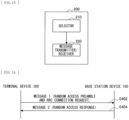
- the random access procedure illustrated in FIG. 7 is also referred to as four-step RACH procedure.
- the random access procedure in which the terminal device 200 also transmits Message 3 in association with the transmission of the random access preamble, and the base station device 100 transmits the random access response and Contention resolution in response thereto is referred to as two-step RACH procedure.
- synchronization signal burst sets transmitted at different temporal instances are not necessarily transmitted at the same antenna ports and TRPs.
- the first system information is transmitted in NR-PBCH
- the second system information is transmitted in a physical channel different from NR-PBCH.
- a setting related to NR-PRACH is made by the system information.
- a setting related to NR-PRACH is made by the dedicated RRC signaling.
- the type of sequence of the preamble of NR-PRACH is numbered.
- the number of the type of the sequence of the preamble is referred to as preamble index.
- NR-PRACH is retransmitted when the random access procedure is unsuccessful.
- the terminal device 200 waits for NR-PRACH to be transmitted for a wait period calculated from a backoff value (backoff indicator, BI).
- backoff indicator BI
- the backoff values may differ depending on terminal categories of the terminal device 200 and priorities of traffics generated. At this time, a plurality of backoff values are notified, and the terminal device 200 selects a backoff value to be used according to the priorities.
- the transmission power of NR-PRACH is increased compared with the initial transmission (this procedure is referred to as power ramping).
- the terminal device 200 determines that the random access procedure has been unsuccessful, and performs the NR-PRACH retransmission process.
- URLLC is described.
- information of a user plane but also information of a control plane is desired to have lower delay and higher reliability as compared with the eMBB. It is therefore desirable to reduce the latency of the RACH procedure performed in the URLLC.
- Two-step RACH procedure has been proposed as a RACH procedure having a latency smaller than that of four-step RACH procedure.
- the two-step RACH procedure may be less stable because the two-step RACH procedure completes the procedure with fewer steps.
- the present embodiment proposes a mechanism that is able to achieve the stability the RACH procedure and the reduction in the latency of the RACH procedure by using the four-step RACH procedure and the two-step RACH procedure together while flexibly switching therebetween.
- the message transmitter/receiver 220 has a function of transmitting and receiving various messages to and from the base station device 100. For example, the message transmitter/receiver 220 transmits and receives messages for RACH procedure. Further, the message transmitter/receiver 220 receives setting information from the base station device 100.
- the format of Message 1 may be a combination of PRACH and PUSCH. That is, Message 1 may be transmitted using PRACH and PUSCH.
- the identification information of the terminal device 200 is represented by a UE-ID field and/or a PRACH preamble and/or a RACH resource included in PUSCH.
- the occasion of Message 1 of the two-step RACH procedure is not superimposed on the PRACH occasion.
- the settings of the Message 1 occasion and the PRACH occasion are independent.
- the PRACH transmittable resources among the Message 1 occasions of the two-step RACH procedure are shared with the PRACH occasions.
- a set of PRACH preambles that is able to be used in the two-step RACH procedure and a set of PRACH preambles that is able to be used in the four-step RACH procedure be independent. It is preferable that neither PRACH preamble be included in both the set of PRACH preambles of the two-step RACH procedure and the set of PRACH preambles of the four-step RACH procedure.
- PDCCH for scheduling transmissions of Message 2 may be transmitted in association with RA-RNTI.
- CRC of PDCCH scheduling transmissions of Message 2 may be scrambled using RA-RNTI and transmitted.
- PDCCH for scheduling transmissions of Message 2 may be transmitted in association with an identifier of terminal device 200 other than C-RNTI.
- an identifier may be, for example, a unique identification number, S-TMSI, or the like assigned to SIM (Subscriber Identity Module).
- the number of steps i.e., the number of messages
- the number of steps is reduced from four steps to two steps as compared with the four-step RACH procedure illustrated in FIG. 10 , it is possible to reduce the latency of the entire RACH procedure.
- the base station device 100 and terminal device 200 perform switching between the two-step RACH procedure and the four-step RACH procedure.
- the base station device 100 sets a selection reference (corresponding to a first selection reference) in the terminal device 200 for the terminal device 200 to select whether to transmit the uplink message of the two-step RACH procedure or the uplink message of the four-step RACH procedure in the RACH procedure.
- the base station device 100 sets the first selection reference in the terminal device 200 that supports both the two-step RACH procedure and the four-step RACH procedure.
- the terminal device 200 selects, on the basis of the first selection reference set by the base station device 100, whether to transmit the uplink message of the two-step RACH procedure or the uplink message of the four-step RACH procedure.
- the terminal device 200 may select whether to transmit the uplink message of the two-step RACH procedure or the uplink message of the four-step RACH procedure to the base station device 100, depending on a use to which the RACH procedure is applied.
- the success/unsuccess of the two-step RACH procedure may be recognized by the base station device 100.
- the base station device 100 recognizes that successful reception of all of the uplink messages of the two-step RACH procedure as a success of the two-step RACH procedure.
- the base station device 100 recognizes that successful reception of a part of the uplink message of the two-step RACH procedure as an unsuccess of the two-step RACH procedure.
- a part of the uplink message of the two-step RACH procedure may be, for example, PRACH.
- a part of the uplink message of the two-step RACH procedure may be, for example, DMRS of PUSCH.
- the terminal device 200 transmits Message 1 of the two-step RACH procedure using PRACH and PUSCH in a case where the terminal device 200 is instructed by the base station device 100 to use PRACH and PUSCH. In contrast, in a case where the terminal device 200 is not instructed by the base station device 100 to use PRACH and PUSCH, the terminal device 200 transmits Message 1 of the two-step RACH procedure using only PUSCH.
- the terminal device 200 may select the format of the uplink message of the two-step RACH procedure on the basis of path loss between the base station device 100 and the terminal device 200.
- DFT-s-OFDM (SC-FDMA) is beneficial from a viewpoint of reducing transmission power. Therefore, DFT-s-OFDM is used when a large amount of transmission power is desired. For example, when the path loss is large due to a situation in which the terminal device 200 is distant from the base station device 100, a large amount of transmission power is desired. As described above, when the path loss is large, since the propagation delay between the base station device 100 and the terminal device 200 is large, it is desirable to compensate for the uplink synchronization using PRACH.
- the terminal device 200 transmits Message 1 of the two-step RACH procedure using PRACH and PUSCH if the terminal device 200 is instructed by the base station device 100 to use DFT-s-OFDM as the PUSCH waveform. In contrast, if the terminal device 200 is instructed by the base station device 100 to use OFDM as the PUSCH waveform, the terminal device 200 transmits Message 1 of the two-step RACH procedure using only PUSCH. (4) Frequency Band
- the terminal device 200 may select the format of the uplink message of the two-step RACH procedure on the basis of a frequency band in which the two-step RACH procedure is executed.
- step S506/YES If the uplink message of the two-step RACH procedure is selected (step S506/YES), the terminal device 200 selects the uplink message format of the two-step RACH procedure (step S508). The terminal device 200 makes the selection on the basis of the second selection reference received in step S502. The terminal device 200 then executes the two-step RACH procedure (step S510). In detail, the terminal device 200 transmits Message 1 of the two-step RACH procedure to the base station device 100. If the two-step RACH procedure is successful (step S512/YES), the process ends. In contrast, if the two-step RACH procedure is unsuccessful (step S512/NO), the terminal device 200 performs the fallback to the four-step RACH procedure (step S514). The process in step S514 will be described in detail below.
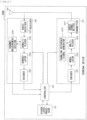
- FIG. 16 is a block diagram illustrating a first example of a schematic configuration of an eNB to which the technology according to an embodiment of the present disclosure may be applied.
- An eNB 800 includes one or more antennas 810 and a base station device 820. Each antenna 810 and the base station device 820 may be connected to each other via an RF cable.
- the network interface 823 is a communication interface for connecting the base station device 820 to the core network 824.
- the controller 821 may communicate with a core network node or another eNB via the network interface 823.
- the eNB 800 may be connected to a core network node or another eNB through a logical interface (e.g., S1 interface or X2 interface).
- the network interface 823 may be a wired communication interface or a radio communication interface for radio backhaul. In the case where the network interface 823 is a radio communication interface, the network interface 823 may use a higher frequency band for radio communication than a frequency band used by the radio communication interface 825.
- FIG. 17 is a block diagram illustrating a second example of a schematic configuration of an eNB to which the technology according to an embodiment of the present disclosure may be applied.
- An eNB 830 includes one or more antennas 840, a base station device 850, and an RRH 860. Each of the antennas 840 and the RRH 860 may be connected to each other via an RF cable. Further, the base station device 850 and the RRH 860 may be connected to each other by a high speed line such as optical fiber cables.
- connection interface 857 is an interface for connecting the base station device 850 (radio communication interface 855) to the RRH 860.
- the connection interface 857 may be a communication module for communication on the high speed line which connects the base station device 850 (radio communication interface 855) to the RRH 860.
- the display device 910 includes a screen such as liquid crystal displays (LCDs) and organic light emitting diode (OLED) displays, and displays an output image of the smartphone 900.
- the speaker 911 converts the audio signal that is output from the smartphone 900 to a sound.
- the smartphone 900 may include the antenna 916 for each radio communication system.
- the antenna switch 915 may be omitted from a configuration of the smartphone 900.
- Each antenna switch 936 switches a connection destination of the antenna 937 among a plurality of circuits (for example, circuits for different radio communication systems) included in the radio communication interface 933.
- the car navigation apparatus 920 may include the antenna 937 for each radio communication system.
- the antenna switch 936 may be omitted from a configuration of the car navigation apparatus 920.
- the technology of the present disclosure may also be realized as an in-vehicle system (or a vehicle) 940 including one or more blocks of the car navigation apparatus 920, the in-vehicle network 941, and a vehicle module 942.
- the vehicle module 942 generates vehicle data such as vehicle speed, engine speed, and trouble information, and outputs the generated data to the in-vehicle network 941.
- the terminal device 200 selects, in the RACH procedure, which of the first uplink message, which is the two-step RACH procedure uplink message, and the second uplink message, which is the four-step RACH procedure uplink message, is to be transmitted to the base station device 100. That is, the terminal device 200 selects whether to execute the two-step RACH procedure or the four-step RACH procedure.
- the two-step RACH procedure has a smaller latency as compared with the four-step RACH procedure, but lacks a stability due to the effect that the contention resolution is not enough, or the like.
- the base station device 100 sets the first selection reference for the terminal device 200 to select which of the first uplink message, which is the two-step RACH procedure uplink message, and the second uplink message, which is the four-step RACH procedure uplink message, is to be transmitted in the RACH procedure to the terminal device 200.
- the base station device 100 is able to be used in combination with the terminal device 200 while appropriately switching between the two-step RACH procedure and the four-step RACH procedure.
Landscapes
- Engineering & Computer Science (AREA)
- Computer Networks & Wireless Communication (AREA)
- Signal Processing (AREA)
- Mobile Radio Communication Systems (AREA)
Applications Claiming Priority (4)
| Application Number | Priority Date | Filing Date | Title |
|---|---|---|---|
| JP2017189126 | 2017-09-28 | ||
| EP21195081.1A EP3937589B1 (de) | 2017-09-28 | 2018-06-28 | Direktzugriffsverfahren, benutzergerät und basisstationsgerät |
| PCT/JP2018/024586 WO2019064768A1 (ja) | 2017-09-28 | 2018-06-28 | 端末装置、基地局装置、方法及び記録媒体 |
| EP18862896.0A EP3691394B1 (de) | 2017-09-28 | 2018-06-28 | Direktzugriffsverfahren und endgerätevorrichtung |
Related Parent Applications (3)
| Application Number | Title | Priority Date | Filing Date |
|---|---|---|---|
| EP21195081.1A Division EP3937589B1 (de) | 2017-09-28 | 2018-06-28 | Direktzugriffsverfahren, benutzergerät und basisstationsgerät |
| EP21195081.1A Division-Into EP3937589B1 (de) | 2017-09-28 | 2018-06-28 | Direktzugriffsverfahren, benutzergerät und basisstationsgerät |
| EP18862896.0A Division EP3691394B1 (de) | 2017-09-28 | 2018-06-28 | Direktzugriffsverfahren und endgerätevorrichtung |
Publications (4)
| Publication Number | Publication Date |
|---|---|
| EP4287754A2 true EP4287754A2 (de) | 2023-12-06 |
| EP4287754A3 EP4287754A3 (de) | 2024-02-28 |
| EP4287754B1 EP4287754B1 (de) | 2025-10-08 |
| EP4287754C0 EP4287754C0 (de) | 2025-10-08 |
Family
ID=65902308
Family Applications (3)
| Application Number | Title | Priority Date | Filing Date |
|---|---|---|---|
| EP18862896.0A Active EP3691394B1 (de) | 2017-09-28 | 2018-06-28 | Direktzugriffsverfahren und endgerätevorrichtung |
| EP23204032.9A Active EP4287754B1 (de) | 2017-09-28 | 2018-06-28 | Endgerätevorrichtung, basisstation und verfahren dafür |
| EP21195081.1A Active EP3937589B1 (de) | 2017-09-28 | 2018-06-28 | Direktzugriffsverfahren, benutzergerät und basisstationsgerät |
Family Applications Before (1)
| Application Number | Title | Priority Date | Filing Date |
|---|---|---|---|
| EP18862896.0A Active EP3691394B1 (de) | 2017-09-28 | 2018-06-28 | Direktzugriffsverfahren und endgerätevorrichtung |
Family Applications After (1)
| Application Number | Title | Priority Date | Filing Date |
|---|---|---|---|
| EP21195081.1A Active EP3937589B1 (de) | 2017-09-28 | 2018-06-28 | Direktzugriffsverfahren, benutzergerät und basisstationsgerät |
Country Status (6)
| Country | Link |
|---|---|
| US (2) | US20200221503A1 (de) |
| EP (3) | EP3691394B1 (de) |
| JP (2) | JP7131559B2 (de) |
| CN (2) | CN111096055A (de) |
| ES (1) | ES3055216T3 (de) |
| WO (1) | WO2019064768A1 (de) |
Families Citing this family (39)
| Publication number | Priority date | Publication date | Assignee | Title |
|---|---|---|---|---|
| US11503650B2 (en) * | 2018-04-05 | 2022-11-15 | Lg Electronics Inc. | Method for transmitting and receiving signal in wireless communication system supporting unlicensed band, and apparatus supporting same |
| CN116033589B (zh) * | 2018-05-10 | 2025-07-15 | 北京三星通信技术研究有限公司 | 免调度上行传输的方法、用户设备及基站设备 |
| CN110475378B (zh) * | 2018-05-10 | 2023-01-10 | 北京三星通信技术研究有限公司 | 免调度上行传输的方法、用户设备及基站设备 |
| JP7148607B2 (ja) * | 2018-06-28 | 2022-10-05 | 株式会社Nttドコモ | 端末、無線通信方法、及びシステム |
| CN112602368B (zh) * | 2018-06-28 | 2024-08-20 | 株式会社Ntt都科摩 | 用户终端 |
| CN110769505B (zh) * | 2018-07-26 | 2023-04-18 | 维沃移动通信有限公司 | 随机接入方法、终端及网络设备 |
| CA3108098C (en) * | 2018-07-30 | 2023-05-23 | Guangdong Oppo Mobile Telecommunications Corp., Ltd. | Random access method and related device |
| US20200053835A1 (en) * | 2018-08-08 | 2020-02-13 | Idac Holdings, Inc. | Uu interface enhancement for nr v2x |
| WO2020039672A1 (ja) * | 2018-08-24 | 2020-02-27 | 株式会社Nttドコモ | 制御装置及び制御方法 |
| CN112771982B (zh) * | 2018-09-27 | 2023-03-10 | 中兴通讯股份有限公司 | 用于在无线通信中执行随机接入进程的方法、设备和系统 |
| US11259331B2 (en) | 2018-09-27 | 2022-02-22 | Ofinno, Llc | RACH type switching |
| CN110972322B (zh) * | 2018-09-28 | 2022-10-28 | 华为技术有限公司 | 一种随机接入的方法和通信装置 |
| US12302407B2 (en) * | 2018-10-30 | 2025-05-13 | Telefonaktiebolaget Lm Ericsson (Publ) | Technique for configuring a random access procedure |
| WO2020107429A1 (zh) * | 2018-11-30 | 2020-06-04 | Oppo广东移动通信有限公司 | 随机接入的方法和设备 |
| CN111372321B (zh) * | 2018-12-26 | 2022-03-29 | 上海朗帛通信技术有限公司 | 一种被用于无线通信的节点中的方法和装置 |
| CN113767700B (zh) * | 2018-12-29 | 2024-11-01 | 瑞典爱立信有限公司 | 用于两步随机接入过程的方法、基站和终端设备 |
| US11350463B2 (en) * | 2019-01-31 | 2022-05-31 | Qualcomm Incorporated | Random access channel (RACH) procedure power control |
| CN113424644A (zh) * | 2019-02-13 | 2021-09-21 | 凯迪迪爱通信技术有限公司 | 用于执行随机接入过程的终端装置、基站装置、控制方法及程序 |
| JP7413398B2 (ja) * | 2019-03-27 | 2024-01-15 | テレフオンアクチーボラゲット エルエム エリクソン(パブル) | ランダムアクセスプロシージャのための方法、端末デバイスおよび基地局 |
| US12063690B2 (en) * | 2019-03-27 | 2024-08-13 | Apple Inc. | Two-step RACH for new radio (NR) with unlicensed operation |
| CN115835403A (zh) * | 2019-04-30 | 2023-03-21 | 中兴通讯股份有限公司 | 具有冲突避免的无线通信 |
| JP7520883B2 (ja) * | 2019-04-30 | 2024-07-23 | 富士通株式会社 | ランダムアクセス方法、装置及び通信システム |
| WO2020230224A1 (ja) * | 2019-05-10 | 2020-11-19 | 株式会社Nttドコモ | ユーザ装置 |
| US10945294B2 (en) * | 2019-07-12 | 2021-03-09 | Qualcomm Incorporated | Transmitting uplink control information in a two-step random access procedure |
| CN111836395B (zh) | 2019-08-06 | 2023-03-14 | 维沃移动通信有限公司 | 随机接入方法、配置方法、终端及网络侧设备 |
| CN114175809B (zh) * | 2019-08-14 | 2025-11-28 | 索尼集团公司 | 对无线通信设备操作的方法和对接入节点操作的方法 |
| CN114223263A (zh) * | 2019-08-15 | 2022-03-22 | 高通股份有限公司 | 关于多个辅节点(多sn)的新无线电(nr)早期测量 |
| WO2021030982A1 (en) * | 2019-08-16 | 2021-02-25 | Qualcomm Incorporated | Configurable mode for response to random access message |
| EP3799511A1 (de) * | 2019-09-26 | 2021-03-31 | Apple Inc. | Rahmenwerk für zweistufige direktzugriffskanalverfahren in drahtlosen kommunikationen |
| CN115915468A (zh) * | 2019-09-26 | 2023-04-04 | 苹果公司 | 用于无线通信中的两步随机接入信道过程的框架 |
| EP4040908B1 (de) | 2019-10-04 | 2024-07-03 | LG Electronics Inc. | Verfahren zum empfangen eines downlink-signals durch ein endgerät auf der basis eines zufallszugriffskanalverfahrens, und gerät dafür |
| US20240298358A1 (en) * | 2019-10-16 | 2024-09-05 | Ntt Docomo, Inc. | Terminal and communication method |
| WO2021125627A1 (en) * | 2019-12-16 | 2021-06-24 | Samsung Electronics Co., Ltd. | Method and apparatus for releasing pusch resources assigned for random access in wireless communication system |
| CN114503770A (zh) * | 2019-12-19 | 2022-05-13 | Oppo广东移动通信有限公司 | 无线通信方法、终端设备和网络设备 |
| US11665742B2 (en) * | 2020-11-23 | 2023-05-30 | Qualcomm Incorporated | RACH type selection and different sets of RACH parameters |
| CN115134934A (zh) * | 2021-03-26 | 2022-09-30 | 北京三星通信技术研究有限公司 | 无线通信系统中信号发送的方法和设备 |
| JP2024070287A (ja) * | 2021-03-26 | 2024-05-23 | ソニーグループ株式会社 | 通信装置、通信方法、通信システム、およびプログラム |
| CN116133150B (zh) * | 2021-11-12 | 2025-11-11 | 维沃移动通信有限公司 | 随机接入的方法、终端及网络侧设备 |
| WO2023159412A1 (en) * | 2022-02-24 | 2023-08-31 | Qualcomm Incorporated | Calculating a random access-radio network temporary identifier (ra-rnti) for multiple physical random access channel (prach) transmissions |
Family Cites Families (17)
| Publication number | Priority date | Publication date | Assignee | Title |
|---|---|---|---|---|
| US9374837B2 (en) | 2008-08-12 | 2016-06-21 | Google Technology Holdings LLC | Preventing misuse of random access procedure in wireless communication system |
| LT2760241T (lt) * | 2010-04-01 | 2018-09-10 | Sun Patent Trust | Perduodamos galios valdymas fiziniams atsitiktinės prieigos kanalams |
| KR20130001096A (ko) * | 2011-06-23 | 2013-01-03 | 주식회사 팬택 | 무선 통신 시스템에서 랜덤 액세스의 수행장치 및 방법 |
| US9363829B2 (en) * | 2012-02-24 | 2016-06-07 | Interdigital Patent Holdings, Inc. | Random access in dynamic and shared spectrums |
| US20150181546A1 (en) * | 2012-07-23 | 2015-06-25 | Interdigital Patent Holdings, Inc. | Methods and apparatus for frequency synchronization, power control, and cell configuration for ul-only operation in dss bands |
| WO2014023026A1 (zh) * | 2012-08-10 | 2014-02-13 | 华为技术有限公司 | 随机接入方法、基站及终端 |
| WO2015137632A1 (en) * | 2014-03-11 | 2015-09-17 | Lg Electronics Inc. | Method for allocating temporary identifier to terminal in random access procedure in wireless communication system and apparatus tehrefor |
| JP5864691B1 (ja) | 2014-09-25 | 2016-02-17 | 株式会社Nttドコモ | ユーザ端末、無線通信方法及び無線通信システム |
| KR102381091B1 (ko) * | 2016-05-11 | 2022-03-31 | 소니그룹주식회사 | 무선 시스템에서의 분산형 제어 |
| US10368373B2 (en) * | 2016-07-25 | 2019-07-30 | Qualcomm Incorporated | Beam selection and refinement during a random access channel (RACH) procedure |
| US10531492B2 (en) * | 2016-08-19 | 2020-01-07 | Qualcomm Incorporated | Conveying RACH information through PBCH |
| KR20180035638A (ko) * | 2016-09-29 | 2018-04-06 | 삼성전자주식회사 | RRC Inactive 및 active 상태에서 data 전송 결정 및 방법 및 장치 |
| US10693605B2 (en) * | 2016-09-30 | 2020-06-23 | Qualcomm Incorporated | RACH transmission using multiple ports |
| US10849011B2 (en) * | 2016-10-14 | 2020-11-24 | Qualcomm Incorporated | Rach procedures using multiple PRACH transmissions |
| US10433342B2 (en) * | 2016-10-19 | 2019-10-01 | Qualcomm Incorporated | Enhanced random access channel (RACH) procedure |
| EP4236107A3 (de) * | 2017-04-07 | 2023-10-18 | CommScope Technologies LLC | Ausgangsstummschaltung für aktive verstärkersysteme |
| CN119183209A (zh) * | 2018-09-21 | 2024-12-24 | 三星电子株式会社 | 用于支持用于2步随机接入过程的方法和装置 |
-
2018
- 2018-06-28 ES ES23204032T patent/ES3055216T3/es active Active
- 2018-06-28 US US16/649,197 patent/US20200221503A1/en not_active Abandoned
- 2018-06-28 JP JP2019544279A patent/JP7131559B2/ja active Active
- 2018-06-28 WO PCT/JP2018/024586 patent/WO2019064768A1/ja not_active Ceased
- 2018-06-28 CN CN201880061067.2A patent/CN111096055A/zh active Pending
- 2018-06-28 CN CN202310601195.4A patent/CN116614897A/zh active Pending
- 2018-06-28 EP EP18862896.0A patent/EP3691394B1/de active Active
- 2018-06-28 EP EP23204032.9A patent/EP4287754B1/de active Active
- 2018-06-28 EP EP21195081.1A patent/EP3937589B1/de active Active
-
2022
- 2022-08-22 JP JP2022131455A patent/JP7323025B2/ja active Active
-
2023
- 2023-02-07 US US18/165,340 patent/US12526847B2/en active Active
Non-Patent Citations (1)
| Title |
|---|
| SONY: "Discussions on 2 Steps RACH Procedure", R1-1700668, 3GPP TSG RAN WG1 MEETING AH_NR MEETING, SPOKANE, January 2017 (2017-01-01) |
Also Published As
| Publication number | Publication date |
|---|---|
| CN116614897A (zh) | 2023-08-18 |
| EP4287754B1 (de) | 2025-10-08 |
| CN111096055A (zh) | 2020-05-01 |
| WO2019064768A1 (ja) | 2019-04-04 |
| EP4287754A3 (de) | 2024-02-28 |
| EP3937589A1 (de) | 2022-01-12 |
| EP3691394A1 (de) | 2020-08-05 |
| EP3691394A4 (de) | 2020-09-09 |
| JP7131559B2 (ja) | 2022-09-06 |
| US20230180305A1 (en) | 2023-06-08 |
| JPWO2019064768A1 (ja) | 2020-10-22 |
| US20200221503A1 (en) | 2020-07-09 |
| US12526847B2 (en) | 2026-01-13 |
| JP7323025B2 (ja) | 2023-08-08 |
| JP2022159540A (ja) | 2022-10-17 |
| EP3937589B1 (de) | 2023-11-22 |
| ES3055216T3 (en) | 2026-02-10 |
| EP3691394B1 (de) | 2021-09-08 |
| EP4287754C0 (de) | 2025-10-08 |
Similar Documents
| Publication | Publication Date | Title |
|---|---|---|
| US12526847B2 (en) | Terminal device, base station device, method, and recording medium | |
| US11943800B2 (en) | User equipment that determines radio link failure using timer and radio link quality, and corresponding base station | |
| US11950256B2 (en) | Wireless communication device, wireless communication method, and computer program | |
| US20250247852A1 (en) | Terminal device, base station device and communication method that use different signal waveforms based on control information when uplink channel is shared channel | |
| US12439398B2 (en) | System and method for transmitting control information | |
| US20230413251A1 (en) | Communication device, communication method, and program for selectively switching between a first physical uplink channel and a second physical uplink channel | |
| RU2731252C2 (ru) | Оконечное устройство, устройство базовой станции, способ связи и программа | |
| US20230328822A1 (en) | Communication device, communication method, and program | |
| US11388698B2 (en) | Communication device, communication method, and program | |
| US11102705B2 (en) | Communication device, communication method, and program | |
| US11196495B2 (en) | Communication device, communication method, and program |
Legal Events
| Date | Code | Title | Description |
|---|---|---|---|
| PUAI | Public reference made under article 153(3) epc to a published international application that has entered the european phase |
Free format text: ORIGINAL CODE: 0009012 |
|
| STAA | Information on the status of an ep patent application or granted ep patent |
Free format text: STATUS: REQUEST FOR EXAMINATION WAS MADE |
|
| 17P | Request for examination filed |
Effective date: 20231017 |
|
| AC | Divisional application: reference to earlier application |
Ref document number: 3691394 Country of ref document: EP Kind code of ref document: P Ref document number: 3937589 Country of ref document: EP Kind code of ref document: P |
|
| AK | Designated contracting states |
Kind code of ref document: A2 Designated state(s): AL AT BE BG CH CY CZ DE DK EE ES FI FR GB GR HR HU IE IS IT LI LT LU LV MC MK MT NL NO PL PT RO RS SE SI SK SM TR |
|
| REG | Reference to a national code |
Ref country code: DE Ref legal event code: R079 Free format text: PREVIOUS MAIN CLASS: H04W0074080000 Ipc: H04W0074083300 Ref country code: DE Ref legal event code: R079 Ref document number: 602018086312 Country of ref document: DE Free format text: PREVIOUS MAIN CLASS: H04W0074080000 Ipc: H04W0074083300 |
|
| PUAL | Search report despatched |
Free format text: ORIGINAL CODE: 0009013 |
|
| AK | Designated contracting states |
Kind code of ref document: A3 Designated state(s): AL AT BE BG CH CY CZ DE DK EE ES FI FR GB GR HR HU IE IS IT LI LT LU LV MC MK MT NL NO PL PT RO RS SE SI SK SM TR |
|
| RIC1 | Information provided on ipc code assigned before grant |
Ipc: H04W 74/0833 20240101AFI20240124BHEP |
|
| GRAP | Despatch of communication of intention to grant a patent |
Free format text: ORIGINAL CODE: EPIDOSNIGR1 |
|
| STAA | Information on the status of an ep patent application or granted ep patent |
Free format text: STATUS: GRANT OF PATENT IS INTENDED |
|
| RIC1 | Information provided on ipc code assigned before grant |
Ipc: H04W 74/0838 20240101ALN20250102BHEP Ipc: H04W 74/0836 20240101ALI20250102BHEP Ipc: H04W 74/0833 20240101AFI20250102BHEP |
|
| INTG | Intention to grant announced |
Effective date: 20250121 |
|
| GRAJ | Information related to disapproval of communication of intention to grant by the applicant or resumption of examination proceedings by the epo deleted |
Free format text: ORIGINAL CODE: EPIDOSDIGR1 |
|
| STAA | Information on the status of an ep patent application or granted ep patent |
Free format text: STATUS: REQUEST FOR EXAMINATION WAS MADE |
|
| GRAP | Despatch of communication of intention to grant a patent |
Free format text: ORIGINAL CODE: EPIDOSNIGR1 |
|
| STAA | Information on the status of an ep patent application or granted ep patent |
Free format text: STATUS: GRANT OF PATENT IS INTENDED |
|
| INTC | Intention to grant announced (deleted) | ||
| RIC1 | Information provided on ipc code assigned before grant |
Ipc: H04W 74/0838 20240101ALN20250429BHEP Ipc: H04W 74/0836 20240101ALI20250429BHEP Ipc: H04W 74/0833 20240101AFI20250429BHEP |
|
| INTG | Intention to grant announced |
Effective date: 20250512 |
|
| GRAS | Grant fee paid |
Free format text: ORIGINAL CODE: EPIDOSNIGR3 |
|
| GRAA | (expected) grant |
Free format text: ORIGINAL CODE: 0009210 |
|
| STAA | Information on the status of an ep patent application or granted ep patent |
Free format text: STATUS: THE PATENT HAS BEEN GRANTED |
|
| AC | Divisional application: reference to earlier application |
Ref document number: 3937589 Country of ref document: EP Kind code of ref document: P Ref document number: 3691394 Country of ref document: EP Kind code of ref document: P |
|
| AK | Designated contracting states |
Kind code of ref document: B1 Designated state(s): AL AT BE BG CH CY CZ DE DK EE ES FI FR GB GR HR HU IE IS IT LI LT LU LV MC MK MT NL NO PL PT RO RS SE SI SK SM TR |
|
| REG | Reference to a national code |
Ref country code: GB Ref legal event code: FG4D Ref country code: CH Ref legal event code: F10 Free format text: ST27 STATUS EVENT CODE: U-0-0-F10-F00 (AS PROVIDED BY THE NATIONAL OFFICE) Effective date: 20251008 |
|
| REG | Reference to a national code |
Ref country code: IE Ref legal event code: FG4D |
|
| U01 | Request for unitary effect filed |
Effective date: 20251008 |
|
| U07 | Unitary effect registered |
Designated state(s): AT BE BG DE DK EE FI FR IT LT LU LV MT NL PT RO SE SI Effective date: 20251013 |
|
| REG | Reference to a national code |
Ref country code: ES Ref legal event code: FG2A Ref document number: 3055216 Country of ref document: ES Kind code of ref document: T3 Effective date: 20260210 |
|
| PG25 | Lapsed in a contracting state [announced via postgrant information from national office to epo] |
Ref country code: NO Free format text: LAPSE BECAUSE OF FAILURE TO SUBMIT A TRANSLATION OF THE DESCRIPTION OR TO PAY THE FEE WITHIN THE PRESCRIBED TIME-LIMIT Effective date: 20260108 |
|
| PG25 | Lapsed in a contracting state [announced via postgrant information from national office to epo] |
Ref country code: HR Free format text: LAPSE BECAUSE OF FAILURE TO SUBMIT A TRANSLATION OF THE DESCRIPTION OR TO PAY THE FEE WITHIN THE PRESCRIBED TIME-LIMIT Effective date: 20251008 |
|
| PG25 | Lapsed in a contracting state [announced via postgrant information from national office to epo] |
Ref country code: RS Free format text: LAPSE BECAUSE OF FAILURE TO SUBMIT A TRANSLATION OF THE DESCRIPTION OR TO PAY THE FEE WITHIN THE PRESCRIBED TIME-LIMIT Effective date: 20260108 |
|
| PG25 | Lapsed in a contracting state [announced via postgrant information from national office to epo] |
Ref country code: IS Free format text: LAPSE BECAUSE OF FAILURE TO SUBMIT A TRANSLATION OF THE DESCRIPTION OR TO PAY THE FEE WITHIN THE PRESCRIBED TIME-LIMIT Effective date: 20260208 |
|
| PG25 | Lapsed in a contracting state [announced via postgrant information from national office to epo] |
Ref country code: PL Free format text: LAPSE BECAUSE OF FAILURE TO SUBMIT A TRANSLATION OF THE DESCRIPTION OR TO PAY THE FEE WITHIN THE PRESCRIBED TIME-LIMIT Effective date: 20251008 |