EP4290510A2 - Audiocodierer und -decodierer - Google Patents
Audiocodierer und -decodierer Download PDFInfo
- Publication number
- EP4290510A2 EP4290510A2 EP23205287.8A EP23205287A EP4290510A2 EP 4290510 A2 EP4290510 A2 EP 4290510A2 EP 23205287 A EP23205287 A EP 23205287A EP 4290510 A2 EP4290510 A2 EP 4290510A2
- Authority
- EP
- European Patent Office
- Prior art keywords
- entropy coded
- symbol
- vector
- index value
- representing
- Prior art date
- Legal status (The legal status is an assumption and is not a legal conclusion. Google has not performed a legal analysis and makes no representation as to the accuracy of the status listed.)
- Granted
Links
Images




Classifications
-
- G—PHYSICS
- G10—MUSICAL INSTRUMENTS; ACOUSTICS
- G10L—SPEECH ANALYSIS TECHNIQUES OR SPEECH SYNTHESIS; SPEECH RECOGNITION; SPEECH OR VOICE PROCESSING TECHNIQUES; SPEECH OR AUDIO CODING OR DECODING
- G10L19/00—Speech or audio signals analysis-synthesis techniques for redundancy reduction, e.g. in vocoders; Coding or decoding of speech or audio signals, using source filter models or psychoacoustic analysis
- G10L19/0017—Lossless audio signal coding; Perfect reconstruction of coded audio signal by transmission of coding error
-
- G—PHYSICS
- G10—MUSICAL INSTRUMENTS; ACOUSTICS
- G10L—SPEECH ANALYSIS TECHNIQUES OR SPEECH SYNTHESIS; SPEECH RECOGNITION; SPEECH OR VOICE PROCESSING TECHNIQUES; SPEECH OR AUDIO CODING OR DECODING
- G10L19/00—Speech or audio signals analysis-synthesis techniques for redundancy reduction, e.g. in vocoders; Coding or decoding of speech or audio signals, using source filter models or psychoacoustic analysis
- G10L19/008—Multichannel audio signal coding or decoding using interchannel correlation to reduce redundancy, e.g. joint-stereo, intensity-coding or matrixing
-
- G—PHYSICS
- G10—MUSICAL INSTRUMENTS; ACOUSTICS
- G10L—SPEECH ANALYSIS TECHNIQUES OR SPEECH SYNTHESIS; SPEECH RECOGNITION; SPEECH OR VOICE PROCESSING TECHNIQUES; SPEECH OR AUDIO CODING OR DECODING
- G10L19/00—Speech or audio signals analysis-synthesis techniques for redundancy reduction, e.g. in vocoders; Coding or decoding of speech or audio signals, using source filter models or psychoacoustic analysis
- G10L19/02—Speech or audio signals analysis-synthesis techniques for redundancy reduction, e.g. in vocoders; Coding or decoding of speech or audio signals, using source filter models or psychoacoustic analysis using spectral analysis, e.g. transform vocoders or subband vocoders
- G10L19/032—Quantisation or dequantisation of spectral components
-
- G—PHYSICS
- G10—MUSICAL INSTRUMENTS; ACOUSTICS
- G10L—SPEECH ANALYSIS TECHNIQUES OR SPEECH SYNTHESIS; SPEECH RECOGNITION; SPEECH OR VOICE PROCESSING TECHNIQUES; SPEECH OR AUDIO CODING OR DECODING
- G10L19/00—Speech or audio signals analysis-synthesis techniques for redundancy reduction, e.g. in vocoders; Coding or decoding of speech or audio signals, using source filter models or psychoacoustic analysis
- G10L19/02—Speech or audio signals analysis-synthesis techniques for redundancy reduction, e.g. in vocoders; Coding or decoding of speech or audio signals, using source filter models or psychoacoustic analysis using spectral analysis, e.g. transform vocoders or subband vocoders
- G10L19/032—Quantisation or dequantisation of spectral components
- G10L19/038—Vector quantisation, e.g. TwinVQ audio
-
- H—ELECTRICITY
- H04—ELECTRIC COMMUNICATION TECHNIQUE
- H04S—STEREOPHONIC SYSTEMS
- H04S3/00—Systems employing more than two channels, e.g. quadraphonic
- H04S3/02—Systems employing more than two channels, e.g. quadraphonic of the matrix type, i.e. in which input signals are combined algebraically, e.g. after having been phase shifted with respect to each other
-
- H—ELECTRICITY
- H04—ELECTRIC COMMUNICATION TECHNIQUE
- H04S—STEREOPHONIC SYSTEMS
- H04S2400/00—Details of stereophonic systems covered by H04S but not provided for in its groups
- H04S2400/01—Multi-channel, i.e. more than two input channels, sound reproduction with two speakers wherein the multi-channel information is substantially preserved
-
- H—ELECTRICITY
- H04—ELECTRIC COMMUNICATION TECHNIQUE
- H04S—STEREOPHONIC SYSTEMS
- H04S2420/00—Techniques used stereophonic systems covered by H04S but not provided for in its groups
- H04S2420/03—Application of parametric coding in stereophonic audio systems
Definitions
- Each channel may for example represent the content of one speaker or one speaker array.
- Possible coding schemes for such systems include discrete multi-channel coding or parametric coding such as MPEG Surround.
- example embodiments propose encoding methods, encoders, and computer program products for encoding.
- the proposed methods, encoders and computer program products may generally have the same features and advantages.
- the method further comprises associating the first element in the vector with a symbol, the symbol being calculated by: shifting the index value representing the first element in the vector by an off-set value; applying modulo N to the shifted index value.
- the method further comprises the step of encoding the first element by entropy coding of the symbol associated with the first element using the same probability table that is used to encode the at least one second element.
- This embodiment uses the fact that the probability distribution of the index value of the first element and the probability distribution of the symbols of the at least one second element are similar, although being shifted relative to each other by an off-set value.
- the same probability table may be used for the first element in the vector, instead of a dedicated probability table. This may result in reduced memory requirements and a cheaper encoder according to above.
- the off-set value is equal to the difference between a most probable index value for the first element and the most probable symbol for the at least one second element in the probability table. This means that the peaks of the probability distributions are aligned. Consequently, substantially the same coding efficiency is maintained for the first element compared to if a dedicated probability table for the first element is used.
- the first element and the at least one second element of the vector of parameters correspond to different frequency bands used in the audio encoding system at a specific time frame. This means that data corresponding to a plurality of frequency bands can be encoded in the same operation.
- the vector of parameters may correspond to an upmix or reconstruction coefficient which varies over a plurality of frequency bands.
- the first element and the at least one second element of the vector of parameters correspond to different time frames used in the audio encoding system at a specific frequency band. This means that data corresponding to a plurality of time frames can be encoded in the same operation.
- the vector of parameters may correspond to an upmix or reconstruction coefficient which varies over a plurality time frames.
- the step of encoding comprises encoding the first element in the vector using the same Huffman codebook that is used to encode the at least one second element by representing the first element with a codeword in the Huffman codebook that is indexed by the codebook index associated with the first element. Consequently, only one Huffman codebook needs to be stored in memory of the encoder, which may lead to a cheaper encoder according to above.
- a computer-readable medium comprising computer code instructions adapted to carry out any method of the first aspect when executed on a device having processing capability.
- an encoder for encoding a vector of parameters in an audio encoding system, each parameter corresponding to a non-periodic quantity, the vector having a first element and at least one second element
- the encoder comprising: a receiving component adapted to receive the vector; an indexing component adapted to represent each parameter in the vector by an index value which may take N values; an associating component adapted to associate each of the at least one second element with a symbol, the symbol being calculated by: calculating a difference between the index value of the second element and the index value of its preceding element in the vector; applying modulo N to the difference.
- the encoder further comprises an encoding component for encoding each of the at least one second element by entropy coding of the symbol associated with the at least one second element based on a probability table comprising probabilities of the symbols.
- example embodiments propose decoding methods, decoders, and computer program products for decoding.
- the proposed methods, decoders and computer program products may generally have the same features and advantages.
- a method for decoding a vector of entropy coded symbols in an audio decoding system into a vector of parameters relating to a non-periodic quantity, the vector of entropy coded symbols comprising a first entropy coded symbol and at least one second entropy coded symbol and the vector of parameters comprising a first element and at least one second element the method comprising: representing each entropy coded symbol in the vector of entropy coded symbols by a symbol which may take N integer values by using a probability table; associating the first entropy coded symbol with an index value; associating each of the at least one second entropy coded symbol with an index value, the index value of the at least one second entropy coded symbol being calculated by: calculating the sum of the index value associated with the of entropy coded symbol preceding the second entropy coded symbol in the vector of entropy coded symbols and the symbol representing the second entropy coded
- the step of representing each entropy coded symbol in the vector of entropy coded symbols by a symbol is performed using the same probability table for all entropy coded symbols in the vector of entropy coded symbols, wherein the index value associated with the first entropy coded symbol is calculated by: shifting the symbol representing the first entropy coded symbol in the vector of entropy coded symbols by an off-set value; applying modulo N to the shifted symbol.
- the method further comprising the step of: representing the first element of the vector of parameters by a parameter value corresponding to the index value associated with the first entropy coded symbol.
- the probability table is translated to a Huffman codebook and each entropy coded symbol corresponds to a codeword in the Huffman codebook.
- a computer-readable medium comprising computer code instructions adapted to carry out any method of the second aspect when executed on a device having processing capability.
- a position in the upmix matrix is generally meant a row and a column index which indicates the row and the column of the matrix element.
- the term position may also mean a column index in a given row of the upmix matrix.
- Audio encoding/decoding systems typically divide the time-frequency space into time/frequency tiles, e.g. by applying suitable filter banks to the input audio signals.
- a time/frequency tile is generally meant a portion of the time-frequency space corresponding to a time interval and a frequency sub-band.
- the time interval may typically correspond to the duration of a time frame used in the audio encoding/decoding system.
- the frequency sub-band may typically correspond to one or several neighboring frequency sub-bands defined by the filter bank used in the encoding/decoding system.
- the frequency sub-band corresponds to several neighboring frequency sub-bands defined by the filter bank, this allows for having non-uniform frequency sub-bands in the decoding process of the audio signal, for example wider frequency sub-bands for higher frequencies of the audio signal.
- the frequency sub-band of the time/frequency tile may correspond to the whole frequency range.
- the selected subset of elements comprises the same number of elements for each row of the upmix matrix.
- the number of selected elements may be exactly one. This reduces the complexity of the encoder since the algorithm only needs to select the same number of element(s) for each row, i.e. the element(s) which are most important when performing an upmix on a decoder side.
- the positions of the elements of the selected subsets of elements form one or more vector of parameters, each parameter in the vector of parameters corresponding to one of the plurality of frequency bands or plurality of time frames, and wherein the one or more vector of parameters are encoded using the method according to the first aspect.
- the positions of the selected elements may be efficiently coded.
- a computer-readable medium comprising computer code instructions adapted to carry out any method of the third aspect when executed on a device having processing capability.
- an encoder for encoding an upmix matrix in an audio encoding system, each row of the upmix matrix comprising M elements allowing reconstruction of a time/frequency tile of an audio object from a downmix signal comprising M channels, the encoder comprising: a receiving component adapted to receive each row in the upmix matrix; a selection component adapted to select a subset of elements from the M elements of the row in the upmix matrix; an encoding component adapted to represent each element in the selected subset of elements by a value and a position in the upmix matrix, the encoding component further adapted to encode the value and the position in the upmix matrix of each element in the selected subset of elements.
- a method for reconstructing a time/frequency tile of an audio object in an audio decoding system comprising: receiving a downmix signal comprising M channels; receiving at least one encoded element representing a subset of M elements of a row in an upmix matrix, each encoded element comprising a value and a position in the row in the upmix matrix, the position indicating one of the M channels of the downmix signal to which the encoded element corresponds; and reconstructing the time/frequency tile of the audio object from the downmix signal by forming a linear combination of the downmix channels that correspond to the at least one encoded element, wherein in said linear combination each downmix channel is multiplied by the value of its corresponding encoded element.
- a time/frequency tile of an audio object is reconstructed by forming a linear combination of a subset of the downmix channels.
- the subset of the downmix channels corresponds to those channels for which encoded upmix coefficients have been received.
- the method allows for reconstructing an audio object despite the fact that only a subset, such as a sparse subset, of the upmix matrix is received.
- a subset such as a sparse subset
- the complexity of the decoding process may be decreased.
- An alternative would be to form a linear combination of all the downmix signals and then multiply some of them (the ones not corresponding to the at least one encoded element) with the value zero.
- the positions of the at least one encoded element vary across a plurality of frequency bands and/or across a plurality of time frames.
- different elements of the upmix matrix may be encoded for different time/frequency tiles.
- the number of elements of the at least one encoded element is equal to one. This means that the audio object is reconstructed from one downmix channel in each time/frequency tile. However, the one downmix channel used to reconstruct the audio object may vary between different time/frequency tiles.
- the values of the at least one encoded element form one or more vectors, wherein each value is represented by an entropy coded symbol, wherein each symbol in each vector of entropy coded symbols corresponds to one of the plurality of frequency bands or one of the plurality of time frames, and wherein the one or more vector of entropy coded symbols are decoded using the method according to the second aspect.
- the values of the elements of the upmix matrix may be efficiently coded.
- the positions of the at least one encoded element form one or more vectors, wherein each position is represented by an entropy coded symbol, wherein each symbol in each vector of entropy coded symbols corresponds to one of the plurality of frequency bands or the plurality of time frames, and wherein the one or more vector of entropy coded symbols are decoded using the method according to the second aspect.
- the positions of the elements of the upmix matrix may be efficiently coded.
- a computer-readable medium comprising computer code instructions adapted to carry out any method of the third aspect when executed on a device having processing capability.
- a decoder for reconstructing a time/frequency tile of an audio object, comprising: a receiving component configured to receive a downmix signal comprising M channels and at least one encoded element representing a subset of M elements of a row in an upmix matrix, each encoded element comprising a value and a position in the row in the upmix matrix, the position indicating one of the M channels of the downmix signal to which the encoded element corresponds; and a reconstructing component configured to reconstruct the time/frequency tile of the audio object from the downmix signal by forming a linear combination of the downmix channels that correspond to the at least one encoded element, wherein in said linear combination each downmix channel is multiplied by the value of its corresponding encoded element.
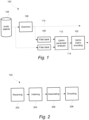
- FIG 1 shows a generalized block diagram of an audio encoding system 100 for encoding audio objects 104.
- the audio encoding system comprises a downmixing component 106 which creates a downmix signal 110 from the audio objects 104.
- the downmix signal 110 may for example be a 5.1 or 7.1 surround signal which is backwards compatible with established sound decoding systems such as Dolby Digital Plus or MPEG standards such as AAC, USAC or MP3. In further embodiments, the downmix signal is not backwards compatible.
- upmix parameters are determined at an upmix parameter analysis component 112 from the downmix signal 110 and the audio objects 104.
- the upmix parameters may correspond to elements of an upmix matrix which allows reconstruction of the audio objects 104 from the downmix signal 110.
- the upmix parameter analysis component 112 processes the downmix signal 110 and the audio objects 104 with respect to individual time/frequency tiles.
- the upmix parameters are determined for each time/frequency tile.
- an upmix matrix may be determined for each time/frequency tile.
- the upmix parameter analysis component 112 may operate in a frequency domain such as a Quadrature Mirror Filters (QMF) domain which allows frequency-selective processing.
- QMF Quadrature Mirror Filters
- the downmix signal 110 and the audio objects 104 may be transformed to the frequency domain by subjecting the downmix signal 110 and the audio objects 104 to a filter bank 108. This may for example be done by applying a QMF transform or any other suitable transform.
- the upmix parameters 114 may be organized in a vector format.
- a vector may represent an upmix parameter for reconstructing a specific audio object from the audio objects 104 at different frequency bands at a specific time frame.
- a vector may correspond to a certain matrix element in the upmix matrix, wherein the vector comprises the values of the certain matrix element for subsequent frequency bands.
- the vector may represent upmix parameters for reconstructing a specific audio object from the audio objects 104 at different time frames at a specific frequency band.
- a vector may correspond to a certain matrix element in the upmix matrix, wherein the vector comprises the values of the certain matrix element for subsequent time frames but at the same frequency band.
- Each parameter in the vector corresponds to a non-periodic quantity, for example a quantity which take a value between -9.6 and 9.4.
- a non-periodic quantity is generally meant a quantity where there is no periodicity in the values that the quantity may take. This is in contrast to a periodic quantity, such as an angle, where there is a clear periodic correspondence between the values that the quantity may take. For example, for an angle, there is a periodicity of 2 ⁇ such that e.g. the angle zero corresponds to the angle 2 ⁇ .
- the upmix parameters 114 are then received by an upmix matrix encoder 102 in the vector format.
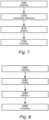
- the upmix matrix encoder will now be explained in detail in conjunction with figure 2 .
- the vector is received by a receiving component 202 and has a first element and at least one second element.
- the number of elements depends on for example the number of frequency bands in the audio signal.
- the number of elements may also depend on the number of time frames of the audio signal being encoded in one encoding operation.
- the vector is then indexed by an indexing component 204.
- the indexing component is adapted to represent each parameter in the vector by an index value which may take a predefined number of values. This representation can be done in two steps. First the parameter is quantized, and then the quantized value is indexed by an index value. By way of example, in the case where each parameter in the vector can take a value between -9.6 and 9.4, this can be done by using quantization steps of 0.2.
- the quantized values may then be indexed by indices 0-95, i.e. 96 different values. In the following examples, the index value is in the range of 0-95, but this is of course only an example, other ranges of index values are equally possible, for example 0-191 or 0-63. Smaller quantization steps may yield a less distorted decoded audio signal on a decoder side, but may also yield a larger required bit rate for the transmission of data between the audio encoding system 100 and the decoder.
- the indexed values are subsequently sent to an associating component 206 which associates each of the at least one second element with a symbol using a modulo differential encoding strategy.
- the associating component 206 is adapted to calculate a difference between the index value of the second element and the index value of the preceding element in the vector.
- the difference may be anywhere in the range of -95 to 95, i.e. it has 191 possible values. This means that when the difference is encoded using entropy coding, a probability table comprising 191 probabilities is needed, i.e. one probability for each of the 191 possible values of the differences.
- the efficiency of the encoding would be decreased since for each difference, approximately half of the 191 probabilities are impossible.
- the second element to be differential encoded has the index value 90, the possible differences are in the range -5 to +90.
- having an entropy encoding strategy where some of the probabilities are impossible for each value to be coded will decrease the efficiency of the encoding.
- the differential encoding strategy in this disclosure may overcome this problem and at the same time reduce the number of needed codes to 96 by applying a modulo 96 operation to the difference.
- the probability table is translated to a Huffman codebook.
- the symbol associated with an element in the vector is used as a codebook index.
- the encoding component 208 may then encode each of the at least one second element by representing the second element with a codeword in the Huffman codebook that is indexed by the codebook index associated with the second element.
- p(n)p(n) is the probability of the plain differential index value n.
- the entropy for the modulo approach is always lower than or equal to the entropy of the conventional differential approach.
- the case where the entropy is equal is a rare case where the data to be encoded is a pathological data, i.e. non well behaved data, which in most cases does not apply to for example an upmix matrix.
- a further advantage is, as mentioned above, that the number of required probabilities in the probability table in the modulo approach are approximately half the number required probabilities in the conventional non-modulo approach.
- the above has described a modulo approach for encoding the at least one second element in the vector of parameters.
- the first element may be encoded by using the indexed value by which the first element is represented. Since the probability distribution of the index value of the first element and the modulo differential value of the at least one second element may be very different, (see figure 3 for an probability distribution of the indexed first element and figure 4 for a probability distribution of the modulo differential value, i.e. the symbol, for the at least one second element) a dedicated probability table for the first element may be needed. This requires that both the audio encoding system 100 and a corresponding decoder have such a dedicated probability table in its memory.
- idx shifted 1 idx 1 ⁇ abs _ offset modN Q
- the encoding component 208 may encode the first element in the vector using the same Huffman codebook that is used to encode the at least one second element by representing the first element with a codeword in the Huffman codebook that is indexed by the codebook index associated with the first element.
- an audio encoding system 100 using a vector from an upmix matrix as the vector of parameters being encoded is just an example application.
- the method for encoding a vector of parameters may be used in other applications in an audio encoding system, for example when encoding other internal parameters in downmix encoding system such as parameters used in a parametric bandwidth extension system such as spectral band replication (SBR).
- SBR spectral band replication
- Figure 5 is a generalized block diagram of an audio decoding system 500 for recreating encoded audio objects from a coded downmix signal 510 and a coded upmix matrix 512.
- the coded downmix signal 510 is received by a downmix receiving component 506 where the signal is decoded and, if not already in a suitable frequency domain, transformed to a suitable frequency domain.
- the decoded downmix signal 516 is then sent to the upmix component 508.
- the encoded audio objects are recreated using the decoded downmix signal 516 and a decoded upmix matrix 504.
- the upmix component 508 may perform a matrix operation in which the decoded upmix matrix 504 is multiplied by a vector comprising the decoded downmix signals 516.
- the decoding process of the upmix matrix is described below.
- the audio decoding system 500 further comprises a rendering component 514 which output an audio signal based on the reconstructed audio objects 518 depending on what type of playback unit that is connected to the audio decoding system 500.
- a coded upmix matrix 512 is received by an upmix matrix decoder 502 which will now be explained in detail in conjunction with figure 6 .
- the upmix matrix decoder 502 is configured to decode a vector of entropy coded symbols in an audio decoding system into a vector of parameters relating to a non-periodic quantity.
- the vector of entropy coded symbols comprises a first entropy coded symbol and at least one second entropy coded symbol and the vector of parameters comprises a first element and at least a second element.
- the coded upmix matrix 512 is thus received by a receiving component 602 in a vector format.
- the index value of the at least one second entropy coded symbol is calculated by first calculating the sum of the index value associated with the entropy coded symbol preceding the second entropy coded symbol in the vector of entropy coded symbols and the symbol representing the second entropy coded symbol. Subsequently, modulo N is the applied to the sum. Assuming, without loss of generality, that the minimum index value is 0 and the maximum index value is N-1, e.g. 95.
- the association component 606 may be configure to associating the first entropy coded symbol with an index value by first shifting the symbol representing the first entropy coded symbol in the vector of entropy coded symbols by an off-set value. Modulo N is then applied to the shifted symbol.
- the decoding component 608 is configured to represent the first element of the vector of parameters by a parameter value corresponding to the index value associated with the first entropy coded symbol. This representation is thus the decoded version of the parameter encoded by for example the audio encoding system 100 shown in figure 1 .
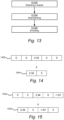
- Figure 7 and 9 describes an encoding method for four (4) second elements in a vector of parameters.
- the input vector 902 thus comprises five parameters.
- the parameters may take any value between a min value and a max value.
- the min value is -9.6 and the max value is 9.4.
- the first step S702 in the encoding method is to represent each parameter in the vector 902 by an index value which may take N values.
- N is chosen to be 96, which means that the quantization step size is 0.2.
- the next step S704 is to calculate the difference between each of the second elements, i.e. the four upper parameters in vector 904, and its preceding element.
- the resulting vector 906 thus comprises four differential values - the four upper values in the vector 906.
- the differential values may be both negative, zero and positive. As explained above, it is advantageous to have differential values which only can take N values, in this case 96 values. To achieve this, in the next step S706 of this method, modulo 96 is applied to the second elements in the vector 906. The resulting vector 908 does not contain any negative values. The thus achieved symbol shown in vector 908 is then used for encoding the second elements of the vector in the final step S708 of the method shown in figure 7 by entropy coding of the symbol associated with the at least one second element based on a probability table comprising probabilities of the symbols shown in vector 908.
- the first element is not handled after the indexing step S702.
- a method for encoding the first element in the input vector is described. The same assumption as made in the above description of figure 7 and 9 regarding the min and max value of the parameters and the number of possible index values are valid when describing figure 8 and 10 .
- the first element 1002 is received by the encoder.
- the parameter of the first element is represented by an index value 1004.
- the indexed value 1004 is shifted by an off-set value. In this example, the value of the off-set is 49. This value is calculated as described above.
- modulo 96 is applied to the shifted index value 1006.
- the resulting value 1008 may then be used in an encoding step S802 to encode the first element by entropy coding of the symbol 1008 using the same probability table that is used to encode the at least one second element in figure 7 .
- encoding and sending all M upmix matrix elements per object and T/F tile, one for each downmix channel can require an undesirably high bit rate. This can be reduced by "sparsening" of the upmix matrix, i.e., trying to reduce the number of non-zero elements. In some cases, four out of five elements are zero and only a single downmix channel is used as basis for reconstruction of the audio object. Sparse matrices have other probability distributions of the coded indices (absolute or differential) than non-sparse matrices.
- the upmix matrix comprises a large portion of zeros, such that the value zero becomes more probable than 0.5, and Huffman coding is used
- the coding efficiency will decrease since the Huffman coding algorithm is inefficient when a specific value, e.g. zero, has a probability of more than 0.5.
- a strategy may thus be to select a subset of the upmix matrix elements and only encode and transmit those to a decoder. This may decrease the required bit rate of an audio encoding/decoding system since less data is transmitted.
- a dedicated coding mode for sparse matrices may be used which will be explained in detail below.
- the encoder 102' further comprises an encoding component 1106 which is adapted to represent each element in the selected subset of elements by a value and a position in the upmix matrix.
- the encoding component 1106 is further adapted to encode the value and the position in the upmix matrix of each element in the selected subset of elements. It may for example be adapted to encode the value using modulo differential encoding as described above.
- the values of the elements of the selected subsets of elements form one or more vector of parameters.
- Each parameter in the vector of parameters corresponds to one of the plurality of frequency bands or the plurality of time frames.
- Modulo differential coding for both the value of the element and the position of the element: 20 kb/sec.
- the encoding component 1106 may be adapted to encode the position in the upmix matrix of each element in the subset of elements in the same way as the value.
- the encoding component 1106 may also be adapted to encode the position in the upmix matrix of each element in the subset of elements in a different way compared to the encoding of the value.
- the positions of the elements of the selected subsets of elements form one or more vector of parameters.
- Each parameter in the vector of parameters corresponds to one of the plurality of frequency bands or plurality of time frame.
- the vector of parameters is thus encoded using differential coding or modulo differential coding as described above.
- the encoder 102' may be combined with the encoder 102 in figure 2 to achieve modulo differential coding of a sparse upmix matrix according to the above.
- An upmix matrix is received, for example by the receiving component 1102 in figure 11 .
- the method comprising selecting a subset S1302 from the M, e.g. 5, elements of the row in the upmix matrix.
- Each element in the selected subset of elements is then represented S1304 by a value and a position in the upmix matrix.
- one element is selected S1302 as the subset, e.g. element number 3 having a value of 2.34.
- the representation may thus be a vector 1404 having two fields.
- the first field in the vector 1404 represents the value, e.g. 2.34
- the second field in the vector 1404 represents the position, e.g. 3.
- the representation may thus be a vector 1504 having four fields.
- the first field in the vector 1504 represents the value of the first element, e.g. 2.34
- the second field in the vector 1504 represents the position of the first element, e.g. 3.
- the third field in the vector 1504 represents the value of the second element, e.g. - 1.81
- the fourth field in the vector 1504 represents the position of the second element, e.g. 5.
- the representations 1404, 1504 is then encoded S1306 according to the above.
- FIG 12 is a generalized block diagram of an audio decoding system 1200 in accordance with an example embodiment.
- the decoder 1200 comprises a receiving component 1206 configured to receive a downmix signal 1210 comprising M channels and at least one encoded element 1204 representing a subset of M elements of a row in an upmix matrix.
- Each of the encoded elements comprises a value and a position in the row in the upmix matrix, the position indicating one of the M channels of the downmix signal 1210 to which the encoded element corresponds.
- the at least one encoded element 1204 is decoded by an upmix matrix element decoding component 1202.
- the upmix matrix element decoding component 1202 is configured to decode the at least one encoded element 1204 according to the encoding strategy used for encoding the at least one encoded element 1204. Examples on such encoding strategies are disclosed above.
- the at least one decoded element 1214 is then sent to the reconstructing component 1208 which is configured to reconstruct a time/frequency tile of the audio object from the downmix signal 1210 by forming a linear combination of the downmix channels that correspond to the at least one encoded element 1204. When forming the linear combination each downmix channel is multiplied by the value of its corresponding encoded element 1204.
- the decoded element 1214 comprises the value 1.1 and the position 2
- the time/frequency tile of the second downmix channel is multiplied by 1.1 and this is then used for reconstructing the audio object.
- the systems and methods disclosed hereinabove may be implemented as software, firmware, hardware or a combination thereof.
- the division of tasks between functional units referred to in the above description does not necessarily correspond to the division into physical units; to the contrary, one physical component may have multiple functionalities, and one task may be carried out by several physical components in cooperation.
- Certain components or all components may be implemented as software executed by a digital signal processor or microprocessor, or be implemented as hardware or as an application-specific integrated circuit.
- Such software may be distributed on computer readable media, which may comprise computer storage media (or non-transitory media) and communication media (or transitory media).
- EEEs enumerated example embodiments
Landscapes
- Engineering & Computer Science (AREA)
- Physics & Mathematics (AREA)
- Signal Processing (AREA)
- Acoustics & Sound (AREA)
- Computational Linguistics (AREA)
- Health & Medical Sciences (AREA)
- Audiology, Speech & Language Pathology (AREA)
- Human Computer Interaction (AREA)
- Multimedia (AREA)
- Spectroscopy & Molecular Physics (AREA)
- Mathematical Physics (AREA)
- Algebra (AREA)
- General Physics & Mathematics (AREA)
- Mathematical Analysis (AREA)
- Mathematical Optimization (AREA)
- Pure & Applied Mathematics (AREA)
- Theoretical Computer Science (AREA)
- Compression, Expansion, Code Conversion, And Decoders (AREA)
- Error Detection And Correction (AREA)
- Stereophonic System (AREA)
Priority Applications (1)
| Application Number | Priority Date | Filing Date | Title |
|---|---|---|---|
| EP25213259.2A EP4700767A3 (de) | 2013-05-24 | 2014-05-23 | Audiocodierer und -decodierer |
Applications Claiming Priority (6)
| Application Number | Priority Date | Filing Date | Title |
|---|---|---|---|
| US201361827264P | 2013-05-24 | 2013-05-24 | |
| EP17164543.5A EP3252757B1 (de) | 2013-05-24 | 2014-05-23 | Audiocodierer und -decodierer |
| EP14725736.4A EP3005350B1 (de) | 2013-05-24 | 2014-05-23 | Audiocodierer und audiodecodierer |
| EP19193266.4A EP3605532B1 (de) | 2013-05-24 | 2014-05-23 | Audiocodierer |
| PCT/EP2014/060731 WO2014187988A2 (en) | 2013-05-24 | 2014-05-23 | Audio encoder and decoder |
| EP21198240.0A EP3961622B1 (de) | 2013-05-24 | 2014-05-23 | Audiocodierer |
Related Parent Applications (4)
| Application Number | Title | Priority Date | Filing Date |
|---|---|---|---|
| EP21198240.0A Division EP3961622B1 (de) | 2013-05-24 | 2014-05-23 | Audiocodierer |
| EP14725736.4A Division EP3005350B1 (de) | 2013-05-24 | 2014-05-23 | Audiocodierer und audiodecodierer |
| EP17164543.5A Division EP3252757B1 (de) | 2013-05-24 | 2014-05-23 | Audiocodierer und -decodierer |
| EP19193266.4A Division EP3605532B1 (de) | 2013-05-24 | 2014-05-23 | Audiocodierer |
Related Child Applications (1)
| Application Number | Title | Priority Date | Filing Date |
|---|---|---|---|
| EP25213259.2A Division EP4700767A3 (de) | 2013-05-24 | 2014-05-23 | Audiocodierer und -decodierer |
Publications (3)
| Publication Number | Publication Date |
|---|---|
| EP4290510A2 true EP4290510A2 (de) | 2023-12-13 |
| EP4290510A3 EP4290510A3 (de) | 2024-02-14 |
| EP4290510B1 EP4290510B1 (de) | 2025-11-05 |
Family
ID=50771514
Family Applications (6)
| Application Number | Title | Priority Date | Filing Date |
|---|---|---|---|
| EP25213259.2A Pending EP4700767A3 (de) | 2013-05-24 | 2014-05-23 | Audiocodierer und -decodierer |
| EP19193266.4A Active EP3605532B1 (de) | 2013-05-24 | 2014-05-23 | Audiocodierer |
| EP14725736.4A Active EP3005350B1 (de) | 2013-05-24 | 2014-05-23 | Audiocodierer und audiodecodierer |
| EP17164543.5A Active EP3252757B1 (de) | 2013-05-24 | 2014-05-23 | Audiocodierer und -decodierer |
| EP23205287.8A Active EP4290510B1 (de) | 2013-05-24 | 2014-05-23 | Audiodecodierer |
| EP21198240.0A Active EP3961622B1 (de) | 2013-05-24 | 2014-05-23 | Audiocodierer |
Family Applications Before (4)
| Application Number | Title | Priority Date | Filing Date |
|---|---|---|---|
| EP25213259.2A Pending EP4700767A3 (de) | 2013-05-24 | 2014-05-23 | Audiocodierer und -decodierer |
| EP19193266.4A Active EP3605532B1 (de) | 2013-05-24 | 2014-05-23 | Audiocodierer |
| EP14725736.4A Active EP3005350B1 (de) | 2013-05-24 | 2014-05-23 | Audiocodierer und audiodecodierer |
| EP17164543.5A Active EP3252757B1 (de) | 2013-05-24 | 2014-05-23 | Audiocodierer und -decodierer |
Family Applications After (1)
| Application Number | Title | Priority Date | Filing Date |
|---|---|---|---|
| EP21198240.0A Active EP3961622B1 (de) | 2013-05-24 | 2014-05-23 | Audiocodierer |
Country Status (18)
| Country | Link |
|---|---|
| US (8) | US9704493B2 (de) |
| EP (6) | EP4700767A3 (de) |
| JP (7) | JP6105159B2 (de) |
| KR (10) | KR102459010B1 (de) |
| CN (2) | CN105229729B (de) |
| AU (1) | AU2014270301B2 (de) |
| BR (1) | BR112015029031B1 (de) |
| CA (5) | CA3251568A1 (de) |
| DK (1) | DK3005350T3 (de) |
| ES (4) | ES2902518T3 (de) |
| IL (1) | IL242410B (de) |
| MX (3) | MX350117B (de) |
| MY (2) | MY199032A (de) |
| PL (1) | PL3005350T3 (de) |
| RU (3) | RU2676041C1 (de) |
| SG (2) | SG10201710019SA (de) |
| UA (1) | UA112833C2 (de) |
| WO (1) | WO2014187988A2 (de) |
Families Citing this family (15)
| Publication number | Priority date | Publication date | Assignee | Title |
|---|---|---|---|---|
| BR112015029132B1 (pt) | 2013-05-24 | 2022-05-03 | Dolby International Ab | Método para codificar um mosaico de tempo/frequência de uma cena de áudio, codificador que codifica um mosaico de tempo/frequência de uma cena de áudio, método para decodificar um mosaico de tempo-frequência de uma cena de áudio, decodificador que decodifica um mosaico de tempo-frequência de uma cena de áudio e meio legível em computador. |
| EP2973551B1 (de) | 2013-05-24 | 2017-05-03 | Dolby International AB | Rekonstruktion von audioszenen aus einem downmix |
| US9852735B2 (en) | 2013-05-24 | 2017-12-26 | Dolby International Ab | Efficient coding of audio scenes comprising audio objects |
| US9892737B2 (en) | 2013-05-24 | 2018-02-13 | Dolby International Ab | Efficient coding of audio scenes comprising audio objects |
| KR102459010B1 (ko) * | 2013-05-24 | 2022-10-27 | 돌비 인터네셔널 에이비 | 오디오 인코더 및 디코더 |
| US10049683B2 (en) | 2013-10-21 | 2018-08-14 | Dolby International Ab | Audio encoder and decoder |
| WO2015150384A1 (en) | 2014-04-01 | 2015-10-08 | Dolby International Ab | Efficient coding of audio scenes comprising audio objects |
| GB2528460B (en) | 2014-07-21 | 2018-05-30 | Gurulogic Microsystems Oy | Encoder, decoder and method |
| KR20180026528A (ko) * | 2015-07-06 | 2018-03-12 | 노키아 테크놀로지스 오와이 | 오디오 신호 디코더를 위한 비트 에러 검출기 |
| US10249312B2 (en) | 2015-10-08 | 2019-04-02 | Qualcomm Incorporated | Quantization of spatial vectors |
| US9961475B2 (en) * | 2015-10-08 | 2018-05-01 | Qualcomm Incorporated | Conversion from object-based audio to HOA |
| KR102546098B1 (ko) * | 2016-03-21 | 2023-06-22 | 한국전자통신연구원 | 블록 기반의 오디오 부호화/복호화 장치 및 그 방법 |
| CN107886960B (zh) * | 2016-09-30 | 2020-12-01 | 华为技术有限公司 | 一种音频信号重建方法及装置 |
| WO2022065933A1 (ko) * | 2020-09-28 | 2022-03-31 | 삼성전자 주식회사 | 오디오의 부호화 장치 및 방법, 및 오디오의 복호화 장치 및 방법 |
| US12259827B2 (en) * | 2023-01-31 | 2025-03-25 | Avago Technologies International Sales Pte. Limited | Systems and methods for address scrambling |
Family Cites Families (43)
| Publication number | Priority date | Publication date | Assignee | Title |
|---|---|---|---|---|
| JPS5470801A (en) | 1977-11-16 | 1979-06-07 | Mitsubishi Monsanto Chem | Sound shielding plate |
| JPS615159A (ja) | 1984-06-16 | 1986-01-10 | 株式会社アイジー技術研究所 | サイデイングボ−ド |
| DE4423612A1 (de) | 1994-07-06 | 1996-01-11 | Basf Ag | 2-[(Dihydro)pyrazolyl-3'-oxymethylen]-anilide, Verfahren zu ihrer Herstelung und ihre Verwendung |
| EP1345331B1 (de) | 2000-12-22 | 2008-08-20 | Sony Corporation | Codierer |
| JP4008244B2 (ja) * | 2001-03-02 | 2007-11-14 | 松下電器産業株式会社 | 符号化装置および復号化装置 |
| SE0202159D0 (sv) * | 2001-07-10 | 2002-07-09 | Coding Technologies Sweden Ab | Efficientand scalable parametric stereo coding for low bitrate applications |
| JP2003110429A (ja) * | 2001-09-28 | 2003-04-11 | Sony Corp | 符号化方法及び装置、復号方法及び装置、伝送方法及び装置、並びに記録媒体 |
| JP3982397B2 (ja) | 2001-11-28 | 2007-09-26 | 日本ビクター株式会社 | 可変長符号化データ復号化用プログラム及び可変長符号化データ受信用プログラム |
| US7263692B2 (en) * | 2003-06-30 | 2007-08-28 | Intel Corporation | System and method for software-pipelining of loops with sparse matrix routines |
| KR101169895B1 (ko) | 2004-01-20 | 2012-07-31 | 파나소닉 주식회사 | 화상 부호화 방법, 화상 복호화 방법, 화상 부호화 장치, 화상 복호화 장치 및 그 프로그램 |
| US7895034B2 (en) | 2004-09-17 | 2011-02-22 | Digital Rise Technology Co., Ltd. | Audio encoding system |
| US20060080090A1 (en) | 2004-10-07 | 2006-04-13 | Nokia Corporation | Reusing codebooks in parameter quantization |
| EP1691348A1 (de) | 2005-02-14 | 2006-08-16 | Ecole Polytechnique Federale De Lausanne | Parametrische kombinierte Kodierung von Audio-Quellen |
| US20070055510A1 (en) | 2005-07-19 | 2007-03-08 | Johannes Hilpert | Concept for bridging the gap between parametric multi-channel audio coding and matrixed-surround multi-channel coding |
| TWI396188B (zh) | 2005-08-02 | 2013-05-11 | Dolby Lab Licensing Corp | 依聆聽事件之函數控制空間音訊編碼參數的技術 |
| KR20070037945A (ko) | 2005-10-04 | 2007-04-09 | 삼성전자주식회사 | 오디오 신호의 부호화/복호화 방법 및 장치 |
| KR100857111B1 (ko) | 2005-10-05 | 2008-09-08 | 엘지전자 주식회사 | 신호 처리 방법 및 이의 장치, 그리고 인코딩 및 디코딩방법 및 이의 장치 |
| US8271274B2 (en) | 2006-02-22 | 2012-09-18 | France Telecom | Coding/decoding of a digital audio signal, in CELP technique |
| KR101364979B1 (ko) * | 2006-02-24 | 2014-02-20 | 오렌지 | 신호 엔벨로프의 양자화 인덱스들의 이진 코딩 방법과 신호엔벨로프의 디코딩 방법, 및 대응하는 코딩 모듈과 디코딩모듈 |
| AU2007312598B2 (en) | 2006-10-16 | 2011-01-20 | Dolby International Ab | Enhanced coding and parameter representation of multichannel downmixed object coding |
| US7953595B2 (en) | 2006-10-18 | 2011-05-31 | Polycom, Inc. | Dual-transform coding of audio signals |
| ES2645375T3 (es) | 2008-07-10 | 2017-12-05 | Voiceage Corporation | Dispositivo y método de cuantificación y cuantificación inversa de filtro LPC de tasa de bits variable |
| ES2988414T3 (es) * | 2008-07-11 | 2024-11-20 | Fraunhofer Ges Zur Foerderungder Angewandten Forschung E V | Decodificador de audio |
| JP5555707B2 (ja) | 2008-10-08 | 2014-07-23 | フラウンホーファー−ゲゼルシャフト・ツール・フェルデルング・デル・アンゲヴァンテン・フォルシュング・アインゲトラーゲネル・フェライン | マルチ分解能切替型のオーディオ符号化及び復号化スキーム |
| EP2214161A1 (de) * | 2009-01-28 | 2010-08-04 | Fraunhofer-Gesellschaft zur Förderung der angewandten Forschung e.V. | Vorrichtung, Verfahren und Computerprogramm zur Aufwärtsmischung eines Downmix-Tonsignals |
| US8194862B2 (en) | 2009-07-31 | 2012-06-05 | Activevideo Networks, Inc. | Video game system with mixing of independent pre-encoded digital audio bitstreams |
| UA48138U (ru) | 2009-08-31 | 2010-03-10 | Винницкий Национальный Технический Университет | Способ направленного поиска векторов при уплотнении языковых сигналов |
| KR101710113B1 (ko) | 2009-10-23 | 2017-02-27 | 삼성전자주식회사 | 위상 정보와 잔여 신호를 이용한 부호화/복호화 장치 및 방법 |
| US9117458B2 (en) | 2009-11-12 | 2015-08-25 | Lg Electronics Inc. | Apparatus for processing an audio signal and method thereof |
| US8692848B2 (en) | 2009-12-17 | 2014-04-08 | Broadcom Corporation | Method and system for tile mode renderer with coordinate shader |
| EP2543039B1 (de) | 2010-03-02 | 2018-11-28 | Telefonaktiebolaget LM Ericsson (publ) | Quellcodedapation je nach kommunikationsverbindungsqualität und quellencodierungsverzögerung |
| CA2992917C (en) | 2010-04-09 | 2020-05-26 | Dolby International Ab | Mdct-based complex prediction stereo coding |
| JP5820464B2 (ja) | 2010-04-13 | 2015-11-24 | フラウンホーファー−ゲゼルシャフト・ツール・フェルデルング・デル・アンゲヴァンテン・フォルシュング・アインゲトラーゲネル・フェライン | オーディオまたはビデオエンコーダ、オーディオまたはビデオデコーダ、及び予測方向可変の予測を使用したマルチチャンネルオーディオまたはビデオ信号処理方法 |
| US9112591B2 (en) | 2010-04-16 | 2015-08-18 | Samsung Electronics Co., Ltd. | Apparatus for encoding/decoding multichannel signal and method thereof |
| KR101798079B1 (ko) | 2010-05-10 | 2017-11-16 | 삼성전자주식회사 | 픽셀값의 차분을 이용하여 영상 프레임을 부호화하는 방법 및 이를 위한 장치 |
| US8660195B2 (en) | 2010-08-10 | 2014-02-25 | Qualcomm Incorporated | Using quantized prediction memory during fast recovery coding |
| US9111526B2 (en) * | 2010-10-25 | 2015-08-18 | Qualcomm Incorporated | Systems, method, apparatus, and computer-readable media for decomposition of a multichannel music signal |
| EP3096315B1 (de) * | 2011-04-20 | 2019-10-16 | Panasonic Intellectual Property Corporation of America | Vorrichtung und verfahren zur ausführung einer huffman-codierung |
| CA2779232A1 (en) * | 2011-06-08 | 2012-12-08 | Her Majesty The Queen In Right Of Canada, As Represented By The Minister Of Industry Through The Communications Research Centre Canada | Sparse coding using object extraction |
| IN2014CN03413A (de) * | 2011-11-01 | 2015-07-03 | Koninkl Philips Nv | |
| US9223376B2 (en) * | 2012-03-23 | 2015-12-29 | Qualcomm Incorporated | Managing electrical current in a portable computing device when two or more communications overlap in drawing power during a transmission |
| JP6231093B2 (ja) * | 2012-07-09 | 2017-11-15 | コーニンクレッカ フィリップス エヌ ヴェKoninklijke Philips N.V. | オーディオ信号の符号化及び復号 |
| KR102459010B1 (ko) * | 2013-05-24 | 2022-10-27 | 돌비 인터네셔널 에이비 | 오디오 인코더 및 디코더 |
-
2014
- 2014-05-23 KR KR1020227011202A patent/KR102459010B1/ko active Active
- 2014-05-23 KR KR1020247033073A patent/KR20240151867A/ko active Pending
- 2014-05-23 CA CA3251568A patent/CA3251568A1/en active Pending
- 2014-05-23 KR KR1020207002641A patent/KR102192245B1/ko active Active
- 2014-05-23 EP EP25213259.2A patent/EP4700767A3/de active Pending
- 2014-05-23 RU RU2018101246A patent/RU2676041C1/ru active
- 2014-05-23 EP EP19193266.4A patent/EP3605532B1/de active Active
- 2014-05-23 KR KR1020177020394A patent/KR101895198B1/ko active Active
- 2014-05-23 UA UAA201512264A patent/UA112833C2/uk unknown
- 2014-05-23 EP EP14725736.4A patent/EP3005350B1/de active Active
- 2014-05-23 JP JP2016514442A patent/JP6105159B2/ja active Active
- 2014-05-23 WO PCT/EP2014/060731 patent/WO2014187988A2/en not_active Ceased
- 2014-05-23 EP EP17164543.5A patent/EP3252757B1/de active Active
- 2014-05-23 KR KR1020237028826A patent/KR102715092B1/ko active Active
- 2014-05-23 KR KR1020157036397A patent/KR101763131B1/ko active Active
- 2014-05-23 KR KR1020227036517A patent/KR102572382B1/ko active Active
- 2014-05-23 DK DK14725736.4T patent/DK3005350T3/en active
- 2014-05-23 KR KR1020217015014A patent/KR102384348B1/ko active Active
- 2014-05-23 AU AU2014270301A patent/AU2014270301B2/en active Active
- 2014-05-23 EP EP23205287.8A patent/EP4290510B1/de active Active
- 2014-05-23 CA CA3077876A patent/CA3077876C/en active Active
- 2014-05-23 MX MX2015015926A patent/MX350117B/es active IP Right Grant
- 2014-05-23 PL PL14725736T patent/PL3005350T3/pl unknown
- 2014-05-23 CN CN201480029565.0A patent/CN105229729B/zh active Active
- 2014-05-23 MY MYPI2019003013A patent/MY199032A/en unknown
- 2014-05-23 CA CA2990261A patent/CA2990261C/en active Active
- 2014-05-23 US US14/892,722 patent/US9704493B2/en active Active
- 2014-05-23 MY MYPI2015703952A patent/MY173644A/en unknown
- 2014-05-23 ES ES19193266T patent/ES2902518T3/es active Active
- 2014-05-23 ES ES14725736.4T patent/ES2629025T3/es active Active
- 2014-05-23 ES ES23205287T patent/ES3057878T3/es active Active
- 2014-05-23 SG SG10201710019SA patent/SG10201710019SA/en unknown
- 2014-05-23 MX MX2017010953A patent/MX375380B/es unknown
- 2014-05-23 CA CA2911746A patent/CA2911746C/en active Active
- 2014-05-23 CN CN201910125157.XA patent/CN110085238B/zh active Active
- 2014-05-23 KR KR1020207035676A patent/KR102280461B1/ko active Active
- 2014-05-23 SG SG11201509001YA patent/SG11201509001YA/en unknown
- 2014-05-23 KR KR1020187024874A patent/KR102072777B1/ko active Active
- 2014-05-23 ES ES21198240T patent/ES2965423T3/es active Active
- 2014-05-23 BR BR112015029031-0A patent/BR112015029031B1/pt active IP Right Grant
- 2014-05-23 CA CA3163664A patent/CA3163664C/en active Active
- 2014-05-23 RU RU2015155311A patent/RU2643489C2/ru active
- 2014-05-23 EP EP21198240.0A patent/EP3961622B1/de active Active
-
2015
- 2015-11-02 IL IL242410A patent/IL242410B/en active IP Right Grant
- 2015-11-19 MX MX2020010038A patent/MX2020010038A/es unknown
-
2017
- 2017-03-01 JP JP2017038524A patent/JP6573640B2/ja active Active
- 2017-07-06 US US15/643,416 patent/US9940939B2/en active Active
-
2018
- 2018-04-05 US US15/946,529 patent/US10418038B2/en active Active
- 2018-12-14 RU RU2018144368A patent/RU2710909C1/ru active
-
2019
- 2019-08-13 JP JP2019148473A patent/JP6920382B2/ja active Active
- 2019-09-17 US US16/573,488 patent/US10714104B2/en active Active
-
2020
- 2020-07-10 US US16/925,898 patent/US11024320B2/en active Active
-
2021
- 2021-05-28 US US17/333,527 patent/US11594233B2/en active Active
- 2021-07-26 JP JP2021121510A patent/JP7258086B2/ja active Active
-
2023
- 2023-02-27 US US18/114,885 patent/US12236961B2/en active Active
- 2023-04-04 JP JP2023060522A patent/JP7585379B2/ja active Active
-
2024
- 2024-11-06 JP JP2024194253A patent/JP2025028867A/ja active Pending
-
2025
- 2025-02-24 US US19/061,905 patent/US20250356860A1/en active Pending
- 2025-04-10 JP JP2025064679A patent/JP2025100674A/ja active Pending
Also Published As
Similar Documents
| Publication | Publication Date | Title |
|---|---|---|
| US12236961B2 (en) | Audio encoder and decoder | |
| RU2810027C2 (ru) | Аудиокодер и аудиодекодер | |
| HK1246958A1 (en) | Audio encoder and decoder | |
| HK1246958B (en) | Audio encoder and decoder | |
| HK1217246B (en) | Audio encoder and decoder |
Legal Events
| Date | Code | Title | Description |
|---|---|---|---|
| PUAI | Public reference made under article 153(3) epc to a published international application that has entered the european phase |
Free format text: ORIGINAL CODE: 0009012 |
|
| STAA | Information on the status of an ep patent application or granted ep patent |
Free format text: STATUS: THE APPLICATION HAS BEEN PUBLISHED |
|
| AC | Divisional application: reference to earlier application |
Ref document number: 3005350 Country of ref document: EP Kind code of ref document: P Ref document number: 3252757 Country of ref document: EP Kind code of ref document: P Ref document number: 3605532 Country of ref document: EP Kind code of ref document: P Ref document number: 3961622 Country of ref document: EP Kind code of ref document: P |
|
| AK | Designated contracting states |
Kind code of ref document: A2 Designated state(s): AL AT BE BG CH CY CZ DE DK EE ES FI FR GB GR HR HU IE IS IT LI LT LU LV MC MK MT NL NO PL PT RO RS SE SI SK SM TR |
|
| REG | Reference to a national code |
Ref country code: DE Ref legal event code: R079 Free format text: PREVIOUS MAIN CLASS: G10L0019000000 Ipc: G10L0019008000 Ref country code: DE Ref legal event code: R079 Ref document number: 602014092553 Country of ref document: DE Free format text: PREVIOUS MAIN CLASS: G10L0019000000 Ipc: G10L0019008000 |
|
| PUAL | Search report despatched |
Free format text: ORIGINAL CODE: 0009013 |
|
| AK | Designated contracting states |
Kind code of ref document: A3 Designated state(s): AL AT BE BG CH CY CZ DE DK EE ES FI FR GB GR HR HU IE IS IT LI LT LU LV MC MK MT NL NO PL PT RO RS SE SI SK SM TR |
|
| RIC1 | Information provided on ipc code assigned before grant |
Ipc: G10L 19/00 20130101ALI20240110BHEP Ipc: G10L 19/038 20130101ALI20240110BHEP Ipc: G10L 19/008 20130101AFI20240110BHEP |
|
| P01 | Opt-out of the competence of the unified patent court (upc) registered |
Effective date: 20240112 |
|
| STAA | Information on the status of an ep patent application or granted ep patent |
Free format text: STATUS: REQUEST FOR EXAMINATION WAS MADE |
|
| 17P | Request for examination filed |
Effective date: 20240812 |
|
| RBV | Designated contracting states (corrected) |
Designated state(s): AL AT BE BG CH CY CZ DE DK EE ES FI FR GB GR HR HU IE IS IT LI LT LU LV MC MK MT NL NO PL PT RO RS SE SI SK SM TR |
|
| GRAP | Despatch of communication of intention to grant a patent |
Free format text: ORIGINAL CODE: EPIDOSNIGR1 |
|
| STAA | Information on the status of an ep patent application or granted ep patent |
Free format text: STATUS: GRANT OF PATENT IS INTENDED |
|
| INTG | Intention to grant announced |
Effective date: 20250603 |
|
| RIC1 | Information provided on ipc code assigned before grant |
Ipc: G10L 19/00 20130101ALI20250523BHEP Ipc: G10L 19/038 20130101ALI20250523BHEP Ipc: G10L 19/008 20130101AFI20250523BHEP |
|
| GRAS | Grant fee paid |
Free format text: ORIGINAL CODE: EPIDOSNIGR3 |
|
| GRAA | (expected) grant |
Free format text: ORIGINAL CODE: 0009210 |
|
| STAA | Information on the status of an ep patent application or granted ep patent |
Free format text: STATUS: THE PATENT HAS BEEN GRANTED |
|
| AC | Divisional application: reference to earlier application |
Ref document number: 3961622 Country of ref document: EP Kind code of ref document: P Ref document number: 3605532 Country of ref document: EP Kind code of ref document: P Ref document number: 3252757 Country of ref document: EP Kind code of ref document: P Ref document number: 3005350 Country of ref document: EP Kind code of ref document: P |
|
| AK | Designated contracting states |
Kind code of ref document: B1 Designated state(s): AL AT BE BG CH CY CZ DE DK EE ES FI FR GB GR HR HU IE IS IT LI LT LU LV MC MK MT NL NO PL PT RO RS SE SI SK SM TR |
|
| REG | Reference to a national code |
Ref country code: CH Ref legal event code: F10 Free format text: ST27 STATUS EVENT CODE: U-0-0-F10-F00 (AS PROVIDED BY THE NATIONAL OFFICE) Effective date: 20251105 Ref country code: GB Ref legal event code: FG4D |
|
| REG | Reference to a national code |
Ref country code: DE Ref legal event code: R096 Ref document number: 602014092553 Country of ref document: DE |
|
| REG | Reference to a national code |
Ref country code: IE Ref legal event code: FG4D |
|
| REG | Reference to a national code |
Ref country code: NL Ref legal event code: FP |
|
| REG | Reference to a national code |
Ref country code: ES Ref legal event code: FG2A Ref document number: 3057878 Country of ref document: ES Kind code of ref document: T3 Effective date: 20260305 |
|
| PGFP | Annual fee paid to national office [announced via postgrant information from national office to epo] |
Ref country code: GB Payment date: 20260317 Year of fee payment: 13 |
|
| REG | Reference to a national code |
Ref country code: LT Ref legal event code: MG9D |
|
| PG25 | Lapsed in a contracting state [announced via postgrant information from national office to epo] |
Ref country code: NO Free format text: LAPSE BECAUSE OF FAILURE TO SUBMIT A TRANSLATION OF THE DESCRIPTION OR TO PAY THE FEE WITHIN THE PRESCRIBED TIME-LIMIT Effective date: 20260205 |
|
| PG25 | Lapsed in a contracting state [announced via postgrant information from national office to epo] |
Ref country code: FI Free format text: LAPSE BECAUSE OF FAILURE TO SUBMIT A TRANSLATION OF THE DESCRIPTION OR TO PAY THE FEE WITHIN THE PRESCRIBED TIME-LIMIT Effective date: 20251105 Ref country code: AT Free format text: LAPSE BECAUSE OF FAILURE TO SUBMIT A TRANSLATION OF THE DESCRIPTION OR TO PAY THE FEE WITHIN THE PRESCRIBED TIME-LIMIT Effective date: 20251105 Ref country code: HR Free format text: LAPSE BECAUSE OF FAILURE TO SUBMIT A TRANSLATION OF THE DESCRIPTION OR TO PAY THE FEE WITHIN THE PRESCRIBED TIME-LIMIT Effective date: 20251105 |
|
| REG | Reference to a national code |
Ref country code: AT Ref legal event code: MK05 Ref document number: 1855281 Country of ref document: AT Kind code of ref document: T Effective date: 20251105 |
|
| PG25 | Lapsed in a contracting state [announced via postgrant information from national office to epo] |
Ref country code: RS Free format text: LAPSE BECAUSE OF FAILURE TO SUBMIT A TRANSLATION OF THE DESCRIPTION OR TO PAY THE FEE WITHIN THE PRESCRIBED TIME-LIMIT Effective date: 20260205 |
|
| PG25 | Lapsed in a contracting state [announced via postgrant information from national office to epo] |
Ref country code: IS Free format text: LAPSE BECAUSE OF FAILURE TO SUBMIT A TRANSLATION OF THE DESCRIPTION OR TO PAY THE FEE WITHIN THE PRESCRIBED TIME-LIMIT Effective date: 20260305 |