EP4293076B1 - Caoutchouc autocicatrisant comprenant un complexe d'ester boronique de poly(glycérolmonométhacrylate) - Google Patents
Caoutchouc autocicatrisant comprenant un complexe d'ester boronique de poly(glycérolmonométhacrylate) Download PDFInfo
- Publication number
- EP4293076B1 EP4293076B1 EP22179598.2A EP22179598A EP4293076B1 EP 4293076 B1 EP4293076 B1 EP 4293076B1 EP 22179598 A EP22179598 A EP 22179598A EP 4293076 B1 EP4293076 B1 EP 4293076B1
- Authority
- EP
- European Patent Office
- Prior art keywords
- methacrylate
- glycerol mono
- poly
- rubber
- complex
- Prior art date
- Legal status (The legal status is an assumption and is not a legal conclusion. Google has not performed a legal analysis and makes no representation as to the accuracy of the status listed.)
- Active
Links
Images
Classifications
-
- C—CHEMISTRY; METALLURGY
- C08—ORGANIC MACROMOLECULAR COMPOUNDS; THEIR PREPARATION OR CHEMICAL WORKING-UP; COMPOSITIONS BASED THEREON
- C08L—COMPOSITIONS OF MACROMOLECULAR COMPOUNDS
- C08L7/00—Compositions of natural rubber
-
- B—PERFORMING OPERATIONS; TRANSPORTING
- B60—VEHICLES IN GENERAL
- B60C—VEHICLE TYRES; TYRE INFLATION; TYRE CHANGING; CONNECTING VALVES TO INFLATABLE ELASTIC BODIES IN GENERAL; DEVICES OR ARRANGEMENTS RELATED TO TYRES
- B60C1/00—Tyres characterised by the chemical composition or the physical arrangement or mixture of the composition
-
- B—PERFORMING OPERATIONS; TRANSPORTING
- B60—VEHICLES IN GENERAL
- B60C—VEHICLE TYRES; TYRE INFLATION; TYRE CHANGING; CONNECTING VALVES TO INFLATABLE ELASTIC BODIES IN GENERAL; DEVICES OR ARRANGEMENTS RELATED TO TYRES
- B60C1/00—Tyres characterised by the chemical composition or the physical arrangement or mixture of the composition
- B60C1/0016—Compositions of the tread
-
- C—CHEMISTRY; METALLURGY
- C08—ORGANIC MACROMOLECULAR COMPOUNDS; THEIR PREPARATION OR CHEMICAL WORKING-UP; COMPOSITIONS BASED THEREON
- C08F—MACROMOLECULAR COMPOUNDS OBTAINED BY REACTIONS ONLY INVOLVING CARBON-TO-CARBON UNSATURATED BONDS
- C08F8/00—Chemical modification by after-treatment
- C08F8/42—Introducing metal atoms or metal-containing groups
-
- C—CHEMISTRY; METALLURGY
- C08—ORGANIC MACROMOLECULAR COMPOUNDS; THEIR PREPARATION OR CHEMICAL WORKING-UP; COMPOSITIONS BASED THEREON
- C08F—MACROMOLECULAR COMPOUNDS OBTAINED BY REACTIONS ONLY INVOLVING CARBON-TO-CARBON UNSATURATED BONDS
- C08F2810/00—Chemical modification of a polymer
- C08F2810/20—Chemical modification of a polymer leading to a crosslinking, either explicitly or inherently
-
- C—CHEMISTRY; METALLURGY
- C08—ORGANIC MACROMOLECULAR COMPOUNDS; THEIR PREPARATION OR CHEMICAL WORKING-UP; COMPOSITIONS BASED THEREON
- C08L—COMPOSITIONS OF MACROMOLECULAR COMPOUNDS
- C08L2312/00—Crosslinking
- C08L2312/02—Crosslinking with dienes
Definitions
- the present invention relates to the field of self-healing rubbers.
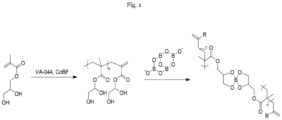
- the present invention refers to a rubber composition comprising a dynamic poly(glycerol mono-methacrylate) boronic ester complex, processes for preparation thereof, and use thereof in a self-healing tire.
- An object of the present invention was to provide a rubber composition which in its cured state provides improved self-healing properties and simultaneously high mechanical strength, to enable its use in tires.
- the present invention refers to a process for preparing a rubber composition comprising at least the following steps:
- poly(glycerol monomethacrylate) or "pGMMA” in abbreviated form means an ⁇ -vinyl oligomer or polymer of glycerol mono-methacrylate.
- poly(glycerol monomethacrylate) is used interchangeably with the term “poly(glycerol monomethacrylate) oligomer”.
- the molecular weight of the poly(glycerol mono-methacrylate) is controlled by the ratio of glycerol mono-methacrylate to Co(II) complex, in particular wherein a ratio of glycerol mono-methacrylate to Co(II) complex of 10 6 : 10 to 10 6 : 180 is used.
- the Co(II) complex is a cobaloxime boron fluoride, in particular the Co(II) complex is bis[(difluoroboryl)-dimethylglyoximato]cobalt(II).
- step (B) the poly(glycerol mono-methacrylate) is mixed with borax at a weight ratio of from 1.0 : 0.05 to 1.0 : 0.4.
- the organic acid used is an ⁇ -vinyl oligomer of methacrylic acid that is mixed with zinc oxide to form a poly(zinc methacrylate)-zinc oxide activator (p(ZnMA)/ZnO) complex, before blending with the dienic rubber, sulfur, and vulcanization accelerator.
- p(ZnMA)/ZnO poly(zinc methacrylate)-zinc oxide activator
- the poly(glycerol mono-methacrylate) has a number average molecular weight (M n ) in the range of from 160 to 3200 g/mol, preferably from 320 to 2400 g/mol. In other preferred embodiments, the poly(glycerol mono-methacrylate) has a dispersity ⁇ of equal to or less than 4, preferably of equal to or less than 2.
- the dienic rubber is selected from the group consisting of a natural rubber, an isoprene rubber, a styrene-butadiene rubber, a butadiene rubber, and combinations thereof.
- the vulcanization accelerator is based on a sulfenamide compound and/or a thiazole compound.
- step (C) additionally a filler is used, in particular wherein the filler is used in an amount of an amount of 5.0 to 80 phr, based on 100 phr of the dienic rubber.
- the present invention further relates to a rubber composition
- a rubber composition comprising
- a preferred rubber composition of the invention comprises
- a further preferred rubber composition comprises
- the rubber composition comprises a filler, preferably in an amount of 5.0 to 80 phr, based on 100 phr of the dienic rubber.
- the present invention further provides a cured rubber or cured rubber composition obtainable by curing the above-described rubber compositions.
- the present invention provides a self-healing tire comprising a tire component, preferably a tread, produced by using the above-described rubber compositions.
- molecular weight refers to a determination by size exclusion chromatography (SEC), and preferably additionally by 1 H nuclear magnetic resonance (NMR) spectroscopy.
- ⁇ refers to the molecular weight distribution ⁇ and is determined from the following equation: wherein M w is the weight average molecular weight and M n is the number average molecular weight.
- the rubber composition according to the present invention is curable and comprises at least a dienic rubber, a poly(glycerol mono-methacrylate) dynamic boronic ester complex, a vulcanization activator system, sulfur, a vulcanization accelerator, and preferably a filler, wherein preferably the vulcanization activator system is zinc oxide (ZnO) and an organic acid.
- the organic acid is stearic acid.
- the organic acid is an ⁇ -vinyl oligomer of methacrylic acid.
- the poly(glycerol mono-methacrylate) is produced by oligomerization or polymerization of glycerol mono-methacrylate by catalytic chain transfer (CCT) using a cobalt (II) complex as catalyst, wherein the degree of the polymerization, or the molecular weight of the poly(glycerol mono-methacrylate) can be controlled by the ratio of the monomer (glycerol mono-methacrylate) and the catalyst.
- CCT catalytic chain transfer
- II cobalt
- ZnO is commonly used as an additive in rubber compositions for tires as it acts as a vulcanization accelerator.
- ZnO is added in combination with stearic acid, and forms a zinc stearate salt in situ.
- ZnO can be used in the form of zinc stearate, or in the form of p(ZnMA)/ZnO.
- the complex can be formed prior to mixing by combing ⁇ -unsaturated oligomers of methacrylic acid with ZnO in water and then lyophilizing to form a dry complex.
- the rubber composition can comprise further additives, in particular additives that are commonly used in the art for tire production.
- additives are lubricants, pigments, activators, softeners, plasticizers, antioxidants, fatty acids (such as stearic acid).
- the total amount of these additives is not more than 10 weight-% based on the 100 weight-% of the rubber composition or not more than 10 phr.
- the Examples 1 to 4 refer to different rubber compositions which show the effect of poly(glycerol mono-methacrylate) dynamic boronic ester complex on the self-healing and mechanical properties of the rubber after curing.
- the formulations used are indicated in Table 1 below, wherein the numerical values relate to phr.
- the comparative formulation was CV1 which contained no pGMMA-Borax but otherwise the same components in the corresponding amounts.
- Table 1 CV1 CV1 CV1 CV1 PG10 PG15 PG20 NR 100 100 100 100 ZnO 5 5 5 5 5 Stearic Acid 1 1 1 1 pGMMA-Borax - 10 15 20 CBS 0.14 0.14 0.14 0.14 Sulfur 0.7 0.7 0.7 0.7 0.7 0.7 0.7
- the components as indicated were blended in a Haake PolyLab twin screw compounder at 40 °C and at 50 rpm.
- the curing properties and optimum curing time (t 90 ) of the compounds were measured using a Montech M3000 moving die rheometer (MDR). Samples were then cured to their t 90 curing time, at a temperature of 150 °C at a pressure of 150 bar in a Collin P200 Hot Press to form 9 ⁇ 9 cm 2 films with a thickness of 1 mm.
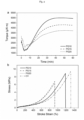
- Fig. 2 shows (a) curing curves obtained with the MDR for the formulations of Table 1, and (b) tensile tests of CV1 and the formulations of Table 1.
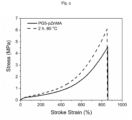
- the mechanical properties were evaluated by measuring stress (MPa) vs. stroke strain (%) on a Shimadzu AGS-X tensile tester at a strain rate of 100 mm/min. The results are shown in Fig. 2 in comparison with a formulation (CV1) without pGMMA-borax.
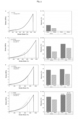
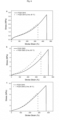
- Fig. 3 further shows self-healing tests in terms of recovery in %. These results were obtained by repeating the tensile tests with specimens from each sample that had been cut in half with a scalpel and then overlapped with an area of 4 mm ⁇ 3 mm, before being placed under a 20 N weight at 80 °C for either 30 mins or 2 hours. The percentage recovery value was then calculated from the values obtained from the cut specimens relative to the uncut specimens.
- Table 2 The values for the stress recovery and strain recovery of the cured rubbers of Examples 1 to 4 are shown in Table 2 below.
- Table 2 CV PG10 PG15 PG20 pGMMA-borax (phr) 0 10 15 20 Stress recovery @ 30 mins (%) 13.70 32.16 49.35 60.29 Strain recovery @ 30 mins (%) 29.76 58.18 74.79 74.58 Stress recovery @ 2 hrs (%) - 49.4 54.21 90.13 Strain recovery @ 2 hrs (%) - 70 78.05 83.60
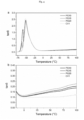
- Fig. 4 shows a DMA analysis of CV1 and the formulations of Table 1. These results were measured on a Tritec 2000 DMA in tension mode at a 1% strain and a frequency of 5 Hz, in the temperature range of -80 and 100 °C
- the Examples 5 and 6 refer to rubber compositions showing the effect of pGMMA-borax on a rubber composition containing additionally pZnMA/ZnO salt (which is a preformed salt of pMAA with ZnO in a weight ratio of 1:1) as the curing activator.
- the formulations used are shown in Table 3 below.
- the mechanical properties were evaluated by measuring stress (MPa) vs. stroke strain (%) on a Shimadzu AGS-X tensile tester at a strain rate of 100 mm/min. The results are shown in Fig. 5 .
- the examples 7 to 9 refer to rubber compositions that show the effect of adding carbon black N234 to compound PG20, as given in Examples 1 to 4.
- the detailed compositions are given in Table 4.
Landscapes
- Chemical & Material Sciences (AREA)
- Organic Chemistry (AREA)
- Health & Medical Sciences (AREA)
- Chemical Kinetics & Catalysis (AREA)
- Medicinal Chemistry (AREA)
- Polymers & Plastics (AREA)
- Engineering & Computer Science (AREA)
- Mechanical Engineering (AREA)
- General Chemical & Material Sciences (AREA)
- Compositions Of Macromolecular Compounds (AREA)
- Tires In General (AREA)
- Polymerisation Methods In General (AREA)
- Addition Polymer Or Copolymer, Post-Treatments, Or Chemical Modifications (AREA)
Claims (15)
- Procédé de préparation d'une composition de caoutchouc comprenant au moins les étapes suivantes :(A) polymérisation de mono-méthacrylate de glycérol en présence d'un complexe de Co(II) comme agent catalytique de transfert de chaîne, pour obtenir un poly(mono-méthacrylate de glycérol) qui est un oligomère ou polymère de mono-méthacrylate de glycérol et ayant une masse moléculaire moyenne en nombre (Mn) comprise dans la plage allant de 160 à 3200 g/mol et, de préférence, une dispersité Ð égale ou inférieure à 4 ;(B) réticulation du poly(mono-méthacrylate de glycérol) avec du borax pour obtenir un complexe d'ester boronique dynamique de poly(mono-méthacrylate de glycérol) ; et(C) mélange du complexe d'ester boronique dynamique de poly(mono-méthacrylate de glycérol) avec un système activateur de vulcanisation, un caoutchouc diénique, du soufre, et un accélérateur de vulcanisation, pour préparer la composition de caoutchouc.
- Procédé selon la revendication 1, dans lequel, à l'étape (A), la masse moléculaire du poly(mono-méthacrylate de glycérol) est régulée par le rapport du mono-méthacrylate de glycérol au complexe de Co(II), en particulier dans lequel un rapport du mono-méthacrylate de glycérol au complexe de Co(II) de 106: 10 à 106: 180 est utilisé.
- Procédé selon la revendication 1 ou 2, dans lequel le complexe de Co(II) est un fluorure de bore cobaloxime, en particulier dans lequel le complexe de Co(II) est le bis[(difluoroboryl)-diméthylglyoximato]cobalt(Il).
- Procédé selon l'une quelconque des revendications 1 à 3, dans lequel, à l'étape (B), le poly(mono-méthacrylate de glycérol) est mélangé avec du borax à un rapport en poids de 1,0: 0,05 à 1,0: 0,4.
- Procédé selon l'une quelconque des revendications 1 à 4, dans lequel, à l'étape (C), le système activateur de vulcanisation est constitué d'oxyde de zinc et d'un acide organique, de préférence le système activateur de vulcanisation est constitué d'oxyde de zinc et d'acide stéarique.
- Procédé selon l'une quelconque des revendications 1 à 4, dans lequel, à l'étape (C), le système activateur de vulcanisation est un complexe poly(méthacrylate de zinc)-oxyde de zinc (p(ZnMA)/ZnO).
- Procédé selon l'une quelconque des revendications 1 à 6, dans lequel, à l'étape (C), le caoutchouc diénique est choisi dans le groupe constitué d'un caoutchouc naturel, d'un caoutchouc isoprène, d'un caoutchouc styrène-butadiène, d'un caoutchouc butadiène, et de leurs combinaisons.
- Procédé selon l'une quelconque des revendications 1 à 7, dans lequel, à l'étape (C), la quantité du complexe d'ester boronique dynamique de poly(glycérol mono-méthacrylate) est de 5,0 à 40 pce, sur la base de 100 pce du caoutchouc diénique.
- Procédé selon l'une quelconque des revendications 1 à 8, dans lequel, à l'étape (C), en outre, une charge est utilisée, en particulier dans lequel la charge est utilisée en une quantité de 5,0 à 80 pce, sur la base de 100 pce du caoutchouc diénique.
- Composition de caoutchouc comprenant :- un complexe d'ester boronique dynamique de poly(glycérol mono-méthacrylate) obtenu par polymérisation de mono-méthacrylate de glycérol en présence d'un complexe de Co(II) comme agent catalytique de transfert de chaîne, pour obtenir un poly(mono-méthacrylate de glycérol) qui est un oligomère ou polymère de mono-méthacrylate de glycérol et ayant une masse moléculaire moyenne en nombre (Mn) comprise dans la plage allant de 160 à 3 200 g/mol, et par réticulation du poly(mono-méthacrylate de glycérol) avec du borax ;- un système activateur de vulcanisation ;- un caoutchouc diénique ;- du soufre ; et- un accélérateur de vulcanisation.
- Composition de caoutchouc selon la revendication 10, dans laquelle le système activateur de vulcanisation est constitué d'oxyde de zinc et d'un acide organique, de préférence le système activateur de vulcanisation est constitué d'oxyde de zinc et d'acide stéarique.
- Composition de caoutchouc selon la revendication 10, dans laquelle le système activateur de vulcanisation est un complexe de poly(méthacrylate de zinc)-oxyde de zinc (p(ZnMA)/ZnO).
- Composition de caoutchouc selon l'une quelconque des revendications 10 à 12, dans laquelle la composition de caoutchouc comprend en outre une charge, en particulier en une quantité de 5,0 à 80 pce, sur la base de 100 pce du caoutchouc diénique.
- Composition de caoutchouc durcie pouvant être obtenue par durcissement d'une composition de caoutchouc préparée par un procédé tel que défini dans l'une quelconque des revendications 1 à 9, ou d'une composition de caoutchouc selon l'une quelconque des revendications 10 à 13.
- Pneumatique auto-cicatrisant comprenant un composant de pneumatique, de préférence une bande de roulement, préparé à l'aide d'une composition de caoutchouc préparée par un procédé tel que défini dans l'une quelconque des revendications 1 à 9, ou d'une composition de caoutchouc selon l'une quelconque des revendications 10 à 13.
Priority Applications (5)
| Application Number | Priority Date | Filing Date | Title |
|---|---|---|---|
| EP22179598.2A EP4293076B1 (fr) | 2022-06-17 | 2022-06-17 | Caoutchouc autocicatrisant comprenant un complexe d'ester boronique de poly(glycérolmonométhacrylate) |
| JP2024573880A JP2025522475A (ja) | 2022-06-17 | 2023-06-15 | ポリ(グリセロールモノメタクリレート)-ボロン酸エステル複合体を含む自己修復性ゴム |
| PCT/EP2023/066084 WO2023242326A1 (fr) | 2022-06-17 | 2023-06-15 | Caoutchouc auto-cicatrisant comprenant un complexe ester boronique de poly(monométhacrylate de glycérolmonométhacrylate) |
| US18/876,060 US20250382445A1 (en) | 2022-06-17 | 2023-06-15 | Self-healing rubber comprising a poly(glycerolmonomethacrylate) boronic ester complex |
| CN202380047655.1A CN119384457A (zh) | 2022-06-17 | 2023-06-15 | 包含聚(甘油单甲基丙烯酸酯)硼酸酯络合物的自修复橡胶 |
Applications Claiming Priority (1)
| Application Number | Priority Date | Filing Date | Title |
|---|---|---|---|
| EP22179598.2A EP4293076B1 (fr) | 2022-06-17 | 2022-06-17 | Caoutchouc autocicatrisant comprenant un complexe d'ester boronique de poly(glycérolmonométhacrylate) |
Publications (2)
| Publication Number | Publication Date |
|---|---|
| EP4293076A1 EP4293076A1 (fr) | 2023-12-20 |
| EP4293076B1 true EP4293076B1 (fr) | 2025-04-02 |
Family
ID=82703179
Family Applications (1)
| Application Number | Title | Priority Date | Filing Date |
|---|---|---|---|
| EP22179598.2A Active EP4293076B1 (fr) | 2022-06-17 | 2022-06-17 | Caoutchouc autocicatrisant comprenant un complexe d'ester boronique de poly(glycérolmonométhacrylate) |
Country Status (5)
| Country | Link |
|---|---|
| US (1) | US20250382445A1 (fr) |
| EP (1) | EP4293076B1 (fr) |
| JP (1) | JP2025522475A (fr) |
| CN (1) | CN119384457A (fr) |
| WO (1) | WO2023242326A1 (fr) |
Family Cites Families (5)
| Publication number | Priority date | Publication date | Assignee | Title |
|---|---|---|---|---|
| CS157212B1 (fr) * | 1970-12-23 | 1974-09-16 | ||
| JP2003055416A (ja) | 2001-08-22 | 2003-02-26 | Kansai Paint Co Ltd | 顔料分散樹脂の製造方法 |
| GB201116663D0 (en) | 2011-09-28 | 2011-11-09 | Unilever Plc | Low viscosity suspending vinyl copolymers |
| CN105189643B (zh) * | 2012-08-30 | 2019-01-15 | 派诺聚合物技术公司 | 用于水力压裂液的双重机制增稠剂 |
| CA2896967A1 (fr) | 2013-01-04 | 2014-07-10 | Evonik Oil Additives Gmbh | Preparation de polymeres a faible viscosite |
-
2022
- 2022-06-17 EP EP22179598.2A patent/EP4293076B1/fr active Active
-
2023
- 2023-06-15 WO PCT/EP2023/066084 patent/WO2023242326A1/fr not_active Ceased
- 2023-06-15 JP JP2024573880A patent/JP2025522475A/ja active Pending
- 2023-06-15 CN CN202380047655.1A patent/CN119384457A/zh active Pending
- 2023-06-15 US US18/876,060 patent/US20250382445A1/en active Pending
Also Published As
| Publication number | Publication date |
|---|---|
| WO2023242326A1 (fr) | 2023-12-21 |
| JP2025522475A (ja) | 2025-07-15 |
| EP4293076A1 (fr) | 2023-12-20 |
| CN119384457A (zh) | 2025-01-28 |
| US20250382445A1 (en) | 2025-12-18 |
Similar Documents
| Publication | Publication Date | Title |
|---|---|---|
| EP3210796B1 (fr) | Composition de caoutchoucs pour pneumatiques ayant de bonnes propriétés de resistance au roulement et d'adhérence sur sol mouillé | |
| KR101723530B1 (ko) | 중합체의 저온 유동 저항성의 개선 방법 | |
| CN113462022B (zh) | 一种橡胶防老剂组合物及其制备方法与应用 | |
| Das et al. | Room temperature Self-healable and extremely stretchable elastomer with improved mechanical Properties: Exploring a simplistic Metal-Ligand interaction | |
| JP3172224B2 (ja) | フイブリツドで強化されたエラストマー組成物およびその製造方法 | |
| CN105255021A (zh) | 一种高强度低压缩永久变形橡胶材料及其制备方法 | |
| EP3277732B1 (fr) | Composition de caoutchouc diénique conçue pour être vulcanisée à faible température et procédé de fabrication d'un article en caoutchouc | |
| EP3849822B1 (fr) | Pneumatique | |
| CN116217813A (zh) | 一种改性三元乙丙橡胶、三元乙丙复合弹性体及其制备方法 | |
| EP4293076B1 (fr) | Caoutchouc autocicatrisant comprenant un complexe d'ester boronique de poly(glycérolmonométhacrylate) | |
| US20240294738A1 (en) | Self-healing rubber comprising a poly(methacrylic) oligomer | |
| CN118222096A (zh) | 一种硅橡胶组合物、硅橡胶及其制备方法 | |
| CN110036065B (zh) | 用于橡胶组合物的增粘剂 | |
| KR20170134719A (ko) | 중합체의 관능화 방법 | |
| CN113248836A (zh) | 一种三元乙丙橡胶组合物及其制备方法 | |
| WO2015048398A2 (fr) | Caoutchouc thermodurci renforcé par des structures supramoléculaires | |
| CN102120835A (zh) | 一种高分子量稀土顺丁橡胶的加工方法 | |
| EP3408112B1 (fr) | Composé de caoutchouc pour produire une couche de revêtement intérieur | |
| KR102815005B1 (ko) | 반응성 eva계 공중합체형 탄성체 조성물 | |
| CN107148443B (zh) | 用于高分子产品的防老剂 | |
| KR102786770B1 (ko) | 중금속을 포함하지 않는 친환경 실리카 분산제의 제조방법 및 이를 이용한 실리카 분산제 | |
| CN114605646B (zh) | 一种可重复加工使用的热固性聚氨酯改性聚硅氧烷材料及其制备方法 | |
| KR102374187B1 (ko) | 고무 조성물의 제조방법, 이의 방법으로 제조된 고무 조성물 및 이를 이용하여 제조된 타이어 | |
| KR100592987B1 (ko) | 트럭 및 버스 타이어용 림플랜지 고무 조성물 | |
| CN121574443A (zh) | 用于形成硫化胶的组合物、硫化胶及其制备方法与应用 |
Legal Events
| Date | Code | Title | Description |
|---|---|---|---|
| PUAI | Public reference made under article 153(3) epc to a published international application that has entered the european phase |
Free format text: ORIGINAL CODE: 0009012 |
|
| STAA | Information on the status of an ep patent application or granted ep patent |
Free format text: STATUS: THE APPLICATION HAS BEEN PUBLISHED |
|
| AK | Designated contracting states |
Kind code of ref document: A1 Designated state(s): AL AT BE BG CH CY CZ DE DK EE ES FI FR GB GR HR HU IE IS IT LI LT LU LV MC MK MT NL NO PL PT RO RS SE SI SK SM TR |
|
| STAA | Information on the status of an ep patent application or granted ep patent |
Free format text: STATUS: REQUEST FOR EXAMINATION WAS MADE |
|
| 17P | Request for examination filed |
Effective date: 20240619 |
|
| RBV | Designated contracting states (corrected) |
Designated state(s): AL AT BE BG CH CY CZ DE DK EE ES FI FR GB GR HR HU IE IS IT LI LT LU LV MC MK MT NL NO PL PT RO RS SE SI SK SM TR |
|
| GRAP | Despatch of communication of intention to grant a patent |
Free format text: ORIGINAL CODE: EPIDOSNIGR1 |
|
| STAA | Information on the status of an ep patent application or granted ep patent |
Free format text: STATUS: GRANT OF PATENT IS INTENDED |
|
| INTG | Intention to grant announced |
Effective date: 20241025 |
|
| GRAS | Grant fee paid |
Free format text: ORIGINAL CODE: EPIDOSNIGR3 |
|
| GRAA | (expected) grant |
Free format text: ORIGINAL CODE: 0009210 |
|
| STAA | Information on the status of an ep patent application or granted ep patent |
Free format text: STATUS: THE PATENT HAS BEEN GRANTED |
|
| AK | Designated contracting states |
Kind code of ref document: B1 Designated state(s): AL AT BE BG CH CY CZ DE DK EE ES FI FR GB GR HR HU IE IS IT LI LT LU LV MC MK MT NL NO PL PT RO RS SE SI SK SM TR |
|
| REG | Reference to a national code |
Ref country code: GB Ref legal event code: FG4D |
|
| REG | Reference to a national code |
Ref country code: CH Ref legal event code: EP |
|
| REG | Reference to a national code |
Ref country code: IE Ref legal event code: FG4D |
|
| REG | Reference to a national code |
Ref country code: DE Ref legal event code: R096 Ref document number: 602022012470 Country of ref document: DE |
|
| P01 | Opt-out of the competence of the unified patent court (upc) registered |
Free format text: CASE NUMBER: APP_21624/2025 Effective date: 20250507 |
|
| PGFP | Annual fee paid to national office [announced via postgrant information from national office to epo] |
Ref country code: DE Payment date: 20250520 Year of fee payment: 4 |
|
| PGFP | Annual fee paid to national office [announced via postgrant information from national office to epo] |
Ref country code: FR Payment date: 20250520 Year of fee payment: 4 |
|
| PGFP | Annual fee paid to national office [announced via postgrant information from national office to epo] |
Ref country code: AT Payment date: 20250721 Year of fee payment: 4 |
|
| REG | Reference to a national code |
Ref country code: NL Ref legal event code: MP Effective date: 20250402 |
|
| PG25 | Lapsed in a contracting state [announced via postgrant information from national office to epo] |
Ref country code: NL Free format text: LAPSE BECAUSE OF FAILURE TO SUBMIT A TRANSLATION OF THE DESCRIPTION OR TO PAY THE FEE WITHIN THE PRESCRIBED TIME-LIMIT Effective date: 20250402 |
|
| REG | Reference to a national code |
Ref country code: AT Ref legal event code: MK05 Ref document number: 1781255 Country of ref document: AT Kind code of ref document: T Effective date: 20250402 |
|
| PG25 | Lapsed in a contracting state [announced via postgrant information from national office to epo] |
Ref country code: PT Free format text: LAPSE BECAUSE OF FAILURE TO SUBMIT A TRANSLATION OF THE DESCRIPTION OR TO PAY THE FEE WITHIN THE PRESCRIBED TIME-LIMIT Effective date: 20250804 Ref country code: FI Free format text: LAPSE BECAUSE OF FAILURE TO SUBMIT A TRANSLATION OF THE DESCRIPTION OR TO PAY THE FEE WITHIN THE PRESCRIBED TIME-LIMIT Effective date: 20250402 Ref country code: ES Free format text: LAPSE BECAUSE OF FAILURE TO SUBMIT A TRANSLATION OF THE DESCRIPTION OR TO PAY THE FEE WITHIN THE PRESCRIBED TIME-LIMIT Effective date: 20250402 |
|
| REG | Reference to a national code |
Ref country code: LT Ref legal event code: MG9D |
|
| PG25 | Lapsed in a contracting state [announced via postgrant information from national office to epo] |
Ref country code: NO Free format text: LAPSE BECAUSE OF FAILURE TO SUBMIT A TRANSLATION OF THE DESCRIPTION OR TO PAY THE FEE WITHIN THE PRESCRIBED TIME-LIMIT Effective date: 20250702 Ref country code: GR Free format text: LAPSE BECAUSE OF FAILURE TO SUBMIT A TRANSLATION OF THE DESCRIPTION OR TO PAY THE FEE WITHIN THE PRESCRIBED TIME-LIMIT Effective date: 20250703 |
|
| PG25 | Lapsed in a contracting state [announced via postgrant information from national office to epo] |
Ref country code: PL Free format text: LAPSE BECAUSE OF FAILURE TO SUBMIT A TRANSLATION OF THE DESCRIPTION OR TO PAY THE FEE WITHIN THE PRESCRIBED TIME-LIMIT Effective date: 20250402 |
|
| PGFP | Annual fee paid to national office [announced via postgrant information from national office to epo] |
Ref country code: IT Payment date: 20250630 Year of fee payment: 4 |
|
| PG25 | Lapsed in a contracting state [announced via postgrant information from national office to epo] |
Ref country code: BG Free format text: LAPSE BECAUSE OF FAILURE TO SUBMIT A TRANSLATION OF THE DESCRIPTION OR TO PAY THE FEE WITHIN THE PRESCRIBED TIME-LIMIT Effective date: 20250402 |
|
| PG25 | Lapsed in a contracting state [announced via postgrant information from national office to epo] |
Ref country code: AT Free format text: LAPSE BECAUSE OF FAILURE TO SUBMIT A TRANSLATION OF THE DESCRIPTION OR TO PAY THE FEE WITHIN THE PRESCRIBED TIME-LIMIT Effective date: 20250402 Ref country code: HR Free format text: LAPSE BECAUSE OF FAILURE TO SUBMIT A TRANSLATION OF THE DESCRIPTION OR TO PAY THE FEE WITHIN THE PRESCRIBED TIME-LIMIT Effective date: 20250402 |
|
| PG25 | Lapsed in a contracting state [announced via postgrant information from national office to epo] |
Ref country code: RS Free format text: LAPSE BECAUSE OF FAILURE TO SUBMIT A TRANSLATION OF THE DESCRIPTION OR TO PAY THE FEE WITHIN THE PRESCRIBED TIME-LIMIT Effective date: 20250702 |
|
| PG25 | Lapsed in a contracting state [announced via postgrant information from national office to epo] |
Ref country code: IS Free format text: LAPSE BECAUSE OF FAILURE TO SUBMIT A TRANSLATION OF THE DESCRIPTION OR TO PAY THE FEE WITHIN THE PRESCRIBED TIME-LIMIT Effective date: 20250802 |
|
| PG25 | Lapsed in a contracting state [announced via postgrant information from national office to epo] |
Ref country code: LV Free format text: LAPSE BECAUSE OF FAILURE TO SUBMIT A TRANSLATION OF THE DESCRIPTION OR TO PAY THE FEE WITHIN THE PRESCRIBED TIME-LIMIT Effective date: 20250402 |
|
| REG | Reference to a national code |
Ref country code: DE Ref legal event code: R097 Ref document number: 602022012470 Country of ref document: DE |
|
| PG25 | Lapsed in a contracting state [announced via postgrant information from national office to epo] |
Ref country code: SM Free format text: LAPSE BECAUSE OF FAILURE TO SUBMIT A TRANSLATION OF THE DESCRIPTION OR TO PAY THE FEE WITHIN THE PRESCRIBED TIME-LIMIT Effective date: 20250402 Ref country code: DK Free format text: LAPSE BECAUSE OF FAILURE TO SUBMIT A TRANSLATION OF THE DESCRIPTION OR TO PAY THE FEE WITHIN THE PRESCRIBED TIME-LIMIT Effective date: 20250402 |
|
| PG25 | Lapsed in a contracting state [announced via postgrant information from national office to epo] |
Ref country code: CZ Free format text: LAPSE BECAUSE OF FAILURE TO SUBMIT A TRANSLATION OF THE DESCRIPTION OR TO PAY THE FEE WITHIN THE PRESCRIBED TIME-LIMIT Effective date: 20250402 |
|
| PG25 | Lapsed in a contracting state [announced via postgrant information from national office to epo] |
Ref country code: EE Free format text: LAPSE BECAUSE OF FAILURE TO SUBMIT A TRANSLATION OF THE DESCRIPTION OR TO PAY THE FEE WITHIN THE PRESCRIBED TIME-LIMIT Effective date: 20250402 |
|
| PG25 | Lapsed in a contracting state [announced via postgrant information from national office to epo] |
Ref country code: SK Free format text: LAPSE BECAUSE OF FAILURE TO SUBMIT A TRANSLATION OF THE DESCRIPTION OR TO PAY THE FEE WITHIN THE PRESCRIBED TIME-LIMIT Effective date: 20250402 |
|
| REG | Reference to a national code |
Ref country code: CH Ref legal event code: H13 Free format text: ST27 STATUS EVENT CODE: U-0-0-H10-H13 (AS PROVIDED BY THE NATIONAL OFFICE) Effective date: 20260127 |
|
| PG25 | Lapsed in a contracting state [announced via postgrant information from national office to epo] |
Ref country code: MC Free format text: LAPSE BECAUSE OF FAILURE TO SUBMIT A TRANSLATION OF THE DESCRIPTION OR TO PAY THE FEE WITHIN THE PRESCRIBED TIME-LIMIT Effective date: 20250402 |
|
| PLBE | No opposition filed within time limit |
Free format text: ORIGINAL CODE: 0009261 |
|
| STAA | Information on the status of an ep patent application or granted ep patent |
Free format text: STATUS: NO OPPOSITION FILED WITHIN TIME LIMIT |
|
| REG | Reference to a national code |
Ref country code: CH Ref legal event code: L10 Free format text: ST27 STATUS EVENT CODE: U-0-0-L10-L00 (AS PROVIDED BY THE NATIONAL OFFICE) Effective date: 20260211 |
|
| PG25 | Lapsed in a contracting state [announced via postgrant information from national office to epo] |
Ref country code: LU Free format text: LAPSE BECAUSE OF NON-PAYMENT OF DUE FEES Effective date: 20250617 |
|
| REG | Reference to a national code |
Ref country code: BE Ref legal event code: MM Effective date: 20250630 |
|
| PG25 | Lapsed in a contracting state [announced via postgrant information from national office to epo] |
Ref country code: RO Free format text: LAPSE BECAUSE OF FAILURE TO SUBMIT A TRANSLATION OF THE DESCRIPTION OR TO PAY THE FEE WITHIN THE PRESCRIBED TIME-LIMIT Effective date: 20250402 |
|
| 26N | No opposition filed |
Effective date: 20260105 |
|
| PG25 | Lapsed in a contracting state [announced via postgrant information from national office to epo] |
Ref country code: IE Free format text: LAPSE BECAUSE OF NON-PAYMENT OF DUE FEES Effective date: 20250617 |
|
| PG25 | Lapsed in a contracting state [announced via postgrant information from national office to epo] |
Ref country code: BE Free format text: LAPSE BECAUSE OF NON-PAYMENT OF DUE FEES Effective date: 20250630 |
|
| PG25 | Lapsed in a contracting state [announced via postgrant information from national office to epo] |
Ref country code: CH Free format text: LAPSE BECAUSE OF NON-PAYMENT OF DUE FEES Effective date: 20250630 |