EP4294095A1 - Procédé de communication sans fil, appareil de communication et système de communication - Google Patents
Procédé de communication sans fil, appareil de communication et système de communication Download PDFInfo
- Publication number
- EP4294095A1 EP4294095A1 EP21928481.7A EP21928481A EP4294095A1 EP 4294095 A1 EP4294095 A1 EP 4294095A1 EP 21928481 A EP21928481 A EP 21928481A EP 4294095 A1 EP4294095 A1 EP 4294095A1
- Authority
- EP
- European Patent Office
- Prior art keywords
- channel
- common signal
- common
- sets
- signal
- Prior art date
- Legal status (The legal status is an assumption and is not a legal conclusion. Google has not performed a legal analysis and makes no representation as to the accuracy of the status listed.)
- Pending
Links
- 238000000034 method Methods 0.000 title claims abstract description 108
- 238000004891 communication Methods 0.000 title claims abstract description 88
- 230000000737 periodic effect Effects 0.000 claims description 15
- 238000004590 computer program Methods 0.000 claims description 14
- 101710093976 Plasmid-derived single-stranded DNA-binding protein Proteins 0.000 abstract description 62
- 235000019527 sweetened beverage Nutrition 0.000 abstract description 62
- 230000006978 adaptation Effects 0.000 abstract description 3
- 230000006870 function Effects 0.000 description 38
- 230000008054 signal transmission Effects 0.000 description 34
- 238000010586 diagram Methods 0.000 description 24
- 238000013461 design Methods 0.000 description 22
- 238000012545 processing Methods 0.000 description 20
- 230000005540 biological transmission Effects 0.000 description 19
- 238000010408 sweeping Methods 0.000 description 17
- 238000001228 spectrum Methods 0.000 description 8
- 108010076504 Protein Sorting Signals Proteins 0.000 description 6
- 230000007246 mechanism Effects 0.000 description 5
- 238000005516 engineering process Methods 0.000 description 4
- 230000008569 process Effects 0.000 description 4
- 238000010295 mobile communication Methods 0.000 description 3
- 101710141937 Single-stranded DNA-binding protein 3 Proteins 0.000 description 2
- 101000826083 Streptococcus agalactiae serotype V (strain ATCC BAA-611 / 2603 V/R) Single-stranded DNA-binding protein 4 Proteins 0.000 description 2
- 125000004122 cyclic group Chemical group 0.000 description 2
- 230000007774 longterm Effects 0.000 description 2
- 238000005259 measurement Methods 0.000 description 2
- 101710141933 Single-stranded DNA-binding protein 1 Proteins 0.000 description 1
- 101710141938 Single-stranded DNA-binding protein 2 Proteins 0.000 description 1
- 230000003190 augmentative effect Effects 0.000 description 1
- 230000009286 beneficial effect Effects 0.000 description 1
- 239000000969 carrier Substances 0.000 description 1
- 238000013500 data storage Methods 0.000 description 1
- 238000001514 detection method Methods 0.000 description 1
- 230000004069 differentiation Effects 0.000 description 1
- 230000003287 optical effect Effects 0.000 description 1
- 230000004044 response Effects 0.000 description 1
- 239000004065 semiconductor Substances 0.000 description 1
- 239000007787 solid Substances 0.000 description 1
- 239000002699 waste material Substances 0.000 description 1
- XLYOFNOQVPJJNP-UHFFFAOYSA-N water Substances O XLYOFNOQVPJJNP-UHFFFAOYSA-N 0.000 description 1
Images





Classifications
-
- H—ELECTRICITY
- H04—ELECTRIC COMMUNICATION TECHNIQUE
- H04L—TRANSMISSION OF DIGITAL INFORMATION, e.g. TELEGRAPHIC COMMUNICATION
- H04L5/00—Arrangements affording multiple use of the transmission path
- H04L5/003—Arrangements for allocating sub-channels of the transmission path
- H04L5/0053—Allocation of signalling, i.e. of overhead other than pilot signals
-
- H—ELECTRICITY
- H04—ELECTRIC COMMUNICATION TECHNIQUE
- H04W—WIRELESS COMMUNICATION NETWORKS
- H04W72/00—Local resource management
- H04W72/02—Selection of wireless resources by user or terminal
-
- H—ELECTRICITY
- H04—ELECTRIC COMMUNICATION TECHNIQUE
- H04L—TRANSMISSION OF DIGITAL INFORMATION, e.g. TELEGRAPHIC COMMUNICATION
- H04L5/00—Arrangements affording multiple use of the transmission path
- H04L5/0001—Arrangements for dividing the transmission path
- H04L5/0003—Two-dimensional division
- H04L5/0005—Time-frequency
-
- H—ELECTRICITY
- H04—ELECTRIC COMMUNICATION TECHNIQUE
- H04L—TRANSMISSION OF DIGITAL INFORMATION, e.g. TELEGRAPHIC COMMUNICATION
- H04L5/00—Arrangements affording multiple use of the transmission path
- H04L5/0001—Arrangements for dividing the transmission path
- H04L5/0003—Two-dimensional division
- H04L5/0005—Time-frequency
- H04L5/0007—Time-frequency the frequencies being orthogonal, e.g. OFDM(A) or DMT
-
- H—ELECTRICITY
- H04—ELECTRIC COMMUNICATION TECHNIQUE
- H04L—TRANSMISSION OF DIGITAL INFORMATION, e.g. TELEGRAPHIC COMMUNICATION
- H04L5/00—Arrangements affording multiple use of the transmission path
- H04L5/0001—Arrangements for dividing the transmission path
- H04L5/0003—Two-dimensional division
- H04L5/0005—Time-frequency
- H04L5/0007—Time-frequency the frequencies being orthogonal, e.g. OFDM(A) or DMT
- H04L5/001—Time-frequency the frequencies being orthogonal, e.g. OFDM(A) or DMT the frequencies being arranged in component carriers
-
- H—ELECTRICITY
- H04—ELECTRIC COMMUNICATION TECHNIQUE
- H04L—TRANSMISSION OF DIGITAL INFORMATION, e.g. TELEGRAPHIC COMMUNICATION
- H04L5/00—Arrangements affording multiple use of the transmission path
- H04L5/003—Arrangements for allocating sub-channels of the transmission path
- H04L5/0048—Allocation of pilot signals, i.e. of signals known to the receiver
-
- H—ELECTRICITY
- H04—ELECTRIC COMMUNICATION TECHNIQUE
- H04L—TRANSMISSION OF DIGITAL INFORMATION, e.g. TELEGRAPHIC COMMUNICATION
- H04L5/00—Arrangements affording multiple use of the transmission path
- H04L5/003—Arrangements for allocating sub-channels of the transmission path
- H04L5/0048—Allocation of pilot signals, i.e. of signals known to the receiver
- H04L5/0051—Allocation of pilot signals, i.e. of signals known to the receiver of dedicated pilots, i.e. pilots destined for a single user or terminal
-
- H—ELECTRICITY
- H04—ELECTRIC COMMUNICATION TECHNIQUE
- H04L—TRANSMISSION OF DIGITAL INFORMATION, e.g. TELEGRAPHIC COMMUNICATION
- H04L5/00—Arrangements affording multiple use of the transmission path
- H04L5/14—Two-way operation using the same type of signal, i.e. duplex
- H04L5/1469—Two-way operation using the same type of signal, i.e. duplex using time-sharing
-
- H—ELECTRICITY
- H04—ELECTRIC COMMUNICATION TECHNIQUE
- H04W—WIRELESS COMMUNICATION NETWORKS
- H04W56/00—Synchronisation arrangements
- H04W56/001—Synchronization between nodes
- H04W56/0015—Synchronization between nodes one node acting as a reference for the others
-
- H—ELECTRICITY
- H04—ELECTRIC COMMUNICATION TECHNIQUE
- H04W—WIRELESS COMMUNICATION NETWORKS
- H04W72/00—Local resource management
- H04W72/04—Wireless resource allocation
- H04W72/044—Wireless resource allocation based on the type of the allocated resource
- H04W72/0453—Resources in frequency domain, e.g. a carrier in FDMA
Definitions
- Embodiments of this application relate to the field of wireless communication technologies, and specifically, to a wireless communication method, a communication apparatus, and a communication system.
- a 5th generation (5th generation, 5G) new radio (new radio, NR) system provides more flexible system design, including basic parameter design, frame structure design, channel time-frequency resource design, and the like, to better support forward compatibility and scalability.
- common signal design is still not flexible enough.
- Embodiments of this application provide a wireless communication method, a communication apparatus, and a communication system to flexibly configure a resource multiplexing manner of a common signal, so as to flexibly send the common signal.
- Embodiments of this application may be specifically implemented by using the following technical solutions.
- an embodiment of this application provides a wireless communication method.
- the method may be performed by a terminal or a component (for example, a chip or an apparatus) used for the terminal.
- the method includes: detecting a common signal; determining, from a plurality of sets based on a detected first common signal, a first set corresponding to the first common signal, where at least one of the plurality of sets includes a plurality of common signals, the first set includes the first common signal, the first common signal includes a synchronization signal, and resource multiplexing manners of the plurality of common signals include time division multiplexing and/or frequency division multiplexing; and determining a first index of the first common signal in the first set, where the first index corresponds to a resource of the first common signal, and the resource includes a time domain resource and/or a frequency domain resource.
- the terminal determines, based on the detected first common signal, the first set corresponding to the first common signal, and further determines resource multiplexing manners of the plurality of common signals in the first set.
- the resource multiplexing manners of the plurality of common signals may be configured more flexibly, so as to flexibly send the plurality of common signals. Because the resource multiplexing manners of the plurality of common signals in the set may be flexibly configured, adaptation to various TDD configurations may be implemented. For example, when downlink resources in a TDD configuration are insufficient, the plurality of common signals in the set may be sent in a frequency division multiplexing manner as much as possible. For another example, when the downlink resources in the TDD configuration are sufficient, the plurality of common signals in the set may be sent in a time division multiplexing manner and/or a frequency division multiplexing manner. Therefore, the method helps improve communication efficiency.
- the determining, from a plurality of sets, a first set corresponding to the first common signal specifically includes: determining, from the plurality of sets based on a sequence of the synchronization signal, the first set corresponding to the sequence of the synchronization signal.
- the determining, from a plurality of sets, a first set corresponding to the first common signal specifically includes: determining the first set from the plurality of sets based on a first channel corresponding to the first common signal.
- the determining the first set from the plurality of sets based on a first channel corresponding to the first common signal specifically includes: determining the first set from the plurality of sets based on one or more of the following pieces of information corresponding to the first channel: information indicating the first set, a scrambling code of the first channel, or a DMRS sequence of the first channel.
- the first channel is a broadcast channel; or the first channel is a channel carrying system information; or the first channel is a control channel, and the control channel is used to schedule the channel carrying system information.
- the determining, from a plurality of sets, a first set corresponding to the first common signal specifically includes: determining, from the plurality of sets based on a minimum carrier bandwidth capability supported by the terminal, the first set corresponding to the minimum carrier bandwidth capability supported by the terminal.
- the determining, from a plurality of sets, a first set corresponding to the first common signal specifically includes: determining, from the plurality of sets based on a frequency band in which the terminal operates, the first set corresponding to the frequency band in which the terminal operates.
- the determining, from a plurality of sets, a first set corresponding to the first common signal specifically includes: determining, from the plurality of sets based on a subcarrier spacing of the first common signal, the first set corresponding to the subcarrier spacing of the first common signal; or determining, from the plurality of sets based on a subcarrier spacing combination, the first set corresponding to the subcarrier spacing combination, where the subcarrier spacing combination includes a first subcarrier spacing of the first common signal and a second subcarrier spacing of a channel corresponding to the first common signal.
- the determining, from a plurality of sets, a first set corresponding to the first common signal specifically includes: determining, from the plurality of sets based on a time division duplexing TDD configuration, the first set corresponding to the TDD configuration.
- the first set may be determined from the plurality of sets. It is relatively simple and flexible for implementation.
- the determining a first index of the first common signal in the first set specifically includes: determining the first index of the first common signal in the first set based on the sequence of the synchronization signal.
- the determining a first index of the first common signal in the first set specifically includes: determining the first index of the first common signal in the first set based on the first channel corresponding to the first common signal.
- the determining the first index of the first common signal in the first set based on the first channel corresponding to the first common signal specifically includes: determining the first index of the first common signal in the first set based on one or more of the following pieces of information corresponding to the first channel: information indicating the first index, the scrambling code of the first channel, or the DMRS sequence of the first channel, where the first channel is a broadcast channel; or the first channel is a channel carrying system information; or the first channel is a control channel, and the control channel is used to schedule the channel carrying system information.
- the first index of the first common signal in the first set may be determined. It is relatively simple and flexible for implementation.
- the plurality of sets include one or more of the following sets:
- the plurality of sets include one or more of the following sets:
- a resource of a second common signal is determined based on the first index; and the second common signal is received based on the resource of the second common signal, where the second common signal includes a control channel or a channel carrying system information, and the control channel is used to schedule the channel carrying system information.
- a resource of a common signal other than the first common signal in the first set is determined based on the first set and the first index.
- an embodiment of this application provides a wireless communication method.
- the method may be performed by a radio access network device or a component (for example, a chip or an apparatus) used for the radio access network device.
- the method includes: determining a first set, where the first set is one of a plurality of sets, at least one of the plurality of sets includes a plurality of common signals, and resource multiplexing manners of the plurality of common signals include time division multiplexing and/or frequency division multiplexing; and sending a plurality of common signals in the first set to a terminal, where the first set includes a first common signal, the first common signal is one of the plurality of common signals, the first common signal includes a synchronization signal, and the first common signal may be a common signal in the first set that is detected by the terminal.
- a sequence of the synchronization signal corresponds to the first set.
- a first channel corresponding to the first common signal corresponds to the first set.
- one or more of the following pieces of information corresponding to the first channel correspond to the first set: information indicating the first set, a scrambling code of the first channel, or a demodulation reference signal DMRS sequence of the first channel.
- the first channel is a broadcast channel; or the first channel is a channel carrying system information; or the first channel is a control channel, and the control channel is used to schedule the channel carrying system information.
- a minimum carrier bandwidth capability supported by the terminal corresponds to the first set.
- a frequency band in which the terminal operates corresponds to the first set.
- a subcarrier spacing of the first common signal corresponds to the first set; or a subcarrier spacing combination corresponds to the first set, where the subcarrier spacing combination includes a first subcarrier spacing of the first common signal and a second subcarrier spacing of a channel corresponding to the first common signal.
- a time division duplexing TDD configuration corresponds to the first set.
- the sequence of the synchronization signal corresponds to a first index of the first common signal in the first set.
- a first channel corresponding to a plurality of common signals in the first set corresponds to indexes of the plurality of common signals in the first set, where the first channel is a broadcast channel; or the first channel is a channel carrying system information; or the first channel is a control channel, and the control channel is used to schedule the channel carrying system information.
- one or more of the following pieces of information corresponding to the first channel correspond to the indexes of the plurality of common signals in the first set: information indicating the first set, the scrambling code of the first channel, or the DMRS sequence of the first channel.
- the plurality of sets include one or more of the following sets:
- the plurality of sets include one or more of the following sets:
- an embodiment of this application provides a communication apparatus.
- the apparatus may be a terminal or a chip used for the terminal.
- the apparatus has a function of implementing any implementation of the first aspect.
- the function may be implemented by hardware or by executing corresponding software through hardware.
- the hardware or software includes one or more modules corresponding to the function.
- an embodiment of this application provides a communication apparatus.
- the apparatus may be a radio access network device or a chip used for the radio access network device.
- the apparatus has a function of implementing any implementation of the second aspect.
- the function may be implemented by hardware or by executing corresponding software through hardware.
- the hardware or software includes one or more modules corresponding to the function.
- an embodiment of this application provides a communication apparatus, including a processor and a memory.
- the memory is configured to store computer instructions.
- the processor executes the computer instructions stored in the memory, so that the apparatus is enabled to perform the method according to any implementation of the first aspect or the second aspect.
- an embodiment of this application provides a communication apparatus, including a unit or means (means) configured to perform steps of the method according to any implementation of the first aspect or the second aspect.
- an embodiment of this application provides a communication apparatus, including a processor and an interface circuit.
- the processor is configured to: communicate with another apparatus through the interface circuit, and perform the method according to any implementation of the first aspect or the second aspect.
- an embodiment of this application provides a communication apparatus, which includes a processor coupled to a memory.
- the processor is configured to invoke a program stored in the memory, to perform the method according to any implementation of the first aspect or the second aspect.
- the memory may be located inside or outside the apparatus.
- an embodiment of this application further provides a computer-readable storage medium.
- the computer-readable storage medium stores instructions, and when the instructions are executed on a communication apparatus, the method according to any implementation of the first aspect or the second aspect is performed.
- an embodiment of this application further provides a computer program product.
- the computer program product includes a computer program.
- an embodiment of this application further provides a chip system, which includes a processor, configured to perform the method according to any implementation of the first aspect or the second aspect.
- an embodiment of this application further provides a communication system.
- the communication system includes a communication apparatus configured to perform any implementation of the first aspect and a communication apparatus configured to perform any implementation of the second aspect.
- FIG. 1 is a schematic diagram of an architecture of a communication system 1000 to which an embodiment of this application is applied.
- the communication system includes a radio access network 100 and a core network 200.
- the communication system 1000 may further include an internet 300.
- the radio access network 100 may include at least one radio access network device (for example, 110a and 110b in FIG. 1 ), and at least one terminal (for example, 120a to 120j in FIG. 1 ).
- a terminal is connected to a radio access network device in a wireless manner, and the radio access network device is connected to the core network in a wireless or wired manner.
- a core network device and the radio access network device may be different independent physical devices, or functions of the core network device and logical functions of the radio access network device may be integrated into one physical device, or some functions of the core network device and some functions of the radio access network device may be integrated into one physical device.
- Terminals may be connected in a wired or wireless manner, and radio access network devices may be connected in a wired or wireless manner.
- FIG. 1 is merely a schematic diagram.
- the communication system may further include another network device, for example, a wireless relay device and a wireless backhaul device, which are not shown in FIG. 1 .
- the radio access network device may be a base station (base station), an evolved base station (evolved NodeB, eNodeB), a transmission/reception point (transmission/reception point, TRP), a next generation base station (next generation NodeB, gNB) in a 5G mobile communication system, a next generation base station in a sixth generation (6th generation, 6G) mobile communication system, a base station in a future mobile communication system, an access node in a wireless fidelity (wireless fidelity, Wi-Fi) system, or the like.
- the radio access network device may be a module or a unit that completes some functions of a base station, for example, a central unit (central unit, CU) or a distributed unit (distributed unit, DU).
- the radio access network device may be a macro base station (for example, 110a in FIG. 1 ), a micro base station or an indoor base station (for example, 110b in FIG. 1 ), a relay node, a donor node, or the like.
- a specific technology and a specific device form used by the radio access network device are not limited in embodiments of this application. For ease of description, the following is described by using a base station as an example of the radio access network device.
- the terminal may also be referred to as a terminal device, user equipment (user equipment, UE), a mobile station, a mobile terminal, or the like.
- a terminal may be widely applied to various scenarios such as device-to-device (device-to-device, D2D) communication, vehicle-to-everything (vehicle to everything, V2X) communication, machine-type communication (machine-type communication, MTC), internet of things (internet of things, IoT), virtual reality, augmented reality, industrial control, autonomous driving, telemedicine, smart grid, smart furniture, smart office, smart wearable, smart transportation, and smart city.
- the terminal may be a mobile phone, a tablet computer, a computer with a wireless transceiver function, a wearable device, a vehicle, an unmanned aerial vehicle, a helicopter, an airplane, a ship, a robot, a robot arm, a smart home device, or the like.
- a specific technology and a specific device form used by the terminal are not limited in embodiments of this application.
- the base station and the terminal may be located at fixed positions, or may be mobile.
- the base station and the terminal may be deployed on land, including indoor or outdoor, may be handheld, or may be vehicle-mounted; may be deployed on a water surface; or may be deployed on an airplane, a balloon, and a satellite in the air.
- Application scenarios of the base station and the terminal are not limited in this embodiment of this application.
- Roles of the base station and the terminal may be relative to each other.
- a helicopter or an unmanned aerial vehicle 120i in FIG. 1 may be configured as a mobile base station.
- the terminal 120i For the terminal 120j that accesses the radio access network 100 through 120i, the terminal 120i is a base station.
- the terminal 120i is a terminal when 110a and 120i communicate with each other by using a wireless air interface protocol.
- 110a and 120i may alternatively communicate with each other by using an interface protocol between base stations.
- 120i is a base station. Therefore, both the base station and the terminal may be collectively referred to as communication apparatuses.
- 110a and 110b in FIG. 1 may be referred to as communication apparatuses having a base station function
- 120a to 120j in FIG. 1 may be referred to as communication apparatuses having a terminal function.
- Communication between the base station and the terminal, between base stations, or between terminals may be performed by using a licensed spectrum, an unlicensed spectrum, or both a licensed spectrum and an unlicensed spectrum. Communication may be performed by using a spectrum below 6 gigahertz (gigahertz, GHz), a spectrum above 6 GHz, or a spectrum above 6 GHz.
- a spectrum resource used for wireless communication is not limited in embodiments of this application.
- a function of the base station may alternatively be performed by a module (for example, a chip) of the base station or a control subsystem that includes a base station function.
- the control subsystem that includes a base station function may be a control center in application scenarios, such as smart grid, industrial control, smart transportation, and smart city.
- a function of the terminal may alternatively be performed by a module (for example, a chip or a modem) of the terminal or an apparatus that includes a terminal function.
- the base station sends a downlink signal or downlink information to the terminal, where the downlink information is carried on a downlink channel.
- the terminal sends an uplink signal or uplink information to the base station, where the uplink information is carried on an uplink channel.
- the terminal needs to establish a wireless connection to a cell controlled by the base station.
- the cell that establishes a wireless connection to the terminal is referred to as a serving cell of the terminal.
- the terminal is further interfered by a signal from a neighboring cell.
- a time domain symbol may be an orthogonal frequency division multiplexing (orthogonal frequency division multiplexing, OFDM) symbol or a discrete Fourier transform spread OFDM (Discrete Fourier Transform spread OFDM, DFT-s-OFDM) symbol.
- OFDM orthogonal frequency division multiplexing
- DFT-s-OFDM discrete Fourier transform spread OFDM
- a physical downlink shared channel (physical downlink shared channel, PDSCH), a physical downlink control channel (physical downlink control channel, PDCCH), a physical uplink shared channel (physical uplink shared channel, PUSCH), and a physical broadcast channel (physical broadcast channel, PBCH) are merely used as examples of a downlink data channel, a downlink control channel, an uplink data channel, and a broadcast channel, respectively.
- the data channel, the control channel, and the broadcast channel may have different names in different systems and different scenarios. This is not limited in embodiments of this application.
- the 4G LTE system supports only a fixed subcarrier spacing (subcarrier spacing, SCS) of 15 kHz (kilohertz, kHz).
- SCS subcarrier spacing
- One radio frame includes 10 subframes, and for a normal cyclic prefix, each subframe includes 14 OFDM symbols (referred to as symbols below).
- a time domain scheduling granularity is one subframe. Only limited types of carrier bandwidths are supported, specifically including six types of bandwidths: 1.4 megahertz (megahertz, MHz), 3 MHz, 5 MHz, 10 MHz, 15 MHz, and 20 MHz.
- a frequency scheduling granularity is 12 subcarriers, that is, a bandwidth of one resource block (resource block, RB).
- the RB is a basic time-frequency scheduling unit, and specifically includes a time-frequency resource having one subframe in time domain and 12 subcarriers in a frequency domain.
- One subcarrier in one symbol is a minimum time-frequency resource, and is referred to as a resource element (resource element, RE), that is, one RB includes 12 x 14 REs.
- RE resource element
- a signal used for initial access in one subframe is located in a bandwidth of six RBs that are located in the center of a carrier, and the signal includes a primary synchronization signal (primary synchronization signal, PSS), a secondary synchronization signal (secondary synchronization signal, SSS), and a PBCH.
- FIG. 2 is a schematic diagram of time-frequency resource positions of signals/channels in a 4G LTE system.
- the terminal can obtain a carrier bandwidth only after the terminal receives a PBCH.
- a PSS transmission period and an SSS transmission period are five subframes, and a PBCH transmission period is 10 subframes.
- a cell-specific reference signal (cell-specific reference signal, CRS) needs to be sent on each RB in each subframe for functions such as measurement, channel estimation, demodulation, and time-frequency tracking.
- a PDCCH is used for scheduling uplink and downlink data channels and common information. Specifically, the PDCCH is scattered on an entire carrier bandwidth in a time-frequency interleaving manner, and is located in the first n symbols of a subframe in time domain, where n is one of natural numbers 1 to 4.
- the common information may include a system information block (system information block, SIB), a random access channel (random access channel, RACH) response, a paging message, and the like.
- SIB system information block
- RACH random access channel
- the 5G NR system supports a plurality of SCSs. Specifically, for a frequency range 1 (generally considered 6 GHz or below 6 GHz), 15 kHz, 30 kHz, and 60 kHz SCSs are supported; and for a frequency range 2 (generally considered above 6 GHz), 60 kHz and 120 kHz SCSs are supported.
- One radio frame includes 10 subframes, and duration of each subframe is 1 millisecond (ms).
- a time domain scheduling granularity is defined as a slot, and for a normal cyclic prefix, each slot includes 14 OFDM symbols (referred to as symbols below). Therefore, for different SCSs, one subframe includes different quantities of slots.
- one subframe includes one slot; and for a 30 kHz SCS, one subframe includes two slots, and duration of each slot is 0.5 ms.
- the NR communication system supports flexible carrier bandwidths. To be specific, carrier bandwidths are not limited to a limited quantity of carrier bandwidths in the LTE system, and a basic scheduling granularity in frequency domain is also 12 subcarriers.
- a signal used for initial access in the NR system is referred to as a synchronization signal/broadcast channel block (synchronization signal/PBCH block, SSB), and the SSB includes a PSS, an SSS, and a PBCH.
- the SSB has a flexible frequency domain position in a carrier. In other words, the SSB does not need to be limited to being located in the center of a carrier, unlike that in the LTE system.
- the concept of bandwidth part (bandwidth part, BWP) is introduced to the NR system, to decouple a system-level carrier from a terminal-level BWP.
- BWP bandwidth part
- the NR system may support a carrier with a bandwidth of 100 MHz, but the terminal may support only a 20 MHz BWP.
- the NR supports a plurality of SSB transmission periods.
- an SSB transmission period is 20 ms, namely, duration of two radio frames.
- a beamforming mechanism is introduced for a common channel in the NR system, and omnidirectional coverage is implemented by sending a plurality of SSBs through beam sweeping.
- signal transmission that always exists is cancelled (for example, in the LTE system, regardless of whether data transmission exists, the CRS needs to be sent on each RB in each subframe all the time).
- function decoupling is used to introduce a reference signal (reference signal, RS) of a corresponding function.
- a reference signal reference signal
- CSI-RS channel state information reference signal
- CSI-RS channel state information-reference signal
- DMRS demodulation reference signal
- An RS of each function is configured and sent as required.
- the PDCCH is still used for scheduling uplink and downlink data channels and common information, but the PDCCH does not need to be scattered on the entire carrier bandwidth in the time-frequency interleaving manner. Instead, the PDCCH may be sent in frequency domain resources of some RBs in the carrier.
- control resource set control resource set, CORESET.
- a detection position of the PDCCH in time domain is determined by a search space configuration, and unlike the LTE system, the PDCCH does not need to be detected in each subframe.
- the 5G NR communication system provides more flexible system design, including basic parameter design, frame structure design, channel time-frequency resource design, and the like, to better support forward compatibility and scalability.
- an initial access procedure of the terminal mainly includes: First, the terminal detects a PSS and an SSS to achieve time-frequency synchronization with the NR system, and obtains a physical cell identifier.
- the terminal receives a master information block (master information block, MIB) in a PBCH, and obtains necessary system information of the NR system, including an initial BWP and a time-frequency resource configuration (including resource configurations of a frequency domain CORESET and a time domain search space) of a PDCCH for scheduling a common channel, and the like.
- MIB master information block
- the terminal receives a SIB 1 and obtains necessary system information except system information in the MIB, including a RACH configuration, a time division duplexing (time division duplexing, TDD) frame structure configuration, and the like.
- the terminal detects a system paging message or sends a random access signal to establish a radio resource control (radio resource control, RRC) connection with the base station.
- RRC radio resource control
- the terminal and the base station can transmit data properly.
- the beamforming mechanism is used in the NR.
- a plurality of SSBs are sent in a plurality of beam directions in a time division multiplexing (time division multiplexing, TDM) manner. This transmission manner may also be referred to as a transmission manner of beam sweeping.
- TDM time division multiplexing
- a plurality of to-be-sent SSBs use a resource multiplexing manner of TDM, and each SSB has a fixed resource position.
- FIG. 3 is a schematic diagram of resource positions of SSBs in a 5G NR system. In an SSB period, a set of SSB beams may be sent in a TDM manner. The SSB beams in the set are represented by using SSB index numbers.
- the set of SSBs includes eight SSB beams whose SSB indexes are #0, #1, ..., and #7.
- the SSB has a relatively flexible position in frequency domain, and only needs to be on a predefined frequency grid.
- the set of SSBs is located in the first half-frame of a radio frame, and each SSB has a fixed position in time domain. Refer to FIG. 3 .
- a 30-kHz SCS is used as an example.
- the eight SSBs are located in the first four slots of the first half-frame, and positions of specific symbols are fixed positions shown in FIG. 3 .
- Beam transmission directions of the plurality of sent SSBs are different, and the plurality of SSBs are sent based on a fixed sequence.
- the eight SSBs shown in FIG. 3 are used as an example. Beam directions of an SSB 0 to an SSB 7 are a direction 1 to a direction 8, respectively.
- a sending sequence is: sending the SSB 0 in the direction 1, sending the SSB 1 in the direction 2, sending the SSB 2 in the direction 3, sending the SSB 3 in the direction 4, sending the SSB 4 in the direction 5, sending the SSB 5 in the direction 6, sending the SSB 6 in the direction 7, and sending the SSB 7 in the direction 8. Therefore, each of the plurality of SSBs occupies a fixed resource, and the base station sends beams of the plurality of SSBs on corresponding resources based on fixed directions.
- a common PDCCH used to schedule a common channel (for example, the SIB 1, another SIB, or a paging message) in the initial access phase is sent in a beam sweeping manner.
- a time-frequency resource of the common PDCCH is jointly determined by a CORESET in frequency domain and a search space in time domain.
- FIG. 4 is a schematic diagram of resource multiplexing manners of SSBs and initial common PDCCHs in a 5G NR system.
- a PDCCH is used to schedule a channel carrying a SIB.
- the NR For a frequency range 1 (Frequency Range 1, FR 1), the NR supports only TDM of SSBs and PDCCHs, namely, a pattern 1 (pattern 1).
- a frequency range 2 (Frequency Range 2, FR 2), the NR system supports the TDM or frequency division multiplexing (frequency division multiplexing, FDM) manner of the SSBs and the PDCCHs.
- the FDM is further classified into a pattern 2 (pattern 2) and a pattern 3 (pattern 3).
- the FR 1 is from 450 MHz to 6000 MHz
- the FR 2 is from 24250 MHz to 52600 MHz.
- FIG. 5 is a schematic diagram of a UL-dominant TDD configuration for which an SSB beam sweeping mechanism of TDM is not suitable.
- two slots of the first four slots are uplink slots.
- sending eight SSBs requires that the first four slots in a radio frame be downlink slots. Therefore, in the TDD configuration, a maximum of four SSBs, namely, an SSB 0 to an SSB 3 in FIG. 5 , can be sent, and an SSB 4 to an SSB 7 in FIG. 5 cannot be sent.
- Each common signal transmission manner corresponds to one common signal set, one common signal set includes a plurality of common signals, and one common signal transmission manner indicates a resource multiplexing manner of a plurality of common signals in the common signal set corresponding to the common signal transmission manner.
- the resource multiplexing manner may be TDM, FDM, or both TDM and FDM.
- Different common signal transmission manners correspond to different resource multiplexing manners.
- Each TDD configuration may correspond to one or more common signal transmission manners, and each common signal transmission manner may correspond to one TDD configuration.
- a base station may send a plurality of common signals in a common signal set to a terminal based on a common signal transmission manner corresponding to the common signal set.
- the terminal may detect one or more of the plurality of common signals, and obtain information such as a synchronization signal from the detected common signal.
- set is short for “common signal set”
- “common signal transmission manner” and “common signal resource multiplexing manner” are interchangeable.
- different sets corresponding to different common signal transmission manners may include one or more of the following sets:
- resource multiplexing manners of common signals in the set are time division multiplexing, or it may be understood that transmission manners of all the common signals in the set are time division multiplexing.
- resource multiplexing manners of common signals in the set are frequency division multiplexing, or it may be understood that transmission manners of all the common signals in the set are frequency division multiplexing.
- resource multiplexing manners of common signals in the set are frequency division multiplexing and time division multiplexing, or it may be understood that transmission manners of the common signals in the set are frequency division multiplexing and time division multiplexing.
- the second set is a set of the type (a).
- the third set may be a set of the type (b) or the type (c).
- resource multiplexing manners of all common signals in the third set are frequency division multiplexing
- the third set is a set of the type (b).
- resource multiplexing manners of some common signals in the third set are frequency division multiplexing and resource multiplexing manners of some common signals in the third set are time division multiplexing
- the third set is a set of the (c) type.
- the fourth set may be a set of the type (b) or the (c) type.
- a minimum frequency domain distance between the two common signals in the fourth set that use frequency division multiplexing is different from a minimum frequency domain distance between the two common signals in the third set that use frequency division multiplexing.
- the minimum frequency domain distance between the two common signals that use frequency division multiplexing in the third set is a first distance
- the minimum frequency domain distance between the two common signals that use frequency division multiplexing in the fourth set is a second distance
- the first distance is different from the second distance.
- the first distance and second distance may be predefined in a protocol, preconfigured by a base station, or preconfigured by another network device.
- a plurality of sets corresponding to a plurality of common signal transmission manners may include one or more of the following sets:
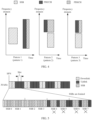
- FIG. 6 is a schematic diagram of a relationship between a common signal transmission period and a time window.
- a common signal transmission period is 20 ms, and there is a time window in each 20 ms, for example, 5 ms or N slots. All common signals in the set are sent in the time window.
- all common signals in a set are sent in a time window of a common signal transmission period.
- a fifth set in the foregoing plurality of sets, and common signals in the fifth set are located in one periodic time window.
- common signals in a set are sent in different time windows of a plurality of common signal transmission periods.
- common signals in the sixth set are classified into three parts, which are separately sent in time windows of three common signal transmission periods; or the common signals in the sixth set are classified into two parts, which are separately sent in time windows of two common signal transmission periods.
- a set in the foregoing plurality of sets may be a set of the type (a), the type (b), the (c) type, the type (d), or the type (e).
- there is a seventh set and resource multiplexing manners of common signals in the seventh set are time division multiplexing, and the common signals in the seventh set are located in one periodic time window.
- there is an eighth set and resource multiplexing manners of two common signals in the eighth set are frequency division multiplexing, and a first part of common signals and a second part of common signals in the eighth set are located in different periodic time windows.
- FIG. 7(a) to FIG. 7(c) are schematic diagrams of common signal transmission manners.
- the common signal transmission manner is TDM.
- the common signal transmission manners are TDM and FDM.
- a set formed by eight common signals in FIG. 7(a) is referred to as a set 1.
- a common signal transmission manner corresponding to the set 1 is: time division multiplexing of a common signal 0 to a common signal 7. Therefore, the common signal 0 to the common signal 7 occupy same frequency domain resources but different time domain resources.
- a set formed by eight common signals in FIG. 7(b) is referred to as a set 2.
- Common signal transmission manners corresponding to the set 2 are: time division multiplexing of a common signal 0 to a common signal 3, time division multiplexing of a common signal 4 to a common signal 7, frequency division multiplexing of the common signal 0 and the common signal 4, frequency division multiplexing of a common signal 1 and a common signal 5, frequency division multiplexing of a common signal 2 and a common signal 6, and frequency division multiplexing of the common signal 3 and the common signal 7.
- the common signal 0 to the common signal 3 have same frequency domain resources but different time domain resources
- the common signal 4 to the common signal 7 have same frequency domain resources but different time domain resources
- the common signal 0 and the common signal 4 have same time domain resources but different frequency domain resources
- the common signal 1 and the common signal 5 have same time domain resources but different frequency domain resources
- the common signal 2 and the common signal 6 have same time domain resources but different frequency domain resources
- the common signal 3 and the common signal 7 have same time domain resources but different frequency domain resources.
- a set formed by eight common signals in FIG. 7(c) is referred to as a set 3.
- Common signal transmission manners corresponding to the set 3 are: time division multiplexing of a common signal 0 and a common signal 1, time division multiplexing of a common signal 2 and a common signal 3, time division multiplexing of a common signal 4 and a common signal 5, time division multiplexing of a common signal 6 and a common signal 7, frequency division multiplexing of the common signal 0, the common signal 2, the common signal 4, and the common signal 6, and frequency division multiplexing of the common signal 1, the common signal 3, the common signal 5, and the common signal 7.
- different sets may correspond to a same beam sweeping transmission manner or different beam sweeping transmission manners.
- beam sweeping manners of the eight common signals in the set 1, the set 2, and the set 3 are: the common signal 0 to the common signal 7 are sent in a beam direction 1 to a beam direction 8, respectively.
- beam sweeping manners of the eight common signals in the set 1 and the set 2 are: the common signal 0 to the common signal 7 are sent in the beam direction 1 to the beam direction 8, respectively; and beam sweeping manners of the eight common signals in the set 3 are: the common signal 0 to the common signal 7 are sent in a beam direction 9 to a beam direction 16, respectively.
- the first common signal includes a synchronization signal and a broadcast channel
- the second common signal includes a control channel or a channel carrying system information.
- the synchronization signal includes a PSS and an SSS.
- the broadcast channel may be a PBCH, used to carry a MIB.
- the control channel may be a PDCCH, used to schedule the channel carrying system information.
- the system information may include a SIB, and the SIB herein may include a SIB 1.
- the first common signal includes a synchronization signal
- the second common signal includes a control channel or a channel carrying system information.
- the synchronization signal includes a PSS and an SSS.
- the control channel may be a PDCCH, used to schedule the channel carrying system information.
- the system information may be minimum necessary system information.
- the minimum necessary system information includes a MIB and a SIB, and the SIB herein may include a SIB 1. It should be noted that the MIB or the SIB herein may have another name in future technology evolution.
- a first channel in embodiments of this application may be the broadcast channel, the channel carrying system information, or the control channel. This is described together herein, and details are not described again.
- the communication method provided in embodiments of this application may be performed by a terminal or a component (such as a chip or an apparatus) used for the terminal, and a base station or a component (such as a chip or an apparatus) used for the base station.
- a terminal or a component such as a chip or an apparatus
- a base station or a component such as a chip or an apparatus
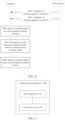
- FIG. 8 is a schematic diagram of a wireless communication method according to an embodiment of this application. The method includes the following operations.
- the base station determines a first set.
- the first set is one of a plurality of sets, the first set includes a plurality of common signals, and resource multiplexing manners of the plurality of common signals include time division multiplexing and/or frequency division multiplexing.
- the plurality of sets herein may be a plurality of sets corresponding to the foregoing described plurality of common signal transmission manners.
- the plurality of sets may be classified into sets of the foregoing type (a) to type (c) based on resource multiplexing manners.
- the plurality of sets may be classified into sets of the foregoing type (d) and type (e) based on transmission time.
- the first set may be one of the second set, the third set, the fourth set, the fifth set, the sixth set, the seventh set, or the eighth set.
- the base station sends a plurality of common signals in the first set to the terminal.
- the terminal detects the common signal.
- the terminal detects the common signal sent by the base station, and may detect a first common signal in the first set.
- the first common signal includes a synchronization signal.
- the terminal may detect the synchronization signal based on a candidate sequence of the synchronization signal and a corresponding SCS.
- the candidate sequence may be predefined by a standard, for example, a PSS candidate sequence or an SSS candidate sequence is used, or a candidate sequence may be predefined for each frequency band.
- Candidate sequences corresponding to different frequency bands may be the same or different. For example, a frequency band 1 uses a first candidate sequence, and a frequency band 2 uses a second candidate sequence.
- the SCS of the synchronization signal may be associated with a frequency band.
- the frequency band 1 uses SCSs of 15 kHz and 30 kHz
- the frequency band 2 uses SCSs of 120 kHz and 240 kHz.
- all frequency bands may use one SCS or one SCS set.
- the terminal may detect a synchronization signal. For example, a synchronization signal whose SCS is 30 kHz is detected on the frequency band 1.
- the terminal may receive a broadcast channel, and an SCS of the broadcast channel may be the same as or have an association relationship with that of the synchronization signal.
- a time-frequency resource of the broadcast channel may also have an association relationship with a time-frequency resource of the synchronization signal, for example, they are on a same symbol or adjacent symbols, or on a same RB or adjacent RBs.
- the terminal determines, from a plurality of sets based on the detected first common signal, a first set corresponding to the first common signal.
- Each of the plurality of sets corresponds to a common signal transmission manner.
- each set corresponds to a resource multiplexing manner.
- the obtained first set herein is a set that is determined by the terminal from a plurality of sets and corresponds to the detected first common signal.
- the terminal may identify a currently used common signal transmission manner.
- the first set may be one of the second set, the third set, the fourth set, the fifth set, the sixth set, the seventh set, or the eighth set.
- the terminal determines a first index of the first common signal in the first set.
- the first index corresponds to a resource of the first common signal, and the resource includes a time domain resource and/or a frequency domain resource.
- the terminal may determine the resource of the first common signal based on the first index.
- the first index may indicate an offset relative to a specific time point and/or an offset relative to a specific frequency domain position.
- the specific time point may be a boundary of a radio frame, a boundary of a radio half-frame, or a boundary of a slot or subframe with a smallest number.
- the specific frequency domain position is a frequency boundary of a carrier or a bandwidth part in which the first common signal is located.
- the first index may indicate an offset relative to a time domain resource and/or a frequency domain resource of another common signal in the first set, or indicate a number of the first common signal in the first set.
- the terminal determines, based on the detected first common signal, the first set corresponding to the first common signal, and further determines resource multiplexing manners of the plurality of common signals in the first set.
- the resource multiplexing manners of the plurality of common signals may be configured more flexibly, so as to flexibly send the plurality of common signals. Because the resource multiplexing manners of the plurality of common signals in the set may be flexibly configured, adaptation to various TDD configurations may be implemented. For example, when downlink resources in a TDD configuration are insufficient, the plurality of common signals in the set may be sent in a frequency division multiplexing manner as much as possible. For another example, when the downlink resources in the TDD configuration are sufficient, the plurality of common signals in the set may be sent in a time division multiplexing manner and/or a frequency division multiplexing manner. Therefore, the method helps improve communication efficiency.
- the terminal may further determine a resource of a second common signal based on the first index, and receive the second common signal based on the resource of the second common signal.
- the second common signal For a meaning of the second common signal, refer to the foregoing description. Details are not described again.
- the terminal may determine a resource of a common signal other than the first common signal in the first set based on the first set and the first index.
- the first set includes eight common signals: a common signal 0 to a common signal 7, and the first common signal detected by the terminal is the common signal 3.
- the terminal may further determine resources of the common signal 0 to the common signal 2 and the common signal 4 to the common signal 7 based on the first set, a first index of the common signal 3, and the resource of the common signal 3.
- the first set corresponding to the first common signal may be determined from a plurality of sets based on any one of the following methods or a combination of any plurality of the following methods: Method 1: A first set corresponding to a sequence of a synchronization signal is determined from the plurality of sets based on the sequence of the synchronization signal.
- a sequence 1 of the synchronization signal corresponds to a common signal set 1
- a sequence 2 of the synchronization signal corresponds to a common signal set 2
- a sequence 3 of the synchronization signal corresponds to a common signal set 3.
- the synchronization signal sequence herein may be a PSS sequence or an SSS sequence.
- a PSS and SSS sequence combination 1 corresponds to the common signal set 1
- a PSS and SSS sequence combination 2 corresponds to the common signal set 2
- a PSS and SSS sequence combination 3 corresponds to the common signal set 3.
- Method 2 The first set is determined from the plurality of sets based on a first channel corresponding to the first common signal.
- the first set is determined from the plurality of sets based on one or more of the following pieces of information corresponding to the first channel: information indicating the first set, a scrambling code of the first channel, or a DMRS sequence of the first channel.
- the information indicating the first set corresponds to a first field of the first channel.
- the first field includes two bits.
- four sets may be indicated.
- one of "00”, “01”, “10”, or "11” indicates the first set, and the other three bits indicate other sets.
- the first channel has a plurality of scrambling codes.
- a scrambling code 1 corresponds to the first set
- a scrambling code 2, a scrambling code 3, and the like respectively correspond to other sets.
- the terminal obtains the scrambling code 1 of the first channel, the first set is determined.
- the first channel has a plurality of DMRS sequences.
- a DMRS sequence 1 corresponds to the first set
- a DMRS sequence 2, a DMRS sequence 3, and the like respectively correspond to other sets.
- the terminal obtains the DMRS sequence 1 of the first channel, the first set is determined.
- Method 3 A first set corresponding to a minimum carrier bandwidth capability supported by the terminal is determined from the plurality of sets based on the minimum carrier bandwidth capability supported by the terminal.
- a carrier bandwidth 1 corresponds to the first set
- a carrier bandwidth 2 and a carrier bandwidth 3 respectively correspond to other sets.
- the terminal determines the first set from the plurality of sets.
- Method 4 A first set corresponding to a frequency band in which the terminal operates is determined from the plurality of sets based on the frequency band in which the terminal operates.
- a frequency band 1 corresponds to the first set
- a frequency band 2 and a frequency band 3 respectively correspond to other sets.
- the terminal determines the first set from the plurality of sets.
- Method 5 A first set corresponding to a subcarrier spacing of the first common signal is determined from the plurality of sets based on the subcarrier spacing of the first common signal.
- a subcarrier spacing 1 corresponds to the first set
- a subcarrier spacing 2 and a subcarrier spacing 3 respectively correspond to other sets.
- the terminal determines the first set from the plurality of sets.
- Method 6 A first set corresponding to a subcarrier spacing combination is determined from the plurality of sets based on the subcarrier spacing combination.
- the subcarrier spacing combination includes a first subcarrier spacing of the first common signal and a second subcarrier spacing of a channel corresponding to the first common signal.
- a subcarrier spacing of the first common signal is the first subcarrier spacing
- a subcarrier spacing of the channel corresponding to the first common signal is the second subcarrier spacing.
- the channel corresponding to the first common signal may be the first channel.
- a subcarrier spacing combination 1 corresponds to the first set
- a subcarrier spacing combination 2 and a subcarrier spacing combination 3 respectively correspond to other sets.
- the terminal determines the first set from the plurality of sets.
- Method 7 A first set corresponding to a TDD configuration is determined from the plurality of sets based on the TDD configuration.
- Each TDD configuration indicates a ratio of an uplink time domain resource to a downlink time domain resource.
- the time domain resource herein includes at least one of a symbol, a slot, a subframe, or a radio frame.
- a TDD configuration 1 corresponds to the first set
- a TDD configuration 2 and a TDD configuration 3 respectively correspond to other sets.
- the terminal determines that the current TDD configuration is the TDD configuration 1
- the terminal determines the first set from the plurality of sets.
- the terminal may obtain the current TDD configuration from the detected first common signal.
- any two or more of the method 1 to the method 7 may be used in combination, to determine, from the plurality of sets, the first set corresponding to the first common signal.
- the terminal first determines, from a plurality of sets based on the TDD configuration in the method 7, two or more sets corresponding to the TDD configuration, and then determines, from the determined two or more sets based on the subcarrier spacing combination in the method 6, the first set corresponding to the subcarrier spacing combination. That is, two or more sets may be determined according to any one of the methods, and then a set is further determined from the two or more sets with reference to one or more other methods. One set may be determined finally, and the set is the first set corresponding to the first common signal.
- the first index of the first common signal in the first set may be determined according to any one of the following methods:
- Method 1 The first index of the first common signal in the first set is determined based on a sequence of a synchronization signal.
- a sequence 1 of the synchronization signal corresponds to the first index
- a sequence 2 of the synchronization signal and a sequence 3 of the synchronization signal respectively correspond to other indexes.
- the synchronization signal sequence herein may be a PSS sequence or an SSS sequence.
- a PSS and the SSS sequence combination 1 corresponds to the first index
- a PSS and the SSS sequence combination 2 and a PSS and the SSS sequence combination 3 respectively correspond to other indexes.
- Method 2 The first index of the first common signal in the first set is determined based on the first channel corresponding to the first common signal.
- the first index of the first common signal in the first set is determined based on one or more of the following pieces of information corresponding to the first channel: information indicating the first index, the scrambling code of the first channel, or the DMRS sequence of the first channel.
- the information indicating the first index corresponds to a second field of the first channel.
- the second field includes three bits.
- eight indexes may be indicated.
- "000" indicates the first index
- other seven types of bit information indicate other indexes.
- the first channel has a plurality of scrambling codes.
- a scrambling code 1 corresponds to the first index
- a scrambling code 2, a scrambling code 3, and the like respectively correspond to other indexes.
- the first channel has a plurality of DMRS sequences.
- a DMRS sequence 1 corresponds to the first index
- a DMRS sequence 2, a DMRS sequence 3, and the like respectively correspond to other indexes.
- the terminal obtains the DMRS sequence 1 of the first channel, the first index is determined.
- a first set corresponding to a sequence of a synchronization signal may be determined from a plurality of sets based on the sequence of the synchronization signal, and a first index of a first common signal in the first set may be determined.
- a relationship among a synchronization signal sequence, a set, and an index is shown in Table 1.
- Table 1 Synchronization signal sequence Set Index Sequence 1 1 0 Sequence 2 1 1 Sequence 3 1 2 Sequence 4 1 3 Sequence 5 2 0 Synchronization signal sequence Set Index Sequence 6 2 1 Sequence 7 2 2 Sequence 8 2 3 ... ... ...
- the determined first set is a set 1
- the determined first index is an index 2.
- the sequence of the synchronization signal is a sequence 6
- the determined first set is a set 2
- the determined first index is an index 1.
- a first set may be determined from a plurality of sets based on a control channel corresponding to the first common signal, and a first index of the first common signal in the first set may be determined.
- a scrambling code of a control channel is used as an example. A relationship among the scrambling code of the control channel, a set, and an index is shown in Table 2.
- Table 2 Control channel scrambling code Set Index Scrambling code 1 1 0 Scrambling code 2 1 1 Scrambling code 3 1 2 Scrambling code 4 1 3 Scrambling code 5 2 0 Scrambling code 6 2 1 Scrambling code 7 2 2 Scrambling code 8 2 3 ... ... ...
- the determined first set is the set 1, and the determined first index is the index 2.
- the scrambling code of the control channel is a scrambling code 6
- the determined first set is the set 2, and the determined first index is the index 1.
- a first set corresponding to a sequence of a synchronization signal is determined from a plurality of sets based on the sequence of the synchronization signal, and a first index of a first common signal in the first set is determined based on a broadcast channel corresponding to the first common signal.
- the first set is determined from the plurality of sets based on the broadcast channel corresponding to the first common signal, and the first index of the first common signal in the first set is determined based on the control channel corresponding to the first common signal.
- an embodiment of this application provides another wireless communication method.
- a plurality of to-be-sent common signals are sent in a frequency division multiplexing manner.
- a plurality of common signals corresponding to a same frequency domain resource form a set, and indexes of common signals in different sets may be the same.
- FIG. 9 is a schematic diagram of a common signal transmission manner.
- eight common signals are sent in a frequency division multiplexing manner.
- Four common signals are sent on a first frequency domain resource, and the other four common signals are sent on a second frequency domain resource.
- the four common signals sent on the first frequency domain resource form a set, and indexes of the common signals in the set are 0, 1, 2, and 3, respectively.
- the four common signals sent on the second frequency domain resource form a set, and indexes of the common signals in the set are 0, 1, 2, and 3, respectively.
- FIG. 10 is a schematic diagram of another wireless communication method according to an embodiment of this application. The method includes the following operations.
- a base station sends, on a first frequency domain resource, a plurality of common signals in a ninth set to a terminal.
- the first frequency domain resource corresponds to the ninth set, or it is understood that the plurality of common signals in the ninth set are located on the first frequency domain resource.
- FIG. 9 is used as an example.
- the base station sequentially sends, on the first frequency domain resource in a time division multiplexing manner and a predetermined common signal transmission manner, beams of a common signal 0 to a common signal 3 on the first frequency domain resource to the terminal.
- the base station sends, on a second frequency domain resource, a plurality of common signals in a tenth set to the terminal.
- the second frequency domain resource corresponds to the tenth set, or it is understood that the plurality of common signals in the tenth set are located on the second frequency domain resource.
- the second frequency domain resource is different from the first frequency domain resource.
- FIG. 9 is used as an example.
- the base station sequentially sends, on the second frequency domain resource in the time division multiplexing manner and the predetermined common signal transmission manner, beams of a common signal 0 to a common signal 3 on the second frequency domain resource to the terminal.
- the plurality of common signals in the ninth set may be associated with or not associated with the plurality of common signals in the tenth set.
- the terminal detects a common signal on the first frequency domain resource.
- the terminal determines the second frequency domain resource based on a detected first common signal.
- the detected first common signal belongs to the ninth set.
- the terminal detects a common signal in the ninth set, and the common signal is referred to as the first common signal.
- the terminal determines the second frequency domain resource based on a sequence of a synchronization signal in the first common signal.
- a sequence 1 of the synchronization signal corresponds to a frequency domain resource 1
- a sequence 2 of the synchronization signal corresponds to a frequency domain resource 2
- a sequence 3 of the synchronization signal corresponds to a frequency domain resource 3.
- the synchronization signal sequence herein may be a PSS sequence or an SSS sequence.
- a PSS and SSS sequence combination 1 corresponds to the frequency domain resource 1
- a PSS and SSS sequence combination 2 corresponds to the frequency domain resource 2
- a PSS and SSS sequence combination 3 corresponds to the frequency domain resource 3.
- the terminal determines the second frequency domain resource based on a first channel corresponding to the first common signal.
- the terminal determines the second frequency domain resource based on one or more of the following pieces of information corresponding to the first channel: information indicating the second frequency domain resource, a scrambling code of the first channel, or a DMRS sequence of the first channel.
- the information indicating the second frequency domain resource corresponds to a third field of the first channel.
- the third field includes two bits. In this case, four frequency domain resources may be indicated.
- the first channel has a plurality of scrambling codes.
- a scrambling code 1 corresponds to a frequency domain resource 1
- a scrambling code 2 corresponds to a frequency domain resource 2
- a scrambling code 3 corresponds to a frequency domain resource 3.
- the first channel has a plurality of DMRS sequences.
- a DMRS sequence 1 corresponds to the frequency domain resource 1
- a DMRS sequence 2 corresponds to the frequency domain resource 2
- a DMRS sequence 3 corresponds to the frequency domain resource 3.
- the terminal detects a common signal on the second frequency domain resource.
- time domain resources of downlink common signals are limited.
- different common signals may be sent in a frequency division multiplexing manner.
- time domain resources occupied by downlink common signals may be reduced, thereby resolving a problem of limited time domain resources for downlink common signals.
- the second frequency domain resource may be determined based on a detected common signal corresponding to the first frequency domain resource, so that the terminal further detects a common signal on the second frequency domain resource. This avoids a resource waste caused when the terminal blindly detects common signals on frequency domain resources except the first frequency domain resource.
- the second frequency domain resource and the first frequency domain resource have different center frequencies, different lowest frequencies, or different highest frequencies.
- the second frequency domain resource and the first frequency domain resource do not overlap or partially overlap in frequency domain.
- the first frequency domain resource is a first carrier
- the second frequency domain resource is a second carrier
- the first carrier is different from the second carrier
- the first frequency domain resource is a first bandwidth part
- the second frequency domain resource is a second bandwidth part
- the first bandwidth part is different from the second bandwidth part.
- a bandwidth part is a frequency domain resource in a carrier.
- the first bandwidth part and the second bandwidth part may belong to a same carrier or different carriers.
- the first frequency domain resource is a first subband
- the second frequency domain resource is a second subband
- the first subband is different from the second subband.
- a subband is a frequency domain resource in a bandwidth part.
- the first subband and the second subband may belong to a same bandwidth part or different bandwidth parts.
- a TDD downlink configuration on the first frequency domain resource is different from a TDD downlink configuration on the second frequency domain resource.
- a TDD uplink configuration on the first frequency domain resource is different from a TDD uplink configuration on the second frequency domain resource.
- a quantity of uplink time domain resources in the TDD uplink configuration on the first frequency domain resource is greater than a quantity of downlink time domain resources in the TDD uplink configuration on the first frequency domain resource.
- a quantity of uplink time domain resources in the TDD downlink configuration on the first frequency domain resource is greater than a quantity of downlink time domain resources in the TDD downlink configuration on the first frequency domain resource.
- a quantity of uplink time domain resources in the TDD uplink configuration on the second frequency domain resource is greater than a quantity of downlink time domain resources in the TDD uplink configuration on the second frequency domain resource.
- a quantity of uplink time domain resources in the TDD downlink configuration on the second frequency domain resource is greater than a quantity of downlink time domain resources in the TDD downlink configuration on the second frequency domain resource.
- resource multiplexing manners of at least two common signals in the ninth set is FDM, or resource multiplexing manners of all common signals in the ninth set are TDM.
- resource multiplexing manners of at least two common signals in the tenth set is FDM, or resource multiplexing manners of all common signals in the tenth set are TDM.
- a quantity of common signals in the ninth set is different from a quantity of common signals in the tenth set.
- a subcarrier spacing of common signals in the ninth set is different from a subcarrier spacing of common signals in the tenth set.
- the common signals in the ninth set and the tenth set are both common signals that may be used for initial access.
- the common signal that may be used for initial access means that the common signal may provide the terminal with related information such as at least one of a synchronization signal or a MIB, for accessing the base station.
- the common signals in the ninth set and the tenth set have corresponding first channels.
- the first channel corresponding to the first common signal may be determined based on the first common signal detected in the ninth set.
- the first channel corresponding to the first common signal detected in the tenth set may be further determined.
- the base station and the terminal include corresponding hardware structures and/or software modules for performing the functions.
- a person skilled in the art should be easily aware that this application can be implemented by hardware or a combination of hardware and computer software in combination with the units and the method steps in the examples described in embodiments disclosed in this application. Whether a function is performed by hardware or hardware driven by computer software depends on particular application scenarios and design constraints of technical solutions.
- FIG. 11 and FIG. 12 are schematic diagrams of structures of communication apparatuses according to embodiments of this application.
- the communication apparatuses may be configured to implement functions of the terminal or the base station in the foregoing method embodiment. Therefore, beneficial effects of the foregoing method embodiment can also be achieved.
- the communication apparatus may be one of the terminals 120a to 120j shown in FIG. 1 , the base station 110a or 110b shown in FIG. 1 , or a module (for example, a chip) applied to the terminal or the base station.
- a communication apparatus 1100 includes a processing unit 1110 and a transceiver unit 1120.
- the communication apparatus 1100 is configured to implement a function of the terminal or the base station in the method embodiment shown in FIG. 8 or FIG. 10 .
- the transceiver unit 1120 is configured to receive a common signal from the base station; and the processing unit 1110 is configured to: detect a common signal; determine, from a plurality of sets based on a detected first common signal, a first set corresponding to the first common signal, where at least one of the plurality of sets includes a plurality of common signals, the first set includes the first common signal, the first common signal includes a synchronization signal, and resource multiplexing manners of the plurality of common signals include time division multiplexing and/or frequency division multiplexing; and determine a first index of the first common signal in the first set, where the first index corresponds to a resource of the first common signal, and the resource includes a time domain resource and/or a frequency domain resource.
- the processing unit 1110 is configured to determine, from the plurality of sets based on a sequence of the synchronization signal, a first set corresponding to the sequence of the synchronization signal.
- the processing unit 1110 determines the first set from the plurality of sets based on a first channel corresponding to the first common signal.
- the processing unit 1110 is configured to determine the first set from the plurality of sets based on one or more of the following pieces of information corresponding to the first channel: information indicating the first set, a scrambling code of the first channel, or a DMRS sequence of the first channel.
- the first channel is a broadcast channel; or the first channel is a channel carrying system information; or the first channel is a control channel, and the control channel is used to schedule the channel carrying system information.
- the processing unit 1110 is configured to determine, from the plurality of sets based on a minimum carrier bandwidth capability supported by the terminal, a first set corresponding to the minimum carrier bandwidth capability supported by the terminal.
- the processing unit 1110 is configured to determine, from the plurality of sets based on a frequency band in which the terminal operates, a first set corresponding to the frequency band in which the terminal operates.
- the processing unit 1110 is configured to: determine, from the plurality of sets based on a subcarrier spacing of the first common signal, a first set corresponding to the subcarrier spacing of the first common signal; or determine, from the plurality of sets based on a subcarrier spacing combination, a first set corresponding to the subcarrier spacing combination.
- the processing unit 1110 is configured to determine, from the plurality of sets based on a time division duplexing TDD configuration, a first set corresponding to the time division duplexing TDD configuration.
- the processing unit 1110 is configured to determine a first index of the first common signal in the first set based on a sequence of the synchronization signal.
- the processing unit 1110 is configured to determine a first index of the first common signal in the first set based on the first channel corresponding to the first common signal.
- the first channel is a broadcast channel; or the first channel is a channel carrying system information; or the first channel is a control channel, and the control channel is used to schedule the channel carrying system information.
- the processing unit 1110 is configured to determine the first index of the first common signal in the first set based on one or more of the following pieces of information corresponding to the first channel: information indicating the first index, the scrambling code of the first channel, or the DMRS sequence of the first channel.
- the processing unit 1110 is configured to: determine a resource of a second common signal based on the first index; and receive the second common signal based on the resource of the second common signal, where the second common signal includes a control channel or a channel carrying system information, and the control channel is used to schedule the channel carrying system information.
- the processing unit 1110 is configured to determine a resource of a common signal other than the first common signal in the first set based on the first set and the first index.
- the processing unit 1110 is configured to determine a first set, where the first set is one of a plurality of sets, at least one of the plurality of sets includes a plurality of common signals, and resource multiplexing manners of the plurality of common signals include time division multiplexing and/or frequency division multiplexing; and the transceiver unit 1120 is configured to send a plurality of common signals in the first set to the terminal, where the first set includes a first common signal, the first common signal is one of the plurality of common signals, the first common signal includes a synchronization signal, and the first common signal may be a common signal in the first set that is detected by the terminal.
- a sequence of the synchronization signal corresponds to the first set.
- a first channel corresponding to the first common signal corresponds to the first set.
- one or more of the following pieces of information corresponding to the first channel correspond to the first set: information indicating the first set, a scrambling code of the first channel, or a DMRS sequence of the first channel.
- the first channel is a broadcast channel; or the first channel is a channel carrying system information; or the first channel is a control channel, and the control channel is used to schedule the channel carrying system information.
- a minimum carrier bandwidth capability supported by the terminal corresponds to the first set.
- a frequency band in which the terminal operates corresponds to the first set.
- a subcarrier spacing of the first common signal corresponds to the first set; or a subcarrier spacing combination corresponds to the first set, where the subcarrier spacing combination includes a first subcarrier spacing of the first common signal and a second subcarrier spacing of a channel corresponding to the first common signal.
- a time division duplexing TDD configuration corresponds to the first set.
- the sequence of the synchronization signal corresponds to indexes of the plurality of common signals in the first set.
- a first channel corresponding to the first common signal corresponds to the first index of the first common signal in the first set, where the first channel is a broadcast channel; or the first channel is a channel carrying system information; or the first channel is a control channel, and the control channel is used to schedule the channel carrying system information.
- one or more of the following pieces of information corresponding to the first channel correspond to the indexes of the plurality of common signals in the first set: information indicating the first set, the scrambling code of the first channel, or the DMRS sequence of the first channel.
- the plurality of sets include one or more of the following sets:
- the plurality of sets include one or more of the following sets:
- the transceiver unit 1120 is configured to: send a plurality of common signals in a ninth set to the terminal on the first frequency domain resource; and send a plurality of common signals in a tenth set to the terminal on the second frequency domain resource.
- the processing unit 1110 is configured to: detect common signals on the first frequency domain resource; determine a position of the second frequency domain resource based on the detected first common signal; and detect common signals on the second frequency domain resource.
- processing unit 1110 and the transceiver unit 1120 directly refer to related descriptions in the method embodiments shown in FIG. 8 to FIG. 10 . Details are not described herein again.
- a communication apparatus 1200 includes a processor 1210 and an interface circuit 1220.
- the processor 1210 and the interface circuit 1220 are coupled to each other.
- the interface circuit 1220 may be a transceiver or an input/output interface.
- the communication apparatus 1200 may further include a memory 1230, configured to store instructions executed by the processor 1210, or store input data required by the processor 1210 to run instructions, or store data generated after the processor 1210 runs instructions.
- the processor 1210 is configured to perform a function of the processing unit 1110
- the interface circuit 1220 is configured to perform a function of the transceiver unit 1120.
- the chip in the terminal implements functions of the terminal in the foregoing method embodiments.
- the terminal chip receives information from another module (for example, a radio frequency module or an antenna) in the terminal, where the information is sent by a base station to the terminal; or the terminal chip sends information to another module (for example, a radio frequency module or an antenna) in the terminal, where the information is sent by the terminal to the base station.
- another module for example, a radio frequency module or an antenna
- the chip in the base station implements functions of the base station in the foregoing method embodiments.
- the base station chip receives information from another module (for example, a radio frequency module or an antenna) in the base station, where the information is sent by the terminal to the base station; or the base station chip sends information to another module (for example, a radio frequency module or an antenna) in the base station, where the information is sent by the base station to the terminal.
- the processor in this embodiment of this application may be a central processing unit (Central Processing Unit, CPU), or may be another general-purpose processor, a digital signal processor (Digital Signal Processor, DSP), an application-specific integrated circuit (Application Specific Integrated Circuit, ASIC), a field programmable gate array (Field Programmable Gate Array, FPGA) or another programmable logic device, a transistor logic device, a hardware component, or any combination thereof.
- the general-purpose processor may be a microprocessor or any conventional processor.
- the method steps in this embodiment of this application may be implemented by hardware, or may be implemented by the processor executing software instructions.
- the software instructions may include corresponding software modules.
- the software modules may be stored in a random access memory, a flash memory, a read-only memory, a programmable read-only memory, an erasable programmable read-only memory, an electrically erasable programmable read-only memory, a register, a hard disk, a removable hard disk, a CD-ROM, or a storage medium in any other form well-known in the art.
- a storage medium is coupled to the processor, so that the processor can read information from the storage medium and write information into the storage medium.
- the storage medium may be a component of the processor.
- the processor and the storage medium may be disposed in an ASIC.
- the ASIC may be located in a base station or a terminal.
- the processor and the storage medium may exist in the base station or the terminal as discrete components.
- All or some of the foregoing embodiments may be implemented by using software, hardware, firmware, or any combination thereof.
- software is used to implement the embodiments, all or some of the embodiments may be implemented in a form of a computer program product.
- the computer program product includes one or more computer programs or instructions. When the computer programs or instructions are loaded and executed on a computer, all or some of the processes or the functions in embodiments of this application are performed.
- the computer may be a general-purpose computer, a dedicated computer, a computer network, a base station, user equipment, or another programmable apparatus.
- the computer programs or instructions may be stored in a computer-readable storage medium, or may be transmitted from a computer-readable storage medium to another computer-readable storage medium.
- the computer programs or instructions may be transmitted from a website, computer, server, or data center to another website, computer, server, or data center in a wired or wireless manner.
- the computer-readable storage medium may be any usable medium accessible to a computer, or a data storage device that integrates one or more usable media, such as a server or a data center.
- the usable medium may be a magnetic medium, for example, a floppy disk, a hard disk, or a magnetic tape; or may be an optical medium, for example, a digital video disc; or may be a semiconductor medium, for example, a solid state disk.
- the computer-readable storage medium may be a volatile or non-volatile storage medium, or may include two types of storage media: a volatile storage medium and a non-volatile storage medium.
- “at least one” means one or more, and "a plurality of” means two or more.
- “And/or” describes an association relationship between associated objects and represents that three relationships may exist. For example, A and/or B may represent the following cases: Only A exists, both A and B exist, and only B exists, where A and B may be singular or plural.
- the character “/” usually indicates an “or” relationship between the associated objects. In a formula in this application, the character “/” indicates a "division" relationship between the associated objects.
Landscapes
- Engineering & Computer Science (AREA)
- Signal Processing (AREA)
- Computer Networks & Wireless Communication (AREA)
- Mobile Radio Communication Systems (AREA)
Applications Claiming Priority (1)
| Application Number | Priority Date | Filing Date | Title |
|---|---|---|---|
| PCT/CN2021/078786 WO2022183390A1 (fr) | 2021-03-02 | 2021-03-02 | Procédé de communication sans fil, appareil de communication et système de communication |
Publications (2)
| Publication Number | Publication Date |
|---|---|
| EP4294095A1 true EP4294095A1 (fr) | 2023-12-20 |
| EP4294095A4 EP4294095A4 (fr) | 2024-04-10 |
Family
ID=83153840
Family Applications (1)
| Application Number | Title | Priority Date | Filing Date |
|---|---|---|---|
| EP21928481.7A Pending EP4294095A4 (fr) | 2021-03-02 | 2021-03-02 | Procédé de communication sans fil, appareil de communication et système de communication |
Country Status (4)
| Country | Link |
|---|---|
| US (1) | US20230413240A1 (fr) |
| EP (1) | EP4294095A4 (fr) |
| CN (1) | CN116941290A (fr) |
| WO (1) | WO2022183390A1 (fr) |
Families Citing this family (5)
| Publication number | Priority date | Publication date | Assignee | Title |
|---|---|---|---|---|
| US12425991B2 (en) * | 2022-03-29 | 2025-09-23 | Qualcomm Incorporated | Use of physical broadcast channel demodulation reference signal to speed up neighbor cell measurement |
| CN119854945A (zh) * | 2023-10-18 | 2025-04-18 | 华为技术有限公司 | 一种通信方法、装置、存储介质及计算机程序产品 |
| WO2025091353A1 (fr) * | 2023-11-01 | 2025-05-08 | Oppo广东移动通信有限公司 | Procédé de transmission de canal ou de signal, dispositif et support de stockage |
| CN120239050A (zh) * | 2023-12-28 | 2025-07-01 | 维沃移动通信有限公司 | Ssb配置方法、装置以及网络侧设备 |
| CN121665263A (zh) * | 2024-09-11 | 2026-03-13 | 华为技术有限公司 | 一种通信方法及相应装置 |
Family Cites Families (14)
| Publication number | Priority date | Publication date | Assignee | Title |
|---|---|---|---|---|
| CN108282317B (zh) * | 2017-01-06 | 2021-02-05 | 展讯通信(上海)有限公司 | 同步信号块的传输方法、接收方法、基站及用户设备 |
| US10425264B2 (en) * | 2017-01-09 | 2019-09-24 | Lg Electronics Inc. | Method of transmitting synchronization signal and apparatus therefor |
| EP3562215B1 (fr) * | 2017-03-10 | 2020-08-12 | Fujitsu Limited | Conception de signaux de diffusion et de synchronisation pour la 5g |
| EP3605957B1 (fr) * | 2017-03-28 | 2022-03-09 | Beijing Xiaomi Mobile Software Co., Ltd. | Procédé et dispositif de transmission et d'acquisition de bloc d'informations de synchronisation |
| CN108989003B (zh) * | 2017-06-02 | 2024-06-25 | 华为技术有限公司 | 一种通信的方法及装置 |
| US10652856B2 (en) * | 2017-06-22 | 2020-05-12 | Telefonaktiebolaget Lm Ericsson (Publ) | Transmission and reception of broadcast information in a wireless communication system |
| US10727968B2 (en) * | 2017-09-15 | 2020-07-28 | Qualcomm Incorporated | Synchronization signal block and control resource set multiplexing |
| CN109787732B (zh) * | 2017-11-14 | 2020-10-20 | 电信科学技术研究院 | 一种资源配置方法及装置、计算机存储介质 |
| WO2020226265A1 (fr) * | 2019-05-03 | 2020-11-12 | 엘지전자 주식회사 | Procédé d'émission ou de réception de bloc de signaux de synchronisation dans une bande sans licence et appareil associé |
| WO2021109016A1 (fr) * | 2019-12-04 | 2021-06-10 | Qualcomm Incorporated | Indication précoce de nouvelles informations système dédiées à la lumière radio |
| US12237902B2 (en) * | 2020-05-04 | 2025-02-25 | Intel Corporation | Enhanced beam management for 5G systems |
| US11831576B2 (en) * | 2020-09-08 | 2023-11-28 | Qualcomm Incorporated | Frequency division multiplexed reference signals for multiple beams |
| US12464560B2 (en) * | 2021-01-27 | 2025-11-04 | Qualcomm Incorporated | Beam alignment for transmissions using different subcarrier spacings |
| EP4037237A1 (fr) * | 2021-01-29 | 2022-08-03 | QUALCOMM Incorporated | Configuration d'un bloc de signal de synchronisation pour une bande passante plus étroite qu'une bande passante minimale |
-
2021
- 2021-03-02 WO PCT/CN2021/078786 patent/WO2022183390A1/fr not_active Ceased
- 2021-03-02 CN CN202180094753.1A patent/CN116941290A/zh active Pending
- 2021-03-02 EP EP21928481.7A patent/EP4294095A4/fr active Pending
-
2023
- 2023-08-30 US US18/458,620 patent/US20230413240A1/en active Pending
Also Published As
| Publication number | Publication date |
|---|---|
| EP4294095A4 (fr) | 2024-04-10 |
| WO2022183390A1 (fr) | 2022-09-09 |
| US20230413240A1 (en) | 2023-12-21 |
| CN116941290A (zh) | 2023-10-24 |
Similar Documents
| Publication | Publication Date | Title |
|---|---|---|
| US11470570B2 (en) | Synchronization signal block (SSB)-based positioning measurement signals | |
| TWI751277B (zh) | 多子訊框探索參考信號傳遞(drs)量測時序配置(dmtc)訊窗 | |
| RU2749096C1 (ru) | Способ, устройство, аппаратное устройство и носитель информации для указания и приема местоположения ресурса | |
| US20230413240A1 (en) | Wireless communication method, communication apparatus, and communication system | |
| KR102766021B1 (ko) | 공유 통신 매체에서의 제어 시그널링 | |
| US20200344775A1 (en) | Csi-rs scrambling of subframes in a multi-subframe drs | |
| US20240008014A1 (en) | Communication method and apparatus | |
| US12238656B2 (en) | Rate matching indication method and apparatus, and device and storage medium | |
| US20240049300A1 (en) | Random access method, communication apparatus, and communication system | |
| US20240357571A1 (en) | Communication method and apparatus | |
| US20250168795A1 (en) | Communication method and apparatus | |
| CN115039481B (zh) | 处于非活动模式的设备的波束管理 | |
| US20250184065A1 (en) | Communication method, apparatus, and system | |
| EP3857775B1 (fr) | Détection de rafales dans des communications sans fil | |
| US12621751B2 (en) | Wireless communication method, communication apparatus, and communication system | |
| US20230413160A1 (en) | Wireless communication method, communication apparatus, and communication system | |
| CN113950071A (zh) | 一种通信方法及装置 | |
| US20240114508A1 (en) | Method and apparatus for communication of enhanced reduced capability user equipment in wireless communication system | |
| US20250351115A1 (en) | Method of sidelink communication and terminal device | |
| EP4351201A1 (fr) | Procédé de transmission de données et appareil de communication | |
| KR20250056065A (ko) | 자원을 할당하기 위한 장치 및 방법 | |
| US20220278783A1 (en) | Base station, method, program, and recording medium | |
| CN119485731A (zh) | 一种通信方法及通信装置 | |
| CN120935822A (zh) | 一种ssb配置方法及通信装置 | |
| CN117676547A (zh) | 下行控制信道传输方法、装置及系统 |
Legal Events
| Date | Code | Title | Description |
|---|---|---|---|
| STAA | Information on the status of an ep patent application or granted ep patent |
Free format text: STATUS: THE INTERNATIONAL PUBLICATION HAS BEEN MADE |
|
| PUAI | Public reference made under article 153(3) epc to a published international application that has entered the european phase |
Free format text: ORIGINAL CODE: 0009012 |
|
| STAA | Information on the status of an ep patent application or granted ep patent |
Free format text: STATUS: REQUEST FOR EXAMINATION WAS MADE |
|
| 17P | Request for examination filed |
Effective date: 20230914 |
|
| AK | Designated contracting states |
Kind code of ref document: A1 Designated state(s): AL AT BE BG CH CY CZ DE DK EE ES FI FR GB GR HR HU IE IS IT LI LT LU LV MC MK MT NL NO PL PT RO RS SE SI SK SM TR |
|
| REG | Reference to a national code |
Ref country code: DE Ref legal event code: R079 Free format text: PREVIOUS MAIN CLASS: H04W0072000000 Ipc: H04L0005000000 |
|
| A4 | Supplementary search report drawn up and despatched |
Effective date: 20240313 |
|
| RIC1 | Information provided on ipc code assigned before grant |
Ipc: H04W 72/00 20090101ALI20240306BHEP Ipc: H04L 5/14 20060101ALI20240306BHEP Ipc: H04L 5/00 20060101AFI20240306BHEP |
|
| DAV | Request for validation of the european patent (deleted) | ||
| DAX | Request for extension of the european patent (deleted) |