EP4296281A1 - Targeting-module gegen cd123 und einen tag zur verwendung in einem verfahren zur stimulation einer universellen chimären antigenrezeptorvermittelten reaktion bei einem säugetier - Google Patents
Targeting-module gegen cd123 und einen tag zur verwendung in einem verfahren zur stimulation einer universellen chimären antigenrezeptorvermittelten reaktion bei einem säugetier Download PDFInfo
- Publication number
- EP4296281A1 EP4296281A1 EP22180805.8A EP22180805A EP4296281A1 EP 4296281 A1 EP4296281 A1 EP 4296281A1 EP 22180805 A EP22180805 A EP 22180805A EP 4296281 A1 EP4296281 A1 EP 4296281A1
- Authority
- EP
- European Patent Office
- Prior art keywords
- tag
- targeting module
- cell
- seq
- binding domain
- Prior art date
- Legal status (The legal status is an assumption and is not a legal conclusion. Google has not performed a legal analysis and makes no representation as to the accuracy of the status listed.)
- Pending
Links
Images

Classifications
-
- C—CHEMISTRY; METALLURGY
- C07—ORGANIC CHEMISTRY
- C07K—PEPTIDES
- C07K16/00—Immunoglobulins [IG], e.g. monoclonal or polyclonal antibodies
- C07K16/18—Immunoglobulins [IG], e.g. monoclonal or polyclonal antibodies against material from animals or humans
- C07K16/28—Immunoglobulins [IG], e.g. monoclonal or polyclonal antibodies against material from animals or humans against receptors, cell surface antigens or cell surface determinants
- C07K16/2866—Immunoglobulins [IG], e.g. monoclonal or polyclonal antibodies against material from animals or humans against receptors, cell surface antigens or cell surface determinants against receptors for cytokines, lymphokines, interferons
-
- A—HUMAN NECESSITIES
- A61—MEDICAL OR VETERINARY SCIENCE; HYGIENE
- A61K—PREPARATIONS FOR MEDICAL, DENTAL OR TOILETRY PURPOSES
- A61K40/00—Cellular immunotherapy
- A61K40/10—Cellular immunotherapy characterised by the cell type used
- A61K40/11—T-cells, e.g. tumour infiltrating lymphocytes [TIL] or regulatory T [Treg] cells; Lymphokine-activated killer [LAK] cells
-
- A—HUMAN NECESSITIES
- A61—MEDICAL OR VETERINARY SCIENCE; HYGIENE
- A61K—PREPARATIONS FOR MEDICAL, DENTAL OR TOILETRY PURPOSES
- A61K40/00—Cellular immunotherapy
- A61K40/30—Cellular immunotherapy characterised by the recombinant expression of specific molecules in the cells of the immune system
- A61K40/31—Chimeric antigen receptors [CAR]
-
- C—CHEMISTRY; METALLURGY
- C07—ORGANIC CHEMISTRY
- C07K—PEPTIDES
- C07K16/00—Immunoglobulins [IG], e.g. monoclonal or polyclonal antibodies
- C07K16/18—Immunoglobulins [IG], e.g. monoclonal or polyclonal antibodies against material from animals or humans
-
- A—HUMAN NECESSITIES
- A61—MEDICAL OR VETERINARY SCIENCE; HYGIENE
- A61K—PREPARATIONS FOR MEDICAL, DENTAL OR TOILETRY PURPOSES
- A61K39/00—Medicinal preparations containing antigens or antibodies
- A61K2039/505—Medicinal preparations containing antigens or antibodies comprising antibodies
-
- A—HUMAN NECESSITIES
- A61—MEDICAL OR VETERINARY SCIENCE; HYGIENE
- A61K—PREPARATIONS FOR MEDICAL, DENTAL OR TOILETRY PURPOSES
- A61K2239/00—Indexing codes associated with cellular immunotherapy of group A61K40/00
- A61K2239/10—Indexing codes associated with cellular immunotherapy of group A61K40/00 characterized by the structure of the chimeric antigen receptor [CAR]
- A61K2239/11—Antigen recognition domain
- A61K2239/15—Non-antibody based
-
- A—HUMAN NECESSITIES
- A61—MEDICAL OR VETERINARY SCIENCE; HYGIENE
- A61K—PREPARATIONS FOR MEDICAL, DENTAL OR TOILETRY PURPOSES
- A61K2239/00—Indexing codes associated with cellular immunotherapy of group A61K40/00
- A61K2239/10—Indexing codes associated with cellular immunotherapy of group A61K40/00 characterized by the structure of the chimeric antigen receptor [CAR]
- A61K2239/23—On/off switch
- A61K2239/24—Dimerizable CARs; CARs with adapter
-
- A—HUMAN NECESSITIES
- A61—MEDICAL OR VETERINARY SCIENCE; HYGIENE
- A61K—PREPARATIONS FOR MEDICAL, DENTAL OR TOILETRY PURPOSES
- A61K2239/00—Indexing codes associated with cellular immunotherapy of group A61K40/00
- A61K2239/46—Indexing codes associated with cellular immunotherapy of group A61K40/00 characterised by the cancer treated
- A61K2239/48—Blood cells, e.g. leukemia or lymphoma
-
- A—HUMAN NECESSITIES
- A61—MEDICAL OR VETERINARY SCIENCE; HYGIENE
- A61K—PREPARATIONS FOR MEDICAL, DENTAL OR TOILETRY PURPOSES
- A61K39/00—Medicinal preparations containing antigens or antibodies
- A61K39/395—Antibodies; Immunoglobulins; Immune serum, e.g. antilymphocytic serum
- A61K39/39533—Antibodies; Immunoglobulins; Immune serum, e.g. antilymphocytic serum against materials from animals
- A61K39/3955—Antibodies; Immunoglobulins; Immune serum, e.g. antilymphocytic serum against materials from animals against proteinaceous materials, e.g. enzymes, hormones, lymphokines
-
- A—HUMAN NECESSITIES
- A61—MEDICAL OR VETERINARY SCIENCE; HYGIENE
- A61K—PREPARATIONS FOR MEDICAL, DENTAL OR TOILETRY PURPOSES
- A61K40/00—Cellular immunotherapy
- A61K40/40—Cellular immunotherapy characterised by antigens that are targeted or presented by cells of the immune system
- A61K40/41—Vertebrate antigens
- A61K40/42—Cancer antigens
- A61K40/4202—Receptors, cell surface antigens or cell surface determinants
- A61K40/4214—Receptors for cytokines
- A61K40/4217—Receptors for interleukins [IL]
-
- A—HUMAN NECESSITIES
- A61—MEDICAL OR VETERINARY SCIENCE; HYGIENE
- A61K—PREPARATIONS FOR MEDICAL, DENTAL OR TOILETRY PURPOSES
- A61K40/00—Cellular immunotherapy
- A61K40/50—Cellular immunotherapy characterised by the use of allogeneic cells
-
- C—CHEMISTRY; METALLURGY
- C07—ORGANIC CHEMISTRY
- C07K—PEPTIDES
- C07K2317/00—Immunoglobulins specific features
- C07K2317/30—Immunoglobulins specific features characterized by aspects of specificity or valency
- C07K2317/31—Immunoglobulins specific features characterized by aspects of specificity or valency multispecific
-
- C—CHEMISTRY; METALLURGY
- C07—ORGANIC CHEMISTRY
- C07K—PEPTIDES
- C07K2317/00—Immunoglobulins specific features
- C07K2317/60—Immunoglobulins specific features characterized by non-natural combinations of immunoglobulin fragments
- C07K2317/62—Immunoglobulins specific features characterized by non-natural combinations of immunoglobulin fragments comprising only variable region components
- C07K2317/622—Single chain antibody (scFv)
-
- C—CHEMISTRY; METALLURGY
- C07—ORGANIC CHEMISTRY
- C07K—PEPTIDES
- C07K2319/00—Fusion polypeptide
- C07K2319/20—Fusion polypeptide containing a tag with affinity for a non-protein ligand
- C07K2319/21—Fusion polypeptide containing a tag with affinity for a non-protein ligand containing a His-tag
Definitions
- Modular switchable "universal" CAR T (UniCAR) approaches can overcome these limitations by separating antigen recognition and activating domain of a CAR into two separate operational units.
- T cells are engineered to express a CAR with a universal binding domain recognizing a tag (Cartellieri et al. 2016).
- Antigen-specificity is provided by soluble adapter proteins, which consist of an antigen-binding domain fused to the tag recognized by the universal CAR.
- Cartellieri et al. describe the treatment of CD33- and/or CD123-positive acute myeloid leukemia cells in vitro and in vivo.
- RevCAR reversed universal CAR
- the object of the present invention is to provide an improved targeting module for use in a RevCAR system.
- autoimmune disorder refers to an abnormal immune response of the body against substances and tissues normally present in the body (autoimmunity).
- domain refers to a part of a protein sequence, which can exist and function independently from the rest of the protein.
- binding refers to a non-covalent binding, in particular ionic bonds, hydrogen bonds, Van der Waals forces and/or hydrophobic interactions.
- mutants refers to peptides or proteins having at least 90 % sequence identity to the named antibodies, antibody fragments, proteins or peptides, preferably at least 95 % sequence identity.
- the mutants are capable of having one or more activities of the named antibodies, antibody fragments, peptides or proteins.
- mutants are truncated versions of peptides or proteins.
- the term "truncated versions” refers to shortened peptides or proteins having at least 90 % sequence identity to the named peptides or proteins, preferably at least 95 % sequence identity, more preferably having a chain length of at least 90 % and a sequence identity of 100 %, most preferably a chain length of at least 95 % and a sequence identity of 100 %.
- the truncated version has at least 80 %, preferably of at least 90 %, more preferably of at least 95 %; of the activity of the named peptide or protein.
- tags which are peptide sequences from nuclear antigens, cannot be accessed and bound by the corresponding tag-binding domain in the context of the native protein under physiological conditions. Further advantageously, the tag is not immunogenic. This leads to minimization of the risk of uncontrolled on-target off-site toxicities by CAR-expressing immune cells like the release of toxic levels of cytokines, referred to variously as cytokine storms or cytokine release syndrome (CRS).
- CRS cytokine release syndrome
- the term "administered in combination” refers to a treatment, wherein the targeting module is administered prior to, simultaneously with and/or after the administration of the vector or cell comprising a nucleotide sequence encoding a reversible chimeric antigen receptor (RevCAR).
- RevCAR reversible chimeric antigen receptor
- antibody refers to a protein, which binds antigens via the antigen-binding fragment variable region (Fab). This is composed of one constant and one variable domain of each of the heavy (V H ) and the light chain (V L ).
- antibody fragment or antigen-binding fragment refers to a protein comprising at least the V L or V H of an antibody.
- antibody fragments are selected from single-chain variable fragments (scFv), single-chain antibodies, F(ab')2 fragments, Fab fragments, and fragments produced by a Fab expression library or single-domain antibodies (nanobodies).
- single-chain variable fragment refers to an artificial antibody fragment comprising a variable domain of a light chain and a variable domain of a heavy chain of an antibody covalently linked.
- V L and V H of an antibody are covalently linked by a short peptide of 10 to 25 amino acids.
- the short peptide links the N-terminus of the V H with the C-terminus of the V L , or vice versa.
- CDR complementarity-determining regions
- An antibody comprises three CDRs (CDR1, CDR2 and CDR3), arranged non-consecutively, on the amino acid sequence of each variable domain and thus, six CDRs on the two variable domains (V H and V L ), which can come into contact with the antigen.
- the linker of the tag-binding domain comprises 20 to 30 amino acids, preferably 25 amino acids.
- the antibody is obtained from an animal species, preferably from a mammal such as human, simian, mouse, rat, rabbit, guinea pig, horse, cow, sheep, goat, pig, dog or cat.
- the antibody or antibody fragment is a human, humanized or deimmunized antibody.
- Humanized antibodies can be prepared in various ways, for example, by resurfacing and CDR grafting. In case of resurfacing, a combination of molecular modeling, statistical analyses, and mutagenesis is used to modify all non-CDR regions on the surface of the antibody to become similar to the surface of antibodies of the target organism.
- the CDR regions according to the invention are introduced into known human framework regions, which are similar in sequence to the original ones.
- Deimmunized antibodies can be obtained by specifically mutating residues that confer immunogenicity hotspots as predicted based on in silico peptide-MHC affinity prediction.
- the antibody or antibody fragment is a polyclonal, a monoclonal or a chimeric antibody, wherein an antigen-binding region of a non-human antibody is transferred into the framework of a human antibody by recombinant DNA techniques including in silico design.
- the CD123-binding domain is an antibody or antigen binding fragment.
- the CD123-binding domain comprises the sequences SEQ ID No. 22 and SEQ ID No. 23.
- the CD123-binding domain comprises a sequence according to SEQ ID No. 27.
- X 24 , X 35 , X 61 and X 101 are independently from each other selected from a proteinogenic alpha-amino acid residue; or a sequence having at least 90 % sequence identity, preferably at least 95 % sequence identity; to sequence SEQ ID No. 21.
- the tag-binding domain constitutes an anti-La epitope scFv.
- X 24 to X 101 are selected as follows:
- the tag-binding domain comprises a sequence having each at least 90 % sequence identity, preferably at least 95 % sequence identity; to the sequences according to SEQ ID NO. 20 (V H ) and SEQ ID NO. 21 (V L ).
- the tag-binding domain constitutes the anti-La 5B9 scFv according to SEQ ID NO. 20 (V H ) and SEQ ID NO. 21 (V L ).
- the targeting module comprises one of the sequences according to SEQ ID No.3 to SEQ ID No. 10.
- the nucleic acid, vector or cell comprises one of the sequences according to SEQ ID No. 11 to 18.
- the invention provides a pharmaceutical composition
- a pharmaceutical composition comprising the targeting module according to the invention and a pharmaceutically acceptable thinner or carrier.
- the pharmaceutical composition is preferably administered parenterally, particularly preferred intravenously.
- the pharmaceutical composition is present in a form suitable for intravenous administration.
- the pharmaceutical composition is a solution, emulsion or suspension.
- the pharmaceutical composition is an injectable buffered solution comprising a concentration in the range of 1 ng/ml to 500 mg/ml of the targeting module, the nucleic acid, vector and/or cell according to the invention, preferably in the range of 50 ⁇ g/ml to 5 mg/ml.
- the pharmaceutical composition comprises a pharmaceutically acceptable thinner (dilution agent) or carrier.
- the carrier is selected from water, an aqueous buffer solution, 0.9 % saline solution, 5 % glucose, 5 % xylitol, 0.3 % glycine solution, ringer solutions or amino acid solutions.
- the aqueous buffer solution is selected from an aqueous histidine, sodium succinate, sodium citrate, sodium phosphate or potassium phosphate-buffered solution with a pH value in the range of pH 5.0 to pH 7.0.
- the aqueous buffer solution has a buffer concentration in the range of 1 mmol/l (mM) to 500 mM, preferably in the range of 5 mM to 20 mM, especially preferred in the range of 5 mM to 10 mM.
- the pharmaceutical composition further comprises a stabilizer, preferably with a concentration in the range of 1 mM to 900 mM, especially preferred in the range of 50 mM and 600 mM.
- the stabilizer is sucrose, trehalose or L-methionine.
- the pharmaceutical composition further comprises pharmaceutically acceptable excipients.
- pharmaceutically acceptable excipients refers to compounds, which provide approximately physiological conditions and/or increase the stability, such as agents for adjusting the pH value and buffering agents, agents for adjusting the toxicity and the like.
- pharmaceutically acceptable excipients are selected from sodium acetate, sodium chloride, potassium chloride, calcium chloride, sodium lactate and polysorbate-80, preferably polysorbate-80 in the range of 0.0001 % (w/v) to 1 % (w/v), especially preferred in the range of 0.001 % (w/v) to 0.1 % (w/v).
- the pharmaceutical composition comprises the targeting module in a dosage quantity in the range of 25 ⁇ g/day to 100 mg/day, preferably dosage quantities in the range of 0.1 mg/day to 20 mg/day.
- the pharmaceutical composition is used for administration to a subject.
- the pharmaceutical composition is lyophilized prior to storage or stored as solution at ambient temperature or below, including, but not limited to, frozen storage.
- the pharmaceutical composition is reconstituted and/or diluted in an infusion and stabilizer solution prior to administration to a subject.
- the solutions used for reconstitution or infusion/stabilization may contain any of the components mentioned for the pharmaceutical composition or similar components.
- the targeting module is administered in combination with a vector or a cell comprising a nucleotide sequence encoding a RevCAR, wherein the RevCAR comprises
- the invention provides a kit comprising
- the extracellular hinge and transmembrane domain of the RevCAR is selected from the group comprising a hinge and transmembrane domain of a human CD28 molecule, a CD8a chain NK cell receptor, parts of the constant region of an antibody and combinations thereof.
- the signal transduction domain of the RevCAR is selected from the group comprising cytoplasmic regions of CD28, CD137 (4-1BB), CD134 (OX40), CD278 (ICOS), DAP10 and CD27, programmed cell death-1 (PD-1), cytotoxic T-lymphocyte antigen 4 (CTLA-4), cytoplasmic regions of CD3 chains, DAP12, CD122 (interleukin-2 receptor ⁇ ), CD132 (interleukin-2 receptor ⁇ ), CD127 (interleukin-7 receptor ⁇ ), CD360 (interleukin-21 receptor), activating Fc receptors and mutants thereof.
- the kit according to the invention comprises at least one further targeting module or at least one further nucleic acid, vector or cell encoding a further targeting module, wherein the at least one further targeting module comprises at least one target cell-binding domain and a tag-binding domain,
- the kit according to the invention comprises the targeting module and/or the vector or cell comprising a nucleotide sequence encoding a RevCAR in the form of a pharmaceutical composition.
- the kit according to the invention is used in a method for stimulating a chimeric antigen receptor-mediated immune response in a mammal, preferably for use in the treatment of cancer, infectious disease or autoimmune disease.
- the targeting module is administered simultaneously with the vector or cell comprising a nucleotide sequence encoding a RevCAR.
- the targeting module is administered until, preferably in the range of 3 days to 30 days, after the administration of the vector or cell comprising a nucleotide sequence encoding a RevCAR. Furthermore, additional such doses of the targeting module may be administered following resting periods to reactivate the RevCAR-carrying effector cells.
- the term "reversible chimeric antigen receptor” refers to an artificial chimeric fusion protein, in particular a receptor comprising a tag, an extracellular hinge and a transmembrane domain and a signal transduction domain.
- the domains can be derived from different sources and therefore, the receptor is called chimeric.
- the receptor can bind with the tag to different targeting modules.
- the cell comprising a nucleotide sequence encoding a RevCAR expresses the RevCAR, which has binding specificity for the tag-binding domain of the targeting module, which in turn binds to CD123 on a target cell.
- the different domains of the targeting module according to the invention are linked with each other by a linker.
- the linker comprises a short sequence of preferably 10 to 20 amino acid residues.
- the targeting module comprises a flexible peptide sequence that is selected such that the domains have a three-dimensional folding that allows them to exhibit the specificity for effector cell and target cell binding.
- Preferred linkers are glycine-serine linkers with the structure (G x S y ) with x and y selected from 1 to 10, preferably 1 to 5. Usually preferred are 1 to 10 repeats of the sequence G4S1 (SEQ ID No. 24).
- linkers are preferred that are constituted of a peptide sequence that can increase the protease resistance of the antibody derivatives.
- the linker is SEQ ID No. 25 or SEQ ID No. 26.
- the targeting module according to the invention is used in a method for stimulating a chimeric antigen receptor-mediated immune response in a mammal, wherein the targeting module is administered in combination with a vector or a cell comprising a nucleotide sequence encoding a reversible chimeric antigen receptor and at least one further targeting module, wherein the at least one further targeting module comprises at least one target cell-binding domain and a tag-binding domain or a tag, wherein the at least one target cell-binding domain is an antibody, antibody fragment, a protein, a peptide or a low molecular weight organic ligand that binds to surface antigens selected from the group comprising CD2, CD3, CD4, CD8, CD10, CD19, CD20, CD22, CD23, CD25, CD30, CD33, CD38, CD44, CD44v6 CD52, CD90, CD99, CD133, CD150 CD181, CD182, CD184, CD223, CD229, CD269 (BCMA), CD
- peptide As used herein, the terms “peptide”, “polypeptide” and “protein” are used interchangeably, and refer to a compound comprised of amino acid residues covalently linked by peptide bonds.
- a protein or peptide must contain at least two amino acids, and no limitation is placed on the maximum number of amino acids that can comprise a protein's or peptide's sequence.
- low molecular weight organic ligand refers to an organic molecule with a molecular weight of maximal 10 kilodaltons, preferably of maximal 3 kilodaltons, which specifically binds a protein or protein complex (antigen) on the surface of a target cell, preferably a cancer cell, T cell, infected cell or pathogens or parasites.
- target cell-binding domain also comprises soluble T cell receptors, which are composed of the alpha and beta or the gamma and delta chains of a T cell receptor (TCR), fragments or mutants thereof.
- TCR-derived binding moieties recognize and bind to peptides presented by human leukocyte antigen class (HLA) I and II protein complexes. Examples are, but are not limited to, TCRs specific for peptides derived from proteins like EGFR family, survivin, srylike high motility group box (SOX) protein family, melanoma-associated antigens (e.g.
- analogues refers to molecules having a high degree of structural identity to the named antibodies, antibody fragments, proteins, peptides or low molecular weight organic ligands, preferably at least one atom, group of atoms, functional group or substructure is replaced with another group of atoms, e.g. a hydroxy group.
- an analogue of somatostatin (SRIF14) is octreotide or pasireotide.
- the analogues bind the identical antigens as the named antibodies, antibody fragments, proteins, peptides or low molecular weight organic ligands.
- the analogues of the named antibodies, antibody fragments, proteins or peptides comprise modifications selected from the group comprising D amino acids, pseudo peptide bonds, aminoalcohols, non-proteinogenic amino acids, unnatural amino acids, amino acids with modified side chains and/or circular proteins.
- these analogues reveal increased stability.
- the target cell-binding domain is a soluble T cell receptor consisting of the alpha and beta or the gamma and delta chain of a T cell receptor (TCR).
- TCR T cell receptor
- the at least one further targeting module comprises at least one target cell-binding domain and a tag-binding domain or a tag, wherein the at least one target cell-binding domain is an antibody or an antibody fragment that binds to surface antigens selected from the group comprising CD2, CD3, CD4, CD8, CD10, CD19, CD20, CD22, CD23, CD25, CD30, CD33, CD38, CD44, CD44v6 CD52, CD90, CD99, CD133, CD150 CD181, CD182, CD184, CD223, CD229, CD269, CD273, CD274, CD276, CD279, CD319, CD366 and CD371, interleukin receptors, especially preferred IL-8R ⁇ , IL-8R ⁇ , IL-11R ⁇ , IL-11R ⁇ , IL13R ⁇ 1, CXCR4, c-Met, mesothelin, members of the epidermal growth factor receptor family, especially preferred ErbB1, ErbB2, ErbB3 or ErbB4;
- nucleic acid, vector and/or cell are isolated.
- isolated means altered or removed from the natural state.
- the nucleic acid is a cDNA.
- cDNA complementary DNA
- RNA e.g. mRNA
- cDNA is of synthetic origin.
- cDNA is derived from mRNA, therefore containing only exons but no introns, as opposed to genomic DNA.
- the vector is preferably a plasmid, an artificial chromosome, linearized DNA or RNA, a virus particle or another vector that contains an expression cassette that is incorporated stably into the genome of a host cell or host organism.
- the cell is selected from immune cells, preferably with cytolytic, phagocytic or immunosuppressive activity, such as T cells, Natural Killer (NK) cells and macrophages.
- T cells including alpha/beta and gamma/delta T cells or subpopulations of T cells like stem-cell memory T cells or central memory T cells, cytotoxic T cells or NK cells.
- the nucleic acid, vector or cell further comprises an inducible expression system.
- the inducible expression system is based on a prokaryotic operon, including, but not limited to, the lac operon, transposon Tn 10 or tetracycline operon.
- the inducible expression system is based on components of a eukaryotic signaling pathway, including, but not limited to, expression systems based on a steroid receptor, an estrogen receptor, progesterone or metallothionein.
- the inducible expression system induces the transcription of the nucleotide sequence encoding a RevCAR and/or a nucleotide sequence encoding a targeting module according to the invention, preferably the inducible expression system induces the transcription of the nucleotide sequence encoding a targeting module according to the invention.
- the nucleic acid, vector or cell is administered in combination with a vector or a cell comprising a nucleotide sequence encoding a RevCAR and a nucleic acid, a vector or a cell comprising a nucleotide sequence encoding a further targeting module, wherein the at least one further targeting module comprises at least one target cell-binding domain and a tag-binding domain or a tag, wherein the at least one target cell-binding domain is an antibody, antibody fragment, a protein, a peptide or a low molecular weight organic ligand that binds to surface antigens selected from the group comprising CD2, CD3, CD4, CD5, CD7, CD8, CD10, CD15, CD19, CD20, CD22, CD23, CD25, CD30, CD33, CD38, CD44, CD44v6 CD52, CD66a, CD66b, CD66c, CD66d, CD66e, CD66f, CD90, CD99, CD123, CD133, CD13
- the pharmaceutical composition comprises at least one further targeting module or at least one further nucleic acid, vector or cell encoding a further targeting module, wherein the at least one further targeting module comprises at least one target cell-binding domain and a tag-binding domain or a tag, wherein the at least one target cell-binding domain is an antibody, antibody fragment, a protein, a peptide or a low molecular weight organic ligand that binds to surface antigens selected from the group comprising CD2, CD3, CD4, CD8, CD10, CD19, CD20, CD22, CD23, CD25, CD30, CD33, CD38, CD44, CD44v6 CD52, CD90, CD99, CD133, CD150 CD181, CD182, CD184, CD223, CD229, CD269, CD273, CD274, CD276, CD279, CD319, CD366 and CD371, interleukin receptors, especially preferred IL-8R ⁇ , IL-8R ⁇ , IL-11R ⁇ , IL-11R ⁇
- the tag-binding domain binds to a tag from the human nuclear La protein.
- the tag-binding domain is an antibody or an antigen-binding fragment, comprising a V L according to the following sequence: DIVMTQSPDSLAVSLGERATINCX 24 SSQSLLNSRTX 35 KNYLAWYQQKPGQPPKLLIYWASTR X 61 SGVPDRFSGSGSGTDFTLTISSLQAEDVAVYYCKQSYNLX 101 TFGGGTKVEIK (SEQ ID No.
- X 24 , X 35 , X 61 and X 101 are independently from each other selected from a proteinogenic alpha-amino acid residue; or a sequence having at least 90 % sequence identity, preferably at least 95 % sequence identity; to SEQ ID No. 21.
- the tag-binding domain constitutes an anti-La epitope scFv.
- X 24 to X 101 are selected as follows:
- the tag-binding domain comprises a sequence having each at least 90 % sequence identity, preferably at least 95 % sequence identity; to the sequences according to SEQ ID No. 20 (V H ) and SEQ ID No. 21 (V L ).
- the tag-binding domain constitutes the anti-La 5B9 scFv according to SEQ ID No. 20 (V H ) and SEQ ID No. 21 (V L )
- extracellular hinge and a transmembrane domain refers to a flexible peptide sequence connected to the tag, which anchors the RevCAR into the cell membrane of the cell and protrudes from the surface of the cell for optimal binding to its particular targeting module.
- the extracellular hinge and transmembrane domain are selected from hinge and transmembrane domains of human CD28 molecule, CD8a chain, NK cell receptors, preferably natural killer group NKG2D; or parts of the constant region of an antibody and combinations thereof.
- the term “combinations thereof' refers to combinations of the different hinge and transmembrane domains.
- Pinthus et al. and Cartellieri et al. describe the use of hinge and transmembrane domains of the human CD28 molecule in CARs (Pinthus et al. 2003, Cartellieri et al. 2016).
- Zhang et al. describe the use of hinge and transmembrane domains of NKG2D in CARs (Zhang et al. 2005).
- Frigault et al. and Wang et al. describe the use of hinge and transmembrane domains of parts of the constant region of immunoglobulin G1 (IgG) (Frigault et al. 2015, Wang et al. 2007). Frigault et al. describes the use of hinge domains of the constant region of IgG4.
- extracellular hinge and transmembrane domain examples include CD28 extracellular hinge and transmembrane domain, CD8alpha extracellular hinge and transmembrane domain, IgG1 or IgG4 constant regions combined with CD28 or CD137 transmembrane domain.
- the signal transduction domain is selected from cytoplasmic regions of CD28, CD137 (4-1BB), CD134 (OX40), CD278 (ICOS), DAP10 and CD27, programmed cell death-1 (PD-1), cytotoxic T-lymphocyte antigen 4 (CTLA-4), cytoplasmic regions of CD3 chains, DAP12, CD122 (interleukin-2 receptor ⁇ ), CD132 (interleukin-2 receptor ⁇ ), CD127 (interleukin-7 receptor ⁇ ), CD360 (interleukin-21 receptor) activating Fc receptors and mutants thereof.
- mutants refers to proteins having at least 90 % sequence identity to the signal transduction domains, preferably at least 95 % sequence identity.
- the mutant transmits a signal into the cell by cross-linkage of the cell expressing the RevCAR (effector cell) to a human cell surface protein or protein complex (target cell) in the same way as the named signal transduction domains.
- mutants are truncated versions.
- the term "truncated versions” refers to shortened proteins having at least 90 % sequence identity to the signal transduction domains, preferably at least 95 % sequence identity, more preferably having a chain length of at least 90 % and a sequence identity of 100 %, most preferably a chain length of at least 95 % and a sequence identity of 100 %.
- the truncated version has an activity of at least 80 %, preferably of at least 90 %, more preferably of at least 95 %; of the named signal transduction domains.
- Zhang et al. describes the use of DAP10 as signal transduction domain (Zhang et al. 2005).
- Gong et al. and Gade et al. describe the use of cytoplasmic regions of CD3 chains, in particular the CD3 ⁇ chain, as signal transduction domain in CARs (Gong et al. 1999, Gade et al. 2005).
- Kagoya et al. describes the use of signaling chains or motifs derived from interleukin receptors as signal transduction domain in CARs (Kagoya et al. 2018).
- the RevCAR comprises a fourth domain, wherein the fourth domain is a short peptide linker in the extracellular portion of the receptor that may serve to detect the chimeric antigen receptor on the cell surface or stimulate the chimeric antigen receptor T cell.
- the RevCAR engrafted cells with the fourth domain can be specifically stimulated to proliferate preferentially and persist longer compared to non-engrafted cells either in vitro or in vivo.
- the fourth domain may be also used to purify RevCAR engrafted cells from mixed cell populations or to dampen RevCAR engrafted cell-mediated immune response and to eliminate RevCAR engrafted cells in vivo.
- the tag is present at the amino-terminal end of the polypeptide that comprises the RevCAR.
- locating the tag at the amino terminus permits the tag unhampered access to the targeting module that is bound to the target cell.
- the nucleic acid encodes a RevCAR according to SEQ ID No. 29 or SEQ ID No. 30.
- the nucleic acid is SEQ ID No. 31 or SEQ ID No. 32.
- the kit further comprises at least one further targeting module or at least one further nucleic acid, vector or cell encoding a further targeting module, wherein the at least one further targeting module comprises at least one target cell-binding domain and a tag-binding domain or a tag, wherein the at least one target cell-binding domain is an antibody, antibody fragment, a protein, a peptide or a low molecular weight organic ligand that binds to surface antigens selected from the group comprising CD2, CD3, CD4, CD8, CD10, CD19, CD20, CD22, CD23, CD25, CD30, CD33, CD38, CD44, CD44v6 CD52, CD90, CD99, CD133, CD150 CD181, CD182, CD184, CD223, CD229, CD269, CD273, CD274, CD276, CD279, CD319, CD366 and CD371, interleukin receptors, especially preferred IL-8R ⁇ , IL-8R ⁇ , IL-11R ⁇ , IL-11R ⁇
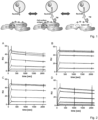
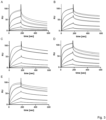
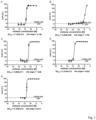
- CD123-binding TMs The functionality of the CD123-binding TMs can be confirmed in binding assays to soluble recombinant CD123 ( Fig. 2 and 3 and Tab. 1 ) using surface plasmon resonance measurements.
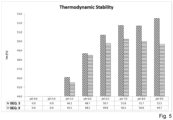
- thermodynamic stability of two targeting modules according to the invention was assessed by melting point analysis ( Fig. 5 ).
- a thermal shift assay in different buffers in a pH range from pH 4.0 to 9.0 was used to determine the protein melting point of the targeting module according to SEQ ID No. 5 and SEQ ID No. 9.
- colloidal stability of proteins correlate with the thermodynamic stability and allows comparative predictability of long term stability.
- the RevCAR comprises IL-2LP (modified human IL-2 leader peptide), RCE (RevCAR epitope, also tag), G4S1 (glycine-serine linker), ECD (extracellular domain), TMD (transmembrane domain), ICD (intracellular domain).
- the transfer of the vector can be performed by electroporation or transfection of nucleic acids or the help of viral vector systems like adeno-, adeno-associated, retro-, foamy- or lentiviral viral gene transfer.
- the lentiviral gene transfer is applied for stable expression of RevCARs in immune cells by first constructing a lentiviral vector encoding for a selected RevCAR.
- the lentiviral vector is pLVX-EF1alpha UniCAR 28/ ⁇ (Clontech, Takara Bio Group), in which the lentiviral parts of the vector are derived from the human immunodeficiency virus (HIV) and the MSC/IRES/ZxGreenl portion was replaced by the RevCAR construct.
- the lentiviral particles are produced by transient transfection of human embryonal kidney (HEK) 293T (ACC 635) cells with the RevCAR encoding lentiviral vector plasmid and cotransfection with a group specific antigen (gag) and Polymerase (pol) encoding plasmid (psPAX2) plus a plasmid encoding for an envelope (pMD2.G).
- the packaging plasmid expresses Gag and Pol protein of HIV-1.
- the plasmid MD2.G encodes the glycoprotein of the vesicular stomatitis virus (VSV-G).
- VSV-G protein is used to lentiviral vectors to transduce a broad range of mammalian cells.
- PBMC peripheral blood mononuclear cells
- isolated T cells are activated with mab specific for the CD3 complex, e.g. clone OKT3 or UCHT1, either given in solution or coated to plastic cell culture dishes or magnetic beads or a biodegradable polymer matrix.
- Activation of PBMC or isolated T cells is further enhanced by stimulating costimulatory pathways with mabs or ligands specific for CD27, CD28, CD134 or CD137 either alone or in combinations coated to plastic cell culture dishes or magnetic beads or a biodegradable polymer matrix and the supply with exogenous recombinant cytokines like interleukin (IL)-2, IL-7, IL-12, IL-15 and IL-21.
- IL interleukin
- Concentrated or non-concentrated virus particles are added to PBMC or T cell cultures 24 h to 96 h after initial administration of activating CD3 specific antibodies and/or antibodies specific for costimulatory receptors CD27, CD28, CD134 or CD137 and/or recombinant cytokines as single or multiple doses.
- T cell electroporation, transduction and expansion may be performed in open cell culture systems by manual handling or in closed partially or fully automated systems.
- Stable transduction of T cells may be determined by flow cytometry after staining with tag-containing molecules for surface expression of RevCARs or mabs directed against a fourth domain of RevCARs from day 3 onwards after the final administration of virus supernatant.
- RevCAR transduced T cells can be propagated in vitro by culturing them under the supply of recombinant cytokines and activating anti-CD3 mabs.
- RevCAR harbors the optional fourth domain, a peptide sequence forming a linear epitope for a mab
- immune cells genetically modified to express RevCARs can be specifically propagated in vitro by coating a mab or antibody fragments thereof binding to the fourth RevCAR domain to the surface of culture dishes or to beads of any kind or a biodegradable polymer matrix, which are added to the cell culture at a defined ratio.
- the binding of surface-coated mabs to the RevCAR peptide domain induces cross-linkage of cell-surface expressed RevCARs and formation of an immune synapse, which leads to the activation of signal pathways specifically triggered by the signal domain of the RevCAR.
- this may lead to enhance proliferation and sustained resistance against activation-induced cell death of the RevCAR-carrying immune cells and therefore enrichment of RevCAR genetically modified immune cells in a mixed population.
- the optional fourth domain a peptide sequence forming a linear epitope for a mab
- the optional fourth domain can be further utilized to enrich and purify RevCAR-expressing immune cells from mixed populations. Enrichment and purification are performed with the help of a mab or antibody fragment thereof binding to the fourth RevCAR domain to either mark RevCAR-expressing cells for cell sorting or to transiently link the RevCAR expressing immune cell to small particles, which can be utilized for cell isolation.
- RevCAR-engrafted immune cells are incubated with the mab recognizing the fourth domain.
- magnetic beads are added, which are conjugated with antibodies or fragments thereof directed against the species- and isotype-specific heavy and light chains of the mab binding to the optional fourth domain.
- RevCAR-expressing immune cells and magnetic beads are linked and are trapped and separated from other immune cells in a magnetic field.
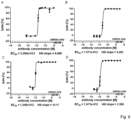
- the potency of CD123-binding TMs to induce a tumor cell elimination by RevCAR-T cells was tested using a suspension cell based co-cultivation assay with the AML cell line Molm-13 ( Fig. 6 ) and the AML cell line Oci-AML3 ( Fig. 7 ) in the presence of variable concentrations of the targeting module.
- Switchable CAR-T cells were incubated with the target cells at a E:T ratio of 2:1 in the presence of various TM concentrations for 48 h.
- CD123-positive target cells the human AML cell line Molm-13 ( Fig. 6 ) or Oci-AML3 ( Fig. 7 ), respectively, was used which was stained with efluor prior setup.
- Target cells were quantified by flow cytometry and lysis was calculated normalizing the cell count of each sample to a control sample where only tumor cells were plated. Data were fitted with a four-parameter model with a variable slope for sigmoidal curves. The calculated EC 50 value can be interpreted as a representative value for the TM potency against these tumor cells.
Landscapes
- Health & Medical Sciences (AREA)
- Chemical & Material Sciences (AREA)
- General Health & Medical Sciences (AREA)
- Life Sciences & Earth Sciences (AREA)
- Organic Chemistry (AREA)
- Immunology (AREA)
- Biochemistry (AREA)
- Veterinary Medicine (AREA)
- Epidemiology (AREA)
- Animal Behavior & Ethology (AREA)
- Biophysics (AREA)
- Genetics & Genomics (AREA)
- Medicinal Chemistry (AREA)
- Molecular Biology (AREA)
- Proteomics, Peptides & Aminoacids (AREA)
- Public Health (AREA)
- Peptides Or Proteins (AREA)
- Micro-Organisms Or Cultivation Processes Thereof (AREA)
Priority Applications (8)
| Application Number | Priority Date | Filing Date | Title |
|---|---|---|---|
| EP22180805.8A EP4296281A1 (de) | 2022-06-23 | 2022-06-23 | Targeting-module gegen cd123 und einen tag zur verwendung in einem verfahren zur stimulation einer universellen chimären antigenrezeptorvermittelten reaktion bei einem säugetier |
| JP2024575443A JP2025524457A (ja) | 2022-06-23 | 2023-06-23 | 哺乳動物におけるキメラ抗原受容体介在性の免疫応答を刺激するための方法において使用するためのcd123に対する標的化モジュール |
| PCT/US2023/068998 WO2023250489A1 (en) | 2022-06-23 | 2023-06-23 | Targeting modules against cd123 for use in a method for stimulating a chimeric antigen receptor-mediated immune response in a mammal |
| CN202380060615.0A CN119790072A (zh) | 2022-06-23 | 2023-06-23 | 用于刺激哺乳动物的嵌合抗原受体介导的免疫反应的方法中的针对cd123的靶向模块 |
| EP23741575.7A EP4543922A1 (de) | 2022-06-23 | 2023-06-23 | Targeting-module gegen cd123 zur verwendung in einem verfahren zur stimulation einer chimären antigenrezeptorvermittelten immunantwort in einem säugetier |
| CA3258275A CA3258275A1 (en) | 2022-06-23 | 2023-06-23 | Anti-CD123 targeting modules intended for use in a method for stimulating a chimeric antigen receptor-mediated immune response in a mammal |
| AU2023289687A AU2023289687A1 (en) | 2022-06-23 | 2023-06-23 | Targeting modules against cd123 for use in a method for stimulating a chimeric antigen receptor-mediated immune response in a mammal |
| US18/878,321 US20250269025A1 (en) | 2022-06-23 | 2023-06-23 | Targeting modules against cd123 for use in a method for stimulating a chimeric antigen receptor-mediated immune response in a mammal |
Applications Claiming Priority (1)
| Application Number | Priority Date | Filing Date | Title |
|---|---|---|---|
| EP22180805.8A EP4296281A1 (de) | 2022-06-23 | 2022-06-23 | Targeting-module gegen cd123 und einen tag zur verwendung in einem verfahren zur stimulation einer universellen chimären antigenrezeptorvermittelten reaktion bei einem säugetier |
Publications (1)
| Publication Number | Publication Date |
|---|---|
| EP4296281A1 true EP4296281A1 (de) | 2023-12-27 |
Family
ID=82258206
Family Applications (1)
| Application Number | Title | Priority Date | Filing Date |
|---|---|---|---|
| EP22180805.8A Pending EP4296281A1 (de) | 2022-06-23 | 2022-06-23 | Targeting-module gegen cd123 und einen tag zur verwendung in einem verfahren zur stimulation einer universellen chimären antigenrezeptorvermittelten reaktion bei einem säugetier |
Country Status (1)
| Country | Link |
|---|---|
| EP (1) | EP4296281A1 (de) |
Citations (2)
| Publication number | Priority date | Publication date | Assignee | Title |
|---|---|---|---|---|
| EP2990416A1 (de) | 2014-08-29 | 2016-03-02 | GEMoaB Monoclonals GmbH | Universelle, chimäre Antigenrezeptor exprimierende Immunzellen, die auf mehrere unterschiedliche Antigene gerichtet sind, und Verfahren zur Herstellung derselben sowie Verwendung derselben zur Behandlung von Krebs, Infektionen und Autoimmunerkrankungen |
| EP3581200A1 (de) | 2018-06-13 | 2019-12-18 | GEMoaB Monoclonals GmbH | Umgekehrter universeller chimärer antigenrezeptor zur expression von immunzellen zum targeting verschiedenster mehrfachantigene sowie verfahren zur herstellung davon und verwendung davon zur behandlung von krebs, infektionen und autoimmunerkrankungen |
-
2022
- 2022-06-23 EP EP22180805.8A patent/EP4296281A1/de active Pending
Patent Citations (2)
| Publication number | Priority date | Publication date | Assignee | Title |
|---|---|---|---|---|
| EP2990416A1 (de) | 2014-08-29 | 2016-03-02 | GEMoaB Monoclonals GmbH | Universelle, chimäre Antigenrezeptor exprimierende Immunzellen, die auf mehrere unterschiedliche Antigene gerichtet sind, und Verfahren zur Herstellung derselben sowie Verwendung derselben zur Behandlung von Krebs, Infektionen und Autoimmunerkrankungen |
| EP3581200A1 (de) | 2018-06-13 | 2019-12-18 | GEMoaB Monoclonals GmbH | Umgekehrter universeller chimärer antigenrezeptor zur expression von immunzellen zum targeting verschiedenster mehrfachantigene sowie verfahren zur herstellung davon und verwendung davon zur behandlung von krebs, infektionen und autoimmunerkrankungen |
Non-Patent Citations (28)
| Title |
|---|
| BRUDNO JNKOCHENDERFER JN: "Toxicities of chimeric antigen receptor T cells: recognition and management", BLOOD, vol. 127, 2016, pages 3321 - 3330, XP055547499, DOI: 10.1182/blood-2016-04-703751 |
| CARTELLIERI MBACHMANN MFELDMANN ABIPPES CSTAMOVA SWEHNER RTEMME ASCHMITZ M: "Chimeric Antigen Receptor-Engineered T Cells for Immunotherapy of Cancer", J. BIOMED. BIOTECHNOL., 2010 |
| CARTELLIERI MFELDMANN AKORISTKA SARNDT CLOFF SEHNINGER AVON BONIN MBEJESTANI EPEHNINGER GBACHMANN MP: "Switching CAR T cells on and off: a nO e1 modular platform for retargeting of T cells to AML blasts", BLOOD CANCER J, vol. 6, no. 8, 2016, pages e458, XP055532158, DOI: 10.1038/bcj.2016.61 |
| DIANA DAROWSKI ET AL: "Combining the best of two worlds: highly flexible chimeric antigen receptor adaptor molecules (CAR-adaptors) for the recruitment of chimeric antigen receptor T cells", MABS, vol. 11, no. 4, 17 April 2019 (2019-04-17), US, pages 621 - 631, XP055688147, ISSN: 1942-0862, DOI: 10.1080/19420862.2019.1596511 * |
| FEDOROV VDTHEMELI MSADELAIN M: "PD-1- and CTLA-4-based inhibitory chimeric antigen receptors (iCARs) divert off-target immunotherapy responses", SCI. TRANSL. MED., vol. 5, no. 215, 2013, pages 215 - 172, XP055210508, DOI: 10.1126/scitranslmed.3006597 |
| FELDMANN ANJA ET AL: "Versatile chimeric antigen receptor platform for controllable and combinatorial T cell therapy", ONCOIMMUNOLOGY, vol. 9, no. 1, 1 January 2020 (2020-01-01), XP055878973, DOI: 10.1080/2162402X.2020.1785608 * |
| FINNEY HMAKBAR ANLAWSON AD: "Activation of resting human primary T cells with chimeric receptors: costimulation from CD28, inducible costimulator, CD134, and CD137 in series with signals from the TCR zeta chain", J. IMMUNOL., vol. 172, no. 1, 2004, pages 104 - 113, XP002605937 |
| FRIGAULT MJLEE JBASIL MCCARPENITO CMOTOHASHI SSCHOLLER JKAWALEKAR OUGUEDAN SMCGETTIGAN SEPOSEY AD JR: "Identification of chimeric antigen receptors that mediate constitutive or inducible proliferation of T cells", CANCER IMMUNOL. RES., vol. 3, no. 4, 2015, pages 356 - 367, XP055271039, DOI: 10.1158/2326-6066.CIR-14-0186 |
| GADE TPHASSEN WSANTOS EGUNSET GSAUDEMONT AGONG MCBRENTJENS RZHONG XSSTEPHAN MSTEFANSKI J: "Targeted elimination of prostate cancer by genetically directed human T lymphocytes", CANCER RES, vol. 65, no. 19, 2005, pages 9080 - 9088, XP002571428, DOI: 10.1158/0008-5472.CAN-05-0436 |
| GONG MCLATOUCHE JBKRAUSE AHESTON WDWBANDER NHSADELAIN M: "Cancer patient T cells genetically targeted to prostate-specific membrane antigen specifically lyse prostate cancer cells and release cytokines in response to prostate-specific membrane antigen", NEOPLASIA, vol. 1, no. 2, 1999, pages 123 - 127, XP055348359, DOI: 10.1038/sj.neo.7900018 |
| GUEDAN SMADAR ACASADO-MEDRANO VSHAW CEWING ALIU FYOUNG RMJUNE CHPOSEY AD: "Single residue in CD28-costimulated CAR T cells limits long-term persistence and antitumor durability", J CLIN INVEST, 2020, pages 133215 |
| GUEDAN SPOSEY ADSHAW CWING ADA TPATEL PRMCGETTIGAN SECASADO-MEDRANO VKAWALEKAR OUURIBE-HERRANZ M: "Enhancing CAR T cell persistence through ICOS and 4-1 BB costimulation", JCI INSIGHT, vol. 3, no. 1, 2018, pages 96976 |
| HOMBACH AAABKEN H: "Costimulation by chimeric antigen receptors revisited the T cell antitumor response benefits from combined CD28-OX40 signalling", INT. J. CANCER., vol. 129, no. 12, 2011, pages 2935 - 2944, XP055214912, DOI: 10.1002/ijc.25960 |
| HOMBACH ASENT DSCHNEIDER CHEUSER CKOCH DPOHL CSELIGER BABKEN H: "T-cell activation by recombinant receptors: CD28 costimulation is required for interleukin 2 secretion and receptor-mediated T-cell proliferation but does not affect receptor-mediated target cell lysis", CANCER RES, vol. 61, no. 5, 2001, pages 1976 - 1982, XP055472191 |
| KAGOYA YTANAKA SGUO TANCZUROWSKI MWANG CHSASO KBUTLER MOMINDEN MDHIRANO N: "A novel chimeric antigen receptor containing a JAK-STAT signaling domain mediates superior antitumor effects", NAT MED, vol. 24, no. 3, 2018, pages 352 - 359, XP055479221, DOI: 10.1038/nm.4478 |
| KERSHAW MHWESTWOOD JAPARKER LLWANG GESHHAR ZMAVROUKAKIS SAWHITE DEWUNDERLICH JRCANEVARI SROGERS-FREEZER L: "A phase I study on adoptive immunotherapy using gene-modified T cells for ovarian cancer", CLIN. CANCER RES., vol. 12, no. 20, 2006, pages 6106 - 6115, XP055887683, DOI: 10.1158/1078-0432.CCR-06-1183 |
| KITTEL-BOSELLI ENRICO ET AL: "Targeting Acute Myeloid Leukemia Using the RevCAR Platform: A Programmable, Switchable and Combinatorial Strategy", CANCERS, vol. 13, no. 19, 24 September 2021 (2021-09-24), pages 4785, XP093002269, DOI: 10.3390/cancers13194785 * |
| LAMERS CHSLEIJFER SWILLEMSEN RADEBETS RKRUIT WHJGRATAMA JWSTOTER G: "Adoptive immuno-gene therapy of cancer with single chain antibody [scFv(lg)] gene modified T lymphocytes", J. BIOL. REGUL. HOMEOST. AGENTS., vol. 18, no. 2, 2004, pages 134 - 140 |
| M CARTELLIERI ET AL: "Switching CAR T cells on and off: a novel modular platform for retargeting of T cells to AML blasts", BLOOD CANCER JOURNAL, vol. 6, no. 8, 1 August 2016 (2016-08-01), pages e458 - e458, XP055532158, DOI: 10.1038/bcj.2016.61 * |
| MILONE MCFISH JDCARPENITO CCARROLL RGBINDER GKTEACHEY DSAMANTA MLAKHAL MGLOSS BDANET-DESNOYERS G: "Chimeric receptors containing CD137 signal transduction domains mediate enhanced survival of T cells and increased antileukemic efficacy in vivo", MOL. THER., vol. 17, no. 8, 2009, pages 1453 - 1464 |
| MORGAN RAYANG JCKITANO MDUDLEY MELAURENCOT CMROSENBERG SA: "Case Report of a Serious Adverse Event Following the Administration of T Cells Transduced With a Chimeric Antigen Receptor Recognizing ERBB2", MOL. THER., vol. 18, 2010, pages 843 - 851, XP055023624, DOI: 10.1038/mt.2010.24 |
| PINTHUS JHWAKS TKAUFMAN-FRANCIS KSCHINDLER DGHARMELIN AKANETY HRAMON JESHHAR Z: "Immuno-gene therapy of established prostate tumors using chimeric receptor-redirected human lymphocytes", CANCER RES, vol. 63, no. 10, 2003, pages 2470 - 2476 |
| SOTILLO EBARRETT DMBLACK KBAGASHEV AOLDRIDGE DWU GSUSSMAN RLANAUZE CRUELLA MGAZZARA MR: "Convergence of Acquired Mutations and Alternative Splicing of CD19 Enables Resistance to CART-19 Immunotherapy", CANCER DISCOV, vol. 5, 2015, pages 1282 - 1295, XP055376174, DOI: 10.1158/2159-8290.CD-15-1020 |
| TITOV APETUKHOV ASTALIAROVA AMOTORIN DBULATOV ESHUVALOV OSOOND SMPIACENTINI MMELINO GZARITSKEY A: "The biological basis and clinical symptoms of CAR-T therapy-associated toxicites", CELL DEATH DIS, vol. 9, 2018, pages 897, XP055541213, DOI: 10.1038/s41419-018-0918-x |
| TOPFER KCARTELLIERI MMICHEN SWIEDEMUTH RMULLER NLINDEMANN DBACHMANN MFUSSEL MSCHACKERT GTEMME A: "DAP12-based activating chimeric antigen receptor for NK cell tumor immunotherapy", J. IMMUNOL., vol. 194, no. 7, 2015, pages 3201 - 3212, XP055439156, DOI: 10.4049/jimmunol.1400330 |
| WANG JJENSEN MLIN YSUI XCHEN ELINDGREN CGTILL BRAUBITSCHEK AFORMAN SJQIAN X: "Optimizing adoptive polyclonal T cell immunotherapy of lymphomas, using a chimeric T cell receptor possessing CE28 and CD137 costimulatory domains", HUM. GENE THER., vol. 18, no. 8, 2007, pages 712 - 725, XP002605938, DOI: 10.1089/HUM.2007.028 |
| ZHANG TLEMOI BASENTMAN CL: "Chimeric NK-receptor-bearing T cells mediate antitumor immunotherapy", BLOOD, vol. 106, no. 5, 2005, pages 1544 - 1551, XP003000079, DOI: 10.1182/blood-2004-11-4365 |
| ZHAO YWANG QJYANG SKOCHENDERFER JNZHENG ZZHONG XSADELAIN MESHHAR ZROSENBERG SAMORGAN RA: "A herceptin-based chimeric antigen receptor with modified signaling domains leads to enhanced survival of transduced T lymphocytes and antitumor activity", J. IMMUNOL., vol. 183, no. 9, 2009, pages 5563 - 5574, XP055081967, DOI: 10.4049/jimmunol.0900447 |
Similar Documents
| Publication | Publication Date | Title |
|---|---|---|
| AU2019286554B2 (en) | Reversed universal chimeric antigen receptor expressing immune cells for targeting of diverse multiple antigens and method of manufacturing the same and use of the same for treatment of cancer, infections and autoimmune disorders | |
| CA2953276C (en) | Universal chimeric antigen receptor expressing immune cells for targeting of diverse multiple antigens and method of manufacturing the same and use of the same for treatment of cancer, infections and autoimmune disorders | |
| US20230183351A1 (en) | A targeting module comprising pd-l1 and/or pd-l2 for use in a method for stimulating a chimeric antigen receptor mediated immune response in a mammal | |
| US20250302875A1 (en) | TARGETING MODULES AGAINST IL13R-alpha-2 AND/OR HER2 FOR USE IN A METHOD FOR STIMULATING A CHIMERIC ANTIGEN RECEPTOR-MEDIATED IMMUNE RESPONSE IN A MAMMAL | |
| EP4296281A1 (de) | Targeting-module gegen cd123 und einen tag zur verwendung in einem verfahren zur stimulation einer universellen chimären antigenrezeptorvermittelten reaktion bei einem säugetier | |
| EP4566619A1 (de) | Targeting-module gegen cd19 und cd20 zur verwendung in einem verfahren zur stimulation einer umgekehrten chimären antigenrezeptorvermittelten immunantwort in einem säugetier | |
| EP4566620A1 (de) | Schaltbare universelle chimäre antigenrezeptoren und deren verwendung | |
| US20250269025A1 (en) | Targeting modules against cd123 for use in a method for stimulating a chimeric antigen receptor-mediated immune response in a mammal | |
| EP4342907A1 (de) | Schaltbare chimäre antigenrezeptoren und deren verwendung | |
| EP4382119A1 (de) | Kit zur verwendung bei der behandlung von hämatologischem krebs | |
| AU2024393901A1 (en) | Targeting modules against cd19 and cd20 for use in a method for stimulating a reversed | |
| HK40125822A (en) | Targeting modules against cd19 and cd20 for use in a method for stimulating a reversed chimeric antigen receptor-mediated immune response in a mammal | |
| HK40125821A (en) | Switchable universal chimeric antigen receptors and their use | |
| AU2023389158A1 (en) | A kit for use in the treatment of hematological cancer | |
| RU2824391C2 (ru) | Иммунные клетки, экспрессирующие обратный универсальный химерный антигенный рецептор, для нацеливания на различные многочисленные антигены и способ их получения и применения для лечения рака, инфекций и аутоиммунных заболеваний | |
| HK40068149A (en) | Universal chimeric antigen receptor expressing immune cells and method of manufacturing the same and the therapeutic use of the same |
Legal Events
| Date | Code | Title | Description |
|---|---|---|---|
| PUAI | Public reference made under article 153(3) epc to a published international application that has entered the european phase |
Free format text: ORIGINAL CODE: 0009012 |
|
| STAA | Information on the status of an ep patent application or granted ep patent |
Free format text: STATUS: THE APPLICATION HAS BEEN PUBLISHED |
|
| AK | Designated contracting states |
Kind code of ref document: A1 Designated state(s): AL AT BE BG CH CY CZ DE DK EE ES FI FR GB GR HR HU IE IS IT LI LT LU LV MC MK MT NL NO PL PT RO RS SE SI SK SM TR |
|
| STAA | Information on the status of an ep patent application or granted ep patent |
Free format text: STATUS: REQUEST FOR EXAMINATION WAS MADE |
|
| 17P | Request for examination filed |
Effective date: 20240626 |
|
| RBV | Designated contracting states (corrected) |
Designated state(s): AL AT BE BG CH CY CZ DE DK EE ES FI FR GB GR HR HU IE IS IT LI LT LU LV MC MK MT NL NO PL PT RO RS SE SI SK SM TR |
|
| RAP3 | Party data changed (applicant data changed or rights of an application transferred) |
Owner name: AVENCELL THERAPEUTICS INC. |