EP4297460A1 - Procédé et appareil de collecte d'identité - Google Patents
Procédé et appareil de collecte d'identité Download PDFInfo
- Publication number
- EP4297460A1 EP4297460A1 EP23179437.1A EP23179437A EP4297460A1 EP 4297460 A1 EP4297460 A1 EP 4297460A1 EP 23179437 A EP23179437 A EP 23179437A EP 4297460 A1 EP4297460 A1 EP 4297460A1
- Authority
- EP
- European Patent Office
- Prior art keywords
- mobile device
- identity
- cell
- registration
- receiving
- Prior art date
- Legal status (The legal status is an assumption and is not a legal conclusion. Google has not performed a legal analysis and makes no representation as to the accuracy of the status listed.)
- Pending
Links
Images




Classifications
-
- H—ELECTRICITY
- H04—ELECTRIC COMMUNICATION TECHNIQUE
- H04W—WIRELESS COMMUNICATION NETWORKS
- H04W8/00—Network data management
- H04W8/18—Processing of user or subscriber data, e.g. subscribed services, user preferences or user profiles; Transfer of user or subscriber data
- H04W8/20—Transfer of user or subscriber data
- H04W8/205—Transfer to or from user equipment or user record carrier
-
- H—ELECTRICITY
- H04—ELECTRIC COMMUNICATION TECHNIQUE
- H04W—WIRELESS COMMUNICATION NETWORKS
- H04W12/00—Security arrangements; Authentication; Protecting privacy or anonymity
- H04W12/80—Arrangements enabling lawful interception [LI]
-
- H—ELECTRICITY
- H04—ELECTRIC COMMUNICATION TECHNIQUE
- H04W—WIRELESS COMMUNICATION NETWORKS
- H04W60/00—Affiliation to network, e.g. registration; Terminating affiliation with the network, e.g. de-registration
-
- H—ELECTRICITY
- H04—ELECTRIC COMMUNICATION TECHNIQUE
- H04W—WIRELESS COMMUNICATION NETWORKS
- H04W76/00—Connection management
- H04W76/30—Connection release
-
- H—ELECTRICITY
- H04—ELECTRIC COMMUNICATION TECHNIQUE
- H04W—WIRELESS COMMUNICATION NETWORKS
- H04W12/00—Security arrangements; Authentication; Protecting privacy or anonymity
- H04W12/03—Protecting confidentiality, e.g. by encryption
- H04W12/037—Protecting confidentiality, e.g. by encryption of the control plane, e.g. signalling traffic
-
- H—ELECTRICITY
- H04—ELECTRIC COMMUNICATION TECHNIQUE
- H04W—WIRELESS COMMUNICATION NETWORKS
- H04W12/00—Security arrangements; Authentication; Protecting privacy or anonymity
- H04W12/60—Context-dependent security
- H04W12/69—Identity-dependent
- H04W12/72—Subscriber identity
Definitions
- the invention relates generally to collecting the identity of a subscriber terminal in use and specifically to an apparatus, and a method for performing the identity collection.
- Collection of identities of cellular mobile devices is useful, when authorities need to locate a lost person who carries a cellular mobile phone or when they need to collect evidence of cellular device communication, for example. This is typically achieved using fake cellular base stations or Communication intelligence (Comint) base stations to which the cellular mobile devices connect. These fake base stations or ComInt stations may be used to detect a subscriber identity. This procedure may be called International Mobile Subscriber Identity (IMSI) catching. However, in recent mobile phone systems, the subscriber identity is encrypted, whereby traditional detection methods do not work.
- IMSI International Mobile Subscriber Identity
- the present invention seeks to provide an improved method and an improved apparatus for collecting identities of cellular mobile devices.
- a method comprising steps of: forming a communication intelligence cell for carrying out uplink and downlink communication with cellular mobile devices, the cell having a physical cell identity and a tracking area code unused by neighboring real cells of a cellular network operator; connecting the cell to an identity query interface associated with the cellular network operator; receiving one or more registration requests form a mobile device for collecting an identity of the mobile device using the identity query interface; and closing a radio connection to the mobile device subsequent to the one or more registration requests.
- the receiving comprises receiving a first registration request from the mobile device, with an encrypted subscriber identity of the mobile device sent from the mobile device.
- the steps further include subsequent to the first registration request and the radio connection being closed, receiving a second registration request from the mobile device with a temporary identity of the mobile device sent from the mobile device; transmitting an identity query with the temporary identity of the mobile device to the identity query interface; and receiving permanent identity of the mobile device from the query interface.
- the forming includes providing a downlink radio channel having a power level higher than downlink radio channel power level utilized in neighboring cells of the cellular network operator.
- the closing includes sending a first registration reject to the mobile device with an error code indicating network error after receiving an encrypted subscriber identity of the mobile device.
- the steps further include: sending a second registration reject to the mobile device with an error code indicating "no suitable cells in tracking area" after receiving permanent identity of the mobile device.
- the steps further include: storing time stamp of a first registration request of the mobile device to database; transmitting Radio Resource Control User Equipment capability request to the mobile device after a first and second registration request; receiving RRC UE capability information from the mobile device; comparing received RRC UE capability request messages after receiving the permanent identity of the mobile device; indicating potential matching identity of concealed identity and the permanent identity if a time period between the first and the second request has not exceeded.
- the steps further include: in response to the identity identifier being an encrypted subscriber identity, storing said identity identifier in a database of said communication intelligence cell; and in response to the identity identifier being a temporary identity, transmitting an identity query with the temporary identity of the mobile device to the identity query interface of the cellular network operator, receive a permanent identity of the mobile device from the query interface and store said temporary identity and said permanent identity in said database.
- the closing includes: transmitting, after receiving a registration request from the mobile device, a registration rejection to the mobile device thereby closing radio connection to the mobile device.
- Figures illustrate various embodiments of apparatuses, they are simplified block diagrams that only show some structures and functional entities.
- the connections shown in these Figures are logical connections; the actual physical connections may be different.
- Interfaces between the various elements may be implemented with suitable interface technologies, such as a message interface, a method interface, a sub-routine call interface, a block interface, or any hardware/software means enabling communication between functional subunits.
- suitable interface technologies such as a message interface, a method interface, a sub-routine call interface, a block interface, or any hardware/software means enabling communication between functional subunits.
- the described apparatuses may also comprise other functions and structures. It should be appreciated that details of some functions, structures, and the protocols used for communication are irrelevant to the actual invention.
- 5G or New Radio, or NR is one new communication systems in development by 3GPP (3rd Generation Partnership Project (3GPP)).
- 3GPP 3rd Generation Partnership Project
- 5G or NR operates in connection with 4G, in a non-standalone (NSA) environment, but later on standalone (SA) 5G or NR networks will emerge on the market.
- Each cellular mobile device, user terminal (or user equipment, UE) hardware has a unique identifier.
- the identifier may be denoted as the permanent equipment identifier, PEI, or international mobile equipment identifier, IMEI.
- a subscription is bound to a physical Universal Subscriber Identity Module, USIM, card and the subscription can be identified by a unique subscription permanent identifier, SUPI, denoted also as an international mobile subscriber identity, IMSI.
- SUPI consists of the mobile country code (MCC), mobile network code (MNC), and the mobile subscription identification number (MSIN).
- An eSIM is a digital USIM that allows the owner to activate a subscription to a communication system without having to use a physical USIM card.
- GUTI Globally Unique Temporary Identifier
- 5G-GUTI Unlike a SUPI, a GUTI is not permanent and is changed into a new value whenever generated.
- a 5G S-Temporary Mobile Subscriber Identity (5G-S-TMSI) is a shortened version of the 5G-GUTI. It may be used to increase efficiency in some radio signaling procedures such as Paging and Service Request, for example.
- ECIES Elliptic Curve Integrated Encryption Scheme
- the SUCI is a one-time use, encrypted subscription identifier.
- User Equipment calculates a fresh SUCI from the SUPI using the Home Network Public Key.
- the encrypted SUCI prevents eavesdropping of the mobile phone identity from the radio interface between the cellular mobile device and the 5G New Radio (NR) base station.
- NR 5G New Radio
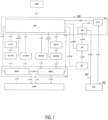
- the LI interfaces of the 3GPP technical specification 33.128 v17.5.0 (2022-06) illustrated in Fig. 1 are functionalities provided by the cellular network operators.
- the LI Administration Function (ADMF) 100 comprises a Lawful Interception Provisioning Function (LIPF), an Identity Query Function (IQF) and a Lawful Interception Provisioning Function (LIPF).
- the Identity Query Function (IQF) is connected to the Law Enforcement Agency (LEA) 102 with the Lawful Interception Handover Interface Query Response (LI_HIQR) interface 104.
- LEA teams can use the LI_HIQR interface for sending queries about 5G identifiers (5G-GUTI, SUCI, 5G-S-TMSI, SUPI) used by cellular phones connected to the 5G SA core network.
- the interface is based on an internal network database which is updated during Non-Access Stratum (NAS) registration procedures.
- NAS Non-Access Stratum
- Interfaces LI-X1, LI-X2 and LI-X3 are Lawful Interception Internal Interfaces
- interfaces LI_HI1, LI_HI2 and LI_HI3 are LI_Handover Interfaces
- Interfaces LI_XEM1 and LI_XER relate to event management and LI_XQR relates to Internal Interface Query Response.
- CC denotes Content of Communication
- POI denotes Point Of Interception
- TF denotes Triggering Function
- MDF denotes Mediation and Delivery Function.
- LI is performed utilizing so called fake base stations or Communication intelligence (Comint) base stations to which the cellular mobile devices connect.
- Communication intelligence Comint
- Fig. 2 shows an example of the operation area of a network operator where a communication intelligence cell 200 created by a fake or Comint base station is within the area covered by cells 202, 204, 206, 208, 210, 212, 214, 216 created by base stations of the network operator.
- the fake base station is configured to utilize the same radio technology as the cells of the network operator.
- Cellular mobile devices in the area see the cell provided by the fake base station as another one of the operator cells.
- the cell of the fake base station is not a part of the cellular operator network.
- the cells created by the real cellular base stations 202 to 216 support a given base station channel bandwidth defined by the network operator. Further, the operator network provides cells 202 to 216 in the operation area with a downlink radio channel power level.
- the fake base station provides a downlink radio channel, the power level of the downlink radio channel being higher than a downlink radio channel power level utilized in the neighboring cells of the cellular network operator. This makes the fake base station attractive for the mobile devices to connect with.
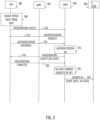
- Fig. 3 illustrates an example of how the operator network updates the LI_HIQR database when a 5G SA mobile device registers to the 5G SA network using SUCI.
- the mobile device 300 is switched on and it creates 308 a SUCI from its SUPI.
- the mobile device 300 then transmits a registration message 310 to core network 304.
- the core network transmits an authentication request 312 to the mobile device which responds with an authentication response 314.
- the core accepts 316 the authentication and transmits a registration accept with 5G-GUTI.
- the mobile device transmits a registration complete message 320 to the core.
- the 5G-GUTI is now the current identity 322 of the mobile device and it is registered 324 using LI_HIQR interface 306 to Identifier Query Function (IQF).
- IQF Identifier Query Function
- Fig. 4 illustrates an example of a situation where LEA uses a Comlnt 5G SA base station gNB 400 for collecting 5G identifiers of 5G SA mobile devices.
- Comint Core 402 When LEA uses Comint 5G SA base station 400, Comint Core 402 receives a 5G-GUTI value from a mobile device 300 in the NAS Registration Request 404. Comlnt Core 402 transmits a query 406, 408 with the 5G-GUTI value via the LI_HIQR interface 306 to IQF.
- a LI_HIQR proxy 403 is used, which enables connecting to more than one cellular network operator.
- the IQF searches the internal database of LI_HIQR using the 5G-GUTI and finds the corresponding data.
- the IQF returns 410, 412 the SUPI, SUCI and 5G-S-TMSI information related to the 5G-GUTI via LI_HIQR interface to the Comint gNB/Core.
- the Comint gNB can now store the SUPI to its own database for future processing.
- the mobile device is switched off 414 and later on switched back on 416, these is no 5G-GUTI in the SIM memory. Thus, a new registration is required by the UE 300.
- the UE 300 will issue a fresh NAS Registration Request 420 with a different/unique SUCI 418.
- Comlnt gNB/Core receives a SUCI value encrypted using for example ECIES Scheme A or Scheme B as the 5G identifier from the phone in the NAS Registration Request 420, it can send a query 422, 424 with the SUCI value via LI_HIQR interface to IQF.
- IQF searches 426 the LI_HIQR database using the SUCI.
- Fig. 5 is a flowchart illustrating an embodiment. The flowchart illustrates the operation of an apparatus which may be a fake or a ComInt base station or a part of a fake or a ComInt base station.
- the apparatus is configured to form a communication intelligence cell for carrying out uplink and downlink communication with cellular mobile devices, the cell having a physical cell identity and a tracking area code unused by neighboring real cells of a cellular network operator.
- the communication system the neighboring real cells belong to a New Radio (NR) or 5G communicating system.
- NR New Radio
- the apparatus is configured to connect the cell to the identity query interface (IQI) of the cellular network operator.
- IQI identity query interface
- the cell can use the LI_HIQR interface to access the Identifier Query Function (IQF).
- the apparatus is configured to provide a downlink radio channel in the cell.
- the apparatus is configured to provide a downlink radio channel having a power level higher than downlink radio channel power level utilized in neighboring cells of the cellular network operator.
- the higher power level is measured by the mobile devices in the area.
- mobile devices tend to make a handover to the cell which provides a higher downlink radio channel power level than the other cells in the area.
- the apparatus may be located closer to the mobile devices to be monitored than the base stations of the cellular network operator. This makes the power level of the closer cell greater than the power level of cells located farther away.
- the apparatus is configured to receive a first registration request from a mobile device.
- the apparatus is configured to receive an encrypted subscriber identity of the cellular mobile device sent from the mobile device.
- step 510 the apparatus is configured to close radio connection to the mobile device.
- the apparatus may be configured to transmit a first registration reject to the mobile device with an error code indicating network error after receiving an encrypted subscriber identity of the mobile device and close radio connection to the mobile device based on the first registration reject.
- the rejection prevents the mobile device from staying connected to the ComInt or fake base station.
- the apparatus may be configured to reduce power level of the cell for a time period or switch off the cell for a given time period or switch the cell to "barred" for a given time period after sending the first registration reject to the mobile device.
- the apparatus enables the Comlnt cell again. Again, the goal is to disconnect the mobile device from the Comlnt or fake base station.
- the mobile device When the mobile device is disconnected from the Comint gNB, the mobile device may start initiating connection to a neighboring real cell of the cellular network operator of the area where the mobile device is located.
- the cellular network operator allocates a 5G-GUTI for the mobile device.
- the mobile device receives the 5G-GUTI, it stores the value to its SIM card. From the mobile device's point of view, the network has operated as expected and there is no indication to the user that it transitionally connected to a Comint or fake base station.
- the apparatus is configured to receive a second registration request from a mobile device.
- the mobile device When the mobile device notices that the ComInt cell with a higher transmission power than the real cells has become available again, it makes another connection request to the Comlnt cell this time using the temporary identity 5G-GUTI.
- the apparatus is configured to receive the temporary identity of the cellular mobile device sent from the mobile device.
- the apparatus is configured to transmit identity query with the temporary identity of the mobile device to the identity query interface of the cellular network operator.
- the apparatus can use LI_HIQR interface to access Identifier Query Function (IQF).
- IQF Identifier Query Function
- the apparatus is configured to receive permanent identity SUPI of the mobile device from the query interface.
- the apparatus can then store this identity information to its own database and associate all identity information about this mobile device.
- step 520 the apparatus is configured to close radio connection to the mobile device.
- the apparatus is configured to store a time stamp of the first registration request of the mobile device to the database.
- the apparatus may further be configured to transmit a Radio Resource Connection, RRC, UE capability request to the mobile device after the first and second registration request.
- RRC Radio Resource Connection
- the apparatus receives an RRC UE capability information from the mobile device, it is configured to compare the received RRC UE capability request messages after receiving the permanent identity of the mobile device and indicate potential matching identity of concealed identity and the permanent identity if a time period between the first and the second request has not exceeded.
- the subscriber identity Once the subscriber identity is collected, it can be used for monitoring and analytics and/or communicated to a separate system (not shown) for further processing.
- the fake base station may transmit a reject and disconnect message to the cellular mobile device.
- the behavior of the cellular mobile device depends on the parameters of the reject and disconnect message, operator specific configuration on the SIM card/eSIM of the device and implementation of the cellular mobile device.
- the cellular mobile device can try to connect to another cellular base station of the same or different cellular radio technology or try to connect to the fake base station again.
- the fake base station may be configured to return to a standby state where it is awaiting to receive connection requests from mobile devices.
- multiple cellular mobile devices can be connected to the fake base station at once.
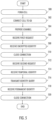
- Fig. 6A is a flowchart illustrating an embodiment.
- the flowchart illustrates the operation of an apparatus which may be a fake or a ComInt base station or a part of a fake or a Comlnt base station.
- the apparatus is configured to form a communication intelligence cell for carrying out uplink and downlink communication with cellular mobile devices, the cell having a physical cell identity and a tracking area code unused by neighboring real cells of a cellular network operator.
- the communication system the neighboring real cells belong to a New Radio (NR) or 5G communicating system.
- NR New Radio
- the apparatus is configured to connect the cell to the identity query interface (IQI) of the cellular network operator.
- IQI identity query interface
- the cell can use LI_HIQR interface to access Identifier Query Function (IQF).
- the apparatus is configured to provide a downlink radio channel in the cell.
- the apparatus is configured to provide a downlink radio channel having a power level higher than downlink radio channel power level utilized in neighboring cells of the cellular network operator.
- the apparatus may be located closer to the mobile devices to be monitored than the base stations of the cellular network.
- the apparatus is configured to receive a registration request from a mobile device.
- the apparatus is configured to receive, in the registration request, an identity identifier of the mobile device.
- the apparatus is configured to determine if the identity identifier is an encrypted subscriber identity or a temporary identity.
- the apparatus is configured to, in step 606, store the identity identifier in a database of the communication intelligence cell. The process ends.
- the apparatus is configured to, in step 608, transmit an identity query with the temporary identity of the mobile device to the identity query interface of the cellular network operator.
- the apparatus can use LI_HIQR interface to access Identifier Query Function (IQF).
- IQF Identifier Query Function
- the apparatus is configured to receive a permanent identity of the mobile device from the query interface and In step 612, the apparatus is configured to store the temporary identity and the permanent identity in the database.
- the apparatus in step 614, is configured to transmit, after receiving a registration request from a mobile device, a registration rejection to the cellular mobile device thereby closing radio connection to the cellular mobile device.
- Fig. 6B is a flowchart illustrating an embodiment. The flowchart illustrates the operation of an apparatus which may be a fake or a ComInt base station or a part of a fake or a ComInt base station.
- the first steps 500 - 602 in the example of Fig. 6B are the same as in the example of Fig. 6A and they are not repeated here.
- the apparatus is configured to store a time stamp for the registration request of the mobile device to the database.
- the apparatus is configured to transmit an RRC UE capability request to the mobile device after the registration request.
- the apparatus in step 620, is configured to receive RRC UE capability information from the mobile device.
- the apparatus is configured to store the timestamp of the Registration Request and content of the RRC UE Capability Information to its own database.
- the apparatus may close connection to the mobile device for example by transmitting a NAS Registration Reject message with error code "Network error" to the mobile phone and disconnect the radio connection to the mobile device.
- the apparatus can use other NAS error codes which cause the phone to disconnect from the cell for a moment.
- the apparatus may reduce the power level of the cell for short time (for example five seconds) or the cell of Comlnt gNB is switched off for a short time or cell status is changed to "barred" for a short time.
- the apparatus is configured to, in step 622, compare the received RRC UE capability information to the permanent identity of the mobile device.
- the apparatus is configured to indicate potential matching identity of encrypted identity and the permanent identity if a timestamp of the registration request and storing in the database indicates that a predetermined period of time has not exceeded.
- the apparatus may store the temporary identity and the permanent identity in the database.
- the apparatus indicates that the SUCI and SUPI are potentially matching identities.
- the apparatus can then store this bonified identity information to its own database and associate all identity information about this mobile device.
- Fig. 7 illustrates an example of an apparatus in which some embodiments may be realized.
- the figure shows a block diagram of an apparatus which may be a Com Int or fake base station or a part of a ComInt or fake base station.
- the apparatus is depicted herein as an example illustrating some embodiments. It is apparent to a person skilled in the art that the apparatus may also comprise other functions and/or structures and not all described functions and structures are required. Although the apparatus has been depicted as one entity, different modules and memory may be implemented in one or more physical or logical entities.
- the apparatus comprises a controller or control circuitry 700.
- the controller is realized with a processor or other circuitry performing corresponding actions.
- the apparatus further comprises a transceiver 702 operationally connected to the controller 700, and a memory or identity storage 704 operationally connected to the controller 700.
- the memory 704 may store data.
- identities of cellular mobile devices are stored in the memory.
- the memory may store software executable by the controller or processor 700.
- the memory may be integrated in the controller or processor 700.
- the transceiver 702 may be configured to scan the network 714 maintained by a network operator to obtain information about the network before the ComInt or fake base station 400 is activated.
- the obtained information comprises at least one of radio technology, frequency, bandwidth, subcarrier spacing, physical cell identifier, tracking area code, mobile network code, mobile country code, downlink power level.
- the ComInt or fake base station 400 may broadcast system information 708. It is configured to provide downlink communication 710 and receive uplink communication 712 to/from a cellular mobile device or User Equipment (UE) 300.
- the controller or processor 700 controls the network scanning and the identity collection process using the transceiver 702 and the identity storage 704.
- the controller or processor 700 is also configured to handle cellular protocol messages used in uplink 712 and downlink 710 communications with the cellular mobile device or User Equipment 300.
- the controller 700 and transceiver 702 are configured to form a Comint cell 100 for carrying out uplink and downlink communication with cellular mobile devices, the Comint cell having a physical cell identity and a tracking area code unused by neighboring real cells of a communication system.
- controller 700 and transceiver 702 are configured to provide a downlink radio channel power level on a given continuous channel subset of the indicated channel bandwidth, the power level being higher than downlink radio channel power level utilized in real neighboring real cells.
- controller 700 and transceiver 702 are configured to receive a communication request from a cellular mobile device.
- the controller 700 and transceiver 702 are configured to receive a subscriber identity of the cellular mobile device sent from the cellular mobile device.
- the subscriber identity may be stored in the memory 704.
- the apparatuses or controllers able to perform the above-described steps may be implemented as an electronic digital computer, processing system or a circuitry which may comprise a working memory (random access memory, RAM), a central processing unit (CPU), and a system clock.
- the CPU may comprise a set of registers, an arithmetic logic unit, and a controller.
- the processing system, controller or the circuitry is controlled by a sequence of program instructions transferred to the CPU from the RAM.
- the controller may contain a number of microinstructions for basic operations. The implementation of microinstructions may vary depending on the CPU design.
- the program instructions may be coded by a programming language, which may be a high-level programming language, such as C, Java, etc., or a low-level programming language, such as a machine language, or an assembler.
- the electronic digital computer may also have an operating system, which may provide system services to a computer program written with the program instructions.
- circuitry refers to all of the following: (a) hardware-only circuit implementations, such as implementations in only analog and/or digital circuitry, and (b) combinations of circuits and software (and/or firmware), such as (as applicable): (i) a combination of processor(s) or (ii) portions of processor(s)/software including digital signal processor(s), software, and memory(ies) that work together to cause an apparatus to perform various functions, and (c) circuits, such as a microprocessor(s) or a portion of a microprocessor(s), that require software or firmware for operation, even if the software or firmware is not physically present.
- circuitry' applies to all uses of this term in this application.
- the term 'circuitry' would also cover an implementation of merely a processor (or multiple processors) or a portion of a processor and its (or their) accompanying software and/or firmware.
- the term 'circuitry' would also cover, for example and if applicable to the particular element, a baseband integrated circuit or applications processor integrated circuit for a mobile phone or a similar integrated circuit in a server, a cellular network device, or another network device.
- An embodiment provides a non-transitory computer program embodied on a distribution medium, comprising program instructions which, when loaded into an electronic apparatus, are configured to control the apparatus to execute the embodiments described above.
- the computer program may be in source code form, object code form, or in some intermediate form, and it may be stored in some sort of carrier, which may be any entity or device capable of carrying the program.
- carrier include a record medium, computer memory, read-only memory, and a software distribution package, for example.
- the computer program may be executed in a single electronic digital computer or it may be distributed amongst several computers.
- the apparatus may also be implemented as one or more integrated circuits, such as application-specific integrated circuits ASIC.
- Other hardware embodiments are also feasible, such as a circuit built of separate logic components.
- a hybrid of these different implementations is also feasible.
Landscapes
- Engineering & Computer Science (AREA)
- Computer Networks & Wireless Communication (AREA)
- Signal Processing (AREA)
- Databases & Information Systems (AREA)
- Technology Law (AREA)
- Computer Security & Cryptography (AREA)
- Mobile Radio Communication Systems (AREA)
Applications Claiming Priority (2)
| Application Number | Priority Date | Filing Date | Title |
|---|---|---|---|
| US202263354777P | 2022-06-23 | 2022-06-23 | |
| US202263416132P | 2022-10-14 | 2022-10-14 |
Publications (1)
| Publication Number | Publication Date |
|---|---|
| EP4297460A1 true EP4297460A1 (fr) | 2023-12-27 |
Family
ID=86862012
Family Applications (1)
| Application Number | Title | Priority Date | Filing Date |
|---|---|---|---|
| EP23179437.1A Pending EP4297460A1 (fr) | 2022-06-23 | 2023-06-15 | Procédé et appareil de collecte d'identité |
Country Status (2)
| Country | Link |
|---|---|
| US (1) | US12457488B2 (fr) |
| EP (1) | EP4297460A1 (fr) |
Citations (4)
| Publication number | Priority date | Publication date | Assignee | Title |
|---|---|---|---|---|
| US20100197305A1 (en) * | 2008-08-08 | 2010-08-05 | Qualcomm Incorporated | Correlating registrations originating from a device |
| US20190364430A1 (en) * | 2018-05-23 | 2019-11-28 | Exfo Oy | Method and arrangement for detecting subscriber identity |
| EP3576366B1 (fr) * | 2018-05-29 | 2021-06-16 | EXFO Oy | Procédé et fausse station de base pour détection de numéro d'identité d'abonnés |
| EP3866544B1 (fr) * | 2020-02-14 | 2022-04-06 | EXFO Oy | Procédé et agencement pour la collecte d'identité |
Family Cites Families (20)
| Publication number | Priority date | Publication date | Assignee | Title |
|---|---|---|---|---|
| EP2220888A4 (fr) | 2007-12-12 | 2015-04-15 | Unwired Planet Internat Ltd | Procédé de détection d'une identité de cellule incorrecte dans des systèmes de communication sans fil |
| US9119064B2 (en) * | 2013-11-20 | 2015-08-25 | At&T Intellectual Property I, L.P. | Method and apparatus for providing broadcast channel encryption to enhance cellular network security |
| EP3070979B1 (fr) | 2013-12-10 | 2018-10-03 | Huawei Technologies Co., Ltd. | Procédé et dispositif de traitement de défaillance dans un réseau partagé d'opérateur |
| EP2945416B1 (fr) | 2014-05-13 | 2018-04-11 | Cellxion Limited | Méthode et appareil pour transmission de données sur une pluralité de réseaux |
| US20170206351A1 (en) * | 2014-07-22 | 2017-07-20 | Viasat, Inc. | Mobile device security monitoring and notification |
| NL2014020B1 (en) * | 2014-12-19 | 2016-10-12 | Ivent Mobile B V | Voice and text data service for mobile subscribers. |
| WO2016179525A1 (fr) * | 2015-05-07 | 2016-11-10 | ZeroDB, Inc. | Base de données à connaissance nulle |
| EP3208990A1 (fr) | 2016-02-16 | 2017-08-23 | EXFO Oy | Station de base de réseau cellulaire |
| EP3258719A1 (fr) * | 2016-06-13 | 2017-12-20 | Gemalto M2M GmbH | Procédé pour faire fonctionner un dispositif de communication sans fil |
| GB201615372D0 (en) * | 2016-09-09 | 2016-10-26 | CellXion Ltd | System and method for restricting access to a mobile communications network |
| US20190349765A1 (en) * | 2017-01-30 | 2019-11-14 | Intel IP Corporation | Fake gnb/enb detection using identity-based authentication and encryption |
| US10492056B2 (en) * | 2017-06-15 | 2019-11-26 | T-Mobile Usa, Inc. | Enhanced mobile subscriber privacy in telecommunications networks |
| EP3639545B1 (fr) * | 2017-06-16 | 2022-06-22 | Motorola Mobility LLC | Rapport d'informations de paramètres surveillés |
| US11044276B2 (en) * | 2017-08-24 | 2021-06-22 | Apple Inc. | Cellular security framework |
| US11265699B2 (en) * | 2018-02-23 | 2022-03-01 | T-Mobile Usa, Inc. | Identifier-based access control in mobile networks |
| WO2021151497A1 (fr) | 2020-01-30 | 2021-08-05 | Telefonaktiebolaget Lm Ericsson (Publ) | Suivi d'une cible dans un réseau de communication sans fil |
| GB2596824B (en) * | 2020-07-07 | 2022-11-30 | CellXion Ltd | Restricting access to a mobile communications network |
| GB2597753A (en) | 2020-08-03 | 2022-02-09 | CellXion Ltd | Establishing a wireless connection with a mobile device |
| GB2596881B (en) | 2020-11-25 | 2022-07-13 | CellXion Ltd | Establishing a wireless connection with a mobile device |
| IL282449B2 (en) * | 2021-04-19 | 2025-11-01 | Cognyte Tech Israel Ltd | System and method for capturing IMSI identifiers in fifth generation networks |
-
2023
- 2023-06-15 EP EP23179437.1A patent/EP4297460A1/fr active Pending
- 2023-06-15 US US18/335,708 patent/US12457488B2/en active Active
Patent Citations (4)
| Publication number | Priority date | Publication date | Assignee | Title |
|---|---|---|---|---|
| US20100197305A1 (en) * | 2008-08-08 | 2010-08-05 | Qualcomm Incorporated | Correlating registrations originating from a device |
| US20190364430A1 (en) * | 2018-05-23 | 2019-11-28 | Exfo Oy | Method and arrangement for detecting subscriber identity |
| EP3576366B1 (fr) * | 2018-05-29 | 2021-06-16 | EXFO Oy | Procédé et fausse station de base pour détection de numéro d'identité d'abonnés |
| EP3866544B1 (fr) * | 2020-02-14 | 2022-04-06 | EXFO Oy | Procédé et agencement pour la collecte d'identité |
Non-Patent Citations (1)
| Title |
|---|
| "3rd Generation Partnership Project; Technical Specification Group Services and System Aspects; Security; Protocol and procedures for Lawful Interception (LI); Stage 3 (Release 17)", 16 June 2022 (2022-06-16), XP052201770, Retrieved from the Internet <URL:https://ftp.3gpp.org/3guInternal/3GPP_ultimate_versions_to_be_transposed/sentToDpc/33128-h50.zip 33128-h50.docx> [retrieved on 20220616] * |
Also Published As
| Publication number | Publication date |
|---|---|
| US12457488B2 (en) | 2025-10-28 |
| US20230422018A1 (en) | 2023-12-28 |
Similar Documents
| Publication | Publication Date | Title |
|---|---|---|
| US11039300B2 (en) | Method for an eUICC embedded into a machine type communication device to trigger the download of a subscription profile | |
| EP3682657B1 (fr) | Procédé d'attribution temporaire d'un abonnement à un conteneur de justificatifs d'identité | |
| Norrman et al. | Protecting IMSI and user privacy in 5G networks | |
| Dabrowski et al. | The messenger shoots back: Network operator based IMSI catcher detection | |
| US10721616B2 (en) | Subscription information download method, related device, and system | |
| EP2661113A1 (fr) | Systèmes et procédés pour identifier des stations de base fausses | |
| EP3566409B1 (fr) | Radiomessagerie dans un système de communication sans fil | |
| EP3358871A1 (fr) | Procédé pour euicc incorporé dans un dispositif de communication de type machine pour déclencher le téléchargement d'un profil d'abonnement | |
| WO2009103621A1 (fr) | Procédés et appareil localisant un serveur d'enregistrement de dispositif dans un réseau sans fil | |
| US7487238B2 (en) | Infection-based monitoring of a party in a communication network | |
| US10820206B2 (en) | Method and fake base station for detecting subscriber identity | |
| US20240422527A1 (en) | Method for managing at least one euicc information set (eis) of a euicc and intermediate buffer proxy | |
| US12457488B2 (en) | Method and apparatus for identity collection | |
| WO2017013127A1 (fr) | Procédé de détection d'accès à distance d'une carte à circuit intégré universelle (uicc) | |
| CA3108647C (fr) | Procédé et agencement pour la collecte d’identité | |
| KR20100064487A (ko) | 아웃 바운드 로밍 시의 이동 통신 단말기 분실 관리 시스템 및 그 관리 방법 | |
| CN111817815A (zh) | 一种室内信号分布式管理系统、方法、介质及设备 | |
| CN117676554A (zh) | 一种隐蔽获取4g网络用户识别码的安全获取方法与装置 | |
| KR101056583B1 (ko) | 기지국 장치 및 그 제어방법과, 호 처리 시스템 및 그 제어방법 |
Legal Events
| Date | Code | Title | Description |
|---|---|---|---|
| PUAI | Public reference made under article 153(3) epc to a published international application that has entered the european phase |
Free format text: ORIGINAL CODE: 0009012 |
|
| STAA | Information on the status of an ep patent application or granted ep patent |
Free format text: STATUS: THE APPLICATION HAS BEEN PUBLISHED |
|
| AK | Designated contracting states |
Kind code of ref document: A1 Designated state(s): AL AT BE BG CH CY CZ DE DK EE ES FI FR GB GR HR HU IE IS IT LI LT LU LV MC ME MK MT NL NO PL PT RO RS SE SI SK SM TR |
|
| P01 | Opt-out of the competence of the unified patent court (upc) registered |
Effective date: 20231227 |
|
| STAA | Information on the status of an ep patent application or granted ep patent |
Free format text: STATUS: REQUEST FOR EXAMINATION WAS MADE |
|
| 17P | Request for examination filed |
Effective date: 20240619 |
|
| RBV | Designated contracting states (corrected) |
Designated state(s): AL AT BE BG CH CY CZ DE DK EE ES FI FR GB GR HR HU IE IS IT LI LT LU LV MC ME MK MT NL NO PL PT RO RS SE SI SK SM TR |