EP4300220B1 - Procédé de communication de sécurité et dispositif de communication - Google Patents
Procédé de communication de sécurité et dispositif de communication Download PDFInfo
- Publication number
- EP4300220B1 EP4300220B1 EP22182567.2A EP22182567A EP4300220B1 EP 4300220 B1 EP4300220 B1 EP 4300220B1 EP 22182567 A EP22182567 A EP 22182567A EP 4300220 B1 EP4300220 B1 EP 4300220B1
- Authority
- EP
- European Patent Office
- Prior art keywords
- data telegram
- request data
- monitoring identifier
- communication
- monitoring
- Prior art date
- Legal status (The legal status is an assumption and is not a legal conclusion. Google has not performed a legal analysis and makes no representation as to the accuracy of the status listed.)
- Active
Links
Images
Classifications
-
- H—ELECTRICITY
- H04—ELECTRIC COMMUNICATION TECHNIQUE
- H04L—TRANSMISSION OF DIGITAL INFORMATION, e.g. TELEGRAPHIC COMMUNICATION
- H04L63/00—Network architectures or network communication protocols for network security
- H04L63/20—Network architectures or network communication protocols for network security for managing network security; network security policies in general
-
- H—ELECTRICITY
- H04—ELECTRIC COMMUNICATION TECHNIQUE
- H04L—TRANSMISSION OF DIGITAL INFORMATION, e.g. TELEGRAPHIC COMMUNICATION
- H04L67/00—Network arrangements or protocols for supporting network services or applications
- H04L67/01—Protocols
- H04L67/12—Protocols specially adapted for proprietary or special-purpose networking environments, e.g. medical networks, sensor networks, networks in vehicles or remote metering networks
-
- H—ELECTRICITY
- H04—ELECTRIC COMMUNICATION TECHNIQUE
- H04Q—SELECTING
- H04Q9/00—Arrangements in telecontrol or telemetry systems for selectively calling a substation from a main station, in which substation desired apparatus is selected for applying a control signal thereto or for obtaining measured values therefrom
- H04Q9/02—Automatically-operated arrangements
-
- G—PHYSICS
- G05—CONTROLLING; REGULATING
- G05B—CONTROL OR REGULATING SYSTEMS IN GENERAL; FUNCTIONAL ELEMENTS OF SUCH SYSTEMS; MONITORING OR TESTING ARRANGEMENTS FOR SUCH SYSTEMS OR ELEMENTS
- G05B19/00—Program-control systems
- G05B19/02—Program-control systems electric
- G05B19/04—Program control other than numerical control, i.e. in sequence controllers or logic controllers
- G05B19/042—Program control other than numerical control, i.e. in sequence controllers or logic controllers using digital processors
- G05B19/0428—Safety, monitoring
-
- G—PHYSICS
- G05—CONTROLLING; REGULATING
- G05B—CONTROL OR REGULATING SYSTEMS IN GENERAL; FUNCTIONAL ELEMENTS OF SUCH SYSTEMS; MONITORING OR TESTING ARRANGEMENTS FOR SUCH SYSTEMS OR ELEMENTS
- G05B19/00—Program-control systems
- G05B19/02—Program-control systems electric
- G05B19/418—Total factory control, i.e. centrally controlling a plurality of machines, e.g. direct or distributed numerical control [DNC], flexible manufacturing systems [FMS], integrated manufacturing systems [IMS] or computer integrated manufacturing [CIM]
- G05B19/4185—Total factory control, i.e. centrally controlling a plurality of machines, e.g. direct or distributed numerical control [DNC], flexible manufacturing systems [FMS], integrated manufacturing systems [IMS] or computer integrated manufacturing [CIM] characterised by the network communication
-
- H—ELECTRICITY
- H04—ELECTRIC COMMUNICATION TECHNIQUE
- H04L—TRANSMISSION OF DIGITAL INFORMATION, e.g. TELEGRAPHIC COMMUNICATION
- H04L63/00—Network architectures or network communication protocols for network security
- H04L63/16—Implementing security features at a particular protocol layer
- H04L63/168—Implementing security features at a particular protocol layer above the transport layer
-
- H—ELECTRICITY
- H04—ELECTRIC COMMUNICATION TECHNIQUE
- H04L—TRANSMISSION OF DIGITAL INFORMATION, e.g. TELEGRAPHIC COMMUNICATION
- H04L69/00—Network arrangements, protocols or services independent of the application payload and not provided for in the other groups of this subclass
- H04L69/28—Timers or timing mechanisms used in protocols
-
- G—PHYSICS
- G05—CONTROLLING; REGULATING
- G05B—CONTROL OR REGULATING SYSTEMS IN GENERAL; FUNCTIONAL ELEMENTS OF SUCH SYSTEMS; MONITORING OR TESTING ARRANGEMENTS FOR SUCH SYSTEMS OR ELEMENTS
- G05B2219/00—Program-control systems
- G05B2219/30—Nc systems
- G05B2219/31—From computer integrated manufacturing till monitoring
- G05B2219/31243—Add serial number to message from station to check missing messages in host
-
- H—ELECTRICITY
- H04—ELECTRIC COMMUNICATION TECHNIQUE
- H04Q—SELECTING
- H04Q2209/00—Arrangements in telecontrol or telemetry systems
- H04Q2209/10—Arrangements in telecontrol or telemetry systems using a centralized architecture
-
- H—ELECTRICITY
- H04—ELECTRIC COMMUNICATION TECHNIQUE
- H04Q—SELECTING
- H04Q2209/00—Arrangements in telecontrol or telemetry systems
- H04Q2209/70—Arrangements in the main station, i.e. central controller
- H04Q2209/75—Arrangements in the main station, i.e. central controller by polling or interrogating the sub-stations
Definitions
- the present invention relates to a safety communication method and a communication device for a safety communication system as well as a safety communication system and a control system with such a communication device.
- data is often exchanged between individual components for control and regulation purposes. For example, information from sensors, measuring probes, etc. can be transmitted to a control device. The control device can then use this data to transmit control commands to actuators, such as motors, valves, etc., in order to control these actuators.
- actuators such as motors, valves, etc.
- a component such as a sensor or similar, fails, or if the data transmission from the component to the control device is disrupted, the control device cannot receive any further data from that component. Consequently, the control device cannot react to possible changes. If the data transmission to an actuator is disrupted or an actuator fails, the control commands can no longer be implemented by that actuator. This could potentially lead to uncontrolled or dangerous operating conditions.
- safety communication procedures To detect errors in data exchange, so-called safety communication procedures exist. The goal of these safety communication procedures is to detect an error or disruption in the data exchange between two instances in order to initiate appropriate measures, such as an emergency shutdown or similar, if necessary.
- a communication method is desirable that can detect a fault or error in a communication connection as quickly as possible.
- a communication method is desirable that enables safety communication that can build on existing communication methods or communication standards, and where these existing methods can be easily adapted to achieve faster detection of faults in a communication connection.
- the present invention provides a safety communication method and a communication device for a safety communication system, as well as a safety communication system and a control system having the features of the independent claims. Further advantageous embodiments are the subject of the dependent claims.
- a safety communication method between a primary instance and a secondary instance comprises a step in which a primary instance sends a request data telegram with a monitoring identifier to a secondary instance.
- the method further comprises a step in which the secondary instance sends a response data telegram with the same monitoring identifier back to the primary instance.
- the method comprises a step in which the primary instance detects a communication error, if the first instance has not received a response data telegram with a monitoring identifier corresponding to the request data telegram within a specified timeout period after the request data telegram has been sent.
- the monitoring identifier for a request data telegram is modified after each transmission of a predetermined number of request data telegrams.
- a communication device for a safety communication system is provided.
- This communication device is designed to send a request data telegram with a monitoring identifier to another communication device.
- the communication device is designed to receive a response data telegram from the further communication device, wherein the response data telegram comprises the same monitoring identifier as the corresponding request data telegram.
- the communication device is also designed to detect an error in the communication between the communication device and the further communication device. In particular, an error in the communication can be detected if a response data telegram with the monitoring identifier corresponding to the request data telegram has not been received within a predetermined timeout period after the request data telegram has been sent.
- the communication device is further designed to modify the monitoring identifier for a request data telegram after each transmission of a predetermined number of request data telegrams.
- a safety communication system is provided with a communication device according to the invention and a further communication device.
- the further communication device is designed to receive a request data telegram from the communication device.
- the communication device designed to send a response data telegram to the communication device.
- the response data telegram includes the same monitoring identifier as a previously received request data telegram.
- a control system is provided with a communication device according to the invention and a control device.
- the control device is designed to generate a control command using a response data telegram.
- a data telegram can, for example, be supplemented with a sign-of-life identifier, such as a so-called monitor number (MNR).
- MNR monitor number
- the same sign-of-life identifier is added to the transmitted data telegrams until a response with this sign-of-life identifier is received from a communication partner. If no response with a corresponding sign-of-life identifier is received within a specified period of time, this can indicate a communication error.
- the intervals for changing the sign-of-life identifier are relatively long.
- a relatively long period of time can elapse between the occurrence of an error and its detection.
- the maximum time period between the occurrence of an error and its detection is also referred to as the worst-case delay time (WCDT).
- the idea of the present invention is to provide a safety communication method that can detect a possible communication error as quickly as possible.
- the invention provides for a monitoring identifier, such as a monitoring number (MNR), to be modified not only after a message has been received from a communication partner with a previously used monitoring identifier, but rather to send messages with modified monitoring identifiers beforehand.
- MNR monitoring number
- a separate monitoring process can then be started for each monitoring identifier used.
- the maximum permissible timeout period is monitored for several monitoring identifiers simultaneously. This allows the communication error to be detected more quickly in unfavorable constellations between the change to a new monitoring identifier and the occurrence of a communication error.
- the monitoring identifier comprises a data element with a counter.
- the monitoring identifier may contain a data element in which a number, such as a Monitoring Number (MNR), is transmitted as a monitoring identifier.
- MNR Monitoring Number
- modifying the monitoring identifier can involve incrementing the counter.
- the number transmitted in the data element of the monitoring identifier can be incremented by one. This makes it easy to generate a continuously changing monitoring identifier. If the counter reaches its maximum possible value, which can be limited, for example, by the length of the specified data element, the counter can then be reset and the incrementing begins again.
- the request data telegrams are sent periodically from the primary instance to the secondary instance at predetermined time intervals.
- a time frame can be specified in the primary instance, for example, so that a request data telegram is sent periodically at each time frame. In this way, continuous monitoring of the communication connection between the primary and secondary instances can be realized.
- a runtime between the transmission of a request data telegram and the receipt of a response data telegram is determined for error-free communication. If this runtime is known, the timeout period can be set appropriately using the determined runtime. To determine the runtime, for example, during initialization or possibly also during operation, a time period can be measured which elapses from the transmission of a request data telegram to the receipt of the corresponding response data telegram. If necessary, a predetermined tolerance supplement can be added to this, and this value can be used as the timeout period. Alternatively, any other methods for determining the runtime are also possible.
- the time duration for individual sections of the data transmission as well as for The processing time in the respective instances can be calculated or estimated in some other way, and the individual time periods can then be added together to form a total runtime. This allows a suitable timeout value to be determined, indicating when an error in the data transmission can be expected.
- the number of request data telegrams after which the monitoring identifier for a request data telegram is modified can be adjusted.
- this number can be set using the determined propagation time between the transmission of a request data telegram and the receipt of a corresponding response data telegram.
- this number can be set such that the number of changes to the monitoring identifier between the transmission of a request data telegram with a monitoring identifier and the receipt of the corresponding response data telegram does not exceed a predetermined upper limit.
- the number of processing instances for monitoring the timeouts for the respective monitoring instances can be limited to this predetermined upper limit. This also makes it possible, among other things, to limit the resource requirements for monitoring, such as computing power and memory requirements.
- a separate monitoring instance is created for each monitoring identifier.
- Each of these monitoring instances can monitor the specified timeout period for the corresponding monitoring identifier of a transmitted request data telegram.
- a monitoring instance is created for each of the monitoring identifiers that was appended to a request data telegram and for which no corresponding response data telegram has yet been received.
- These monitoring instances can, for example, each include a timeout component that signals the expiration of the timeout period.
- the request data telegram and/or the response data telegram can comprise a data telegram from an Open Platform, OPC, Unified Architecture (UA), or PROFIsafe communication.
- These communication schemes already specify data telegrams for safety communication, as can also be used for the inventive concept.
- the conventional forms of these communication schemes do not provide for an increase in the monitoring identifier before a response data telegram with a previously generated monitoring identifier has been received.
- a new monitoring identifier can already be generated by the requesting entity and used for request data telegrams before a response with a previously transmitted monitoring identifier has been received.
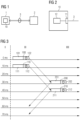
- FIG. 1 shows a schematic representation of a safety communication system according to one embodiment.
- a safety communication system comprises at least one primary instance 1 and at least one secondary instance 2.
- the primary instances 1 and the secondary instances 2 are communicatively connected to one another via a communication network 3.
- the communication network 3 can, in principle, be any suitable communication network capable of exchanging the data telegrams explained in more detail below between the individual instances 1, 2.
- this can be a bus system via which the individual instances 1, 2 can exchange the data telegrams.
- any other communication networks are possible, in particular IP-based networks, for example, wired networks such as Ethernet or wireless networks (WLAN), as well as hybrid forms. Additional components such as hubs, switches, routers, etc. can also be provided between the individual instances 1, 2.
- the special feature of a safety communication system is, among other things, that the data exchange between the primary instances 1 and the secondary instances 2 is monitored and analyzed in order to detect a possible error or disruption in the communication between the instances 1 and 2 within a specified time period. If such an error in the communication is detected, predetermined measures, such as a transition to emergency mode or a system shutdown, can be initiated.
- a primary instance 1 can be a control device that receives data from one or more secondary instances 2. Based on this received data, the primary instance 1 can then generate control commands, for example. These control commands can either be executed directly within the primary instance or sent to one or more secondary instances 2 via the communication network 3. For example, actuators or the like can be provided in the secondary instances 2, which execute the control commands generated by the primary instance 1. If necessary, the respective secondary instance 2 can then send a corresponding confirmation back to the primary instance 1 to confirm the receipt of the control command and/or the successful execution of the control command.
- FIG. 2 shows a schematic representation of a block diagram to illustrate a communication device 10 in a primary instance 1.
- a communication device 10 can, for example, comprise a communication interface 11.
- This communication interface 11 can be coupled to the previously described communication network 3, thus the communication interface 11 can send data telegrams via the communication network 3 to a secondary instance 2.
- the communication interface 11 can receive data telegrams from one or more secondary instances 2.
- the data interface 11 is coupled to a processing device 12 of the communication device 10.
- the processing device 12 can receive the data telegrams received from the data interface 11 and generate data telegrams that are to be sent to a secondary instance 2 via the communication network 3 by means of the data interface 11.
- Figure 3 shows a flowchart illustrating the safety communication method according to the invention.
- the time units during the process are The time intervals of 10 ms per cycle listed here are only examples and are not intended to limit the present invention. In principle, any other time intervals for a cycle are possible depending on the properties.
- Column II shows the data telegrams sent or received by the primary instance.
- column III shows the data telegrams received or sent by the secondary instance 2.
- the primary instance 1 can create a request data telegram 100 and send it to the secondary instance 2.
- a request data telegram 100 can include, in addition to data 101, such as status information or a checksum, a monitoring identifier 102.
- the monitoring identifier 102 can be a data element of any size that is added to the data 101.
- the monitoring identifier 102 can be a number that is added to the request data telegram 100 in an additional data field.
- the monitoring identifier 102 can be a data element referred to as a monitoring number (MNR), as used, for example, in accordance with the PROFIsafe communication method.
- MNR monitoring number
- any other suitable data constructs suitable for the monitoring according to the invention are also possible.
- the request data telegram 100 sent by the primary instance 1 is then received by the secondary instance 2.
- the secondary instance 2 then processes the request contained in the request data telegram 100 and creates a response data telegram 200.
- This response data telegram 200 includes, in addition to the payload 201, a monitoring identifier 202.
- This monitoring identifier 202 corresponds to the monitoring identifier 102 received in this cycle from the secondary instance 2.
- the secondary instance 2 sends a response data telegram 200 to the primary instance 1, whose monitoring identifier 202 in the monitoring identifier 102 in the request data telegram 100 received at that time.
- the response data telegram 200 sent by the secondary instance 2 is then received and evaluated by the primary instance 1.
- the monitoring identifier 202 contained in the response data telegram 200 is also analyzed. If it is determined that the monitoring identifier contained in the response data telegram 200 corresponds to a monitoring identifier 102 in a request data telegram 100 that was previously sent within a specified timeout period, the primary instance 1 determines that communication with the secondary instance 2 is intact.
- the primary instance 1 determines that no response data telegram 200 has been received within the specified timeout period, which contains a monitoring identifier 202 that corresponds to a monitoring identifier 102 in a previously transmitted request data telegram 100, the primary instance 1 detects an error in the communication with the secondary instance 2 in this case.
- a monitoring identifier 112 is used for a further request data telegram 110, which is sent from the primary instance 1 to the secondary instance after the request data telegram 100, which has been modified compared to the monitoring identifier 102 of a previously transmitted request data telegram 100.
- the monitoring identifier 112 is already modified compared to a previous 102, even if no response data telegram 200 has yet been received that contains the previously transmitted monitoring identifier 102.
- the monitoring identifier 102, 112 can be modified for each transmitted request data telegram 100, 110.
- the monitoring identifier must be transmitted before the monitoring identifier is modified. However, in any case, the monitoring identifier is already modified before a response data telegram with a previously transmitted monitoring identifier has been received.
- an earlier modification of the monitoring identifier may allow a disruption in the communication between the primary instance 1 and the secondary instance 2 to be detected more quickly.
- the request data telegrams 100, 110 and the corresponding response data telegrams 200, 210 can, for example, correspond to data telegrams known from systems such as Open Platform Communication Unified Architecture UPC UA or PROFIsafe.
- the monitoring number (MNR) used in these concepts is not incremented until a response data telegram containing an MNR of a previously transmitted request data telegram has been received. Rather, according to the invention, the MNR can already be incremented before the MNR of a previous request data telegram has been received in a response data telegram.
- the monitoring identifier when transmitting each request data telegram 100, 110, for example, by increasing the MNR. Furthermore, it is also possible to use the same monitoring identifier for a specified number of request data telegrams and to modify the monitoring identifier only after the specified number of request data telegrams with the same monitoring identifier have been transmitted. Alternatively, it is also possible to modify the monitoring identifier at predetermined time intervals.
- a monitoring instance is created in the primary instance after the monitoring identifier has been modified, i.e., after the first request data telegram with a new, modified monitoring identifier is sent.
- This monitoring instance can, for example, be a data area in a memory of the processing device 12 in which the information relating to this monitoring identifier is stored.
- a timer in the form of a hardware component or a software module can also be initialized to monitor the timeout period for this monitoring identifier.
- a new monitoring instance must also be created accordingly. However, if multiple request data elements with the same monitoring identifier are sent consecutively, only a single monitoring instance is required for the entire group of request data telegrams with the same monitoring identifier. Accordingly, the resource requirements in the processing device 12 or the primary instance 1 are reduced.
- the timeout period after which an error in the communication connection between the primary instance 1 and the secondary instance 2 is detected should be selected depending on the runtime for the data transmission as well as the processing time in the secondary instance 2. In particular, this timeout period should be selected slightly longer than the required time period between the transmission of the request data telegram and the receipt of a corresponding response data telegram.
- primary instance 1 can determine the runtime between the transmission of a request data telegram and the receipt of a corresponding response data telegram and then automatically set the timeout period.
- the timeout period can be increased by a specified tolerance compared to the determined runtime.
- the number of request data telegrams each of which should contain the same monitoring identifier. For example, this number can be adjusted such that a maximum number of monitoring instances is required. This can be determined, for example, based on the runtime between the transmission of a request data telegram and the receipt of a corresponding response data telegram. For example, the number of request data telegrams with the same monitoring identifier can be set such that a maximum of 10 monitoring instances (or any other suitable number) are required.
- a safety communication method as well as the safety communication system based on it with corresponding communication devices, can be used, for example, in any technical or industrial system that requires a controller with communicative data transmission.
- a safety communication method can be used for programmable logic controllers (PLCs) or similar devices.
- PLCs programmable logic controllers
- it can also be used in any other technical system with corresponding data transmission.
- Predetermined measures or operations are executed.
- a system can be transferred to a predetermined operating state after a fault is detected. It is also possible, for example, to initiate an emergency shutdown or similar action upon the detection of a fault.
- the present invention relates to a device and a method for monitoring a communication connection.
- the request is supplemented with a specific identifier, and an error is detected if a response with this identifier is not received within a predetermined period of time.
- the specific identifier for several consecutively sent requests is modified before a response with a previously sent identifier has been received.
Landscapes
- Engineering & Computer Science (AREA)
- Computer Networks & Wireless Communication (AREA)
- Computer Security & Cryptography (AREA)
- Signal Processing (AREA)
- General Engineering & Computer Science (AREA)
- Computing Systems (AREA)
- Physics & Mathematics (AREA)
- Automation & Control Theory (AREA)
- General Physics & Mathematics (AREA)
- Computer Hardware Design (AREA)
- Quality & Reliability (AREA)
- Manufacturing & Machinery (AREA)
- Health & Medical Sciences (AREA)
- General Health & Medical Sciences (AREA)
- Medical Informatics (AREA)
- Maintenance And Management Of Digital Transmission (AREA)
Claims (6)
- Procédé de communication de sécurité, dans lequelune instance (1) primaire envoie un télégramme (100, 110) de données de demande ayant une identification (102, 112) de contrôle à une instance (2) secondaire,l'instance (2) secondaire renvoie un télégramme (200, 210) de données de réponse ayant la même identification (202, 212) de contrôle à l'instance (1) primaire, etl'instance (1) primaire détecte une erreur dans la communication, si l'instance (1) primaire n'a pas reçu dans une durée de time out donnée à l'avance, après l'envoi du télégramme (100, 110) de données de demande, un télégramme (200, 210) de données de réponse ayant une identification (202, 212) de contrôle correspondant au télégramme (100, 110) de données de demande,dans lequel on modifie l'identification (102, 112) de contrôle pour un télégramme (100, 110) de données de demande, respectivement après l'envoi d'un télégramme (100, 110) de données de demande,dans lequel, pour respectivement une identification (102, 112) de contrôle, on applique une instance de contrôle distincte, qui contrôle respectivement la durée de time out donnée à l'avance pour l'identification (102, 112) de contrôle correspondante d'un télégramme (100, 110) de données de demande envoyé,dans lequel l'instance (1) primaire crée déjà une nouvelle identification (102, 112) de contrôle et l'utilise pour d'autres télégrammes (101, 110) de données de demande, avant d'avoir reçu une réponse ayant une identification (102, 112) de contrôle envoyée auparavant.
- Procédé de communication de sécurité suivant la revendication 1, dans lequel l'identification (102, 112) de contrôle comprend un élément de données ayant un compteur et la modification de l'identification de contrôle comprend une augmentation du compteur.
- Procédé de communication de sécurité suivant la revendication 1 ou 2, dans lequel on envoie périodiquement, dans des intervalles de temps déterminés à l'avance, les télégrammes (100, 110) de données de demande de l'instance (1) primaire à l'instance (2) secondaire.
- Procédé de communication de sécurité suivant l'une des revendications 1 à 3, dans lequel le procédé détermine, pour une communication sans défaut, en outre un temps de propagation entre l'émission d'un télégramme (100, 110) de données de demande et la réception d'un télégramme (200, 210) de données de réponse, et on règle la durée de time out en utilisant le temps de propagation déterminé.
- Procédé de communication de sécurité suivant l'une des revendications 1 à 4, dans lequel le télégramme (100, 110) de données de demande et/ou le télégramme (200, 210) de données de réponse comprend un télégramme de données d'une open platform, OPC, unified architecture, UA, ou d'une communication PROFIsafe.
- Installation (10) de communication pour un système de communication de sécurité, qui est conçu pourenvoyer un télégramme (100, 110) de données de demande ayant une identification (102, 112) de contrôle à une autre installation de communication,recevoir un télégramme (200, 210) de données de réponse de l'autre installation de communication, dans lequel le télégramme (200, 210) de données de réponse comprend la même identification de contrôle que le télégramme (100, 110) de données de demande correspondant, etdétecter un défaut dans la communication entre l'installation (10) de communication et l'autre installation de communication si, dans une durée de time out donnée à l'avance après l'envoi du télégramme (100, 110) de données de demande, un télégramme (200, 210) de données de réponse ayant une identification (202, 212) de contrôle correspondant au télégramme (100, 110) de données de demande n'a pas été reçu,dans lequel l'installation (10) de communication est conçue pour modifier l'identification (102, 112) de contrôle pour un télégramme (100, 110) de données de demande respectivement après l'envoi d'un télégramme (100, 110) de données de demande, étant en outre conformée pour appliquer, pour respectivement une identification (102, 112) de contrôle, une instance de contrôle distincte, qui contrôle la durée de timeout donnée à l'avance respectivement pour l'identification (102, 112) de contrôle correspondante du télégramme (100, 110) de données de demande envoyé, étant conformée en outre pour créer déjà une nouvelle identification de contrôle et pour l'utiliser pour d'autres télégrammes de données de demande, avant de recevoir une réponse ayant une identification de contrôle envoyée auparavant.
Priority Applications (3)
| Application Number | Priority Date | Filing Date | Title |
|---|---|---|---|
| EP22182567.2A EP4300220B1 (fr) | 2022-07-01 | 2022-07-01 | Procédé de communication de sécurité et dispositif de communication |
| US18/343,309 US12615458B2 (en) | 2022-07-01 | 2023-06-28 | Safety communication method, communication apparatus, safety communication system and control system |
| CN202310803163.2A CN117336006A (zh) | 2022-07-01 | 2023-06-30 | 安全通信方法、通信装置、安全通信系统和控制系统 |
Applications Claiming Priority (1)
| Application Number | Priority Date | Filing Date | Title |
|---|---|---|---|
| EP22182567.2A EP4300220B1 (fr) | 2022-07-01 | 2022-07-01 | Procédé de communication de sécurité et dispositif de communication |
Publications (3)
| Publication Number | Publication Date |
|---|---|
| EP4300220A1 EP4300220A1 (fr) | 2024-01-03 |
| EP4300220C0 EP4300220C0 (fr) | 2025-06-04 |
| EP4300220B1 true EP4300220B1 (fr) | 2025-06-04 |
Family
ID=83148979
Family Applications (1)
| Application Number | Title | Priority Date | Filing Date |
|---|---|---|---|
| EP22182567.2A Active EP4300220B1 (fr) | 2022-07-01 | 2022-07-01 | Procédé de communication de sécurité et dispositif de communication |
Country Status (3)
| Country | Link |
|---|---|
| US (1) | US12615458B2 (fr) |
| EP (1) | EP4300220B1 (fr) |
| CN (1) | CN117336006A (fr) |
Citations (1)
| Publication number | Priority date | Publication date | Assignee | Title |
|---|---|---|---|---|
| US20200186379A1 (en) * | 2018-12-09 | 2020-06-11 | Olibra Llc | System, Device, and Method of Multi-Path Wireless Communication |
Family Cites Families (7)
| Publication number | Priority date | Publication date | Assignee | Title |
|---|---|---|---|---|
| US8223634B2 (en) * | 2004-02-18 | 2012-07-17 | Fortinet, Inc. | Mechanism for implementing load balancing in a network |
| CA2706629C (fr) * | 2008-01-24 | 2013-10-29 | Suncor Energy Inc. | Procede, systeme et medias pour commande de procede sans fil d'un equipement mobile |
| EP3678313A4 (fr) * | 2017-09-01 | 2021-03-17 | NTT DoCoMo, Inc. | Appareil et procédé de communication |
| US10868714B2 (en) * | 2017-11-14 | 2020-12-15 | Rockwell Automation Technologies, Inc. | Configurable device status |
| US12200715B2 (en) * | 2019-01-02 | 2025-01-14 | Nokia Technologies Oy | Industrial automation system communication |
| US20220121597A1 (en) * | 2019-04-26 | 2022-04-21 | Mitsubishi Electric Corporation | Data processing device, data processing method, and program |
| US12276963B2 (en) * | 2022-03-31 | 2025-04-15 | Intel Corporation | Apparatus, system, and method of functional safety |
-
2022
- 2022-07-01 EP EP22182567.2A patent/EP4300220B1/fr active Active
-
2023
- 2023-06-28 US US18/343,309 patent/US12615458B2/en active Active
- 2023-06-30 CN CN202310803163.2A patent/CN117336006A/zh active Pending
Patent Citations (1)
| Publication number | Priority date | Publication date | Assignee | Title |
|---|---|---|---|---|
| US20200186379A1 (en) * | 2018-12-09 | 2020-06-11 | Olibra Llc | System, Device, and Method of Multi-Path Wireless Communication |
Also Published As
| Publication number | Publication date |
|---|---|
| EP4300220A1 (fr) | 2024-01-03 |
| EP4300220C0 (fr) | 2025-06-04 |
| US12615458B2 (en) | 2026-04-28 |
| US20240007773A1 (en) | 2024-01-04 |
| CN117336006A (zh) | 2024-01-02 |
Similar Documents
| Publication | Publication Date | Title |
|---|---|---|
| EP2235861B1 (fr) | Procédé et dispositif de transmission de données dans un réseau | |
| EP1205052B1 (fr) | Procede pour le reglage d'une vitesse de transmission de donnees dans un systeme a bus de terrain | |
| DE19939567B4 (de) | Vorrichtung zum Steuern von sicherheitskritischen Prozessen | |
| EP2538609B1 (fr) | Economie d'énergie dans un noeud de réseau d'un réseau d'automatisation | |
| EP2972607B1 (fr) | Procédé de traitement d'erreurs dans une unité de commande centrale et unité de commande | |
| EP2981868B1 (fr) | Système de commande et de transmission de données, dispositif de traitement et procédé de commande de processus redondante à redondance décentralisée | |
| DE4129205A1 (de) | Verfahren zum aufbau von botschaften fuer den datenaustausch und/oder fuer die synchronisation von prozessen in datenverarbeitungsanlagen | |
| DE102014110017A1 (de) | Steuer- und Datenübertragungssystem, Gateway-Modul, E/A-Modul und Verfahren zur Prozesssteuerung | |
| EP3560150B1 (fr) | Surveillance de la transmission de données dans un système d'accès à des appareils sur une base client serveur | |
| EP3100121B1 (fr) | Procédé et dispositif pour déconnecter en toute sécurité une charge électrique | |
| EP2491492B1 (fr) | Système d'automatisation et procédé pour faire fonctionner un système d'automatisation | |
| DE102005053103B4 (de) | Verfahren sowie System zur Übertragung von zyklischen und azyklischen Daten | |
| WO2009036891A1 (fr) | Procédé de transmission sécurisée de données et appareil approprié | |
| EP4300220B1 (fr) | Procédé de communication de sécurité et dispositif de communication | |
| EP4088375A1 (fr) | Module de sécurité pour commande d'entraînement sûre d'un système d'entraînement dans un système d'automatisation, système d'entraînement et système d'automatisation | |
| EP3528065B1 (fr) | Procédé de surveillance, de commande et de mise hors tension contrôlée des unités de commande et/ou des unités informatiques | |
| DE102009014620B4 (de) | Adressabhängige Sicherheitscodefolgen für sichere Eingangsslaves bei AS-Interface | |
| EP1672446A2 (fr) | Module d'entrée/sortie sécurisé pour un controleur | |
| EP3915227B1 (fr) | Dispositif d'émission/réception pour un poste d'abonné d'un système de bus série et procédé de communication dans un système de bus série | |
| EP4211525B1 (fr) | Dispositif et procédé permettant de générer et transmettre des instructions de commande pour un véhicule automobile circulant en mode automatisé | |
| DE102021210077B4 (de) | Computerimplementiertes Verfahren und Steuervorrichtung zur Steuerung einer Einheit eines Automotivesystems | |
| DE60319657T2 (de) | System für sichere Informationsübertragung zwischen den mit dem Informationsübertragungsnetz verbundenen Stationen am Bord eines Kraftwagens. | |
| WO2022268476A1 (fr) | Procédé mis en œuvre par ordinateur et dispositif de commande pour commander une unité d'un système automobile | |
| DE102021210453A1 (de) | Steuergerät, system und verfahren zum konfigurieren von geräten eines feldbusnetzwerks | |
| WO2026057466A1 (fr) | Procédé de synchronisation d'un réseau répondeur émetteur |
Legal Events
| Date | Code | Title | Description |
|---|---|---|---|
| PUAI | Public reference made under article 153(3) epc to a published international application that has entered the european phase |
Free format text: ORIGINAL CODE: 0009012 |
|
| STAA | Information on the status of an ep patent application or granted ep patent |
Free format text: STATUS: THE APPLICATION HAS BEEN PUBLISHED |
|
| AK | Designated contracting states |
Kind code of ref document: A1 Designated state(s): AL AT BE BG CH CY CZ DE DK EE ES FI FR GB GR HR HU IE IS IT LI LT LU LV MC MK MT NL NO PL PT RO RS SE SI SK SM TR |
|
| STAA | Information on the status of an ep patent application or granted ep patent |
Free format text: STATUS: REQUEST FOR EXAMINATION WAS MADE |
|
| 17P | Request for examination filed |
Effective date: 20240702 |
|
| RBV | Designated contracting states (corrected) |
Designated state(s): AL AT BE BG CH CY CZ DE DK EE ES FI FR GB GR HR HU IE IS IT LI LT LU LV MC MK MT NL NO PL PT RO RS SE SI SK SM TR |
|
| GRAP | Despatch of communication of intention to grant a patent |
Free format text: ORIGINAL CODE: EPIDOSNIGR1 |
|
| STAA | Information on the status of an ep patent application or granted ep patent |
Free format text: STATUS: GRANT OF PATENT IS INTENDED |
|
| INTG | Intention to grant announced |
Effective date: 20250212 |
|
| GRAS | Grant fee paid |
Free format text: ORIGINAL CODE: EPIDOSNIGR3 |
|
| GRAA | (expected) grant |
Free format text: ORIGINAL CODE: 0009210 |
|
| STAA | Information on the status of an ep patent application or granted ep patent |
Free format text: STATUS: THE PATENT HAS BEEN GRANTED |
|
| AK | Designated contracting states |
Kind code of ref document: B1 Designated state(s): AL AT BE BG CH CY CZ DE DK EE ES FI FR GB GR HR HU IE IS IT LI LT LU LV MC MK MT NL NO PL PT RO RS SE SI SK SM TR |
|
| REG | Reference to a national code |
Ref country code: GB Ref legal event code: FG4D Free format text: NOT ENGLISH |
|
| REG | Reference to a national code |
Ref country code: CH Ref legal event code: EP |
|
| REG | Reference to a national code |
Ref country code: IE Ref legal event code: FG4D Free format text: LANGUAGE OF EP DOCUMENT: GERMAN |
|
| U01 | Request for unitary effect filed |
Effective date: 20250604 |
|
| U07 | Unitary effect registered |
Designated state(s): AT BE BG DE DK EE FI FR IT LT LU LV MT NL PT RO SE SI Effective date: 20250611 |
|
| U20 | Renewal fee for the european patent with unitary effect paid |
Year of fee payment: 4 Effective date: 20250718 |
|
| PG25 | Lapsed in a contracting state [announced via postgrant information from national office to epo] |
Ref country code: ES Free format text: LAPSE BECAUSE OF FAILURE TO SUBMIT A TRANSLATION OF THE DESCRIPTION OR TO PAY THE FEE WITHIN THE PRESCRIBED TIME-LIMIT Effective date: 20250604 |
|
| PG25 | Lapsed in a contracting state [announced via postgrant information from national office to epo] |
Ref country code: NO Free format text: LAPSE BECAUSE OF FAILURE TO SUBMIT A TRANSLATION OF THE DESCRIPTION OR TO PAY THE FEE WITHIN THE PRESCRIBED TIME-LIMIT Effective date: 20250904 Ref country code: GR Free format text: LAPSE BECAUSE OF FAILURE TO SUBMIT A TRANSLATION OF THE DESCRIPTION OR TO PAY THE FEE WITHIN THE PRESCRIBED TIME-LIMIT Effective date: 20250905 |
|
| PG25 | Lapsed in a contracting state [announced via postgrant information from national office to epo] |
Ref country code: PL Free format text: LAPSE BECAUSE OF FAILURE TO SUBMIT A TRANSLATION OF THE DESCRIPTION OR TO PAY THE FEE WITHIN THE PRESCRIBED TIME-LIMIT Effective date: 20250604 |
|
| PG25 | Lapsed in a contracting state [announced via postgrant information from national office to epo] |
Ref country code: HR Free format text: LAPSE BECAUSE OF FAILURE TO SUBMIT A TRANSLATION OF THE DESCRIPTION OR TO PAY THE FEE WITHIN THE PRESCRIBED TIME-LIMIT Effective date: 20250604 |
|
| PG25 | Lapsed in a contracting state [announced via postgrant information from national office to epo] |
Ref country code: RS Free format text: LAPSE BECAUSE OF FAILURE TO SUBMIT A TRANSLATION OF THE DESCRIPTION OR TO PAY THE FEE WITHIN THE PRESCRIBED TIME-LIMIT Effective date: 20250904 |
|
| PG25 | Lapsed in a contracting state [announced via postgrant information from national office to epo] |
Ref country code: IS Free format text: LAPSE BECAUSE OF FAILURE TO SUBMIT A TRANSLATION OF THE DESCRIPTION OR TO PAY THE FEE WITHIN THE PRESCRIBED TIME-LIMIT Effective date: 20251004 |
|
| PG25 | Lapsed in a contracting state [announced via postgrant information from national office to epo] |
Ref country code: SM Free format text: LAPSE BECAUSE OF FAILURE TO SUBMIT A TRANSLATION OF THE DESCRIPTION OR TO PAY THE FEE WITHIN THE PRESCRIBED TIME-LIMIT Effective date: 20250604 |
|
| PG25 | Lapsed in a contracting state [announced via postgrant information from national office to epo] |
Ref country code: CZ Free format text: LAPSE BECAUSE OF FAILURE TO SUBMIT A TRANSLATION OF THE DESCRIPTION OR TO PAY THE FEE WITHIN THE PRESCRIBED TIME-LIMIT Effective date: 20250604 |
|
| PG25 | Lapsed in a contracting state [announced via postgrant information from national office to epo] |
Ref country code: SK Free format text: LAPSE BECAUSE OF FAILURE TO SUBMIT A TRANSLATION OF THE DESCRIPTION OR TO PAY THE FEE WITHIN THE PRESCRIBED TIME-LIMIT Effective date: 20250604 |
|
| REG | Reference to a national code |
Ref country code: CH Ref legal event code: H13 Free format text: ST27 STATUS EVENT CODE: U-0-0-H10-H13 (AS PROVIDED BY THE NATIONAL OFFICE) Effective date: 20260224 |
|
| PG25 | Lapsed in a contracting state [announced via postgrant information from national office to epo] |
Ref country code: MC Free format text: LAPSE BECAUSE OF FAILURE TO SUBMIT A TRANSLATION OF THE DESCRIPTION OR TO PAY THE FEE WITHIN THE PRESCRIBED TIME-LIMIT Effective date: 20250604 |
|
| PLBE | No opposition filed within time limit |
Free format text: ORIGINAL CODE: 0009261 |
|
| STAA | Information on the status of an ep patent application or granted ep patent |
Free format text: STATUS: NO OPPOSITION FILED WITHIN TIME LIMIT |
|
| REG | Reference to a national code |
Ref country code: CH Ref legal event code: L10 Free format text: ST27 STATUS EVENT CODE: U-0-0-L10-L00 (AS PROVIDED BY THE NATIONAL OFFICE) Effective date: 20260416 |
|
| PG25 | Lapsed in a contracting state [announced via postgrant information from national office to epo] |
Ref country code: CH Free format text: LAPSE BECAUSE OF NON-PAYMENT OF DUE FEES Effective date: 20250731 |