EP4300337A1 - Procédé et système de fourniture des applications de commande pour appareils d'automatisation industrielle - Google Patents
Procédé et système de fourniture des applications de commande pour appareils d'automatisation industrielle Download PDFInfo
- Publication number
- EP4300337A1 EP4300337A1 EP22182205.9A EP22182205A EP4300337A1 EP 4300337 A1 EP4300337 A1 EP 4300337A1 EP 22182205 A EP22182205 A EP 22182205A EP 4300337 A1 EP4300337 A1 EP 4300337A1
- Authority
- EP
- European Patent Office
- Prior art keywords
- socket
- flow control
- application
- component
- access
- Prior art date
- Legal status (The legal status is an assumption and is not a legal conclusion. Google has not performed a legal analysis and makes no representation as to the accuracy of the status listed.)
- Withdrawn
Links
Images

Classifications
-
- G—PHYSICS
- G05—CONTROLLING; REGULATING
- G05B—CONTROL OR REGULATING SYSTEMS IN GENERAL; FUNCTIONAL ELEMENTS OF SUCH SYSTEMS; MONITORING OR TESTING ARRANGEMENTS FOR SUCH SYSTEMS OR ELEMENTS
- G05B19/00—Program-control systems
- G05B19/02—Program-control systems electric
- G05B19/04—Program control other than numerical control, i.e. in sequence controllers or logic controllers
- G05B19/042—Program control other than numerical control, i.e. in sequence controllers or logic controllers using digital processors
- G05B19/0423—Input/output
-
- G—PHYSICS
- G05—CONTROLLING; REGULATING
- G05B—CONTROL OR REGULATING SYSTEMS IN GENERAL; FUNCTIONAL ELEMENTS OF SUCH SYSTEMS; MONITORING OR TESTING ARRANGEMENTS FOR SUCH SYSTEMS OR ELEMENTS
- G05B19/00—Program-control systems
- G05B19/02—Program-control systems electric
- G05B19/418—Total factory control, i.e. centrally controlling a plurality of machines, e.g. direct or distributed numerical control [DNC], flexible manufacturing systems [FMS], integrated manufacturing systems [IMS] or computer integrated manufacturing [CIM]
- G05B19/4185—Total factory control, i.e. centrally controlling a plurality of machines, e.g. direct or distributed numerical control [DNC], flexible manufacturing systems [FMS], integrated manufacturing systems [IMS] or computer integrated manufacturing [CIM] characterised by the network communication
-
- G—PHYSICS
- G05—CONTROLLING; REGULATING
- G05B—CONTROL OR REGULATING SYSTEMS IN GENERAL; FUNCTIONAL ELEMENTS OF SUCH SYSTEMS; MONITORING OR TESTING ARRANGEMENTS FOR SUCH SYSTEMS OR ELEMENTS
- G05B19/00—Program-control systems
- G05B19/02—Program-control systems electric
- G05B19/04—Program control other than numerical control, i.e. in sequence controllers or logic controllers
- G05B19/042—Program control other than numerical control, i.e. in sequence controllers or logic controllers using digital processors
- G05B19/0426—Programming the control sequence
-
- G—PHYSICS
- G06—COMPUTING OR CALCULATING; COUNTING
- G06F—ELECTRIC DIGITAL DATA PROCESSING
- G06F21/00—Security arrangements for protecting computers, components thereof, programs or data against unauthorised activity
- G06F21/30—Authentication, i.e. establishing the identity or authorisation of security principals
- G06F21/44—Program or device authentication
-
- G—PHYSICS
- G06—COMPUTING OR CALCULATING; COUNTING
- G06F—ELECTRIC DIGITAL DATA PROCESSING
- G06F21/00—Security arrangements for protecting computers, components thereof, programs or data against unauthorised activity
- G06F21/50—Monitoring users, programs or devices to maintain the integrity of platforms, e.g. of processors, firmware or operating systems
- G06F21/51—Monitoring users, programs or devices to maintain the integrity of platforms, e.g. of processors, firmware or operating systems at application loading time, e.g. accepting, rejecting, starting or inhibiting executable software based on integrity or source reliability
-
- G—PHYSICS
- G06—COMPUTING OR CALCULATING; COUNTING
- G06F—ELECTRIC DIGITAL DATA PROCESSING
- G06F21/00—Security arrangements for protecting computers, components thereof, programs or data against unauthorised activity
- G06F21/50—Monitoring users, programs or devices to maintain the integrity of platforms, e.g. of processors, firmware or operating systems
- G06F21/52—Monitoring users, programs or devices to maintain the integrity of platforms, e.g. of processors, firmware or operating systems during program execution, e.g. stack integrity ; Preventing unwanted data erasure; Buffer overflow
- G06F21/53—Monitoring users, programs or devices to maintain the integrity of platforms, e.g. of processors, firmware or operating systems during program execution, e.g. stack integrity ; Preventing unwanted data erasure; Buffer overflow by executing in a restricted environment, e.g. sandbox or secure virtual machine
-
- G—PHYSICS
- G05—CONTROLLING; REGULATING
- G05B—CONTROL OR REGULATING SYSTEMS IN GENERAL; FUNCTIONAL ELEMENTS OF SUCH SYSTEMS; MONITORING OR TESTING ARRANGEMENTS FOR SUCH SYSTEMS OR ELEMENTS
- G05B2219/00—Program-control systems
- G05B2219/20—Pc systems
- G05B2219/25—Pc structure of the system
- G05B2219/25257—Microcontroller
-
- G—PHYSICS
- G05—CONTROLLING; REGULATING
- G05B—CONTROL OR REGULATING SYSTEMS IN GENERAL; FUNCTIONAL ELEMENTS OF SUCH SYSTEMS; MONITORING OR TESTING ARRANGEMENTS FOR SUCH SYSTEMS OR ELEMENTS
- G05B2219/00—Program-control systems
- G05B2219/30—Nc systems
- G05B2219/36—Nc in input of data, input key till input tape
- G05B2219/36542—Cryptography, encrypt, access, authorize with key, code, password
-
- G—PHYSICS
- G06—COMPUTING OR CALCULATING; COUNTING
- G06F—ELECTRIC DIGITAL DATA PROCESSING
- G06F9/00—Arrangements for program control, e.g. control units
- G06F9/06—Arrangements for program control, e.g. control units using stored programs, i.e. using an internal store of processing equipment to receive or retain programs
- G06F9/44—Arrangements for executing specific programs
- G06F9/455—Emulation; Interpretation; Software simulation, e.g. virtualisation or emulation of application or operating system execution engines
- G06F9/45533—Hypervisors; Virtual machine monitors
-
- H—ELECTRICITY
- H04—ELECTRIC COMMUNICATION TECHNIQUE
- H04L—TRANSMISSION OF DIGITAL INFORMATION, e.g. TELEGRAPHIC COMMUNICATION
- H04L67/00—Network arrangements or protocols for supporting network services or applications
- H04L67/01—Protocols
- H04L67/12—Protocols specially adapted for proprietary or special-purpose networking environments, e.g. medical networks, sensor networks, networks in vehicles or remote metering networks
Definitions
- the present invention relates to a method for providing control applications for industrial automation devices and a system for carrying out this method.
- Industrial automation systems usually include a large number of automation devices networked with one another via an industrial communication network and are used as part of manufacturing or process automation to control systems, machines or devices. Due to time-critical conditions in industrial automation systems, real-time communication protocols such as PROFINET, PROFIBUS, Real-Time Ethernet or Time-Sensitive Networking (TSN) are predominantly used for communication between automation devices. In particular, control services or applications can be distributed automatically and depending on the load on currently available servers or virtual machines of an industrial automation system.
- real-time communication protocols such as PROFINET, PROFIBUS, Real-Time Ethernet or Time-Sensitive Networking (TSN) are predominantly used for communication between automation devices.
- TSN Time-Sensitive Networking
- WO 2022/042905 A1 relates to a method for providing time-critical services, each of which is assigned at least one server component, which is formed by a process control component that can be loaded into a process control environment and executed there.
- a functional unit for processing a communication protocol stack is made available for the server components, which is associated with a functional unit for processing a communication protocol stack assigned to the flow control environment connected is.
- the services each include a directory service component for determining services provided using the flow control environment.
- the directory service components are connected to each other via a separate communication interface.
- An aggregator component formed by a further flow control component is connected to the separate communication interface and makes information about the services provided by the server components available outside the flow control environment.
- control applications are each provided using sequence control components that can be loaded into a sequence control environment formed by a server device and can be executed there.
- Control applications that require selected security authorizations are each assigned a label as a safety-critical control application.
- At least one expiration condition for the selected security authorizations is defined for the control applications that are assigned a label as a safety-critical control application.
- the sequential control environment monitors the occurrence of the respective execution condition during execution of the sequential control components for the control applications. The execution of the sequence control components is terminated when the respective execution condition occurs.
- configuration information or deployment information can be used to define which resources of a host the respective control application has access to. These resources can include, for example, device files or persistent storage areas (volumes) that are assigned to an application instance in order to persist data.
- access to a socket of a container runtime environment e.g. Docker Socket
- access to a socket of a container runtime environment is granted via a socket file, which is mounted as a mount point in an instance of a control application provided using container virtualization can.
- the present invention is therefore based on the object of providing a method for providing control applications that request access to a socket of a sequential control environment, the method enabling a selective and efficient determination of permissible or impermissible operations via the socket, as well as a suitable device for specify how the procedure is carried out.
- control applications for industrial automation devices are each provided by means of sequence control components which can be loaded into a sequence control environment formed by a host and can be executed there.
- Deployment information such as a Docker Compose file, or configuration information is specified for the flow control components, which includes at least a reference to a memory image (image) for the respective flow control component and application-specific specifications for the use of the host's resources.
- the configuration information will be preferably used for loading or executing the respective sequence control component.
- the flow control components can be or include software containers, each of which runs isolated from other software containers or container groups, e.g. pods, within the flow control environment on a host operating system of a server device.
- software containers each use a common kernel of the host operating system of the server device together with other software containers running on the respective server device.
- Memory images for the software containers can, for example, be retrieved from a storage and provision system that can be read or written by a large number of users.
- the flow control environment can in particular be a container runtime environment or container engine through which virtual resources are created, deleted or linked.
- the virtual resources include software containers, virtual communication networks and connections assigned to them.
- the control flow environment may include a Docker Engine or Snap Core running on a server facility.
- other (orchestrated) container runtime environments such as podman or Kubernetes, can also be used.
- the sequence control components are each started at the start of their execution, in particular before the start of their execution, based on the configuration information or the referenced memory image is classified with regard to access to at least one socket of the flow control environment. Based on a classification of the flow control components, an authorization profile for socket access is created or referenced.
- the authorization profiles define permissible and impermissible operations related to the socket. Sockets can in particular be file or network sockets or each provide an application programming interface.
- an individual token for socket access assigned to an authorization profile is created for each flow control component and passed on to the respective flow control component.
- An application-specific resource access policy is linked to the tokens or the authorization profiles, which is transmitted to the application to a control component that opens the respective socket.
- Socket access is preferably carried out using the respective token and in accordance with the respective resource access policy.
- a first-hit or best-match method can be used to create or link an application-specific resource access policy.
- a union of granted permissions could also be formed that result from the classification guidelines or resource access guidelines. For example, a ban on an operation provided for in a first directive could be lifted by allowing the operation in accordance with a second directive.
- the present invention enables access to application programming interfaces (API) exposed via sockets to be selectively and dynamically protected through an assignment of instance-specific tokens. This allows individual operations to be specifically prohibited or permitted on a command set provided via a socket.
- API application programming interfaces
- an application of the present invention is not limited to local hosts, but is also possible in distributed systems, in particular in orchestrated distributed systems. Thus, application of the present invention is particularly suitable for environments where scalability is important.
- the classification of the flow control components is preferably carried out on the basis of a classification guideline.
- rules are created or adjusted based on the respective token, on the basis of the classification policy and on the basis of authorization profiles or authorizations for socket access referenced in the classification policy, which are stored in the respective resource access policy.
- sockets to be protected by the classification policy authorizations to be granted to sockets, storage locations of the resource access policies, properties of the respective flow control component provided in accordance with the configuration information or transfer procedures for the tokens can be specified. This enables accurate and efficient classification of the flow control components.
- the sockets are preferably each opened by the control flow environment.
- the application-specific resource access policies are transmitted to the scheduling environment for application.
- the resource access policies are advantageously enforced in each case by the flow control environment, by an application that provides the respective socket, or by a functional component assigned to the flow control environment or the application. This ensures reliable and effective enforcement of application-specific resource access policies.
- the application-specific resource access policies advantageously each extend a standard policy for opening the respective socket. This means that resource access policies can be derived from a secure basis.
- the resource access guidelines represent, in particular, application-specific security guidelines.
- a security policy is usually a technical or organizational document with which existing security requirements in companies or institutions are to be implemented and achieved.
- the core components are, in particular, ensuring the integrity, confidentiality, availability and authenticity of information to be protected.
- a security policy for a datagram filter component or a firewall determines, for example, how a specific configuration is carried out, which access rights are granted, how logging is carried out or which defensive measures the datagram filter component or firewall takes in an attack scenario.
- a security policy can in particular be present as a configuration file, as an XML file, or as a device configuration that can be immediately evaluated by machine. It is also possible for a security policy to exist in textual form, which is evaluated using methods based on artificial intelligence or machine learning. It is also possible for a security policy to be in graphical form is evaluated using image processing or pattern recognition methods.
- an orchestration system detects a creation, a deletion or a change of the flow control components and registers the control applications with their respective execution status.
- creating, deleting or changing the flow control components each involves allocating or releasing resources of the host.
- the tokens are generated or updated by an allocation component that is associated with the orchestration system. This enables particularly efficient and reliable management of tokens.
- classification guidelines, authorization profiles, tokens or resource access guidelines are preferably managed in a cryptographically secured manner by the orchestration system or the allocation component.
- the system according to the invention is intended to carry out a method in accordance with the preceding embodiments and comprises a sequence control environment formed by a host and at least one sequence control component for providing a control application.
- the flow control component can be loaded into the flow control environment and executed there.
- Configuration information is specified for the flow control components, which includes at least a reference to a memory image for the respective flow control component and application-specific specifications for the use of resources of the host.
- system is set up so that the sequence control components are each at one Start of their execution, in particular before the start of their execution, are classified based on the configuration information or the referenced memory image with regard to access to at least one socket of the flow control environment.
- system is set up so that an authorization profile for socket access is created or referenced based on a classification of the flow control components. Permissible or impermissible operations relating to the socket are defined by the authorization profiles.
- system is set up so that an individual token for socket access, which is assigned to an authorization profile, is created for each flow control component and is passed on to the respective flow control component.
- system is also set up so that an application-specific resource access policy is linked to the tokens or to the authorization profiles, which is transmitted for use to a control component that opens the respective socket.
- the system shown includes a host 100 for providing control applications of an industrial automation system using sequence control components 131, which in the present exemplary embodiment are implemented by software containers.
- the control applications of the industrial automation system are examples of time-critical services and can also include monitoring functions.
- the host 100 can use the control applications to implement, for example, functions of control devices of an industrial automation system, such as programmable logic controllers, or of field devices, such as sensors or actuators. In this way, the host 100 can be used in particular for exchanging control and measurement variables with machines or devices controlled by the host 100.
- the host 100 can determine suitable control variables for the machines or devices from recorded measured variables.
- the host 100 can implement functions of an operating and observation station using the control applications and can thus be used to visualize process data or measurement and control variables that are processed or recorded by automation devices.
- the host 100 can be used to display values of a control loop and to change control parameters or programs.
- the system shown is an orchestration system 200, which records the creation, deletion or change of the flow control components and registers the control applications with their respective execution status.
- the orchestration system provides 200 for Control applications each provide at least one memory image (image) 211, 221, 231 for a software container and associated configuration information 212, 222, 232, in particular to the host 100.
- the orchestration system 200 can be integrated into the host 100.
- an orchestration system 200 is provided for multiple hosts that provide control applications using software containers.
- the creation, deletion or change of the flow control components each includes an allocation or release of resources of the host 100. This is controlled by the orchestration system 200 using control commands 210 and configuration information 220 transmitted to the host 100.
- the configuration information 220 is preferably deployment information, for example docker-compose. yml configuration files.
- the configuration information 220 each includes information about a memory image for the respective software container and application-specific specifications. The configuration information 220 is used to load or execute the respective software container.
- the authenticity of the memory images 211, 221, 231 and configuration information 212, 222, 232 is preferably checked, for example by an operator of the orchestration system 200 or automatically the orchestration system 200. In addition, it can be checked that only defined parameters are set within the memory images 211, 221, 231 or configuration information 212, 222, 232 depending on the respective signature. Accordingly, non-conforming memory images 211, 221, 231 or Configuration information 212, 222, 232 not permitted for use.
- a flow control environment 112 is installed as an operating system application on an operating system 111 of the host 100.
- the software containers or flow control components 131-133 can be loaded into this flow control environment 112 and executed there.
- flow control components 131-133 can be migrated from host 100 to another host for execution there or can be executed on other hosts at the same time.
- the software containers each run isolated from other software containers, container groups or pods within the flow control environment 112 on the operating system 111 of the host 100.
- the software containers each use one or the same kernel of the operating system 111 together with other software containers running on the host 100.
- the flow control environment 112 is preferably a container runtime environment or container engine.
- Control groups can be used to define process groups in order to limit available resources for selected groups.
- Namespaces can be used to isolate or hide individual processes or control groups from other processes or control groups by virtualizing resources of the operating system kernel.
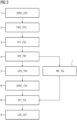
- control applications first transfer configuration information 212, 222, 232 for the respective sequence control component 131-133 to the orchestration system 200 in accordance with step 1 of the method sequence shown in FIG.
- This configuration information 212, 222, 232 includes at least a reference to a memory image 211, 221, 231 for the respective sequence control component 131-133 and application-specific specifications for the use of resources of the host 100 and is forwarded to an allocation component 201 in accordance with step 2.
- the allocation component 201 is assigned to the orchestration system 200.
- the allocation component 201 could also be integrated into the host 100 and retrieve configuration and classification information or any predefined authorization profiles required by the orchestration system 200 to control access to a socket 121-123.
- the allocation component 201 can be designed, for example, as a plugin, library or external program and can be called when an instance of a sequence control component 131-133 is started or stopped, in particular controlled by the orchestration system 200.
- the sequence control components 131-133 are classified by the allocation component 201 before starting their execution based on the configuration information 212, 222, 232 or the referenced memory image 211, 221, 231 with regard to access to at least one socket 121-123 of the sequence control environment 112 (step 3).
- the sockets 121-123 are in particular file or network sockets or each provide an application programming interface (API).
- API application programming interface
- the sequence control components are classified based on classification guidelines, which are deposited cryptographically secured in a database 202 assigned to the orchestration system 200.
- an authorization profile for socket access is referenced or dynamically created in accordance with step 4.
- the authorization profiles define permissible and impermissible operations related to socket 121-123, in particular calls via an application programming interface assigned to the respective socket 121-123.
- a corresponding database 203 assigned to the orchestration system 200 is provided for referencing predefined authorization profiles, in which the predefined authorization profiles are stored in a cryptographically secured manner.
- the authorization profiles are maintained by an operator of the orchestration system 200 independently of the classification guidelines. Basically they can Only individual operations related to a socket 121-123 can be defined as permitted or inadmissible in authorization profiles.
- the allocation component 201 creates an individual token 240 for socket access, which is assigned to an authorization profile, for each process control component 131-133, updates it if necessary (step 5) and transfers it to the respective process control component 131-133 (step 6). .
- an application-specific resource access policy 230 is linked to the tokens 240 or to the authorization profiles, which, in accordance with step 7, is transmitted for application to a control component of the host 100, which opens the respective socket 121-123.
- the sockets 121-123 are each opened by the flow control environment 112. Accordingly, the application-specific resource access policies 230 are each transmitted to the scheduling environment 112 installed on the host 100 for application.
- tokens 240 When tokens 240 are generated or updated, rules are created or adjusted based on the respective token 240, on the basis of the classification policy and on the basis of authorization profiles or authorizations for socket access referenced in the classification policy, which are stored in the respective application-specific resource access policy 230 . As soon as an instance of a scheduling component 131-133 with an assigned token 240 is stopped, the orchestration component 200 informs the dispatching component 201 of this. The allocation component 201 then initiates an update of the respective application-specific resource access policy 230 and removes rules for tokens that are no longer required from the application-specific resource access policy 230. Such an update can be triggered even if tokens 240 are only valid for a limited period of time.
- step 8 in Figure 2 The method sequence shown checks whether a token 240 is present on the part of the respective flow control component 131-133 and whether a respective application-specific resource access policy 230 corresponds to this token. If this is true, the socket access takes place in accordance with step 9 using the respective token 240 and in accordance with the respective resource access policy 230.
- the resource access policies are enforced by the flow control environment 112 as a policy enforcement point (PEP).
- the resource access policies 230 may be enforced by an application providing the respective socket 121-123 or by a functional component associated with the flow control environment 112 or the application.
- both the classification policies and authorization profiles as well as resource access policies 230 and tokens 240 are managed in a cryptographically secured manner by the orchestration system or the allocation component 201.
- the classification policy can be used to specify sockets 121-123 to be protected, authorizations to be granted on sockets 121-123, storage locations of the resource access policies 230, properties of the respective flow control component provided in accordance with the configuration information 212, 222, 232 and transfer procedures for the tokens 240.
- Possible transfer methods for the tokens 240 can, for example provide for the use of a secret volume or a provided environment variable.
- a first-hit or best-match method can be used to create or link an application-specific resource access policy.
- a token can be assigned to a flow control component if a maximum of the conditions specified in the respective rule are fulfilled for this rule compared to other rules in the classification policy.
- the resource access policies each extend a standard policy for opening the respective socket 121-123.
- a standard policy for opening the respective socket 121-123.
- selected instances of the flow control components 131-133 generally have access to a token 240 and that non-containerized applications generally have no access to a token 240 or only to a socket 121 with a standard token -123 are allowed to access. If no tokens 240 are yet assigned, the resource access policies 230 only include the standard policy.
Landscapes
- Engineering & Computer Science (AREA)
- Computer Security & Cryptography (AREA)
- Physics & Mathematics (AREA)
- General Physics & Mathematics (AREA)
- Theoretical Computer Science (AREA)
- Software Systems (AREA)
- General Engineering & Computer Science (AREA)
- Automation & Control Theory (AREA)
- Computer Hardware Design (AREA)
- Manufacturing & Machinery (AREA)
- Quality & Reliability (AREA)
- Storage Device Security (AREA)
Priority Applications (3)
| Application Number | Priority Date | Filing Date | Title |
|---|---|---|---|
| EP22182205.9A EP4300337A1 (fr) | 2022-06-30 | 2022-06-30 | Procédé et système de fourniture des applications de commande pour appareils d'automatisation industrielle |
| US18/342,858 US20240019855A1 (en) | 2022-06-30 | 2023-06-28 | Method and System for Providing Control Applications for Industrial Automation Devices |
| CN202310788302.9A CN117331330A (zh) | 2022-06-30 | 2023-06-29 | 用于为工业自动化设备提供控制应用的方法和系统 |
Applications Claiming Priority (1)
| Application Number | Priority Date | Filing Date | Title |
|---|---|---|---|
| EP22182205.9A EP4300337A1 (fr) | 2022-06-30 | 2022-06-30 | Procédé et système de fourniture des applications de commande pour appareils d'automatisation industrielle |
Publications (1)
| Publication Number | Publication Date |
|---|---|
| EP4300337A1 true EP4300337A1 (fr) | 2024-01-03 |
Family
ID=83081193
Family Applications (1)
| Application Number | Title | Priority Date | Filing Date |
|---|---|---|---|
| EP22182205.9A Withdrawn EP4300337A1 (fr) | 2022-06-30 | 2022-06-30 | Procédé et système de fourniture des applications de commande pour appareils d'automatisation industrielle |
Country Status (3)
| Country | Link |
|---|---|
| US (1) | US20240019855A1 (fr) |
| EP (1) | EP4300337A1 (fr) |
| CN (1) | CN117331330A (fr) |
Families Citing this family (1)
| Publication number | Priority date | Publication date | Assignee | Title |
|---|---|---|---|---|
| US12585483B2 (en) * | 2022-03-07 | 2026-03-24 | Hewlett Packard Enterprise Development Lp | Managing deployment and migration of virtual computing instances |
Citations (4)
| Publication number | Priority date | Publication date | Assignee | Title |
|---|---|---|---|---|
| EP3796161A1 (fr) * | 2019-09-19 | 2021-03-24 | Siemens Aktiengesellschaft | Procédé de détermination d'une configuration de conteneur d'un système, système, programme informatique et support lisible par ordinateur |
| EP3843332A1 (fr) * | 2019-12-23 | 2021-06-30 | Siemens Aktiengesellschaft | Procédé de surveillance du trafic de données dans un réseau de communication et système de contrôle d'accès |
| WO2021224062A1 (fr) * | 2020-05-05 | 2021-11-11 | Siemens Aktiengesellschaft | Procédé et dispositif de démarrage sécurisé d'une instance de conteneur |
| WO2022042905A1 (fr) | 2020-08-31 | 2022-03-03 | Siemens Aktiengesellschaft | Procédé et système de fourniture de services à durée critique |
Family Cites Families (3)
| Publication number | Priority date | Publication date | Assignee | Title |
|---|---|---|---|---|
| US9923905B2 (en) * | 2016-02-01 | 2018-03-20 | General Electric Company | System and method for zone access control |
| US20170223057A1 (en) * | 2016-02-01 | 2017-08-03 | General Electric Company | System and method for access control services |
| EP3483769A1 (fr) * | 2017-11-08 | 2019-05-15 | Siemens Aktiengesellschaft | Procédé permettant de fournir un accès limité aux interfaces de composants de matériel d'un dispositif de réseau |
-
2022
- 2022-06-30 EP EP22182205.9A patent/EP4300337A1/fr not_active Withdrawn
-
2023
- 2023-06-28 US US18/342,858 patent/US20240019855A1/en active Pending
- 2023-06-29 CN CN202310788302.9A patent/CN117331330A/zh active Pending
Patent Citations (4)
| Publication number | Priority date | Publication date | Assignee | Title |
|---|---|---|---|---|
| EP3796161A1 (fr) * | 2019-09-19 | 2021-03-24 | Siemens Aktiengesellschaft | Procédé de détermination d'une configuration de conteneur d'un système, système, programme informatique et support lisible par ordinateur |
| EP3843332A1 (fr) * | 2019-12-23 | 2021-06-30 | Siemens Aktiengesellschaft | Procédé de surveillance du trafic de données dans un réseau de communication et système de contrôle d'accès |
| WO2021224062A1 (fr) * | 2020-05-05 | 2021-11-11 | Siemens Aktiengesellschaft | Procédé et dispositif de démarrage sécurisé d'une instance de conteneur |
| WO2022042905A1 (fr) | 2020-08-31 | 2022-03-03 | Siemens Aktiengesellschaft | Procédé et système de fourniture de services à durée critique |
Also Published As
| Publication number | Publication date |
|---|---|
| US20240019855A1 (en) | 2024-01-18 |
| CN117331330A (zh) | 2024-01-02 |
Similar Documents
| Publication | Publication Date | Title |
|---|---|---|
| DE102015112026B4 (de) | Auf geringste Rechte basierende Sicherheitsarchitektur für Fertigungssteuerungssoftware | |
| EP4154139B1 (fr) | Surveillance étendue de l'intégrité d'une image de récipient | |
| EP3767505B1 (fr) | Procédé et système de fourniture des informations de sécurité sur un récipient d'application pour un terminal industriel | |
| EP3962026A1 (fr) | Procédé et système de fourniture des prestation à durée critique | |
| EP3843332A1 (fr) | Procédé de surveillance du trafic de données dans un réseau de communication et système de contrôle d'accès | |
| DE102020129214A1 (de) | Intelligente Benachrichtigung als Warnung vor Parameteränderung durch Feldgerät-Regelkreis | |
| EP4413429B1 (fr) | Procédé et système de fourniture des applications de commande pour un système d'automatisation industrial | |
| EP4334813B1 (fr) | Sécurisation d'un processus de réduction d'un sous-répertoire et d'une interface réseau pour une instance de conteneur | |
| US20240019855A1 (en) | Method and System for Providing Control Applications for Industrial Automation Devices | |
| EP4505301B1 (fr) | Procédure et système de mise à disposition d'applications de contrôle | |
| EP4395234A1 (fr) | Procédé de fonctionnement d'un appareil d'automatisation, système et programme de commande | |
| EP4141714A1 (fr) | Procédé de vérification d'une conformité d'un appareil technique ou d'un système d'appareils, produit-programme informatique et dispositif de calcul de vérification | |
| EP4096182A1 (fr) | Procédé d'aménagement sécurisé d'un accès à des données et/ou des ressources et composants passerelles | |
| EP4024805A1 (fr) | Procédé d'autorisation d'un accès pour applications de commande aux ressources système protégés de manière cryptographique et système de commande | |
| EP4466619B1 (fr) | Procédé et système d'octroi de droits d'accès à des applications de commande d'un système industriel d'automatisation | |
| EP4220401A1 (fr) | Procédé et système de fourniture d'applications de commande | |
| EP4482122A1 (fr) | Procédé et système de transmission de données temporellement critiques dans un réseau de communication | |
| EP4510019A1 (fr) | Procédé de vérification d'un accès à des informations d'accès dans un environnement d'exécution, système d'environnement d'exécution, programme informatique et support de données | |
| DE102016122982B4 (de) | Multiplexer zum Steuern eines Zugriffs einer Datenverarbeitungsvorrichtung auf eine Smartcard | |
| EP4610864A1 (fr) | Systeme de gestion de droits d'acces a des services exposes | |
| EP4361866A1 (fr) | Procédé et système de détection d'anomalie liée à la sécurité dépendant de l'environnement pour une instance de conteneur | |
| EP4708768A1 (fr) | Procédé et dispositif d'adaptation de droits d'accès à des applications industrielles | |
| EP4474987A1 (fr) | Procédé et système pour exécuter une application mise en oeuvre de conteneur avec des restrictions de réseau | |
| EP4650886A1 (fr) | Dispositifs et procédés de sécurité | |
| EP4555409A1 (fr) | Procédé de restriction de mémoire persistante assisté par ordinateur pour une application basée sur un conteneur |
Legal Events
| Date | Code | Title | Description |
|---|---|---|---|
| PUAI | Public reference made under article 153(3) epc to a published international application that has entered the european phase |
Free format text: ORIGINAL CODE: 0009012 |
|
| STAA | Information on the status of an ep patent application or granted ep patent |
Free format text: STATUS: THE APPLICATION HAS BEEN PUBLISHED |
|
| AK | Designated contracting states |
Kind code of ref document: A1 Designated state(s): AL AT BE BG CH CY CZ DE DK EE ES FI FR GB GR HR HU IE IS IT LI LT LU LV MC MK MT NL NO PL PT RO RS SE SI SK SM TR |
|
| STAA | Information on the status of an ep patent application or granted ep patent |
Free format text: STATUS: REQUEST FOR EXAMINATION WAS MADE |
|
| 17P | Request for examination filed |
Effective date: 20240604 |
|
| RBV | Designated contracting states (corrected) |
Designated state(s): AL AT BE BG CH CY CZ DE DK EE ES FI FR GB GR HR HU IE IS IT LI LT LU LV MC MK MT NL NO PL PT RO RS SE SI SK SM TR |
|
| GRAP | Despatch of communication of intention to grant a patent |
Free format text: ORIGINAL CODE: EPIDOSNIGR1 |
|
| STAA | Information on the status of an ep patent application or granted ep patent |
Free format text: STATUS: GRANT OF PATENT IS INTENDED |
|
| RIC1 | Information provided on ipc code assigned before grant |
Ipc: G06F 21/53 20130101ALI20250203BHEP Ipc: G06F 21/51 20130101ALI20250203BHEP Ipc: G06F 21/44 20130101ALI20250203BHEP Ipc: G05B 19/042 20060101ALI20250203BHEP Ipc: G06F 9/455 20180101ALI20250203BHEP Ipc: H04L 9/32 20060101ALI20250203BHEP Ipc: G05B 19/04 20060101ALI20250203BHEP Ipc: G06F 21/62 20130101ALI20250203BHEP Ipc: G06F 21/60 20130101AFI20250203BHEP |
|
| INTG | Intention to grant announced |
Effective date: 20250217 |
|
| STAA | Information on the status of an ep patent application or granted ep patent |
Free format text: STATUS: THE APPLICATION IS DEEMED TO BE WITHDRAWN |
|
| 18D | Application deemed to be withdrawn |
Effective date: 20250618 |