EP4303794A1 - Verfahren zur gepäckidentifizierung und gepäckrückgewinnung für öffentliche verkehrsmittel - Google Patents
Verfahren zur gepäckidentifizierung und gepäckrückgewinnung für öffentliche verkehrsmittel Download PDFInfo
- Publication number
- EP4303794A1 EP4303794A1 EP22306030.2A EP22306030A EP4303794A1 EP 4303794 A1 EP4303794 A1 EP 4303794A1 EP 22306030 A EP22306030 A EP 22306030A EP 4303794 A1 EP4303794 A1 EP 4303794A1
- Authority
- EP
- European Patent Office
- Prior art keywords
- baggage
- piece
- check
- passenger
- point cloud
- Prior art date
- Legal status (The legal status is an assumption and is not a legal conclusion. Google has not performed a legal analysis and makes no representation as to the accuracy of the status listed.)
- Pending
Links
Images







Classifications
-
- G—PHYSICS
- G06—COMPUTING OR CALCULATING; COUNTING
- G06T—IMAGE DATA PROCESSING OR GENERATION, IN GENERAL
- G06T7/00—Image analysis
- G06T7/0002—Inspection of images, e.g. flaw detection
- G06T7/0004—Industrial image inspection
- G06T7/001—Industrial image inspection using an image reference approach
-
- B—PERFORMING OPERATIONS; TRANSPORTING
- B64—AIRCRAFT; AVIATION; COSMONAUTICS
- B64F—GROUND OR AIRCRAFT-CARRIER-DECK INSTALLATIONS SPECIALLY ADAPTED FOR USE IN CONNECTION WITH AIRCRAFT; DESIGNING, MANUFACTURING, ASSEMBLING, CLEANING, MAINTAINING OR REPAIRING AIRCRAFT, NOT OTHERWISE PROVIDED FOR; HANDLING, TRANSPORTING, TESTING OR INSPECTING AIRCRAFT COMPONENTS, NOT OTHERWISE PROVIDED FOR
- B64F1/00—Ground or aircraft-carrier-deck installations
- B64F1/36—Other airport installations
- B64F1/366—Check-in counters
-
- B—PERFORMING OPERATIONS; TRANSPORTING
- B64—AIRCRAFT; AVIATION; COSMONAUTICS
- B64F—GROUND OR AIRCRAFT-CARRIER-DECK INSTALLATIONS SPECIALLY ADAPTED FOR USE IN CONNECTION WITH AIRCRAFT; DESIGNING, MANUFACTURING, ASSEMBLING, CLEANING, MAINTAINING OR REPAIRING AIRCRAFT, NOT OTHERWISE PROVIDED FOR; HANDLING, TRANSPORTING, TESTING OR INSPECTING AIRCRAFT COMPONENTS, NOT OTHERWISE PROVIDED FOR
- B64F1/00—Ground or aircraft-carrier-deck installations
- B64F1/36—Other airport installations
- B64F1/368—Arrangements or installations for routing, distributing or loading baggage
-
- G—PHYSICS
- G06—COMPUTING OR CALCULATING; COUNTING
- G06V—IMAGE OR VIDEO RECOGNITION OR UNDERSTANDING
- G06V10/00—Arrangements for image or video recognition or understanding
- G06V10/40—Extraction of image or video features
- G06V10/44—Local feature extraction by analysis of parts of the pattern, e.g. by detecting edges, contours, loops, corners, strokes or intersections; Connectivity analysis, e.g. of connected components
-
- G—PHYSICS
- G06—COMPUTING OR CALCULATING; COUNTING
- G06V—IMAGE OR VIDEO RECOGNITION OR UNDERSTANDING
- G06V20/00—Scenes; Scene-specific elements
- G06V20/60—Type of objects
- G06V20/64—Three-dimensional [3D] objects
-
- G—PHYSICS
- G06—COMPUTING OR CALCULATING; COUNTING
- G06Q—INFORMATION AND COMMUNICATION TECHNOLOGY [ICT] SPECIALLY ADAPTED FOR ADMINISTRATIVE, COMMERCIAL, FINANCIAL, MANAGERIAL OR SUPERVISORY PURPOSES; SYSTEMS OR METHODS SPECIALLY ADAPTED FOR ADMINISTRATIVE, COMMERCIAL, FINANCIAL, MANAGERIAL OR SUPERVISORY PURPOSES, NOT OTHERWISE PROVIDED FOR
- G06Q10/00—Administration; Management
- G06Q10/08—Logistics, e.g. warehousing, loading or distribution; Inventory or stock management
- G06Q10/083—Shipping
- G06Q10/0833—Tracking
-
- G—PHYSICS
- G06—COMPUTING OR CALCULATING; COUNTING
- G06T—IMAGE DATA PROCESSING OR GENERATION, IN GENERAL
- G06T2207/00—Indexing scheme for image analysis or image enhancement
- G06T2207/10—Image acquisition modality
- G06T2207/10028—Range image; Depth image; 3D point clouds
-
- G—PHYSICS
- G06—COMPUTING OR CALCULATING; COUNTING
- G06T—IMAGE DATA PROCESSING OR GENERATION, IN GENERAL
- G06T2207/00—Indexing scheme for image analysis or image enhancement
- G06T2207/30—Subject of image; Context of image processing
- G06T2207/30108—Industrial image inspection
- G06T2207/30112—Baggage; Luggage; Suitcase
Definitions
- the present invention generally is related to a method of baggage identification and baggage reconciliation for public transport.
- a method of baggage identification and baggage reconciliation for public transport wherein a piece of baggage is associated with a passenger.
- the method comprises identifying a passenger to be transported and passenger transport details and capturing parameters of at least one piece of baggage at a check-in.
- the parameters form a virtual baggage identity, wherein capturing said parameters comprises capturing multiple images of the piece of baggage from multiple altitudes and angles and generating a check-in 3D point cloud corresponding to the piece of baggage on the basis of the multiple images captured and wherein generating said check-in 3D point cloud comprises extracting the position of corner points of the piece of baggage.
- the method of baggage identification and baggage reconciliation further comprises mapping the virtual baggage identity to the identified passenger and passenger transport details.
- the method further comprises identifying the passenger at the check-out destination, identifying the at least one piece of baggage that is associated with the passenger at the check-out destination on the basis of the virtual baggage identity, said identification comprising capturing at least one image of the piece of baggage at the check-out and generating a check-out 3D point cloud or point pattern from said captured at least one image and comparing check-in 3D point clouds with the check-out 3D point cloud or point pattern and delivering the piece of baggage identified at the check-out to the passenger identified at the check-out.
- a computerized system of baggage identification and baggage reconciliation for public transport wherein a piece of baggage is associated with a passenger
- the distributed computer system comprises at least one server, the at least one server comprises at least one processor and at least one non-volatile memory, wherein the computerized system is arranged to identify a passenger to be transported and passenger transport details and capture parameters of at least one piece of baggage at a check-in, wherein the parameters form a virtual baggage identity.
- Capturing said parameters comprises capturing multiple images of the piece of baggage from multiple altitudes and angles and generating a check-in 3D point cloud corresponding to the piece of baggage on the basis of the multiple images captured, wherein generating said check-in 3D point cloud comprises extracting the position of corner points of the piece of baggage.
- the computerized system is further arranged to map the virtual baggage identity to the identified passenger and passenger transport details and to identify the passenger at the check-out destination and to identify the at least one piece of baggage that is associated with the passenger at the check-out destination on the basis of the virtual baggage identity, said identification comprising capturing at least one image of the piece of baggage at the check-out and generating a check-out 3D point cloud or point pattern from said captured at least one image and comparing check-in 3D point clouds with the check-out 3D point cloud or point pattern, and deliver the piece of baggage identified at the check-out to the passenger identified at the check-out.
- a computer program product comprising program code instructions stored on a computer readable medium to execute the method steps according to the first aspect.
- a method of baggage identification and baggage reconciliation for public transport wherein a piece of baggage is associated with a passenger, is provided.
- the piece of baggage may be a suitcase, a handbag etc.
- One goal of the baggage identification and baggage reconciliation method is to reduce the number of misplayed baggage, due to mistakes in processing baggage at the check-in or check-out.
- the method can be applied, for example, for the public transport type "flight", but can however, be applied also to ship-transport, bus transport or rail transport.
- the boarding pass has been scanned, the passenger's passport has been scanned, sometimes, along with biometrics of the passengers. Subsequently, the baggage has been scanned and the passenger had to agree that no harmful content was present in the baggage. The weight and size of a baggage has been captured and a convey-ability check has been confirmed.
- the piece of baggage has been equipped with a bagtag, from which travel related information (passenger and flight associated with the passenger etc.) can be read out using a handheld scanner.
- the tag has been activated shortly before the baggage check-in was accepted and (optionally) a receipt for the passenger was printed.
- the baggage identification/baggage reconciliation system differs from that mainly in that the method works without using tags or specific tag scanners.
- the method comprises identifying a passenger to be transported and passenger transport details.
- the passenger is, for example, identified via a his/her passport, a biometric scan (face recognition, fingerprints).
- the passenger transport details may include besides the booked flight/train number, scheduled departure/arrival times and a seat number. They may also include insurance details and a credit card number.
- the method comprises capturing parameters of at least one piece of baggage at a check-in, wherein the parameters form a virtual baggage identity.
- the virtual baggage identity for example, replaces the former used bag-tags former used to identify the piece of baggage associated with the passenger in baggage reconciliation.
- the parameters further described below, may be captured for each piece of baggage handled at the check.in.
- a virtual baggage identity including said parameters may be created for every piece of check-in baggage, for example, handled at an airport.
- the virtual baggage identity sticks with the piece of baggage after its creation at the check-in until the bag-pick up unit at the check-out and can be read out any time during transport. This enables a contactless baggage handling at check-in, transit and check-out.
- Capturing said parameters comprises capturing multiple images of the piece of baggage from multiple altitudes and angles and generating a check-in 3D point cloud corresponding to the piece of baggage on the basis of the multiple images captured.
- a check-in 3D point cloud is, for example, generated for each piece of baggage handled at the check-in.
- Generating said check-in 3D point cloud comprises extracting the position of corner points of the piece of baggage.
- multiple images of a piece of baggage are captured, for example, from the top, base, front back and from the sides.
- the pictures may be captured by placing the piece of baggage in the field of view of multiple cameras fixedly mounted at different altitudes and angles around the piece of baggage.
- cameras fixedly mounted at different altitudes may be rotated around the piece of baggage.
- the position of the cameras and the position of the piece of baggage are known when capturing the images.
- a pre-requisite for the capturing the images is, for example, camera calibration:
- a low-resolution camera may be used, such that the size of each image is minimum (less than 500KB). If a high-resolution camera is used, a need may occur to reduce the resolution of the image.
- the camera calibration is, for example, calculated using chess board images to obtain a camera matrix, a translation matrix, a rotation matrix and scaling factor.
- a corner detection algorithm is applied to the captured images to identify corner points of the piece of baggage to form said check-in 3D point cloud.
- the image capturing and 3D point cloud generating process may be performed at the check-in counter.
- the corner detection algorithm used is, for example, the SUSAN (smallest univalue segment assimilating nucleus ) algorithm. This algorithm may perform the following activities at each image pixel:
- An example for a mathematical implementation of such a SUSAN algorithm can, for example be found at: https://users.fmrib.ox.ac.uk/ ⁇ steve/susan/susan/node6.html .
- An effect provided by usage of a SUSAN corner detection algorithm is that the detection accuracy is higher than for quicker algorithms as, for example, the Harris Corner detection algorithm. However, also the Harris corner detection algorithm may be used if a quick result is desired.
- corner points are extracted from the multiple captured images, these points are used to form a check-in 3D point cloud, for example, by the following activities:
- the merging of the point clouds can be achieved, for example, using the Iterative closest point (ICP) algorithm.
- ICP Iterative closest point
- the input of the algorithm is the (corner) point clouds as obtained above, the output of the algorithm is a 3D point cloud being determined by these merged point clouds.
- Using the ICP algorithm has the effect of a comparable high convergence speed and a good final point cloud alignment, under the assumption that both point clouds are differently sampled.
- the following steps may be performed in detail to merge the (corner) point clouds (in this example: two corner points clouds): Choose one of the of the (corner) point clouds as a point cloud fixed in space for the merge.
- H R 0,0 R 0,1 R 0,2 tx R 1,0 R 1,1 R 1,2 ty R 2,0 R 2,1 R 2,2 tz 0 0 0 1 , where R(0,0)... R(2,2) are elements of the rotation matrix (around the x, y or z axis) and tx, ty, and tz are the components of the translation vector.
- X is a 4-by-n matrix holding in each column the homogeneous coordinates x, y, z, 1 of a single extracted corner point
- X_t is the resulting 4-by-n matrix with the transformed points.
- Each moveable point cloud extracted from a single image may correspond to a different matrix X.
- a matrix X for each point cloud to merge may be formed and transformed by the above equation.
- the fixed 3D point cloud and the such transformed 3D point cloud X_t are aligned with each other and now form together the check-in 3D point cloud.
- the check-in 3D point cloud is used as a part of the virtual baggage identity.
- Other parameters of the piece of baggage may be part of this baggage identity, as will be described below.
- the method further comprises mapping the virtual baggage identity to the identified passenger and passenger transport details. This mapping may be stored in a centralized data structure accessible at the check-in, the check-out and also during transit.
- a boarding pass is created and a link to the passenger, baggage(s) and flight may be formed.
- the passenger and the piece of baggage are transported separately from the check-in (departure) destination to the check-out (arrival) destination.
- the passenger When the passenger and the piece of baggage have arrived at the check-out destination, the passenger is identified at the check-out destination.
- the passenger identification at the check-out destination may be identical to the passenger identification at the check-in destination (see above).
- the method comprises identifying the at least one piece of baggage that is associated with the passenger at the check-out destination on the basis of the virtual baggage identity.
- This identification comprises capturing at least one image of the at least one piece of baggage at the check-out and generating a check-out 3D point cloud or point pattern from said captured at least one image and comparing check-in 3D point clouds (each generated based on images captured of several pieces of a different piece of baggage that was checked-in) with the check-out 3D point cloud or point pattern.
- point pattern shall indicate here that for the comparison, a check-out 3D point cloud with the same density of data points as the check-in 3D point cloud may not be required. Rather a point pattern being a point cloud constructed from fewer input images taken at the check-out destination than originally taken at the check-in destination (e.g. pictures from the front side of a piece of baggage from three to four different angles and altitudes) yielding a lower density of data points may suffice for successfully identifying that a given piece of baggage arriving at the check-out corresponds to a particular piece of baggage with a corresponding particular check-in 3D point cloud.
- a comparison of corner points extracted from a single picture recorded at the check-out (corresponding to said point pattern captured at the check-out) with a plurality of different check-in 3D point clouds may suffice.
- a picture providing a point cloud with a maximum of (corner) points or a relatively high number of (corner) points, like a frontal image of a piece of baggage may be selected.
- a point cloud may also be extracted from a single picture and may be compared to check-in point clouds in the course of this comparison.
- a check-out 3D point cloud involving as many data points (coordinates) as the check-in 3D point cloud may be created by scanning by capturing pictures of the piece of baggage at the checkout in the same manner as in the check-in.
- mean accumulated distance mean accumulated distance accumulated distance number of points c ompared ⁇ number of outliers exceeds a given threshold, skip to the next A point cloud, since this point cloud A cannot be counted as a match for point cloud B.
- a matching percentage between the point clouds A and B may be calculated from the accumulated distance between the point clouds A and B. If there is a point cloud A that (i) not exceeds the given mean accumulated distance threshold and/or (ii) is the only point cloud with a given matching percentage in a range between a given matching percentage threshold like 90% +/- 10% the piece of baggage associated with this point cloud B is identified as the piece of baggage associated to the passenger at the check-out as such is then delivered to the passenger identified at the check-out.
- no conveyor belt baggage pick-up unit may be used, but bag pick-up unit.
- the boarding pass of the passenger may be scanned and a biometrics scan may confirm the identity of the passage. It may be checked then, whether a piece of baggage associated with the passenger via its virtual baggage identity is ready to deliver (if there are multiple bags, they may be grouped together to deliver them together).
- the piece(s) of baggage may be sorted in the order of the seat numbers at the bag pick-up unit. Once a passenger shows his/her boarding pass to the camera, the camera may detect the seat number from the boarding pass and a signal to a baggage delivery unit is sent to deliver the piece of baggage with a baggage identity associated to this seat number to the baggage pick-up unit where the boarding pass of said passenger was scanned. Should the seating number have been interchanged, this may be noted by the system and instead the passport number, biometric identification etc. is read out at the check-out and the piece(s) of baggage is/are delivered to the passenger identified as such.
- the required Edifact Messages to handle a piece of baggage along with a virtual baggage identity are, for example:
- the at least one piece of baggage associated with the passenger is transported automatically to a baggage pick-up unit which no other passengers than the passenger associated with the piece of baggage can access.
- This dedicated baggage pick-up system may be realized by baggage pick-up stations which initiate a transport of the identified associated piece of baggage to the pick-up station, once the passenger at the station has been identified and doors of such a pick-up station may only open when the piece of baggage has already arrived there.
- These baggage pick-up units may thus be stations to which only one passenger has access at a time so that rolling pieces of baggage on belts is avoided.
- capturing the parameters at the check-in comprises an X-ray scan of the piece of baggage and wherein the virtual baggage identity comprises also an X-ray scan result of the piece of baggage and wherein capturing the parameters at the check-in further comprises measuring the weight of the piece of baggage associated with the passenger, and wherein the measured weight of the piece baggage and/or the X-ray scan of the piece of baggage is used to differentiate between (similar) pieces of baggage of the same manufacturing line/type, when identifying the piece of baggage at the check-out destination.
- the X-ray scan of the piece of baggage is, for example, used for the virtual baggage identity is for example done simultaneously with the X-ray scan that is anyway mandatory on an airport to investigate the piece of baggage for non-transportable goods such as explosives etc.
- one or more X-ray image obtained from this scan are stored at the check-in and added to the virtual baggage identity.
- exceptions may be added so that these piece(s) of baggage are not transported.
- the X-ray scan image(s) captured at the check-in and also at the check-out may be used to differentiate between a piece(s) of baggage which cannot be differentiated unambiguously based on a comparison of check-in 3D point clouds and check-out 3D point clouds. This may be the case if more than one piece of baggage of the same manufacturing line with a similar look/shape are transported on the same flight.
- the X-ray images resolve this problem, since also the content of the pieces of baggage to be compared is visible on the X-ray images.
- a similarity threshold may be employed when comparing X-ray images from check-in and check-out.
- the weight of the piece of baggage may be measured and may be added to the virtual baggage identity.
- the weight of each baggage may be measured again at the check-out and used to differentiate between said pieces of baggage that cannot be differentiated based on a 3D point cloud comparison alone.
- capturing the parameters at the check-in comprises determining relative and absolute dimensions of the at least one piece of baggage, including height, length and depth of the piece of baggage, using photogrammetry.
- the dimension, like height, length and depth are obtained, for example, on the basis of the same pictures that are used to generate the check-in 3D point cloud.
- the dimensions of the piece of baggage and the 3D check-in point cloud may be determined substantially at the same time.
- the 3D point cloud may be determined with cameras at a kiosk and/or at a bag drop device.
- the dimensions may be extracted from those multiple images, where the position of the piece of baggage in the field of view of the cameras is known, by edge detection algorithms like the SUSAN edge detector, in which boundary lines of an object between corners are identified as edges. The lengths of these edges may then be calculated using the absolute corner coordinates that were obtained.
- edge detection algorithms like the SUSAN edge detector, in which boundary lines of an object between corners are identified as edges. The lengths of these edges may then be calculated using the absolute corner coordinates that were obtained.
- the (x,y) corner coordinates may be extracted from the captured images directly, for determining the z coordinate of the respective corner point, photogrammetric methods, such as triangulation may be used.
- the width, height and depth dimensions of a piece of baggage are, for example, determined directly using photogrammetric methods, such as triangulation, for determining the corner point coordinates directly, without using the corner point coordinates already obtained for the check-in 3D point cloud generation.
- the width, height and depth dimensions may be recorded at the check-out as well, so that these parameters are also used for baggage identification/reconciliation, should a point cloud comparison not be able to produce an unambiguous match for a given piece of baggage.
- the parameters included in the virtual baggage identity may include at least a check-in 3D point cloud, a weight of the piece of baggage and the width, height and depth dimensions of the piece of baggage, as well as X-ray scan images of the piece of baggage.
- a camera and/or an augmented reality device of a baggage reconciliation system captures at least one image of at least the front side of the piece of baggage and the corner points extracted from said at least one image are compared with the check-in 3D point cloud to identify the piece of baggage and associate it to the passenger.
- the identified piece of baggage is automatically loaded into the correct container associated with the passenger's transport details.
- the identified baggage is, for example, associated with a certain flight number/seat number by its virtual baggage identity and is transported towards containers that are destined for the plane associated with the flight number.
- a frontal image of the piece of baggage may be tagged with the check-in 3D point cloud of the piece of baggage as a marker in transport sorting and loading the container(s).
- the dimensions of the at least one piece of baggage obtained are used to plan the arrangement of the piece of baggage in a transport-container, wherein a 3D model of the transport-container is generated and used in either choosing the transport-container based on the dimensions of the piece of baggage or choosing the baggage to be put into the transport-container based on the dimensions of the baggage.
- a rotatable 3D point cloud corresponding to the piece of baggage is used in order to find a position of the piece of baggage that fits in the 3D model of container, when planning the arrangement of the piece of baggage in the transport-container.
- the rotatable 3D point cloud may be the check-in 3D point cloud generated for the piece of baggage at the check-in.
- a 3D model of the piece of baggage calculated on the basis of the check-in 3D point cloud may be used.
- a plurality of 3D point clouds/3D models corresponding to pieces of baggage to be loaded into different containers may be transferred to a container management planning system.
- the piece of baggage to be loaded into a particular container can therefore be chosen based on the dimensions of the container in this planning system.
- a suitable container may be chosen correspondingly.
- the material of the piece of baggage may be considered when arranging it in the container.
- the piece(s) of baggage is/are rotated to optimally fit in the container in (in a way that as many pieces of baggage as possible fit into a given container, without increasing the risk of baggage damage) in said planning system.
- the weight of the pieces of baggage, determined at the check-in, for example, is considered such that the overall weight of each container to be transported is within its threshold limit.
- the measured weight of the piece of baggage is used in uniformly distributing the weight of pieces of baggage among all transport-containers in order to improve flight stability.
- the arrangement of pieces of baggage planned as such is sent to a ground handler to arrange the pieces of baggage in the respective given containers.
- a portable augmented reality device for a ground handler, wherein the portable augmented reality device determines the identity of the piece of baggage by capturing at least one image of the at least one piece of baggage and comparing corner points extracted from said image(s) with the check-in 3D point cloud. Parameters of the at least one piece of baggage at least in part corresponding to the virtual baggage identity may be displayed on the screen of the portable augmented reality device, when the at least one piece of baggage is in the field of view of the portable augmented reality device.
- the parameters displayed on the portable augmented reality device comprise at least one of: source and destination of the piece of baggage and the associated passenger to be transported, the baggage type, the transport-container to place the piece of baggage, the position of the piece of baggage in the transport-container, instructions to handle the piece of baggage, the seat number of the passenger associated with the piece of baggage, the weight of the piece of baggage, the height, width and depth dimensions of the of the piece of baggage.
- ground handler staff may recognize a particular piece of baggage as being associated with a particular passenger/seat number/flight since the baggage identity can be identified by the augmented reality device, such as augmented realty glasses.
- the calculations necessary to perform the comparison of a plurality of check-in 3D point clouds with a point pattern or point cloud extracted from an image of the piece of baggage captured via the augmented reality device may be performed by centralized server(s) of the baggage reconciliation system and the augmented reality device may receive the baggage identity of the piece of baggage currently focused along with the displayed parameters via the network from these server(s).
- the parameters displayed on said augmented reality device may further include a 3D model of baggage, which may be generated based on the check-in 3D point cloud, a baggage identification number/code and container identification number/code, the baggage material type identified at the check-in, information about whether the piece of baggage has odd dimensions, the container ID of a container to place the baggage, the position to place the baggage in container, further images of the piece of baggage etc.
- Ground handler staff may wear augmented reality glasses, as the pieces of baggage are viewed from spectacles, the above-mentioned parameters of baggage may be displayed in the glasses. Due to the identification of the piece of baggage via the glasses, the ground handler can identify the piece of baggage without tags. If the piece of baggage is (visibly) damaged in transit, ground-handler may record the damage through the glasses.
- a Camera in the BRS system may capture an image of the piece of baggage, and the 3D point cloud/point pattern generated from the image is compared with the markers of the baggage, represented by the check-in 3D point cloud, by a system to which the camera/augmented reality device is connected. If the piece of baggage cannot be successfully identified using said picture, a notification is sent to change the position of the baggage to capture the frontal image of the baggage.
- pieces of baggage are transported sorted and loaded accordingly (for example: they are loaded, transported and unloaded in the order of the seat numbers).
- the ground handler shares the transport progress of the at least one piece of baggage identified and the passenger associated with the piece of baggage is notified about the shared transport progress.
- the passenger gets notified on the status of his/her piece(s) of baggage, for example, at each transit stage. If one or more pieces of baggage are damaged in transit, this may also be notified to the passenger immediately.
- a blockchain concept may be used in this regard, with each piece of baggage being unique in this concept.
- a damage of the piece of baggage is recorded by cameras that identify the baggage, and wherein the check-in 3D point cloud is compared with a 3D point cloud or point pattern extracted from images taken by said cameras to obtain the difference between the undamaged and the damaged at least one piece of baggage in order to estimate a severity of the recorded damage.
- the severity of a recorded damage may be determined, for example, at the check-out, by comparing the check-in 3D point cloud of the undamaged piece of baggage with a check-out 3D point cloud generated at the check-out from images of the piece of baggage that was damaged during transport.
- the damage severity determination thereby may work similarly to the baggage identification method applied at the check-out described above.
- An example for such a damage severity determination algorithm is provided below: Capture a new image or a plurality of new images of the damaged piece of baggage at the check-out or wherever the damage severity determination occurs (e.g. already at the loading/unloading stage).
- point cloud A stands for the check-in 3D point cloud (of the undamaged piece of baggage)
- B stands for the newly recorded 3D point cloud (of the damaged piece of baggage) with outliers excluded.
- For each point in cloud B find the nearest point in cloud A and compare (use tree search for quick results) to find the squared distance between those two points. Add the squared distances for each point in point cloud B and the respective nearest point in point cloud A to form an accumulated (squared) distance. If the distance between two points is within a max point threshold, continue. Else, this point in cloud B an outlier, skip this point in cloud B and continue.
- the passenger/insurance provider of the passenger/the airline may be notified about the determined severity of the damage.
- a damage complaint may be raised by passenger, then the validity of the insurance claim is checked, the baggage may be subsequently examined by the insurance provider, the damage percentage may then be calculated by comparing the damaged baggage images (or point clouds) with the initial baggage images (or point clouds) - details of the point cloud comparison for damage percentage calculation were discussed above -, and finally an amount to be paid to the passenger is determined by the insurance company, for example, based on the determined damage percentage and the respective passenger's insurance coverage.
- a computerized system of baggage identification and baggage reconciliation for public transport wherein a piece of baggage is associated with a passenger
- the distributed computer system comprises at least one server, the at least one server comprises at least one processor and at least one non-volatile memory, wherein the computerized system is arranged to identify a passenger to be transported and passenger transport details and capture parameters of the piece of baggage associated with the passenger at a check-in, wherein the parameters form a virtual baggage identity.
- Capturing said parameters comprises capturing multiple images of the piece of baggage from multiple altitudes and angles and generating a check-in 3D point cloud corresponding to the piece of baggage on the basis of the multiple images captured, wherein generating said check-in 3D point cloud comprises extracting the position of corner points of the piece of baggage.
- the computerized system is further arranged to map the virtual baggage identity to the identified passenger and passenger transport details and to identify the passenger at the check-out destination and to identify the at least one piece of baggage that is associated with the passenger at the check-out destination on the basis of the virtual baggage identity, said identification comprising capturing at least one image of the piece of baggage at the check-out and generating a check-out 3D point cloud or point pattern from said captured at least one image and comparing check-in 3D point clouds with the check-out 3D point cloud or point pattern, and deliver the piece of baggage identified at the check-out to the passenger identified at the check-out.
- a computer program product comprising program code instructions stored on a computer readable medium to execute the method steps according to the first aspect.
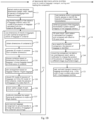
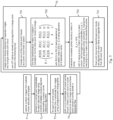
- FIG. 1A to 1C A schematic block diagram of a detailed example of a baggage identification and reconciliation method is illustrated by Figs. 1A to 1C .
- the following activities are performed (see Fig. 1A ):
- an activity A1 the passport and ticket details of a passenger are read out and verified.
- the check-in baggage and carry-on baggage details are determined (it is determined which pieces of baggage is check-in baggage and which pieces of baggage is carry-on baggage).
- the weight of the check-in pieces of baggage is determined and images of the piece(s) of baggage are taken from multiple positions (top base, front, back and sides) - also including different altitudes and angles.
- the type of baggage material (leather, synthetics etc.) is captured, for example, by user input.
- a check-in 3D point cloud is generated from the captured image (see Fig. 3 ).
- an optional activity A6 should the point cloud creation not be successful, again image from different multiple positions are captured.
- a virtual baggage identity is created that includes the check-in 3D point cloud, the weight, material type and other features of the piece(s) of baggage. This virtual baggage identity is linked to the recorded passenger details.
- a boarding pass is created and linked to the passenger, the piece(s) of baggage and the flight, then the boarding pass is issued.
- the following activities are performed (see Fig. 1A ): In an activity B1, X-ray image(s) from the piece(s) of baggage at question are recorded. In an activity B2, these X-ray image(s) are added to the virtual baggage identity.
- the sorting of piece(s) of baggage and loading the containers for example, the following activities are performed (see Fig. 1B ):
- an activity C1 the relative and absolute dimensions (height, width, depth) of said piece(s) of baggage are extracted from the captured images.
- activity C2 the frontal image(s) of the piece(s) of baggage are tagged as a marker with a 3D model of the piece(s) of baggage that is calculated on the basis of the check-in 3D point cloud.
- This 3D model creation and tagging activity C2 may also be missing.
- an activity C3 (involving activities C31 to C38), the dimensions of the check-in baggage are used to plan an optimal arrangement of pieces of baggage in a container: To do so, in an activity C31, the dimensions of the container(s) are obtained. In an activity C32, a 3D model of the container is generated from the container dimensions. In an activity C33, a suitable container is chosen based on the dimension of the piece(s) of baggage and/or piece(s) of baggage are chosen based on the dimensions of the container. In an activity C34, the arrangement of the piece(s) of baggage in the container are planned based on the baggage material / on the basis on knowledge about whether the piece(s) of baggage hold fragile content or not.
- the arrangement may be chosen such that fragile piece(s) of baggage are placed on the top of a container.
- the piece(s) of baggage may be rotated in planning the baggage arrangement, should the 3D model of the piece(s) of baggage / the 3D point cloud associated with the pieces of baggage, not fit the 3D model of the container.
- the weight of the piece(s) of baggage may be distributed uniformly among all the containers to improve flight stability.
- the planned arrangement of the piece(s) of baggage may be sent to a ground handler to arrange the piece(s) of baggage in the containers accordingly.
- an activity C4 (involving C41 to C44), cameras and/or augmented reality glasses are used to identify the piece(s) of baggage within the baggage reconciliation system.
- the camera(s), or augmented reality glasses used within the baggage reconciliation system capture image(s) of the piece(s) of baggage.
- a 3D point cloud / point pattern is extracted from the captured image(s) and is compared with the check-in 3D point cloud.
- activities C43/C44 as a result of a successful comparison, the piece of baggage is identified, should the comparison, however, deliver not an unambiguous result, a notification is sent to change the position of the piece(s) of baggage to capture a different image (e.g. frontal image).
- the piece(s) of baggage are loaded, sorted and transported accordingly.
- the piece(s) of baggage may be loaded, sorted and transported in the order of seat numbers associated with the virtual baggage identities (the seat numbers of passengers the virtual baggage identities are associated with).
- an activity D1 the parameters of the piece(s) of baggage are displayed upon identification of piece(s) of baggage on augmented reality glasses worn by ground handlers, which were also used in identifying the piece(s) of baggage.
- the parameters displayed include at least one of: check-in 3D point cloud/3D model of piece(s) of baggage; the source and destination; baggage and container ID number, weight and dimensions of piece(s) of baggage, material type, container to place the baggage, the (planned) position in the container, instructions to handle the piece(s) of baggage, passenger and flight details as well as the seat number.
- an activity D2 should a piece of baggage be damaged during transit, the ground handler records the damage through the glasses.
- the ground handler shares progress and update details about the baggage transport to the baggage reconciliation system and, correspondingly, in activity D4, the passenger is notified about the status of the piece(s) of baggage associated with the passenger.
- the following further activities E1 to E6 are carried out:
- the containers are unloaded, and in an activity E2, the piece(s) of baggage are retrieved from the containers.
- an activity E3 again multiple images of the piece(s) of baggage are captured from different altitudes and angles and a check-out 3D point cloud or point pattern is generated from on the basis of these images.
- the check-out 3D point cloud / point pattern previously generated is compared with check-in 3D point clouds to identify the piece(s) of baggage (see also Fig. 4 ).
- activity E5 should the result of the comparison be ambiguous, further parameters captured at the check-in besides the check-in 3D point cloud like the weight or X-ray image(s) are used to differentiate between similar piece(s) of baggage.
- the identified piece(s) of baggage are grouped and sorted according to the passengers. To provide an example, they are grouped and sorted according to the seat numbers of the passengers associated with the piece(s) of baggage.
- an activity F1 a passport or biometric parameters (facial recognition, fingerprint scan etc.) are used to identify the passenger for baggage pick-up.
- an activity F2 the identified piece(s) of baggage associated with the identified passenger are delivered to the bag pick-up unit where the passenger is located and has previously identified him/herself.
- an activity F3 should the piece of baggage have been damaged during transport, a damage severity determination is performed on the piece(s) of baggage and the result is shared along with an image of the damaged piece(s) of baggage with the passenger and with the passenger's/airline's insurance provider.
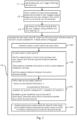
- FIG. 2A to 2C A schematic block diagram of the general activities performed in an example of a baggage identification and reconciliation method as described herein is given by Figs. 2A to 2C .
- an activity S2 including the activities S21 to S24
- parameters of at least one piece of baggage are captured at the check-in, wherein these parameters form a virtual baggage identity.
- Capturing said parameters involves an activity S21, in which multiple images of the piece(s) of baggage are captured from multiple altitudes and angles and a 3D check-in point cloud is generated corresponding to the piece of baggage on the basis of the multiple images captured, wherein generating the 3D check-in point cloud comprises extracting the position of corner points of the piece of baggage.
- an X-ray scan of the piece of baggage is performed and the X-ray scan result is added to the virtual baggage identity.
- Capturing said parameters also includes measuring the weight of the piece of baggage associated with the passenger in an activity S23 as well as determining relative and absolute dimensions of the piece of baggage, including height, length and depth of the piece of baggage, using photogrammetry, in an activity S24.
- the virtual baggage identity is mapped to the identified passenger and transport details.
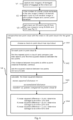
- the dimensions of the at least one piece of baggage obtained are used to plan the arrangement of the piece of baggage in a transport-container, wherein a 3D model of the transport-container is generated and used in either choosing the transport-container based on the dimensions of the piece of baggage or choosing the baggage to be put into the transport-container based on the dimensions of the baggage, wherein a rotatable 3D point cloud corresponding to the piece of baggage is used in order to find a position of the piece of baggage that fits in the 3D model of the container, when planning the arrangement of the piece of baggage in the transport-container.
- the measured weight of the piece of baggage is used in uniformly distributing the weight of pieces of baggage among all transport-containers in order to improve flight stability.
- camera(s) and/or augmented reality device(s) of a baggage reconciliation system capture at least one image of at least the front side of the piece of baggage and corner points extracted from said image(s) are compared with the check-in 3D point cloud to identify the piece of baggage and associate it to the passenger, wherein the identified piece of baggage is loaded into the correct container associated with the passenger's transport details.
- an activity S7 it is determined via a portable augmented reality device to be worn by a ground handler the identity of the piece of baggage by capturing at least one image of the at least one piece of baggage and comparing corner points extracted from said image(s) with the check-in 3D point cloud and wherein parameters of the at least one piece of baggage at least in part corresponding to the virtual baggage identity are displayed on the screen of the portable augmented reality device, when the at least one piece of baggage is in the field of view of the portable augmented reality device.
- the displayed parameters comprise: at least one of source and destination of the piece of baggage and the associated passenger to be transported, the baggage type, the transport-container to place the piece of baggage, the planned position of the piece of baggage in the transport-container, instructions to handle the piece of baggage, the seat number of the passenger associated with the piece of baggage, the weight of the piece of baggage, the height, width and depth dimensions of the piece of baggage.
- the ground handler shares the transport progress of the at least one piece of baggage identified (with the baggage reconciliation system) and the passenger is notified about the shared transport progress.
- the passenger is identified at the check-out destination.
- the at least one piece of baggage is identified that is associated with the passenger at the check-out destination on the basis of the virtual baggage identity, said identification comprising capturing at least one image of the piece of baggage at the check-out and generating a check-out 3D point cloud or point pattern from said captured at least one image and comparing the check-in 3D point clouds with the check-out 3D point cloud or point pattern, wherein the measured weight of the piece of baggage and/or the X-ray scan result of the piece of baggage is used to differentiate between pieces of baggage of the same manufacturing line, when identifying the piece of baggage at the check-out destination.
- the at least one piece of baggage is transported automatically to a baggage pick-up unit which no other passenger than the passenger associated with the piece of baggage can access.
- the damage is recorded by the cameras used to identify the piece of baggage and the check-in 3D point cloud is compared with a 3D point cloud or point pattern extracted from images taken by said cameras to obtain the difference between the undamaged and the damaged at least one piece of baggage in order to estimate a severity of the recorded damage.
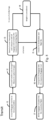
- FIG. 3 A schematic block diagram of an example of a generation of a check-in or check-out 3D point cloud or point pattern as applied in the methods illustrated by Figs. 1A to 1C and/or Figs. 2A to 2C , is illustrated by Fig. 3 .
- the generation of said point clouds/point patterns takes place, for example, by performing the following activities T1 to T5:
- an activity T1 multiple images of the piece(s) of baggage are captured from multiple known altitudes and angles.
- an activity T2 (x,y) corner point coordinates are extracted from each captured image using the SUSAN (smallest univalue segment assimilating nucleus) corner detection algorithm.
- an activity T3 for each of the corner pixels (for which the (x,y) coordinates were identified), the z coordinate is extracted from the respective image using photogrammetric triangulation.
- an activity T4 with the (x,y,z) coordinates of the corner points in each image known, a point cloud of corner points for each image is obtained and the respective point clouds of corner points are stored in separate files for each image.
- an activity T5 including activities T51 to T53), the point clouds created for the individual images are merged into a single overall cloud.
- the ICP (iterative closest point) algorithm is used for the merge in the activities T51 to T53 as follows:
- an activity T51 one of the corner point clouds from one particular image is chosen as a point cloud fixed in space.
- the transformation matrix H R 0,0 R 0,1 R 0,2 tx R 1,0 R 1,1 R 1,2 ty R 2,0 R 2,1 R 2,2 tz 0 0 0 1 , representing a rotation and translation is found for the other point clouds to merge to the point cloud chosen to be fixed in space, with R(0,0) to R(2,2) being elements of a rotation matrix and tx, ty, tz being elements of a translation vector.
- X being a 4-by-n matrix holding in each column the homogenous coordinates (x,y,z, 1) of a single extracted corner point
- X_t being the resulting 4-by-n matrix with the transformed points.
- Each moveable point cloud extracted from a single image may correspond to a different matrix X.
- FIG. 4 An example of such a 3D point cloud representing a suitcase as a piece of baggage 1 is illustrated by Fig. 4 .
- Corner points extracted from a plurality of images form the points 101 of the 3D point cloud 102 which may serve either as a check-in 3D point cloud or a check-out 3D point cloud.
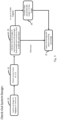
- FIG. 5 A schematic block diagram of an example of a comparison between a check-in 3D point cloud and a check-out 3D point cloud or point pattern used for baggage identification and reconciliation in the methods illustrated by Figs. 1A to 1C and/or Figs. 2A to 2C is given by Fig. 5 .
- the comparison is, for example, carried out by means of activities U1 to U4, as follows: In an activity U1, at least one new image of the piece of baggage (bag) is captured at the check-out. In an activity U2, if the number of corner points that can be extracted from the new image is minimal, the image is rejected and new image(s) from which more corner points can be extracted is/are captured. In an activity U3, a check-out 3D point cloud is generated form the new image(s) using SUSAN and ICP (see Fig. 3 ).
- the new point cloud B (being a check-out 3D point cloud) is compared with the check-in 3D point clouds available for multiple pieces of baggage by way of activities U41 to U44, which are explained further in the following:
- a check-in point cloud A is chosen as an input cloud.
- an activity U42 for each point in point cloud B an activity of finding the nearest point in cloud A and comparing (using tree search) and finding the squared distance between two points is carried out. If the distance between the two points is within a point distance threshold, the method continues with these two points and the squared distance between two points is accumulated.
- FIG. 6 A schematic block diagram of an example damage severity determination as applied in the course of the baggage identification and reconciliation method illustrated by Figs. 1A to 1C and/or Figs. 2A to 2C is illustrated by Fig. 6 .
- the damage severity determination includes the activities V1 to V4, which are described in the following:
- new image(s) of a damaged piece of baggage is/are captured at the check-out.
- an activity V2 should the number of (corner) points extracted of said new image(s) captured be below a threshold, these images are rejected and different images are captured or additional images are added and corner points are extracted from these new/additional images.
- a check-out 3d point cloud B is obtained from the newly captured image(s) of the damaged piece of baggage using the SUSAN and ICP algorithm (see Fig. 3 ).
- an activity V4 which includes activities V41 to V44, the new point cloud (the check-out 3D point cloud of the damaged piece of baggage) is compared with the check-in point A of the given bag (the undamaged piece of baggage).
- the check-in point cloud (of the undamaged piece of baggage) is chosen as the input cloud.
- the method for each point in point cloud B, the method involves finding the nearest point in cloud A and compare (use tree search) and finding the squared distance between the two points. If the distance between two points is within a point-distance threshold, the method continues and the squared distance between two points is added to accumulate the squared distances between points.
- the squared distance between a given point in point cloud B and the respective nearest point in point cloud A is accumulated (for example: added).
- the damage is determined to be within the 10% limit. If the mean squared distance is larger than B cm, the damage is determined to be within the 25% limit. If the mean squared distance is larger than C cm, the damage is determined to be within the 50% limit.
- an activity H1 a boarding pass scan and/or a passport scan, and/or a passenger image scan is performed.
- images of the baggage are captured in all directions as described above.
- the weight and size (height and breadth) of the at least one piece of baggage are captured.
- the corner point coordinates (X,Y,Z) are detected (forming singular point clouds) based on the images captured in activity H2.
- all point clouds are merged using an ICP algorithm.
- an activity H6 the final merged point cloud is stored.
- an activity H7 an X-Ray scan of the piece(s) of baggage is performed.
- an activity H8 a baggage ID is created.
- the following activities are performed: In an activity I1, the baggage reaches the ground handlers. In an activity 12, the ground handlers use Google ® Glasses to capture images. In an activity 13, the ground handler detects corner points (X,Y,Z) corresponding to a point cloud and compares them with all pieces of baggage and considers the respective matching Bag ID. If no single bag clearly shows the highest matching percentage, the weight of the bag is considered as an additional matching factor in an activity 14. If a matching piece of baggage can be found immediately, the ground handler checks the destination and flight number of the detected and matched piece of baggage in an activity 15. The ground handler transports the respective piece of baggage in a respective baggage cart in an activity I6 and the piece of baggage is loaded into the respective flight in an activity 17.
- the ground handler transports the respective piece of baggage in a respective baggage cart in an activity I6 and the piece of baggage is loaded into the respective flight in an activity 17.
- FIG. 9 An example of a check out system design, according to which the method of baggage identification and reconciliation method is implemented, is illustrated by Fig. 9 .
- an image of the piece of baggage is captured at the check-out.
- corner point coordinates (X,Y,Z) are detected.
- the percentage of matching points between the passenger associated points clouds merged at the check and the point cloud obtained for the piece of baggage at the check-out is calculated.
- similar baggage - corresponding to pieces of baggage with a similar matching percentage e.g. +/- 10% of a given threshold percentage like 90%, based on the point cloud comparison - other parameters like weight or the X-ray image of a piece of baggage are considered in an activity J4. If there are no similar pieces of baggage based on cloud comparison, the piece of baggage with the highest matching percentage is checked out in an activity J5.
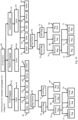
- FIG. 10 An example of a tree structure for segregating pieces of baggage into distinct categories in the course of the baggage identification and reconciliation method is schematically illustrated by Fig. 10 .
- This example of a tree structure is used, for example, to provide to provide an additional way for differentiating bags with similar point clouds from each other. All the following segregations may be determined automatically based on the images taken from the piece of baggage.
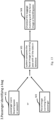
- the tree structure includes dimensions 30, which segregate the baggage in one of the categories small baggage 31, medium baggage 32, or large baggage 33.
- the small baggage 31 as well as the large baggage are next segregated according to their colour.
- the bags colour is differentiated between black 41, blue, 42, red 43, yellow 44 and green 45 colour classes.
- the both the small baggage 31 and the large baggage 33 are classified as pieces of baggage with black 41 colour.
- the pieces of baggage 31, 33 are further differentiated according to their bag texture 50, which in particular differentiates between a hard bag 51 and a soft bag 52.
- the piece of baggage classified as small baggage 31 is classified as a hard bag 51
- the piece of baggage classified as a large baggage 33 is classified as a soft bag 52.
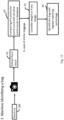
- FIG. 11 An example for the usage of a machine to for identifying a bag in the course of the method of baggage identification and reconciliation, is schematically illustrated by Fig. 11 .
- a machine (such as a height adjustable and rotatable array of cameras) is used to extract the point cloud in an activity K1.
- the extracted point cloud is compared with all other point clouds (of checked-in pieces of baggage) in a database in an activity K2.
- the weight or X-ray image is considered in an activity K3.
- the piece of baggage with the highest matching percentage is identified.
- FIG. 12 An example for using a ground handling for identifying a bag in the course of the method of baggage identification and reconciliation is illustrated by Fig. 12 .
- the ground handler takes pictures from a piece of baggage using Google ® glasses in an activity L1.
- the point cloud/point pattern is extracted in an activity L2.
- This particular point cloud is compared with all other point clouds in a database in an activity L3.
- the weight of the considered particular piece of baggage is considered in an activity L4.
- FIG. 13 An example of using a passenger to identify a bag in the course of the method of baggage identification and reconciliation is schematically illustrated by Fig. 13 .
- the passenger scans the boarding pass or passport in an activity M1 or a facial image scan is taken from the passenger in an activity M2.
- the system compares the facial image or boarding pass with all (passenger) data in a database.
- the piece of baggage matching with the facial image of the passenger or the passenger's boarding pass is checked out.
- FIG. 14 A diagrammatic representation of an exemplary computer system 500 is shown in Fig. 14 .
- the processor 502 is arranged to execute a set of instructions 503, to cause the computer system 500 to perform any of the methodologies used for the method of baggage identification and baggage reconciliation for public transport, as described herein.
- the computers of the distributed computer system performing the tasks of said method of baggage identification and baggage reconciliation for public transport might be arranged like this.
- the computer system 500 includes a processor 502, a main memory 504 and a network interface 508.
- the main memory 504 includes a user space, which is associated with user-run applications, and a kernel space, which is reserved for operating-system- and hardware-associated applications.
- the computer system 500 further includes a static memory 506, e.g. non-removable flash and/or solid-state drive and/or a removable Micro or Mini SD card, which permanently stores software enabling the computer system 500 to execute functions of the computer system 500.
- it may include a video display 510, a user interface control module 514 and/or an alpha-numeric and cursor input device 512.
- additional I/O interfaces 516 such as card reader and USB interfaces may be present.
- the computer system components 502 to 516 are interconnected by a data bus 518.
- the software programmed to carry out (parts of) the method described herein is stored on the static memory 506; in other exemplary embodiments, external databases are used.
- process data resides in the main memory 504 and/or the processor 502.
Landscapes
- Engineering & Computer Science (AREA)
- Physics & Mathematics (AREA)
- General Physics & Mathematics (AREA)
- Theoretical Computer Science (AREA)
- Computer Vision & Pattern Recognition (AREA)
- Multimedia (AREA)
- Mechanical Engineering (AREA)
- Aviation & Aerospace Engineering (AREA)
- Quality & Reliability (AREA)
- Analysing Materials By The Use Of Radiation (AREA)
Priority Applications (2)
| Application Number | Priority Date | Filing Date | Title |
|---|---|---|---|
| EP22306030.2A EP4303794A1 (de) | 2022-07-08 | 2022-07-08 | Verfahren zur gepäckidentifizierung und gepäckrückgewinnung für öffentliche verkehrsmittel |
| US18/334,069 US20240013371A1 (en) | 2022-07-08 | 2023-06-13 | Method of baggage identification and baggage reconciliation for public transport |
Applications Claiming Priority (1)
| Application Number | Priority Date | Filing Date | Title |
|---|---|---|---|
| EP22306030.2A EP4303794A1 (de) | 2022-07-08 | 2022-07-08 | Verfahren zur gepäckidentifizierung und gepäckrückgewinnung für öffentliche verkehrsmittel |
Publications (1)
| Publication Number | Publication Date |
|---|---|
| EP4303794A1 true EP4303794A1 (de) | 2024-01-10 |
Family
ID=83049859
Family Applications (1)
| Application Number | Title | Priority Date | Filing Date |
|---|---|---|---|
| EP22306030.2A Pending EP4303794A1 (de) | 2022-07-08 | 2022-07-08 | Verfahren zur gepäckidentifizierung und gepäckrückgewinnung für öffentliche verkehrsmittel |
Country Status (2)
| Country | Link |
|---|---|
| US (1) | US20240013371A1 (de) |
| EP (1) | EP4303794A1 (de) |
Families Citing this family (2)
| Publication number | Priority date | Publication date | Assignee | Title |
|---|---|---|---|---|
| US12567027B2 (en) * | 2022-08-10 | 2026-03-03 | Toshiba Global Commerce Solutions Holdings Corporation | Inventory characterization and identification system |
| CN120001639B (zh) * | 2025-04-18 | 2025-07-18 | 北京万相融通科技股份有限公司 | 一种用于已安检行李的分拣系统及方法 |
Citations (12)
| Publication number | Priority date | Publication date | Assignee | Title |
|---|---|---|---|---|
| US6158658A (en) * | 1997-08-27 | 2000-12-12 | Laser Data Command, Inc. | System and method for matching passengers and their baggage |
| EP2168873A2 (de) * | 2008-09-24 | 2010-03-31 | Siemens Aktiengesellschaft | System und Verfahren zur Gepäckausgabe |
| EP3113091A1 (de) * | 2015-07-01 | 2017-01-04 | Amadeus S.A.S. | Bildbasiertes gepäckverfolgungssystem |
| EP3270342A1 (de) * | 2016-07-15 | 2018-01-17 | Alitheon, Inc. | Identifikation und verfolgung physikalischer objekte während des transports mittels datenverarbeitung und datenbankeinträgen |
| EP3373252A1 (de) * | 2015-11-06 | 2018-09-12 | Sistemas Tecnicos Y Montajes, S.L. | System zur integrierten passagier- und gepäcksteuerung |
| CN109102227A (zh) * | 2018-08-08 | 2018-12-28 | 天津航大航空设备有限公司 | 行李类别检测方法、自助行李设备和存储介质 |
| EP3656683A1 (de) * | 2018-11-22 | 2020-05-27 | International Boarding Solutions S.L. | System und verfahren zur kontrolle von passagieren und gepäck vor dem einsteigen |
| GB2588407A (en) * | 2019-10-22 | 2021-04-28 | Int Consolidated Airlines Group S A | Baggage-based user identity verification system and method |
| GB2588408A (en) * | 2019-10-22 | 2021-04-28 | Int Consolidated Airlines Group S A | Baggage identification system and method |
| WO2021078790A1 (en) * | 2019-10-22 | 2021-04-29 | International Consolidated Airlines Group, S.A | Baggage-based identification and verification system and method |
| CN113418467A (zh) * | 2021-06-16 | 2021-09-21 | 厦门硅谷动能信息技术有限公司 | 基于ToF点云数据检测一般及黑色行李尺寸的方法 |
| CN114663626A (zh) * | 2022-03-23 | 2022-06-24 | 超节点创新科技(深圳)有限公司 | 基于单帧采样的行李快速建模方法、设备及存储介质 |
Family Cites Families (8)
| Publication number | Priority date | Publication date | Assignee | Title |
|---|---|---|---|---|
| DE102007059686A1 (de) * | 2007-12-12 | 2009-06-18 | Airbus Deutschland Gmbh | Staufachanordnung |
| GB201122284D0 (en) * | 2011-12-23 | 2012-02-01 | Zappar Ltd | Content identification and distribution |
| US8977035B2 (en) * | 2012-06-13 | 2015-03-10 | Applied Materials Israel, Ltd. | System, method and computer program product for detection of defects within inspection images |
| JP6906916B2 (ja) * | 2016-09-06 | 2021-07-21 | 株式会社トプコン | 画像処理装置、画像処理方法、画像処理用プログラム |
| US20180341822A1 (en) * | 2017-05-26 | 2018-11-29 | Dura Operating, Llc | Method and system for classifying objects in a perception scene graph by using a scene-detection-schema |
| US11099108B2 (en) * | 2018-11-21 | 2021-08-24 | Qc Labs | Systems and method for providing a graphical user interface for automated determination of randomized representative sampling |
| EP4181064A1 (de) * | 2021-11-12 | 2023-05-17 | SITA Information Networking Computing UK Limited | Verfahren und system zur messung eines artikels |
| CN116136410A (zh) * | 2021-11-17 | 2023-05-19 | 财团法人资讯工业策进会 | 地图扫描系统及地图扫描方法 |
-
2022
- 2022-07-08 EP EP22306030.2A patent/EP4303794A1/de active Pending
-
2023
- 2023-06-13 US US18/334,069 patent/US20240013371A1/en active Pending
Patent Citations (12)
| Publication number | Priority date | Publication date | Assignee | Title |
|---|---|---|---|---|
| US6158658A (en) * | 1997-08-27 | 2000-12-12 | Laser Data Command, Inc. | System and method for matching passengers and their baggage |
| EP2168873A2 (de) * | 2008-09-24 | 2010-03-31 | Siemens Aktiengesellschaft | System und Verfahren zur Gepäckausgabe |
| EP3113091A1 (de) * | 2015-07-01 | 2017-01-04 | Amadeus S.A.S. | Bildbasiertes gepäckverfolgungssystem |
| EP3373252A1 (de) * | 2015-11-06 | 2018-09-12 | Sistemas Tecnicos Y Montajes, S.L. | System zur integrierten passagier- und gepäcksteuerung |
| EP3270342A1 (de) * | 2016-07-15 | 2018-01-17 | Alitheon, Inc. | Identifikation und verfolgung physikalischer objekte während des transports mittels datenverarbeitung und datenbankeinträgen |
| CN109102227A (zh) * | 2018-08-08 | 2018-12-28 | 天津航大航空设备有限公司 | 行李类别检测方法、自助行李设备和存储介质 |
| EP3656683A1 (de) * | 2018-11-22 | 2020-05-27 | International Boarding Solutions S.L. | System und verfahren zur kontrolle von passagieren und gepäck vor dem einsteigen |
| GB2588407A (en) * | 2019-10-22 | 2021-04-28 | Int Consolidated Airlines Group S A | Baggage-based user identity verification system and method |
| GB2588408A (en) * | 2019-10-22 | 2021-04-28 | Int Consolidated Airlines Group S A | Baggage identification system and method |
| WO2021078790A1 (en) * | 2019-10-22 | 2021-04-29 | International Consolidated Airlines Group, S.A | Baggage-based identification and verification system and method |
| CN113418467A (zh) * | 2021-06-16 | 2021-09-21 | 厦门硅谷动能信息技术有限公司 | 基于ToF点云数据检测一般及黑色行李尺寸的方法 |
| CN114663626A (zh) * | 2022-03-23 | 2022-06-24 | 超节点创新科技(深圳)有限公司 | 基于单帧采样的行李快速建模方法、设备及存储介质 |
Also Published As
| Publication number | Publication date |
|---|---|
| US20240013371A1 (en) | 2024-01-11 |
Similar Documents
| Publication | Publication Date | Title |
|---|---|---|
| US20170004384A1 (en) | Image based baggage tracking system | |
| US6698653B1 (en) | Identification method, especially for airport security and the like | |
| US20240013371A1 (en) | Method of baggage identification and baggage reconciliation for public transport | |
| CN107430719B (zh) | 用于验证货物内容的系统和方法 | |
| US11842321B1 (en) | Image-based detection of planogram product spaces | |
| US9159181B2 (en) | Method and system for automatically depositing objects for the purpose of their transportation | |
| US12437544B2 (en) | Credit-based body scan apparatus, method, and storage medium | |
| US20220398300A1 (en) | Baggage-based identification and verification system and method | |
| EP3113091A1 (de) | Bildbasiertes gepäckverfolgungssystem | |
| CN118504951B (zh) | 一种机场行李管理系统 | |
| US20120228377A1 (en) | Automated Passenger Screening Checkpoint | |
| ES2562733A1 (es) | Sistema para el control integral de pasajeros y equipaje | |
| CN108701287A (zh) | 用于创建行李件的描述的方法和行李描述系统 | |
| US11462005B1 (en) | Image partitioning for re-identification | |
| US20240328772A1 (en) | Method and system for measuring an article | |
| EP3656683A1 (de) | System und verfahren zur kontrolle von passagieren und gepäck vor dem einsteigen | |
| US20190385337A1 (en) | Article positioning method and system | |
| CN108154336A (zh) | 一种基于物联网的物流末端储物系统 | |
| Noel et al. | A Smart IoT based real-time system to Minimize Mishandled Luggage at Airports | |
| US7801833B2 (en) | Item identification control method | |
| JP7095574B2 (ja) | 画像処理プログラム、画像処理方法、および画像処理装置 | |
| US20250131543A1 (en) | System and method for object measurement | |
| JP2020087171A (ja) | 画像処理プログラム、画像処理方法、および画像処理装置 | |
| JP2026508127A (ja) | 手荷物目録を作成し、リモートでチェックインするためのシステム及び方法 | |
| Samha et al. | Applied internet of things in Saudi arabia airports |
Legal Events
| Date | Code | Title | Description |
|---|---|---|---|
| PUAI | Public reference made under article 153(3) epc to a published international application that has entered the european phase |
Free format text: ORIGINAL CODE: 0009012 |
|
| STAA | Information on the status of an ep patent application or granted ep patent |
Free format text: STATUS: THE APPLICATION HAS BEEN PUBLISHED |
|
| AK | Designated contracting states |
Kind code of ref document: A1 Designated state(s): AL AT BE BG CH CY CZ DE DK EE ES FI FR GB GR HR HU IE IS IT LI LT LU LV MC MK MT NL NO PL PT RO RS SE SI SK SM TR |
|
| STAA | Information on the status of an ep patent application or granted ep patent |
Free format text: STATUS: REQUEST FOR EXAMINATION WAS MADE |
|
| 17P | Request for examination filed |
Effective date: 20240402 |
|
| RBV | Designated contracting states (corrected) |
Designated state(s): AL AT BE BG CH CY CZ DE DK EE ES FI FR GB GR HR HU IE IS IT LI LT LU LV MC MK MT NL NO PL PT RO RS SE SI SK SM TR |
|
| STAA | Information on the status of an ep patent application or granted ep patent |
Free format text: STATUS: EXAMINATION IS IN PROGRESS |
|
| 17Q | First examination report despatched |
Effective date: 20250417 |