EP4307315A1 - Vorhersagemodelle für das ansprechen auf eine behandlung durch maschinelles lernen - Google Patents
Vorhersagemodelle für das ansprechen auf eine behandlung durch maschinelles lernen Download PDFInfo
- Publication number
- EP4307315A1 EP4307315A1 EP22290045.8A EP22290045A EP4307315A1 EP 4307315 A1 EP4307315 A1 EP 4307315A1 EP 22290045 A EP22290045 A EP 22290045A EP 4307315 A1 EP4307315 A1 EP 4307315A1
- Authority
- EP
- European Patent Office
- Prior art keywords
- features
- patient
- values
- multimodal
- machine learning
- Prior art date
- Legal status (The legal status is an assumption and is not a legal conclusion. Google has not performed a legal analysis and makes no representation as to the accuracy of the status listed.)
- Withdrawn
Links
- 238000011282 treatment Methods 0.000 title claims abstract description 364
- 230000004044 response Effects 0.000 title claims abstract description 187
- 238000010801 machine learning Methods 0.000 title claims description 223
- 238000000034 method Methods 0.000 claims abstract description 192
- 206010058467 Lung neoplasm malignant Diseases 0.000 claims abstract description 23
- 201000005202 lung cancer Diseases 0.000 claims abstract description 23
- 208000020816 lung neoplasm Diseases 0.000 claims abstract description 23
- 238000009169 immunotherapy Methods 0.000 claims abstract description 22
- 238000011156 evaluation Methods 0.000 claims description 117
- 206010028980 Neoplasm Diseases 0.000 claims description 73
- 238000012549 training Methods 0.000 claims description 71
- 201000010099 disease Diseases 0.000 claims description 66
- 208000037265 diseases, disorders, signs and symptoms Diseases 0.000 claims description 66
- 230000008859 change Effects 0.000 claims description 61
- 201000011510 cancer Diseases 0.000 claims description 49
- 238000004364 calculation method Methods 0.000 claims description 32
- 238000003384 imaging method Methods 0.000 claims description 24
- 238000002512 chemotherapy Methods 0.000 claims description 23
- 238000004632 predicting treatment efficacy Methods 0.000 claims description 23
- 102000008096 B7-H1 Antigen Human genes 0.000 claims description 21
- 108010074708 B7-H1 Antigen Proteins 0.000 claims description 21
- 230000000869 mutational effect Effects 0.000 claims description 21
- 238000004422 calculation algorithm Methods 0.000 claims description 20
- 230000014509 gene expression Effects 0.000 claims description 15
- 230000004083 survival effect Effects 0.000 claims description 12
- 238000002626 targeted therapy Methods 0.000 claims description 12
- 102000052116 epidermal growth factor receptor activity proteins Human genes 0.000 claims description 10
- 108700015053 epidermal growth factor receptor activity proteins Proteins 0.000 claims description 10
- YOHYSYJDKVYCJI-UHFFFAOYSA-N n-[3-[[6-[3-(trifluoromethyl)anilino]pyrimidin-4-yl]amino]phenyl]cyclopropanecarboxamide Chemical compound FC(F)(F)C1=CC=CC(NC=2N=CN=C(NC=3C=C(NC(=O)C4CC4)C=CC=3)C=2)=C1 YOHYSYJDKVYCJI-UHFFFAOYSA-N 0.000 claims description 10
- 238000001356 surgical procedure Methods 0.000 claims description 10
- 230000000977 initiatory effect Effects 0.000 claims description 9
- 230000036961 partial effect Effects 0.000 claims description 8
- 238000011227 neoadjuvant chemotherapy Methods 0.000 claims description 6
- 238000001959 radiotherapy Methods 0.000 claims description 6
- 238000009098 adjuvant therapy Methods 0.000 claims description 4
- 238000009099 neoadjuvant therapy Methods 0.000 claims description 4
- 239000004037 angiogenesis inhibitor Substances 0.000 claims description 3
- 208000002154 non-small cell lung carcinoma Diseases 0.000 description 53
- 208000029729 tumor suppressor gene on chromosome 11 Diseases 0.000 description 53
- 238000003745 diagnosis Methods 0.000 description 22
- 238000012545 processing Methods 0.000 description 16
- 229960002621 pembrolizumab Drugs 0.000 description 14
- 238000007781 pre-processing Methods 0.000 description 14
- 210000004556 brain Anatomy 0.000 description 13
- 238000002591 computed tomography Methods 0.000 description 13
- 239000000090 biomarker Substances 0.000 description 11
- 238000004458 analytical method Methods 0.000 description 10
- 210000000038 chest Anatomy 0.000 description 10
- 238000002595 magnetic resonance imaging Methods 0.000 description 10
- 230000035772 mutation Effects 0.000 description 9
- 230000037361 pathway Effects 0.000 description 9
- 102100033793 ALK tyrosine kinase receptor Human genes 0.000 description 8
- 101000779641 Homo sapiens ALK tyrosine kinase receptor Proteins 0.000 description 8
- 229940076838 Immune checkpoint inhibitor Drugs 0.000 description 8
- 102000037984 Inhibitory immune checkpoint proteins Human genes 0.000 description 8
- 108091008026 Inhibitory immune checkpoint proteins Proteins 0.000 description 8
- 230000034994 death Effects 0.000 description 8
- 231100000517 death Toxicity 0.000 description 8
- 239000012274 immune-checkpoint protein inhibitor Substances 0.000 description 8
- 238000004393 prognosis Methods 0.000 description 8
- 230000002776 aggregation Effects 0.000 description 7
- 238000004220 aggregation Methods 0.000 description 7
- 238000004159 blood analysis Methods 0.000 description 7
- 238000013527 convolutional neural network Methods 0.000 description 7
- 238000007481 next generation sequencing Methods 0.000 description 7
- 239000002773 nucleotide Substances 0.000 description 7
- 125000003729 nucleotide group Chemical group 0.000 description 7
- 238000002560 therapeutic procedure Methods 0.000 description 7
- 208000032818 Microsatellite Instability Diseases 0.000 description 6
- 208000012902 Nervous system disease Diseases 0.000 description 6
- 238000013528 artificial neural network Methods 0.000 description 6
- 238000002648 combination therapy Methods 0.000 description 6
- 210000000056 organ Anatomy 0.000 description 6
- 238000002600 positron emission tomography Methods 0.000 description 6
- 108090000623 proteins and genes Proteins 0.000 description 6
- 238000009097 single-agent therapy Methods 0.000 description 6
- 206010027476 Metastases Diseases 0.000 description 5
- 208000025966 Neurological disease Diseases 0.000 description 5
- 210000001015 abdomen Anatomy 0.000 description 5
- 238000013459 approach Methods 0.000 description 5
- 230000036541 health Effects 0.000 description 5
- 230000006801 homologous recombination Effects 0.000 description 5
- 238000002744 homologous recombination Methods 0.000 description 5
- 230000009401 metastasis Effects 0.000 description 5
- 206010061289 metastatic neoplasm Diseases 0.000 description 5
- 210000004197 pelvis Anatomy 0.000 description 5
- 238000012706 support-vector machine Methods 0.000 description 5
- 208000023275 Autoimmune disease Diseases 0.000 description 4
- 208000008839 Kidney Neoplasms Diseases 0.000 description 4
- 102000003855 L-lactate dehydrogenase Human genes 0.000 description 4
- 108700023483 L-lactate dehydrogenases Proteins 0.000 description 4
- 108091092878 Microsatellite Proteins 0.000 description 4
- 206010038389 Renal cancer Diseases 0.000 description 4
- 208000003721 Triple Negative Breast Neoplasms Diseases 0.000 description 4
- 239000003242 anti bacterial agent Substances 0.000 description 4
- 229940088710 antibiotic agent Drugs 0.000 description 4
- 210000004369 blood Anatomy 0.000 description 4
- 239000008280 blood Substances 0.000 description 4
- 238000004891 communication Methods 0.000 description 4
- 238000000605 extraction Methods 0.000 description 4
- 201000010982 kidney cancer Diseases 0.000 description 4
- 230000001394 metastastic effect Effects 0.000 description 4
- 230000008569 process Effects 0.000 description 4
- 230000000391 smoking effect Effects 0.000 description 4
- 210000000115 thoracic cavity Anatomy 0.000 description 4
- 208000022679 triple-negative breast carcinoma Diseases 0.000 description 4
- 210000004881 tumor cell Anatomy 0.000 description 4
- 208000003174 Brain Neoplasms Diseases 0.000 description 3
- 206010061818 Disease progression Diseases 0.000 description 3
- 208000028782 Hereditary disease Diseases 0.000 description 3
- 208000024556 Mendelian disease Diseases 0.000 description 3
- 230000008901 benefit Effects 0.000 description 3
- 238000004820 blood count Methods 0.000 description 3
- 239000003246 corticosteroid Substances 0.000 description 3
- 229960001334 corticosteroids Drugs 0.000 description 3
- 238000013135 deep learning Methods 0.000 description 3
- 230000007812 deficiency Effects 0.000 description 3
- 230000002950 deficient Effects 0.000 description 3
- 230000005750 disease progression Effects 0.000 description 3
- 230000037442 genomic alteration Effects 0.000 description 3
- 210000000265 leukocyte Anatomy 0.000 description 3
- 210000004698 lymphocyte Anatomy 0.000 description 3
- 230000033607 mismatch repair Effects 0.000 description 3
- 102000005962 receptors Human genes 0.000 description 3
- 108020003175 receptors Proteins 0.000 description 3
- 208000024891 symptom Diseases 0.000 description 3
- 231100000419 toxicity Toxicity 0.000 description 3
- 230000001988 toxicity Effects 0.000 description 3
- 206010069754 Acquired gene mutation Diseases 0.000 description 2
- 102000009027 Albumins Human genes 0.000 description 2
- 108010088751 Albumins Proteins 0.000 description 2
- 206010006187 Breast cancer Diseases 0.000 description 2
- 208000026310 Breast neoplasm Diseases 0.000 description 2
- 208000032007 Glycogen storage disease due to acid maltase deficiency Diseases 0.000 description 2
- 206010053185 Glycogen storage disease type II Diseases 0.000 description 2
- 102000001554 Hemoglobins Human genes 0.000 description 2
- 108010054147 Hemoglobins Proteins 0.000 description 2
- 102100035108 High affinity nerve growth factor receptor Human genes 0.000 description 2
- 101000596894 Homo sapiens High affinity nerve growth factor receptor Proteins 0.000 description 2
- 101000686031 Homo sapiens Proto-oncogene tyrosine-protein kinase ROS Proteins 0.000 description 2
- 101000984753 Homo sapiens Serine/threonine-protein kinase B-raf Proteins 0.000 description 2
- 102000008070 Interferon-gamma Human genes 0.000 description 2
- 108010074328 Interferon-gamma Proteins 0.000 description 2
- 208000019693 Lung disease Diseases 0.000 description 2
- 102100033448 Lysosomal alpha-glucosidase Human genes 0.000 description 2
- 108091028043 Nucleic acid sequence Proteins 0.000 description 2
- 102100040678 Programmed cell death protein 1 Human genes 0.000 description 2
- 101710089372 Programmed cell death protein 1 Proteins 0.000 description 2
- 102100023347 Proto-oncogene tyrosine-protein kinase ROS Human genes 0.000 description 2
- 102100027103 Serine/threonine-protein kinase B-raf Human genes 0.000 description 2
- 102100026715 Serine/threonine-protein kinase STK11 Human genes 0.000 description 2
- 210000003651 basophil Anatomy 0.000 description 2
- 210000000481 breast Anatomy 0.000 description 2
- 210000004027 cell Anatomy 0.000 description 2
- 238000006243 chemical reaction Methods 0.000 description 2
- 208000029742 colonic neoplasm Diseases 0.000 description 2
- 238000007405 data analysis Methods 0.000 description 2
- 238000012217 deletion Methods 0.000 description 2
- 230000037430 deletion Effects 0.000 description 2
- 238000001514 detection method Methods 0.000 description 2
- 238000002059 diagnostic imaging Methods 0.000 description 2
- 230000037437 driver mutation Effects 0.000 description 2
- 230000000694 effects Effects 0.000 description 2
- 210000003979 eosinophil Anatomy 0.000 description 2
- 210000003743 erythrocyte Anatomy 0.000 description 2
- 238000001914 filtration Methods 0.000 description 2
- 230000006870 function Effects 0.000 description 2
- 230000002068 genetic effect Effects 0.000 description 2
- 201000004502 glycogen storage disease II Diseases 0.000 description 2
- 230000012010 growth Effects 0.000 description 2
- 238000003364 immunohistochemistry Methods 0.000 description 2
- 230000006872 improvement Effects 0.000 description 2
- 238000012880 independent component analysis Methods 0.000 description 2
- 238000011221 initial treatment Methods 0.000 description 2
- 238000003780 insertion Methods 0.000 description 2
- 230000037431 insertion Effects 0.000 description 2
- 230000003993 interaction Effects 0.000 description 2
- 229960003130 interferon gamma Drugs 0.000 description 2
- 238000007477 logistic regression Methods 0.000 description 2
- 238000007726 management method Methods 0.000 description 2
- 239000003550 marker Substances 0.000 description 2
- 238000005259 measurement Methods 0.000 description 2
- 210000001616 monocyte Anatomy 0.000 description 2
- 210000000440 neutrophil Anatomy 0.000 description 2
- 229960003301 nivolumab Drugs 0.000 description 2
- BASFCYQUMIYNBI-UHFFFAOYSA-N platinum Chemical compound [Pt] BASFCYQUMIYNBI-UHFFFAOYSA-N 0.000 description 2
- 238000000513 principal component analysis Methods 0.000 description 2
- 238000007637 random forest analysis Methods 0.000 description 2
- 230000000306 recurrent effect Effects 0.000 description 2
- 238000002271 resection Methods 0.000 description 2
- 238000011519 second-line treatment Methods 0.000 description 2
- 230000000392 somatic effect Effects 0.000 description 2
- 230000037439 somatic mutation Effects 0.000 description 2
- 238000007619 statistical method Methods 0.000 description 2
- 238000009121 systemic therapy Methods 0.000 description 2
- 238000012360 testing method Methods 0.000 description 2
- 238000003325 tomography Methods 0.000 description 2
- 230000001131 transforming effect Effects 0.000 description 2
- 201000003701 uterine corpus endometrial carcinoma Diseases 0.000 description 2
- 208000010507 Adenocarcinoma of Lung Diseases 0.000 description 1
- 206010071977 Anaplastic lymphoma kinase gene mutation Diseases 0.000 description 1
- 102000052609 BRCA2 Human genes 0.000 description 1
- 108700020462 BRCA2 Proteins 0.000 description 1
- 101150008921 Brca2 gene Proteins 0.000 description 1
- 229940045513 CTLA4 antagonist Drugs 0.000 description 1
- 241001250090 Capra ibex Species 0.000 description 1
- 208000006545 Chronic Obstructive Pulmonary Disease Diseases 0.000 description 1
- 206010009944 Colon cancer Diseases 0.000 description 1
- 208000001333 Colorectal Neoplasms Diseases 0.000 description 1
- 108020004414 DNA Proteins 0.000 description 1
- 230000033616 DNA repair Effects 0.000 description 1
- 206010071975 EGFR gene mutation Diseases 0.000 description 1
- 102100030708 GTPase KRas Human genes 0.000 description 1
- 101000584612 Homo sapiens GTPase KRas Proteins 0.000 description 1
- 101000605639 Homo sapiens Phosphatidylinositol 4,5-bisphosphate 3-kinase catalytic subunit alpha isoform Proteins 0.000 description 1
- 101000628562 Homo sapiens Serine/threonine-protein kinase STK11 Proteins 0.000 description 1
- 101000997832 Homo sapiens Tyrosine-protein kinase JAK2 Proteins 0.000 description 1
- 102000042838 JAK family Human genes 0.000 description 1
- 108091082332 JAK family Proteins 0.000 description 1
- 102000004034 Kelch-Like ECH-Associated Protein 1 Human genes 0.000 description 1
- 108090000484 Kelch-Like ECH-Associated Protein 1 Proteins 0.000 description 1
- 206010061309 Neoplasm progression Diseases 0.000 description 1
- 206010033128 Ovarian cancer Diseases 0.000 description 1
- 206010061535 Ovarian neoplasm Diseases 0.000 description 1
- 239000012661 PARP inhibitor Substances 0.000 description 1
- 108010011536 PTEN Phosphohydrolase Proteins 0.000 description 1
- 102000014160 PTEN Phosphohydrolase Human genes 0.000 description 1
- 102100038332 Phosphatidylinositol 4,5-bisphosphate 3-kinase catalytic subunit alpha isoform Human genes 0.000 description 1
- 229940121906 Poly ADP ribose polymerase inhibitor Drugs 0.000 description 1
- 208000023146 Pre-existing disease Diseases 0.000 description 1
- 101710181599 Serine/threonine-protein kinase STK11 Proteins 0.000 description 1
- 208000005718 Stomach Neoplasms Diseases 0.000 description 1
- 229940123237 Taxane Drugs 0.000 description 1
- 108010078814 Tumor Suppressor Protein p53 Proteins 0.000 description 1
- 102000015098 Tumor Suppressor Protein p53 Human genes 0.000 description 1
- 102100033444 Tyrosine-protein kinase JAK2 Human genes 0.000 description 1
- 208000002495 Uterine Neoplasms Diseases 0.000 description 1
- 208000009956 adenocarcinoma Diseases 0.000 description 1
- 239000002671 adjuvant Substances 0.000 description 1
- 230000002411 adverse Effects 0.000 description 1
- 230000004075 alteration Effects 0.000 description 1
- 230000008106 antitumoral immune reaction Effects 0.000 description 1
- 238000003782 apoptosis assay Methods 0.000 description 1
- 210000000988 bone and bone Anatomy 0.000 description 1
- 230000005773 cancer-related death Effects 0.000 description 1
- 231100000504 carcinogenesis Toxicity 0.000 description 1
- 230000001413 cellular effect Effects 0.000 description 1
- 229940121420 cemiplimab Drugs 0.000 description 1
- 239000003795 chemical substances by application Substances 0.000 description 1
- 238000009104 chemotherapy regimen Methods 0.000 description 1
- 210000000349 chromosome Anatomy 0.000 description 1
- 210000001072 colon Anatomy 0.000 description 1
- 201000010897 colon adenocarcinoma Diseases 0.000 description 1
- 238000004590 computer program Methods 0.000 description 1
- 238000010276 construction Methods 0.000 description 1
- 238000013434 data augmentation Methods 0.000 description 1
- 238000013075 data extraction Methods 0.000 description 1
- 238000013499 data model Methods 0.000 description 1
- 238000013500 data storage Methods 0.000 description 1
- 238000003066 decision tree Methods 0.000 description 1
- 238000000354 decomposition reaction Methods 0.000 description 1
- 230000003247 decreasing effect Effects 0.000 description 1
- 238000011161 development Methods 0.000 description 1
- 230000018109 developmental process Effects 0.000 description 1
- 230000009433 disease-worsening effect Effects 0.000 description 1
- 229940121432 dostarlimab Drugs 0.000 description 1
- 230000002222 downregulating effect Effects 0.000 description 1
- 229940079593 drug Drugs 0.000 description 1
- 239000003814 drug Substances 0.000 description 1
- 229950009791 durvalumab Drugs 0.000 description 1
- 238000005516 engineering process Methods 0.000 description 1
- 230000017188 evasion or tolerance of host immune response Effects 0.000 description 1
- 230000001747 exhibiting effect Effects 0.000 description 1
- 238000009093 first-line therapy Methods 0.000 description 1
- 201000006585 gastric adenocarcinoma Diseases 0.000 description 1
- SDUQYLNIPVEERB-QPPQHZFASA-N gemcitabine Chemical compound O=C1N=C(N)C=CN1[C@H]1C(F)(F)[C@H](O)[C@@H](CO)O1 SDUQYLNIPVEERB-QPPQHZFASA-N 0.000 description 1
- 229960005277 gemcitabine Drugs 0.000 description 1
- 238000011331 genomic analysis Methods 0.000 description 1
- 210000004602 germ cell Anatomy 0.000 description 1
- 244000005709 gut microbiome Species 0.000 description 1
- 208000014829 head and neck neoplasm Diseases 0.000 description 1
- 229920000140 heteropolymer Polymers 0.000 description 1
- 229920001519 homopolymer Polymers 0.000 description 1
- 230000028993 immune response Effects 0.000 description 1
- 230000002401 inhibitory effect Effects 0.000 description 1
- 230000010354 integration Effects 0.000 description 1
- 238000003064 k means clustering Methods 0.000 description 1
- 210000003734 kidney Anatomy 0.000 description 1
- 208000003849 large cell carcinoma Diseases 0.000 description 1
- 230000003902 lesion Effects 0.000 description 1
- 239000003446 ligand Substances 0.000 description 1
- 230000000670 limiting effect Effects 0.000 description 1
- 238000012417 linear regression Methods 0.000 description 1
- 210000004185 liver Anatomy 0.000 description 1
- 230000007774 longterm Effects 0.000 description 1
- 230000004777 loss-of-function mutation Effects 0.000 description 1
- 210000004072 lung Anatomy 0.000 description 1
- 201000005249 lung adenocarcinoma Diseases 0.000 description 1
- 238000009115 maintenance therapy Methods 0.000 description 1
- 230000036210 malignancy Effects 0.000 description 1
- 208000026037 malignant tumor of neck Diseases 0.000 description 1
- 239000011159 matrix material Substances 0.000 description 1
- 230000007246 mechanism Effects 0.000 description 1
- 230000001404 mediated effect Effects 0.000 description 1
- 230000015654 memory Effects 0.000 description 1
- 239000000203 mixture Substances 0.000 description 1
- 238000012544 monitoring process Methods 0.000 description 1
- 230000000877 morphologic effect Effects 0.000 description 1
- JTSLALYXYSRPGW-UHFFFAOYSA-N n-[5-(4-cyanophenyl)-1h-pyrrolo[2,3-b]pyridin-3-yl]pyridine-3-carboxamide Chemical compound C=1C=CN=CC=1C(=O)NC(C1=C2)=CNC1=NC=C2C1=CC=C(C#N)C=C1 JTSLALYXYSRPGW-UHFFFAOYSA-N 0.000 description 1
- 238000013059 nephrectomy Methods 0.000 description 1
- 238000010606 normalization Methods 0.000 description 1
- 230000005969 oncogenic driver mutation Effects 0.000 description 1
- 238000005457 optimization Methods 0.000 description 1
- 230000002611 ovarian Effects 0.000 description 1
- 230000001575 pathological effect Effects 0.000 description 1
- 230000007170 pathology Effects 0.000 description 1
- 238000003068 pathway analysis Methods 0.000 description 1
- 229910052697 platinum Inorganic materials 0.000 description 1
- 238000011518 platinum-based chemotherapy Methods 0.000 description 1
- 238000002360 preparation method Methods 0.000 description 1
- 239000000092 prognostic biomarker Substances 0.000 description 1
- 230000005522 programmed cell death Effects 0.000 description 1
- 102000004169 proteins and genes Human genes 0.000 description 1
- 230000005180 public health Effects 0.000 description 1
- 150000003254 radicals Chemical class 0.000 description 1
- 230000008707 rearrangement Effects 0.000 description 1
- 238000000611 regression analysis Methods 0.000 description 1
- 238000013468 resource allocation Methods 0.000 description 1
- 238000007480 sanger sequencing Methods 0.000 description 1
- 238000009094 second-line therapy Methods 0.000 description 1
- 230000011218 segmentation Effects 0.000 description 1
- 230000006403 short-term memory Effects 0.000 description 1
- 230000011664 signaling Effects 0.000 description 1
- 210000001082 somatic cell Anatomy 0.000 description 1
- 206010041823 squamous cell carcinoma Diseases 0.000 description 1
- 238000013179 statistical model Methods 0.000 description 1
- 150000003431 steroids Chemical class 0.000 description 1
- 238000006467 substitution reaction Methods 0.000 description 1
- DKPFODGZWDEEBT-QFIAKTPHSA-N taxane Chemical class C([C@]1(C)CCC[C@@H](C)[C@H]1C1)C[C@H]2[C@H](C)CC[C@@H]1C2(C)C DKPFODGZWDEEBT-QFIAKTPHSA-N 0.000 description 1
- 230000001225 therapeutic effect Effects 0.000 description 1
- 230000009466 transformation Effects 0.000 description 1
- 230000005945 translocation Effects 0.000 description 1
- 238000011269 treatment regimen Methods 0.000 description 1
- 230000005851 tumor immunogenicity Effects 0.000 description 1
- 230000005751 tumor progression Effects 0.000 description 1
- GBABOYUKABKIAF-GHYRFKGUSA-N vinorelbine Chemical compound C1N(CC=2C3=CC=CC=C3NC=22)CC(CC)=C[C@H]1C[C@]2(C(=O)OC)C1=CC([C@]23[C@H]([C@]([C@H](OC(C)=O)[C@]4(CC)C=CCN([C@H]34)CC2)(O)C(=O)OC)N2C)=C2C=C1OC GBABOYUKABKIAF-GHYRFKGUSA-N 0.000 description 1
- 229960002066 vinorelbine Drugs 0.000 description 1
- 230000003612 virological effect Effects 0.000 description 1
- XOOUIPVCVHRTMJ-UHFFFAOYSA-L zinc stearate Chemical compound [Zn+2].CCCCCCCCCCCCCCCCCC([O-])=O.CCCCCCCCCCCCCCCCCC([O-])=O XOOUIPVCVHRTMJ-UHFFFAOYSA-L 0.000 description 1
Images


Classifications
-
- G—PHYSICS
- G16—INFORMATION AND COMMUNICATION TECHNOLOGY [ICT] SPECIALLY ADAPTED FOR SPECIFIC APPLICATION FIELDS
- G16H—HEALTHCARE INFORMATICS, i.e. INFORMATION AND COMMUNICATION TECHNOLOGY [ICT] SPECIALLY ADAPTED FOR THE HANDLING OR PROCESSING OF MEDICAL OR HEALTHCARE DATA
- G16H50/00—ICT specially adapted for medical diagnosis, medical simulation or medical data mining; ICT specially adapted for detecting, monitoring or modelling epidemics or pandemics
- G16H50/50—ICT specially adapted for medical diagnosis, medical simulation or medical data mining; ICT specially adapted for detecting, monitoring or modelling epidemics or pandemics for simulation or modelling of medical disorders
-
- G—PHYSICS
- G16—INFORMATION AND COMMUNICATION TECHNOLOGY [ICT] SPECIALLY ADAPTED FOR SPECIFIC APPLICATION FIELDS
- G16H—HEALTHCARE INFORMATICS, i.e. INFORMATION AND COMMUNICATION TECHNOLOGY [ICT] SPECIALLY ADAPTED FOR THE HANDLING OR PROCESSING OF MEDICAL OR HEALTHCARE DATA
- G16H50/00—ICT specially adapted for medical diagnosis, medical simulation or medical data mining; ICT specially adapted for detecting, monitoring or modelling epidemics or pandemics
- G16H50/70—ICT specially adapted for medical diagnosis, medical simulation or medical data mining; ICT specially adapted for detecting, monitoring or modelling epidemics or pandemics for mining of medical data, e.g. analysing previous cases of other patients
-
- G—PHYSICS
- G16—INFORMATION AND COMMUNICATION TECHNOLOGY [ICT] SPECIALLY ADAPTED FOR SPECIFIC APPLICATION FIELDS
- G16H—HEALTHCARE INFORMATICS, i.e. INFORMATION AND COMMUNICATION TECHNOLOGY [ICT] SPECIALLY ADAPTED FOR THE HANDLING OR PROCESSING OF MEDICAL OR HEALTHCARE DATA
- G16H50/00—ICT specially adapted for medical diagnosis, medical simulation or medical data mining; ICT specially adapted for detecting, monitoring or modelling epidemics or pandemics
- G16H50/20—ICT specially adapted for medical diagnosis, medical simulation or medical data mining; ICT specially adapted for detecting, monitoring or modelling epidemics or pandemics for computer-aided diagnosis, e.g. based on medical expert systems
Definitions
- the present invention relates to the field of multimodal data integration and predictive models.
- the present invention relates to the computer-implemented methods of prediction of treatment response or treatment efficacy for a particular patient, in particular during course of treatment.
- the present invention relates to the computer-implemented methods of prediction of treatment response or treatment efficacy over time for cancer patients, such as lung cancer patients.
- cancer e.g., lung, breast or kidney cancer
- neurological disorder e.g., cardiological, neurological disease
- TNBC Triple negative breast cancer
- NCT Neoadjuvant chemotherapy
- pCR pathological complete response
- NSCLC non-small cell lung cancer
- stage IV NSCLC requires systemic therapy.
- patients were treated with a doublet chemotherapy regimen, such as the combination of a platinum chemotherapy with gemcitabine, vinorelbine or a taxane.
- systemic therapy for NSCLC today is selected according to the presence of specific biomarkers.
- Strong oncogenic driver mutations have been identified in subsets of NSCLC patients in genes such as EGFR, ALK, ROS1, BRAF and NTRK1 / 2 / 3. Collectively, these mutations account for approximately 30% of NSCLC cases, and render patients eligible for corresponding specific biomarker-driven targeted therapies.
- Malignancies can overexpress PD-L1 as a mechanism of immune evasion, thereby downregulating the immune response towards the tumor through the inhibitory effects of the PD-L1/PD-1 interaction (programmed cell death (PD)-1 and anti-programmed cell death-ligand 1 (PD-L1)) ( Pardoll et al., 2012, Nat Rev Cancer. 12(4):252-264 ; Dong et al., 2002, Nat Med. 8(8)793-800 ).
- Antibodies directed against PD-1 or PD-L1 can block this interaction, resulting in "releasing the brakes" on the anti-tumor immune reaction. This therapeutic strategy has been successful across many tumor types, including NSCLC (Pardoll et al, 2012, supra).
- the immune checkpoint inhibitors anti-PD-(L)1 antibodies pembrolizumab, nivolumab and atezolimumab have been approved by the FDA and EMA as monotherapy regimens in the second-line NSCLC setting after progression on platinum-based chemotherapy ( Herbst et al. 2016, Lancet. 387:1540-1550 ; Borghaei et al., 2015, NEJM, 373:1627-1639 ; Rittmeyer et al. 2017, Lancet 389:255-265 ).
- PD-L1 Today, a high level of PD-L1 expression of 50% or above is the only standard predictive biomarker for immune checkpoint inhibitor efficacy as monotherapy in the first-line NSCLC setting ( Remon et al., 2020, J Thorac Oncol 15(6):914-947 ). PD-L1 however remains a suboptimal biomarker of immunotherapy response with several issues limiting its clinical utility. Differences in testing platforms, the use of various cut-off points for expression between different immunotherapy agents and the heterogenous nature PD-L1 expression within tumors have all been points of criticism ( Bodor et al., 2020, Cancer 126:260-270 ). In this context, the predictive power of PD-L1 for immunotherapy response remains limited.
- Some examples of a system and user interface were proposed to predict an expected response of a particular patient population when provided with a certain treatment ( WO2020142551 ), however these are not directed to prediction of a specific patient biomarker signature and rather gives insight at the population level but not at the individual level.
- the present invention is based on the development of a particular computer-implemented method to predict treatment response or treatment efficacy for a specific patient based on the patient's at least two types of features selected from clinical, biological, genomic and radiological features, such as at least clinical and radiological features, and preferably consisting of clinical, biological, genomic and radiological features (wherein features of at least two types are referred herein as multimodal features).
- the computer-implemented methods of the invention use the patient's features that can be inputted to the machine learning algorithm, wherein said features are pre-processed raw patient's data selected from clinical, biological, genomic and radiological data.
- the computer-implemented methods of the invention use a combination of a trained imputation machine learning model trained to impute patient's missing features and a trained prediction machine learning model trained to predict patient's treatment response, as well as a list of informative features identifiers obtained during the prediction machine learning model training. It has been shown that the combination of machine learning models leads to increased accuracy of the method.
- the methods of the invention are particularly suitable for processing of multimodal features or data received from real-world setting, wherein usually some data are missing, and data are containing a lot of noise.
- the methods of the invention are particularly suitable for using patients' clinical features or data, which on the one side are more easily accessible to be included in the prediction, but on the other side require more comprehensive analysis.
- the methods of the invention are particularly suitable for processing multimodal features from data received from real-world setting, wherein said features from data are received at different time points.
- the methods of the invention allow to account for changes in these features from data over time and thus provide additional input information that may be used in the analysis.
- a computer-implemented method of predicting treatment response or treatment efficacy of a patient the method comprises steps of:
- a computer-implemented method of predicting treatment response or treatment efficacy of a patient comprises steps of:
- cohort refers to a set of patients satisfying a list of biological and/or clinical criteria.
- baseline data refers to all data or features collected before treatment initiation.
- first evaluation (time) data refers to all data or features collected after treatment initiation.
- first time evaluation is after treatment initiation, and is preferably about 2 to 4 months after the treatment initiation.
- second/further evaluation (time) data refers to all data or features collected after treatment continuation.
- a second or further time evaluation is after treatment continuation and is preferably about 2 to 4 months after the treatment continuation (e.g., second/further dose).
- all the data or features collected for one patient at baseline or first or second or further evaluation time are assigned to one time point, which is referred herein as baseline or first or second or further evaluation time, respectively. Therefore, even if some of the data or features collected for one patient have different collection dates, they are preferably assigned to the same baseline or first or second or further evaluation date.
- all the data or features collected for one patient at baseline or first or second or further evaluation time evaluation time are assigned the date of their collection, which is also referred herein as baseline or first or second or further evaluation time, respectively.
- first-line treatment or “primary/initial treatment” or “induction therapy” refers to the initial, or first treatment recommended for a given disease, such as cancer.
- first-line treatment of stage IV NSCLC may be a pembrolizumab monotherapy, a chemotherapy and pembrolizumab combination therapy, a chemotherapy doublet and any other suitable treatment.
- Stecond-line treatment is treatment for a given disease, such as cancer after the first-line treatment has failed, stopped working, or has side effects that aren't tolerated.
- the patient's response to a treatment may be binary classified as (1) response (a complete or partial response) or (2) no response (a stable disease or progression).
- the patient's response to a treatment may be classified as (1) a complete response, wherein all the symptoms disappear and there is no evidence of disease; (2) a partial response, wherein the symptoms declined by a percentage, but disease remains; (3) a stable disease wherein the symptoms and the disease don't progress but are not decreasing or (4) progression, wherein the disease has further developed.
- the patient's response to a cancer treatment may be classified as (1) a complete response, wherein all of the cancer or tumor disappears and there is no evidence of disease; (2) a partial response, wherein the cancer has shrunk by a percentage but disease remains; (3) a stable disease, wherein the cancer is neither shrinking nor growing (no change in cancer progression) or (4) progression, wherein there is a progression so that a cancer has further developed.
- the patient's response to a treatment may be provided as a probability of the patient's response to the treatment.
- confidence ranges may be provided.
- PFS progression-Free Survival
- the term “Overall Survival (OS)” refers to the length of time which begins at diagnosis (or at the start of treatment) and up to the time of death.
- the PFS and OS are commonly referred to as survival endpoints and measure the efficacy of cancer treatments.
- DoR Duration of Response
- Time-To-Progression refers to the length of time from the date of diagnosis or the start of treatment for a cancer until the cancer starts to get worse or spread to other parts of the body.
- PFS PFS, OS, DoR and TTP are known endpoints for cancer clinical trials that are time-to-event data and measure the efficacy of cancer treatments.
- data refers to information directly collected from patients' medical examination such as medical history, images, blood sample analysis, genomics test giving a list of variants, and the like.
- Pre-processing refers to a set of digital operation leading to the transformation of raw data that are directly collected from patients' medical examination to a set of “features” that can be used by the machine learning algorithm.
- feature pre-processing or “non-linear features pre-processing” refers to use of set of equations, preferably non-linear equations, for establishing a metrics/rate of change between a set of features having values collected at one time point (from transformed raw data collected from patients' at one time point) and the same set of features with values collected at another time point (from transformed raw data collected from patients' at another time point). It is understood that one would input to a machine learning algorithm variables (X) and output variables (Y).
- X machine learning algorithm variables
- Y output variables
- imputation is the process of replacing missing data with substituted values. Thus, in the imputation process missing values are imputed.
- the term "imputation” refers to inferring, with a statistical analysis model, the value of missing data from available data in an incomplete data set, for instance when the data record has only been partially filled and/or some data elements or data features could not be calculated.
- extraction refers to the signal processing analysis and/or calculation of a quantifiable value, such as a feature, from digital data, such as digital data file record, a digital health database, or a digital signal data input, such as for instance, but not limited to: an image or one or more image segments or elements, or a genomic sequence file or a genomic variant file, or a clinical annotation file, or a biological laboratory report file.
- Extraction may comprise various processing steps, such as for instance but not limited to: conversion, for instance to a predetermined unit; normalization, for instance to a scalar value in a range between 0 and 1; mathematical operations, for instance adding or multiplying or subtracting or dividing or deriving a value from one or more elements in the digital data to measure a property of the data, for instance the growth of an area or a volume; filtering part or all of the digital data signal, such as cropping, segmenting, extracting subsets such as patterns, regions or volumes of interest, removing elements, such as redundant information; transforming the digital data signal into a different representation space (e.g. from spatial domain to transform domain); digital signal processing analysis methods, or a combination thereof.
- conversion for instance to a predetermined unit
- normalization for instance to a scalar value in a range between 0 and 1
- mathematical operations for instance adding or multiplying or subtracting or dividing or deriving a value from one or more elements in the digital data to measure a property of
- aggregation refers to combining, for instance by concatenation, multiple data inputs into a single data representation.
- selection refers to identifying a subset of data elements into a data set.
- prediction refers to inferring, with a statistical analysis model, the value of an outcome at a future time from the values of a data set at a current time.
- a “machine learning model” refers to a data model or a data classifier which has been trained using a supervised, semi-supervised or unsupervised learning technique as known in the data science art, as opposed to an explicit statistical model.
- the data input may be represented as a 1D signal (vector), a 2D signal (matrix), or more generally a multidimensional array signal (for instance a tensor, or a RGB color image represented as 3 ⁇ 2D signals of its Red, Green and Blue color decomposition planes - 3 matrices), and/or a combination thereof.
- a multidimensional array is mathematically defined by a data structure arranged along at least two dimensions, each dimension recording more than 1 value.
- the data input is further processed through a series of data processing layers to implicitly capture the hidden data structures, the data signatures and underlying patterns. Thanks to the use of multiple data processing layers, deep learning facilitates the generalization of automated data processing to a diversity of complex pattern detection and data analysis tasks.
- the machine learning model may be trained within a supervised, semi-supervised or unsupervised learning framework. Within a supervised learning framework, a model learns a function to map an output result from an input data set, based on example pairs of inputs and matching outputs.
- Examples of machine learning models used for supervised learning include Support Vector Machines (SVM), regression analysis, linear regression, logistic regression, naive Bayes, linear discriminant analysis, decision trees, k-nearest neighbor algorithms, random forest, artificial neural networks (ANN) such as convolutional neural networks (CNN), recurrent neural networks (RNN), fully-connected neural networks, long short-term memory memory (LSTM) models, and others; and/or a combination thereof.
- SVM Support Vector Machines
- ANN artificial neural networks
- CNN convolutional neural networks
- RNN recurrent neural networks
- LSTM long short-term memory memory
- a model trained within an unsupervised learning framework infers a function that identifies the hidden structure of a data set, without requiring prior knowledge on the data.
- unsupervised machine learning models examples include clustering such as k-means clustering, mixture model clustering, hierarchical clustering; anomaly detection methods; principal component analysis (PCA), independent component analysis (ICA), T-distributed Stochastic Neighbor Embedding (t-SNE); generative models; and/or unsupervised neural networks; autoencoders; and/or a combination thereof.
- Semi-supervised learning (SSL) is a machine learning framework within which one can train a model using both labeled and unlabeled data. Data augmentation methods can be optionally used to produce artificial data samples out of a scarce set of real data samples and increase the number and diversity of data used for model training. Unlabeled data, when used in conjunction with a small amount of labeled data, can produce considerable improvement in learning accuracy compared to other frameworks. This approach is particularly interesting when only part of the available data is labeled.
- a “convolutional neural network” or “CNN” refers to a machine learning model which uses multiple data processing layers, known as convolutional layers, to represent the input data in a way which is best suited to solve a classification or regression task.
- CNN convolutional neural network
- weight parameters are optimized for each CNN layer using optimization algorithms known in the art such as the backpropagation algorithm to perform a stochastic gradient descent.
- the resulting trained CNN may then process very efficiently the input data, for instance to classify it into the right data output labels with as little false positives and false negatives as possible in the case of a learnt classification task.
- Convolutional neural networks may also be combined with recurrent neural networks to produce a deep learning classifier.
- multimodal data refers to a set of at least two types of data selected from clinical, biological, genomic and radiological data. Any combination of at least two types of data selected from clinical, biological, genomic and radiological data can be referred to as multimodal or multiomics data.
- the possible sets may thus comprise or consist of: clinical and biological data; clinical and genomic data; clinical and radiological data; biological and genomic data; biological and radiological data; genomic and radiological data; clinical, biological and genomic data; clinical, biological and radiological data; biological, genomic and radiological data; clinical, genomic and radiological data; and clinical, biological, genomic and radiological data.
- all the methods of the invention use at least clinical data combined with at least one data selected from biological, genomic and radiological data.
- all the methods of the invention use clinical, biological, genomic and radiological data.
- the selection of at least two types of data (selected from of clinical, biological, genomic and radiological data) for use in the methods of the invention is based on specific patient cohort and prediction objective(s) as well as the current available evidence regarding their association with, and potential predictive power for predicting response to a selected treatment. Therefore, the selection of at least two types of data for use in the methods of the invention may change over time for a specific indication depending on the collected new evidence and depending on their power for predicting response to a selected treatment.
- At most three types of data selected from clinical, biological, genomic and radiological are used in methods as described herein.
- At least clinical and biological data are used in methods as described herein, wherein a computer-implemented method to predict treatment response or prognosis or efficacy is used for a patient with kidney cancer.
- At least clinical, biological, and radiological data are used in methods as described herein, wherein a computer-implemented method to predict treatment response or prognosis or efficacy is used for a patient with brain cancer.
- clinical, biological, genomic and radiological data are used in methods as described herein, wherein a computer-implemented method to predict treatment response or prognosis or efficacy is used for a patient with non-small cell lung cancer (NSCLC), particularly patient with stage IV non-small cell lung cancer.
- NSCLC non-small cell lung cancer
- the multimodal data may be obtained or generated from one or more sources.
- This may include health care providers e.g., hospitals, primary care units, third parties providing services for medical data analysis and storage.
- clinical and biological data may be obtained from databases that may be known by the terms of an electronic medical records (EMRs), an electronic health records (EHRs), a personal health records (PHRs) or an electronic case report form (eCRF).
- EMRs electronic medical records
- EHRs electronic health records
- PHRs personal health records
- eCRF electronic case report form
- Clinical data may be obtained from Laboratory Information Management System (LIMS).
- Radiological data may be obtained from Picture Archiving and Communication System (PACS).
- Genomic data may be obtained from any system that stores genetic sequences, such as obtained through NGS VCF or FastO file.
- the data is selected for a patient, who is part of a cohort or for whom a prediction method is performed. It is understood that when multimodal data collected for a patient is collected at different time points, these are stored together or separately in one or more patients' database. These multimodal patients' data may be accessed at the time of performing the methods according to the invention.
- Clinical data for any patient may include, but are not limited to the patient's:
- Clinical data for the cancer patient may include, but are not limited to the patient's:
- Clinical data for the patient with stage IV NSCLC diagnosis may include, but are not limited to the patient's:
- the clinical data for a patient with a lung cancer may comprise at least one data on patient' age, Eastern Cooperative Oncology Group (ECOG) performance status (PS), autoimmune diseases history, steroid treatment history, gut microbiome status, antibiotics treatment history, disease history (such as liver metastasis, brain metastasis and bone metastasis) and immune-related adverse events.
- ECOG Eastern Cooperative Oncology Group
- PS Western Cooperative Oncology Group
- the clinical data for a patient with a lung cancer, in particular with stage IV NSCLC may comprise at least one or consist of the following: gender, age (month and year of birth), ethnicity, height, weight, smoking status, personal history of autoimmune diseases, pre-existing lung disease, previous familial history of cancer, previous personal history of cancer, date of first NSCLC diagnosis, stage of first NSCLC diagnosis, date of stage IV NSCLC diagnosis, stage IV subtype at diagnosis (IVA or IVB), performance status at diagnosis, corticosteroids treatment received less than 12 months before stage IV NSCLC diagnosis, antibiotics treatment received less than 1 month before stage IV NSCLC diagnosis, start date of treatment with pembrolizumab, pembrolizumab and chemotherapy combination, or chemotherapy doublet, pembrolizumab dosing scheme, chemotherapy doublet regimen, number of cycles of therapy received by first evaluation, number of cycles of therapy received by progression, presence of treatment toxicity leading to treatment discontinuation, hospitalization, or death and organs affected, performance status at first/further evaluation,
- Clinical data refers to information that may comprise descriptive data such as patients' response to the treatment status, patient's disease progression.
- the descriptive data may be further categorized such as for example, the patient's response to the treatment may be classified as a complete response, a partial response, a stable disease or a progression, wherein the patient's disease progression may be classified as an increased growth speed and invasiveness of the tumor cells. This classification may be assigned numerical variables at the pre-processing step.
- Biological data for the patient may include, but are not limited to the patient's: disease type and stage, expression level of relevant receptors, blood analysis at baseline and first/further evaluation (hematology and biochemistry).
- Biological data for the cancer patient may include, but are not limited to the patient's: cancer stage and histopathology type at diagnosis, expression level of relevant receptors, blood analysis at baseline and first/further evaluation (hematology and biochemistry)
- Biological data for the patient with stage IV NSCLC diagnosis may include but are not limited to the patient's stage IV NSCLC histopathology type at diagnosis, PD-L1 expression level, immunohistochemistry antibody used for PD-L1 measurement, blood analysis at baseline and first/further evaluation (hematology and biochemistry).
- the biological data for a patient with a lung cancer may comprise data on PD-L1 expression on tumor cells.
- the biological data for a patient with a lung cancer may comprise at least one data on neutrophil-to-lymphocyte ratio, enzyme lactate dehydrogenase (LDH) levels and/or blood TMB (bTMB).
- LDH enzyme lactate dehydrogenase
- bTMB blood TMB
- the biological data for a patient with a lung cancer may comprise at least one or consist of the following: stage IV NSCLC histopathology at diagnosis, PD-L1 expression level, immunohistochemistry antibody used for PD-L1 measurement, date of blood analysis at baseline, white blood cells count at baseline, neutrophils count at baseline, lymphocytes count at baseline, monocytes count at baseline, eosinophils count at baseline, basophils count at baseline, platelets count at baseline, red blood cells count at baseline, hemoglobin levels at baseline, LDH levels at baseline, albumin levels at baseline, CRP levels at baseline, date of blood analysis at first/further evaluation, white blood cells count at first/further evaluation, neutrophils count at first/further evaluation, lymphocytes count at first/further evaluation, monocytes count at first/further evaluation, eosinophils count at first/further evaluation, basophils count at first/further evaluation, platelets count at first
- Biological data for the patient may include digital pathology data and proteomic data.
- genomic data refers to a digital representation of genomic information, such as a DNA sequence.
- genomic data may refer either to a raw nucleotide DNA sequence out from a sequencer (FASTQ file format), and/or to an aligned nucleotide sequence relative to a reference genome (BAM or SAM file format), and/or to a list of variants out from a variant calling step (VCF file format), and/or a list of annotated variants out of a variant annotation step (VCF file format).
- a “variant” or a “genomic variant” refers to genomic sequence differences relative to a reference sequence. In bioinformatics data processing, a variant is uniquely identified by its position along a chromosome (chr,pos) and its difference relative to a reference genome at this position (ref, alt). Variants may include single nucleotide permutations (SNPs) or other single nucleotide variants (SNVs), insertions or deletions (INDELs), copy number variants (CNVs), as well as large rearrangements, substitutions, duplications, translocations, and others.
- SNPs single nucleotide permutations
- SNVs single nucleotide variants
- INDELs insertions or deletions
- CNVs copy number variants
- a variant caller may apply variant calling to produce one or more variant calls listed in a Variant Calling File (VCF format).
- VCF format Variant Calling File
- a germline variant is a variant inherited from at least one individual parent that differs from the wildtype genomic value as registered in a reference database, and that is present in all normal cells of the individual.
- a somatic variant or a somatic mutation or a somatic alteration is a variant caused by a genomic alteration, that is present in one or more somatic cells of the individual, for example in tumor cells.
- a “mutation” or a “mutated gene” refers to a gene for each at least one variant has been identified.
- a “mutated gene status” may be classified as mutated in the latter case or normal otherwise. This status is routinely used as a biomarker in cancer diagnosis and prognosis. For instance the ALK gene mutation or the EGFR gene mutation have been shown of particular relevance in relation with lung cancer.
- a “mutational load” or “mutation load” or “mutation burden” or “mutational burden”, or for a tumor a “tumor mutational burden” or “tumor mutational load” or “TMB” refers to a biomarker measured as the number of somatic mutations per megabase of an interrogated genomic sequence.
- a “MSI status” or “Microsatellite Instability status” or “Micro satellite instability status” refers to the status of a genomic alteration due to insertions or deletions of a few nucleotides in the microsatellite repeat regions based upon one nucleotide repeat (homopolymers) or a few nucleotides (heteropolymers), due a DNA mismatch repair system deficiency.
- This status is routinely used as a biomarker in cancer diagnosis and prognosis, and in particular in uterine, colon and stomach cancers such as UCES (Uterine Corpus Endometrial Carcinoma), COAD (Colon Adenocarcinoma) and STAD (Stomach adenocarcinoma).
- UCES User Corpus Endometrial Carcinoma
- COAD Cold Adenocarcinoma
- STAD Sty adenocarcinoma
- the MSI status of genomic alterations for a patient is usually categorized as:
- a “homologous recombination deficiency status” or “HRD status” refers to a classification of homologous recombination pathway and relates to any cellular state/event that results in homologous recombination pathway deficiency.
- HRD status may be classified as positive (HRD+) wherein a homologous recombination pathway is deficient or may be classified as negative (HRD-) wherein a homologous recombination pathway is not deficient or may be classified as undetermined otherwise (HRD uncertain, HRD unknown).
- genomic pathway or a “genetic pathway” refers a set of genomic loci or gene expression data which are significantly impacted in a given condition.
- secondary analysis workflow pathway analysis approaches use available pathway databases and the given genomic data or gene expression data from a patient to identify the presence or an absence of a genomic pathway for this patient.
- Genomics data for the patient may include, but are not limited to the patient's disease site mutational status such as obtained through NGS VCF file.
- the patient's disease site may be a tumor or genetic material released by tumor and found in the blood.
- Genomics data for the cancer patient may include but are not limited to the patient's cancer mutational status such as obtained through NGS VCF file.
- the genomics data for a patient with a lung cancer may comprise at least one or consist of the following: EGFR and ALK mutational status.
- Tumor mutational status may be obtained through any known methods such as through NGS VCF file (based on locally available NGS panels), sanger sequencing, immunochemistry and the like.
- the genomics data for a patient with a lung cancer may comprise data on tumor cell mutations such as at least one mutational status of EGFR, ALK, KRAS, STK11 / LKB1, KEAP1, PTEN, PIK3CA, TP53, ROS1, BRAF, NTRK1 / 2 / 3, components of the DNA repair pathways such as including mismatch repair genes, POLE and BRCA2, components of the interferon-gamma (IFN-gamma) signaling such as including loss of function mutations in JAK 1, JAK2 and beta-2-microglubulin (B2M).
- tumor cell mutations such as at least one mutational status of EGFR, ALK, KRAS, STK11 / LKB1, KEAP1, PTEN, PIK3CA, TP53, ROS1, BRAF, NTRK1 / 2 / 3, components of the DNA repair pathways such as including mismatch repair genes, POLE and BRCA2, components of the interferon-gamma (IFN-gamma
- the genomics data for a patient with a lung cancer may comprise data on tumor immunogenicity, such as tumor mutational burden (TMB), microsatellite instability (MSI) and defective mismatch repair (dMMR).
- TMB tumor mutational burden
- MSI microsatellite instability
- dMMR defective mismatch repair
- genomics data may be collected only once at baseline or first or further evaluation or collected at multiple time points.
- Radiological data also referred to as radiomics data, are images collected and include, but are not limited to computerized tomography (CT), positron emission tomography (PET), PET/CT, magnetic resonance imaging (MRI), single-photon emission computerized tomography (SPECT), and the like.
- CT computerized tomography
- PET positron emission tomography
- PET/CT PET/CT
- MRI magnetic resonance imaging
- SPECT single-photon emission computerized tomography
- Radiological data for the patient may include, but are not limited to the patient's imaging at pre-baseline, at baseline, at first/further evaluation.
- medical image data or “radiological data” or “imaging data” refers to the digital images data and in particular one or more images collected for a patient at any time point during diagnosis and treatment. These images may be acquired from the patient examination in one or more medical centers in charge with one or more imaging modality such as CT, PET, MRI, SPECT, and others. These images may be in 2D or 3D format. These images may be securely collected, stored, archived and transmitted to the radiomics processing system of the invention in accordance with the PACS (Picture Archiving and Communication System) and DICOM (Digital Imaging and Communications in Medicine) digital medical imaging technology standards that are widely deployed in healthcare organizations worldwide.
- PACS Picture Archiving and Communication System
- DICOM Digital Imaging and Communications in Medicine
- Radiological data for the cancer patient may include, but are not limited to the patient's: imaging at pre-baseline if available (millimetric injected CT cancer site scan at portal time, slices ⁇ 3 mm), imaging at baseline (millimetric injected CT cancer site scan at portal time, slices ⁇ 3 mm; PET/CT, CT, MRI if available), imaging at first/further evaluation (millimetric injected CT cancer site scan at portal time, slices ⁇ 3 mm; CT, MRI if available, imaging during follow-up visits after first/further evaluation if available, imaging at progression (millimetric injected CT cancer site scans at portal time, slices ⁇ 3 mm; CT, MRI if available), number of metastasis for each metastatic site at baseline and at first/further evaluation, RECIST (Response Evaluation Criteria in Solid Tumors) criteria if available.
- imaging at pre-baseline if available millimetric injected CT cancer site scan at portal time, slices ⁇ 3 mm
- imaging at baseline mill
- the radiological data for a patient with a lung cancer, in particular with stage IV NSCLC may comprise data on imaging-based assessment of clinical tumor burden.
- Radiological data for the patient with stage IV NSCLC diagnosis may include, but are not limited to the patient's: imaging at pre-baseline if available (millimetric injected CT thoracic, abdomen and pelvis scans at portal time, slices ⁇ 3 mm), imaging at baseline (millimetric injected CT thoracic, abdomen and pelvis scans at portal time, slices ⁇ 3 mm; PET/CT, brain CT, brain MRI if available), imaging at first/further evaluation (millimetric injected CT thoracic, abdomen and pelvis scans at portal time, slices ⁇ 3 mm; brain CT, brain MRI if available), imaging during follow-up visits after first/further evaluation if available, imaging at progression (millimetric injected CT thoracic, abdomen and pelvis scans at portal time, slices ⁇ 3 mm; brain CT, brain MRI if available
- the radiological data for a patient with a lung cancer may comprise at least one or consist of the following: pre-baseline chest CT scan availability and date, baseline computed tomography of thorax, abdomen and pelvis (CT-TAP) scan date, baseline CT-TAP RECIST (if available), baseline brain CT scan availability and date (if available), baseline PET/ CT scan availability and date (if available), baseline brain MRI availability and date (if available), extent of metastatic load assessment through imaging at baseline, extent of metastatic disease at baseline - status of affected organs, first/further evaluation chest CT scan date, first/further evaluation chest CT scan RECIST (if available), first/further evaluation CT-TAP scan availability and date (if available), first/further evaluation brain CT scan availability and date (if available), first/further evaluation brain MRI availability and date (if available), follow-up post-first/further evaluation chest CT scan date (if available), follow-up post-first/further evaluation chest CT scan date (if available), follow-up post-first/
- the obtained data are pre-processed, in a step that includes any known technique of data extraction and preparation so that they can be further inputted to and processed by a machine learning algorithm. It is understood that features refer to features values.
- Pre-processing step may include steps such as recording data variables such as the categorical ones, computing gap times between events, performing descriptive statistics of data (minimum value, maximum, mean, median, etc. for numerical variables, count and frequencies for categorical variables) and the like.
- Pre-processing step may include extracting data from patients' data platforms, such as SOPHiA DDM TM genomic module of the platform and/or SOPHiA DDM TM radiomics module of the platform.
- Pre-processing step of radiological images may include harmonization procedures such as histogram-matching, gan-networks, filtering and the like.
- a secondary genomic analysis may be performed.
- multimodal features refers to a set of at least two types of features selected from clinical, biological, genomic and radiological features. Any combination of at least two types of features selected from clinical, biological, genomic and radiological features can be referred to as multimodal or multiomics features.
- the possible sets may thus comprise or consist of: clinical and biological features; clinical and genomic features; clinical and radiological features; biological and genomic features; biological and radiological features; genomic and radiological features; clinical, biological and genomic features; clinical, biological and radiological features; biological, genomic and radiological features; clinical, genomic and radiological features; and clinical, biological, genomic and radiological features.
- all the methods of the invention use at least clinical features combined with at least one feature type selected from biological, genomic and radiological features.
- all the methods of the invention use clinical, biological, genomic and radiological features.
- the selection of at least two types of features for use in methods of the invention is based on specific prediction objective(s) as well as the current available evidence regarding their association with, and potential predictive power for predicting response to a selected treatment.
- at least clinical and biological features are used in methods as described herein, wherein a computer-implemented method to predict treatment response or prognosis or efficacy is used for a patient with kidney cancer.
- At least clinical, biological, and radiological features are used in methods as described herein, wherein a computer-implemented method to predict treatment response or prognosis or efficacy is used for a patient with brain cancer.
- clinical, biological, genomic and radiological features are used in methods as described herein, wherein a computer-implemented method to predict treatment response or prognosis or efficacy is used for a patient with non-small cell lung cancer (NSCLC), in particular stage IV NSCLC.
- NSCLC non-small cell lung cancer
- the multimodal features may be obtained, acquired or generated from one or more sources. In another embodiment, the multimodal features may be obtained, acquired or generated separately from separate sources.
- the set of clinical, biological, genomic and/or radiological features has a format that is compatible with machine learning models.
- multimodal features for the patient are obtained from patient's multimodal data collected at different time points and these are stored together or separately in one or more patients' database. These multimodal patients' features may be accessed at the time of performing the methods according to the invention.
- clinical data as described herein are pre-processed to obtain clinical features.
- clinical data refers to information that may comprise descriptive data such as patients' response to the treatment status, patient's disease progression, and the like.
- the descriptive data may be further categorized/classified and assigned numerical variables at the pre-processing step.
- clinical data refers to information that may be a date (e.g., date of start of treatment).
- the data may be transformed to a feature at the pre-processing step according to any known methods, e.g., a date may be transformed into a vector of several features values.
- biological data as described herein are pre-processed to obtain biological features.
- biological data refers to information that may comprise descriptive data such as patients' disease type and stage, expression level of relevant receptors, blood analysis, and the like.
- the descriptive data may be further categorized/classified and assigned numerical variables at the pre-processing step.
- the data may be transformed to a feature at the pre-processing step according to any known methods, e.g., canonizing blood parameters (matching with reference) or construction of indicators like the neutrophile to lymphocytes ratio and transforming into a vector of several features values.
- canonizing blood parameters matching with reference
- construction of indicators like the neutrophile to lymphocytes ratio and transforming into a vector of several features values.
- genomics data as described herein are pre-processed to obtain genomics features.
- genomic data may include the patient's disease state mutational status as described herein.
- the mutational status may be pre-processed to obtain a set of genomic features by any known methods.
- a pre-processing of genomics data may include a step of genomic secondary analysis or genomic tertiary analysis according to known methods with the use of known systems as described herein.
- the radiomic indicators or radiological features are extracted from of radiological images.
- radiological data are images as described herein, and said images are pre-processed to obtain a set of prepared radiological features according to known methods and systems.
- radiomics as an abbreviation of “radiology omics” refers to the high-throughput digital extraction of mineable, quantitative data from radiological imaging data.
- radiomics feature refers to an imaging biomarker which can be extracted from imaging data as quantifiable summarization of the image, for instance a statistical value.
- the radiomics features or radiomics descriptors refer to a set of values computed from the segmentation of an image area (2D Region of Interest (ROI) or 3D Volume of Interest (VOI)), using the intensity values of the 2D pixels or 3D voxels included in the segmented ROI or VOI.
- ROI Region of Interest
- VOI 3D Volume of Interest
- multiple features may be individually extracted with a computer-implemented method and combined to produce a bank of features or a radiomics signature.
- This bank of features may include, but is not limited to morphological, heterogeneity and texture features.
- Example of banks of features commonly used in radiomics include any of 169 the well established features of the IBSI (image biomarker standardisation initiative) standard, any of the 1500 features of the Pyradiomics open source software package, and/or any of the LIFEx (www.lifexsoft.org), CERR, or IBEX public software tools.
- a computer-implemented method of predicting treatment response or treatment efficacy of a patient based on the patient's multimodal features comprising at least two types of features selected from clinical, biological, genomic and radiological features.
- a computer-implemented method of predicting treatment response or treatment efficacy of a patient based on the patient's multimodal features comprising at most three types of features selected from clinical, biological, genomic and radiological features.
- At least one multimodal feature for the patient may be collected at least at two or at least at three time points.
- all the selected multimodal features for the patient are collected at least at two or at least at three time points.
- a computer-implemented method of predicting treatment response or treatment efficacy of a patient based on the patient's multimodal data comprising acquiring at least two types of data selected from clinical, biological, genomic and radiological data.
- This computer-implemented method of predicting treatment response or treatment efficacy of a patient starting with patient's data thus comprise additional steps of:
- a computer-implemented method of predicting treatment response or treatment efficacy of a patient that comprises acquiring at least patients' clinical features combined with at least one type of patients' features selected from biological, genomic and radiological features.
- a computer-implemented method of predicting treatment response or treatment efficacy of a patient that comprises acquiring at least patients' clinical and biological features.
- a computer-implemented method of predicting treatment response or treatment efficacy of a patient that comprises acquiring at least patients' clinical, biological, and radiological features.
- a computer-implemented method of predicting treatment response or treatment efficacy of a patient that comprises acquiring patients' clinical, biological, genomic and radiological data.
- a computer-implemented method of predicting treatment response or treatment efficacy of a patient based on the patient's multimodal features comprising at least two types of features selected from clinical, biological, genomic and radiological features, wherein at least one multimodal feature for the patient is collected at least at two or at least at three time points.
- a computer-implemented method of predicting treatment response or treatment efficacy of a patient based on the patient's multimodal features comprising at least two types of features selected from clinical, biological, genomic and radiological features, wherein at least one multimodal feature for the patient is collected at least at two or at least at three time points and wherein a metrics of change between the values of the at least one multimodal feature for the patient collected at least at two or at least at three time points is calculated so that at least one longitudinal feature is obtained.
- This calculation of at least one longitudinal feature may be performed before or after a step of imputing missing patient's features (embodiment 1 or 4).
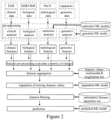
- This step of calculation of at least one longitudinal feature performed before a step of imputing missing patient's features may be described as performed after receiving the patients' multimodal features and/or as performed before a step of features aggregation to a non-complete vector of features' values, as seen on fig. 4 .
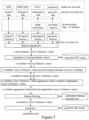
- This step of calculation of at least one longitudinal feature performed after a step of imputing missing patient's features may be described as performed after a complete vector of features' values has been obtained and/or as performed before a step of features aggregation to a complete aggregated multimodal and longitudinal vector of features' values, as seen on fig. 5 .
- the methods of the invention may use a calculation of "a metrics of change” or "a rate of change (ROC)" between the values of patient's at least one multimodal feature collected at least at two or at least at three time points.
- a metrics of change or "a rate of change (ROC)”
- ROC rate of change
- a longitudinal feature has a value that relates to a change of feature in time and has an identifier, e.g., A L .
- the metrics of change between the values of patient's at least one multimodal feature collected at least at two time points is calculated according to any known linear formula.
- the metrics of change between the values of patient's at least one multimodal feature collected at least at three time points is calculated according to any known interpolation formulas.
- a metrics of change can be calculated for biological features such as for blood analysis where e.g., the metrics of change between the values of patient's white blood cells counts at baseline (B1 (white blood count) t0 ) and at first evaluation (B1 (white blood count) t1 ) is calculated according to equation 1 and obtained is a longitudinal feature B1 (white blood count)L .
- a metrics of change can be calculated for radiological features such as for volume of tumor where e.g., the metrics of change between the values of patient's volume of tumor at baseline (R1 (Volume of tumor t0 ) and at first evaluation (R1 (Volume of tumor) t1 ) is calculated according to equation 1 and obtained is a longitudinal feature R1 (Volume of tumor)L .
- a computer-implemented method of predicting treatment response or treatment efficacy of a patient may be based on the patient's multimodal features comprising at least two types of features selected from clinical, biological, genomic and radiological features as well as at least one longitudinal feature calculated as described herein. Together the patient's multimodal features and longitudinal features may be referred as the patient's features.
- a computer-implemented method of predicting treatment response or treatment efficacy of a patient comprising:
- a computer-implemented method of predicting treatment response or treatment efficacy of a patient that uses at least two trained machine learning models.
- the models may be referred to as a first or second trained machine learning models depending on the sequence of their use in the methods of the invention.
- one machine learning model is trained to impute patient's missing features and may be referred to as an imputation machine learning model.
- another machine learning model is trained to predict patient's treatment response or treatment efficacy and may be referred to as a prediction machine learning model.
- the methods of the invention use a list of features identifiers that are identified during a training of a prediction machine learning model, and these may be referred to as informative features identifiers.
- informative features identifiers include an index, a label, and the like. It is understood that selecting informative features identifiers is the common process when developing a predictive model and can be performed with any known methods. It is understood that once longitudinal features are calculated they may also be selected as informative features and included into a list of features identifiers. Together the patient's multimodal informative features identifiers and longitudinal informative features identifiers may be referred as the features identifiers.
- Figure 1 shows a list of informative features identifiers, wherein clinical informative features identifiers are exemplified as C1-C3 at t0, C1-C4 at t1, and C1-C3 and C5 at t2; biological informative features identifiers are exemplified as B1-B3 at t0, B1-B4 at t1, and B1-B3 and B5 at t2; radiomics informative features identifiers are exemplified as R1-7 at t0, t1 and t2; and genomics informative features identifiers are exemplified as G1-G3 at t0, G1 at t1 and G1 and G4 at t2.
- every informative feature identifier identifies a feature having a value. It is possible that the selected set of informative features identifiers is the same or different for different time points. For example, and as in figure 1 , clinical informative features identifiers C1-C3 are present at t0, t1 and t2, whereas C4 is present only at t1 and C5 is present only at t2.
- the trained machine learning model may be logistic regression, a Random Forest, a support-vector machine (SVM, also support-vector network), a Gradian Boosting method, MiceForest or any equivalent model.
- the trained machine learning model is a supervised machine learning algorithm.
- a machine learning model for imputing a patient's missing features for use in the computer-implemented method of predicting treatment response or treatment efficacy of a patient according to the invention, wherein training of the machine learning model is comprising inputting to a machine learning supervised training algorithm a set of features comprising at least two types of features selected from clinical, biological, genomic and radiological features of cohort of patients having the same disease and receiving the same treatment as the patient for whom the prediction is performed.
- a training of a machine learning model for imputing a patient's missing features for each patient in the cohort at least one multimodal feature may be collected at least at two or at least at three time points.
- At least one multimodal feature may be collected at least at two or at least at three time points, and additionally a metrics of change between the values of each patient's at least one multimodal feature collected at least at two or at least at three time points may be calculated, so that for each patient's at least one longitudinal feature may be obtained.
- all the selected multimodal features collected for the patients in the cohort are collected at least at two or at least at three time points, and optionally a metrics of change between the values of each patient's multimodal feature collected at least at two or at least at three time points may be calculated, so that for each patient's longitudinal features may be obtained.
- multimodal features and at least one longitudinal feature of each patient in the cohort are used for training of the imputation machine learning model (e.g., fig. 4 , embodiment 2 or 5).
- multimodal features of each patient in the cohort are used for training of the imputation machine learning model (e.g., fig. 5 , embodiment 3 or 6).
- the machine learning model for imputing a patient's missing features is trained to produce at its output a complete list of features for a patient from an incomplete list.
- the machine learning model for imputing a patient's missing features is trained to produce at its output a complete list of features comprising multimodal features and at last one longitudinal feature (i.e., patients' features) for a patient from an incomplete features list (e.g., fig. 4 , embodiment 2 or 5).
- missing patient's multimodal features from one time point may be deduced based on obtained complete list of longitudinal features.
- the machine learning model for imputing a patient's missing features is trained to produce at its output a complete list of features comprising multimodal features for a patient from an incomplete list comprising multimodal features.
- at least one longitudinal feature may be calculated as described herein based on obtained complete list of features comprising multimodal features.
- the machine learning model for imputing a patient's missing features is trained to produce at its output a complete list of features comprising multimodal features for a patient from an incomplete list comprising multimodal features, (e.g., fig. 5 , embodiment 3 or 6).
- a machine learning model for imputing a patient's missing features for use in the computer-implemented method of predicting treatment response or treatment efficacy of a patient according to the invention
- training of the imputation machine learning model comprises inputting to a machine learning supervised training algorithm a set of multimodal features comprising at least two types of features selected from clinical, biological, genomic and radiological features of cohort of patients having the same disease and receiving the same treatment as the patient for whom the prediction is performed, wherein for each patient in the cohort at least one of the multimodal feature was collected at least at two time points, and wherein the trained imputation machine learning model produces as an output a complete list of features for a patient from an incomplete list.
- a machine learning model for imputing a patient's missing features for use in the computer-implemented method of predicting treatment response or treatment efficacy of a patient according to the invention, wherein training of the imputation machine learning model further comprises inputting to a machine learning supervised training algorithm the at least one longitudinal feature obtained for each patient in the cohort as described herein.
- a machine learning model for prediction of patient's treatment response for use in the computer-implemented method of predicting treatment response of a patient according to the invention, wherein training of the machine learning model is comprising inputting to a machine learning supervised training algorithm a set of features comprising at least two types of features selected from clinical, biological, genomic and radiological features of cohort of patients having the same disease and receiving the same treatment as the patient for whom the prediction is performed.
- At least one multimodal feature may be collected at least at two or at least at three time points.
- at least one of the multimodal feature may collected at least at two or at least at three time points, and wherein a metrics of change between the values of each patient's at least one multimodal feature collected at least at two or at least at three time points may be calculated, so that for each patient's at least one longitudinal feature may be obtained, this at least one longitudinal feature is additionally used in the training of the machine learning model for prediction of patient's treatment response.
- all the selected multimodal features collected for the patients in the cohort are collected at least at two or at least at three time points, and optionally a metrics of change between the values of each patient's multimodal feature collected at least at two or at least at three time points is calculated, so that for each patient's longitudinal features may be obtained.
- a metrics of change between the values of each patient's multimodal feature collected at least at two or at least at three time points is calculated, so that for each patient's longitudinal features may be obtained.
- a machine learning model for prediction of patient's treatment response for use in the computer-implemented method of predicting treatment response of a patient according to the invention, wherein training of the prediction machine learning comprises inputting to a machine learning supervised training algorithm a set of multimodal features comprising at least two types of features selected from clinical, biological, genomic and radiological features and at least one longitudinal feature of cohort of patients having the same disease and receiving the same treatment as the patient for whom the prediction is performed,
- the machine learning model for predicting of patient's treatment response is trained to produce at its output a label classification of the patient's response to the treatment or a probability of the patient's response to the treatment and a list of informative features identifiers used for the prediction machine learning model training.
- the list of informative features identifiers may comprise clinical, biological, genomic and/or radiological informative features identifiers and/or longitudinal features informative features identifiers.
- a machine learning model for prediction of patient's treatment efficacy for use in the computer-implemented method of predicting treatment efficacy of a patient according to the invention, wherein training of the machine learning model is comprising inputting to a machine learning supervised training algorithm a set of features comprising at least two types of features selected from clinical, biological, genomic and radiological features of cohort of patients having the same disease and receiving the same treatment as the patient for whom the prediction is performed.
- training of a machine learning model for prediction of patient's treatment efficacy for each patient in the cohort at least one multimodal feature may be collected at least at two or at least at three time points.
- At least one of the multimodal feature may collected at least at two or at least at three time points, and a metrics of change between the values of each patient's at least one multimodal feature collected at least at two or at least at three time points may be calculated, so that for each patient's at least one longitudinal feature may be obtained, this at least one longitudinal feature is additionally used in the training of the machine learning model for prediction of patient's treatment efficacy.
- all the selected multimodal features collected for the patients in the cohort are collected at least at two or at least at three time points, and optionally a metrics of change between the values of each patient's multimodal feature collected at least at two or at least at three time points is calculated, so that for each patient's longitudinal features may be obtained.
- a metrics of change between the values of each patient's multimodal feature collected at least at two or at least at three time points is calculated, so that for each patient's longitudinal features may be obtained.
- a machine learning model for prediction of patient's treatment efficacy for use in the computer-implemented method of predicting treatment efficacy of a patient according to the invention, wherein training of the prediction machine learning comprises inputting to a machine learning supervised training algorithm a set of features comprising at least two types of features selected from clinical, biological, genomic and radiological features and at least one longitudinal feature of cohort of patients having the same disease and receiving the same treatment as the patient for whom the prediction is performed,
- the machine learning model for predicting of patient's treatment efficacy is trained to produce at its output a label classification of the treatment efficacy defined as length of time to an event and a list of informative features identifiers used for the prediction machine learning model training.
- the list of informative features identifiers may comprise clinical, biological, genomic and/or radiological informative features identifiers and/or longitudinal features informative features identifiers.
- a computer-implemented method of predicting treatment response or treatment efficacy of a patient based on the patient's multimodal features wherein the features are acquired or received from external databases such as those that store pre-processed patient's data.
- the patient's multimodal features are acquired or received separately.
- the patient's longitudinal features are acquired or received from external databases such as those that store pre-processed patient's data and additionally may calculate the metrics of change as described herein.
- the patient's multimodal features that are provided as input to a computer-implemented method of predicting patients' treatment response or treatment efficacy are not complete, and the method comprises a step of imputing missing features.
- missing patient's multimodal features in the methods of the invention wherein the calculation of at least one longitudinal feature is performed before a step of imputing missing patient's multimodal features, then imputed are clinical, biological, genomic and/or radiological missing features and longitudinal missing features (e.g., fig. 4 , embodiment 2 or 5).
- missing patient's multimodal features from one time point may be deduced based on obtained longitudinal features.
- the step of imputing missing features is performed when the patient's multimodal features are at least 60% complete, at least 65% complete, at least 70% complete, at least 75% complete, or preferably at least 75% complete. Percentage of completeness of data may be calculated as relative to the complete set of features that can be extracted for the data from the patient.
- a computer-implemented method of predicting treatment response or treatment efficacy of a patient based on the patient's multimodal features wherein in one step the features are aggregated into a vector of features' values (also referred as a feature vector values).
- the patient's multimodal features are not complete thus the features are aggregated into a vector of features' values that is not complete (a non-complete vector of features' values).
- the methods of the invention wherein the calculation of at least one longitudinal feature is performed before a step of imputing missing patient's multimodal features then aggregated are clinical, biological, genomic and/or radiological features and at least one longitudinal feature (e.g., fig. 4 , embodiment 2 or 5). Therefore, in this embodiment, obtained is a non-complete vector of features' values comprising or consisting of clinical, biological, genomic and/or radiological features and at least one longitudinal feature (e.g., fig. 4 , embodiment 2 or 5).
- the calculation of at least one longitudinal feature is performed after a step of imputing missing patient's multimodal features
- aggregated are clinical, biological, genomic and/or radiological features (e.g., fig. 5 , embodiment 3 or 6). Therefore, in one embodiment, obtained is a non-complete vector of features' values comprising or consisting of clinical, biological, genomic and/or radiological features (e.g., fig. 5 , embodiment 3 or 6).
- a second aggregation step is performed, wherein aggregated are clinical, biological, genomic and/or radiological features and at least one longitudinal feature.
- aggregation of a complete vector of features' values with a complete longitudinal vector of features' values is performed. Therefore, in this embodiment, obtained is a complete aggregated multimodal and longitudinal vector of features' values comprising or consisting of clinical, biological, genomic and/or radiological features and at least one longitudinal feature (e.g., fig. 5 , embodiment 3 or 6).
- a computer-implemented method of predicting treatment response or treatment efficacy of a patient based on the patient's multimodal features wherein in one step the non-complete vector of features' values is an input to the trained imputation machine learning model and an output is a complete vector of features' values. Therefore, missing features' values are imputed by the trained imputation machine learning model.
- the non-complete vector of features' values comprising or consisting of clinical, biological, genomic and/or radiological features and at least one longitudinal feature is an input to the trained imputation machine learning model (e.g., fig. 4 , embodiment 2 or 5).
- the non-complete vector of features' values comprising or consisting of clinical, biological, genomic and/or radiological features is an input to the trained imputation machine learning model (e.g., fig. 5 , embodiment 3 or 6).
- the missing features are imputed based on the same or different features modality.
- the missing features are imputed based on a different feature modality (other feature modality), i.e., different feature modality from the feature to be imputed, wherein a different feature modality is selected from the remaining three available features modalities.
- EGFR mutation status may be imputed from radiomics features.
- a computer-implemented method of predicting treatment response or treatment efficacy of a patient based on the patient's multimodal features wherein in one step the complete vector of features' values is filtered according to the list of informative features identifiers obtained in the training of the prediction machine learning model.
- a complete vector of features' values or a complete aggregated multimodal and longitudinal vector of features' values may comprise or consists of clinical, biological, genomic and/or radiological features and at least one longitudinal feature, and wherein a list of informative features identifiers may comprise clinical, biological, genomic and/or radiological informative features identifiers and longitudinal features informative features identifiers (embodiment 1 or 4).
- a predictive vector of features' values that is a subset of the complete vector of features' values consisting of filtered features is obtained and may be referred herein as a predictive complete feature vector, a predictive vector of features' values, a predictive feature vector values, a predictive complete feature vector or a predictive feature vector.
- a predictive vector of features' values that is a subset of the complete aggregated multimodal and longitudinal vector of features' values consisting of filtered features is obtained.
- a computer-implemented method of predicting treatment response or treatment efficacy of a patient based on the patient's multimodal features wherein in one step the predictive vector of features' values is an input to the trained prediction machine learning model and an output is prediction of the patient's response to the treatment or an output is prediction of the patient's treatment efficacy defined as length of time to an event.
- the prediction of the patient's response to the treatment is classified as a complete response, a partial response, a stable disease, or progression. In another embodiment, the prediction of the patient's response to the treatment is classified as a probability of the patient's response to the treatment. In another embodiment, the prediction of the patient's response to the treatment is binary classified as response or no response.
- the patient's treatment efficacy is defined as length of time to an event is selected from selected from Progression-Free Survival (PFS), Overall Survival (OS), Duration of Response (DoR) and Time-To-Progression (TTP).
- PFS Progression-Free Survival
- OS Overall Survival
- DoR Duration of Response
- TTP Time-To-Progression
- a computer-implemented method of predicting treatment response or treatment efficacy of a patient wherein the output is complemented by a report with the list of informative features identifiers used for the prediction machine learning model training, or treatment features' relative contribution or weights used in the method of predicting treatment response or efficacy of a patient.
- a computer-implemented method of predicting treatment response or treatment efficacy of a patient wherein the prediction is made at first evaluation time and the prediction of treatment response or treatment efficacy of a patient is for a second evaluation time.
- a computer-implemented method of predicting treatment response or treatment efficacy of a patient wherein the prediction is made earliest at first evaluation time and the prediction of treatment response or treatment efficacy of a patient is for a subsequent evaluation time, such that the prediction may be made at second evaluation time for a third evaluation time, and the like combinations.
- the computer-implemented methods of predicting treatment response or treatment efficacy of a patient at second evaluation time use as input the patient's multimodal features collected at baseline and/or at first evaluation time.
- the computer-implemented methods of predicting treatment response of a patient uses the trained imputation machine learning model, the trained prediction machine learning model and the list of informative features identifiers, obtained using features of cohort of patients having the same disease and receiving the same treatment as the patient for whom the prediction is performed, wherein the features were collected at baseline and/or at first evaluation time and using result of treatment response or treatment efficacy at second evaluation time.
- the computer-implemented methods of predicting treatment response or treatment efficacy of a patient at earliest at second evaluation time use as input the patient's multimodal features collected at baseline and/or at first evaluation time.
- the computer-implemented methods of predicting treatment response or treatment efficacy of a patient at third evaluation time use as input the patient's multimodal features collected at baseline, and/or at first evaluation time and/or at second evaluation time.
- the computer-implemented methods of predicting treatment response of a patient uses the trained imputation machine learning model, the trained prediction machine learning model and the list of informative features identifiers, obtained using features of cohort of patients having the same disease and receiving the same treatment as the patient for whom the prediction is performed, wherein the features were collected at baseline, and/or at first evaluation time and/or at second evaluation time and using result of treatment response or treatment efficacy at second evaluation time and/or third evaluation time, and the like combinations.
- the computer-implemented method of predicting treatment response or efficacy of a patient uses the trained imputation machine learning model, the trained prediction machine learning model and the list of informative features identifiers, obtained/trained using features of cohort of patients having the same disease and receiving the same treatment as the patient for whom the prediction is performed that were collected at baseline and wherein the treatment response or efficacy was known at first evaluation time or wherein features were collected at baseline and at first/further evaluation time and wherein the treatment response or efficacy was known at second/further evaluation time.
- the selection of the patient's multimodal features that must be provided as an input to a computer-implemented method to predict the patient's treatment response or treatment efficacy is defined based on the specific patient condition.
- the set of the patient's multimodal data collected at baseline and/or at first evaluation time that must be pre-processed to features and provided as an input to a computer-implemented method of predicting treatment response of the patient at second evaluation time, with a lung cancer treated with immunotherapy, chemotherapy, a combination of immunotherapy and chemotherapy, neoadjuvant therapy, targeted therapy, surgery, radiation therapy, thermoablation and/or adjuvant therapy, and wherein the patient's multimodal data are comprising: date of treatment initiation for the patient, response to a treatment at first evaluation, date and indicator of progression at first evaluation, date and indicator of survival at first evaluation, a PD-L1 expression level at baseline, radiological imaging data at baseline and at first evaluation, EGFR mutational status and ALK mutational status at baseline.
- the patient's multimodal features are comprising: clinical features comprising a date of treatment initiation for the patient, response to a treatment at first evaluation, date and indicator of progression at first evaluation, date and indicator of survival at first evaluation; biological features comprising a PD-L1 expression level at baseline; radiomics features comprising features extracted from the radiological imaging data at baseline and at first evaluation; and genomics features comprising the EGFR mutational status and the ALK mutational status at baseline.
- genomics features are comprising the EGFR mutational status and the ALK mutational status collected at baseline and/or at first evaluation.
- the computer-implemented method of predicting treatment response of a patient according to the invention or the computer-implemented method of predicting treatment efficacy of a patient according to the invention, wherein the patient has cancer, and the treatment is immunotherapy, chemotherapy, a combination of immunotherapy and chemotherapy, neoadjuvant therapy, targeted therapy, surgery, radiation therapy, thermoablation, adjuvant therapy and/or hormonotherapy.
- a computer-implemented method of predicting treatment response or treatment efficacy to the second-line treatment with immunotherapy such as anti-PD-1/PD-L1, chemotherapies, targeted therapies, PARP inhibitors, or combinations thereof, for patients with stage IV NSCLC treated in the first line setting with a pembrolizumab monotherapy, a chemotherapy and pembrolizumab combination therapy, or a chemotherapy doublet.
- a computer-implemented method of predicting treatment efficacy for a patient wherein the patient is predicted to completely or partially respond to the treatment, preferably based on described herein computer-implemented method of predicting treatment response of the patient.
- a computer-implemented method of predicting treatment response comprises steps of:
- a computer-implemented method of predicting treatment efficacy of a patient comprises steps of:
- a computer-implemented method of predicting treatment response of a patient referred herein as embodiment 1, the method comprises steps of:
- embodiment 2 a computer-implemented method of predicting treatment response of a patient, referred herein as embodiment 2 ( fig. 4 ), the method comprises steps of:
- embodiment 3 a computer-implemented method of predicting treatment response of a patient, referred herein as embodiment 3 ( fig. 5 ), the method comprises steps of:
- a computer-implemented method of predicting treatment efficacy of a patient referred herein as embodiment 4, the method comprises steps of:
- embodiment 5 a computer-implemented method of predicting treatment efficacy of a patient, referred herein as embodiment 5 ( fig. 4 ), the method comprises steps of:
- embodiment 6 a computer-implemented method of predicting treatment efficacy of a patient, referred herein as embodiment 6 ( fig. 5 ), the method comprises steps of:
- a computer-implemented method of predicting treatment response or treatment efficacy of a patient based on the patient's multimodal features, wherein the features are complete It is understood that when a patient's multimodal features are complete, a computer-implemented method of predicting treatment response or treatment efficacy of a patient does not need to acquire a trained imputation machine learning model trained to impute patient's missing features and does not execute the step to input the non-complete vector of features' values to the trained imputation machine learning model and output a complete vector of features' values.
- a computer-implemented method of predicting treatment response of a patient comprises steps of:
- a computer-implemented method of predicting treatment efficacy of a patient comprises steps of:
- a data processing apparatus comprising means for carrying out the method of predicting treatment response or treatment efficacy of a patient as described herein.
- a computer program comprising instructions which, when the program is executed by a computer, cause the computer to carry out the method of predicting treatment response or treatment efficacy of a patient as described herein.
- a computer-readable medium comprising instructions which, when executed by a computer, cause the computer to carry out the method of predicting treatment response or treatment efficacy of a patient as described herein.
- patients according to the invention are suffering from neurological disorders, a cancer, inherited cardiological or neurological disease, or rare inherited disease such as Pompe disease.
- patients according to the invention are suffering from a cancer.
- patients according to the invention are suffering from cancer of brain, breast such as triple negative breast cancer (TNBC), kidney, head and neck, ovarian or colorectal cancer cancer.
- TNBC triple negative breast cancer
- patients according to the invention are suffering from lung cancer, in particular non-small cell lung cancer (NSCLC).
- NSCLC non-small cell lung cancer
- patients according to the invention are undergoing treatment for neurological disorders, inherited cardiological or neurological disease, or rare inherited disease such as Pompe disease.
- patients according to the invention are undergoing treatment for cancer, in particular immunotherapy, chemotherapy (such as neoadjuvant chemotherapy (NCT)), targeted therapy, treatment with anti-angiogenic drugs, surgery, radiation therapies or combinations of these treatments, and the like.
- chemotherapy such as neoadjuvant chemotherapy (NCT)
- targeted therapy treatment with anti-angiogenic drugs, surgery, radiation therapies or combinations of these treatments, and the like.
- patients according to the invention are undergoing treatment for cancer, in particular immunotherapy, chemotherapy, a combination of immunotherapy and chemotherapy, targeted therapy, surgery, radiation therapy, thermoablation, and/or hormonotherapy or combination of these treatments, in the context of neo-adjuvant, adjuvant or maintenance therapy.
- immunotherapy includes treatment with the immune checkpoint inhibitors anti-PD-(L)1 or anti-CTLA-4 antibodies such as Pembrolizumab, Nivolumab, Atezolimumab, Durvalumab, Cemiplimab, Dostarlimab.
- anti-PD-(L)1 or anti-CTLA-4 antibodies such as Pembrolizumab, Nivolumab, Atezolimumab, Durvalumab, Cemiplimab, Dostarlimab.
- patients are diagnosed with stage IV NSCLC ( de novo or earlier stage progression to stage IV).
- patients are diagnosed with stage IV non-small cell lung cancer (NSCLC) with no actionable oncogene-driving mutations in EGFR nor ALK in first line of treatment.
- Patients with stage IV NSCLC may be treated in the first line setting with a pembrolizumab monotherapy, a chemotherapy and pembrolizumab combination therapy, or a chemotherapy doublet.
- patients are diagnosed with stage IV NSCLC without oncogene-activating mutations eligible for targeted therapy.
Landscapes
- Engineering & Computer Science (AREA)
- Health & Medical Sciences (AREA)
- Medical Informatics (AREA)
- Public Health (AREA)
- Data Mining & Analysis (AREA)
- Biomedical Technology (AREA)
- Databases & Information Systems (AREA)
- Pathology (AREA)
- Epidemiology (AREA)
- General Health & Medical Sciences (AREA)
- Primary Health Care (AREA)
- Measuring Or Testing Involving Enzymes Or Micro-Organisms (AREA)
Priority Applications (7)
| Application Number | Priority Date | Filing Date | Title |
|---|---|---|---|
| EP22290045.8A EP4307315A1 (de) | 2022-07-11 | 2022-07-11 | Vorhersagemodelle für das ansprechen auf eine behandlung durch maschinelles lernen |
| CA3257556A CA3257556A1 (en) | 2022-05-30 | 2023-05-30 | PREDICTIVE PROCESSING RESPONSE MODELS WITH MACHINE LEARNING |
| US18/870,362 US20250372224A1 (en) | 2022-05-30 | 2023-05-30 | Machine learning predictive models of treatment response |
| PCT/EP2023/064367 WO2023232762A1 (en) | 2022-05-30 | 2023-05-30 | Machine learning predictive models of treatment response |
| EP23729387.3A EP4533483A1 (de) | 2022-05-30 | 2023-05-30 | Prädiktive modelle des maschinellen lernens einer behandlungsreaktion |
| AU2023281175A AU2023281175A1 (en) | 2022-05-30 | 2023-05-30 | Machine learning predictive models of treatment response |
| JP2024570743A JP2025518236A (ja) | 2022-05-30 | 2023-05-30 | 治療応答に関する機械学習予測モデル |
Applications Claiming Priority (1)
| Application Number | Priority Date | Filing Date | Title |
|---|---|---|---|
| EP22290045.8A EP4307315A1 (de) | 2022-07-11 | 2022-07-11 | Vorhersagemodelle für das ansprechen auf eine behandlung durch maschinelles lernen |
Publications (1)
| Publication Number | Publication Date |
|---|---|
| EP4307315A1 true EP4307315A1 (de) | 2024-01-17 |
Family
ID=82850381
Family Applications (1)
| Application Number | Title | Priority Date | Filing Date |
|---|---|---|---|
| EP22290045.8A Withdrawn EP4307315A1 (de) | 2022-05-30 | 2022-07-11 | Vorhersagemodelle für das ansprechen auf eine behandlung durch maschinelles lernen |
Country Status (1)
| Country | Link |
|---|---|
| EP (1) | EP4307315A1 (de) |
Cited By (2)
| Publication number | Priority date | Publication date | Assignee | Title |
|---|---|---|---|---|
| US20250166827A1 (en) * | 2023-11-22 | 2025-05-22 | GE Precision Healthcare LLC | Multimodal foundation model for patient risk stratification |
| CN121543832A (zh) * | 2026-01-15 | 2026-02-17 | 远盈智慧能源有限公司 | 零碳智慧园区云平台数据优化处理方法及系统 |
Citations (2)
| Publication number | Priority date | Publication date | Assignee | Title |
|---|---|---|---|---|
| WO2020142551A1 (en) | 2018-12-31 | 2020-07-09 | Tempus Labs | A method and process for predicting and analyzing patient cohort response, progression, and survival |
| US20210090694A1 (en) * | 2019-09-19 | 2021-03-25 | Tempus Labs | Data based cancer research and treatment systems and methods |
-
2022
- 2022-07-11 EP EP22290045.8A patent/EP4307315A1/de not_active Withdrawn
Patent Citations (2)
| Publication number | Priority date | Publication date | Assignee | Title |
|---|---|---|---|---|
| WO2020142551A1 (en) | 2018-12-31 | 2020-07-09 | Tempus Labs | A method and process for predicting and analyzing patient cohort response, progression, and survival |
| US20210090694A1 (en) * | 2019-09-19 | 2021-03-25 | Tempus Labs | Data based cancer research and treatment systems and methods |
Non-Patent Citations (15)
| Title |
|---|
| AGUILAR ET AL., ANN ONCOL, vol. 30, 2019, pages 1653 - 1659 |
| ARBOURRIELY, JAMA, vol. 322, no. 8, 2019, pages 764 - 774 |
| BODOR ET AL., CANCER, vol. 126, 2020, pages 260 - 270 |
| BOEHM KEVIN M ET AL: "Harnessing multimodal data integration to advance precision oncology", NATURE REVIEWS CANCER, NATURE PUB. GROUP, LONDON, vol. 22, no. 2, 18 October 2021 (2021-10-18), pages 114 - 126, XP037680900, ISSN: 1474-175X, [retrieved on 20211018], DOI: 10.1038/S41568-021-00408-3 * |
| BORGHAEI ET AL., NEJM, vol. 373, 2015, pages 1627 - 1639 |
| CAMMAROTA GIOVANNI ET AL: "Gut microbiome, big data and machine learning to promote precision medicine for cancer", NATURE REVIEWS GASTROENTEROLOGY, NATURE PUBLISHING GROUP UK, LONDON, vol. 17, no. 10, 9 July 2020 (2020-07-09), pages 635 - 648, XP037253984, ISSN: 1759-5045, [retrieved on 20200709], DOI: 10.1038/S41575-020-0327-3 * |
| CAN CUI ET AL: "Deep Multi-modal Fusion of Image and Non-image Data in Disease Diagnosis and Prognosis: A Review", ARXIV.ORG, CORNELL UNIVERSITY LIBRARY, 201 OLIN LIBRARY CORNELL UNIVERSITY ITHACA, NY 14853, 25 March 2022 (2022-03-25), XP091423550 * |
| DONG ET AL., NAT MED, vol. 8, no. 8, 2002, pages 793 - 800 |
| HERBST ET AL., LANCET, vol. 387, 2016, pages 1540 - 1550 |
| MITRA SUSHMITA: "Deep Learning With Radiogenomics Towards Personalized Management of Gliomas", IEEE REVIEWS IN BIOMEDICAL ENGINEERING, IEEE, USA, vol. 16, 23 April 2021 (2021-04-23), pages 579 - 593, XP011931736, ISSN: 1937-3333, [retrieved on 20210426], DOI: 10.1109/RBME.2021.3075500 * |
| PARDOLL ET AL., NAT REV CANCER, vol. 12, no. 4, 2012, pages 252 - 264 |
| REMON ET AL., J THORAC ONCOL, vol. 15, no. 6, 2020, pages 914 - 947 |
| RITTMEYER ET AL., LANCET, vol. 389, 2017, pages 255 - 265 |
| TRAVIS ET AL., J THORAC ONCOL, vol. 10, no. 9, 2015, pages 1243 - 1260 |
| YANG ET AL., ANNU REV MED, vol. 71, 2020, pages 117 - 136 |
Cited By (2)
| Publication number | Priority date | Publication date | Assignee | Title |
|---|---|---|---|---|
| US20250166827A1 (en) * | 2023-11-22 | 2025-05-22 | GE Precision Healthcare LLC | Multimodal foundation model for patient risk stratification |
| CN121543832A (zh) * | 2026-01-15 | 2026-02-17 | 远盈智慧能源有限公司 | 零碳智慧园区云平台数据优化处理方法及系统 |
Similar Documents
| Publication | Publication Date | Title |
|---|---|---|
| US12412665B2 (en) | Methods for evaluating the effect of the start date for cancer treatment with a cancer medication using propensity scoring | |
| US11848107B2 (en) | Predicting likelihood and site of metastasis from patient records | |
| Sammut et al. | Multi-omic machine learning predictor of breast cancer therapy response | |
| Ladbury et al. | Integration of artificial intelligence in lung cancer: Rise of the machine | |
| US11309090B2 (en) | Method and process for predicting and analyzing patient cohort response, progression, and survival | |
| JP7638963B2 (ja) | 高次元時系列薬剤データからの教師なし学習および治療ラインの予測 | |
| US11875903B2 (en) | Method and process for predicting and analyzing patient cohort response, progression, and survival | |
| EP4287212A1 (de) | Vorhersagemodelle für das ansprechen auf eine behandlung durch maschinelles lernen | |
| Chang et al. | Advancing precision medicine: the transformative role of artificial intelligence in immunogenomics, radiomics, and pathomics for biomarker discovery and immunotherapy optimization | |
| US20250372224A1 (en) | Machine learning predictive models of treatment response | |
| US20220059240A1 (en) | Method and process for predicting and analyzing patient cohort response, progression, and survival | |
| US20250308663A1 (en) | Integration of radiologic, pathologic, and genomic features for prediction of response to immunotherapy | |
| Guo et al. | A radiomics nomogram prediction for survival of patients with “driver gene-negative” lung adenocarcinomas (LUAD) | |
| Hoang et al. | Path2Omics Enhances Transcriptomic and Methylation Prediction Accuracy from Tumor Histopathology | |
| EP4307315A1 (de) | Vorhersagemodelle für das ansprechen auf eine behandlung durch maschinelles lernen | |
| US20250342972A1 (en) | System and methods for generating clinical predictions based on multimodal medical data | |
| Hao et al. | Integrated Multi-Omics and Whole Slide Images for Survival Prediction in Glioblastoma Using Multiple Instance Learning and Co-Attention | |
| Jiang et al. | Subclonal mutation load predicts survival and response to immunotherapy in cancers with low to moderate tumor mutation burden | |
| Bontempi | Deep learning applications in cancer imaging | |
| Rachel et al. | An Interpretable Machine Learning Framework for Non-Small Cell Lung Cancer Drug Response Analysis | |
| Ozturk et al. | Precision Oncology: Multimodal and Multiscale Methods to Promote Mechanistic Understanding | |
| Saad et al. | Deep Learning CT Signature Predicts Benefit from Immunotherapy in Metastatic NSCLC Independent of Standard Clinicopathological Markers |
Legal Events
| Date | Code | Title | Description |
|---|---|---|---|
| PUAI | Public reference made under article 153(3) epc to a published international application that has entered the european phase |
Free format text: ORIGINAL CODE: 0009012 |
|
| STAA | Information on the status of an ep patent application or granted ep patent |
Free format text: STATUS: THE APPLICATION HAS BEEN PUBLISHED |
|
| AK | Designated contracting states |
Kind code of ref document: A1 Designated state(s): AL AT BE BG CH CY CZ DE DK EE ES FI FR GB GR HR HU IE IS IT LI LT LU LV MC MK MT NL NO PL PT RO RS SE SI SK SM TR |
|
| STAA | Information on the status of an ep patent application or granted ep patent |
Free format text: STATUS: THE APPLICATION IS DEEMED TO BE WITHDRAWN |
|
| 18D | Application deemed to be withdrawn |
Effective date: 20240718 |