EP4307487A1 - Steckergehäuse mit eingegossenen dichtungen - Google Patents
Steckergehäuse mit eingegossenen dichtungen Download PDFInfo
- Publication number
- EP4307487A1 EP4307487A1 EP22185208.0A EP22185208A EP4307487A1 EP 4307487 A1 EP4307487 A1 EP 4307487A1 EP 22185208 A EP22185208 A EP 22185208A EP 4307487 A1 EP4307487 A1 EP 4307487A1
- Authority
- EP
- European Patent Office
- Prior art keywords
- seal
- opening
- connector
- housing
- connector housing
- Prior art date
- Legal status (The legal status is an assumption and is not a legal conclusion. Google has not performed a legal analysis and makes no representation as to the accuracy of the status listed.)
- Pending
Links
Images




Classifications
-
- H—ELECTRICITY
- H01—ELECTRIC ELEMENTS
- H01R—ELECTRICALLY-CONDUCTIVE CONNECTIONS; STRUCTURAL ASSOCIATIONS OF A PLURALITY OF MUTUALLY-INSULATED ELECTRICAL CONNECTING ELEMENTS; COUPLING DEVICES; CURRENT COLLECTORS
- H01R13/00—Details of coupling devices of the kinds covered by groups H01R12/70 or H01R24/00 - H01R33/00
- H01R13/46—Bases; Cases
- H01R13/52—Dustproof, splashproof, drip-proof, waterproof, or flameproof cases
- H01R13/5202—Sealing means between parts of housing or between housing part and a wall, e.g. sealing rings
-
- H—ELECTRICITY
- H01—ELECTRIC ELEMENTS
- H01R—ELECTRICALLY-CONDUCTIVE CONNECTIONS; STRUCTURAL ASSOCIATIONS OF A PLURALITY OF MUTUALLY-INSULATED ELECTRICAL CONNECTING ELEMENTS; COUPLING DEVICES; CURRENT COLLECTORS
- H01R13/00—Details of coupling devices of the kinds covered by groups H01R12/70 or H01R24/00 - H01R33/00
- H01R13/46—Bases; Cases
- H01R13/52—Dustproof, splashproof, drip-proof, waterproof, or flameproof cases
- H01R13/5219—Sealing means between coupling parts, e.g. interfacial seal
-
- H—ELECTRICITY
- H01—ELECTRIC ELEMENTS
- H01R—ELECTRICALLY-CONDUCTIVE CONNECTIONS; STRUCTURAL ASSOCIATIONS OF A PLURALITY OF MUTUALLY-INSULATED ELECTRICAL CONNECTING ELEMENTS; COUPLING DEVICES; CURRENT COLLECTORS
- H01R13/00—Details of coupling devices of the kinds covered by groups H01R12/70 or H01R24/00 - H01R33/00
- H01R13/40—Securing contact members in or to a base or case; Insulating of contact members
- H01R13/405—Securing in non-demountable manner, e.g. moulding, riveting
-
- H—ELECTRICITY
- H01—ELECTRIC ELEMENTS
- H01R—ELECTRICALLY-CONDUCTIVE CONNECTIONS; STRUCTURAL ASSOCIATIONS OF A PLURALITY OF MUTUALLY-INSULATED ELECTRICAL CONNECTING ELEMENTS; COUPLING DEVICES; CURRENT COLLECTORS
- H01R13/00—Details of coupling devices of the kinds covered by groups H01R12/70 or H01R24/00 - H01R33/00
- H01R13/46—Bases; Cases
- H01R13/502—Bases; Cases composed of different pieces
- H01R13/504—Bases; Cases composed of different pieces different pieces being moulded, cemented, welded, e.g. ultrasonic welding, or swaged together
-
- H—ELECTRICITY
- H01—ELECTRIC ELEMENTS
- H01R—ELECTRICALLY-CONDUCTIVE CONNECTIONS; STRUCTURAL ASSOCIATIONS OF A PLURALITY OF MUTUALLY-INSULATED ELECTRICAL CONNECTING ELEMENTS; COUPLING DEVICES; CURRENT COLLECTORS
- H01R43/00—Apparatus or processes specially adapted for manufacturing, assembling, maintaining, or repairing of line connectors or current collectors or for joining electric conductors
- H01R43/20—Apparatus or processes specially adapted for manufacturing, assembling, maintaining, or repairing of line connectors or current collectors or for joining electric conductors for assembling or disassembling contact members with insulating base, case or sleeve
- H01R43/24—Assembling by moulding on contact members
-
- B—PERFORMING OPERATIONS; TRANSPORTING
- B29—WORKING OF PLASTICS; WORKING OF SUBSTANCES IN A PLASTIC STATE IN GENERAL
- B29C—SHAPING OR JOINING OF PLASTICS; SHAPING OF MATERIAL IN A PLASTIC STATE, NOT OTHERWISE PROVIDED FOR; AFTER-TREATMENT OF THE SHAPED PRODUCTS, e.g. REPAIRING
- B29C45/00—Injection moulding, i.e. forcing the required volume of moulding material through a nozzle into a closed mould; Apparatus therefor
- B29C45/14—Injection moulding, i.e. forcing the required volume of moulding material through a nozzle into a closed mould; Apparatus therefor incorporating preformed parts or layers, e.g. injection moulding around inserts or for coating articles
- B29C45/14336—Coating a portion of the article, e.g. the edge of the article
- B29C2045/14459—Coating a portion of the article, e.g. the edge of the article injecting seal elements
-
- B—PERFORMING OPERATIONS; TRANSPORTING
- B29—WORKING OF PLASTICS; WORKING OF SUBSTANCES IN A PLASTIC STATE IN GENERAL
- B29C—SHAPING OR JOINING OF PLASTICS; SHAPING OF MATERIAL IN A PLASTIC STATE, NOT OTHERWISE PROVIDED FOR; AFTER-TREATMENT OF THE SHAPED PRODUCTS, e.g. REPAIRING
- B29C45/00—Injection moulding, i.e. forcing the required volume of moulding material through a nozzle into a closed mould; Apparatus therefor
- B29C45/14—Injection moulding, i.e. forcing the required volume of moulding material through a nozzle into a closed mould; Apparatus therefor incorporating preformed parts or layers, e.g. injection moulding around inserts or for coating articles
- B29C45/14639—Injection moulding, i.e. forcing the required volume of moulding material through a nozzle into a closed mould; Apparatus therefor incorporating preformed parts or layers, e.g. injection moulding around inserts or for coating articles for obtaining an insulating effect, e.g. for electrical components
-
- H—ELECTRICITY
- H01—ELECTRIC ELEMENTS
- H01R—ELECTRICALLY-CONDUCTIVE CONNECTIONS; STRUCTURAL ASSOCIATIONS OF A PLURALITY OF MUTUALLY-INSULATED ELECTRICAL CONNECTING ELEMENTS; COUPLING DEVICES; CURRENT COLLECTORS
- H01R13/00—Details of coupling devices of the kinds covered by groups H01R12/70 or H01R24/00 - H01R33/00
- H01R13/40—Securing contact members in or to a base or case; Insulating of contact members
- H01R13/42—Securing in a demountable manner
- H01R13/436—Securing a plurality of contact members by one locking piece or operation
- H01R13/4361—Insertion of locking piece perpendicular to direction of contact insertion
-
- H—ELECTRICITY
- H01—ELECTRIC ELEMENTS
- H01R—ELECTRICALLY-CONDUCTIVE CONNECTIONS; STRUCTURAL ASSOCIATIONS OF A PLURALITY OF MUTUALLY-INSULATED ELECTRICAL CONNECTING ELEMENTS; COUPLING DEVICES; CURRENT COLLECTORS
- H01R43/00—Apparatus or processes specially adapted for manufacturing, assembling, maintaining, or repairing of line connectors or current collectors or for joining electric conductors
- H01R43/005—Apparatus or processes specially adapted for manufacturing, assembling, maintaining, or repairing of line connectors or current collectors or for joining electric conductors for making dustproof, splashproof, drip-proof, waterproof, or flameproof connection, coupling, or casing
Definitions
- the present disclosure relates to a connector housing for an electrical connector, an electrical connector, a modular connector assembly, and a method for manufacturing a connector housing.
- seals must meet certain requirements regarding assembly. On the one hand, it must be ensured that the seal is not damaged during assembly. On the other hand, assembly must not be so complex that it causes difficulties for the worker.
- the modular connector assembly 3000 of Fig. 14 comprises an electrical connector 1000 and a carrier housing 3500 in which the electrical connector 1000 is arranged.
- the electrical connector 1000 comprises a terminal 1100, a housing body 110 having a first opening for receiving a counter connector 4100 of a modular counter connector assembly 4000, and a second opening in which a terminal position assurance element (TPA) 170 is arranged.
- TPA terminal position assurance element
- sealings are provided such that a space between the carrier housing 3500 and the electrical connector 1000 is sealed when the modular counter connector assembly 4000 is inserted.
- a first seal 3001 is arranged between the carrier housing 3500 and the electrical connector 1000, i.e. the housing body 110.
- a second seal 4002 is arranged in the modular counter connector assembly 4000 between the counter connector 4100 and a respective counter carrier housing 4500.
- a third seal 4003 is arranged on a seal holder of the counter carrier housing 4500 to seal the counter carrier housing 4500 and the carrier housing 3500, when mated.
- the modular connector assembly 3000, the respective modular counter connector assembly 4000, and particularly the configuration of the seals have several disadvantages.
- the seals regularly fail to withstand the occurring loads, such as vibrations and/or shock loads. This is as the seals are manually arranged and tend to be displaced, at least if no additional seal retention elements are provided.
- the modular connector assembly 3000 and the respective modular counter connector assembly 4000 are disadvantageous regarding the assembly of the seals.
- the seals tend to get damaged and/or contaminated during assembly.
- the assembly is complex such that a slow and/or incorrect assembly may take place.
- three seals in addition to mat seals must be installed within two different components, namely the modular connector assembly 3000 and the respective modular counter connector assembly 4000, a high assembly effort is caused.
- the carrier housing 3500 must be sealed before inserting the electrical connector 1000 so that no dust, moisture, liquid and/or dirt penetrates that could later enter the connector 1000 after insertion.
- the connector 1000 must also be undamaged as well as free of dust, moisture, liquid and/or dirt, before being inserted in carrier 3500. Which is difficult and/or complex when the radial seal is exposed, as it is with seal 3001 in connector 1000.
- This object is achieved, at least partly, by a connector housing for an electrical connector, an electrical connector, a modular connector assembly, and a method for manufacturing a connector housing according to the present disclosure.
- the connector housing comprises a housing body having a first opening and a second opening.
- the housing body may comprise a bent sheet metal and/or a plastic, particularly a reinforced plastic.
- the housing body may be manufactured by injection molding or casting. Further, it is understood that the housing body may comprise a plurality of parts.
- the connector housing comprises a first seal and a second seal.
- the connector housing comprises a connection element connecting the first seal and the second seal.
- the first seal is molded to inner walls of the first opening and the second seal is molded to inner walls of the second opening, wherein the first seal, the second seal, and the connection element are integrally formed.
- first seal and/or the second seal may serve to achieve a sealing together with an element inserted into the respective opening. Further, it is understood that the first seal and/or the second seal may serve to seal the inside of the connector housing against dust, moisture, liquid and/or dirt. Hence, a terminal and/or another electrical conductor inside the connector housing may be protected.
- the connector housing may comprise more than two seals and accordingly more than one connection element.
- the term "inner walls" may refer to one or more surfaces associated with the respective opening. For example, if the first opening is a cylindrical recess, the inner walls may be the lateral surface of the cylindrical recess.
- integrally formed may refer to the aspect that no material boundary may be identified between the first seal, the second seal, and the connection element. Furthermore, “integrally formed” may refer to the aspect that the first seal, the second seal, and the connection element are formed as one connected element.
- the seals are molded to said inner walls, they withstand higher loads, due to a better adhesion. Further, the seal may act as a damper and allow the system a better performance against higher vibration loads.
- first seal and the second seal are molded to said inner walls and not to the outside of the housing body, the required installation space is reduced. This is particularly beneficial for confined installation spaces.
- the above-described disadvantages regarding assembly are at least partially overcome. Since the seals are not manually assembled, they are less prone to get damaged and/or contaminated during assembly. Further, as the seals are molded to said inner walls, they are protected during further assembly of the connector housing. Moreover, since the first seal, the second seal, and the connection element are integrally formed, i.e. are molded as one element, the assembly effort is reduced compared to embodiments where several separate seals are manually arranged.
- the connector housing is to be arranged in a carrier housing, e.g. in a modular configuration, then additional advantages are at hand.
- the carrier housing does not need to be sealed before inserting the electrical connector. This is as no dust, moisture, liquid and/or dirt that penetrated inside the carrier housing could later enter the connector housing after assembly, as the connector housing is sealed itself.
- the seals are provided in the housing body no seals and/or seal holders are required for sealing a space between the connector housing and a potential carrier housing.
- the first seal, the second seal, and the connection element may be injection molded.
- the adhesion of the seals to the housing body may be increased such that they may stably remain in position when subjected to external loads.
- the first seal, the second seal, and the connection element are injection molded with a single injection into the housing body.
- the first seal, the second seal, and the connection element are injection molded through a single injection point into the housing body.
- the material structure of the first seal, the second seal, and the connection element may be homogeneous, i.e. without weld lines.
- the first seal, the second seal, and the connection element maybe provided efficiently, i.e. with few steps and/or in less time.
- connection element may have an elongated shape which optionally extends along an inside of the housing body. By the elongated shape, it is avoided that the connection element requires much material. Moreover, by extending along the inside of the housing body it can be avoided that the connection element is a disturbing element on the outside of the housing body. Further optionally the connection element has a substantially circular cross-section. Substantially circular cross-sections have proven to allow for a fast and homogeneous flow during molding and particularly injection molding such that seals of high quality can be quickly manufactured. The term "substantially” according to the present application may refer to the aspect that not the geometrically strict form is required, but e.g. also tolerance-related deviations are possible. Moreover, the connection element may have an elongated shape which optionally extends along an outside of the housing body. Said outside channel may be an exposed channel.
- the housing body may comprise a channel through which the connection element extends, wherein the channel optionally extends from the first opening to the second opening.
- the channel may serve as an overflow channel for injection molding.
- first seal and/or the second seal may be circumferential seals.
- first seal and/or the second seal may have closed contour.
- a circumferential sealing may be achieved for the first opening and/or the second opening.
- first seal and/or the second seal may be flush with an outside surface of the housing body. This allows a sealing to be achieved with an element inserted into the first and/or second opening and with an element abutting the outside of the housing body. Thus, the functionality of the first and/or the second seal can be increased. It goes without saying that the term "flush" is not to be interpreted in a geometrically strict sense. Rather common tolerances regarding flushness may be taken into account.
- At least one of the first opening and the second opening may be configured to receive a counter connector.
- the first seal and/or the second seal may serve to achieve a sealing together with the counter connector.
- the inside of the connector housing may be protected against dust, moisture, liquid and/or dirt, at least when the counter connector is inserted. Accordingly, a terminal and/or another electrical conductor inside the connector housing may be protected. Since the sealing of a mating area may be achieved together with the counter connector, no seals must be provided at the counter connector. This allows simpler connection systems to be achieved and/or a reduction of parts, such as seals. It is understood that the at least one of the first opening and the second opening may be configured to receive a component intended to secure electrical components, such as terminal, being mounted in the connector housing.
- first opening and the second opening may each be configured to receive a counter connector, wherein a central axis of the first opening is substantially parallel to a central axis of the second opening.
- the connector housing may allow for a first counter connector to be electrically connected to a second counter connector inside the connector body.
- a connection of the first counter connector to the second counter connector maybe sealed against dust, moisture, liquid and/or dirt.
- a mating area of both counter connectors may be sealed by the first seal and the second seal respectively. Hence, no further seals may be required to seal the connection between said counter connectors.
- the first counter connector may be connected to the second counter connector by an electrical contact pin which may be straight.
- the connector housing may serve as a linearly pluggable shunt housing.
- the first opening may be configured to receive a counter connector and the second opening may be configured to receive a terminal position assurance element.
- the terminal position assurance (TPA) element does not need to be provided with a seal, which may contribute to a reduction of assembly steps. Further, no sealing must be provided which would ensure that the outside of the connector housing, in which the TPA element is inserted, is sealed against dust, moisture, liquid and/or dirt. Thus, complexity, installation space and/or assembly steps may be reduced.
- the counter connector is inserted into the first opening, it is also sealed so that no further seal is necessary to seal a mating area of the counter connector.
- a central axis of the first opening is substantially perpendicular to a central axis of the second opening.
- the terminal position assurance element can perpendicularly engage with a terminal.
- the housing body has a third opening which is configured to receive a terminal. It is understood that this third opening may be exemplarily sealed by means of a mat seal. Further, alternatively, the second opening may be configured to receive a primary lock reinforcer.
- the first seal, the second seal, and the connection element are optionally made from a liquid silicone rubber (LSR).
- LSR liquid silicone rubber
- Liquid silicone rubbers have proven to be advantageous for integrally forming the first seal, the second seal, and the connection element due to the relatively low viscosity.
- An exemplary liquid silicone rubber comprises the following components: Linear siloxanes, fillers, and additives.
- Particularly preferred liquid silicone rubbers are standard types, fluorosilicone types, oil-bleeding silicones, fastcuring types, and/or adhesion modified types. Nevertheless, it is understood that any other polymer may be used for the first seal and/or the second seal.
- an electrical connector comprising a connector housing as specified above, and an electrical conductor being arranged at least partially inside the connector housing.
- the electrical conductor may comprise at least one of the following: an electrical contact pin, a terminal, a cable, a wire, or another electrically conductive element.
- the electrical connector may be inserted into the housing body. Further, the electrical conductor may be fixedly attached to the housing body, e.g. by overmolding. Since the electrical connector comprises a connector housing as specified above, it is understood that the respective advantages apply accordingly.
- Said electrical connector may comprise a connector housing, wherein the first opening and the second opening are each configured to receive a counter connector, wherein a central axis of the first opening is substantially parallel to a central axis of the second opening.
- the connector housing may serve as a linear pluggable shunt housing.
- the electrical conductor may comprise at least one electrical contact pin extending from the first opening into second opening.
- the at least one electrical contact pin may establish an electrical connection between a first counter connector inserted into the first opening and a second counter connector inserted into the second opening.
- both counter connectors may be sealed by the first seal and the second seal respectively. Hence, no further seals may be required to seal the mating area of both counter connectors.
- the electrical connector may comprise a connector housing, wherein the first opening is configured to receive a counter connector and the second opening is configured to receive a terminal position assurance element, wherein optionally a central axis of the first opening is substantially perpendicular to a central axis of the second opening, wherein further optionally the housing body has a third opening which is configured to receive a terminal.
- the electrical conductor may be a terminal being at least partially received inside the third opening, and wherein a terminal position assurance element engaging with the terminal may be arranged in the second opening. It is understood that when the counter connector and the terminal position assurance element are inserted only the third opening may need further sealing, e.g. by a mat seal. Hence, the complexity of assembly and/or number of required seals is reduced, particularly when compared to the state of the art as described in the introduction.
- a modular connector assembly comprising at least one electrical connector as described above, and a carrier housing in which the at least one electrical connector is arranged.
- the carrier housing may comprise a bent sheet metal and/or a plastic, particularly a reinforced plastic.
- the carrier housing maybe manufactured by injection molding or casting. Further, it is understood that the carrier housing may comprise a plurality of parts.
- the modular connector assembly has the advantage that the carrier housing does not need to be sealed before inserting the electrical connector. This is as no dust, moisture, liquid and/or dirt that penetrated inside the carrier housing could later enter the connector housing after assembly, as the connector housing is sealed itself.
- the at least one electrical connector may be arranged and/or fixed by a mechanical element either integrated in the carrier housing and/or by an external component such as a fixing screw or a clip.
- said carrier housing may include a mechanical element, directly molded or externally mounted, that provides a mechanical fastening with a counterpart.
- the object is achieved by a method for manufacturing a connector housing for an electrical connector, optionally the connector housing as specified above. Since the method relates to a connector housing, it is understood that the features and respective advantages described above regarding the connector housing also apply for the method described herein.
- the method comprises the following steps: (a) injection molding a housing body with a first opening and a second opening, and thereafter (b) injection molding a first seal, a second seal, and a connection element with a single injection into the housing body.
- the connection element connects the first seal and the second seal, wherein the first seal is injection molded to inner walls of the first opening and the second seal is injection molded to inner walls of the second opening, wherein the first seal, the second seal, and the connection element are integrally formed.
- the two-step injection molding process allows the manufacturing time of the connector housing to be significantly reduced.
- the connection element of the seals allows for a reduction of required injection points.
- the first seal, the second seal, and the connection element are injection molded through a single injection point into the housing body.
- the material structure of the first seal, the second seal, and the connection element may be homogeneous, i.e. without weld lines.
- the term of a "single injection” maybe also referred to as a "single injection shot”.
- Figs. 1, 2 , 3 , 5, and 6 depict a connector housing 10 according to a first embodiment of the present disclosure.
- the connector housing 10 is for an electrical connector 100, as exemplary depicted in Figs. 9, 10 , 11 , and 13 .
- the connector housing 10 comprises a housing body 11 having a first opening 12 and a second opening 13.
- the connector housing 10 comprises a first seal 14 and a second seal 15, and a connection element 16 connecting the first seal 14 and the second seal 15.
- first seal 14 is molded to inner walls of the first opening 12
- second seal 15 is molded to inner walls of the second opening 13.
- Fig. 4 depicts the first seal 14 and the second seal 15, being connected by the connection element 16. Thereby the first seal 14, the second seal 15, and the connection element 16 are integrally formed.
- the first opening 12 is configured to receive a counter connector.
- a terminal position assurance (TPA) element 17 is arranged in the second opening 13, and the housing body 11 has a third opening 19 which is configured to receive a terminal.
- a central axis of the first opening 12 is perpendicular to a central axis of the second opening 13.
- the terminal position assurance element 17 can perpendicularly engage with a terminal, as e.g. depicted in Fig. 13 .
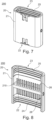
- Figs. 7 and 8 depict an electrical connector 200 with a connector housing 20 according to a second embodiment of the present disclosure.
- the connector housing 20 comprises a housing body 21 having a first opening 22 and a second opening 23.
- the connector housing 20 comprises a first seal 24, a second seal 25, and a connection element 26 connecting the first seal 24 and the second seal 25.
- Said first seal 24 is molded to inner walls of the first opening 22 and the second seal 25 is molded to inner walls of the second opening 23, wherein the first seal 24, the second seal 25, and the connection element 26 are integrally formed.
- the first opening 22 and the second opening 23 are each configured to receive a counter connector, wherein a central axis of the first opening 22 is parallel to a central axis of the second opening 23.
- the first seal 14; 24, the second seal 15; 25, and the connection element 16; 26 are injection molded.
- connection elements 16; 26 of the first and the second embodiment have an elongated shape which extends along an inside of the housing body 11; 21.
- the connection element 16 has a substantially circular cross-section.
- the housing bodies 11; 21 of the first and the second embodiment each comprise a channel 18; 28 through which the connection element 16; 26 extends.
- the respective channels 18; 28 extend from the first opening 12; 22 to the second opening 13; 23.
- first seal 14; 24 and the second seal 15; 25 are circumferential seals, wherein the first seal 14; 24 and the second seal 15; 25 are flush with an outside surface of the housing body 11; 21.
- Figs. 7 and 8 depict an electrical connector 200.
- the electrical connector 200 comprises an electrical conductor 210 being arranged inside the connector housing 20 which was previously described.
- the electrical conductor 210 comprises several electrical contact pins extending from the first opening 22 into second opening 23.
- the electrical connector 200 is a shunt module.
- an electrical connector 100 comprising the connector housing 10, as described above, is depicted.
- the electrical connector 100 comprises an electrical conductor 110 being arranged inside the connector housing 10.
- the electrical conductor 110 is a terminal being received inside the third opening 19.
- a terminal position assurance element 17 engaging with the terminal is arranged in the second opening 13.
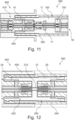
- Figs. 9 to 13 depict a modular connector assembly 300.
- the modular connector assembly 300 comprises two electrical connectors 100 and one electrical connector 200.
- the modular connector assembly 300 comprises a carrier housing 350 in which the electrical connectors 100; 200 are arranged.
- Figs. 10 to 13 also show a respective modular counter connector assembly 400 with counter connectors 410; 420 and a counter carrier housing 450.
- Fig. 15 is a flowchart illustrating a method 10000 for manufacturing the connector housing 10; 20 for the electrical connector 100; 200 described above.
- the method comprises the step of injection molding 11000 a housing body 11; 21 with a first opening 12; 22 and a second opening 13; 23.
- the method 10000 comprises the subsequent step of injection molding 12000 a first seal 14; 24, a second seal 15; 25, and a connection element 16; 26 with a single injection into the housing body 11; 21.
- the connection element 16; 26 connects the first seal 14; 24 and the second seal 15; 25.
- the first seal 14; 24 is injection molded to inner walls of the first opening 12; 22 and the second seal 15; 25 is injection molded to inner walls of the second opening 13; 23, wherein the first seal 14; 24, the second seal 15; 25, and the connection element 16; 26 are integrally formed.
Landscapes
- Engineering & Computer Science (AREA)
- Manufacturing & Machinery (AREA)
- Connector Housings Or Holding Contact Members (AREA)
Priority Applications (3)
| Application Number | Priority Date | Filing Date | Title |
|---|---|---|---|
| EP22185208.0A EP4307487A1 (de) | 2022-07-15 | 2022-07-15 | Steckergehäuse mit eingegossenen dichtungen |
| US18/211,432 US12548942B2 (en) | 2022-07-15 | 2023-06-19 | Electrical connector for connecting high voltage power cable including electrical conductor to electrical terminal |
| CN202310869440.XA CN117410759A (zh) | 2022-07-15 | 2023-07-14 | 具有模制在内的密封件的连接器壳体 |
Applications Claiming Priority (1)
| Application Number | Priority Date | Filing Date | Title |
|---|---|---|---|
| EP22185208.0A EP4307487A1 (de) | 2022-07-15 | 2022-07-15 | Steckergehäuse mit eingegossenen dichtungen |
Publications (1)
| Publication Number | Publication Date |
|---|---|
| EP4307487A1 true EP4307487A1 (de) | 2024-01-17 |
Family
ID=82608679
Family Applications (1)
| Application Number | Title | Priority Date | Filing Date |
|---|---|---|---|
| EP22185208.0A Pending EP4307487A1 (de) | 2022-07-15 | 2022-07-15 | Steckergehäuse mit eingegossenen dichtungen |
Country Status (3)
| Country | Link |
|---|---|
| US (1) | US12548942B2 (de) |
| EP (1) | EP4307487A1 (de) |
| CN (1) | CN117410759A (de) |
Citations (5)
| Publication number | Priority date | Publication date | Assignee | Title |
|---|---|---|---|---|
| WO1989004072A1 (en) * | 1987-10-22 | 1989-05-05 | Amp Incorporated | Dual molded sealed connector with internal gating |
| US5334039A (en) * | 1991-08-14 | 1994-08-02 | Yazaki Corp. | Waterproof connector housing and method of producing the same |
| DE102005014373B3 (de) * | 2005-03-23 | 2006-08-24 | Walther-Werke Ferdinand Walther Gmbh | Elektrische Steckvorrichtung |
| US20210384651A1 (en) * | 2018-11-08 | 2021-12-09 | Auto-Kabel Management Gmbh | Cable lug, contact element and method for producing said element |
| CN215600703U (zh) * | 2021-04-23 | 2022-01-21 | 中山得意电子有限公司 | 电连接器 |
Family Cites Families (3)
| Publication number | Priority date | Publication date | Assignee | Title |
|---|---|---|---|---|
| US4983344A (en) * | 1988-12-16 | 1991-01-08 | Amp Incorporated | Method for injection molding a sealed connector assembly |
| US5447446A (en) * | 1992-11-05 | 1995-09-05 | Thomas & Betts Corporation | Electrical connector component having secured seal |
| WO1996037927A1 (en) * | 1995-05-25 | 1996-11-28 | The Whitaker Corporation | Sealed electrical connector |
-
2022
- 2022-07-15 EP EP22185208.0A patent/EP4307487A1/de active Pending
-
2023
- 2023-06-19 US US18/211,432 patent/US12548942B2/en active Active
- 2023-07-14 CN CN202310869440.XA patent/CN117410759A/zh active Pending
Patent Citations (5)
| Publication number | Priority date | Publication date | Assignee | Title |
|---|---|---|---|---|
| WO1989004072A1 (en) * | 1987-10-22 | 1989-05-05 | Amp Incorporated | Dual molded sealed connector with internal gating |
| US5334039A (en) * | 1991-08-14 | 1994-08-02 | Yazaki Corp. | Waterproof connector housing and method of producing the same |
| DE102005014373B3 (de) * | 2005-03-23 | 2006-08-24 | Walther-Werke Ferdinand Walther Gmbh | Elektrische Steckvorrichtung |
| US20210384651A1 (en) * | 2018-11-08 | 2021-12-09 | Auto-Kabel Management Gmbh | Cable lug, contact element and method for producing said element |
| CN215600703U (zh) * | 2021-04-23 | 2022-01-21 | 中山得意电子有限公司 | 电连接器 |
Also Published As
| Publication number | Publication date |
|---|---|
| CN117410759A (zh) | 2024-01-16 |
| US20240022017A1 (en) | 2024-01-18 |
| US12548942B2 (en) | 2026-02-10 |
Similar Documents
| Publication | Publication Date | Title |
|---|---|---|
| CN112018556B (zh) | 用于组合式的电气连接和数据连接的插座 | |
| JP6865761B2 (ja) | 直角同軸電気コネクタ、およびその適切な組立てを確かめるための方法 | |
| US9806449B2 (en) | Electrical contact | |
| CN113839258B (zh) | 连接器 | |
| US20030032321A1 (en) | Sealed connector | |
| EP3155695A1 (de) | Kabelzugentlastung | |
| US11557871B2 (en) | Connector manufacturing method and connector | |
| US20250329955A1 (en) | Connector | |
| EP4307487A1 (de) | Steckergehäuse mit eingegossenen dichtungen | |
| US12470012B2 (en) | Connector | |
| US10727623B2 (en) | Electrical connecting unit and sealing arrangement for an electrical connector and method for its production | |
| CN113196577A (zh) | 多件式印刷电路板适配器插头 | |
| CN110867695A (zh) | 防水连接器构造及防水连接器构造的连接器嵌合方法 | |
| US11469539B2 (en) | Seals for a flat flexible conductor in an electrical connector assembly | |
| US20240313370A1 (en) | Electrical connector assembly with potting material seal | |
| US11081831B2 (en) | Waterproof connector | |
| US12300932B2 (en) | Rear-loaded terminal position assurance device for crimped terminals | |
| CN104134887B (zh) | 用于电子模块的电连接器组件 | |
| KR102270957B1 (ko) | 전기 장치 및 전기 장치와의 연결 어셈블리 | |
| US20250125566A1 (en) | Housing for a shielded electrical conductor as well as conductor arrangement and connector | |
| CN120660243A (zh) | 机电组件和控制设备 | |
| CN121367092A (zh) | 端子台 | |
| CN120184641A (zh) | 用于公电连接器的电触头 | |
| WO2025204775A1 (ja) | コネクタ | |
| JP2025510328A (ja) | 自動車用電気構成部品アセンブリ |
Legal Events
| Date | Code | Title | Description |
|---|---|---|---|
| PUAI | Public reference made under article 153(3) epc to a published international application that has entered the european phase |
Free format text: ORIGINAL CODE: 0009012 |
|
| STAA | Information on the status of an ep patent application or granted ep patent |
Free format text: STATUS: THE APPLICATION HAS BEEN PUBLISHED |
|
| AK | Designated contracting states |
Kind code of ref document: A1 Designated state(s): AL AT BE BG CH CY CZ DE DK EE ES FI FR GB GR HR HU IE IS IT LI LT LU LV MC MK MT NL NO PL PT RO RS SE SI SK SM TR |
|
| RAP1 | Party data changed (applicant data changed or rights of an application transferred) |
Owner name: APTIV TECHNOLOGIES AG |
|
| STAA | Information on the status of an ep patent application or granted ep patent |
Free format text: STATUS: REQUEST FOR EXAMINATION WAS MADE |
|
| 17P | Request for examination filed |
Effective date: 20240717 |
|
| RBV | Designated contracting states (corrected) |
Designated state(s): AL AT BE BG CH CY CZ DE DK EE ES FI FR GB GR HR HU IE IS IT LI LT LU LV MC MK MT NL NO PL PT RO RS SE SI SK SM TR |
|
| RAP3 | Party data changed (applicant data changed or rights of an application transferred) |
Owner name: APTIV TECHNOLOGIES AG |
|
| STAA | Information on the status of an ep patent application or granted ep patent |
Free format text: STATUS: EXAMINATION IS IN PROGRESS |
|
| 17Q | First examination report despatched |
Effective date: 20251114 |