EP4309687A1 - Medizinische vorrichtung - Google Patents
Medizinische vorrichtung Download PDFInfo
- Publication number
- EP4309687A1 EP4309687A1 EP22784093.1A EP22784093A EP4309687A1 EP 4309687 A1 EP4309687 A1 EP 4309687A1 EP 22784093 A EP22784093 A EP 22784093A EP 4309687 A1 EP4309687 A1 EP 4309687A1
- Authority
- EP
- European Patent Office
- Prior art keywords
- layer
- coating
- metal
- substrate
- medical device
- Prior art date
- Legal status (The legal status is an assumption and is not a legal conclusion. Google has not performed a legal analysis and makes no representation as to the accuracy of the status listed.)
- Pending
Links
Images



Classifications
-
- C—CHEMISTRY; METALLURGY
- C23—COATING METALLIC MATERIAL; COATING MATERIAL WITH METALLIC MATERIAL; CHEMICAL SURFACE TREATMENT; DIFFUSION TREATMENT OF METALLIC MATERIAL; COATING BY VACUUM EVAPORATION, BY SPUTTERING, BY ION IMPLANTATION OR BY CHEMICAL VAPOUR DEPOSITION, IN GENERAL; INHIBITING CORROSION OF METALLIC MATERIAL OR INCRUSTATION IN GENERAL
- C23C—COATING METALLIC MATERIAL; COATING MATERIAL WITH METALLIC MATERIAL; SURFACE TREATMENT OF METALLIC MATERIAL BY DIFFUSION INTO THE SURFACE, BY CHEMICAL CONVERSION OR SUBSTITUTION; COATING BY VACUUM EVAPORATION, BY SPUTTERING, BY ION IMPLANTATION OR BY CHEMICAL VAPOUR DEPOSITION, IN GENERAL
- C23C28/00—Coating for obtaining at least two superposed coatings either by methods not provided for in a single one of groups C23C2/00 - C23C26/00 or by combinations of methods provided for in subclasses C23C and C25C or C25D
- C23C28/30—Coatings combining at least one metallic layer and at least one inorganic non-metallic layer
- C23C28/32—Coatings combining at least one metallic layer and at least one inorganic non-metallic layer including at least one pure metallic layer
-
- A—HUMAN NECESSITIES
- A61—MEDICAL OR VETERINARY SCIENCE; HYGIENE
- A61L—METHODS OR APPARATUS FOR STERILISING MATERIALS OR OBJECTS IN GENERAL; DISINFECTION, STERILISATION OR DEODORISATION OF AIR; CHEMICAL ASPECTS OF BANDAGES, DRESSINGS, ABSORBENT PADS OR SURGICAL ARTICLES; MATERIALS FOR BANDAGES, DRESSINGS, ABSORBENT PADS OR SURGICAL ARTICLES
- A61L31/00—Materials for other surgical articles, e.g. stents, stent-grafts, shunts, surgical drapes, guide wires, materials for adhesion prevention, occluding devices, surgical gloves, tissue fixation devices
- A61L31/02—Inorganic materials
- A61L31/022—Metals or alloys
-
- A—HUMAN NECESSITIES
- A61—MEDICAL OR VETERINARY SCIENCE; HYGIENE
- A61L—METHODS OR APPARATUS FOR STERILISING MATERIALS OR OBJECTS IN GENERAL; DISINFECTION, STERILISATION OR DEODORISATION OF AIR; CHEMICAL ASPECTS OF BANDAGES, DRESSINGS, ABSORBENT PADS OR SURGICAL ARTICLES; MATERIALS FOR BANDAGES, DRESSINGS, ABSORBENT PADS OR SURGICAL ARTICLES
- A61L31/00—Materials for other surgical articles, e.g. stents, stent-grafts, shunts, surgical drapes, guide wires, materials for adhesion prevention, occluding devices, surgical gloves, tissue fixation devices
- A61L31/08—Materials for coatings
- A61L31/082—Inorganic materials
- A61L31/088—Other specific inorganic materials not covered by A61L31/084 or A61L31/086
-
- A—HUMAN NECESSITIES
- A61—MEDICAL OR VETERINARY SCIENCE; HYGIENE
- A61L—METHODS OR APPARATUS FOR STERILISING MATERIALS OR OBJECTS IN GENERAL; DISINFECTION, STERILISATION OR DEODORISATION OF AIR; CHEMICAL ASPECTS OF BANDAGES, DRESSINGS, ABSORBENT PADS OR SURGICAL ARTICLES; MATERIALS FOR BANDAGES, DRESSINGS, ABSORBENT PADS OR SURGICAL ARTICLES
- A61L31/00—Materials for other surgical articles, e.g. stents, stent-grafts, shunts, surgical drapes, guide wires, materials for adhesion prevention, occluding devices, surgical gloves, tissue fixation devices
- A61L31/14—Materials characterised by their function or physical properties, e.g. injectable or lubricating compositions, shape-memory materials, surface modified materials
-
- A—HUMAN NECESSITIES
- A61—MEDICAL OR VETERINARY SCIENCE; HYGIENE
- A61L—METHODS OR APPARATUS FOR STERILISING MATERIALS OR OBJECTS IN GENERAL; DISINFECTION, STERILISATION OR DEODORISATION OF AIR; CHEMICAL ASPECTS OF BANDAGES, DRESSINGS, ABSORBENT PADS OR SURGICAL ARTICLES; MATERIALS FOR BANDAGES, DRESSINGS, ABSORBENT PADS OR SURGICAL ARTICLES
- A61L31/00—Materials for other surgical articles, e.g. stents, stent-grafts, shunts, surgical drapes, guide wires, materials for adhesion prevention, occluding devices, surgical gloves, tissue fixation devices
- A61L31/14—Materials characterised by their function or physical properties, e.g. injectable or lubricating compositions, shape-memory materials, surface modified materials
- A61L31/16—Biologically active materials, e.g. therapeutic substances
-
- C—CHEMISTRY; METALLURGY
- C23—COATING METALLIC MATERIAL; COATING MATERIAL WITH METALLIC MATERIAL; CHEMICAL SURFACE TREATMENT; DIFFUSION TREATMENT OF METALLIC MATERIAL; COATING BY VACUUM EVAPORATION, BY SPUTTERING, BY ION IMPLANTATION OR BY CHEMICAL VAPOUR DEPOSITION, IN GENERAL; INHIBITING CORROSION OF METALLIC MATERIAL OR INCRUSTATION IN GENERAL
- C23C—COATING METALLIC MATERIAL; COATING MATERIAL WITH METALLIC MATERIAL; SURFACE TREATMENT OF METALLIC MATERIAL BY DIFFUSION INTO THE SURFACE, BY CHEMICAL CONVERSION OR SUBSTITUTION; COATING BY VACUUM EVAPORATION, BY SPUTTERING, BY ION IMPLANTATION OR BY CHEMICAL VAPOUR DEPOSITION, IN GENERAL
- C23C22/00—Chemical surface treatment of metallic material by reaction of the surface with a reactive liquid, leaving reaction products of surface material in the coating, e.g. conversion coatings, passivation of metals
- C23C22/05—Chemical surface treatment of metallic material by reaction of the surface with a reactive liquid, leaving reaction products of surface material in the coating, e.g. conversion coatings, passivation of metals using aqueous solutions
- C23C22/06—Chemical surface treatment of metallic material by reaction of the surface with a reactive liquid, leaving reaction products of surface material in the coating, e.g. conversion coatings, passivation of metals using aqueous solutions using aqueous acidic solutions with pH less than 6
-
- C—CHEMISTRY; METALLURGY
- C23—COATING METALLIC MATERIAL; COATING MATERIAL WITH METALLIC MATERIAL; CHEMICAL SURFACE TREATMENT; DIFFUSION TREATMENT OF METALLIC MATERIAL; COATING BY VACUUM EVAPORATION, BY SPUTTERING, BY ION IMPLANTATION OR BY CHEMICAL VAPOUR DEPOSITION, IN GENERAL; INHIBITING CORROSION OF METALLIC MATERIAL OR INCRUSTATION IN GENERAL
- C23C—COATING METALLIC MATERIAL; COATING MATERIAL WITH METALLIC MATERIAL; SURFACE TREATMENT OF METALLIC MATERIAL BY DIFFUSION INTO THE SURFACE, BY CHEMICAL CONVERSION OR SUBSTITUTION; COATING BY VACUUM EVAPORATION, BY SPUTTERING, BY ION IMPLANTATION OR BY CHEMICAL VAPOUR DEPOSITION, IN GENERAL
- C23C22/00—Chemical surface treatment of metallic material by reaction of the surface with a reactive liquid, leaving reaction products of surface material in the coating, e.g. conversion coatings, passivation of metals
- C23C22/05—Chemical surface treatment of metallic material by reaction of the surface with a reactive liquid, leaving reaction products of surface material in the coating, e.g. conversion coatings, passivation of metals using aqueous solutions
- C23C22/06—Chemical surface treatment of metallic material by reaction of the surface with a reactive liquid, leaving reaction products of surface material in the coating, e.g. conversion coatings, passivation of metals using aqueous solutions using aqueous acidic solutions with pH less than 6
- C23C22/48—Chemical surface treatment of metallic material by reaction of the surface with a reactive liquid, leaving reaction products of surface material in the coating, e.g. conversion coatings, passivation of metals using aqueous solutions using aqueous acidic solutions with pH less than 6 not containing phosphates, hexavalent chromium compounds, fluorides or complex fluorides, molybdates, tungstates, vanadates or oxalates
-
- C—CHEMISTRY; METALLURGY
- C23—COATING METALLIC MATERIAL; COATING MATERIAL WITH METALLIC MATERIAL; CHEMICAL SURFACE TREATMENT; DIFFUSION TREATMENT OF METALLIC MATERIAL; COATING BY VACUUM EVAPORATION, BY SPUTTERING, BY ION IMPLANTATION OR BY CHEMICAL VAPOUR DEPOSITION, IN GENERAL; INHIBITING CORROSION OF METALLIC MATERIAL OR INCRUSTATION IN GENERAL
- C23C—COATING METALLIC MATERIAL; COATING MATERIAL WITH METALLIC MATERIAL; SURFACE TREATMENT OF METALLIC MATERIAL BY DIFFUSION INTO THE SURFACE, BY CHEMICAL CONVERSION OR SUBSTITUTION; COATING BY VACUUM EVAPORATION, BY SPUTTERING, BY ION IMPLANTATION OR BY CHEMICAL VAPOUR DEPOSITION, IN GENERAL
- C23C28/00—Coating for obtaining at least two superposed coatings either by methods not provided for in a single one of groups C23C2/00 - C23C26/00 or by combinations of methods provided for in subclasses C23C and C25C or C25D
- C23C28/30—Coatings combining at least one metallic layer and at least one inorganic non-metallic layer
- C23C28/32—Coatings combining at least one metallic layer and at least one inorganic non-metallic layer including at least one pure metallic layer
- C23C28/321—Coatings combining at least one metallic layer and at least one inorganic non-metallic layer including at least one pure metallic layer with at least one metal alloy layer
-
- C—CHEMISTRY; METALLURGY
- C23—COATING METALLIC MATERIAL; COATING MATERIAL WITH METALLIC MATERIAL; CHEMICAL SURFACE TREATMENT; DIFFUSION TREATMENT OF METALLIC MATERIAL; COATING BY VACUUM EVAPORATION, BY SPUTTERING, BY ION IMPLANTATION OR BY CHEMICAL VAPOUR DEPOSITION, IN GENERAL; INHIBITING CORROSION OF METALLIC MATERIAL OR INCRUSTATION IN GENERAL
- C23C—COATING METALLIC MATERIAL; COATING MATERIAL WITH METALLIC MATERIAL; SURFACE TREATMENT OF METALLIC MATERIAL BY DIFFUSION INTO THE SURFACE, BY CHEMICAL CONVERSION OR SUBSTITUTION; COATING BY VACUUM EVAPORATION, BY SPUTTERING, BY ION IMPLANTATION OR BY CHEMICAL VAPOUR DEPOSITION, IN GENERAL
- C23C28/00—Coating for obtaining at least two superposed coatings either by methods not provided for in a single one of groups C23C2/00 - C23C26/00 or by combinations of methods provided for in subclasses C23C and C25C or C25D
- C23C28/30—Coatings combining at least one metallic layer and at least one inorganic non-metallic layer
- C23C28/32—Coatings combining at least one metallic layer and at least one inorganic non-metallic layer including at least one pure metallic layer
- C23C28/322—Coatings combining at least one metallic layer and at least one inorganic non-metallic layer including at least one pure metallic layer only coatings of metal elements only
-
- C—CHEMISTRY; METALLURGY
- C23—COATING METALLIC MATERIAL; COATING MATERIAL WITH METALLIC MATERIAL; CHEMICAL SURFACE TREATMENT; DIFFUSION TREATMENT OF METALLIC MATERIAL; COATING BY VACUUM EVAPORATION, BY SPUTTERING, BY ION IMPLANTATION OR BY CHEMICAL VAPOUR DEPOSITION, IN GENERAL; INHIBITING CORROSION OF METALLIC MATERIAL OR INCRUSTATION IN GENERAL
- C23C—COATING METALLIC MATERIAL; COATING MATERIAL WITH METALLIC MATERIAL; SURFACE TREATMENT OF METALLIC MATERIAL BY DIFFUSION INTO THE SURFACE, BY CHEMICAL CONVERSION OR SUBSTITUTION; COATING BY VACUUM EVAPORATION, BY SPUTTERING, BY ION IMPLANTATION OR BY CHEMICAL VAPOUR DEPOSITION, IN GENERAL
- C23C28/00—Coating for obtaining at least two superposed coatings either by methods not provided for in a single one of groups C23C2/00 - C23C26/00 or by combinations of methods provided for in subclasses C23C and C25C or C25D
- C23C28/30—Coatings combining at least one metallic layer and at least one inorganic non-metallic layer
- C23C28/34—Coatings combining at least one metallic layer and at least one inorganic non-metallic layer including at least one inorganic non-metallic material layer, e.g. metal carbide, nitride, boride, silicide layer and their mixtures, enamels, phosphates and sulphates
-
- C—CHEMISTRY; METALLURGY
- C23—COATING METALLIC MATERIAL; COATING MATERIAL WITH METALLIC MATERIAL; CHEMICAL SURFACE TREATMENT; DIFFUSION TREATMENT OF METALLIC MATERIAL; COATING BY VACUUM EVAPORATION, BY SPUTTERING, BY ION IMPLANTATION OR BY CHEMICAL VAPOUR DEPOSITION, IN GENERAL; INHIBITING CORROSION OF METALLIC MATERIAL OR INCRUSTATION IN GENERAL
- C23C—COATING METALLIC MATERIAL; COATING MATERIAL WITH METALLIC MATERIAL; SURFACE TREATMENT OF METALLIC MATERIAL BY DIFFUSION INTO THE SURFACE, BY CHEMICAL CONVERSION OR SUBSTITUTION; COATING BY VACUUM EVAPORATION, BY SPUTTERING, BY ION IMPLANTATION OR BY CHEMICAL VAPOUR DEPOSITION, IN GENERAL
- C23C28/00—Coating for obtaining at least two superposed coatings either by methods not provided for in a single one of groups C23C2/00 - C23C26/00 or by combinations of methods provided for in subclasses C23C and C25C or C25D
- C23C28/30—Coatings combining at least one metallic layer and at least one inorganic non-metallic layer
- C23C28/34—Coatings combining at least one metallic layer and at least one inorganic non-metallic layer including at least one inorganic non-metallic material layer, e.g. metal carbide, nitride, boride, silicide layer and their mixtures, enamels, phosphates and sulphates
- C23C28/341—Coatings combining at least one metallic layer and at least one inorganic non-metallic layer including at least one inorganic non-metallic material layer, e.g. metal carbide, nitride, boride, silicide layer and their mixtures, enamels, phosphates and sulphates with at least one carbide layer
-
- C—CHEMISTRY; METALLURGY
- C23—COATING METALLIC MATERIAL; COATING MATERIAL WITH METALLIC MATERIAL; CHEMICAL SURFACE TREATMENT; DIFFUSION TREATMENT OF METALLIC MATERIAL; COATING BY VACUUM EVAPORATION, BY SPUTTERING, BY ION IMPLANTATION OR BY CHEMICAL VAPOUR DEPOSITION, IN GENERAL; INHIBITING CORROSION OF METALLIC MATERIAL OR INCRUSTATION IN GENERAL
- C23C—COATING METALLIC MATERIAL; COATING MATERIAL WITH METALLIC MATERIAL; SURFACE TREATMENT OF METALLIC MATERIAL BY DIFFUSION INTO THE SURFACE, BY CHEMICAL CONVERSION OR SUBSTITUTION; COATING BY VACUUM EVAPORATION, BY SPUTTERING, BY ION IMPLANTATION OR BY CHEMICAL VAPOUR DEPOSITION, IN GENERAL
- C23C28/00—Coating for obtaining at least two superposed coatings either by methods not provided for in a single one of groups C23C2/00 - C23C26/00 or by combinations of methods provided for in subclasses C23C and C25C or C25D
- C23C28/30—Coatings combining at least one metallic layer and at least one inorganic non-metallic layer
- C23C28/34—Coatings combining at least one metallic layer and at least one inorganic non-metallic layer including at least one inorganic non-metallic material layer, e.g. metal carbide, nitride, boride, silicide layer and their mixtures, enamels, phosphates and sulphates
- C23C28/345—Coatings combining at least one metallic layer and at least one inorganic non-metallic layer including at least one inorganic non-metallic material layer, e.g. metal carbide, nitride, boride, silicide layer and their mixtures, enamels, phosphates and sulphates with at least one oxide layer
-
- C—CHEMISTRY; METALLURGY
- C23—COATING METALLIC MATERIAL; COATING MATERIAL WITH METALLIC MATERIAL; CHEMICAL SURFACE TREATMENT; DIFFUSION TREATMENT OF METALLIC MATERIAL; COATING BY VACUUM EVAPORATION, BY SPUTTERING, BY ION IMPLANTATION OR BY CHEMICAL VAPOUR DEPOSITION, IN GENERAL; INHIBITING CORROSION OF METALLIC MATERIAL OR INCRUSTATION IN GENERAL
- C23C—COATING METALLIC MATERIAL; COATING MATERIAL WITH METALLIC MATERIAL; SURFACE TREATMENT OF METALLIC MATERIAL BY DIFFUSION INTO THE SURFACE, BY CHEMICAL CONVERSION OR SUBSTITUTION; COATING BY VACUUM EVAPORATION, BY SPUTTERING, BY ION IMPLANTATION OR BY CHEMICAL VAPOUR DEPOSITION, IN GENERAL
- C23C28/00—Coating for obtaining at least two superposed coatings either by methods not provided for in a single one of groups C23C2/00 - C23C26/00 or by combinations of methods provided for in subclasses C23C and C25C or C25D
- C23C28/30—Coatings combining at least one metallic layer and at least one inorganic non-metallic layer
- C23C28/34—Coatings combining at least one metallic layer and at least one inorganic non-metallic layer including at least one inorganic non-metallic material layer, e.g. metal carbide, nitride, boride, silicide layer and their mixtures, enamels, phosphates and sulphates
- C23C28/345—Coatings combining at least one metallic layer and at least one inorganic non-metallic layer including at least one inorganic non-metallic material layer, e.g. metal carbide, nitride, boride, silicide layer and their mixtures, enamels, phosphates and sulphates with at least one oxide layer
- C23C28/3455—Coatings combining at least one metallic layer and at least one inorganic non-metallic layer including at least one inorganic non-metallic material layer, e.g. metal carbide, nitride, boride, silicide layer and their mixtures, enamels, phosphates and sulphates with at least one oxide layer with a refractory ceramic layer, e.g. refractory metal oxide, ZrO2, rare earth oxides or a thermal barrier system comprising at least one refractory oxide layer
-
- C—CHEMISTRY; METALLURGY
- C23—COATING METALLIC MATERIAL; COATING MATERIAL WITH METALLIC MATERIAL; CHEMICAL SURFACE TREATMENT; DIFFUSION TREATMENT OF METALLIC MATERIAL; COATING BY VACUUM EVAPORATION, BY SPUTTERING, BY ION IMPLANTATION OR BY CHEMICAL VAPOUR DEPOSITION, IN GENERAL; INHIBITING CORROSION OF METALLIC MATERIAL OR INCRUSTATION IN GENERAL
- C23C—COATING METALLIC MATERIAL; COATING MATERIAL WITH METALLIC MATERIAL; SURFACE TREATMENT OF METALLIC MATERIAL BY DIFFUSION INTO THE SURFACE, BY CHEMICAL CONVERSION OR SUBSTITUTION; COATING BY VACUUM EVAPORATION, BY SPUTTERING, BY ION IMPLANTATION OR BY CHEMICAL VAPOUR DEPOSITION, IN GENERAL
- C23C4/00—Coating by spraying the coating material in the molten state, e.g. by flame, plasma or electric discharge
- C23C4/02—Pretreatment of the material to be coated, e.g. for coating on selected surface areas
-
- C—CHEMISTRY; METALLURGY
- C23—COATING METALLIC MATERIAL; COATING MATERIAL WITH METALLIC MATERIAL; CHEMICAL SURFACE TREATMENT; DIFFUSION TREATMENT OF METALLIC MATERIAL; COATING BY VACUUM EVAPORATION, BY SPUTTERING, BY ION IMPLANTATION OR BY CHEMICAL VAPOUR DEPOSITION, IN GENERAL; INHIBITING CORROSION OF METALLIC MATERIAL OR INCRUSTATION IN GENERAL
- C23C—COATING METALLIC MATERIAL; COATING MATERIAL WITH METALLIC MATERIAL; SURFACE TREATMENT OF METALLIC MATERIAL BY DIFFUSION INTO THE SURFACE, BY CHEMICAL CONVERSION OR SUBSTITUTION; COATING BY VACUUM EVAPORATION, BY SPUTTERING, BY ION IMPLANTATION OR BY CHEMICAL VAPOUR DEPOSITION, IN GENERAL
- C23C4/00—Coating by spraying the coating material in the molten state, e.g. by flame, plasma or electric discharge
- C23C4/04—Coating by spraying the coating material in the molten state, e.g. by flame, plasma or electric discharge characterised by the coating material
- C23C4/06—Metallic material
-
- C—CHEMISTRY; METALLURGY
- C23—COATING METALLIC MATERIAL; COATING MATERIAL WITH METALLIC MATERIAL; CHEMICAL SURFACE TREATMENT; DIFFUSION TREATMENT OF METALLIC MATERIAL; COATING BY VACUUM EVAPORATION, BY SPUTTERING, BY ION IMPLANTATION OR BY CHEMICAL VAPOUR DEPOSITION, IN GENERAL; INHIBITING CORROSION OF METALLIC MATERIAL OR INCRUSTATION IN GENERAL
- C23C—COATING METALLIC MATERIAL; COATING MATERIAL WITH METALLIC MATERIAL; SURFACE TREATMENT OF METALLIC MATERIAL BY DIFFUSION INTO THE SURFACE, BY CHEMICAL CONVERSION OR SUBSTITUTION; COATING BY VACUUM EVAPORATION, BY SPUTTERING, BY ION IMPLANTATION OR BY CHEMICAL VAPOUR DEPOSITION, IN GENERAL
- C23C4/00—Coating by spraying the coating material in the molten state, e.g. by flame, plasma or electric discharge
- C23C4/04—Coating by spraying the coating material in the molten state, e.g. by flame, plasma or electric discharge characterised by the coating material
- C23C4/06—Metallic material
- C23C4/08—Metallic material containing only metal elements
-
- C—CHEMISTRY; METALLURGY
- C23—COATING METALLIC MATERIAL; COATING MATERIAL WITH METALLIC MATERIAL; CHEMICAL SURFACE TREATMENT; DIFFUSION TREATMENT OF METALLIC MATERIAL; COATING BY VACUUM EVAPORATION, BY SPUTTERING, BY ION IMPLANTATION OR BY CHEMICAL VAPOUR DEPOSITION, IN GENERAL; INHIBITING CORROSION OF METALLIC MATERIAL OR INCRUSTATION IN GENERAL
- C23C—COATING METALLIC MATERIAL; COATING MATERIAL WITH METALLIC MATERIAL; SURFACE TREATMENT OF METALLIC MATERIAL BY DIFFUSION INTO THE SURFACE, BY CHEMICAL CONVERSION OR SUBSTITUTION; COATING BY VACUUM EVAPORATION, BY SPUTTERING, BY ION IMPLANTATION OR BY CHEMICAL VAPOUR DEPOSITION, IN GENERAL
- C23C4/00—Coating by spraying the coating material in the molten state, e.g. by flame, plasma or electric discharge
- C23C4/04—Coating by spraying the coating material in the molten state, e.g. by flame, plasma or electric discharge characterised by the coating material
- C23C4/10—Oxides, borides, carbides, nitrides or silicides; Mixtures thereof
-
- C—CHEMISTRY; METALLURGY
- C23—COATING METALLIC MATERIAL; COATING MATERIAL WITH METALLIC MATERIAL; CHEMICAL SURFACE TREATMENT; DIFFUSION TREATMENT OF METALLIC MATERIAL; COATING BY VACUUM EVAPORATION, BY SPUTTERING, BY ION IMPLANTATION OR BY CHEMICAL VAPOUR DEPOSITION, IN GENERAL; INHIBITING CORROSION OF METALLIC MATERIAL OR INCRUSTATION IN GENERAL
- C23C—COATING METALLIC MATERIAL; COATING MATERIAL WITH METALLIC MATERIAL; SURFACE TREATMENT OF METALLIC MATERIAL BY DIFFUSION INTO THE SURFACE, BY CHEMICAL CONVERSION OR SUBSTITUTION; COATING BY VACUUM EVAPORATION, BY SPUTTERING, BY ION IMPLANTATION OR BY CHEMICAL VAPOUR DEPOSITION, IN GENERAL
- C23C4/00—Coating by spraying the coating material in the molten state, e.g. by flame, plasma or electric discharge
- C23C4/04—Coating by spraying the coating material in the molten state, e.g. by flame, plasma or electric discharge characterised by the coating material
- C23C4/10—Oxides, borides, carbides, nitrides or silicides; Mixtures thereof
- C23C4/11—Oxides
-
- C—CHEMISTRY; METALLURGY
- C23—COATING METALLIC MATERIAL; COATING MATERIAL WITH METALLIC MATERIAL; CHEMICAL SURFACE TREATMENT; DIFFUSION TREATMENT OF METALLIC MATERIAL; COATING BY VACUUM EVAPORATION, BY SPUTTERING, BY ION IMPLANTATION OR BY CHEMICAL VAPOUR DEPOSITION, IN GENERAL; INHIBITING CORROSION OF METALLIC MATERIAL OR INCRUSTATION IN GENERAL
- C23C—COATING METALLIC MATERIAL; COATING MATERIAL WITH METALLIC MATERIAL; SURFACE TREATMENT OF METALLIC MATERIAL BY DIFFUSION INTO THE SURFACE, BY CHEMICAL CONVERSION OR SUBSTITUTION; COATING BY VACUUM EVAPORATION, BY SPUTTERING, BY ION IMPLANTATION OR BY CHEMICAL VAPOUR DEPOSITION, IN GENERAL
- C23C4/00—Coating by spraying the coating material in the molten state, e.g. by flame, plasma or electric discharge
- C23C4/18—After-treatment
-
- C—CHEMISTRY; METALLURGY
- C25—ELECTROLYTIC OR ELECTROPHORETIC PROCESSES; APPARATUS THEREFOR
- C25D—PROCESSES FOR THE ELECTROLYTIC OR ELECTROPHORETIC PRODUCTION OF COATINGS; ELECTROFORMING; APPARATUS THEREFOR
- C25D3/00—Electroplating: Baths therefor
- C25D3/02—Electroplating: Baths therefor from solutions
- C25D3/04—Electroplating: Baths therefor from solutions of chromium
-
- C—CHEMISTRY; METALLURGY
- C25—ELECTROLYTIC OR ELECTROPHORETIC PROCESSES; APPARATUS THEREFOR
- C25D—PROCESSES FOR THE ELECTROLYTIC OR ELECTROPHORETIC PRODUCTION OF COATINGS; ELECTROFORMING; APPARATUS THEREFOR
- C25D3/00—Electroplating: Baths therefor
- C25D3/02—Electroplating: Baths therefor from solutions
- C25D3/50—Electroplating: Baths therefor from solutions of platinum group metals
-
- C—CHEMISTRY; METALLURGY
- C25—ELECTROLYTIC OR ELECTROPHORETIC PROCESSES; APPARATUS THEREFOR
- C25D—PROCESSES FOR THE ELECTROLYTIC OR ELECTROPHORETIC PRODUCTION OF COATINGS; ELECTROFORMING; APPARATUS THEREFOR
- C25D3/00—Electroplating: Baths therefor
- C25D3/02—Electroplating: Baths therefor from solutions
- C25D3/54—Electroplating: Baths therefor from solutions of metals not provided for in groups C25D3/04 - C25D3/50
-
- C—CHEMISTRY; METALLURGY
- C25—ELECTROLYTIC OR ELECTROPHORETIC PROCESSES; APPARATUS THEREFOR
- C25D—PROCESSES FOR THE ELECTROLYTIC OR ELECTROPHORETIC PRODUCTION OF COATINGS; ELECTROFORMING; APPARATUS THEREFOR
- C25D3/00—Electroplating: Baths therefor
- C25D3/02—Electroplating: Baths therefor from solutions
- C25D3/56—Electroplating: Baths therefor from solutions of alloys
- C25D3/567—Electroplating: Baths therefor from solutions of alloys containing more than 50% by weight of platinum group metals
-
- C—CHEMISTRY; METALLURGY
- C25—ELECTROLYTIC OR ELECTROPHORETIC PROCESSES; APPARATUS THEREFOR
- C25D—PROCESSES FOR THE ELECTROLYTIC OR ELECTROPHORETIC PRODUCTION OF COATINGS; ELECTROFORMING; APPARATUS THEREFOR
- C25D9/00—Electrolytic coating other than with metals
- C25D9/04—Electrolytic coating other than with metals with inorganic materials
-
- A—HUMAN NECESSITIES
- A61—MEDICAL OR VETERINARY SCIENCE; HYGIENE
- A61L—METHODS OR APPARATUS FOR STERILISING MATERIALS OR OBJECTS IN GENERAL; DISINFECTION, STERILISATION OR DEODORISATION OF AIR; CHEMICAL ASPECTS OF BANDAGES, DRESSINGS, ABSORBENT PADS OR SURGICAL ARTICLES; MATERIALS FOR BANDAGES, DRESSINGS, ABSORBENT PADS OR SURGICAL ARTICLES
- A61L2420/00—Materials or methods for coatings medical devices
- A61L2420/02—Methods for coating medical devices
-
- A—HUMAN NECESSITIES
- A61—MEDICAL OR VETERINARY SCIENCE; HYGIENE
- A61L—METHODS OR APPARATUS FOR STERILISING MATERIALS OR OBJECTS IN GENERAL; DISINFECTION, STERILISATION OR DEODORISATION OF AIR; CHEMICAL ASPECTS OF BANDAGES, DRESSINGS, ABSORBENT PADS OR SURGICAL ARTICLES; MATERIALS FOR BANDAGES, DRESSINGS, ABSORBENT PADS OR SURGICAL ARTICLES
- A61L2420/00—Materials or methods for coatings medical devices
- A61L2420/06—Coatings containing a mixture of two or more compounds
-
- A—HUMAN NECESSITIES
- A61—MEDICAL OR VETERINARY SCIENCE; HYGIENE
- A61L—METHODS OR APPARATUS FOR STERILISING MATERIALS OR OBJECTS IN GENERAL; DISINFECTION, STERILISATION OR DEODORISATION OF AIR; CHEMICAL ASPECTS OF BANDAGES, DRESSINGS, ABSORBENT PADS OR SURGICAL ARTICLES; MATERIALS FOR BANDAGES, DRESSINGS, ABSORBENT PADS OR SURGICAL ARTICLES
- A61L2420/00—Materials or methods for coatings medical devices
- A61L2420/08—Coatings comprising two or more layers
-
- C—CHEMISTRY; METALLURGY
- C25—ELECTROLYTIC OR ELECTROPHORETIC PROCESSES; APPARATUS THEREFOR
- C25D—PROCESSES FOR THE ELECTROLYTIC OR ELECTROPHORETIC PRODUCTION OF COATINGS; ELECTROFORMING; APPARATUS THEREFOR
- C25D7/00—Electroplating characterised by the article coated
- C25D7/06—Wires; Strips; Foils
- C25D7/0607—Wires
Definitions
- the present disclosure relates to the field of medical technologies, and particularly to a medical device.
- Biomedical metal materials have been widely used in clinical medicine for their good mechanical properties, ease of processing and reliability, and their importance is equal to that of biomedical polymer materials, occupying a very important proportion in the whole biomedical material applications.
- the development of medical metal materials focuses on continuously improving use safety, reliability and biocompatibility.
- Biocompatibility means does not cause adverse reactions to organism's tissues, blood, etc. Since metal materials contain many alloying elements, after implantation into the human body, metal ions may dissolve due to corrosion, wear and tear, and the like, which in turn triggers some biological reactions in cells and tissue fluids, such as tissue reactions, blood reactions and systemic reactions, manifested as edema, thromboembolism, infections, tumors, and other phenomena. As is well-known, in addition to being highly toxic and allergic to the human body, a nickel ion may induce mutations in organisms and even cancer.
- a medical device includes a substrate and a first coating wrapping the substrate, the substrate contains a metal element X with a content of ⁇ 5wt%, the first coating includes at least one of an elemental metal layer of the metal element X, an alloy layer of the metal element X, and a metal-ceramic layer of the metal element X, and the first coating does not contain nickel and cobalt.
- the first coating is a stack layer formed by the elemental metal layer and at least one of the alloy layer and the metal-ceramic layer;
- the elemental metal layer is an inner layer close to the substrate, at least one of the alloy layer and the metal-ceramic layer is an outer layer away from the substrate.
- the elemental metal layer is a passivated metal coating when the first coating is the elemental metal layer of the metal element X;
- a difference of self-corrosion potential between the first coating and the substrate is within 100 mV.
- a material of the metal-ceramic layer is at least one of oxide, carbide, nitride, silicide, and boride of the metal element X.
- the metal element X is Cr, W, Mo or any one of noble metal element.
- the content of the metal element X in the substrate ranges from 7 wt% to 60 wt%.
- the substrate is a substrate capable of plastic deformation.
- a material of the substrate is selected from the group consisting of stainless steel, cobalt-based alloy, titanium alloy, noble metal alloy, and nickel-titanium shape memory alloy.
- the metal element X is one of Cr, W, Mo or Pt.
- the first coating contains the metal-ceramic layer
- the medical device further includes a second coating provided on the metal-ceramic layer
- a difference of self-corrosion potential between any two adjacent layers of layer structures with different materials of the medical device is within 100 mV.
- thicknesses of the elemental metal layer, the alloy layer, and the metal-ceramic layer range from 10 nm to 500 nm.
- the metal element X is not element titanium.
- the medical device further includes a medicine active layer located on a surface of the first coating.
- the first coating is formed with a medicine-carrying recess, and the medicine active layer is located within the medicine-carrying recess.
- the first coating with a specific material is formed on the substrate, the first coating contains the metal element X with the content of ⁇ 5 wt% in the substrate, and the metal element X is an element except nickel and cobalt.
- the first coating with the same metal element X as the substrate is used on the substrate, on the one hand, the problem of cracking due to the large difference in properties such as ductility between the coating and the substrate can be avoided, and the first coating and the substrate can have excellent bonding force and ductility, such that the product can meet the use requirement of large plastic deformation, and has good reliability during use, particularly can meet the requirement of the products with large plastic deformation during use, such as medical implant devices.
- the first coating wrapping the substrate does not contain nickel and cobalt, which can achieve the effect of isolating or significantly reducing the dissolution of sensitized and carcinogenic alloy elements such as nickel and cobalt contained in the substrate, and has better use safety and biocompatibility.
- first and second are used for descriptive purposes only, and cannot be understood to indicate or imply relative importance or implicitly indicate the number of technical features indicated. Therefore, the defined “first” and “second” features may explicitly or implicitly include one or more of the features.
- “plurality” means at least two, such as two or more than two, unless otherwise specifically defined.
- An embodiment of the present disclosure provides a medical device including a substrate and a first coating wrapping the substrate.
- the substrate contains a metal element X with a content of ⁇ 5 wt%.
- the first coating is at least one of an elemental metal layer of the metal element X, an alloy layer of the metal element X, and a metal-ceramic layer of the metal element X. And the first coating does not contain nickel and cobalt. In other words, the metal element X is not nickel and cobalt, and the alloy layer does not contain nickel and cobalt either.
- the first coating with a specific material is formed on the substrate, the first coating contains the metal element X with the content of ⁇ 5 wt% in the substrate, and the metal element X is an element except nickel and cobalt.
- the first coating with the same metal element X as the substrate is used on the substrate, on the one hand, the problem of cracking due to the large difference in properties such as ductility between the coating and the substrate can be avoided, and the first coating and the substrate can have excellent bonding force and ductility, such that the product can meet the use requirement of large plastic deformation, and has good reliability during use, particularly can meet the requirement of products with large plastic deformation during use, such as medical implant devices.
- the first coating wrapping the substrate does not contain nickel and cobalt, which can achieve the effect of isolating or significantly reducing the dissolution of sensitized and carcinogenic alloy elements such as nickel and cobalt contained in the substrate, and has better use safety and biocompatibility.
- the first coating also improves the corrosion resistance property of the substrate material, which in turn can prolong the service life of the medical device to a certain extent, thus bringing great convenience to clinical applications.
- the medical device is a medical implant device or a medical interventional device. It should be understood that the medical device according to an embodiment of the present disclosure is particularly suitable for, but not only suitable for, the medical implant devices with large plastic deformation during use, and is also suitable for products such as medical interventional devices.
- the substrate may be, but is not limited to, a substrate capable of plastic deformation.
- the medical implant device includes but not limited to vascular stents, coronary stents, heart valve stents, cardiac pacemakers, venous filters, and metal bone nails, metal bone plates, and artificial joints.
- the medical interventional device includes but not limited to intravascular catheters, guidewires and sheaths, and embolization devices.
- the cardiovascular stent in medical implantable device as an example, in general, has at least 30% of plastic deformation during implantation and expansion.
- the coating on the cardiovascular stent with poor bonding force and ductility is susceptible to large-scale cracking or peeling and falling off from the substrate. If the coating falls off, it may lead to serious consequences such as blood clots and death.
- the coating In order to make the coating not only have large plastic deformation along with the substrate after compressed implantation of the cardiovascular stent, but also can prevent or significantly reduce the dissolution of sensitized and carcinogenic alloy elements such as nickel and cobalt, it is required to have good ductility and bonding force between the coating and the substrate. It has been verified by experiments that the coating and the substrate of the medical device according to an embodiment of the present disclosure meet the requirement of good bonding force therebetween, and thereby achieving the object.
- the dissolution of sensitized and carcinogenic alloy elements is effectively reduced by surface coating method, which provides a cost-effective and efficient method to improve the biosafety of medical devices, particularly for medical implant devices.
- the first coating is at least one of the elemental metal layer of the metal element X, the alloy layer of the metal element X, and the metal-ceramic layer of the metal element X. Therefore, a metallic bond, an ionic bond, a covalent bond or a molecular bond may be formed between the first coating and the substrate, such that the first coating and the substrate have good bonding force therebetween. For example, when the elemental metal layer wraps the substrate, and a metallic bond may be formed between the elemental metal layer and the substrate.
- the metal element X may be chromium (Cr), or tungsten (W), or molybdenum (Mo), or any one of noble metal element, where the noble metal element includes gold (Au), silver (Ag), mercury (Hg), platinum (Pt), palladium (Pd), iridium (Ir), rhodium (Rh), ruthenium (Ru), and osmium (Os).
- the noble metal element includes gold (Au), silver (Ag), mercury (Hg), platinum (Pt), palladium (Pd), iridium (Ir), rhodium (Rh), ruthenium (Ru), and osmium (Os).
- metal element X is not element titanium.
- the metal element X is not nickel and cobalt and the content thereof in the substrate is ⁇ 5 wt%, theoretically, the higher the content of the metal element X in the substrate, the better the bonding force of the coating to the substrate.
- the content of the metal element X in the substrate is ⁇ 7 wt%.
- the content of the metal element X in the substrate is ⁇ 9 wt%.
- the content of the metal element X in the substrate ranges from 7 wt% to 60 wt%; optionally, ranges from 9 wt% to 60 wt%; preferably, ranges from 9 wt% to 40 wt%; more preferably, ranges from 9 wt% to 35 wt%.
- the metal element X may also be an alloy composed of two or more metals.
- the first coating is the elemental metal layer of the metal element X.
- the elemental metal layer may be passivated to improve the compactness of a passivation film on surface of a pure metal functional coating, which in turn further improves the surface corrosion resistance of the elemental metal layer.
- the elemental metal layers can be passivated under natural conditions or passivated by a nitric acid solution. If a naturally passivated oxide layer of the elemental metal layer is relatively thin, the elemental metal layer may also be passivated by the nitric acid solution to further improve the corrosion resistance of the coating.
- the elemental metal layer is passivated by immersing in a nitric acid solution with a concentration between 40 wt% and 60 wt%.
- the passivation condition includes, for example, a passivation temperature between 20°C and 30°C, and a passivation time between 30 min and 60 min.
- the above alloy layer may be a metal alloy layer formed by at least two metals including the metal element X.
- the metal element of the alloy layer is selected from at least two of the group consisting Cr, W, Mo, and noble metal element.
- the first coating is the alloy layer of the metal element X.
- the metal-ceramic layer includes but not limited to metal oxides, metal carbides, metal nitrides, metal silicates and metal borides.
- the material of the above metal-ceramic layer is at least one of oxide, carbide, nitride, silicide, and boride of the above metal element X.
- the material of the metal-ceramic layer described above is at least one of oxide, carbide, nitride, and silicide of the above metal element X.
- the first coating is the metal-ceramic layer of the metal element X.
- the first coating is a stack layer formed by the elemental metal layer and at least one of the alloy layer and the metal-ceramic layer (or called composite coating).
- the elemental metal layer is an inner layer close to the substrate, at least one of the alloy layer and the metal-ceramic layer is an outer layer away from the substrate.
- the bonding force between the first coating and the substrate can be improved due to better bonding force between the elemental metal layer and the substrate.
- Using the elemental metal layer with good ductility as the inner layer or a transition layer can significantly improve the ductility of the composite coating, and can be subjected to large plastic deformation along with the substrate without cracking failure during compression and expansion deformation of the medical device.
- the elemental metal layer is in direct contact with the substrate, such that the first coating and the substrate are bonded by the metallic bond, which has a better bonding force.
- the first coating is a stack layer formed by the elemental metal layer and the metal-ceramic layer, and the elemental metal layer is located between the substrate and the metal-ceramic layer.
- the metal-ceramic layer Since the strength and the hardness of the metal-ceramic layer is high but the ductility thereof is poor, the metal-ceramic layer is located on the outer layer. On the basis of ensuring good ductility of the inner elemental metal layer, the first coating can exhibit high strength and hardness, which can meet requirements of orthopedic implant devices with high hardness and high wear resistance.
- the first coating is a stack layer formed by the elemental metal layer and the alloy layer, and the elemental metal layer is located between the substrate and the alloy layer.
- strong metallic bonds are formed between the elemental metal layer and the substrate, and between the elemental metal layer and the alloy layer, resulting in high bonding strength.
- Good plastic deformation capability of the functional coating can also be ensured while ensuring excellent bonding force.
- the metallic bond is not directional, so it will not be destroyed when the relative movement of atomic positions occurs by subjecting to external forces.
- the first coating may be a stack layer sequentially formed by the elemental metal layer, the alloy layer, and the metal-ceramic layer.
- the elemental metal layer is the inner layer
- the alloy layer is the middle layer
- the metal-ceramic layer is the outer layer.
- the first coating may also be a stack layer formed by the alloy layer and the metal-ceramic layer, and the alloy layer is located between the substrate and the metal-ceramic layer.
- the material of the substrate is selected from the group consisting of stainless steel, cobalt-based alloy, titanium alloy, noble metal alloy, and nickel-titanium shape memory alloy. It can be understood that the substrate may be nickel or cobalt containing material. Further, the noble metal alloy includes platinum-chromium alloy.
- the cobalt-based alloy includes cobalt-chromium alloy, such as L605, where the metal element X may be Cr or W; it also includes cobalt-chromium-molybdenum alloy, such as MP35N and ASTM F75, where the metal element X may be Cr or Mo.
- the metal element X when the material of the substrate is selected from the group consisting of stainless steel, cobalt-based alloy, and platinum-chromium alloy, the metal element X may be Cr. It can be understood that other suitable metal elements may also be selected as the metal element X, and metal element X may be specifically selected according to the material of the substrate.
- the material of the substrate is L605 alloy, MP35N, 316L or PtCr alloy
- the elemental composition of each substrate material employed in examples or comparative examples of the present disclosure is shown in Table 1 below.
- Table 1 Substrate material Co Cr KV Ni Fe Pt Mo Ti Mn Si S C P Unit: wt% L605 Residual 19-21 14-16 9-11 ⁇ 3.0 / / / 1.0-2.0 ⁇ 0.4 ⁇ 0.03 0.05-0.15 ⁇ 0.04 MP35N Residual 19-21 / 33-37 ⁇ 1 / 9-10.5 ⁇ 1 / / / / / PtCr alloy / 17.5-18.5 / 8.5-9.5 Residual 32.5-33.5 2.43-2.83 / ⁇ 0.05 ⁇ 0.1 ⁇ 0.0007 0.003-0.023 ⁇ 0.01 316L / 17-19 / 13-15 Residual / 2.25-3.0 / ⁇ 2.0 ⁇ 0.75 ⁇ 0.01 ⁇ 0.03
- the material of the substrate is L605 alloy, the metal element X is Cr or W.
- the material of the substrate is MP35N alloy or cobalt-chromium-molybdenum alloy ASTM F75, the metal element X is Cr or Mo.
- the material of the substrate is 316L alloy
- the metal element X is Cr
- the material of the substrate is PtCr alloy, the metal element X is Cr or Pt.
- the material of the substrate is L605, MP35N, 316L, or PtCr alloy
- the metal element X may be Cr.
- thicknesses of the elemental metal layer, the alloy layer, and the metal-ceramic layer range from 10 nm to 500 nm; preferably, range from 10 nm to 300 nm; more preferably, range from 10 nm to 200 nm; more preferably, range from 10 nm to 100 nm; more preferably, range from 10 nm to 80 nm; more preferably, range from 30 nm to 80 nm.
- the thickness of each coating By optimizing the selection of the thickness of each coating, it can be further ensured that the first coating is completely wrapped on all surfaces of the substrate without defects such as penetrating holes, and the release of nickel and cobalt ions from the substrate can be effectively avoided.
- the thickness of the coating in direct contact with the substrate as the inner layer may range from 10 nm to 80 nm; preferably, range from 10 nm to 60 nm; particular preferably, range from 10 nm to 50 nm.
- the total thickness of the first coating ranges from 10 nm to 30 nm, which is the relatively optimal thinnest thickness that can completely wrap the substrate, and can wrap the substrate even after the substrate is largely plastically deformed, and can ensure a low degree of dissolution of harmful ions.
- the total thickness of the first coating ranges from 30 nm to 100 nm, which enables the first coating to be deformed in good coordination with the substrate, to have good bonding force and ductility, and to wrap the substrate even after the substrate is largely plastically deformed.
- the degree of dissolution of harmful ions is lower in this embodiment comparing to the embodiment where the total thickness of the first coating ranges from 10 nm to 30 nm (other conditions remain unchanged).
- the total thickness of the first coating ranges from 100 nm to 300 nm.
- the first coating in this embodiment can be well deformed in coordination with the substrate, and have optimal bonding force and ductility, such that the first coating can wrap the substrate even after the substrate is largely plastically deformed. Compared to other embodiments, the degree of dissolution of harmful ions is lowest in this embodiment.
- the total thickness of the first coating ranges from 300 nm to 500 nm.
- the coating of the first coating is relatively large, after plastic deformation of the substrate, the first coating is susceptible to crack, which increases the tendency for harmful ions to dissolve.
- any coating in the first coating is a nanometer-coating.
- the nanometer-sized functional coating has an activating catalytic effect on the substrate material, which is beneficial to further enhance the bonding force between the interface of the substrate and the coating, thus effectively solving the problem of the medical device having a falling off or a large-area cracking of the surface coating when the medical device undergoes a large plastic deformation.
- the nanometer-coating has high compactness, which can reduce or effectively avoid the dissolution or precipitation of sensitized and carcinogenic nickel and cobalt elements, resulting in better biocompatibility and safety as a medical implant device, and expanding the scope of people applicable to the device.
- the inventors of the present disclosure have found that, good bonding force between two adjacent layers of the coating can be further ensured by controlling the difference of self-corrosion potential between any two adjacent layers of layer structures with different materials within a reasonable range. Compared with other protective coatings with high self-corrosion potential, the risk of galvanic effect between the substrate and the coating in possible coating failure modes, such as cracking or falling off, can be reduced to a great extent.
- the layer structure between any two adjacent layers with different materials of the medical device includes the layer structure between the substrate and the coating in direct contact therewith, the layer structure between any two adjacent layers with different materials within the first coating when the first coating is the stack layer, and the layer structure between the second coating and the first coating as mentioned later, and the like.
- the difference of self-corrosion potential between any two adjacent layers of layer structures with different materials of the medical device is within 100 mV; more preferably, the difference of self-corrosion potential between any two adjacent layers of layer structures with different materials of the medical device is within 80 mV; even more preferably, the difference of self-corrosion potential between any two adjacent layers of layer structures with different materials of the medical device is within 60 mV; and particular preferably, the difference of self-corrosion potential between any two adjacent layers of layer structures with different materials of the medical device is within 50 mV; most preferably, the difference of self-corrosion potential between any two adjacent layers of layer structures with different materials of the medical device is within 30 mV.
- the first coating contains the metal-ceramic layer. Further, the first coating also includes the second coating provided on the metal-ceramic layer. Further, the metal-ceramic layer is the carbide of the metal element X or the silicide of the metal element X, and the second coating is the silicon layer. Or, further, the metal-ceramic layer is the carbide of the metal element X, and the second coating is the carbon layer.
- the second coating has good bonding force with the metal-ceramic layer, and on the other hand, the second coating can be avoided to contain metal elements, and the dissolution of trace metal elements from the metal-ceramic layer can be avoided.
- the thickness of the second coating ranges from 30 nm to 500 nm.
- the thickness of the second coating ranges from 30 nm to 200 nm; preferably, the thickness of the second coating ranges from 50 nm to 150 nm; preferably, the thickness of the second coating ranges from 50 nm to 150 nm.
- the surface of the medical device such as a vascular stent may be smooth or rough, may be provided with a groove or without a groove, may be provided with a hole or without a hole, or may include, but not limited to any other recesses or micro-pores that can carry medicine.
- the first coating is formed with a medicine-carrying recess.
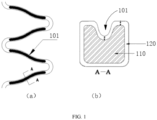
- the vascular stent shown in FIG. 1 the stent is consisted of one or more wavy rods.
- the wavy rod is consisted of a substrate 110 and a first coating 120, and the first coating 120 is provided with a recess 101.
- FIG. 1 shows a schematic view of the wavy rod
- (b) shows a schematic cross-sectional view of the wavy rod along the A-A line.
- the medical device further includes the medicine active layer provided on the surface of the first coating. Further, the medicine active layer may be provided within the medicine-carrying recess.
- the medicine in the medicine active layer includes medicine for treating cardiovascular and cerebrovascular diseases, medicine for oncological diseases, medicine for treating intestinal diseases, medicine for treating urinary tract diseases, and the like. Further, wherein the medicine includes but not limited to, at least one of Paclitaxel, Docetaxel, Copper aspirinate, Tacrolimus, Hydroxy camptothecin, Vinblastine, Doxorubicin, Rapamycin and Rapamycin derivatives.
- An embodiment of the present disclosure also provides a method for preparing the medical device, including the following steps:
- the first coating is at least two of the elemental metal layer, the alloy layer and the metal-ceramic layer, the first coating is formed stepwise.
- the medical device further includes a second coating.
- the method of forming the first coating and the second coating may be: physical or chemical surface modification methods such as physical vapor deposition, thermal spraying, pulsed laser thin film deposition, magnetron sputtering deposition, evaporation plating, ion plating, chemical plating, electrochemical plating, chemical vapor deposition, anodic oxidation, ion implantation and deposition, glow discharge plasma treatment, etc., or atomic layer deposition, paint coating technology, ceramic coating technology, chemical conversion film technology, cladding technology, color dyeing and staining technology, surface penetration expansion technology, welding and cladding, laser alloying technology, etc., and may also be a combination of one or more surface modification methods.
- physical or chemical surface modification methods such as physical vapor deposition, thermal spraying, pulsed laser thin film deposition, magnetron sputtering deposition, evaporation plating, ion plating, chemical plating, electrochemical plating, chemical vapor deposition, anodic oxidation, ion implantation and deposition
- the preferred coating method for realizing a full wrapping of the surface coating is atomic layer deposition and electrochemical plating, or a physical or chemical vapor deposition method in which the carrier table and the sample can be rotated to realize a full wrapping.
- the substrate may be subj ected to the steps of acid washing, electrochemical polishing, and surface activation treatment in sequence before preparing the first coating.
- acid washing is to remove surface cutting debris, heat-affected layer and contaminants.
- electrochemical polishing is to remove the oxidized layer, to obtain a bright and flat surface, to reduce surface roughness, and thus to reduce the risk of thrombosis and tissue reaction after implantation of the medical device, and to obtain the dimension in accordance with the design requirements of the stent.
- the purpose of surface activation treatment is to remove the passivation film on the surface of the stent and to expose the fresh substrate material.
- the substrate is a tubular substrate.
- the preparation method includes the following steps: Forming a substrate into a tubular member, cutting the tubular member to form a wavy rod, and depositing a first coating on the wavy rod.
- preparation method may also include the following steps:
- the first coating is deposited after the recess is dug, such that the first coating is also formed with a recess, which can be used for carrying medicine.
- the preparation method may also include a step of forming the second coating on the first coating.
- the second coating is also correspondingly formed with the recess at that position, such that the outermost coating is also formed with the recess, which is used for carrying medicine.
- a three-dimensional medical device with full coverage of the inner and outer surfaces, uniform thickness, and excellent bonding force can be obtained, which ensures the biosafety of vascular stents and other medical implantable devices, and meanwhile improves the corrosion resistance.
- the method can be used for the preparation of vascular stents and other medical implant devices, and can prolong the service life of the vascular stents and other medical implant devices in vivo.
- the substrate material of the vascular stent and the material of the first coating of the examples are shown in Table 2 below: Table 2 Vascular stent Substrate material The first coating The inner layer, thickness The outer layer, thickness Example 1 L605 Cr, 100 nm Cr 2 O 3 , 150 nm Example 2 Cr, 200 nm CrN, 80 nm Example 3 Cr, 20 nm CrC, 200 nm Example 4 / Cr 2 O 3 , 250 nm Example 5 / CrN, 300 nm Example 6 / CrC, 400 nm Example 7 / Cr, 500 nm Example 8 / Cr, 350 nm (passivated) Example 9 L605 W, 150 nm WC, 100 nm Example 10 W, 10 nm WO 3 , 250 nm Example 11 / WC, 80 nm Example 12 / WO 3 , 350 nm Example 13 / W, 200 nm Example 14 MP35N Mo, 50 nm MoSi 2 , 100 nm
- the step of passivation treatment in Example 8 is: immersing the stent in a 50 wt% nitric acid solution and passivating at a temperature of 25°C for 50 min.
- Example 3 Vascular stent
- the material of the first coating Advantages of the first coating
- Example 1 Cr+Cr 2 O 3 The best chemical stability; Cr transition layer between the substrate and Cr2O3 to enhance the bonding force between the two, excellent compactness and good ductility of the coating.
- Example 2 Cr+CrN Having a transition layer, CrN as an inorganic metal-ceramic phase, very high hardness and great brittleness, and relative high risk of coating cracking after deformation of the stent; it is recommended to strictly control the process and the ratio of coating thickness.
- Example 4 Cr 2 O 3 Excellent chemical stability, no pure Cr transition layer between the substrate, the coordination of deformation with the substrate is slightly worse than Example 1, large possibility of cracking after deformation.
- Example 5 CrN Excellent chemical stability, no pure Cr transition layer between the substrate, the coordination of deformation with the substrate is slightly worse than Example 2, the possibility of cracking after deformation is large than Example 4, the thickness should be strictly controlled.
- Example 7 Cr Excellent ductility; excellent bonding force; relatively good high-power scanning electron microscope micro-morphology; bright silver white; natural passivation in air, slightly poor chemical stability.
- Example 21 The vascular stent with the recess.
- the vascular stent of Example 21 is substantially the same as the vascular stent of Example 1, the difference between them lies in that, the substrate used for the vascular stent of Example 21 is provided with the recess, and the correspondingly formed first coating is also provided with the recess.
- Table 4 Vascular stent Substrate material The first coating The inner layer, thickness The outer layer, thickness Example 21 Cobalt-based alloy L605 Cr, 50 nm Cr 2 O 3 , 150 nm
- the present disclosure is also applicable to the vascular stent with the recess, the recess is uniformly and completely covered with the first coating, and there is no large-area crack falling off and cracking of the functional coating after the extreme expansion of the stent, the corrosion resistance test meets the requirements, and the results of the ion dissolution and biological experiments are good.
- Example 22 An implanted electrode for a heart pacemaker containing a second functional coating.
- the implanted electrode of Example 22 has substantially the same substrate material and first coating as the vascular stent of Example 14, the difference between them lies in that, the implanted electrode of Example 22 further has the silicon layer as the second coating on top of the outer layer of MoSi 2 .
- Table 5 Implanted electrode for a heart pacemaker Substrate material The first coating The second coating The inner layer, thickness The outer layer, thickness The outermost layer, thickness Example 22 MP35N Mo, 30 nm MoSi 2 , 50 nm Si, 80 nm
- Example 23 An artificial knee joint.
- Example 24 A metal bone nail.
- Metal bone nail Substrate material The first coating, thickness Example 24 Stainless steel 316L CrN, 500 nm
- the substrate materials of the vascular stents and the materials of the first coating of the comparative examples are shown in Table 6 below: Table 6 Vascular stent Substrate material The first coating The inner layer, thickness The outer layer, thickness Comparative Example 1 NiTi alloy Ti, 80 nm TiO 2 , 120 nm Comparative Example 2 NiTi alloy Ti, 80 nm TiN, 150 nm Comparative Example 3 NiTi alloy / Ti, 160 nm Comparative Example 4 MP35N / TiN, 100 nm Comparative Example 5 MP35N / TiN, 200 nm Comparative Example 6 L605 / TiN, 100 nm Comparative Example 7 316L / TiN, 100 nm Comparative Example 8 PtCr / TiN, 100 nm Comparative Example 9 L605 / Teflon, 200 nm
- Performance Test 1 Ductility of the stent during use in the presence of large plastic deformation.
- the separation of functional coating is related to the properties of the material itself, the separation at the interface (e.g., falling off of the coating and large-area cracking) is mainly determined by the bonding strength (i.e., bonding force) between the functional coating/the substrate.
- the vascular stent is first compressed onto a balloon, and expanded to the nominal size of the stent with a filler after simulated human traversing three times in a PBS solution at 37°C.
- the vascular stent of the embodiments of the present disclosure on the basis of expanding to the nominal size of the stent, the stent was further expanded with a post-expansion balloon to increase the pressure to continuously post-expand the stent to reach the extreme post-expansion size of the stent, and the bonding performance of the coating on the stent of the present disclosure is verified under this extreme condition.
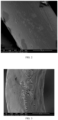
- the NiTi alloy in the Comparative Example 1-3 is nickel-titanium wire, and the products made are nickel-titanium wire knitted products, which have super-elasticity but no plastic deformation properties, and do not deform plastically during implantation, so the requirement for the coating bonding force is low. Further, the product made by Comparative Example 2 is subjected to simulated implantation, and it was verified that a coating falling off phenomenon did occur on the product during the simulated implantation, as shown in the SEM image of FIG. 2 . It can be known from this that the coating falling off phenomenon on the NiTi alloy occurred just during elastic deformation. Comparative Example 1, Comparative Example 3 and Comparative Example 2 made products with similar properties, i.e., poor bonding force between their coatings and the substrate.
- Ti elemental coating and TiN composite coating are not applicable to the surface of materials other than nickel-titanium alloys, such as L605, MP35N, 316L and PtCr, and the like, which require the substrate to be capable of plastic deformation, and the bonding force is poor.
- the Ti alloy element is used as impurity element in L605, MP35N, 316L and PtCr, and their Ti alloy content is low, not more than 1%, and their elemental or composite coatings have poor bonding force on the substrate, and cracking or even severe coating peeling occurs after the stent was expanded.
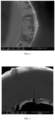
- FIG. 5 is the scanning electron microscope image of the stent product made in Comparative Example 6;
- FIG. 6 is the scanning electron microscope image of the stent product made in Comparative Example 7 expanded to nominal size;
- FIG. 7 is the scanning electron microscope image of the stent product made in Comparative Example 8 expanded to extreme post-expansion size.
- the substrate of the stent products of Comparative Example 6-8 does not contain the Ti alloy element, and only the substrate MP35N contains trace impurity element of Ti ( ⁇ 1%), while the coatings are all TiN. Therefore, the substrate and the coating material do not have the same alloy element, and there exists a relatively large self-corrosive potential difference, and the coating bonding force is relatively poor.
- the stent obtained in Comparative Example 6 is not expanded, and the coating is found to be peeled off in a large area only after ultrasonic cleaning. After the stent obtained in Comparative Example 7 is post-expanded to nominal size, the coating in a large-area is peeled off. After the stent obtained in Comparative Example 8 is post-expanded, the coating shows a large-area of cracking, and has a risk of coating falling off. During stent implantation and post-expansion, if the coating falls off, it will lead to serious consequences of thrombosis and death.
- the stent made in Comparative Example 9 had not yet undergone plastic deformation, and after ultrasonic cleaning only, after PBS simulated traversal (i.e., before nominal size expansion) the coating is found to be large-area broken, and its SEM is shown in FIG. 8 .
- the surface morphology of the stent made in Example 4 expanded to nominal size is shown in FIG. 9 ; and the surface morphology of the stent rod made in Example 8 under a condition of the extreme straightened expansion deformation is shown in FIG. 10 .
- the coating and the substrate are very firmly bonded together, and the coating does not crack or fall off, which proves that the coating of the present disclosure has excellent bonding and ductility with the substrate. This shows that the stent made by the present disclosure can meet the requirements of large plastic deformation and has excellent reliability.
- Performance Test 2 Dissolution of nickel and cobalt metal ions of the stent under simulated use condition.
- Whether the functional coating can effectively remove, isolate or avoid the dissolution of nickel and cobalt sensitized and carcinogenic alloy elements or not can be determined using an atomic emission spectroscopy quantitative analysis test method (ICP-MS).
- ICP-MS atomic emission spectroscopy quantitative analysis test method
- stent products made in the above examples take an uncoated sample as a control sample, while a nickel ion dissolution of a nickel-free alloy Biodur 108 is taken as a blank control sample.
- the total surface area of each stent is 12 cm 2
- the leachate is taken after 1 week of leaching in PBS incubation solution at 50°C, results of atomic emission spectrometry quantitative analysis tests of contents of nickel and cobalt metal ions in the leachate tested by ICP-MS, are shown in Table 7.
- Table 7 Group Substrate material The first coating The result of atomic emission spectrometry quantitative analysis test ( ⁇ g/mL) The inner layer The outer layer Co Ni Blank Control Nickel-free alloy Biodur 108 / / / ⁇ 0.002 L605 uncoated / / 0.045 0.014 Example 1 L605 Cr Cr 2 O 3 0.005 0.003 Example 2 Cr CrN 0.006 0.005 Example 3 Cr CrC 0.007 0.008 Example 4 / Cr 2 O 3 0.005 0.003 Example 5 / CrN 0.006 0.005 Example 6 / CrC 0.007 0.008 Example 7 / Cr 0.008 0.006 Example 8 / Cr (passivated) ⁇ 0.002 ⁇ 0.002 Example 9 W WC 0.01 0.006 Example 10 W WO 3 0.008 0.004 Example 11 / WC 0.01 0.006 Example 12 / WO 3 0.008 0.004 Example 13 / W ⁇ 0.002 ⁇ 0.002 MP35N uncoated / / 0.06 0.023
- the results of atomic emission spectroscopy quantitative analysis test ICP-MS ion dissolution show that the coating on the vascular stent of the present disclosure can effectively reduce the dissolution of nickel, cobalt and other harmful ions, and the reduction of nickel ions can reach a ppm level; in particular, for vascular implant stents with cobalt-based alloys such as L605, MP35N, and ASTM F75, the reduction of their cobalt ions dissolution is especially obvious.
- the first coating results in a decrease of the dissolution of nickel ion, and in addition, the Ti ion of about 0.02 ⁇ g/mL is detected in the solution, exacerbating the risk of biosafety ions dissolution in implant medical devices.
- Example 22 shows that the presence of the second coating further reduces the dissolution of nickel and cobalt metal ions of the stent under simulated use conditions.
- test conditions are 37°C and PBS solution; the corrosion resistance of each of the above examples is tested in accordance with the standard test method of TC, and the uncoated stent sample is used as a control sample.
- the self-corrosion potential of L605 uncoated in Table 8 is the self-corrosion potential of the substrate, and the self-corrosion potentials of Examples 1-8 in Table 8 can be considered to be the self-corrosion potentials of Cr 2 O 3 , CrN, CrC, Cr 2 O 3 , CrN, CrC, Cr, and Cr (passivated), respectively, and based on which the differences of the self-corrosion potential between any two adjacent layers of layer structures of the stent samples can be obtained.
- vascular stents and other medical implant devices should have excellent corrosion resistance, requiring that the breakdown potential should be ⁇ 600mV and the protection potential should be ⁇ 300mV
- the test results show that the corrosion resistance of all coated stent samples is better than that of uncoated stent control samples, which meets the use requirements of the product's corrosion resistance that the breakdown potential should be ⁇ 600mV and the protection potential should be ⁇ 300mV.
- the protection potential in Table 8 is "/", it means infinity.
- the breakdown potential of the stent product is increased to 806 mV from 726 mV prior to the unpassivated treatment after the elemental metal layer is subjected to the passivation treatment.
- Comparative Example 1-3 Compared the corrosion resistance of Comparative Example 1-3 with the corrosion resistance of NiTi alloy without coating, there is no obvious difference, i.e., it reflects the nature of the substrate material itself, and it is presumed that the bonding force between the coating and the substrate is poor and certain falling off phenomena have occurred. And, the coating of Comparative Example 1-3 has occurred certain falling off phenomenon, resulting in its inability to effectively isolate or significantly reduce the dissolution of the nickel ion in the substrate.
- samples made by the examples are taken for cytotoxicity, hemolysis and coagulation biology tests to further determine the biosafety of the functional coating.
Landscapes
- Chemical & Material Sciences (AREA)
- Health & Medical Sciences (AREA)
- Engineering & Computer Science (AREA)
- Inorganic Chemistry (AREA)
- Organic Chemistry (AREA)
- Metallurgy (AREA)
- Materials Engineering (AREA)
- Chemical Kinetics & Catalysis (AREA)
- Mechanical Engineering (AREA)
- Life Sciences & Earth Sciences (AREA)
- General Health & Medical Sciences (AREA)
- Heart & Thoracic Surgery (AREA)
- Epidemiology (AREA)
- Public Health (AREA)
- Veterinary Medicine (AREA)
- Vascular Medicine (AREA)
- Animal Behavior & Ethology (AREA)
- Surgery (AREA)
- Plasma & Fusion (AREA)
- Physics & Mathematics (AREA)
- Electrochemistry (AREA)
- Molecular Biology (AREA)
- Medicinal Chemistry (AREA)
- Biomedical Technology (AREA)
- General Chemical & Material Sciences (AREA)
- Ceramic Engineering (AREA)
- Materials For Medical Uses (AREA)
Applications Claiming Priority (2)
| Application Number | Priority Date | Filing Date | Title |
|---|---|---|---|
| CN202110376269.XA CN113230462B (zh) | 2021-04-08 | 2021-04-08 | 医用器件 |
| PCT/CN2022/085545 WO2022214027A1 (zh) | 2021-04-08 | 2022-04-07 | 医用器件 |
Publications (2)
| Publication Number | Publication Date |
|---|---|
| EP4309687A1 true EP4309687A1 (de) | 2024-01-24 |
| EP4309687A4 EP4309687A4 (de) | 2025-04-09 |
Family
ID=77131177
Family Applications (1)
| Application Number | Title | Priority Date | Filing Date |
|---|---|---|---|
| EP22784093.1A Pending EP4309687A4 (de) | 2021-04-08 | 2022-04-07 | Medizinische vorrichtung |
Country Status (4)
| Country | Link |
|---|---|
| US (1) | US20240189488A1 (de) |
| EP (1) | EP4309687A4 (de) |
| CN (1) | CN113230462B (de) |
| WO (1) | WO2022214027A1 (de) |
Families Citing this family (3)
| Publication number | Priority date | Publication date | Assignee | Title |
|---|---|---|---|---|
| CN112111738B (zh) * | 2020-07-22 | 2022-07-22 | 上海微创医疗器械(集团)有限公司 | 医用植入器件及其制备方法、血管支架的制备方法 |
| CN113230462B (zh) * | 2021-04-08 | 2022-11-29 | 上海微创医疗器械(集团)有限公司 | 医用器件 |
| CN118948500B (zh) * | 2024-07-31 | 2026-04-10 | 湖南鹏登生物科技股份有限公司 | 一种低摩擦系数的钛合金人工骨关节及其制备方法 |
Family Cites Families (27)
| Publication number | Priority date | Publication date | Assignee | Title |
|---|---|---|---|---|
| JPS6399867A (ja) * | 1986-10-17 | 1988-05-02 | ペルメレツク電極株式会社 | リン酸カルシウム化合物被覆複合材及びその製造方法 |
| CN2138229Y (zh) * | 1992-10-19 | 1993-07-14 | 中国科学院金属腐蚀与防护研究所 | 一种复层钢管 |
| US20020111590A1 (en) * | 2000-09-29 | 2002-08-15 | Davila Luis A. | Medical devices, drug coatings and methods for maintaining the drug coatings thereon |
| CN1694770A (zh) * | 2001-11-28 | 2005-11-09 | 医学技术设备公司 | 包括生物活性材料的金属结构和产生这种金属结构的方法 |
| PT1674117T (pt) * | 2004-12-24 | 2018-11-26 | Hexacath | Peça mecânica com deformabilidade melhorada |
| WO2010003062A2 (en) * | 2008-07-03 | 2010-01-07 | The Regents Of The University Of California | Biomaterials and implants for enhanced cartilage formation, and methods for making and using them |
| US8488276B1 (en) * | 2008-09-30 | 2013-07-16 | WD Media, LLC | Perpendicular magnetic recording medium with grain isolation magnetic anistropy layer |
| JP5339347B2 (ja) * | 2008-12-25 | 2013-11-13 | 独立行政法人物質・材料研究機構 | 医療用生体吸収性部材とその製造方法。 |
| GB0901687D0 (en) * | 2009-02-02 | 2009-03-11 | Teer Coatings Ltd | Multilayer coating |
| CN101836910A (zh) * | 2009-03-20 | 2010-09-22 | 西安博诺电子科技有限公司 | 一种生物可降解雷帕霉素-强的松复合药物涂层金属支架 |
| CN102309369B (zh) * | 2010-07-09 | 2014-11-05 | 上海微创医疗器械(集团)有限公司 | 一种金属支架及其制备方法 |
| CO6700142A1 (es) * | 2013-06-07 | 2013-06-28 | Univ Del Valle | Recubrimiento biocompatible tipo multicapa-pelicula delgada como tratamiento superficial de sustratos biomédicos y proceso de fabricación del mismo |
| CN103789723B (zh) * | 2014-01-24 | 2015-12-02 | 四川大学 | 一种Cr/CrN/(Ti,Al,Si,Cr)N复合硬质涂层及其制备方法 |
| US9549816B2 (en) * | 2014-04-03 | 2017-01-24 | Edwards Lifesciences Corporation | Method for manufacturing high durability heart valve |
| CN104195508B (zh) * | 2014-09-15 | 2016-10-26 | 佳木斯大学 | 不锈钢手术器械表面制备Cr/CrN/Cu-TiN薄膜的方法 |
| CN106148904A (zh) * | 2015-04-17 | 2016-11-23 | 中国科学院金属研究所 | 一种纳米叠层CrN镀膜及其制备方法和应用 |
| CN105296918B (zh) * | 2015-11-11 | 2018-08-14 | 厦门理工学院 | 一种金属钨表面Al2O3-SiO2高温绝缘涂层及其制备方法 |
| CN105274485A (zh) * | 2015-11-16 | 2016-01-27 | 南京航空航天大学 | 一种Cr-Si-C-N纳米复合薄膜的制备方法 |
| IT201600119323A1 (it) * | 2016-11-24 | 2018-05-24 | R T S R L Unipersonale | Metodo di rivestimento di un substrato a base di titanio e relativi impianti per applicazioni biomedicali |
| CN107158479B (zh) * | 2017-06-03 | 2019-12-27 | 青岛市即墨区人民医院 | 可生物降解的金属血管支架 |
| CN108588771B (zh) * | 2018-04-03 | 2020-06-30 | 浙江工业大学 | 一种含贵金属中间层的复合陶瓷涂层及其制备工艺 |
| SE545102C2 (en) * | 2018-04-25 | 2023-04-04 | Bactiguard Ab | A surface coating for use in the prophylaxis of allergy |
| US11229209B2 (en) * | 2018-06-27 | 2022-01-25 | Vapor Technologies, Inc. | Copper-based antimicrobial PVD coatings |
| CN108950548B (zh) * | 2018-08-10 | 2020-08-25 | 成都极星等离子科技有限公司 | 铬-氮化铬复合涂层及其在纳米复合刀具的应用 |
| CN109321861B (zh) * | 2018-11-20 | 2020-09-22 | 山东科技大学 | 一种层片状和柱状复合结构的耐蚀耐磨涂层及制备方法 |
| CN112111738B (zh) * | 2020-07-22 | 2022-07-22 | 上海微创医疗器械(集团)有限公司 | 医用植入器件及其制备方法、血管支架的制备方法 |
| CN113230462B (zh) * | 2021-04-08 | 2022-11-29 | 上海微创医疗器械(集团)有限公司 | 医用器件 |
-
2021
- 2021-04-08 CN CN202110376269.XA patent/CN113230462B/zh active Active
-
2022
- 2022-04-07 EP EP22784093.1A patent/EP4309687A4/de active Pending
- 2022-04-07 US US18/554,163 patent/US20240189488A1/en active Pending
- 2022-04-07 WO PCT/CN2022/085545 patent/WO2022214027A1/zh not_active Ceased
Also Published As
| Publication number | Publication date |
|---|---|
| EP4309687A4 (de) | 2025-04-09 |
| US20240189488A1 (en) | 2024-06-13 |
| WO2022214027A1 (zh) | 2022-10-13 |
| CN113230462B (zh) | 2022-11-29 |
| CN113230462A (zh) | 2021-08-10 |
Similar Documents
| Publication | Publication Date | Title |
|---|---|---|
| EP4309687A1 (de) | Medizinische vorrichtung | |
| Starosvetsky et al. | Corrosion behavior of titanium nitride coated Ni–Ti shape memory surgical alloy | |
| US6287332B1 (en) | Implantable, bioresorbable vessel wall support, in particular coronary stent | |
| Bandar et al. | Coronary stents fracture: an engineering approach | |
| EP3427763A1 (de) | Abbaubares implantatmaterial aus einer zinkbasislegierung, herstellungsverfahren und verwendung davon | |
| CN112584876B (zh) | 用于可植入医疗器械的铁基生物可降解金属 | |
| CN1725988A (zh) | 具有多孔层的医用装置及其制造方法 | |
| CN101111273A (zh) | 将化学品与医疗植入物螯合和结合 | |
| EP3784302B1 (de) | Verwendung einer substratbeschichtung zur verminderung des austritts von stoffen | |
| EP3125828A1 (de) | Hochbeständige herzklappe | |
| EP2380528A1 (de) | Medikamentenausgabevorrichtung mit einer mikrobohrungsstruktur zur lagerung und freigabe mehrerer medikamente sowie verfahren zu ihrer herstellung | |
| US8231980B2 (en) | Medical implants including iridium oxide | |
| EP4180552A1 (de) | Implantierbare medizinische vorrichtung und verfahren zur herstellung davon sowie verfahren zur herstellung eines stents | |
| Woodward | Final Analysis: Palladium in Temporary and Permanently Implantable Medical Devices | |
| EP4144387A1 (de) | Nahtloses dünnwandiges rohr aus nickelfreiem austenitischem edelstahl mit hohem stickstoffgehalt | |
| JP4913370B2 (ja) | 医療材料及びその製造方法 | |
| EP2590692B1 (de) | Mehrschichte schutzbeschichtung für den schutz von metalloberflächen von implantatmaterialien und ihre verwendung | |
| WO2010141897A2 (en) | Improved medical device of ternary alloy of molybdenum and rhenium | |
| DE29810483U1 (de) | Oberflächenimplantation oder Oberflächenbeschichtung für Stents oder andere Implantate | |
| EP2982391A1 (de) | Stent | |
| JP3779368B2 (ja) | 生体用複合インプラント材 | |
| Kim et al. | Enhanced corrosion resistance of silicone-coated stents by plasma treatment | |
| Ellioun et al. | Corrosion resistance of gold and gold oxide nanomaterials | |
| Navarro et al. | Coating induced corrosion of coronary stents-A comparative study with clinical consequences | |
| CN114164400A (zh) | 一种表面无镍的镍钛合金根管锉及其制备方法 |
Legal Events
| Date | Code | Title | Description |
|---|---|---|---|
| STAA | Information on the status of an ep patent application or granted ep patent |
Free format text: STATUS: THE INTERNATIONAL PUBLICATION HAS BEEN MADE |
|
| PUAI | Public reference made under article 153(3) epc to a published international application that has entered the european phase |
Free format text: ORIGINAL CODE: 0009012 |
|
| STAA | Information on the status of an ep patent application or granted ep patent |
Free format text: STATUS: REQUEST FOR EXAMINATION WAS MADE |
|
| 17P | Request for examination filed |
Effective date: 20231019 |
|
| AK | Designated contracting states |
Kind code of ref document: A1 Designated state(s): AL AT BE BG CH CY CZ DE DK EE ES FI FR GB GR HR HU IE IS IT LI LT LU LV MC MK MT NL NO PL PT RO RS SE SI SK SM TR |
|
| DAV | Request for validation of the european patent (deleted) | ||
| DAX | Request for extension of the european patent (deleted) | ||
| A4 | Supplementary search report drawn up and despatched |
Effective date: 20250312 |
|
| RIC1 | Information provided on ipc code assigned before grant |
Ipc: A61L 31/14 20060101ALI20250306BHEP Ipc: C25D 7/06 20060101ALI20250306BHEP Ipc: C23C 22/48 20060101ALI20250306BHEP Ipc: C23C 4/18 20060101ALI20250306BHEP Ipc: C23C 4/11 20160101ALI20250306BHEP Ipc: C23C 4/10 20160101ALI20250306BHEP Ipc: C23C 4/08 20160101ALI20250306BHEP Ipc: C23C 4/06 20160101ALI20250306BHEP Ipc: C23C 4/02 20060101ALI20250306BHEP Ipc: A61L 31/16 20060101ALI20250306BHEP Ipc: C25D 9/04 20060101ALI20250306BHEP Ipc: C25D 3/56 20060101ALI20250306BHEP Ipc: C25D 3/54 20060101ALI20250306BHEP Ipc: C25D 3/50 20060101ALI20250306BHEP Ipc: C25D 3/04 20060101ALI20250306BHEP Ipc: C23C 28/00 20060101ALI20250306BHEP Ipc: C23C 14/00 20060101ALI20250306BHEP Ipc: A61L 31/12 20060101ALI20250306BHEP Ipc: A61L 31/08 20060101ALI20250306BHEP Ipc: A61L 31/02 20060101AFI20250306BHEP |