EP4310064A1 - Procédé de production de solide métallique - Google Patents
Procédé de production de solide métallique Download PDFInfo
- Publication number
- EP4310064A1 EP4310064A1 EP22771426.8A EP22771426A EP4310064A1 EP 4310064 A1 EP4310064 A1 EP 4310064A1 EP 22771426 A EP22771426 A EP 22771426A EP 4310064 A1 EP4310064 A1 EP 4310064A1
- Authority
- EP
- European Patent Office
- Prior art keywords
- metal
- melting
- metal powder
- producing
- point material
- Prior art date
- Legal status (The legal status is an assumption and is not a legal conclusion. Google has not performed a legal analysis and makes no representation as to the accuracy of the status listed.)
- Pending
Links
Images











Classifications
-
- B—PERFORMING OPERATIONS; TRANSPORTING
- B22—CASTING; POWDER METALLURGY
- B22F—WORKING METALLIC POWDER; MANUFACTURE OF ARTICLES FROM METALLIC POWDER; MAKING METALLIC POWDER; APPARATUS OR DEVICES SPECIALLY ADAPTED FOR METALLIC POWDER
- B22F3/00—Manufacture of workpieces or articles from metallic powder characterised by the manner of compacting or sintering; Apparatus specially adapted therefor ; Presses and furnaces
- B22F3/10—Sintering only
- B22F3/105—Sintering only by using electric current other than for infrared radiant energy, laser radiation or plasma ; by ultrasonic bonding
-
- B—PERFORMING OPERATIONS; TRANSPORTING
- B22—CASTING; POWDER METALLURGY
- B22F—WORKING METALLIC POWDER; MANUFACTURE OF ARTICLES FROM METALLIC POWDER; MAKING METALLIC POWDER; APPARATUS OR DEVICES SPECIALLY ADAPTED FOR METALLIC POWDER
- B22F10/00—Additive manufacturing of workpieces or articles from metallic powder
- B22F10/20—Direct sintering or melting
- B22F10/22—Direct deposition of molten metal
-
- B—PERFORMING OPERATIONS; TRANSPORTING
- B22—CASTING; POWDER METALLURGY
- B22F—WORKING METALLIC POWDER; MANUFACTURE OF ARTICLES FROM METALLIC POWDER; MAKING METALLIC POWDER; APPARATUS OR DEVICES SPECIALLY ADAPTED FOR METALLIC POWDER
- B22F1/00—Metallic powder; Treatment of metallic powder, e.g. to facilitate working or to improve properties
- B22F1/12—Metallic powder containing non-metallic particles
-
- B—PERFORMING OPERATIONS; TRANSPORTING
- B22—CASTING; POWDER METALLURGY
- B22F—WORKING METALLIC POWDER; MANUFACTURE OF ARTICLES FROM METALLIC POWDER; MAKING METALLIC POWDER; APPARATUS OR DEVICES SPECIALLY ADAPTED FOR METALLIC POWDER
- B22F10/00—Additive manufacturing of workpieces or articles from metallic powder
- B22F10/10—Formation of a green body
-
- B—PERFORMING OPERATIONS; TRANSPORTING
- B22—CASTING; POWDER METALLURGY
- B22F—WORKING METALLIC POWDER; MANUFACTURE OF ARTICLES FROM METALLIC POWDER; MAKING METALLIC POWDER; APPARATUS OR DEVICES SPECIALLY ADAPTED FOR METALLIC POWDER
- B22F10/00—Additive manufacturing of workpieces or articles from metallic powder
- B22F10/10—Formation of a green body
- B22F10/14—Formation of a green body by jetting of binder onto a bed of metal powder
-
- B—PERFORMING OPERATIONS; TRANSPORTING
- B22—CASTING; POWDER METALLURGY
- B22F—WORKING METALLIC POWDER; MANUFACTURE OF ARTICLES FROM METALLIC POWDER; MAKING METALLIC POWDER; APPARATUS OR DEVICES SPECIALLY ADAPTED FOR METALLIC POWDER
- B22F10/00—Additive manufacturing of workpieces or articles from metallic powder
- B22F10/20—Direct sintering or melting
-
- B—PERFORMING OPERATIONS; TRANSPORTING
- B22—CASTING; POWDER METALLURGY
- B22F—WORKING METALLIC POWDER; MANUFACTURE OF ARTICLES FROM METALLIC POWDER; MAKING METALLIC POWDER; APPARATUS OR DEVICES SPECIALLY ADAPTED FOR METALLIC POWDER
- B22F10/00—Additive manufacturing of workpieces or articles from metallic powder
- B22F10/20—Direct sintering or melting
- B22F10/25—Direct deposition of metal particles, e.g. direct metal deposition [DMD] or laser engineered net shaping [LENS]
-
- B—PERFORMING OPERATIONS; TRANSPORTING
- B22—CASTING; POWDER METALLURGY
- B22F—WORKING METALLIC POWDER; MANUFACTURE OF ARTICLES FROM METALLIC POWDER; MAKING METALLIC POWDER; APPARATUS OR DEVICES SPECIALLY ADAPTED FOR METALLIC POWDER
- B22F10/00—Additive manufacturing of workpieces or articles from metallic powder
- B22F10/20—Direct sintering or melting
- B22F10/28—Powder bed fusion, e.g. selective laser melting [SLM] or electron beam melting [EBM]
-
- B—PERFORMING OPERATIONS; TRANSPORTING
- B22—CASTING; POWDER METALLURGY
- B22F—WORKING METALLIC POWDER; MANUFACTURE OF ARTICLES FROM METALLIC POWDER; MAKING METALLIC POWDER; APPARATUS OR DEVICES SPECIALLY ADAPTED FOR METALLIC POWDER
- B22F10/00—Additive manufacturing of workpieces or articles from metallic powder
- B22F10/40—Structures for supporting workpieces or articles during manufacture and removed afterwards
- B22F10/43—Structures for supporting workpieces or articles during manufacture and removed afterwards characterised by material
-
- B—PERFORMING OPERATIONS; TRANSPORTING
- B22—CASTING; POWDER METALLURGY
- B22F—WORKING METALLIC POWDER; MANUFACTURE OF ARTICLES FROM METALLIC POWDER; MAKING METALLIC POWDER; APPARATUS OR DEVICES SPECIALLY ADAPTED FOR METALLIC POWDER
- B22F10/00—Additive manufacturing of workpieces or articles from metallic powder
- B22F10/50—Treatment of workpieces or articles during build-up, e.g. treatments applied to fused layers during build-up
-
- B—PERFORMING OPERATIONS; TRANSPORTING
- B22—CASTING; POWDER METALLURGY
- B22F—WORKING METALLIC POWDER; MANUFACTURE OF ARTICLES FROM METALLIC POWDER; MAKING METALLIC POWDER; APPARATUS OR DEVICES SPECIALLY ADAPTED FOR METALLIC POWDER
- B22F10/00—Additive manufacturing of workpieces or articles from metallic powder
- B22F10/60—Treatment of workpieces or articles after build-up
- B22F10/66—Treatment of workpieces or articles after build-up by mechanical means
-
- B—PERFORMING OPERATIONS; TRANSPORTING
- B22—CASTING; POWDER METALLURGY
- B22F—WORKING METALLIC POWDER; MANUFACTURE OF ARTICLES FROM METALLIC POWDER; MAKING METALLIC POWDER; APPARATUS OR DEVICES SPECIALLY ADAPTED FOR METALLIC POWDER
- B22F12/00—Apparatus or devices specially adapted for additive manufacturing; Auxiliary means for additive manufacturing; Combinations of additive manufacturing apparatus or devices with other processing apparatus or devices
- B22F12/40—Radiation means
- B22F12/41—Radiation means characterised by the type, e.g. laser or electron beam
-
- B—PERFORMING OPERATIONS; TRANSPORTING
- B22—CASTING; POWDER METALLURGY
- B22F—WORKING METALLIC POWDER; MANUFACTURE OF ARTICLES FROM METALLIC POWDER; MAKING METALLIC POWDER; APPARATUS OR DEVICES SPECIALLY ADAPTED FOR METALLIC POWDER
- B22F12/00—Apparatus or devices specially adapted for additive manufacturing; Auxiliary means for additive manufacturing; Combinations of additive manufacturing apparatus or devices with other processing apparatus or devices
- B22F12/50—Means for feeding of material, e.g. heads
-
- B—PERFORMING OPERATIONS; TRANSPORTING
- B22—CASTING; POWDER METALLURGY
- B22F—WORKING METALLIC POWDER; MANUFACTURE OF ARTICLES FROM METALLIC POWDER; MAKING METALLIC POWDER; APPARATUS OR DEVICES SPECIALLY ADAPTED FOR METALLIC POWDER
- B22F12/00—Apparatus or devices specially adapted for additive manufacturing; Auxiliary means for additive manufacturing; Combinations of additive manufacturing apparatus or devices with other processing apparatus or devices
- B22F12/50—Means for feeding of material, e.g. heads
- B22F12/55—Two or more means for feeding material
-
- B—PERFORMING OPERATIONS; TRANSPORTING
- B22—CASTING; POWDER METALLURGY
- B22F—WORKING METALLIC POWDER; MANUFACTURE OF ARTICLES FROM METALLIC POWDER; MAKING METALLIC POWDER; APPARATUS OR DEVICES SPECIALLY ADAPTED FOR METALLIC POWDER
- B22F12/00—Apparatus or devices specially adapted for additive manufacturing; Auxiliary means for additive manufacturing; Combinations of additive manufacturing apparatus or devices with other processing apparatus or devices
- B22F12/60—Planarisation devices; Compression devices
-
- B—PERFORMING OPERATIONS; TRANSPORTING
- B22—CASTING; POWDER METALLURGY
- B22F—WORKING METALLIC POWDER; MANUFACTURE OF ARTICLES FROM METALLIC POWDER; MAKING METALLIC POWDER; APPARATUS OR DEVICES SPECIALLY ADAPTED FOR METALLIC POWDER
- B22F12/00—Apparatus or devices specially adapted for additive manufacturing; Auxiliary means for additive manufacturing; Combinations of additive manufacturing apparatus or devices with other processing apparatus or devices
- B22F12/70—Gas flow means
-
- B—PERFORMING OPERATIONS; TRANSPORTING
- B22—CASTING; POWDER METALLURGY
- B22F—WORKING METALLIC POWDER; MANUFACTURE OF ARTICLES FROM METALLIC POWDER; MAKING METALLIC POWDER; APPARATUS OR DEVICES SPECIALLY ADAPTED FOR METALLIC POWDER
- B22F3/00—Manufacture of workpieces or articles from metallic powder characterised by the manner of compacting or sintering; Apparatus specially adapted therefor ; Presses and furnaces
- B22F3/004—Filling molds with powder
-
- B—PERFORMING OPERATIONS; TRANSPORTING
- B22—CASTING; POWDER METALLURGY
- B22F—WORKING METALLIC POWDER; MANUFACTURE OF ARTICLES FROM METALLIC POWDER; MAKING METALLIC POWDER; APPARATUS OR DEVICES SPECIALLY ADAPTED FOR METALLIC POWDER
- B22F3/00—Manufacture of workpieces or articles from metallic powder characterised by the manner of compacting or sintering; Apparatus specially adapted therefor ; Presses and furnaces
- B22F3/12—Both compacting and sintering
- B22F3/14—Both compacting and sintering simultaneously
-
- B—PERFORMING OPERATIONS; TRANSPORTING
- B22—CASTING; POWDER METALLURGY
- B22F—WORKING METALLIC POWDER; MANUFACTURE OF ARTICLES FROM METALLIC POWDER; MAKING METALLIC POWDER; APPARATUS OR DEVICES SPECIALLY ADAPTED FOR METALLIC POWDER
- B22F3/00—Manufacture of workpieces or articles from metallic powder characterised by the manner of compacting or sintering; Apparatus specially adapted therefor ; Presses and furnaces
- B22F3/12—Both compacting and sintering
- B22F3/16—Both compacting and sintering in successive or repeated steps
-
- B—PERFORMING OPERATIONS; TRANSPORTING
- B22—CASTING; POWDER METALLURGY
- B22F—WORKING METALLIC POWDER; MANUFACTURE OF ARTICLES FROM METALLIC POWDER; MAKING METALLIC POWDER; APPARATUS OR DEVICES SPECIALLY ADAPTED FOR METALLIC POWDER
- B22F3/00—Manufacture of workpieces or articles from metallic powder characterised by the manner of compacting or sintering; Apparatus specially adapted therefor ; Presses and furnaces
- B22F3/24—After-treatment of workpieces or articles
-
- B—PERFORMING OPERATIONS; TRANSPORTING
- B22—CASTING; POWDER METALLURGY
- B22F—WORKING METALLIC POWDER; MANUFACTURE OF ARTICLES FROM METALLIC POWDER; MAKING METALLIC POWDER; APPARATUS OR DEVICES SPECIALLY ADAPTED FOR METALLIC POWDER
- B22F5/00—Manufacture of workpieces or articles from metallic powder characterised by the special shape of the product
-
- B—PERFORMING OPERATIONS; TRANSPORTING
- B22—CASTING; POWDER METALLURGY
- B22F—WORKING METALLIC POWDER; MANUFACTURE OF ARTICLES FROM METALLIC POWDER; MAKING METALLIC POWDER; APPARATUS OR DEVICES SPECIALLY ADAPTED FOR METALLIC POWDER
- B22F7/00—Manufacture of composite layers, workpieces, or articles, comprising metallic powder, by sintering the powder, with or without compacting wherein at least one part is obtained by sintering or compression
- B22F7/008—Manufacture of composite layers, workpieces, or articles, comprising metallic powder, by sintering the powder, with or without compacting wherein at least one part is obtained by sintering or compression characterised by the composition
-
- B—PERFORMING OPERATIONS; TRANSPORTING
- B22—CASTING; POWDER METALLURGY
- B22F—WORKING METALLIC POWDER; MANUFACTURE OF ARTICLES FROM METALLIC POWDER; MAKING METALLIC POWDER; APPARATUS OR DEVICES SPECIALLY ADAPTED FOR METALLIC POWDER
- B22F7/00—Manufacture of composite layers, workpieces, or articles, comprising metallic powder, by sintering the powder, with or without compacting wherein at least one part is obtained by sintering or compression
- B22F7/02—Manufacture of composite layers, workpieces, or articles, comprising metallic powder, by sintering the powder, with or without compacting wherein at least one part is obtained by sintering or compression of composite layers
-
- B—PERFORMING OPERATIONS; TRANSPORTING
- B22—CASTING; POWDER METALLURGY
- B22F—WORKING METALLIC POWDER; MANUFACTURE OF ARTICLES FROM METALLIC POWDER; MAKING METALLIC POWDER; APPARATUS OR DEVICES SPECIALLY ADAPTED FOR METALLIC POWDER
- B22F7/00—Manufacture of composite layers, workpieces, or articles, comprising metallic powder, by sintering the powder, with or without compacting wherein at least one part is obtained by sintering or compression
- B22F7/02—Manufacture of composite layers, workpieces, or articles, comprising metallic powder, by sintering the powder, with or without compacting wherein at least one part is obtained by sintering or compression of composite layers
- B22F7/04—Manufacture of composite layers, workpieces, or articles, comprising metallic powder, by sintering the powder, with or without compacting wherein at least one part is obtained by sintering or compression of composite layers with one or more layers not made from powder, e.g. made from solid metal
-
- B—PERFORMING OPERATIONS; TRANSPORTING
- B22—CASTING; POWDER METALLURGY
- B22F—WORKING METALLIC POWDER; MANUFACTURE OF ARTICLES FROM METALLIC POWDER; MAKING METALLIC POWDER; APPARATUS OR DEVICES SPECIALLY ADAPTED FOR METALLIC POWDER
- B22F7/00—Manufacture of composite layers, workpieces, or articles, comprising metallic powder, by sintering the powder, with or without compacting wherein at least one part is obtained by sintering or compression
- B22F7/06—Manufacture of composite layers, workpieces, or articles, comprising metallic powder, by sintering the powder, with or without compacting wherein at least one part is obtained by sintering or compression of composite workpieces or articles from parts, e.g. to form tipped tools
- B22F7/062—Manufacture of composite layers, workpieces, or articles, comprising metallic powder, by sintering the powder, with or without compacting wherein at least one part is obtained by sintering or compression of composite workpieces or articles from parts, e.g. to form tipped tools involving the connection or repairing of preformed parts
-
- B—PERFORMING OPERATIONS; TRANSPORTING
- B22—CASTING; POWDER METALLURGY
- B22F—WORKING METALLIC POWDER; MANUFACTURE OF ARTICLES FROM METALLIC POWDER; MAKING METALLIC POWDER; APPARATUS OR DEVICES SPECIALLY ADAPTED FOR METALLIC POWDER
- B22F7/00—Manufacture of composite layers, workpieces, or articles, comprising metallic powder, by sintering the powder, with or without compacting wherein at least one part is obtained by sintering or compression
- B22F7/06—Manufacture of composite layers, workpieces, or articles, comprising metallic powder, by sintering the powder, with or without compacting wherein at least one part is obtained by sintering or compression of composite workpieces or articles from parts, e.g. to form tipped tools
- B22F7/08—Manufacture of composite layers, workpieces, or articles, comprising metallic powder, by sintering the powder, with or without compacting wherein at least one part is obtained by sintering or compression of composite workpieces or articles from parts, e.g. to form tipped tools with one or more parts not made from powder
-
- B—PERFORMING OPERATIONS; TRANSPORTING
- B22—CASTING; POWDER METALLURGY
- B22F—WORKING METALLIC POWDER; MANUFACTURE OF ARTICLES FROM METALLIC POWDER; MAKING METALLIC POWDER; APPARATUS OR DEVICES SPECIALLY ADAPTED FOR METALLIC POWDER
- B22F9/00—Making metallic powder or suspensions thereof
- B22F9/16—Making metallic powder or suspensions thereof using chemical processes
- B22F9/18—Making metallic powder or suspensions thereof using chemical processes with reduction of metal compounds
- B22F9/20—Making metallic powder or suspensions thereof using chemical processes with reduction of metal compounds starting from solid metal compounds
-
- B—PERFORMING OPERATIONS; TRANSPORTING
- B23—MACHINE TOOLS; METAL-WORKING NOT OTHERWISE PROVIDED FOR
- B23K—SOLDERING OR UNSOLDERING; WELDING; CLADDING OR PLATING BY SOLDERING OR WELDING; CUTTING BY APPLYING HEAT LOCALLY, e.g. FLAME CUTTING; WORKING BY LASER BEAM
- B23K1/00—Soldering, e.g. brazing, or unsoldering
- B23K1/005—Soldering by means of radiant energy
-
- B—PERFORMING OPERATIONS; TRANSPORTING
- B33—ADDITIVE MANUFACTURING TECHNOLOGY
- B33Y—ADDITIVE MANUFACTURING, i.e. MANUFACTURING OF THREE-DIMENSIONAL [3D] OBJECTS BY ADDITIVE DEPOSITION, ADDITIVE AGGLOMERATION OR ADDITIVE LAYERING, e.g. BY 3D PRINTING, STEREOLITHOGRAPHY OR SELECTIVE LASER SINTERING
- B33Y10/00—Processes of additive manufacturing
-
- B—PERFORMING OPERATIONS; TRANSPORTING
- B33—ADDITIVE MANUFACTURING TECHNOLOGY
- B33Y—ADDITIVE MANUFACTURING, i.e. MANUFACTURING OF THREE-DIMENSIONAL [3D] OBJECTS BY ADDITIVE DEPOSITION, ADDITIVE AGGLOMERATION OR ADDITIVE LAYERING, e.g. BY 3D PRINTING, STEREOLITHOGRAPHY OR SELECTIVE LASER SINTERING
- B33Y30/00—Apparatus for additive manufacturing; Details thereof or accessories therefor
-
- B—PERFORMING OPERATIONS; TRANSPORTING
- B33—ADDITIVE MANUFACTURING TECHNOLOGY
- B33Y—ADDITIVE MANUFACTURING, i.e. MANUFACTURING OF THREE-DIMENSIONAL [3D] OBJECTS BY ADDITIVE DEPOSITION, ADDITIVE AGGLOMERATION OR ADDITIVE LAYERING, e.g. BY 3D PRINTING, STEREOLITHOGRAPHY OR SELECTIVE LASER SINTERING
- B33Y70/00—Materials specially adapted for additive manufacturing
- B33Y70/10—Composites of different types of material, e.g. mixtures of ceramics and polymers or mixtures of metals and biomaterials
-
- C—CHEMISTRY; METALLURGY
- C04—CEMENTS; CONCRETE; ARTIFICIAL STONE; CERAMICS; REFRACTORIES
- C04B—LIME, MAGNESIA; SLAG; CEMENTS; COMPOSITIONS THEREOF, e.g. MORTARS, CONCRETE OR LIKE BUILDING MATERIALS; ARTIFICIAL STONE; CERAMICS; REFRACTORIES; TREATMENT OF NATURAL STONE
- C04B35/00—Shaped ceramic products characterised by their composition; Ceramics compositions; Processing powders of inorganic compounds preparatory to the manufacturing of ceramic products
- C04B35/01—Shaped ceramic products characterised by their composition; Ceramics compositions; Processing powders of inorganic compounds preparatory to the manufacturing of ceramic products based on oxide ceramics
- C04B35/10—Shaped ceramic products characterised by their composition; Ceramics compositions; Processing powders of inorganic compounds preparatory to the manufacturing of ceramic products based on oxide ceramics based on aluminium oxide
- C04B35/111—Fine ceramics
- C04B35/117—Composites
-
- C—CHEMISTRY; METALLURGY
- C04—CEMENTS; CONCRETE; ARTIFICIAL STONE; CERAMICS; REFRACTORIES
- C04B—LIME, MAGNESIA; SLAG; CEMENTS; COMPOSITIONS THEREOF, e.g. MORTARS, CONCRETE OR LIKE BUILDING MATERIALS; ARTIFICIAL STONE; CERAMICS; REFRACTORIES; TREATMENT OF NATURAL STONE
- C04B37/00—Joining burned ceramic articles with other burned ceramic articles or other articles by heating
- C04B37/02—Joining burned ceramic articles with other burned ceramic articles or other articles by heating with metallic articles
- C04B37/021—Joining burned ceramic articles with other burned ceramic articles or other articles by heating with metallic articles in a direct manner, e.g. direct copper bonding [DCB]
-
- B—PERFORMING OPERATIONS; TRANSPORTING
- B22—CASTING; POWDER METALLURGY
- B22F—WORKING METALLIC POWDER; MANUFACTURE OF ARTICLES FROM METALLIC POWDER; MAKING METALLIC POWDER; APPARATUS OR DEVICES SPECIALLY ADAPTED FOR METALLIC POWDER
- B22F12/00—Apparatus or devices specially adapted for additive manufacturing; Auxiliary means for additive manufacturing; Combinations of additive manufacturing apparatus or devices with other processing apparatus or devices
- B22F12/90—Means for process control, e.g. cameras or sensors
-
- B—PERFORMING OPERATIONS; TRANSPORTING
- B22—CASTING; POWDER METALLURGY
- B22F—WORKING METALLIC POWDER; MANUFACTURE OF ARTICLES FROM METALLIC POWDER; MAKING METALLIC POWDER; APPARATUS OR DEVICES SPECIALLY ADAPTED FOR METALLIC POWDER
- B22F3/00—Manufacture of workpieces or articles from metallic powder characterised by the manner of compacting or sintering; Apparatus specially adapted therefor ; Presses and furnaces
- B22F3/10—Sintering only
- B22F3/105—Sintering only by using electric current other than for infrared radiant energy, laser radiation or plasma ; by ultrasonic bonding
- B22F2003/1054—Sintering only by using electric current other than for infrared radiant energy, laser radiation or plasma ; by ultrasonic bonding by microwave
-
- B—PERFORMING OPERATIONS; TRANSPORTING
- B22—CASTING; POWDER METALLURGY
- B22F—WORKING METALLIC POWDER; MANUFACTURE OF ARTICLES FROM METALLIC POWDER; MAKING METALLIC POWDER; APPARATUS OR DEVICES SPECIALLY ADAPTED FOR METALLIC POWDER
- B22F7/00—Manufacture of composite layers, workpieces, or articles, comprising metallic powder, by sintering the powder, with or without compacting wherein at least one part is obtained by sintering or compression
- B22F7/02—Manufacture of composite layers, workpieces, or articles, comprising metallic powder, by sintering the powder, with or without compacting wherein at least one part is obtained by sintering or compression of composite layers
- B22F7/04—Manufacture of composite layers, workpieces, or articles, comprising metallic powder, by sintering the powder, with or without compacting wherein at least one part is obtained by sintering or compression of composite layers with one or more layers not made from powder, e.g. made from solid metal
- B22F2007/042—Manufacture of composite layers, workpieces, or articles, comprising metallic powder, by sintering the powder, with or without compacting wherein at least one part is obtained by sintering or compression of composite layers with one or more layers not made from powder, e.g. made from solid metal characterised by the layer forming method
-
- B—PERFORMING OPERATIONS; TRANSPORTING
- B22—CASTING; POWDER METALLURGY
- B22F—WORKING METALLIC POWDER; MANUFACTURE OF ARTICLES FROM METALLIC POWDER; MAKING METALLIC POWDER; APPARATUS OR DEVICES SPECIALLY ADAPTED FOR METALLIC POWDER
- B22F7/00—Manufacture of composite layers, workpieces, or articles, comprising metallic powder, by sintering the powder, with or without compacting wherein at least one part is obtained by sintering or compression
- B22F7/02—Manufacture of composite layers, workpieces, or articles, comprising metallic powder, by sintering the powder, with or without compacting wherein at least one part is obtained by sintering or compression of composite layers
- B22F7/04—Manufacture of composite layers, workpieces, or articles, comprising metallic powder, by sintering the powder, with or without compacting wherein at least one part is obtained by sintering or compression of composite layers with one or more layers not made from powder, e.g. made from solid metal
- B22F2007/042—Manufacture of composite layers, workpieces, or articles, comprising metallic powder, by sintering the powder, with or without compacting wherein at least one part is obtained by sintering or compression of composite layers with one or more layers not made from powder, e.g. made from solid metal characterised by the layer forming method
- B22F2007/045—Manufacture of composite layers, workpieces, or articles, comprising metallic powder, by sintering the powder, with or without compacting wherein at least one part is obtained by sintering or compression of composite layers with one or more layers not made from powder, e.g. made from solid metal characterised by the layer forming method accompanied by fusion or impregnation
-
- B—PERFORMING OPERATIONS; TRANSPORTING
- B22—CASTING; POWDER METALLURGY
- B22F—WORKING METALLIC POWDER; MANUFACTURE OF ARTICLES FROM METALLIC POWDER; MAKING METALLIC POWDER; APPARATUS OR DEVICES SPECIALLY ADAPTED FOR METALLIC POWDER
- B22F2201/00—Treatment under specific atmosphere
- B22F2201/01—Reducing atmosphere
-
- B—PERFORMING OPERATIONS; TRANSPORTING
- B22—CASTING; POWDER METALLURGY
- B22F—WORKING METALLIC POWDER; MANUFACTURE OF ARTICLES FROM METALLIC POWDER; MAKING METALLIC POWDER; APPARATUS OR DEVICES SPECIALLY ADAPTED FOR METALLIC POWDER
- B22F2201/00—Treatment under specific atmosphere
- B22F2201/10—Inert gases
-
- B—PERFORMING OPERATIONS; TRANSPORTING
- B22—CASTING; POWDER METALLURGY
- B22F—WORKING METALLIC POWDER; MANUFACTURE OF ARTICLES FROM METALLIC POWDER; MAKING METALLIC POWDER; APPARATUS OR DEVICES SPECIALLY ADAPTED FOR METALLIC POWDER
- B22F2201/00—Treatment under specific atmosphere
- B22F2201/50—Treatment under specific atmosphere air
-
- B—PERFORMING OPERATIONS; TRANSPORTING
- B22—CASTING; POWDER METALLURGY
- B22F—WORKING METALLIC POWDER; MANUFACTURE OF ARTICLES FROM METALLIC POWDER; MAKING METALLIC POWDER; APPARATUS OR DEVICES SPECIALLY ADAPTED FOR METALLIC POWDER
- B22F2202/00—Treatment under specific physical conditions
- B22F2202/11—Use of irradiation
-
- B—PERFORMING OPERATIONS; TRANSPORTING
- B22—CASTING; POWDER METALLURGY
- B22F—WORKING METALLIC POWDER; MANUFACTURE OF ARTICLES FROM METALLIC POWDER; MAKING METALLIC POWDER; APPARATUS OR DEVICES SPECIALLY ADAPTED FOR METALLIC POWDER
- B22F2301/00—Metallic composition of the powder or its coating
- B22F2301/05—Light metals
- B22F2301/052—Aluminium
-
- B—PERFORMING OPERATIONS; TRANSPORTING
- B22—CASTING; POWDER METALLURGY
- B22F—WORKING METALLIC POWDER; MANUFACTURE OF ARTICLES FROM METALLIC POWDER; MAKING METALLIC POWDER; APPARATUS OR DEVICES SPECIALLY ADAPTED FOR METALLIC POWDER
- B22F2301/00—Metallic composition of the powder or its coating
- B22F2301/35—Iron
-
- B—PERFORMING OPERATIONS; TRANSPORTING
- B22—CASTING; POWDER METALLURGY
- B22F—WORKING METALLIC POWDER; MANUFACTURE OF ARTICLES FROM METALLIC POWDER; MAKING METALLIC POWDER; APPARATUS OR DEVICES SPECIALLY ADAPTED FOR METALLIC POWDER
- B22F2998/00—Supplementary information concerning processes or compositions relating to powder metallurgy
- B22F2998/10—Processes characterised by the sequence of their steps
-
- B—PERFORMING OPERATIONS; TRANSPORTING
- B22—CASTING; POWDER METALLURGY
- B22F—WORKING METALLIC POWDER; MANUFACTURE OF ARTICLES FROM METALLIC POWDER; MAKING METALLIC POWDER; APPARATUS OR DEVICES SPECIALLY ADAPTED FOR METALLIC POWDER
- B22F2999/00—Aspects linked to processes or compositions used in powder metallurgy
-
- C—CHEMISTRY; METALLURGY
- C04—CEMENTS; CONCRETE; ARTIFICIAL STONE; CERAMICS; REFRACTORIES
- C04B—LIME, MAGNESIA; SLAG; CEMENTS; COMPOSITIONS THEREOF, e.g. MORTARS, CONCRETE OR LIKE BUILDING MATERIALS; ARTIFICIAL STONE; CERAMICS; REFRACTORIES; TREATMENT OF NATURAL STONE
- C04B2235/00—Aspects relating to ceramic starting mixtures or sintered ceramic products
- C04B2235/02—Composition of constituents of the starting material or of secondary phases of the final product
- C04B2235/30—Constituents and secondary phases not being of a fibrous nature
- C04B2235/42—Non metallic elements added as constituents or additives, e.g. sulfur, phosphor, selenium or tellurium
- C04B2235/422—Carbon
-
- C—CHEMISTRY; METALLURGY
- C04—CEMENTS; CONCRETE; ARTIFICIAL STONE; CERAMICS; REFRACTORIES
- C04B—LIME, MAGNESIA; SLAG; CEMENTS; COMPOSITIONS THEREOF, e.g. MORTARS, CONCRETE OR LIKE BUILDING MATERIALS; ARTIFICIAL STONE; CERAMICS; REFRACTORIES; TREATMENT OF NATURAL STONE
- C04B2235/00—Aspects relating to ceramic starting mixtures or sintered ceramic products
- C04B2235/70—Aspects relating to sintered or melt-casted ceramic products
- C04B2235/94—Products characterised by their shape
-
- C—CHEMISTRY; METALLURGY
- C04—CEMENTS; CONCRETE; ARTIFICIAL STONE; CERAMICS; REFRACTORIES
- C04B—LIME, MAGNESIA; SLAG; CEMENTS; COMPOSITIONS THEREOF, e.g. MORTARS, CONCRETE OR LIKE BUILDING MATERIALS; ARTIFICIAL STONE; CERAMICS; REFRACTORIES; TREATMENT OF NATURAL STONE
- C04B2235/00—Aspects relating to ceramic starting mixtures or sintered ceramic products
- C04B2235/70—Aspects relating to sintered or melt-casted ceramic products
- C04B2235/94—Products characterised by their shape
- C04B2235/945—Products containing grooves, cuts, recesses or protusions
-
- C—CHEMISTRY; METALLURGY
- C04—CEMENTS; CONCRETE; ARTIFICIAL STONE; CERAMICS; REFRACTORIES
- C04B—LIME, MAGNESIA; SLAG; CEMENTS; COMPOSITIONS THEREOF, e.g. MORTARS, CONCRETE OR LIKE BUILDING MATERIALS; ARTIFICIAL STONE; CERAMICS; REFRACTORIES; TREATMENT OF NATURAL STONE
- C04B2235/00—Aspects relating to ceramic starting mixtures or sintered ceramic products
- C04B2235/70—Aspects relating to sintered or melt-casted ceramic products
- C04B2235/95—Products characterised by their size, e.g. microceramics
-
- C—CHEMISTRY; METALLURGY
- C04—CEMENTS; CONCRETE; ARTIFICIAL STONE; CERAMICS; REFRACTORIES
- C04B—LIME, MAGNESIA; SLAG; CEMENTS; COMPOSITIONS THEREOF, e.g. MORTARS, CONCRETE OR LIKE BUILDING MATERIALS; ARTIFICIAL STONE; CERAMICS; REFRACTORIES; TREATMENT OF NATURAL STONE
- C04B2237/00—Aspects relating to ceramic laminates or to joining of ceramic articles with other articles by heating
- C04B2237/30—Composition of layers of ceramic laminates or of ceramic or metallic articles to be joined by heating, e.g. Si substrates
- C04B2237/32—Ceramic
- C04B2237/34—Oxidic
-
- C—CHEMISTRY; METALLURGY
- C04—CEMENTS; CONCRETE; ARTIFICIAL STONE; CERAMICS; REFRACTORIES
- C04B—LIME, MAGNESIA; SLAG; CEMENTS; COMPOSITIONS THEREOF, e.g. MORTARS, CONCRETE OR LIKE BUILDING MATERIALS; ARTIFICIAL STONE; CERAMICS; REFRACTORIES; TREATMENT OF NATURAL STONE
- C04B2237/00—Aspects relating to ceramic laminates or to joining of ceramic articles with other articles by heating
- C04B2237/30—Composition of layers of ceramic laminates or of ceramic or metallic articles to be joined by heating, e.g. Si substrates
- C04B2237/32—Ceramic
- C04B2237/34—Oxidic
- C04B2237/341—Silica or silicates
-
- C—CHEMISTRY; METALLURGY
- C04—CEMENTS; CONCRETE; ARTIFICIAL STONE; CERAMICS; REFRACTORIES
- C04B—LIME, MAGNESIA; SLAG; CEMENTS; COMPOSITIONS THEREOF, e.g. MORTARS, CONCRETE OR LIKE BUILDING MATERIALS; ARTIFICIAL STONE; CERAMICS; REFRACTORIES; TREATMENT OF NATURAL STONE
- C04B2237/00—Aspects relating to ceramic laminates or to joining of ceramic articles with other articles by heating
- C04B2237/30—Composition of layers of ceramic laminates or of ceramic or metallic articles to be joined by heating, e.g. Si substrates
- C04B2237/32—Ceramic
- C04B2237/34—Oxidic
- C04B2237/343—Alumina or aluminates
-
- C—CHEMISTRY; METALLURGY
- C04—CEMENTS; CONCRETE; ARTIFICIAL STONE; CERAMICS; REFRACTORIES
- C04B—LIME, MAGNESIA; SLAG; CEMENTS; COMPOSITIONS THEREOF, e.g. MORTARS, CONCRETE OR LIKE BUILDING MATERIALS; ARTIFICIAL STONE; CERAMICS; REFRACTORIES; TREATMENT OF NATURAL STONE
- C04B2237/00—Aspects relating to ceramic laminates or to joining of ceramic articles with other articles by heating
- C04B2237/30—Composition of layers of ceramic laminates or of ceramic or metallic articles to be joined by heating, e.g. Si substrates
- C04B2237/32—Ceramic
- C04B2237/34—Oxidic
- C04B2237/345—Refractory metal oxides
- C04B2237/346—Titania or titanates
-
- C—CHEMISTRY; METALLURGY
- C04—CEMENTS; CONCRETE; ARTIFICIAL STONE; CERAMICS; REFRACTORIES
- C04B—LIME, MAGNESIA; SLAG; CEMENTS; COMPOSITIONS THEREOF, e.g. MORTARS, CONCRETE OR LIKE BUILDING MATERIALS; ARTIFICIAL STONE; CERAMICS; REFRACTORIES; TREATMENT OF NATURAL STONE
- C04B2237/00—Aspects relating to ceramic laminates or to joining of ceramic articles with other articles by heating
- C04B2237/30—Composition of layers of ceramic laminates or of ceramic or metallic articles to be joined by heating, e.g. Si substrates
- C04B2237/32—Ceramic
- C04B2237/34—Oxidic
- C04B2237/345—Refractory metal oxides
- C04B2237/348—Zirconia, hafnia, zirconates or hafnates
-
- C—CHEMISTRY; METALLURGY
- C04—CEMENTS; CONCRETE; ARTIFICIAL STONE; CERAMICS; REFRACTORIES
- C04B—LIME, MAGNESIA; SLAG; CEMENTS; COMPOSITIONS THEREOF, e.g. MORTARS, CONCRETE OR LIKE BUILDING MATERIALS; ARTIFICIAL STONE; CERAMICS; REFRACTORIES; TREATMENT OF NATURAL STONE
- C04B2237/00—Aspects relating to ceramic laminates or to joining of ceramic articles with other articles by heating
- C04B2237/30—Composition of layers of ceramic laminates or of ceramic or metallic articles to be joined by heating, e.g. Si substrates
- C04B2237/32—Ceramic
- C04B2237/36—Non-oxidic
- C04B2237/363—Carbon
-
- C—CHEMISTRY; METALLURGY
- C04—CEMENTS; CONCRETE; ARTIFICIAL STONE; CERAMICS; REFRACTORIES
- C04B—LIME, MAGNESIA; SLAG; CEMENTS; COMPOSITIONS THEREOF, e.g. MORTARS, CONCRETE OR LIKE BUILDING MATERIALS; ARTIFICIAL STONE; CERAMICS; REFRACTORIES; TREATMENT OF NATURAL STONE
- C04B2237/00—Aspects relating to ceramic laminates or to joining of ceramic articles with other articles by heating
- C04B2237/30—Composition of layers of ceramic laminates or of ceramic or metallic articles to be joined by heating, e.g. Si substrates
- C04B2237/32—Ceramic
- C04B2237/36—Non-oxidic
- C04B2237/365—Silicon carbide
-
- C—CHEMISTRY; METALLURGY
- C04—CEMENTS; CONCRETE; ARTIFICIAL STONE; CERAMICS; REFRACTORIES
- C04B—LIME, MAGNESIA; SLAG; CEMENTS; COMPOSITIONS THEREOF, e.g. MORTARS, CONCRETE OR LIKE BUILDING MATERIALS; ARTIFICIAL STONE; CERAMICS; REFRACTORIES; TREATMENT OF NATURAL STONE
- C04B2237/00—Aspects relating to ceramic laminates or to joining of ceramic articles with other articles by heating
- C04B2237/30—Composition of layers of ceramic laminates or of ceramic or metallic articles to be joined by heating, e.g. Si substrates
- C04B2237/40—Metallic
- C04B2237/402—Aluminium
-
- C—CHEMISTRY; METALLURGY
- C04—CEMENTS; CONCRETE; ARTIFICIAL STONE; CERAMICS; REFRACTORIES
- C04B—LIME, MAGNESIA; SLAG; CEMENTS; COMPOSITIONS THEREOF, e.g. MORTARS, CONCRETE OR LIKE BUILDING MATERIALS; ARTIFICIAL STONE; CERAMICS; REFRACTORIES; TREATMENT OF NATURAL STONE
- C04B2237/00—Aspects relating to ceramic laminates or to joining of ceramic articles with other articles by heating
- C04B2237/30—Composition of layers of ceramic laminates or of ceramic or metallic articles to be joined by heating, e.g. Si substrates
- C04B2237/40—Metallic
- C04B2237/405—Iron metal group, e.g. Co or Ni
-
- C—CHEMISTRY; METALLURGY
- C04—CEMENTS; CONCRETE; ARTIFICIAL STONE; CERAMICS; REFRACTORIES
- C04B—LIME, MAGNESIA; SLAG; CEMENTS; COMPOSITIONS THEREOF, e.g. MORTARS, CONCRETE OR LIKE BUILDING MATERIALS; ARTIFICIAL STONE; CERAMICS; REFRACTORIES; TREATMENT OF NATURAL STONE
- C04B2237/00—Aspects relating to ceramic laminates or to joining of ceramic articles with other articles by heating
- C04B2237/30—Composition of layers of ceramic laminates or of ceramic or metallic articles to be joined by heating, e.g. Si substrates
- C04B2237/40—Metallic
- C04B2237/405—Iron metal group, e.g. Co or Ni
- C04B2237/406—Iron, e.g. steel
-
- C—CHEMISTRY; METALLURGY
- C04—CEMENTS; CONCRETE; ARTIFICIAL STONE; CERAMICS; REFRACTORIES
- C04B—LIME, MAGNESIA; SLAG; CEMENTS; COMPOSITIONS THEREOF, e.g. MORTARS, CONCRETE OR LIKE BUILDING MATERIALS; ARTIFICIAL STONE; CERAMICS; REFRACTORIES; TREATMENT OF NATURAL STONE
- C04B2237/00—Aspects relating to ceramic laminates or to joining of ceramic articles with other articles by heating
- C04B2237/30—Composition of layers of ceramic laminates or of ceramic or metallic articles to be joined by heating, e.g. Si substrates
- C04B2237/40—Metallic
- C04B2237/407—Copper
-
- C—CHEMISTRY; METALLURGY
- C04—CEMENTS; CONCRETE; ARTIFICIAL STONE; CERAMICS; REFRACTORIES
- C04B—LIME, MAGNESIA; SLAG; CEMENTS; COMPOSITIONS THEREOF, e.g. MORTARS, CONCRETE OR LIKE BUILDING MATERIALS; ARTIFICIAL STONE; CERAMICS; REFRACTORIES; TREATMENT OF NATURAL STONE
- C04B2237/00—Aspects relating to ceramic laminates or to joining of ceramic articles with other articles by heating
- C04B2237/30—Composition of layers of ceramic laminates or of ceramic or metallic articles to be joined by heating, e.g. Si substrates
- C04B2237/40—Metallic
- C04B2237/408—Noble metals, e.g. palladium, platina or silver
-
- C—CHEMISTRY; METALLURGY
- C04—CEMENTS; CONCRETE; ARTIFICIAL STONE; CERAMICS; REFRACTORIES
- C04B—LIME, MAGNESIA; SLAG; CEMENTS; COMPOSITIONS THEREOF, e.g. MORTARS, CONCRETE OR LIKE BUILDING MATERIALS; ARTIFICIAL STONE; CERAMICS; REFRACTORIES; TREATMENT OF NATURAL STONE
- C04B2237/00—Aspects relating to ceramic laminates or to joining of ceramic articles with other articles by heating
- C04B2237/50—Processing aspects relating to ceramic laminates or to the joining of ceramic articles with other articles by heating
- C04B2237/68—Forming laminates or joining articles wherein at least one substrate contains at least two different parts of macro-size, e.g. one ceramic substrate layer containing an embedded conductor or electrode
-
- C—CHEMISTRY; METALLURGY
- C04—CEMENTS; CONCRETE; ARTIFICIAL STONE; CERAMICS; REFRACTORIES
- C04B—LIME, MAGNESIA; SLAG; CEMENTS; COMPOSITIONS THEREOF, e.g. MORTARS, CONCRETE OR LIKE BUILDING MATERIALS; ARTIFICIAL STONE; CERAMICS; REFRACTORIES; TREATMENT OF NATURAL STONE
- C04B2237/00—Aspects relating to ceramic laminates or to joining of ceramic articles with other articles by heating
- C04B2237/50—Processing aspects relating to ceramic laminates or to the joining of ceramic articles with other articles by heating
- C04B2237/70—Forming laminates or joined articles comprising layers of a specific, unusual thickness
- C04B2237/704—Forming laminates or joined articles comprising layers of a specific, unusual thickness of one or more of the ceramic layers or articles
-
- C—CHEMISTRY; METALLURGY
- C04—CEMENTS; CONCRETE; ARTIFICIAL STONE; CERAMICS; REFRACTORIES
- C04B—LIME, MAGNESIA; SLAG; CEMENTS; COMPOSITIONS THEREOF, e.g. MORTARS, CONCRETE OR LIKE BUILDING MATERIALS; ARTIFICIAL STONE; CERAMICS; REFRACTORIES; TREATMENT OF NATURAL STONE
- C04B2237/00—Aspects relating to ceramic laminates or to joining of ceramic articles with other articles by heating
- C04B2237/50—Processing aspects relating to ceramic laminates or to the joining of ceramic articles with other articles by heating
- C04B2237/70—Forming laminates or joined articles comprising layers of a specific, unusual thickness
- C04B2237/706—Forming laminates or joined articles comprising layers of a specific, unusual thickness of one or more of the metallic layers or articles
-
- C—CHEMISTRY; METALLURGY
- C04—CEMENTS; CONCRETE; ARTIFICIAL STONE; CERAMICS; REFRACTORIES
- C04B—LIME, MAGNESIA; SLAG; CEMENTS; COMPOSITIONS THEREOF, e.g. MORTARS, CONCRETE OR LIKE BUILDING MATERIALS; ARTIFICIAL STONE; CERAMICS; REFRACTORIES; TREATMENT OF NATURAL STONE
- C04B2237/00—Aspects relating to ceramic laminates or to joining of ceramic articles with other articles by heating
- C04B2237/50—Processing aspects relating to ceramic laminates or to the joining of ceramic articles with other articles by heating
- C04B2237/76—Forming laminates or joined articles comprising at least one member in the form other than a sheet or disc, e.g. two tubes or a tube and a sheet or disc
- C04B2237/765—Forming laminates or joined articles comprising at least one member in the form other than a sheet or disc, e.g. two tubes or a tube and a sheet or disc at least one member being a tube
-
- C—CHEMISTRY; METALLURGY
- C04—CEMENTS; CONCRETE; ARTIFICIAL STONE; CERAMICS; REFRACTORIES
- C04B—LIME, MAGNESIA; SLAG; CEMENTS; COMPOSITIONS THEREOF, e.g. MORTARS, CONCRETE OR LIKE BUILDING MATERIALS; ARTIFICIAL STONE; CERAMICS; REFRACTORIES; TREATMENT OF NATURAL STONE
- C04B2237/00—Aspects relating to ceramic laminates or to joining of ceramic articles with other articles by heating
- C04B2237/50—Processing aspects relating to ceramic laminates or to the joining of ceramic articles with other articles by heating
- C04B2237/84—Joining of a first substrate with a second substrate at least partially inside the first substrate, where the bonding area is at the inside of the first substrate, e.g. one tube inside another tube
Definitions
- the present invention relates to a method for producing a metal solid.
- metal solid parts used in daily necessities, home electric appliances, machine tools, and the like are produced by processing ingots, metal steel pieces, etc.
- Processes of processing ingots and metal steel pieces are complicated, including various steps.
- Processes of processing ingots and metal steel pieces may involve various processing companies. Accordingly, processes of processing ingots and metal steel pieces may involve logistical transport therein. Therefore, processes of processing ingots and metal steel pieces are expensive. If one step is disrupted in processes of processing ingots and metal steel pieces, all downstream steps may be disrupted.
- An object of the present invention is to provide a method for producing a metal solid, the method being capable of easily producing a metal solid.
- An aspect of the present invention provides a method for producing a metal solid, the method including covering at least a portion of the periphery of a metal powder with a high-melting-point material having a melting point higher than the melting point of the metal powder; and irradiating the metal powder, at least a portion of the periphery of which is covered with the high-melting-point material, with microwaves to heat the metal powder, thereby sintering or melt-solidifying the metal powder.
- the covering at least a portion of the periphery of the metal powder with the high-melting-point material, and the sintering or melt-solidifying the metal powder may be repeated.
- laminated metal solids may be formed.
- the high-melting-point material may include an insulation material that has a lower degree of absorption of the microwaves than the metal powder.
- the high-melting-point material may include an absorbent material that absorbs the microwaves in a temperature zone at least a portion of which is lower than a temperature zone in which the metal powder absorbs the microwaves.
- the high-melting-point material may include an insulation material that has a lower degree of absorption of the microwaves than the metal powder; and an absorbent material that absorbs the microwaves in a temperature zone at least a portion of which is lower than a temperature zone in which the metal powder absorbs the microwaves.
- the high-melting-point material may include from 1 mass% to 70 mass% of the absorbent material.
- the insulation material may include an oxide.
- the insulation material may include at least one selected from the group consisting of aluminum oxide, silicon oxide, magnesium oxide, zirconium oxide, and titanium oxide.
- the absorbent material may include a carbon material.
- the absorbent material may include at least one selected from the group consisting of carbon, graphite, silicon carbide, carbon resin, and metal carbide.
- the metal powder may include a metal.
- the metal powder may include at least one selected from the group consisting of iron, nickel, copper, gold, silver, aluminum, and cobalt.
- the metal powder may include a metal compound.
- the metal powder may include a compound of at least one selected from the group consisting of iron, nickel, copper, gold, silver, aluminum, and cobalt.
- the metal powder may further include an alloy component.
- the alloy component may include at least one selected from the group consisting of silicon, manganese, chromium, nickel, carbon, boron, copper, aluminum, titanium, niobium, vanadium, zinc, and sulfur.
- the metal powder may have an average particle size of 200 ⁇ m or less.
- the metal powder may include a metal oxide, and the metal powder may be reduced in the irradiation of the metal powder with microwaves.
- the metal powder may include a metal oxide, and the metal powder may be sintered in the irradiation of the metal powder with microwaves.
- the high-melting-point material may be in the form of a mold or a container.
- the metal powder may be in the form of a green compact.
- the method for producing a metal solid may further include applying a pressure to the metal powder before irradiating the metal powder with microwaves.
- the pressure may be from 1 MPa to 2000 MPa.
- the method for producing a metal solid may further include applying a pressure to the metal powder after irradiating the metal powder with microwaves.
- the pressure may be from 1 MPa to 2000 MPa.
- the irradiating the metal powder with microwaves may be performed in an inert gas atmosphere.
- the irradiating the metal powder with microwaves may be performed in a reducing atmosphere.
- the metal powder may include a metal oxide
- the method may further include reducing the metal oxide before irradiating the metal powder with microwaves.
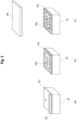
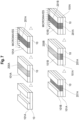
- the covering at least a portion of the periphery of the metal powder with a high-melting-point material having a melting point higher than the melting point of the metal powder may include forming a layer of the high-melting-point material; forming a recess in the layer of the high-melting-point material; and placing the metal powder in the recess.
- the forming the recess in the layer of the high-melting-point material may include curing a portion of the layer of the high-melting-point material; and removing an uncured portion of the layer of the high-melting-point material.
- the curing the portion of the layer of the high-melting-point material may include incorporating a curable material into the portion of the layer of the high-melting-point material.
- the portion of the layer of the high-melting-point material may be impregnated with the curable material.
- the portion of the layer of the high-melting-point material may be cured by light irradiation.
- Another aspect of the present invention provides a device for producing a metal solid, the device including a stage on which a metal powder and a high-melting-point material covering at least a portion of the periphery of the metal powder and having a melting point higher than the melting point of the metal powder are placed; and a microwave irradiator for irradiating the metal powder, at least a portion of the periphery of which is covered with the high-melting-point material, with microwaves to heat the metal powder, thereby sintering or melt-solidifying the metal powder.
- the above device for producing a metal solid may further include a high-melting-point material placement unit for placing the high-melting-point material on the stage.
- the high-melting-point material placement unit may apply the high-melting-point material onto the stage.
- the high-melting-point material placement unit may laminate a layer of the high-melting-point material on the stage.
- the above device for producing a metal solid may further include a curable material addition unit for adding a curable material to at least a portion of the high-melting-point material.
- the above device for producing a metal solid may further include a curing device for curing at least a portion of the high-melting-point material.
- the above device for producing a metal solid may further include an uncured material remover for removing the high-melting-point material that is uncured.
- the above device for producing a metal solid may further include a metal powder placement unit for placing the metal powder on the stage.
- the metal powder placement unit may apply the metal powder onto the stage.
- the metal powder placement unit may place the metal powder in a recess of the high-melting-point material.
- the above device for producing a metal solid may further include a pressurizer for applying a pressure to the metal powder placed on the stage.
- the pressurizer may apply a pressure to the metal powder before the microwave irradiator irradiates the metal powder with microwaves.
- the pressurizer may apply a pressure to the metal powder after the microwave irradiator irradiates the metal powder with microwaves.
- the above device for producing a metal solid may further include an inert gas supplier for supplying an inert gas to the metal powder.
- the above device for producing a metal solid may further include a reducing gas supplier for supplying a reducing gas to the metal powder.
- the above device for producing a metal solid may further include a high-melting-point material placement unit for placing the high-melting-point material on the stage; and a metal powder placement unit for placing the metal powder on the stage, wherein (1) the high-melting-point material placement unit and the metal powder placement unit may place the metal powder surrounded by the high-melting-point material on the stage, and (2) the microwave irradiator may sinter or melt-solidify the metal powder.
- the device for producing a metal solid may repeat a combination of (1) and (2).
- the metal powder may include a metal oxide
- the device may further include a reduction device that reduces the metal oxide before the microwave irradiator irradiates the metal powder with microwaves.
- a method for producing a metal solid according to the embodiment includes covering at least a portion of the periphery of a metal powder with a high-melting-point material having a melting point higher than the melting point of the metal powder, and irradiating the metal powder, at least a portion of the periphery of which is covered with the high-melting-point material, with microwaves to heat the metal powder, thereby sintering or melt-solidifying the metal powder.
- the microwaves are, for example, electromagnetic waves with a frequency of 300 MHz or more and 30 GHz or less.
- the metal powder and the high-melting-point material are preferably in close contact with each other.
- the material of the metal powder may contain a metal simple substance, or a metal compound such an alloy.
- metals include iron (Fe), nickel (Ni), copper (Cu), gold (Au), silver (Ag), aluminum (Al), cobalt (Co), tungsten (W), titanium (Ti), chromium (Cr), molybdenum (Mo), beryllium (Be), magnesium (Mg), tin (Sn), cerium (Ce), lead (Pb), mercury (Hg), sodium (Na), bismuth (Bi), and gallium (Ga).
- the sintering temperature of iron (Fe) is, for example, 1200°C.
- the melting point of iron (Fe) is 1538°C.
- the sintering temperature of nickel (Ni) is, for example, 1200°C.
- the melting point of nickel (Ni) is 1495°C.
- the sintering temperature of copper (Cu) is, for example, 800°C.
- the melting point of copper (Cu) is 1085°C.
- the sintering temperature of gold (Au) is, for example, 800°C.
- the melting point of gold (Au) is 1064°C.
- the sintering temperature of silver (Ag) is, for example, 750°C.
- the melting point of silver (Ag) is 962°C.
- the sintering temperature of aluminum (Al) is, for example, 500°C.
- the melting point of aluminum (Al) is 660°C.
- the sintering temperature of cobalt (Co) is, for example, 1100°C.
- the melting point of cobalt (Co) is 1455°C.
- the material of the metal powder may contain one type of metal, or may contain a plurality of types of metals.
- metal compounds include, but are not particularly limited to, an alloy composed of a plurality of metal elements, an alloy composed of a metal element and a non-metal element, metal oxides, metal hydroxides, metal chlorides, metal carbides, metal borides, and metal sulfides.
- the metal powder may contain, as alloy components, for example, silicon (Si), manganese (Mn), chromium (Cr), nickel (Ni), carbon (C), boron (B), copper (Cu), aluminum (Al), titanium (Ti), niobium (Nb), vanadium (V), zinc (Zn), antimony (Sb), palladium (Pd), lanthanum (La), gold (Au), potassium (K), cadmium (Cd), indium (In), molybdenum (Mo), and sulfur (S).
- the material of the metal powder preferably has more excellent microwave absorption characteristics than the surrounding high-melting-point material. Consequently, the metal powder is more easily heated with microwaves than the surrounding high-melting-point material.
- the average particle size of the metal powder is, for example, 200 ⁇ m or less, 190 ⁇ m or less, or 180 ⁇ m or less.
- the average particle size of the metal powder refers to, for example, the median diameter D 50 in the volume-based cumulative particle size distribution measured by a laser diffraction/scattering method.
- the particle size distribution of the metal powder is preferably D 10 /D 50 >0.5 and D 50 /D 90 >0.5. When the average particle size of the metal powder is 200 ⁇ m or less, the metal powder tends to easily absorb microwaves.
- the high-melting-point material may contain an insulation material that has higher microwave permeability than the metal powder and that has a lower degree of absorption of microwaves than the metal powder.
- the insulation material has a melting point higher than the melting point of the metal powder.
- the insulation material that has a lower degree of absorption of microwaves generates heat at a low degree even when irradiated with microwaves, and exhibits an insulation effect.
- the insulation material, which has a melting point higher than the metal powder has a stable shape even when irradiated with microwaves. Therefore, while the metal powder irradiated with microwaves is sintered or melt-solidified, the high-melting-point material containing the insulation material can have a stable shape.
- the insulation material may be provided as a powder covering the periphery of the metal powder.
- the insulation material may be provided as a solid.
- the solid insulation material may have a shape covering the periphery of the metal powder.
- the solid containing the insulation material may have a plate-like or sheet-like shape.
- the insulation material may contain an oxide of a metal or an oxide of a semi-metal.
- oxides of metals and semi-metals include, but are not particularly limited to, aluminum oxide (Al 2 O 3 ), silicon oxide (SiO 2 ), magnesium oxide (MgO), zirconium oxide (ZrO 2 ), and titanium oxide (TiO 2 ).
- Al 2 O 3 aluminum oxide
- SiO 2 silicon oxide
- MgO magnesium oxide
- ZrO 2 zirconium oxide
- TiO 2 titanium oxide
- the melting point of aluminum oxide (Al 2 O 3 ) is 2072°C.
- the melting point of silicon oxide (SiO 2 ) is 1710°C.
- the melting point of magnesium oxide (MgO) is 2852°C.
- the insulation material may be a compound of these.
- the high-melting-point material may contain an absorbent material that absorbs microwaves in a temperature zone at least a portion of which is lower than a temperature zone in which the metal powder absorbs microwaves.
- the absorbent material has a melting point higher than the melting point of the metal powder. At least a portion of the temperature zone in which the absorbent material absorbs microwaves is lower than the temperature zone in which the metal powder absorbs microwaves.
- the temperature zone in which the metal powder absorbs microwaves is, for example, 300°C or more and 1200°C or less, 450°C or more and 1100°C or less, or 600°C or more and 800°C or less.
- the temperature zone in which the absorbent material absorbs microwaves is, for example, 100°C or more and 1000°C or less, 250°C or more and 900°C or less, or 400°C or more and 600°C or less.
- At least a portion of the temperature zone in which the absorbent material absorbs microwaves preferably overlaps with the temperature zone in which the metal powder absorbs microwaves. Since the absorbent material absorbs microwaves in the temperature zone at least a portion of which is lower than the temperature zone in which the metal powder absorbs microwaves, the absorbent material generates heat faster than the metal powder. Accordingly, the absorbent material can heat the metal powder before its temperature reaches the temperature zone in which the metal powder absorbs microwaves. Therefore, when the high-melting-point material contains an absorbent material, the temperature of the metal powder faster reaches the temperature zone in which it absorbs microwaves, and the heating time of the metal powder can be shortened.
- the absorbent material absorbs microwaves in the temperature zone at least a portion of which is lower than the temperature zone in which the metal powder absorbs microwaves, it is possible to suppress the high-melting-point material from being heated more than necessary. Therefore, while the metal powder irradiated with microwaves is sintered or melt-solidified, the high-melting-point material containing an absorbent material can have a stable shape.
- the absorbent material may be provided as a powder covering the periphery of the metal powder.
- the absorbent material may be provided as a solid.
- the solid absorbent material may have a shape covering the periphery of the metal powder.
- the absorbent material when the insulation material is provided as a solid, the absorbent material may be arranged around the metal powder covered with the solid insulation material.
- the insulation material when the absorbent material is provided as a solid, the insulation material may be arranged around the metal powder covered with the solid absorbent material.
- the absorbent material and the insulation material may be both solids.
- the absorbent material contains, for example, a carbon material.
- the carbon material include, but are not particularly limited to, carbon black, amorphous carbon, graphite, silicon carbide, carbon resin, and metal carbide.
- the absorbent material may contain a metal powder, metal nitride, metal oxide, metal boride, and the like that absorb microwaves in a temperature zone at least a portion of which is lower than the temperature zone in which the metal powder to be sintered or melt-solidified absorbs microwaves.
- the absorbent material may be a compound of these.
- the absorbent material preferably does not contain a volatile component. Because the absorbent material does not contain a volatile component, it is possible to avoid the absorption of microwaves by the volatile component.
- the high-melting-point material may contain a reduction material that reduces the metal powder.
- the reduction material has a melting point higher than the melting point of the metal powder. Examples of the reduction material include carbon and silicon carbide.
- the carbon material used as an absorbent material can also function as a reduction material.
- the high-melting-point material may consist of an insulation material, may consist of an absorbent material, may consist of a reduction material, or may include a combination of these materials.
- the insulation material, the absorbent material, and the reduction material each may have overlapping properties and functions.
- the carbon material functions as an absorbent material, and also functions as a reduction material.
- the mass ratio of the insulation material and the absorbent material is 1:1, or that the mass ratio of the insulation material is higher than the mass ratio of the absorbent material.
- the mass ratio of the absorbent material in the high-melting-point material is 1 mass% or more, 2 mass% or more, or 5 mass% or more, and is 70 mass% or less, 50 mass% or less, 40 mass% or less, 30 mass% or less, 20 mass% or less, or 10 mass% or less.
- the mass ratio of the absorbent material in the high-melting-point material By setting the mass ratio of the absorbent material in the high-melting-point material to 70 mass% or less, or 50 mass% or less, it is possible to ensure microwave permeability in the high-melting-point material, and to make the rate of sintering or melt-solidifying the metal powder appropriate.
- the high-melting-point material may be a solid powder or the like, and may have flowability.
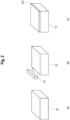
- the metal powder is molded into a green compact with a desired three-dimensional shape, at least a portion of the green compact is covered with a high-melting-point material, the green compact covered with the high-melting-point material is then irradiated with microwaves to sinter the green compact, and by metallurgy, a metal solid of a desired shape is produced.
- the green compact covered with the high-melting-point material is irradiated with microwaves, and then cooled to melt-solidify the green compact, and a metal solid of a desired shape is produced.
- the entire periphery of the green compact may be covered with the high-melting-point material.
- the thickness, volume, etc. of the high-melting-point material covering the green compact can be appropriately set based on microwave permeability.
- a pressure of, for example, 1 MPa or more, 100 MPa or more, or 200 MPa or more, and 2000 MPa or less, 1900 MPa or less, or 1800 MPa or less, may be applied to the metal powder.
- the metal solid to be produced tends to be dense. Examples of the pressurization method include uniaxial molding, cold isostatic pressing (CIP) molding, hot isostatic pressing (HIP) molding, roller pressurization, and the like.
- the high-melting-point material may be in the form of a solid, such as a mold or container.
- the entire metal powder irradiated with microwaves may be a powder, or a portion of the metal powder may be a green compact.
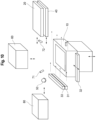
- the metal powder is placed in the recess of a mold or container made of the high-melting-point material and corresponding to a desired three-dimensional shape, at least a portion of the metal powder is covered with the mold or container made of the high-melting-point material, and the metal powder covered with the mold or container made of the high-melting-point material is then irradiated with microwaves, thereby sintering the metal powder, and a metal solid of a desired shape is produced.
- the metal powder covered with the high-melting-point material is irradiated with microwaves, and then cooled, thereby melt-solidifying the green compact, and a metal solid of a desired shape is produced.
- the entire periphery of the metal powder may be covered with the mold or container made of the high-melting-point material.
- the thickness, volume, etc. of the mold or container made of the high-melting-point material covering the green compact can be appropriately set based on microwave permeability.
- the composition of the metal powder to be placed in the mold or container made of the high-melting-point material may be changed depending on the position.
- the type of metal forming the metal powder and the alloy component of the metal powder may be changed depending on the position.
- a pressure of, for example, 1 MPa or more, 100 MPa or more, or 200 MPa or more, and 2000 MPa or less, 1900 MPa or less, or 1800 MPa or less, may be applied to the metal powder.
- the metal solid to be produced tends to be dense. Examples of the pressurization method include uniaxial molding, cold isostatic pressing (CIP) molding, hot isostatic pressing (HIP) molding, roller pressurization, and the like.
- a curable material such as a photocurable resin
- a curable material such as a photocurable resin
- the mixture of the high-melting-point material and the photocurable resin may be irradiated with light to cure the mixture of the high-melting-point material and the photocurable resin.
- the photocurable resin is a ultraviolet ray-curable resin
- the mixture of the high-melting-point material and the photocurable resin is irradiated with ultraviolet rays.
- the light irradiation time is, for example, 1 hour or more, 2 hours or more, or 3 hours or more.
- the mass ratio of the photocurable resin in the mixture of the high-melting-point material and the photocurable resin is, for example, 1% or more, 2% or more, or 3% or more, and is 10% or less, 9% or less, or 8% or less.
- the curable material may be thermosetting. In this case, the mixture of the high-melting-point material and the thermosetting material may be heated to cure the mixture of the high-melting-point material and the thermosetting material.
- the metal powder and the high-melting-point material may be laminated, and the laminated metal powder and high-melting-point material may be then irradiated with microwaves.
- a pressure of 1 MPa or more, 100 Mpa or more, or 200 Mpa or more, and 2000 Mpa or less, 1900 Mpa or less, or 1800 Mpa or less may be applied to the laminated metal powder and high-melting-point material.
- the pressurization method include uniaxial molding, cold isostatic pressing (CIP) molding, hot isostatic pressing (HIP) molding, roller pressurization, and the like.
- a pressure may be applied to the formed metal solid.
- a pressure is preferably applied while the metal solid has heat before being cooled to the atmospheric temperature, and while the temperature is higher than the atmospheric temperature.
- the pressure to be applied is, for example, 1 MPa or more, 100 MPa or more, or 200 MPa or more, and is 2000 MPa or less, 1900 MPa or less, or 1800 MPa or less.
- the pressurization method include uniaxial molding, cold isostatic pressing (CIP) molding, hot isostatic pressing (HIP) molding, roller pressurization, and the like.
- the metal powder contains a metal oxide
- the metal powder covered with the high-melting-point material containing a reduction material is irradiated with microwaves to thereby reduce the metal oxide.
- the metal powder may be heated with microwaves to 1400°C or more, or 1500°C or more.
- the metal powder may be heated to a temperature equal to or higher than the melting point.
- an oxide powder of the metal may be reduced in advance.
- a metal oxide powder can be reduced by mixing the metal oxide powder with a carbon powder, and heating the mixture of the metal oxide powder and the carbon powder.
- the reduced metal powder can be separated from the carbon powder by using, for example, a magnet.
- the metal powder may be heated in an inert gas atmosphere.
- the inert gas include argon (Ar) and helium (He).
- the metal powder may also be heated in a neutral gas atmosphere.
- the neutral gas include nitrogen (N 2 ), dry hydrogen (H 2 ), and ammonia (NH 3 ).
- the metal powder may also be heated in a reducing atmosphere.
- the reducing gas that provides a reducing atmosphere include hydrogen (H 2 ), carbon monoxide (CO), and hydrocarbon gases (CH 4 , C 3 H 8 , C 4 H 10 , etc.).
- an inert gas, a neutral gas, or a reducing gas may be supplied into the mold or container made of the high-melting-point material.
- the covering at least a portion of the periphery of a metal powder with a high-melting-point material, and the sintering or melt-solidifying the metal powder may be repeated to form laminated metal solids.
- the metal solids obtained by the above method may also be polished.
- a metal solid obtained by the above method is used, for example, as a core, a metal powder is arranged around the core, and a high-melting-point material is further arranged around the metal powder, followed by irradiation with microwaves; this operation may be repeated.
- the compositions of the metal powder and the high-melting-point material may be each changed.
- the alloy component of the metal powder may be changed.
- a device for producing a metal solid according to the embodiment includes, as shown in Figure 1 , a stage 10 on which a metal powder and a high-melting-point material covering at least a portion of the periphery of the metal powder and having a melting point higher than the melting point of the metal powder are placed, and a microwave irradiator 20 for irradiating the metal powder, at least a portion of the periphery of which is covered with the high-melting-point material, with microwaves to heat the metal powder, thereby sintering or melt-solidifying the metal powder.
- the device for producing a metal solid according to the embodiment can perform, for example, the method for producing a metal solid according to the embodiment described above.
- the stage 10 is not particularly limited as long as the metal powder and the high-melting-point material can be placed thereon.
- the stage 10 may be movable in three mutually perpendicular directions.
- the stage 10 may be movable in the gravity direction and horizontal direction.
- the device for producing a metal solid according to the embodiment may further include a high-melting-point material placement unit 31 that places a high-melting-point material on the stage 10.
- the high-melting-point material placement unit 31 may apply the high-melting-point material onto the stage 10.
- the high-melting-point material placement unit 31 may form a layer of the high-melting-point material on the stage 10.
- the high-melting-point material placement unit 31 may be movable in three mutually perpendicular directions.
- the high-melting-point material placement unit 31 may be movable in the gravity direction and horizontal direction.
- the high-melting-point material placement unit 31 may apply powder of the high-melting-point material onto the stage 10 while moving on the stage 10 to form a layer 101 of the high-melting-point material on the stage 10.
- the device for producing a metal solid may further include a curable material addition unit 32 that adds a curable material to at least a portion of the high-melting-point material.
- the curable material addition unit 32 adds the curable material to a portion of the high-melting-point material to be cured, and does not add the curable material to a portion of the high-melting-point material not to be cured.
- the curable material is, for example, a liquid, and the curable material addition unit 32 may impregnate the portion of the high-melting-point material to be cured with the curable material.
- the curable material addition unit 32 may be movable in three mutually perpendicular directions.
- the curable material addition unit 32 may be movable in the gravity direction and horizontal direction.
- the curable material addition unit 32 may apply a curable material while patterning to the layer 101 of the high-melting-point material while moving on the layer 101 of the high-melting-point material on the stage 10, may not add the curable material to a portion 102 not to be cured in the layer 101 of the high-melting-point material, and may add the curable material to a portion to be cured in the layer 101 of the high-melting-point material.
- the curable material addition unit 32 may include, for example, an inkjet nozzle, and may add the curable material to the high-melting-point material by the binder jetting technique.
- the high-melting-point material placement unit 31 and the curable material addition unit 32 may be integrated with each other.
- the device for producing a metal solid according to the embodiment may further include a curing device 40 that cures at least a portion of the high-melting-point material.
- the curing device 40 is a light source.
- the high-melting-point material contains a thermosetting material
- the curing device 40 is a heat source.
- the curing device 40 may be movable in three mutually perpendicular directions. For example, the curing device 40 may be movable in the gravity direction and horizontal direction.
- the curing device 40 applies energy necessary to cure the curable material to the layer 101 of the high-melting-point material to cure at least a portion of the layer 101 of the high-melting-point material.
- the curing device 40 may apply energy to the entire surface of the layer 101 of the high-melting-point material, or may apply energy while scanning the layer 101 of the high-melting-point material.
- the device for producing a metal solid according to the embodiment may further include an uncured material remover 50 that removes the uncured high-melting-point material.
- the uncured material remover 50 may apply wind pressure to the uncured powder portion 102 of the layer 101 of the high-melting-point material to remove the uncured powder portion 102 from the layer 101 of the high-melting-point material, and may form a recess 103 in the layer 101 of the high-melting-point material.
- the device for producing a metal solid according to the embodiment may further include a metal powder placement unit 33 that places the metal powder on the stage 10.
- a recoater can be used as the metal powder placement unit 33.
- the metal powder placement unit 33 may apply the metal powder onto the stage 10.
- the metal powder placement unit 33 may be movable in three mutually perpendicular directions.
- the metal powder placement unit 33 may be movable in the gravity direction and horizontal direction.
- the metal powder placement unit 33 may place the metal powder 200 in the recess 103 of the layer 101 of the high-melting-point material on the stage 10.
- the metal powder placed on the surface of a portion of the layer 101 of the high-melting-point material on the stage 10 in which the recess 103 is not formed may be removed with a roller, a brush, or the like.
- the high-melting-point material placement unit 31 and the metal powder placement unit 33 may be integrated with each other.
- the curable material addition unit 32 and the metal powder placement unit 33 may be integrated with each other.
- the high-melting-point material placement unit 31, the curable material addition unit 32, and the metal powder placement unit 33 may be integrated with each other.
- the device for producing a metal solid may further include a pressurizer 60 that applies a pressure to the metal powder placed on the stage 10.
- the pressurizer 60 applies a pressure to the metal powder 200 before irradiation with microwaves.
- the pressurization method include uniaxial molding, cold isostatic pressing (CIP) molding, hot isostatic pressing (HIP) molding, roller pressurization, and the like.
- the pressurization tip of the pressurizer 60 may be a roller type, and a pressurization technique that slides the stage 10 while the roller is pressurized on the stage 10 may be selected.
- the microwave irradiator 20 applies microwaves to the metal powder 200 placed in the recess 103 of the layer 101 of the high-melting-point material on the stage 10.
- the microwave irradiator 20 may apply microwaves to the entire surface of the metal powder 200 all at once, or may apply microwaves while scanning the metal powder 200.
- the device for producing a metal solid according to the embodiment may further include an inert gas supplier that supplies an inert gas to the metal powder.
- the inert gas supplier supplies an inert gas around the metal powder 200 at least while the metal powder 200 is irradiated with microwaves.
- the device for producing a metal solid according to the embodiment may further include a reducing gas supplier that supplies a reducing gas to the metal powder.
- the reducing gas supplier supplies a reducing gas around the metal powder 200 at least while the metal powder 200 is irradiated with microwaves.
- the device for producing a metal solid according to the embodiment may further include a neutral gas supplier that supplies a reducing gas to the metal powder.
- the neutral gas supplier supplies a neutral gas around the metal powder 200 at least while the metal powder 200 is irradiated with microwaves.
- the inert gas supplier and the reducing gas supplier may be integrated with each other.
- the inert gas supplier and the neutral gas supplier may be integrated with each other.
- the reducing gas supplier and the neutral gas supplier may be integrated with each other.
- the device for producing a metal solid according to the embodiment may include a thermometer 71 that measures the temperature of the metal powder placed on the stage 10.
- a radiation thermometer can be used as the thermometer 71.
- the radiation thermometer measures the temperature of the metal powder based on the emissivity of the material of the metal powder.
- the thermometer 71 may also measure the temperature of the high-melting-point material.
- the microwaves emitted by the microwave irradiator 20 may be controlled based on the temperature of the metal powder measured by the thermometer 71.
- the device for producing a metal solid according to the embodiment may also include a microwave detector 72 that detects the microwaves emitted by the microwave irradiator 20.
- the microwaves emitted by the microwave irradiator 20 may be controlled based on the characteristics of the microwaves detected by the microwave detector 72.
- the pressurizer 60 shown in Figure 1 may apply a pressure to the metal powder 200 after the metal powder 200 is irradiated with microwaves.
- Examples of the pressurization method include uniaxial molding, cold isostatic pressing (CIP) molding, hot isostatic pressing (HIP) molding, roller pressurization, and the like.
- the pressurization tip of the pressurizer 60 may be a roller type, and a pressurization technique that slides the stage 10 while the roller is pressurized on the stage 10 may be selected.
- the metal powder 200 placed in the recess 103 of the layer 101 of the high-melting-point material on the stage 10 shown in Figure 6 and irradiated with microwaves is then cooled, and sintered or melt-solidified to become a metal solid.
- the metal powder 200 in the vicinity of the edge part of the recess 103 of the layer 101 of the high-melting-point material tends to be easily heated. Therefore, in the vicinity of the edge part of the recess 103, the mass ratio of the absorbent material contained in the high-melting-point material may be lower than other parts.
- the stage 10, microwave irradiator 20, etc. of the device for producing a metal solid according to the embodiment may be stored in a housing.
- the device for producing a metal solid may repeat forming the layer 101 of the high-melting-point material surrounding the metal powder on the sintered or melt-solidified metal solid and the layer 101 of the high-melting-point material surrounding the metal solid, and sintering or melt-solidifying the metal powder.
- the thickness of a metal solid formed by single microwave irradiation is thin, metal solids are laminated, and it is possible to produce thick metal solids.
- the layer 101 of the high-melting-point material surrounding the metal powder is formed, the shape of the recess formed in the layer 101 of the high-melting-point material is changed, whereby it is possible to produce metal solids having a complex three-dimensional shape.
- a first layer 101A of the high-melting-point material is formed on the stage 10, and a metal powder 200A is placed in the recess of the layer 101A of the high-melting-point material.
- the metal powder 200A is irradiated with microwaves to convert the metal powder 200A into a first layer of a metal solid 201A.
- a second layer 101B of the high-melting-point material is formed on the first layer 101A of the high-melting-point material, and a metal powder 200B is placed in the recess of the layer 101B of the high-melting-point material.
- the first layer of the metal solid 201A is exposed from the recess of the layer 101B of the high-melting-point material, and the metal powder 200B is in contact with the surface of the first layer of the metal solid 201A.
- the metal powder 200B is irradiated with microwaves to convert the metal powder 200B into a second layer of a metal solid 201B.
- the second layer of the metal solid 201B sticks to the first layer of the metal solid 201A. Thereafter, the same process is repeated to laminate metal solids.
- the pressurizer 60 shown in Figure 1 may pressurize the entire surface of the placed metal powder 200.
- the pressurizer 60 having a contact area smaller than the surface area of the placed metal powder 200 may continuously pressurize the metal powder 200 while moving.
- the pressurization method include uniaxial molding, cold isostatic pressing (CIP) molding, hot isostatic pressing (HIP) molding, roller pressurization, and the like.
- the pressurizer 60 may include a roller, and a pressurization technique that moves the roller on the stage 10 or that slides the stage 10, while the roller is pressurized on the stage 10 may be selected.
- the device for producing a metal solid according to the embodiment may include a reduction device 80 that reduces the metal powder before the metal powder is irradiated with microwaves.
- the reduction device 80 is, for example, a heating device, and heats the metal powder to reduce the metal powder.
- a layer of a high-melting-point material was formed.
- the high-melting-point material was made of 93 mass% of aluminum oxide (Al 2 O 3 ) powder and 7 mass% of carbon (C) powder.
- a portion of the surface of the layer of the high-melting-point material to be provided with a recess was covered with a circular aluminum plate, and a curable material was sprayed to the surface of the layer of the high-melting-point material so that a portion of the layer of the high-melting-point material not covered with the aluminum plate was impregnated with the curable material.
- the curable material contained 50 mass% of UV-curable resin (Standard Photopolymer Resin, produced by AMZLAB GmbH) and 50 mass% of ethanol.
- the layer of the high-melting-point material was irradiated with UV light to cure the curable resin impregnated into the layer of the high-melting-point material.
- the uncured high-melting-point material covered with the aluminum plate was removed with air shower. As a result, a cylindrical recess was formed in the layer of the high-melting-point material.
- the bottom diameter of the cylindrical recess was 7.0 mm, and the depth was 4.0 mm.
- the recess provided in the layer of the high-melting-point material was filled with a metal powder (average particle size: 45 ⁇ m).
- the metal powder was made of 100% of iron (Fe).
- a press machine was used to apply a pressure of 250 MPa to the metal powder and the high-melting-point material surrounding the metal powder.
- the high-melting-point material and the metal powder were irradiated with 700 W of microwaves for 180 seconds under air atmosphere, and the metal powder was heated to 1350°C (estimate).
- Figure 11 shows photographs of a metal solid obtained by sintering the metal powder.
- the obtained metal solid was cylindrical, the bottom diameter was 7.0 mm, and the height was 4.0 mm.
- a first layer of a high-melting-point material was formed.
- the high-melting-point material was made of 93 mass% of aluminum oxide (Al 2 O 3 ) powder and 7 mass% of carbon (C) powder.
- a portion of the surface of the first layer of the high-melting-point material to be provided with a recess was covered with a circular aluminum plate, and a curable material was sprayed to the surface of the first layer of the high-melting-point material so that a portion of the first layer of the high-melting-point material not covered with the aluminum plate was impregnated with the curable material.
- the curable material contained 50 mass% of UV-curable resin (Standard Photopolymer Resin, produced by AMZLAB GmbH) and 50 mass% of ethanol.
- the first layer of the high-melting-point material was irradiated with UV light to cure the curable resin impregnated into the first layer of the high-melting-point material.
- the uncured high-melting-point material covered with the aluminum plate was removed with air shower. As a result, a cylindrical recess was formed in the first layer of the high-melting-point material.
- the bottom diameter of the cylindrical recess was 7.0 mm, and the depth was 4.2 mm.
- the recess provided in the first layer of the high-melting-point material was filled with a metal powder.
- the metal powder was made of 100% of iron (Fe).
- a press machine was used to apply a pressure of 250 MPa to the metal powder and the high-melting-point material surrounding the metal powder.
- the high-melting-point material and the metal powder were irradiated with 700 W of microwaves for 180 seconds under air atmosphere to heat the metal powder to 1350°C (estimate), thereby obtaining a cylindrical metal solid.
- a second layer of a high-melting-point material was formed on the first layer of the high-melting-point material.
- the high-melting-point material was made of 93 mass% of aluminum oxide (Al 2 O 3 ) and 7 mass% of carbon (C).
- a portion of the surface of the second layer of the high-melting-point material to be provided with a recess, right above the metal solid surrounded by the first layer of the high-melting-point material was covered with a circular aluminum plate, and a curable material was sprayed to the surface of the second layer of the high-melting-point material so that a portion of the second layer of the high-melting-point material not covered with the aluminum plate was impregnated with the curable material.
- the curable material contained 50 mass% of UV-curable resin (Standard Photopolymer Resin, produced by AMZLAB GmbH) and 50 mass% of ethanol. Thereafter, the second layer of the high-melting-point material was irradiated with UV light to cure the curable resin impregnated into the second layer of the high-melting-point material. The uncured high-melting-point material covered with the aluminum plate was removed with air shower. As a result, a cylindrical recess was formed in the second layer of the high-melting-point material. The bottom diameter of the cylindrical recess was 7.0 mm, and the depth was 2.4 mm. The upper surface of the metal solid surrounded by the first layer of the high-melting-point material was exposed from the recess provided in the second layer of the high-melting-point material.
- UV-curable resin Standard Photopolymer Resin, produced by AMZLAB GmbH
- the recess provided in the second layer of the high-melting-point material was filled with a metal powder.
- the metal powder was made of 100% of iron (Fe).
- a press machine was used to apply a pressure of 250 MPa to the metal powder and the high-melting-point material surrounding the metal powder.
- the high-melting-point material and the metal powder were irradiated with 700 W of microwaves for 180 seconds under air atmosphere to heat the metal powder to 1350°C (estimate), thereby obtaining a cylindrical metal solid.
- the metal solid surrounded by the first layer of the high-melting-point material and the metal solid surrounded by the second layer of the high-melting-point material were combined together.
- Figure 12 shows photographs of a metal solid obtained by sintering the metal powder.
- the obtained metal solid was cylindrical, the bottom diameter was 7.0 mm, and the height was 6.6 mm.
- the density of the obtained metal solid was 4.1 g/cm 2 , and the relative density was 52%.
- a layer of a high-melting-point material was formed.
- the high-melting-point material was made of 93 mass% of aluminum oxide (Al 2 O 3 ) powder and 7 mass% of carbon (C) powder.
- a portion of the surface of the layer of the high-melting-point material to be provided with a recess was covered with a triangular aluminum plate, and a curable material was sprayed to the surface of the layer of the high-melting-point material so that a portion of the layer of the high-melting-point material not covered with the aluminum plate was impregnated with the curable material.
- the curable material contained 50 mass% of UV-curable resin (Standard Photopolymer Resin, produced by AMZLAB GmbH) and 50 mass% of ethanol.
- the layer of the high-melting-point material was irradiated with UV light to cure the curable resin impregnated into the layer of the high-melting-point material.
- the uncured high-melting-point material covered with the aluminum plate was removed with air shower.
- a triangular prismatic recess was formed in the layer of the high-melting-point material.
- the length of the base of the bottom of the triangular prismatic recess was 8.0 mm, and the depth was 1.4 mm.
- the recess provided in the layer of the high-melting-point material was filled with a metal powder.
- the metal powder was made of 100% of iron (Fe).
- a press machine was used to apply a pressure of 250 MPa to the metal powder and the high-melting-point material surrounding the metal powder.
- the high-melting-point material and the metal powder were irradiated with 500 W of microwaves for 70 seconds under air atmosphere to heat the metal powder to 1250°C (estimate).
- Figure 13 shows photographs of a metal solid obtained by sintering the metal powder.
- the obtained metal solid was triangular prismatic, the length of the base of the bottom was 8.0 mm, and the height was 1.4 mm.
- the density of the obtained metal solid was 4.5 g/cm 2 , and the relative density was 58%.
- a layer of a high-melting-point material was formed.
- the high-melting-point material was made of 93 mass% of aluminum oxide (Al 2 O 3 ) powder and 7 mass% of carbon (C) powder.
- a portion of the surface of the layer of the high-melting-point material to be provided with a recess was covered with a square aluminum plate, and a curable material was sprayed to the surface of the layer of the high-melting-point material so that a portion of the layer of the high-melting-point material not covered with the aluminum plate was impregnated with the curable material.
- the curable material contained 50 mass% of UV-curable resin (Standard Photopolymer Resin, produced by AMZLAB GmbH) and 50 mass% of ethanol.
- the layer of the high-melting-point material was irradiated with UV light to cure the curable resin impregnated into the layer of the high-melting-point material.
- the uncured high-melting-point material covered with the aluminum plate was removed with air shower.
- a quadrangular prismatic recess was formed in the layer of the high-melting-point material.
- the length of the base of the bottom of the quadrangular prismatic recess was 7.2 mm, and the depth was 1.9 mm.
- the recess provided in the layer of the high-melting-point material was filled with a metal powder.
- the metal powder was made of 100% of iron (Fe).
- a press machine was used to apply a pressure of 250 MPa to the metal powder and the high-melting-point material surrounding the metal powder.
- the high-melting-point material and the metal powder were irradiated with 500 W of microwaves for 70 seconds under air atmosphere to heat the metal powder to 1250°C (estimate).
- Figure 14 shows photographs of a metal solid obtained by sintering the metal powder.
- the obtained metal solid was quadrangular prismatic, the length of the base of the bottom was 7.2 mm, and the height was 1.9 mm.
- the density of the obtained metal solid was 4.5 g/cm 2 , and the relative density was 58%.
- a metal powder (SUS316L, particle size: 100 ⁇ m or less) was prepared.
- PolyCast (registered trademark, Polymaker) was prepared as a material for a resin mold.
- the material of PolyCast is polyvinyl butyral (>80%), the melting point is from 135°C to 210°C, the decomposition point is >280°C, and the ignition point is 380°C.
- a resin mold with an outer diameter ⁇ of 10 shown in Figure 15 was molded by a 3D printer
- a high-melting-point material made of 93 mass% of aluminum oxide (Al 2 O 3 ) powder and 7 mass% of carbon (C) powder was prepared.
- the metal green compact was covered with the high-melting-point material.
- the high-melting-point material and the metal green compact were irradiated with 400 W of microwaves for 40 minutes under air atmosphere to heat the metal green compact to 1250°C (estimate).
- Figure 17 shows a photograph of a metal solid obtained by sintering the metal green compact.
- a metal powder made of carbon steel (S50C) was prepared, and a first prismatic metal green compact was molded at a pressure of 500 MPa.
- a high-melting-point material made of aluminum oxide (Al 2 O 3 ) powder and carbon (C) powder was prepared.
- the first metal green compact was covered with the high-melting-point material.
- the high-melting-point material and the metal green compact were irradiated with 200 W of microwaves for 40 minutes under air atmosphere to heat the metal green compact to 400°C (estimate), thereby obtaining a first metal solid.
- a metal powder made of an aluminum alloy (A6061) was prepared, and a second prismatic metal green compact was molded at a pressure of 500 MPa.
- the second metal green compact was placed on the first metal solid, and the first metal solid and the second metal green compact were covered with the high-melting-point material.
- the high-melting-point material and the metal green compact were irradiated with 200 W of microwaves under air atmosphere, and the microwave irradiation was stopped when the pressure dropped.
- Figure 18 shows a photograph of the second metal solid. It was confirmed that in the second metal solid, the interface between the portion that used to be the first metal green compact and the portion that used to be the second metal green compact was bonded without defects.
- the surface of the portion made of an aluminum alloy (A6061) was carbonized to form aluminum carbide (Al 4 C 3 ).
- a second metal solid was produced in the same manner as in Example 6, except that the high-melting-point material was made of aluminum oxide (Al 2 O 3 ) powder and silicon carbide (SiC) powder.
- Figure 19 shows a photograph of the second metal solid. It was confirmed that in the second metal solid, the interface between the portion that used to be the first metal green compact and the portion that used to be the second metal green compact was bonded without defects. In the second metal solid, the surface of the portion made of an aluminum alloy (A6061) was not carbonized. This indicated that by incorporating silicon carbide into the high-melting-point material, the surface of the produced metal solid was not carbonized.
- a metal powder made of die steel (SKD61) was prepared, and a first cylindrical metal green compact was molded at a pressure of 1750 MPa. The density of the first metal green compact was 94%.
- a high-melting-point material made of 93 mass% of aluminum oxide (Al 2 O 3 ) powder and 7 mass% of carbon (C) powder was prepared.
- the first metal green compact was placed on a cylindrical support metal solid made of stainless steel (SUS316), and the support metal solid and the first metal green compact were covered with the high-melting-point material.
- the high-melting-point material and the metal green compact were irradiated with 500 W of microwaves for 30 minutes under air atmosphere to heat the first metal green compact to 1200°C (estimate). As a result, the first metal green compact was sintered to obtain a first metal solid.
- the density of the first metal solid was 95%.
- a second metal green compact was molded in the same manner as for the first metal green compact.
- the density of the second metal green compact was 93%.
- the second metal green compact was placed on the first metal solid, and the first metal solid and the second metal green compact were covered with the high-melting-point material.
- the high-melting-point material and the metal green compact were irradiated with 500 W of microwaves for 30 minutes under air atmosphere to heat the second metal green compact to 1200°C (estimate).
- the second metal green compact was sintered and integrated with the first metal solid, thereby obtaining a second metal solid.
- the density of the portion that used to be the second metal green compact was 94%.
- a third metal green compact was molded in the same manner as for the first metal green compact.
- the density of the third metal green compact was 92%.
- the third metal green compact was placed on the second metal solid, and the second metal solid and the third metal green compact were covered with the high-melting-point material.
- the high-melting-point material and the metal green compact were irradiated with 500 W of microwaves for 30 minutes under air atmosphere to heat the third metal green compact to 1200°C (estimate).
- the third metal green compact was sintered and integrated with the second metal solid, thereby obtaining a third metal solid.
- the density of the portion that used to be the third metal green compact was 94%.
- a fourth metal green compact was molded in the same manner as for the first metal green compact.
- the density of the fourth metal green compact was 93%.
- the fourth metal green compact was placed on the third metal solid, and the third metal solid and the fourth metal green compact were covered with the high-melting-point material.
- the high-melting-point material and the metal green compact were irradiated with 500 W of microwaves for 30 minutes under air atmosphere to heat the fourth metal green compact to 1200°C (estimate).
- the fourth metal green compact was sintered and integrated with the third metal solid, thereby obtaining a fourth metal solid.
- the density of the portion that used to be the fourth metal green compact was 93%.
- Figure 20 shows a photograph of the fourth metal solid.
- the bond strength of the fourth metal solid was evaluated by a tensile test.
- the tensile test was performed by using a tensile test piece obtained by processing the fourth metal solid to a gauge diameter of 3 mm, a gauge length of 8 mm, and a grip diameter of 6 mm, and pulling the tensile test piece by a servo motor tensile tester at a tensile speed of 1 mm/min. It was confirmed that the tensile strength was 1055 MPa (theoretical strength: 1250 MPa).
Landscapes
- Engineering & Computer Science (AREA)
- Chemical & Material Sciences (AREA)
- Manufacturing & Machinery (AREA)
- Materials Engineering (AREA)
- Mechanical Engineering (AREA)
- Composite Materials (AREA)
- Ceramic Engineering (AREA)
- Physics & Mathematics (AREA)
- Plasma & Fusion (AREA)
- Optics & Photonics (AREA)
- Structural Engineering (AREA)
- General Health & Medical Sciences (AREA)
- Toxicology (AREA)
- Health & Medical Sciences (AREA)
- Organic Chemistry (AREA)
- Civil Engineering (AREA)
- Chemical Kinetics & Catalysis (AREA)
- General Chemical & Material Sciences (AREA)
- Powder Metallurgy (AREA)
- Welding Or Cutting Using Electron Beams (AREA)
- Pressure Welding/Diffusion-Bonding (AREA)
Priority Applications (1)
| Application Number | Priority Date | Filing Date | Title |
|---|---|---|---|
| EP24166307.9A EP4434654A1 (fr) | 2021-03-15 | 2022-03-15 | Procédé de production de métal solide |
Applications Claiming Priority (2)
| Application Number | Priority Date | Filing Date | Title |
|---|---|---|---|
| JP2021041553 | 2021-03-15 | ||
| PCT/JP2022/011575 WO2022196681A1 (fr) | 2021-03-15 | 2022-03-15 | Procédé de production de solide métallique |
Related Child Applications (2)
| Application Number | Title | Priority Date | Filing Date |
|---|---|---|---|
| EP24166307.9A Division-Into EP4434654A1 (fr) | 2021-03-15 | 2022-03-15 | Procédé de production de métal solide |
| EP24166307.9A Division EP4434654A1 (fr) | 2021-03-15 | 2022-03-15 | Procédé de production de métal solide |
Publications (2)
| Publication Number | Publication Date |
|---|---|
| EP4310064A1 true EP4310064A1 (fr) | 2024-01-24 |
| EP4310064A4 EP4310064A4 (fr) | 2024-09-25 |
Family
ID=83320030
Family Applications (4)
| Application Number | Title | Priority Date | Filing Date |
|---|---|---|---|
| EP21931731.0A Pending EP4309837A4 (fr) | 2021-03-15 | 2021-12-13 | Procédé de production d'un solide cohésif |
| EP24166181.8A Pending EP4374992A3 (fr) | 2021-03-15 | 2021-12-13 | Procédé de production d'un solide cohésif |
| EP22771426.8A Pending EP4310064A4 (fr) | 2021-03-15 | 2022-03-15 | Procédé de production de solide métallique |
| EP24166307.9A Pending EP4434654A1 (fr) | 2021-03-15 | 2022-03-15 | Procédé de production de métal solide |
Family Applications Before (2)
| Application Number | Title | Priority Date | Filing Date |
|---|---|---|---|
| EP21931731.0A Pending EP4309837A4 (fr) | 2021-03-15 | 2021-12-13 | Procédé de production d'un solide cohésif |
| EP24166181.8A Pending EP4374992A3 (fr) | 2021-03-15 | 2021-12-13 | Procédé de production d'un solide cohésif |
Family Applications After (1)
| Application Number | Title | Priority Date | Filing Date |
|---|---|---|---|
| EP24166307.9A Pending EP4434654A1 (fr) | 2021-03-15 | 2022-03-15 | Procédé de production de métal solide |
Country Status (7)
| Country | Link |
|---|---|
| US (7) | US20240189902A1 (fr) |
| EP (4) | EP4309837A4 (fr) |
| JP (4) | JP7450312B2 (fr) |
| KR (2) | KR20230156938A (fr) |
| CN (2) | CN116981528A (fr) |
| IL (2) | IL305935A (fr) |
| WO (2) | WO2022195989A1 (fr) |
Families Citing this family (8)
| Publication number | Priority date | Publication date | Assignee | Title |
|---|---|---|---|---|
| US20250144705A1 (en) * | 2022-03-01 | 2025-05-08 | Magnus Metal Ltd. | Additive casting deposition system and method |
| JP7748159B2 (ja) * | 2023-03-31 | 2025-10-02 | 株式会社Sun Metalon | 固体製造装置及び固体の製造方法 |
| JPWO2025121382A1 (fr) * | 2023-12-08 | 2025-06-12 | ||
| JP7709708B1 (ja) | 2024-03-08 | 2025-07-17 | トヨタ自動車株式会社 | 加熱装置 |
| WO2025187682A1 (fr) * | 2024-03-08 | 2025-09-12 | 株式会社Sun Metalon | Accélérateur de chauffage, procédé de chauffage de métal et procédé de fabrication de solide métallique |
| JP2025167154A (ja) | 2024-04-25 | 2025-11-07 | 株式会社Sun Metalon | 金属酸化物の還元体の製造方法 |
| CN118989323A (zh) * | 2024-08-19 | 2024-11-22 | 四川大学 | 电热力多物理场快速烧结超细铁铜镍预合金粉的方法 |
| US12411481B1 (en) | 2024-12-19 | 2025-09-09 | K.K. Sun Metalon | Control system, control method, and method of producing solid |
Family Cites Families (31)
| Publication number | Priority date | Publication date | Assignee | Title |
|---|---|---|---|---|
| US4880578A (en) * | 1988-08-08 | 1989-11-14 | The United States Of America As Represented By The United States Department Of Energy | Method for heat treating and sintering metal oxides with microwave radiation |
| CA2124093C (fr) * | 1994-03-31 | 2001-04-17 | Prasad S. Apte | Procede de frittage aux micro-ondes |
| JP3274960B2 (ja) * | 1996-02-23 | 2002-04-15 | 相田化学工業株式会社 | 金属焼結品の製造方法 |
| JP2001228031A (ja) | 2000-02-17 | 2001-08-24 | Aida Kagaku Kogyo Kk | 温度検知材、温度検知方法、及び貴金属製品の製造方法 |
| JP4659951B2 (ja) | 2000-08-18 | 2011-03-30 | 相田化学工業株式会社 | 温度検知方法、貴金属焼結品の製造方法、及び七宝製品の製造方法 |
| US6544315B2 (en) | 2001-03-12 | 2003-04-08 | Gadi Har-Shai | Sintered jewelry and decorative articles |
| WO2007038950A1 (fr) * | 2005-09-28 | 2007-04-12 | Stichting Dutch Polymer Institute | Procede de production de structures de surfaces metalliques et dispositif correspondant |
| JP5162181B2 (ja) | 2007-08-01 | 2013-03-13 | 国立大学法人東京工業大学 | マイクロ波製鉄炉 |
| CN101323529B (zh) * | 2008-07-11 | 2013-03-13 | 中国科学院上海硅酸盐研究所 | 微波烧结中的梯度透波结构及其用于制备陶瓷材料的方法 |
| US9186742B2 (en) * | 2009-01-30 | 2015-11-17 | General Electric Company | Microwave brazing process and assemblies and materials therefor |
| JP2012158790A (ja) | 2011-01-31 | 2012-08-23 | Nippon Steel Corp | マイクロ波を利用した製鉄原料の還元方法 |
| JP5811017B2 (ja) | 2012-04-09 | 2015-11-11 | 新日鐵住金株式会社 | 還元鉄の製造方法 |
| ES2896351T3 (es) | 2012-09-27 | 2022-02-24 | Allomet Corp | Métodos para formar un artículo metálico o cerámico que tiene una composición novedosa de material funcionalmente graduado |
| US20150054204A1 (en) * | 2013-08-26 | 2015-02-26 | Escape Dynamics Inc. | Additive Manufacturing Microwave Systems And Methods |
| EP3040136B1 (fr) * | 2013-08-30 | 2021-04-07 | Asahi Yukizai Corporation | Procédé de moulage pour moule stratifié |
| CN103882423B (zh) * | 2013-12-25 | 2016-08-17 | 华侨大学 | 一种在Cu基体表面微波熔覆CuW合金的方法 |
| PT3200946T (pt) * | 2014-10-01 | 2019-05-27 | Bekaert Sa Nv | Método para fabricar um elemeto de serra e um elemento de serra |
| US20180265417A1 (en) * | 2015-01-23 | 2018-09-20 | Hewlett-Packard Development Company, L.P. | Susceptor materials for 3d printing using microwave processing |
| US10682699B2 (en) | 2015-07-15 | 2020-06-16 | Hrl Laboratories, Llc | Semi-passive control of solidification in powdered materials |
| EP3325191B1 (fr) | 2015-07-24 | 2020-09-30 | Hewlett-Packard Development Company, L.P. | Matière fonctionnelle liquide de stabilisation pour l'impression en trois dimension (3d) |
| JP6797642B2 (ja) | 2015-12-10 | 2020-12-09 | キヤノン株式会社 | 原料粉体の処理方法、および三次元造形物の製造方法 |
| JP6756115B2 (ja) | 2016-02-15 | 2020-09-16 | 日本製鉄株式会社 | 非晶質炭素材の黒鉛化処理方法および黒鉛を回収する際に生成する生成物並びに黒鉛 |
| US20190134713A1 (en) * | 2016-07-22 | 2019-05-09 | Hewlett-Packard Development Company, L.P. | Additive manufacturing |
| EP3551365B1 (fr) | 2016-12-06 | 2022-03-16 | Markforged, Inc. | Methode de fabrication additive avec alimentation en matériau assoupli à la chaleur |
| US20180162048A1 (en) | 2016-12-14 | 2018-06-14 | Desktop Metal, Inc. | Decomposing polymer binders for additive manufacturing feedstock |
| US10960497B2 (en) | 2017-02-01 | 2021-03-30 | Hrl Laboratories, Llc | Nanoparticle composite welding filler materials, and methods for producing the same |
| JP6810355B2 (ja) | 2017-03-08 | 2021-01-06 | Jsr株式会社 | はんだ付け方法およびはんだ付け装置 |
| CN110997191B (zh) * | 2017-04-20 | 2023-02-03 | Xjet有限公司 | 用于制造打印制品的系统 |
| CN107262714B (zh) | 2017-05-23 | 2020-01-07 | 北京科技大学 | 一种适用于多种材料的微波烧结3d打印装置及其打印工艺 |
| US12121964B2 (en) | 2018-11-07 | 2024-10-22 | James J. Myrick | Processes, compositions and systems for 2D and 3D printing |
| JP2020151993A (ja) | 2019-03-20 | 2020-09-24 | 株式会社リコー | 立体造形物の製造装置及び立体造形物の製造方法 |
-
2021
- 2021-12-13 EP EP21931731.0A patent/EP4309837A4/fr active Pending
- 2021-12-13 CN CN202180095798.0A patent/CN116981528A/zh active Pending
- 2021-12-13 EP EP24166181.8A patent/EP4374992A3/fr active Pending
- 2021-12-13 US US18/550,668 patent/US20240189902A1/en not_active Abandoned
- 2021-12-13 WO PCT/JP2021/045831 patent/WO2022195989A1/fr not_active Ceased
- 2021-12-13 JP JP2023506754A patent/JP7450312B2/ja active Active
- 2021-12-13 KR KR1020237034750A patent/KR20230156938A/ko active Pending
- 2021-12-13 IL IL305935A patent/IL305935A/en unknown
-
2022
- 2022-03-15 CN CN202280021675.7A patent/CN117062683A/zh active Pending
- 2022-03-15 EP EP22771426.8A patent/EP4310064A4/fr active Pending
- 2022-03-15 KR KR1020237034753A patent/KR20230156939A/ko active Pending
- 2022-03-15 US US18/550,677 patent/US12115579B2/en active Active
- 2022-03-15 EP EP24166307.9A patent/EP4434654A1/fr active Pending
- 2022-03-15 JP JP2023507127A patent/JP7450313B2/ja active Active
- 2022-03-15 WO PCT/JP2022/011575 patent/WO2022196681A1/fr not_active Ceased
- 2022-03-15 IL IL305937A patent/IL305937A/en unknown
-
2024
- 2024-01-04 US US18/404,797 patent/US12246378B2/en active Active
- 2024-01-04 US US18/404,793 patent/US12263525B2/en active Active
- 2024-02-27 JP JP2024027790A patent/JP2024059859A/ja active Pending
- 2024-02-27 JP JP2024027791A patent/JP7844042B2/ja active Active
- 2024-09-27 US US18/899,485 patent/US20250018473A1/en active Pending
-
2025
- 2025-02-25 US US19/062,759 patent/US20250187074A1/en active Pending
- 2025-05-23 US US19/218,024 patent/US20250281977A1/en active Pending
Also Published As
| Publication number | Publication date |
|---|---|
| US12246378B2 (en) | 2025-03-11 |
| US20250018473A1 (en) | 2025-01-16 |
| EP4374992A2 (fr) | 2024-05-29 |
| JP2024059859A (ja) | 2024-05-01 |
| US20240165707A1 (en) | 2024-05-23 |
| JP7450313B2 (ja) | 2024-03-15 |
| CN116981528A (zh) | 2023-10-31 |
| KR20230156938A (ko) | 2023-11-15 |
| EP4309837A4 (fr) | 2024-09-25 |
| IL305935A (en) | 2023-11-01 |
| US20240165700A1 (en) | 2024-05-23 |
| US20250281977A1 (en) | 2025-09-11 |
| EP4310064A4 (fr) | 2024-09-25 |
| WO2022195989A1 (fr) | 2022-09-22 |
| JP7844042B2 (ja) | 2026-04-13 |
| US20240189902A1 (en) | 2024-06-13 |
| US20240165706A1 (en) | 2024-05-23 |
| US12263525B2 (en) | 2025-04-01 |
| EP4434654A1 (fr) | 2024-09-25 |
| US12115579B2 (en) | 2024-10-15 |
| JP2024059860A (ja) | 2024-05-01 |
| JP7450312B2 (ja) | 2024-03-15 |
| EP4374992A3 (fr) | 2024-08-28 |
| CN117062683A (zh) | 2023-11-14 |
| KR20230156939A (ko) | 2023-11-15 |
| JPWO2022195989A1 (fr) | 2022-09-22 |
| US20250187074A1 (en) | 2025-06-12 |
| WO2022196681A1 (fr) | 2022-09-22 |
| IL305937A (en) | 2023-11-01 |
| EP4309837A1 (fr) | 2024-01-24 |
| JPWO2022196681A1 (fr) | 2022-09-22 |
Similar Documents
| Publication | Publication Date | Title |
|---|---|---|
| US12246378B2 (en) | Metal solid production method | |
| CN104755197B (zh) | 增材制造方法和设备 | |
| US11898226B2 (en) | Additive manufacturing process for producing aluminum-boron carbide metal matrix composites | |
| JPWO2022196681A5 (fr) | ||
| US20200338818A1 (en) | Method and apparatus for additive manufacturing | |
| JP2024059859A5 (fr) | ||
| JP2024059860A5 (fr) | ||
| WO2019157253A1 (fr) | Géométrie de déliantage de pièces imprimées en 3d | |
| JPWO2022195989A5 (fr) | ||
| KR20190075987A (ko) | 구리 합금 분말, 적층 조형물의 제조 방법 및 적층 조형물 | |
| EP1694875A1 (fr) | Procedes de frittage de pieces en aluminium et en alliage a base d'aluminium | |
| Kim et al. | Micro metal powder injection molding of W-Cu nanocomposite powder | |
| JP2023110342A (ja) | 積層造形用粉末および金属焼結体の製造方法 | |
| WO2004096469A1 (fr) | Composition de poudres metalliques | |
| JP2025163316A (ja) | 金属固体の製造方法 | |
| Rios | Experimental study and simulation of sintering of 316L components produced by binder jetting | |
| KR20070010118A (ko) | 알루미늄과 알루미늄 합금 성분 소결 공정 | |
| Regenfuss et al. | The Performance of Laser Micro Sintering with Different Material Classes |
Legal Events
| Date | Code | Title | Description |
|---|---|---|---|
| STAA | Information on the status of an ep patent application or granted ep patent |
Free format text: STATUS: THE INTERNATIONAL PUBLICATION HAS BEEN MADE |
|
| PUAI | Public reference made under article 153(3) epc to a published international application that has entered the european phase |
Free format text: ORIGINAL CODE: 0009012 |
|
| STAA | Information on the status of an ep patent application or granted ep patent |
Free format text: STATUS: REQUEST FOR EXAMINATION WAS MADE |
|
| 17P | Request for examination filed |
Effective date: 20231012 |
|
| AK | Designated contracting states |
Kind code of ref document: A1 Designated state(s): AL AT BE BG CH CY CZ DE DK EE ES FI FR GB GR HR HU IE IS IT LI LT LU LV MC MK MT NL NO PL PT RO RS SE SI SK SM TR |
|
| DAV | Request for validation of the european patent (deleted) | ||
| DAX | Request for extension of the european patent (deleted) | ||
| REG | Reference to a national code |
Ref country code: DE Ref legal event code: R079 Free format text: PREVIOUS MAIN CLASS: C04B0035117000 Ipc: B22F0012410000 |
|
| A4 | Supplementary search report drawn up and despatched |
Effective date: 20240828 |
|
| RIC1 | Information provided on ipc code assigned before grant |
Ipc: B22F 7/04 20060101ALI20240822BHEP Ipc: B22F 7/08 20060101ALI20240822BHEP Ipc: B22F 7/06 20060101ALI20240822BHEP Ipc: B22F 7/00 20060101ALI20240822BHEP Ipc: B22F 3/14 20060101ALI20240822BHEP Ipc: B23K 1/005 20060101ALI20240822BHEP Ipc: B22F 10/43 20210101ALI20240822BHEP Ipc: B22F 10/28 20210101ALI20240822BHEP Ipc: C04B 37/02 20060101ALI20240822BHEP Ipc: C04B 35/117 20060101ALI20240822BHEP Ipc: B33Y 10/00 20150101ALI20240822BHEP Ipc: B22F 3/105 20060101ALI20240822BHEP Ipc: B22F 12/60 20210101ALI20240822BHEP Ipc: B22F 10/14 20210101ALI20240822BHEP Ipc: B22F 12/41 20210101AFI20240822BHEP |