EP4310101A1 - Anticorps anti-nectin-4 et conjugués anticorps-médicament - Google Patents
Anticorps anti-nectin-4 et conjugués anticorps-médicament Download PDFInfo
- Publication number
- EP4310101A1 EP4310101A1 EP22186476.2A EP22186476A EP4310101A1 EP 4310101 A1 EP4310101 A1 EP 4310101A1 EP 22186476 A EP22186476 A EP 22186476A EP 4310101 A1 EP4310101 A1 EP 4310101A1
- Authority
- EP
- European Patent Office
- Prior art keywords
- antibody
- antigen
- binding fragment
- binding
- nectin
- Prior art date
- Legal status (The legal status is an assumption and is not a legal conclusion. Google has not performed a legal analysis and makes no representation as to the accuracy of the status listed.)
- Withdrawn
Links
Images



Classifications
-
- C—CHEMISTRY; METALLURGY
- C07—ORGANIC CHEMISTRY
- C07K—PEPTIDES
- C07K16/00—Immunoglobulins [IG], e.g. monoclonal or polyclonal antibodies
- C07K16/18—Immunoglobulins [IG], e.g. monoclonal or polyclonal antibodies against material from animals or humans
- C07K16/28—Immunoglobulins [IG], e.g. monoclonal or polyclonal antibodies against material from animals or humans against receptors, cell surface antigens or cell surface determinants
- C07K16/2803—Immunoglobulins [IG], e.g. monoclonal or polyclonal antibodies against material from animals or humans against receptors, cell surface antigens or cell surface determinants against the immunoglobulin superfamily
-
- A—HUMAN NECESSITIES
- A61—MEDICAL OR VETERINARY SCIENCE; HYGIENE
- A61P—SPECIFIC THERAPEUTIC ACTIVITY OF CHEMICAL COMPOUNDS OR MEDICINAL PREPARATIONS
- A61P35/00—Antineoplastic agents
-
- C—CHEMISTRY; METALLURGY
- C07—ORGANIC CHEMISTRY
- C07K—PEPTIDES
- C07K2317/00—Immunoglobulins specific features
- C07K2317/30—Immunoglobulins specific features characterized by aspects of specificity or valency
- C07K2317/34—Identification of a linear epitope shorter than 20 amino acid residues or of a conformational epitope defined by amino acid residues
-
- C—CHEMISTRY; METALLURGY
- C07—ORGANIC CHEMISTRY
- C07K—PEPTIDES
- C07K2317/00—Immunoglobulins specific features
- C07K2317/30—Immunoglobulins specific features characterized by aspects of specificity or valency
- C07K2317/35—Valency
-
- C—CHEMISTRY; METALLURGY
- C07—ORGANIC CHEMISTRY
- C07K—PEPTIDES
- C07K2317/00—Immunoglobulins specific features
- C07K2317/70—Immunoglobulins specific features characterized by effect upon binding to a cell or to an antigen
- C07K2317/73—Inducing cell death, e.g. apoptosis, necrosis or inhibition of cell proliferation
-
- C—CHEMISTRY; METALLURGY
- C07—ORGANIC CHEMISTRY
- C07K—PEPTIDES
- C07K2317/00—Immunoglobulins specific features
- C07K2317/90—Immunoglobulins specific features characterized by (pharmaco)kinetic aspects or by stability of the immunoglobulin
- C07K2317/92—Affinity (KD), association rate (Ka), dissociation rate (Kd) or EC50 value
Definitions
- the present invention relates to novel anti Nectin-4 antibodies and antibody-drug conjugates comprising these antibodies as well as to the use thereof.
- Nectins are adhesion molecules that help organize epithelial and endothelial junctions and serve as receptors for the entry of the herpes simplex virus, measles virus and poliovirus.
- PVR poliovirus receptor
- PRR poliovirus receptor bound proteins
- 5 members have been described PVR / CD155, Nectin-1 / PRR1 / CD111, Nectin-2 / PRR2 / CD112, Nectin-3 / PRR3 and Nectin-4 / PRR4.
- Their ectodomain is made up of three immunoglobulin-like (Ig) -type V, C, C domains that share between 30 and 55% identity in their amino acid sequences.
- Nectin / PRR molecules are generally extensive in tissues, including hematopoietic, neuronal, endothelial and epithelial cells, with the exception of Nectin-3 and -4, which exhibit more restricted expression profiles.
- Nectin-4 is a particularly interesting target. It is expressed during fetal development, but its expression decreases and is very restricted in adult tissues in comparison to that of other members of the Nectin family.
- Nectin-4 is a tumor associated antigen in 83 % of bladder cancers, 78 % of breast cancers (mainly triple negative and ERBB2+), 71 % of pancreatic cancers, 55 % of lung cancers, 57% of ovarian cancers, 59% of head and neck cancers, and 55% of esophageal cancers.
- Nectin-4 in these pathologies is associated with poor prognosis, probably as a consequence of the ability of Nectin-4 to confer to tumor cells in vitro, higher capacities of migration, proliferation and formation of metastases. In normal tissues, Nectin-4 is only detected in skin, salivary glands, urinary bladder and esophagus. The recent approval by heath authorities of Enfortumab vedotin for the 2 nd line treatment of advanced urothelial cancer has completed the validation of Nectin-4 as a target for the treatment of cancer.
- a first aspect of the present invention is a monoclonal antibody or antigen-binding fragment thereof specifically binding to a discontinuous epitope on Nectin-4 consisting of amino acids D57, S58, E60, P133, G135, F137, Q138, and R140 and optionally one or more of G56, G59, E126, R128, P133, and A134 of SEQ ID NO: 104 as determined using Deep Mutational Scanning (DMS),
- a further aspect of the present invention is an antibody-drug conjugate, comprising
- the invention provides a pharmaceutical composition
- a pharmaceutical composition comprising an antibody or antigen-binding fragment thereof, a vector comprising a nucleic acid encoding the above antibody or antigen-binding fragment thereof, or an antibody-drug-conjugate as defined above.
- a further aspect of the present invention is the use of the antibody or antibody-drug conjugate or the pharmaceutical composition as described above in medicine, particularly in human medicine.
- a further aspect of the present invention is the use of an antibody-drug conjugate or a pharmaceutical composition as described above in a method for the prevention and/or treatment of a Nectin-4 associated disorder, particularly for the prevention and/or treatment of a Nectin-4 positive cancer and/or Nectin-4 associated inflammation disorder.
- a further aspect of the present invention the use of an antibody-drug conjugate or a pharmaceutical composition as described above in a method for the prevention and/or treatment of cancer, particularly for the prevention and/or treatment of a cancer selected from bladder, urothelial, endometrial, cervical, colorectal, liver, thyroid, breast, pancreatic, lung, ovarian head and neck and/or esophagus cancer.
- a cancer selected from bladder, urothelial, endometrial, cervical, colorectal, liver, thyroid, breast, pancreatic, lung, ovarian head and neck and/or esophagus cancer.
- a further aspect of the present invention is a method for the prevention and/or treatment of a Nectin-4 associated disorder, particularly for the prevention and/or treatment of a Nectin-4 positive cancer comprising administering to a subject in need thereof a therapeutically effective amount of an antibody or an antibody-drug conjugate or a pharmaceutical composition as described above.
- a further aspect of the present invention is a method for the prevention and/or treatment of cancer, particularly for the prevention and/or treatment of a cancer selected from bladder, urothelial, endometrial, cervical, colorectal, liver, thyroid, breast, pancreatic, lung, ovarian head and neck and/or esophagus cancer comprising administering to a subject in need thereof a therapeutically effective amount of an antibody, or an antibody-drug conjugate or a pharmaceutical composition as described above.
- anti-Nectin-4 antibodies which bind to a discontinuous epitope on Nectin-4 consisting of amino acids D57, S58, E60, P133, G135, F137, Q138, and R140 and optionally one or more of G56, G59, E126, R128, P133, and A134 of SEQ ID NO: 104 demonstrate improved anti-cancer activity compared to known anti-Nectin-4 antibodies. They specifically bind to Nectin-4 expressed by tumors with a higher affinity in comparison to Nectin-4 expressed by human differentiated keratinocytes.
- this selectivity provides the novel antibodies with lower binding affinity, internalization and cytotoxic activity towards keratinocytes in comparison to tumor cells and in reference to the activity of the HA22 mAb (Enfortumab), in the same assays.
- this low binding capacity to keratinocytes endows the novel antibodies with a higher half-life due to a lower absorption rate in the skin.
- novel antibodies and, in particular, humanized variants derived therefrom represent a new way to improve therapeutic index of Nectin-4 positive cancer treatment through lower associated skin toxicity and higher anti-tumor selectivity and efficacy.
- a first aspect of the invention relates to a monoclonal antibody or an antigen-binding fragment thereof specifically binding to a discontinuous epitope on Nectin-4 consisting of amino acids D57, S58, E60, P133, G135, F137, Q138, and R140 and optionally one or more of G56, G59, E126, R128, P133, and A134 of SEQ ID NO: 104 as determined using Deep Mutational Scanning (DMS),
- the binding epitope on Nectin-4 is determined using deep mutational scanning (DMS).
- DMS is a mutagenesis method that aims to perform all possible mono-substitutions on all selected residues within a given protein sequence.
- the DMS library is obtained in the form of DNA coding for the protein under study. In this library, each DNA strand contains a codon that is mutated with respect to the parental sequence.
- this DMS DNA library is integrated into an expression plasmid specifically designed to express recombinant proteins on the yeast surface. Yeasts are then transformed and induced to allow the expression of the mono-mutated proteins on their surface.
- This new library (called display library) is screened by flow cytometry using fluorescent reporters to reveal the expression of the protein (anti-tag fluorescent antibody) as well as the binding of the protein to its partner (fluorescent partner).
- the ideal case is to have two antibodies with compatible epitopes that can bind together on the same antigen. In this way, each of the two antibodies acts as a conformational control of the mutated antigen for the other antibody. Indeed, mono-substitutions made on the antigen can have 4 types of effects:
- the yeast population that has lost affinity for the antibody of interest while retaining binding for the second antibody is sorted.
- the plasmids contained in this yeast population are extracted and sequenced by high-throughput sequencing. Analysis of the sequencing data allows the identification of mutations that have affected the binding of the antibody to its target. Thus, this analysis allows to identify the important positions on the antigen for the binding of the antibody of interest: i.e. its epitope.
- an antibody that binds to the above epitope is the monoclonal anti-Nectin-4 antibody 15A7.5 mAb.
- This antibody and other antibodies described in PCT/EP2022/058626 are explicitly excluded from the scope of protection of the present application.
- the antibodies of the invention are monoclonal antibodies (mAb) or monoclonal antibody fragments. If not indicated differently, the term “monoclonal” refers to a single species, i.e., single amino acid composition of antibodies or antibody fragments.
- the antibodies provided herein show preferably specific binding to Nectin-4 and no essential or no cross-reactivity to other proteins of the human Nectin-family, in particular Nectin-1, and/or rodent Nectin-4, such as Nectin-4 from rat and/or mouse.
- the antigen-binding site of an inventive antibody comprises heavy chain variable domains/regions (VH) and/or antibody light chain variable domains/regions (VL), or pairs of VH/VL.
- antigen-binding site denotes the region(s) of an antibody molecule to which a ligand (e.g., the antigen, i.e., Nectin-4, or antigen fragment of it) actually binds and which is derived from an antibody.
- a ligand e.g., the antigen, i.e., Nectin-4, or antigen fragment of it
- variable domains/regions denote each of the pair of light and heavy chains, which is involved directly in binding the antibody to the antigen.
- the variable domain of a heavy chain is abbreviated as "VH” and the variable domain of a light chain is abbreviated as "VL”.
- An antigen-binding site of an antibody according to the invention can contain six complementarity determining regions (CDRs) which contribute in varying degrees to the affinity of the binding site for the antigen.
- CDRs complementarity determining regions
- functional antigen binding sites comprised of fewer CDRs (i.e., where binding specificity is determined by three, four or five CDRs). For example, less than a complete set of 6 CDRs may be sufficient for binding. In some cases, a VH or a VL domain will be sufficient.
- a VH region or the CDRs thereof alone may constitute a complete antigen-binding site.
- the antibody comprises a VH region alone. In other embodiments, the antibody comprises a VH region together with a VL region.
- the position of CDRs within a VH or VL region may be defined according to Kabat, et al., Sequences of Proteins of Immunological Interest, 5th Ed. Public Health Service, National Institutes of Health, Bethesda, MD (1991 ) or the IMGT numbering system, both of which are known to the person skilled in the art.
- the IMGT numbering has been defined to compare the variable domains whatever the antigen receptor, the chain type, or the species ( Lefranc M.-P., "Unique database numbering system for immunogenetic analysis” Immunology Today, 18, 509 (1997 ); Lefranc M.-P., "The IMGT unique numbering for Immunoglobulins, T cell receptors and Ig-like domains” The Immunologist, 7, 132-136 (1999 )). If not stated otherwise, the Kabat system is used herein.
- binding and “specific binding” refer to the binding of the inventive antibody or fragment thereof to an epitope of the Nectin-4 antigen.
- the measure of the binding strength of an antibody is referred to as affinity.
- Methods for determining such a binding and/or affinity using in vitro assays are known to the person skilled in the art. According to the present invention, detection with flow cytometry by fluorescence, immuno-histochemistry and/or surface plasmon resonance are described and particularly preferred herein.
- the affinity of the binding of an antibody to an antigen is defined by the terms Ka (rate constant for the association of the antibody from the antibody/antigen complex), KD (dissociation constant), and K dis (KD/Ka).
- the antibody of the invention may be a chimeric antibody, a multispecific antibody, in particular a bispecific antibody, a human antibody, a humanized antibody, or an antigen-binding fragment thereof.
- a "chimeric" antibody refers to an antibody in which a portion of the heavy and/or light chain is derived from a particular source or species, while the remainder of the heavy and/or light chain is derived from a different source or species.
- Multispecific antibodies bind two or more different epitopes.
- the epitopes may be on the same or different antigens.
- a preferred example of a multispecific antibody is a "bispecific antibody” or an antigen-binding fragment thereof which binds two different epitopes.
- a special subset of bispecific antibodies is a "biparatopic” antibody or antigen-binding fragment, in which each antigen-binding domain recognizes unique, non-overlapping epitopes on the same target antigen.
- a preferred biparatopic antibody of the present invention binds to at least two different epitopes on Nectin-4, in particular to the epitope defined in claim 1 and to the binding epitope of the antibody HA22 and/or 5A12.
- a biparatopic antibody of the invention may bind to at least two different epitopes on Nectin-4, in particular to the epitope defined above and to the binding epitope of the antibody HA22 and/or 5A12.
- the anti-Nectin-4 antibodies HA22 and 5A12 are described, for example, in WO 2018/158398A1 , the disclosure of which is incorporated by reference herein.
- the antibody of the invention is a humanized antibody.
- humanized antibody or "humanized version of an antibody” refers to antibodies for which both heavy and light chains are humanized as a result of antibody engineering.
- a humanized chain is typically a chain in which the V-region amino acid sequence has been changed so that, analyzed as a whole, is closer in homology to a human germline sequence than to the germline sequence of the species of origin.
- a murine CDR may be grafted into the framework region of a human antibody to prepare the "humanized antibody.” See, e.g., Riechmann, L., et al., Nature 332 (1988) 323-327 ; and Neuberger, M. S., et al., Nature 314 (1985) 268-270 .
- Other forms of humanized antibodies encompassed by the present invention are those in which the constant region has been additionally modified or changed from that of the original antibody to generate the properties according to the invention. Humanization assessment is based on the resulting amino acid sequence and not on the methodology per se.
- Another preferred embodiment refers to human antibodies.
- human antibody is intended to include antibodies having variable and constant regions derived from human germ line immunoglobulin sequences. Human antibodies are well-known in the state of the art ( van Dijk, M. A., and van de Winkel, J. G., Curr. Opin. Chem. Biol. 5 (2001) 368-374 ). Human antibodies can also be produced in transgenic animals (e.g., mice) that are capable, upon immunization, of producing a full repertoire or a selection of human antibodies in the absence of endogenous immunoglobulin production.
- the antibody of the present invention may be of any suitable class.
- class refers to the type of constant domain or constant region possessed by its heavy chain.
- constant domain or “constant region” denotes the sum of the domains of an antibody other than the variable region.
- the constant region is not directly involved in binding of an antigen but exhibits various effector functions.
- the antibody may be of any of the five major classes of antibodies, particularly of the five major classes of human antibodies: IgA, IgD, IgE, IgG, and IgM, or any subclass thereof (isotype), e.g., IgG1, IgG2, IgG3, IgG4, IgA1, and IgA2.
- the heavy chain constant domains that correspond to the different classes of immunoglobulins are called a, ⁇ , ⁇ , ⁇ and ⁇ , respectively.
- an antibody of the class particularly of the human class IgG, IgA or IgM or a fragment thereof is particularly suitable.
- an antibody of the invention is selected from class IgG, particularly from the class of human IgG, e.g., of subclass IgG1, IgG2, IgG3 of IgG4, of class IgM, of class IgA or an antigen-binding fragment thereof.
- the antibody comprises a constant domain, particularly a heavy chain constant domain, more particularly a heavy chain constant domain of the class IgG, particularly of the class human IgG, e.g., of subclass IgG1, IgG2, IgG3 of IgG4, of class IgM, of class IgA, which has a reduced effector function compared to a wild-type sequence of the same subclass, e.g., which has a reduced binding to the Fc receptor.
- a constant domain particularly a heavy chain constant domain, more particularly a heavy chain constant domain of the class IgG, particularly of the class human IgG, e.g., of subclass IgG1, IgG2, IgG3 of IgG4, of class IgM, of class IgA, which has a reduced effector function compared to a wild-type sequence of the same subclass, e.g., which has a reduced binding to the Fc receptor.
- heavy chain constant domains with reduced effector functions may contain at least one of the mutations D265C, L234A, L235A, P331S, L234F and L235E of human IgG, e.g., IgG1 or IgG4 sequences.
- an "antigen-binding fragment” of an antibody refers to a molecule comprising a portion of an intact antibody that binds the antigen to which the intact antibody binds.
- antibody fragments include but are not limited to Fv, Fab, Fab', Fab'-SH, F(ab') 2 ; diabodies; linear antibodies; single-chain antibody molecules (e.g., scFv); and multi-specific antibodies formed from antibody fragments.
- the term also encompasses a fusion protein, e.g., a fusion protein with a non-immunoglobulin peptide or polypeptide, and a conjugate with a non-proteinaceous structure, e.g., a label or a toxin.
- the terms "antigen-binding fragment of an antibody (thereof)” and “fragment of an antibody (thereof)” may be used interchangeably herein.
- the antibody or the antigen-binding fragment may be mono- or multivalent, i.e., it may comprise a single antigen-binding site or multiple antigen-binding sites.
- Fab fragments have single antigen-binding site
- antibodies of the IgG class or Fv or scFv fragments have two antigen-binding sites
- antibodies of the IgM class have 5 antigen-binding sites.
- antibody also encompasses hetero-specific antibodies, e.g., hetero-bispecific antibodies, which have different antigen-binding sites, particularly antibodies, which are directed to two different epitopes on the antigen.
- epitopes epitope
- epitope is a region of an antigen that is bound by an antibody.
- epipe includes any polypeptide determinant capable of specific binding to an antibody.
- Percent (%) amino acid sequence identity with respect to a peptide or polypeptide sequence is defined as the percentage of amino acid residues in a candidate sequence that are identical with the amino acid residues in the specific peptide or polypeptide sequence, after aligning the sequences and introducing gaps, if necessary, to achieve the maximum percent sequence identity, Alignment for purposes of determining percent amino acid sequence identity can be achieved in various ways that are within the skill in the art, for instance, using publicly available computer software such as BLAST.
- inventive antibodies and fragments provided herein show also preferably lower internalization and/or cytotoxic activity towards keratinocytes in comparison to tumor cells.
- the inventive antibodies and fragments show lower binding affinity, lower internalization and lower cytotoxic activity towards keratinocytes in comparison to tumor cells.
- the antibodies provided herein show preferably specific binding to Nectin-4 and no essential or no cross reactivity to other proteins, in particular to proteins of the human Nectin-family such as Nectin-1.
- the monoclonal antibody or antigen-binding fragment thereof is characterized by binding to human Nectin-4 expressed by tumors with a higher affinity in comparison to Nectin-4 expressed by human differentiated keratinocytes.
- the binding affinity may be detected by flow cytometry via fluorescence, immuno-histochemistry and/or surface plasmon resonance.
- inventive antibodies or antigen-binding fragments thereof comprise a labeling group and/or an effector group being coupled to the antibody or antigen-binding fragment.
- the labeling group may be, for example, a dye, a paramagnetic, radioactive or fluorogenic group that is detectable upon imaging.
- a preferred effector group is a therapeutic group, in particular a cytotoxic agent, such as chemotherapeutically active agents, drugs, anti-inflammatory agents, radioactive isotopes, toxins such as topoisomerase poisons, enzymes and fragments thereof such as nucleolytic enzymes, growth inhibitory agents, antibiotics as wells as all suitable anticancer and antitumor agents known to the person skilled in the art.
- a cytotoxic agent such as chemotherapeutically active agents, drugs, anti-inflammatory agents, radioactive isotopes, toxins such as topoisomerase poisons, enzymes and fragments thereof such as nucleolytic enzymes, growth inhibitory agents, antibiotics as wells as all suitable antican
- a preferred embodiment of an antitumor agent relates to antitumor immune stimulating agents including but not restricted to toll-like receptor (TLR) agonists or stimulators of interferon genes (STING) pathways.
- TLR toll-like receptor
- STING interferon genes
- an anti-inflammatory agent may be selected from group comprising steroids and corticosteroids such as glucocorticoids, e.g. cortisol and derivatives thereof, or mineralocorticoids such as aldosterone and derivatives thereof.
- corticosteroids such as glucocorticoids, e.g. cortisol and derivatives thereof, or mineralocorticoids such as aldosterone and derivatives thereof.
- Another aspect of the present invention is a combination of at least 2 different monoclonal antibodies or fragments as described herein.
- the present invention relates to a nucleic acid molecule, e.g. a DNA molecule, encoding an antibody VH region, or an antibody VL region, or encoding a complete antibody or an antibody fragment as indicated above, a vector or vector system, i.e. a plurality of vectors, comprising said nucleic acid molecule(s) as indicated above, preferably in operative linkage with an expression control sequence, particularly with a heterologous expression control sequence.
- a nucleic acid molecule e.g. a DNA molecule, encoding an antibody VH region, or an antibody VL region, or encoding a complete antibody or an antibody fragment as indicated above
- a vector or vector system i.e. a plurality of vectors, comprising said nucleic acid molecule(s) as indicated above, preferably in operative linkage with an expression control sequence, particularly with a heterologous expression control sequence.
- the invention relates to a cell comprising a nucleic acid molecule or a vector or vector system as described above.
- vector refers to a nucleic acid molecule capable of propagating another nucleic acid to which it is linked.
- the vector is an expression vector.
- An "expression vector” is a vector are capable of directing the expression of nucleic acids to which they are operatively linked. Vectors, in particular expression vectors, for the recombinant production of antibodies are well known in the art.
- the cell may be a known host cell for producing antibodies or antibody fragments, e.g. a prokaryotic cell such as an E. coli cell, a yeast cell, an insect cell or a mammalian cell, e.g. a CHO cell or a hybridoma cell.
- a prokaryotic cell such as an E. coli cell, a yeast cell, an insect cell or a mammalian cell, e.g. a CHO cell or a hybridoma cell.
- An antibody-drug conjugate of the present invention comprises
- the drug of the antibody-drug conjugate of the invention is preferably a topoisomerase I inhibitor.
- a topoisomerase I inhibitor is a compound, which is capable of forming a ternary complex with topoisomerase I and DNA, thereby preventing DNA re-ligation and introducing DNA strand breaks in the cellular genome.
- the topoisomerase I inhibitor may be e.g., selected from camptothecin or analogs thereof, indenoisoquinolines and indolocarbazoles.
- the topoisomerase-I-inhibitor is camptothecin or an analog thereof, i.e. a compound comprising the pentacyclic basic structure of camptothecin and modified substituents optionally resulting in the presence of a further ring.
- camptothecin topotecan, irinotecan, SN-38, belotecan, exatecan including derivatives thereof such as deruxtecan, lurtotecan or atiratecan.
- the drug e.g. the topoisomerase-I-inhibitor, such as exatecan
- the drug may be conjugated to any suitable position of the monoclonal antibody or antigen-binding fragment thereof, particularly to any position, which does not abolish the binding of the antibody to Nectin-4.
- the drug e.g. the topoisomerase-I-inhibitor, such as exatecan
- the drug, e.g. the topoisomerase-I-inhibitor, such as exatecan is conjugated to a reactive thiol group in the side chain of an accessible cysteine residue on the antibody.
- the antibody drug conjugate comprises has a molar drug-antibody/antibody fragment ratio (DAR) of greater than 1, i.e., more than one drug molecule is attached to an antibody/antibody fragment.
- DAR molar drug-antibody/antibody fragment ratio
- the conjugate has a DAR of about 2:1 to about 16:1, particularly of about 4:1 to about 10:1 and more particularly of about 6:1 to about 8:1.
- the DAR may be calculated from a statistical distribution according to known methods.
- the drug can be conjugated to the antibody or antigen-binding fragment thereof via a linker.
- the linker is a cleavable linker, i.e., a linker cleavable under physiological conditions, e.g., by physiological enzymes.
- cleavable linkers are peptide-based linkers, which may be subject to cleavage by a protease, or glycoside-based linkers, which may be subject to cleavage by a glycosidase.
- the linker is a hydrophilic polysarcosine linker e.g., as described by Conilh et at. "Exatecan antibody drug conjugates based on a hydrophilic polysarcosine drug-linker platform" (Pharmaceuticals 14 (2021), 247).
- linkers include linkers comprising at least one ethylene glycol unit, e.g., 1, 2, 3, 4, 5, 6, 7, 8, 9, or 10 or more ethylene glycol units, e.g., the linker of the antibody-drug conjugate MEDI7247, an mcc-triazole spacer-PEG7-x-Lys-PABC glycol linker from Trodelvy ® ,
- linkers include oligopeptide, particularly di- to decapeptide, e.g., tetrapeptide sequences such as glycine-glycine-phenylalanine-glycine from Enhertu ® .
- linkers include highly polar spacers such as an acyl group, carbamoyl group and/or sulfamide group added to at least at least one ethylene glycol unit, e.g., 1, 2, 3, 4, 5, 6, 7, 8, 9, or 10 or more ethylene glycol units, e.g., the linker technology called Hydraspace TM .
- a particularly preferred linker is a ⁇ -glucuronide linker.
- the linker is a hydrophilic polysarcosine linker comprising, e.g., up to 15 sarcosine units, and at least one ethylene glycol unit, e.g., 1, 2, 3, 4, 5, 6, 7, 8, 9, or 10 or more ethylene glycol units, wherein the linker is subject to cleavage by a glycosidase, and particularly subject to cleavage by a glucuronidase.
- the linker is a hydrophilic polysarcosine linker comprising, e.g., about 8-12 sarcosine units, and at least one ethylene glycol unit, e.g., up to 10 ethylene glycol units, and wherein the linker is subject to cleavage by a glycosidase, and particularly subject to cleavage by a glucuronidase.
- the linker is a hydrophilic polysarcosine linker comprising 10 sarcosine units, and 2 ethylene glycol units, and wherein the linker is subject to cleavage by a glucuronidase.
- the antibody-drug conjugate of the present invention may be prepared by known methods.
- the antibody or the antigen-binding fragment thereof may be produced in a suitable host cell comprising a nucleic acid molecule, e.g., a DNA molecule, encoding an antibody VH region, or an antibody VL region, or encoding a complete antibody or an antibody fragment, or a vector or vector system, i.e. a plurality of vectors, comprising said nucleic acid molecule(s), preferably in operative linkage with an expression control sequence, particularly with a heterologous expression control sequence.
- the host cell may be any known host cell for producing antibodies or antibody fragments, e.g., a prokaryotic cell such as an E. coli cell, a yeast cell, an insect cell, or a mammalian cell, e.g., a CHO cell or a hybridoma cell.
- the antibody or antigen-binding fragment thereof may be reacted with a linker-drug conjugate to obtain the antibody-drug conjugate.
- the linker-drug conjugate comprises a drug molecule, e.g., having attached thereto a suitable linker, wherein the linker comprises a reactive group capable of reacting with desired attachment positions on the antibody or antigen-binding fragment thereof.
- the linker-drug conjugate comprises a thiol-reactive group, e.g., a maleimide group.
- a further aspect of the present invention is a pharmaceutical composition
- an active agent which is an antibody or antibody-drug conjugate as herein described and a pharmaceutically acceptable carrier and/or excipient.
- Suitable carriers and excipients for formulating antibodies and antibody drug conjugates include saline and aqueous buffer solutions and are well known in the art.
- the pharmaceutical composition is adapted for parenteral administration, e.g., for subcutaneous, intramuscular, or intravenous injection or by infusion.
- the pharmaceutical composition is adapted for local administration, e.g., for intravesical instillation into the bladder.
- the pharmaceutical composition may be administered once or several times in a therapeutically effective dose to a subject in need thereof, particularly to a human subject.
- a therapeutically effective dose to a subject in need thereof, particularly to a human subject.
- it may be administered once or several times daily, each second day, two times weekly or weekly for a suitable period, e.g., of at least one week, or at least one month.
- the antibody, antibody-drug conjugate or pharmaceutical composition as described above is used in medicine, including human and veterinary medicine, particularly in human medicine.
- the antibody, antibody-drug conjugate or pharmaceutical composition as described above is used in a method for the prevention and/or treatment of a Nectin-4 associated disorder such as cancer and/or an inflammatory disease, particularly for the prevention and/or treatment of a Nectin-4 positive cancer and/or inflammatory disease, more particularly for the prevention and/or treatment of a cancer and/or an inflammatory disease associated with Nectin-4 overexpression.
- a Nectin-4 associated disorder such as cancer and/or an inflammatory disease
- a Nectin-4 positive cancer and/or inflammatory disease particularly for the prevention and/or treatment of a cancer and/or an inflammatory disease associated with Nectin-4 overexpression.
- the cancer to be prevented and/or treated may be any kind of cancer, wherein the term "cancer” is used herein to refer to proliferative diseases.
- the cancer to be prevented and/or treated according to the present invention is preferably selected from the group consisting of bladder, urothelial, endometrial, cervical, colorectal, liver, thyroid, breast, pancreatic, lung, ovarian head and neck and/or esophagus cancer.
- the active agent is administered in an effective amount to a subject in need thereof, particularly to a human subject.
- the dose will depend on the specific type of agent, e.g., type of antibody or antibody fragment, the type of disease, and the mode of administration, e.g., locally or systemically.
- a therapeutic dose of an antibody or antibody drug conjugate is typically from about 0.3 mg/kg to about 10 mg/kg.
- the antibody or antibody-drug conjugate may be administered alone or together with a further active agent, which may be selected from chemotherapeutic agents, e.g., antimetabolites, alkylating agents, intercalating agents, or anti-mitotic agents), inhibitors of specific kinases e.g., tyrosine kinase inhibitors, serine/threonine kinase inhibitors or phosphoinositide kinase inhibitors, immunotherapeutic compounds, e.g., immune checkpoint inhibitors, CAR-T cells, therapeutic vaccines or oncolytic viruses.
- chemotherapeutic agents e.g., antimetabolites, alkylating agents, intercalating agents, or anti-mitotic agents
- inhibitors of specific kinases e.g., tyrosine kinase inhibitors, serine/threonine kinase inhibitors or phosphoinositide kinase inhibitors
- immunotherapeutic compounds e.g.,
- DMS is a mutagenesis method that aims to perform all possible mono-substitutions on all selected residues within a given protein sequence.
- the DMS library is obtained in the form of DNA coding for the protein under study. In this library, each DNA strand contains a codon that is mutated with respect to the parental sequence.
- This DMS DNA library is integrated into an expression plasmid specifically designed to express recombinant proteins on the yeast surface. Yeasts are then transformed and induced to allow the expression of the mono-mutated proteins on their surface.
- This new library (called display library) is screened by flow cytometry using fluorescent reporters to reveal the expression of the protein (anti-tag fluorescent antibody) as well as the binding of the protein to its partner (fluorescent partner).
- the ideal case is to have two antibodies with compatible epitopes that can bind together on the same antigen.
- each of the two antibodies acts as a conformational control of the mutated antigen for the other antibody.
- mono-substitutions made on the antigen can have 4 types of effects: (i) loss of affinity for the first antibody, while retaining binding for the second: this is a mutation made within the epitope of the first antibody; (ii) loss of affinity for the second antibody, while retaining binding for the first: this is a mutation in the epitope of the second antibody; (iii) loss of affinity for both antibodies: this is a so-called "destructuring" mutation which affects the conformation of the antigen and thus prevents the binding of both antibodies; (iv) no effect, the mutation is not present in the epitope of one of the two antibodies and does not cause a significant change in the conformation of the antigen.
- the yeast population that has lost affinity for the antibody of interest while retaining binding for the second antibody is sorted.
- the plasmids contained in this yeast population are extracted and sequenced by high-throughput sequencing. Analysis of the sequencing data allows the identification of mutations that have affected the binding of the antibody to its target. Thus, this analysis allows to identify the important positions on the antigen for the binding of the antibody of interest: i.e. its epitope.
- the gene corresponding to the amino acids 32 to 349 of SEQ ID NO: 104 was synthesized and cloned into a plasmid allowing expression on the surface of galactose-inducible yeast.
- the expressed antigen carries a C-terminal HA tag.
- Expression plasmids are then transformed into the yeast strain S.cerevisiae EBY100.
- Two DMS libraries were generated by PCR, concerning amino acid positions 32 to 91 of SEQ ID NO: 104 for Library 1 and amino acid positions 92 to 151 of SEQ ID NO: 104 for Library 2.
- the libraries correspond to IgV domain of Nectin-4, which is known to be the target of the tested antibodies.
- Each mutated position carries a degenerated NNS or NNK codon encoding 20 amino acids/32 codons.
- Each library contained approximately 1,200 single amino acid mutants and 2,000 DNA codon mutants.
- the two libraries were transformed into YSD. Unsorted yeasts from the two generated libraries were sequenced to verify the efficiency of mutagenesis. One hundred percent of the expected single mutants were sequenced for library 1 and 99.9% for library 2.
- antibodies were first biotinylated (EZ-Link TM Sulfo-NHS-LC-Biotin). Yeasts were induced to express Nectin-4 (32-349) construct and 10 5 yeasts were washed twice with PBS, BSA 0.1%. Yeast cells were then incubated 30 minutes with 100 nM of unlabeled antibody 1 or left as is for positive control. After 30 minutes, 500 pM of antibody 2 was added for another 30 minutes incubation.
- EZ-Link TM Sulfo-NHS-LC-Biotin Yeasts were induced to express Nectin-4 (32-349) construct and 10 5 yeasts were washed twice with PBS, BSA 0.1%. Yeast cells were then incubated 30 minutes with 100 nM of unlabeled antibody 1 or left as is for positive control. After 30 minutes, 500 pM of antibody 2 was added for another 30 minutes incubation.
- Yeasts were then incubated on ice for 15 minutes with respective fluorescent reporters, anti-HA APC for Nectin-4 expression detection and Streptavidin-PE for antibody 2 detection. After washing in PBS-BSA, resuspended yeasts were analyzed by flow cytometry.
- Figure 1 shows that 15A7.5_H1L2 mAb can bind Nectin-4 IgV domain simultaneously with HA22.
- Yeasts expressing Nectin4 mono-mutants were induced for protein expression. Induction of transformed yeast was done in SG-CAA induction medium [6.7 g/L yeast nitrogen base without casamino acids, 20 g/L glucose, 5 g/L casamino acids, 100 mM sodium phosphate, pH 6.0]. For cytometric analysis/sorting, between 10 6 and 10 8 induced cells were washed with 1 mL of PBSF (PBS, 0.1% BSA). The cells were then resuspended in an appropriate volume of solution containing 100 pM of the biotinylated HA22 antibody and Dye650-labeled 15A7.5_H1L2.
- PBSF PBS, 0.1% BSA
- the cells were washed with 1 mL of ice-cold PBSF and then incubated with the streptavidin on ice for 15 min.
- the cells are then analyzed/sorted on a BD FACSAria TM III cytometer using the BD FACSdiva TM Diva software.
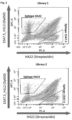
- Figure 2 the single-stained yeasts in each experiment were sorted and plasmids from each sorted yeast population were extracted and prepared for sequencing.
- a two-step PCR was performed: a first step to amplify the region of interest and a second step to add the Illumina adapters needed for sequencing.
- Enrichment mutant Frequency mutant , sorted population Frequency mutant , unsorted population a high enrichment value indicates that the mutation under consideration caused a loss of recognition of the antibody for its antigen, while maintaining recognition of the other antibody (conformational control).
- the result of the processing of the NGS sequencing data is represented as a bar graph that aggregates the enrichment values for all single mutants present in the DMS libraries ( Figures 3 and 4 ). Between 16 and 19 forbidden mutations indicate high impact and positions classified in this category are the most likely to be indirect interaction with the considered IgG. Between 10 and 15 forbidden mutations indicate medium impact positions, and between 5 and 9 forbidden mutations indicate low impact positions.
- Figure 5 shows an analysis of the structure of Nectin-4 (4FRW, pdb) to highlight the important and most important epitope residues for each of the antibody tested. Table 1 lists these residues.
Landscapes
- Health & Medical Sciences (AREA)
- Chemical & Material Sciences (AREA)
- Immunology (AREA)
- Organic Chemistry (AREA)
- Medicinal Chemistry (AREA)
- Life Sciences & Earth Sciences (AREA)
- General Health & Medical Sciences (AREA)
- Proteomics, Peptides & Aminoacids (AREA)
- Genetics & Genomics (AREA)
- Molecular Biology (AREA)
- Biophysics (AREA)
- Biochemistry (AREA)
- Nuclear Medicine, Radiotherapy & Molecular Imaging (AREA)
- General Chemical & Material Sciences (AREA)
- Chemical Kinetics & Catalysis (AREA)
- Pharmacology & Pharmacy (AREA)
- Animal Behavior & Ethology (AREA)
- Public Health (AREA)
- Veterinary Medicine (AREA)
- Peptides Or Proteins (AREA)
- Medicines Containing Antibodies Or Antigens For Use As Internal Diagnostic Agents (AREA)
- Micro-Organisms Or Cultivation Processes Thereof (AREA)
- Medicinal Preparation (AREA)
Priority Applications (7)
| Application Number | Priority Date | Filing Date | Title |
|---|---|---|---|
| EP22186476.2A EP4310101A1 (fr) | 2022-07-22 | 2022-07-22 | Anticorps anti-nectin-4 et conjugués anticorps-médicament |
| JP2025502955A JP2025526342A (ja) | 2022-07-22 | 2023-07-20 | 新規抗ネクチン-4抗体及び抗体-薬物コンジュゲート |
| CN202380055454.6A CN119768430A (zh) | 2022-07-22 | 2023-07-20 | 新型抗Nectin-4抗体和抗体药物偶联物 |
| PCT/EP2023/070123 WO2024017992A1 (fr) | 2022-07-22 | 2023-07-20 | Nouveaux anticorps anti-nectine-4 et conjugués anticorps-médicament |
| EP23744501.0A EP4558521A1 (fr) | 2022-07-22 | 2023-07-20 | Nouveaux anticorps anti-nectine-4 et conjugués anticorps-médicament |
| CA3262971A CA3262971A1 (fr) | 2022-07-22 | 2023-07-20 | Nouveaux anticorps anti-nectine-4 et conjugués anticorps-médicament |
| US18/997,648 US20260062481A1 (en) | 2022-07-22 | 2023-07-20 | Novel anti-nectin-4 antibodies and antibody-drug conjugates |
Applications Claiming Priority (1)
| Application Number | Priority Date | Filing Date | Title |
|---|---|---|---|
| EP22186476.2A EP4310101A1 (fr) | 2022-07-22 | 2022-07-22 | Anticorps anti-nectin-4 et conjugués anticorps-médicament |
Publications (1)
| Publication Number | Publication Date |
|---|---|
| EP4310101A1 true EP4310101A1 (fr) | 2024-01-24 |
Family
ID=82701614
Family Applications (2)
| Application Number | Title | Priority Date | Filing Date |
|---|---|---|---|
| EP22186476.2A Withdrawn EP4310101A1 (fr) | 2022-07-22 | 2022-07-22 | Anticorps anti-nectin-4 et conjugués anticorps-médicament |
| EP23744501.0A Pending EP4558521A1 (fr) | 2022-07-22 | 2023-07-20 | Nouveaux anticorps anti-nectine-4 et conjugués anticorps-médicament |
Family Applications After (1)
| Application Number | Title | Priority Date | Filing Date |
|---|---|---|---|
| EP23744501.0A Pending EP4558521A1 (fr) | 2022-07-22 | 2023-07-20 | Nouveaux anticorps anti-nectine-4 et conjugués anticorps-médicament |
Country Status (6)
| Country | Link |
|---|---|
| US (1) | US20260062481A1 (fr) |
| EP (2) | EP4310101A1 (fr) |
| JP (1) | JP2025526342A (fr) |
| CN (1) | CN119768430A (fr) |
| CA (1) | CA3262971A1 (fr) |
| WO (1) | WO2024017992A1 (fr) |
Families Citing this family (2)
| Publication number | Priority date | Publication date | Assignee | Title |
|---|---|---|---|---|
| EP4534101A1 (fr) * | 2023-10-02 | 2025-04-09 | Eli Lilly and Company | Conjugué anticorps-médicament (adc) ciblant la nectine 4 et comprenant une charge utile d'exatecan |
| WO2026057016A1 (fr) * | 2024-09-12 | 2026-03-19 | LaNova Medicines Limited | Anticorps anti-nectine-4 et leurs conjugués |
Citations (7)
| Publication number | Priority date | Publication date | Assignee | Title |
|---|---|---|---|---|
| WO2017042210A1 (fr) * | 2015-09-09 | 2017-03-16 | INSERM (Institut National de la Santé et de la Recherche Médicale) | Anticorps présentant une spécificité pour la nectine-4 et leurs utilisations |
| WO2018158398A1 (fr) | 2017-03-02 | 2018-09-07 | INSERM (Institut National de la Santé et de la Recherche Médicale) | Anticorps présentant une spécificité pour la nectine-4 et leurs utilisations |
| WO2018226578A1 (fr) * | 2017-06-05 | 2018-12-13 | Agensys, Inc. | Protéines de liaison à la nectine-4 et leurs procédés d'utilisation |
| WO2021069508A1 (fr) * | 2019-10-07 | 2021-04-15 | Université D'aix-Marseille | Anticorps ayant une spécificité pour la nectine -4 et leurs utilisations |
| WO2021168274A1 (fr) * | 2020-02-21 | 2021-08-26 | Silverback Therapeutics, Inc. | Conjugués d'anticorps de nectine-4 et leurs utilisations |
| WO2022057651A1 (fr) * | 2020-09-16 | 2022-03-24 | 四川科伦博泰生物医药股份有限公司 | Anticorps anti-nectine-4, conjugué le comprenant, et application associée |
| CN114702588A (zh) * | 2022-04-27 | 2022-07-05 | 博际生物医药科技(杭州)有限公司 | 抗Nectin-4抗体和双特异性抗体 |
Family Cites Families (2)
| Publication number | Priority date | Publication date | Assignee | Title |
|---|---|---|---|---|
| MX347954B (es) * | 2010-09-29 | 2017-05-19 | Agensys Inc | Conjugados de anticuerpo farmaco (adc) que enlazan a proteinas 191p4d12. |
| US10047163B2 (en) * | 2013-02-08 | 2018-08-14 | Abbvie Stemcentrx Llc | Multispecific constructs |
-
2022
- 2022-07-22 EP EP22186476.2A patent/EP4310101A1/fr not_active Withdrawn
-
2023
- 2023-07-20 JP JP2025502955A patent/JP2025526342A/ja active Pending
- 2023-07-20 WO PCT/EP2023/070123 patent/WO2024017992A1/fr not_active Ceased
- 2023-07-20 CA CA3262971A patent/CA3262971A1/fr active Pending
- 2023-07-20 CN CN202380055454.6A patent/CN119768430A/zh active Pending
- 2023-07-20 US US18/997,648 patent/US20260062481A1/en active Pending
- 2023-07-20 EP EP23744501.0A patent/EP4558521A1/fr active Pending
Patent Citations (7)
| Publication number | Priority date | Publication date | Assignee | Title |
|---|---|---|---|---|
| WO2017042210A1 (fr) * | 2015-09-09 | 2017-03-16 | INSERM (Institut National de la Santé et de la Recherche Médicale) | Anticorps présentant une spécificité pour la nectine-4 et leurs utilisations |
| WO2018158398A1 (fr) | 2017-03-02 | 2018-09-07 | INSERM (Institut National de la Santé et de la Recherche Médicale) | Anticorps présentant une spécificité pour la nectine-4 et leurs utilisations |
| WO2018226578A1 (fr) * | 2017-06-05 | 2018-12-13 | Agensys, Inc. | Protéines de liaison à la nectine-4 et leurs procédés d'utilisation |
| WO2021069508A1 (fr) * | 2019-10-07 | 2021-04-15 | Université D'aix-Marseille | Anticorps ayant une spécificité pour la nectine -4 et leurs utilisations |
| WO2021168274A1 (fr) * | 2020-02-21 | 2021-08-26 | Silverback Therapeutics, Inc. | Conjugués d'anticorps de nectine-4 et leurs utilisations |
| WO2022057651A1 (fr) * | 2020-09-16 | 2022-03-24 | 四川科伦博泰生物医药股份有限公司 | Anticorps anti-nectine-4, conjugué le comprenant, et application associée |
| CN114702588A (zh) * | 2022-04-27 | 2022-07-05 | 博际生物医药科技(杭州)有限公司 | 抗Nectin-4抗体和双特异性抗体 |
Non-Patent Citations (5)
| Title |
|---|
| NEUBERGER, M. S. ET AL., NATURE, vol. 314, 1985, pages 268 - 270 |
| P. M. CHALLITA-EID ET AL: "Enfortumab Vedotin Antibody-Drug Conjugate Targeting Nectin-4 Is a Highly Potent Therapeutic Agent in Multiple Preclinical Cancer Models", CANCER RESEARCH, vol. 76, no. 10, 15 May 2016 (2016-05-15), US, pages 3003 - 3013, XP055385700, ISSN: 0008-5472, DOI: 10.1158/0008-5472.CAN-15-1313 * |
| RIECHMANN, L. ET AL., NATURE, vol. 332, 1988, pages 323 - 327 |
| VAN DIJK, M. A.VAN DE WINKEL, J. G., CURR. OPIN. CHEM. BIOL., vol. 5, 2001, pages 368 - 374 |
| WU SAM ET AL: "Cutaneous toxicity associated with enfortumab vedotin treatment of metastatic urothelial carcinoma", DERMATOLOGY ONLINE JOURNAL, UNIVERSITY OF CALIFORNIA * ESCHOLARSHIP, US, vol. 25, no. 2, 15 February 2019 (2019-02-15), XP002804424, ISSN: 1087-2108 * |
Also Published As
| Publication number | Publication date |
|---|---|
| EP4558521A1 (fr) | 2025-05-28 |
| CN119768430A (zh) | 2025-04-04 |
| US20260062481A1 (en) | 2026-03-05 |
| CA3262971A1 (fr) | 2024-01-25 |
| WO2024017992A1 (fr) | 2024-01-25 |
| JP2025526342A (ja) | 2025-08-13 |
Similar Documents
| Publication | Publication Date | Title |
|---|---|---|
| US10669339B2 (en) | Anti-PDL1 antibodies, activatable anti-PDL1 antibodies, and methods of use thereof | |
| US10513558B2 (en) | Anti-PD1 antibodies, activatable anti-PD1 antibodies, and methods of use thereof | |
| IL289663B2 (en) | Claudin18 antibodies and methods of treating cancer | |
| JP7579991B2 (ja) | 抗ネクチン-4抗体エキサテカンコンジュゲート | |
| EP4721757A2 (fr) | Anticorps spécifiques de pd-l1 et leurs procédés d'utilisation | |
| EP4039704A1 (fr) | Anticorps anti-pd-1 et son utilisation | |
| EP4292611A1 (fr) | Anticorps anti-cd112r et son utilisation | |
| US20260062481A1 (en) | Novel anti-nectin-4 antibodies and antibody-drug conjugates | |
| EP4066899A1 (fr) | Anticorps anti-nectine-4 | |
| US12415864B2 (en) | Humanized antibodies against Lewis Y | |
| EP4086284A1 (fr) | Conjugués exatecan d'anticorps anti-nectine-4 | |
| EP4324849A1 (fr) | Anticorps anti-nectin-4 humanisés | |
| EP4471061A1 (fr) | Anticorps anti-asct2 et adc dérivés de ceux-ci | |
| CA3128097C (fr) | Anticorps anti-cd228 et conjugues anticorps-medicament | |
| EP4344707A1 (fr) | Nouveaux conjugués anticorps-médicament anti-nectine-4 | |
| EP4461317A1 (fr) | Conjugués anticorps-médicament comprenant un anticorps anti-nectine-4 et du bélotecan ou un dérivé de celui-ci | |
| WO2025163468A1 (fr) | Anticorps anti-pd-l1 et conjugués anticorps-médicaments et leur utilisation dans le traitement du cancer | |
| JP2025537099A (ja) | 抗αVβ6抗体および抗体-薬物コンジュゲートならびにがんの治療におけるそれらの使用 | |
| EA052759B1 (ru) | Антитела против pd-l1 и конъюгаты антитело-лекарственное средство | |
| NZ736142B2 (en) | Anti-pdl1 antibodies, activatable anti-pdl1 antibodies, and methods of use thereof | |
| HK1250036A1 (en) | Activatable anti-cd166 antibodies, and methods of use thereof | |
| HK1250036B (en) | Activatable anti-cd166 antibodies, and methods of use thereof |
Legal Events
| Date | Code | Title | Description |
|---|---|---|---|
| PUAI | Public reference made under article 153(3) epc to a published international application that has entered the european phase |
Free format text: ORIGINAL CODE: 0009012 |
|
| STAA | Information on the status of an ep patent application or granted ep patent |
Free format text: STATUS: REQUEST FOR EXAMINATION WAS MADE |
|
| 17P | Request for examination filed |
Effective date: 20220722 |
|
| AK | Designated contracting states |
Kind code of ref document: A1 Designated state(s): AL AT BE BG CH CY CZ DE DK EE ES FI FR GB GR HR HU IE IS IT LI LT LU LV MC MK MT NL NO PL PT RO RS SE SI SK SM TR |
|
| STAA | Information on the status of an ep patent application or granted ep patent |
Free format text: STATUS: THE APPLICATION HAS BEEN WITHDRAWN |
|
| 18W | Application withdrawn |
Effective date: 20240403 |