EP4310169A2 - Système et procédé de production d'un flux de sucre à l'aide d'une filtration sur membrane - Google Patents
Système et procédé de production d'un flux de sucre à l'aide d'une filtration sur membrane Download PDFInfo
- Publication number
- EP4310169A2 EP4310169A2 EP23215121.7A EP23215121A EP4310169A2 EP 4310169 A2 EP4310169 A2 EP 4310169A2 EP 23215121 A EP23215121 A EP 23215121A EP 4310169 A2 EP4310169 A2 EP 4310169A2
- Authority
- EP
- European Patent Office
- Prior art keywords
- stream
- sugar
- slurry
- oil
- membrane filtration
- Prior art date
- Legal status (The legal status is an assumption and is not a legal conclusion. Google has not performed a legal analysis and makes no representation as to the accuracy of the status listed.)
- Pending
Links
Images


Classifications
-
- C—CHEMISTRY; METALLURGY
- C13—SUGAR INDUSTRY
- C13K—SACCHARIDES OBTAINED FROM NATURAL SOURCES OR BY HYDROLYSIS OF NATURALLY OCCURRING DISACCHARIDES, OLIGOSACCHARIDES OR POLYSACCHARIDES
- C13K1/00—Glucose; Glucose-containing syrups
- C13K1/06—Glucose; Glucose-containing syrups obtained by saccharification of starch or raw materials containing starch
- C13K1/08—Purifying
-
- A—HUMAN NECESSITIES
- A23—FOODS OR FOODSTUFFS; TREATMENT THEREOF, NOT COVERED BY OTHER CLASSES
- A23L—FOODS, FOODSTUFFS OR NON-ALCOHOLIC BEVERAGES, NOT OTHERWISE PROVIDED FOR; PREPARATION OR TREATMENT THEREOF
- A23L7/00—Cereal-derived products; Malt products; Preparation or treatment thereof
- A23L7/10—Cereal-derived products
- A23L7/104—Fermentation of farinaceous cereal or cereal material; Addition of enzymes or microorganisms
-
- C—CHEMISTRY; METALLURGY
- C13—SUGAR INDUSTRY
- C13B—PRODUCTION OF SUCROSE; APPARATUS SPECIALLY ADAPTED THEREFOR
- C13B20/00—Purification of sugar juices
- C13B20/16—Purification of sugar juices by physical means, e.g. osmosis or filtration
- C13B20/165—Purification of sugar juices by physical means, e.g. osmosis or filtration using membranes, e.g. osmosis, ultrafiltration
-
- A—HUMAN NECESSITIES
- A23—FOODS OR FOODSTUFFS; TREATMENT THEREOF, NOT COVERED BY OTHER CLASSES
- A23L—FOODS, FOODSTUFFS OR NON-ALCOHOLIC BEVERAGES, NOT OTHERWISE PROVIDED FOR; PREPARATION OR TREATMENT THEREOF
- A23L29/00—Foods or foodstuffs containing additives; Preparation or treatment thereof
- A23L29/30—Foods or foodstuffs containing additives; Preparation or treatment thereof containing carbohydrate syrups; containing sugars; containing sugar alcohols, e.g. xylitol; containing starch hydrolysates, e.g. dextrin
- A23L29/35—Degradation products of starch, e.g. hydrolysates, dextrins; Enzymatically modified starches
-
- B—PERFORMING OPERATIONS; TRANSPORTING
- B01—PHYSICAL OR CHEMICAL PROCESSES OR APPARATUS IN GENERAL
- B01D—SEPARATION
- B01D61/00—Processes of separation using semi-permeable membranes, e.g. dialysis, osmosis or ultrafiltration; Apparatus, accessories or auxiliary operations specially adapted therefor
- B01D61/14—Ultrafiltration; Microfiltration
- B01D61/145—Ultrafiltration
-
- B—PERFORMING OPERATIONS; TRANSPORTING
- B01—PHYSICAL OR CHEMICAL PROCESSES OR APPARATUS IN GENERAL
- B01D—SEPARATION
- B01D61/00—Processes of separation using semi-permeable membranes, e.g. dialysis, osmosis or ultrafiltration; Apparatus, accessories or auxiliary operations specially adapted therefor
- B01D61/14—Ultrafiltration; Microfiltration
- B01D61/147—Microfiltration
-
- B—PERFORMING OPERATIONS; TRANSPORTING
- B01—PHYSICAL OR CHEMICAL PROCESSES OR APPARATUS IN GENERAL
- B01D—SEPARATION
- B01D61/00—Processes of separation using semi-permeable membranes, e.g. dialysis, osmosis or ultrafiltration; Apparatus, accessories or auxiliary operations specially adapted therefor
- B01D61/14—Ultrafiltration; Microfiltration
- B01D61/149—Multistep processes comprising different kinds of membrane processes selected from ultrafiltration or microfiltration
-
- C—CHEMISTRY; METALLURGY
- C07—ORGANIC CHEMISTRY
- C07K—PEPTIDES
- C07K1/00—General methods for the preparation of peptides, i.e. processes for the organic chemical preparation of peptides or proteins of any length
- C07K1/14—Extraction; Separation; Purification
-
- C—CHEMISTRY; METALLURGY
- C11—ANIMAL OR VEGETABLE OILS, FATS, FATTY SUBSTANCES OR WAXES; FATTY ACIDS THEREFROM; DETERGENTS; CANDLES
- C11B—PRODUCING, e.g. BY PRESSING RAW MATERIALS OR BY EXTRACTION FROM WASTE MATERIALS, REFINING OR PRESERVING FATS, FATTY SUBSTANCES, e.g. LANOLIN, FATTY OILS OR WAXES; ESSENTIAL OILS; PERFUMES
- C11B3/00—Refining fats or fatty oils
-
- C—CHEMISTRY; METALLURGY
- C12—BIOCHEMISTRY; BEER; SPIRITS; WINE; VINEGAR; MICROBIOLOGY; ENZYMOLOGY; MUTATION OR GENETIC ENGINEERING
- C12M—APPARATUS FOR ENZYMOLOGY OR MICROBIOLOGY; APPARATUS FOR CULTURING MICROORGANISMS FOR PRODUCING BIOMASS, FOR GROWING CELLS OR FOR OBTAINING FERMENTATION OR METABOLIC PRODUCTS, i.e. BIOREACTORS OR FERMENTERS
- C12M21/00—Bioreactors or fermenters specially adapted for specific uses
- C12M21/12—Bioreactors or fermenters specially adapted for specific uses for producing fuels or solvents
-
- C—CHEMISTRY; METALLURGY
- C12—BIOCHEMISTRY; BEER; SPIRITS; WINE; VINEGAR; MICROBIOLOGY; ENZYMOLOGY; MUTATION OR GENETIC ENGINEERING
- C12M—APPARATUS FOR ENZYMOLOGY OR MICROBIOLOGY; APPARATUS FOR CULTURING MICROORGANISMS FOR PRODUCING BIOMASS, FOR GROWING CELLS OR FOR OBTAINING FERMENTATION OR METABOLIC PRODUCTS, i.e. BIOREACTORS OR FERMENTERS
- C12M27/00—Means for mixing, agitating or circulating fluids in the vessel
- C12M27/02—Stirrer or mobile mixing elements
-
- C—CHEMISTRY; METALLURGY
- C12—BIOCHEMISTRY; BEER; SPIRITS; WINE; VINEGAR; MICROBIOLOGY; ENZYMOLOGY; MUTATION OR GENETIC ENGINEERING
- C12M—APPARATUS FOR ENZYMOLOGY OR MICROBIOLOGY; APPARATUS FOR CULTURING MICROORGANISMS FOR PRODUCING BIOMASS, FOR GROWING CELLS OR FOR OBTAINING FERMENTATION OR METABOLIC PRODUCTS, i.e. BIOREACTORS OR FERMENTERS
- C12M29/00—Means for introduction, extraction or recirculation of materials, e.g. pumps
- C12M29/04—Filters; Permeable or porous membranes or plates, e.g. dialysis
-
- C—CHEMISTRY; METALLURGY
- C12—BIOCHEMISTRY; BEER; SPIRITS; WINE; VINEGAR; MICROBIOLOGY; ENZYMOLOGY; MUTATION OR GENETIC ENGINEERING
- C12P—FERMENTATION OR ENZYME-USING PROCESSES TO SYNTHESISE A DESIRED CHEMICAL COMPOUND OR COMPOSITION OR TO SEPARATE OPTICAL ISOMERS FROM A RACEMIC MIXTURE
- C12P19/00—Preparation of compounds containing saccharide radicals
- C12P19/02—Monosaccharides
-
- C—CHEMISTRY; METALLURGY
- C12—BIOCHEMISTRY; BEER; SPIRITS; WINE; VINEGAR; MICROBIOLOGY; ENZYMOLOGY; MUTATION OR GENETIC ENGINEERING
- C12P—FERMENTATION OR ENZYME-USING PROCESSES TO SYNTHESISE A DESIRED CHEMICAL COMPOUND OR COMPOSITION OR TO SEPARATE OPTICAL ISOMERS FROM A RACEMIC MIXTURE
- C12P19/00—Preparation of compounds containing saccharide radicals
- C12P19/14—Preparation of compounds containing saccharide radicals produced by the action of a carbohydrase (EC 3.2.x), e.g. by alpha-amylase, e.g. by cellulase, hemicellulase
-
- C—CHEMISTRY; METALLURGY
- C12—BIOCHEMISTRY; BEER; SPIRITS; WINE; VINEGAR; MICROBIOLOGY; ENZYMOLOGY; MUTATION OR GENETIC ENGINEERING
- C12P—FERMENTATION OR ENZYME-USING PROCESSES TO SYNTHESISE A DESIRED CHEMICAL COMPOUND OR COMPOSITION OR TO SEPARATE OPTICAL ISOMERS FROM A RACEMIC MIXTURE
- C12P7/00—Preparation of oxygen-containing organic compounds
- C12P7/02—Preparation of oxygen-containing organic compounds containing a hydroxy group
- C12P7/04—Preparation of oxygen-containing organic compounds containing a hydroxy group acyclic
- C12P7/06—Ethanol, i.e. non-beverage
-
- C—CHEMISTRY; METALLURGY
- C12—BIOCHEMISTRY; BEER; SPIRITS; WINE; VINEGAR; MICROBIOLOGY; ENZYMOLOGY; MUTATION OR GENETIC ENGINEERING
- C12P—FERMENTATION OR ENZYME-USING PROCESSES TO SYNTHESISE A DESIRED CHEMICAL COMPOUND OR COMPOSITION OR TO SEPARATE OPTICAL ISOMERS FROM A RACEMIC MIXTURE
- C12P7/00—Preparation of oxygen-containing organic compounds
- C12P7/02—Preparation of oxygen-containing organic compounds containing a hydroxy group
- C12P7/04—Preparation of oxygen-containing organic compounds containing a hydroxy group acyclic
- C12P7/16—Butanols
-
- C—CHEMISTRY; METALLURGY
- C13—SUGAR INDUSTRY
- C13K—SACCHARIDES OBTAINED FROM NATURAL SOURCES OR BY HYDROLYSIS OF NATURALLY OCCURRING DISACCHARIDES, OLIGOSACCHARIDES OR POLYSACCHARIDES
- C13K1/00—Glucose; Glucose-containing syrups
- C13K1/06—Glucose; Glucose-containing syrups obtained by saccharification of starch or raw materials containing starch
-
- Y—GENERAL TAGGING OF NEW TECHNOLOGICAL DEVELOPMENTS; GENERAL TAGGING OF CROSS-SECTIONAL TECHNOLOGIES SPANNING OVER SEVERAL SECTIONS OF THE IPC; TECHNICAL SUBJECTS COVERED BY FORMER USPC CROSS-REFERENCE ART COLLECTIONS [XRACs] AND DIGESTS
- Y02—TECHNOLOGIES OR APPLICATIONS FOR MITIGATION OR ADAPTATION AGAINST CLIMATE CHANGE
- Y02E—REDUCTION OF GREENHOUSE GAS [GHG] EMISSIONS, RELATED TO ENERGY GENERATION, TRANSMISSION OR DISTRIBUTION
- Y02E50/00—Technologies for the production of fuel of non-fossil origin
- Y02E50/10—Biofuels, e.g. bio-diesel
Definitions
- the present invention relates generally to systems and methods for use in the biochemical (e.g., biofuel), food, feed, nutrition, enzymes, amino acids, proteins, and/or pharmacy industries and, more specifically, to improved dry grind systems and methods for producing a sugar stream, such as for biochemical production, using membrane filtration.
- biochemical e.g., biofuel
- food, feed, nutrition, enzymes, amino acids, proteins, and/or pharmacy industries and, more specifically, to improved dry grind systems and methods for producing a sugar stream, such as for biochemical production, using membrane filtration.
- biochemicals such as biofuels (e.g., alcohol) and other chemicals
- Wet mill processing plants convert, for example, corn grain, into several different co-products, such as germ (for oil extraction), gluten feed (high fiber animal feed), gluten meal (high protein animal feed) and starch-based products such as alcohol (e.g., ethanol or butanol), high fructose corn syrup, or food and industrial starch.
- Dry grind plants generally convert grains, such as corn, into two products, namely alcohol (e.g., ethanol or butanol) and distiller's grains with solubles. If sold as wet animal feed, distiller's wet grains with solubles are referred to as DWGS. If dried for animal feed, distiller's dried grains with solubles are referred to as DDGS.
- This co-product provides a secondary revenue stream that offsets a portion of the overall alcohol production cost.
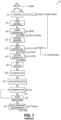
- Fig. 1 is a flow diagram of a typical wet mill alcohol (e.g., ethanol) production process 10.
- the process 10 begins with a steeping step 12 in which grain (e.g., corn) is soaked for 24 to 48 hours in a solution of water and sulfur dioxide in order to soften the kernels for grinding, leach soluble components into the steep water, and loosen the protein matrix with the endosperm.
- Corn kernels contain mainly starch, fiber, protein, and oil.
- the mixture of steeped corn and water is then fed to a degermination mill step (first grinding) 14 in which the corn is ground in a manner that tears open the kernels and releases the germ so as to make a heavy density (8.5 to 9.5 Be) slurry of the ground components, primarily a starch slurry.
- a germ separation step 16 that occurs by flotation and use of a hydrocyclone(s) to separate the germ from the rest of the slurry.
- the germ is the part of the kernel that contains the oil found in corn.
- the separated germ stream which contains some portion of the starch, protein, and fiber, goes to germ washing to remove starch and protein, and then to a dryer to produce about 2.7 to 3.2 pounds (dry basis) of germ per bushel of corn (lb/bu).
- the dry germ has about 50% oil content on a dry basis.
- the remaining slurry which is now devoid of germ, but contains fiber, gluten (i.e., protein), and starch, is then subjected to a fine grinding step (second grinding) 20 in which there is total disruption of endosperm and release of endosperm components, namely gluten and starch, from the fiber.
- second grinding fine grinding step
- the fiber separation stage 22 typically employs static pressure screens or rotating paddles mounted in a cylindrical screen (i.e., paddle screens). Even after washing, the fiber from a typical wet grind mill contains 15 to 20% starch. This starch is sold with the fiber as animal feed.
- the remaining slurry which is now generally devoid of fiber, is subjected to a gluten separation step 24 in which centrifugation or hydrocyclones separate starch from the gluten.
- the gluten stream goes to a vacuum filter and dryer to produce gluten (protein) meal.
- Jet cooking refers to a cooking process performed at elevated temperatures and pressures, although the specific temperatures and pressures can vary widely. Typically, jet cooking occurs at a temperature of about 93 to 110°C (about 200 to 230°F) and a pressure of about 30 to 50 psi. This is followed by liquefaction 28, saccharification 30, fermentation 32, yeast recycling 34, and distillation/dehydration 36 for a typical wet mill biochemical system.
- Liquefaction occurs as the mixture or "mash" is held at 90 to 95°C in order for alpha-amylase to hydrolyze the gelatinized starch into maltodextrins and oligosaccharides (chains of glucose sugar molecules) to produce a liquefied mash or slurry.
- the liquefied mash is cooled to about 50°C and a commercial enzyme known as gluco-amylase is added.
- the gluco-amylase hydrolyzes the maltodextrins and short-chained oligosaccharides into single glucose sugar molecules to produce a liquefied mash.
- a common strain of yeast Sacharomyces cerevisae
- yeast Saccharomyces cerevisae
- the fermentation mash (“beer”) will contain about 15% to 18% ethanol (volume/volume basis), plus soluble and insoluble solids from all the remaining grain components.
- the solids and some liquid remaining after fermentation go to an evaporation stage where yeast can be recovered as a byproduct.
- yeast can optionally be recycled in a yeast recycling step 34.
- the CO 2 is recovered and sold as a commodity product.
- the distillation and dehydration step 36 in which the beer is pumped into distillation columns where it is boiled to vaporize the ethanol.
- the ethanol vapor is separated from the water/slurry solution in the distillation columns and alcohol vapor (in this instance, ethanol) exits the top of the distillation columns at about 95% purity (190 proof).
- the 190 proof ethanol then goes through a molecular sieve dehydration column, which removes the remaining residual water from the ethanol, to yield a final product of essentially 100% ethanol (199.5 proof).
- This anhydrous ethanol is now ready to be used for motor fuel purposes. Further processing within the distillation system can yield food grade or industrial grade alcohol.
- the wet grind process 10 can produce a high quality starch product for conversion to alcohol, as well as separate streams of germ, fiber, and protein, which can be sold as co-products to generate additional revenue streams.
- the overall yields for various co-products can be less than desirable and the wet grind process is complicated and costly, requiring high capital investment as well as high-energy costs for operation.
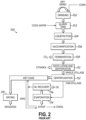
- Fig. 2 is a flow diagram of a typical dry grind alcohol (e.g., ethanol) production process 100.
- the dry grind method 100 can be divided into a front end and a back end. The part of the method 100 that occurs prior to distillation 110 is considered the "front end," and the part of the method 100 that occurs after distillation 110 is considered the "back end.” To that end, the front end of the dry grind process 100 begins with a grinding step 102 in which dried whole corn kernels can be passed through hammer mills for grinding into meal or a fine powder.
- the screen openings in the hammer mills or similar devices typically are of a size 6/64 to 9/64 inch, or about 2.38 mm to 3.57 mm, but some plants can operate at less than or greater than these screen sizes.
- the resulting particle distribution yields a very wide spread, bell type curve, which includes particle sizes as small as 45 microns and as large as 2 mm to 3 mm. The majority of the particles are in the range of 500 to 1200 microns, which is the "peak" of the bell curve.
- the ground meal is mixed with cook water to create a slurry at slurry step 103 and a commercial enzyme called alpha-amylase is typically added (not shown).
- the slurry step 103 is followed by a liquefaction step 104 whereat the pH is adjusted to about 5.2 to 5.8 and the temperature maintained between about 50°C to 105°C so as to convert the insoluble starch in the slurry to soluble starch.
- a liquefaction step 104 whereat the pH is adjusted to about 5.2 to 5.8 and the temperature maintained between about 50°C to 105°C so as to convert the insoluble starch in the slurry to soluble starch.
- the stream after the liquefaction step 104 has about 30% dry solids (DS) content, but can range from about 29-36%, with all the components contained in the corn kernels, including starch/sugars, protein, fiber, starch, germ, grit, oil and salts, for example. Higher solids are achievable, but this requires extensive alpha amylase enzyme to rapidly breakdown the viscosity in the initial liquefaction step. There generally are several types of solids in the liquefaction stream: fiber, germ, and grit.
- Liquefaction may be followed by separate saccharification and fermentation steps, 106 and 108, respectively, although in most commercial dry grind ethanol processes, saccharification and fermentation can occur simultaneously.
- This single step is referred to in the industry as "Simultaneous Saccharification and Fermentation” (SSF). Both saccharification and SSF can take as long as about 50 to 60 hours. Fermentation converts the sugar to alcohol. Yeast can optionally be recycled in a yeast recycling step (not shown) either during the fermentation process or at the very end of the fermentation process.
- the distillation (and dehydration) step 110 is the distillation (and dehydration) step 110, which utilizes a still to recover the alcohol.
- a centrifugation step 112 involves centrifuging the residuals produced with the distillation and dehydration step 110, i.e., "whole stillage", in order to separate the insoluble solids ("wet cake") from the liquid (“thin stillage”).
- the liquid from the centrifuge contains about 5% to 12% DS.
- the "wet cake” includes fiber, of which there generally are three types: (1) pericarp, with average particle sizes typically about 1 mm to 3 mm; (2) tricap, with average particle sizes about 500 microns; (3) and fine fiber, with average particle sizes of about 250 microns. There may also be proteins with a particle size of about 45 to about 300 microns.
- the thin stillage typically enters evaporators in an evaporation step 114 in order to boil or flash away moisture, leaving a thick syrup which contains the soluble (dissolved) solids (mainly protein and starches/sugars) from the fermentation (25 to 40% dry solids) along with residual oil and fine fiber.
- the concentrated slurry can be sent to a centrifuge to separate the oil from the syrup in an oil recovery step 116.
- the oil can be sold as a separate high value product.
- the oil yield is normally about 0.6 lb/bu of corn with high free fatty acids content. This oil yield recovers only about 1/3 of the oil in the corn, with part of the oil passing with the syrup stream and the remainder being lost with the fiber/wet cake stream.
- the syrup which has more than 10% oil
- DWGS Distillers Wet Grain with Solubles
- the wet cake and concentrated syrup mixture may be dried in a drying step 118 and sold as Distillers Dried Grain with Solubles (DDGS) to dairy and beef feedlots.
- DDGS Distillers Dried Grain with Solubles
- This DDGS has all the corn and yeast protein and about 67% of the oil in the starting corn material. But the value of DDGS is low due to the high percentage of fiber, and in some cases the oil is a hindrance to animal digestion and lactating cow milk quality.
- Fig. 3 is a flow diagram of various typical liquefaction processes that define the liquefaction step 104 in the dry grind process 100.
- the dry grind process 100 begins with a grinding step 102 in which dried whole corn kernels are passed through hammer mills or similar milling systems such as roller mills, flaking mills, impacted mill or pin mills for grinding into meal or a fine powder.
- the grinding step 102 is followed by the liquefaction step 104, which itself includes multiple steps as is discussed next.
- Each of the various liquefaction processes generally begins with the ground grain or similar material being mixed with cook and/or backset water, which can be sent from evaporation step 114 ( Fig. 2 ), to create a slurry at slurry tank 130 whereat a commercial enzyme called alpha-amylase is typically added (not shown).
- the pH is adjusted here, as is known in the art, to about 5.2 to 5.8 and the temperature maintained between about 50°C to 105°C so as to allow for the enzyme activity to begin converting the insoluble starch in the slurry to soluble liquid starch.
- Other pH ranges such as from pH 3.5-7.0, may be utilized and an acid treatment system using sulfuric acid, for example, can be used as well for pH control and conversion of the starches to sugars.
- slurry tank 130 After the slurry tank 130, there are normally three optional pre-holding tank steps, identified in Fig. 3 as systems A, B, and C, which may be selected depending generally upon the desired temperature and holding time of the slurry.
- system A the slurry from the slurry tank 130 is subjected to a jet cooking step 132 whereat the slurry is fed to a jet cooker, heated to about 120°C, held in a U-tube or similar holding vessel for about 2 min to about 30 min, then forwarded to a flash tank.
- the injected steam flashes out of the liquid stream, creating another particle size reduction and providing a means for recovering the injected stream.
- the jet cooker creates a sheering force that ruptures the starch granules to aid the enzyme in reacting with the starch inside the granule and allows for rapid hydration of the starch granules.
- system A may be replaced with a wet grind system.
- system B the slurry is subjected to a secondary slurry tank step 134 whereat the slurry is maintained at a temperature from about 90°C to 100°C for about 10 min to about 1 hour.
- the slurry from the slurry tank 130 is subjected to a secondary slurry tank - no steam step 136, whereat the slurry from the slurry tank 130 is sent to a secondary slurry tank, without any steam injection, and maintained at a temperature of about 80°C to 90°C for about 1 to 2 hours.
- the slurry from each of systems A, B, and C is forwarded, in series, to first and second holding tanks 140 and 142 for a total holding time of about 60 minutes to about 4 hours at temperatures of about 80°C to 90°C to complete the liquefaction step 104, which then is followed by the saccharification and fermentation steps 106 and 108, along with the remainder of the process 100 of Fig. 2 . While two holding tanks are shown here, it should be understood that one holding tank, more than two holding tanks, or no holding tanks may be utilized.
- the present invention provides for a dry milling system and method that produces a sugar stream, such as for biochemical production, using membrane filtration, e.g., microfiltration, that may be similar to the sugar stream produced by conventional wet corn milling systems, but at a fraction of the cost, and generate additional revenue from high value by-products, such as oil, protein, and/or fiber, for example, with desirable yields.
- membrane filtration e.g., microfiltration
- a method for producing a sugar stream includes grinding grain and/or grain components into grain particles to release oil from the grains, then mixing the grain particles with a liquid to produce a slurry including starch and the released oil defining free oil in the slurry.
- the slurry is subjected to liquefaction followed by saccharification to convert the starch to simple sugars and produce a stream including the simple sugars and the free oil.
- the stream is separated into a first solids portion and a liquid portion including the simple sugars and free oil, then the liquid portion is separated into an oil portion including the free oil, a second solids portion, and a sugar portion including the simple sugars.
- the sugar portion is subjected to membrane filtration to produce a third solids portion and a filtered sugar portion defining a sugar stream having a dextrose equivalent of at least 20 D.E. and a total unfermentable solids fraction that is less than or equal to 30% of the total solids content.
- a system for producing a sugar stream in another embodiment, includes a slurry tank in which ground grain particles mix with a liquid to produce a slurry including starch and free oil, and a liquefaction and a saccharification system that receives the slurry and whereat the starch is converted to simple sugars thereby producing a stream including the simple sugars and free oil.
- the system further includes a first separation device that receives and separates the stream from the saccharification system into a first solids portion and a liquid portion including the simple sugars and free oil, and an oil separation device that is situated after the first separation device and that receives and separates the liquid portion into an oil portion including the free oil, a second solids portion, and a sugar portion including the simple sugars.
- the system also includes a membrane filtration device that is situated after the oil separation device and that receives and separates the sugar portion into a third solids portion and a filtered sugar portion defining a sugar stream having a dextrose equivalent of at least 20 D.E. and a total unfermentable solids fraction that is less than or equal to 30% of the total solids content, and a biofuel and/or biochemical device that receives the sugar stream to produce a biofuel and/or biochemical from the simple sugars.
- a membrane filtration device that is situated after the oil separation device and that receives and separates the sugar portion into a third solids portion and a filtered sugar portion defining a sugar stream having a dextrose equivalent of at least 20 D.E. and a total unfermentable solids fraction that is less than or equal to 30% of the total solids content
- a biofuel and/or biochemical device that receives the sugar stream to produce a biofuel and/or biochemical from the simple sugars.
- Figs. 1 and 2 have been discussed above and represent flow diagrams of a typical wet mill and dry grind alcohol production process, respectively.
- Fig. 3 likewise, has been discussed above and represents various typical liquefaction processes in a typical dry grind alcohol production process.
- Figs. 4 and 5 illustrate embodiments of a dry grind system and method 200, 300 for producing a sugar stream from grains or similar carbohydrate sources and/or residues, such as for biochemical production, using membrane filtration (e.g., microfiltration), in accordance with the present invention.
- a sugar/carbohydrate stream which includes a desired Dextrose Equivalent (DE) where DE describes the degree of conversion of starch to dextrose (aka glucose) and/or has had removed therefrom an undesirable amount of unfermentable components, can be produced after saccharification and prior to fermentation (or other sugar conversion process), with such sugar stream being available for biochemical production, e.g., alcohol production, or other processes.
- DE Dextrose Equivalent
- present systems and methods 200, 300 also can involve the removal of certain grain components, e.g., corn kernel components, including protein, oil and/or fiber, prior to fermentation or other conversion systems, as further discussed below.
- grain components e.g., corn kernel components, including protein, oil and/or fiber
- sugar stream production and/or grain component separation occurs on the front end of the systems and methods 200, 300.
- the resulting sugar stream that may be desirable after saccharification, but before fermentation, such as for use in biochemical production, can be a stream where the starch/sugars in that stream define at least a 90 DE and/or where the total insoluble (unfermentable) solids fraction of the stream is less than or equal to 7% of the total solids content in the stream.
- the sugar stream may define at least 95 DE.
- the resulting sugar stream may define at least 98 DE.
- the starch/sugars in the stream can define at least a 20, 30, 40, 50, 60, 70, or 80 DE.
- the total insoluble (unfermentable) solids fraction of the stream is less than or equal to 3% of the total solids content in the stream.
- the total insoluble (unfermentable) solids fraction of the stream is less than or equal to 1%.
- the total insoluble (unfermentable) solids fraction of the stream is less than or equal to 10%, 15%, 20%, 25%, or 30%.
- the total fermentable content (fermentable solids fraction) of the stream may be no more than 30, 40, 50, 60, 70, 75, 80, 85, 90, 95, 97, or 99% of the total solids content in the stream.
- the weight % fermentable material in the sugar stream that may be desired is greater than or equal to 80%.
- the weight % fermentable material in a sugar stream is greater than or equal to 85%, 90%, 95%, 98%, or 99%.
- systems and methods 200, 300 described herein will generally focus on corn or kernel components, virtually any type of grain, whether whole and fractionated or any carbohydrate source, including, but not limited to, wheat, barley, sorghum, rye, rice, oats, sugar cane, tapioca, cassava, pea, or the like, as well as other biomass products, can be used. And broadly speaking, it should be understood that the entire grain or biomass or less than the entire grain, e.g., corn and/or grit and/or endosperm or biomass, may be ground and/or used in the systems and methods 200, 300.
- grains such as corn and/or corn particles can be subjected to an optional first grinding step 202, which involves use of a hammer mill, roller mill, pin mill, impact mill, flaking mill or the like, either in series or parallel, to grind the corn and/or corn particles to particle sizes less than about 7/64 inch or, in another example, less than about 10/64 inch and allow for the release of oil therefrom to define free oil.
- the screen size for separating the particles can range from about 24/64 inch to about 2/64 inch.
- the resulting particle sizes are from about 50 microns to about 3 mm.
- the grinding also helps break up the bonds between the fiber, protein, starch, and germ.
- screen size or resulting particle size may have little to no impact on the ability to separate the sugar from the remaining kernel or similar raw material component(s). If the carbohydrate source is pre-ground or initially in particulate form, the optional grind step 202 may be excluded from the system and method 200.
- the ground corn flour is mixed with backset liquid at slurry tank 204 to create a slurry.
- fresh water may be added so as to limit the amount of backset needed here.
- the backset liquid includes overflow from a second separation step 230, which is a later step in the method 200 and is discussed further below.
- An enzyme(s), such as alpha amylase, optionally can be added to the slurry tank 204 or in a slurry blender (not shown) between the first grinding step 202 and the slurry tank 204.
- the slurry may be heated at the slurry tank 204 from about 66°C (150°F) to about 93°C (200°F) for about 10 min to about 120 min.
- the stream from the slurry tank 204 contains about 0.5 lb/bu free oil, about 1.5 lb/bu germ (particle size ranges from about 50 microns to about 3 mm), about 1.8 lb/bu grit (particle size ranges from about 50 microns to about 3 mm), which can include starch, and about 4.25 lb/bu fiber (particle size ranges from about 50 microns to about 3 mm).
- the stream from the slurry tank 204 next may be subjected to an optional second grinding/particle size reduction step 206, which may involve use of a disc mill, hammer mill, a pin or impact mill, a roller mill, a grind mill, or the like, to further grind the corn particles to particle sizes less than about 850 microns and allow for additional release of oil and protein/starch complexes therefrom.
- the particle sizes are from about 300 microns to about 650 mm.
- the grinding further helps continue to break up the bonds between the fiber, protein, and starch and facilitates the release of free oil from germ particles.
- the slurry Prior to subjecting the stream from the slurry tank to the second grinding/particle size reduction step 206, the slurry may be subjected to an optional dewatering step, which uses dewatering equipment, e.g., a paddle screen, a vibration screen, screen decanter centrifuge or conic screen centrifuge, a pressure screen, a preconcentrator, a filter press or the like, to remove a desired amount of liquids therefrom.
- the stream from the second grinding/particle size reduction step 206 contains about 0.1 lb/bu to about 1.0 lb/bu free oil.
- the pH can be adjusted here to about 5.2 to about 5.8 and the temperature maintained between about 50°C to about 105°C so as to convert the insoluble starch in the slurry to soluble or liquid starch.
- Other pH ranges such as from pH 3.5-7.0, may be utilized and an acid treatment system using sulfuric acid, for example, may be used as well for pH control and for conversion of the starches to sugars.
- the slurry may be further subjected to jet cooking whereat the slurry is fed to a jet cooker, heated to about 120°C, held for about 2 min to about 30 min, then forwarded to a flash tank.
- the jet cooker creates a sheering force that ruptures the starch granules to aid the enzyme in reacting with the starch inside the granule and for hydrating the starch molecules.
- the slurry can be subjected to a secondary slurry tank whereat steam is injected directly to the secondary slurry tank and the slurry is maintained at a temperature from about 80°C to about 100°C for about 30 min to about 1 hour.
- the slurry can be subjected to a secondary slurry tank with no steam.
- the slurry is sent to a secondary slurry tank without any steam injection and maintained at a temperature of about 80°C to about 90°C for 1 hour to 2 hours. Thereafter, the liquefied slurry may be forwarded to a holding tank for a total holding time of about 1 to about 4 hours at temperatures of about 80°C to about 90°C to complete the liquefaction step 208.
- pH, temperature, and/or holding time may be adjusted as desired.
- the slurry stream after the liquefaction step 208 has about 28 to about 36% dry solids (DS) content with all the components contained in the corn kernels, including starches/sugars, protein, fiber, germ, grit, oil, and salts, for example.
- DS dry solids
- the stream from the liquefaction step 208 contains about 1 lb/bu free oil, about 1.5 lb/bu germ particle (size ranges from less about 50 microns to about 1 mm), about 4.5 lb/bu protein (size ranges from about 50 microns to about 1 mm), and about 4.25 lb/bu fiber (particle size ranges from about 50 microns to about 3 mm).
- This stream next is sent to an optional saccharification step 210 whereat complex carbohydrate and oligosaccharides are further broken down into simple sugars, particularly single glucose sugar molecules (i.e., dextrose) to produce a liquefied mash.
- the slurry stream may be subjected to a two-step conversion process.
- the first part of the cook process includes adjusting the pH to about 3.5 to about 7.0, with the temperature being maintained between about 30°C to about 100°C for 1 to 6 hours to further convert the insoluble starch in the slurry to soluble starch, particularly dextrose.
- the pH can be 5.2 to 5.8 or 5.5, for example.
- the temperature can be maintained at 80°C for about 5 hours.
- an enzyme such as alpha-amylase may be added here.
- the amount of alpha-amylase may be from about 0.0035 wt% to about 0.04 wt% of the slurry stream. In another example, the amount of alpha-amylase may be from about 0.02 to about 0.1 wt% of the total stream.
- the second part of the cook process may include adjusting the pH to about 3.5 to 5.0, with the temperature being maintained between about 30°C to about 100°C for about 10 minutes to about 5 hours so as to further convert the insoluble starch in the slurry to soluble starch, particularly dextrose.
- the pH can be 4.5.
- the temperature can be maintained from about 54°C (130°F) to about 74°C (165°F) for about 4 hours or up to about 60 hours.
- An enzyme such as glucoamylase, also may be added here.
- the amount of glucoamylase may be from about 0.01 wt% to about 0.2 wt% of the slurry stream.
- the amount of glucoamylase may be from about 0.08 to about 0.14 wt% of the slurry stream.
- Other enzymes or similar catalytic conversion agents may be added at this step or previous steps that can enhance starch conversion to sugar or yield other benefits, such as fiber or cellulosic sugar release, conversion of proteins to soluble proteins, or the release of oil from the germ.
- a saccharified sugar stream having a density of about 1.05 to 1.15 grams/cc can result here.
- the saccharified sugar stream may be no less than about 90 DE.
- the liquefied sugar stream may be no less than 20, 30, 40, 50, 60, 70, or 80 DE.
- the saccharified sugar stream may not be considered desirable or "clean" enough, such as for use in biochemical (e.g., biofuel) production, because the total fermentable content of the stream may be no more than 75% of the total solids content in the stream.
- the saccharified sugar stream can have a total solids fraction of about 25 to about 40%, such solids including sugar, starch, fiber, protein, germ, oil, and ash, for example.
- the total fermentable content of the stream is no more than 30, 40, 50, 60, or 70% of the total solids content in the stream.
- the remaining solids are fiber, protein, oil, and ash, for example.
- the stream from the saccharification step 214 contains about 0.1 lb/bu to about 1.0 lb/bu free oil.
- the saccharified sugar stream is subjected to a first separation step 212. If the optional saccharification step 210 is not provided here, the slurry stream from the liquefaction step 208 is sent to first separation step 212.
- the first separation step 212 filters a generally saccharified solution (about 60 to about 80% by volume), which includes sugar, free oil, protein, fine solids, fiber, grit, and germ, and which has a total solids fraction of about 30%, with a range of 20% to about 40%, but higher or low solids fractions can be produced, but may not be economical here.
- the first separation step 212 uses dewatering equipment, e.g., a paddle screen, a vibration screen, screen decanter centrifuge or conic screen centrifuge, a pressure screen, a preconcentrator, a filter press or the like, to accomplish substantial separation of the solids portion, primarily fiber, germ, grit, which can include protein, from the liquid sugar portion, which primarily includes sugar (e.g., dextrose), oil and fine solids.
- the solids portion which has a total solids fraction of about 39%, may be sent on to a first holding tank 214 and the liquid portion may be sent on and subjected to an oil separation step 216 to produce a cleaner, more desirable sugar stream, as further discussed below.
- the dewatering equipment at the first separation step 212 is a paddle screen, which includes a stationary cylinder screen with a high speed paddle with rake.
- the number of paddles on the paddle screen can be in the range of 1 paddle per 4 to 8 inches of screen diameter.
- the dewatering equipment is a preconcentrator, which includes a stationary cylinder screen with a low speed screw conveyor.
- the conveyor pitch on the preconcentrator can be about 1/6 to about 1/2 of the screen diameter.
- the number of paddles on the paddle screen and the conveyor pitch on the preconcentrator can be modified depending on the amount of solids in the feed.
- the gap between the paddle screen and paddle can range from about 0.04 to about 0.2 inch.
- the paddle speed can range from about 400 to 1200 RPM. In another example, the paddle speed can range from 800 to 900 RPM. A higher speed provides higher capacity, but consumes more power.
- One suitable type of paddle screen is the FQ-PS32 paddle screen, which is available from Fluid-Quip, Inc. of Springfield, Ohio.
- the screen for the dewatering equipment can include a wedge wire type with slot opening or a round hole, thin plate screen.
- the round hole screen can help prevent long fine fiber from going through the screen better than the wedge wire slot opening, but the round hole capacity is lower, so more equipment may be required if using round hole screens.
- the size of the screen openings can range from about 25 microns to about 500 microns. In another example, the screen openings can range from 45 microns to 500 microns. In another example, the screen openings can range from 100 microns to 300 microns. In another example, the screen openings can range from 200 to 250 microns. Smaller screen openings tend to increase the protein/oil/alcohol yield with higher equipment and operation cost, whereas larger screen openings tend to lower protein/oil/alcohol yield with less equipment and operation cost.
- the now separated liquid portion or sugar stream from the first separation step 212 next may be subjected to an oil separation step 216, which can be optional and can use any type of oil separation device, such as a mud centrifuge, two or three phase decanter, disc decanter, two or three phase disc centrifuge, flotation tank, dissolved air flotation tank/system and the like, to separate oil from the sugar stream by taking advantage of density differences.
- the sugar stream is used as heavy media liquid to float oil/emulsion/fine germ particle.
- the oil separation step 216 can remove a small amount of solids so as to reduce the total solids fraction to about 27%. Other solid fraction ranges higher or lower can be achieved depending upon the starting solids feeding the oil separation step 216.
- the oil separation step 216 There can be two or more streams discharged from the oil separation step 216. As shown in Fig. 4 , there are three streams with the first being a light(er) phase or oil portion, which primarily includes oil or an oil/emulsion layer.
- the second stream is an intermediate phase or sugar portion, which primarily includes sugars.
- the third stream is the heavy(ier) solid phase or solid portion, which primarily includes fine fiber, grit particle, and protein.
- the underflow intermediate phase may be forwarded to a sugar holding tank 218.
- the heavier solid phase may be sent back to meet up with the solids portion from the first separation step 212 at the first holding tank 214.
- the lighter oil/emulsion layer can be forwarded to an optional oil polish step 220 whereat the oil/emulsion layer can be subjected to centrifugation, including, for example, a three phase decanter, multi phase disc centrifuge, or the like to separate pure oil from the emulsion and any fine germ particle.
- centrifugation including, for example, a three phase decanter, multi phase disc centrifuge, or the like to separate pure oil from the emulsion and any fine germ particle.
- the emulsion and fine germ particle can be discharged as a heavy phase and returned to join up with the solids portion from the first separation step 212 at the first holding tank 214.
- the emulsion and fine germ particle can be discharged as a heavy phase and returned to the oil separation step 216.
- the emulsion and fine germ particle can be joined up with the liquefied sugar stream from the saccharification step 210 prior to the first separation step 212.
- alcohol such as 200 proof alcohol from a distillation tower from a later distillation step (not shown), as known in the art, can be added to the emulsion and fine germ particles so as to break the emulsion and extract oil from the fine germ particle, which normally are less than 100 micron.
- the oil that is recovered at step 220 has a much more desirable quality in terms of color and free fatty acid content (less than 7% and, in another example, less than 5%) as compared to oil that is recovered downstream, particularly oil recovered after fermentation, such as on the back end.
- the color of pre-fermentation recovered oil is lighter in color and lower in free fatty acid content.
- the oil yield at step 220 can reach about 0.9 lb/bu.
- the recovered oil here can be about 95.5% oil and, in another example, the oil can be 99% oil.
- this stream is sent on to a membrane filtration step 222 using, for example, a membrane filter, a microfilter, a precoat/diatomaceous earth filter, or the like, to produce a more desirable sugar stream, which may be considered a purified or refined sugar stream, by further filtering out any remaining solid/insoluble components, color, ash, minerals or the like.
- the stream sent to membrane filtration step 222 may have a total solids fraction of 27%, such solids including sugar, starch, fiber, protein and/or germ, for example.
- the filter screen size here may be from about 5 to 100 microns. In another example, the filter screen size may be from about 8 to 50 microns.
- the membrane filtration step 222 includes a microfilter.
- the microfilter can include a filter screen size of from about 0.1 to 50 microns. In another example, the microfilter can include a filter screen size of from about 0.1 to 10 microns. Due to the input of water, the sugar stream can have a total solids fraction of 20-30%.
- the separated sugar stream may be no less than about 90 DE.
- the liquefied sugar stream may be no less than 20, 30, 40, 50, 60, 70, or 80 DE.
- the sugar stream here may be considered desirable or "clean" enough, such as for use in biofuel production, because the total insoluble (unfermentable) solids fraction of the stream is less than or equal to 5% of the total solids of the stream.
- the total insoluble (unfermentable) solids fraction of the stream is less than or equal to 3%.
- the total insoluble (unfermentable) solids fraction of the stream is less than or equal to 1%.
- the total insoluble (unfermentable) solids fraction of the stream is less than or equal to 10%, 15%, 20%, 25%, or 30%. Due to a low solids content of the sugar stream here, an optional evaporation step (not shown) may be added hereafter to further concentrate the total solids fraction.
- the insoluble components from the membrane filtration step 222 can be sent back to meet up with the solids portion at the first holding tank 214 or optionally may be recycled back to meet up with the separated liquid portion or sugar stream from the first separation step 212, such as prior to the oil separation step 216, to be again sent through the membrane filtration step 222.
- These heavier or large solid components or underflow can be more concentrated in total solids, at about 28%.
- the membrane filtration step 222 may be replaced by, or additionally include, carbon column color removal, filter press, flotation and/or demineralization technologies (e.g., ion exchange). Resin refining, which includes a combination of carbon filtration and demineralization in one step, can also be utilized for refining the sugars.
- the sugar stream from the membrane filtration step 222 can be sent on to fermentation step 224 to convert, e.g., via a fermenter, the sugars to alcohol (e.g., ethanol or butanol) followed by distillation and/or separation of the desired component(s) (not shown), which can recover the alcohol or byproduct(s)/ compound(s) produced, as is known in the art.
- alcohol e.g., ethanol or butanol
- any other fermentation conversion process or sugar conversion process may be employed here in place of fermentation step 224.
- the optional saccharification step 210 may be provided just prior to fermentation step 224 here, or combined therewith to provide a single simultaneous saccharification and fermentation (SSF) step (not shown), so as to subject the sugar stream to saccharification in a manner as discussed above.
- the sugar stream can allow for recovery of a fermentation agent from the fermentation step 224.
- the fermentation agent can be recovered by means known in the art and can be dried as a separate product or, for example, can be sent to the protein separation step 240 or other streams/steps, in the method and system 200, which can allow for capture of the fermentation agent and/or used for further processing. Fermentation agent (such as yeast or bacteria) recycling can occur by use of a clean sugar source.
- the system and method 200 can include any back end type process(es), which may be known or unknown in the art to process, for example, the whole stillage.
- the fermentation step 224 may be part of an alcohol production system that receives a sugar stream that is not as desirable or clean, i.e., "dirtier," than the sugar stream being sent and subjected to the same fermentation step 224 as the dirty sugar stream.
- Other options for the sugar stream, aside from fermentation, can include further processing or refining of the glucose to fructose or other simple or even complex sugars, processing into amino acids, enzymes, cellular biomass, feed, microbe based fermentation (as opposed to yeast based) and other various chemical, pharmaceutical or nutriceutical processing (such as propanol, isobutanol, citric acid, succinic acid or other organic molecules) and the like.
- processing can occur via a reactor, including, for example, a catalytic or chemical reactor.
- the reactor is a fermenter.
- the dewatered solids portion of the stream (about 70 to about 25% water), including any other returned streams, such as the heavier solid phase from the oil separation step 216, for example, next can be subjected to a second separation step 230.
- the second separation step 230 uses dewatering or filtration equipment, e.g., a paddle screen, a vibration screen, a filtration, scroll screen or conic screen centrifuge, a pressure screen, a preconcentrator and the like, to accomplish further separation of the solids portion, primarily fiber, germ, and grit, which can include protein, from the liquid portion, which primarily includes sugar, oil and fine solids.
- the dewatering equipment is a paddle screen, as above described.
- the size of the screen openings can range from about 25 microns to about 500 microns. In another example, the screen openings can range from 45 microns to 500 microns. In another example, the screen openings can range from 100 microns to 300 microns. In another example, the screen openings can range from 200 to 250 microns. With the second separation step 230, the actual screen openings may be larger in size than those in the first separation step 212.
- the resulting solids portion from the second separation step 230 is sent on to a second holding tank 232 and the liquid portion or filtrate, may be joined up with the ground corn flour at slurry tank 204 as part of a counter current washing setup.
- the resulting solids portion has a total solids fraction of about 35%, with the filtrate having a total solids fraction of about 26%.
- the filtrate can contain particles (germ, grit, fine fiber and protein) having sizes smaller than the screen size openings used in the second separation step 230.
- the wet cake or dewatered solids portion of the stream can be subjected to a third separation step 234.
- the third separation step 234 uses dewatering equipment, e.g., a paddle screen, a vibration screen, a filtration, scroll screen or conic screen centrifuge, a pressure screen, a preconcentrator, a press and the like, to accomplish further separation of the solids portion, primarily fiber, germ, and grit, which can include protein, from the liquid portion, which primarily includes sugar, oil, and fine solids.
- the dewatering equipment is a paddle screen, as above described.
- the actual screen openings may be larger in size than those in the second separation step 230.
- the size of the screen openings can range from about 25 microns to about 500 microns. In another example, the screen openings can range from 45 microns to 500 microns. In another example, the screen openings can range from 100 microns to 300 microns. In another example, the screen openings can range from 200 to 250 microns. Alternatively, the actual screen openings may be smaller in size than those in the second separation step 230.
- the resulting solids portion from the third separation step 234 is sent on to a third holding tank 236 and the overflow liquid portion or filtrate may be sent to a protein separation step 240, which uses, for example, a clarifier, filtration centrifuge, decanter, stack disc centrifuge, rotary drum filter, filter press, membrane separation, or the like, to separate the liquid portion of the stream from a heavier protein portion. Due to the removal of solids throughout the "washing" process, the total solids fraction in the solids stream at the third holding tank 236 is about 26%. The filtrate has a total solids fraction of about 22%.
- the clarifier for example, can be provided with washing capabilities so that wash water can be supplied thereto.
- the additional wash water allows for easier separation of the overflow liquid portion into a heavier protein portion and liquid portion.
- the heavier protein portion separates from the overflow liquid portion and is removed as the underflow whereas the lighter liquid portion can be removed as the overflow.
- a two or three phase separation device can be utilized for this step.
- the overflow liquid portion contains about 18% total solids and is sent to an overflow holding tank 242.
- the overflow liquid portion or filtrate from the third separation step 234 can be subjected to an optional liquefaction step whereat additional carbohydrates, including starches, can be converted to sugars so that the protein portion can be further concentrated up at the protein separation step 240.
- Other streams aside from the overflow liquid portion or filtrate from the third separation step 234 may be sent to the protein separation step 240, such as streams from the first separation step 212, the second separation step 230, the fourth separation step 250, and/or the fifth separation step 254.
- the underflow protein portion next can be sent to an optional dewatering step 244 whereat the protein portion can be subjected to filtration, including microfiltration or vacuum filtration, such as via a rotary vacuum filter or the like.
- the protein portion can be dewatered by being subjected to a decanter centrifuge or the like, as are known in the art.
- the underflow protein portion prior to being sent to the dewatering step 244, can be subjected to an optional liquefaction step whereat additional carbohydrates, including starches, can be converted to sugars, allowing for the underflow protein portion to be further concentrated up at the dewatering step 244.
- the filtrate from the dewatering step 244 can be returned to overflow holding tank 242 and joined up with the overflow liquid portion from protein separation step 240.
- the combined filtrate at overflow holding tank 242 can be sent back to the first holding tank 214 as part of the counter current washing process.
- the combined filtrate at overflow holding tank 242 may be joined up with the ground corn flour at slurry tank 204, and the liquid portion or filtrate from the second separation step 230 can be sent back to the first holding tank 214 as part of the counter current washing setup. Due to the various dewatering options, the total solids fraction of the final dewatered protein can vary between 20 and 36%.
- the dewatered protein then may be dried, such as by being sent to a dryer (not shown), as is known in the art.
- the final dried protein product can define a high protein corn meal that includes at least 40 wt% protein on a dry basis and which may be sold as pig or chicken feed, for example.
- the high protein corn meal includes at least 45 wt% protein on a dry basis.
- the high protein corn meal includes at least 50 wt% protein on a dry basis.
- the high protein corn meal includes at least 60 wt% protein on a dry basis.
- the high protein corn meal includes at least 62 wt% protein on a dry basis and is referred to as a corn gluten meal product.
- the recovered protein can be used as a feed source to separate the zein proteins or can be further refined to remove individual amino acids (such as lysine or other key limiting amino acid).
- One exemplary zein separation process for the recovered feed source corn protein is shown and described in Cheryan, U.S. Patent No. 6,433,146 , the contents of which are incorporated herein by reference. It is noted that as the protein purity increases, the yield decreases such that the yield is variable based on the end product.
- the recovered protein can be used as a fertilizer and/or a natural herbicide or further purified to utilize for protein isolates.
- the protein underflow stream may be passed through a solvent extraction process (e.g., alcohol generally or ethanol and water) (not shown) to remove all starches, sugars and other components.
- a solvent extraction process e.g., alcohol generally or ethanol and water
- the separated proteins can be used as a feed source, a food source, or a flavor carrier or for health, nutrition, and/or beauty aids.
- the fourth separation step 250 uses dewatering equipment, e.g., a paddle screen, a vibration screen, a filtration, scroll screen or conic screen centrifuge, a pressure screen, a preconcentrator and the like, to accomplish further separation of the solids portion, primarily fiber, germ, grit, which can include protein, from the liquid portion, which primarily includes sugar, oil, and fine solids.
- the dewatering equipment is a paddle screen, as above described.
- the screen size used in the fourth separation step 250 can range from 100 micron to 500 micron.
- the screen openings can range from 150 to 300 micron.
- the screen openings are about 200 microns.
- the actual screen openings may be larger in size than those in the third separation step 234.
- the resulting solids portion from the fourth separation step 250 can be sent on to an optional fourth holding tank 252 and the liquid portion or filtrate, may be sent to the second holding tank 232 as part of the counter current washing operation.
- the resulting solids portion has a total solids fraction of 20%.
- the filtrate has a total solids content of 14%.
- the filtrate may be sent to protein separation step 240 and the filtrate from the third separation step 234 may be sent to the second holding tank 232 in a counter current washing operation.
- the filtrate from the fourth separation step 250 contains particles having sizes smaller than the screen size openings used in the fourth separation step 250. Wash water can be supplied here to the fourth holding tank 252.
- the wet cake or dewatered solids portion of the stream next can be subjected to an optional fifth separation step 254 whereat dewatering equipment, e.g., a paddle screen, vibration screen, filtration centrifuge, pressure screen, screen bowl decanter and the like, is used to accomplish separation of the solid portion, which includes fiber from the liquid portion.
- dewatering equipment e.g., a paddle screen, vibration screen, filtration centrifuge, pressure screen, screen bowl decanter and the like.
- the additional wash water here allows for easier separation of the stream into primarily a fiber portion and an overflow liquid portion.
- One exemplary filtration device for the fifth separation step 254 is shown and described in Lee, U.S. Patent No. 8,813,973 , the contents of which are incorporated herein by reference.
- the screen openings in this step normally will be about 500 microns to capture amounts of tip cap, pericarp, as well as fine fiber, but can range from about 400 micron to about 1500 micron.
- Residual liquid from the fifth separation step 254 may be sent to the third holding tank 236 as part of the counter current washing process.
- the dewatered fiber contains less than 3% starch (with a range from 0.5-9%) as compared with normal dry mill DDG, which has about 4 to 6% starch in fiber.
- the % protein in the fiber also decreases from a conventional 29% to about 12%, with a range from about 6% to about 22%, and the % oil decreases from a conventional 9% to about 2-4%, with a range from about 1% to about 5%.
- the resulting wet cake fiber portion from the fifth separation step 254 may be further dried by a drier, as is known in the art.
- This wet cake fiber portion has a total solids fraction of approximately 38 to 44%.
- the wet cake fiber portion can be used as feed stock for secondary alcohol or other chemical or feed or food production.
- the resulting cellulosic material which includes pericarp and tip cap, and has more than about 35% DS, less than about 10% protein, less than about 2% oil, and less than about 1% starch/sugar, can be sent to a secondary alcohol system, as is known in the art, as feed stock without any further treatment.
- the cellulose fiber yield is about 3 lb/bu.
- the fiber may also be burned in a biomass boiler system or used to produce a typical DDGS type product, for example. Additionally, the separated fiber stream can be used for furfural production or for further processing into other chemical, food, pharmaceutical and/or nutriceutical usages/applications.
- this system and method 200 may be modified to accommodate less than or more than that shown for recovering the sugar stream, oil, protein and/or fiber, with desirable yields and/or purity.
- the system and method 200 can eliminate up to four of the separation steps and up to three of the holding tanks. In another example, at least three of the separation steps are utilized. In another example, at least four of the separation steps are utilized.
- emulsion-disrupting agents such as surfactants
- emulsion-disrupting agents may be added prior to steps in which emulsions are expected to form or after an emulsion forms in the method.
- emulsions can form during centrifugation such that incorporation of surfactants prior to or during centrifugation can improve oil separation.
- the syrup stream pre-oil separation can also have emulsion breakers, surfactants, and/or flocculants added to the evaporation system to aid in enhancing the oil yield. This may result in an additional 0.05 to 0.5 lb/bu oil yield gain.
- a dry grind system and method 300 for producing a sugar stream from grains or similar carbohydrate sources and/or residues, such as for biofuel production in accordance with another embodiment of the invention is shown.
- a sugar stream which includes a desired dextrose equivalent and/or has had removed therefrom an undesirable amount of unfermentable components, can be produced after saccharification and prior to fermentation (or other sugar conversion process), with such sugar stream being available for biofuel production, e.g., alcohol production or other processes.
- system and method 300 is similar in most all respects to the system and method 200 of Fig. 4 , with the exception of additional ultrafiltration step 260, which is discussed next.
- the sugar stream from the membrane filtration step 222 is sent to ultrafiltration step 260, as is shown in Fig. 5 , to produce yet a more desirable sugar stream, which may be considered a further purified or refined sugar stream, by further separating out any remaining solid/insoluble components, color, ash, minerals or the like.
- Ultrafiltration is a crossflow process generally rated in the 10 angstrom to 0.1 micron range and that generally operates in the 10 to 100 psig range.
- the heavy components from the ultrafiltration step 260 can be combined with the solids or heavy components from the membrane filtration step 222 and be sent back to meet up with the solids portion at the first holding tank 214 or optionally may be recycled back to meet up with the separated liquid portion or sugar stream from the first separation step 212, such as prior to the oil separation step 216, to be again sent through the membrane filtration step 222.
- These heavier components or underflow can be more concentrated in total solids, at about 28%.
- the sugar stream from the ultrafiltration step 260 can be sent on to fermentation step 224 to convert, e.g., via a fermenter, the sugars to alcohol (e.g., ethanol or butanol) followed by distillation and/or separation of the desired component(s) (not shown), which can recover the alcohol or byproduct(s)/compound(s) produced, as is known in the art.
- alcohol e.g., ethanol or butanol
- any other fermentation conversion process or sugar conversion process may be employed here in place of fermentation step 224.
- the optional saccharification step 210 may be provided just prior to fermentation step 224 here, or combined therewith to provide a single simultaneous saccharification and fermentation (SSF) step (not shown), so as to subject the sugar stream to saccharification in a manner as discussed above.
- the sugar stream can allow for recovery of a fermentation agent from the fermentation step 224.
- the fermentation agent can be recovered by means known in the art and can be dried as a separate product or, for example, can be sent to the protein separation step 240 or other streams/steps, in the method and system 300, which can allow for capture of the fermentation agent and/or used for further processing. Fermentation agent (such as yeast or bacteria) recycling can occur by use of a clean sugar source.
- the system and method 300 can include any back end type process(es), which may be known or unknown in the art to process, for example, the whole stillage.
- the fermentation step 224 may be part of an alcohol production system that receives a sugar stream that is not as desirable or clean, i.e., "dirtier," than the sugar stream being sent and subjected to the same fermentation step 224 as the dirty sugar stream.
- Other options for the sugar stream, aside from fermentation, can include further processing or refining of the glucose to fructose or other simple or even complex sugars, processing into feed, microbe based fermentation (as opposed to yeast based) and other various chemical, pharmaceutical or nutriceutical processing (such as propanol, isobutanol, citric acid or succinic acid) and the like.
- processing can occur via a reactor, which can include a fermenter.
- the remainder of the system and method 300 of Fig. 5 is as shown and described above with respect to Fig. 4 .
- Embodiments 1 to 27 The present invention is now further described by means of numbered Embodiments 1 to 27:
- various enzymes such as amylase, alpha-amylase, or glucoamylase, fungal, cellulase, cellobiose, protease, phytase and the like can be optionally added, for example, before, during, and/or after any number of steps in the systems and methods 200, 300, including the slurry tank 204, the second grinding step 206, the liquefaction step 208, and/or the saccharification step 210, such as to enhance the separation of components, such as to help break the bonds between protein, starch, and fiber and/or to help convert starches to sugars and/or help to release free oil.
- various enzymes such as amylase, alpha-amylase, or glucoamylase, fungal, cellulase, cellobiose, protease, phytase and the like can be optionally added, for example, before, during, and/or after any number of steps in the systems and methods 200, 300, including the slurry tank
- temperature, pH, surfactant and/or flocculant adjustments may be adjusted, as needed or desired, at the various steps throughout the system and method 200, 300, including at the slurry tank 204, etc., such as to optimize the use of enzymes or chemistries. Additional advantages and modifications will readily appear to those skilled in the art. Thus, the invention in its broader aspects is therefore not limited to the specific details, representative apparatus and method and illustrative example shown and described. Accordingly, departures may be made from such details without departing from the scope of applicant's general inventive concept.
Landscapes
- Chemical & Material Sciences (AREA)
- Engineering & Computer Science (AREA)
- Life Sciences & Earth Sciences (AREA)
- Organic Chemistry (AREA)
- Health & Medical Sciences (AREA)
- Wood Science & Technology (AREA)
- Zoology (AREA)
- Bioinformatics & Cheminformatics (AREA)
- Biochemistry (AREA)
- General Health & Medical Sciences (AREA)
- Microbiology (AREA)
- Genetics & Genomics (AREA)
- Biotechnology (AREA)
- Chemical Kinetics & Catalysis (AREA)
- General Engineering & Computer Science (AREA)
- Water Supply & Treatment (AREA)
- General Chemical & Material Sciences (AREA)
- Sustainable Development (AREA)
- Biomedical Technology (AREA)
- Molecular Biology (AREA)
- Food Science & Technology (AREA)
- Nutrition Science (AREA)
- Polymers & Plastics (AREA)
- Emergency Medicine (AREA)
- Oil, Petroleum & Natural Gas (AREA)
- Proteomics, Peptides & Aminoacids (AREA)
- Medicinal Chemistry (AREA)
- Biophysics (AREA)
- Analytical Chemistry (AREA)
- Preparation Of Compounds By Using Micro-Organisms (AREA)
- Separation Using Semi-Permeable Membranes (AREA)
Applications Claiming Priority (2)
| Application Number | Priority Date | Filing Date | Title |
|---|---|---|---|
| US15/922,053 US11053557B2 (en) | 2018-03-15 | 2018-03-15 | System and method for producing a sugar stream using membrane filtration |
| EP19161936.0A EP3539393B1 (fr) | 2018-03-15 | 2019-03-11 | Système et procédé de production d'un flux de sucre à l'aide de filtration sur membrane |
Related Parent Applications (2)
| Application Number | Title | Priority Date | Filing Date |
|---|---|---|---|
| EP19161936.0A Division EP3539393B1 (fr) | 2018-03-15 | 2019-03-11 | Système et procédé de production d'un flux de sucre à l'aide de filtration sur membrane |
| EP19161936.0A Division-Into EP3539393B1 (fr) | 2018-03-15 | 2019-03-11 | Système et procédé de production d'un flux de sucre à l'aide de filtration sur membrane |
Publications (2)
| Publication Number | Publication Date |
|---|---|
| EP4310169A2 true EP4310169A2 (fr) | 2024-01-24 |
| EP4310169A3 EP4310169A3 (fr) | 2024-03-20 |
Family
ID=65763371
Family Applications (2)
| Application Number | Title | Priority Date | Filing Date |
|---|---|---|---|
| EP19161936.0A Active EP3539393B1 (fr) | 2018-03-15 | 2019-03-11 | Système et procédé de production d'un flux de sucre à l'aide de filtration sur membrane |
| EP23215121.7A Pending EP4310169A3 (fr) | 2018-03-15 | 2019-03-11 | Système et procédé de production d'un flux de sucre à l'aide d'une filtration sur membrane |
Family Applications Before (1)
| Application Number | Title | Priority Date | Filing Date |
|---|---|---|---|
| EP19161936.0A Active EP3539393B1 (fr) | 2018-03-15 | 2019-03-11 | Système et procédé de production d'un flux de sucre à l'aide de filtration sur membrane |
Country Status (7)
| Country | Link |
|---|---|
| US (3) | US11053557B2 (fr) |
| EP (2) | EP3539393B1 (fr) |
| AR (1) | AR114449A1 (fr) |
| BR (1) | BR102019004535B1 (fr) |
| CA (1) | CA3036661A1 (fr) |
| ES (1) | ES2986312T3 (fr) |
| PL (1) | PL3539393T3 (fr) |
Families Citing this family (10)
| Publication number | Priority date | Publication date | Assignee | Title |
|---|---|---|---|---|
| WO2016109590A1 (fr) | 2014-12-31 | 2016-07-07 | Poet Research, Inc. | Utilisation d'un flux de sucre dans la fermentation de l'éthanol pour produire d'autres produits |
| BR112017014203B1 (pt) | 2014-12-31 | 2023-04-11 | Poet Research, Inc | Processo para produzir correntes de amido em uma instalação de fermentação a etanol em moinho seco |
| US11053557B2 (en) | 2018-03-15 | 2021-07-06 | Fluid Quip Technologies, Llc | System and method for producing a sugar stream using membrane filtration |
| US11519013B2 (en) | 2018-03-15 | 2022-12-06 | Fluid Quip Technologies, Llc | System and method for producing a sugar stream with front end oil separation |
| US11505838B2 (en) | 2018-04-05 | 2022-11-22 | Fluid Quip Technologies, Llc | Method for producing a sugar stream |
| US11629365B2 (en) * | 2018-08-27 | 2023-04-18 | Superbrewed Food Inc. | Starch aqueous fermentation feedstock and a method for the production thereo |
| US10995351B1 (en) | 2020-09-14 | 2021-05-04 | Fluid Quip Technologies, Llc | System and method for producing a carbohydrate stream from a cellulosic feedstock |
| US12302926B2 (en) * | 2021-01-28 | 2025-05-20 | Digested Organics Llc | Method to produce high protein residuals |
| WO2022225856A1 (fr) * | 2021-04-20 | 2022-10-27 | Fairlife, Llc | Procédé de fractionnement d'avoine et boissons produites à partir de celui-ci |
| CN119390264B (zh) * | 2024-10-21 | 2026-04-24 | 山东省鲁洲食品集团有限公司 | 一种玉米淀粉生产中工艺水的处理方法 |
Citations (2)
| Publication number | Priority date | Publication date | Assignee | Title |
|---|---|---|---|---|
| US6433146B1 (en) | 1999-05-18 | 2002-08-13 | The Board Of Trustees Of The University Of Illinois | Corn oil and protein extraction method |
| US8813973B2 (en) | 2008-05-05 | 2014-08-26 | Fluid-Quip, Inc. | Apparatus and method for filtering a material from a liquid medium |
Family Cites Families (84)
| Publication number | Priority date | Publication date | Assignee | Title |
|---|---|---|---|---|
| US4448881A (en) | 1980-01-14 | 1984-05-15 | National Distillers And Chemical Corporation | Fermentable sugar from the hydrolysis of starch derived from dry milled cereal grains |
| US4330625A (en) | 1980-03-12 | 1982-05-18 | National Distillers & Chemical Corp. | Liquefying aqueous starch slurry followed by saccharification with ion exchange resin |
| US4361651A (en) | 1980-07-18 | 1982-11-30 | Keim Carroll R | Process for making fermentable sugars and high-protein products |
| FI61988C (fi) | 1981-01-28 | 1982-11-10 | Vehnae Ab Oy | Foerfarande foer fraktionering av spannmaolsmjoel till fraktioner av livsmedelskvalitet |
| US4407955A (en) | 1981-11-12 | 1983-10-04 | National Distillers And Chemical Corporation | Fermentable sugar from the hydrolysis of starch derived from dry milled cereal grains |
| US4578353A (en) | 1982-07-19 | 1986-03-25 | St. Lawrence Reactors Limited | Fermentation of glucose with recycle of non-fermented components |
| US5559031A (en) | 1987-08-12 | 1996-09-24 | Technipetrol S.P.A. | Apparatus for the continuous production of ethanol from cereals |
| US5250182A (en) | 1992-07-13 | 1993-10-05 | Zenon Environmental Inc. | Membrane-based process for the recovery of lactic acid and glycerol from a "corn thin stillage" stream |
| DE69414159T2 (de) | 1993-02-09 | 1999-06-02 | The Quaker Oats Co., Barrington, Ill. | Haferfraktionierungsverfahren und Produkt daraus |
| US5503750A (en) | 1993-10-04 | 1996-04-02 | Russo, Jr.; Lawrence J. | Membrane-based process for the recovery of lactic acid by fermentation of carbohydrate substrates containing sugars |
| US7074603B2 (en) | 1999-03-11 | 2006-07-11 | Zeachem, Inc. | Process for producing ethanol from corn dry milling |
| US6962722B2 (en) | 2001-12-04 | 2005-11-08 | Dawley Larry J | High protein corn product production and use |
| MX264256B (es) | 2002-02-14 | 2009-02-03 | Novozymes As | Proceso para producir hidrolizado de almidon. |
| AU2003259212A1 (en) | 2002-07-23 | 2004-02-09 | Cargill, Incorporated | Process for producing fermentation feedstock from extruded cereal material |
| US7488390B2 (en) | 2003-03-25 | 2009-02-10 | Langhauser Associates, Inc. | Corn and fiber refining |
| US7452425B1 (en) | 2003-03-25 | 2008-11-18 | Langhauser Associates, Inc. | Corn refining process |
| US20070014905A1 (en) | 2003-06-30 | 2007-01-18 | Purdue Research Foundation | Starchy material processed to produce one or more products comprising starch, ethanol, sugar syrup, oil, protein, fiber, gluten meal, and mixtures thereof |
| CA2562670A1 (fr) | 2004-04-21 | 2005-11-17 | Cargill, Incorporated | Procede visant a accroitre le rendement du mais pour l'extraction d'huile |
| CA2571287C (fr) | 2004-06-25 | 2013-08-06 | Grainvalue, Llc | Procede de fractionnement de mais ameliore |
| WO2006017712A2 (fr) | 2004-08-05 | 2006-02-16 | The Board Of Trustees Of The University Of Illinois | Procede et appareil d'extraction d'huile de mais et de dextrose |
| DE102004060929B4 (de) | 2004-12-17 | 2009-06-10 | Flottweg Gmbh & Co. Kgaa | Verfahren und Anlage zur Herstellung von Glukose aus einer Stärkelösung |
| EP1887880B1 (fr) | 2005-04-19 | 2015-03-25 | Archer-Daniels-Midland Company | Procede pour la production d'aliment pour animaux et d'ethanol et aliment nouveau |
| US20060251761A1 (en) | 2005-05-03 | 2006-11-09 | Robert Jansen | Grain wet milling process for producing dextrose |
| US20060251762A1 (en) | 2005-05-03 | 2006-11-09 | Robert Jansen | Grain wet milling process for producing ethanol |
| US20070020375A1 (en) | 2005-07-20 | 2007-01-25 | Robert Jansen | Corn wet milling process |
| US20090258106A1 (en) | 2005-07-20 | 2009-10-15 | Robert Jansen | Corn Wet Milling Process |
| CA2651583C (fr) * | 2006-05-08 | 2013-07-02 | The Board Of Trustees Of The University Of Illinois | Procede et systeme permettant de produire de la zeine et/ou des xantophylles par chromatographie |
| EP2479341A1 (fr) | 2006-05-08 | 2012-07-25 | Vertichem Corporation | Procédé de production de biocarburant à partir de matières végétales |
| US20100331580A1 (en) | 2006-11-15 | 2010-12-30 | Growmark, Inc. | Oil recovery and syngas production from biomass-based processes |
| CN101711229B (zh) | 2007-05-31 | 2012-04-25 | 丽格诺新创有限公司 | 木质纤维素原料的同时厌氧消化和发酵 |
| SI2164975T1 (sl) | 2007-07-06 | 2012-06-29 | Basf Se | Postopek za proizvajanje koncentriranega vodnega glukoznega pripravka iz koruze |
| WO2009094418A2 (fr) | 2008-01-24 | 2009-07-30 | Tate And Lyle Ingredients Americas, Inc. | Procédé de broyage de maïs en voie humide |
| US7931784B2 (en) | 2008-04-30 | 2011-04-26 | Xyleco, Inc. | Processing biomass and petroleum containing materials |
| US8252350B1 (en) | 2008-11-24 | 2012-08-28 | Cadwalader Robert E | Ethanol recovery from fermentation broth |
| CA2748640C (fr) | 2008-12-31 | 2018-10-30 | Poet Research Incorporated | Composition de zeine |
| BRPI1007047A2 (pt) | 2009-01-16 | 2015-08-18 | Lignol Innovations Ltd | Biorrefino irganosolv de cana-de-açúcar inteira. |
| US8722372B2 (en) | 2009-01-22 | 2014-05-13 | Nippon Steel Engineering Co., Ltd. | Method for recovering and producing ethanol and oil |
| NZ600967A (en) | 2009-02-11 | 2013-06-28 | Xyleco Inc | Saccharifying biomass |
| KR101037125B1 (ko) | 2009-05-14 | 2011-05-26 | 계명대학교 산학협력단 | 바이오에탄올 생산을 위한 바이오매스 전처리법 |
| CN106615685A (zh) | 2009-05-26 | 2017-05-10 | 富禄德奎普有限公司 | 用于从全酒糟副产品中生产高蛋白玉米粉的方法 |
| EP3594354A1 (fr) | 2010-03-19 | 2020-01-15 | Poet Research Incorporated | Méthode de production d'un produit de fermentation à partir de biomasse |
| BR112012032172A2 (pt) | 2010-06-18 | 2015-11-24 | Butamax Tm Advanced Biofuels | método para produzir um álcool e composição |
| BR112013009817B1 (pt) | 2010-10-26 | 2020-02-04 | Novozymes As | métodos de degradar ou converter refugo de cana de açúcar, de produzir um produto de fermentação, e, de fermentar refugo de cana de açúcar |
| CA2819842C (fr) | 2010-12-03 | 2021-01-19 | Chie Ying Lee | Systeme et procede pour separer des sous-produits a valeur elevee des grains utilises pour la production d'alcools |
| EP2649188A1 (fr) | 2010-12-06 | 2013-10-16 | Novozymes North America, Inc. | Procédés d'hydrolyse d'oligomères dans une liqueur hémicellulosique |
| US9012191B2 (en) | 2011-03-24 | 2015-04-21 | Lee Tech Llc | Dry grind ethanol production process and system with front end milling method |
| IN2014CN00781A (fr) | 2011-09-30 | 2015-04-03 | Kawasaki Heavy Ind Ltd | |
| JP5771278B2 (ja) | 2011-09-30 | 2015-08-26 | 川崎重工業株式会社 | セルロース系バイオマスを原料とするエタノール製造方法 |
| US20140227757A1 (en) | 2011-10-14 | 2014-08-14 | Board Of Trustees Of Michigan State University | Integrated processes for conversion of lignocellulosic biomass to bioproducts and systems and apparatus related thereto |
| US9068205B2 (en) | 2011-11-20 | 2015-06-30 | Glenmore Consulting, Llc | Processes and systems for dry-milled corn ethanol and corn oil production with improved carbon footprint |
| JP2013162777A (ja) | 2012-02-13 | 2013-08-22 | Jx Nippon Oil & Energy Corp | 糖液の製造方法、糖液及びエタノールの製造方法 |
| CA2865618A1 (fr) | 2012-03-30 | 2013-10-03 | Danisco Us Inc. | Conversion directe d'amidon en sucre fermentescible |
| WO2013161935A1 (fr) | 2012-04-26 | 2013-10-31 | 東レ株式会社 | Procédé de production d'une solution de sucre |
| WO2013170440A1 (fr) | 2012-05-15 | 2013-11-21 | Shanghai Zhiyi Information Technology Ltd | Milieux de culture bactériens et procédés pour leur préparation et leur utilisation |
| US8722911B2 (en) | 2012-06-20 | 2014-05-13 | Valicor, Inc. | Process and method for improving the water reuse, energy efficiency, fermentation, and products of an ethanol fermentation plant |
| US9909158B2 (en) | 2012-07-03 | 2018-03-06 | Toray Industries, Inc. | Method of producing sugar solution including washing with aqueous alkaline and inorganic salt solutions |
| US20140024064A1 (en) | 2012-07-23 | 2014-01-23 | Butamax(Tm) Advanced Biofuels Llc | Processes and systems for the production of fermentative alcohols |
| US20140106419A1 (en) * | 2012-10-11 | 2014-04-17 | Butamax Advanced Biofuels Llc | Processes and systems for the production of fermentation products |
| US20140193872A1 (en) | 2012-12-14 | 2014-07-10 | Bo Ava Chen | Process for the Conversion of Cellulosic Feedstock Materials |
| CN105008547A (zh) | 2012-12-21 | 2015-10-28 | 易登尼有限公司 | 生物质的糖化用的高级螺旋钻和过滤系统 |
| NZ743055A (en) | 2013-03-08 | 2020-03-27 | Xyleco Inc | Equipment protecting enclosures |
| US9523104B2 (en) | 2013-03-12 | 2016-12-20 | Butamax Advanced Biofuels Llc | Processes and systems for the production of alcohols |
| US20140273140A1 (en) | 2013-03-12 | 2014-09-18 | Langhauser Associates, Inc. | Simultaneous Food And Fuel Corn Refining |
| US20140315259A1 (en) | 2013-03-15 | 2014-10-23 | Edeniq, Inc. | Cellulose co-feed for dry mill corn ethanol operations |
| BR112015023620B1 (pt) | 2013-03-15 | 2021-06-22 | Grain Processing Corporation | Preparação de malto-oligossacarídeos |
| BR112015028100B1 (pt) | 2013-05-07 | 2021-12-28 | Fluid Quip Technologies, Llc | Métodos e sistema para produzir álcool a partir de cana-de-açúcar e de milho e para converter usina de processamento de cana-de-açúcar em combinação de usina de processamento de cana-de-açúcar e de milho |
| US20140356915A1 (en) | 2013-05-28 | 2014-12-04 | Api Intellectual Property Holdings, Llc | Integrated biorefineries for production of sugars, fermentation products, and coproducts |
| MY181082A (en) | 2013-07-09 | 2020-12-17 | Korea Res Inst Chemical Tech | Method for preparing sugar, bioethanol or microbial metabolite from lignocellulosic biomass |
| CN105378091A (zh) | 2013-07-12 | 2016-03-02 | 东丽株式会社 | 由含纤维素的生物质制造醇的方法 |
| US20160312258A1 (en) | 2013-12-06 | 2016-10-27 | Jgc Corporation | Method for producing fermentation-raw-material sugar solution and method for producing chemical obtained by fermenting the fermentation-raw-material sugar solution |
| US20160278402A1 (en) | 2014-01-07 | 2016-09-29 | Ian Mackay | Process for Producing Protein Concentrate and A Cellulosic Residue Material From Defatted Rice Bran |
| CN106715704B (zh) | 2014-09-26 | 2021-04-16 | 东丽株式会社 | 糖液的制造方法 |
| WO2016109590A1 (fr) | 2014-12-31 | 2016-07-07 | Poet Research, Inc. | Utilisation d'un flux de sucre dans la fermentation de l'éthanol pour produire d'autres produits |
| US9777303B2 (en) | 2015-07-23 | 2017-10-03 | Fluid Quip Process Technologies, Llc | Systems and methods for producing a sugar stream |
| US10059966B2 (en) | 2015-11-25 | 2018-08-28 | Flint Hills Resources, Lp | Processes for recovering products from a corn fermentation mash |
| CN106359894A (zh) | 2016-09-13 | 2017-02-01 | 贵州华清科维环境能源有限责任公司 | 一种利用酒糟制备高蛋白饲料的方法 |
| BE1025161B1 (fr) | 2017-04-20 | 2018-11-26 | Galactic S.A. | Procede de production simultanee d'acide lactique et d'alcool ou biogaz au depart de cereales |
| WO2018204792A2 (fr) | 2017-05-05 | 2018-11-08 | White Dog Labs, Inc. | Produits protéiques unicellulaires et procédé intégré de production d'éthanol et de protéine unicellulaire |
| US11519013B2 (en) | 2018-03-15 | 2022-12-06 | Fluid Quip Technologies, Llc | System and method for producing a sugar stream with front end oil separation |
| US11053557B2 (en) | 2018-03-15 | 2021-07-06 | Fluid Quip Technologies, Llc | System and method for producing a sugar stream using membrane filtration |
| US11505838B2 (en) | 2018-04-05 | 2022-11-22 | Fluid Quip Technologies, Llc | Method for producing a sugar stream |
| US10480038B2 (en) | 2018-04-19 | 2019-11-19 | Fluid Quip Technologies, Llc | System and method for producing a sugar stream |
| US11229226B2 (en) | 2018-05-06 | 2022-01-25 | Superbrewed Food, Inc. | Aqueous fermentation feedstock and a method for the production thereof |
| AU2021233771B2 (en) | 2020-03-13 | 2024-11-07 | Montana Microbial Products, LLC | Barley protein production process |
-
2018
- 2018-03-15 US US15/922,053 patent/US11053557B2/en active Active
-
2019
- 2019-03-07 BR BR102019004535-3A patent/BR102019004535B1/pt active IP Right Grant
- 2019-03-11 PL PL19161936.0T patent/PL3539393T3/pl unknown
- 2019-03-11 ES ES19161936T patent/ES2986312T3/es active Active
- 2019-03-11 EP EP19161936.0A patent/EP3539393B1/fr active Active
- 2019-03-11 EP EP23215121.7A patent/EP4310169A3/fr active Pending
- 2019-03-14 CA CA3036661A patent/CA3036661A1/fr active Pending
- 2019-03-15 AR ARP190100663A patent/AR114449A1/es unknown
-
2021
- 2021-06-29 US US17/361,904 patent/US12522881B2/en active Active
-
2023
- 2023-05-04 US US18/312,218 patent/US20230272494A1/en active Pending
Patent Citations (2)
| Publication number | Priority date | Publication date | Assignee | Title |
|---|---|---|---|---|
| US6433146B1 (en) | 1999-05-18 | 2002-08-13 | The Board Of Trustees Of The University Of Illinois | Corn oil and protein extraction method |
| US8813973B2 (en) | 2008-05-05 | 2014-08-26 | Fluid-Quip, Inc. | Apparatus and method for filtering a material from a liquid medium |
Also Published As
| Publication number | Publication date |
|---|---|
| US12522881B2 (en) | 2026-01-13 |
| BR102019004535B1 (pt) | 2022-11-29 |
| EP4310169A3 (fr) | 2024-03-20 |
| PL3539393T3 (pl) | 2024-10-14 |
| EP3539393C0 (fr) | 2024-06-12 |
| US11053557B2 (en) | 2021-07-06 |
| US20230272494A1 (en) | 2023-08-31 |
| EP3539393B1 (fr) | 2024-06-12 |
| ES2986312T3 (es) | 2024-11-11 |
| BR102019004535A2 (pt) | 2019-10-01 |
| AR114449A1 (es) | 2020-09-09 |
| CA3036661A1 (fr) | 2019-09-15 |
| US20210324489A1 (en) | 2021-10-21 |
| US20190284649A1 (en) | 2019-09-19 |
| EP3539393A1 (fr) | 2019-09-18 |
Similar Documents
| Publication | Publication Date | Title |
|---|---|---|
| US12486522B2 (en) | Systems and methods for producing a sugar stream | |
| US12522881B2 (en) | System and method for producing a sugar stream using membrane filtration | |
| EP3556222B1 (fr) | Système et procédé de production d'un flux de sucre | |
| US12258602B2 (en) | System and method for producing a sugar stream with front end oil separation | |
| US12529115B2 (en) | System and method for producing a sugar stream | |
| BR102019006714B1 (pt) | Sistema e método para produzir corrente de açúcar |
Legal Events
| Date | Code | Title | Description |
|---|---|---|---|
| PUAI | Public reference made under article 153(3) epc to a published international application that has entered the european phase |
Free format text: ORIGINAL CODE: 0009012 |
|
| STAA | Information on the status of an ep patent application or granted ep patent |
Free format text: STATUS: THE APPLICATION HAS BEEN PUBLISHED |
|
| AC | Divisional application: reference to earlier application |
Ref document number: 3539393 Country of ref document: EP Kind code of ref document: P |
|
| AK | Designated contracting states |
Kind code of ref document: A2 Designated state(s): AL AT BE BG CH CY CZ DE DK EE ES FI FR GB GR HR HU IE IS IT LI LT LU LV MC MK MT NL NO PL PT RO RS SE SI SK SM TR |
|
| REG | Reference to a national code |
Ref country code: DE Ref legal event code: R079 Free format text: PREVIOUS MAIN CLASS: C12M0001000000 Ipc: A23L0007104000 |
|
| PUAL | Search report despatched |
Free format text: ORIGINAL CODE: 0009013 |
|
| AK | Designated contracting states |
Kind code of ref document: A3 Designated state(s): AL AT BE BG CH CY CZ DE DK EE ES FI FR GB GR HR HU IE IS IT LI LT LU LV MC MK MT NL NO PL PT RO RS SE SI SK SM TR |
|
| RIC1 | Information provided on ipc code assigned before grant |
Ipc: C12P 7/649 20220101ALI20240209BHEP Ipc: C12M 1/06 20060101ALI20240209BHEP Ipc: C12M 1/00 20060101ALI20240209BHEP Ipc: A23L 29/30 20160101ALI20240209BHEP Ipc: C13K 1/06 20060101ALI20240209BHEP Ipc: C12P 19/14 20060101ALI20240209BHEP Ipc: C12P 19/02 20060101ALI20240209BHEP Ipc: A23L 7/104 20160101AFI20240209BHEP |
|
| STAA | Information on the status of an ep patent application or granted ep patent |
Free format text: STATUS: REQUEST FOR EXAMINATION WAS MADE |
|
| 17P | Request for examination filed |
Effective date: 20240918 |
|
| RBV | Designated contracting states (corrected) |
Designated state(s): AL AT BE BG CH CY CZ DE DK EE ES FI FR GB GR HR HU IE IS IT LI LT LU LV MC MK MT NL NO PL PT RO RS SE SI SK SM TR |