EP4311311A1 - Procédé de transfert de message de trafic, client, dispositif de commande et support de stockage - Google Patents
Procédé de transfert de message de trafic, client, dispositif de commande et support de stockage Download PDFInfo
- Publication number
- EP4311311A1 EP4311311A1 EP22810416.2A EP22810416A EP4311311A1 EP 4311311 A1 EP4311311 A1 EP 4311311A1 EP 22810416 A EP22810416 A EP 22810416A EP 4311311 A1 EP4311311 A1 EP 4311311A1
- Authority
- EP
- European Patent Office
- Prior art keywords
- traffic message
- information
- block resource
- identifier
- filtering rule
- Prior art date
- Legal status (The legal status is an assumption and is not a legal conclusion. Google has not performed a legal analysis and makes no representation as to the accuracy of the status listed.)
- Pending
Links
- 238000000034 method Methods 0.000 title claims abstract description 90
- 238000001914 filtration Methods 0.000 claims abstract description 71
- 230000015654 memory Effects 0.000 claims description 33
- 230000009471 action Effects 0.000 claims description 31
- 238000013507 mapping Methods 0.000 claims description 29
- 238000004590 computer program Methods 0.000 claims description 10
- 230000004044 response Effects 0.000 claims description 2
- 238000012545 processing Methods 0.000 abstract description 3
- 238000010586 diagram Methods 0.000 description 16
- 238000005457 optimization Methods 0.000 description 9
- 230000002457 bidirectional effect Effects 0.000 description 6
- 238000004891 communication Methods 0.000 description 4
- 238000005538 encapsulation Methods 0.000 description 4
- 230000006870 function Effects 0.000 description 4
- 238000005516 engineering process Methods 0.000 description 3
- 101100256916 Caenorhabditis elegans sid-1 gene Proteins 0.000 description 2
- 101100256918 Caenorhabditis elegans sid-2 gene Proteins 0.000 description 2
- 230000000694 effects Effects 0.000 description 2
- 238000010295 mobile communication Methods 0.000 description 2
- 238000012986 modification Methods 0.000 description 2
- 230000004048 modification Effects 0.000 description 2
- 230000006399 behavior Effects 0.000 description 1
- 238000011161 development Methods 0.000 description 1
- 238000009434 installation Methods 0.000 description 1
- 238000012423 maintenance Methods 0.000 description 1
- 230000003287 optical effect Effects 0.000 description 1
- 230000007723 transport mechanism Effects 0.000 description 1
Images


Classifications
-
- H—ELECTRICITY
- H04—ELECTRIC COMMUNICATION TECHNIQUE
- H04L—TRANSMISSION OF DIGITAL INFORMATION, e.g. TELEGRAPHIC COMMUNICATION
- H04L45/00—Routing or path finding of packets in data switching networks
- H04L45/02—Topology update or discovery
-
- H—ELECTRICITY
- H04—ELECTRIC COMMUNICATION TECHNIQUE
- H04L—TRANSMISSION OF DIGITAL INFORMATION, e.g. TELEGRAPHIC COMMUNICATION
- H04L41/00—Arrangements for maintenance, administration or management of data switching networks, e.g. of packet switching networks
- H04L41/08—Configuration management of networks or network elements
- H04L41/0893—Assignment of logical groups to network elements
-
- H—ELECTRICITY
- H04—ELECTRIC COMMUNICATION TECHNIQUE
- H04L—TRANSMISSION OF DIGITAL INFORMATION, e.g. TELEGRAPHIC COMMUNICATION
- H04L45/00—Routing or path finding of packets in data switching networks
- H04L45/302—Route determination based on requested QoS
- H04L45/306—Route determination based on the nature of the carried application
-
- H—ELECTRICITY
- H04—ELECTRIC COMMUNICATION TECHNIQUE
- H04L—TRANSMISSION OF DIGITAL INFORMATION, e.g. TELEGRAPHIC COMMUNICATION
- H04L45/00—Routing or path finding of packets in data switching networks
- H04L45/34—Source routing
-
- H—ELECTRICITY
- H04—ELECTRIC COMMUNICATION TECHNIQUE
- H04L—TRANSMISSION OF DIGITAL INFORMATION, e.g. TELEGRAPHIC COMMUNICATION
- H04L45/00—Routing or path finding of packets in data switching networks
- H04L45/645—Splitting route computation layer and forwarding layer, e.g. routing according to path computational element [PCE] or based on OpenFlow functionality
- H04L45/655—Interaction between route computation entities and forwarding entities, e.g. for route determination or for flow table update
-
- H—ELECTRICITY
- H04—ELECTRIC COMMUNICATION TECHNIQUE
- H04L—TRANSMISSION OF DIGITAL INFORMATION, e.g. TELEGRAPHIC COMMUNICATION
- H04L45/00—Routing or path finding of packets in data switching networks
- H04L45/74—Address processing for routing
-
- H—ELECTRICITY
- H04—ELECTRIC COMMUNICATION TECHNIQUE
- H04L—TRANSMISSION OF DIGITAL INFORMATION, e.g. TELEGRAPHIC COMMUNICATION
- H04L63/00—Network architectures or network communication protocols for network security
- H04L63/02—Network architectures or network communication protocols for network security for separating internal from external traffic, e.g. firewalls
- H04L63/0227—Filtering policies
Definitions
- Embodiments of the present disclosure relate to, but not limited to, the field of communication, and in particular to a traffic message forwarding method, a client, a controller, and a storage medium.
- routing table entry only contains prefix mask information for destination address matching and traffic outbound interface information.
- the network complexity increases, and the requirements for routing are getting higher and higher.
- information about supporting a traffic policy is added in the routing table entry, i.e., the data flow in the forwarding routing table entry is further classified.
- the routing of the information about supporting the traffic policy is a local behavior and needs to be configured for each device. Manual configuration requires a large amount of work and poses high requirements for operation and maintenance personnel. Especially in 5G network applications, flexible scheduling and massive connections are required.
- Existing routing technologies cannot meet the requirements of customers for traffic path adjustment and optimization.
- Embodiments of the present disclosure provide a traffic message forwarding method, a client, a controller, and a storage medium.
- an embodiment provides a traffic message forwarding method, including: receiving a traffic message; determining, in response to the traffic message including a block resource identifier, a target block resource according to the block resource identifier and filtering rule information, where the filtering rule information is received from a border gateway controller; and forwarding the traffic message using the target block resource.
- an embodiment further provides a border gateway client, including: a memory, a processor, and a computer program stored in the memory and executable by the processor, where the computer program, when executed by the processor, causes the processor to implement the traffic message forwarding method in accordance with the first aspect.
- an embodiment further provides a traffic message forwarding method, including: sending filtering rule information carrying a block resource identifier to a border gateway client, such that the border gateway client determines a target block resource of a traffic message according to the filtering rule information, and forwards on the traffic message according to the target block resource, where the traffic message is received by the border gateway client.
- an embodiment further provides a border gateway controller, including: a memory, a processor, and a computer program stored in the memory and executable by the processor, where the computer program, when executed by the processor, causes the processor to implement the traffic message forwarding method in accordance with the third aspect.
- an embodiment further provides a computer-readable storage medium, storing a computer-executable instruction which, when executed by a processor, causes the processor to implement the traffic message forwarding method in accordance with the first aspect or the traffic message forwarding method in accordance with the third aspect.
- Embodiments of the present disclosure provide a traffic message forwarding method, a client, a controller, and a storage medium.
- the traffic message forwarding method includes, but not limited to, the following steps: receiving a traffic message; determining, when the traffic message includes a block resource identifier, a target block resource according to the block resource identifier and filtering rule information, where the filtering rule information is received from a border gateway controller; and forwarding the traffic message using the target block resource.
- the border gateway client when receiving a traffic message carrying a block resource identifier, can determine a target block resource according to the block resource identifier and filtering rule information received from the border gateway controller, and then forward the traffic message using the target block resource.
- Network resources can be segmented flexibly using the block resource identifier, so that the traffic message can be forwarded using the target block resource determined according to the block resource identifier, thereby meeting users' requirements for traffic path adjustment and optimization.
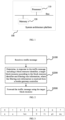
- FIG. 1 is a schematic diagram of a system architecture platform 100 configured for executing a traffic message forwarding method according to an embodiment of the present disclosure.
- the system architecture platform 100 includes a processor 110 and a memory 120.
- the processor 110 and the memory 120 may be connected by a bus or in other ways. Connection by a bus is taken as an example in FIG. 1 .
- the memory 120 may be configured for storing a non-transitory software program and a non-transitory computer-executable program.
- the memory 120 may include a high-speed random access memory, and may also include a non-transitory memory, e.g., at least one magnetic disk storage device, flash memory device, or other non-transitory solid-state storage device.
- the memory 120 may include memories located remotely from the processor 110, and the remote memories may be connected to the system architecture platform via a network. Examples of the network include, but not limited to, the Internet, an intranet, a local area network, a mobile communication network, and combinations thereof.
- system architecture platform may be applied to communication network systems, future evolved mobile communication network systems, etc., which is not particularly limited in this embodiment.
- FIG. 1 does not constitute a limitation to the embodiments of the present disclosure, and more or fewer components than those shown in the figure may be included, or some components may be combined, or a different component arrangement may be used.
- the processor 110 may call a service flow management program stored in the memory 120 to execute a traffic message forwarding method.
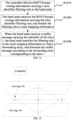
- FIG. 2 is a flowchart of a traffic message forwarding method according to an embodiment of the present disclosure.
- the traffic message forwarding method is applied to a border gateway client, and includes, but not limited to, steps S100, S200, and S300.
- a traffic message is received.
- a target block resource is determined according to the block resource identifier and filtering rule information, where the filtering rule information is received from a border gateway controller.
- the traffic message is forwarded using the target block resource.
- the border gateway client When receiving a traffic message carrying a block resource identifier, the border gateway client can determine a target block resource according to the block resource identifier and filtering rule information received from the border gateway controller, and then forward the traffic message using the target block resource.
- Network resources can be segmented flexibly using the block resource identifier, so that the traffic message can be forwarded using the target block resource determined according to the block resource identifier, thereby meeting users' requirements for traffic path adjustment and optimization.
- the border gateway client can be applied to the Border Gateway Protocol Flow Specification (BGP Flowspc) of 5G networks.
- BGP Flowspc Border Gateway Protocol Flow Specification
- Filtering rule information in the BGP Flowspc is extended by adding a block resource identifier into a filtering rule.
- the border gateway controller sends filtering rule information carrying a block resource identifier to the border gateway client. After receiving the filtering rule information carrying the block resource identifier, the border gateway client installs the filtering rule information into local mapping information.
- the border gateway client After receiving a traffic message carrying a block resource identifier, the border gateway client can determine a target block resource according to the block resource identifier in the traffic message and the local mapping information installed with the filtering rule information, and then forward the traffic message using the target block resource.
- Network resources can be segmented flexibly using the block resource identifier, so that the traffic message can be forwarded using the target block resource determined according to the block resource identifier, thereby meeting users' requirements for traffic path adjustment and optimization.
- block resource identifier may be a slice identifier or an application identifier, which is not particularly limited in this embodiment.
- the filtering rule information includes matching condition information and execution action information.
- the matching condition information is carried in Network Layer Reachability Information (NLRI) of the filtering rule.
- the execution action information is an execution action following traffic matching.
- the execution action information is carried by an extended community attribute in the filtering rule.
- block resource identifier is carried by the matching condition information or the execution action information, which is not particularly limited in this embodiment.
- the matching condition information may be existing defined flow specification component type information, where the flow specification component type information may be understood as matching of traffic based on a source address/destination address/Differentiated Services Code Point (DSCP) of a data packet; or the matching condition information may be information obtained by extending a BGP Flowspc component type to carry a slice identifier/application identifier, where the slice identifier/application identifier is used for supporting filtering of a slice/application.
- DSCP source address/destination address/Differentiated Services Code Point
- multiple groups of slice identifiers/application identifiers may be carried in the extended BGP Flowspc component type, i.e., a slice identifier list or an application identifier list may be set. In this way, during matching, the matching may be performed for a plurality of slice sources or a plurality of application sources, and there is no need to deliver a plurality of traffic rules (matching condition information), thereby reducing memory overheads.
- redirected extended community attribute information may be redirected to a universal slice identifier or application identifier or a path in the universal slice identifier or application identifier, for example, a Segment Routing Policy (SR-Policy), a Segmental Routing-Traffic Engineering (SR-TE) tunnel, or a Segment Routing Transport Profile-Traffic Engineering (SR-TP) tunnel.
- SR-Policy Segment Routing Policy
- SR-TE Segmental Routing-Traffic Engineering
- SR-TP Segment Routing Transport Profile-Traffic Engineering
- the new redirected extended community attribute information mainly carries a slice identifier/application identifier and a specific identifier of a path.
- Identifiers of the SR-TE tunnel and the SR-TP tunnel are each a Tunnel-Identity Document (Tunnel-ID).
- An identifier of the SR-policy is a triplet, which includes a destination address, a color attribute, and a prefix Security Identifier (SID).
- a BGP Flowspc client may receive Flowspc routing information carrying the extended community attribute information, and then save contents of a flow filtering rule in the Flowspc routing information.
- the BGP Flowspc client searches for a forwarding entry in local mapping information according to the slice identifier/application identifier (for scenarios where no path is specified), which may be realized through an existing redirection to a next hop action.
- the BGP Flowspc client can directly find the corresponding forwarding entry for forwarding according to a path in the slice identifier/application identifier.
- the forwarding entry in the local mapping information of the BGP Flowspc client may be established based on an inter-autonomous-system routing protocol, an Interior Gateway Protocol (IGP), a Label Distribution Protocol (LDP), a Segmental Routing Protocol (SR), a Resource ReSerVation Protocol (RSVP), or other models.
- IGP Interior Gateway Protocol
- LDP Label Distribution Protocol
- SR Segmental Routing Protocol
- RSVP Resource ReSerVation Protocol
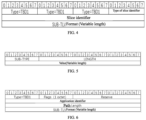
- a BGP Flowspc Component type can be extended to the following encapsulation formats:
- the Value field carries a slice identifier.
- the slice identifier may be a slice identity, a multi-topology identifier, a Flexible-Algorithm (Flex-Algo) identifier, or a virtual topology identifier.
- Flex-Algo Flexible-Algorithm
- the Value field carries an application identifier.
- the community attribute information is used for carrying a specific action attribute.
- Types of the slice identifier in the community attribute information are as follows:
- a SUB-TLV format in the community attribute information is shown in FIG. 5 .
- SUB-TYPE in the SUB-TLV may include:
- a path in a slice may be redirected to.
- the specific path is carried by the SUB-TLV field.
- SUB-TYPE may be an SR-Policy, an SR-TE tunnel, an SR-TP tunnel, or an RSVP-TE tunnel; and Value may correspond to a specific keyword identifier of the SR-Policy/SR-TE tunnel/SR-TP tunnel/RSVP-TE tunnel.
- FIG. 6 An extended community attribute information format redirected to a general application identifier is shown in FIG. 6 .
- an SUB-TLV format in the extended community attribute information for redirection to the application identifier is consistent with the SUB-TLV format in the extended community attribute information for redirection to the slice identifier.
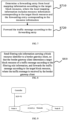
- S300 includes, but not limited to, steps S710, S720, and S730.
- a forwarding entry is determined from local mapping information according to the target block resource, where the local mapping information includes resource information corresponding to the target block resource and the forwarding entry corresponding to the resource information.
- the traffic message is forwarded according to the forwarding entry.
- the border gateway client can determine a forwarding entry from local mapping information according to the target block resource, and then forward the traffic message according to the forwarding entry, where the local mapping information includes resource information corresponding to the target block resource and the forwarding entry corresponding to the resource information.
- Network resources can be segmented flexibly using the block resource identifier, so that the traffic message can be forwarded using the target block resource determined according to the block resource identifier, thereby meeting users' requirements for traffic path adjustment and optimization.
- the border gateway client when the traffic message includes community attribute information, can determine the forwarding entry from the local mapping information according to the target block resource and the community attribute information, and then forward the traffic message according to the forwarding entry, where the local mapping information includes resource information corresponding to the target block resource and the forwarding entry corresponding to the resource information.
- Network resources can be segmented flexibly using the block resource identifier, so that the traffic message can be forwarded using the target block resource determined according to the block resource identifier, thereby meeting users' requirements for traffic path adjustment and optimization.
- FIG. 8 is a flowchart of a traffic message forwarding method according to an embodiment of the present disclosure.
- the traffic message forwarding method is applied to a border gateway controller, and includes, but not limited to a step S810.
- filtering rule information carrying a block resource identifier is sent to a border gateway client, so that the border gateway client determines a target block resource of a traffic message according to the filtering rule information, and forwards the traffic message according to the target block resource, where the traffic message is received by the border gateway client.
- the border gateway controller may send the filtering rule information carrying the block resource identifier to the border gateway client, so that the border gateway client installs a filtering rule into local mapping information.
- the border gateway client can determine the target block resource of the traffic message according to the filtering rule information and the block resource identifier, and then forward the traffic message according to the target block resource.
- Network resources can be segmented flexibly using the block resource identifier, so that the traffic message can be forwarded using the target block resource determined according to the block resource identifier, thereby meeting users' requirements for traffic path adjustment and optimization.
- block resource identifier may be a slice identifier or an application identifier, which is not particularly limited in this embodiment.
- the filtering rule information includes matching condition information and execution action information.
- the matching condition information is carried in NLRI of the filtering rule.
- the execution action information is an execution action following traffic matching.
- the execution action information is carried by an extended community attribute in the filtering rule.
- block resource identifier is carried by the matching condition information or the execution action information, which is not particularly limited in this embodiment.
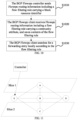
- FIG. 9 is a schematic diagram of a traffic message forwarding network according to an embodiment of the present disclosure.
- the network includes a BGP Flowspc controller (equivalent to a border gateway controller) and a node A (equivalent to a border gateway client).
- the node A may transmit a traffic message to the node B through an Internet Protocol/Multiprotocol Label Switching (IP/MPLS) network.
- IP/MPLS Internet Protocol/Multiprotocol Label Switching
- FIG. 10 is a flowchart of a traffic message forwarding method according to an embodiment of the present disclosure.
- the traffic message forwarding method is applied to the network of FIG. 9 , and includes, but not limited to, steps S1010, S1020, and S1030.
- the BGP Flowspc controller sends Flowspc routing information including a flow filtering rule carrying a block resource identifier.
- the BGP Flowspc client receives Flowspc routing information including a flow filtering rule carrying a community attribute, and saves contents of the flow filtering rule.
- the flow filtering rule includes two parts: matching condition information and execution action information.
- the execution action information is carried by extended community attribute information.
- the BGP Flowspc client searches for a forwarding entry locally according to the flow filtering rule.
- the BGP Flowspc client searches for the forwarding entry in a local mapping table according to a slice identifier, an application identifier, a slice identifier list, or an application identifier list, or directly performs forwarding according to a specific path in the extended community attribute information.
- the forwarding entry in local mapping information of the BGP Flowspc client may be established based on a BGP, IGP, LDP, SR, RSVP, or YANG model, or other models.
- FIG. 11 is a schematic diagram of a traffic message forwarding network for redirecting to a slice according to an embodiment of the present disclosure.
- Nodes and a controller (equivalent to a border gateway controller) in the network all have a BGP Flowspc function.
- the network is provided with two slices, namely, a slice 1 and a slice 2.
- the slice 1 includes nodes S, A, B, and D, and bidirectional links connected between these nodes.
- the slice 2 includes nodes S, B, C, and D, and bidirectional links connected between these nodes.
- Each slice has a corresponding forwarding path, and a head node S (equivalent to a border gateway client) may transmit a traffic message to the node D through the slice 1 and/or the slice 2.
- FIG. 12 is a flowchart of a traffic message forwarding method according to an embodiment of the present disclosure.
- the traffic message forwarding method is applied to the network of FIG. 11 , and includes, but not limited to, steps S1210, S1220, and S1230.
- the controller delivers BGP Flowspc routing information carrying a slice identifier filtering rule to the head node.
- the delivered BGP Flowspc routing information carrying an algorithm identifier filtering rule is as follows.
- NLRI carries a matching condition, which may be a matching condition defined by RFC 5575, for example, a destination IP address of the traffic message (an IP address of the node D) or may be based on a slice identifier.
- a matching condition defined by RFC 5575, for example, a destination IP address of the traffic message (an IP address of the node D) or may be based on a slice identifier.
- matching condition information carries an identifier of the slice 1.
- the community attribute information redirected to a slice carries an execution action following traffic matching.
- the community attribute information carries the identifier of the slice 1, which is used to indicate to send the traffic message to a corresponding path of the slice 1 after traffic matching.
- the head node receives the BGP Flowspc routing information carrying the slice identifier filtering rule, and installs the filtering rule to local mapping information.
- the head node when the head node receives a traffic message carrying the identifier of the slice 1, the head node searches the filtering rule in the local mapping information for to find a forwarding entry, and forwards the traffic message to the forwarding entry corresponding to the slice 1.
- the head node searches the local mapping information of the slice to find the forwarding entry corresponding to the slice 1. In this way, the head node can find an SR path corresponding to a plane of the slice 1.
- FIG. 13 is a schematic diagram of a traffic message forwarding network for redirecting to a slice according to another embodiment of the present disclosure.
- Nodes and a controller (equivalent to a border gateway controller) in the network all have a BGP Flowspc function.
- Two slices namely, a slice 1 and a slice 2, are configured in the network.
- the slice 1 includes nodes S, A, B, and D, and bidirectional links connected between these nodes.
- the slice 2 includes nodes S, B, C, and D, and bidirectional links connected between these nodes.
- a slice filtering rule includes matching condition information and execution action information of an execution action following traffic matching.
- the matching condition information is a matching condition based on a slice identifier, i.e., a new slice BGP Flowspc Component type in NLRI is defined.
- the execution action information is an existing execution action, which may be redirecting to a tunnel or redirecting to a Tunnel ID or Binding SID.
- Binding SID 1 identifies an S-A-D path
- Binding SID 2 identifies an S-C-D path.
- FIG. 14 is a flowchart of a traffic message forwarding method according to an embodiment of the present disclosure.
- the traffic message forwarding method is applied to the network of FIG. 13 , and includes, but not limited to, steps S1410, S1420, and S1430.
- the controller delivers BGP Flowspc routing information carrying a slice identifier filtering rule to the head node.
- the filtering rule in this embodiment includes matching condition information and execution action information of an execution action following traffic matching.
- the matching condition information is based on a slice identifier, i.e., a new slice BGP Flowspc Component type in NLRI may be defined.
- the execution action information of the execution action following matching may be existing execution action information, which may indicate to determine a path by redirecting to a tunnel, or may indicate to determine a path by redirecting to a Tunnel ID or Binding SID.
- the head node receives the BGP Flowspc routing information carrying the slice identifier filtering rule, and installs the filtering rule to local mapping information.
- the head node when the head node receives a traffic message carrying the identifier of the slice 1, the head node searches the filtering rule in the local mapping information to find a forwarding entry, and forwards the traffic message according to the forwarding entry corresponding to the slice 1.
- the head node searches local mapping information of the slice to determine the forwarding entry corresponding to the slice 1. In this way, the head node can find an SR path corresponding to a plane of the slice 1.
- FIG. 15 is a schematic diagram of a traffic message forwarding network for redirecting to a slice according to another embodiment of the present disclosure.
- nodes and a controller (equivalent to a border gateway controller) in the network all have a BGP Flowspc function.
- Two Flex-Algo planes are configured in the network.
- An Algorithm value corresponding a Flex-Algo 128 plane is 128, and an Algorithm value corresponding to a Flex-Algo 129 plane is 129.
- the Flex-Algo 128 plane includes nodes S, A, B, and D, and bidirectional links between these nodes.
- the Flex-Algo 129 plane includes nodes S, B, C, and D, and bidirectional links connected between these nodes.
- a corresponding SR path is configured in each Flex-Algo plane.
- FIG. 16 is a flowchart of a traffic message forwarding method according to an embodiment of the present disclosure.
- the traffic message forwarding method is applied to the network of FIG. 15 , and includes, but not limited to, steps S1610, S1620, and S1630.
- the controller delivers BGP Flowspc routing information carrying an algorithm identifier filtering rule to the head node.
- the BGP Flowspc routing information carrying the algorithm identifier (implicitly including a slice identifier) filtering rule delivered by the controller is as follows.
- the matching condition information may be a destination IP address of a traffic message (an IP address of the node D) or may be based on a flexible algorithm identifier.
- Community attribute information redirected to a flexible algorithm carries execution action information of an execution action following traffic matching.
- the community attribute information carries Flex-algo 128, which is used to indicate to send the traffic message to the path corresponding to the Flex-Algo 128 plane after traffic matching.
- the head node receives the BGP Flowspc routing information carrying the algorithm identifier filtering rule, and installs the filtering rule to local mapping information.
- the head node when the head node receives a traffic message carrying a destination address which is the IP address of the node D, the head node searches the filtering rule in the local mapping information to obtain a forwarding entry, and forwards the traffic message according to the forwarding entry corresponding to the Flex-Algo 128 plane.
- the head node searches the local mapping information of the Flex-Algo plane to determine the forwarding entry corresponding to Flex-algo128. In this way, the head node can find the SR path corresponding to the Flex-Algo 128 plane.
- FIG. 17 is a schematic diagram of a traffic message forwarding method for redirecting to an application according to an embodiment of the present disclosure.
- nodes and a controller equivalent to a border gateway controller
- two applications namely, an application 1 and an application 2 are configured in the network.
- the applications may be App-related applications.
- the traffic message forwarding method includes, but not limited to, steps S1710, S1720, and S1730.
- the controller delivers BGP Flowspc routing information carrying an application identifier filtering rule to a head node.
- the BGP Flowspc routing information carrying the application identifier filtering rule delivered by the controller is as follows.
- NLRI carries matching condition information, which may be matching condition information defined by RFC 5575, for example, a destination IP address of the traffic message (an IP address of the node D) or may be based on an application identifier.
- the matching condition information carries an identifier of the application 1.
- Community attribute information redirected to the application 1 carries an execution action following traffic matching.
- the community attribute information carries the identifier of the application 1, which is used to indicate to forward the traffic message according to a forwarding entry corresponding to the application 1 after traffic matching.
- the head node receives the BGP Flowspc routing information carrying the application identifier filtering rule, and installs the filtering rule to local mapping information.
- the head node when the head node receives a traffic message carrying the application 1, the head node searches the filtering rule in the local mapping information to obtain a forwarding entry, and forwards the traffic message according to the forwarding entry corresponding to the application 1.
- the head node searches the local mapping information of the application 1 to determine the forwarding entry corresponding to the application 1. In this way, the head node can find an SR path corresponding to a plane of the application 1.
- a border gateway client a border gateway controller, and a computer-readable storage medium of the present disclosure are provided below respectively.
- An embodiment of the present disclosure provides a border gateway client, including: a memory, a processor, and a computer program stored in the memory and executable by the processor.
- the processor and the memory may be connected by a bus or in other ways.
- border gateway client in this embodiment may correspondingly include the memory and the processor in the embodiment shown in FIG. 1 , and can constitute a part of the system architecture platform in the embodiment shown in FIG. 1 .
- the two embodiments belong to the same inventive concept and therefore have the same implementation principle and technical effects, so the details will not be repeated here.
- the non-transitory software program and instructions required to implement the traffic message forwarding method at the border gateway client side in the foregoing embodiments are stored in the memory which, when executed by the processor, cause the processor to implement the traffic message forwarding method in the foregoing embodiments, for example, implement the method steps S100 to S300 in FIG. 2 , the method steps S710 to S720 in FIG. 7 , the method steps S1020 and S1030 in FIG. 10 , the method steps S1220 and S1230 in FIG. 12 , the method steps S1420 and S1430 in FIG. 14 , the method steps S1620 and S1630 in FIG. 16 , or the method steps S1720 and S1730 in FIG. 17 .
- an embodiment of the present disclosure provides a border gateway controller, including: a memory, a processor, and a computer program stored in the memory and executable by the processor.
- the processor and the memory may be connected by a bus or in other ways.
- border gateway controller in this embodiment may correspondingly include the memory and the processor in the embodiment shown in FIG. 1 , and can constitute a part of the system architecture platform in the embodiment shown in FIG. 1 .
- the two embodiments belong to the same inventive concept and therefore have the same implementation principle and technical effects, so the details will not be repeated here.
- the non-transitory software program and instructions required to implement the traffic message forwarding method at the border gateway controller side in the foregoing embodiments are stored in the memory which, when executed by the processor, cause the processor to implement the traffic message forwarding method in the foregoing embodiments, for example, implement the method step S810 in FIG. 8 , the method step S1010 in FIG. 10 , the method step S1210 in FIG. 12 , the method step S1410 in FIG. 14 , the method step S1610 in FIG. 16 , or the method step S1710 in FIG. 17 .
- an embodiment of the present disclosure provides a computer-readable storage medium, storing a computer-executable instruction which, when executed by a processor, causes the processor to implement the traffic message forwarding method at the border gateway client side, for example, implement the method steps S100 to S300 in FIG. 2 , the method steps S710 to S720 in FIG. 7 , the method steps S1020 and S1030 in FIG. 10 , the method steps S1220 and S1230 in FIG. 12 , the method steps S1420 and S1430 in FIG. 14 , the method steps S1620 and S1630 in FIG. 16 , or the method steps S1720 and S1730 in FIG.
- the traffic message forwarding method at the border gateway controller side for example, implement the method step S810 in FIG. 8 , the method step S1010 in FIG. 10 , the method step S1210 in FIG. 12 , the method step S1410 in FIG. 14 , the method step S1610 in FIG. 16 , or the method step S1710 in FIG. 17 .
- An embodiment of the present disclosure includes: receiving a traffic message; determining, when the traffic message includes a block resource identifier, a target block resource according to the block resource identifier and filtering rule information, where the filtering rule information is received from a border gateway controller; and forwarding the traffic message using the target block resource.
- a border gateway client when receiving a traffic message carrying a block resource identifier, a border gateway client can determine a target block resource according to the block resource identifier and filtering rule information received from a border gateway controller, and then forward the traffic message using the target block resource.
- Network resources can be segmented flexibly by using the block resource identifier, so that the traffic message can be forwarded using the target block resource determined according to the block resource identifier, thereby meeting users' requirements for traffic path adjustment and optimization.
- the term "computer storage medium” includes volatile and nonvolatile, removable and non-removable media implemented in any method or technology for storage of information (such as computer-readable instructions, data structures, program modules, or other data).
- the computer storage medium includes, but not limited to, a Random Access Memory (RAM), a Read-Only Memory (ROM), an Electrically Erasable Programmable Read-Only Memory (EEPROM), a flash memory or other memory technology, a Compact Disc Read-Only Memory (CD-ROM), a Digital Versatile Disc (DVD) or other optical storage, a cassette, a magnetic tape, a magnetic disk storage or other magnetic storage device, or any other medium which can be used to store the desired information and can be accessed by a computer.
- the communication medium typically includes computer-readable instructions, data structures, program modules, or other data in a modulated data signal such as a carrier or other transport mechanism, and can include any information delivery medium.
Landscapes
- Engineering & Computer Science (AREA)
- Computer Networks & Wireless Communication (AREA)
- Signal Processing (AREA)
- Computing Systems (AREA)
- Computer Hardware Design (AREA)
- Computer Security & Cryptography (AREA)
- General Engineering & Computer Science (AREA)
- Theoretical Computer Science (AREA)
- Data Exchanges In Wide-Area Networks (AREA)
Applications Claiming Priority (2)
| Application Number | Priority Date | Filing Date | Title |
|---|---|---|---|
| CN202110564009.5A CN115473812A (zh) | 2021-05-24 | 2021-05-24 | 流量报文转发方法、客户端、控制器及存储介质 |
| PCT/CN2022/093301 WO2022247689A1 (fr) | 2021-05-24 | 2022-05-17 | Procédé de transfert de message de trafic, client, dispositif de commande et support de stockage |
Publications (2)
| Publication Number | Publication Date |
|---|---|
| EP4311311A1 true EP4311311A1 (fr) | 2024-01-24 |
| EP4311311A4 EP4311311A4 (fr) | 2024-08-28 |
Family
ID=84228423
Family Applications (1)
| Application Number | Title | Priority Date | Filing Date |
|---|---|---|---|
| EP22810416.2A Pending EP4311311A4 (fr) | 2021-05-24 | 2022-05-17 | Procédé de transfert de message de trafic, client, dispositif de commande et support de stockage |
Country Status (4)
| Country | Link |
|---|---|
| US (1) | US12341661B2 (fr) |
| EP (1) | EP4311311A4 (fr) |
| CN (1) | CN115473812A (fr) |
| WO (1) | WO2022247689A1 (fr) |
Cited By (1)
| Publication number | Priority date | Publication date | Assignee | Title |
|---|---|---|---|---|
| US20250097139A1 (en) * | 2022-06-02 | 2025-03-20 | Huawei Technologies Co., Ltd. | Packet sending method, network device, and system |
Families Citing this family (5)
| Publication number | Priority date | Publication date | Assignee | Title |
|---|---|---|---|---|
| CN116684920A (zh) * | 2020-03-17 | 2023-09-01 | 华为技术有限公司 | 报文处理方法、装置、设备及存储介质 |
| EP4618475A4 (fr) * | 2022-12-05 | 2026-02-18 | Huawei Cloud Computing Tech Co Ltd | Procédé et appareil de filtrage de trafic, et dispositif, système et support de stockage |
| CN118827500A (zh) * | 2024-03-29 | 2024-10-22 | 中国移动通信集团有限公司 | 流量调度方法、电子设备、存储介质及计算机程序产品 |
| CN118827138B (zh) * | 2024-05-29 | 2026-01-16 | 中国移动通信有限公司研究院 | 一种验证信息生成方法、装置、设备、存储介质及计算机程序产品 |
| CN121151475A (zh) * | 2024-06-13 | 2025-12-16 | 华为技术有限公司 | 算力资源信息的更新方法、系统、设备、介质及程序产品 |
Family Cites Families (9)
| Publication number | Priority date | Publication date | Assignee | Title |
|---|---|---|---|---|
| KR20110071774A (ko) * | 2009-12-21 | 2011-06-29 | 한국전자통신연구원 | 스마트 경계 라우터 및 이를 이용한 플로우 정보 전송 방법 |
| CN111865898B (zh) | 2016-03-21 | 2023-07-21 | 华为技术有限公司 | 基于流规则协议的通信方法、设备和系统 |
| CN112165725B (zh) * | 2016-06-15 | 2024-03-19 | 华为技术有限公司 | 报文处理的方法及设备 |
| CN108347376B (zh) * | 2017-01-24 | 2020-01-31 | 华为技术有限公司 | 一种调整转发路径的方法、装置及系统 |
| CN109218201B (zh) * | 2017-06-30 | 2021-05-18 | 华为技术有限公司 | 一种生成转发表项的方法、控制器和网络设备 |
| WO2019210769A1 (fr) * | 2018-05-03 | 2019-11-07 | Huawei Technologies Co., Ltd. | Routage explicite avec codage de fonction de réseau |
| CN114915585A (zh) * | 2019-03-11 | 2022-08-16 | 华为技术有限公司 | 报文处理方法、装置、设备及系统 |
| CN112511329A (zh) * | 2020-06-12 | 2021-03-16 | 中兴通讯股份有限公司 | 信息通告方法及设备、可读介质 |
| US11456957B2 (en) * | 2020-06-25 | 2022-09-27 | Softbank Corp. | Reduced forwarding rules for aerospace net work nodes |
-
2021
- 2021-05-24 CN CN202110564009.5A patent/CN115473812A/zh active Pending
-
2022
- 2022-05-17 WO PCT/CN2022/093301 patent/WO2022247689A1/fr not_active Ceased
- 2022-05-17 US US18/555,925 patent/US12341661B2/en active Active
- 2022-05-17 EP EP22810416.2A patent/EP4311311A4/fr active Pending
Cited By (1)
| Publication number | Priority date | Publication date | Assignee | Title |
|---|---|---|---|---|
| US20250097139A1 (en) * | 2022-06-02 | 2025-03-20 | Huawei Technologies Co., Ltd. | Packet sending method, network device, and system |
Also Published As
| Publication number | Publication date |
|---|---|
| EP4311311A4 (fr) | 2024-08-28 |
| US12341661B2 (en) | 2025-06-24 |
| WO2022247689A1 (fr) | 2022-12-01 |
| CN115473812A (zh) | 2022-12-13 |
| US20240205087A1 (en) | 2024-06-20 |
Similar Documents
| Publication | Publication Date | Title |
|---|---|---|
| EP4311311A1 (fr) | Procédé de transfert de message de trafic, client, dispositif de commande et support de stockage | |
| US11606255B2 (en) | Method and apparatus for creating network slices | |
| US12063154B2 (en) | Methods and apparatuses for sending and receiving segment routing traffic engineering policy, network element, and computer-readable storage medium | |
| US11743166B2 (en) | Provisioning non-colored segment routing label switched paths via segment routing policies in border gateway protocol | |
| US11689452B2 (en) | Method for forwarding service data, network device, and network system | |
| US11700198B2 (en) | Transmission control method, node, network system and storage medium | |
| EP3422660B1 (fr) | Procédé, dispositif et système de communication basés sur un protocole de spécification de flux | |
| US9391885B1 (en) | MPLS label usage in Ethernet virtual private networks | |
| US9178816B1 (en) | Control plane messaging in all-active multi-homed ethernet virtual private networks | |
| US8902766B2 (en) | Method and apparatus to improve LDP convergence using hierarchical label stacking | |
| US12238002B2 (en) | Method and device for segment routing service processing, routing equipment, and storage medium | |
| US9246838B1 (en) | Label switched path setup using fast reroute bypass tunnel | |
| US11290376B2 (en) | Prioritized formation of BGP sessions | |
| EP2541847B1 (fr) | Procédé et système pour l'établissement d'un chemin à commutation d'étiquettes bidirectionnel associé | |
| US9007941B1 (en) | Self-organizing and scalable MPLS VPN transport for LTE | |
| WO2019052406A1 (fr) | Procédés, nœuds et supports lisibles par ordinateur pour l'établissement de tunnel par tranche | |
| EP3979568B1 (fr) | Procédé et appareil de gestion de routage, dispositif de réseau et support d'enregistrement lisible | |
| EP3975516A1 (fr) | Multidiffusion sans état dans des tunnels monodiffusion conçus en fonction du trafic | |
| US11362954B2 (en) | Tunneling inter-domain stateless internet protocol multicast packets | |
| EP4072079A1 (fr) | Procédé et dispositif anti-rupture de fibre pour tunnel de routage de segment, noeud d'entrée et support de données | |
| WO2020114083A1 (fr) | Procédé et appareil de traitement d'informations ioam | |
| WO2018095438A1 (fr) | Procédé et dispositif destinés au traitement de trajets multiples à coût égal (ecmp) | |
| CN114567593A (zh) | 路径切换方法及其装置、网络设备、计算机可读存储介质 | |
| US20200296032A1 (en) | Multi-layer lsp control method and apparatus | |
| US20250007816A1 (en) | Method for Receiving BGP-intent Route, and Method for Advertising BGP-intent Route |
Legal Events
| Date | Code | Title | Description |
|---|---|---|---|
| STAA | Information on the status of an ep patent application or granted ep patent |
Free format text: STATUS: THE INTERNATIONAL PUBLICATION HAS BEEN MADE |
|
| PUAI | Public reference made under article 153(3) epc to a published international application that has entered the european phase |
Free format text: ORIGINAL CODE: 0009012 |
|
| STAA | Information on the status of an ep patent application or granted ep patent |
Free format text: STATUS: REQUEST FOR EXAMINATION WAS MADE |
|
| 17P | Request for examination filed |
Effective date: 20231017 |
|
| AK | Designated contracting states |
Kind code of ref document: A1 Designated state(s): AL AT BE BG CH CY CZ DE DK EE ES FI FR GB GR HR HU IE IS IT LI LT LU LV MC MK MT NL NO PL PT RO RS SE SI SK SM TR |
|
| REG | Reference to a national code |
Ref country code: DE Ref legal event code: R079 Free format text: PREVIOUS MAIN CLASS: H04W0040020000 Ipc: H04L0045655000 |
|
| A4 | Supplementary search report drawn up and despatched |
Effective date: 20240730 |
|
| DAV | Request for validation of the european patent (deleted) | ||
| DAX | Request for extension of the european patent (deleted) | ||
| RIC1 | Information provided on ipc code assigned before grant |
Ipc: H04L 45/02 20220101ALI20240724BHEP Ipc: H04L 45/302 20220101ALI20240724BHEP Ipc: H04W 40/02 20090101ALI20240724BHEP Ipc: H04L 45/655 20220101AFI20240724BHEP |