EP4311574A1 - Prévention et traitement de la dégénérescence maculaire liée à l'âge par suppression de l'expression de la cathepsine s - Google Patents
Prévention et traitement de la dégénérescence maculaire liée à l'âge par suppression de l'expression de la cathepsine s Download PDFInfo
- Publication number
- EP4311574A1 EP4311574A1 EP23188272.1A EP23188272A EP4311574A1 EP 4311574 A1 EP4311574 A1 EP 4311574A1 EP 23188272 A EP23188272 A EP 23188272A EP 4311574 A1 EP4311574 A1 EP 4311574A1
- Authority
- EP
- European Patent Office
- Prior art keywords
- age
- cathepsin
- related macular
- macular degeneration
- composition
- Prior art date
- Legal status (The legal status is an assumption and is not a legal conclusion. Google has not performed a legal analysis and makes no representation as to the accuracy of the status listed.)
- Pending
Links
Images










Classifications
-
- C—CHEMISTRY; METALLURGY
- C12—BIOCHEMISTRY; BEER; SPIRITS; WINE; VINEGAR; MICROBIOLOGY; ENZYMOLOGY; MUTATION OR GENETIC ENGINEERING
- C12N—MICROORGANISMS OR ENZYMES; COMPOSITIONS THEREOF; PROPAGATING, PRESERVING, OR MAINTAINING MICROORGANISMS; MUTATION OR GENETIC ENGINEERING; CULTURE MEDIA
- C12N15/00—Mutation or genetic engineering; DNA or RNA concerning genetic engineering, vectors, e.g. plasmids, or their isolation, preparation or purification; Use of hosts therefor
- C12N15/09—Recombinant DNA-technology
- C12N15/11—DNA or RNA fragments; Modified forms thereof; Non-coding nucleic acids having a biological activity
- C12N15/113—Non-coding nucleic acids modulating the expression of genes, e.g. antisense oligonucleotides; Antisense DNA or RNA; Triplex- forming oligonucleotides; Catalytic nucleic acids, e.g. ribozymes; Nucleic acids used in co-suppression or gene silencing
-
- A—HUMAN NECESSITIES
- A61—MEDICAL OR VETERINARY SCIENCE; HYGIENE
- A61K—PREPARATIONS FOR MEDICAL, DENTAL OR TOILETRY PURPOSES
- A61K9/00—Medicinal preparations characterised by special physical form
- A61K9/0012—Galenical forms characterised by the site of application
- A61K9/0048—Eye, e.g. artificial tears
-
- A—HUMAN NECESSITIES
- A61—MEDICAL OR VETERINARY SCIENCE; HYGIENE
- A61P—SPECIFIC THERAPEUTIC ACTIVITY OF CHEMICAL COMPOUNDS OR MEDICINAL PREPARATIONS
- A61P27/00—Drugs for disorders of the senses
- A61P27/02—Ophthalmic agents
-
- C—CHEMISTRY; METALLURGY
- C12—BIOCHEMISTRY; BEER; SPIRITS; WINE; VINEGAR; MICROBIOLOGY; ENZYMOLOGY; MUTATION OR GENETIC ENGINEERING
- C12N—MICROORGANISMS OR ENZYMES; COMPOSITIONS THEREOF; PROPAGATING, PRESERVING, OR MAINTAINING MICROORGANISMS; MUTATION OR GENETIC ENGINEERING; CULTURE MEDIA
- C12N15/00—Mutation or genetic engineering; DNA or RNA concerning genetic engineering, vectors, e.g. plasmids, or their isolation, preparation or purification; Use of hosts therefor
- C12N15/09—Recombinant DNA-technology
- C12N15/11—DNA or RNA fragments; Modified forms thereof; Non-coding nucleic acids having a biological activity
- C12N15/113—Non-coding nucleic acids modulating the expression of genes, e.g. antisense oligonucleotides; Antisense DNA or RNA; Triplex- forming oligonucleotides; Catalytic nucleic acids, e.g. ribozymes; Nucleic acids used in co-suppression or gene silencing
- C12N15/1137—Non-coding nucleic acids modulating the expression of genes, e.g. antisense oligonucleotides; Antisense DNA or RNA; Triplex- forming oligonucleotides; Catalytic nucleic acids, e.g. ribozymes; Nucleic acids used in co-suppression or gene silencing against enzymes
-
- C—CHEMISTRY; METALLURGY
- C12—BIOCHEMISTRY; BEER; SPIRITS; WINE; VINEGAR; MICROBIOLOGY; ENZYMOLOGY; MUTATION OR GENETIC ENGINEERING
- C12Y—ENZYMES
- C12Y304/00—Hydrolases acting on peptide bonds, i.e. peptidases (3.4)
- C12Y304/22—Cysteine endopeptidases (3.4.22)
- C12Y304/22027—Cathepsin S (3.4.22.27)
-
- C—CHEMISTRY; METALLURGY
- C12—BIOCHEMISTRY; BEER; SPIRITS; WINE; VINEGAR; MICROBIOLOGY; ENZYMOLOGY; MUTATION OR GENETIC ENGINEERING
- C12N—MICROORGANISMS OR ENZYMES; COMPOSITIONS THEREOF; PROPAGATING, PRESERVING, OR MAINTAINING MICROORGANISMS; MUTATION OR GENETIC ENGINEERING; CULTURE MEDIA
- C12N2310/00—Structure or type of the nucleic acid
- C12N2310/10—Type of nucleic acid
- C12N2310/14—Type of nucleic acid interfering nucleic acids [NA]
Definitions
- the present invention relates to the prevention and treatment of age-related macular degeneration through the suppression of cathepsin S expression.
- AMD Age-related macular degeneration
- Age-related macular degeneration is classified into two forms: dry and wet. Dry age-related macular degeneration refers to a condition that appears in the form of spots (drusen) due to the accumulation of waste products on the retina or a condition in which the accumulation of waste products on the retina leads to atrophy of the retina. Although dry age-related macular degeneration does not induce sudden vision loss, it induces chronic vision loss and may develop into the wet form.
- Wet age-related macular degeneration refers to age-related macular degeneration in which abnormal blood vessels (new blood vessels) develop under the macula. These new blood vessels are easily torn and leaked blood or fluid accumulates, resulting in exudate, hemorrhaging, or drusen formation in the macula. Destruction of the macula occurs relatively rapidly, leading to rapid loss of central vision in most cases, and eventually leading to blindness.
- age-related macular degeneration Since both forms of age-related macular degeneration cause gradual destruction of the visual cells in the macula, the function of the macula deteriorates and central vision begins to decline over time, and age-related macular degeneration may initially affect only one eye, and the other eye is often affected in many cases.
- therapeutic agents for age-related macular degeneration are mainly therapeutic agents for wet age-related macular degeneration, and there are no commercially available therapeutic agents for dry age-related macular degeneration.
- Cathepsin S is a cysteine-type protease present in lysosomes, and induces the degradation of damaged proteins through the endosome-lysosomal pathway.
- cathepsin S serves to regulate immune responses by degrading invariant chains to activate MHC class II, which is important for antigen presentation, and in cancer cells, it is known to increase the growth of cancer cells by regulating metastasis and angiogenesis, and little is known about the therapeutic use of cathepsin S in relation to age-related macular degeneration despite ongoing research on targets associated with various cancers.
- an object of the present invention is to provide a composition for preventing or treating age-related macular degeneration, an ophthalmic composition, a kit, and a health functional food for preventing or ameliorating age-related macular degeneration as described below.
- One object of the present invention is to provide a pharmaceutical composition for preventing or treating age-related macular degeneration, comprising, as an active ingredient, a substance that reduces the expression or activity of cathepsin S (CTSS).
- CTSS cathepsin S
- Another object of the present invention is to provide an ophthalmic composition for preventing or treating age-related macular degeneration, which compriss as an active ingredient a substance that reduces the expression or activity of cathepsin S (CTSS).
- CTSS cathepsin S
- Still another object of the present invention is to provide a health functional food for preventing or ameliorating age-related macular degeneration, comprising, as an active ingredient, a substance that reduces the expression or activity of cathepsin S.
- Another object of the present invention is to provide a kit for preventing or treating age-related macular degeneration, comprising a composition comprising, as an active ingredient, a substance that reduces the expression or activity of cathepsin S, and instructions.
- the present invention provides a pharmaceutical composition for preventing or treating age-related macular degeneration, comprising, as an active ingredient, a substance that reduces the expression or activity of cathepsin S (CTSS).
- CTSS cathepsin S
- the substance may be any one or more selected from the group consisting of small interfering RNA (siRNA), short hairpin RNA (shRNA), micro RNA (miRNA), antisense oligonucleotides (ASOs), Clustered Regularly Interspaced Short Palindromic Repeats (CRISPR/Cas), natural products, proteins, peptidomimetics, antibodies, exosomes, and compounds, but is not limited thereto.
- siRNA small interfering RNA
- shRNA short hairpin RNA
- miRNA micro RNA
- ASOs antisense oligonucleotides
- CRISPR/Cas Clustered Regularly Interspaced Short Palindromic Repeats
- the age-related macular degeneration may be age-related macular degeneration under oxidative stress conditions, but is not limited thereto.
- the age-related macular degeneration may be dry age-related macular degeneration or wet age-related macular degeneration, but is not limited thereto.
- the composition may be characterized by any one or more of the following, but is not limited thereto:
- the inflammatory cytokine may be any one or more selected from the group consisting of TNF- ⁇ , IL-1 ⁇ , and MCP-1, but is not limited thereto.
- the complement may be any one or more selected from the group consisting of C3, C5, C3a, C5a, and C5b-9, but is not limited thereto.
- the present invention provides an ophthalmic composition for preventing or treating age-related macular degeneration comprising a substance that reduces the expression or activity of cathepsin S as an active ingredient.
- the composition may be an eye drop composition, but is not limited thereto.
- the present invention provides a health functional food for preventing or ameliorating age-related macular degeneration, comprising, as an active ingredient, a substance that reduces the expression or activity of cathepsin S.
- the substance may be any one or more selected from the group consisting of small interfering RNA (siRNA), short hairpin RNA (shRNA), micro RNA (miRNA), antisense oligonucleotides (ASOs), Clustered Regularly Interspaced Short Palindromic Repeats (CRISPR/Cas), natural products, proteins, peptidomimetics, antibodies, exosomes, and compounds, but is not limited thereto.
- siRNA small interfering RNA
- shRNA short hairpin RNA
- miRNA micro RNA
- ASOs antisense oligonucleotides
- CRISPR/Cas Clustered Regularly Interspaced Short Palindromic Repeats
- the present invention provides a kit for preventing or treating age-related macular degeneration, comprising a composition comprising, as an active ingredient, a substance that reduces the expression or activity of cathepsin S, and instructions.
- the present invention provides a method for preventing, alleviating, or treating age-related macular degeneration, the method comprising administering a composition comprising, as an active ingredient, the substance that reduces the expression or activity of cathepsin S.
- the present invention provides a use of a composition comprising, as an active ingredient, the substance that reduces the expression or activity of cathepsin S, for preventing, alleviating or treating age-related macular degeneration.
- the present invention provides a use of a composition comprising, as an active ingredient, the substance that reduces the expression or activity of cathepsin S, for preparing a preventive, alleviating, or therapeutic agent for age-related macular degeneration.
- the present invention provides a use of a composition comprising, as an active ingredient, the substance that reduces the expression or activity of cathepsin S, for preparing an ophthalmic preparation for preventing or treating age-related macular degeneration.
- retinal pigment epithelial cells in which cathepsin S is knocked down have reduced expression levels of inflammatory cytokines and complement activity even under oxidative stress conditions, and complement compared to NF- ⁇ B inhibitors. It can be usefully used as a substance for preventing or treating dry and wet age-related macular degeneration in that it not only has an excellent activity inhibitory effect, but also inhibits intracellular neovascularization and tube formation.
- the present inventors completed the present invention by confirming the effect of preventing or treating age-related macular degeneration by cathepsin S knockdown cells and cathepsin S siRNA treatment in one embodiment according to the present invention. Therefore, the present invention provides a pharmaceutical composition for preventing or treating age-related macular degeneration, comprising, as an active ingredient, a substance that reduces the expression or activity of cathepsin S (CTSS).
- CTSS cathepsin S
- reduction of expression means any action that reduces the expression of a gene, specifically gene knock-out (knock-down), RNA interference;RNAi, gene DNA sequence deletion, duplication, inversion, or it may be achieved by introducing a mutation such as replacement, but is not limited thereto.
- reduced activity means that one or more functions generated by cathepsin S are inhibited, and the functions cause age-related macular degeneration, progress or worsen symptoms of age-related macular degeneration, or progress rate of age-related macular degeneration. It may be a function related to the occurrence/deterioration of symptoms of age-related macular degeneration, such as increasing, but is not limited thereto.
- the substance may be any one or more selected from the group consisting of small interfering RNA (siRNA), short hairpin RNA (shRNA), micro RNA (miRNA), antisense oligonucleotides (ASOs), Clustered Regularly Interspaced Short Palindromic Repeats (CRISPR/Cas), natural products, proteins, peptidomimetics, antibodies, exosomes, and compounds, but is not limited thereto.
- siRNA small interfering RNA
- shRNA short hairpin RNA
- miRNA micro RNA
- ASOs antisense oligonucleotides
- CRISPR/Cas Clustered Regularly Interspaced Short Palindromic Repeats
- polynucleotide or “nucleic acid” refers to deoxyribonucleic acid (DNA) or ribonucleic acid (RNA) in either a single- or double-stranded form. Unless otherwise limited, the term also encompasses known analogs of natural nucleotides which are hybridized to a nucleic acid in a manner similar to naturally occurring nucleotides.
- siRNA refers to RNA molecules, generally 17 to 24 bp in length, which can interfere with and inhibit the expression of a gene comprising a nucleic acid sequence complementary to the sequence of siRNA in a process called RNA interference, but is not limited thereto.
- the siRNA comprises both single-stranded siRNA and double-stranded siRNA, but is not limited thereto.
- Double-stranded siRNA is derived from longer double-stranded RNA molecules (dsRNA), and dsRNA may be cleaved by an endoribonuclease (Dicer) to form double-stranded siRNA, and single-stranded siRNA may be formed in a nucleoprotein complex (RISC), but is not limited thereto.
- dsRNA double-stranded RNA molecules
- Dicer endoribonuclease
- RISC nucleoprotein complex
- shRNA is a short hairpin RNA having a loop structure that induces the NAi phenomenon and refers to a substance that induces mRNA degradation by complementarily binding to target mRNA.
- the shRNA may be microRNA-adapted shRNA or simple hairpin shRNA, but is not limited thereto, and comprises all forms modified to improve the function of shRNA.
- RNA is generally a single-stranded RNA molecule with a length of about 22 nucleotides (nt), and refers to a microregulator that binds to the 3'UTR of target mRNA to suppress the expression of the corresponding gene by forming a complex with an Argonaute protein (AGO).
- AGO Argonaute protein
- antisense oligonucleotide is a drug with the potential to realize personalized medicine together with an RNAi therapeutic agent and a single-stranded nucleic acid polymer synthesized with 12 to 25 nucleotides on average, and may regulate protein expression through various mechanisms with specific sequence complementarity to a target RNA.
- single-stranded ASOs may regulate gene expression chemically or by binding sites and targets, or affect mRNA splicing through various mechanisms.
- RNAase H ribonuclease H
- ASO may induce steric hindrance upon binding to mRNA to interfere with the interaction with RNA-binding proteins.
- the antisense oligonucleotide may be used by being modified with phosphorothioate (PS), a phosphorodiamidate morpolino oligonucleotide (PMO), a peptide nucleic acid (PNA), a locked nucleic acid (LNA), ribose modifications, and the like, but is not limited thereto, and comprises all modifications to which techniques generally applicable in the art are applied to improve functionality.
- PS phosphorothioate
- PMO phosphorodiamidate morpolino oligonucleotide
- PNA peptide nucleic acid
- LNA locked nucleic acid
- ribose modifications and the like, but is not limited thereto, and comprises all modifications to which techniques generally applicable in the art are applied to improve functionality.
- CRISPR/Cas may mean 'guide RNA (gRNA)' made from RNA and 'Cas,' for example, it may be Cas9, Cas11, or Cas12, but is not limited thereto, and Cas may comprise a broad meaning comprising all types of enzymes that can be used in the CRIPR system.
- gRNA 'guide RNA
- Cas9 refers to "CRISPR-Cas9”
- CRISPR-Cas9 recognizes, cuts and edits a specific nucleotide sequence to be used as a third-generation gene scissors, and may be usefully used to insert a specific gene at a target site in the genome or to simply, quickly and efficiently perform a manipulation to stop the activity of a specific gene.
- Cas9 protein or gene information may be obtained from a publicly-known database such as the GenBank of the National Center for Biotechnology Information (NCBI), but the source is not limited thereto. Furthermore, the Cas9 protein may be appropriately linked with additional domains by those skilled in the art according to its purpose.
- NCBI National Center for Biotechnology Information
- the Cas9 protein comprises not only wild-type Cas9, but also all mutants of Cas9 as long as they have the function of a nuclease for gene editing, and the origin of the Cas9 protein is not limited, and as a non-limiting example thereof, the Cas9 protein may be derived from Streptococcus pyogenes, Francisella novicida, Streptococcus thermophilus, Legionella pneumophila, Listeria innocua, or Streptococcus mutans, and may be appropriately selected and used by those skilled in the art, but is not limited thereto.
- gRNA is a single-stranded RNA that locates the position of a specific DNA to be edited and serves to guide a Cas protein to the target DNA
- the guide RNA may comprise a sequence adjacent to a protospacer adjacent motif (PAM) locus and complementary to a 10 to 25 bp base sequence of the DNA to be edited.
- the guide RNA may have 1 to 3 additional nucleotides, more specifically 2 or 3 nucleotides, in front of the 5' site of a sequence capable of base-pairing with the complementary strand of a target DNA sequence.
- the guide RNA may comprise a portion having a sequence complementary to a sequence in the target DNA (also referred to as a spacer region, a target DNA recognition sequence, a base pairing region, and the like) and a hairpin structure for Cas protein binding. More specifically, the guide RNA may comprise a portion having a sequence complementary to a sequence in the target DNA, a hairpin structure for Cas protein binding, and a terminator sequence, but is not limited thereto.
- the gRNA of the present invention may target a cathepsin S gene and may be configured in pairs to simultaneously target different regions of the gene, but is not limited thereto.
- natural product refers to a product derived from organisms such as animals and plants that live on land and in the sea, and a product derived from organisms such as cells or tissue culture products of organisms, and may mean a natural product as it is without the addition of artificial means.
- a natural extract is not particularly limited as long as it is an extract from natural products, and may be, for example, a plant extract, an animal extract, a microbial extract, a mineral extract, and the like.
- the natural product may mean itself, but is not limited thereto, and may mean all modified forms of the natural product comprising pharmacologically active ingredients.
- the natural product may be an extract or fractions thereof, a fermented product, a juice, and the like, but is not limited thereto.
- Conditions such as a solvent for the extract are not particularly limited, and all conditions commonly used by those skilled in the art may be applied according to the characteristics of the natural product or so as to comprise pharmacologically active ingredients.
- the method for fractionating the natural product into fractions is not particularly limited as long as it is a typically used method for fractionating an extract, and as a non-limiting example thereof, the extract may be fractionated using any one or more methods selected from the group consisting of a chromatographic separation method, a powder-liquid separation method using solubility differences, a separation method using specific gravity differences, a centrifugal separation method using density differences, a solid sample extraction method, and a separation method using color differences.
- protein is interchangeably used with “polypeptide” or “peptide,” and refers to, for example, a polymer of amino acid residues as generally found in proteins in a natural state, and may be produced by a recombinant expression vector, but is not limited thereto.
- recombinant expression vector refers to a bacterial plasmid, a phage, a yeast plasmid, a plant cell virus, a mammalian cell virus or other vectors. In general, any plasmid or vector may be used as long as it can be replicated and stabilized in a host.
- the recombinant expression vector of the present may preferably comprise a promoter which is a transcription initiation factor to which RNA polymerase binds, any sequence for regulating transcription, a sequence encoding a suitable mRNA ribosome binding site and a sequence for regulating the termination of transcription and translation, a terminator, and the like, and the recombinant expression vector and an expression vector comprising appropriate transcriptional/translational control signals may be constructed by methods well known to those skilled in the art.
- a tag gene for increasing the yield of a recombinant protein a tag gene for maintaining the structural stability of a recombinant protein, a tag gene for easily isolating a recombinant protein, a selection marker gene such as an antibiotic resistance gene for selecting a transformant, and the like
- the tag for easy isolation may comprise, but is not limited to, an Avi tag, a Calmodulin tag, a polyglutamate tag, an E tag, a FLAG tag, a HA tag, a His tag, a Myc tag, an S tag, a SBP tag, an IgG-Fc tag, a CTB tag, a Softag 1 tag, a Softag 3 tag, a Strep tag, a TC tag, a V5 tag, a VSV tag, an Xpress tag, and the like
- representative examples of the selection marker gene comprise herbicide resistance genes such as glyphosate or phosphinothricin, antibiotic resistance genes
- any method known in the art may be used to transform into a recombinant vector or to produce a target protein from a transformed transformer into a recombinant vector, but the transformer may be an animal or a plant depending on the characteristics of the recombinant vector.
- a "peptidomimetic” refers to one designed to mimic a biologically active peptide, and may be a non-natural amino acid or another unique compound to stabilize a structure or alter biological activity, but is not limited thereto.
- the peptidomimetic may be modified to enhance the target specificity and stability of the peptide and decrease the degradability, and the like of the peptide. For example, bending may be limited such that the conformational mobility of the peptide may be limited, or a non-natural compound may be comprised in the structure to make it less likely to be degraded by enzymes, but the modification is not limited thereto.
- antibody is a term interchangeable with “antibody fragment” and means an antibody that is naturally present in the body, but is not limited thereto, and comprises all antibodies obtained from human antibody phage libraries and human antibody-producing transgenic animals prepared by the advancement of genetic engineering, cell engineering, and developmental engineering techniques, and the like.
- the antibody fragment comprises a part of an antibody, and refers to one that may perform the same function as an antibody, and may be a peptide such as, for example, Fab, Fab', F(ab')2, scFv, a diabody, dsFv and CDR, and the like, but is not limited thereto.
- the antibody fragment may be prepared by applying a method commonly performed in the art.
- exosomes refer to those excreted from somatic cells derived from human tissue, comprising neurospheres, fibroblasts, epithelial cells, muscle cells, heart cells, kidney cells, nerve cells, hair cells, hair root cells, follicle cells, epithelial cells, beta cells, gastric mucosa cells, goblet cells, G cells, immune cells, pericytes, mast cells, endothelial cells, but are not limited thereto.
- the exosomes may be excreted from cells extracted from solutions excreted from the human body such as urine, saliva, sweat, blood, and the like, but are not limited thereto, and may mean those excreted from bone marrow-derived stem cells such as neural cord blood, adipose-derived stem cells, adult stem cells, embryonic stem cells, pluripotent stem cells such as iPSCs, placental stem cells, and the like, but are not limited thereto.
- bone marrow-derived stem cells such as neural cord blood, adipose-derived stem cells, adult stem cells, embryonic stem cells, pluripotent stem cells such as iPSCs, placental stem cells, and the like, but are not limited thereto.
- exosomes In order to improve the secretion or functionality of exosomes, such as facilitating exosome excretion or increasing the number of exosomes excreted as described above, physical stimuli such as electrical stimulation, heat, sound waves, lasers, oxidative stress, LED light, chemical stimuli through chemical substance treatments, biological stimuli through treatments with substances such as enzymes acting on in vivo mechanisms, and the like can be applied, but are not limited thereto.
- the size of exosomes may be the size of general exosomes, but is not limited thereto, may vary depending on the excretion method, stimulation method, or culture method, and may vary depending on the amount, type and the like of substance to be loaded.
- any method of stimulating, secreting and obtaining exosomes can be applied as long as it is natural for those skilled in the art, and is not limited thereto.
- a "compound” is a substance made by chemically bonding two or more different elements, and comprises both organic compounds and inorganic compounds.
- the compound of the present invention may mean any chemical substance capable of suppressing the expression or activity of cathepsin S.
- a substance that reduces the expression or activity of cathepsin S may be delivered to target cells by a method or vehicle typically used in the art.
- the material may be delivered by a vector, comprisbut are not limited thereto.
- the substance of the present invention may be delivered by a generally applicable method or vehicle according to the dose and cycle of the substance, the age, sex, and clinical symptoms of a user, the disease progression, and the like, but is not limited thereto.
- the "age-related macular degeneration” refers to a degenerative disease that occurs in the macula of the eye tissue and induces vision deterioration.
- the age-related macular degeneration may be classified into dry and wet types, and there is no particular treatment method for dry age-related macular degeneration (nonexudative or atrophic), but examples of a method for treating wet age-related macular degeneration (neovascular and exudative) comprise intraocular injection, photodynamic therapy, laser photocoagulation, and the like and taking antioxidants or wearing sunglasses may be recommended to reduce the risk of age-related macular degeneration progression, but the treatment method is not limited thereto.
- AMD age-related macular degeneration
- wet AMD occurs when abnormal blood vessels grow in the choroid (the layer of blood vessels between the retina and the outer white layer of the eye called the sclera) under the macula and leak blood and fluid (hence described as "wet"), a mass of scar tissue may occur under the macula, and although wet AMD first occurs in one eye, both eyes may eventually be affected.
- age-related macular degeneration comprises all age-related macular degeneration caused by internal or external factors
- the age-related macular degeneration may be age-related macular degeneration under oxidative stress conditions, but is not limited to it, and also in the embodiment of this invention, the age-related macular degeneration may be dry age-related macular degeneration or wet age-related macular degeneration, but is not limited thereto.
- the composition may be characterized by at least one of the following, but is not limited thereto:
- the inflammatory cytokine may be any one or more selected from the group consisting of TNF- ⁇ , IL-1 ⁇ , and MCP-1, but is not limited thereto.
- the complement may be any one or more selected from the group consisting of C3, C5, C3a, C5a, and C5b-9, but is not limited thereto.
- composition for preventing or treating age-related macular degeneration according to the present invention may be used in combination with an existing age-related macular degeneration therapeutic agent or treatment method, but is not limited thereto.
- the pharmaceutical composition for prevention or treatment according to the present invention may further comprise an appropriate carrier, excipient, and diluent, which are typically used to prepare a pharmaceutical composition.
- the excipient may be, for example, one or more selected from the group consisting of a diluent, a binder, a disintegrant, a lubricant, an adsorbent, a moisturizer, a film-coating material, and a controlled release additive.
- the pharmaceutical composition according to the present invention may be used by being formulated into the form of a powder, a granule, a sustained-release granule, an enteric granule, a liquid, a collyrium, an elixir, an emulsion, a suspension, a spirit, a troche, aromatic water, a limonade, a tablet, a sustained-release tablet, an enteric tablet, a sublingual tablet, a hard capsule, a soft capsule, a sustained-release capsule, an enteric capsule, a pill, a tincture, a soft extract agent, a dry extract agent, a fluid extract agent, an injection, a capsule, a perfusate, an external preparation such as a plaster, a lotion, a paste, a spray, an inhalant, a patch, a sterilized injection solution, or an aerosol, and the external preparation may have a formulation such as a cream, a gel, a patch, a spray, an o
- Examples of a carrier, an excipient or a diluent which may be comprised in the composition according to the present invention comprise lactose, dextrose, sucrose, an oligosaccharide, sorbitol, mannitol, xylitol, erythritol, maltitol, starch, acacia rubber, alginate, gelatin, calcium phosphate, calcium silicate, cellulose, methyl cellulose, microcrystalline cellulose, polyvinyl pyrrolidone, water, methyl hydroxybenzoate, propyl hydroxybenzoate, talc, magnesium stearate, and mineral oil.
- the pharmaceutical composition is prepared using a diluent or excipient, such as a filler, an extender, a binder, a wetting agent, a disintegrant, and a surfactant, which are commonly used.
- a diluent or excipient such as a filler, an extender, a binder, a wetting agent, a disintegrant, and a surfactant, which are commonly used.
- an excipient such as corn starch, potato starch, wheat starch, lactose, sucrose, glucose, fructose, D-mannitol, precipitated calcium carbonate, synthetic aluminum silicate, calcium monohydrogen phosphate, calcium sulfate, sodium chloride, sodium hydrogen carbonate, purified lanolin, microcrystalline cellulose, dextrin, sodium alginate, methyl cellulose, carboxymethyl cellulose sodium, kaolin, urea, colloidal silica gel, hydroxypropyl starch, hydroxypropyl methylcellulose (HPMC), HPMC 1928, HPMC 2208, HPMC 2906, HPMC 2910, propylene glycol, casein, calcium lactate, and Primojel; and a binder such as gelatin, arabic gum, ethanol, agar powder, cellulose acetate phthalate, carboxymethyl cellulose, carboxymethyl cellulose
- liquid formulation As an additive for liquid formulation according to the present invention, it is possible to use water, diluted hydrochloric acid, diluted sulfuric acid, sodium citrate, sucrose monostearate, polyoxyethylene sorbitol fatty acid esters (Tween esters), polyoxyethylene monoalkyl ethers, lanolin ether, lanolin esters, acetic acid, hydrochloric acid, aqueous ammonia, ammonium carbonate, potassium hydroxide, sodium hydroxide, prolamin, polyvinyl pyrrolidone, ethyl cellulose, carboxymethyl cellulose sodium, and the like.
- water diluted hydrochloric acid, diluted sulfuric acid, sodium citrate, sucrose monostearate, polyoxyethylene sorbitol fatty acid esters (Tween esters), polyoxyethylene monoalkyl ethers, lanolin ether, lanolin esters, acetic acid, hydrochloric acid, aqueous ammonia, ammonium carbonate,
- a solution of sucrose, other sugars or sweeteners, and the like may be used, and a fragrance, a colorant, a preservative, a stabilizer, a suspending agent, an emulsifier, a thickener, and the like may be used if necessary.
- Purified water may be used for the emulsion according to the present invention, and an emulsifier, a preservative, a stabilizer, a fragrance, and the like may be used if necessary.
- a suspending agent such as acacia, tragacanth, methyl cellulose, carboxymethyl cellulose, carboxymethyl cellulose sodium, microcrystalline cellulose, sodium alginate, hydroxypropyl methyl cellulose (HPMC), HPMC 1828, HPMC 2906, and HPMC 2910 may be used, and a surfactant, a preservative, a colorant, and a fragrance may be used, if necessary.
- the injection according to the present invention may comprise: a solvent such as distilled water for injection, a 0.9% sodium chloride injection, a Ringer's injection, a dextrose injection, a dextrose+sodium chloride injection, PEG, a lactated Ringer's injection, ethanol, propylene glycol, non-volatile oil-sesame oil, cottonseed oil, peanut oil, corn oil, ethyl oleate, isopropyl myristate, or benzoic acid benzene; a solubilizing aid such as sodium benzoate, sodium salicylate, sodium acetate, urea, urethane, monoethyl acetamide, butazolidin, propylene glycol, Tweens, nijungtinateamide, hexamine, or dimethylacetamide; a buffer such as a weak acid or salt thereof (acetic acid or sodium acetate), a weak base or salt thereof (ammonia or ammonium a
- a base such as cacao butter, lanolin, Witepsol, polyethylene glycol, glycerogelatin, methylcellulose, carboxymethyl cellulose, a mixture of stearic acid and oleic acid, Subanal, cottonseed oil, peanut oil, palm oil, cacao butter+cholesterol, lecithin, ranetwax, glycerol monostearate, Tween or Span, Imhausen, monolen (propylene glycol monostearate), glycerin, Adeps solidus, Buytyrum Tego-G, Cebes Pharma 16, hexalide base 95, Cotomar, Hydroxote SP, S-70-XXA, S-70-XX75(S-70-XX95), Hydrokote 25, Hydrokote 711, idropostal, Massa estrarium (A, AS, B, C, D, E, I, T), Massa-
- a solid formulation for oral administration comprises a tablet, a pill, a powder, a granule, a capsule, or the like, and the solid formulation is prepared by mixing at least one excipient, for example, starch, calcium carbonate, sucrose or lactose, gelatin, and the like, with an extract. Further, in addition to a simple excipient, lubricants such as magnesium stearate and talc are also used.
- a liquid formulation for oral administration corresponds to a suspension, a liquid for internal use, an emulsion, a syrup, or the like, and the liquid formulation may comprise, in addition to water and liquid paraffin which are simple commonly used diluents, various excipients, for example, a wetting agent, a sweetener, a fragrance, a preservative, and the like.
- a formulation for parenteral administration comprise an aqueous sterile solution, a non-aqueous solvent, a suspension, an emulsion, a freeze-dried preparation, and a suppository.
- the non-aqueous solvent and the suspension it is possible to use propylene glycol, polyethylene glycol, a vegetable oil such as olive oil, an injectable ester such as ethyl oleate, and the like.
- composition according to the present invention is administered in a pharmaceutically effective amount.
- pharmaceutically effective amount means an amount sufficient to treat diseases at a reasonable benefit/risk ratio applicable to medical treatment, and an effective dosage level may be determined according to factors comprising the type of disease of a patient, the severity of the disease, the activity of drugs, sensitivity to drugs, administration time, administration route, excretion rate, treatment period, and simultaneously used drugs, and other factors well known in the medical field.
- the pharmaceutical composition according to the present invention may be administered as an individual therapeutic agent or in combination with other therapeutic agents, may be administered sequentially or simultaneously with therapeutic agents in the related art, and may be administered in a single dose or multiple doses. It is important to administer the composition in a minimum amount that can obtain the maximum effect without any side effects, in consideration of all the aforementioned factors, and this amount may be easily determined by a person with ordinary skill in the art to which the present invention pertains.
- the pharmaceutical composition of the present invention may be administered to a subject in need via various routes. All methods of administration may be expected, but the pharmaceutical composition may be administered by, for example, oral administration, subcutaneous injection, peritoneal administration, intravenous injection, intramuscular injection, paraspinal space (intradural) injection, sublingual administration, buccal administration, intrarectal insertion, intravaginal injection, ocular administration, ear administration, nasal administration, inhalation, spraying via the mouth or nose, skin administration, transdermal administration, and the like.
- the pharmaceutical composition of the present invention is determined by the type of drug that is an active ingredient, as well as various related factors such as the disease to be treated, the route of administration, the age, sex, and body weight of a patient, and the severity of the disease.
- the "subject” refers to a subject in need of treatment of a disease, and more specifically, refers to a mammal such as a human or a non-human primate, a mouse, a rat, a dog, a cat, a horse, and a cow.
- administration refers to the provision of a predetermined composition of the present invention to a subject in need thereof by any suitable method.
- the "prevention” refers to all actions that suppress or delay the onset of a target disease
- the “treatment” refers to all actions that ameliorate or beneficially change a target disease and the resulting metabolic abnormalities by administration of the pharmaceutical composition according to the present invention
- the “amelioration” refers to all actions that reduce a target disease and associated parameters, for example, the severity of symptoms, by administration of the composition according to the present invention.
- the present invention provides an ophthalmic composition for preventing or treating age-related macular degeneration comprising a substance that reduces the expression or activity of cathepsin S as an active ingredient.
- the composition may be an eye drop composition, but is not limited thereto.
- the ophthalmic composition of the present invention is used to prevent or treat age-related macular degeneration, and the ophthalmic composition for prevention or treatment in the present invention may be used in the same manner as the ophthalmic pharmaceutical composition.
- ophthalmic compositions may be used to treat and/or prevent microbial infections.
- Microorganisms can be bacteria, viruses, fungi, or amoeba, parasites, or a combination thereof. Bacteria may be, but are not limited to, mycobacteria.
- it can be used to prevent or treat diseases such as conjunctivitis, corneal abrasions, inflammatory ulcer keratitis, epithelial keratitis, substrate keratitis, and herpesvirus-related keratitis, in addition to the use of the above treatment.
- diseases such as conjunctivitis, corneal abrasions, inflammatory ulcer keratitis, epithelial keratitis, substrate keratitis, and herpesvirus-related keratitis, in addition to the use of the above treatment.
- additives commonly comprised in ophthalmic preparations, for example, additives such as buffers, appearances, and pH adjusters.
- Sodium hydrogen phosphate (or a hydrate thereof), sodium dihydrogen phosphate (or a hydrate thereof), and the like may be used as the buffer, but are not limited thereto.
- the amount of the buffer used may be appropriately selected by those skilled in the art, and for example, sodium hydrogen phosphate (or a hydrate thereof) and sodium hydrogen phosphate (or a hydrate thereof) may be used in the range of 0.80 w/v% to 3.00 w/v%, respectively.
- Sodium chloride, potassium chloride, boric acid, borax, and the like may be used as the initiator, but this invention is not limited thereto.
- the amount of use of the appearing agent may be appropriately selected by those skilled in the art.
- sodium chloride when sodium chloride is used, it can be used in the range of 0.75 w/v% to 0.95 w/v%.
- sodium chloride, boric acid, and borax when sodium chloride, boric acid, and borax are used, they may be used in the range of 0.05 w/v% to 1.00 w/v%, respectively.
- the pH control agent may be added to adjust the pH of the obtained ophthalmic solution composition to an appropriate range, for example, pH 5.0 to 8.0, preferably about pH 7.0, and generally hydrochloric acid or sodium hydroxide may be used.
- the pH regulator may be used in an amount required to obtain an appropriate range of pH, but is not limited thereto.
- the ophthalmic composition of the present invention may be prepared by being comprised in general ophthalmic preparations at an optimal concentration that can most increase the effect and does not cause side effects.
- the ophthalmic preparation may be mixed in an aqueous medium, and the aqueous medium may be sterilized purified water, injection water, or the like suitable for the preparation of the ophthalmic preparation, but is not limited thereto.
- the ophthalmic composition of this invention may be in the form of a solution, suspension, emulsion, ointment, cream, gel, or release-controlled/western medium, for example, a contact lens solution, eye drops, tears, etc., and preferably, the composition may be an ophthalmic composition, but is not limited thereto.
- the ophthalmic composition of this invention can determine the treatment cycle, amount, concentration, and form of the drug, along with various related factors such as the disease to be treated, the patient's age, gender, weight, and the severity of the disease.
- the present invention provides a health functional food for preventing or ameliorating age-related macular degeneration, comprising, as an active ingredient, a substance that reduces the expression or activity of cathepsin S.
- the substance may be any one or more selected from the group consisting of small interfering RNA (siRNA), short hairpin RNA (shRNA), micro RNA (miRNA), antisense oligonucleotides (ASOs), Clustered Regularly Interspaced Short Palindromic Repeats (CRISPR/Cas), natural products, proteins, peptidomimetics, antibodies, exosomes, and compounds, but is not limited thereto.
- siRNA small interfering RNA
- shRNA short hairpin RNA
- miRNA micro RNA
- ASOs antisense oligonucleotides
- CRISPR/Cas Clustered Regularly Interspaced Short Palindromic Repeats
- the health food and health functional food composition comprising the active substance according to the present invention may be added to food as it is or may be used together with other foods or food ingredients, and may be appropriately used according to a general method. Further, the mixing amount of the active substance may be suitably determined depending on its purpose of use (for example, for prevention or amelioration).
- composition in health foods and health functional foods may be added in an amount of 0.1 to 90 parts by weight of the total food weight.
- the amount may be under than the above range, and the active ingredient according to the present invention may be used in an amount above than the above range in terms of safety.
- ingredients are not particularly limited, other than that the health food and health functional food composition of the present invention compriss the active substance of the present invention as an essential ingredient at an indicated ratio, and various flavoring agents like those of a typical beverage, natural carbohydrates, and the like may be comprised as additional ingredients.
- natural carbohydrates comprise typical sugars such as monosaccharides, for example, glucose, fructose and the like; disaccharides, for example, maltose, sucrose and the like; and polysaccharides, for example, dextrin, cyclodextrin and the like, and sugar alcohols such as xylitol, sorbitol, and erythritol.
- a natural flavoring agent for example, thaumatin
- a stevia extract for example, rebaudioside A, glycyrrhizin and the like
- a synthetic flavoring agent sacharin, aspartame and the like
- the proportion of the natural carbohydrate may be generally about 1 to 20 parts by weight, and preferably about 5 to 12 g per 100 g of the health functional food composition of the present invention, but is not limited thereto.
- the health food and health functional food composition comprising the active substance of the present invention may comprise various nutrients, vitamins, minerals (electrolytes), flavoring agents such as synthetic flavoring agents and natural flavoring agents, colorants and thickening agents (cheese, chocolate, and the like), pectic acid and salts thereof, alginic acid and salts thereof, organic acids, protective colloid thickeners, pH adjusting agents, stabilizers, preservatives, glycerin, alcohols, carbonating agents used in carbonated beverages, or the like, in addition to the additives.
- the health food and health functional food composition of the present invention may comprise flesh for preparing natural fruit juice, fruit juice drinks, and vegetable drinks.
- ingredients may be used independently or in combination, and are generally selected within a range of 0.1 to about 20 parts by weight per 100 parts by weight of the health food and health functional food composition comprising the active substance of the present invention, but the range is not limited thereto.
- This invention provides a kit for preventing or treating age-related macular degeneration, comprising a composition comprising, as an active ingredient, a substance that reduces the expression or activity of cathepsin S, and instructions.
- the "kit" of the present invention may comprise other components, devices, materials, etc. commonly required for storing, managing, and improving the effect of the composition of the present invention.
- all configurations comprised in the kit can be used without limitation more than once, and there is no limit after using each material, and the application of each material can proceed simultaneously or microscopically.
- the kit of the present invention may comprise a compriser in addition to the preparation and the description.
- the compriser may serve to package the configuration, and may serve to store and fix the configuration.
- the material of the compriser may take the form of, for example, a bottle, a tub, a small bag, an envelope, a tube, an ampoule, or the like, and may be partially or entirely formed of plastic, glass, paper, foil, wax, etc.
- the compriser may be equipped with a stopper that is initially part of the compriser or can be attached to the compriser by mechanical, adhesive, or other means, and may also be equipped with a stopper that can access the contents by an injection needle.
- the kit may comprise an external package, and the external package may comprise instructions on the use of components, but is not limited thereto.
- the term "combination thereof' comprised in the Markush type expression means a mixture or combination of one or more selected from the group consisting of constituent elements described in the Markush type expression, and means comprising one or more selected from the group consisting of the above-described constituent elements.
- expression suppression refers to all actions that reduce the expression of a gene, and may be achieved by gene knock-out, knock-down, or introducing mutations such as deletion, duplication, inversion, or translocation into gene DNA sequences, but is not limited thereto.
- activity suppression refers to the suppression of one or more functions caused by cathepsin S, and the function may be a function related to the occurrence/aggravation of symptoms of age-related macular degeneration such as causing age-related macular degeneration, progressing or exacerbating symptoms of age-related macular degeneration, or increasing the rate of progression of age-related macular degeneration, but is not limited thereto.
- RPE cells retinal pigment epithelium cells
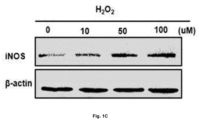
- MTT analysis was performed, and the viability and iNOS expression of RPE cells according to H 2 O 2 treatment were confirmed.
- ARPE-19 cells a human retinal-pigmented epithelial cell line (hereinafter referred to as ARPE-19 cells (ATCC, Mansas, VA, USA)) was used and inoculated into 96-well plates and cultured for 24 hours. Thereafter, the cells were treated with 6.25 ⁇ M 12.5 ⁇ M 25 ⁇ M, 50 ⁇ M, and 100 ⁇ M H 2 O 2 for 48 hours, a 3-(4,5-dimethylthiazol-2-yl)-2,5-diphenyl-tetrazolium bromide (MTT) solution was added to the medium, and the cells were cultured at 37°C for 4 hours. The MTT-comprising medium was removed and the cells were lysed in 50 ⁇ l of DMSO. An optical density at 540 nm was confirmed using a microplate spectrophotometer (SpectraMax; Molecular Devices, Sunnyvale, CA, USA), and cell viability was determined by repeating each experiment three times to calculate an average value.
- RNA (1 ⁇ g) was reverse transcribed into first-strand cDNA using an iScript TM cDNA Synthesis kit (Bio-Rad Laboratories, Inc., California, USA) according to the manufacturer's instructions, real-time reverse transcription-polymerase chain reaction (RT-PCR) was performed using a Thermal Cycler CFX96 TM Real-Time PCR System (Bio-Rad Laboratories, USA), and each experiment was repeated three times to derive the results.
- RT-PCR real-time reverse transcription-polymerase chain reaction
- Protein samples of cell lysates were mixed with an equal volume of 2 ⁇ SDS sample buffer, denatured by heating for 5 minutes and then separated on a 10% SDS-PAGE gel. After electrophoresis, proteins were transferred to a polyvinylidene difluoride membrane, and the membrane was blocked and washed using 5% BSA for 40 minutes. Thereafter, the membrane was incubated with specific antibodies against iNOS and ⁇ -actin in Tris-buffered saline (TBS) comprising Tween-20 (TBS-T, 0.1%) at 4°C overnight. In this case, ⁇ -actin was used as a loading control.
- TBS Tris-buffered saline
- Tween-20 Tween-20
- a primary antibody was washed on the membrane using TBS-T (X3) and the membrane was incubated with a horseradish peroxidase-conjugated secondary antibody (1:1000-2000) for 2 hours. After washing three times with TBS-T, immunopositive bands were visualized using the ChemiDocTMXRS+ imaging system with Image Lab TM software (Bio-Rad Laboratories, USA) and the average of results from experiments each repeated three times was derived.
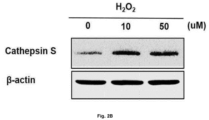
- cathepsin S (CTSS) in RPE cells under oxidative stress conditions
- RPE cells were treated with H 2 O 2 and the expression of cathepsin S (CTSS) was determined. Specifically, the cells was treated with 10 ⁇ M and 50 ⁇ M H 2 O 2 , cathepsin S mRNA expression level analysis and western blot experiments were performed in order to confirm the expression of cathepsin S, and the same experimental method and conditions as in Example 1 were applied, except that cathepsin S-specific antibodies were used.
- cathepsin S expression was increased by oxidative stress in cathepsin S knockdown RPE cells.
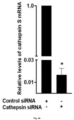
- Example 3-1 Confirmation of CTSS mRNA expression level in cathepsin S knockdown RPE cells in response to H 2 O 2
- siRNA transfection was performed to prepare cathepsin S knockdown RPE cells. Specifically, cells were cultured to 50 to 60% confluence, and for a transfection mixture, Lipofectamine RNAiMAX (Invitrogen, Carlsbad, CA, USA), OPTI-MEM and CTSS siRNA (Santa Cruz sc-29940) were cultured. After culturing for 10 minutes, cells were treated according to manufacturer's instructions, cultured for 24 hours and transfected, cultured (70 to 80% confluence), then treated with 50 ⁇ M H 2 O 2 as indicated and cultured for an additional 48 hours. Thereafter, RT-PCR was performed according to the protocol given and the average of results from experiments each repeated three times was derived.
- cathepsin S knockdown RPE cell lines were prepared by infecting ARPE-19 cells with control siRNA (control) or the CTSS siRNA for 24 hours, and the relative mRNA expression levels of cathepsin S were analyzed by treating the control and cathepsin S knockdown RPE cell lines with H 2 O 2 .
- the mRNA expression level was measured by applying the same conditions and method as in Example 2.
- Example 3-2 Immunofluorescence analysis of cathepsin S knockdown RPE cells in response to H 2 O 2
- Immunofluorescence analysis was performed to confirm the suppression of cathepsin S in cathepsin S knockdown RPE cells of Example 3-1. Specifically, after cells prepared in the same manner as in the mRNA expression level analysis were washed twice with sterile PBS and fixed with 4% paraformaldehyde at room temperature for 30 minutes, the fixation was stopped by washing the cells three times with PBS. The cells were permeabilized with PBS comprising 0.01% Triton X-100 for 10 minutes. After blocking for 1 hour, the insert membrane was removed using a scalpel and placed on Parafilm prior to being incubated with a primary antibody (depending on the protein of interest).
- FIG. 3B As a result of analyzing RPE cells exposed to H 2 O 2 (50 ⁇ M, 48 hours) or a control after transfection with the control siRNA or CTSS siRNA for 24 hours, cathepsin S was significantly decreased in CTSS siRNA + H 2 O 2 compared to the control siRNA + H 2 O 2 (p ⁇ 0.05).
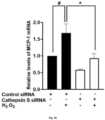
- cathepsin S knockdown RPE cells were treated with H 2 O 2 , and then the expression of p-NF- ⁇ B (the active form of NF- ⁇ B) and inflammatory cytokines was analyzed by RT-PCR.
- the same experimental group cells (cathepsin S knockdown RPE cells) and control cells as in Example 3 were used, and each cell was treated with H 2 O 2 under the same conditions as in Example 3 (50 ⁇ M H 2 O 2 , 48 hours). Thereafter, the RT-PCR and western blot experimental methods and conditions for confirming the expression of p-NF- ⁇ B and inflammatory cytokines were applied in the same manner as in Example 1 or 2. In this case, NF- ⁇ B and ⁇ -actin were used as loading controls.
- C3aR and C5aR which are receptors for C3a and C5a among complement factors, was analyzed by RT-PCR, and the protein expression of C3 (C3a), C5 (C5a), C3aR, C5aR and the active form of membrane attack complex C5b-9 was analyzed by Western blotting. It was analyzed through experiments.
- Example 3 the same experimental group cells (cathepsin S knockdown RPE cells) and control cells as in Example 3 were used, and each cell was treated with H 2 O 2 under the same conditions as in Example 3 (50 ⁇ M, 48 h).
- the experimental methods and conditions for RT-PCR and Western blot were applied in the same manner as in Example 1 or 2.
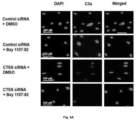
- RPE cells were treated with cathepsin S siRNA (CTSS siRNA, CTSSiRNA) and then the effect of inhibiting complement activity was analyzed. At this time, NF- ⁇ B inhibitor were treated as a comparison group. Specifically, RPE cells were treated with control siRNA or CTSS siRNA for 24 hours in the presence or absence of NF- ⁇ B inhibitor Bay 1170-82 (10 ⁇ M), respectively. After that, immunofluorescence analysis was performed for the expression of C3a and C5a in RPE cells. Experimental methods and conditions were applied in the same manner as in Example 3.
- HUVECs (1 ⁇ 10 5 ) were treated on a Matrigel-coated 96-well-plate with reduced growth factors, and then the cells were treated with a conditioned medium (CM) for 2 hours by treating RPE cells with CTSS siRNA and H 2 O 2 at 37°C for 48 hours, and images were analyzed with an inverted fluorescence microscope.
- CM conditioned medium
- CTSS siRNA was found to have excellent preventive and therapeutic effects on age-related macular degeneration, which is the main cause of neovascular hyperplasia, in that not only neovascularization but also intracellular tube formation were significantly inhibited in RPE cells treated with CTSS siRNA.
- CNV choroidal neovascularization
- siRNA diluted in RNAse-free water was injected into both eyes using a 5uL syringe (Hamilton Co, Reno, NV, NV, USA) and a 32-gauge needle at a distance of 0.5 mm from the limbus ( 5 ⁇ L [15 nmol]/eye).
- the eyeball was removed and fixed with 4% paraformaldehyde. An anterior segment was removed to obtain a retina/choroid area.
- the choroid/retinal pigment epithelium complex was immunohistochemically stained as follows.
- the choroid/retinal pigment epithelium complex was reacted overnight with an anti-CD31 antibody at a dilution of 1:100, and choroidal neovascularization was visualized under a fluorescence microscope using secondary Alexa Fluor 594 conjugated goat anti-mouse IgG (provided by Invitrogen).
Landscapes
- Health & Medical Sciences (AREA)
- Life Sciences & Earth Sciences (AREA)
- Engineering & Computer Science (AREA)
- Genetics & Genomics (AREA)
- Chemical & Material Sciences (AREA)
- Organic Chemistry (AREA)
- Biomedical Technology (AREA)
- Bioinformatics & Cheminformatics (AREA)
- General Engineering & Computer Science (AREA)
- Wood Science & Technology (AREA)
- Zoology (AREA)
- General Health & Medical Sciences (AREA)
- Molecular Biology (AREA)
- Biotechnology (AREA)
- Biochemistry (AREA)
- Biophysics (AREA)
- Microbiology (AREA)
- Plant Pathology (AREA)
- Physics & Mathematics (AREA)
- Pharmacology & Pharmacy (AREA)
- Ophthalmology & Optometry (AREA)
- Medicinal Chemistry (AREA)
- Virology (AREA)
- Animal Behavior & Ethology (AREA)
- Public Health (AREA)
- Veterinary Medicine (AREA)
- Epidemiology (AREA)
- Chemical Kinetics & Catalysis (AREA)
- General Chemical & Material Sciences (AREA)
- Nuclear Medicine, Radiotherapy & Molecular Imaging (AREA)
- Pharmaceuticals Containing Other Organic And Inorganic Compounds (AREA)
Applications Claiming Priority (2)
| Application Number | Priority Date | Filing Date | Title |
|---|---|---|---|
| KR20220094997 | 2022-07-29 | ||
| KR1020230095074A KR20240016895A (ko) | 2022-07-29 | 2023-07-21 | 카텝신 s 발현억제를 통한 황반변성의 예방 및 치료 |
Publications (1)
| Publication Number | Publication Date |
|---|---|
| EP4311574A1 true EP4311574A1 (fr) | 2024-01-31 |
Family
ID=87520095
Family Applications (1)
| Application Number | Title | Priority Date | Filing Date |
|---|---|---|---|
| EP23188272.1A Pending EP4311574A1 (fr) | 2022-07-29 | 2023-07-28 | Prévention et traitement de la dégénérescence maculaire liée à l'âge par suppression de l'expression de la cathepsine s |
Country Status (2)
| Country | Link |
|---|---|
| US (1) | US20240035033A1 (fr) |
| EP (1) | EP4311574A1 (fr) |
Citations (4)
| Publication number | Priority date | Publication date | Assignee | Title |
|---|---|---|---|---|
| US20070117122A1 (en) * | 1999-09-01 | 2007-05-24 | Evotec Neurosciences Gmbh | Methods of diagnosing or prognosticating age-related macular degeneration |
| US20100086551A1 (en) * | 2006-10-12 | 2010-04-08 | Fusion Antibodies Limited | Antibody and uses thereof |
| TW201311235A (zh) * | 2011-05-16 | 2013-03-16 | 拜耳智慧財產有限公司 | 組織蛋白酶k抑制劑於治療及/或預防肺性高血壓及/或心衰竭之用途 |
| US20200262879A1 (en) * | 2017-09-11 | 2020-08-20 | Insideoutbio, Inc. | Methods and compositions to enhance the immunogenicity of tumors |
-
2023
- 2023-07-28 EP EP23188272.1A patent/EP4311574A1/fr active Pending
- 2023-07-28 US US18/361,221 patent/US20240035033A1/en active Pending
Patent Citations (4)
| Publication number | Priority date | Publication date | Assignee | Title |
|---|---|---|---|---|
| US20070117122A1 (en) * | 1999-09-01 | 2007-05-24 | Evotec Neurosciences Gmbh | Methods of diagnosing or prognosticating age-related macular degeneration |
| US20100086551A1 (en) * | 2006-10-12 | 2010-04-08 | Fusion Antibodies Limited | Antibody and uses thereof |
| TW201311235A (zh) * | 2011-05-16 | 2013-03-16 | 拜耳智慧財產有限公司 | 組織蛋白酶k抑制劑於治療及/或預防肺性高血壓及/或心衰竭之用途 |
| US20200262879A1 (en) * | 2017-09-11 | 2020-08-20 | Insideoutbio, Inc. | Methods and compositions to enhance the immunogenicity of tumors |
Non-Patent Citations (3)
| Title |
|---|
| COPPINI LARISSA P ET AL: "Corneal angiogenesis modulation by cysteine cathepsins:In vitroandin vivostudies", EXPERIMENTAL EYE RESEARCH, ACADEMIC PRESS LTD, LONDON, vol. 134, 17 March 2015 (2015-03-17), pages 39 - 46, XP029220151, ISSN: 0014-4835, DOI: 10.1016/J.EXER.2015.03.012 * |
| G-P SHI ET AL: "Deficiency of the Cysteine Protease Cathepsin S Impairs Microvessel Growth", CIRCULATION RESEARCH, GRUNDE AND STRATTON , BALTIMORE, US, vol. 92, no. 5, 21 March 2003 (2003-03-21), pages 493 - 500, XP002624035, ISSN: 0009-7330, [retrieved on 20030206], DOI: 10.1161/01.RES.0000060485.20318.96 * |
| KAARNIRANTA K ET AL: "Age-related macular degeneration: activation of innate immunity system via pattern recognition receptors", JOURNAL OF MOLECULAR MEDICINE, SPRINGER, BERLIN, DE, vol. 87, no. 2, 14 November 2008 (2008-11-14), pages 117 - 123, XP019681190, ISSN: 1432-1440 * |
Also Published As
| Publication number | Publication date |
|---|---|
| US20240035033A1 (en) | 2024-02-01 |
Similar Documents
| Publication | Publication Date | Title |
|---|---|---|
| JP7836583B2 (ja) | 視神経疾患治療用組成物、その調製方法およびその使用 | |
| JP6946297B2 (ja) | NRARP遺伝子の発現を阻害するためのsiRNA、並びにそのための方法及び組成物におけるそれらの使用 | |
| US20140323549A1 (en) | Methods and compositions for treating diseases, disorders or injury of the nervous system | |
| JP6774928B2 (ja) | Casp2に対する二本鎖rna化合物およびその使用 | |
| KR101749380B1 (ko) | Pdk 억제제의 스크리닝 방법 및 pdk 억제제의 용도 | |
| US20240035033A1 (en) | Prevention and treatment of age-related macular degeneration through suppression of cathepsin s expression | |
| WO2025168167A1 (fr) | Utilisation d'une protéine vegf-b et d'un fragment peptidique actif de protéine vegf-b dans la préparation d'un médicament pour la prévention et/ou le traitement de l'uvéite antérieure aiguë | |
| US20240382416A1 (en) | Method of treating inflammation and photoreceptor cell degeneration in retinal degeneration patients | |
| RU2653766C2 (ru) | КиРНК И ИХ ИСПОЛЬЗОВАНИЕ В СПОСОБАХ И КОМПОЗИЦИЯХ ДЛЯ ЛЕЧЕНИЯ И/ИЛИ ПРОФИЛАКТИКИ ГЛАЗНЫХ ЗАБОЛЕВАНИЙ | |
| US20210113654A1 (en) | Methods and Compositions to Alleviate Vascular Permeability | |
| KR102775781B1 (ko) | Acta2 억제제를 유효성분으로 포함하는 망막 또는 맥락막 질환 치료용 조성물 | |
| KR20240016895A (ko) | 카텝신 s 발현억제를 통한 황반변성의 예방 및 치료 | |
| KR101585794B1 (ko) | miRNA를 이용한 안과 질환의 예방 또는 치료 | |
| US20230392150A1 (en) | Composition for treating retinal or choroidal diseases, containing acta2 inhibitor as active ingredient | |
| CN108721315B (zh) | 小分子核酸miR-21在治疗青光眼中的应用 | |
| CN118754952A (zh) | 一种新型腺相关病毒及其应用 | |
| KR20240174503A (ko) | 스클레로스틴 억제제를 유효성분으로 포함하는 당뇨병성 안질환 예방 또는 치료용 약학적 조성물 | |
| EP4706686A1 (fr) | Composition pharmaceutique contenant un inhibiteur de sclérostine en tant que principe actif pour la prévention ou le traitement d'une maladie oculaire diabétique | |
| KR20220116378A (ko) | MyD88을 표적으로 하는 RNAi 제제 및 이의 용도 | |
| JP2017200928A (ja) | siRNAならびに眼の状態の処置および/または予防のための方法および組成物におけるその使用 | |
| CN117980480A (zh) | 工程化引导rna和多核苷酸 |
Legal Events
| Date | Code | Title | Description |
|---|---|---|---|
| PUAI | Public reference made under article 153(3) epc to a published international application that has entered the european phase |
Free format text: ORIGINAL CODE: 0009012 |
|
| STAA | Information on the status of an ep patent application or granted ep patent |
Free format text: STATUS: REQUEST FOR EXAMINATION WAS MADE |
|
| 17P | Request for examination filed |
Effective date: 20230728 |
|
| AK | Designated contracting states |
Kind code of ref document: A1 Designated state(s): AL AT BE BG CH CY CZ DE DK EE ES FI FR GB GR HR HU IE IS IT LI LT LU LV MC ME MK MT NL NO PL PT RO RS SE SI SK SM TR |