EP4317348A1 - Liant et séparateur associé, feuille d'électrode, batterie, module de batterie, bloc-batterie et dispositif électrique - Google Patents
Liant et séparateur associé, feuille d'électrode, batterie, module de batterie, bloc-batterie et dispositif électrique Download PDFInfo
- Publication number
- EP4317348A1 EP4317348A1 EP22932751.5A EP22932751A EP4317348A1 EP 4317348 A1 EP4317348 A1 EP 4317348A1 EP 22932751 A EP22932751 A EP 22932751A EP 4317348 A1 EP4317348 A1 EP 4317348A1
- Authority
- EP
- European Patent Office
- Prior art keywords
- binder
- optionally
- polymerizing monomer
- battery
- acrylate
- Prior art date
- Legal status (The legal status is an assumption and is not a legal conclusion. Google has not performed a legal analysis and makes no representation as to the accuracy of the status listed.)
- Pending
Links
Images


Classifications
-
- H—ELECTRICITY
- H01—ELECTRIC ELEMENTS
- H01M—PROCESSES OR MEANS, e.g. BATTERIES, FOR THE DIRECT CONVERSION OF CHEMICAL ENERGY INTO ELECTRICAL ENERGY
- H01M4/00—Electrodes
- H01M4/02—Electrodes composed of, or comprising, active material
- H01M4/62—Selection of inactive substances as ingredients for active masses, e.g. binders, fillers
- H01M4/621—Binders
-
- H—ELECTRICITY
- H01—ELECTRIC ELEMENTS
- H01M—PROCESSES OR MEANS, e.g. BATTERIES, FOR THE DIRECT CONVERSION OF CHEMICAL ENERGY INTO ELECTRICAL ENERGY
- H01M50/00—Constructional details or processes of manufacture of the non-active parts of electrochemical cells other than fuel cells, e.g. hybrid cells
- H01M50/40—Separators; Membranes; Diaphragms; Spacing elements inside cells
- H01M50/409—Separators, membranes or diaphragms characterised by the material
- H01M50/446—Composite material consisting of a mixture of organic and inorganic materials
-
- C—CHEMISTRY; METALLURGY
- C08—ORGANIC MACROMOLECULAR COMPOUNDS; THEIR PREPARATION OR CHEMICAL WORKING-UP; COMPOSITIONS BASED THEREON
- C08F—MACROMOLECULAR COMPOUNDS OBTAINED BY REACTIONS ONLY INVOLVING CARBON-TO-CARBON UNSATURATED BONDS
- C08F220/00—Copolymers of compounds having one or more unsaturated aliphatic radicals, each having only one carbon-to-carbon double bond, and only one being terminated by only one carboxyl radical or a salt, anhydride ester, amide, imide or nitrile thereof
- C08F220/02—Monocarboxylic acids having less than ten carbon atoms; Derivatives thereof
- C08F220/10—Esters
- C08F220/20—Esters of polyhydric alcohols or phenols, e.g. 2-hydroxyethyl (meth)acrylate or glycerol mono-(meth)acrylate
-
- C—CHEMISTRY; METALLURGY
- C08—ORGANIC MACROMOLECULAR COMPOUNDS; THEIR PREPARATION OR CHEMICAL WORKING-UP; COMPOSITIONS BASED THEREON
- C08F—MACROMOLECULAR COMPOUNDS OBTAINED BY REACTIONS ONLY INVOLVING CARBON-TO-CARBON UNSATURATED BONDS
- C08F220/00—Copolymers of compounds having one or more unsaturated aliphatic radicals, each having only one carbon-to-carbon double bond, and only one being terminated by only one carboxyl radical or a salt, anhydride ester, amide, imide or nitrile thereof
- C08F220/02—Monocarboxylic acids having less than ten carbon atoms; Derivatives thereof
- C08F220/10—Esters
- C08F220/12—Esters of monohydric alcohols or phenols
- C08F220/14—Methyl esters, e.g. methyl (meth)acrylate
-
- C—CHEMISTRY; METALLURGY
- C08—ORGANIC MACROMOLECULAR COMPOUNDS; THEIR PREPARATION OR CHEMICAL WORKING-UP; COMPOSITIONS BASED THEREON
- C08F—MACROMOLECULAR COMPOUNDS OBTAINED BY REACTIONS ONLY INVOLVING CARBON-TO-CARBON UNSATURATED BONDS
- C08F220/00—Copolymers of compounds having one or more unsaturated aliphatic radicals, each having only one carbon-to-carbon double bond, and only one being terminated by only one carboxyl radical or a salt, anhydride ester, amide, imide or nitrile thereof
- C08F220/02—Monocarboxylic acids having less than ten carbon atoms; Derivatives thereof
- C08F220/10—Esters
- C08F220/12—Esters of monohydric alcohols or phenols
- C08F220/16—Esters of monohydric alcohols or phenols of phenols or of alcohols containing two or more carbon atoms
- C08F220/18—Esters of monohydric alcohols or phenols of phenols or of alcohols containing two or more carbon atoms with acrylic or methacrylic acids
- C08F220/1804—C4-(meth)acrylate, e.g. butyl (meth)acrylate, isobutyl (meth)acrylate or tert-butyl (meth)acrylate
-
- C—CHEMISTRY; METALLURGY
- C08—ORGANIC MACROMOLECULAR COMPOUNDS; THEIR PREPARATION OR CHEMICAL WORKING-UP; COMPOSITIONS BASED THEREON
- C08F—MACROMOLECULAR COMPOUNDS OBTAINED BY REACTIONS ONLY INVOLVING CARBON-TO-CARBON UNSATURATED BONDS
- C08F220/00—Copolymers of compounds having one or more unsaturated aliphatic radicals, each having only one carbon-to-carbon double bond, and only one being terminated by only one carboxyl radical or a salt, anhydride ester, amide, imide or nitrile thereof
- C08F220/02—Monocarboxylic acids having less than ten carbon atoms; Derivatives thereof
- C08F220/10—Esters
- C08F220/12—Esters of monohydric alcohols or phenols
- C08F220/16—Esters of monohydric alcohols or phenols of phenols or of alcohols containing two or more carbon atoms
- C08F220/18—Esters of monohydric alcohols or phenols of phenols or of alcohols containing two or more carbon atoms with acrylic or methacrylic acids
- C08F220/1812—C12-(meth)acrylate, e.g. lauryl (meth)acrylate
-
- C—CHEMISTRY; METALLURGY
- C08—ORGANIC MACROMOLECULAR COMPOUNDS; THEIR PREPARATION OR CHEMICAL WORKING-UP; COMPOSITIONS BASED THEREON
- C08F—MACROMOLECULAR COMPOUNDS OBTAINED BY REACTIONS ONLY INVOLVING CARBON-TO-CARBON UNSATURATED BONDS
- C08F220/00—Copolymers of compounds having one or more unsaturated aliphatic radicals, each having only one carbon-to-carbon double bond, and only one being terminated by only one carboxyl radical or a salt, anhydride ester, amide, imide or nitrile thereof
- C08F220/02—Monocarboxylic acids having less than ten carbon atoms; Derivatives thereof
- C08F220/10—Esters
- C08F220/26—Esters containing oxygen in addition to the carboxy oxygen
- C08F220/28—Esters containing oxygen in addition to the carboxy oxygen containing no aromatic rings in the alcohol moiety
- C08F220/281—Esters containing oxygen in addition to the carboxy oxygen containing no aromatic rings in the alcohol moiety and containing only one oxygen, e.g. furfuryl (meth)acrylate or 2-methoxyethyl (meth)acrylate
-
- C—CHEMISTRY; METALLURGY
- C08—ORGANIC MACROMOLECULAR COMPOUNDS; THEIR PREPARATION OR CHEMICAL WORKING-UP; COMPOSITIONS BASED THEREON
- C08K—Use of inorganic or non-macromolecular organic substances as compounding ingredients
- C08K3/00—Use of inorganic substances as compounding ingredients
- C08K3/18—Oxygen-containing compounds, e.g. metal carbonyls
- C08K3/20—Oxides; Hydroxides
- C08K3/22—Oxides; Hydroxides of metals
-
- C—CHEMISTRY; METALLURGY
- C08—ORGANIC MACROMOLECULAR COMPOUNDS; THEIR PREPARATION OR CHEMICAL WORKING-UP; COMPOSITIONS BASED THEREON
- C08K—Use of inorganic or non-macromolecular organic substances as compounding ingredients
- C08K3/00—Use of inorganic substances as compounding ingredients
- C08K3/30—Sulfur-, selenium- or tellurium-containing compounds
-
- C—CHEMISTRY; METALLURGY
- C08—ORGANIC MACROMOLECULAR COMPOUNDS; THEIR PREPARATION OR CHEMICAL WORKING-UP; COMPOSITIONS BASED THEREON
- C08K—Use of inorganic or non-macromolecular organic substances as compounding ingredients
- C08K3/00—Use of inorganic substances as compounding ingredients
- C08K3/34—Silicon-containing compounds
- C08K3/36—Silica
-
- C—CHEMISTRY; METALLURGY
- C08—ORGANIC MACROMOLECULAR COMPOUNDS; THEIR PREPARATION OR CHEMICAL WORKING-UP; COMPOSITIONS BASED THEREON
- C08K—Use of inorganic or non-macromolecular organic substances as compounding ingredients
- C08K5/00—Use of organic ingredients
- C08K5/04—Oxygen-containing compounds
- C08K5/09—Carboxylic acids; Metal salts thereof; Anhydrides thereof
- C08K5/098—Metal salts of carboxylic acids
-
- C—CHEMISTRY; METALLURGY
- C09—DYES; PAINTS; POLISHES; NATURAL RESINS; ADHESIVES; COMPOSITIONS NOT OTHERWISE PROVIDED FOR; APPLICATIONS OF MATERIALS NOT OTHERWISE PROVIDED FOR
- C09J—ADHESIVES; NON-MECHANICAL ASPECTS OF ADHESIVE PROCESSES IN GENERAL; ADHESIVE PROCESSES NOT PROVIDED FOR ELSEWHERE; USE OF MATERIALS AS ADHESIVES
- C09J11/00—Features of adhesives not provided for in group C09J9/00, e.g. additives
- C09J11/02—Non-macromolecular additives
- C09J11/04—Non-macromolecular additives inorganic
-
- C—CHEMISTRY; METALLURGY
- C09—DYES; PAINTS; POLISHES; NATURAL RESINS; ADHESIVES; COMPOSITIONS NOT OTHERWISE PROVIDED FOR; APPLICATIONS OF MATERIALS NOT OTHERWISE PROVIDED FOR
- C09J—ADHESIVES; NON-MECHANICAL ASPECTS OF ADHESIVE PROCESSES IN GENERAL; ADHESIVE PROCESSES NOT PROVIDED FOR ELSEWHERE; USE OF MATERIALS AS ADHESIVES
- C09J11/00—Features of adhesives not provided for in group C09J9/00, e.g. additives
- C09J11/02—Non-macromolecular additives
- C09J11/06—Non-macromolecular additives organic
-
- C—CHEMISTRY; METALLURGY
- C09—DYES; PAINTS; POLISHES; NATURAL RESINS; ADHESIVES; COMPOSITIONS NOT OTHERWISE PROVIDED FOR; APPLICATIONS OF MATERIALS NOT OTHERWISE PROVIDED FOR
- C09J—ADHESIVES; NON-MECHANICAL ASPECTS OF ADHESIVE PROCESSES IN GENERAL; ADHESIVE PROCESSES NOT PROVIDED FOR ELSEWHERE; USE OF MATERIALS AS ADHESIVES
- C09J133/00—Adhesives based on homopolymers or copolymers of compounds having one or more unsaturated aliphatic radicals, each having only one carbon-to-carbon double bond, and at least one being terminated by only one carboxyl radical, or of salts, anhydrides, esters, amides, imides, or nitriles thereof; Adhesives based on derivatives of such polymers
- C09J133/04—Homopolymers or copolymers of esters
- C09J133/06—Homopolymers or copolymers of esters of esters containing only carbon, hydrogen and oxygen, the oxygen atom being present only as part of the carboxyl radical
- C09J133/062—Copolymers with monomers not covered by C09J133/06
- C09J133/066—Copolymers with monomers not covered by C09J133/06 containing -OH groups
-
- C—CHEMISTRY; METALLURGY
- C09—DYES; PAINTS; POLISHES; NATURAL RESINS; ADHESIVES; COMPOSITIONS NOT OTHERWISE PROVIDED FOR; APPLICATIONS OF MATERIALS NOT OTHERWISE PROVIDED FOR
- C09J—ADHESIVES; NON-MECHANICAL ASPECTS OF ADHESIVE PROCESSES IN GENERAL; ADHESIVE PROCESSES NOT PROVIDED FOR ELSEWHERE; USE OF MATERIALS AS ADHESIVES
- C09J133/00—Adhesives based on homopolymers or copolymers of compounds having one or more unsaturated aliphatic radicals, each having only one carbon-to-carbon double bond, and at least one being terminated by only one carboxyl radical, or of salts, anhydrides, esters, amides, imides, or nitriles thereof; Adhesives based on derivatives of such polymers
- C09J133/18—Homopolymers or copolymers of nitriles
-
- C—CHEMISTRY; METALLURGY
- C09—DYES; PAINTS; POLISHES; NATURAL RESINS; ADHESIVES; COMPOSITIONS NOT OTHERWISE PROVIDED FOR; APPLICATIONS OF MATERIALS NOT OTHERWISE PROVIDED FOR
- C09J—ADHESIVES; NON-MECHANICAL ASPECTS OF ADHESIVE PROCESSES IN GENERAL; ADHESIVE PROCESSES NOT PROVIDED FOR ELSEWHERE; USE OF MATERIALS AS ADHESIVES
- C09J133/00—Adhesives based on homopolymers or copolymers of compounds having one or more unsaturated aliphatic radicals, each having only one carbon-to-carbon double bond, and at least one being terminated by only one carboxyl radical, or of salts, anhydrides, esters, amides, imides, or nitriles thereof; Adhesives based on derivatives of such polymers
- C09J133/18—Homopolymers or copolymers of nitriles
- C09J133/20—Homopolymers or copolymers of acrylonitrile
-
- C—CHEMISTRY; METALLURGY
- C09—DYES; PAINTS; POLISHES; NATURAL RESINS; ADHESIVES; COMPOSITIONS NOT OTHERWISE PROVIDED FOR; APPLICATIONS OF MATERIALS NOT OTHERWISE PROVIDED FOR
- C09J—ADHESIVES; NON-MECHANICAL ASPECTS OF ADHESIVE PROCESSES IN GENERAL; ADHESIVE PROCESSES NOT PROVIDED FOR ELSEWHERE; USE OF MATERIALS AS ADHESIVES
- C09J133/00—Adhesives based on homopolymers or copolymers of compounds having one or more unsaturated aliphatic radicals, each having only one carbon-to-carbon double bond, and at least one being terminated by only one carboxyl radical, or of salts, anhydrides, esters, amides, imides, or nitriles thereof; Adhesives based on derivatives of such polymers
- C09J133/24—Homopolymers or copolymers of amides or imides
-
- C—CHEMISTRY; METALLURGY
- C09—DYES; PAINTS; POLISHES; NATURAL RESINS; ADHESIVES; COMPOSITIONS NOT OTHERWISE PROVIDED FOR; APPLICATIONS OF MATERIALS NOT OTHERWISE PROVIDED FOR
- C09J—ADHESIVES; NON-MECHANICAL ASPECTS OF ADHESIVE PROCESSES IN GENERAL; ADHESIVE PROCESSES NOT PROVIDED FOR ELSEWHERE; USE OF MATERIALS AS ADHESIVES
- C09J133/00—Adhesives based on homopolymers or copolymers of compounds having one or more unsaturated aliphatic radicals, each having only one carbon-to-carbon double bond, and at least one being terminated by only one carboxyl radical, or of salts, anhydrides, esters, amides, imides, or nitriles thereof; Adhesives based on derivatives of such polymers
- C09J133/24—Homopolymers or copolymers of amides or imides
- C09J133/26—Homopolymers or copolymers of acrylamide or methacrylamide
-
- H—ELECTRICITY
- H01—ELECTRIC ELEMENTS
- H01M—PROCESSES OR MEANS, e.g. BATTERIES, FOR THE DIRECT CONVERSION OF CHEMICAL ENERGY INTO ELECTRICAL ENERGY
- H01M10/00—Secondary cells; Manufacture thereof
- H01M10/05—Accumulators with non-aqueous electrolyte
- H01M10/052—Li-accumulators
-
- H—ELECTRICITY
- H01—ELECTRIC ELEMENTS
- H01M—PROCESSES OR MEANS, e.g. BATTERIES, FOR THE DIRECT CONVERSION OF CHEMICAL ENERGY INTO ELECTRICAL ENERGY
- H01M10/00—Secondary cells; Manufacture thereof
- H01M10/05—Accumulators with non-aqueous electrolyte
- H01M10/052—Li-accumulators
- H01M10/0525—Rocking-chair batteries, i.e. batteries with lithium insertion or intercalation in both electrodes; Lithium-ion batteries
-
- H—ELECTRICITY
- H01—ELECTRIC ELEMENTS
- H01M—PROCESSES OR MEANS, e.g. BATTERIES, FOR THE DIRECT CONVERSION OF CHEMICAL ENERGY INTO ELECTRICAL ENERGY
- H01M4/00—Electrodes
- H01M4/02—Electrodes composed of, or comprising, active material
- H01M4/62—Selection of inactive substances as ingredients for active masses, e.g. binders, fillers
-
- H—ELECTRICITY
- H01—ELECTRIC ELEMENTS
- H01M—PROCESSES OR MEANS, e.g. BATTERIES, FOR THE DIRECT CONVERSION OF CHEMICAL ENERGY INTO ELECTRICAL ENERGY
- H01M4/00—Electrodes
- H01M4/02—Electrodes composed of, or comprising, active material
- H01M4/62—Selection of inactive substances as ingredients for active masses, e.g. binders, fillers
- H01M4/621—Binders
- H01M4/622—Binders being polymers
-
- H—ELECTRICITY
- H01—ELECTRIC ELEMENTS
- H01M—PROCESSES OR MEANS, e.g. BATTERIES, FOR THE DIRECT CONVERSION OF CHEMICAL ENERGY INTO ELECTRICAL ENERGY
- H01M50/00—Constructional details or processes of manufacture of the non-active parts of electrochemical cells other than fuel cells, e.g. hybrid cells
- H01M50/40—Separators; Membranes; Diaphragms; Spacing elements inside cells
- H01M50/409—Separators, membranes or diaphragms characterised by the material
- H01M50/411—Organic material
- H01M50/414—Synthetic resins, e.g. thermoplastics or thermosetting resins
- H01M50/42—Acrylic resins
-
- H—ELECTRICITY
- H01—ELECTRIC ELEMENTS
- H01M—PROCESSES OR MEANS, e.g. BATTERIES, FOR THE DIRECT CONVERSION OF CHEMICAL ENERGY INTO ELECTRICAL ENERGY
- H01M50/00—Constructional details or processes of manufacture of the non-active parts of electrochemical cells other than fuel cells, e.g. hybrid cells
- H01M50/40—Separators; Membranes; Diaphragms; Spacing elements inside cells
- H01M50/409—Separators, membranes or diaphragms characterised by the material
- H01M50/411—Organic material
- H01M50/414—Synthetic resins, e.g. thermoplastics or thermosetting resins
- H01M50/423—Polyamide resins
-
- H—ELECTRICITY
- H01—ELECTRIC ELEMENTS
- H01M—PROCESSES OR MEANS, e.g. BATTERIES, FOR THE DIRECT CONVERSION OF CHEMICAL ENERGY INTO ELECTRICAL ENERGY
- H01M50/00—Constructional details or processes of manufacture of the non-active parts of electrochemical cells other than fuel cells, e.g. hybrid cells
- H01M50/40—Separators; Membranes; Diaphragms; Spacing elements inside cells
- H01M50/409—Separators, membranes or diaphragms characterised by the material
- H01M50/431—Inorganic material
-
- H—ELECTRICITY
- H01—ELECTRIC ELEMENTS
- H01M—PROCESSES OR MEANS, e.g. BATTERIES, FOR THE DIRECT CONVERSION OF CHEMICAL ENERGY INTO ELECTRICAL ENERGY
- H01M50/00—Constructional details or processes of manufacture of the non-active parts of electrochemical cells other than fuel cells, e.g. hybrid cells
- H01M50/40—Separators; Membranes; Diaphragms; Spacing elements inside cells
- H01M50/409—Separators, membranes or diaphragms characterised by the material
- H01M50/443—Particulate material
-
- C—CHEMISTRY; METALLURGY
- C08—ORGANIC MACROMOLECULAR COMPOUNDS; THEIR PREPARATION OR CHEMICAL WORKING-UP; COMPOSITIONS BASED THEREON
- C08F—MACROMOLECULAR COMPOUNDS OBTAINED BY REACTIONS ONLY INVOLVING CARBON-TO-CARBON UNSATURATED BONDS
- C08F2800/00—Copolymer characterised by the proportions of the comonomers expressed
- C08F2800/20—Copolymer characterised by the proportions of the comonomers expressed as weight or mass percentages
-
- C—CHEMISTRY; METALLURGY
- C08—ORGANIC MACROMOLECULAR COMPOUNDS; THEIR PREPARATION OR CHEMICAL WORKING-UP; COMPOSITIONS BASED THEREON
- C08K—Use of inorganic or non-macromolecular organic substances as compounding ingredients
- C08K3/00—Use of inorganic substances as compounding ingredients
- C08K3/18—Oxygen-containing compounds, e.g. metal carbonyls
- C08K3/20—Oxides; Hydroxides
- C08K3/22—Oxides; Hydroxides of metals
- C08K2003/2227—Oxides; Hydroxides of metals of aluminium
-
- C—CHEMISTRY; METALLURGY
- C08—ORGANIC MACROMOLECULAR COMPOUNDS; THEIR PREPARATION OR CHEMICAL WORKING-UP; COMPOSITIONS BASED THEREON
- C08K—Use of inorganic or non-macromolecular organic substances as compounding ingredients
- C08K3/00—Use of inorganic substances as compounding ingredients
- C08K3/30—Sulfur-, selenium- or tellurium-containing compounds
- C08K2003/3045—Sulfates
-
- C—CHEMISTRY; METALLURGY
- C08—ORGANIC MACROMOLECULAR COMPOUNDS; THEIR PREPARATION OR CHEMICAL WORKING-UP; COMPOSITIONS BASED THEREON
- C08K—Use of inorganic or non-macromolecular organic substances as compounding ingredients
- C08K2201/00—Specific properties of additives
- C08K2201/011—Nanostructured additives
-
- C—CHEMISTRY; METALLURGY
- C09—DYES; PAINTS; POLISHES; NATURAL RESINS; ADHESIVES; COMPOSITIONS NOT OTHERWISE PROVIDED FOR; APPLICATIONS OF MATERIALS NOT OTHERWISE PROVIDED FOR
- C09J—ADHESIVES; NON-MECHANICAL ASPECTS OF ADHESIVE PROCESSES IN GENERAL; ADHESIVE PROCESSES NOT PROVIDED FOR ELSEWHERE; USE OF MATERIALS AS ADHESIVES
- C09J2203/00—Applications of adhesives in processes or use of adhesives in the form of films or foils
- C09J2203/33—Applications of adhesives in processes or use of adhesives in the form of films or foils for batteries or fuel cells
-
- H—ELECTRICITY
- H01—ELECTRIC ELEMENTS
- H01M—PROCESSES OR MEANS, e.g. BATTERIES, FOR THE DIRECT CONVERSION OF CHEMICAL ENERGY INTO ELECTRICAL ENERGY
- H01M2220/00—Batteries for particular applications
- H01M2220/10—Batteries in stationary systems, e.g. emergency power source in plant
-
- H—ELECTRICITY
- H01—ELECTRIC ELEMENTS
- H01M—PROCESSES OR MEANS, e.g. BATTERIES, FOR THE DIRECT CONVERSION OF CHEMICAL ENERGY INTO ELECTRICAL ENERGY
- H01M2220/00—Batteries for particular applications
- H01M2220/20—Batteries in motive systems, e.g. vehicle, ship, plane
-
- H—ELECTRICITY
- H01—ELECTRIC ELEMENTS
- H01M—PROCESSES OR MEANS, e.g. BATTERIES, FOR THE DIRECT CONVERSION OF CHEMICAL ENERGY INTO ELECTRICAL ENERGY
- H01M2220/00—Batteries for particular applications
- H01M2220/30—Batteries in portable systems, e.g. mobile phone, laptop
-
- Y—GENERAL TAGGING OF NEW TECHNOLOGICAL DEVELOPMENTS; GENERAL TAGGING OF CROSS-SECTIONAL TECHNOLOGIES SPANNING OVER SEVERAL SECTIONS OF THE IPC; TECHNICAL SUBJECTS COVERED BY FORMER USPC CROSS-REFERENCE ART COLLECTIONS [XRACs] AND DIGESTS
- Y02—TECHNOLOGIES OR APPLICATIONS FOR MITIGATION OR ADAPTATION AGAINST CLIMATE CHANGE
- Y02E—REDUCTION OF GREENHOUSE GAS [GHG] EMISSIONS, RELATED TO ENERGY GENERATION, TRANSMISSION OR DISTRIBUTION
- Y02E60/00—Enabling technologies; Technologies with a potential or indirect contribution to GHG emissions mitigation
- Y02E60/10—Energy storage using batteries
Definitions
- This application relates to the technical field of lithium batteries, and in particular, to a binder and a separator containing same, an electrode plate, a related secondary battery, a battery module, a battery pack, and an electrical device.
- lithium-ion batteries have been applied wider in many fields, including energy storage power systems such as hydro, thermal, wind, and solar power stations, and other fields such as electric tools, electric bicycles, electric motorcycles, and electric vehicles, military equipment, and aerospace.
- energy storage power systems such as hydro, thermal, wind, and solar power stations
- other fields such as electric tools, electric bicycles, electric motorcycles, and electric vehicles, military equipment, and aerospace.
- a binder for use in a battery in the prior art exhibits disadvantages such as a relatively high melting point and poor bonding performance, and consequently, is unable to effectively bond a component of the battery, thereby deteriorating the kinetic performance of the battery and causing safety issues. Therefore, how to develop a binder suitable for a battery system is still an urgent problem to researchers.
- An objective of this application is to provide a binder.
- the binder provides high bonding performance under a condition suitable for battery processing, thereby enhancing the kinetic performance and safety performance of the battery.
- this application provides a binder, a separator containing same, an electrode plate, and a related secondary battery, a battery module, a battery pack, and an electrical device.
- a first aspect of this application provides a binder, including an organic polymer and an inorganic compound.
- the organic polymer is polymerized from at least the following monomers:
- a weight ratio between the first polymerizing monomer, the second polymerizing monomer, and the third polymerizing monomer is 1: (0 to 0.8): (0 to 0.15), and optionally 1: (0.05 to 0.2): (0.05 to 0.1).
- the prepared binder When the organic polymer is polymerized from the above monomers, the prepared binder exhibits high bonding performance and possesses a relatively low glass transition temperature. In this way, the binder is suitable for exerting the bonding performance sufficiently under operating conditions of the battery, thereby improving the kinetic performance and safety performance of the battery.
- a weight percent of the first polymerizing monomer is 60 wt% to 100 wt%, and optionally 60 wt% to 90 wt%.
- a weight percent of the second polymerizing monomer is 0 wt% to 30 wt%, and optionally 5 wt% to 15 wt%.
- a weight percent of the third polymerizing monomer is 0 wt% to 40 wt%, and optionally 0 wt% to 25 wt%.
- volume average particle diameters D 10 , D 50 , and D 90 of the binder satisfy: (D 90 - D 10 )/D 50 is less than 2.5, optionally less than 2, and further optionally less than 1.8.
- a weight percent of particles of the organic polymer is 50 wt% to 99.9 wt%, optionally 60 wt% to 99 wt%, and further optionally 70 wt% to 99 wt%, based on a total dry weight of the binder.
- a weight percent of the inorganic compound is 0.1 wt% to 50 wt%, optionally 1 wt% to 40 wt%, and further optionally 1 wt% to 30 wt%, based on a total dry weight of the binder.
- a weight ratio between the organic polymer and the inorganic compound is 99: 1 to 1: 1, and optionally 70: 30 to 1: 1.
- the inorganic compound is one or more selected from: an oxide of silicon, aluminum, calcium, zinc, or magnesium; sodium sulfate; sodium benzoate; calcium carbonate; or a modified material thereof.
- the inorganic compound is one or more of silicon dioxide, silica sol, aluminum oxide, zinc oxide, magnesium oxide, or sodium benzoate.
- the inorganic compound is one or more of vapor-phase silicon dioxide, silicon micropowder, aluminum oxide, or sodium benzoate.
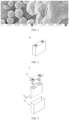
- a surface of a particle of the binder is uneven, and inorganic oxide clusters with a particle diameter of 10 to 200 nm are evenly distributed on the surface.
- a glass transition temperature of the binder is -20 °C to 30 °C.
- a second aspect of this application provides a separator, including the binder according to the first aspect of this application.
- a third aspect of this application provides an electrode plate, including the binder according to the first aspect of this application.
- a fourth aspect of this application provides a secondary battery.
- the secondary battery includes at least one of the binder according to the first aspect of this application, the separator according to the second aspect of this application, or the electrode plate according to the third aspect of this application.
- a fifth aspect of this application provides a battery module, including the secondary battery according to the third aspect of this application.
- a sixth aspect of this application provides a battery pack, including the battery module according to the fourth aspect of this application.
- a seventh aspect of this application provides an electrical device.
- the electrical device includes at least one of the secondary battery according to the fourth aspect of this application, the battery module according to the fifth aspect of this application, or the battery pack according to the sixth aspect of this application.
- the organic polymer is polymerized from the first polymerizing monomer, the second polymerizing monomer, and the third polymerizing monomer at a specified ratio.
- Each of the polymerizing monomers contains a different functional group.
- the obtained organic polymer can exert the advantages of each polymerizing monomer sufficiently, so that the binder polymer containing the organic polymer exhibits high bonding performance and possesses a relatively low glass transition temperature. In this way, the binder can exert the bonding performance sufficiently under working conditions of the battery, thereby improving the kinetic performance and safety performance of the secondary battery.
- the binder when applied to the separator, the binder reduces the resistance of the separator and increases the ion conductivity of the separator, thereby improving the battery performance.
- the battery module, the battery pack, and the electrical device according to this application include the secondary battery according to this application, and therefore, have at least the same advantages as the secondary battery.
- a “range” disclosed herein is defined in the form of a lower limit and an upper limit.
- a given range is defined by a lower limit and an upper limit selected. The selected lower and upper limits define the boundaries of a particular range.
- a range so defined may be inclusive or exclusive of the end values, and a lower limit of one range may be arbitrarily combined with an upper limit of another range to form a range. For example, if a given parameter falls within a range of 60 to 120 and a range of 80 to 110, it is expectable that the parameter may fall within a range of 60 to 110 and a range of 80 to 120 as well.
- a numerical range "a to b" is a brief representation of a combination of any real numbers between a and b inclusive, where both a and b are real numbers.
- a numerical range "0 to 5" herein means all real numbers recited between 0 and 5 inclusive, and the expression "0 to 5" is just a brief representation of a combination of such numbers.
- a statement that a parameter is an integer greater than or equal to 2 is equivalent to a disclosure that the parameter is an integer such as 2, 3, 4, 5, 6, 7, 8, 9, 10, 11, 12, and so on.
- any embodiments and optional embodiments hereof may be combined with each other to form a new technical solution.
- any technical features and optional technical features hereof may be combined with each other to form a new technical solution.
- steps described herein may be performed in sequence or at random, and preferably in sequence.
- the method includes steps (a) and (b) indicates that the method may include steps (a) and (b) performed in sequence, or steps (b) and (a) performed in sequence.
- the method may further include step (c) indicates that step (c) may be added into the method in any order.
- the method may include steps (a), (b), and (c), or may include steps (a), (c), and (b), or may include steps (c), (a), and (b), and so on.
- the term "or” is inclusive.
- the expression “A or B” means "A alone, B alone, or both A and B”. More specifically, any one of the following conditions satisfies the condition “A or B” : A is true (or existent) and B is false (or absent); A is false (or absent) and B is true (or existent); and, both A and B are true (or existent).
- binders for use in a battery in the prior art exhibit low bonding performance, and some possess a relatively high melting point.
- Such binders can hardly exert the bonding effect sufficiently under operating conditions of the battery, and cannot effectively bond a battery component, thereby causing the component to detach or fall off during use, and in turn, deteriorating the kinetic performance of the battery and causing safety hazards.
- the inventor finds that high bonding performance is achieved by the organic polymer polymerized from some monomers at a specified weight ratio, the monomers each containing a specified functional group.
- the organic polymer is suitable for exerting the bonding performance sufficiently under operating conditions of a battery, thereby improving the kinetic performance and safety performance of the secondary battery.
- the binder when applied to the separator, reduces the resistance of the separator and increases the ion conductivity of the separator, thereby improving the battery performance.
- a first aspect of this application provides a binder, including an organic polymer and an inorganic compound.
- the organic polymer is polymerized from at least the following monomers:
- a weight ratio between the first polymerizing monomer, the second polymerizing monomer, and the third polymerizing monomer is 1: (0 to 0.8): (0 to 0.15), and optionally 1: (0.05 to 0.2): (0.05 to 0.1).
- the binder according to this application includes an organic polymer.
- the organic polymer is polymerized, at a specified weight ratio, from the first polymerizing monomer that contains an ester bond, the second polymerizing monomer that contains a nitrile bond, and the third polymerizing monomer that contains an amide bond. This facilitates sufficient exertion of the synergistic advantages brought by the monomers, so that the prepared organic polymer exhibits high bonding performance and possesses an appropriate glass transition temperature. In this way, the binder is suitable for exerting the bonding performance sufficiently under operating conditions of the battery, thereby improving the kinetic performance and safety performance of the secondary battery.
- the binder according to this application further includes an inorganic compound, thereby improving the flame retardancy performance of the binder, and in turn, improving the safety performance of the secondary battery.
- the binder when applied to the separator, reduces the resistance of the separator and increases the ion conductivity of the separator, thereby improving the battery performance.
- the weight percent of the first polymerizing monomer is 60 wt% to 100 wt%, and optionally 60 wt% to 90 wt%; the weight percent of the second polymerizing monomer is 0 wt% to 30 wt%, and optionally 5 wt% to 15 wt%; and the weight percent of the third polymerizing monomer is 0 wt% to 40 wt%, and optionally 0 wt% to 25 wt%, based on a total weight of the organic polymer.
- the bonding performance of the binder is improved.
- the organic polymer made from the polymerizing monomers that satisfy the above ranges possesses an appropriate glass transition temperature, thereby facilitating a sufficient bonding force to be provided under the operating conditions of the battery.
- a volume average particle diameter D 50 of the binder satisfies 3 ⁇ D 50 ⁇ 10 ⁇ m, and optionally, is 5 ⁇ m to 8 ⁇ m.
- the binder may block pores in a separator when applied to the separator, thereby increasing the internal resistance of the battery and deteriorating the kinetic performance. If the particle diameter of the binder is excessive, the binder may be inapplicable to the preparation of a battery cell.
- volume average particle diameters D 10 , D 50 , and D 90 of the binder satisfy: (D 90 - D 10 )/D 50 is less than 2.5, optionally less than 2, and further optionally less than 1.8.
- the weight percent of particles of the organic polymer is 50 wt% to 99.9 wt%, optionally 60 wt% to 99 wt%, and further optionally 70 wt% to 99 wt%, based on a total dry weight of the binder.
- the weight percent of the inorganic compound is 0.1 wt% to 50 wt%, optionally 1 wt% to 40 wt%, and further optionally 1 wt% to 30 wt%, based on a total dry weight of the binder.
- the overall bonding performance of the binder may be insufficient, or even unable to keep an integrated state of the organic polymer and the inorganic compound.
- the flame retardance performance of the binder may be relatively low.
- the weight ratio between the organic polymer and the inorganic compound is 99: 1 to 1: 1, and optionally 70: 30 to 1: 1.
- the weight ratio between the organic polymer and the inorganic compound falls within the above range, the synergistic effect of the organic polymer and the inorganic compound can be exerted sufficiently, so that the binder exhibits high bonding performance and high flame retardance performance.
- the inorganic compound is one or more selected from: an oxide of silicon, aluminum, calcium, zinc, or magnesium; sodium sulfate; sodium benzoate; calcium carbonate; or a modified material thereof.
- the inorganic compound is one or more of silicon dioxide, silica sol, aluminum oxide, zinc oxide, magnesium oxide, or sodium benzoate.
- the inorganic compound is one or more of vapor-phase silicon dioxide, silicon micropowder, aluminum oxide, or sodium benzoate.
- a surface of a particle of the binder is uneven, and inorganic oxide clusters with a particle diameter of 10 to 200 nm are evenly distributed on the surface.
- the inventor unexpectedly finds that, when the surface of the binder particle satisfies the above conditions, the organic polymer is facilitated to disperse uniformly, thereby improving the bonding performance of the binder.
- a weight-average molecular weight of the organic polymer is 500,000 to 1,200,000, and optionally 800,000 to 1,000,000.
- the molecular weight of the organic polymer may be measured by a method commonly used in this field, for example, measured by gel permeation chromatography with reference to the standard GB/T 21863-2008.
- a glass transition temperature of the binder is - 20 °C to 30 °C.
- the glass transition temperature may be measured by a method commonly used in this field, for example, measured by differential scanning calorimetry with reference to the standard GB/T 19466.2.
- the binder When the glass transition temperature of the binder falls within the above range, under the operating conditions of the battery, the binder can exert the bonding performance sufficiently, provide a sufficient bonding force for the battery component, and avoid deterioration of the kinetic performance of the battery and safety hazards caused by the detachment or fall-off of the component.
- This application further provides a method for preparing the binder disclosed in the first aspect of this application.
- the method includes at least the following steps:
- the monomers may be polymerized by a polymerization method commonly used in this field, for example, by emulsion polymerization or suspension polymerization.
- an additive such as an emulsifier (for example, sodium dodecyl sulfate) and a polymerization initiator (for example, ammonium persulfate) may be added to a polymerization system of polymerizing monomers.
- an emulsifier for example, sodium dodecyl sulfate
- a polymerization initiator for example, ammonium persulfate
- a second aspect of this application provides a separator.
- the separator includes the binder according to the first aspect of this application.
- the binder according to the first aspect of this application reduces the resistance of the separator and increases the ion conductivity of the separator, thereby improving the battery performance.
- the type of the substrate of the separator is not particularly limited in this application, and may be any well-known porous separator substrate that is highly stable both chemically and mechanically.
- the separator substrate may be at least one selected from glass fiber, non-woven fabric, polyethylene, polypropylene, or polyvinylidene difluoride.
- the separator may be a single-layer film or a multilayer composite film, without being particularly limited. When the separator is a multilayer composite film, materials in different layers may be identical or different, without being particularly limited.
- the separator according to this application may be prepared by a conventional preparation method of separators in the art.
- a preparation process may include: dissolving the binder according to the first aspect of this application in an organic solvent to obtain a slurry, applying the slurry onto a separator material, and then drying the slurry to remove the organic solvent and obtain a separator disclosed in this application.
- the coating density of the binder on the separator substrate is 0.3 to 1.0 g/m 2 , and optionally 0.3 to 0.8 g/m 2 .
- a third aspect of this application provides an electrode plate.
- the electrode plate includes the binder according to the first aspect of this application.
- the electrode plate may be prepared by a method commonly used in this field.
- the electrode plate described herein may be a positive electrode plate or a negative electrode plate.
- the positive electrode plate includes a positive current collector and a positive film layer that overlays at least one surface of the positive current collector.
- the positive film layer includes the binder according to the first aspect of this application.
- the positive current collector includes two surfaces opposite to each other in a thickness direction of the positive current collector.
- the positive film layer is disposed on either or both of the two opposite surfaces of the positive current collector.
- the positive current collector may be a metal foil or a composite current collector.
- the metal foil may be an aluminum foil.
- the composite current collector may include a polymer material substrate and a metal layer formed on at least one surface of the polymer material substrate.
- the composite current collector may be formed by overlaying the polymer material substrate with a metal material (for example, aluminum, aluminum alloy, nickel, nickel alloy, titanium, titanium alloy, silver, and silver alloy).
- the polymer material substrate may be, for example, polypropylene (PP), polyethylene terephthalate (PET), polybutylene terephthalate (PBT), polystyrene (PS), or polyethylene (PE).
- the positive active material may be a positive active material that is well known for use in a battery in the art.
- the positive active material may include at least one of the following materials: olivine-structured lithium-containing phosphate, lithium transition metal oxide, and a modified compound thereof.
- this application is not limited to such materials, and other conventional materials usable as a positive active material of a battery may be used instead. Of such positive active materials, one may be used alone, or at least two may be used in combination.
- lithium transition metal oxide may include, but without being limited to, at least one of lithium cobalt oxide (such as LiCoO 2 ), lithium nickel oxide (such as LiNiO 2 ), lithium manganese oxide (such as LiMnO 2 and LiMn 2 O 4 ), lithium nickel cobalt oxide, lithium manganese cobalt oxide, lithium nickel manganese oxide, lithium nickel cobalt manganese oxide (such as LiNi 1/3 Co 1/3 Mn 1/3 O 2 (briefly referred to as NCM333), LiNi 0.5 Co 0.2 Mn 0.3 O 2 (briefly referred to as NCM523), LiNi 0.5 Co 0.25 Mn 0.25 O 2 (briefly referred to as NCM211), LiNi 0.6 Co 0.2 Mn 0.2 O 2 (briefly referred to as NCM622), LiNi 0.8 Co 0.1 Mn 0.1 O 2 (briefly referred to as NCM811)), lithium nickel cobalt aluminum oxide (such as LiNi 0.85 Co 0.15 Al 0.05 O 2 ), or
- Examples of the olivine-structured lithium-containing phosphate may include, but without being limited to, at least one of lithium iron phosphate (such as LiFePO 4 (briefly referred to as LFP)), a composite of lithium iron phosphate and carbon, lithium manganese phosphate (such as LiMnPO 4 ), a composite of lithium manganese phosphate and carbon, lithium manganese iron phosphate, or a composite of lithium manganese iron phosphate and carbon.
- lithium iron phosphate such as LiFePO 4 (briefly referred to as LFP)
- LiMnPO 4 lithium manganese phosphate
- LiMnPO 4 lithium manganese phosphate and carbon
- lithium manganese iron phosphate such as LiMnPO 4
- the positive film layer further optionally includes a conductive agent.
- the conductive agent may include at least one of superconductive carbon, acetylene black, carbon black, Ketjen black, carbon dots, carbon nanotubes, graphene, or carbon nanofibers.
- the positive electrode plate may be prepared according to the following method: dispersing the ingredients of the positive electrode plate, such as the positive active material, the conductive agent, the binder according to the first aspect of this application, and any other ingredients, into a solvent (such as N-methyl-pyrrolidone) to form a positive slurry, coating a positive current collector with the positive slurry, and performing steps such as drying and cold calendering to obtain the positive electrode plate.
- a solvent such as N-methyl-pyrrolidone
- the binder according to the first aspect of this application is applied in the positive electrode plate at a weight percent of 1 wt% to 3 wt% based on the total weight of the positive film layer.
- the electrode plate described herein may be a negative electrode plate.
- the negative electrode plate includes a negative current collector and a negative film layer that overlays at least one surface of the negative current collector.
- the negative film layer includes the binder according to the first aspect of this application.
- the negative current collector includes two surfaces opposite to each other in a thickness direction of the negative current collector.
- the negative film layer is disposed on either or both of the two opposite surfaces of the negative current collector.
- the negative current collector may be a metal foil or a composite current collector.
- the metal foil may be a copper foil.
- the composite current collector may include a polymer material substrate and a metal layer formed on at least one surface of the polymer material substrate.
- the composite current collector may be formed by overlaying the polymer material substrate with a metal material (for example, copper, copper alloy, nickel, nickel alloy, titanium, titanium alloy, silver, and silver alloy).
- the polymer material substrate may be, for example, polypropylene (PP), polyethylene terephthalate (PET), polybutylene terephthalate (PBT), polystyrene (PS), or polyethylene (PE).
- the negative active material may be a negative active material well known for use in a battery in the art.
- the negative active material may include at least one of the following materials: artificial graphite, natural graphite, soft carbon, hard carbon, silicon-based material, tin-based material, lithium titanium oxide, and the like.
- the silicon-based material may be at least one selected from simple-substance silicon, a silicon-oxygen compound, a silicon-carbon composite, a silicon-nitrogen composite, and a silicon alloy.
- the tin-based material may be at least one selected from simple-substance tin, tin-oxygen compound, or tin alloy.
- this application is not limited to such materials, and other conventional materials usable as a negative active material of a battery may be used instead.
- One of the negative active materials may be used alone, or at least two thereof may be used in combination.
- the negative film layer further optionally includes a conductive agent.
- the conductive agent may be at least one selected from superconductive carbon, acetylene black, carbon black, Ketjen black, carbon dots, carbon nanotubes, graphene, or carbon nanofibers.
- the negative film layer further optionally includes other agents, such as a thickener (for example, sodium carboxymethyl cellulose (CMC-Na)).
- a thickener for example, sodium carboxymethyl cellulose (CMC-Na)
- the negative electrode plate may be prepared according to the following method: dispersing the ingredients of the negative electrode plate, such as the negative active material, the conductive agent, the binder according to the first aspect of this application, and any other ingredients, in a solvent (such as deionized water) to form a negative slurry, coating a negative current collector with the negative slurry, and performing steps such as drying and cold calendering to obtain the negative electrode plate.
- a solvent such as deionized water
- the binder according to the first aspect of this application is applied in the negative electrode plate at a weight percent of 1 wt% to 3 wt% based on the total weight of the negative film layer.
- a fourth aspect of this application provides a secondary battery.
- the secondary battery includes at least one of the binder according to the first aspect of this application, the separator according to the second aspect of this application, or the electrode plate according to the third aspect of this application.
- the secondary battery includes a positive electrode plate, a negative electrode plate, an electrolyte, and a separator.
- active ions are shuttled between the positive electrode plate and the negative electrode plate by intercalation and deintercalation.
- the electrolyte serves to conduct ions between the positive electrode plate and the negative electrode plate.
- the separator Disposed between the positive electrode plate and the negative electrode plate, the separator primarily serves to prevent a short circuit between the positive electrode plate and the negative electrode plate while allowing passage of ions.
- the secondary battery may be prepared by a method commonly used in this field.
- a preparation process includes: making an electrode assembly out of the positive electrode plate, the negative electrode plate, and the separator by a winding process or a stacking process, and then injecting an electrolytic solution into the electrode assembly, and sealing the electrode assembly to obtain a secondary battery.
- the electrolyte serves to conduct ions between the positive electrode plate and the negative electrode plate.
- the type of the electrolyte is not particularly limited in this application, and may be selected as required.
- the electrolyte may be in a liquid state or gel state, or all solid state.
- the electrolyte is an electrolytic solution.
- the electrolytic solution includes an electrolyte salt and a solvent.
- the electrolyte salt may be at least one selected from lithium hexafluorophosphate, lithium tetrafluoroborate, lithium perchlorate, lithium hexafluoroarsenate, lithium bisfluorosulfonimide, lithium bistrifluoromethanesulfonimide, lithium trifluoromethanesulfonate, lithium difluorophosphate, lithium difluoro(oxalato)borate, lithium bis(oxalato)borate, lithium difluoro(bisoxalato)phosphate, and lithium tetrafluoro(oxalato)phosphate.
- the solvent may be at least one selected from ethylene carbonate, propylene carbonate, ethyl methyl carbonate, diethyl carbonate, dimethyl carbonate, dipropyl carbonate, methyl propyl carbonate, ethylene propyl carbonate, butylene carbonate, fluoroethylene carbonate, methyl formate, methyl acetate, ethyl acetate, propyl acetate, methyl propionate, ethyl propionate, propyl propionate, methyl butyrate, ethyl butyrate, 1,4-butyrolactone, sulfolane, methyl sulfonyl methane, ethyl methyl sulfone, and (ethylsulfonyl)ethane.
- the electrolytic solution further optionally includes an additive.
- the additive may include a negative film-forming additive or a positive film-forming additive.
- the additive may further include an additive capable of improving specified performance of the battery, for example, an additive for improving overcharge performance of the battery, or an additive for improving high- or low-temperature performance of the battery.
- a fifth aspect of this application provides a battery module, including the secondary battery according to the third aspect of this application.
- the battery module may be prepared by a method commonly used in this field.
- a sixth aspect of this application provides a battery pack, including the battery module according to the fourth aspect of this application.
- the battery pack may be prepared by a method commonly used in this field.
- a seventh aspect of this application provides an electrical device.
- the electrical device includes at least one of the secondary battery according to the fourth aspect of this application, the battery module according to the fifth aspect of this application, or the battery pack according to the sixth aspect of this application.
- the secondary battery may include an outer package.
- the outer package may be configured to package the electrode assembly and the electrolyte.
- the outer package of the secondary battery may be a hard shell such as a hard plastic shell, an aluminum shell, a steel shell, or the like.
- the outer package of the secondary battery may be a soft package such as a pouch-type soft package.
- the soft package may be made of plastic such as polypropylene, polybutylene terephthalate, or polybutylene succinate.
- the shape of the secondary battery is not particularly limited in this application, and may be cylindrical, prismatic or any other shape.
- FIG. 2 shows a prismatic secondary battery 5 as an example.
- the outer package may include a housing 51 and a cover plate 53.
- the housing 51 may include a bottom plate and a side plate connected to the bottom plate. The bottom plate and the side plate close in to form an accommodation cavity. An opening that communicates with the accommodation cavity is made on the housing 51.
- the cover plate 53 can fit and cover the opening to close the accommodation cavity.
- the positive electrode plate, the negative electrode plate, and the separator may be made into the electrode assembly 52 by winding or stacking.
- the electrode assembly 52 is packaged in the accommodation cavity.
- the electrolytic solution infiltrates in the electrode assembly 52.
- the number of electrode assemblies 52 in a secondary battery 5 may be one or more, and may be selected by a person skilled in the art as actually required.
- the secondary battery may be assembled into a battery module.
- the battery module may include one or more secondary batteries, and the specific number of secondary batteries in a battery module may be selected by a person skilled in the art depending on practical applications and capacity of the battery module.
- FIG. 4 shows a battery module 3 as an example.
- a plurality of secondary batteries 5 may be arranged sequentially along a length direction of the battery module 4.
- the secondary batteries may be arranged in any other manner.
- the plurality of secondary batteries 5 may be fixed by a fastener.
- the battery module 4 may further include a shell that provides an accommodation space.
- the plurality of secondary batteries 5 are accommodated in the accommodation space.
- the battery module may be assembled to form a battery pack.
- the battery pack may include one or more battery modules, and the specific number of battery modules in a battery pack may be selected by a person skilled in the art depending on practical applications and capacity of the battery pack.
- FIG. 5 and FIG. 6 show a battery pack 1 as an example.
- the battery pack 1 may include a battery box and a plurality of battery modules 4 disposed in the battery box.
- the battery box includes an upper box 2 and a lower box 3.
- the upper box 2 fits the lower box 3 to form a closed space for accommodating the battery modules 4.
- the plurality of battery modules 4 may be arranged in the battery box in any manner.
- the electrical device includes at least one of the secondary battery, the battery module, or the battery pack according to this application.
- the secondary battery, the battery module, or the battery pack may be used as a power supply of the electrical device, or used as an energy storage unit of the electrical device.
- the electrical device may include, but without being limited to, a mobile device (such as a mobile phone or a laptop computer), an electric vehicle (such as a battery electric vehicle, a hybrid electric vehicle, a plug-in hybrid electric vehicle, an electric bicycle, an electric scooter, an electric golf cart, or an electric truck), an electric train, a ship, a satellite system, or an energy storage system.
- the secondary battery, the battery module, or the battery pack may be selected for use in the electrical device according to practical requirements of the electrical device.
- FIG. 7 shows an electrical device as an example.
- the electrical device may be a battery electric vehicle, a hybrid electric vehicle, a plug-in hybrid electric vehicle, or the like.
- the electrical device may adopt a battery pack or a battery module in order to meet the requirements of the electrical device on a high power and a high energy density of the secondary battery.
- the device may be a mobile phone, a tablet computer, a notebook computer, or the like.
- the device is generally required to be thin and light, and may have a secondary battery as a power supply.
- a separator substrate Using the following commercially available material as a separator substrate: a PP-PE copolymer microporous film (model: 20, manufactured by Zhuogao Electronic Technology Co., Ltd.) with a thickness of 20 ⁇ m and with an average pore diameter of 80 nm. Dissolving the prepared binder 1 in N-methyl-pyrrolidone (NMP), stirring well to obtain a slurry. Subsequently, applying the slurry onto the PP-PE copolymer microporous separator. Subsequently, drying the slurry to remove the organic solvent and obtain the separator 1-1 in which the coating density of the binder 1 is 0.5 g/m 2 .
- NMP N-methyl-pyrrolidone
- Steps in Comparative Embodiment 2 and Embodiments 1 to 8 are identical to those in Comparative Embodiment 1 except the type and dosage of the polymerizing monomer and inorganic compound applied, as set out in detail in Table 1.
- the areal density is 19.5 mg/cm 2
- the compacted density is 2.4 g/cm 3 .
- ⁇ ion conductivity, measured in mS/cm
- A represents the area of the separator under test, measured in cm 2
- L represents the thickness of the separator under test, measured in ⁇ m
- R represents the resistance of the separator under test.
- the separators prepared from the binders of Comparative Embodiments 1 and 2 possess a higher ionic conductivity.
- the ion conductivity of the separator can be further improved by adjusting the weight percent of each polymerizing monomer and the dry weight ratio between the organic polymer and the inorganic compound.
Landscapes
- Chemical & Material Sciences (AREA)
- Chemical Kinetics & Catalysis (AREA)
- Organic Chemistry (AREA)
- Electrochemistry (AREA)
- General Chemical & Material Sciences (AREA)
- Engineering & Computer Science (AREA)
- Medicinal Chemistry (AREA)
- Polymers & Plastics (AREA)
- Health & Medical Sciences (AREA)
- Inorganic Chemistry (AREA)
- Materials Engineering (AREA)
- Composite Materials (AREA)
- Manufacturing & Machinery (AREA)
- Cell Separators (AREA)
- Battery Electrode And Active Subsutance (AREA)
- Adhesives Or Adhesive Processes (AREA)
- Addition Polymer Or Copolymer, Post-Treatments, Or Chemical Modifications (AREA)
Applications Claiming Priority (1)
| Application Number | Priority Date | Filing Date | Title |
|---|---|---|---|
| PCT/CN2022/083171 WO2023178690A1 (fr) | 2022-03-25 | 2022-03-25 | Liant et séparateur associé, feuille d'électrode, batterie, module de batterie, bloc-batterie et dispositif électrique |
Publications (2)
| Publication Number | Publication Date |
|---|---|
| EP4317348A1 true EP4317348A1 (fr) | 2024-02-07 |
| EP4317348A4 EP4317348A4 (fr) | 2024-07-31 |
Family
ID=88078673
Family Applications (1)
| Application Number | Title | Priority Date | Filing Date |
|---|---|---|---|
| EP22932751.5A Pending EP4317348A4 (fr) | 2022-03-25 | 2022-03-25 | Liant et séparateur associé, feuille d'électrode, batterie, module de batterie, bloc-batterie et dispositif électrique |
Country Status (6)
| Country | Link |
|---|---|
| US (1) | US20240145864A1 (fr) |
| EP (1) | EP4317348A4 (fr) |
| JP (1) | JP7785805B2 (fr) |
| KR (1) | KR20240021275A (fr) |
| CN (2) | CN117280009A (fr) |
| WO (1) | WO2023178690A1 (fr) |
Families Citing this family (7)
| Publication number | Priority date | Publication date | Assignee | Title |
|---|---|---|---|---|
| CN118291060A (zh) * | 2023-01-04 | 2024-07-05 | 宁德时代新能源科技股份有限公司 | 粘结剂及其制备方法、以及隔膜、电极组件、电池单体、电池和用电装置 |
| WO2024146064A1 (fr) * | 2023-01-04 | 2024-07-11 | 宁德时代新能源科技股份有限公司 | Liant, séparateur, feuille d'électrode, ensemble électrode, élément de batterie, batterie et dispositif électrique |
| CN121127507A (zh) * | 2024-01-04 | 2025-12-12 | 宁德时代新能源科技股份有限公司 | 复合材料及其制备方法、隔离膜、极片、电池及用电装置 |
| CN120271942A (zh) * | 2024-01-05 | 2025-07-08 | 宁德时代新能源科技股份有限公司 | 复合材料及其制备方法、隔离膜、极片、电池及用电装置 |
| CN120280659A (zh) * | 2024-01-05 | 2025-07-08 | 宁德时代新能源科技股份有限公司 | 隔离膜及其制备方法、电池、用电装置 |
| CN120289702A (zh) * | 2024-01-10 | 2025-07-11 | 宁德时代新能源科技股份有限公司 | 聚合物、制备聚合物的方法、隔离膜、电池、用电装置 |
| CN119161834B (zh) * | 2024-10-17 | 2025-07-04 | 浙江锂威能源科技有限公司 | 一种聚丙烯酸酯类粘结剂及其应用、电极片及锂离子电池 |
Family Cites Families (14)
| Publication number | Priority date | Publication date | Assignee | Title |
|---|---|---|---|---|
| TWI424608B (zh) * | 2005-12-22 | 2014-01-21 | Jsr Corp | 蓄電池電極用黏合劑組成物,蓄電池電極用漿體,及蓄電池電極 |
| WO2010098380A1 (fr) * | 2009-02-25 | 2010-09-02 | 日本ゼオン株式会社 | Électrode pour pile secondaire au lithium-ion |
| KR101187767B1 (ko) * | 2010-03-17 | 2012-10-05 | 주식회사 엘지화학 | 세퍼레이터 및 이를 구비한 전기화학소자 |
| CN103509500B (zh) * | 2012-06-26 | 2016-06-08 | 湖州欧美化学有限公司 | 用于锂离子二次电池的水性粘合剂 |
| WO2014148577A1 (fr) * | 2013-03-21 | 2014-09-25 | 日本ゼオン株式会社 | Pâte pour film poreux de batterie secondaire au lithium-ion ainsi que procédé de fabrication de celle-ci, séparateur pour batterie secondaire au lithium-ion, et batterie secondaire au lithium-ion |
| WO2015076066A1 (fr) * | 2013-11-22 | 2015-05-28 | 綜研化学株式会社 | Composition d'agent adhésif pour film optique, film optique adhésif, et stratifié |
| CN105960721B (zh) * | 2014-02-27 | 2018-09-25 | 日本瑞翁株式会社 | 二次电池多孔膜用粘合剂组合物、二次电池多孔膜用浆料、二次电池用多孔膜及二次电池 |
| JP6273956B2 (ja) * | 2014-03-26 | 2018-02-07 | 日本ゼオン株式会社 | 二次電池多孔膜用バインダー、二次電池多孔膜用スラリー組成物、二次電池用多孔膜及び二次電池 |
| CN105131875B (zh) * | 2015-08-26 | 2017-07-07 | 深圳市贝特瑞新能源材料股份有限公司 | 一种锂离子电池用水性粘合剂、制备方法及其用途 |
| CN105778834B (zh) * | 2016-03-21 | 2017-10-13 | 福建蓝海黑石科技有限公司 | 锂离子电池陶瓷隔膜用粘合剂及其制备方法 |
| JP6964055B2 (ja) * | 2018-08-23 | 2021-11-10 | 住友大阪セメント株式会社 | リチウムイオン二次電池用正極材料の製造方法 |
| CN111916624B (zh) * | 2019-05-08 | 2022-02-01 | 宁德新能源科技有限公司 | 隔离膜和电化学装置 |
| CN112920747A (zh) * | 2021-02-03 | 2021-06-08 | 深圳好电科技有限公司 | 锂离子电池隔膜用水性粘结剂 |
| CN113583532B (zh) * | 2021-07-13 | 2022-05-27 | 珠海恩捷新材料科技有限公司 | 一种锂电池陶瓷隔膜用耐高温粘结剂及其制备方法 |
-
2022
- 2022-03-25 CN CN202280030673.4A patent/CN117280009A/zh active Pending
- 2022-03-25 WO PCT/CN2022/083171 patent/WO2023178690A1/fr not_active Ceased
- 2022-03-25 KR KR1020247001256A patent/KR20240021275A/ko not_active Ceased
- 2022-03-25 JP JP2023567203A patent/JP7785805B2/ja active Active
- 2022-03-25 EP EP22932751.5A patent/EP4317348A4/fr active Pending
-
2023
- 2023-02-12 CN CN202310132188.4A patent/CN116804139A/zh active Pending
-
2024
- 2024-01-11 US US18/409,818 patent/US20240145864A1/en active Pending
Also Published As
| Publication number | Publication date |
|---|---|
| JP2024519417A (ja) | 2024-05-13 |
| US20240145864A1 (en) | 2024-05-02 |
| CN117280009A (zh) | 2023-12-22 |
| WO2023178690A1 (fr) | 2023-09-28 |
| CN116804139A (zh) | 2023-09-26 |
| JP7785805B2 (ja) | 2025-12-15 |
| KR20240021275A (ko) | 2024-02-16 |
| EP4317348A4 (fr) | 2024-07-31 |
Similar Documents
| Publication | Publication Date | Title |
|---|---|---|
| EP4317348A1 (fr) | Liant et séparateur associé, feuille d'électrode, batterie, module de batterie, bloc-batterie et dispositif électrique | |
| EP4075538B1 (fr) | Batterie secondaire et son procédé de préparation, et module de batterie, bloc-batterie et appareil contenant la batterie secondaire | |
| EP4411880A1 (fr) | Feuille d'électrode positive, batterie secondaire au lithium-ion, module de batterie, bloc-batterie et appareil électrique | |
| EP4170755A1 (fr) | Matériau d'électrode positive, pièce polaire d'électrode positive, batterie secondaire au lithium, module de batterie, bloc-batterie et appareil | |
| EP3965201A1 (fr) | Batterie secondaire et dispositif la comportant | |
| KR102847477B1 (ko) | 이차 전지 및 이를 포함하는 전기 장치 | |
| CN115882160B (zh) | 复合隔离膜、电化学储能装置及用电装置 | |
| US20230336014A1 (en) | Method for supplementing lithium for secondary battery and method for charging and discharging secondary battery | |
| EP4451377A1 (fr) | Batterie secondaire, module de batterie, bloc-batterie et dispositif électrique | |
| EP4145569A1 (fr) | Pièce polaire positive, batterie secondaire et son procédé de préparation, et module de batterie, bloc-batterie et dispositif électrique comprenant une batterie secondaire | |
| US20250293252A1 (en) | Battery and electric device | |
| US20250329720A1 (en) | Positive electrode sheet, battery, and electric device | |
| CN120073079B (zh) | 电池单体、电池装置、用电装置 | |
| US20250038189A1 (en) | Secondary battery, method for preparing same, and electrical device containing same | |
| CN118451597A (zh) | 隔离膜及使用其的二次电池、电池模块、电池包和用电装置 | |
| KR20240137677A (ko) | 분리막 및 그 제조 방법, 이차 전지 및 전기 장치 | |
| US20260022018A1 (en) | Carbon nanotube, preparation method and use of same, secondary battery, battery module, battery pack, and electrical device | |
| EP4372049A1 (fr) | Composition de liant et film isolant la comprenant | |
| CN101685860A (zh) | 一种负极活性材料及其制备方法及含有该材料的负极和电池 | |
| KR20230128457A (ko) | 양극 극판과 이차 전지, 전지 모듈, 전지 팩과 전기 장치 및 전지 내부의 전압차의 밸런스 방법 | |
| US20240313225A1 (en) | Binder, separator, electrode plate, electrode assembly, battery cell, battery, and electric apparatus | |
| US20240030437A1 (en) | Positive electrode slurry and preparation method therefor, positive electrode plate, secondary battery, battery module, battery pack, and electric apparatus | |
| US20230352692A1 (en) | Secondary battery, battery module, battery pack, and electrical device | |
| US20230207938A1 (en) | Battery pack, and power consuming device thereof | |
| CN115810707A (zh) | 负极极片、二次电池、电池模块、电池包和用电装置 |
Legal Events
| Date | Code | Title | Description |
|---|---|---|---|
| STAA | Information on the status of an ep patent application or granted ep patent |
Free format text: STATUS: THE INTERNATIONAL PUBLICATION HAS BEEN MADE |
|
| PUAI | Public reference made under article 153(3) epc to a published international application that has entered the european phase |
Free format text: ORIGINAL CODE: 0009012 |
|
| STAA | Information on the status of an ep patent application or granted ep patent |
Free format text: STATUS: REQUEST FOR EXAMINATION WAS MADE |
|
| 17P | Request for examination filed |
Effective date: 20231031 |
|
| AK | Designated contracting states |
Kind code of ref document: A1 Designated state(s): AL AT BE BG CH CY CZ DE DK EE ES FI FR GB GR HR HU IE IS IT LI LT LU LV MC MK MT NL NO PL PT RO RS SE SI SK SM TR |
|
| A4 | Supplementary search report drawn up and despatched |
Effective date: 20240627 |
|
| RIC1 | Information provided on ipc code assigned before grant |
Ipc: H01M 10/0525 20100101ALI20240621BHEP Ipc: H01M 50/446 20210101ALI20240621BHEP Ipc: H01M 4/62 20060101ALI20240621BHEP Ipc: C08F 220/56 20060101ALI20240621BHEP Ipc: C08F 220/44 20060101ALI20240621BHEP Ipc: C08F 220/14 20060101ALI20240621BHEP Ipc: C08F 220/18 20060101ALI20240621BHEP Ipc: C09J 11/04 20060101ALI20240621BHEP Ipc: C09J 133/10 20060101ALI20240621BHEP Ipc: C09J 133/08 20060101AFI20240621BHEP |
|
| RAP1 | Party data changed (applicant data changed or rights of an application transferred) |
Owner name: CONTEMPORARY AMPEREX TECHNOLOGY(HONG KONG) LIMITED |
|
| STAA | Information on the status of an ep patent application or granted ep patent |
Free format text: STATUS: EXAMINATION IS IN PROGRESS |
|
| 17Q | First examination report despatched |
Effective date: 20250117 |
|
| DAV | Request for validation of the european patent (deleted) | ||
| DAX | Request for extension of the european patent (deleted) |