EP4317416A1 - Rekombinanter mikroorganismus und verfahren zur herstellung einer c6-verbindung - Google Patents
Rekombinanter mikroorganismus und verfahren zur herstellung einer c6-verbindung Download PDFInfo
- Publication number
- EP4317416A1 EP4317416A1 EP22780919.1A EP22780919A EP4317416A1 EP 4317416 A1 EP4317416 A1 EP 4317416A1 EP 22780919 A EP22780919 A EP 22780919A EP 4317416 A1 EP4317416 A1 EP 4317416A1
- Authority
- EP
- European Patent Office
- Prior art keywords
- seq
- set forth
- sequence set
- genus
- dna
- Prior art date
- Legal status (The legal status is an assumption and is not a legal conclusion. Google has not performed a legal analysis and makes no representation as to the accuracy of the status listed.)
- Pending
Links
Images









Classifications
-
- C—CHEMISTRY; METALLURGY
- C12—BIOCHEMISTRY; BEER; SPIRITS; WINE; VINEGAR; MICROBIOLOGY; ENZYMOLOGY; MUTATION OR GENETIC ENGINEERING
- C12N—MICROORGANISMS OR ENZYMES; COMPOSITIONS THEREOF; PROPAGATING, PRESERVING, OR MAINTAINING MICROORGANISMS; MUTATION OR GENETIC ENGINEERING; CULTURE MEDIA
- C12N15/00—Mutation or genetic engineering; DNA or RNA concerning genetic engineering, vectors, e.g. plasmids, or their isolation, preparation or purification; Use of hosts therefor
- C12N15/09—Recombinant DNA-technology
- C12N15/63—Introduction of foreign genetic material using vectors; Vectors; Use of hosts therefor; Regulation of expression
- C12N15/70—Vectors or expression systems specially adapted for E. coli
-
- C—CHEMISTRY; METALLURGY
- C12—BIOCHEMISTRY; BEER; SPIRITS; WINE; VINEGAR; MICROBIOLOGY; ENZYMOLOGY; MUTATION OR GENETIC ENGINEERING
- C12N—MICROORGANISMS OR ENZYMES; COMPOSITIONS THEREOF; PROPAGATING, PRESERVING, OR MAINTAINING MICROORGANISMS; MUTATION OR GENETIC ENGINEERING; CULTURE MEDIA
- C12N15/00—Mutation or genetic engineering; DNA or RNA concerning genetic engineering, vectors, e.g. plasmids, or their isolation, preparation or purification; Use of hosts therefor
- C12N15/09—Recombinant DNA-technology
- C12N15/11—DNA or RNA fragments; Modified forms thereof; Non-coding nucleic acids having a biological activity
- C12N15/52—Genes encoding for enzymes or proenzymes
-
- C—CHEMISTRY; METALLURGY
- C12—BIOCHEMISTRY; BEER; SPIRITS; WINE; VINEGAR; MICROBIOLOGY; ENZYMOLOGY; MUTATION OR GENETIC ENGINEERING
- C12N—MICROORGANISMS OR ENZYMES; COMPOSITIONS THEREOF; PROPAGATING, PRESERVING, OR MAINTAINING MICROORGANISMS; MUTATION OR GENETIC ENGINEERING; CULTURE MEDIA
- C12N9/00—Enzymes; Proenzymes; Compositions thereof; Processes for preparing, activating, inhibiting, separating or purifying enzymes
- C12N9/0004—Oxidoreductases (1.)
- C12N9/0006—Oxidoreductases (1.) acting on CH-OH groups as donors (1.1)
-
- C—CHEMISTRY; METALLURGY
- C12—BIOCHEMISTRY; BEER; SPIRITS; WINE; VINEGAR; MICROBIOLOGY; ENZYMOLOGY; MUTATION OR GENETIC ENGINEERING
- C12N—MICROORGANISMS OR ENZYMES; COMPOSITIONS THEREOF; PROPAGATING, PRESERVING, OR MAINTAINING MICROORGANISMS; MUTATION OR GENETIC ENGINEERING; CULTURE MEDIA
- C12N9/00—Enzymes; Proenzymes; Compositions thereof; Processes for preparing, activating, inhibiting, separating or purifying enzymes
- C12N9/0004—Oxidoreductases (1.)
- C12N9/0008—Oxidoreductases (1.) acting on the aldehyde or oxo group of donors (1.2)
-
- C—CHEMISTRY; METALLURGY
- C12—BIOCHEMISTRY; BEER; SPIRITS; WINE; VINEGAR; MICROBIOLOGY; ENZYMOLOGY; MUTATION OR GENETIC ENGINEERING
- C12N—MICROORGANISMS OR ENZYMES; COMPOSITIONS THEREOF; PROPAGATING, PRESERVING, OR MAINTAINING MICROORGANISMS; MUTATION OR GENETIC ENGINEERING; CULTURE MEDIA
- C12N9/00—Enzymes; Proenzymes; Compositions thereof; Processes for preparing, activating, inhibiting, separating or purifying enzymes
- C12N9/0004—Oxidoreductases (1.)
- C12N9/001—Oxidoreductases (1.) acting on the CH-CH group of donors (1.3)
-
- C—CHEMISTRY; METALLURGY
- C12—BIOCHEMISTRY; BEER; SPIRITS; WINE; VINEGAR; MICROBIOLOGY; ENZYMOLOGY; MUTATION OR GENETIC ENGINEERING
- C12N—MICROORGANISMS OR ENZYMES; COMPOSITIONS THEREOF; PROPAGATING, PRESERVING, OR MAINTAINING MICROORGANISMS; MUTATION OR GENETIC ENGINEERING; CULTURE MEDIA
- C12N9/00—Enzymes; Proenzymes; Compositions thereof; Processes for preparing, activating, inhibiting, separating or purifying enzymes
- C12N9/10—Transferases (2.)
- C12N9/1025—Acyltransferases (2.3)
- C12N9/1029—Acyltransferases (2.3) transferring groups other than amino-acyl groups (2.3.1)
-
- C—CHEMISTRY; METALLURGY
- C12—BIOCHEMISTRY; BEER; SPIRITS; WINE; VINEGAR; MICROBIOLOGY; ENZYMOLOGY; MUTATION OR GENETIC ENGINEERING
- C12N—MICROORGANISMS OR ENZYMES; COMPOSITIONS THEREOF; PROPAGATING, PRESERVING, OR MAINTAINING MICROORGANISMS; MUTATION OR GENETIC ENGINEERING; CULTURE MEDIA
- C12N9/00—Enzymes; Proenzymes; Compositions thereof; Processes for preparing, activating, inhibiting, separating or purifying enzymes
- C12N9/10—Transferases (2.)
- C12N9/1096—Transferases (2.) transferring nitrogenous groups (2.6)
-
- C—CHEMISTRY; METALLURGY
- C12—BIOCHEMISTRY; BEER; SPIRITS; WINE; VINEGAR; MICROBIOLOGY; ENZYMOLOGY; MUTATION OR GENETIC ENGINEERING
- C12N—MICROORGANISMS OR ENZYMES; COMPOSITIONS THEREOF; PROPAGATING, PRESERVING, OR MAINTAINING MICROORGANISMS; MUTATION OR GENETIC ENGINEERING; CULTURE MEDIA
- C12N9/00—Enzymes; Proenzymes; Compositions thereof; Processes for preparing, activating, inhibiting, separating or purifying enzymes
- C12N9/88—Lyases (4.)
-
- C—CHEMISTRY; METALLURGY
- C12—BIOCHEMISTRY; BEER; SPIRITS; WINE; VINEGAR; MICROBIOLOGY; ENZYMOLOGY; MUTATION OR GENETIC ENGINEERING
- C12P—FERMENTATION OR ENZYME-USING PROCESSES TO SYNTHESISE A DESIRED CHEMICAL COMPOUND OR COMPOSITION OR TO SEPARATE OPTICAL ISOMERS FROM A RACEMIC MIXTURE
- C12P13/00—Preparation of nitrogen-containing organic compounds
-
- C—CHEMISTRY; METALLURGY
- C12—BIOCHEMISTRY; BEER; SPIRITS; WINE; VINEGAR; MICROBIOLOGY; ENZYMOLOGY; MUTATION OR GENETIC ENGINEERING
- C12P—FERMENTATION OR ENZYME-USING PROCESSES TO SYNTHESISE A DESIRED CHEMICAL COMPOUND OR COMPOSITION OR TO SEPARATE OPTICAL ISOMERS FROM A RACEMIC MIXTURE
- C12P13/00—Preparation of nitrogen-containing organic compounds
- C12P13/001—Amines; Imines
-
- C—CHEMISTRY; METALLURGY
- C12—BIOCHEMISTRY; BEER; SPIRITS; WINE; VINEGAR; MICROBIOLOGY; ENZYMOLOGY; MUTATION OR GENETIC ENGINEERING
- C12P—FERMENTATION OR ENZYME-USING PROCESSES TO SYNTHESISE A DESIRED CHEMICAL COMPOUND OR COMPOSITION OR TO SEPARATE OPTICAL ISOMERS FROM A RACEMIC MIXTURE
- C12P13/00—Preparation of nitrogen-containing organic compounds
- C12P13/005—Amino acids other than alpha- or beta amino acids, e.g. gamma amino acids
-
- C—CHEMISTRY; METALLURGY
- C12—BIOCHEMISTRY; BEER; SPIRITS; WINE; VINEGAR; MICROBIOLOGY; ENZYMOLOGY; MUTATION OR GENETIC ENGINEERING
- C12P—FERMENTATION OR ENZYME-USING PROCESSES TO SYNTHESISE A DESIRED CHEMICAL COMPOUND OR COMPOSITION OR TO SEPARATE OPTICAL ISOMERS FROM A RACEMIC MIXTURE
- C12P17/00—Preparation of heterocyclic carbon compounds with only O, N, S, Se or Te as ring hetero atoms
- C12P17/10—Nitrogen as only ring hetero atom
-
- C—CHEMISTRY; METALLURGY
- C12—BIOCHEMISTRY; BEER; SPIRITS; WINE; VINEGAR; MICROBIOLOGY; ENZYMOLOGY; MUTATION OR GENETIC ENGINEERING
- C12P—FERMENTATION OR ENZYME-USING PROCESSES TO SYNTHESISE A DESIRED CHEMICAL COMPOUND OR COMPOSITION OR TO SEPARATE OPTICAL ISOMERS FROM A RACEMIC MIXTURE
- C12P7/00—Preparation of oxygen-containing organic compounds
- C12P7/02—Preparation of oxygen-containing organic compounds containing a hydroxy group
-
- C—CHEMISTRY; METALLURGY
- C12—BIOCHEMISTRY; BEER; SPIRITS; WINE; VINEGAR; MICROBIOLOGY; ENZYMOLOGY; MUTATION OR GENETIC ENGINEERING
- C12P—FERMENTATION OR ENZYME-USING PROCESSES TO SYNTHESISE A DESIRED CHEMICAL COMPOUND OR COMPOSITION OR TO SEPARATE OPTICAL ISOMERS FROM A RACEMIC MIXTURE
- C12P7/00—Preparation of oxygen-containing organic compounds
- C12P7/02—Preparation of oxygen-containing organic compounds containing a hydroxy group
- C12P7/04—Preparation of oxygen-containing organic compounds containing a hydroxy group acyclic
- C12P7/18—Preparation of oxygen-containing organic compounds containing a hydroxy group acyclic polyhydric
-
- C—CHEMISTRY; METALLURGY
- C12—BIOCHEMISTRY; BEER; SPIRITS; WINE; VINEGAR; MICROBIOLOGY; ENZYMOLOGY; MUTATION OR GENETIC ENGINEERING
- C12P—FERMENTATION OR ENZYME-USING PROCESSES TO SYNTHESISE A DESIRED CHEMICAL COMPOUND OR COMPOSITION OR TO SEPARATE OPTICAL ISOMERS FROM A RACEMIC MIXTURE
- C12P7/00—Preparation of oxygen-containing organic compounds
- C12P7/40—Preparation of oxygen-containing organic compounds containing a carboxyl group including Peroxycarboxylic acids
- C12P7/42—Hydroxy-carboxylic acids
-
- C—CHEMISTRY; METALLURGY
- C12—BIOCHEMISTRY; BEER; SPIRITS; WINE; VINEGAR; MICROBIOLOGY; ENZYMOLOGY; MUTATION OR GENETIC ENGINEERING
- C12P—FERMENTATION OR ENZYME-USING PROCESSES TO SYNTHESISE A DESIRED CHEMICAL COMPOUND OR COMPOSITION OR TO SEPARATE OPTICAL ISOMERS FROM A RACEMIC MIXTURE
- C12P7/00—Preparation of oxygen-containing organic compounds
- C12P7/40—Preparation of oxygen-containing organic compounds containing a carboxyl group including Peroxycarboxylic acids
- C12P7/44—Polycarboxylic acids
-
- C—CHEMISTRY; METALLURGY
- C12—BIOCHEMISTRY; BEER; SPIRITS; WINE; VINEGAR; MICROBIOLOGY; ENZYMOLOGY; MUTATION OR GENETIC ENGINEERING
- C12Y—ENZYMES
- C12Y101/00—Oxidoreductases acting on the CH-OH group of donors (1.1)
- C12Y101/01—Oxidoreductases acting on the CH-OH group of donors (1.1) with NAD+ or NADP+ as acceptor (1.1.1)
- C12Y101/01035—3-Hydroxyacyl-CoA dehydrogenase (1.1.1.35)
-
- C—CHEMISTRY; METALLURGY
- C12—BIOCHEMISTRY; BEER; SPIRITS; WINE; VINEGAR; MICROBIOLOGY; ENZYMOLOGY; MUTATION OR GENETIC ENGINEERING
- C12Y—ENZYMES
- C12Y103/00—Oxidoreductases acting on the CH-CH group of donors (1.3)
- C12Y103/01—Oxidoreductases acting on the CH-CH group of donors (1.3) with NAD+ or NADP+ as acceptor (1.3.1)
-
- C—CHEMISTRY; METALLURGY
- C12—BIOCHEMISTRY; BEER; SPIRITS; WINE; VINEGAR; MICROBIOLOGY; ENZYMOLOGY; MUTATION OR GENETIC ENGINEERING
- C12Y—ENZYMES
- C12Y203/00—Acyltransferases (2.3)
- C12Y203/01—Acyltransferases (2.3) transferring groups other than amino-acyl groups (2.3.1)
- C12Y203/01174—3-Oxoadipyl-CoA thiolase (2.3.1.174)
-
- C—CHEMISTRY; METALLURGY
- C12—BIOCHEMISTRY; BEER; SPIRITS; WINE; VINEGAR; MICROBIOLOGY; ENZYMOLOGY; MUTATION OR GENETIC ENGINEERING
- C12Y—ENZYMES
- C12Y402/00—Carbon-oxygen lyases (4.2)
- C12Y402/01—Hydro-lyases (4.2.1)
-
- C—CHEMISTRY; METALLURGY
- C12—BIOCHEMISTRY; BEER; SPIRITS; WINE; VINEGAR; MICROBIOLOGY; ENZYMOLOGY; MUTATION OR GENETIC ENGINEERING
- C12R—INDEXING SCHEME ASSOCIATED WITH SUBCLASSES C12C - C12Q, RELATING TO MICROORGANISMS
- C12R2001/00—Microorganisms ; Processes using microorganisms
- C12R2001/01—Bacteria or Actinomycetales ; using bacteria or Actinomycetales
-
- C—CHEMISTRY; METALLURGY
- C12—BIOCHEMISTRY; BEER; SPIRITS; WINE; VINEGAR; MICROBIOLOGY; ENZYMOLOGY; MUTATION OR GENETIC ENGINEERING
- C12R—INDEXING SCHEME ASSOCIATED WITH SUBCLASSES C12C - C12Q, RELATING TO MICROORGANISMS
- C12R2001/00—Microorganisms ; Processes using microorganisms
- C12R2001/01—Bacteria or Actinomycetales ; using bacteria or Actinomycetales
- C12R2001/185—Escherichia
- C12R2001/19—Escherichia coli
-
- C—CHEMISTRY; METALLURGY
- C12—BIOCHEMISTRY; BEER; SPIRITS; WINE; VINEGAR; MICROBIOLOGY; ENZYMOLOGY; MUTATION OR GENETIC ENGINEERING
- C12R—INDEXING SCHEME ASSOCIATED WITH SUBCLASSES C12C - C12Q, RELATING TO MICROORGANISMS
- C12R2001/00—Microorganisms ; Processes using microorganisms
- C12R2001/645—Fungi ; Processes using fungi
-
- C—CHEMISTRY; METALLURGY
- C12—BIOCHEMISTRY; BEER; SPIRITS; WINE; VINEGAR; MICROBIOLOGY; ENZYMOLOGY; MUTATION OR GENETIC ENGINEERING
- C12R—INDEXING SCHEME ASSOCIATED WITH SUBCLASSES C12C - C12Q, RELATING TO MICROORGANISMS
- C12R2001/00—Microorganisms ; Processes using microorganisms
- C12R2001/645—Fungi ; Processes using fungi
- C12R2001/72—Candida
-
- C—CHEMISTRY; METALLURGY
- C12—BIOCHEMISTRY; BEER; SPIRITS; WINE; VINEGAR; MICROBIOLOGY; ENZYMOLOGY; MUTATION OR GENETIC ENGINEERING
- C12R—INDEXING SCHEME ASSOCIATED WITH SUBCLASSES C12C - C12Q, RELATING TO MICROORGANISMS
- C12R2001/00—Microorganisms ; Processes using microorganisms
- C12R2001/645—Fungi ; Processes using fungi
- C12R2001/84—Pichia
-
- Y—GENERAL TAGGING OF NEW TECHNOLOGICAL DEVELOPMENTS; GENERAL TAGGING OF CROSS-SECTIONAL TECHNOLOGIES SPANNING OVER SEVERAL SECTIONS OF THE IPC; TECHNICAL SUBJECTS COVERED BY FORMER USPC CROSS-REFERENCE ART COLLECTIONS [XRACs] AND DIGESTS
- Y02—TECHNOLOGIES OR APPLICATIONS FOR MITIGATION OR ADAPTATION AGAINST CLIMATE CHANGE
- Y02E—REDUCTION OF GREENHOUSE GAS [GHG] EMISSIONS, RELATED TO ENERGY GENERATION, TRANSMISSION OR DISTRIBUTION
- Y02E50/00—Technologies for the production of fuel of non-fossil origin
- Y02E50/10—Biofuels, e.g. bio-diesel
Definitions
- the present invention relates to a recombinant microorganism and a method for producing a C6 compound.
- the present invention also relates to a recombinant microorganism and a method for producing adipic acid or a derivative thereof.
- a C6 compound such as adipic acid, hexamethylenediamine, 1,6-hexanediol, 6-aminohexanoic acid, 6-amino-1-hexanol, or 6-hydroxyhexanoic acid is used as a raw material for a polyamide and a polyurethane, and is regarded as an important compound in the chemical industry.
- adipic acid CAS No. 124-04-9
- a monomer compound used as a polyamide raw material typified by nylon-66 or the like, urethane, and a plasticizer raw material.
- Common production methods of adipic acid are chemical synthesis methods, for example, a method for oxidizing cyclohexanol alone or a mixture (K/A oil) of cyclohexanol and cyclohexanone with nitric acid.
- Patent Literature 1 microorganisms for biosynthesis of adipic acid, 6-aminocaproic acid, or caprolactam have been reported (Patent Literature 1).
- a "succinyl-CoA:acetyl-CoA acyltransferase” that converts succinyl-CoA and acetyl-CoA into 3-oxoadipyl-CoA
- a "3-hydroxyacyl-CoA dehydrogenase” that converts 3-oxoadipyl-CoA into 3-hydroxyadipyl-CoA
- a "3-hydroxyadipyl-CoA dehydratase” that converts 3-hydroxyadipyl-CoA into 5-carboxy-2-pentenoyl-CoA
- a "5-carboxy-2-pentenoyl-CoA reductase” that converts 5-carboxy-2-pentenoyl-CoA into
- Patent Literature 2 Although a method for preparing an adipate thioester including a step of enzymatically converting a 2,3-dehydroadipate thioester into an adipate thioester has also been proposed (Patent Literature 2), only some enoyl-CoA reductases derived from biological species such as Candida tropicalis, Euglena gracilis, Clostridium beijerinckii, and Yarrowia lipolytica exhibit an enzymatic activity, and no examples demonstrating fermentative production of a C6 compound have been shown.
- adipic acid can be produced using glucose as a carbon source utilizing a culture of a genetically modified Escherichia coli in which enzymes PaaJ, PaaH, and PaaF derived from Escherichia coli and enzymes DcaA and TesB derived from Acinetobacter baylyi are co-expressed (Non Patent Literature 1).
- adipic acid as a production method using a biomass-derived raw material, a method in which a biomass-derived carbon source is converted into cis,cis-muconic acid using a genetically modified microorganism, and then the resulting cis,cis-muconic acid is hydrogenated to produce adipic acid has also been proposed (Patent Literature 4). In addition, a method for producing adipic acid from ⁇ -ketoglutaric acid using a genetic recombinant has also been proposed (Patent Literature 5).
- examples of non-naturally occurring microorganisms capable of producing adipic acid include non-naturally occurring microorganisms containing a "succinyl-CoA:acetyl-CoA acyltransferase" that converts succinyl-CoA and acetyl-CoA into 3-oxoadipyl-CoA; a "3-hydroxyacyl-CoA dehydrogenase” that converts 3-oxoadipyl-CoA into 3-hydroxyadipyl-CoA; a "3-hydroxyadipyl-CoA dehydratase” that converts 3-hydroxyadipyl-CoA into 5-carboxy-2-pentenoyl-CoA; a "5-carboxy-2-pentenoyl-CoA reductase” that converts 5-carboxy-2
- Non Patent Literature 1 Kallscheuer, Nicolai, et al. "Improved production of adipate with Escherichia coli by reversal of ⁇ -oxidation.” Applied microbiology and biotechnology 101.6 (2017): 2371-2382 .
- An object of the present invention is to provide a recombinant microorganism having a 2,3-dehydroadipyl-CoA reductase activity, and an efficient production method of a C6 compound.
- Another object of the present invention is to provide a recombinant microorganism capable of producing adipic acid or an adipic acid derivative, and a production method of adipic acid or an adipic acid derivative.
- a recombinant microorganism having an excellent 2,3-dehydroadipyl-CoA reductase activity can be obtained by expressing an exogenous specific enzyme in a host microorganism, and a C6 compound can be further efficiently produced by culturing the recombinant microorganism, thereby arriving at the present invention.
- the present invention provides the followings:
- adipic acids can be efficiently produced by culturing a genetically modified microorganism expressing a predetermined enzyme of the genus Burkholderia (Burkholderia sp.) LEBP-3 strain (Accession Number: NITE BP-03334), which is a microorganism newly isolated from nature, thereby arriving at the present invention.
- the present invention further provides the followings:
- a recombinant microorganism having a 2,3-dehydroadipyl-CoA reductase activity and a production method of a C6 compound.
- a recombinant microorganism capable of producing adipic acid or an adipic acid derivative, and a production method of adipic acid or an adipic acid derivative.
- a range of numerical values indicated by "to” represents a range including numerical values described before and after “to” as the minimum value and the maximum value, respectively.
- an upper limit value or a lower limit value of a range of numerical values of a certain stage can be arbitrarily combined with an upper limit value or a lower limit value of a range of numerical values of another stage.
- endogenous or “endogenous property” is used to mean that the host microorganism that is not modified by gene recombination referred to includes a host microorganism, regardless of whether the gene referred to or the protein encoded by the same (typically, an enzyme) is functionally expressed to the extent that a predominant biochemical reaction can proceed in the host cell.
- exogenous or “exogenous property” is used to mean that a gene or a nucleic acid sequence is introduced into a host based on the present invention in a case where a pre-genetically modified host microorganism does not have a gene to be introduced by the present invention, in a case where an enzyme is not substantially expressed by the gene, or in a case where an amino acid sequence of the enzyme is encoded by a gene different from the gene but does not express an endogenous enzyme activity corresponding to after the genetic modification.
- a recombinant microorganism according to the present invention contains an exogenous gene encoding a protein having an enzymatic activity to reduce 2,3-dehydroadipyl-CoA for conversion into adipyl-CoA.
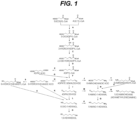
- the reaction of reducing 2,3-dehydroadipyl-CoA for conversion into adipyl-CoA is illustrated in Step D in Fig. 1 .
- the "protein having an enzymatic activity to reduce 2,3-dehydroadipyl-CoA for conversion into adipyl-CoA" is also referred to as "2,3-dehydroadipyl-CoA reductase".
- the enzymatic activity to reduce 2,3-dehydroadipyl-CoA for conversion into adipyl-CoA is also referred to as "2,3-dehydroadipyl-CoA reductase activity" or "2,3-dehydroadipyl-CoA reductase enzymatic activity", and these terms are used interchangeably.
- exogenous gene contained in the recombinant microorganism according to the present invention is selected from the followings:
- exogenous gene contained in the recombinant microorganism according to the present invention is preferably selected from the followings:
- exogenous gene contained in the recombinant microorganism according to the present invention is more preferably:
- the exogenous gene is derived from, for example, at least one selected from Candida auris, Kluyveromyces marxianus, Pichia kudriavzevii, Thermothelomyces thermophilus, Thermothielavioides terrestris, Chaetomium thermophilum, Podospora anserina, Purpureocillium lilacinum, and Pyrenophora teres.
- the recombinant microorganism By containing the exogenous gene, the recombinant microorganism has an excellent 2,3-dehydroadipyl-CoA reductase activity.
- a target compound can be produced by using a recombinant microorganism having such an enzymatic activity. Examples of the target compound include a C6 compound.
- C6 compound includes:
- C6 compound in the present specification can take a neutral or ionized form including any salt form and this form is pH-dependent.
- the microorganism of the present invention is a genetically modified microorganism into which an exogenous enzyme gene is introduced.
- the "genetically modified microorganism” is simply referred to as “recombinant microorganism”.
- a host microorganism into which a target exogenous enzyme gene is introduced is not particularly limited, and may be either a prokaryote or a eukaryote. Any one of a microorganism isolated and preserved in advance, a microorganism newly isolated from nature, and a microorganism subjected to a genetic modification can be arbitrarily selected.
- the host microorganism belongs to, for example, the genus Escherichia, the genus Bacillus, the genus Corynebacterium, the genus Arthrobacter, the genus Brevibacterium, the genus Clostridium, the genus Zymomonas, the genus Pseudomonas, the genus Burkholderia, the genus Streptomyces, the genus Rhodococcus, the genus Synechocystis, the genus Alkalihalobacillus, the genus Saccharomyces, the genus Schizosaccharomyces, the genus Yarrowia, the genus Candida, the genus Pichia, or the genus Aspergillus.
- the host microorganism preferably belongs to the genus Escherichia, and more preferably belongs to Escherichia coli.
- the recombinant microorganism according to the present invention in which an exogenous gene is introduced into the host microorganism belongs to, for example, the genus Escherichia, the genus Bacillus, the genus Corynebacterium, the genus Arthrobacter, the genus Brevibacterium, the genus Clostridium, the genus Zymomonas, the genus Pseudomonas, the genus Burkholderia, the genus Streptomyces, the genus Rhodococcus, the genus Synechocystis, the genus Alkalihalobacillus, the genus Saccharomyces, the genus Schizosaccharomyces, the genus Yarrowia, the genus Candida, the genus Pichia, or the genus Aspergillus.
- the recombinant microorganism according to the present invention preferably belongs to the gen
- the phrase "having a production pathway” means that the genetically modified microorganism according to the present invention can express a sufficient amount of enzyme to allow each reaction stage of the production pathway of the compound to proceed, and can biosynthesize the compound.
- the recombinant microorganism of the present invention may use a host microorganism intrinsically having an ability to produce the compound, or may be a microorganism obtained by being modified so that a host microorganism intrinsically not having an ability to produce the compound has an ability to produce the compound.
- the phrase "derived from” means that a gene or a protein encoded by the gene (typically an enzyme) is endogenously carried by a specific organism species referred to.
- the genetically modified microorganism of the present invention contains an exogenous gene encoding a protein having an enzymatic activity (that is, a 2,3-dehydroadipyl-CoA reductase activity) that reduces 2,3-dehydroadipyl-CoA for conversion into adipyl-CoA, such that genetically modified microorganism expresses an enzyme (that is, a 2,3-dehydroadipyl-CoA reductase) in an amount sufficient for the reaction to proceed.
- the present enzyme is involved in the reaction of Step D in Fig. 1 .
- an enzyme that catalyzes the reaction stage of the C6 compound production pathway is further expressed, such that a genetically modified microorganism having a C6 compound production pathway can be obtained.
- the recombinant microorganism according to the present invention contains at least one selected from the group consisting of:
- the recombinant microorganism according to the present invention further contains at least one selected from the group consisting of:
- the genetically modified microorganism of the present invention expresses a sufficient amount of enzyme that catalyzes a reaction stage of a C6 compound production pathway without introduction of an exogenous gene
- the reaction may proceed by the enzyme encoded by the endogenous gene.
- FIG. 1 An example of the C6 compound production pathway that can be obtained by the genetically modified microorganism of the present invention is illustrated in Fig. 1 .
- the enzyme that catalyzes each reaction stage will be described with reference to Fig. 1 .
- Step A in Fig. 1 succinyl-CoA and acetyl-CoA are condensed and converted into 3-oxoadipyl-CoA.
- the enzyme that can catalyze the present conversion include a ⁇ -ketothiolase.
- enzymes classified into the group such as EC 2.3.1.9 (acetoacetyl-CoA thiolase), EC 2.3.1.16 (3-ketoacyl-CoA thiolase), or EC 2.3.1.174 (3-oxoadipyl-CoA thiolase) can also be exemplified as enzymes that can have an activity for the present conversion.
- the enzyme that can be used in the present conversion is not limited as long as it has an activity for the present conversion, and examples thereof include a succinyl-CoA:acetyl-CoA acyltransferase and a 3-oxoadipyl-CoA thiolase.
- Escherichia coli-derived PaaJ consisting of an amino acid sequence set forth in SEQ ID NO: 1 is used.
- Step B in Fig. 1 3-oxoadipyl-CoA is converted into 3-hydroxyadipyl-CoA.
- the enzyme that can catalyze the present conversion include oxidoreductases classified into the group of EC 1.1.1.
- enzymes classified into the group of EC 1.1.1.35 (3-hydroxyacyl-CoA dehydrogenase), EC 1.1.1.36 (acetoacetyl-CoA dehydrogenase), EC 1.1.1.157 (3-hydroxybutanoyl-CoA dehydrogenase), EC 1.1.1.211 (long chain 3-hydroxyacyl-CoA dehydrogenase), or EC 1.1.1.259 (3-hydroxypimeloyl-CoA dehydrogenase) can be exemplified as enzymes that can have an activity for the present conversion.
- the enzyme that can be used in the present invention is not limited as long as it has an activity for the present conversion, and examples thereof include a 3-hydroxyadipyl-CoA dehydrogenase.
- Escherichia coli-derived PaaH consisting of an amino acid sequence set forth in SEQ ID NO: 2 is used.
- Step C in Fig. 1 3-hydroxyadipyl-CoA is converted into 2,3-dehydroadipyl-CoA.
- the enzyme that can catalyze the present conversion include hydrolyases classified into the group of EC 4.2.1.
- hydrolyases classified into the group of EC 4.2.1. For example, enzymes classified into the group of EC 4.2.1.17 (enoyl-CoA hydratase), EC 4.2.1.55 (3-hydroxybutanoyl-CoA dehydratase), or EC 4.2.1.74 (long chain enoyl-CoA hydratase) can be exemplified as enzymes that can have an activity for the present conversion.
- the enzyme that can be used in the present invention is not limited as long as it has an activity for the present conversion, and examples thereof include a 3-hydroxyadipyl-CoA dehydratase.
- Escherichia coli-derived PaaF consisting of an amino acid sequence set forth in SEQ ID NO: 3 is used.
- LEBP-3 strain (hereinafter, also abbreviated as "L3 strain") has been deposited with National Institute of Technology and Evaluation, Patent Microorganisms Depositary (NPMD) (Address: Room 122, 2-5-8 Kazusa-Kamatari, Kisarazu, Chiba) on December 4, 2020 (Receipt Number: NITE ABP-03334), and then internationally deposited under "Accession Number: NITE BP-03334".
- NPMD Patent Microorganisms Depositary
- the DNA polymerase used for preparing the PCR amplification product a known DNA polymerase in the art is used, and examples thereof include, but are not limited to, a Taq DNA polymerase, a hot start adjusted DNA polymerase, and a proofreading DNA polymerase having a 3'-5' exonuclease activity separately from a polymerase activity.
- a PCR amplification product is prepared by performing 30 cycles of a treatment with an amount of 25 ⁇ L of a solution under conditions of a heat treatment at 98°C for 10 seconds, annealing at 55°C for 15 seconds, and elongation at 72°C and 5 sec/kb using a 1 ⁇ M of specific nucleotide as a forward primer and a reverse primer, and using PrimeSTAR Max DNA Polymerase (trade name, manufactured by TAKARA BIO INC.) as an enzyme.
- Step D in Fig. 1 2 ,3-dehydroadipyl-CoA is converted into adipyl-CoA.
- the enzyme that can catalyze the present conversion include oxidoreductases classified into the group of EC 1.3.1.
- enzymes classified into the group of EC 1.3.1.8 (acyl-CoA dehydrogenase (NADP + )), EC 1.3.1.9 (enoyl-ACP reductase (NADH)), EC 1.3.1.38 (trans-2-enoyl-CoA reductase (NADP + )), EC 1.3.1.44 (trans-2-enoyl-CoA reductase (NAD + )), EC 1.3.1.86 (crotonyl-CoA reductase), EC 1.3.1.93 (long chain acyl-CoA reductase), or EC 1.3.1.104 (enoyl-ACP reductase (NADPH)) can be exemplified as enzymes that can have an activity for the present conversion.
- the 2,3-dehydroadipyl-CoA reductase described above is used for the conversion of Step D.
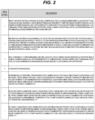
- the 2,3-dehydroadipyl-CoA reductase used in the present invention is, for example, an enzyme derived from the following biological species such as Candida auris (SEQ ID NO: 8), Kluyveromyces marxianus (SEQ ID NO:9), Pichia kudriavzevii (SEQ ID NO:10), Thermothelomyces thermophilus (SEQ ID NO:11), Thermothielavioides terrestris (SEQ ID NO:12), Chaetomium thermophilum (SEQ ID NO:13), Podospora anserina (SEQ ID NO:14), Purpureocillium lilacinum (SEQ ID NO:15), and Pyrenophora teres (SEQ ID NO:16).
- Candida auris SEQ ID NO: 8
- Kluyveromyces marxianus SEQ ID NO:9
- Pichia kudriavzevii SEQ ID NO:10
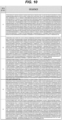
- At least one of the enzymes consisting of the amino acid sequences set forth in SEQ ID NOs: 8 to 16 is used, and more preferably, at least one of the enzymes consisting of the amino acid sequences set forth in SEQ ID NOs: 11, 12, 13, 14, and 16 is used ( Fig. 3 ).
- adipyl-CoA is converted into adipic acid.
- the enzyme that can catalyze the present conversion include thioester hydrolases classified into the group of EC 3.1.2.
- enzymes classified into the group of EC 3.1.2.1 (acetyl-CoA hydrolase) or EC 3.1.2.20 (acyl-CoA hydrolase) can be exemplified as enzymes that can have an activity for the present conversion.
- the enzyme that can be used in the present invention is not limited as long as it has an activity for the present conversion, and examples thereof include an adipyl-CoA hydrolase.
- examples of another enzyme that can catalyze the reaction of Step E in Fig. 1 include a CoA-transferase classified into the group of EC 2.8.3.
- enzymes classified into the group of EC 2.8.3.5 (3-oxoacid CoA transferase), EC 2.8.3.6 (3-oxoadipate CoA-transferase), or EC 2.8.3.18 (succinyl-CoA: acetyl-CoA-transferase) can be exemplified as enzymes that can have an activity for the present conversion.
- the enzyme that can be used in the present invention is not limited as long as it has an activity for the present conversion, and examples thereof include an adipate-CoA transferase.
- examples of conversion of another enzyme that can catalyze the reaction of Step E in Fig. 1 include a pathway that transfers the adipyl group of adipyl-CoA to a phosphate to form an adipyl phosphate by acyltransferases classified into the group of EC 2.3.1 and then undergoes dephosphorylation by phosphotransferases classified into group EC 2.7.2.
- acyltransferase enzymes classified into the group of EC 2.3.1.8 (phosphate acetyltransferase) or EC 2.3.1.19 (butyryl phosphate transferase) can be exemplified as enzymes that can have an activity for the present conversion.
- enzymes classified into the group of EC 2.7.2.1 (acetate kinase) or EC 2.7.2.7 (butanoate kinase) can be exemplified as enzymes that can have an activity for the present conversion.
- the enzyme that can be used in the present invention is not limited as long as it has an activity for the present conversion, and examples thereof include a phosphate adipyltransferase and an adipate kinase.
- acyl-CoA is converted into an aldehyde.
- the enzyme that can catalyze the present conversion include enzymes classified into the group of EC 1.2.1.
- enzymes classified into the group of EC 1.2.1.10 acetaldehyde dehydrogenase (acetylation)), EC 1.2.1.17 (glyoxylate dehydrogenase (acylation)), EC 1.2.1.42 (hexadecanal dehydrogenase (acylation)), EC 1.2.1.44 (cinnamoyl-CoA reductase (acylation)), EC 1.2.1.75 (malonyl-CoA reductase (malonic semialdehyde formation)), or EC 1.2.1.76 (succinic semialdehyde dehydrogenase (acylation)) can be exemplified as enzymes that can have an activity for the present conversion because these enzymes catalyze a
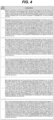
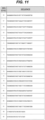
- the enzyme that can be used in the present invention is not limited as long as it has an activity for the present conversion, and for example, Clostridium kluyveri-derived sucD consisting of an amino acid sequence set forth in SEQ ID NO: 17 is used ( Fig. 4 ).
- a carboxyl group is converted into an aldehyde.
- the enzyme that can catalyze the present conversion include a carboxylic acid reductase (CAR).
- CAR carboxylic acid reductase
- enzymes classified into the group of EC 1.2.1.30 (carboxylic acid reductase (NADP + )), EC 1.2.1.31 (L-aminoadipate semialdehyde dehydrogenase), EC 1.2.1.95 (L-2-aminoadipate reductase), or EC 1.2.99.6 (carboxylic acid reductase) can be exemplified as enzymes that can have an activity for the present conversion because these enzymes catalyze a conversion reaction in which an aldehyde is generated from a carboxylic acid similarly to the present conversion.
- Typical examples of the biological species from which the enzyme is derived include, but are not limited to, Nocardia iowensis, Nocardia asteroides, Nocardia brasiliensis, Nocardia farcinica, Segniliparus rugosus, Segniliparus rotundus, Tsukamurella paurometabola, Mycobacterium marinum, Mycobacterium neoaurum, Mycobacterium abscessus, Mycobacterium avium, Mycobacterium chelonae, Mycobacterium immunogenum, Mycobacterium smegmatis, Serpula lacrymans, Heterobasidion annosum, Coprinopsis cinerea, Aspergillus flavus, Aspergillus terreus, Neurospora crassa, and Saccharomyces cerevisiae.
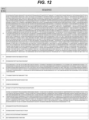
- the enzyme that can be used in the present invention is not limited as long as it has an activity for the present conversion, and for example, at least one of enzymes consisting of an amino acid sequence set forth in any of SEQ ID NOs: 18 to 22 may be used, at least one of enzyme MaCar derived from Mycobacterium abscessus consisting of an amino acid sequence set forth in SEQ ID NO: 20 and MaCar(m) that is a variant of MaCar consisting of an amino acid sequence set forth in SEQ ID NO: 22 is preferably used, and MaCar(m) consisting of an amino acid sequence set forth in SEQ ID NO: 22 is more preferably used ( Fig. 4 ).
- the carboxylic acid reductase can be converted into an active holoenzyme by phosphopantetinylation ( Venkitasubramanian et al., Journal of Biological Chemistry, Vol. 282, No. 1, 478-485 (2007 )).
- the phosphopantetinylation is catalyzed by a phosphopantetheinyl transferase (PT).
- PT phosphopantetheinyl transferase
- the enzyme that can catalyze the present reaction include enzymes classified into EC 2.7.8.7. Therefore, the microorganism of the present invention may be further modified to increase an activity of the phosphopantetheinyl transferase.
- Examples of a method of increasing the activity of the phosphopantetheinyl transferase include, but are not limited to, a method of introducing an exogenous phosphopantetheinyl transferase and a method of enhancing expression of an endogenous phosphopantetheinyl transferase.
- the enzyme that can be used in the present invention is not particularly limited as long as it has a pheosphopantetheinyl group transfer activity, and typical examples thereof include EntD of Escherichia coli, Sfp of Bacillus subtilis, Npt of Nocardia iowensis ( Venkitasubramanian et al., Journal of Biological Chemistry, Vol.
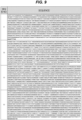
- the enzyme that can be used in the present invention is not limited as long as it has an activity for the present conversion, and for example, at least one of enzymes consisting of amino acid sequences set forth in SEQ ID NOs: 23 to 26 may be used, and Npt of Nocardia iowensis derived from Nocardia iowensis consisting of an amino acid sequence set forth in SEQ ID NO: 24 is preferably used ( Fig. 5 ).
- the conversions of Steps J, M, P, and R in Fig. 1 are transamination reactions.
- Examples of the enzyme that can catalyze the conversion include a transaminase (aminotransferase) classified in the group of EC 2.6.1.
- enzymes classified into the group of EC 2.6.1.19 (4-aminobutanoate-2-oxoglutarate transaminase), EC 2.6.1.29 (diamine transaminase), or EC 2.6.1.48 (5-aminovalerate transaminase) can be exemplified as enzymes that can have an activity for the present conversion.
- the enzyme that can be used in the present invention is not particularly limited as long as it has the conversion activity of each step, for example, YgjG that is a putrescine aminotransferase of Escherichia coli reported to transaminate cadaverine and spermidine ( Samsonova., et al., BMC microbiology 3.1 (2003): 2 ), SpuC that is a putrescine aminotransferase of the genus Pseudomonas ( Lu et al., Journal of bacteriology 184.14 (2002): 3765-3773 , Galman et al., Green Chemistry 19.2 (2017): 361-366 ), or GABA aminotransferase GabT or PuuE of Escherichia coli may also be used.
- YgjG that is a putrescine aminotransferase of Escherichia coli reported to transaminate cadaverine and spermidine
- SpuC that is a put
- an ⁇ -transaminase derived from a biological species such as Ruegeria pomeroyi, Chromobacterium violaceum, Arthrobacter citreus, Sphaerobacter thermophilus, Aspergillus fischeri, Vibrio fluvialis, Agrobacterium tumefaciens, or Mesorhizobium loti also has a transamination activity to a diamine compound such as 1,8-diaminooctane or 1,10-diaminodecane, and these enzymes may be used in the present invention ( Sung et al., Green Chemistry 20.20 (2016): 4591-4595 , Sattler et al., Angewandte Chemie 124.36 (2012): 9290-9293 ).
- the enzyme that can be used in the present invention is not limited as long as it has an activity for the present conversion, and for example, at least one of enzymes consisting of amino acid sequences set forth in SEQ ID NOs: 27 to 31 and 158 may be used ( Figs. 5 and 15 ).
- Examples of a typical amino group donor include, but are not limited to, L-glutamic acid, L-alanine, and glycine.
- aldehydes are converted into alcohols.
- the enzyme that can catalyze the present conversion include oxidoreductases classified into the group of EC 1.1.1.
- enzymes classified in the group of EC 1.1.1.1 (alcohol dehydrogenase), EC 1.1.1.2 (alcohol dehydrogenase (NADP + )), or EC 1.1.1.71 (alcohol dehydrogenase [NAD(P) + ]) can be exemplified as enzymes that can have an activity for the present conversion because these enzymes catalyze a reaction in which an aldehyde is converted into an alcohol similarly to the present conversion.
- the enzyme used in the present invention is not limited as long as it has an activity for the present conversion, and for example, is Escherichia coli-derived Ahr set forth in SEQ ID NO: 32 ( Fig. 5 ).
- CoA is added to a carboxyl group.
- the enzyme that can catalyze the present conversion include CoA transferases classified into the group of EC 2.8.3 and acid-thiol ligases classified into the group of EC 6.2.1.
- the enzyme used in the present invention is not limited as long as it has an activity for the present conversion.
- the gene encoding the enzyme that can be used in the present invention may be derived from an organism other than the exemplified organism or artificially synthesized, and may be any gene that can express a substantial enzyme activity in a host microorganism cell.
- the recombinant microorganism according to the present invention may be a recombinant microorganism obtained by disrupting any gene as appropriate in a host microorganism.
- the target gene is disrupted by a method known in the art.
- the amino acid sequence of the enzyme or the base sequence of the gene encoding the enzyme that can be used in the present invention can contain all mutations that can occur in nature or artificially introduced mutations and modifications as long as a substantial enzyme activity can be expressed by the host microorganism, and can contain, for example, mutations such as deletion, substitution, insertion, and addition.
- the enzyme may have an amino acid sequence in which 1 or more, preferably 1 to 20, more preferably 1 to 10, still more preferably 1 to 7, further still more preferably 1 to 5, and particularly preferably 1 to 3 amino acids are deleted, substituted, inserted, and/or added in the amino acid sequence of the enzyme described above.
- a DNA that hybridizes with a DNA having a complementary base sequence under a stringent condition can also be used as long as it can express a substantial enzymatic activity in the host microorganism cell.
- the "stringent condition” is, for example, a condition of about "1xSSC, 0.1%SDS, 60°C", a more severe condition of about "0.1xSSC, 0.1%SDS, 60°C", and a still more severe condition of about "0.1xSSC, 0.1%SDS, 68°C".
- the genetically modified microorganism according to the present invention can have a base sequence having a sequence identity of, for example, 80% or higher, 85% or higher, 88% or higher, 90% or higher, 93% or higher, 95% or higher, 97% or higher, 98% or higher, or 99% or higher with the base sequence of the enzyme gene under a condition in which an enzymatic activity can be expressed.
- the genetically modified microorganism can contain a gene encoding a protein having an amino acid sequence having a sequence identity, for example, 80% or higher, 85% or higher, 88% or higher, 90% or higher, 95% or higher, 97% or higher, 98% or higher, or 99% or higher with the amino acid sequence of the enzyme.
- a proportion (%) of a "sequence identity" of a comparative amino acid sequence to a reference amino acid sequence is defined as a percentage of amino acid residues in the comparative sequence that are identical to the amino acid residues in the reference sequence when the sequences are aligned so that the identity between the two sequences is maximized, and if necessary, a gap is introduced into one or both of the two sequences. In this case, a conservative substitution is not considered as a part of the sequence identity.
- the sequence identity can be determined by using publicly available computer software, for example, using an alignment search tool such as Basic Local Alignment Search Tool (abbreviated as BLAST, registered trademark). In an alignment, those skilled in the art can determine appropriate parameters to obtain the maximum alignment of the comparative sequence.
- the "sequence identity" of the nucleotide sequence can also be determined by a similar method.
- the C6 compound biosynthesis enzyme gene when introduced into a host microorganism cell as an "expression cassette", a more stable and high level of enzymatic activity can be obtained.
- the "expression cassette” refers to a nucleotide having a nucleic acid sequence that is functionally linked to a nucleic acid to be expressed or a gene to be expressed and regulates transcription and translation.
- the expression cassette of the present invention contains a promoter sequence on the 5' upstream from the coding sequence, a terminator sequence on the 3' downstream, and an optionally additional normal regulatory element in a functionally linked state, and in such a case, a nucleic acid to be expressed or a gene to be expressed is introduced into a host microorganism.
- the promoter is defined as a DNA sequence that allows RNA polymerase to bind to DNA to initiate RNA synthesis, regardless of whether the promoter is a constitutive expression promoter or an inductive expression promoter.
- a strong promoter is a promoter that initiates mRNA synthesis at a high frequency, and is also suitably used in the present invention.
- a lac system In Escherichia coli, a lac system, a trp system, a tac or trc system, or a major operator and promoter region of a ⁇ -phage, a regulatory region for fd coat protein, a promoter for a glycolytic enzyme (for example, 3-phosphoglycerate kinase or glyceraldehyde-3-phosphate dehydrogenase), glutamate decarboxylase A, or serine hydroxymethyltransferase, a promoter region of RNA polymerase derived from T7 phage, and the like can be used.
- a glycolytic enzyme for example, 3-phosphoglycerate kinase or glyceraldehyde-3-phosphate dehydrogenase
- glutamate decarboxylase A glutamate decarboxylase A
- serine hydroxymethyltransferase a promoter region of RNA polymerase derived from T7 phage, and
- HCE high-level constitutive expression
- a cspB promoter a sodA promoter
- an elongation factor (EF-Tu) promoter elongation factor
- a terminator a T7 terminator, an rrnBT1T2 terminator, a lac terminator, and the like can be used.
- regulatory elements include a selection marker, an amplification signal, and a replication point. A suitable regulatory sequence is described in, for example, " Gene Expression Technology: Methods in Enzymology 185" Academic Press (1990 )".
- the expression cassette described above is incorporated into a vector consisting of, for example, a plasmid, a phage, a transposon, an IS element, a fosmid, a cosmid, or a linear or cyclic DNA and is inserted into a host microorganism.
- a plasmid and a phage are preferred.
- the vector may be self-replicated in a host microorganism or may be replicated by a chromosome.
- Examples of a preferred plasmid include pLG338, pACYC184, pBR322, pUC18, pUC19, pKC30, pRep4, pHS1, pKK223-3, pDHE19.2, pHS2, pPLc236, pMBL24, pLG200, pUR290, pIN-III113-B1, Agt11, or pBdCI of Escherichia coli; pUB110, pC194, or pBD214 of a bacillus; and pSA77 or pAJ667 of the genus Corynebacterium.
- bacillus such as the genus Bacillus
- pUB110 examples include pUB110, pC194, and pBD214.
- Other usable plasmids and the like are described in " Gene Cloning and DNA analysis 7th edition", Wiley-Blackwell (2016 ).
- the expression cassette can be introduced into the vector by a conventional method of including cutting with an appropriate restriction enzyme, cloning, and ligation.
- Each expression cassette may be located on one vector or on two or more vectors.
- a conventional method can be used as a method that can be applied when the vector is introduced into a host microorganism.
- the method include, but are not limited to, a calcium chloride method, an electroporation method, a conjugation transfer method, and a protoplast fusion method, and a method suitable for a host microorganism can be selected.
- a second aspect of the present invention relates to a method for producing a target compound, the method including a culture step of culturing the recombinant microorganism described above.
- the compound is preferably a C6 compound.
- the C6 compound is at least one selected from the group consisting of adipic acid, hexamethylenediamine, 1,6-hexanediol, 6-aminohexanoic acid, 6-amino-1-hexanol, and 6-hydroxyhexanoic acid.
- the production method of a C6 compound includes a culture step of culturing the genetically modified microorganism according to the present invention.
- a culture containing microbial cells is obtained by culturing the recombinant microorganism in a medium containing a carbon source and a nitrogen source.
- the genetically modified microorganism of the present invention is cultured under conditions suitable for the C6 compound production and the growth and maintenance of the microorganism, and suitable medium composition, culture time, and culture conditions can be easily set by those skilled in the art.
- the carbon source examples include D-glucose, sucrose, lactose, fructose, maltose, oligosaccharides, polysaccharides, starch, cellulose, rice bran, blackstrap molasses, fats and oils (for example, soybean oil, sunflower oil, peanut oil, palm oil, and the like), fatty acids (for example, palmitic acid, linoleic acid, oleic acid, linolenic acid, and the like), alcohols (for example, glycerol, ethanol, and the like), organic acids (for example, acetic acid, lactic acid, succinic acid, and the like), corn decomposition liquids, and cellulose decomposition liquids.
- the carbon source is D-glucose, sucrose, or glycerol. These carbon sources can be used alone or as a mixture.
- the C6 compound produced using a biomass-derived raw material can be clearly distinguished from a synthetic raw material derived from, for example, petroleum, natural gas, or coal, by measurement of a biomass carbon content based on Carbon-14 (radiocarbon) analysis defined in ISO 16620-2 or ASTM D6866.
- nitrogen source examples include nitrogen-containing organic compounds (for example, peptone, casamino acid, tryptone, a yeast extract, a meat extract, a malt extract, a corn steep liquor, soy flour, an amino acid, urea, and the like) and inorganic compounds (for example, an aqueous ammonia solution, ammonium sulfate, ammonium chloride, ammonium phosphate, ammonium carbonate, sodium nitrate, ammonium nitrate, and the like). These nitrogen sources can be used alone or as a mixture.
- organic compounds for example, peptone, casamino acid, tryptone, a yeast extract, a meat extract, a malt extract, a corn steep liquor, soy flour, an amino acid, urea, and the like
- inorganic compounds for example, an aqueous ammonia solution, ammonium sulfate, ammonium chloride, ammonium phosphate, ammonium carbonate, sodium nitrate, ammoni
- the medium may contain a corresponding antibiotic in a case where a recombinant microorganism expresses a useful additional trait, for example, in a case where a recombinant microorganism contains a marker resistant to an antibiotic. Therefore, a risk of contamination by various bacteria during culture is reduced.
- the antibiotic include, but are not limited to, a ⁇ -lactam antibiotic such as ampicillin, an aminoglycoside antibiotic such as kanamycin, a macrolide antibiotic such as erythromycin, a tetracycline antibiotic, and chloramphenicol.
- the culture may be batch or continuous.
- an additional carbon source or the like may be supplied at an appropriate time point of culture.
- the culture may be performed while conditions such as a preferred temperature, oxygen concentration, and pH are controlled.
- a suitable culture temperature of a general transformant derived from a microbial host cell is usually 15°C to 55°C and preferably 25°C to 40°C.
- shaking flask culture or the like
- agitation/aeration jar fermenter culture or the like
- These culture conditions can be easily set by those skilled in the art.
- the culture step may include obtaining a culture of the recombinant microorganism and/or an extract of the culture.
- the production method according to the present invention may further include a mixing step of mixing the culture and/or the extract of the culture with a substrate compound to obtain a mixed solution.
- the substrate compound may be appropriately selected according to the enzyme and the target compound.
- the production method of a compound according to the present invention may include a step of separating and/or purifying a C6 compound that is a target compound.
- examples of any technique include, but are not limited to, centrifugation, filtration, membrane separation, crystallization, extraction, distillation, adsorption, phase separation, ion exchange, and various types of chromatography.
- one type of method may be selected, or a plurality of methods may be combined.
- a further aspect of the present invention relates to a protein.
- the protein is a recombinant protein:
- the protein is preferably a recombinant protein:
- the recombinant protein in a preferred embodiment, the recombinant protein:
- Still another aspect of the present invention relates to a method for producing a C6 compound, the method including using the protein described above.
- a recombinant microorganism having an excellent 2,3-dehydroadipyl-CoA reductase activity can be obtained by introducing a gene encoding a protein having the 2,3-dehydroadipyl-CoA reductase activity into a host microorganism.
- a protein having an excellent 2,3-dehydroadipyl-CoA reductase activity is also provided.
- a target C6 compound can be efficiently produced using the aforementioned recombinant microorganism or the aforementioned protein.
- various C6 compounds can be obtained by performing conversion using an additional enzyme according to a desired C6 compound.
- the recombinant microorganism according to the present invention has an excellent C6 compound production ability, it is expected that the recombinant microorganism can be used for production of the target compound on an industrial scale.
- the recombinant microorganism according to the present invention is a microorganism obtained by genetically modifying a host microorganism so that adipic acid (ADA) ( CAS No. 124-04-9 ) or an adipic acid derivative can be efficiently produced.
- ADA adipic acid
- the "adipic acid derivative” is an aliphatic carboxylic acid having an aliphatic hydrocarbon group having 3 to 5 carbon atoms and one or a plurality of carboxyl groups.
- the aliphatic hydrocarbon group of the adipic acid derivative is saturated or unsaturated.
- carbon may be substituted with a substituent such as a hydroxyl group, a carboxyl group, a ketone group, or an amino group.
- the number of carbon atoms of the aliphatic hydrocarbon group of the "adipic acid derivative” is preferably 3 or 4.
- the number of carboxyl groups of the "adipic acid derivative” is preferably 1 or 2.
- adipic acid derivative examples include 3-oxoadipic acid (3-OA) having an aliphatic hydrocarbon group having 4 carbon atoms and two carboxylic acids, levulinic acid (LEV) having an aliphatic hydrocarbon group 3 carbon atoms and one carboxylic acid, 3-hydroxyadipic acid (3HA) having an aliphatic hydrocarbon group 4 carbon atoms and two carboxylic acids, and 2,3-dehydroadipic acid (23DA) having an aliphatic hydrocarbon group having 4 carbon atoms and two carboxylic acids (see Fig. 16 ).
- 3-OA having an aliphatic hydrocarbon group having 4 carbon atoms and two carboxylic acids
- LUV levulinic acid
- 3-hydroxyadipic acid (3HA) having an aliphatic hydrocarbon group 4 carbon atoms and two carboxylic acids
- 2,3-dehydroadipic acid (23DA) having an aliphatic hydrocarbon group having 4 carbon atoms and two carboxylic acids
- adipic acid and the adipic acid derivative in the present specification can take a neutral or ionized form including any salt form and this form is pH-dependent. Therefore, the terms “adipic acid” and “adipic acid derivative” encompass any salt form and ionized form in addition to the free acid form. In the present specification, the adipic acid and adipic acid derivative may be collectively referred to as “adipic acid” or an "adipic acid derivative".
- the synthesis method may be a chemical synthesis method, a biological synthesis method using an enzyme or a microorganism in which the enzyme is present, or the like.
- the microorganism has a metabolic pathway for converting adipic acid into the above compound, metabolic conversion from a raw material using adipic acid as an intermediate in the cell is also possible.
- the genetically modified microorganism according to the present invention contains at least one of an exogenous gene encoding a 3-hydroxyadipyl-CoA dehydratase and an exogenous gene encoding a 2,3-dehydroadipyl-CoA reductase.
- the recombinant microorganism obtains an adipic acid production pathway, and adipic acid or an adipic acid derivative can be thus produced.
- the "genetically modified microorganism" is simply referred to as "recombinant microorganism".
- At least one of the 3-hydroxyadipyl-CoA dehydratase and the 2,3-dehydroadipyl-CoA reductase is derived from the genus Burkholderia (Burkholderia sp.) LEBP-3 strain (Accession Number: NITE BP-03334).
- both the 3-hydroxyadipyl-CoA dehydratase and the 2,3-dehydroadipyl-CoA reductase are derived from the genus Burkholderia (Burkholderia sp.) LEBP-3 strain.
- At least one of the exogenous gene encoding a 3-hydroxyadipyl-CoA dehydratase and the exogenous gene encoding a 2,3-dehydroadipyl-CoA reductase is derived from the genus Burkholderia (Burkholderia sp.) LEBP-3 strain (Accession Number: NITE BP-03334).
- both the exogenous gene encoding a 3-hydroxyadipyl-CoA dehydratase and the exogenous gene encoding a 2,3-dehydroadipyl-CoA reductase are derived from the genus Burkholderia (Burkholderia sp.) LEBP-3 strain (Accession Number: NITE BP-03334) .
- At least one of the exogenous genes encoding the enzyme may be introduced.
- at least one of exogenous genes encoding an enzyme that catalyzes each reaction step of the adipic acid production pathway is introduced, and an exogenous enzyme is expressed.
- the reaction may proceed by the enzyme encoded by the endogenous gene.
- the recombinant microorganism according to the present invention preferably expresses at least one of a 3-hydroxyadipyl-CoA dehydratase and a 2,3-dehydroadipyl-CoA reductase.
- the recombinant microorganism according to the present invention expresses at least one of these enzymes, such that the reaction stage of the adipic acid production pathway can proceed, and a target compound can be produced.
- the recombinant microorganism according to the present invention expresses both a 3-hydroxyadipyl-CoA dehydratase and a 2,3-dehydroadipyl-CoA reductase.
- the recombinant microorganism according to the present invention expresses these enzymes, such that each reaction stage of the adipic acid production pathway can proceed, and a target compound can be produced.
- the recombinant microorganism according to the present invention expresses an oxidoreductase and/or a ⁇ -ketothiolase, in addition to the 3-hydroxyadipyl-CoA dehydratase and the 2,3-dehydroadipyl-CoA reductase.
- the recombinant microorganism according to the present invention expresses these enzymes, such that each reaction stage of the adipic acid production pathway can proceed, and a target compound can be more efficiently produced (see Fig. 16 ).
- the 3-hydroxyadipyl-CoA dehydratase is an enzyme that catalyzes the reaction of converting 3-hydroxyadipyl-CoA into 2,3-dehydroadipyl-CoA (Step C in Fig. 16 ).
- the 3-hydroxyadipyl-CoA dehydratase is encoded by a DNA having a sequence identity of 65% or higher, 70% or higher, 75% or higher, 80% or higher, 85% or higher, 88% or higher, 90% or higher, 93% or higher, 95% or higher, 97% or higher, 98% or higher, or 99% or higher with a PCR amplification product obtained using a chromosomal DNA of the genus Burkholderia (Burkholderia sp.) LEBP-3 strain as a template and using a predetermined nucleotide as a primer.
- the DNA has, for example, 626 to 940 bp, preferably 740 to 862 bp, more preferably 743 to 823 bp, still more preferably 767 to 799 bp, particularly preferably 775 to 791 bp, and most preferably 778 to 788 bp.
- the primer used in PCR will be described below.
- the 3-hydroxyadipyl-CoA dehydratase is encoded by a DNA that is a PCR amplification product obtained using a chromosomal DNA of the genus Burkholderia (Burkholderia sp.) LEBP-3 strain as a template and using a predetermined nucleotide as a primer.
- the DNA has, for example, 626 to 940 bp, preferably 740 to 862 bp, more preferably 743 to 823 bp, still more preferably 767 to 799 bp, particularly preferably 775 to 791 bp, and most preferably 778 to 788 bp.
- the 3-hydroxyadipyl-CoA dehydratase is selected from:
- the 3-hydroxyadipyl-CoA dehydratase is a recombinant polypeptide encoded by a PCR amplification product obtained using a chromosomal DNA of the genus Burkholderia (Burkholderia sp.) LEBP-3 strain as a template and using a predetermined nucleotide as a primer, and a base pair number of the amplification product is 783 or 784 bp.
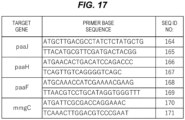
- primers forward and reverse used in PCR include the followings (see Fig. 17 ):
- nucleotide having a base sequence set forth in SEQ ID NO: 168 and the nucleotide having a base sequence set forth in SEQ ID NO: 169" of (1b) have additional nucleotide lengths of, for example, 1 to 20 bp, preferably 1 to 15 bp, more preferably 5 to 15 bp, and still more preferably 10 to 15 bp, in addition to the "base sequence set forth in SEQ ID NO: 168" and the "base sequence set forth in SEQ ID NO: 169", respectively.
- nucleotide having a base sequence obtained by codon-optimizing a base sequence set forth in SEQ ID NO: 168 and the nucleotide having a base sequence obtained by codon-optimizing a base sequence set forth in SEQ ID NO: 169" of (1d) have sequences homologous to vector ends, and have additional nucleotide lengths of, for example, 1 to 20 bp, preferably 1 to 15 bp, more preferably 5 to 15 bp, and still more preferably 10 to 15 bp, in addition to the "base sequence obtained by codon-optimizing the base sequence set forth in SEQ ID NO: 168" and the "base sequence obtained by codon-optimizing the base sequence set forth in SEQ ID NO: 169", respectively.
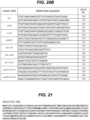
- nucleotide having a base sequence obtained by codon-optimizing a base sequence set forth in SEQ ID NO: 168 and the nucleotide having a base sequence obtained by codon-optimizing a base sequence set forth in SEQ ID NO: 169" of (1d) include: (1d') a nucleotide consisting of a base sequence set forth in SEQ ID NO: 198 and a nucleotide consisting of a base sequence set forth in SEQ ID NO: 199 ( Fig. 20A ).
- preferred primers are:
- a DNA that is a PCR amplification product obtained using the nucleotide as a primer and a chromosomal DNA of the genus Burkholderia (Burkholderia sp.) LEBP-3 strain as a template has preferably 783 or 784 bp.
- the DNA polymerase used in PCR a known DNA polymerase in the art is used, and examples thereof include a Taq DNA polymerase, a hot start adjusted DNA polymerase, and a proofreading DNA polymerase having a 3'-5' exonuclease activity separately from a polymerase activity.
- the 2,3-dehydroadipyl-CoA reductase is an enzyme that catalyzes the reaction of converting 2,3-dehydroadipyl-CoA into adipyl-CoA (see Step D in Fig. 16 ).
- the 2,3-dehydroadipyl-CoA reductase is encoded by a DNA having a sequence identity of 65% or higher, 70% or higher, 75% or higher, 80% or higher, 85% or higher, 88% or higher, 90% or higher, 93% or higher, 95% or higher, 97% or higher, 98% or higher, or 99% or higher with a PCR amplification product obtained using a chromosomal DNA of the genus Burkholderia (Burkholderia sp.) LEBP-3 strain as a template and using a predetermined nucleotide as a primer.
- a DNA having a sequence identity of 65% or higher, 70% or higher, 75% or higher, 80% or higher, 85% or higher, 88% or higher, 90% or higher, 93% or higher, 95% or higher, 97% or higher, 98% or higher, or 99% or higher with a PCR amplification product obtained using a chromosomal DNA of the genus Burkholderia (
- the DNA has, for example, 924 to 1,386 bp, preferably 1,039 to 1,249 bp, more preferably 1,097 to 1,213 bp, still more preferably 1,131 to 1,179 bp, particularly preferably 1,143 to 1,167 bp, more particularly 1,145 to 1,165 bp, and most preferably 1,150 to 1,160 bp.
- the 2,3-dehydroadipyl-CoA reductase is encoded by a DNA that is a PCR amplification product obtained using a chromosomal DNA of the genus Burkholderia (Burkholderia sp.) LEBP-3 strain as a template and using a predetermined nucleotide as a primer.
- the DNA has, for example, 924 to 1,386 bp, preferably 1,039 to 1,249 bp, more preferably 1,097 to 1,213 bp, still more preferably 1,131 to 1,179 bp, particularly preferably 1,143 to 1,167 bp, more particularly 1,145 to 1,165 bp, and most preferably 1,150 to 1,160 bp.
- the 2,3-dehydroadipyl-CoA reductase is selected from:
- the exogenous 2,3-dehydroadipyl-CoA reductase is a PCR amplification product obtained using a chromosomal DNA of the genus Burkholderia (Burkholderia sp.) LEBP-3 strain as a template and using a predetermined nucleotide as a primer, and a base pair number of the amplification product is 1,155 or 1,156 bp.
- primers forward and reverse used in PCR include the followings (see Fig. 17 ):
- nucleotide having a base sequence set forth in SEQ ID NO: 170 and the nucleotide having a base sequence set forth in SEQ ID NO: 171" of (2b) have additional nucleotide lengths of, for example, 1 to 20 bp, preferably 1 to 15 bp, more preferably 5 to 15 bp, and still more preferably 10 to 15 bp, in addition to the "base sequence set forth in SEQ ID NO: 170" and the "base sequence set forth in SEQ ID NO: 171", respectively.
- nucleotide having a base sequence obtained by codon-optimizing a base sequence set forth in SEQ ID NO: 170 and the nucleotide having a base sequence obtained by codon-optimizing a base sequence set forth in SEQ ID NO: 171" of (2d) have sequences homologous to vector ends, and have additional nucleotide lengths of, for example, 1 to 20 bp, preferably 1 to 15 bp, more preferably 5 to 15 bp, and still more preferably 10 to 15 bp, in addition to the "base sequence obtained by codon-optimizing the base sequence set forth in SEQ ID NO: 170” and the "base sequence obtained by codon-optimizing the base sequence set forth in SEQ ID NO: 171", respectively.
- nucleotide having a base sequence obtained by codon-optimizing a base sequence set forth in SEQ ID NO: 170 and the nucleotide having a base sequence obtained by codon-optimizing a base sequence set forth in SEQ ID NO: 171" of (2d) include: (2d') a nucleotide consisting of a base sequence set forth in SEQ ID NO: 210 and a nucleotide consisting of a base sequence set forth in SEQ ID NO: 211 ( Fig. 20A ).
- preferred primers are: (2a) a nucleotide consisting of a base sequence set forth in SEQ ID NO: 170 and a nucleotide consisting of a base sequence set forth in SEQ ID NO: 171, or (2b) a nucleotide having a base sequence set forth in SEQ ID NO: 170 and a nucleotide having a base sequence set forth in SEQ ID NO: 171.
- a DNA that is a PCR amplification product obtained using the nucleotide as a primer and a chromosomal DNA of the genus Burkholderia (Burkholderia sp.) LEBP-3 strain as a template has preferably 1,155 or 1,156 bp.
- the DNA polymerase used in PCR a known DNA polymerase in the art is used, and examples thereof include a Taq DNA polymerase, a hot start adjusted DNA polymerase, and a proofreading DNA polymerase having a 3'-5' exonuclease activity separately from a polymerase activity.
- PCR amplification product refers to a product obtained as a result of performing PCR using a specific nucleotide as a primer.
- a treatment with an amount of 25 ⁇ L of a solution is performed 30 cycles under conditions of a heat treatment at 98°C for 10 seconds, annealing at 55°C for 15 seconds, and elongation at 72°C and 5 sec/kb using 1 ⁇ M of each of specific nucleotides as a forward primer and a reverse primer, and using PrimeSTAR Max DNA Polymerase (trade name, manufactured by TAKARA BIO INC.) as an enzyme.
- a host microorganism into which a target exogenous enzyme gene is introduced is not particularly limited, and may be either a prokaryote or a eukaryote. Any one of a microorganism isolated and preserved in advance, a microorganism newly isolated from nature, and a microorganism subjected to a genetic modification can be arbitrarily selected.
- the host microorganism belongs to, for example, a genus selected from the genus Escherichia, the genus Corynebacterium, the genus Bacillus, the genus Acinetobacter, the genus Burkholderia, the genus Pseudomonas, the genus Clostridium, the genus Saccharomyces, the genus Schizosaccharomyces, the genus Yarrowia, the genus Candida, the genus Pichia, the genus Aspergillus, the genus Klebsiella, the genus Gluconobacter, the genus Zymomonas, the genus Lactobacillus, the genus Lactococcus, the genus Streptococcus, and the genus Streptomyces.
- the host microorganism of the present invention preferably belongs to, for example, a genus selected from the group consisting of the genus Escherichia, the genus Corynebacterium, the genus Bacillus, the genus Acinetobacter, the genus Burkholderia, the genus Pseudomonas, the genus Clostridium, the genus Saccharomyces, the genus Schizosaccharomyces, the genus Yarrowia, the genus Candida, the genus Pichia, and the genus Aspergillus.
- the host microorganism is more preferably Escherichia coli.
- the recombinant microorganism according to the present invention into which an exogenous gene has been introduced into the host microorganism belongs to, for example, a genus selected from the group consisting of the genus Escherichia, the genus Corynebacterium, the genus Bacillus, the genus Acinetobacter, the genus Burkholderia, the genus Pseudomonas, the genus Clostridium, the genus Saccharomyces, the genus Schizosaccharomyces, the genus Yarrowia, the genus Candida, the genus Pichia, the genus Aspergillus, the genus Klebsiella, the genus Gluconobacter, the genus Zymomonas, the genus Lactobacillus, the genus Lactococcus, the genus Streptococcus, and the genus Streptomyces, and the
- adipic acid, adipic acid derivative, hexamethylenediamine, 1,6-hexanediol, and 6-amino-1-hexanol production pathways of the genetically modified microorganism according to the present invention and the enzymes that catalyze the respective reaction stages of the pathways will be described below with reference to Fig. 16 .
- Step A in Fig. 16 for example, a succinyl-CoA:acetyl-CoA acyltransferase, or a 3-oxoadipyl-CoA thiolase is involved, and succinyl-CoA and acetyl-CoA are condensed and converted into 3-oxoadipyl-CoA.
- Other examples of the enzyme that can catalyze the present conversion include a ⁇ -ketothiolase.
- enzymes classified into the group such as EC 2.3.1.9 (acetoacetyl-CoA thiolase), EC 2.3.1.16 (3-ketoacyl-CoA thiolase), or EC 2.3.1.174 (3-oxoadipyl-CoA thiolase) can also be exemplified as enzymes that can have an activity for the present conversion.
- the enzyme used in the present invention is not limited as long as it has an activity for the present conversion, and in one embodiment, Escherichia coli-derived PaaJ consisting of an amino acid sequence set forth in SEQ ID NO: 172 is used.
- the enzyme is a succinyl-CoA:acetyl-CoA acyltransferase encoded by a DNA sequence (1,203 bp) that is a PCR amplification product obtained using a nucleotide set forth in SEQ ID NO: 164 and a nucleotide set forth in SEQ ID NO: 165 as primers and a chromosomal DNA of the genus Burkholderia (Burkholderia sp.) LEBP-3 strain as a template.
- a DNA sequence (1,203 bp) that is a PCR amplification product obtained using a nucleotide set forth in SEQ ID NO: 164 and a nucleotide set forth in SEQ ID NO: 165 as primers and a chromosomal DNA of the genus Burkholderia (Burkholderia sp.) LEBP-3 strain as a template.
- Step B in Fig. 16 the 3-hydroxyadipyl-CoA dehydrogenase is involved and 3-oxoadipyl-CoA is converted into 3-hydroxyadipyl-CoA.
- the other enzymes that can catalyze the present conversion include oxidoreductases classified into the group of EC 1.1.1.
- enzymes classified into the group such as EC 1.1.1.35 (3-hydroxyacyl-CoA dehydrogenase), EC 1.1.1.36 (acetoacetyl-CoA dehydrogenase), EC 1.1.1.157 (3-hydroxybutanoyl-CoA dehydrogenase), EC 1.1.1.211 (long chain 3-hydroxyacyl-CoA dehydrogenase), or EC 1.1.1.259 (3-hydroxypimeloyl-CoA dehydrogenase) can be exemplified as enzymes that can have an activity for the present conversion.
- the enzyme used in the present invention is not limited as long as it has an activity for the present conversion, and for example, Escherichia coli-derived PaaH consisting of an amino acid sequence set forth in SEQ ID NO: 173 is used ( Fig. 18 ).
- the enzyme is a 3-hydroxyadipyl-CoA dehydrogenase encoded by a DNA sequence (1,521 bp) of a PCR amplification product obtained using a nucleotide set forth in SEQ ID NO: 166 and a nucleotide set forth in SEQ ID NO: 167 as primers and a chromosomal DNA of the genus Burkholderia (Burkholderia sp.) LEBP-3 strain as a template.
- the 3-hydroxyadipyl-CoA dehydratase is involved and 3-hydroxyadipyl-CoA is converted into 2,3-dehydroadipyl-CoA.
- the other enzymes that can catalyze the present conversion include hydrolyases classified into the group of EC 4.2.1. Specifically, for example, enzymes classified into the group such as EC 4.2.1.17 (enoyl-CoA hydratase), EC 4.2.1.55 (3-hydroxybutanoyl-CoA dehydratase), or EC 4.2.1.74 (long chain enoyl-CoA hydratase) can be exemplified as enzymes that can have an activity for the present conversion.
- the enzyme is the 3-hydroxyadipyl-CoA dehydratase described above.
- Step D in Fig. 16 for example, the 2,3-dehydroadipyl-CoA reductase is involved and 2,3-dehydroadipyl-CoA is converted into adipyl-CoA.
- the other enzymes that can catalyze the present conversion include oxidoreductases classified into the group of EC 1.3.1.
- enzymes classified into the group such as EC 1.3.1.8 (acyl-CoA dehydrogenase (NADP + )), EC 1.3.1.9 (enoyl-ACP reductase (NADH)), EC 1.3.1.38 (trans-2-enoyl-CoA reductase (NADP + )), EC 1.3.1.44 (trans-2-enoyl-CoA reductase (NAD + )), EC 1.3.1.86 (crotonyl-CoA reductase), EC 1.3.1.93 (long chain acyl-CoA reductase), or EC 1.3.1.104 (enoyl-ACP reductase (NADPH)) can be exemplified as enzymes that can have an activity for the present conversion.
- the enzyme is the 2,3-dehydroadipyl-CoA reductase described above.
- adipyl-CoA is converted into adipic acid.
- the enzyme that can catalyze the present conversion include thioester hydratases classified into the group of EC 3.1.2.
- enzymes classified into the group such as EC 3.1.2.1 (acetyl-CoA hydratase) or EC 3.1.2.20 (acyl-CoA hydratase) can be exemplified as enzymes that can have an activity for the present conversion.
- the enzyme is not particularly limited as long as it has an activity for the present conversion, and Acinetobacter ADP1 strain-derived tesB(Ab) set forth in SEQ ID NO: 179 is used.
- examples of another enzyme that can catalyze the conversion of Step E in Fig. 16 include CoA-transferases classified into the group of EC 2.8.3.
- CoA-transferases classified into the group of EC 2.8.3. enzymes classified into the group of EC 2.8.3.5 (3-oxoacid CoA-transferase), EC 2.8.3.6 (3-oxoadipate CoA-transferase), or EC 2.8.3.18 (succinyl-CoA:acetate CoA-transferase) can be exemplified as enzymes that can have an activity for the present conversion.
- examples of conversion of another enzyme that can catalyze the reaction of Step E in Fig. 16 include a pathway that transfers the adipyl group of adipyl-CoA to a phosphate to form an adipyl phosphate by phosphate acyltransferases classified into the group of EC 2.3.1 and then undergoes dephosphorylation by phosphotransferases classified into group EC 2.7.2.
- enzymes classified into the group of EC 2.3.1.8 (phosphate acetyltransferase) or EC 2.3.1.19 (butyryl phosphate transferase) as an acyltransferase and the group of EC 2.7.2.1 (acetate kinase) or EC 2.7.2.7 (butanoate kinase) as phosphotransferases can be exemplified as enzymes that can have an activity for the present conversion.
- Step T in Fig. 16 3-oxoadipic acid is converted into levulinic acid.
- the present conversion is catalyzed by an enzyme (3-oxoadipate decarboxylase) or occurs spontaneously.
- adipyl-CoA is converted into an adipate semialdehyde.
- the enzyme that can catalyze the present conversion include enzymes classified into the group of EC 1.2.1.
- enzymes classified into the group of EC 1.2.1.10 acetaldehyde dehydrogenase (acetylation)), EC 1.2.1.17 (glyoxylate dehydrogenase (acylation)), EC 1.2.1.42 (hexadecanal dehydrogenase (acylation)), EC 1.2.1.44 (cinnamoyl-CoA reductase (acylation)), EC 1.2.1.75 (malonyl-CoA reductase (malonic semialdehyde formation)), or EC 1.2.1.76 (succinic semialdehyde dehydrogenase (acylation)) can be exemplified as enzymes that can have an activity for the present conversion because these enzymes cata
- the enzyme used in the present invention is not limited as long as it has an activity for the present conversion, and for example, Clostridium kluyveri-derived sucD consisting of an amino acid sequence set forth in SEQ ID NO: 236 is used ( Fig. 21 ).
- a carboxyl group is converted into an aldehyde.
- the enzyme that can catalyze the present conversion include a carboxylic acid reductase (CAR).
- Typical examples of the biological species from which the enzyme is derived include, but are not limited to, Nocardia iowensis, Nocardia asteroides, Nocardia brasiliensis, Nocardia farcinica, Segniliparus rugosus, Segniliparus rotundus, Tsukamurella paurometabola, Mycobacterium marinum, Mycobacterium neoaurum, Mycobacterium abscessus, Mycobacterium avium, Mycobacterium chelonae, Mycobacterium immunogenum, Mycobacterium smegmatis, Serpula lacrymans, Heterobasidion annosum, Coprinopsis cinerea, Aspergillus flavus, Aspergillus terreus, Neurospora crassa, and Saccharomyces cerevisiae.
- the enzyme that can be used in the present invention is not limited as long as it has an activity for the present conversion, and for example, at least one of enzymes consisting of an amino acid sequence set forth in any of SEQ ID NOs: 237 to 241 ( Figs. 22A to 22E ) may be used, at least one of Mycobacterium abscessus-derived enzyme MaCar consisting of an amino acid sequence set forth in SEQ ID NO: 239 and MaCar(m) that is a variant of MaCar consisting of an amino acid sequence set forth in SEQ ID NO: 241 is preferably used, and MaCar(m) consisting of an amino acid sequence set forth in SEQ ID NO: 241 is more preferably used.
- the carboxylic acid reductase can be converted into an active holoenzyme by phosphopantetinylation ( Venkitasubramanian et al., Journal of Biological Chemistry, Vol. 282, No. 1, 478-485 (2007 )).
- the phosphopantetinylation is catalyzed by a phosphopantetheinyl transferase (PT).
- PT phosphopantetheinyl transferase
- the enzyme that can catalyze the present reaction include enzymes classified into EC 2.7.8.7. Therefore, the microorganism of the present invention may be further modified to increase an activity of the phosphopantetheinyl transferase.
- Examples of a method of increasing the activity of the phosphopantetheinyl transferase include, but are not limited to, a method of introducing an exogenous phosphopantetheinyl transferase and a method of enhancing expression of an endogenous phosphopantetheinyl transferase.
- the enzyme that can be used in the present invention is not particularly limited as long as it has a pheosphopantetheinyl group transfer activity, and typical examples thereof include EntD of Escherichia coli, Sfp of Bacillus subtilis, Npt of Nocardia iowensis ( Venkitasubramanian et al., Journal of Biological Chemistry, Vol.
- the enzyme used in the present invention is not limited as long as it has an activity for the present conversion, and for example, at least one of enzymes consisting of amino acid sequences set forth in SEQ ID NOs: 242 to 245 may be used ( Figs. 23A to 23D ), and Npt of Nocardia iowensis derived from Nocardia iowensis consisting of an amino acid sequence set forth in SEQ ID NO: 243 is preferably used.
- the conversions of Steps M, N, and S in Fig. 16 are transamination reactions.
- Examples of the enzyme that can catalyze the conversion include a transaminase (aminotransferase) classified in the group of EC 2.6.1.
- enzymes classified into the group of EC 2.6.1.19 (4-aminobutanoate-2-oxoglutarate transaminase), EC 2.6.1.29 (diamine transaminase), or EC 2.6.1.48 (5-aminovalerate transaminase) can be exemplified as enzymes that can have an activity for the present conversion.
- the enzyme that can be used in the present invention is not particularly limited as long as it has the conversion activity of each step, for example, YgjG that is a putrescine aminotransferase of Escherichia coli reported to transaminate cadaverine and spermidine ( Samsonova., et al., BMC microbiology 3.1 (2003 ): 2), SpuC that is a putrescine aminotransferase of the genus Pseudomonas ( Lu et al., Journal of bacteriology 184.14 (2002): 3765-3773 , Galman et al., Green Chemistry 19.2 (2017): 361-366 ), or GABA aminotransferase GabT or PuuE of Escherichia coli may also be used.
- YgjG that is a putrescine aminotransferase of Escherichia coli reported to transaminate cadaverine and spermidine
- SpuC that is a
- an ⁇ -transaminase derived from a biological species such as Ruegeria pomeroyi, Chromobacterium violaceum, Arthrobacter citreus, Sphaerobacter thermophilus, Aspergillus fischeri, Vibrio fluvialis, Agrobacterium tumefaciens, or Mesorhizobium loti also has a transamination activity to a diamine compound such as 1,8-diaminooctane or 1,10-diaminodecane, and these enzymes may be used in the present invention ( Sung et al., Green Chemistry 20.20 (2016): 4591-4595 , Sattler et al., Angewandte Chemie 124.36 (2012): 9290-9293 ).
- the enzyme used in the present invention is not limited as long as it has an activity for the present conversion, and for example, at least one of enzymes consisting of amino acid sequences set forth in SEQ ID NOs: 246 to 250 may be used ( Figs. 24A to 24E ).
- Examples of a typical amino group donor include, but are not limited to, L-glutamic acid, L-alanine, and glycine.
- aldehydes are converted into alcohols.
- the enzyme that can catalyze the present conversion include oxidoreductases classified into the group of EC 1.1.1.
- enzymes classified in the group of EC 1.1.1.1 (alcohol dehydrogenase), EC 1.1.1.2 (alcohol dehydrogenase (NADP + )), or EC 1.1.1.71 (alcohol dehydrogenase [NAD(P) + ]) can be exemplified as enzymes that can have an activity for the present conversion because these enzymes catalyze a reaction in which an aldehyde is converted into an alcohol similarly to the present conversion.
- the enzyme that can be used in the present invention is not limited as long as it has an activity for the present conversion, and for example, Escherichia coli-derived Ahr set forth in SEQ ID NO: 251 is used ( Fig. 25 ).
- CoA is added to a carboxyl group.
- the enzyme that can catalyze the present conversion include CoA transferases classified into the group of EC 2.8.3 and acid-thiol ligases classified into the group of EC 6.2.1.
- the enzyme used in the present invention is not limited as long as it has an activity for the present conversion.
- the gene encoding the enzyme that can be used in the present invention may be derived from an organism other than the exemplified organism or artificially synthesized, and may be any gene that can express a substantial enzyme activity in a host microorganism cell.
- an exogenous gene encoding at least one enzyme selected from the group consisting of a succinyl-CoA:acetyl-CoA acyltransferase and a 3-hydroxyadipyl-CoA dehydrogenase is introduced, in addition to the exogenous gene encoding a 3-hydroxyadipyl-CoA dehydratase and/or a 2,3-dehydroadipyl-CoA reductase described above.
- the recombinant microorganism according to the present invention preferably further contains at least one of an exogenous gene encoding a succinyl-CoA:acetyl-CoA acyltransferase and an exogenous gene encoding a 3-hydroxyadipyl-CoA dehydrogenase.
- exogenous genes may be introduced into the recombinant microorganism according to the present invention, in addition to the exogenous genes described above, that is, the 3-hydroxyadipyl-CoA dehydratase, the 2,3-dehydroadipyl-CoA reductase, the succinyl-CoA:acetyl-CoA acyltransferase, and the 3-hydroxyadipyl-CoA dehydrogenase.
- the recombinant microorganism according to the present invention may be a recombinant microorganism in which any gene has been disrupted as appropriate in a host microorganism.
- the target gene may be disrupted by a method known in the art.
- the enzyme gene that can be used for the present invention may have all naturally occurring mutations or artificially introduced mutations and modifications as long as it can express a substantial enzyme activity in the host microorganism cell.
- extra codons are present in various codons encoding a specific amino acid. Therefore, in the present invention, alternative codons that are to be finally translated into the same amino acid may also be used. That is, since a genetic code degenerates, a plurality of codons can be used to encode a specific amino acid, such that the amino acid sequence can be encoded by an arbitrary set of similar DNA oligonucleotides.
- the only member of the set is identical to the gene sequence of the natural enzyme; however, even mismatched DNA oligonucleotides can hybridize to natural sequences under an appropriate stringent condition (for example, hybridize at 3xSSC at 68°C and wash at 2xSSC, 0.1%SDS at 68°C), DNA encoding a natural sequence can by identified and isolated, and such a gene can also be used in the present invention.
- DNA encoding a natural sequence can by identified and isolated, and such a gene can also be used in the present invention.
- a specific codon optimal codon
- the genetically modified microorganism according to the present invention can have a base sequence having a sequence identity of, for example, 65% or higher, 70% or higher, 75% or higher, 80% or higher, 85% or higher, 90% or higher, 95% or higher, 97% or higher, 98% or higher, or 99% or higher with the base sequence of the enzyme gene under a condition in which a substantial enzymatic activity can be expressed.
- the genetically modified microorganism according to the present invention can have a base sequence having a sequence identity of, for example, 65% or higher, 70% or higher, 75% or higher, 80% or higher, 85% or higher, 90% or higher, 95% or higher, 97% or higher, 98% or higher, or 99% or higher with a base sequence encoding the amino acid sequence of the enzyme described above.
- the biosynthetic enzyme gene when introduced into a host microorganism cell as an "expression cassette", a more stable and high level of enzymatic activity can be obtained.
- the "expression cassette” refers to a nucleotide having a nucleic acid sequence that is functionally linked to a nucleic acid to be expressed or a gene to be expressed and regulates transcription and translation.
- the expression cassette of the present invention contains a promoter sequence on the 5' upstream from the coding sequence, a terminator sequence on the 3' downstream, and an optionally additional normal regulatory element in a functionally linked state, and in such a case, a nucleic acid to be expressed or a gene to be expressed is introduced into a host microorganism.
- the promoter is defined as a DNA sequence that allows RNA polymerase to bind to DNA to initiate RNA synthesis, regardless of whether the promoter is a constitutive expression promoter or an inductive expression promoter.
- a strong promoter is a promoter that initiates mRNA synthesis at a high frequency, and is also suitably used in the present invention.
- a lac system In Escherichia coli, a lac system, a trp system, a tac or trc system, or a major operator and promoter region of a ⁇ -phage, a regulatory region for fd coat protein, a promoter for a glycolytic enzyme (for example, 3-phosphoglycerate kinase or glyceraldehyde-3-phosphate dehydrogenase), glutamate decarboxylase A, or serine hydroxymethyltransferase, a promoter region of RNA polymerase derived from T7 phage, and the like can be used.
- a glycolytic enzyme for example, 3-phosphoglycerate kinase or glyceraldehyde-3-phosphate dehydrogenase
- glutamate decarboxylase A glutamate decarboxylase A
- serine hydroxymethyltransferase a promoter region of RNA polymerase derived from T7 phage, and
- HCE high-level constitutive expression
- cspB cspB promoter
- sodA sodA promoter
- EF-Tu elongation factor
- a T7 terminator As the terminator, a T7 terminator, an rrnBT1T2 terminator, a lac terminator, and the like can be used.
- regulatory elements include a selection marker, an amplification signal, and a replication point.
- a preferred regulatory element is described in, for example, " Gene Expression Technology: Methods in Enzymology 185" Academic Press (1990 )".
- the host microorganism used in the present invention may be a microorganism obtained by disrupting a gene encoding an enzyme originally possessed by the microorganism.
- the gene encoding the enzyme include an ldh gene encoding lactate dehydrogenase, an atoB gene encoding an acetyl-CoA acetyltransferase, and a sucD gene encoding a succinyl-CoA synthetase ⁇ -subunit.
- the ldh gene encoding lactate dehydrogenase is disrupted, such that the production of lactic acid as an impurity can be reduced.
- the atoB gene encoding an acetyl-CoA acetyltransferase and the sucD gene encoding a succinyl-CoA synthetase ⁇ -subunit are disrupted, such that the yield of adipic acid can be improved.
- the expression cassette described above is incorporated into a vector consisting of, for example, a plasmid, a phage, a transposon, an IS element, a fosmid, a cosmid, or a linear or cyclic DNA and is inserted into a host microorganism.
- a plasmid and a phage are preferred.
- the vector may be self-replicated in a host microorganism or may be replicated by a chromosome.
- Examples of a preferred plasmid include pLG338, pACYC184, pBR322, pUC18, pUC19, pKC30, pRep4, pHS1, pKK223-3, pDHE19.2, pHS2, pPLc236, pMBL24, pLG200, pUR290, pIN-III113-B1, Agt11, or pBdCI of Escherichia coli; pUB110, pC194, or pBD214 of a bacillus; and pSA77 or pAJ667 of the genus Corynebacterium.
- bacillus such as the genus Bacillus
- pUB110 examples include pUB110, pC194, and pBD214.
- Other usable plasmids and the like are described in " Gene Cloning and DNA nalysis 6th edition", Wiley-Blackwell (2016 ).
- the expression cassette can be introduced into the vector by a conventional method of including cutting with an appropriate restriction enzyme, cloning, and ligation.
- Each expression cassette may be located on one vector or on two or more vectors.
- a conventional method can be used as a method that can be applied when the vector is introduced into a host microorganism.
- the method include, but are not limited to, a calcium chloride method, an electroporation method, a conjugation transfer method, and a protoplast fusion method, and a method suitable for a host microorganism can be selected.
- Another embodiment of the present invention relates to a production method of a target compound using the recombinant microorganism. More specifically, the present invention relates to a method for producing a target compound, the method including a culture step of culturing the recombinant microorganism.
- the target compound is selected from the group consisting of adipic acid, an adipic acid derivative, hexamethylenediamine, 1,6-hexanediol, and 6-amino-1-hexanol.
- adipic acid derivative include 3-oxoadipic acid (3-OA), levulinic acid (LEV), 3-hydroxyadipic acid (3HA), and 2,3-dehydroadipic acid (23DA) as described above.
- the recombinant microorganism according to the present invention has an adipic acid production pathway.
- the present invention relates to a method for producing adipic acid, the method including a culture step of culturing the recombinant microorganism.
- the recombinant microorganism according to the present invention has a hexamethylenediamine production pathway.
- the present invention relates to a method for producing hexamethylenediamine, the method including a culture step of culturing the recombinant microorganism.
- the recombinant microorganism according to the present invention has a 1,6-hexanediol production pathway.
- the present invention relates to a method for producing 1,6-hexanediol, the method including a culture step of culturing the recombinant microorganism.
- the recombinant microorganism according to the present invention has a 6-amino-1-hexanol production pathway.
- the present invention relates to a method for producing 6-amino-1-hexanol, the method including a culture step of culturing the recombinant microorganism.
- a culture containing microbial cells is obtained by culturing the recombinant microorganism in a medium containing a carbon source and a nitrogen source.
- the genetically modified microorganism of the present invention is cultured under conditions suitable for the adipic acid production and the growth and maintenance of the microorganism, and suitable medium composition, culture time, and culture conditions can be easily set by those skilled in the art.
- the carbon source examples include D-glucose, sucrose, lactose, fructose, maltose, oligosaccharides, polysaccharides, starch, cellulose, rice bran, blackstrap molasses, fats and oils (for example, soybean oil, sunflower oil, peanut oil, palm oil, and the like), fatty acids (for example, palmitic acid, linoleic acid, oleic acid, linolenic acid, and the like), alcohols (for example, glycerol, ethanol, and the like), organic acids (for example, acetic acid, lactic acid, succinic acid, and the like), corn decomposition liquids, cellulose decomposition liquids, carbon dioxide, and carbon monoxide.
- the carbon source is D-glucose, sucrose, or glycerol. These carbon sources can be used alone or as a mixture.
- the adipic acid produced using a biomass-derived raw material can be clearly distinguished from a synthetic raw material derived from, for example, petroleum, natural gas, or coal, by measurement of a biomass carbon content based on Carbon-14 (radiocarbon) analysis defined in ISO 16620-2 or ASTM D6866.
- nitrogen source examples include nitrogen-containing organic compounds (for example, peptone, casamino acid, tryptone, a yeast extract, a meat extract, a malt extract, a corn steep liquor, soy flour, an amino acid, urea, and the like) and inorganic compounds (for example, an aqueous ammonia solution, ammonium sulfate, ammonium chloride, ammonium phosphate, ammonium carbonate, sodium nitrate, ammonium nitrate, and the like). These nitrogen sources can be used alone or as a mixture.
- organic compounds for example, peptone, casamino acid, tryptone, a yeast extract, a meat extract, a malt extract, a corn steep liquor, soy flour, an amino acid, urea, and the like
- inorganic compounds for example, an aqueous ammonia solution, ammonium sulfate, ammonium chloride, ammonium phosphate, ammonium carbonate, sodium nitrate, ammoni
- the medium may contain a corresponding antibiotic in a case where a recombinant microorganism expresses a useful additional trait, for example, in a case where a recombinant microorganism contains a marker resistant to an antibiotic. Therefore, a risk of contamination by various bacteria during culture is reduced.
- the antibiotic include, but are not limited to, a ⁇ -lactam antibiotic such as ampicillin, an aminoglycoside antibiotic such as kanamycin, a macrolide antibiotic such as erythromycin, a tetracycline antibiotic, and chloramphenicol.
- the culture may be batch or continuous.
- an additional carbon source or the like may be supplied at an appropriate time point of culture.
- the culture may be performed while conditions such as a suitable temperature, oxygen concentration, and pH are controlled.
- a suitable culture temperature of a general transformant derived from a microbial host cell is usually 15°C to 45°C and preferably 25°C to 37°C.
- shaking flask culture or the like
- agitation/aeration jar fermenter culture or the like
- These culture conditions can be easily set by those skilled in the art.
- the production method of a target compound according to the present invention may include a separation and purification step of separating and purifying a produced compound from a culture.
- a separation and purification step of separating and purifying a produced compound from a culture.
- techniques such as centrifugation, membrane filtration, membrane separation, crystallization, extraction, distillation, adsorption, phase separation, and various types of chromatography can be used, but are not limited thereto.
- the separation and purification step may include one type of step, or may include a combination of a plurality of steps.
- the PCR fragment was amplified using PrimeSTAR Max DNA Polymerase (trade name, manufactured by TAKARA BIO INC.) or KOD FX Neo (trade name, manufactured by Toyobo Co., Ltd.), and the plasmid was prepared using an Escherichia coli JM109 strain.
- PrimeSTAR Max DNA Polymerase trade name, manufactured by TAKARA BIO INC.
- KOD FX Neo trade name, manufactured by Toyobo Co., Ltd.
- the plasmid was prepared using an Escherichia coli JM109 strain.
- GeneArt GeneOptimizer Software name, Thermo Fisher Scientific Inc.
- an artificial gene synthesis service of Eurofins Genomics LLC was used.
- a polynucleotide encoding PaaJ(Ec) (SEQ ID NO: 1) of Eshcherichia coli was obtained by cloning from Eshcherichia coli W3110 strain (NBRC12713) genomic DNA.
- PCR was performed using oligonucleotides of SEQ ID NOs: 34 and 35 as primers to obtain a PCR product containing the coding region (SEQ ID NO: 33) of paaJ(Ec) gene.
- PCR was performed using pRSFDuet-1 (trade name, manufactured by Merck & Co., Inc.) as a template and oligonucleotides of SEQ ID NOs: 36 and 37 as primers to obtain a pRSFDuet-1 fragment.
- the DNA fragment containing a paaJ(Ec) gene coding region and the pRSFDuet-1 fragment were connected using In-Fusion (registered trademark, hereinafter omitted) HD cloning kit (manufactured by Clontech Laboratories, Inc.).
- An Escherichia coli JM109 strain was transformed, and a plasmid was extracted from the resulting transformant.
- "paaJ(Ec)-pRSFDuet" was obtained as a PaaJ(Ec) expression plasmid.
- a polynucleotide encoding PaaH(Ec) (SEQ ID NO: 2) of Eshcherichia coli was obtained by cloning from Eshcherichia coli W3110 strain (NBRC12713) genomic DNA. PCR was performed using oligonucleotides of SEQ ID NOs: 39 and 40 as primers to obtain a PCR product containing a coding region (SEQ ID NO: 38) of paaH(Ec) gene.
- PCR was performed using the "paaJ(Ec)-pRSFDuet” as a template and oligonucleotides of SEQ ID NOs: 41 and 42 as primers to obtain a "paaJ(Ec)-pRSFDuet” fragment.
- the DNA fragment containing a coding region of paaH(Ec) gene and the "paaJ(Ec)-pRSFDuet” fragment were connected using In-Fusion HD cloning kit (trade name, manufactured by Clontech Laboratories, Inc.).
- An Escherichia coli JM109 strain was transformed, and a plasmid was extracted from the resulting transformant.
- "paaJ(Ec)-paaH(Ec)-pRSFDuet” was obtained as a PaaJ(Ec) and PaaH(Ec) co-expression plasmid.
- a polynucleotide encoding PaaF(Ec) (SEQ ID NO: 3) of Eshcherichia coli was obtained by cloning from Eshcherichia coli W3110 strain (NBRC12713) genomic DNA. PCR was performed using oligonucleotides of SEQ ID NOs: 44 and 45 as primers to obtain a PCR product containing a coding region (SEQ ID NO: 43) of paaF(Ec) gene.
- the nucleotide set forth in SEQ ID NO: 4 and the nucleotide set forth in SEQ ID NO: 46 were used as primers, and the nucleotide encoding PaaF(L3) of the L3 strain encoded by the base sequence of the PCR amplification product obtained using the chromosomal DNA of the L3 strain as a template was obtained by optimizing the base sequence for expressing Escherichia coli using the artificial gene synthesis service of Eurofins Genomics LLC. PCR was performed using oligonucleotides of SEQ ID NOs: 47 and 48 as primers to obtain a PCR product containing the optimized sequence of the coding region of paaF(L3) gene.
- PCR was performed using pETDuet-1 (trade name, manufactured by Merck & Co., Inc.) as a template and oligonucleotides of SEQ ID NOs: 49 and 50 as primers to obtain a pETDuet-1 fragment.
- the DNA fragments containing the coding regions of paaF(Ec) and paaF(L3), respectively, and the pETDuet-1 fragment were connected using In-Fusion HD cloning kit (trade name, manufactured by Clontech Laboratories, Inc.).
- An Escherichia coli JM109 strain was transformed, and a plasmid was extracted from the resulting transformant.
- paaF(Ec)-pETDuet was obtained as a PaaF(Ec) expression plasmid and "paaF(L3)-pETDuet” was obtained as a PaaF(L3) expression plasmid.
- the polynucleotide encoding dcaA(Ab) (SEQ ID NO: 5) of Acinetobacter baylyi was obtained by optimizing the base sequence for expressing Escherichia coli using the artificial gene synthesis service of Eurofins Genomics LLC. PCR was performed using oligonucleotides of SEQ ID NOs: 52 and 53 as primers to obtain a PCR product containing a coding region (SEQ ID NO: 51) of dcaA(Ab) gene.
- PCR was performed using "paaF(Ec)-pETDuet” as a template and oligonucleotides of SEQ ID NOs: 84 and 85 as primers to obtain a "paaF(Ec)-pETDuet” fragment.
- the DNA fragment containing a coding region of dcaA(Ab) gene and the "paaF(Ec)-pETDuet” fragment were connected using In-Fusion HD cloning kit (trade name, manufactured by Clontech Laboratories, Inc.).
- An Escherichia coli JM109 strain was transformed, and a plasmid was extracted from the resulting transformant.
- "paaF(Ec)-dcaA(Ab)-pETDuet” was obtained as a PaaF(Ec) and DcaA(Ab) co-expression plasmid.
- Ter(Ct) (SEQ ID NO: 6) of Candida tropicalis was cloned as a sequence (SEQ ID NO: 7) with the N-terminal region removed by 22 residues.
- the polynucleotide for encoding was obtained by optimizing the base sequence for expressing Escherichia coli using the artificial gene synthesis service of Eurofins Genomics LLC. PCR was performed using oligonucleotides of SEQ ID NOs: 55 and 56 as primers to obtain a PCR product containing a coding region (SEQ ID NO: 54) of ter(Ct) gene.
- PCR was performed using "paaF(L3)-pETDuet” as a template and oligonucleotides of SEQ ID NOs: 84 and 85 as primers to obtain a "paaF(L3)-pETDuet” fragment.
- the DNA fragment containing a coding region of ter(Ct) gene and the "paaF(L3)-pETDuet” fragment were connected using In-Fusion HD cloning kit (trade name, manufactured by Clontech Laboratories, Inc.).
- An Escherichia coli JM109 strain was transformed, and a plasmid was extracted from the resulting transformant.
- "paaF(L3)-ter(Ct)-pETDuet” was obtained as a PaaF(L3) and Ter(Ct) co-expression plasmid.
- Table A-1 Candidate 2,3-dehydroadipyl-CoA reductase protein Enzyme Amino acid sequence SEQ ID NO: Derived species Accession Number Ter(caur) 8 Candida auris XP_028888110 Ter(kmx) 9 Kluyveromyces marxianus XP_022677345 Ter(pkz ⁇ 10 Pichia kudriavzevii XP_029321276 Ter(mtm) 11 Thermothelomyces thermophilus XP_003660060 Ter(ttt) 12 Thermothielavioides terrestris XP_003651510 Ter(cthr) 13 Chaetomium thermophilum XP_006691841 Ter(pan) 14 Podospora anserina XP_001907468 Ter(plj) 15 Purpureocillium lilacinum XP_018182887 Ter(pte) 16 Py
- the polynucleotide encoding the selected 2,3-dehydroadipyl-CoA reductase candidate proteins was obtained by optimizing the base sequence for Escherichia coli expression and using the artificial gene synthesis service of Eurofins Genomics LLC, and a DNA fragment containing the coding region of each enzyme gene was obtained by PCR.
- the base sequence of the coding region of each enzyme gene and the sequence number of the base sequence of the primer set used for PCR are shown in Table 2.
- PCR was performed using "paaF(L3)-pETDuet" as a template and oligonucleotides of SEQ ID NOs: 84 and 85 as primers to obtain a "paaF(L3)-pETDuet” fragment.
- the DNA fragment containing a coding region of each gene and the "paaF(L3)-pETDuet" fragment were connected using In-Fusion HD cloning kit (trade name, manufactured by Clontech Laboratories, Inc.).
- An Escherichia coli JM109 strain was transformed, and a plasmid was extracted from the resulting transformant.
- Co-expression plasmids of PaaF (L3) and each 2,3-dehydroadipyl-CoA reductase candidate protein were obtained.
- Table A-2 Candidate 2,3-dehydroadipyl-CoA reductase gene base sequence and primer setCandidate 2,3-dehydroadipyl-CoA reductase gene base sequence and primer set Enzyme Coding region Base sequence SEQ ID NO: Primer set SEQ ID NO: Ter(caur) 57 66,67 Ter(kmx) 58 68,69 Ter(pkz) 59 70,71 Ter(mtm) 60 72,73 Ter(ttt) 61 74,75 Ter(cthr) 62 76,77 Ter(pan) 63 78,79 Ter(plj) 64 80,81 Ter(pie) 65 82,83
- a carboxylic acid reductase MaCar (SEQ ID NO: 20) of Mycobacterium abscessus was used as a variant MaCar(m) in which the 283rd tryptophan residue of the amino acid sequence was substituted with an arginine residue and the 303rd alanine residue was substituted with a methionine residue (SEQ ID NO: 22).
- the polynucleotide encoding MaCar(m) was obtained by optimizing the base sequence for expressing Escherichia coli using the artificial gene synthesis service of Eurofins Genomics LLC. PCR was performed using oligonucleotides of SEQ ID NOs: 87 and 88 as primers to obtain a PCR product containing a coding region (SEQ ID NO: 86) of Macar(m) gene.
- the present PCR product was inserted into the cleavage site of restriction enzymes NdeI and AvrII of pACYCDuet-1 (trade name, manufactured by Merck & Co., Inc.) using In-Fusion HD cloning kit (trade name, manufactured by Clontech Laboratories, Inc.).
- An Escherichia coli JM109 strain was transformed, and a plasmid was extracted from the resulting transformant.
- "Macar(m)-pACYCDuet" was obtained as an MaCar(m) expression plasmid.
- a polynucleotide encoding Npt (SEQ ID NO: 24) of Nocardia iowensis was obtained by cloning from the genomic DNA of the Nocardia iowensis JCM18299 strain (provided by RIKEN BRC through the National BioResource Project of the Ministry of Education, Culture, Sports, Science and Technology). PCR was performed using oligonucleotides of SEQ ID NOs: 90 and 91 as primers to obtain a PCR product containing a coding region (SEQ ID NO: 89) of npt gene.
- PCR was performed using "MaCar(m)-pACYCDuet” as a template and oligonucleotides of SEQ ID NOs: 92 and 93 as primers to obtain an "Macar(m)-pACYCDuet” fragment.
- the PCR products were connected to each other using In-Fusion HD cloning kit (trade name, manufactured by Clontech Laboratories, Inc.).
- An Escherichia coli JM109 strain was transformed, and a plasmid was extracted from the resulting transformant.
- "Macar(m)-npt-pACYCDuet” was obtained as an MaCar(m) and Npt co-expression plasmid.
- a polynucleotide encoding Ahr (SEQ ID NO: 32) of Eshcherichia coli was obtained by cloning from Eshcherichia coli W3110 strain (NBRC12713) genomic DNA. PCR was performed using oligonucleotides of SEQ ID NOs: 95 and 96 as primers to obtain a PCR product containing a coding region of ahr gene (SEQ ID NO: 94).
- PCR was performed using "Macar(m)-npt-pACYCDuet" as a template and oligonucleotides of SEQ ID NOs: 97 and 98 as primers to obtain an "macar(m)-npt-pACYCDuet” fragment.
- the PCR product containing the coding region of each gene and the "macar(m)-npt-pACYCDuet” fragment were connected using In-Fusion HD cloning kit (trade name, manufactured by Clontech Laboratories, Inc.).
- An Escherichia coli JM109 strain was transformed, and a plasmid was extracted from the resulting transformant.
- "ahr-macar(m)-npt-pACYCDuet” was obtained as an Ahr, MaCar, and Npt co-expression plasmid.
- the constructed plasmid was transformed into Escherichia coli BL21(DE3) strain competent cells (manufactured by NIPPON GENE CO., LTD.), and applied to an LB agar medium (10 g/L of tryptone, 5 g/L of yeast extract, 5 g/L of sodium chloride, and 15 g/L of agar powder) containing 50 mg/L of ampicillin sodium and 30 mg/L of kanamycin sulfate (for construction of the strain HDO1, further containing 30 mg/L of chloramphenicol), and incubated at 37°C for 24 hours, thereby obtaining single colonies of transformants.
- the resulting transformants are shown in Table A-3.
- A-3 Transformants Transformant Plasmid (1) Plasmid (2) Plasmid (3) ADA1 paaJ(Ec)-paaH(Ec)-pRSFDiret paaF(Ec)-dcaA(Ab)-pETDuet - ADA2 paaJ(Ec)-paaH(Ec)-pRSFDuet paaF(L3)-ter(Ct)-pETDuet - ADA3 paaJ(Ee)-paaH(Ec)-pRSFDuet paaF(L3)-ter(caur)-pETDuet - ADA4 paaJ(Ec)-paaH(Ec)-pRSPDnet psaF(L3)-ter(kmx)-pETDuet - ADA5 paaJ(Ec)-paaH(Ec)-pR3FDuet paaF(L3)-ter(pkz)-pETDu
- the transformants ADA1 to 11 were inoculated with one platinum loop into 2 mL of an LB liquid medium (10 g/L of tryptone, 5 g/L of yeast extract, and 5g/L of sodium chloride) (14 mL capacity round bottom tube) containing 50 mg/L of ampicillin sodium and 30 mg/L of kanamycin sulfate, and shaking culture was performed at 37°C for 24 hours, thereby obtaining a pre-culture solution. 10 ⁇ L of the resulting pre-culture solution was inoculated into 1 mL of MM medium (96-well deep well plate) containing 50 mg/L of ampicillin sodium and 30 mg/L of kanamycin sulfate, and shaking culture was performed at 37°C for 48 hours.
- LB liquid medium 10 g/L of tryptone, 5 g/L of yeast extract, and 5g/L of sodium chloride
- Table A-4 The composition of the MM medium is shown in Table A-4.
- Table A-4 MM medium composition KH 2 PO 4 3 g/L K 2 HPO 4 6 g/L (NH 4 ) 2 SO 4 2.5 g/L MgSO 4 ⁇ 7H 2 O 0.3 g/L CaCl 2 ⁇ 2H 2 O 1 mg/L FeSO 4 ⁇ 7H 2 O 6 mg/L MnSO 4 ⁇ H 2 O 1.5 mg/L AlCl 3 ⁇ 6H 2 O 1.5 mg/L CoCl 2 0.6 mg/L ZnSO 4 ⁇ 7H 2 O 0.3 mg/L Na 2 McO 2 ⁇ 2H 2 O 0.3 mg/L CuCl 2 ⁇ 2H 2 O 0.2 mg/L H 3 BO 3 0.1 mg/L MOPS (Adjusted to pH 7.4 with KOH) 125 mM Glycerol 20 g/L
- the adipic acid concentration in the culture solution was analyzed. The analysis was performed by GC/MS analysis using trimethylsilyl derivatization.
- the transformants ADA1 to ADA11 are transformants into which expression plasmids of enzyme genes capable of progressing the reactions of Steps A, B, C, and D in Fig. 1 are introduced.
- the reaction of Step E proceeds by an endogenous enzyme of Escherichia coli.
- the transformant HDO1 was inoculated with one platinum loop into 2 mL of an LB liquid medium (14 mL capacity round bottom tube) containing 50 mg/L of ampicillin sodium, 30 mg/L of kanamycin sulfate, and 30 mg/L of chloramphenicol, and shaking culture was performed at 37°C for 24 hours, thereby obtaining a pre-culture solution.
- 10 ⁇ L of the resulting pre-culture solution was inoculated into 1 mL of MM medium (96-well deep well plate) containing 50 mg/L of ampicillin sodium, 30 mg/L of kanamycin sulfate, and 30 mg/L of chloramphenicol, and shaking culture was performed at 37°C for 48 hours.
- the 1,6-hexanediol concentration and 6-hydroxyhexanoic acid concentration in the culture solution were analyzed.
- the 6-hydroxyhexanoic acid concentration was analyzed using GC/MS under the same conditions as in the adipic acid concentration analysis.
- the analysis of the 1,6-hexanediol concentration was performed under the following conditions using a high performance liquid chromatography Prominence system (manufactured by Shimadzu Corporation).
- the transformant HDO1 is a transformant into which expression plasmids of a carboxylic acid reductase and an alcohol dehydrogenase are introduced in addition to the expression plasmids of the enzyme genes capable of progressing the reactions of Steps A, B, C, and D in Fig. 1 .
- 6-hydroxyhexanoic acid and 1,6-hexanediol were produced.
- Table A-6 6-Hydroxyhexanoic acid and 1,6-hexanediol production test results Strain Step A (3-oxoadipyl-CoA thiolase) Step B (3-hydroxyadipyl-CoA dehydrogenase) Step C (3-hydroxyadipyl-CoA dehydratase) Step D (2,3-dehydroadipyl-CoA reductase) Carboxylic acid reductase Alcohol dehydrogenase 1,6-Hexanediol concentration (mg/L) 6-Hydroxyhexanoic acid concentration (mg/L) Example 10 HDO1 PaaJ (Ec) PaaH (Ec) PaaF (L3) Ter (mtm) MaCar (m) Ahr 56 3
- pHAK1 deposited with biotechnology division of National Institute of Technology and Evaluation (NITE), Patent Microorganisms Depositary (NPMD) (address: Room 122, 2-5-8, Kazusa-Kamatari, Kisarazu, Chiba) with Accession Number: NITE P-02919, on March 18, 2019, International Deposit Number: NITE BP-02919).
- pHAK1 includes a temperature-sensitive variant repA gene, a kanamycin resistant gene, and a levansucrase gene sacB derived from Bacillus subtilis.
- the levansucrase gene lethally acts on a host microorganism under the presence of sucrose.
- the PCR fragment was amplified using PrimeSTAR Max DNA Polymerase (trade name, manufactured by TAKARA BIO INC.) or KOD FX Neo (trade name, manufactured by Toyobo Co., Ltd.), and the plasmid was prepared using an Escherichia coli HST08 strain.
- Table A-7 Primer set used in plasmid construction Gene name SEQ ID NO: atoB 99,100 sucD 101,102 IdhA 103,104 adhE 105,106 yqhD, dkgA 107,108 yahK 109,110 ahr 111,112 pflB 113,114
- the present PCR product was inserted into the pHAK1 plasmid fragment amplified using primers of SEQ ID NOs: 115 and 116 using In-Fusion HD cloning kit (trade name, manufactured by Clontech Laboratories, Inc.) and the PCR product was circularized.
- An Escherichia coli HST08 strain was transformed, and a plasmid was extracted from the resulting transformant.
- PCR was performed using the pHAK1 plasmid into which the DNA fragment containing the 5' homologous region, the coding region, and the 3' homologous region of the resulting disruption target gene was inserted as a template and using primers shown in Table A-8, thereby obtaining a pHAK1 plasmid fragment in which the coding region of the disruption target gene was partially or entirely removed and the 5' homologous region and the 3' homologous region were contained.
- Table A-8 Primer set used in plasmid construction Gene name SEQ ID NO: atoB 117,118 sucD 119,120 IdhA 121,122 adhe 123,124 yqhD, dkgA 125,126 yahK 127,128 ahr 129,130 pflB 131,132
- the resulting plasmid fragment was circularized by terminal phosphorylation and self-ligation.
- An Escherichia coli HST08 strain was transformed, and a plasmid was extracted from the resulting transformant to obtain a plasmid for gene disruption.
- a polynucleotide (SEQ ID NO: 33) encoding PaaJ(Ec) (SEQ ID NO: 1) of Eshcherichia coli was subjected to cloning from Eshcherichia coli W3110 strain (NBRC12713) genomic DNA.
- a polynucleotide (SEQ ID NO: 38) encoding PaaH(Ec) (SEQ ID NO: 2) of Eshcherichia coli was obtained by cloning from Eshcherichia coli W3110 strain (NBRC12713) genomic DNA.
- a plasmid for inserting a gene was designed so that the paaJ(Ec) and paaH(Ec) genes were inserted into a pflB gene region as an expression cassette.
- the nucleotide set forth in SEQ ID NO: 4 and the nucleotide set forth in SEQ ID NO: 46 were used as primers, and the nucleotide encoding PaaF(L3) of the L3 strain encoded by the base sequence of the PCR amplification product obtained using the chromosomal DNA of the L3 strain as a template was obtained by optimizing the base sequence for expressing Escherichia coli using the artificial gene synthesis service of Eurofins Genomics LLC.
- the nucleotide set forth in SEQ ID NO: 162 and the nucleotide set forth in SEQ ID NO: 163 were used as primers, and the polynucleotide (1,155 bp) encoding MmgC(L3) of the L3 strain encoded by the base sequence of the PCR amplification product obtained using the chromosomal DNA of the L3 strain as a template was obtained by optimizing the base sequence for expressing Escherichia coli using the artificial gene synthesis service of Eurofins Genomics LLC.
- a plasmid for inserting a gene was designed so that the optimized sequences of the coding regions of paaF(L3) and mmgC (L3) genes were inserted into a yahK gene region as an expression cassette.
- An expression cassette in which a promoter region (SEQ ID NO: 136), a coding region of paaF(L3) gene, a linker sequence (SEQ ID NO: 137), a coding region of mmgC(L3) gene, and a terminator region (SEQ ID NO: 138) were sequentially arranged in this order was incorporated between the 5' homology region and the 3' homology region of the coding region of yahK gene included in the previously constructed plasmid for disrupting the yahK gene.
- a carboxylic acid reductase MaCar (SEQ ID NO: 20) of Mycobacterium abscessus
- a variant MaCar(m) in which the 283rd tryptophan residue of the amino acid sequence was substituted with an arginine residue and the 303rd alanine residue was substituted with a methionine residue was used (SEQ ID NO: 22).
- the polynucleotide (SEQ ID NO: 86) encoding MaCar(m) was obtained by optimizing the base sequence for expressing Escherichia coli using the artificial gene synthesis service of Eurofins Genomics LLC.
- a polynucleotide (SEQ ID NO: 89) encoding Npt (SEQ ID NO: 24) of Nocardia iowensis was obtained by cloning from the genomic DNA of the Nocardia iowensis JCM18299 strain (provided by RIKEN BRC through the National BioResource Project of the Ministry of Education, Culture, Sports, Science and Technology).
- a plasmid for inserting a gene was designed so that the macar(m) and npt genes were inserted into an ldhA gene region as an expression cassette.
- a plasmid for disrupting or inserting a desired gene was transformed into the Escherichia coli BL21(DE3) strain by an electroporation method (see Genetic Engineering Laboratory Notebook, by Takaaki Tamura, Yodosha), and then applied to an LB agar medium (10 g/L of tryptone, 5 g/L of yeast extract, 5 g/L of sodium chloride, and 15 g/L of agar powder) containing 100 mg/L of kanamycin sulfate, and incubation was performed at 30°C overnight to obtain a single colony, thereby obtaining a transformant.
- the present transformant was inoculated into 1 mL of an LB liquid medium (10 g/L of tryptone, 5 g/L of yeast extract, and 5 g/L of sodium chloride) containing 100 mg/L of kanamycin sulfate with one platinum loop, and shaking culture was performed at 30°C.
- the resulting culture solution was applied to an LB agar medium containing 100 mg/L of kanamycin sulfate, and incubation was performed at 42°C overnight, thereby obtaining a colony.
- the resulting colony was inoculated into 1 mL of an LB liquid medium with one platinum loop, and shaking culture was performed at 30°C.
- the resulting culture solution was applied to an LB agar medium containing 20% sucrose, and incubation was performed at 30°C for 2 days. Disruption or insertion of a desired gene in the resulting colony was confirmed by colony direct PCR using the primer set shown in Table A-9.
- Table A-9 Primer set for confirmation of target disruption and insertion Gene name SEQ ID NO: atoB 142,143 sucD 144,145 IdhA 146,147 adhe 148,149 yqhD, dkgA 150,151 yahK 152,153 ahr 154,155 pflB 156,157 [Table A-10] Table A-10: Escherichia coli modified strain Strain No.
- the PCR fragment was amplified using PrimeSTAR Max DNA Polymerase (trade name, manufactured by TAKARA BIO INC.) or KOD FX Neo (trade name, manufactured by Toyobo Co., Ltd.), and the plasmid was prepared using an Escherichia coli JM109 strain.
- YgjG As YgjG (SEQ ID NO: 27) of Eshcherichia coli, a variant YgjG(m) (SEQ ID NO: 158) in which some amino acid sequences were substituted was used.
- a polynucleotide encoding YgjG(m) was subjected to PCR using the oligonucleotides of SEQ ID NOs: 160 and 161 as primers to obtain a PCR product containing a coding region of ygjG(m) gene (SEQ ID NO: 159).
- the present PCR product was inserted in the cleavage site of restriction enzymes NcoI and HindIII in pACYCDuet-1 (trade name, manufactured by Merck & Co., Inc.) using In-Fusion HD cloning kit (trade name, manufactured by Clontech Laboratories, Inc.).
- An Escherichia coli JM109 strain was transformed, and a plasmid was extracted from the resulting transformant.
- "ygjG(m)-pACYCDuet" was obtained as an MaCar(m) expression plasmid.
- An Escherichia coli modified strain No. 060 was transformed with "paaF(L3)-ter(mtm)-pETDuet” and "ygjG(m)-pACYCDuet” by an electroporation method, and culture was performed at 37°C for one day on an LB agar medium containing 50 mg/L of ampicillin sodium 30 mg/L of chloramphenicol to form a colony, thereby obtaining a transformant HMD1.
- the colony of the transformant HMD1 was inoculated with one platinum loop into 2 mL of an LB liquid medium (14 mL capacity round bottom tube) containing 50 mg/L of ampicillin sodium and 30 mg/L of chloramphenicol, and shaking culture was performed at 37°C for 3 to 5 hours, thereby obtaining a pre-culture solution.
- LB liquid medium 14 mL capacity round bottom tube
- shaking culture was performed at 37°C for 3 to 5 hours, thereby obtaining a pre-culture solution.
- a 250 mL capacity Jar culture device instrument name: Bio Jr. 8, manufactured by ABLE Corporation & Biott Corporation
- 0.5 mL of the pre-culture solution was added to a synthetic medium containing 50 mg/L of carbenicillin sodium, 30 mg/L of chloramphenicol, and 0.02 mM IPTG (shown in the following table), and a main culture was performed.
- Culture conditions are as follows: culture temperature 37°C, culture pH 7.0, pH adjustment 10% (w/v) ammonia water, stirring at 750 rpm, and air flow 1 vvm.
- Glucose was added so as to have a final concentration of 35 g/L at the time when 22 hours has passed from the inoculation of the pre-culture solution, and culture was performed until 41 hours has passed.
- Table A-11 Synthetic medium composition KH 3 PO 4 3 g/L K 2 HPO 4 6 g/L (NH 4 ) 2 SO 4 2.5 g/L MgSO 4 ⁇ 7H 2 O 0.3 g/L CaCl 2 ⁇ 2H 2 O 1 mg/L FeSO 4 ⁇ 7H 2 O 6 mg/L MnSO 4 ⁇ H 2 O 1.5 mg/L AlCl 3 ⁇ 6H 2 O 1.5 mg/L CoCl 2 0.6 mg/L ZnSO 4 ⁇ 7H 2 O 0.3 mg/L Na 2 MoO 2 .
- the culture solution was separated into the microbial cells and the supernatant by centrifugation, and a hexamethylenediamine concentration in the supernatant was analyzed.
- the analysis of the hexamethylenediamine concentration was performed under the following conditions using ion chromatograph.
- the transformant HMD1 is a transformant into which a carboxylic acid reductase and an aminotransferase gene are introduced in addition to enzyme genes capable of proceeding the reactions of Steps A, B, C, and D in Fig. 1 .
- Hexamethylenediamine was produced by culturing the transformant HMD1 (Example 11).
- Table A-12 Hexamethylenediamine production strain culture results Transformant name Step A (3-oxoadipyl-CoA thiolase) Step B (3-hydroxyadipyl-CoA dehydrogenase) Step C (3-hydroxyadipyl-CoA dehydratase) Step D (2,3-dehydroadipyl-CoA reductase) Carboxylic acid reductase Aminotransferase Hexamethylenediamine concentration [mg/L] Example 11 HMD1 PaaJ (Ec) PaaH (Ec) PaaF (L3) Ter (mtm) MaCar (m) YgjG (m) 16
- the genus Burkholderia (Burkholderia sp.) LEBP-3 strain was isolated from activated sludge in Japan using a medium containing adipic acid as the sole carbon source and energy source.
- the genus Burkholderia (Burkholderia sp.) LEBP-3 strain has been deposited with National Institute of Technology and Evaluation, Patent Microorganisms Depositary (NPMD) (Address: Room 122, 2-5-8 Kazusa-Kamatari, Kisarazu, Chiba) on December 4, 2020 (original date of deposit) (Receipt Number: NITE ABP-03334), and is internationally deposited under "Accession Number: NITE BP-03334".
- the classification characteristics of the Burkholderia sp. LEBP-3 strain are as follows.
- the 16S rDNA gene was identified by base sequence analysis.
- the base sequence of the 16S rDNA gene was amplified by PCR and subjected to sequence analysis.
- DB-BA11.0 (TechnoSuruga Laboratory Co., Ltd.) and the international base sequence database were used as databases for BLAST homology search.
- the LEBP-3 strain was contained in a cluster composed of the genus Burkhlderia, but showed a molecular phylogenetic position different from that of any known species, such that the species name was not identified.
- paaJ(L3) as a succinyl-CoA:acetyl-CoA acyltransferase, paaH(L3) as a 3-hydroxyadipyl-CoA dehydrogenase, paaF(L3) as a 3-hydroxyadipyl-CoA dehydratase, and mmgC(L3) as a 2,3-dehydroadipyl-CoA reductase were identified.
- enoyl-CoA hydratase/isomerase family protein [Noviherbaspirillum massiliense] 97% 83.9 WP_019143079.1 enoyl-CoA hydratase/isomerase family protein [unclassified Massilia] 97% 82.8 WP_047825630.1 enoyi-CoA hydratase/isomerase family protein [Azoarcus sp.
- acyl-CoA dehydrogenase family protein [Paraburkholderia diazotrophica] 98% 90.6 WP_090867470.1 acyl-CoA dehydrogenase family protein [Burkholderiaceae] 98% 90.6 WP_028365992.1 acyl-CoA dehydrogenase family protein [Massilia niastensis] 99% 90.4 WP_026355172.1 acyl-CoA dehydrogenase family protein [Paraburkholderia dipogonis] 98% 90.6 WP_134455213.1 acyl-CoA dehydrogenase family protein [Paraburkholderia piptadeniae] 98% 90.3 WP_087738639.1 acyl-CoA dehydrogenase family protein [Paraburkholderia sp.
- the paaJ(L3) gene can be subjected to PCR amplification using the nucleotide set forth in SEQ ID NO: 164 and the nucleotide set forth in SEQ ID NO: 165 as primers.
- the paaH(L3) gene can be subjected to PCR amplification using the nucleotide set forth in SEQ ID NO: 166 and the nucleotide set forth in SEQ ID NO: 167 as primers.
- the paaF(L3) gene can be subjected to PCR amplification using the nucleotide set forth in SEQ ID NO: 168 and the nucleotide set forth in SEQ ID NO: 169 as primers.
- the mmgC(L3) gene can be subjected to PCR amplification using the nucleotide set forth in SEQ ID NO: 170 and the nucleotide set forth in SEQ ID NO: 171 as primers.
- the primers used for PCR, the respective enzymes and the base sequences encoding the enzymes are illustrated in Figs. 17 to 20 .
- PCR amplification conditions examples include: PrimeSTAR Max DNA Polymerase (trade name, manufactured by TAKARA BIO INC.) was used. 30 cycles of a treatment was performed under conditions of a heat treatment at 98°C for 10 seconds, annealing at 55°C for 15 seconds, and elongation at 72°C and 5 sec/kb. Oligonucleotides used as primers were added at 1 ⁇ M each. The liquid volume was 25 ⁇ L.
- the PCR fragment was amplified using PrimeSTAR Max DNA Polymerase (trade name, manufactured by TAKARA BIO INC.), and the plasmid was prepared using an Escherichia coli JM109 strain.
- PrimeSTAR Max DNA Polymerase trade name, manufactured by TAKARA BIO INC.
- the plasmid was prepared using an Escherichia coli JM109 strain.
- GeneArt GeneOptinizer Software name, Thermo Fisher Scientific Inc.
- an artificial gene synthesis service of Eurofins Genomics LLC was used.
- a polynucleotide encoding PaaJ(Ec) of Eshcherichia coli was subjected to cloning from Eshcherichia coli W3110 strain (NBRC12713) genomic DNA.
- PCR was performed using oligonucleotides ( Fig. 20A ) of SEQ ID NOs: 188 and 189 as primers to obtain a PCR amplification product containing a coding region (SEQ ID NO: 180) ( Fig. 19A ) of paaJ(Ec) gene.
- PCR was performed using pRSFDuet-1 (trade name, manufactured by Merck & Co., Inc.) as a template and nucleotides ( Fig.
- a polynucleotide encoding PaaH(Ec) of Eshcherichia coli was obtained by cloning from Eshcherichia coli W3110 strain (NBRC12713) genomic DNA.
- PCR was performed using nucleotides ( Fig. 20A ) set forth in SEQ ID NOs: 192 and 193 as primers to obtain a PCR amplification product containing a coding region (SEQ ID NO: 181) ( Fig. 19A ) of paaH(Ec) gene.
- PCR was performed using prm203 as a template and using nucleotides ( Fig. 20A ) set forth in SEQ ID NOs: 194 and 195 as primers to obtain a prm203 fragment.
- the DNA fragment containing a coding region of each gene and the prm203 fragment were connected using In-Fusion HD cloning kit (trade name, manufactured by Clontech Laboratories, Inc.).
- An Escherichia coli JM109 strain was transformed, and a plasmid was extracted from the resulting transformant.
- "prm69" was obtained as a PaaJ(Ec)-PaaH(Ec) expression plasmid.
- a polynucleotide encoding PaaF(Ec) of Eshcherichia coli was obtained by cloning from Eshcherichia coli W3110 strain (NBRC12713) genomic DNA. PCR was performed using oligonucleotides ( Fig. 20A ) set forth in SEQ ID NOs: 196 and 197 as primers to obtain a PCR amplification product containing a coding region (SEQ ID NO: 182) ( Fig. 19A ) of paaF(Ec) gene.
- the polynucleotide encoding PaaF(L3) of the L3 strain was obtained by optimizing the base sequence for expressing Escherichia coli using the artificial gene synthesis service of Eurofins Genomics LLC.
- PCR was performed using nucleotides ( Fig. 20A ) set forth in SEQ ID NOs: 198 and 199 as primers to obtain a PCR amplification product containing a coding region of paaF(L3) gene.
- PCR was performed using pETDuet-1 (trade name, manufactured by Merck & Co., Inc.) as a template and nucleotides ( Fig.
- the polynucleotides encoding dcaA(Ab) of Acinetobacter baylyi, Tfu1647 of Thermobifida fusca, and MmgC(L3) of the L3 strain were obtained by optimizing the base sequences for expressing Escherichia coli using the artificial gene synthesis service of Eurofins Genomics.
- the dcaA(Ab) gene (SEQ ID NO: 185) ( Fig. 19B ) was subjected to PCR using the nucleotides set forth in SEQ ID NOs: 206 and 207 ( Fig. 20A ) as primers, the Tfu1647 gene (SEQ ID NO: 186) ( Fig.
- Thermobifida fusca was subjected to PCR using the nucleotides set forth in SEQ ID NOs: 208 and 209 ( Fig. 20A ) as primers, and the mmgC5(L3) gene was subjected to PCR using the nucleotides set forth in SEQ ID NOs: 210 and 211 ( Fig. 20A ) as primers, thereby obtaining PCR amplification products each containing a coding region of dcaA(Ab), Tfu1647, or mmgC5(L3) genes, respectively.
- PCR was performed using prm74 and prm194 as a template and the nucleotides set forth in SEQ ID NOs: 212 and 213 ( Fig. 20A ) as primers to obtain each of a prm74 fragment and a prm194 fragment.
- the DNA fragment containing the coding region of each gene, the prm74 fragment, and the prm194 fragment were connected using In-Fusion HD cloning kit (trade name, manufactured by Clontech Laboratories, Inc.).
- An Escherichia coli JM109 strain was transformed, and a plasmid was extracted from the resulting transformant.
- prm127 was obtained as a PaaF(Ec)-dcaA(Ab) expression plasmid, a PaaF(Ec)-mmgC(L3) expression plasmid, and a PaaF(L3)-mmgC(L3) expression plasmid, respectively.
- the polynucleotide encoding tesB(Ab) of Acinetobacter baylyi was subjected to PCR from a chromosomal DNA of Acinetobacter baylyi using the nucleotides set forth in SEQ ID NOs: 214 and 215 ( Fig. 20A ) as primers, thereby obtaining PCR amplification products each containing a coding region of tesB(Ab) gene.
- PCR was performed using pCDFDuet-1 as a template and the nucleotides set forth in SEQ ID NOs: 216 and 217 ( Fig. 20A ) as primers to obtain a pCDFDuet-1 fragment.
- a gene-disrupted strain of an Escherichia coli BL21(DE3) strain was produced as follows. Disruptions of the ldh gene encoding lactate dehydrogenase, the atoB gene encoding an acetyl-CoA acetyltransferase, and the sucD gene encoding a succinyl-CoA synthetase ⁇ -subunit were performed by a homologous recombination method using pHAK1 (deposited with biotechnology division of National Institute of Technology and Evaluation (NITE), Patent Microorganisms Depositary (NPMD) (address: Room 122, 2-5-8, Kazusa-Kamatari, Kisarazu, Chiba) with Accession Number: NITE P-02919, on March 18, 2019, International Deposit Number: NITE BP-02919).
- pHAK1 deposited with biotechnology division of National Institute of Technology and Evaluation (NITE), Patent Microorganisms Depositary (NPMD) (address:
- pHAK1 includes a temperature-sensitive variant repA gene, a kanamycin resistant gene, and a levansucrase gene SacB derived from Bacillus subtilis.
- the levansucrase gene lethally acts on a host microorganism under the presence of sucrose.
- the PCR fragment was amplified using PrimeSTAR Max DNA Polymerase (trade name, manufactured by TAKARA BIO INC.), and the plasmid was prepared using an Escherichia coli HST08 strain.
- a PCR amplification product containing an upstream region, a coding region, and a downstream region of a disruption target gene was obtained.
- the ldh gene peripheral region was subjected to PCR using the nucleotides set forth in SEQ ID NOs: 218 and 219 ( Fig. 20B ) as primers
- the atoB gene peripheral region was subjected to PCR using the nucleotides set forth in SEQ ID NOs: 220 and 221 ( Fig. 20B ) as primers
- the sucD gene peripheral region was subjected to PCR using the nucleotides set forth in SEQ ID NOs: 222 and 223 ( Fig. 20B ) as primers, thereby obtaining respective fragments.
- the present PCR amplification product was inserted into the pHAK1 plasmid fragment amplified using primers ( Fig. 20B ) set forth in SEQ ID NOs: 224 and 225, and the PCR product was circularized.
- the ldh gene peripheral region was subjected to PCR using the nucleotides set forth in SEQ ID NOs: 226 and 227 ( Fig. 20B ) as primers
- the atoB gene peripheral region was subjected to PCR using the nucleotides set forth in SEQ ID NOs: 228 and 229 ( Fig. 20B ) as primers
- the sucD gene peripheral region was subjected to PCR using the nucleotides set forth in SEQ ID NOs: 230 and 231 as primers ( Fig. 20B ), thereby obtaining plasmid fragments in which a partial region or the entire region of the coding region of the disruption target gene was removed.
- the resulting plasmid fragment was circularized by terminal phosphorylation and self-ligation to obtain a plasmid for disrupting a gene.
- a plasmid for disrupting a desired gene was transformed into the Escherichia coli BL21(DE3) strain by a calcium chloride method (refer to Genetic Engineering Laboratory Notebook, by Takaaki Tamura, Yodosha), and then applied to an LB agar medium (10 g/L of tryptone, 5 g/L of yeast extract, 5 g/L of sodium chloride, and 15 g/L of agar powder) containing 100 mg/L of kanamycin sulfate, and culture was performed at 30°C overnight to obtain a single colony, thereby obtaining a transformant.
- LB agar medium (10 g/L of tryptone, 5 g/L of yeast extract, 5 g/L of sodium chloride, and 15 g/L of agar powder) containing 100 mg/L of kanamycin sulfate
- the present transformant was inoculated into 1 mL of an LB liquid medium (10 g/L of tryptone, 5 g/L of yeast extract, and 5 g/L of sodium chloride) containing 100 mg/L of kanamycin sulfate with one platinum loop, and shaking culture was performed at 30°C.
- the resulting culture solution was applied to an LB agar medium containing 100 mg/L of kanamycin sulfate, and culture was performed at 42°C overnight.
- a plasmid was inserted into the genome by single crossover.
- the colony was inoculated into 1 mL of an LB liquid medium with one platinum loop, and shaking culture was performed at 30°C.
- the resulting culture solution was applied to an LB agar medium containing 10% sucrose, and culture was performed overnight. Disruption of a desired gene in the resulting colony was observed by colony direct PCR.
- an ldh gene-disrupted strain was constructed, an atoB gene-disrupted strain was constructed based on the present ldh gene-disrupted strain, and a sucD gene-disrupted strain was constructed based on the ldh and atoB double-disrupted strain.
- the produced ldh, atoB, and sucD triple-disrupted strain was defined as an ASL000 strain.
- the constructed plasmid was transformed into the ASL000 strain, and applied to an LB agar medium (10 g/L of tryptone, 5 g/L of yeast extract, 5 g/L of sodium chloride, and 15 g/L of agar powder) containing 50 mg/L of ampicillin sodium, 30 mg/L of kanamycin sulfate, and 50 mg/L of streptomycin sulfate, and incubated at 37°C for 24 hours, thereby obtaining single colonies of transformants.
- the resulting transformants are shown in Table B-5.
- the strains shown in Table B-5 were inoculated with one platinum loop into 2 mL of an LB liquid medium (10 g/L of tryptone, 5 g/L of yeast extract, and 5g/L of sodium chloride) (14 mL capacity round bottom tube) containing 50 mg/L of ampicillin sodium, 30 mg/L of kanamycin sulfate, and 50 mg/L of streptomycin sulfate, and shaking culture was performed at 37°C for 24 hours, thereby obtaining a pre-culture solution.
- an LB liquid medium (10 g/L of tryptone, 5 g/L of yeast extract, and 5g/L of sodium chloride) (14 mL capacity round bottom tube) containing 50 mg/L of ampicillin sodium, 30 mg/L of kanamycin sulfate, and 50 mg/L of streptomycin sulfate, and shaking culture was performed at 37°C for 24 hours, thereby obtaining a pre-culture solution.
- MM medium 96-well deep well plate
- 50 mg/L of ampicillin sodium, 30 mg/L of kanamycin sulfate, and 50 mg/L of streptomycin sulfate was inoculated into 1 mL of MM medium (96-well deep well plate) containing 50 mg/L of ampicillin sodium, 30 mg/L of kanamycin sulfate, and 50 mg/L of streptomycin sulfate, and shaking culture was performed at 37°C for 48 hours.
- the composition of the MM medium is shown in Table B-6.
- the adipic acid and adipic acid analogue concentrations in the culture solution were analyzed.
- the analysis was performed by GC/MS analysis using trimethylsilyl derivatization.
- an efficient production process of a C6 compound can be provided, and is expected to be applied to production on an industrial scale.
- the present invention can also be suitably utilized in the fermentative production of adipic acids directly from biomass raw materials.
Landscapes
- Chemical & Material Sciences (AREA)
- Life Sciences & Earth Sciences (AREA)
- Organic Chemistry (AREA)
- Engineering & Computer Science (AREA)
- Health & Medical Sciences (AREA)
- Zoology (AREA)
- Wood Science & Technology (AREA)
- Genetics & Genomics (AREA)
- Bioinformatics & Cheminformatics (AREA)
- General Engineering & Computer Science (AREA)
- Biotechnology (AREA)
- Biochemistry (AREA)
- General Health & Medical Sciences (AREA)
- Microbiology (AREA)
- Biomedical Technology (AREA)
- Molecular Biology (AREA)
- Chemical Kinetics & Catalysis (AREA)
- General Chemical & Material Sciences (AREA)
- Medicinal Chemistry (AREA)
- Physics & Mathematics (AREA)
- Biophysics (AREA)
- Plant Pathology (AREA)
- Proteomics, Peptides & Aminoacids (AREA)
- Micro-Organisms Or Cultivation Processes Thereof (AREA)
- Preparation Of Compounds By Using Micro-Organisms (AREA)
Applications Claiming Priority (3)
| Application Number | Priority Date | Filing Date | Title |
|---|---|---|---|
| JP2021057325A JP7038241B1 (ja) | 2021-03-30 | 2021-03-30 | 組換え微生物及びアジピン酸又はその誘導体の製造方法 |
| JP2021069632 | 2021-04-16 | ||
| PCT/JP2022/015439 WO2022210708A1 (ja) | 2021-03-30 | 2022-03-29 | 組換え微生物及びc6化合物の製造方法 |
Publications (2)
| Publication Number | Publication Date |
|---|---|
| EP4317416A1 true EP4317416A1 (de) | 2024-02-07 |
| EP4317416A4 EP4317416A4 (de) | 2025-06-25 |
Family
ID=83456322
Family Applications (1)
| Application Number | Title | Priority Date | Filing Date |
|---|---|---|---|
| EP22780919.1A Pending EP4317416A4 (de) | 2021-03-30 | 2022-03-29 | Rekombinanter mikroorganismus und verfahren zur herstellung einer c6-verbindung |
Country Status (5)
| Country | Link |
|---|---|
| US (1) | US20240158803A1 (de) |
| EP (1) | EP4317416A4 (de) |
| JP (1) | JP7625070B2 (de) |
| KR (1) | KR20230159611A (de) |
| WO (1) | WO2022210708A1 (de) |
Families Citing this family (3)
| Publication number | Priority date | Publication date | Assignee | Title |
|---|---|---|---|---|
| KR20230160398A (ko) * | 2021-03-30 | 2023-11-23 | 아사히 가세이 가부시키가이샤 | 카르복실산 환원 활성을 갖는 재조합 폴리펩티드 |
| CN117821351B (zh) * | 2023-12-29 | 2024-12-03 | 淮北矿业绿色化工新材料研究院有限公司 | 一种生产己二胺的菌株及其制备方法 |
| CN118185844B (zh) * | 2023-12-29 | 2024-12-03 | 淮北矿业绿色化工新材料研究院有限公司 | 一种己二胺高产菌株及其制备方法 |
Family Cites Families (10)
| Publication number | Priority date | Publication date | Assignee | Title |
|---|---|---|---|---|
| JPH077996A (ja) | 1991-06-12 | 1995-01-10 | Yuuji Tanose | 水中で気体を発生させ、その浮力を利用して発電する浮力発電 システム |
| US5487987A (en) | 1993-09-16 | 1996-01-30 | Purdue Research Foundation | Synthesis of adipic acid from biomass-derived carbon sources |
| US9096873B2 (en) * | 2008-03-11 | 2015-08-04 | Genomatica, Inc. | Adipate (ester or thioester) synthesis |
| CN102066551B (zh) * | 2008-03-27 | 2013-10-09 | 基因组股份公司 | 用于产生己二酸和其他化合物的微生物 |
| JP2010104391A (ja) | 2008-10-28 | 2010-05-13 | Hoya Corp | 蛍光観察用プローブ |
| WO2010104391A2 (en) | 2009-03-11 | 2010-09-16 | Dsm Ip Assets B.V. | Preparation of adipic acid |
| WO2012089613A1 (en) * | 2010-12-28 | 2012-07-05 | Dsm Ip Assets B.V. | Process to increase the production of a succinyl-coa derived compound |
| BR112016005689A2 (pt) * | 2013-09-17 | 2018-01-30 | Zymochem Inc | rota de alto rendimento para a produção de compostos a partir de fontes renováveis |
| JP7127987B2 (ja) * | 2014-12-23 | 2022-08-30 | ジェノマティカ, インコーポレイテッド | ジアミンの製造および処理方法 |
| KR20220023757A (ko) | 2019-04-24 | 2022-03-02 | 게노마티카 인코포레이티드 | 알데하이드 데하이드로게나아제 활성을 개선하기 위한 조작된 미생물 및 방법 |
-
2022
- 2022-03-29 EP EP22780919.1A patent/EP4317416A4/de active Pending
- 2022-03-29 JP JP2023511377A patent/JP7625070B2/ja active Active
- 2022-03-29 US US18/284,539 patent/US20240158803A1/en active Pending
- 2022-03-29 KR KR1020237037089A patent/KR20230159611A/ko active Pending
- 2022-03-29 WO PCT/JP2022/015439 patent/WO2022210708A1/ja not_active Ceased
Also Published As
| Publication number | Publication date |
|---|---|
| EP4317416A4 (de) | 2025-06-25 |
| KR20230159611A (ko) | 2023-11-21 |
| JPWO2022210708A1 (de) | 2022-10-06 |
| WO2022210708A1 (ja) | 2022-10-06 |
| US20240158803A1 (en) | 2024-05-16 |
| JP7625070B2 (ja) | 2025-01-31 |
Similar Documents
| Publication | Publication Date | Title |
|---|---|---|
| US20230022583A1 (en) | Adipate (ester or thioester) synthesis | |
| EP4317416A1 (de) | Rekombinanter mikroorganismus und verfahren zur herstellung einer c6-verbindung | |
| WO2010085731A2 (en) | Production of 1,4 butanediol in a microorganism | |
| US11384369B2 (en) | Microorganisms and methods for the production of glycolic acid and glycine via reverse glyoxylate shunt | |
| JP2022530475A (ja) | 遺伝子操作された微生物及びアルデヒド脱水素酵素活性の改善方法 | |
| JP7038241B1 (ja) | 組換え微生物及びアジピン酸又はその誘導体の製造方法 | |
| CN117441008A (zh) | 重组微生物和c6化合物的制造方法 | |
| JP7827466B2 (ja) | 改変微生物及び化合物の製造方法 | |
| JP7696228B2 (ja) | 組換え微生物及び化合物の製造方法 | |
| CN117500912A (zh) | 具有二胺生产能力的重组微生物和二胺的制造方法 | |
| JP7672486B2 (ja) | ジアミン生産能を有する組換え微生物およびジアミンの製造方法 | |
| EP4277976A1 (de) | Verfahren und zusammensetzungen zur herstellung von amidverbindungen | |
| JP2023132560A (ja) | 1,2-シクロヘキサンジオール生合成のための微生物および製造方法 | |
| JP2025087535A (ja) | 組換え微生物、組換えタンパク質およびc6化合物の製造方法 | |
| AU2017213461B2 (en) | Adipate (ester or thioester) synthesis | |
| JP2024090463A (ja) | 3-ヒドロキシアジピン酸および/またはα-ヒドロムコン酸を生産するための遺伝子改変微生物および当該化学品の製造方法 |
Legal Events
| Date | Code | Title | Description |
|---|---|---|---|
| STAA | Information on the status of an ep patent application or granted ep patent |
Free format text: STATUS: THE INTERNATIONAL PUBLICATION HAS BEEN MADE |
|
| PUAI | Public reference made under article 153(3) epc to a published international application that has entered the european phase |
Free format text: ORIGINAL CODE: 0009012 |
|
| STAA | Information on the status of an ep patent application or granted ep patent |
Free format text: STATUS: REQUEST FOR EXAMINATION WAS MADE |
|
| 17P | Request for examination filed |
Effective date: 20231027 |
|
| AK | Designated contracting states |
Kind code of ref document: A1 Designated state(s): AL AT BE BG CH CY CZ DE DK EE ES FI FR GB GR HR HU IE IS IT LI LT LU LV MC MK MT NL NO PL PT RO RS SE SI SK SM TR |
|
| DAV | Request for validation of the european patent (deleted) | ||
| DAX | Request for extension of the european patent (deleted) | ||
| RIC1 | Information provided on ipc code assigned before grant |
Ipc: C12P 13/00 20060101ALI20250205BHEP Ipc: C12P 7/44 20060101ALI20250205BHEP Ipc: C12P 7/42 20060101ALI20250205BHEP Ipc: C12P 7/02 20060101ALI20250205BHEP Ipc: C12N 15/60 20060101ALI20250205BHEP Ipc: C12N 15/54 20060101ALI20250205BHEP Ipc: C12N 15/53 20060101ALI20250205BHEP Ipc: C12N 9/88 20060101ALI20250205BHEP Ipc: C12N 9/10 20060101ALI20250205BHEP Ipc: C12N 9/04 20060101ALI20250205BHEP Ipc: C12N 1/19 20060101ALI20250205BHEP Ipc: C12N 1/15 20060101ALI20250205BHEP Ipc: C12N 1/14 20060101ALI20250205BHEP Ipc: C12N 1/21 20060101AFI20250205BHEP |
|
| STAA | Information on the status of an ep patent application or granted ep patent |
Free format text: STATUS: EXAMINATION IS IN PROGRESS |
|
| A4 | Supplementary search report drawn up and despatched |
Effective date: 20250528 |
|
| RIC1 | Information provided on ipc code assigned before grant |
Ipc: C12P 13/00 20060101ALI20250522BHEP Ipc: C12P 7/44 20060101ALI20250522BHEP Ipc: C12P 7/42 20060101ALI20250522BHEP Ipc: C12P 7/02 20060101ALI20250522BHEP Ipc: C12N 15/60 20060101ALI20250522BHEP Ipc: C12N 15/54 20060101ALI20250522BHEP Ipc: C12N 15/53 20060101ALI20250522BHEP Ipc: C12N 9/88 20060101ALI20250522BHEP Ipc: C12N 9/10 20060101ALI20250522BHEP Ipc: C12N 9/04 20060101ALI20250522BHEP Ipc: C12N 1/19 20060101ALI20250522BHEP Ipc: C12N 1/15 20060101ALI20250522BHEP Ipc: C12N 1/14 20060101ALI20250522BHEP Ipc: C12N 1/21 20060101AFI20250522BHEP |
|
| 17Q | First examination report despatched |
Effective date: 20250610 |