EP4317464A1 - Rohstoffpartikel zur herstellung von agglomeraten, verfahren zur herstellung von rohstoffpartikeln zur herstellung von agglomeraten, agglomerat, verfahren zur herstellung von agglomeraten und verfahren zur herstellung von reduziertem eisen - Google Patents
Rohstoffpartikel zur herstellung von agglomeraten, verfahren zur herstellung von rohstoffpartikeln zur herstellung von agglomeraten, agglomerat, verfahren zur herstellung von agglomeraten und verfahren zur herstellung von reduziertem eisen Download PDFInfo
- Publication number
- EP4317464A1 EP4317464A1 EP21935167.3A EP21935167A EP4317464A1 EP 4317464 A1 EP4317464 A1 EP 4317464A1 EP 21935167 A EP21935167 A EP 21935167A EP 4317464 A1 EP4317464 A1 EP 4317464A1
- Authority
- EP
- European Patent Office
- Prior art keywords
- raw material
- agglomerate
- material particle
- producing
- iron
- Prior art date
- Legal status (The legal status is an assumption and is not a legal conclusion. Google has not performed a legal analysis and makes no representation as to the accuracy of the status listed.)
- Pending
Links
Images
Classifications
-
- C—CHEMISTRY; METALLURGY
- C21—METALLURGY OF IRON
- C21B—MANUFACTURE OF IRON OR STEEL
- C21B5/00—Making pig-iron in the blast furnace
- C21B5/008—Composition or distribution of the charge
-
- C—CHEMISTRY; METALLURGY
- C21—METALLURGY OF IRON
- C21B—MANUFACTURE OF IRON OR STEEL
- C21B13/00—Making spongy iron or liquid steel, by direct processes
- C21B13/0046—Making spongy iron or liquid steel, by direct processes making metallised agglomerates or iron oxide
-
- C—CHEMISTRY; METALLURGY
- C21—METALLURGY OF IRON
- C21B—MANUFACTURE OF IRON OR STEEL
- C21B13/00—Making spongy iron or liquid steel, by direct processes
- C21B13/0073—Selection or treatment of the reducing gases
-
- C—CHEMISTRY; METALLURGY
- C21—METALLURGY OF IRON
- C21B—MANUFACTURE OF IRON OR STEEL
- C21B13/00—Making spongy iron or liquid steel, by direct processes
- C21B13/0086—Conditioning, transformation of reduced iron ores
-
- C—CHEMISTRY; METALLURGY
- C21—METALLURGY OF IRON
- C21B—MANUFACTURE OF IRON OR STEEL
- C21B13/00—Making spongy iron or liquid steel, by direct processes
- C21B13/0086—Conditioning, transformation of reduced iron ores
- C21B13/0093—Protecting against oxidation
-
- C—CHEMISTRY; METALLURGY
- C21—METALLURGY OF IRON
- C21B—MANUFACTURE OF IRON OR STEEL
- C21B13/00—Making spongy iron or liquid steel, by direct processes
- C21B13/10—Making spongy iron or liquid steel, by direct processes in hearth-type furnaces
- C21B13/105—Rotary hearth-type furnaces
-
- C—CHEMISTRY; METALLURGY
- C21—METALLURGY OF IRON
- C21B—MANUFACTURE OF IRON OR STEEL
- C21B5/00—Making pig-iron in the blast furnace
- C21B5/001—Injecting additional fuel or reducing agents
-
- C—CHEMISTRY; METALLURGY
- C22—METALLURGY; FERROUS OR NON-FERROUS ALLOYS; TREATMENT OF ALLOYS OR NON-FERROUS METALS
- C22B—PRODUCTION AND REFINING OF METALS; PRETREATMENT OF RAW MATERIALS
- C22B1/00—Preliminary treatment of ores or scrap
- C22B1/14—Agglomerating; Briquetting; Binding; Granulating
- C22B1/16—Sintering; Agglomerating
- C22B1/216—Sintering; Agglomerating in rotary furnaces
-
- C—CHEMISTRY; METALLURGY
- C22—METALLURGY; FERROUS OR NON-FERROUS ALLOYS; TREATMENT OF ALLOYS OR NON-FERROUS METALS
- C22B—PRODUCTION AND REFINING OF METALS; PRETREATMENT OF RAW MATERIALS
- C22B1/00—Preliminary treatment of ores or scrap
- C22B1/14—Agglomerating; Briquetting; Binding; Granulating
- C22B1/24—Binding; Briquetting ; Granulating
- C22B1/2406—Binding; Briquetting ; Granulating pelletizing
-
- C—CHEMISTRY; METALLURGY
- C22—METALLURGY; FERROUS OR NON-FERROUS ALLOYS; TREATMENT OF ALLOYS OR NON-FERROUS METALS
- C22B—PRODUCTION AND REFINING OF METALS; PRETREATMENT OF RAW MATERIALS
- C22B1/00—Preliminary treatment of ores or scrap
- C22B1/14—Agglomerating; Briquetting; Binding; Granulating
- C22B1/24—Binding; Briquetting ; Granulating
- C22B1/2413—Binding; Briquetting ; Granulating enduration of pellets
-
- C—CHEMISTRY; METALLURGY
- C22—METALLURGY; FERROUS OR NON-FERROUS ALLOYS; TREATMENT OF ALLOYS OR NON-FERROUS METALS
- C22B—PRODUCTION AND REFINING OF METALS; PRETREATMENT OF RAW MATERIALS
- C22B1/00—Preliminary treatment of ores or scrap
- C22B1/14—Agglomerating; Briquetting; Binding; Granulating
- C22B1/24—Binding; Briquetting ; Granulating
- C22B1/242—Binding; Briquetting ; Granulating with binders
- C22B1/243—Binding; Briquetting ; Granulating with binders inorganic
Definitions
- This disclosure relates to a raw material particle for production of agglomerate, a method for producing a raw material particle for production of agglomerate, an agglomerate, a method for producing an agglomerate, and a method for producing reduced iron.
- a blast furnace method has been the mainstream of pig iron production processes for many years.
- coke and a raw material containing iron oxide such as sintered ore are charged into a blast furnace from the top of the furnace, and hot blast is blown into the blast furnace from a tuyere at the bottom of the blast furnace.
- This causes the hot blast blown in to react with the coke in the blast furnace to form high-temperature reducing gases (mainly carbon monoxide (CO) gas), which heats and reduces the raw material.
- CO carbon monoxide
- the raw material then melts, and it is further reduced by the coke as it drips inside the blast furnace and is finally stored in the furnace hearth as hot metal (pig iron).
- the stored hot metal is taken out from a taphole and used in subsequent steelmaking processes.
- the blast furnace method uses a carbon material such as coke as a reducing agent to indirectly reduce the iron oxide contained in a raw material.
- NPL 1 ATSUSHI, UEMURA, SAKAGUCHI: "MIDREX® Process” KOBE STEEL ENGINEERING REPORTS/Vol. 60 No. 1 (2010 )
- the raw material particle for production of agglomerate of the present disclosure is a raw material particle for producing an agglomerate that is a raw material for producing reduced iron, including a central part and a peripheral part that covers the periphery of the central part, where the central part has a metal iron-containing substance or a volatile substance, and the peripheral part has iron oxide.
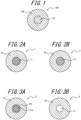
- FIG. 1 illustrates an example of a particle of a conventional agglomerate.
- the particle 100 illustrated in FIG. 1 has a central part 110 and a peripheral part 120 that covers the periphery of the central part 110.
- the central part 110 is composed of coarse-grained iron oxide
- the peripheral part 120 is composed of fine iron ore powder (that is, iron oxide).
- the whole particle 100 is composed of iron oxide, and a reducing gas needs to pass through the peripheral part 120 to reach the central part 110 to reduce the iron oxide in the central part 110, and a gas formed by the reaction needs to be exhausted from the surface of the particle 100. Therefore, it takes more time to reduce the iron oxide in the central part 110 of the particle 100 than it does to reduce the iron oxide in the peripheral part 120. This leads to the deterioration of the reducing performance of the whole particle.
- the central part 110 which requires much time for reduction
- the conventional particle 100 is composed of a metal iron-containing substance with a high content of metal iron, or a substance that requires little or no reduction such as a void, it is possible to reduce the time required for the reduction of the whole particle and improve the reducing performance.
- the raw material particle for production of agglomerate in the present embodiment is a raw material particle for producing an agglomerate that is a raw material for producing reduced iron with a reducing gas, and the raw material particle is generally called a green pellet.
- FIGS. 2A and 2B illustrate the raw material particles for production of agglomerate of the present disclosure.
- the raw material particle 1 illustrated in FIG. 2A includes a central part 11 having a metal iron-containing substance and a peripheral part 12 having iron oxide.
- the raw material particle 2 illustrated in FIG. 2B includes a central part 21 having a volatile substance and a peripheral part 22 having iron oxide.
- the central part 11(21) is a part that constitutes the nucleus of the raw material particle 1(2), and in the present disclosure, it contains a substance that requires no reduction or a substance that requires little reduction with a reducing gas. Specifically, the central part 11(21) contains a metal iron-containing substance (volatile substance).
- the metal iron-containing substance is a substance with a high content of metal iron, and specifically, it is a substance with a metal iron concentration of 70 mass% or more.
- a metal iron-containing substance include defective reduction products produced during the production of reduced iron, sieved products of reduced pellets (pellet chips), and various scraps of cast iron and the like, and it may be a substance with a metal iron concentration of 70 mass% or more.
- the metal iron-containing substance is more preferably a substance with a metal iron concentration of 90 mass% or more.
- the volatile substance is a substance that volatilizes in an agglomeration process (baking process or sintering process), and specifically, it is a substance with a mass reduction rate of 90 % or more at 1000 °C.
- Used paper or an organic material may be used as the volatile substance, for example. Specific examples thereof include polypropylene-based pellets, woody biomass-based pellets, used paper, and pellets made from paper pulp waste.
- the following describes a preferred raw material particle configuration in a case where the size of a whole particle of an agglomerate, which is a raw material for production of reduced iron, is 6 mm to 16 mm when it is used as a green pellet.
- the particle size of the central part 11 is preferably 2 mm or more and 6 mm or less. When the particle size of the central part 11 is 2 mm or more, not all of the central part 11 is oxidized and the metal iron-containing substance remains even when the raw material particle 1 is baked or sintered in an agglomeration process, which can improve the reducing performance of the agglomerate.
- the thickness of a coating layer can be sufficiently secured in a case where the particle size of the raw material particle 1(2) is 6 mm to 16 mm, so that the amount of new raw material for reduced iron can be increased.
- the peripheral part 12(22) constitutes a coating layer that covers the periphery of the central part 11(21), which is the nucleus, of the raw material particle 1(2).
- the peripheral part 12(22) may contain iron oxide.
- the source of iron of the peripheral part 12(22) preferably includes an iron oxide powder, which is powdery iron oxide. This allows a reducing gas to circulate through the gaps between the iron oxide powders during the reduction of an agglomerate, thereby reducing the iron oxide efficiently.
- the composition of the peripheral part 12(22) may also contain secondary materials such as CaO and MgO.
- the particle size is preferably 125 ⁇ m or less.
- the particle size of the iron oxide powder is 125 ⁇ m or less, it is possible to granulate and produce a dense raw material particle 1(2) with a low void ratio between powders without deteriorating the strength of the raw material particle 1(2), where a high void ratio may cause collapse during transport.
- the particle size of the iron oxide powder is more preferably 63 ⁇ m or less and still more preferably 45 ⁇ m or less.
- the thickness of the peripheral part 12 is preferably 2 mm or more and 5 mm or less.
- the thickness of the peripheral part 12 is 2 mm or more, it is possible to prevent the layers forming the peripheral part 12 from breaking or collapsing during a baking process.
- the thickness of the peripheral part 12 is 5 mm or less, it is possible to control the particle size of the raw material particle 1(2) in a range of 6 mm to 16 mm, thereby ensuring the reaction time in a reducing furnace.
- the iron oxide in the peripheral part 12(22) may contain a relatively low-quality raw material. Specifically, the iron oxide may contain at least more than 4 mass% of combined water and/or more than 1.5 mass% of alumina.
- a high-quality material with a high content of iron oxide has been conventionally used as a raw material in a process of producing reduced iron using a reducing furnace. In recent years, however, the quality of iron ore powder for producing an agglomerate that is a raw material for reduced iron is decreasing due to the depletion of high-quality iron ore.
- Low-grade iron ore contains a large amount of combined water and gangue (alumina (Al 2 O 3 ) and silica (SiO 2 )), where the combined water deteriorates the strength of an agglomerate and causes explosions during a baking process, and the gangue melts during a baking process and deteriorates the strength of an agglomerate.
- gangue alumina (Al 2 O 3 ) and silica (SiO 2 )
- an agglomerate thus obtained has a dense structure, which deteriorates the reducing performance of the agglomerate. If the reducing performance of the agglomerate is deteriorated, it will take more time to reduce the agglomerate in a reduced iron production process than otherwise, which decreases the efficiency of reduced iron production. Therefore, there is a trade-off relationship between the strength and the reducing performance of an agglomerate.
- One way to achieve both good strength and good reducing performance in an agglomerate is, for example, to make the size of a raw material particle smaller than a conventional one. In this case, however, it is necessary to strictly control the granulation size when granulating a raw material particle prior to baking or sintering in a granulation process, which is difficult to operate in a conventional granulator. Further, fine pellets may inhibit the gas permeability when they are charged into a reducing furnace, which is not desirable in terms of operation.
- the central part 11(21) contains a metal iron-containing substance (volatile substance), which is a substance that requires little or no reduction. Therefore, even when the low-grade iron ore, specifically the iron oxide of the peripheral part, contains at least more than 4 mass% of combined water and/or more than 1.5 mass% of alumina, it can compensate for the deterioration of reducing performance caused by the production of a dense agglomerate. Thus, with the raw material particle 1(2) of the present disclosure, it is possible to produce an agglomerate that has both good strength and good reducing performance. For example, iron ore from Australia or iron ore from India with a relatively high content of impurities may be used as the iron oxide.
- the particle size of the raw material particle 1(2) is preferably 6 mm or more and 16 mm or less.
- the furnace can be operated while ensuring the gas permeability inside the furnace when reducing the iron oxide contained in an agglomerate obtained by agglomerating the raw material particles 1(2).
- the particle size of the raw material particle 1(2) is 16 mm or less, the delay of reduction inside the raw material particle 1(2) can be minimized to produce an agglomerate with a high degree of reduction.
- the particle size of the raw material particle 1(2) is preferably 9 mm or more and 16 mm or less.
- the proportion of the central part 11 in the whole raw material particle 1 is preferably 5 mass% or more and 50 mass% or less.
- the proportion of the central part 11 is 5 mass% or more, it is possible to obtain an agglomerate with good reducing performance.
- the proportion of the central part 11 is 50 mass% or less, the amount of new raw material for reduced iron can be increased while securing the thickness of the peripheral part 12 which is a coating layer.
- the proportion of the central part 11 is more preferably 10 mass% or more and 20 mass% or less.
- the method for producing a raw material particle for production of agglomerate of the present disclosure is a method for producing the raw material particle of the present disclosure described above, including a pretreatment process of grinding a raw material containing iron oxide into raw material powder, and then classifying the raw material powder to adjust the particle size of the raw material powder, and a process of mixing and granulating the raw material powder whose particle size has been adjusted, a metal iron-containing substance or a volatile substance, and a binder to obtain the raw material particle of the present disclosure.
- the raw material particle for production of agglomerate of the present disclosure can be used to produce an agglomerate with better reducing performance than conventional agglomerates because the central part contains a substance that requires no reduction or a substance that requires little reduction.
- the raw material particle of the present disclosure can be produced with a known green pellet production method. The following describes each process.
- a pretreatment necessary for the subsequent granulation process is performed. Specifically, a raw material is ground, and the obtained raw material powder is classified to adjust the particle size, where the raw material is a material having iron oxide containing 4 mass% or less of combined water and/or 1.5 mass% or less of alumina such as high-quality iron ore, or a material having iron oxide containing more than 4 mass% of combined water or more than 1.5 mass% of alumina such as low-quality iron ore.
- the grinding of the iron ore raw material may be performed using a ball mill or other means.
- the classifying may be performed using a rotating rotor or a sieve or other means.
- the raw material powder whose particle size has been adjusted in the pretreatment process, a metal iron-containing substance or a volatile substance, and a binder such as quicklime or bentonite are mixed and granulated. They are also component regulators of CaO and MgO.
- the process can be performed using a pelletizer, such as a disk pelletizer, or a drum mixer, or other means. In this way, the raw material particle for production of agglomerate can be produced.
- a metal iron-containing substance or a volatile substance with a particle size of 2 mm or more and 6 mm or less in the granulation process.
- the agglomerate of the present disclosure is an agglomerate obtained by baking or sintering and agglomerating the raw material particle for production of agglomerate of the present disclosure described above, where when the central part of the agglomerated raw material particle has a metal iron-containing substance before baking or sintering, the agglomerated raw material particle has a three-layer structure, where the central part has a first portion having a metal iron-containing substance and a second portion that covers the periphery of the first portion, and the metal iron contained in the metal iron-containing substance is oxidized in the second portion, and when the central part of the agglomerated raw material particle has a volatile substance before baking or sintering, the agglomerated raw material particle has a hollow structure where the central part is a void.
- the central part has a metal iron-containing substance or a volatile substance.
- the central part 11 of the raw material particle 1 has a metal iron-containing substance
- the heat during the baking or sintering process oxidizes the metal iron in a portion of the central part 11 adjacent to the peripheral part 12, and the interior of the central part 11 remains unoxidized and remains as a metal iron-containing substance.
- the particle 3 of the agglomerate has a three-layer structure, including a first portion 31a having a metal iron-containing substance, a second portion 31b with oxidized metal iron that covers the periphery of the first portion 31a, and a peripheral part 32 having iron oxide.
- the central part 21 of the raw material particle 2 has a volatile substance
- the heat during the baking or sintering process causes the volatile substance in the central part 21 to volatilize.
- the particle 4 of the agglomerate has a hollow structure where the central part 41 is a void and the peripheral part 42 has iron oxide.
- the central parts 31a and 41 are in a state that requires no reduction. Therefore, the agglomerate of the present disclosure, which contains the particles 3 or 4, has better reducing performance than conventional agglomerates.
- the layer (second portion) 31b formed by oxidation of the metal iron-containing substance of the central part 11 of the raw material particle 1 forms a shell, and therefore the particle has a stabler structure than otherwise.
- the particle 4 although a shell like the layer (second portion) 31b of the particle 3 is not formed, it has a dense baking layer formed in the inner wall structure of the hollow portion 41 because of the heat formed by the combustion of the volatile substance of the central part 21 of the raw material particle 2. As a result, the particle 4 has a higher strength than one with a hollow structure from the start, taking advantage of the heat from the inside.
- the method for producing an agglomerate of the present disclosure includes baking or sintering and agglomerating the raw material particle of the present disclosure or a raw material particle obtainable by the method for producing a raw material particle of the present disclosure described above in an oxidizing atmosphere of 1200 °C or higher and 1350 °C or lower to obtain an agglomerate.
- the central part has a metal iron-containing substance or a volatile substance
- the peripheral part has iron oxide.
- the particle of the agglomerate has either a three-layer structure as illustrated in FIG. 3A or a hollow structure as illustrated in FIG. 3B , thereby obtaining an agglomerate with better reducing performance than conventional agglomerates.
- the baking of the raw material particle can be performed using a rotary kiln or the like.
- the raw material particles for production of agglomerate of the present disclosure or the raw material particles obtainable by the method for producing a raw material particle of the present disclosure described above are charged into a rotary kiln and placed in an oxidizing atmosphere such as air at 1200 °C or higher and 1350 °C or lower. Baked pellets can be obtained in this way.
- the sintering of the raw material particle can be performed using a sintering machine.
- the raw material particles for production of agglomerate of the present disclosure or the raw material particles obtainable by the method for producing a raw material particle of the present disclosure described above and granulated particles obtained by granulating conventional raw material particles are mixed, and the mixture is placed in an oxidizing atmosphere at 1200 °C or higher and 1350 °C or lower. Sintered ore can be obtained in this way.
- the method for producing reduced iron of the present disclosure includes charging the agglomerate of the present disclosure or an agglomerate obtainable by the method for producing an agglomerate of the present disclosure described above into a reducing furnace while introducing a reducing gas into the reducing furnace to reduce the iron oxide contained in the agglomerate to obtain reduced iron.
- the agglomerate of the present disclosure or an agglomerate obtainable by the method for producing an agglomerate of the present disclosure has better reducing performance than conventional agglomerates.
- a reducing furnace such as a shaft furnace
- reduced iron can be produced efficiently.
- coke oven gas gas reformed from natural gas (containing hydrocarbon as a component), mixed gas of CO gas and H 2 gas, H 2 gas (gas with a H 2 concentration of 100 %), and the like can be used as the reducing gas.
- a gas containing H 2 as a main component means a gas having a H 2 concentration of 50 vol.% or more. This can reduce CO 2 emissions.
- the Hz concentration of the reducing gas is preferably 65 vol.% or more. This can further enhance the effect of reducing CO 2 emissions.
- the H 2 concentration of the reducing gas is more preferably 70 vol.% or more, still more preferably 80 vol.% or more, even more preferably 90 vol.% or more, and most preferably 100 vol.%, that is, it is most preferable to use H 2 gas as the reducing gas.
- H 2 gas By using H 2 gas as the reducing gas, reduced iron can be produced without CO 2 emissions.
- a baked pellet was prepared using Brazilian iron ore whose chemical composition is listed in Table 1. Specifically, the iron ore was first ground, and the resulting iron ore powder was classified to obtain iron ore powder with a particle size of -63 ⁇ m. Next, the iron ore powder was mixed with quicklime as a binder, and a green pellet with a diameter of 12 mm was prepared while adjusting the humidity with a pelletizer. The prepared green pellet was then baked at 1350 °C in air for 60 minutes. A baked pellet as an agglomerate of Conventional Example 1 was prepared in this way. The reducibility value of the obtained baked pellet was determined according to JIS-M8713, and the result was 60 %.
- Sintered ore was prepared using a raw material powder obtained by mixing Brazilian iron ore and Australian iron ore whose composition is listed in Table 1 at a ratio of 50:50. Specifically, granulated particles were first prepared by granulating the iron ore as it is together with limestone, returned ore, and coke breeze as secondary materials. The average diameter of the prepared granulated particles was about 3 mm to 4 mm, and the interior of the particle contained a nuclear particle (iron concentration: 57 mass%) with a maximum size of about 1 mm. The granulated particles thus obtained were charged into a small sintering tester and sintered.
- a steel vessel with a filling layer height of 600 mm and a diameter of 300 mm was used for sintering, and the sintering was performed under a constant differential pressure with a suction negative pressure of 6.9 kPa.
- the obtained sintered ore was dropped four times from a height of 2 m to select sintered ore particles with a particle size of 19 mm to 22 mm from the obtained sintered ore.
- Sintered ore as an agglomerate of Conventional Example 2 was prepared in this way.
- the reducibility value of the obtained sintered ore was determined according to JIS-M8713, and the result was 65 % to 70 %.
- Sintered ore as an agglomerate of Example 3 was prepared in the same manner as in Conventional Example 2. However, the granulated particles were prepared using only Australian iron ore, the obtained granulated particles were mixed with green pellets prepared by the same method as in Example 1 to prepare a mixed granulation raw material, and the obtained mixed granulation raw material was charged into a small sintering tester and sintered. All other conditions were the same as in Conventional Example 2. The reducibility value of the obtained sintered ore was determined, and the result was 90 %.
- Sintered ore as an agglomerate of Example 4 was prepared in the same manner as in Example 3. However, the green pellet was prepared by the same method as in Example 2. All other conditions were the same as in Example 3. The reducibility value of the obtained sintered ore was determined, and the result was 84 %.
- Example 4 Sintered ore as an agglomerate of Example 4 was prepared in the same manner as in Example 1. However, polypropylene particles (diameter: 3 mm to 5 mm) were added instead of the DRI powder when producing green pellets. All other conditions were the same as in Example 1. The reducibility value of the obtained baked pellet was determined, and the result was 79 %.
- the reducibility of the sintered ore in Conventional Examples 1 and 2 was about 60 % to 70 %, and the reducibility of the sintered ore in Examples 1 to 5 was 79 % or more, indicating the sintered ore in Examples 1 to 5 had better reducing performance than those in Conventional Examples 1 and 2.
- Comparison of Example 1 with Example 2 and comparison of Example 3 with Example 4 indicate that when the metallization ratio of the central part of the green pellet (raw material particle) increases, the reducibility value also increases.
- the agglomerates of Examples 1 to 5 had the same level of strength as the agglomerates of Conventional Examples 1 and 2, and they could be used for the production of reduced iron without any problems. Therefore, the agglomerates of Examples 1 to 5 had both good strength and good reducing performance.
- a raw material particle for production of agglomerate that can be used to produce an agglomerate with better reducing performance than conventional agglomerates, which is useful in the steel industry.
Landscapes
- Chemical & Material Sciences (AREA)
- Engineering & Computer Science (AREA)
- Manufacturing & Machinery (AREA)
- Materials Engineering (AREA)
- Metallurgy (AREA)
- Organic Chemistry (AREA)
- Life Sciences & Earth Sciences (AREA)
- Environmental & Geological Engineering (AREA)
- General Life Sciences & Earth Sciences (AREA)
- Geochemistry & Mineralogy (AREA)
- Geology (AREA)
- Mechanical Engineering (AREA)
- Inorganic Chemistry (AREA)
- Manufacture And Refinement Of Metals (AREA)
- Manufacture Of Iron (AREA)
Applications Claiming Priority (2)
| Application Number | Priority Date | Filing Date | Title |
|---|---|---|---|
| JP2021061965A JP7424339B2 (ja) | 2021-03-31 | 2021-03-31 | 塊成物製造用の原料粒子、塊成物製造用の原料粒子の製造方法、塊成物、塊成物の製造方法および還元鉄の製造方法 |
| PCT/JP2021/044584 WO2022209014A1 (ja) | 2021-03-31 | 2021-12-03 | 塊成物製造用の原料粒子、塊成物製造用の原料粒子の製造方法、塊成物、塊成物の製造方法および還元鉄の製造方法 |
Publications (2)
| Publication Number | Publication Date |
|---|---|
| EP4317464A1 true EP4317464A1 (de) | 2024-02-07 |
| EP4317464A4 EP4317464A4 (de) | 2024-07-31 |
Family
ID=83455842
Family Applications (1)
| Application Number | Title | Priority Date | Filing Date |
|---|---|---|---|
| EP21935167.3A Pending EP4317464A4 (de) | 2021-03-31 | 2021-12-03 | Rohstoffpartikel zur herstellung von agglomeraten, verfahren zur herstellung von rohstoffpartikeln zur herstellung von agglomeraten, agglomerat, verfahren zur herstellung von agglomeraten und verfahren zur herstellung von reduziertem eisen |
Country Status (9)
| Country | Link |
|---|---|
| US (1) | US20240167110A1 (de) |
| EP (1) | EP4317464A4 (de) |
| JP (1) | JP7424339B2 (de) |
| CN (1) | CN117043364A (de) |
| AU (1) | AU2021437808B2 (de) |
| CA (1) | CA3212055A1 (de) |
| TW (1) | TW202239973A (de) |
| UA (1) | UA130177C2 (de) |
| WO (1) | WO2022209014A1 (de) |
Families Citing this family (1)
| Publication number | Priority date | Publication date | Assignee | Title |
|---|---|---|---|---|
| WO2025219324A1 (en) * | 2024-04-17 | 2025-10-23 | Tata Steel Nederland Technology B.V. | A method of producing direct reduced iron comprising embedded carbon |
Family Cites Families (16)
| Publication number | Priority date | Publication date | Assignee | Title |
|---|---|---|---|---|
| US3314780A (en) * | 1964-07-07 | 1967-04-18 | Inland Steel Co | Process of pelletizing ore |
| US4239530A (en) * | 1979-01-10 | 1980-12-16 | Board Of Control Of Michigan Technological University | Process for producing metallized iron pellets |
| US4702766A (en) | 1986-03-21 | 1987-10-27 | Midrex International, B.V. Rotterdam, Zurich Branch | Method of increasing carbon content of direct reduced iron and apparatus |
| JP3708981B2 (ja) * | 1995-01-20 | 2005-10-19 | 新日本製鐵株式会社 | 製鉄用塊成鉱 |
| JP2003119522A (ja) * | 2001-10-12 | 2003-04-23 | Kawasaki Steel Corp | 高炉用処理鉱 |
| WO2005111248A1 (ja) * | 2004-05-19 | 2005-11-24 | Jfe Steel Corporation | 半還元焼結鉱およびその製造方法 |
| CN101443465B (zh) * | 2006-03-13 | 2013-10-16 | 密歇根理工大学 | 利用对环境有益的可再生或可再循环的还原剂生产铁 |
| JP5540859B2 (ja) * | 2010-04-19 | 2014-07-02 | Jfeスチール株式会社 | 製鉄用炭材内装塊成鉱およびその製造方法 |
| JP5475630B2 (ja) | 2010-12-15 | 2014-04-16 | 株式会社神戸製鋼所 | 還元鉄製造用塊成物、およびその製造方法 |
| JP5958264B2 (ja) | 2012-10-15 | 2016-07-27 | 新日鐵住金株式会社 | 高炉用塊成鉱及びその製造方法 |
| BR112016000103B1 (pt) * | 2013-07-10 | 2020-05-12 | Jfe Steel Corporation | Partículas granuladas contendo material de carbono para fabricar minério sinterizado, e métodos para produzir as mesmas e para produzir minério sinterizado |
| JP2015101740A (ja) * | 2013-11-21 | 2015-06-04 | 株式会社神戸製鋼所 | 還元鉄の製造方法 |
| BR112016016015B1 (pt) * | 2014-01-31 | 2021-07-27 | Saudi Basic Industries Corporation | Péletes de ferro compósito e método de produção dos mesmos |
| JP2015209570A (ja) * | 2014-04-25 | 2015-11-24 | 株式会社神戸製鋼所 | 還元鉄の製造方法 |
| JP7055082B2 (ja) | 2018-09-14 | 2022-04-15 | 日本製鉄株式会社 | 高炉の操業方法 |
| CN109439896B (zh) * | 2018-10-29 | 2020-02-21 | 北京科技大学 | 自熔性复合球团的制备方法 |
-
2021
- 2021-03-31 JP JP2021061965A patent/JP7424339B2/ja active Active
- 2021-12-03 WO PCT/JP2021/044584 patent/WO2022209014A1/ja not_active Ceased
- 2021-12-03 CN CN202180096122.3A patent/CN117043364A/zh active Pending
- 2021-12-03 UA UAA202304974A patent/UA130177C2/uk unknown
- 2021-12-03 EP EP21935167.3A patent/EP4317464A4/de active Pending
- 2021-12-03 CA CA3212055A patent/CA3212055A1/en active Pending
- 2021-12-03 US US18/551,401 patent/US20240167110A1/en active Pending
- 2021-12-03 AU AU2021437808A patent/AU2021437808B2/en active Active
- 2021-12-22 TW TW110148075A patent/TW202239973A/zh unknown
Also Published As
| Publication number | Publication date |
|---|---|
| EP4317464A4 (de) | 2024-07-31 |
| JP2022157632A (ja) | 2022-10-14 |
| US20240167110A1 (en) | 2024-05-23 |
| UA130177C2 (uk) | 2025-12-03 |
| CA3212055A1 (en) | 2022-10-06 |
| BR112023019688A2 (pt) | 2023-10-31 |
| AU2021437808A1 (en) | 2023-10-12 |
| AU2021437808B2 (en) | 2025-02-20 |
| JP7424339B2 (ja) | 2024-01-30 |
| CN117043364A (zh) | 2023-11-10 |
| TW202239973A (zh) | 2022-10-16 |
| WO2022209014A1 (ja) | 2022-10-06 |
Similar Documents
| Publication | Publication Date | Title |
|---|---|---|
| RU2447164C2 (ru) | Способ производства окатышей из восстановленного железа и способ производства чугуна | |
| EP3020834B1 (de) | Kohlenstoffhaltige granulierte teilchen zur herstellung von gesintertem erz, herstellungsverfahren dafür und herstellungsverfahren für gesintertes erz | |
| EP2450459B1 (de) | Betriebsverfahren für einen verbrennungsofen | |
| EP2463356A1 (de) | Verfahren zur herstellung von eisenkoks | |
| CN101981209B (zh) | 还原铁的制造方法 | |
| EP2458020B1 (de) | Kohlenstoffverbundstoff-brikett zur herstellung von reduziertem eisen und verfahren zur herstellung von reduziertem eisen damit | |
| CN102177256B (zh) | 采用含碳非烧成球团矿的高炉操作方法 | |
| US20240167110A1 (en) | Raw material particles for production of agglomerate, method for producing raw material particles for production of agglomerate, agglomerate, method for producing agglomerate, and method for producing reduced iron | |
| EP2840152B1 (de) | Betriebsverfahren für einen verbrennungsofen mit ferrocoke | |
| EP4471166A1 (de) | Verfahren zur herstellung von kohlenstoffhaltigem material mit agglomeraterz und verfahren zur herstellung von geschmolzenem roheisen | |
| JP3395554B2 (ja) | 焼結鉱の製造方法 | |
| RU2836975C2 (ru) | Частицы исходного материала для изготовления агломерата, способ получения частиц исходного материала для изготовления агломерата, агломерат, способ получения агломерата, способ получения восстановленного железа | |
| KR102458931B1 (ko) | 소결광 제조방법 | |
| JP2002226920A (ja) | 焼結鉱の製造方法および焼結鉱 | |
| BR112023019688B1 (pt) | Partículas de matéria-prima para produção de aglomerado, método para produzir partículas de matériaprima para produção de aglomerado, aglomerado, método para produzir aglomerado e método para produzir ferro reduzido | |
| JP2731829B2 (ja) | 高炉操業法 | |
| JPS63137989A (ja) | フエロコ−クスの製造方法 | |
| KR101581572B1 (ko) | 고로용 펠렛 제조 방법 | |
| JP2026054777A (ja) | 高炉の操業方法 | |
| JP3864506B2 (ja) | 半還元鉄塊成鉱およびその製造方法ならびに銑鉄の製造方法 | |
| JP3522553B2 (ja) | 高炉原料装入方法 | |
| WO2024028919A1 (ja) | 還元鉄の製造方法 | |
| JP2005307256A (ja) | 焼結鉱の製造方法 | |
| Podkorytov et al. | Technology for preparing coke for blast-furnace smelting and its efficiency | |
| JP2016183368A (ja) | 焼結鉱用原料及び焼結鉱用原料の製造方法 |
Legal Events
| Date | Code | Title | Description |
|---|---|---|---|
| STAA | Information on the status of an ep patent application or granted ep patent |
Free format text: STATUS: THE INTERNATIONAL PUBLICATION HAS BEEN MADE |
|
| PUAI | Public reference made under article 153(3) epc to a published international application that has entered the european phase |
Free format text: ORIGINAL CODE: 0009012 |
|
| STAA | Information on the status of an ep patent application or granted ep patent |
Free format text: STATUS: REQUEST FOR EXAMINATION WAS MADE |
|
| 17P | Request for examination filed |
Effective date: 20231024 |
|
| AK | Designated contracting states |
Kind code of ref document: A1 Designated state(s): AL AT BE BG CH CY CZ DE DK EE ES FI FR GB GR HR HU IE IS IT LI LT LU LV MC MK MT NL NO PL PT RO RS SE SI SK SM TR |
|
| DAV | Request for validation of the european patent (deleted) | ||
| DAX | Request for extension of the european patent (deleted) | ||
| A4 | Supplementary search report drawn up and despatched |
Effective date: 20240701 |
|
| RIC1 | Information provided on ipc code assigned before grant |
Ipc: C22B 1/243 20060101ALI20240625BHEP Ipc: C22B 1/24 20060101ALI20240625BHEP Ipc: C22B 1/216 20060101ALI20240625BHEP Ipc: C21B 13/10 20060101ALI20240625BHEP Ipc: C22B 5/12 20060101ALI20240625BHEP Ipc: C22B 1/14 20060101ALI20240625BHEP Ipc: C21B 13/00 20060101AFI20240625BHEP |
|
| STAA | Information on the status of an ep patent application or granted ep patent |
Free format text: STATUS: EXAMINATION IS IN PROGRESS |
|
| 17Q | First examination report despatched |
Effective date: 20250617 |