EP4318902A1 - Axial motor - Google Patents
Axial motor Download PDFInfo
- Publication number
- EP4318902A1 EP4318902A1 EP21940949.7A EP21940949A EP4318902A1 EP 4318902 A1 EP4318902 A1 EP 4318902A1 EP 21940949 A EP21940949 A EP 21940949A EP 4318902 A1 EP4318902 A1 EP 4318902A1
- Authority
- EP
- European Patent Office
- Prior art keywords
- stator
- core
- shaft
- rotor
- coil
- Prior art date
- Legal status (The legal status is an assumption and is not a legal conclusion. Google has not performed a legal analysis and makes no representation as to the accuracy of the status listed.)
- Pending
Links
Images





Classifications
-
- H—ELECTRICITY
- H02—GENERATION; CONVERSION OR DISTRIBUTION OF ELECTRIC POWER
- H02K—DYNAMO-ELECTRIC MACHINES
- H02K21/00—Synchronous motors having permanent magnets; Synchronous generators having permanent magnets
- H02K21/12—Synchronous motors having permanent magnets; Synchronous generators having permanent magnets with stationary armatures and rotating magnets
- H02K21/24—Synchronous motors having permanent magnets; Synchronous generators having permanent magnets with stationary armatures and rotating magnets with magnets axially facing the armatures, e.g. hub-type cycle dynamos
-
- H—ELECTRICITY
- H02—GENERATION; CONVERSION OR DISTRIBUTION OF ELECTRIC POWER
- H02K—DYNAMO-ELECTRIC MACHINES
- H02K1/00—Details of the magnetic circuit
- H02K1/06—Details of the magnetic circuit characterised by the shape, form or construction
- H02K1/12—Stationary parts of the magnetic circuit
- H02K1/18—Means for mounting or fastening magnetic stationary parts on to, or to, the stator structures
- H02K1/182—Means for mounting or fastening magnetic stationary parts on to, or to, the stator structures to stators axially facing the rotor, i.e. with axial or conical air gap
-
- H—ELECTRICITY
- H02—GENERATION; CONVERSION OR DISTRIBUTION OF ELECTRIC POWER
- H02K—DYNAMO-ELECTRIC MACHINES
- H02K1/00—Details of the magnetic circuit
- H02K1/06—Details of the magnetic circuit characterised by the shape, form or construction
- H02K1/22—Rotating parts of the magnetic circuit
- H02K1/27—Rotor cores with permanent magnets
- H02K1/2793—Rotors axially facing stators
- H02K1/2795—Rotors axially facing stators the rotor consisting of two or more circumferentially positioned magnets
- H02K1/2798—Rotors axially facing stators the rotor consisting of two or more circumferentially positioned magnets where both axial sides of the stator face a rotor
-
- H—ELECTRICITY
- H02—GENERATION; CONVERSION OR DISTRIBUTION OF ELECTRIC POWER
- H02K—DYNAMO-ELECTRIC MACHINES
- H02K3/00—Details of windings
- H02K3/46—Fastening of windings on the stator or rotor structure
- H02K3/52—Fastening salient pole windings or connections thereto
- H02K3/521—Fastening salient pole windings or connections thereto applicable to stators only
- H02K3/522—Fastening salient pole windings or connections thereto applicable to stators only for generally annular cores with salient poles
-
- H—ELECTRICITY
- H02—GENERATION; CONVERSION OR DISTRIBUTION OF ELECTRIC POWER
- H02K—DYNAMO-ELECTRIC MACHINES
- H02K1/00—Details of the magnetic circuit
- H02K1/06—Details of the magnetic circuit characterised by the shape, form or construction
- H02K1/12—Stationary parts of the magnetic circuit
- H02K1/14—Stator cores with salient poles
- H02K1/146—Stator cores with salient poles consisting of a generally annular yoke with salient poles
- H02K1/148—Sectional cores
-
- H—ELECTRICITY
- H02—GENERATION; CONVERSION OR DISTRIBUTION OF ELECTRIC POWER
- H02K—DYNAMO-ELECTRIC MACHINES
- H02K2213/00—Specific aspects, not otherwise provided for and not covered by codes H02K2201/00 - H02K2211/00
- H02K2213/12—Machines characterised by the modularity of some components
-
- H—ELECTRICITY
- H02—GENERATION; CONVERSION OR DISTRIBUTION OF ELECTRIC POWER
- H02K—DYNAMO-ELECTRIC MACHINES
- H02K3/00—Details of windings
- H02K3/04—Windings characterised by the conductor shape, form or construction, e.g. with bar conductors
- H02K3/22—Windings characterised by the conductor shape, form or construction, e.g. with bar conductors consisting of hollow conductors
Definitions
- the present invention relates to an axial motor, and more particularly, to an axial motor that can be easily assembled.
- An axial motor refers to a motor in which a rotor and a stator are arranged in an axial direction of a shaft. At this time, magnets of the rotor face each other at certain distances from a core of the shaft in the axial direction. Therefore, when a current is supplied to a coil wound around the core, the rotor rotates.
- a rotor and a stator are arranged at certain distances in an axial direction.
- distances between the core and magnets arranged in multiple stages need to be constant. Therefore, in the case of an axial motor, assembly is complicated because the distances between the core and magnets need to be kept constant, and assembly is difficult even when a rotor and a stator are expanded into multiple stages.
- the present invention is intended to solve the above problems.
- the present invention provides an axial motor that is not only easy to assemble but also easy to expand a rotor and a stator into multiple stages.
- An axial motor includes a shaft, a stator means, a plurality of rotor means, a top lid, and a bottom lid.
- the stator means includes a stator casing, a core of which both ends are exposed from both ends of the stator casing in an axial direction, and a coil accommodated in the stator casing so as to encompass the core, wherein the shaft is penetratively inserted.
- the rotor means includes a plurality of magnets spaced certain distances apart in a radial direction of the shaft and arranged in a circumferential direction to face the core exposed from one end of the stator casing in the axial direction of the shaft, and a rotor fixing plate, which may fix the magnets such that one surface of the magnet facing the core is exposed and which is injected to be inserted into the stator means and fixed and coupled so as to be integrally rotatable with the shaft, and is inserted into both ends of the stator means.
- the top lid, into which the shaft is rotatably inserted, is coupled to be attachable/detachable to/from the stator casing so that a rotor means located at one end of the shaft is accommodated therein.
- the bottom lid into which the shaft is rotatably inserted, is coupled to be attachable/detachable to/from the stator casing so that a rotor means located at the other end of the shaft is accommodated therein.
- facing surfaces of the magnets and the core may be located at certain distances.
- the stator casing preferably includes a stator housing that accommodates the core and is open at both ends, a stator upper guard coupled to be attachable/detachable to/from one end of the stator housing, and a stator lower guard coupled to be attachable/detachable to/from the other end of the stator housing.
- the core preferably includes a first core portion having a first header portion and a first winding portion protruding in an axial direction from the first header portion, and a second core portion having a second winding portion protruding in an axial direction from a second header portion so that one end of the second header portion comes into contact with one end of the first winding portion so that the second header portion and the coil are wound.
- the stator means preferably includes an upper carrier in which resin is injected so that one surface of the first header portion is exposed at one end of the stator means and is fixed to the stator upper guard by surrounding the first core portion and a lower carrier that can be fixed to the stator lower guard by surrounding the second core portion so that one surface of the second header portion is exposed at the other end of the stator means, and the axial motor further includes a carrier portion through which the coil is wound and the shaft is inserted between the first head portion and the second header portion.
- the upper carrier is preferably injected so that its inner peripheral surface protrudes in an axial direction
- the lower carrier is preferably injected so that its inner peripheral surface protrudes in an axial direction.
- the carrier portion is coupled to be attachable/detachable to/from one end protruding in an axial direction so that the upper carrier and the lower carrier surround the coil.
- the axial motor preferably further includes a plurality of gap stoppers for limiting a position of an end portion of the rotor fixing plate in an axial direction of the shaft so that the magnet may be located at a certain distance from an opposing surface of the coil when the rotor fixing plate is inserted into the stator mean.
- the axial motor preferably further includes a rotor middle housing that accommodates the rotor means located between the stator means and may be fixed to be attachable/detachable to/from the stator casing.
- the coil has a bar-shaped rectangular shape with a square cross-section, and is preferably wound in one stage in a width direction of the core and wound in a longitudinal direction of the core.
- a thickness of the coil in the width direction of the core is greater than a thickness of the coil in an axial direction of the core.
- the coil is preferably made of a hollow tube so that refrigerant may flow therein.
- a multi-stage motor may be formed by combining a plurality of stator means and a plurality of rotor means to a shaft. Therefore, it is easy to configure a multi-stage motor.
- stator means when a rotor means is inserted into a stator means, magnets of the rotor means and a core of the stator means may maintain a certain distance from each other. Therefore, assembly of the motor is easy.
- FIGS. 1 to 8 An embodiment of an axial motor according to the present invention will be described with reference to FIGS. 1 to 8 .
- the axial motor according to the present invention includes a shaft 10, a stator means 20, a rotor means 30, a top lid 35, a bottom lid 40, and gap stoppers 45a and 45b.
- the stator means 20 includes a stator casing 21, a core, a carrier portion 27, and a coil 29.
- the stator casing 21 includes a stator housing 21a, a stator upper guard 21b, and a stator lower guard 21c.
- the stator housing 21a is open at both ends and accommodates the core and the coil 29 therein.
- the stator upper guard 21b is penetrated so that both ends are open in the same way as the stator housing 21a and is coupled to be attachable/detachable to/from one end of the stator housing 21a.
- the stator lower guard 21c is also penetrated so that both ends are open and is coupled to be attachable/detachable to/from the other end of the stator housing 21a.
- the stator upper guard 21b and the stator lower guard 21c are coupled to the stator housing 21a with bolts.
- the core has a first core portion 24 and a second core portion 26.
- the first core portion 24 includes a first header portion 24a and a first winding portion 24b that protrudes in an axial direction from one surface of the first header portion 24a.
- the second core portion 26 includes a second header portion 26a and a second winding portion 26b that protrudes in an axial direction from one surface of the second header portion 26a.
- the first core portion 24 and the second core portion 26 are manufactured by molding and heat treating metal powder. One end of the first header portion 24a and one end of the second header portion 26a come into contact with each other to form a core.
- the carrier portion 27 includes an upper carrier 27a and a lower carrier 27b.
- the upper carrier 27a serves to insulate the first core portion 24 from the coil 29 and fix the first core portion 24 to a stator casing 1.
- the upper carrier 27a is formed by injecting resin to surround the first core portion 24 so that one surface of the first header portion 24a is exposed at one end of the stator casing 21 and to couple the first core portion 24 to the stator upper guard 21b.
- the first core portion 24 is fixed to the stator upper guard 21b by the upper carrier 27a.
- the upper carrier 27a is injected to protrude in an axial direction so that its inner peripheral surface surrounds the inserted shaft 10.
- the lower carrier 27b serves to insulate the second core portion 26 from the coil 29 and fix the second core portion 26 to the stator casing 1.
- the lower carrier 27b is formed by injecting resin to surround the second core portion 26 so that one surface of the second header portion 26a is exposed at the other end of the stator casing 21 and to couple the second core portion 26 to the stator lower guard 21c.
- the second core portion 26 is fixed to the stator lower guard 21c by the lower carrier 27b.
- the lower carrier 27b is injected to protrude in an axial direction so that its inner peripheral surface surrounds the inserted shaft 10.
- the stator upper guard 21b and the stator lower guard 21c are coupled to the stator housing 21a
- the first core portion 24 and the second core portion 26 are formed so that one end of the first winding portion 24b and one end of the second winding portion 26b come into contact with each other.
- one end of the upper carrier 27a and one end of the lower carrier 27b protruding in an axial direction are formed to be coupled to each other.
- the coil 29 is formed to wind the stator upper guard 21b and the stator lower guard 21c surrounding the first winding portion 24b and the second winding portion 26b between the first header portion 24a and the second header portion 26a.
- the coil 29 has a rectangular bar shape with a square cross section, and is wound in one stage in a width direction of the core and wound in a length direction of the core.
- a thickness of the core in the width direction is formed to be much greater than a thickness of the core in the axial direction.
- the coil 29 may be wound thickly around the core, creating an effect as if the coil is wound in multiple stages.
- the coil 29 may be formed as a hollow tube to allow coolant to flow therein.
- the coil 29 may be cooled by forming the coil 29 as a hollow tube and allowing coolant to flow therein.
- the upper carrier 27a and the lower carrier 27b are injected with resin, so the stator upper guard 21b, the first core portion 24, and the upper carrier 27a are integrally fixed and coupled, and the stator lower guard 21c, the second core portion 26, and the lower carrier 27b are integrally fixed and coupled.
- stator lower guard 21c After fastening the stator lower guard 21c to the stator casing 21, the coil 29 is mounted on one end protruding in an axial direction of the lower carrier 27b, and the stator upper guard 21b is fastened to the stator casing 21. Then, the stator means 20 is assembled.
- the rotor means 30 includes a magnet 31 and a rotor fixing plate 33.
- a plurality of magnets 31 are arranged in a circumferential direction at certain distances in a radial direction of the shaft 10 to face a core exposed at one end of the stator casing 21 in an axial direction of the shaft 10.
- the rotor fixing plate 33 fixes the magnet 31 so that one surface of the magnet 31 is exposed to face the core and is fixedly coupled to the shaft 10 so that the rotor fixing plate 33 may rotate integrally with the shaft 10.
- the rotor fixing plate 33 is fixedly coupled to the shaft 10 and rotated integrally using a key 11.
- the rotor fixing plate 33 keeps the magnet 31 spaced apart from an opposing core by a certain distance.
- an inner peripheral surface of the rotor fixing plate 33 protrudes to be inserted into the stator means 20.
- protruding ends 33a of the rotor fixing plate 33 come into contact with each other so that the magnets 31 may maintain a certain distance from the core.
- the ends 33a of the rotor fixing plate 33 contact each other with the gap stopper 45b therebetween.
- the top lid 35 is inserted so that the shaft 10 may rotate, accommodates the rotor means 30 located at one end of the shaft 10, and is coupled to be attachable/detachable to/from the stator casing 21.
- the bottom lid 40 is inserted so that the shaft 10 may rotate, accommodates the rotor means 30 located at the other end of the shaft 10, and is coupled to be attachable/detachable to/from the stator casing 21.
- the top lid 35, the stator means 20, and the bottom lid 40 are coupled with a bolt 12.
- the gap stoppers 45a and 45b serve to maintain a certain distance between the magnet 31 of the rotor unit 30 and the core of the stator unit 20 when the rotor unit 30 is assembled. To this end, the gap stoppers 45a and 45b limit a position of an end of the rotor fixing plate 33 in the axial direction of the shaft 10 when the rotor fixing plate 33 is inserted into the stator means 20. That is, the first gap stopper 45a and the second gap stopper 45b are mounted on the shaft 10 to keep a distance between the magnet 31 and the core constant.
- the other end of the shaft 10 is mounted on the bottom lid 40.
- the first gap stopper 45a is fixed to the other end of the shaft 10.
- the rotor means 30 is mounted on the shaft 10
- the rotor means 30 is supported by the first gap stopper 45a and is located at a certain point on the shaft 10.
- stator means 20 When the stator means 20 is inserted into the shaft 10 so that the stator casing 21 comes into contact with the bottom lid 40, the magnet 31 of the rotor means 30 and the core exposed on a lower surface of the stator means 20 maintain a certain distance.
- the second gap stopper 45b is inserted into the shaft 10 so that it comes into contact with one end 33a of the rotor fixing plate 33 inserted from a lower portion of the stator means 20.
- the rotor means 30 is inserted from an upper portion of the stator means 20.
- a core exposed on an upper surface of the stator means 20 and the magnet 31 of the rotor means 30 inserted into the upper portion of the stator means 20 maintain a certain distance from each other.
- a thickness of the second gap stopper 45b is formed so that distances between the magnets 31 located at both ends of the stator means 20 are the same.
- the top lid 35 After inserting the top lid 35 into the shaft 10 so that it comes into contact with an upper end of the stator casing 21, the top lid 35, the stator means 20, and the bottom lid 40 are coupled using the bolt 12. Accordingly, in this embodiment, assembly of the motor may be facilitated.
- FIGS. 9 and 10 show another embodiment of an axial motor according to the present invention.
- the axial motor of the embodiment of FIG. 1 has one stator means 20, but the axial motor of the embodiment of FIGS. 9 and 10 has the stator means 20 arranged in two stages in the axial direction of the shaft 10.
- a pair of rotor means 30 is located between a pair of stator means 20.
- the axial motor further includes a rotor middle housing 50 to accommodate the rotor means 30 located between the stator means 20.
- the rotor middle housing 50 is located between the stator means 20 to accommodate the rotor means 30, and is fixed to be attachable/detachable to/from the stator casing 21. Even in this embodiment, the rotor middle housing 50 may be fixed with the bolt 12. Therefore, in this embodiment, the stator means 20 may be easily expanded into multiple stages.
Landscapes
- Engineering & Computer Science (AREA)
- Power Engineering (AREA)
- Iron Core Of Rotating Electric Machines (AREA)
Abstract
Description
- The present invention relates to an axial motor, and more particularly, to an axial motor that can be easily assembled.
- An axial motor refers to a motor in which a rotor and a stator are arranged in an axial direction of a shaft. At this time, magnets of the rotor face each other at certain distances from a core of the shaft in the axial direction. Therefore, when a current is supplied to a coil wound around the core, the rotor rotates.
-
Korean Patent No. 10-2156481 (registered on September 9, 2020 -
Korean Patent Publication No. 10-2017-0117065 (published on October 20, 2017 - In the case of an axial motor, a rotor and a stator are arranged at certain distances in an axial direction. At this time, because a core and magnets are formed in multiple stages, distances between the core and magnets arranged in multiple stages need to be constant. Therefore, in the case of an axial motor, assembly is complicated because the distances between the core and magnets need to be kept constant, and assembly is difficult even when a rotor and a stator are expanded into multiple stages.
- The present invention is intended to solve the above problems. The present invention provides an axial motor that is not only easy to assemble but also easy to expand a rotor and a stator into multiple stages.
- An axial motor according to the present invention includes a shaft, a stator means, a plurality of rotor means, a top lid, and a bottom lid. The stator means includes a stator casing, a core of which both ends are exposed from both ends of the stator casing in an axial direction, and a coil accommodated in the stator casing so as to encompass the core, wherein the shaft is penetratively inserted. The rotor means includes a plurality of magnets spaced certain distances apart in a radial direction of the shaft and arranged in a circumferential direction to face the core exposed from one end of the stator casing in the axial direction of the shaft, and a rotor fixing plate, which may fix the magnets such that one surface of the magnet facing the core is exposed and which is injected to be inserted into the stator means and fixed and coupled so as to be integrally rotatable with the shaft, and is inserted into both ends of the stator means. The top lid, into which the shaft is rotatably inserted, is coupled to be attachable/detachable to/from the stator casing so that a rotor means located at one end of the shaft is accommodated therein. The bottom lid, into which the shaft is rotatably inserted, is coupled to be attachable/detachable to/from the stator casing so that a rotor means located at the other end of the shaft is accommodated therein. When one end of the rotor means is inserted into the stator means, facing surfaces of the magnets and the core may be located at certain distances.
- In addition, in the axial motor, the stator casing preferably includes a stator housing that accommodates the core and is open at both ends, a stator upper guard coupled to be attachable/detachable to/from one end of the stator housing, and a stator lower guard coupled to be attachable/detachable to/from the other end of the stator housing. The core preferably includes a first core portion having a first header portion and a first winding portion protruding in an axial direction from the first header portion, and a second core portion having a second winding portion protruding in an axial direction from a second header portion so that one end of the second header portion comes into contact with one end of the first winding portion so that the second header portion and the coil are wound. The stator means preferably includes an upper carrier in which resin is injected so that one surface of the first header portion is exposed at one end of the stator means and is fixed to the stator upper guard by surrounding the first core portion and a lower carrier that can be fixed to the stator lower guard by surrounding the second core portion so that one surface of the second header portion is exposed at the other end of the stator means, and the axial motor further includes a carrier portion through which the coil is wound and the shaft is inserted between the first head portion and the second header portion.
- In addition, in the axial motor, the upper carrier is preferably injected so that its inner peripheral surface protrudes in an axial direction, and the lower carrier is preferably injected so that its inner peripheral surface protrudes in an axial direction. In this case, the carrier portion is coupled to be attachable/detachable to/from one end protruding in an axial direction so that the upper carrier and the lower carrier surround the coil.
- In addition, the axial motor preferably further includes a plurality of gap stoppers for limiting a position of an end portion of the rotor fixing plate in an axial direction of the shaft so that the magnet may be located at a certain distance from an opposing surface of the coil when the rotor fixing plate is inserted into the stator mean.
- In addition, in the axial motor, it is preferable that a plurality of stator means are provided in the axial direction of the shaft. In this case, the axial motor preferably further includes a rotor middle housing that accommodates the rotor means located between the stator means and may be fixed to be attachable/detachable to/from the stator casing.
- In addition, in the axial motor, the coil has a bar-shaped rectangular shape with a square cross-section, and is preferably wound in one stage in a width direction of the core and wound in a longitudinal direction of the core.
- In addition, in the axial motor, it is preferable that a thickness of the coil in the width direction of the core is greater than a thickness of the coil in an axial direction of the core.
- In addition, in the axial motor, the coil is preferably made of a hollow tube so that refrigerant may flow therein.
- According to the present invention, a multi-stage motor may be formed by combining a plurality of stator means and a plurality of rotor means to a shaft. Therefore, it is easy to configure a multi-stage motor.
- In addition, when a rotor means is inserted into a stator means, magnets of the rotor means and a core of the stator means may maintain a certain distance from each other. Therefore, assembly of the motor is easy.
-
-
FIG. 1 is a perspective view of an embodiment of an axial motor according to the present invention; -
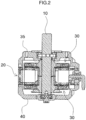
FIG. 2 is a cross-sectional view of the embodiment ofFIG. 1 ; -
FIG. 3 is an exploded view of the embodiment ofFIG. 1 ; -
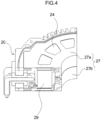
FIG. 4 is a partial cross-sectional view of a stator means of the embodiment ofFIG. 1 ; -
FIG. 5 is an exploded view of a stator means of the embodiment ofFIG. 1 ; -
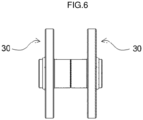
FIG. 6 is a front view of a rotor means of the embodiment ofFIG. 1 ; -
FIG. 7 is a perspective view of a rotor means of the embodiment ofFIG. 1 ; -
FIG. 8 is an exploded view ofFIG. 7 ; -
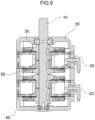
FIG. 9 is a cross-sectional view of another embodiment of an axial motor according to the present invention; and -
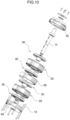
FIG. 10 is an exploded view of the embodiment ofFIG. 9 . - An embodiment of an axial motor according to the present invention will be described with reference to
FIGS. 1 to 8 . - The axial motor according to the present invention includes a
shaft 10, a stator means 20, a rotor means 30, atop lid 35, abottom lid 40, andgap stoppers - The stator means 20 includes a
stator casing 21, a core, acarrier portion 27, and acoil 29. - The
stator casing 21 includes astator housing 21a, a statorupper guard 21b, and a statorlower guard 21c. Thestator housing 21a is open at both ends and accommodates the core and thecoil 29 therein. The statorupper guard 21b is penetrated so that both ends are open in the same way as the stator housing 21a and is coupled to be attachable/detachable to/from one end of thestator housing 21a. The statorlower guard 21c is also penetrated so that both ends are open and is coupled to be attachable/detachable to/from the other end of thestator housing 21a. In the case of this embodiment, the statorupper guard 21b and the statorlower guard 21c are coupled to thestator housing 21a with bolts. - The core has a
first core portion 24 and a second core portion 26. Thefirst core portion 24 includes afirst header portion 24a and afirst winding portion 24b that protrudes in an axial direction from one surface of thefirst header portion 24a. The second core portion 26 includes asecond header portion 26a and a second windingportion 26b that protrudes in an axial direction from one surface of thesecond header portion 26a. Thefirst core portion 24 and the second core portion 26 are manufactured by molding and heat treating metal powder. One end of thefirst header portion 24a and one end of thesecond header portion 26a come into contact with each other to form a core. - The
carrier portion 27 includes anupper carrier 27a and alower carrier 27b. Theupper carrier 27a serves to insulate thefirst core portion 24 from thecoil 29 and fix thefirst core portion 24 to a stator casing 1. For this purpose, theupper carrier 27a is formed by injecting resin to surround thefirst core portion 24 so that one surface of thefirst header portion 24a is exposed at one end of thestator casing 21 and to couple thefirst core portion 24 to the statorupper guard 21b. Thefirst core portion 24 is fixed to the statorupper guard 21b by theupper carrier 27a. At this time, theupper carrier 27a is injected to protrude in an axial direction so that its inner peripheral surface surrounds the insertedshaft 10. - The
lower carrier 27b serves to insulate the second core portion 26 from thecoil 29 and fix the second core portion 26 to the stator casing 1. For this purpose, thelower carrier 27b is formed by injecting resin to surround the second core portion 26 so that one surface of thesecond header portion 26a is exposed at the other end of thestator casing 21 and to couple the second core portion 26 to the statorlower guard 21c. The second core portion 26 is fixed to the statorlower guard 21c by thelower carrier 27b. At this time, thelower carrier 27b is injected to protrude in an axial direction so that its inner peripheral surface surrounds the insertedshaft 10. - When the stator
upper guard 21b and the statorlower guard 21c are coupled to thestator housing 21a, thefirst core portion 24 and the second core portion 26 are formed so that one end of the first windingportion 24b and one end of the second windingportion 26b come into contact with each other. In addition, one end of theupper carrier 27a and one end of thelower carrier 27b protruding in an axial direction are formed to be coupled to each other. - The
coil 29 is formed to wind the statorupper guard 21b and the statorlower guard 21c surrounding the first windingportion 24b and the second windingportion 26b between thefirst header portion 24a and thesecond header portion 26a. - At this time, the
coil 29 has a rectangular bar shape with a square cross section, and is wound in one stage in a width direction of the core and wound in a length direction of the core. In addition, a thickness of the core in the width direction is formed to be much greater than a thickness of the core in the axial direction. In this case, because thecoil 29 has a rectangular shape, a gap betweencoils 29 may be reduced, thereby increasing the density of winding and increasing output. When the thickness of the core in the width direction is greater than the thickness of the core in the axial direction, thecoil 29 may be wound thickly around the core, creating an effect as if the coil is wound in multiple stages. - In addition, the
coil 29 may be formed as a hollow tube to allow coolant to flow therein. When current is supplied to thecoil 29 and a motor operates, heat is generated in thecoil 29. In this case, when thecoil 29 overheats, the efficiency of the motor decreases, so thecoil 29 needs to be cooled. Therefore, thecoil 29 may be cooled by forming thecoil 29 as a hollow tube and allowing coolant to flow therein. - In the stator means 20, the
upper carrier 27a and thelower carrier 27b are injected with resin, so the statorupper guard 21b, thefirst core portion 24, and theupper carrier 27a are integrally fixed and coupled, and the statorlower guard 21c, the second core portion 26, and thelower carrier 27b are integrally fixed and coupled. - After fastening the stator
lower guard 21c to thestator casing 21, thecoil 29 is mounted on one end protruding in an axial direction of thelower carrier 27b, and the statorupper guard 21b is fastened to thestator casing 21. Then, the stator means 20 is assembled. - The rotor means 30 includes a
magnet 31 and arotor fixing plate 33. A plurality ofmagnets 31 are arranged in a circumferential direction at certain distances in a radial direction of theshaft 10 to face a core exposed at one end of thestator casing 21 in an axial direction of theshaft 10. Therotor fixing plate 33 fixes themagnet 31 so that one surface of themagnet 31 is exposed to face the core and is fixedly coupled to theshaft 10 so that therotor fixing plate 33 may rotate integrally with theshaft 10. In the case of this embodiment, therotor fixing plate 33 is fixedly coupled to theshaft 10 and rotated integrally using a key 11. Therotor fixing plate 33 keeps themagnet 31 spaced apart from an opposing core by a certain distance. For this purpose, an inner peripheral surface of therotor fixing plate 33 protrudes to be inserted into the stator means 20. When a pair of rotor means 30 are mounted on both ends of the stator means 20, protruding ends 33a of therotor fixing plate 33 come into contact with each other so that themagnets 31 may maintain a certain distance from the core. In the case of this embodiment, theends 33a of therotor fixing plate 33 contact each other with thegap stopper 45b therebetween. - The
top lid 35 is inserted so that theshaft 10 may rotate, accommodates the rotor means 30 located at one end of theshaft 10, and is coupled to be attachable/detachable to/from thestator casing 21. - The
bottom lid 40 is inserted so that theshaft 10 may rotate, accommodates the rotor means 30 located at the other end of theshaft 10, and is coupled to be attachable/detachable to/from thestator casing 21. In this embodiment, thetop lid 35, the stator means 20, and thebottom lid 40 are coupled with abolt 12. - The
gap stoppers magnet 31 of therotor unit 30 and the core of thestator unit 20 when therotor unit 30 is assembled. To this end, thegap stoppers rotor fixing plate 33 in the axial direction of theshaft 10 when therotor fixing plate 33 is inserted into the stator means 20. That is, thefirst gap stopper 45a and thesecond gap stopper 45b are mounted on theshaft 10 to keep a distance between themagnet 31 and the core constant. - In this embodiment, the other end of the
shaft 10 is mounted on thebottom lid 40. In order to locate the rotor means 30 at a certain point, thefirst gap stopper 45a is fixed to the other end of theshaft 10. When the rotor means 30 is mounted on theshaft 10, the rotor means 30 is supported by thefirst gap stopper 45a and is located at a certain point on theshaft 10. - When the stator means 20 is inserted into the
shaft 10 so that thestator casing 21 comes into contact with thebottom lid 40, themagnet 31 of the rotor means 30 and the core exposed on a lower surface of the stator means 20 maintain a certain distance. - The
second gap stopper 45b is inserted into theshaft 10 so that it comes into contact with oneend 33a of therotor fixing plate 33 inserted from a lower portion of the stator means 20. The rotor means 30 is inserted from an upper portion of the stator means 20. A core exposed on an upper surface of the stator means 20 and themagnet 31 of the rotor means 30 inserted into the upper portion of the stator means 20 maintain a certain distance from each other. At this time, a thickness of thesecond gap stopper 45b is formed so that distances between themagnets 31 located at both ends of the stator means 20 are the same. - After inserting the
top lid 35 into theshaft 10 so that it comes into contact with an upper end of thestator casing 21, thetop lid 35, the stator means 20, and thebottom lid 40 are coupled using thebolt 12. Accordingly, in this embodiment, assembly of the motor may be facilitated. -
FIGS. 9 and10 show another embodiment of an axial motor according to the present invention. - The axial motor of the embodiment of
FIG. 1 has one stator means 20, but the axial motor of the embodiment ofFIGS. 9 and10 has the stator means 20 arranged in two stages in the axial direction of theshaft 10. - At this time, a pair of rotor means 30 is located between a pair of stator means 20. In this embodiment, the axial motor further includes a rotor
middle housing 50 to accommodate the rotor means 30 located between the stator means 20. The rotormiddle housing 50 is located between the stator means 20 to accommodate the rotor means 30, and is fixed to be attachable/detachable to/from thestator casing 21. Even in this embodiment, the rotormiddle housing 50 may be fixed with thebolt 12. Therefore, in this embodiment, the stator means 20 may be easily expanded into multiple stages.
Claims (8)
- An axial motor comprising:a shaft;a stator means having a stator casing, a core of which both ends are exposed from both ends of the stator casing in an axial direction, and a coil accommodated in the stator casing so as to encompass the core, and having the shaft penetratively inserted therein;a plurality of rotor means having a plurality of magnets spaced certain distances apart in a radial direction of the shaft and arranged in a circumferential direction to face the core exposed from one end of the stator casing in the axial direction of the shaft, and a rotor fixing plate, which fixes the magnets such that one surface of the magnet facing the core is exposed and which is injected to be inserted into the stator means and fixed and coupled so as to be integrally rotatable with the shaft, and being inserted into both ends of the stator means;a top lid into which the shaft is rotatably inserted, and which is coupled to be attachable/detachable to/from the stator casing so that a rotor means located at one end of the shaft is accommodated therein; anda bottom lid into which the shaft is rotatably inserted, and which is coupled to be attachable/detachable to/from the stator casing so that a rotor means located at the other end of the shaft is accommodated therein,wherein, when one end of the rotor means is inserted into the stator means, facing surfaces of the magnets and the core are located at certain distances.
- The axial motor of claim 1, wherein the stator casing comprises a stator housing that accommodates the core and is open at both ends, a stator upper guard coupled to be attachable/detachable to/from one end of the stator housing, and a stator lower guard coupled to be attachable/detachable to/from the other end of the stator housing,wherein the core comprises a first core portion having a first header portion and a first winding portion protruding in the axial direction from the first header portion, and a second core portion having a second winding portion protruding in the axial direction from a second header portion so that one end of the second header portion comes into contact with one end of the first winding portion so that the second header portion and the coil are wound, andthe stator means comprises an upper carrier in which resin is injected so that one surface of the first header portion is exposed at one end of the stator means and is fixed to the stator upper guard by surrounding the first core portion and a lower carrier that is fixed to the stator lower guard by surrounding the second core portion so that one surface of the second header portion is exposed at the other end of the stator means, and further comprises a carrier portion through which the coil is wound and the shaft is inserted between the first head portion and the second header portion.
- The axial motor of claim 2, wherein the upper carrier is injected so that its inner peripheral surface protrudes in the axial direction, andthe lower carrier is injected so that its inner peripheral surface protrudes in the axial direction,wherein the carrier portion is coupled to be attachable/detachable to/from one end protruding in the axial direction so that the upper carrier and the lower carrier surround the coil.
- The axial motor of claim 3, further comprising:
a plurality of gap stoppers for limiting a position of an end portion of the rotor fixing plate in the axial direction of the shaft so that the magnet is located at a certain distance from an opposing surface of the coil when the rotor fixing plate is inserted into the stator mean. - The axial motor of any one of claims 1 through 4, wherein the coil has a bar-shaped rectangular shape with a square cross-section, and is wound in one stage in a width direction of the core and wound in a longitudinal direction of the core.
- The axial motor of claim 5, wherein a plurality of stator means are provided in the axial direction of the shaft, and the axial motor further comprising:
a rotor middle housing that accommodates the rotor means located between the stator means and is fixed to be attachable/detachable to/from the stator casing. - The axial motor of claim 5, wherein a thickness of the coil in the width direction of the core is greater than a thickness of the coil in an axial direction of the core.
- The axial motor of claim 7, wherein the coil is made of a hollow tube so that refrigerant flows therein.
Applications Claiming Priority (2)
| Application Number | Priority Date | Filing Date | Title |
|---|---|---|---|
| KR1020210064004A KR102348964B1 (en) | 2021-05-18 | 2021-05-18 | Axial flux motor |
| PCT/KR2021/019071 WO2022244939A1 (en) | 2021-05-18 | 2021-12-15 | Axial motor |
Publications (2)
| Publication Number | Publication Date |
|---|---|
| EP4318902A1 true EP4318902A1 (en) | 2024-02-07 |
| EP4318902A4 EP4318902A4 (en) | 2025-03-12 |
Family
ID=79339566
Family Applications (1)
| Application Number | Title | Priority Date | Filing Date |
|---|---|---|---|
| EP21940949.7A Pending EP4318902A4 (en) | 2021-05-18 | 2021-12-15 | AXIAL MOTOR |
Country Status (4)
| Country | Link |
|---|---|
| US (1) | US20240088766A1 (en) |
| EP (1) | EP4318902A4 (en) |
| KR (1) | KR102348964B1 (en) |
| WO (1) | WO2022244939A1 (en) |
Families Citing this family (4)
| Publication number | Priority date | Publication date | Assignee | Title |
|---|---|---|---|---|
| GB2617184A (en) * | 2022-03-31 | 2023-10-04 | Saietta Group PLC | A rotor for an electrical machine |
| DE102022001674B4 (en) * | 2022-05-12 | 2024-05-23 | Mercedes-Benz Group AG | Axial flux machine for a motor vehicle, in particular for a motor vehicle |
| KR20240043949A (en) * | 2022-09-28 | 2024-04-04 | 현대자동차주식회사 | Stator for AFPM motor and manufacturing method thereof |
| KR20250100935A (en) | 2023-12-27 | 2025-07-04 | 주식회사 우수티엠엠 | Cooling Structure Of Tail Rotor with Axial Motor |
Family Cites Families (13)
| Publication number | Priority date | Publication date | Assignee | Title |
|---|---|---|---|---|
| US3075104A (en) * | 1960-04-22 | 1963-01-22 | Gen Electric | Liquid-cooled rotor for a dynamoelectric machine |
| JP5052288B2 (en) * | 2007-06-28 | 2012-10-17 | 信越化学工業株式会社 | Axial gap type rotating machine |
| GB0902390D0 (en) * | 2009-02-13 | 2009-04-01 | Isis Innovation | Electric machine - flux |
| GB0902394D0 (en) * | 2009-02-13 | 2009-04-01 | Isis Innovation | Electric machine- cooling |
| KR101440431B1 (en) * | 2013-03-28 | 2014-09-17 | 현대모비스(주) | axial flux permanent magnet motor |
| US10148152B2 (en) | 2015-02-10 | 2018-12-04 | Cts Corporation | Axial brushless DC motor |
| JP6365516B2 (en) * | 2015-11-26 | 2018-08-01 | マツダ株式会社 | Stator and axial gap type rotating electric machine including the stator |
| WO2018138858A1 (en) * | 2017-01-27 | 2018-08-02 | 株式会社日立産機システム | Axial gap-type rotary electric machine and method for producing same |
| CN109478809B (en) * | 2017-01-31 | 2020-09-18 | 株式会社日立产机系统 | Axial gap type rotating electric machine |
| KR101979341B1 (en) * | 2018-05-31 | 2019-05-16 | (주)이플로우 | Permanent axial flux magnet motor |
| KR102004883B1 (en) * | 2018-09-17 | 2019-07-29 | (주)이플로우 | Stator bracket for securing stator core of motor |
| KR102156481B1 (en) | 2018-12-28 | 2020-09-15 | 한양대학교 산학협력단 | An axial motor including a magnetic levitation rotary body |
| US12592606B2 (en) * | 2019-11-06 | 2026-03-31 | Eaton Intelligent Power Limited | Axial flux motor with air cooling system |
-
2021
- 2021-05-18 KR KR1020210064004A patent/KR102348964B1/en active Active
- 2021-12-15 WO PCT/KR2021/019071 patent/WO2022244939A1/en not_active Ceased
- 2021-12-15 EP EP21940949.7A patent/EP4318902A4/en active Pending
-
2023
- 2023-11-14 US US18/509,094 patent/US20240088766A1/en active Pending
Also Published As
| Publication number | Publication date |
|---|---|
| EP4318902A4 (en) | 2025-03-12 |
| WO2022244939A1 (en) | 2022-11-24 |
| US20240088766A1 (en) | 2024-03-14 |
| KR102348964B1 (en) | 2022-01-12 |
Similar Documents
| Publication | Publication Date | Title |
|---|---|---|
| EP4318902A1 (en) | Axial motor | |
| US7732969B2 (en) | Brushless motor | |
| US20090127972A1 (en) | Brushless motor | |
| EP2458714B1 (en) | Wedge for a stator of a generator with preformed coil windings | |
| US11018565B2 (en) | Axial flux electric machine and methods of assembling the same | |
| US20080061649A1 (en) | Axial gap motor and method for manufacturing the same | |
| JP2011085027A (en) | Water circulating pump, method of manufacturing the same, and heat pump device | |
| US20060220485A1 (en) | Motor | |
| CN118432312A (en) | A stepping motor | |
| EP4012898A1 (en) | Motor, and air conditioner in which same is used | |
| EP4300794A1 (en) | Electric motor | |
| JP2001268824A (en) | compressor | |
| KR102246697B1 (en) | Axial Flux Permanent Magnet generator | |
| JPWO2022185841A5 (en) | ||
| EP4318900A1 (en) | Motor, blowing device and refrigeration device | |
| KR102151421B1 (en) | Motor reducing cogging torque | |
| JP2010077895A (en) | Axial flow fan and multiple axial fan | |
| US20060284509A1 (en) | Induction motor | |
| KR100917197B1 (en) | Fan motor | |
| CN117767596A (en) | Stator core, stator, motor and compressor | |
| KR102353854B1 (en) | Motor structure | |
| EP4167450A1 (en) | Electric motor | |
| KR101892136B1 (en) | The rotor of the axial magnetic flux motor and axial magnetic flux motor having same | |
| KR100904428B1 (en) | Fan motor | |
| JP2006087244A (en) | Rotating electric machine |
Legal Events
| Date | Code | Title | Description |
|---|---|---|---|
| STAA | Information on the status of an ep patent application or granted ep patent |
Free format text: STATUS: THE INTERNATIONAL PUBLICATION HAS BEEN MADE |
|
| PUAI | Public reference made under article 153(3) epc to a published international application that has entered the european phase |
Free format text: ORIGINAL CODE: 0009012 |
|
| STAA | Information on the status of an ep patent application or granted ep patent |
Free format text: STATUS: REQUEST FOR EXAMINATION WAS MADE |
|
| 17P | Request for examination filed |
Effective date: 20231030 |
|
| AK | Designated contracting states |
Kind code of ref document: A1 Designated state(s): AL AT BE BG CH CY CZ DE DK EE ES FI FR GB GR HR HU IE IS IT LI LT LU LV MC MK MT NL NO PL PT RO RS SE SI SK SM TR |
|
| DAV | Request for validation of the european patent (deleted) | ||
| DAX | Request for extension of the european patent (deleted) | ||
| A4 | Supplementary search report drawn up and despatched |
Effective date: 20250206 |
|
| RIC1 | Information provided on ipc code assigned before grant |
Ipc: H02K 3/22 20060101ALN20250131BHEP Ipc: H02K 1/14 20060101ALN20250131BHEP Ipc: H02K 3/52 20060101ALI20250131BHEP Ipc: H02K 1/2798 20220101ALI20250131BHEP Ipc: H02K 1/18 20060101ALI20250131BHEP Ipc: H02K 21/24 20060101AFI20250131BHEP |
|
| STAA | Information on the status of an ep patent application or granted ep patent |
Free format text: STATUS: THE APPLICATION HAS BEEN WITHDRAWN |
|
| STAA | Information on the status of an ep patent application or granted ep patent |
Free format text: STATUS: REQUEST FOR EXAMINATION WAS MADE |
|
| 18W | Application withdrawn |
Effective date: 20250429 |
|
| D18W | Application withdrawn (deleted) | ||
| STAA | Information on the status of an ep patent application or granted ep patent |
Free format text: STATUS: EXAMINATION IS IN PROGRESS |
|
| 17Q | First examination report despatched |
Effective date: 20260203 |