EP4319083A1 - Mise à jour de capacité ml - Google Patents
Mise à jour de capacité ml Download PDFInfo
- Publication number
- EP4319083A1 EP4319083A1 EP22188961.1A EP22188961A EP4319083A1 EP 4319083 A1 EP4319083 A1 EP 4319083A1 EP 22188961 A EP22188961 A EP 22188961A EP 4319083 A1 EP4319083 A1 EP 4319083A1
- Authority
- EP
- European Patent Office
- Prior art keywords
- update
- machine learning
- artificial intelligence
- capability
- learning capability
- Prior art date
- Legal status (The legal status is an assumption and is not a legal conclusion. Google has not performed a legal analysis and makes no representation as to the accuracy of the status listed.)
- Pending
Links
Images




Classifications
-
- H—ELECTRICITY
- H04—ELECTRIC COMMUNICATION TECHNIQUE
- H04L—TRANSMISSION OF DIGITAL INFORMATION, e.g. TELEGRAPHIC COMMUNICATION
- H04L41/00—Arrangements for maintenance, administration or management of data switching networks, e.g. of packet switching networks
- H04L41/16—Arrangements for maintenance, administration or management of data switching networks, e.g. of packet switching networks using machine learning or artificial intelligence
-
- H—ELECTRICITY
- H04—ELECTRIC COMMUNICATION TECHNIQUE
- H04W—WIRELESS COMMUNICATION NETWORKS
- H04W24/00—Supervisory, monitoring or testing arrangements
- H04W24/02—Arrangements for optimising operational condition
Definitions
- the present disclosure relates to wireless communication systems, in particular to updating of AI/ML Capability of network functions of a wireless communication system.
- CAN Cognitive Autonomous Networks promise to provide intelligence and autonomy in network Operations, Administration and Management (OAM) as well as in the network procedures to support the increased flexibility and complexity of a radio network.
- OAM Operations, Administration and Management
- ML Machine Learning
- AI Artificial Intelligence
- CAN may be able to: 1) take higher level goals and derive the appropriate performance targets, 2) learn from their environment and their individual or shared experiences therein, 3) learn to contextualize their operating conditions and, 4) learn their optimal behavior fitting to the specific environment and contexts.
- One use case for such cognitive automation is handover optimization.
- a Cognition (and CAN as described above) is expected to be achieved through the use of Artificial Intelligence / Machine Learning (AI/ML) implemented in both network functions and management functions of a wireless communication system (e.g., a 5G wireless communication system (5GS)) for undertaking analytics and decisions on different network aspects.
- AI/ML Artificial Intelligence / Machine Learning
- the 3rd 3GPP SA5 and SA2 working groups are both standardizing AI/ML Capability intended to support production of analytics insight and decisions.
- 3GPP TS 28.105 specifies the Artificial Intelligence / Machine Learning (AI/ML) management capabilities and services for 5GS where AI/ML is used. It also describes the functionality and service framework for AI/ML management. Based on the service-based management architecture, an AI/ML-enabled function has or is related to a producer of AI/ML Management services (also called the AI/ML MnS producer) which provides services that are consumed by one or more consumers of AI/ML Management services (also called the AI/ML MnS consumers).
- AI/ML MnS producer also called the AI/ML MnS producer
- AI/ML MnS consumers also called the AI/ML MnS consumers
- an apparatus comprising: one or more processors and memory storing instructions that, when executed by the one or more processors, cause the apparatus to perform:
- the instructions when executed by the one or more processors, may further cause the apparatus to perform
- the instructions when executed by the one or more processors, may further cause the apparatus to perform publishing, for each of the one or more update versions, an expected performance gain for the network service, wherein the expected performance gain is expected to be caused by updating the artificial intelligence/machine learning capability to the respective update version.
- the instructions when executed by the one or more processors, may cause the apparatus to perform the instructing the first support function to update the artificial intelligence/machine learning capability by instructing the first support function to at least one of the following actions:
- the instructions when executed by the one or more processors, may further cause the apparatus to perform commanding a second support function to execute a training of the artificial intelligence/machine learning capability to obtain the respective at least one of the set of instructions of the update version and the set of one or more parameters used by the update version.
- the instructions when executed by the one or more processors, may further cause the apparatus to perform
- an apparatus comprising: one or more processors and memory storing instructions that, when executed by the one or more processors, cause the apparatus to perform:
- the trigger condition may comprise at least one of the following:
- the instructions when executed by the one or more processors, may further cause the apparatus to perform
- the instructions when executed by the one or more processors, may further cause the apparatus to perform for each of the one or more update versions
- the instructions when executed by the one or more processors, may cause the apparatus to perform the selecting by selecting the one of the one or more update versions such that the expected performance gain is maximized.
- the instructions when executed by the one or more processors, may further cause the apparatus to perform
- the network service may be provided by the update service consumer.
- the network service may be influenced by the artificial intelligence/machine learning capability by at least one of the following:
- the method may further comprise
- the method may further comprise publishing, for each of the one or more update versions, an expected performance gain for the network service, wherein the expected performance gain is expected to be caused by updating the artificial intelligence/machine learning capability to the respective update version.
- the instructing the first support function to update the artificial intelligence/machine learning capability may comprise instructing the first support function to at least one of the following actions:
- the method may further comprise commanding a second support function to execute a training of the artificial intelligence/machine learning capability to obtain the respective at least one of the set of instructions of the update version and the set of one or more parameters used by the update version.
- the method may further comprise
- the trigger condition may comprise at least one of the following:
- the method may further comprise
- the method may further comprise for each of the one or more update versions
- the selecting may comprise selecting the one of the one or more update versions such that the expected performance gain is maximized.
- the method may further comprise
- the network service may be provided by the update service consumer.
- the network service may be influenced by the artificial intelligence/machine learning capability by at least one of the following:
- Each of the methods of the third and fourth aspects may be a method of updating an AI/ML capability.
- a computer program product comprising a set of instructions which, when executed on an apparatus, is configured to cause the apparatus to carry out the method according to any of the third and fourth aspects.
- the computer program product may be embodied as a computer-readable medium or directly loadable into a computer.
- the apparatus is configured to perform the corresponding method, although in some cases only the apparatus or only the method are described.
- network conditions change making the machine learning-based functions degenerate or at least inappropriate for the changed network conditions.
- AI/ML-enabled functions may learn new characteristics, even during their utilization, e.g., if they are configured to learn through reinforcement learning or if they are configured to download new versions of their AI/ML Entities. This knowledge may be available to use but is not applied until explicitly triggered.
- the consumer of AI/ML services exposed by the AI/ML-enabled function may wish to trigger the AI/ML Capability of the AI/ML-enabled function to be updated.
- the consumer of AI/ML services exposed by the AI/ML-enabled function may wish to define the update-trigger conditions under which the AI/ML Capability may be updated.
- the update-trigger conditions refer to network-related, use case-related or operations-related constraints and metrics which must be fulfilled before the update is triggered.
- the consumer may wish to express that the update to the AI/ML Capability should be executed only if the update AI/ML Capability guarantees a performance gain of some threshold above the performance achievable with the prevailing AI/ML Capability.
- the consumer may wish to trigger the update to the AI/ML Capability after a certain number of decisions, as the set of observation and their corresponding decisions may provide a new set of data that can be used to retrain the related AI/ML Entity or AI/ML Entities.
- Some example embodiments of this invention enable a consumer to trigger a network function (e.g., an AI/ML-enabled function) to update its AI/ML Capability and to manage the subsequent process even when the consumer does not know the respective AI/ML Entity or AI/ML Entities of network function are to be updated or the required processes to achieve such an update.
- a network function e.g., an AI/ML-enabled function
- a network function that employs AI/ML does not expose the artificial intelligence/machine learning (AI/ML) Entities it employs, so the consumer of AI/ML services exposed by the network function (i.e., an AI/ML-enabled function) may not know which particular AI/ML Entities have degenerated. Instead the consumer may simply realize that the insight or decisions generated by the network function are no longer appropriate for the observed network states. In some cases, retraining of an AI/ML Entity may be the required action. It is typically the case however that the network function (i.e., the AI/ML-enabled function) only has inference capability and is not equipped to retrain its constituent AI/ML Entities. Yet the consumer of AI/ML services still need to request for improvements in the AI/ML Capability of the AI/ML-enabled function.
- AI/ML artificial intelligence/machine learning
- the consumer may wish to trigger the AI/ML Capability of a network function (i.e., an AI/ML-enabled function) to be updated without knowing which particular AI/ML Entity needs to be updated.
- a network function i.e., an AI/ML-enabled function
- the consumer may wish to express that the update should be executed only if it guarantees a performance gain of some threshold above the performance achievable with the prevailing AI/ML Capability.
- the consumer may request the network function that has AI/ML Capability to update its AI/ML Capability, in the specific case of performance constrained update specifying the performance improvement that should justify the update.
- the network function (i.e., the AI/ML-enabled function) responds accordingly, providing information via reports to the consumer about the progress and outcomes of the update. Subsequently, the consumer needs to be able to manage the process even without knowing the details about the AI/ML Entity or AL/ML Entities being updated.
- Some example embodiments of this invention enable such consumer-triggered update of the AI/ML Capability of a network function (i.e., an AI/ML-enabled function) and the related management.
- Other example trigger conditions for requesting an update of the AI/ML Capability are a time having passed after the previous request for an update and a number of available update versions.
- Some example embodiments of this invention provide means to enable an entity (the consumer of AI/ML capability update MnS) to trigger and manage an update of AI/ML Capability of a given AI/ML-enabled function.
- the AI/ML-enabled function thus implements an appropriate AI/ML capability update function that has or implements an interface module as the producer of AI/ML capability update management services (MLCapabilitiesUpdate MnS Producer).
- the AI/ML capability update function () and the producer of AI/ML capability update management services (update service producer) may be jointly referred to as the MLCapabilityUpdate.
- the AI/ML capability update function may involve multiple processes directed towards one or more AI/ML Entities of the AI/ML-enabled function.
- An authorized consumer may request the MLCapabilityUpdate to update the AI/ML Capability (i.e. the AI/ML capability influencing a network service; the network service may be provided by the update service consumer or by a different function; for example, if the network service is provided by the different function, the different function or an operator or still another function may invoke the update service consumer to request the update service producer to update the AI/ML capability).
- the MLCapabilityUpdate receives a request to update the AI/ML Capability, hereinafter referred to as MLCapabilityUpdateRequest, and subsequently instantiates a capability update process (hereinafter referred to as the MLCapabilityUpdateJob) associated with the received MLCapabilityUpdateRequest and the specified AI/ML Entity.
- the authorized consumer may request the MLCapabilityUpdate to update the AI/ML Capability of an AI/ML-enabled function if a specific update-trigger condition (e.g., on performance, time after previous update request, number of available update versions etc.) is met. Otherwise, the consumer may not request the update.
- the MLCapabilityUpdate receives an MLCapabilityUpdateRequest that specifies the minimum performance gain that should be achieved with the said AI/ML capability update.
- the MLCapabilityUpdate subsequently instantiates a MLCapabilityUpdateJob associated with the received MLCapabilityUpdateRequest and the specified AI/ML Entity.
- the update service producer of the MLCapabilityUpdate may inform any authorized consumer (update service consumer) of the availability of new AI/ML Capability (e.g. as learned through a training process or as provided via a software update) and the readiness to update the AI/ML Capability of the respective network function (i.e., AI/ML-enabled function) when triggered.
- the update service producer may include information related to the newly available AL/ML Capability and the information may include the version number of the newly available AI/ML Capability. Relatedly, there may be more than one newly available AI/ML Capability , so the information may include a version number of each newly available AI/ML Capability.
- the MLCapabilityUpdateRequest may include a specific version of a newly available AI/ML Capability which may be applied in the update.
- the update service producer of the MLCapabilityUpdate may inform any authorized consumer of the expected performance gain if/when the AI/ML Capability of the respective network function (i.e., AI/ML-enabled function) are updated with/to the specific newly available AI/ML Capability.
- the update service consumer may decide on the version for the update based on the expected performance gain. In particular, it may select a version that maximizes the performance gain. However, if other boundary conditions are to be taken into account, the update service consumer may select another version which still has an optimized expected performance gain under the other boundary conditions. If the update service consumer selects a version, the MLCapabilityUpdateRequest includes the selected version of the AI/ML Capability which may be applied in the update.
- AI/ML-enabled function updates its AI/ML Capability for a specific AI/ML Entity:
- An authorized consumer may request reporting, and the MLCapabilityUpdate may report, for a specific MLCapabilityUpdateRequest, on a specific MLCapabilityUpdateJob or on the outcomes of any such MLCapabilityUpdateRequest or MLCapabilityUpdateJob.
- An authorized consumer e.g. the function/entity that generated the MLCapabilityUpdateRequest or a supervisor thereof
- An authorized consumer may manage the request, e.g., to suspend, re-activate or cancel the MLCapabilityUpdateRequest; or to adjust a desired characteristics of the desired capability update.
- An authorized consumer e.g. an operator
- the update service producer of the MLCapabilityUpdate may inform any authorized consumer of the outcomes of the request (and subsequent process(es)) to update AI/ML Capability.
- the update service producer of the MLCapabilityUpdate may inform any authorized consumer of the achieved performance gain following the update of the AI/ML Capability of a network function (i.e.,, the AI/ML-enabled function) with/to the specific newly available AI/ML Capability.
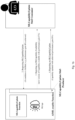
- Figs. 1a and 1b Message sequence according to some example embodiments of the invention are illustrated by Figs. 1a and 1b .
- the update service consumer decides whether the condition to update is fulfilled.
- the update service producer decides whether the condition to update is fulfilled.
- corresponding actions are labelled with the same numbers. Therefore, Fig. 1a does not show action 3 (shown in Fig. 1b), and Fig. 1b does not show action 1 (shown in Fig. 1a ).
- condition for update comprises a performance gain of a network function (i.e., a AI/ML-enabled function) influenced by the AI/ML capability.
- the condition may comprise other conditions instead of or in addition to a performance gain. Examples of such conditions are that the training period of a certain version must comprise a certain time period, or that the training period of a certain version must exclude a certain time period, or that the training period of a certain version must have a minimum duration.
- AI/ML-enabled functions may learn new characteristics even during their utilization, e.g., if they are configured to learn through reinforcement learning or if they are configured to download new versions of their AI/ML Entities. This knowledge may be available to use but the AI/ML-enabled function may not be configured to apply this knowledge by default but to only apply it when explicitly triggered. In such cases, the consumer of AI/ML services that are exposed by the AI/ML-enabled function (e.g., the operator, a management function, or a consumer network function) may wish to be informed when such capabilities are available.
- the typical action may be to trigger re-training of the AI/ML-enabled function or its constituent AI/ML Entities. It may be the case, however, that the AI/ML-enabled function only has inference capabilities and is not equipped to retrain its constituent AI/ML Entities. Yet the consumer of AI/ML services may still need to request for improvements in the capabilities of the AI/ML-enabled function. In such cases, the consumer of AI/ML services that are exposed by the AI/ML-enabled function (e.g. the operator, a management function, or a consumer network function) may wish to trigger the capabilities of the AI/ML-enabled function to be updated even without knowing what internal actions the AI/ML-enabled functions shall take.
- the consumer of AI/ML services that are exposed by the AI/ML-enabled function e.g. the operator, a management function, or a consumer network function
- the consumer may want to request the AI/ML-enabled function to update its constituent capabilities and the AI/ML-enabled function shall respond accordingly.
- the AI/ML-enabled function may download new software that comes with the required updates, download from a remote server a file containing configurations and parameters for the one or more Al/MLEntities, or it may trigger one or more remote or local AI/ML-related processes (including training, testing, etc.) needed to generate the required updates.
- a consumer may wish to manage that capability and its related process(es) even without knowing the details about the AI/ML Entities being updated. For example, the operator may wish to define policies on how often the AI/ML Capability may be updated. Alternatively, for a specific a request to update AI/ML Capability and the respective AI/ML Capability update process, the operator may wish to suspend or restart the AI/ML capability update process or to adjust the update-trigger conditions or characteristics, e.g., the times when the update may be executed.
- the 3GPP management system needs to provide the AI/ML capability to allow the AI/ML capability update process to be configured and managed.
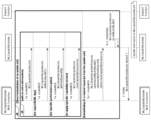
- the MLCapabilityUpdate has the capability to instantiate a MLCapabilityUpdateJob based on requests from consumers as illustrated by Fig. 2 .
- the MLCapabilityUpdate function instantiates and triggers a MLCapabilityUpdateJob as the process through which the specific AI/ML Entity shall be updated.
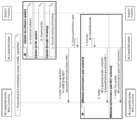
- the update involves one of the processes illustrated in Fig. 3 ,:
- the MLCapabilityUpdate may execute the update and subsequently notify the consumer when the update is completed.
- the MLCapabilityUpdate consumer may configure reporting for the corresponding MLCapabilityUpdateRequest.
- the MLCapabilityUpdateJob shall report on the progress and outcomes of the respective ML Capability Update.
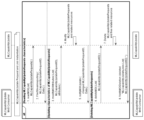
- the AI/ML capabilities are assumed not to be available and the request for update triggers the MLCapabilityUpdate function to find the appropriate capabilities. It is possible however, that the new capabilities are made available previously, e.g. as learned through a reinforcement learning process. Thereby, the request for update may follow an indication that there are available capabilities, in which case, the sequence of actions changes as shown in Fig. 4 .
- the MLCapabilityUpdate may have the capability and a control interface to allow a consumer (e.g., the operator) to configure and manage one or more MLCapabilityUpdateRequests.
- a consumer e.g., the operator
- An example of the control interface is illustrated by Fig. 5 :
- the MLCapabilityUpdate may have the capability and a control interface to allow a consumer (e.g., the operator) to configure and manage one or more MLCapabilityUpdateJobs, as illustrated in Fig. 6 .
- This section defines the ⁇ informationObjectClasses>> ( ⁇ IOCs>>) and «dataTypes» needed to realize ML capability update as well as the relationships among these IOCs and dataTypes.
- Fig. 7 illustrates an information Model for ML capability update Control.
- Fig. 7 may be simplified to Fig. 8 .
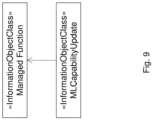
- Fig. 9 illustrates ML capability update Inheritance Relations
- This IOC represents the properties of MLCapabilityUpdate.
- MLCapabilityUpdate is a managed function instantiable from the MLCapabilityUpdate information object class and name-contained in either a subnetwork, a managedFunction or a managementFunction.
- the MLCapabilityUpdate is a type of managedFunction, i.e. the MLCapabilityUpdate is a subclass of and inherits the capabilities of a managedFunction
- the MLCapabilityUpdate shall be associated with one or more AI/MLEntitys.
- This IOC represents the properties of MLCapabilityUpdateJob.
- the MLCapabilityUpdateJob For each MLCapabilityUpdateRequest to update the ML Capability, the MLCapabilityUpdateJob is instantiated for the MLCapabilityUpdateRequest or the MLCapabilityUpdateRequest is associated with an ongoing MLCapabilityUpdateJob if the MLCapabilityUpdateJob is updating the same AI/MLEntitys as stated in the MLCapabilityUpdateRequest.
- the MLCapabilityUpdateJob is associated with at least one MLCapabilityUpdateRequest.
- the MLCapabilityUpdateJob is associated with at least one AI/ML Entity.
- the MLCapabilityUpdateJob IOC includes the attributes shown in Table 2.
- This IOC represents the properties of MLCapabilityUpdateRequest.
- a update service consumer e.g., the MLCapabilityUpdate MnS Consumer shown in Fig. 2-6 . creates a new MLCapabilityUpdateRequest on the MLCapabilityUpdate, i.e., MLCapabilityUpdateRequest shall be an information object class that is instantiated for each request for updating AI/ML Capability
- This dataType represents the properties of an AI/MLEntity.
- a MLCapabilityUpdateJob For each AI/MLEntity or AI/MLEntity(function) under update, a MLCapabilityUpdateJob is instantiated.
- the MLCapabilityUpdate may instantiate an MLCapabilityUpdateJob for each MLCapabilityUpdateRequest.
- authorized consumers may directly instantiate MLCapabilityUpdateJobs to test specific AI/MLEntity or AI/MLEntity(function).
- the AI/MLEntity includes the attributes inherited from TOP IOC (defined in 3GPP TS 28.622) as well as those as defined for the MLModel in PCT/EP2021/059631
- the IOC MLModel represents the different models, derived for specific contexts that might be part of a Network Automation Function (NAF).
- NAF Network Automation Function
- these MLModels contain lists of one or more contexts.
- Each context is associated to ManagedEntities (NetworkSlice, NetworkSliceSubnets, NetworkFunctions) to model the configuration of the network and to characterize the data provided by the Managed Entities. Further, the contexts refer to DataProviders that are not part of the 3GPP system and are thus not modelled as 3GPP ManagedEntities.
- the full set of attributes for the MLModel is stated by Table 4.
- RuntimeContext TrainingContext
- ExpectedRuntimeContext a Data Type of otsown.
- StartTime and endTime document the time interval of a TrainingContext or ExpectedRuntimeContext to characterize the amount of data that has been used for training or the amount of data that is expected during runtime, respectively.
- This dataType represents the properties of MLCapabilityAvailabilityReport.
- the MLCapabilityAvailabilityReport includes the attributes shown in Table 6.
- This dataType represents the properties of MLCapabilityUpdateReport.
- Table 8 Attribute definitions Attribute Name Documentation and Allowed Values Properties CapabilityVersions It indicates the list of available version of AI/ML Capability that can be applied for update type: list multiplicity: 1 isOrdered: N/A isUnique: N/A defaultValue: None expectedPerformanceGains It indicates the expected performance gain if/when the AI/ML Capability of the respective network function are updated with/to the specific set of newly available AI/ML Capability.
- AI/MLEntity may include the version identifiers of any such AI/MLEntity or AI/MLEntity type: String multiplicity: * isOrdered: False isUnique: True defaultValue: None isNullable: True newCapabilityVersion It indicates the specific version of AI/ML Capability to be applied for the update type: String multiplicity: * isOrdered: False isUnique: True defaultValue: None isNullable: True performanceGainThreshold It defines the minimum performance gain as a percentage that shall be achieved with the capability update, i.e., the difference in the performances between the existing capabilities and the new capabilities should be at least performanceGainThreshold otherwise the new capabilities should not be applied.
- Fig. 10 shows an apparatus according to an example embodiment of the invention.
- the apparatus may be an update service producer or an element thereof.
- Fig. 11 shows a method according to an example embodiment of the invention.
- the apparatus according to Fig. 10 may perform the method of Fig. 11 but is not limited to this method.
- the method of Fig. 11 may be performed by the apparatus of Fig. 10 but is not limited to being performed by this apparatus.
- the apparatus comprises means for monitoring 110 and means for instructing 120.
- the means for monitoring 110 and means for instructing 120 may be a monitoring means and instructing means, respectively.
- the means for monitoring 110 and means for instructing 120 may be a monitor and instructor, respectively.
- the means for monitoring 110 and means for instructing 120 may be a monitoring processor and instructing processor, respectively.
- the means for monitoring 110 monitors whether an update service producer receives, from an update service consumer, a request to update a AI/ML entity (S110).
- the AI/ML entity influences a network service.
- the network service may or may not be provided by the update service consumer.
- the means for instructing 120 instructs a first support function to update the AI/ML capability to an update version (S120).
- Fig. 12 shows an apparatus according to an example embodiment of the invention.
- the apparatus may be an update service consumer or an element thereof.
- Fig. 13 shows a method according to an example embodiment of the invention.
- the apparatus according to Fig. 12 may perform the method of Fig. 13 but is not limited to this method.
- the method of Fig. 13 may be performed by the apparatus of Fig. 12 but is not limited to being performed by this apparatus.
- the apparatus comprises means for monitoring 210 and means for requesting 220.
- the means for monitoring 210 and means for requesting 220 may be a monitoring means and requesting means, respectively.
- the means for monitoring 210 and means for requesting 220 may be a monitor and requestor, respectively.
- the means for monitoring 210 and means for requesting 220 may be a monitoring processor and requesting processor, respectively.
- the means for monitoring 210 monitors whether a trigger condition is met (S210).
- the trigger condition is related to at least one of the following:
- the network service may or may not be provided by the update service consumer.
- the means for requesting 220 requests an update service producer to update the AI/ML capability (S220).
- Fig. 14 shows an apparatus according to an example embodiment of the invention.
- the apparatus comprises at least one processor 810, at least one memory 820 storing instructions that, when executed by the at least one processor 810, cause the apparatus at least to perform the method according to at least one of the following figures and related description: Fig. 11 or Fig. 13 .
- the AI/ML capability may influence the network service by at least one of the following ways:
- the producer may not check the authorization. Checking the authorization is optional. Thus, the consumer may or may not be authorized.
- 5G 5th Generation
- the invention is not limited to 5G networks. It may be used in other 3GPP networks such as 4G, 6G, and 7G, or even in non-3GPP networks if corresponding functions are provided.
- One piece of information may be transmitted in one or plural messages from one entity to another entity. Each of these messages may comprise further (different) pieces of information.
- Names of network elements, network functions, protocols, and methods are based on current standards. In other versions or other technologies, the names of these network elements and/or network functions and/or protocols and/or methods may be different, as long as they provide a corresponding functionality. The same applies correspondingly to the terminal.
- each of the entities described in the present description may be based on a different hardware, or some or all of the entities may be based on the same hardware. It does not necessarily mean that they are based on different software. That is, each of the entities described in the present description may be based on different software, or some or all of the entities may be based on the same software.
- Each of the entities described in the present description may be deployed in the cloud.
- example embodiments of the present invention provide, for example, an update service producer or a component thereof, an apparatus embodying the same, a method for controlling and/or operating the same, and computer program(s) controlling and/or operating the same as well as mediums carrying such computer program(s) and forming computer program product(s).
- example embodiments of the present invention provide, for example, an update service consumer or a component thereof, an apparatus embodying the same, a method for controlling and/or operating the same, and computer program(s) controlling and/or operating the same as well as mediums carrying such computer program(s) and forming computer program product(s).
- Implementations of any of the above described blocks, apparatuses, systems, techniques or methods include, as non-limiting examples, implementations as hardware, software, firmware, special purpose circuits or logic, general purpose hardware or controller or other computing devices, or some combination thereof.
- Each of the entities described in the present description may be embodied in the cloud.
- first X and second X include the options that "first X” is the same as “second X” and that "first X” is different from “second X”, unless otherwise specified.
- the present disclosure provides a method comprising
Landscapes
- Engineering & Computer Science (AREA)
- Computer Networks & Wireless Communication (AREA)
- Signal Processing (AREA)
- Artificial Intelligence (AREA)
- Computer Vision & Pattern Recognition (AREA)
- Databases & Information Systems (AREA)
- Evolutionary Computation (AREA)
- Medical Informatics (AREA)
- Software Systems (AREA)
- Stored Programmes (AREA)
Priority Applications (2)
| Application Number | Priority Date | Filing Date | Title |
|---|---|---|---|
| EP22188961.1A EP4319083A1 (fr) | 2022-08-05 | 2022-08-05 | Mise à jour de capacité ml |
| US18/365,972 US20240129203A1 (en) | 2022-08-05 | 2023-08-05 | Ml capability update |
Applications Claiming Priority (1)
| Application Number | Priority Date | Filing Date | Title |
|---|---|---|---|
| EP22188961.1A EP4319083A1 (fr) | 2022-08-05 | 2022-08-05 | Mise à jour de capacité ml |
Publications (1)
| Publication Number | Publication Date |
|---|---|
| EP4319083A1 true EP4319083A1 (fr) | 2024-02-07 |
Family
ID=83149472
Family Applications (1)
| Application Number | Title | Priority Date | Filing Date |
|---|---|---|---|
| EP22188961.1A Pending EP4319083A1 (fr) | 2022-08-05 | 2022-08-05 | Mise à jour de capacité ml |
Country Status (2)
| Country | Link |
|---|---|
| US (1) | US20240129203A1 (fr) |
| EP (1) | EP4319083A1 (fr) |
Families Citing this family (1)
| Publication number | Priority date | Publication date | Assignee | Title |
|---|---|---|---|---|
| US20250062967A1 (en) * | 2023-11-02 | 2025-02-20 | Intel Corporation | Network resource models and technologies for actions executed according to machine learning inference reports |
Citations (2)
| Publication number | Priority date | Publication date | Assignee | Title |
|---|---|---|---|---|
| US20210021494A1 (en) * | 2019-10-03 | 2021-01-21 | Intel Corporation | Management data analytics |
| WO2022060923A1 (fr) * | 2020-09-16 | 2022-03-24 | Intel Corporation | Services non en temps réel pour ia/ml |
Family Cites Families (1)
| Publication number | Priority date | Publication date | Assignee | Title |
|---|---|---|---|---|
| WO2021170617A1 (fr) * | 2020-02-24 | 2021-09-02 | Telefonaktiebolaget Lm Ericsson (Publ) | Amélioration des performances de liaison montante évitant les conflits de paramètres dans un réseau sans fil |
-
2022
- 2022-08-05 EP EP22188961.1A patent/EP4319083A1/fr active Pending
-
2023
- 2023-08-05 US US18/365,972 patent/US20240129203A1/en active Pending
Patent Citations (2)
| Publication number | Priority date | Publication date | Assignee | Title |
|---|---|---|---|---|
| US20210021494A1 (en) * | 2019-10-03 | 2021-01-21 | Intel Corporation | Management data analytics |
| WO2022060923A1 (fr) * | 2020-09-16 | 2022-03-24 | Intel Corporation | Services non en temps réel pour ia/ml |
Non-Patent Citations (3)
| Title |
|---|
| 3GPP TS 28.105 |
| 3GPP TS 28.622 |
| HUAWEI: "pCR TR 28.908 Add use case on AI/ML update", vol. SA WG5, no. e-meeting; 20220627 - 20220701, 17 June 2022 (2022-06-17), XP052198185, Retrieved from the Internet <URL:https://ftp.3gpp.org/tsg_sa/WG5_TM/TSGS5_144e/Docs/S5-224102.zip S5-224102 pCR TR 28.908 Add use case on AI-ML model update.docx> [retrieved on 20220617] * |
Also Published As
| Publication number | Publication date |
|---|---|
| US20240129203A1 (en) | 2024-04-18 |
Similar Documents
| Publication | Publication Date | Title |
|---|---|---|
| KR102339239B1 (ko) | 클라우드-디바이스 협업적 실시간 사용자 사용 및 성능 비정상 검출을 위한 시스템 및 방법 | |
| US10558435B2 (en) | System and method for a development environment for building services for a platform instance | |
| US20190317825A1 (en) | System for managing deployment of distributed computing resources | |
| US8789053B2 (en) | Task execution and delegation by autonomous mobile agents based on intent knowledge base | |
| US12333464B2 (en) | Artificial intelligence-based business process management visualization, development and monitoring | |
| US20130111545A1 (en) | Privacy Management for Subscriber Data | |
| EP4011038A1 (fr) | Configuration d'analytique de réseau | |
| EP4050851B1 (fr) | Transformation des expressions d'intention en commandes et configurations | |
| US20220272510A1 (en) | Method and apparatus for use in communication networks having control and management planes | |
| JP2013515987A (ja) | 作成コスト削減のためのサービス選択 | |
| EP4319083A1 (fr) | Mise à jour de capacité ml | |
| WO2016066438A1 (fr) | Gestion de réseau au moyen d'une politique adaptative | |
| US12445354B2 (en) | Deploying network functions of a network slice | |
| Nïemöller et al. | Cognitive processes for adaptive intent-based networking | |
| Camelo et al. | Daemon: A network intelligence plane for 6g networks | |
| KR20040084887A (ko) | 제너릭 적응 제어용 오브젝트-지향 프레임워크 | |
| US20130031157A1 (en) | Distributed system | |
| García-Fernández et al. | Pricing-driven development and operation of SaaS: challenges and opportunities | |
| Bucchiarone et al. | Decentralized dynamic adaptation for service-based collective adaptive systems | |
| KR101367341B1 (ko) | 스테이션당 시작 시간 제약 | |
| Portocarrero et al. | Reference architecture for self-adaptive management in wireless sensor networks | |
| US20240211775A1 (en) | Communication network | |
| Munteanu et al. | Service lifecycle in the cloud environment | |
| EP4687328A1 (fr) | Procédé et dispositif pour effectuer la maintenance d'un réseau de communication | |
| US20250258905A1 (en) | Systems and methods for a platform as a service orchestrator |
Legal Events
| Date | Code | Title | Description |
|---|---|---|---|
| PUAI | Public reference made under article 153(3) epc to a published international application that has entered the european phase |
Free format text: ORIGINAL CODE: 0009012 |
|
| STAA | Information on the status of an ep patent application or granted ep patent |
Free format text: STATUS: REQUEST FOR EXAMINATION WAS MADE |
|
| 17P | Request for examination filed |
Effective date: 20220805 |
|
| AK | Designated contracting states |
Kind code of ref document: A1 Designated state(s): AL AT BE BG CH CY CZ DE DK EE ES FI FR GB GR HR HU IE IS IT LI LT LU LV MC MK MT NL NO PL PT RO RS SE SI SK SM TR |