EP4319094A1 - Procédé et appareil de commande, et dispositif informatique - Google Patents
Procédé et appareil de commande, et dispositif informatique Download PDFInfo
- Publication number
- EP4319094A1 EP4319094A1 EP22773978.6A EP22773978A EP4319094A1 EP 4319094 A1 EP4319094 A1 EP 4319094A1 EP 22773978 A EP22773978 A EP 22773978A EP 4319094 A1 EP4319094 A1 EP 4319094A1
- Authority
- EP
- European Patent Office
- Prior art keywords
- back pressure
- virtual machine
- message
- information
- rate limit
- Prior art date
- Legal status (The legal status is an assumption and is not a legal conclusion. Google has not performed a legal analysis and makes no representation as to the accuracy of the status listed.)
- Pending
Links
Images



Classifications
-
- H—ELECTRICITY
- H04—ELECTRIC COMMUNICATION TECHNIQUE
- H04L—TRANSMISSION OF DIGITAL INFORMATION, e.g. TELEGRAPHIC COMMUNICATION
- H04L47/00—Traffic control in data switching networks
- H04L47/10—Flow control; Congestion control
- H04L47/26—Flow control; Congestion control using explicit feedback to the source, e.g. choke packets
-
- H—ELECTRICITY
- H04—ELECTRIC COMMUNICATION TECHNIQUE
- H04L—TRANSMISSION OF DIGITAL INFORMATION, e.g. TELEGRAPHIC COMMUNICATION
- H04L47/00—Traffic control in data switching networks
- H04L47/10—Flow control; Congestion control
- H04L47/20—Traffic policing
-
- G—PHYSICS
- G06—COMPUTING OR CALCULATING; COUNTING
- G06F—ELECTRIC DIGITAL DATA PROCESSING
- G06F9/00—Arrangements for program control, e.g. control units
- G06F9/06—Arrangements for program control, e.g. control units using stored programs, i.e. using an internal store of processing equipment to receive or retain programs
- G06F9/44—Arrangements for executing specific programs
- G06F9/455—Emulation; Interpretation; Software simulation, e.g. virtualisation or emulation of application or operating system execution engines
- G06F9/45533—Hypervisors; Virtual machine monitors
- G06F9/45558—Hypervisor-specific management and integration aspects
-
- H—ELECTRICITY
- H04—ELECTRIC COMMUNICATION TECHNIQUE
- H04L—TRANSMISSION OF DIGITAL INFORMATION, e.g. TELEGRAPHIC COMMUNICATION
- H04L12/00—Data switching networks
- H04L12/28—Data switching networks characterised by path configuration, e.g. LAN [Local Area Networks] or WAN [Wide Area Networks]
- H04L12/46—Interconnection of networks
- H04L12/4633—Interconnection of networks using encapsulation techniques, e.g. tunneling
-
- H—ELECTRICITY
- H04—ELECTRIC COMMUNICATION TECHNIQUE
- H04L—TRANSMISSION OF DIGITAL INFORMATION, e.g. TELEGRAPHIC COMMUNICATION
- H04L45/00—Routing or path finding of packets in data switching networks
- H04L45/74—Address processing for routing
-
- H—ELECTRICITY
- H04—ELECTRIC COMMUNICATION TECHNIQUE
- H04L—TRANSMISSION OF DIGITAL INFORMATION, e.g. TELEGRAPHIC COMMUNICATION
- H04L47/00—Traffic control in data switching networks
- H04L47/10—Flow control; Congestion control
- H04L47/12—Avoiding congestion; Recovering from congestion
-
- H—ELECTRICITY
- H04—ELECTRIC COMMUNICATION TECHNIQUE
- H04L—TRANSMISSION OF DIGITAL INFORMATION, e.g. TELEGRAPHIC COMMUNICATION
- H04L63/00—Network architectures or network communication protocols for network security
- H04L63/02—Network architectures or network communication protocols for network security for separating internal from external traffic, e.g. firewalls
- H04L63/0227—Filtering policies
- H04L63/0236—Filtering by address, protocol, port number or service, e.g. IP-address or URL
-
- H—ELECTRICITY
- H04—ELECTRIC COMMUNICATION TECHNIQUE
- H04L—TRANSMISSION OF DIGITAL INFORMATION, e.g. TELEGRAPHIC COMMUNICATION
- H04L63/00—Network architectures or network communication protocols for network security
- H04L63/02—Network architectures or network communication protocols for network security for separating internal from external traffic, e.g. firewalls
- H04L63/0227—Filtering policies
- H04L63/0254—Stateful filtering
-
- H—ELECTRICITY
- H04—ELECTRIC COMMUNICATION TECHNIQUE
- H04L—TRANSMISSION OF DIGITAL INFORMATION, e.g. TELEGRAPHIC COMMUNICATION
- H04L63/00—Network architectures or network communication protocols for network security
- H04L63/14—Network architectures or network communication protocols for network security for detecting or protecting against malicious traffic
- H04L63/1408—Network architectures or network communication protocols for network security for detecting or protecting against malicious traffic by monitoring network traffic
- H04L63/1425—Traffic logging, e.g. anomaly detection
-
- H—ELECTRICITY
- H04—ELECTRIC COMMUNICATION TECHNIQUE
- H04L—TRANSMISSION OF DIGITAL INFORMATION, e.g. TELEGRAPHIC COMMUNICATION
- H04L63/00—Network architectures or network communication protocols for network security
- H04L63/14—Network architectures or network communication protocols for network security for detecting or protecting against malicious traffic
- H04L63/1441—Countermeasures against malicious traffic
-
- G—PHYSICS
- G06—COMPUTING OR CALCULATING; COUNTING
- G06F—ELECTRIC DIGITAL DATA PROCESSING
- G06F9/00—Arrangements for program control, e.g. control units
- G06F9/06—Arrangements for program control, e.g. control units using stored programs, i.e. using an internal store of processing equipment to receive or retain programs
- G06F9/44—Arrangements for executing specific programs
- G06F9/455—Emulation; Interpretation; Software simulation, e.g. virtualisation or emulation of application or operating system execution engines
- G06F9/45533—Hypervisors; Virtual machine monitors
- G06F9/45558—Hypervisor-specific management and integration aspects
- G06F2009/45591—Monitoring or debugging support
-
- G—PHYSICS
- G06—COMPUTING OR CALCULATING; COUNTING
- G06F—ELECTRIC DIGITAL DATA PROCESSING
- G06F9/00—Arrangements for program control, e.g. control units
- G06F9/06—Arrangements for program control, e.g. control units using stored programs, i.e. using an internal store of processing equipment to receive or retain programs
- G06F9/44—Arrangements for executing specific programs
- G06F9/455—Emulation; Interpretation; Software simulation, e.g. virtualisation or emulation of application or operating system execution engines
- G06F9/45533—Hypervisors; Virtual machine monitors
- G06F9/45558—Hypervisor-specific management and integration aspects
- G06F2009/45595—Network integration; Enabling network access in virtual machine instances
Definitions
- Embodiments of the present application relate to the field of network technology, and in particular to a control method and apparatus, and a computing device.
- An Overlay network is a virtual network built on the basis of an existing physical network.
- Vxlan Virtual Extensible Local Area Network
- An Overlay network is an Overlay network.
- the Overlay network adopts a many-to-one communication mode
- multiple virtual machines access the same virtual machine, which results in that a CPU (central processing unit) corresponding to a virtual switch in a host machine where the destination virtual machine is located is excessively occupied, thereby affecting the use of other virtual machines in the same host machine.
- multiple virtual machines simultaneously access other networks through a virtual gateway, which results in that a CPU of a device where the virtual gateway is located is excessively occupied, thereby affecting normal network access, etc.
- Embodiments of the present application provide a control method and apparatus, and a computing device, to solve the traffic attack problem in the prior art.
- an embodiment of the present application provides a control method, including:
- an embodiment of the present application provides a control method, including:
- an embodiment of the present application provides a control apparatus, including:
- an embodiment of the present application provides a control apparatus, including:
- an embodiment of the present application provides a computing device, including a processing component and a storage component, wherein the storage component stores one or more computer instructions, and the one or more computer instructions are used for being called and executed by the processing component, to run at least one virtual machine and run a virtual switch implementing the control method in the first aspect above.
- an embodiment of the present application provides a computing device, including a processing component and a storage component, wherein the storage component stores one or more computer instructions, and the one or more computer instructions are used for being called and executed by the processing component, to run a virtual gateway implementing the control method in the first aspect above.
- an embodiment of the present application provides a computing device, including a processing component and a storage component, wherein the storage component stores one or more computer instructions, and the one or more computer instructions are used for being called and executed by the processing component, to run at least one virtual machine and run a virtual switch implementing the control method in the second aspect above.
- an embodiment of the present application provides a computer storage medium, storing a computer program, wherein the computer program, when executed by a computer, implements the control method in the first aspect above.
- an embodiment of the present application provides a computer storage medium, storing a computer program, wherein the computer program, when executed by a computer, implements the control method in the second aspect above.
- the access message when it is detected that the access traffic satisfies the rate limit condition, the access message may be parsed to obtain the inner-layer encapsulation information, and then the source virtual machine initiating an attack may be determined based on the inner-layer encapsulation information, thus the back pressure information may be sent to the destination host machine where the source virtual machine is located, to instruct to perform message rate limit processing on the source virtual machine.
- This embodiment may identify the source virtual machine which has initiated the attack by parsing the access message, and implements message rate limit processing by performing the back pressure on the source virtual machine, to solve the traffic attack problem.
- the technical solutions of the embodiments of the present application are applied to a virtual network, to solve the traffic attack problem in the virtual network, such as the traffic attack problem in the Overlay network.
- VM Virtual machine
- VM refers to a complete computer system that is simulated through software, has a complete hardware system function, and runs in a completely isolated environment.
- Host machine is a physical host running a virtual machine.
- Overlay network is a virtual network built on the basis of an existing physical network.
- Vxlan Virtual Extensible Local Area Network
- UDP User Datagram Protocol
- Quintuple information includes a source IP (Internet Protocol) address, a source port, a destination IP address, a destination port, and a transport layer protocol.
- the source IP address in the quintuple information encapsulated in an inner layer is a virtual IP address of a source virtual machine
- the source port is a virtual port of the source virtual machine
- the destination IP address is a virtual IP address of a destination end
- the source port is a virtual port of the destination end.
- One message flow may be uniquely identified by inner-layer quintuple information.
- Message flow refers to a flow formed by messages transmitted between a source IP address and a destination IP address. All messages in a message flow have the same quintuple information.
- Virtual switch (abbreviated as VSwitch): provides two-layer network access and a part of three-layer network functions for a virtual machine running on the present host machine. The access of the source virtual machine to the destination virtual machine needs to be achieved through a virtual switch. The virtual switch is responsible for forwarding an access message from the source virtual machine to the destination virtual machine.
- Virtual gateway (abbreviated as VG): is used to realize interconnection between a network where the virtual machine is located and other networks.
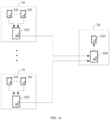
- FIG. 1a shows the situation where multiple virtual machines simultaneously access one virtual machine.
- multiple virtual machines may be installed in one host machine.
- a source virtual machine 101 in a source host machine 10 requests to send an access message to a certain destination virtual machine 103 in a destination host machine 20 through a source virtual switch 102 in the source host machine 10.
- a destination virtual switch 104 in the destination host machine 20 is responsible for forwarding the access message to the destination virtual machine 103.
- multiple source virtual machines 101 may continuously request to send access messages to one destination virtual machine 103 simultaneously.
- the multiple source virtual machines 101 may be located in the same source host machine 10, or may also be located in multiple source host machines 10.
- the destination virtual machine switch 104 may receive a large number of access messages and need to forward a large number of messages, which may cause the forwarding capacity of a forwarding CPU corresponding to the destination virtual machine switch 104 to be too high and become overwhelmed, affecting the processing performance of the forwarding CPU, and in turn affecting the normal use of other virtual machines in the destination host machine 20.
- FIG. 1b shows the situation where multiple virtual machines simultaneously access a public network through a virtual gateway.
- a source virtual machine 105 in a source host machine 30 may send an access message to a virtual gateway 107 through a source virtual switch 106 in the source host machine 30, to request access to a public network 40.
- the virtual gateway 107 is responsible for forwarding a message.
- multiple source virtual machines 105 may simultaneously send access messages to the virtual gateway 107, and the multiple source virtual machines 105 may be located in the same source host machine 30, or may also be located in multiple source host machines 30.
- the virtual gateway 107 may receive a large number of access messages and need to forward a large number of messages, which may cause the forwarding capacity of a forwarding CPU corresponding to the virtual gateway 107 to be too high and become overwhelmed, affecting the processing performance of the forwarding CPU, and in turn affecting the normal network access of other virtual machines through the virtual gateway.
- an original message of a virtual machine may undergo secondary encapsulation, and network-related information, such as a host machine address, is incorporated to form an access message. That is, the original message in the access message is encapsulated in the inner layer, and the outer layer includes the network-related information.
- network-related information such as a host machine address
- the original message in the access message is encapsulated in the inner layer, and the outer layer includes the network-related information.
- Vxlan Taking Vxlan as an example, in a Vxlan message, an original message is encapsulated in a UDP data format, a Vxlan header is added to the original message, and both are encapsulated in a UDP data packet.
- the Vxlan header information may include a Vxaln identifier, an IP header, etc.
- the IP header mainly includes a host IP address for communication between hosts, etc.
- the Vxlan header information may also include other information, which is the same as the existing Vxlan header information, and will not be repeated in the present application.
- the original message is a message that is truly transmitted between virtual machines.
- the header information of the original message for example, includes a virtual machine IP address, a port, a transport layer protocol, etc., for communication between virtual machines.
- the access message may be parsed to identify the source virtual machine that generates the attack, and then back pressure information may be constructed, which achieves message rate limit processing for the source virtual machine, and thus may solve the traffic attack problem.
- FIG. 2 is a flowchart of an embodiment of a control method provided by the present application.
- the technical solution of this embodiment may be executed by a destination end as an attacked party, such as a virtual switch or a virtual gateway.
- the method may include the following steps: 201: detecting that access traffic satisfies a rate limit condition, and capturing an access message.
- whether the access traffic satisfies the rate limit condition may be implemented by detecting the forwarding capacity or CPU water level of a forwarding CPU. If the forwarding capacity is higher than a certain capacity or the CPU water level is higher than a certain water level, it can be considered that the access traffic satisfies the rate limit condition.
- the access message may be captured from the forwarding CPU.
- the virtual machine switch or virtual gateway may achieve functions thereof by using one or more CPUs.
- the forwarding CPU refers to a CPU responsible for message forwarding.
- access messages may be captured according to a sampling frequency and sampling quantity, that is, packet capture sampling is performed in the forwarding CPU, such as capturing 1000 access messages per second.
- capturing the access messages does not mean intercepting the access messages, but rather performing mirror processing on the access messages and copying the obtained access messages.
- the destination end will still perform normal access processing based on the access messages, for example, forwarding to the destination virtual machine or an external network, etc.
- the captured access message may be parsed to obtain its inner-layer encapsulation information.
- the inner-layer encapsulation information mainly refers to header information encapsulated in an original message in the access message, such as inner-layer quintuple information.
- 203 determining, based on the inner-layer encapsulation information, a source virtual machine that satisfies the rate limit condition.
- the inner-layer quintuple information may uniquely identify a message flow, based on the number of messages in the message flow, it may be determined which message flow caused the attack, and then the corresponding source virtual machine may be determined based on the source IP address in the inner-layer quintuple information corresponding to the message flow.
- the determining, based on the inner-layer encapsulation information, the source virtual machine that satisfies the rate limit condition includes: aggregating access messages based on a message flow identified by the inner-layer encapsulation information, to determine numbers of messages for different message flows; selecting a message flow to be limited in rate according to the numbers of messages for the different message flows; and determining a source virtual machine corresponding to the message flow to be limited in rate.
- the selecting the message flow to be limited in rate according to the numbers of messages for the different message flows may include: selecting a message flow to be limited in rate with the number of messages greater than or equal to a preset number, according to the numbers of messages for the different message flows.
- the determining the message flow to be limited in rate according to the numbers of messages for the different message flows includes: selecting top N message flows, in a descending order of the numbers of messages, as message flows to be limited in rate.
- message rate limit processing may be performed according to the following manner.
- the back pressure information After determining the source virtual machine that satisfies the rate limit condition, the back pressure information may be sent.
- the back pressure information is specifically received by the source virtual switch in the source host machine. Then, the rate limit processing is performed on the source virtual machine according to the back pressure information.
- the back pressure information may be sent based on a host machine address in the outer-layer encapsulation information obtained by parsing the access message.
- the host machine address may specifically refer to a host machine IP address.
- the access message when it is detected that the access traffic satisfies the rate limit condition, the access message may be parsed to obtain the inner-layer encapsulation information, and then the source virtual machine initiating an attack may be determined based on the inner-layer encapsulation information, thus the back pressure information may be sent to the destination host machine where the source virtual machine is located, to instruct to perform message rate limit processing on the source virtual machine.
- This embodiment may identify the source virtual machine which has initiated the attack by parsing the access message, and implements message rate limit processing by performing the back pressure on the source virtual machine, to solve the traffic attack problem.
- the method may also include:
- the source virtual machine may send multiple message flows, however, only one of the message flows may generate a traffic attack.
- the message flow to be limited in rate may be used as the back pressure object, or, in the scenario where multiple source virtual machines simultaneously access one destination virtual machine, the destination virtual machine may be determined based on the destination IP address in the inner-layer quintuple information corresponding to the message flow to be limited in rate, and all message flows sent to the destination virtual machine may be used as the back pressure objects; or, all message flows sent by the source virtual machine are directly used as the back pressure objects.
- the back pressure object may be pre-set in combination with actual needs.
- the method may also include:
- the back pressure object in the source virtual machine may also be determined. Then, the back pressure information may be specifically generated according to the at least one processing manner and the back pressure object, to instruct to perform message rate limit processing on the back pressure object in the source virtual machine according to the at least one processing manner.
- the method may also include:
- the back pressure information may also be generated according to the at least one processing manner, the rate limit type and the back pressure obj ect.
- the rate limit processing manner may include adjusting a packet forwarding rate (abbreviated as pps) and/or a bit rate for sending messages.
- pps packet forwarding rate
- the pps rate limit may be achieved by limiting the number of packets sent per second, and the bit rate may be achieved by limiting the bps (Bit Per Second).
- the rate limit type may include at least one of the pps rate limit and the bps rate limit.
- the back pressure information may also include the inner-layer quintuple information in the inner-layer encapsulation information.
- the back pressure information may also include a virtual network identifier, such as a VNI (Vxlan Network Identifier) in a Vxlan network.
- VNI Vxlan Network Identifier
- the back pressure information may include at least one of: the at least one processing manner, the rate limit information, the back pressure object, the inner-layer quintuple information in the inner-layer encapsulation information, and the virtual network identifier. Furthermore, the back pressure information may also include a network protocol in the inner-layer encapsulation information. In addition, in the scenario where the virtual gateway is subjected to a traffic attack, the traffic attack may come from an internal network or an external network, so the back pressure information may also include a traffic attack direction, etc.
- the alarm processing manner may instruct to perform the alarm processing on the source virtual machine, for example, including that the current packet sending situation of the source virtual machine, the virtual machine identifier of the source virtual machine, the back pressure object identifier, etc., are acquired as response information to be fed back to the destination end, and the destination end performs an alarm based on this, such as outputting alarm prompt information.
- the rate limit processing manner may instruct to perform pps rate limit and/or bps rate limit on the source virtual machine, and the current packet sending situation of the source virtual machine, the virtual machine identifier of the source virtual machine, the back pressure object identifier, etc., are acquired to be fed back to the destination end, and the destination end performs an alarm based on this, such as outputting alarm prompt information.
- the method may also include:
- the response information may include the source virtual machine identifier, the back pressure object identifier, and/or the current packet sending situation of the source virtual machine, etc.
- the current packet sending situation may include, for example, a current packet forwarding rate, an average packet forwarding rate within a recent preset time range, a maximum packet forwarding rate within the recent preset time range; and the current packet sending situation may also include a current bit rate, an average bit rate within the recent preset time range, and a maximum bit rate within the recent preset time range.
- outputting the alarm prompt information may include: sending the alarm prompt information based on the communication account of relevant personnel.
- outputting the alarm prompt information may also include: sending the alarm prompt information to a corresponding display device to display the alarm prompt information, thereby facilitating the relevant personnel to discover the source virtual machine generating the attack, the current attack situation, and/or the rate limit effect, etc.
- the back pressure information may be encapsulated as a back pressure message to be sent. Therefore, in some embodiments, the method may also include: parsing the access message to obtain outer-layer encapsulation information; the sending the back pressure information to the host machine where the source virtual machine is located, includes:
- the outer-layer encapsulation information may specifically include the source host machine address.
- the outer-layer encapsulation information may also include the destination host address, etc.
- the back pressure message may at least include: at least one back pressure field corresponding to the back pressure indication information, a host machine address field, a network identifier field, and a field corresponding to each of inner-layer quintuple; the constructing the back pressure message, based on the back pressure indication information, and the inner-layer encapsulation information and the outer-layer encapsulation information corresponding to the source virtual machine, may include:
- the back pressure indication information is specifically used for indicating how to perform the message rate limit processing, etc.
- the source host machine address is used for sending the back pressure message based on the back pressure indication information.
- the virtual network identifier and the inner-layer quintuple information are used for identifying the source virtual machine, the back pressure object thereof, etc., that need to be performed the rate limit processing.
- the back pressure indication information may include the at least one processing manner, the back pressure object, the rate limit type, etc.
- the at least one back pressure field may include a processing manner field, a rate limit type field, and a back pressure object field; the filling the back pressure indication information into the at least one back pressure field, may include:
- the back pressure message may also include at least one feedback field; wherein the at least one feedback field is used for filling a processing result after performing the message rate limit processing, to generate a response message; and the method may also include: receiving the response message; and outputting rate limit prompt information based on the response message.
- the response message may be used as the rate limit prompt information.
- the at least one feedback field may include, for example, a virtual machine identifier field used for filling a virtual machine identifier of the source virtual machine.
- the at least one feedback field may also include: a packet forwarding rate field used for filling a current packet forwarding rate of the back pressure object and/or a current bit rate field used for filling a current bit rate of the back pressure object.
- the at least one feedback field may also include at least one of: an average packet forwarding rate field used for filling an average packet forwarding rate of the back pressure object within a recent preset time range, a maximum packet forwarding rate field used for filling a maximum packet forwarding rate of the back pressure object within the recent preset time range, an average bit rate field used for filling an average bit rate of the back pressure object within the recent preset time range, and a maximum bit rate field used for filling a maximum bit rate of the back pressure object within the recent preset time range.
- the recent preset time range may refer to the last 10 minutes, for example.
- the source virtual switch may acquire the corresponding processing result based on the at least one feedback field and fill the processing result into the corresponding feedback field.
- the back pressure message may also include an attack direction field
- the method may also include:
- the traffic attack direction identified by the field value in the attack direction field is used as a kind of alarm information.
- the back pressure message may also include a network protocol field
- the method may also include: writing a parameter value identifying an inner-layer network protocol into the network protocol field.
- the value 0 indicates IPV4 (Internet Protocol version 4)
- the value 1 indicates IPV6 (Internet Protocol version 6).
- the network protocol field is used for parsing and obtaining the inner-layer quintuple information from the back pressure message according to a network protocol identified by a field value.
- FIG. 3 shows a schematic diagram of a message format of a back pressure message in a practical application.
- fields that may be included in the back pressure message are introduced below.
- Action is a processing manner field. Values thereof may include 0 or 1.
- the value 0 indicates the alarm processing manner, indicating only alarm without rate limit.
- the value 1 indicates the rate limit processing manner, performing a rate limit action.
- Limit_type is a rate limit type field. Values thereof may include 0, 1, or 2.
- the value 0 indicates performing pps rate limit.
- the value 1 indicates performing bps rate limit.
- the value 3 indicates performing the pps rate limit and the bps rate limit at the same time.
- the Limit_type may be a null value.
- Direction is an attack direction field. Values thereof may include 0 or 1.
- the value 0 indicates an internal network direction.
- the value 1 indicates an external network direction.
- the value of the Direction is 1, the value of the Action is 0.
- key_type is a back pressure object field. Values thereof may include 0, 1, or 2.
- the value 0 indicates that the inner-layer source IP address is valid.
- the value 1 indicates that the inner-layer triple (the source IP address, the destination IP address, the transport layer protocol) are valid.
- the value 2 indicates that the inner-layer quintuple (the source IP address, the destination IP address, the source port, the destination port, the transport layer protocol) are valid.
- Ncip is a host machine field. The value thereof is taken as the host machine IP address of the host machine where the source virtual machine satisfying the rate limit condition is located.
- tunnel id is a network identifier field. The value thereof is taken as the virtual network identifier, such as VNI, of the virtual network where the source virtual machine satisfying the rate limit condition is located.
- Af is a network protocol field. The value thereof is taken as an inner-layer network protocol.
- inner_proto is one of the inner-layer quintuple fields, an inner-layer protocol field. The value thereof is taken as an inner-layer transport layer protocol number.
- inner src ip is one of the inner-layer quintuple fields, an inner-layer source address field. The value thereof is taken as an inner-layer source IP address.
- inner dst ip is one of the inner-layer quintuple fields, an inner-layer source address field. The value thereof is taken as an inner-layer destination IP address.
- inner src port is one of the inner-layer quintuple fields, an inner-layer source port field. The value thereof is taken as an inner-layer source port number.
- inner dst port is one of the inner-layer quintuple fields, an inner-layer destination port field. The value thereof is taken as an inner-layer destination port number.
- ecs_id is a virtual machine identifier field. The value thereof is taken as a virtual machine identifier of the source virtual machine that satisfies the rate limit condition, such as a virtual machine name.
- out_pps is a current packet forwarding rate field. The value thereof is taken as a current pps of the back pressure object.
- avg_pps is an average packet forwarding rate field. The value thereof is taken as an average pps of the back pressure object within a recent preset time range, such as an average pps within the last 10 minutes.
- max_pps is a maximum packet forwarding rate field. The value thereof is taken as a maximum pps of the back pressure object within the recent preset time range, such as a maximum pps within the last 10 minutes.
- the constructed back pressure message may be sent based on the host machine address in the Ncip field.
- FIG. 4 is a flowchart of another embodiment of a control method provided in the present application. This embodiment introduces the process of message rate limit processing from the perspective of a back pressure information receiving end.
- the receiving end specifically refers to a source virtual switch. This method may include the following several steps.
- the back pressure information is sent by a destination end for a source virtual machine that satisfies a rate limit condition; the source virtual machine that satisfies the rate limit condition is determined based on inner-layer encapsulation information; the inner-layer encapsulation information is obtained by detecting, by the destination end, that access traffic satisfies the rate limit condition, capturing an access message, and parsing the access message.
- the specific implementation may refer to the embodiment shown in FIG. 2 in detail, and will not be repeated here.
- the source virtual machine requesting the rate limit may be determined according to the inner-layer quintuple information, the virtual network identifier, etc., in the back pressure information.
- the performing the message rate limit processing on the source virtual machine requesting the rate limit according to the back pressure information may include: performing the message rate limit processing on a back pressure object, indicated by the back pressure information, in the source virtual machine, according to the back pressure information requesting the rate limit.
- the performing the message rate limit processing on the source virtual machine requesting the rate limit according to the back pressure information may include: performing the message rate limit processing on the source virtual machine requesting the rate limit, according to at least one processing manner indicated by the back pressure information.
- the performing the message rate limit processing on the source virtual machine requesting the rate limit, according to at least one processing manner indicated by the back pressure information may include:
- performing the rate limit processing on the message sending of the source virtual machine requesting the rate limit may specifically include: in combination with the back pressure object, performing the rate limit processing on message sending in a certain message flow represented by the back pressure object in the source virtual machine requesting the rate limit.
- performing the rate limit processing may include performing the pps rate limit and/or performing the bps rate limit, etc.
- performing the rate limit processing may include: performing the rate limit processing on the virtual network card corresponding to the source virtual machine, and performing the pps rate limit and/or the bps rate limit on a message flow forwarded from the virtual network card, such as reducing the pps or bps by a certain percentage.
- a rate limit record may also be generated for storage.
- the packet sending situation information in the first feedback result may include, for example, the current packet forwarding rate, the average packet forwarding rate within the last 10 minutes, and the maximum packet forwarding rate within the last 10 minutes, etc.
- the packet sending situation information in the second feedback result may include, for example, the current packet forwarding rate after performing the rate limit processing, the average packet forwarding rate within the last 10 minutes, and the maximum packet forwarding rate within the last 10 minutes, etc.
- the receiving the back pressure information may include: receiving a back pressure message; and parsing the back pressure message, to obtain back pressure indication information, a virtual network identifier and inner-layer quintuple information in the back pressure message; the performing the message rate limit processing on the source virtual machine requesting the rate limit according to the back pressure information, may include:
- the performing the message rate limit processing on the source virtual machine according to the back pressure indication information may include:
- the method may also include:
- the processing result may include the first feedback result or the second feedback result described above.
- the receiving the back pressure information may include: receiving the back pressure information periodically; the method may also include: in a case where the back pressure information is not received within a specified time, performing a recovery operation on the back pressure object which has been subjected to rate limit processing.
- the back pressure object which has been subjected to the rate limit processing may be determined based on the rate limit record, and the recovery operation is performed on the back pressure object.
- the recovery operation may refer to: increasing the pps corresponding to the back pressure object by a certain percentage, etc.
- the method may also include: if the back pressure object which has been subjected to the rate limit processing is recovered to the original state before the rate limit processing, deleting the rate limit record corresponding to the back pressure object which has been subjected to the rate limit processing.
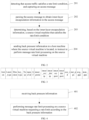
- FIG. 5 is a flowchart of another embodiment of a control method provided by an embodiment of the present application. This embodiment is performed by a source virtual switch, and may include the following several steps.
- step 501 at a specified time, determining whether a back pressure message is received; if the back pressure message is received, performing step 502; and if the back pressure message is not received, performing step 507.
- Relevant information in the back pressure message for example, a source virtual machine requesting rate limit, a back pressure object in the source virtual machine, a processing manner, a rate limit type, etc., may be obtained by parsing the back pressure message.
- the rate limit type as pps is taken as an example for explanation.
- step 503 determining whether the rate limit processing manner is performed; if the rate limit processing manner is performed, performing step 504; and if the rate limit processing manner is not performed, performing step 505.
- step 504 adjusting a pps, corresponding to the back pressure object, in a virtual network card to x% of an original pps, and generating and storing a rate limit record; and then, performing step 505.
- x is less than 100.
- step 507 based on the rate limit record, determining whether there is a back pressure object that has been subjected to the rate limit; if there is the back pressure object that has been subjected to the rate limit, performing step 508.
- step 509 based on the rate limit record, determining whether the pps corresponding to the back pressure object that has been subjected to the rate limit is recovered to the original state; and if the pps corresponding to the back pressure object that has been subjected to the rate limit is recovered to the original state, performing step 510.
- FIG. 6a is a schematic diagram of control interaction corresponding to the traffic attack scenario in FIG. 1a .
- the destination virtual switch 104 detects that the access traffic satisfies the rate limit condition, the destination virtual switch 104 captures an access message and obtains the inner-layer encapsulation information by parsing the access message. Based on the inner-layer encapsulation information, the destination virtual switch 104 may determine the source virtual machine 101 that satisfies the rate limit condition, and send a back pressure message to the source host machine 10 where the source virtual machine 101 is located.
- the source virtual switch 102 in the source host machine 10 receives the back pressure message, and performs the message rate limit processing on the source virtual machine 101 based on the back pressure message.
- the source virtual switch 102 generates a response message based on the processing result, and sends the response message to the destination virtual switch 104.
- the destination virtual switch 104 may output alarm prompt information based on the response message.
- FIG. 6a is a schematic diagram of control interaction corresponding to the traffic attack scenario in FIG. 1b .
- the virtual gateway 107 detects that the access traffic satisfies the rate limit condition, the virtual gateway 107 captures an access message and obtains the inner-layer encapsulation information by parsing the access message. Based on the inner-layer encapsulation information, the virtual gateway 107 may determine the source virtual machine 105 that satisfies the rate limit condition, and send a back pressure message to the source host machine 30 where the source virtual machine 105 is located.
- the source virtual switch 106 in the source host machine 30 receives the back pressure message, and performs the message rate limit processing on the source virtual machine 105 based on the back pressure message.
- the source virtual switch 106 generates a response message based on the processing result, and sends the response message to the virtual gateway 107.
- the virtual gateway 107 may output alarm prompt information based on the response message.
- an embodiment of the present application also provides a control method applied in a Vxlan network.
- the control method may include:
- the access message is specifically the Vxlan message.
- Other identical or similar steps may refer to the description in the previous embodiment in detail, and will not be repeated here.
- An embodiment of the present application also provides a control method applied in a Vxlan network.
- the control method may include:
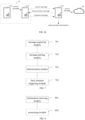
- FIG. 7 is a structural schematic diagram of an embodiment of a control apparatus provided by an embodiment of the present application.
- the apparatus may include:
- the control apparatus shown in FIG. 7 may perform the control method described in the embodiment shown in FIG. 2 , and its implementation principle and technical effect will not be repeated.
- the specific manners in which each module and unit of the control apparatus in the above embodiment performs operations have been described in detail in the embodiments related to the method, and will not be explained here in detail.
- FIG. 8 is a structural schematic diagram of a further embodiment of a control apparatus provided by an embodiment of the present application.
- the apparatus may include:
- the control apparatus shown in FIG. 8 may perform the control method described in the embodiment shown in FIG. 4 , and its implementation principle and technical effect will not be repeated.
- the specific manners in which each module and unit of the control apparatus in the above embodiment performs operations have been described in detail in the embodiments related to the method, and will not be explained here in detail.
- an embodiment of the present application also provides a computing device.
- the computing device may include a processing component 901 and a storage component 902.
- the storage component 902 stores one or more computer instructions.
- the one or more computer instructions are used for being called and executed by the processing component 901, to enable the processing component 901 to run at least one virtual machine 903 and run a virtual switch 904 implementing the control method shown in FIG. 1 .
- the processing component includes one or more processors.
- the processor may specifically refer to a CPU.
- the computing device may also inevitably include other components, for example, an input/output interface, a communication component, etc.
- the input/output interface provides an interface between the processing component and a peripheral interface module.
- the peripheral interface module may be an output device, an input device, etc.
- the communication component is configured for facilitating wired or wireless communication between the computing device and other devices.
- the computing device may be an elastic computing host provided for a cloud computing platform.
- the computing device may refer to a cloud server.
- An embodiment of the present application also provides a computer readable storage medium on which a computer program is stored.
- the computer program when executed by a computer, may implement the control method of the embodiment shown in FIG. 2 above.
- an embodiment of the present application also provides a computing device.
- the computing device may include a processing component 1001 and a storage component 1002.
- the processing component 1001 may include one or more processors.
- the storage component 1002 stores one or more computer instructions. The one or more computer instructions are used for being called and executed by the processing component 1001, to run a virtual gateway 1003 implementing the control method shown in FIG. 1 .
- the processor may specifically refer to a CPU.
- the computing device may also inevitably include other components, for example, an input/output interface, a communication component, etc.
- the input/output interface provides an interface between the processing component and a peripheral interface module.
- the peripheral interface module may be an output device, an input device, etc.
- the communication component is configured for facilitating wired or wireless communication between the computing device and other devices.
- the computing device may be an elastic computing host provided for a cloud computing platform.
- the computing device may refer to a cloud server.
- An embodiment of the present application also provides a computer readable storage medium on which a computer program is stored.
- the computer program when executed by a computer, may implement the control method of the embodiment shown in FIG. 2 above.
- an embodiment of the present application also provides a computing device.
- the computing device may include a processing component 1101 and a storage component 1102.
- the processing component 1101 includes one or more processors.
- the storage component stores one or more computer instructions.
- the one or more computer instructions are used for being called and executed by the processing component, to run at least one virtual machine 1103 and run a virtual switch 1104 implementing the control method of the embodiment shown in FIG. 4 .
- the processor may specifically refer to a CPU.
- the computing device may also inevitably include other components, for example, an input/output interface, a communication component, etc.
- the input/output interface provides an interface between the processing component and a peripheral interface module.
- the peripheral interface module may be an output device, an input device, etc.
- the communication component is configured for facilitating wired or wireless communication between the computing device and other devices.
- the computing device may be an elastic computing host provided for a cloud computing platform.
- the computing device may refer to a cloud server.
- An embodiment of the present application also provides a computer readable storage medium on which a computer program is stored.
- the computer program when executed by a computer, may implement the control method of the embodiment shown in FIG. 4 above.
- the computer software product may be stored in a computer readable storage medium, such as, an ROM/RAM, a magnetic disk, an optical disk, etc., and includes several instructions such that a computer device (which may be a personal computer, a server, or a network device, etc.) performs the methods described in various embodiments or certain portions of the embodiments.
- a computer device which may be a personal computer, a server, or a network device, etc.
Landscapes
- Engineering & Computer Science (AREA)
- Computer Security & Cryptography (AREA)
- Computer Networks & Wireless Communication (AREA)
- Signal Processing (AREA)
- Software Systems (AREA)
- General Engineering & Computer Science (AREA)
- Theoretical Computer Science (AREA)
- Computer Hardware Design (AREA)
- Computing Systems (AREA)
- Physics & Mathematics (AREA)
- General Physics & Mathematics (AREA)
- Data Exchanges In Wide-Area Networks (AREA)
Applications Claiming Priority (2)
| Application Number | Priority Date | Filing Date | Title |
|---|---|---|---|
| CN202110302539.2A CN115190077B (zh) | 2021-03-22 | 2021-03-22 | 控制方法、装置及计算设备 |
| PCT/CN2022/077740 WO2022199316A1 (fr) | 2021-03-22 | 2022-02-24 | Procédé et appareil de commande, et dispositif informatique |
Publications (2)
| Publication Number | Publication Date |
|---|---|
| EP4319094A1 true EP4319094A1 (fr) | 2024-02-07 |
| EP4319094A4 EP4319094A4 (fr) | 2025-03-05 |
Family
ID=83396311
Family Applications (1)
| Application Number | Title | Priority Date | Filing Date |
|---|---|---|---|
| EP22773978.6A Pending EP4319094A4 (fr) | 2021-03-22 | 2022-02-24 | Procédé et appareil de commande, et dispositif informatique |
Country Status (4)
| Country | Link |
|---|---|
| US (1) | US20240179178A1 (fr) |
| EP (1) | EP4319094A4 (fr) |
| CN (1) | CN115190077B (fr) |
| WO (1) | WO2022199316A1 (fr) |
Families Citing this family (2)
| Publication number | Priority date | Publication date | Assignee | Title |
|---|---|---|---|---|
| US20250156734A1 (en) * | 2023-11-10 | 2025-05-15 | Red Hat, Inc. | Safety compliance for virtualized automotive computing |
| CN120658682A (zh) * | 2024-03-15 | 2025-09-16 | 杭州阿里云飞天信息技术有限公司 | 报文限速方法、网关设备、智能网卡、产品及存储介质 |
Family Cites Families (19)
| Publication number | Priority date | Publication date | Assignee | Title |
|---|---|---|---|---|
| US6339784B1 (en) * | 1997-05-20 | 2002-01-15 | America Online, Inc. | Self-policing, rate limiting online forums |
| US7180857B2 (en) * | 2000-11-24 | 2007-02-20 | Matsushita Electric Industrial Co., Ltd | Apparatus and method for flow control |
| US8121038B2 (en) * | 2007-08-21 | 2012-02-21 | Cisco Technology, Inc. | Backward congestion notification |
| US9391849B2 (en) * | 2009-11-06 | 2016-07-12 | Brocade Communications Systems, Inc. | Back pressure remediation |
| WO2012130264A1 (fr) * | 2011-03-29 | 2012-10-04 | Nec Europe Ltd. | Suivi du trafic utilisateur en cas d'encombrement sur des commutateurs multicouches basés sur les flux |
| US8811183B1 (en) * | 2011-10-04 | 2014-08-19 | Juniper Networks, Inc. | Methods and apparatus for multi-path flow control within a multi-stage switch fabric |
| US8804523B2 (en) * | 2012-06-21 | 2014-08-12 | Microsoft Corporation | Ensuring predictable and quantifiable networking performance |
| US20150195209A1 (en) * | 2012-08-21 | 2015-07-09 | Paul Allen Bottorff | Congestion Notification in a Network |
| CN103634235A (zh) * | 2013-11-01 | 2014-03-12 | 国云科技股份有限公司 | 一种限定虚拟机网络接口速度的方法 |
| US20150124604A1 (en) * | 2013-11-06 | 2015-05-07 | Futurewei Technologies, Inc. | Systems and Methods for Proactive Congestion Detection in Radio Access Networks |
| US9288135B2 (en) * | 2013-12-13 | 2016-03-15 | International Business Machines Corporation | Managing data flows in software-defined network using network interface card |
| US9832217B2 (en) * | 2014-03-13 | 2017-11-28 | International Business Machines Corporation | Computer implemented techniques for detecting, investigating and remediating security violations to IT infrastructure |
| US9660948B2 (en) * | 2014-06-23 | 2017-05-23 | Google Inc. | Rule-based rate limiting |
| CN105591834B (zh) * | 2015-07-10 | 2018-12-11 | 新华三技术有限公司 | Vxlan中的流量监控方法和装置 |
| TWI595760B (zh) * | 2015-12-01 | 2017-08-11 | 廣達電腦股份有限公司 | 伺服器資源之管理系統及其管理方法 |
| CN108964959B (zh) * | 2017-05-27 | 2022-02-25 | 阿里巴巴集团控股有限公司 | 一种用于虚拟化平台的网卡直通系统及数据包监管方法 |
| US10764249B1 (en) * | 2017-11-30 | 2020-09-01 | Juniper Networks, Inc. | Anti-spoofing techniques for overlay networks |
| CN108683607B (zh) * | 2018-06-14 | 2020-02-21 | 新华三云计算技术有限公司 | 虚拟机流量控制方法、装置和服务器 |
| EP3968654A1 (fr) * | 2020-09-14 | 2022-03-16 | Nokia Solutions and Networks Oy | Unité de terminaison de réseau et unité de terminaison de ligne |
-
2021
- 2021-03-22 CN CN202110302539.2A patent/CN115190077B/zh active Active
-
2022
- 2022-02-24 EP EP22773978.6A patent/EP4319094A4/fr active Pending
- 2022-02-24 US US18/551,951 patent/US20240179178A1/en active Pending
- 2022-02-24 WO PCT/CN2022/077740 patent/WO2022199316A1/fr not_active Ceased
Also Published As
| Publication number | Publication date |
|---|---|
| CN115190077A (zh) | 2022-10-14 |
| EP4319094A4 (fr) | 2025-03-05 |
| US20240179178A1 (en) | 2024-05-30 |
| WO2022199316A1 (fr) | 2022-09-29 |
| CN115190077B (zh) | 2023-09-22 |
Similar Documents
| Publication | Publication Date | Title |
|---|---|---|
| CN113326228B (zh) | 基于远程直接数据存储的报文转发方法、装置及设备 | |
| EP3226508B1 (fr) | Procédé, appareil et système de traitement de paquet d'attaque | |
| CN113709057A (zh) | 网络拥塞的通告方法、代理节点、网络节点及计算机设备 | |
| WO2018099249A1 (fr) | Procédé, dispositif et système de détection de défaut dans un système nfv | |
| EP3338396A1 (fr) | Dispositif et procédé d'établissement de connexion dans un système d'équilibrage de charge | |
| CN113647060A (zh) | 通过分组关联在本地联网堆栈中的分组丢弃检测 | |
| CN111935108B (zh) | 云数据安全访问控制方法、装置、电子装置及存储介质 | |
| US10277493B2 (en) | Packet throughput and loss ratio measurements of a service function chain | |
| CN111405039A (zh) | 一种数据透传方法、装置、系统和客户端及服务器 | |
| EP4319094A1 (fr) | Procédé et appareil de commande, et dispositif informatique | |
| CN117499403A (zh) | 算力网络的计算任务调度方法及装置 | |
| WO2021128927A1 (fr) | Procédé et appareil de traitement de message, support de stockage et appareil électronique | |
| CN106878343A (zh) | 一种云计算环境下提供网络安全即服务的系统 | |
| CN108460044B (zh) | 数据的处理方法和装置 | |
| CN110691139B (zh) | 一种数据传输方法、装置、设备及存储介质 | |
| CN113259271B (zh) | 报文交换方法和报文交换系统 | |
| CN116032853A (zh) | 流量控制方法、装置、电子设备和存储介质 | |
| CN112311717A (zh) | 网络数据恢复方法、装置、存储介质和计算机设备 | |
| CN110581792B (zh) | 一种报文传输方法及装置 | |
| CN106817316A (zh) | 探测路径mtu的方法、装置和系统 | |
| CN104980352A (zh) | 一种多线路机房选路方法和装置 | |
| US9497088B2 (en) | Method and system for end-to-end classification of level 7 application flows in networking endpoints and devices | |
| CN114640574A (zh) | 一种主备设备的切换方法及装置 | |
| CN114301960A (zh) | 集群非对称流量的处理方法及装置、电子设备及存储介质 | |
| CN112291202A (zh) | 报文数据的可视化方法、装置和计算机可读存储介质 |
Legal Events
| Date | Code | Title | Description |
|---|---|---|---|
| STAA | Information on the status of an ep patent application or granted ep patent |
Free format text: STATUS: THE INTERNATIONAL PUBLICATION HAS BEEN MADE |
|
| PUAI | Public reference made under article 153(3) epc to a published international application that has entered the european phase |
Free format text: ORIGINAL CODE: 0009012 |
|
| STAA | Information on the status of an ep patent application or granted ep patent |
Free format text: STATUS: REQUEST FOR EXAMINATION WAS MADE |
|
| 17P | Request for examination filed |
Effective date: 20231009 |
|
| AK | Designated contracting states |
Kind code of ref document: A1 Designated state(s): AL AT BE BG CH CY CZ DE DK EE ES FI FR GB GR HR HU IE IS IT LI LT LU LV MC MK MT NL NO PL PT RO RS SE SI SK SM TR |
|
| DAV | Request for validation of the european patent (deleted) | ||
| DAX | Request for extension of the european patent (deleted) | ||
| REG | Reference to a national code |
Ref country code: DE Ref legal event code: R079 Free format text: PREVIOUS MAIN CLASS: H04L0047200000 Ipc: H04L0009400000 |
|
| A4 | Supplementary search report drawn up and despatched |
Effective date: 20250204 |
|
| RIC1 | Information provided on ipc code assigned before grant |
Ipc: G06F 9/455 20180101ALI20250130BHEP Ipc: H04L 45/74 20220101ALI20250130BHEP Ipc: H04L 47/26 20220101ALI20250130BHEP Ipc: H04L 9/40 20220101AFI20250130BHEP |