EP4319308A1 - Zellenneuauswahlverfahren und -vorrichtung sowie speichermedium - Google Patents
Zellenneuauswahlverfahren und -vorrichtung sowie speichermedium Download PDFInfo
- Publication number
- EP4319308A1 EP4319308A1 EP21933907.4A EP21933907A EP4319308A1 EP 4319308 A1 EP4319308 A1 EP 4319308A1 EP 21933907 A EP21933907 A EP 21933907A EP 4319308 A1 EP4319308 A1 EP 4319308A1
- Authority
- EP
- European Patent Office
- Prior art keywords
- cell
- service
- time information
- neighboring
- determining
- Prior art date
- Legal status (The legal status is an assumption and is not a legal conclusion. Google has not performed a legal analysis and makes no representation as to the accuracy of the status listed.)
- Pending
Links
Images



Classifications
-
- H—ELECTRICITY
- H04—ELECTRIC COMMUNICATION TECHNIQUE
- H04W—WIRELESS COMMUNICATION NETWORKS
- H04W48/00—Access restriction; Network selection; Access point selection
- H04W48/20—Selecting an access point
-
- H—ELECTRICITY
- H04—ELECTRIC COMMUNICATION TECHNIQUE
- H04W—WIRELESS COMMUNICATION NETWORKS
- H04W36/00—Hand-off or reselection arrangements
- H04W36/24—Reselection being triggered by specific parameters
- H04W36/30—Reselection being triggered by specific parameters by measured or perceived connection quality data
- H04W36/304—Reselection being triggered by specific parameters by measured or perceived connection quality data due to measured or perceived resources with higher communication quality
-
- H—ELECTRICITY
- H04—ELECTRIC COMMUNICATION TECHNIQUE
- H04W—WIRELESS COMMUNICATION NETWORKS
- H04W36/00—Hand-off or reselection arrangements
- H04W36/0005—Control or signalling for completing the hand-off
- H04W36/0055—Transmission or use of information for re-establishing the radio link
- H04W36/0072—Transmission or use of information for re-establishing the radio link of resource information of target access point
-
- H—ELECTRICITY
- H04—ELECTRIC COMMUNICATION TECHNIQUE
- H04W—WIRELESS COMMUNICATION NETWORKS
- H04W36/00—Hand-off or reselection arrangements
- H04W36/0005—Control or signalling for completing the hand-off
- H04W36/0083—Determination of parameters used for hand-off, e.g. generation or modification of neighbour cell lists
- H04W36/00835—Determination of neighbour cell lists
-
- H—ELECTRICITY
- H04—ELECTRIC COMMUNICATION TECHNIQUE
- H04W—WIRELESS COMMUNICATION NETWORKS
- H04W36/00—Hand-off or reselection arrangements
- H04W36/0005—Control or signalling for completing the hand-off
- H04W36/0083—Determination of parameters used for hand-off, e.g. generation or modification of neighbour cell lists
- H04W36/0085—Hand-off measurements
- H04W36/0088—Scheduling hand-off measurements
-
- H—ELECTRICITY
- H04—ELECTRIC COMMUNICATION TECHNIQUE
- H04W—WIRELESS COMMUNICATION NETWORKS
- H04W36/00—Hand-off or reselection arrangements
- H04W36/24—Reselection being triggered by specific parameters
- H04W36/30—Reselection being triggered by specific parameters by measured or perceived connection quality data
- H04W36/302—Reselection being triggered by specific parameters by measured or perceived connection quality data due to low signal strength
-
- H—ELECTRICITY
- H04—ELECTRIC COMMUNICATION TECHNIQUE
- H04W—WIRELESS COMMUNICATION NETWORKS
- H04W48/00—Access restriction; Network selection; Access point selection
- H04W48/16—Discovering, processing access restriction or access information
-
- H—ELECTRICITY
- H04—ELECTRIC COMMUNICATION TECHNIQUE
- H04W—WIRELESS COMMUNICATION NETWORKS
- H04W24/00—Supervisory, monitoring or testing arrangements
- H04W24/10—Scheduling measurement reports ; Arrangements for measurement reports
-
- H—ELECTRICITY
- H04—ELECTRIC COMMUNICATION TECHNIQUE
- H04W—WIRELESS COMMUNICATION NETWORKS
- H04W84/00—Network topologies
- H04W84/02—Hierarchically pre-organised networks, e.g. paging networks, cellular networks, WLAN [Wireless Local Area Network] or WLL [Wireless Local Loop]
- H04W84/04—Large scale networks; Deep hierarchical networks
- H04W84/06—Airborne or Satellite Networks
Definitions
- the present disclosure relates to the field of wireless communication technologies, and in particular to a cell reselection method, a cell reselection apparatus, and a storage medium.
- a communication based on a terrestrial network is supported.
- a terminal When communicating based on the terrestrial network, a terminal mainly performs a cell reselection based on an S criterion and an R criterion. For example, when performing the cell reselection, the terminal may measure a service quality of a neighboring cell based on a signal quality of a serving cell, rank measurement results of the neighboring cell based on the R criterion, and reselect a target cell based on the measurement results and ranking results.
- a non-terrestrial network is introduced into a new generation of communication technology.
- NTN non-terrestrial network
- a communication is performed based on a satellite.
- the satellite performs a feeder link switch or a terminal service link switch
- a network side device communicating with the terminal will suddenly stop a service.
- the non-terrestrial network in case that a measurement of the neighboring cell is started according to the signal quality of the serving cell, it may lead to a situation where the measurement of the service quality of the neighboring cell is not started, and the network side device communicating with the terminal has stopped serving.
- the present disclosure provides a cell reselection method, a cell reselection apparatus, and a storage medium.
- a cell reselection method is performed by a terminal and includes receiving a first message, in which the first message includes time information for triggering the terminal to perform a cell reselection.
- the time information includes first time information
- the method further includes measuring a neighboring cell based on the first time information.
- measuring the neighboring cell based on the first time information includes measuring the neighboring cell based on the first time information, in response to a frequency priority of the neighboring cell being lower than or equal to a frequency priority of a serving cell.
- measuring the neighboring cell based on the first time information includes measuring the neighboring cell based on the first time information, in case that a signal quality of a serving cell is lower than a predefined signal quality threshold, in response to a frequency priority of the neighboring cell being lower than or equal to a frequency priority of the serving cell.
- measuring the neighboring cell based on the first time information includes measuring the neighboring cell, in response to a frequency priority of the neighboring cell being higher than a frequency priority of a serving cell.
- the first time information includes a first service duration for which a serving cell provides a service
- measuring the neighboring cell based on the first time information includes determining a timer duration based on the first service duration, and determining to measure the neighboring cell in response to determining that the timer duration expires.
- the first time information includes a first service moment at which a serving cell provides a service
- measuring the neighboring cell based on the first time information of the serving cell includes determining to measure the neighboring cell, in response to a current moment reaching the first service moment.
- the method further includes determining a service time threshold for the cell reselection, determining to measure the neighboring cell, in response to a relationship between the first time information and the service time threshold.
- the method further includes determining a target cell based on an R criterion.
- the time information includes second time information
- the method further includes determining a target cell based on the second time information.
- the second time information includes a second service moment at which the neighboring cell provides a service
- determining the target cell based on the second time information includes determining a minimum difference between the second service moment and the first service moment, and determining a cell corresponding to the minimum difference as the target cell.
- the second time information includes a second service duration for which the neighboring cell provides a service
- determining the target cell based on the second time includes determining the second service duration with a longest duration, and determining a cell corresponding to the second service duration with the longest duration as the target cell.
- the target cell satisfies an S criterion.
- the second time information includes a second service moment at which the neighboring cell provides a service
- determining the target cell based on the second time information includes determining at least one candidate cell based on an R criterion, determining a minimum difference between the second service moment and the first service moment, in the at least one candidate cell, and determining a candidate cell corresponding to the minimum difference as the target cell.
- the second time information includes a second service duration for which the neighboring cell provides a service
- determining the target cell based on the second time information includes determining at least one candidate cell based on an R criterion, determining as the target cell a candidate cell with a longest second service duration in the at least one candidate cell.
- determining the at least one candidate cell based on the R criterion includes in response to the serving cell and the neighboring cell satisfying the S criterion, determining a maximum R value in a serving cell R value and a neighboring cell R value based on the R criterion, and determining at least one cell corresponding to the maximum R value as a candidate cell, or in response to the neighboring cell satisfying the S criterion, determining a maximum R value in R values of neighboring cells based on the R criterion, and determining at least one neighboring cell corresponding to the maximum R value as a candidate cell.
- determining the at least one candidate cell based on the R criterion includes in response to the serving cell and the neighboring cell not satisfying the S criterion, determining a maximum R value in a serving cell R value and a neighboring cell R value based on the R criterion, and determining at least one cell corresponding to the maximum R value as a candidate cell, or in response to the neighboring cell not satisfying the S criterion determining a maximum R value in R values of neighboring cells based on the R criterion, and determining at least one neighboring cell corresponding to the maximum R value as a candidate cell.
- receiving the first message includes receiving the first message based on a system message and/or a radio resource control (RRC) message.
- RRC radio resource control
- a cell reselection method is performed by a network side device and includes sending a first message, in which the first message includes time information for triggering a terminal to perform a cell reselection.
- the time information includes first time information and/or second time information.
- the first time information includes a first service duration for which a serving cell provides a service and a first service moment at which a serving cell provides a service
- the second time information includes a second service duration for which a neighboring cell provides a service and a second service moment at which a neighboring cell provides a service
- sending the first message includes sending the first message based on a system message and/or a radio resource control (RRC) message.
- RRC radio resource control
- a cell reselection apparatus configured to apply to a terminal and includes a receiving module configured to receive a first message, in which the first message includes time information for triggering the terminal to perform a cell reselection.
- the time information includes first time information
- the apparatus further includes a measuring module.
- the measuring module is configured to measure a neighboring cell based on the first time information.
- the measuring module is configured to measure the neighboring cell based on the first time information, in response to a frequency priority of the neighboring cell being lower than or equal to a frequency priority of a serving cell.
- the measuring module is configured to measure the neighboring cell based on the first time information, in case that a signal quality of a serving cell is lower than a predefined signal quality threshold, in response to a frequency priority of the neighboring cell being lower than or equal to a frequency priority of the serving cell.
- the measuring module is configured to measure the neighboring cell, in response to a frequency priority of the neighboring cell being higher than a frequency priority of a serving cell.
- the first time information includes a first service duration for which a serving cell provides a service
- the measuring module is configured to determine a timer duration based on the first service duration, and determine to measure the neighboring cell in response to determining that the timer duration expires.
- the first time information includes a first service moment at which a serving cell provides a service
- the measuring module is configured to determine to measure the neighboring cell, in response to a current moment reaching the first service moment.
- the measuring module is configured to determine a service time threshold for the cell reselection, determine to measure the neighboring cell, in response to a relationship between the first time information and the service time threshold.
- the apparatus further includes a determining module.
- the determining module is configured to determine a target cell based on an R criterion.
- the determining module is configured to determine a target cell based on the second time information.
- the second time information includes a second service moment at which the neighboring cell provides a service
- the determining module is configured to determine a minimum difference between the second service moment and the first service moment, and determine a cell corresponding to the minimum difference as the target cell.
- the second time information includes a second service duration for which the neighboring cell provides a service
- the determining module is configured to determine the second service duration with a longest duration, and determine a cell corresponding to the second service duration with the longest duration as the target cell.
- the target cell satisfies an S criterion.
- the second time information includes a second service moment at which the neighboring cell provides a service
- the determining module is configured to determine at least one candidate cell based on an R criterion, determine a minimum difference between the second service moment and the first service moment, in the at least one candidate cell, and determine a candidate cell corresponding to the minimum difference as the target cell.
- the second time information includes a second service duration for which the neighboring cell provides a service
- the determining module is configured to determine at least one candidate cell based on an R criterion, determine as the target cell a candidate cell with a longest second service duration in the at least one candidate cell.
- the determining module is configured to, in response to the serving cell and the neighboring cell satisfying the S criterion, determine a maximum R value in a serving cell R value and a neighboring cell R value based on the R criterion, and determine at least one cell corresponding to the maximum R value as a candidate cell, or in response to the neighboring cell satisfying the S criterion, determine a maximum R value in R values of neighboring cells based on the R criterion, and determine at least one neighboring cell corresponding to the maximum R value as a candidate cell.
- the determining module is configured to, in response to the serving cell and the neighboring cell not satisfying the S criterion" determine a maximum R value in a serving cell R value and a neighboring cell R value based on the R criterion, and determine at least one cell corresponding to the maximum R value as a candidate cell, or in response to the neighboring cell not satisfying the S criterion, determine a maximum R value in R values of neighboring cells based on the R criterion, and determine at least one neighboring cell corresponding to the maximum R value as a candidate cell.
- a receiving module is configured to receive the first message based on a system message and/or a radio resource control (RRC) message.
- RRC radio resource control
- a cell reselection apparatus configured to apply to a network side device.
- the method includes a sending module configured to send a first message, in which the first message includes time information for triggering a terminal to perform a cell reselection.
- the time information includes first time information and/or second time information.
- the first time information includes a first service duration for which a serving cell provides a service and a first service moment at which a serving cell provides a service
- the second time information includes a second service duration for which a neighboring cell provides a service and a second service moment at which a neighboring cell provides a service
- the sending module is configured to send the first message based on a system message and/or a radio resource control (RRC) message.
- RRC radio resource control
- a communication device includes a processor, and a memory, in which a computer program is stored in the memory, and the processor is configured to execute the computer program stored in the memory to cause the device to execute the method as described in the first aspect or any one of the implementations of the first aspect, or to cause the device to execute the method as described in the second aspect or any one of the implementations of the second aspect.
- a computer-readable storage medium having stored therein instructions that, when executed, cause the method as described in the first aspect or any one of the implementations of the first aspect to be implemented, or cause the method as described in the second aspect or any one of the implementations of the second aspect to be implemented.
- the technical solution provided in the embodiment of the present disclosure may include the following beneficial effects.
- the time information may be provided for the terminal to trigger the terminal to perform the cell reselection.
- the problem that the terminal belatedly performs the cell reselection due to the sudden stop of the service of the serving cell may be avoided.
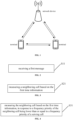
- FIG. 1 is an architectural diagram showing a communication system between a network device and a terminal according to an illustrative embodiment.
- a communication method provided in the present disclosure may be performed by a communication system architecture diagram shown in FIG. 1 .
- a network side device may send a signaling based on an architecture shown in FIG. 1 .
- a wireless communication system may also include other network devices, such as a core network device, a wireless relay device, and a wireless backhaul device, which are not shown in FIG. 1 .
- An embodiment of the present disclosure does not limit the number of network devices and terminals included in the wireless communication system.
- the wireless communication system is a network that provides a wireless communication function.
- the wireless communication system may adopt different communication technologies, such as code division multiple access (CDMA), wideband code division multiple access (WCDMA), time division multiple access (TDMA), frequency division multiple access (FDMA), orthogonal frequency-division multiple access (OFDMA), single carrier frequency division multiple access (SC-FDMA), carrier sense multiple access with collision avoidance.
- CDMA code division multiple access
- WCDMA wideband code division multiple access
- TDMA time division multiple access
- FDMA frequency division multiple access
- OFDMA orthogonal frequency-division multiple access
- SC-FDMA single carrier frequency division multiple access
- the network may be divided into a 2 nd generation (2G) network, a 3G network, a 4G network or a future evolution network, such as a 5G network, the 5G network may also be referred to as a new radio (NR).
- NR new radio
- the wireless communication network is sometimes referred to as a network in the present disclosure
- the network device involved in the present disclosure may also be referred to as a wireless access network device.
- the wireless access network device may be a base station, an evolved node B, a home base station, an access point (AP) in a wireless fidelity (WIFI) system, a wireless relay A node, a wireless backhaul node, a transmission point (TP), a transmission and reception point (TRP), etc., and it may also be a gNB in aN NR system, or it may also be a component or part of device that constitutes a base station.
- the network device may also be an in-vehicle device. It is to be understood that in the embodiment of the present disclosure, a specific technology and a specific device form adopted by the network device are not limited.
- the terminal involved in the present disclosure may also be referred to as a terminal device, a user equipment (UE), a mobile station (MS), a mobile terminal (MT), etc. It is a device that provides voice and/or data connectivity to a user.
- the terminal may be a handheld device with a wireless connection function, an in-vehicle device, etc.
- some examples of terminals are a mobile phone, a pocket personal computer (PPC), a palmtop computer, a personal digital assistant (PDA), a notebook computer, a tablet computer, a wearable device, or an in-vehicle device.
- the terminal device may also be an in-vehicle device. It is to be understood that a specific technology and a specific device adopted by the terminal are not limited in the embodiment of the present disclosure.
- the terminal when performing a cell reselection, may measure a service quality of a neighboring cell based on an S criterion, and rank measurement results of the neighboring cell based on an R criterion, and reselect a target cell.
- the S criterion includes that a cell selection level S rxlev is greater than zero, and a cell selection quality S qual is greater than zero. That is, S rxiev > 0 and S qual > 0. A cell selected/reselected by the terminal needs to satisfy the above-mentioned S criterion.
- S rxlev is determined based on an RSRP value (Q rxlevmeas ) of a measured cell, a required minimum reception level in a cell (Q rxlevmin ), a minimum reception level offset (Q rxlevminoffset ), a cell power related parameter (P compensation ), and an offset value temporarily applied to the cell (Q offsettemp ).
- P compensation is used to punish a UE that cannot reach a maximum power of the cell.
- S qual is determined based on an RSRQ value (Q qualmeas ) of the measured cell, a minimum received signal quality (Q qualmin ), and a minimum received signal received quality offset value (Q qualminoffset ), and the Q offsettemp .
- Q qualmeas an RSRQ value of the measured cell
- Q qualmin a minimum received signal quality
- Q qualminoffset a minimum received signal received quality offset value
- Table 1 S rxlev Cell selection RX level value (dB) S qual Cell selection quality value (dB) Q offsettemp Offset temporarily applied to a cell as specified in TS 38.331 [3] (dB) Q rxlevmeas Measured cell RX level value (RSRP) Qqualmeas Measured cell quality value (RSRQ) Q rxlevmin Minimum required RX level in the cell (dBm).
- Q rxlevmin is obtained from q-RxLevMinSUL , if present, in SIB1 , SIB2 and SIB4, additionally, if Q rxlevminoffsetcellSUL is present in SIB3 and SIB4 for the concerned cell, this cell specific offset is added to the corresponding Qrxlevmin to achieve the required minimum RX level in the concerned cell; else Q rxievmin is obtained from q-RxLevMin in SIB1 , SIB2 and SIB4, additionally, if Q rxlevminoffsetcell is present in SIB3 and SIB4 for the concerned cell, this cell specific offset is added to the corresponding Qrxlevmin to achieve the required minimum RX level in the concerned cell.
- Q qualmin Minimum required quality level in the cell (dB). Additionally, if Q qualminoffsetcell is signalled for the concerned cell, this cell specific offset is added to achieve the required minimum quality level in the concerned cell.
- P compensation For FR1, if the UE supports the additionalPmax in the NR-NS-PmaxList, if present, in SIB1 , SIB2 and SIB4: max(P EMAX1 -P PowerClass , 0) - (min(P EMAX2 , P PowerClass )-min(P EMAX1 , P PowerClass )) (dB); else: max(P EMAX1 P PowerClass , 0) (dB)
- P compensation is set to 0.
- P EMAX1 , P EMAX2 Maximum TX power level of a UE may use when transmitting on the uplink in the cell (dBm) defined as P EMAX in TS 38.101 [15].
- P EMAX1 and P EMAX2 are obtained from the p-Max for SUL in SIB1 and NR-NS-PmaxList for SUL respectively in SIB1 , SIB2 and SIB4 as specified in TS 38.331 [3], else P EMAX1 and P EMAX2 are obtained from the p-Max and NR-NS-PmaxList respectively in SIB1 , SIB2 and SIB4 for normal UL as specified in TS 38.331 [3].
- P PowerClass Maximum RF output power of the UE (dBm) according to the UE power class as defined in TS 38.101-1 [15].
- the terminal may determine a time for measuring the neighboring cell according to the above-mentioned S criterion, and rules include as follows.
- the terminal may choose not to measure the neighboring cell.
- the terminal may choose to measure the neighboring cell, and the UE needs to measure the neighboring cell.
- the terminal may choose not to measure the neighboring cell.
- the terminal needs to measure the neighboring cell.
- Table 2 Q meas RSRP measurement quantity used in cell reselections.
- Qoffset temp Offset temporarily applied to a cell as specified in TS 38.331 [3].
- an R value of each cell is calculated according to the above-mentioned R criterion, and the terminal merely performs R criterion ranking on the neighboring cells that satisfy the S criterion.
- a non-terrestrial network is introduced into a new generation communication technology, and the NTN performs communication based on a satellite.
- the satellite performs a feeder link switch or a service link switch
- the network side device communicating with the terminal will suddenly stop serving.
- the measurement of the neighboring cell is started according to the S criterion, it may lead to a situation where the measurement of the service quality of the neighboring cell is not started, and the network side device communicating with the terminal has stopped serving.
- the NTN may determine information to stop serving an area and/or timing information (such as a timer or an absolute time) about a new upcoming cell.
- timing information such as a timer or an absolute time
- FFS is learned from system information and/or ephemeris. That is, the NTN may provide information for assisting the terminal to perform the cell reselection.
- the information may be time information when the serving cell may provide a service/stop a service, and the information is used to trigger the UE to measure the neighboring cell.
- the information may also be time information of the neighboring cell that are about to provide the service to the terminal or may provide the service to the terminal, so as to assist the terminal to select an appropriate neighboring cell.
- the present disclosure provides a cell reselection method.
- the terminal is triggered to perform the cell reselection in advance, so as to avoid the situation where when the satellite performs the feeder link switch or the service link switch, the measurement of the service quality of the neighboring cell is not started, and the network side device communicating with the terminal has stopped service.
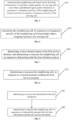
- FIG. 2 is a flow chart showing a cell reselection method according to an illustrative embodiment. As shown in FIG. 2 , the cell reselection method is performed by a terminal and includes a step as follows.
- step S11 a first message is received.
- the first message includes time information for triggering the terminal to perform a cell reselection.
- the time information may include at least one of time information when a serving cell may provide a service, time information when a serving cell stops a service, and time information of a neighboring cell that is about to provide a service.
- the time information when the serving cell may provide the service may be duration information when the serving cell provides the service. For example, a duration that may be provided for the terminal is N minutes.
- the time information when the serving cell stops the service may be a stopping moment at which the serving cell provides the service for the terminal. For example, the stopping moment of the service provided by the serving cell is XX hours, XX minutes, and XX seconds. That is, at this moment, the serving cell stops the service.
- the time information of the neighboring cell that is about to provide the service may be a starting service moment at which the neighboring cell may provide the service for the terminal, or a service duration for which the service is provided for the terminal, or the like.
- the terminal receives the time information sent by the serving cell, and determines a time to perform measurement on the neighboring cell and perform the cell reselection according to the time information.
- the network side device provides the time information of the service of the serving cell or the neighboring cell, and determines the measurement and reselection of the cell based on the time information, so that the terminal will not cause too late cell reselection due to sudden unavailability of the serving cell.
- FIG. 3 is a flow chart showing a cell reselection method according to an illustrative embodiment. As shown in FIG. 3 , the cell reselection method is performed by a terminal and includes a step as follows.
- step S21 a neighboring cell is measured based on the first time information.
- the time information may include the time information when the serving cell may provide the service and/or the time information when the serving cell stops the service.
- the time information when the serving cell may provide the service and/or the time information when the serving cell stops the service is referred to as the first time information.
- the terminal triggers a measurement of the neighboring cell based on the first time information.
- the cell reselection is performed based on measurement results.
- the measurement of the neighboring cell by the terminal may include one or more of acquiring an ID of the neighboring cell, acquiring a system message of a cell, and measuring a signal quality of a cell.
- FIG. 4 is a flow chart showing a cell reselection method according to an illustrative embodiment. As shown in FIG. 4 , the cell reselection method is performed by a terminal and includes a step as follows.
- step S31 the neighboring cell is measured based on the first time information, in response to a frequency priority of the neighboring cell being lower than or equal to a frequency priority of a serving cell.
- the terminal may also determine a time for measuring the neighboring cell according to the first time information. In one way, in case that the frequency priority of the neighboring cell is lower than the frequency priority of the serving cell or the frequency priority of the neighboring cell is the same as the frequency priority of the serving cell, even if the signal quality of the serving cell is higher than a predefined signal quality threshold, the measurement is performed based on time information.
- FIG. 5 is a flow chart showing a cell reselection method according to an illustrative embodiment. As shown in FIG. 5 , the cell reselection method is performed by a terminal. This embodiment may be executed alone, or may be executed together with any other embodiment of the present disclosure. The method includes a step as follows.
- step S41 the neighboring cell is measured based on the first time information, in case that a signal quality of a serving cell is lower than a predefined signal quality threshold, in response to a frequency priority of the neighboring cell being lower than or equal to a frequency priority of the serving cell.
- the terminal measures the neighboring cell based on the first time.
- FIG. 6 is a flow chart showing a cell reselection method according to an illustrative embodiment. As shown in FIG. 6 , the cell reselection method is performed by a terminal and includes a step as follows.
- step S51 the neighboring cell is measured, in response to a frequency priority of the neighboring cell being higher than a frequency priority of a serving cell.
- the terminal in case that the frequency priority of the neighboring cell is higher than the frequency priority of the serving cell, the terminal does not need to consider the first time information, and always measures the neighboring cell.
- the first time information may include a first service duration for which a serving cell provides a service.
- FIG. 7 is a flow chart showing a cell reselection method according to an illustrative embodiment. As shown in FIG. 7 , the cell reselection method is performed by a terminal and includes a step as follows.
- a timer duration is determined based on the first service duration, and it is determined to measure the neighboring cell in response to determining that the timer duration expires.
- the first time information is the first service duration for which the serving cell provides the service
- the first service duration provided by the serving cell for the terminal is determined through the first time information indicated by the network side device.
- the terminal determines a timer device of the terminal based on the first service duration, and determines a duration of the timer as the first service duration.
- the timer duration expires, that is, exceeding the first service duration of the serving cell, it is determined that the measurement is performed on the neighboring cell.
- the first time information may include a first service moment at which a serving cell provides a service.
- FIG. 8 is a flow chart showing a cell reselection method according to an illustrative embodiment. As shown in FIG. 8 , the cell reselection method is performed by a terminal. This embodiment may be executed alone, or may be executed together with any other embodiment of the present disclosure. The method includes a step as follows.
- step S71 it is determined to measure the neighboring cell, in response to a current moment reaching the first service moment.
- the first time information is the first service moment at which the serving cell provides the service
- a moment at which the serving cell stops the service is further determined through received first time information.
- the first service moment may be an absolute time, such as a system time provided by the network.
- the terminal determines its own current moment, or the system time provided by the network, and compares it with the first service moment. In case that the current moment reaches the first service moment, it is determined to measure the neighboring cell.
- the terminal may acquire the system time provided by the network based on a system broadcast message SIB9.
- FIG. 9 is a flow chart showing a cell reselection method according to an illustrative embodiment. As shown in FIG. 9 , the cell reselection method is performed by a terminal and includes steps as follows.
- step S81 a service time threshold for the cell reselection is determined.
- the service time threshold may also be predefined for a cell providing a service.
- the service time threshold is determined as a threshold for the cell reselection.
- step S82 it is determined to measure the neighboring cell, in response to a relationship between the first time information and the service time threshold.
- the neighboring cell in response to the first time information being the first service duration, in case that the first service duration is greater than or equal to the service time threshold, it is determined to measure the neighboring cell. Alternatively, in case that the first service duration is less than or equal to the service time threshold, it is determined to measure the neighboring cell.
- the first service duration is greater than or equal to the service time threshold, and the signal quality of the serving cell is lower than the predefined signal quality threshold, it is determined to measure the neighboring cell.
- the frequency priority of the neighboring cell in case that the frequency priority of the neighboring cell is lower than or equal to the frequency priority of the serving cell, is less than or equal to the service time threshold, and the signal quality of the serving cell is lower than the predefined signal quality threshold, it is determined to measure the neighboring cell.
- the terminal determines to measure the neighboring cell.
- the terminal determines to measure the neighboring cell.
- the first service moment is greater than or equal to the service time threshold, and the signal quality of the serving cell is lower than the predefined signal quality threshold, it is determined to measure the neighboring cell.
- FIG. 10 is a flow chart showing a cell reselection method according to an illustrative embodiment. As shown in FIG. 10 , the cell reselection method is performed by a terminal. This embodiment may be executed alone, or may be executed together with any other embodiment of the present disclosure. The method includes a step as follows.
- step S91 a target cell is determined based on an R criterion.
- the measurement of neighboring cell is performed to determine an R value of each cell. Based on the R criterion, the R values are ranked to determine a cell with a maximum R value. In the cell with the maximum R value, the target cell is determined.
- the time information may also include second time information, in which the second time information is time information of the neighboring cell that may be provided.
- FIG. 11 is a flow chart showing a cell reselection method according to an illustrative embodiment. As shown in FIG. 11 , the cell reselection method is performed by a terminal. This embodiment may be executed alone, or may be executed together with any other embodiment of the present disclosure. The method includes a step as follows.
- step S101 a target cell is determined based on the second time information.
- the terminal may determine the target cell based on the above-mentioned measured R value of the neighboring cell. Alternatively, the target cell is determined according to the second time information. Alternatively, the target cell is determined according to the R value and the second time information of the target cell.
- the second time information may include a second service moment at which the neighboring cell provides a service.
- FIG. 12 is a flow chart showing a cell reselection method according to an illustrative embodiment. As shown in FIG. 12 , the cell reselection method is performed by a terminal. This embodiment may be executed alone, or may be executed together with any other embodiment of the present disclosure. The method includes a step as follows.
- step S111 a minimum difference between the second service moment and the first service moment is determined, and a cell corresponding to the minimum difference is determined as the target cell.
- the terminal determines the first service moment at which the serving cell stops the service and the second service moment at which the neighboring cell may provide the service for the terminal.
- a neighboring cell that provides the service for the terminal fastest is determined.
- a cell with a minimum difference between the second service moment at which the service may be provided for the terminal and the first service moment at which the serving cell stops the service is determined as the target cell.
- the cell with the minimum difference between the second service moment at which the service may be provided for the terminal and the first service moment at which the serving cell stops the service and satisfying the S criterion is determined as the target cell.
- the cell with the minimum difference between the second service moment at which the service is provided and the first service moment at which the serving cell stops the service does not satisfy the S criterion.
- the minimum difference is a first minimum difference
- a second minimum difference is determined as a second minimum difference
- so on also including a third minimum difference.
- the cell corresponding to the second minimum difference is determined as the target cell. And so on, until the target cell is determined.
- the second time information may include a second service duration for which the neighboring cell provides a service.
- FIG. 13 is a flow chart showing a cell reselection method according to an illustrative embodiment. As shown in FIG. 13 , the cell reselection method is performed by a terminal. This embodiment may be executed alone, or may be executed together with any other embodiment of the present disclosure. The method includes a step as follows.
- step S121 the second service duration with a longest duration is determined, and a cell corresponding to the second service duration with the longest duration is determined as the target cell.
- the neighboring cell in case that the second time information includes the second service duration for which the neighboring cell provides the service, the neighboring cell is ranked based on the second service duration, and the second service duration with the longest duration is determined. The cell corresponding to the second service duration with the longest duration is determined as the target cell.
- the cell corresponding to the second service duration with the longest duration and satisfying the S criterion is determined as the target cell.
- all the second service durations are ranked.
- a cell corresponding to the second service duration which is second only to the second service duration with the longest duration and satisfying the S criterion is determined as the target cell. And so on, until the target cell is determined.
- the second time information may include a second service moment at which the neighboring cell provides a service, and the following embodiments may also be adopted.
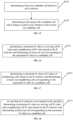
- FIG. 14 is a flow chart showing a cell reselection method according to an illustrative embodiment. As shown in FIG. 14 , the cell reselection method is performed by a terminal. This embodiment may be executed alone, or may be executed together with any other embodiment of the present disclosure. The method includes steps as follows.
- step S 131 at least one candidate cell is determined based on an R criterion.
- step S 132 in the at least one candidate cell, a minimum difference between the second service moment and the first service moment is determined, and a candidate cell corresponding to the minimum difference is determined as the target cell.
- the R value of each cell is determined and ranked based on the R criterion.
- the first number of cells ranked in front are selected. For example, according to the ranking of the R values, N cells with the best signal qualities ranked in front are selected. In the N cells with the best signal qualities, a neighboring cell that provides the service for the terminal fastest is determined.
- a cell with the minimum difference between the second service moment at which the service may be provided for the terminal and the first service moment at which the serving cell stops the service is determined as the target cell.
- the second time information may include a second service duration for which the neighboring cell provides a service.
- FIG. 15 is a flow chart showing a cell reselection method according to an illustrative embodiment. As shown in FIG. 15 , the cell reselection method is performed by a terminal. This embodiment may be executed alone, or may be executed together with any other embodiment of the present disclosure. The method includes steps as follows.
- step S141 at least one candidate cell is determined based on an R criterion.
- step S142 It is determined as the target cell a candidate cell with a longest second service duration in the at least one candidate cell.
- the R value of each cell is determined and ranked based on the R criterion.
- the first number of cells ranked in front are selected. For example, according to the ranking of the R values, and N candidate cells with best signal qualities ranked in front are selected. In the N cells with the best signal qualities, the second service duration with the longest duration is determined. The cell corresponding to the second service duration with the longest duration is determined as the target cell.
- FIG. 16 is a flow chart showing a cell reselection method according to an illustrative embodiment. As shown in FIG. 16 , the cell reselection method is performed by a terminal. This embodiment may be executed alone, or may be executed together with any other embodiment of the present disclosure. The method includes a step as follows.
- step S151 a maximum R value in a serving cell R value and a neighboring cell R value are determined based on the R criterion, and at least one cell corresponding to the maximum R value is determined as a candidate cell.
- the neighboring cell R value and the serving cell R value are calculated based on the R criterion, and the ranking is performed based on calculation results of the R values.
- the at least one cell with the maximum R value is determined as the candidate cell.
- FIG. 17 is a flow chart showing a cell reselection method according to an illustrative embodiment. As shown in FIG. 17 , the cell reselection method is performed by a terminal. This embodiment may be executed alone, or may be executed together with any other embodiment of the present disclosure. The method includes a step as follows.
- step S161 a maximum R value in R values of neighboring cells is determined based on the R criterion, and at least one neighboring cell corresponding to the maximum R value is determined as a candidate cell.
- the R values of neighboring cells are calculated based on the R criterion, and the ranking is performed based on calculation results of the R values.
- the at least one neighboring cell with the maximum R value is determined as the candidate cell.
- the neighboring cells include 100 cells, of which 50 cells satisfy the S criterion and 50 cells do not satisfy the S criterion.
- the number of cells ranked based on the R value is 50.
- a calculated R value does not include the serving cell, that is, the signal quality of the serving cell is not ranked. It is avoided that the cell reselection fails due to the best signal quality of the serving cell.
- FIG. 18 is a flow chart showing a cell reselection method according to an illustrative embodiment. As shown in FIG. 18 , the cell reselection method is performed by a terminal. This embodiment may be executed alone, or may be executed together with any other embodiment of the present disclosure. The method includes a step as follows.
- step S171 in case that an S criterion is not required to be satisfied, a maximum R value in a serving cell R value and a neighboring cell R value is determined based on the R criterion, and at least one cell corresponding to the maximum R value is determined as a candidate cell.
- the neighboring cell R value and the serving cell R value are calculated based on the R criterion, and the serving cell R value and the neighboring cell R value are ranked.
- the ranking is performed based on calculation results of R values.
- the at least one cell with the maximum R value is determined as the candidate cell.
- the cells ranked based on the R value may or may not satisfy the S criterion.
- the neighboring cells include 100 cells, of which 50 cells satisfy the S criterion and 50 cells do not satisfy the S criterion.
- the number of cells ranked based on the R value is 100.
- FIG. 19 is a flow chart showing a cell reselection method according to an illustrative embodiment. As shown in FIG. 19 , the cell reselection method is performed by a terminal. This embodiment may be executed alone, or may be executed together with any other embodiment of the present disclosure. The method includes a step as follows.
- step S181 in case that an S criterion is not required to be satisfied, a maximum R value in R values of neighboring cells is determined based on the R criterion, and at least one neighboring cell corresponding to the maximum R value is determined as a candidate cell.
- the R values of neighboring cells are calculated based on the R criterion, and the serving cell R value and the neighboring cell R value are ranked.
- the ranking is performed based on calculation results of R values.
- the at least one cell with the maximum R value is determined as the candidate cell.
- the cells ranked based on the R value may or may not satisfy the S criterion.
- the neighboring cells include 100 cells, of which 50 cells satisfy the S criterion and 50 cells do not satisfy the S criterion.
- the number of cells ranked based on the R value is 100.
- the signal quality of the serving cell is lower than the predefined signal quality threshold, and the timer determined based on the first service duration expires, it is determined to measure the neighboring cell.
- the R value of the measurement result is obtained.
- the R value of each cell may be determined and ranked based on the measurement values of neighboring cells and the R criterion.
- the first number of cells ranked in front are selected. For example, according to the ranking of the R values, N cells with the best signal qualities ranked in front are selected. In the N cells with the best signal qualities, a neighboring cell that provides the service for the terminal fastest is determined.
- a cell with the minimum difference between the second service moment at which the service may be provided for the terminal and the first service moment at which the serving cell stops the service is determined as the target cell.
- the R value of each cell may be determined and ranked based on the R criterion.
- the first number of cells ranked in front are selected. For example, according to the ranking of the R values, the first N candidate cells with best signal qualities are selected. In the N cells with the best signal qualities, the second service duration with the longest duration is determined. The cell corresponding to the second service duration with the longest duration is determined as the target cell.
- the neighboring cell R value and the serving cell R value are calculated based on the R criterion.
- the ranking is performed based on calculation results of the R values.
- the at least one cell with the maximum R value is determined as the candidate cell.
- the Neighboring cell may also not be required to satisfy the S criterion, that is, in a case of not satisfying the S criterion, the R values of neighboring cells are calculated based on the R criterion, and the serving cell R value and the neighboring cell R value are ranked.
- the ranking is performed based on the calculation results of R values.
- the at least one cell with the maximum R value is determined as the candidate cell.
- the R values of neighboring cells may be calculated based on the R criterion, and the ranking is performed based on the calculation results of the R values.
- the at least one neighboring cell with the maximum R value is determined as the candidate cell.
- the neighboring cell may also not be required to satisfy the S criterion, that is, in a case of not satisfying the S criterion, the R values of neighboring cells are calculated based on the R criterion, and the R values of neighboring cells are ranked. The ranking is performed based on the calculation results of R values.
- the at least one cell with the maximum R value is determined as a candidate cell.
- the signal quality of the serving cell is lower than the predefined signal quality threshold, and the first service duration is lower than or equal to the service time threshold, it is determined to measure the neighboring cell.
- the R value of each cell may be determined and ranked based on the measurement values of neighboring cells and the R criterion.
- the first number of cells ranked in front are selected. For example, according to the ranking of the R values, N cells with the best signal qualities ranked in front are selected. In the N cells with the best signal qualities, a neighboring cell that provides the service for the terminal fastest is determined.
- a cell with the minimum difference between the second service moment at which the service may be provided for the terminal and the first service moment at which the serving cell stops the service is determined as the target cell.
- the R value of each cell may be determined and ranked based on the R criterion.
- the first number of cells ranked in front are selected. For example, according to the ranking of the R values, N candidate cells with the best signal qualities ranked in front are selected. In the N cells with the best signal qualities, the second service duration with the longest duration is determined. The cell corresponding to the second service duration with the longest duration is determined as the target cell.
- the neighboring cell R value and the serving cell R value are calculated based on the R criterion, and the ranking is performed based on the calculation results of the R values.
- the at least one cell with the maximum R value is determined as the candidate cell.
- the neighboring cell may also not be required to satisfy the S criterion, that is, in a case of not satisfying the S criterion, the R values of neighboring cells are calculated based on the R criterion, and the serving cell R value and the neighboring cell R value are ranked. The ranking is performed based on the calculation results of R values.
- the at least one cell with the maximum R value is determined as the candidate cell.
- the R values of the neighboring cells may be calculated based on the R criterion, and the ranking is performed based on the calculation results of the R values.
- the at least one neighboring cell with the maximum R value is determined as the candidate cell.
- the neighboring cell may also not be required to satisfy the S criterion, that is, in a case of not satisfying the S criterion, the R values of neighboring cells are calculated based on the R criterion, and the R values of neighboring cells are ranked. The ranking is performed based on the calculation results of R values.
- the at least one cell with the maximum R value is determined as the candidate cell.
- the signal quality of the serving cell is lower than the predefined signal quality threshold, and the current moment reaches the first service moment, it is determined to measure the neighboring cell.
- the R value of each cell may be determined and ranked based on the measurement values of neighboring cells and the R criterion.
- the first number of cells ranked in front are selected. For example, according to the ranking of the R values, N cells with the best signal qualities ranked in front are selected. In the N cells with the best signal qualities, a neighboring cell that provides the service for the terminal fastest is determined.
- a cell with the minimum difference between the second service moment at which the service may be provided for the terminal and the first service moment at which the serving cell stops the service is determined as the target cell.
- the R value of each cell may be determined and ranked based on the R criterion.
- the first number of cells ranked in front are selected. For example, according to the ranking of the R values, N candidate cells with the best signal qualities ranked in front are selected. In the N cells with the best signal qualities, the second service duration with the longest duration is determined. The cell corresponding to the second service duration with the longest duration is determined as the target cell.
- the neighboring cell R value and the serving cell R value are calculated based on the R criterion, and the ranking is performed based on the calculation results of the R values.
- the at least one cell with the maximum R value is determined as the candidate cell.
- the neighboring cell may not be required to satisfy the S criterion, that is, in a case of not satisfying the S criterion, the R values of neighboring cells are calculated based on the R criterion, and the serving cell R value and the neighboring cell R value are ranked. The ranking is performed based on the calculation results of R values.
- the at least one cell with the maximum R value is determined as the candidate cell.
- the R values of the neighboring cells may be calculated based on the R criterion, and the ranking is performed based on the calculation results of the R values.
- the at least one neighboring cell with the maximum R value is determined as the candidate cell.
- the neighboring cell may also not be required to satisfy the S criterion, that is, in a case of not satisfying the S criterion, the R values of neighboring cells are calculated based on the R criterion, and the R values of neighboring cells are ranked. The ranking is performed based on the calculation results of R values.
- the at least one cell with the maximum R value is determined as the candidate cell.
- the signal quality of the serving cell is lower than the predefined signal quality threshold, and the current moment reaches the first service moment, it is determined to measure the neighboring cell.
- the R value of each cell may be determined and ranked based on the measurement values of neighboring cells and the R criterion.
- the first number of cells ranked in front are selected. For example, according to the ranking of the R values, N cells with the best signal qualities ranked in front are selected. In the N cells with the best signal qualities, a neighboring cell that provides the service for the terminal fastest is determined.
- a cell with the minimum difference between the second service moment at which the service may be provided for the terminal and the first service moment at which the serving cell stops the service is determined as the target cell.
- the R value of each cell may be determined and ranked based on the R criterion.
- the first number of cells ranked in front are selected. For example, according to the ranking of the R values, N candidate cells with the best signal qualities ranked in front are selected. In the N cells with the best signal qualities, the second service duration with the longest duration is determined. The cell corresponding to the second service duration with the longest duration is determined as the target cell.
- the neighboring cell R value and the serving cell R value are calculated based on the R criterion, and the ranking is performed based on the calculation results of the R values.
- the at least one cell with the maximum R value is determined as the candidate cell.
- the neighboring cell may also not be required to satisfy the S criterion, that is, in a case of not satisfying the S criterion, the R values of neighboring cells are calculated based on the R criterion, and the serving cell R value and the neighboring cell R value are ranked. The ranking is performed based on the calculation results of R values.
- the at least one cell with the maximum R value is determined as the candidate cell.
- the R values of the neighboring cells may be calculated based on the R criterion, and the ranking is performed based on the calculation results of the R values.
- the at least one neighboring cell with the maximum R value is determined as the candidate cell.
- the neighboring cell may also not be required to satisfy the S criterion, that is, in a case of not satisfying the S criterion, the R values of neighboring cells are calculated based on the R criterion, and the R values of neighboring cells are ranked. The ranking is performed based on the calculation results of R values.
- the at least one cell with the maximum R value is determined as the candidate cell.
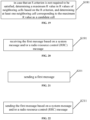
- FIG. 20 is a flow chart showing a cell reselection method according to an illustrative embodiment. As shown in FIG. 20 , the cell reselection method is performed by a terminal. This embodiment may be executed alone, or may be executed together with any other embodiment of the present disclosure. The method includes a step as follows.
- step S191 the first message is received based on a system message and/or a radio resource control (RRC) message.
- RRC radio resource control
- the terminal receives the time information sent by a network side device based on the system message, and/or the terminal receives the time information sent by a network side device based on the RRC message.
- an embodiment of the present disclosure also provides a cell reselection method.
- FIG. 21 is a flow chart showing a cell reselection method according to an illustrative embodiment. As shown in FIG. 21 , the cell reselection method is performed by a network side device, and includes a step as follows.
- step S201 a first message is sent.
- the first message includes time information for triggering a terminal to perform a cell reselection.
- the time information may include at least one of time information when a serving cell may provide a service, time information when a serving cell stops a service, and time information of a neighboring cell that is about to provide a service.
- the time information when the serving cell may provide the service may be duration information that the serving cell provides the service. For example, a duration that may be provided for the terminal is N minutes.
- the time information when the serving cell stops the service may be a stopping moment at which the serving cell provides the service for the terminal. For example, the stopping moment at which the service is provided by the serving cell is XX hours, XX minutes, and XX seconds. That is, at this moment, the serving cell stops the service.
- the time information of the neighboring cell that is about to provide the service may be a starting service moment at which the neighboring cell may provide the service for the terminal, or a service duration for which the service is provided for the terminal, or the like.
- the network side device sends the time information of the serving cell and/or the neighboring cell, so that the terminal determines a time to perform measurement on the neighboring cell and perform the cell reselection according to the time information.
- the network side device provides the time information of the service of the serving cell or the neighboring cell, and determines the measurement and reselection of the cell based on the time information, so that the terminal will not cause too late the cell reselection due to sudden unavailability of the serving cell.
- the time information includes first time information and/or second time information.
- the first time information includes a first service duration for which a serving cell provides a service and a first service moment at which a serving cell provides a service.
- the second time information includes a second service duration for which a neighboring cell provides a service and a second service moment at which a neighboring cell provides a service.
- FIG. 22 is a flow chart showing a cell reselection method according to an illustrative embodiment. As shown in FIG. 22 , the cell reselection method is performed by a network side device. This embodiment may be executed alone, or may be executed together with any other embodiment of the present disclosure. The method includes a step as follows.
- step S211 the first message is sent based on a system message and/or a radio resource control (RRC) message.
- RRC radio resource control
- the network side device such as a base station and a serving cell, sends the first message through the system message and/or the RRC message to configure the time information for the terminal.
- an embodiment of the present disclosure also provides a cell reselection apparatus.
- the cell reselection apparatus provided in the embodiment of the present disclosure includes corresponding hardware structures and/or software modules for executing various functions.
- the embodiments of the present disclosure may be implemented in the form of hardware or a combination of hardware and computer software. Whether a function is executed by hardware or computer software driving hardware depends on the specific application and design constraints of the technical solution. Those skilled in the art may use different methods to implement the described functions for each specific application, but such implementation should not be considered beyond the scope of the technical solutions of the embodiments of the present disclosure.
- FIG. 23 is a block diagram showing a cell reselection apparatus according to an illustrative embodiment.
- a cell reselection apparatus 100 includes a receiving module 101.
- the receiving module 101 is configured to receive a first message, in which the first message includes time information for triggering the terminal to perform a cell reselection.
- the time information includes first time information.
- the apparatus further includes a measuring module 102.
- the measuring module is configured to measure a neighboring cell based on the first time information.
- the measuring module 102 is configured to measure the neighboring cell based on the first time information, in response to a frequency priority of the neighboring cell being lower than or equal to a frequency priority of a serving cell.
- the measuring module 102 is configured to measure the neighboring cell based on the first time information, in case that a signal quality of a serving cell is lower than a predefined signal quality threshold, in response to a frequency priority of the neighboring cell being lower than or equal to a frequency priority of the serving cell.
- the measuring module 102 is configured to measure the neighboring cell, in response to a frequency priority of the neighboring cell being higher than a frequency priority of a serving cell.
- the first time information includes a first service duration for which a serving cell provides a service.
- the measuring module 102 is configured to determine a timer duration based on the first service duration, and determine to measure the neighboring cell in response to determining that the timer duration expires.
- the first time information includes a first service moment at which a serving cell provides a service.
- the measuring module 102 is configured to determine to measure the neighboring cell, in response to a current moment reaching the first service moment.
- the measuring module 102 is further configured to determine a service time threshold for the cell reselection. It is determined to measure the neighboring cell, in response to a relationship between the first time information and the service time threshold.
- the apparatus further includes a determining module 103.
- the determining module is configured to determine a target cell based on an R criterion.
- the determining module 103 is configured to determine a target cell based on the second time information.
- the second time information includes a second service moment at which the neighboring cell provides a service.
- the determining module 103 is configured to determine a minimum difference between the second service moment and the first service moment, and determine a cell corresponding to the minimum difference as the target cell.
- the second time information includes a second service duration for which the neighboring cell provides a service.
- the determining module 103 is configured to determine the second service duration with a longest duration, and determine a cell corresponding to the second service duration with the longest duration as the target cell.
- the target cell satisfies an S criterion.
- the second time information includes a second service moment at which the neighboring cell provides a service.
- the determining module 103 is configured to determine at least one candidate cell based on an R criterion. In the at least one candidate cell, a minimum difference between the second service moment and the first service moment is determined, and a candidate cell corresponding to the minimum difference is determined as the target cell.
- the second time information includes a second service duration for which the neighboring cell provides a service.
- the determining module 103 is configured to determine at least one candidate cell based on an R criterion. It is determined as the target cell a candidate cell with a longest second service duration in the at least one candidate cell.
- the determining module 103 is configured to in response to the serving cell and the neighboring cell satisfying the S criterion, determine a maximum R value in a serving cell R value and a neighboring cell R value based on the R criterion, and determine at least one cell corresponding to the maximum R value as a candidate cell, or in response to the neighboring cell satisfying the S criterion, determine a maximum R value in R values of neighboring cells based on the R criterion, and determine at least one neighboring cell corresponding to the maximum R value as a candidate cell.
- the determining module 103 is configured to in response to determining that the serving cell and the neighboring cell do not satisfy the S criterion, determine a maximum R value in a serving cell R value and a neighboring cell R value based on the R criterion, and determine at least one cell corresponding to the maximum R value as a candidate cell, or in response to determining that the neighboring cell does not satisfy the S criterion, determine a maximum R value in R values of neighboring cells based on the R criterion, and determine at least one neighboring cell corresponding to the maximum R value as a candidate cell.
- the receiving module 101 is configured to receive the first message based on a system message and/or a radio resource control (RRC) message.
- RRC radio resource control
- FIG. 24 is a block diagram showing a cell reselection apparatus according to an illustrative embodiment.
- a cell reselection apparatus 200 includes a sending module 201.
- the sending module 201 is configured to send a first message, in which the first message includes time information for triggering a terminal to perform a cell reselection.
- the time information includes first time information and/or second time information.
- the first time information includes a first service duration for which a serving cell provides a service and a first service moment at which a serving cell provides a service.
- the second time information includes a second service duration for which a neighboring cell provides a service and a second service moment at which a neighboring cell provides a service.
- the sending module 201 is configured to send the first message based on a system message and/or a radio resource control (RRC) message
- RRC radio resource control
- FIG. 25 is a block diagram showing a device 300 for a cell reselection according to an illustrative embodiment.
- the device 300 may be a mobile phone, a computer, a digital broadcast terminal, a messaging device, a game console, a tablet device, a medical device, a fitness device, a personal digital assistant, or the like.
- the device 300 may include one or more of the following components: a processing component 302, a memory 304, a power component 306, a multimedia component 308, an audio component 310, an input/output (I/O) interface 312, a sensor component 314, and a communication component 316.
- the processing component 302 typically controls overall operations of the device 300, such as the operations associated with display, phone calls, data communications, camera operations, and recording operations.
- the processing component 302 may include one or more of processors 320 to execute instructions to perform all or some of the steps in the above-described methods.
- the processing component 302 may include one or more of modules which facilitate the interaction between the processing component 302 and other components.
- the processing component 302 may include a multimedia module to facilitate the interaction between the multimedia component 308 and the processing component 302.
- the memory 304 is configured to store various types of data to support the operation of the device 300 device 300. Examples of such data include instructions for any applications or methods operated on the device 300, contact data, phonebook data, messages, pictures, videos, etc.
- the memory 304 may be implemented using any type of volatile or non-volatile memory devices, or a combination thereof, such as a static random access memory (SRAM), an electrically erasable programmable read-only memory (EEPROM), an erasable programmable read-only memory (EPROM), a programmable read-only memory (PROM), a read-only memory (ROM), a magnetic memory, a flash memory, a magnetic or optical disk.
- SRAM static random access memory
- EEPROM electrically erasable programmable read-only memory
- EPROM erasable programmable read-only memory
- PROM programmable read-only memory
- ROM read-only memory
- magnetic memory a magnetic memory
- flash memory a flash memory
- magnetic or optical disk a magnetic
- the power component 306 provides power to various components of the device 300.
- the power component 306 may include a power management system, one or more of power sources, and any other components associated with the generation, management, and distribution of power in the device 300.
- the multimedia component 308 includes a screen providing an output interface between the device 300 and the user.
- the screen may include a liquid crystal display (LCD) and a touch panel (TP). If the screen includes the touch panel, the screen may be implemented as a touch screen to receive input signals from the user.
- the touch panel includes one or more of touch sensors to sense touches, swipes, and gestures on the touch panel. The touch sensors may not only sense a boundary of a touch or swipe action, but also sense a duration and a pressure associated with the touch or swipe action.
- the multimedia component 308 includes a front camera and/or a rear camera.
- the front camera and/or the rear camera may receive an external multimedia datum while the device 300 is in an operation mode, such as a photographing mode or a video mode.
- an operation mode such as a photographing mode or a video mode.
- Each of the front camera and the rear camera may be a fixed optical lens system or have focus and optical zoom capability.
- the audio component 310 is configured to output and/or input audio signals.
- the audio component 310 includes a microphone (MIC) configured to receive an external audio signal when the device 300 is in an operation mode, such as a call mode, a recording mode, and a voice recognition mode.
- the received audio signal may be further stored in the memory 304 or transmitted via the communication component 316.
- the audio component 310 further includes a speaker to output audio signals.
- the I/O interface 312 provides an interface between the processing component 302 and peripheral interface modules, such as keyboards, click wheels, buttons, and the like.
- the buttons may include, but are not limited to, a home button, a volume button, a starting button, and a locking button.
- the sensor component 314 includes one or more of sensors to provide status assessments of various aspects of the device 300. For instance, the sensor component 314 may detect an open/closed status of the device 300, relative positioning of components, e.g., the display and the keypad, of the device 300, a change in position of the device 300 or a component of the device 300, a presence or absence of user contact with the device 300, an orientation or an acceleration/deceleration of the device 300, and a change in temperature of the device 300.
- the sensor component 314 may include a proximity sensor configured to detect the presence of nearby objects without any physical contact.
- the sensor component 314 may further include a light sensor, such as a CMOS or CCD image sensor, for use in imaging applications.
- the sensor component 314 may further include an accelerometer sensor, a gyroscope sensor, a magnetic sensor, a pressure sensor, or a temperature sensor.
- the communication component 316 is configured to facilitate communication, wired or wireless, between the device 300 and other devices.
- the device 300 may access a wireless network based on a communication standard, such as WiFi, 2G, or 3G, or a combination thereof.
- the communication component 316 receives a broadcast signal or broadcast associated information from an external broadcast management system via a broadcast channel.
- the communication component 316 further includes a near field communication (NFC) module to facilitate short-range communications.
- the NFC module may be implemented based on a radio frequency identification (RFID) technology, an infrared data association (IrDA) technology, an ultra-wideband (UWB) technology, a Bluetooth (BT) technology, and other technologies.
- RFID radio frequency identification
- IrDA infrared data association
- UWB ultra-wideband
- BT Bluetooth
- the device 300 may be implemented with one or more of application specific integrated circuits (ASICs), a digital signal processor (DSP), a digital signal processing device (DSPD), a programmable logic device (PLD), a field programmable gate array (FPGA), a controller, a micro-controller, a microprocessor, or other electronic elements, for performing the above-mentioned method.
- ASICs application specific integrated circuits
- DSP digital signal processor
- DSPD digital signal processing device
- PLD programmable logic device
- FPGA field programmable gate array
- controller a micro-controller, a microprocessor, or other electronic elements, for performing the above-mentioned method.
- non-transitory computer readable storage medium including instructions, such as included in the memory 304, executable by the processor 320 in the device 300, for completing the above-mentioned method.
- the non-transitory computer-readable storage medium may be a ROM, a random access memory (RAM), a CD-ROM, a magnetic tape, a floppy disc, an optical data storage device, and the like.
- FIG. 26 is a block diagram showing a device 400 for a cell reselection according to an illustrative embodiment.
- the device 400 may be provided as a server.
- the device 400 includes a processing component 422, which further includes one or more of processors, and memory resources represented by a memory 432 for storing instructions executable by the processing component 422, such as an application program.
- the application program stored in the memory 432 may include one or more modules each corresponding to a set of instructions.
- the processing component 422 is configured to execute instructions to perform the above-mentioned method.
- the device 400 may further include a power component 426 configured to perform power management of the device 400, a wired or wireless network interface 450 configured to connect the device 400 to a network, and an input/output (I/O) interface 458.
- the device 400 may operate based on an operating system stored in the memory 432, such as Windows Server TM , Mac OS X TM , Unix TM , Linux TM , FreeBSD TM , or the like.
- first, and second are used to describe various information, these information should not be limited by these terms. These terms are only used for distinguishing information of the same type from each other and do not denote a particular order or degree of importance. As a matter of fact, the terms such as “first,” and “second” may be used interchangeably.
- first information may also be referred to as second information
- second information may also be referred to as the first information, without departing from the scope of embodiments of the present disclosure.
Landscapes
- Engineering & Computer Science (AREA)
- Computer Networks & Wireless Communication (AREA)
- Signal Processing (AREA)
- Computer Security & Cryptography (AREA)
- Mobile Radio Communication Systems (AREA)
Applications Claiming Priority (1)
| Application Number | Priority Date | Filing Date | Title |
|---|---|---|---|
| PCT/CN2021/084782 WO2022205247A1 (zh) | 2021-03-31 | 2021-03-31 | 一种小区重选方法、小区重选装置及存储介质 |
Publications (2)
| Publication Number | Publication Date |
|---|---|
| EP4319308A1 true EP4319308A1 (de) | 2024-02-07 |
| EP4319308A4 EP4319308A4 (de) | 2024-04-24 |
Family
ID=83457761
Family Applications (1)
| Application Number | Title | Priority Date | Filing Date |
|---|---|---|---|
| EP21933907.4A Pending EP4319308A4 (de) | 2021-03-31 | 2021-03-31 | Zellenneuauswahlverfahren und -vorrichtung sowie speichermedium |
Country Status (4)
| Country | Link |
|---|---|
| US (1) | US20240196294A1 (de) |
| EP (1) | EP4319308A4 (de) |
| CN (1) | CN115606246A (de) |
| WO (1) | WO2022205247A1 (de) |
Families Citing this family (4)
| Publication number | Priority date | Publication date | Assignee | Title |
|---|---|---|---|---|
| TW202310650A (zh) * | 2021-03-31 | 2023-03-01 | 香港商翼勝科技有限公司 | 細胞測量方法和用戶設備 |
| KR20230162080A (ko) * | 2021-04-01 | 2023-11-28 | 텔레호낙티에볼라게트 엘엠 에릭슨(피유비엘) | 예상 셀 서빙 시간을 사용한 셀 재선택 |
| US12501333B2 (en) * | 2021-10-21 | 2025-12-16 | Samsung Electronics Co., Ltd. | Measurement and cell reselection in a NTN |
| WO2026065507A1 (zh) * | 2024-09-30 | 2026-04-02 | Oppo广东移动通信有限公司 | 用于无线通信的方法、终端设备和网络设备 |
Family Cites Families (8)
| Publication number | Priority date | Publication date | Assignee | Title |
|---|---|---|---|---|
| CN100382655C (zh) * | 2005-11-08 | 2008-04-16 | 华为技术有限公司 | 小区重选处理方法、终端测量方法及用户终端 |
| JP6768680B2 (ja) * | 2015-09-25 | 2020-10-14 | 京セラ株式会社 | 基地局及びユーザ端末 |
| CN106658613B (zh) * | 2015-11-03 | 2020-04-14 | 中国移动通信集团公司 | 一种小区重选方法及装置 |
| CN108243460A (zh) * | 2016-12-26 | 2018-07-03 | 联芯科技有限公司 | 小区重选方法与装置 |
| CN111565428B (zh) * | 2019-02-14 | 2022-10-25 | 华为技术有限公司 | 小区重选方法以及装置 |
| US12052613B2 (en) * | 2019-05-15 | 2024-07-30 | Lg Electronics Inc. | Method and apparatus for conditional handover based on the service time of candidate cells in a wireless communication system |
| EP4096305A4 (de) * | 2020-01-20 | 2023-01-11 | Beijing Xiaomi Mobile Software Co., Ltd. | Zellenneuauswahl und informationsübertragungsverfahren und geräte, kommunikationsvorrichtung und speichermedium |
| EP4319285A4 (de) * | 2021-03-30 | 2024-05-01 | Beijing Xiaomi Mobile Software Co., Ltd. | Zellneuauswahlparameterkonfiguration und zellneuauswahlverfahren und -vorrichtung sowie speichermedium |
-
2021
- 2021-03-31 CN CN202180001023.2A patent/CN115606246A/zh active Pending
- 2021-03-31 EP EP21933907.4A patent/EP4319308A4/de active Pending
- 2021-03-31 US US18/284,978 patent/US20240196294A1/en active Pending
- 2021-03-31 WO PCT/CN2021/084782 patent/WO2022205247A1/zh not_active Ceased
Also Published As
| Publication number | Publication date |
|---|---|
| CN115606246A (zh) | 2023-01-13 |
| US20240196294A1 (en) | 2024-06-13 |
| EP4319308A4 (de) | 2024-04-24 |
| WO2022205247A1 (zh) | 2022-10-06 |
Similar Documents
| Publication | Publication Date | Title |
|---|---|---|
| US12520212B2 (en) | Cell reselection method, cell reselection apparatus, and storage medium | |
| EP4319308A1 (de) | Zellenneuauswahlverfahren und -vorrichtung sowie speichermedium | |
| KR20220127873A (ko) | 셀 재선택, 정보 전송 방법 및 장치, 통신 기기 및 저장 매체 | |
| EP4329381A1 (de) | Zellenneuauswahlverfahren, zellenneuauswahlvorrichtung und speichermedium | |
| CN112004253A (zh) | 网络控制方法、装置及存储介质 | |
| US20240292252A1 (en) | Communication method and apparatus based on measurement relaxation mechanism, and storage medium | |
| CN115486128B (zh) | 一种小区重选方法、小区重选装置及存储介质 | |
| EP4401468A1 (de) | Zellenneuauswahlverfahren und -vorrichtung und speichermedium | |
| US20240324059A1 (en) | Measurement configuration determination method and apparatus, communication device and storage medium | |
| EP4607835A1 (de) | Verfahren und vorrichtung zur bestimmung des übertragungskonfigurationsanzeigezustands und speichermedium | |
| EP4718907A1 (de) | Verfahren und vorrichtung zur meldung von strahlmessergebnissen sowie vorrichtung und speichermedium | |
| US20240365236A1 (en) | Measurement relaxation mechanism-based communication method and apparatus, and storage medium | |
| WO2023130442A1 (zh) | 测量方法、装置、通信设备及存储介质 | |
| US20240373391A1 (en) | Cell positioning method and apparatus, and storage medium | |
| CN116325908B (zh) | 一种基于测量放松机制的通信方法、装置及存储介质 | |
| RU2838442C2 (ru) | Способ, устройство и носитель данных для перевыбора соты | |
| RU2831390C2 (ru) | Способ перевыбора соты, устройство для перевыбора соты и носитель информации | |
| RU2802590C1 (ru) | Способ и устройство для перевыбора соты и носитель данных | |
| US20250048158A1 (en) | Method and apparatus for executing predetermined operation, communication device, and storage medium | |
| EP4325934A1 (de) | Verfahren und vorrichtungen zum senden, senden und lösen von problemen mit mehreren karten | |
| WO2024020758A1 (zh) | 小区重选方法及装置、通信设备及存储介质 | |
| EP3934334A1 (de) | Steuerverfahren zum melden von informationen, steuervorrichtung zum melden von informationen und speichermedium dafür | |
| WO2023221142A1 (zh) | 重选优先级确定、重选优先级配置发送方法和装置 | |
| WO2023221147A1 (zh) | 小区重选、非激活态组播业务相关信息发送方法和装置 |
Legal Events
| Date | Code | Title | Description |
|---|---|---|---|
| STAA | Information on the status of an ep patent application or granted ep patent |
Free format text: STATUS: THE INTERNATIONAL PUBLICATION HAS BEEN MADE |
|
| PUAI | Public reference made under article 153(3) epc to a published international application that has entered the european phase |
Free format text: ORIGINAL CODE: 0009012 |
|
| STAA | Information on the status of an ep patent application or granted ep patent |
Free format text: STATUS: REQUEST FOR EXAMINATION WAS MADE |
|
| 17P | Request for examination filed |
Effective date: 20231030 |
|
| AK | Designated contracting states |
Kind code of ref document: A1 Designated state(s): AL AT BE BG CH CY CZ DE DK EE ES FI FR GB GR HR HU IE IS IT LI LT LU LV MC MK MT NL NO PL PT RO RS SE SI SK SM TR |
|
| A4 | Supplementary search report drawn up and despatched |
Effective date: 20240321 |
|
| RIC1 | Information provided on ipc code assigned before grant |
Ipc: H04W 84/06 20090101ALI20240315BHEP Ipc: H04W 36/30 20090101AFI20240315BHEP |
|
| DAV | Request for validation of the european patent (deleted) | ||
| DAX | Request for extension of the european patent (deleted) | ||
| STAA | Information on the status of an ep patent application or granted ep patent |
Free format text: STATUS: EXAMINATION IS IN PROGRESS |