EP4319331A1 - Einstellungsverfahren und bestimmungsverfahren für übertragungstiming sowie endgerätevorrichtung - Google Patents
Einstellungsverfahren und bestimmungsverfahren für übertragungstiming sowie endgerätevorrichtung Download PDFInfo
- Publication number
- EP4319331A1 EP4319331A1 EP21933682.3A EP21933682A EP4319331A1 EP 4319331 A1 EP4319331 A1 EP 4319331A1 EP 21933682 A EP21933682 A EP 21933682A EP 4319331 A1 EP4319331 A1 EP 4319331A1
- Authority
- EP
- European Patent Office
- Prior art keywords
- uplink
- information
- terminal device
- value
- satellite
- Prior art date
- Legal status (The legal status is an assumption and is not a legal conclusion. Google has not performed a legal analysis and makes no representation as to the accuracy of the status listed.)
- Granted
Links
Images


Classifications
-
- H—ELECTRICITY
- H04—ELECTRIC COMMUNICATION TECHNIQUE
- H04W—WIRELESS COMMUNICATION NETWORKS
- H04W56/00—Synchronisation arrangements
- H04W56/004—Synchronisation arrangements compensating for timing error of reception due to propagation delay
- H04W56/0045—Synchronisation arrangements compensating for timing error of reception due to propagation delay compensating for timing error by altering transmission time
-
- H—ELECTRICITY
- H04—ELECTRIC COMMUNICATION TECHNIQUE
- H04B—TRANSMISSION
- H04B7/00—Radio transmission systems, i.e. using radiation field
- H04B7/14—Relay systems
- H04B7/15—Active relay systems
- H04B7/185—Space-based or airborne stations; Stations for satellite systems
- H04B7/1851—Systems using a satellite or space-based relay
- H04B7/18513—Transmission in a satellite or space-based system
-
- H—ELECTRICITY
- H04—ELECTRIC COMMUNICATION TECHNIQUE
- H04W—WIRELESS COMMUNICATION NETWORKS
- H04W56/00—Synchronisation arrangements
- H04W56/0005—Synchronisation arrangements synchronizing of arrival of multiple uplinks
-
- H—ELECTRICITY
- H04—ELECTRIC COMMUNICATION TECHNIQUE
- H04W—WIRELESS COMMUNICATION NETWORKS
- H04W56/00—Synchronisation arrangements
- H04W56/0035—Synchronisation arrangements detecting errors in frequency or phase
Definitions
- the embodiments of the present disclosure relate to the field of communication, and more particularly, to an adjustment method and a determination method for transmission timing, and a terminal device.
- a New Radio-Non Terrestrial Network similar to a New Radio (NR) system, a User Equipment (UE) needs to consider impact of Timing Advance (TA) when performing uplink transmission.
- TA Timing Advance
- a propagation delay of signal communication is usually less than 1ms.
- the propagation delay of signal communication is very large, which may range from tens of milliseconds to hundreds of milliseconds, depending on the altitude of the satellite orbit and the traffic type of satellite communication.
- the scheme related to the transmission timing of the NR-NTN system needs to be enhanced compared with the NR system.
- the transmission timing adjustment method for the NR system is not suitable for the NTN system.
- the present disclosure needs a transmission timing adjustment method for the NTN system.
- Embodiments of the present disclosure provide a transmission timing adjustment method, a transmission timing determination method, and a terminal device, which further improve the transmission timing adjustment method for the NTN system, such as an NR-NTN system or an Internet of Things (IoT)-NTN system.
- NTN such as an NR-NTN system or an Internet of Things (IoT)-NTN system.
- IoT Internet of Things
- an embodiment of the present disclosure provides a transmission timing adjustment method, including:
- an embodiment of the present disclosure provides a transmission timing determination method, including:
- an embodiment of the present disclosure provides a terminal device, which is configured to implement the method according to any one of the first aspect to the second aspect as described above or any implementation thereof. Particularly, it includes functional modules configured to perform the method in any possible implementation in the first aspect to the second aspect as described above.
- the terminal device may include a processing unit configured to perform functions related to information processing.
- the processing unit may be a processor.
- the terminal device may include a transmitting unit and a receiving unit.
- the transmitting unit is configured to perform functions related to transmitting
- the receiving unit is configured to perform functions related to receiving.
- the transmitting unit may be a transmitter
- the receiving unit may be a receiver.
- the terminal device may be a communication chip
- the transmitting unit may be an input circuit or interface of the communication chip
- the receiving unit may be an output circuit or interface of the communication chip.
- an embodiment of the present disclosure provides a terminal device, which is configured to implement the method according to any one of the first aspect to the second aspect as described above or any implementation thereof.
- a terminal device which is configured to implement the method according to any one of the first aspect to the second aspect as described above or any implementation thereof.
- it includes a processor, and a memory storing a computer program, wherein the processor is configured to invoke and execute the computer program stored in the memory, to cause the terminal device to perform the method according to any one of the first aspect to the second aspect as described above or any implementation thereof.
- processors there may be one or more processors, and there may be one or more memories.
- the memory may be integrated with the processor, or the memory may be provided separately from the processor.
- the terminal device further includes a transmitter and a receiver.
- an embodiment of the present disclosure provides a system, wherein the system includes the terminal device as described above.
- an embodiment of the present disclosure provides a chip, which is configured to implement the method according to any one of the first aspect to the second aspect as described above or any implementation thereof.
- the chip includes: a processor configured to invoke and execute the computer program from the memory, to cause a device equipped with the chip to perform the method according to any one of the first aspect to the second aspect as described above or any implementation thereof.
- an embodiment of the present disclosure provides a computer-readable storage medium, having a computer program stored thereon, the computer program causing a computer to perform the method according to any one of the first aspect to the second aspect as described above or any implementation thereof.
- an embodiment of the present disclosure provides a computer program product, including computer program instructions.
- the computer program instructions cause a computer to perform the method according to any one of the first aspect to the second aspect as described above or any implementation thereof.
- an embodiment of the present disclosure provides a computer program.
- the computer program when executed by a computer, causes the computer to perform the method according to any one of the first aspect to the second aspect as described above or any implementation thereof.
- the first TA information is estimated by the terminal device, and the first uplink TA value is adjusted according to the first TA information to obtain the second uplink TA value.
- the terminal device is designed to have the capability of adjusting the TA by itself, or the terminal device needs the first TA information estimated by itself for uplink transmission, that is, the timing relationship between the downlink frame and the uplink frame of the terminal device is determined according to the first TA information estimated by the UE itself.
- the NTN system e.g., the NR-NTN system or IoT-NTN system
- the second uplink TA value obtained by adjusting the first uplink TA value according to the first TA information is used for uplink transmission, which facilitates the terminal device to self-compensate the variation of the transmission timing caused by the variation of the position of the satellite, and improves the transmission timing adjustment method for the NTN system.
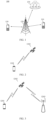
- FIG. 1 is a schematic block diagram of an application scenario of an embodiment of the present disclosure.
- a communication system 100 may include a terminal device 110 and a network device 120.
- the network device 120 may communicate with the terminal device 110 via an air interface. Multi-service transmission is supported between the terminal device 110 and the network device 120.
- LTE Long Term Evolution
- TDD Time Division Duplex
- UMTS Universal Mobile Communication System
- IoT Internet of Things
- NB-IoT Narrow Band Internet of Things
- eMTC enhanced Machine-Type Communications
- 5G communication system also known as New Radio (NR) communication system
- NR New Radio
- the network device 120 may be an access network device that communicates with the terminal device 110.
- the access network device may provide communication coverage for a specific geographic area, and may communicate with the terminal device(s) 110 (such as UE(s)) located in the coverage area.
- the network device 120 may be an evolved base station (Evolutional Node B, eNB or eNodeB) in a Long Term Evolution (LTE) system, or a Next Generation Radio Access Network (NG RAN) device, either a base station (gNB) in the NR system, or a wireless controller in a Cloud Radio Access Network (CRAN), or the network device 120 may be a relay station, an access point, a vehicle-mounted device, a wearable device, a hub, a switch, a bridge, a router, or a network device in the future evolved Public Land Mobile Network (PLMN), etc.
- Evolutional Node B, eNB or eNodeB in a Long Term Evolution (LTE) system
- NG RAN Next Generation Radio Access Network
- gNB base station
- CRAN Cloud Radio Access Network
- PLMN Public Land Mobile Network
- the terminal device 110 may be any terminal device, including but not limited to, a terminal device connected to the network device 120 or other terminal devices by wire or wirelessly.
- the terminal device 110 may refer to an access terminal, a User Equipment (UE), a user unit, a user station, a mobile station, a remote station, a remote terminal, a mobile device, a user terminal, a terminal, a wireless communication device, a user agent, or a user apparatus.
- UE User Equipment
- the terminal device 110 may refer to an access terminal, a User Equipment (UE), a user unit, a user station, a mobile station, a remote station, a remote terminal, a mobile device, a user terminal, a terminal, a wireless communication device, a user agent, or a user apparatus.
- UE User Equipment
- the access terminal may be a cellular phone, a cordless phone, a Session Initiation Protocol (SIP) phone, an IoT device, a satellite handheld terminal, a Wireless Local Loop (WLL) station, a Personal Digital Assistant (PDA), a handheld device having a wireless communication function, a computing device or another processing device connected to a wireless modem, a vehicle-mounted device, a wearable device, a terminal device in a 5G network, or a terminal device in the future evolved PLMN, etc.
- SIP Session Initiation Protocol
- IoT IoT device
- WLL Wireless Local Loop
- PDA Personal Digital Assistant
- the terminal device 110 may be used for Device to Device (D2D) communication.
- D2D Device to Device
- the wireless communication system 100 may also include a core network device 130 for communicating with a base station.
- the core network device 130 may be a 5G Core (5GC) device, for example, Access and Mobility Management Function (AMF), and for another example, Authentication Server Function (AUSF), and for another example, User Plane Function (UPF), and for another example, Session Management Function (SMF).
- the core network device 130 may also be an Evolved Packet Core (EPC) device of the LTE network, for example, a Session Management Function + Core Packet Gateway, (SMF+PGW-C) device.
- EPC Evolved Packet Core
- SMF+PGW-C Session Management Function + Core Packet Gateway
- the SMF+PGW-C may implement functions of both SMF and PGW-C.
- the above-mentioned core network device may be called by other names, or a new network entity may be formed by dividing functions of the core network, which is not limited in the embodiments of the
- Various functional units in the communication system 100 may also communicate by establishing a connection via a Next Generation (NG) interface.
- NG Next Generation
- the terminal device establishes an air interface connection with the access network device via an NR interface for transmitting user plane data and control plane signaling.
- the terminal device may establish a control plane signaling connection with the AMF via an NG interface 1 (N1 for short).
- the access network device such as a Next Generation radio access base station (gNB), may establish a user plane data connection with the UPF via an NG interface 3 (N3 for short).
- the access network device may establish a control plane signaling connection with the AMF via an NG interface 2 (N2 for short).
- the UPF may establish a control plane signaling connection with the SMF via an NG interface 4 (N4 for short).
- the UPF may exchange user plane data with the data network via an NG interface 6 (N6 for short).
- the AMF establishes a control plane signaling connection with the SMF via an NG interface 11 (N11 for short).
- the SMF may establish a control plane signaling connection with the PCF via an NG interface 7 (N7 for short).
- FIG. 1 schematically shows one base station, one core network device, and two terminal devices.
- the wireless communication system 100 may include a plurality of base station devices, and each base station may cover other numbers of terminals within its coverage, which is not limited in the embodiments of the present disclosure.
- the 3 rd Generation Partnership Project (3GPP) is studying Non-Terrestrial Network (NTN) technology.
- NTN generally provides communication services to ground users by means of satellite communication.
- the satellite communication has many unique advantages.
- the satellite communication is not restricted by the user's region.
- the general land communication cannot cover areas such as oceans, mountains, deserts, etc. that cannot be equipped with communication devices or are not covered by communication due to sparse population.
- the satellite communication since one satellite may cover a larger area of the ground, and the satellite may orbit the earth, every corner of the earth may be covered by the satellite communication theoretically.
- the satellite communication has a greater social value.
- the satellite communication may cover remote mountainous areas, poor and backward countries or regions at a lower cost, so that people in these regions may enjoy advanced voice communication and mobile Internet technology, which facilitates to narrow the digital gap with developed regions and promotes the development of these regions.
- Third, the distance of the satellite communication is longer, and the cost of communication does not increase significantly with the increase of the communication distance.
- the stability of the satellite communication is higher, which is not restricted by natural disasters.
- the NTN technology may be combined with various communication systems.
- the NTN technology may be combined with the NR system to form an NR-NTN system.
- the NTN technology may be combined with the IoT system to form an IoT-NTN system.
- the IoT-NTN system may include an NB-IoT-NTN system and an eMTC-NTN system.
- FIG. 2 is a schematic diagram of an architecture of another communication system provided by an embodiment of the present disclosure.
- the communication system includes a terminal device 1101 and a satellite 1102, and the wireless communication may be performed between the terminal device 1101 and the satellite 1102.
- the network formed between the terminal device 1101 and the satellite 1102 may also be referred to as NTN.
- the satellite 1102 may function as a base station, and direct communication may be performed between the terminal device 1101 and the satellite 1102. Under the system architecture, the satellite 1102 may be referred to as a network device.
- the communication system may include a plurality of network devices 1102, and each network device 1102 may cover other numbers of terminal devices within its coverage, which is not limited in the embodiment of the present disclosure.
- FIG. 3 is a schematic diagram of an architecture of another communication system provided by an embodiment of the present disclosure.
- the communication system includes a terminal device 1201, a satellite 1202 and a base station 1203.
- the wireless communication may be performed between the terminal device 1201 and the satellite 1202, and the communication may be performed between the satellite 1202 and the base station 1203.
- the network formed among the terminal device 1201, the satellite 1202 and the base station 1203 may also be referred to as NTN.
- the satellite 1202 may not function as a base station, and the communication between the terminal device 1201 and the base station 1203 needs to be relayed via the satellite 1202.
- the base station 1203 may be referred to as a network device.
- the communication system may include a plurality of network devices 1203, and each network device 1203 may cover other numbers of terminal devices within its coverage, which is not limited in the embodiments of the present disclosure.
- the network device 1203 may be the network device 120 in FIG. 1 .
- the aforementioned satellite 1102 or satellite 1202 includes but is not limited to: a Low-Earth Orbit (LEO) satellite, a Medium-Earth Orbit (MEO) satellite, a Geostationary Earth Orbit (GEO) satellite, a High Elliptical Orbit (HEO) satellite, etc.
- the satellite may use a plurality of beams to cover the ground. For example, one satellite may form dozens or even hundreds of beams to cover the ground. In other words, one satellite beam may cover a ground area with a diameter of tens to hundreds of kilometers to ensure the coverage of the satellite and to improve the system capacity of the entire satellite communication system.
- the altitude range of the LEO may be 500km to 1500km, the corresponding orbit period may be about 1.5 hours to 2 hours, the signal propagation delay of single-hop communication between users may generally be less than 20ms, and the maximum satellite visible time may be 20 minutes.
- the signal propagation distance of the LEO is shorter and the link loss is smaller, and the requirements for the transmit power of the user terminal are not higher.
- the orbital height of the GEO may be 35786km, the rotation period around the earth may be 24 hours, and the signal propagation delay of single-hop communication between the users may generally be 250ms.
- the satellite uses multi-beams to cover the ground.
- a satellite may form dozens or even hundreds of beams to cover the ground.
- One satellite beam may cover a ground area with a diameter of tens to hundreds of kilometers.
- FIG. 1 to FIG. 3 are only illustrations of systems applicable to the present disclosure. Of course, the methods as shown in the embodiments of the present disclosure may also be applicable to other systems. Furthermore, the terms “system” and “network” are often used interchangeably herein.
- the term “and/or” herein just defines some association between associated objects, which means that there may be three relationships. For example, A and/or B may include three cases where there is only A, there are both A and B, and there is only B.
- the character “/” herein generally indicates that the contextual objects are in an "or” relationship.
- indicating mentioned in the embodiments of the present disclosure may be a direct indication, or an indirect indication, and may also mean that there is some association therebetween.
- a indicating B may mean that A directly indicates B, for example, B may be obtained from A; or may mean that A indirectly indicates B, for example, A indicates C, and B may be obtained from C; or may mean that there is some association between A and B.
- "corresponding" mentioned in the embodiments of the present disclosure may mean that there is a direct correspondence or an indirect correspondence between the both, or that there is an association, or indicating and indicated, or configuring and configured, between the both.
- predefined or “predefined rules” mentioned in the embodiments of the present disclosure may be implemented by saving corresponding codes or tables in the device (e.g., the terminal device or the network device) in advance or in other ways applicable to indicating related information, which is not particularly limited in the embodiments of the present disclosure.
- predefined may refer to being defined in protocols.
- protocol may refer to a standard protocol in the communication field, for example, it may include an LTE protocol, an NR protocol, and related protocols applied to the future communication systems, which are not limited in the present disclosure.
- the satellites may be classified into two categories of transparent payload and regenerative payload based on the functions they provide.
- the transparent payload satellite only provides functions of radio frequency filtering, frequency conversion and amplification, and only provides transparent forwarding of the signal without changing waveform signals it forwards.
- the regenerative payload satellite in addition to providing the functions of radio frequency filtering, frequency conversion and amplification, it may also provide functions of demodulation/decoding, routing/conversion, coding/modulation, which have part or all of the functions of the base station.
- one or more gateways may be included for communication between the satellites and the terminals.
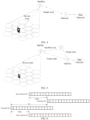
- FIG. 4 and FIG. 5 respectively show schematic diagrams of NTN scenarios based on a transparent payload satellite and a regenerative payload satellite.
- the communication between the gateway and the satellite is performed via a feeder link, and the communication between the satellite and the terminal may be performed via a service link.
- the communication between satellites is performed via an InterStar link, the communication between the gateway and the satellite is performed via the feeder link, and the communication between the satellite and the terminal is performed via the service link.
- the propagation delay of signal communication is generally less than 1ms.
- the propagation delay of the signal communication is very large, ranging from tens of milliseconds to hundreds of milliseconds, particularly depending on the satellite orbital height and the traffic type of the satellite communication.
- the timing relationship of the NTN system needs to be enhanced compared with the NR system.
- the LTE needs to consider the impact of Timing Advance (TA) when performing uplink transmission. Since the propagation delay in the system is relatively large, the range of the TA value is also relatively large.
- TA Timing Advance
- the UE When the UE is scheduled to perform uplink transmission in time slot n (or subframe n), the UE considers a round-trip propagation delay, and transmits in advance during the uplink transmission, so that the signal arrives at the network device side at an uplink time slot n (or subframe n) of the network device side.
- the timing relationship in the NTN system may include two cases, i.e., Case 1 and Case 2.
- FIG. 6 is a schematic structural diagram of Case 1 in a timing relationship of an NTN system provided by an embodiment of the present disclosure.
- the downlink subframe and the uplink subframe at the network device side are aligned.
- the UE needs to use a larger TA value.
- the TA value corresponds to a timing offset value Koffset.
- FIG. 7 is a schematic structural diagram of Case 2 in a timing relationship of an NTN system provided by an embodiment of the present disclosure.
- the UE only needs to use a smaller TA value.
- the TA value corresponds to a timing offset value Koffset.
- a Round-Trip Time (RTT) of the UE corresponds to a timing offset value Koffset.
- a terminal device may be configured with one or more Timing Advance Groups (TAGs).
- TAG refers to a group of serving cells configured by Radio Resource Control (RRC), and the same timing reference cell and the same TA value are used for the uplink configuration corresponding to the group of serving cells.
- RRC Radio Resource Control
- a TAG includes a MAC entity of a Special Cell (SpCell), it is considered as a Primary Timing Advance Group (PTAG); otherwise, it is considered as a Secondary Timing Advance Group (STAG).
- SpCell Special Cell
- PTAG Primary Timing Advance Group
- STAG Secondary Timing Advance Group
- the SpCell refers to a Primary Cell (PCell) in the MCG or a Primary Secondary Cell (PSCell) in the SCG. In other scenarios, the SpCell refers to PCell.
- MCG Master Cell Group
- SCG Secondary Cell Group
- PCell Primary Cell
- PSCell Primary Secondary Cell
- the network device may maintain uplink time alignment by configuring a high-level parameter, such as an alignment timer (timeAlignmentTimer), via RRC, and each TAG is configured with an alignment timer to control a time duration within which the MAC entity may consider that the uplink of the serving cell associated with the TAG is in time alignment.
- the terminal device may perform TA adjustment according to a Timing Advance Command (TAC) transmitted by the network device.
- TAC Timing Advance Command
- TAC Timing alignment Command
- MAC Media Access Control
- CE Media Access Control
- the TAC MAC CE includes 2-bit TAG Identity (ID) indication information and 6-bit TAC indication information.
- the timing adjustment process of the terminal device will be described as follows.
- the terminal device is provided with a TA offset value N TA, offset , which is determined according to a frequency domain range of a cell and a multiplexing mode of uplink transmission (for example, determined according to a network deployment frequency band and an LTE or NR coexistence situation).
- TAG Timing Advance Group
- the determination of the N TA value is related to the subcarrier spacing of the first uplink transmission of the terminal device after receiving the RAR.
- an uplink channel or signal such as PUSCH scheduled by an RAR uplink grant, or PUSCH scheduled by a fallback RAR uplink grant, or PUCCH corresponding to a successful RAR and carrying HARQ-ACK information
- TAC Timing Advance Command
- the determination of the N TA_new value is related to the subcarrier spacing.
- the subcarrier spacing may be a subcarrier spacing of the uplink active BWP; or if the terminal device is configured with a plurality of uplink active BWPs, the subcarrier spacing may be a largest one of the plurality of uplink active BWPs; or if the terminal device performs uplink active BWP switching between receiving the TA command and applying the corresponding TA adjustment, the subcarrier spacing may be a subcarrier spacing of a new uplink active BWP; or if the terminal device performs uplink active BWP switching after applying the corresponding TA adjustment, the terminal device assumes that an absolute TA adjustment value remains unchanged before and after the active BWP switching.
- uplink channel or signal transmission for example, other uplink transmissions than transmission of Msg1, MsgA, Physical Uplink Shared Channel (PUSCH) scheduled by the RAR uplink grant, PUSCH scheduled by the fallback RAR uplink grant, and Physical Uplink Control Channel (PUCCH) corresponding to the successful RAR and carrying Hybrid Automatic Repeat Request-Acknowledgement (HARQ-ACK) information).
- uplink channel or signal transmission for example
- the terminal device shall perform uplink transmission by applying a corresponding TA adjustment from the uplink time slot n+k+1 on, and the uplink transmission does not include the PUSCH scheduled by the RAR uplink grant, the PUSCH scheduled by the fallback RAR uplink grant, and the PUCCH corresponding to the successful RAR and carrying the HARQ-ACK information.
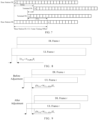
- FIG. 8 is a schematic diagram of a timing relationship between a downlink frame and an uplink frame of a terminal device in an NR system provided by an embodiment of the present disclosure.
- the terminal device should ensure that both the timing accuracy of the initial transmission and the subsequent slow timing adjustment value meet certain indexes.
- the N TA , offset value is determined according to the frequency domain range of the cell and the multiplexing mode of the uplink transmission. The N TA value is determined according to the received TA command value, and does not change until the next TA command value is received.
- FIG. 9 is a schematic diagram of adjusting N TA when a downlink reference timing changes in an NR system provided by an embodiment of the present disclosure.
- the terminal device determines whether the downlink reference timing changes and is not compensated, or is partially compensated by the uplink timing adjustment without a TA command.
- the terminal device adjusts the N TA value accordingly.
- the adjustment process is that the N TA value is adjusted from N TA1 to N TA2 .
- the User Equipment In the NTN, such as New Radio-Non Terrestrial Network (NR-NTN), system, similar to the NR system, the User Equipment (LTE) needs to consider the impact of Timing Advance (TA) for the uplink transmission.
- TA Timing Advance
- the propagation delay of the signal communication is usually less than 1ms.
- the propagation delay of the signal communication is very large, which may range from tens of milliseconds to hundreds of milliseconds, depending on the altitude of the satellite orbit and the traffic type of satellite communication.
- the embodiments of the present disclosure provide a transmission timing adjustment method, a transmission timing determination method, and a terminal device, which further improve the transmission timing adjustment method for the NTN system.
- FIG. 10 is a schematic flowchart of a transmission timing adjustment method 200 provided by an embodiment of the present disclosure, which may be performed by a terminal device, e.g., the terminal devices as shown in FIG. 1 to FIG. 5 .
- the method 200 may include part or all of the following:
- the first TA information is estimated by the terminal device, and the first uplink TA value is adjusted according to the first TA information to obtain the second uplink TA value.
- the terminal device is designed to have the capability of adjusting the TA by itself, or the terminal device needs the first TA information estimated by itself for uplink transmission, that is, the timing relationship between the downlink frame and the uplink frame of the terminal device is determined according to the first TA information estimated by the UE itself.
- the second uplink TA value obtained by adjusting the first uplink TA value according to the first TA information is used for uplink transmission, which facilitates the terminal device to self-compensate the variation of the transmission timing caused by the variation of the position of the satellite, and improves the transmission timing adjustment method for the NTN system.
- the first TA information is used to adjust the first uplink TA value or to obtain the second uplink TA value.
- the terminal device transmits a first physical channel or signal according to the second uplink TA value.
- the first TA information is acquired by the terminal device itself.
- the first TA information is acquired by the terminal device based on synchronization assistance information.
- the synchronization assistance information includes at least one of: timing information, frequency offset information, position information, and ephemeris information.
- the position information includes at least one of: a position of the terminal device, a position of a serving satellite, a position of a non-serving satellite, a position of a network device, and a reference point position.
- the ephemeris information includes at least one of: ephemeris information of a serving satellite and ephemeris information of a non-serving satellite.
- the timing information includes at least one of: a common TA value (such as a timing offset value between the network device and the reference point and/or a timing offset value between the network device and the satellite), a common TA variation value, and a timestamp.
- the frequency offset information includes at least one of: a Doppler frequency shift, a Doppler frequency shift variation, a moving speed of a serving satellite, and a moving speed of a non-serving satellite.
- the synchronization assistance information is transmitted by the network device via at least one of: a system message (for example, an NTN dedicated system message), an RRC configuration, a MAC CE, and DCI.
- the first TA information is estimated by the terminal device based on at least one of: a speed of a satellite, a position of the satellite, ephemeris information, a timestamp, a position of the terminal device, and a Global Navigation Satellite System (GNSS).
- GNSS Global Navigation Satellite System
- the network device needs to transmit to the terminal device, the synchronization assistance information, e.g., at least one of ephemeris information, a moving speed of a satellite, a position of the satellite, a reference point position, a common timing offset value (such as a timing offset value between the network device and the reference point and/or a timing offset value between the network device and the satellite), a timestamp, etc., for the terminal device to complete time domain and/or frequency domain synchronization.
- the terminal device needs to acquire the synchronization assistance information transmitted by the network device, and at the same time, to complete the corresponding time domain and/or frequency domain synchronization according to its own GNSS capability.
- the terminal device should obtain, based on its GNSS capability, information including at least one of: a position, a time reference, and a frequency reference of the terminal device. And based on the above information and the synchronization assistance information indicated by the network device (such as ephemeris information or timestamp of the serving satellite), the terminal device may calculate the timing and the frequency offset, and apply TA compensation or frequency offset adjustment in the idle state or inactive state.
- information including at least one of: a position, a time reference, and a frequency reference of the terminal device.
- the terminal device may calculate the timing and the frequency offset, and apply TA compensation or frequency offset adjustment in the idle state or inactive state.
- the terminal device estimates a UE-specific TA in the following manner.
- Approach 1 in which the terminal device estimates the UE-specific TA based on the position acquired by the GNSS and the ephemeris information of a serving satellite indicated by the network device.
- the terminal device in the idle state or the inactive state may calculate T TA according to the following approach, and transmit Msg1 or MsgA according to the determined T TA :
- T TA N TA , UE ⁇ specific + N TA , offset + N TA , common ⁇ T c ; or
- T TA N TA , UE ⁇ specific + N TA , offset ⁇ T c + N TA , common ,
- N TA , DE-specific may be a TA value estimated by the terminal device itself, that is, first TA information or a TA value determined based on the first TA information;
- N TA , offset is determined according to a network deployment frequency band and an LTE or NR coexistence situation (as an example, N TA , offset may be broadcast by the network device, or a default value if the network device does not broadcast
- N TA if the network device does not broadcast the second TA information, N TA , common is a default value or N TA , common is 0.
- the terminal device may calculate T TA according to the following formula, and perform transmission of the uplink channel or signal (for example, PUSCH scheduled by the RAR uplink grant, PUSCH scheduled by the fallback RAR uplink grant, PUCCH corresponding to the successful RAR and carrying the HARQ-ACK information) according to the determined T TA :
- T TA N TA + N TA , UE ⁇ specific + N TA , offset + N TA , common ⁇ Tc ,
- N TA , UE-specific may be a TA value estimated by the terminal device itself, that is, first TA information or a TA value determined based on the first TA information;
- N TA may be a TA value indicated by the network device via the RAR;
- N TA common includes a common timing offset value broadcast by the network device, for example, it may be obtained according to the second TA information; and a granularity or unit of N TA, common is determined according to Tc; and Tc represents a
- N TA if the network device does not broadcast the second TA information, N TA , common is a default value or N TA , common is 0.
- the N TA value indicated by the network device via the RAR is only a positive value or a non-negative value.
- the N TA value indicated by the network device via the RAR may be a positive value or a negative value or 0.
- the terminal device may carry N TA , UE-specific related indication information in the transmission process of the above channels.
- T TA may be calculated according to the following formula, and uplink channel or signal transmission (for example, other uplink transmissions than transmission of Msg1, MsgA, PUSCH scheduled by the RAR uplink grant, PUSCH scheduled by the fallback RAR uplink grant, and PUCCH corresponding to the successful RAR and carrying HARQ-ACK information) may be performed according to the determined T TA :
- T TA N TA + N TA , UE ⁇ specific + N TA , offset + N TA , common ⁇ Tc ,
- N TA , UE-specific may be a TA value estimated by the terminal device itself, that is, first TA information or a TA value determined based on the first TA information;
- N TA , offset is determined according to a network deployment frequency band and an LTE or NR coexistence situation (as an example, N TA, offset may be broadcast by the network device, or a default value if the network device does
- N TA if the network device does not broadcast the second TA information, N TA , common is a default value or N TA , common is 0.
- the N TA value indicated by the network device via the TA command MAC CE is only a positive value or a non-negative value.
- the N TA value indicated by the network device via the TA command MAC CE may be a positive value or a negative value or 0.
- the terminal device may transmit N TA , UE-specific related indication information to the network device via the uplink MAC CE.
- the terminal device needs to jointly estimate and update the TA according to the TA value estimated by the terminal device itself, the common timing offset value broadcast by the network device, and the TA value indicated by the network device.
- the terminal device for the terminal device in the NTN system, the terminal device is required to have the capability of performing TA adjustment using the GNSS module. In other words, the terminal device needs to perform the uplink transmission according to the TA value estimated by the terminal device itself. That is to say, the timing relationship between the downlink frame and the uplink frame of the terminal device is determined according to the TA value estimated by the UE itself.
- FIG. 11 is a schematic diagram of a timing relationship between a downlink frame and an uplink frame of a terminal device in an NTN system provided by an embodiment of the present disclosure.
- the UE may perform TA adjustment according to the TA value estimated by the UE itself.
- the first TA information includes at least one of a first TA value and first TA variation information.
- the first TA variation information is used to measure variation of the first TA value within a unit of time, where the unit of time may be millisecond, second, time slot, etc., which is not limited by the present disclosure.
- the first TA variation information is a TA offset (drift) of the first TA value.
- the first TA variation information may include TA variation information of a serving link of the terminal device.
- the terminal device if two adjacent time slots overlap due to adjusting the first uplink TA value according to the first TA information, the terminal device does not expect to adjust the first uplink TA value according to the first TA information; or if the two adjacent time slots overlap due to adjusting the first uplink TA value according to the first TA information, and a length of an overlapping portion is greater than or equal to a first threshold, the terminal device does not expect to adjust the first uplink TA value according to the first TA information.
- the first threshold is determined according to a length of a Cyclic Prefix (CP).
- CP Cyclic Prefix
- the first threshold is a length of the CP or half of the length.
- FIG. 12 is a schematic diagram of overlapping of two adjacent time slots due to adjusting a first uplink TA value according to first TA information according to an embodiment of the present disclosure.
- the terminal device if the terminal device is scheduled to perform uplink transmission from time slots n-2 to n+1, if an overlap between two adjacent time slots occurs after the first uplink TA value is adjusted according to the first TA information, the terminal device does not adjust the first uplink TA value according to the first TA information during the uplink transmission.
- the terminal device if adjusting the first uplink TA value according to the first TA information leads to no overlapping of two adjacent time slots, the terminal device adjusts the first uplink TA value according to the first TA information; or if the two adjacent time slots overlap due to adjusting the first uplink TA value according to the first TA information, and a length of an overlapping portion is smaller than or equal to a first threshold, the terminal device adjusts the first uplink TA value according to the first TA information.
- the first threshold value is determined according to the length of a Cyclic Prefix (CP).
- CP Cyclic Prefix
- the first threshold is a length of the CP or half of the length.
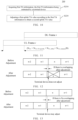
- FIG. 13 is a schematic diagram of no overlapping due to adjusting a first uplink TA value according to first TA information provided by an embodiment of the present disclosure.
- the terminal device adjusts the first uplink TA value according to the first TA information during the uplink transmission.
- the method 200 may further include: determining whether to adjust the first uplink TA value according to the first TA information, based on an overlapping status of the two adjacent time slots due to adjusting the first uplink TA value according to the first TA information.
- the overlapping status of the two adjacent time slots due to adjusting the first uplink TA value according to the first TA information may be used as a decision status for the terminal device to decide whether to adjust the first uplink TA value according to the first TA information or not.
- the terminal device does not expect to adjust the first uplink TA value according to the first TA information during uplink transmission.
- the uplink transmission includes scheduled continuous uplink transmissions of the terminal device.
- the terminal device is scheduled to perform continuous uplink transmissions from time slots n-2 to n+1, and the terminal device does not expect to perform TA adjustment according to the first TA value obtained by itself.
- the terminal device does not expect a length of the scheduled continuous uplink transmissions to be greater than or equal to a second threshold; or the terminal device allows the length of the scheduled continuous uplink transmissions to be smaller than or equal to the second threshold.
- the second threshold value is determined based on a frequency or a period at which the terminal device adjusts the first uplink TA value. As an example, the second threshold value is determined based on the frequency or period at which the terminal device adjusts the first uplink TA value by itself. For example, the second threshold value is determined based on the frequency or period at which the terminal device adjusts the first uplink TA value according to the first TA information.
- the terminal device if the terminal device needs to estimate the first uplink TA value by itself every 10ms, the terminal device does not expect the length of the scheduled continuous uplink transmissions to be greater than or equal to 10ms; or, the terminal device allows the length of the scheduled continuous uplink transmissions smaller than or equal to 10ms.
- a downlink reference timing of the terminal device changes and is not compensated, or if the downlink reference timing of the terminal device changes and is partially compensated without receiving a TA command,
- the terminal device compensates for an uncompensated portion by adjusting the first TA information.
- the second TA information is acquired through a Random Access Response (RAR) or a TA command transmitted by the network device.
- RAR Random Access Response
- the second TA information includes at least one of a second TA value and second TA variation information.
- the second TA variation information is used to measure variation of the second TA value within a unit of time, where the unit of time may be millisecond, second, time slot, etc., which is not limited by the present disclosure.
- the second TA variation information is a TA offset (drift) of the second TA value.
- the second TA variation information may include TA variation information of a feeder link of the terminal device.
- FIG. 14 is a schematic comparison diagram before and after adjustment of a first uplink TA value by a terminal device according to first TA information according to an embodiment of the present disclosure.
- the terminal device adjusts the first uplink TA value according to the first TA information.
- T TA may be calculated according to the following formula, and the uplink channel or signal transmission may be performed according to the determined T TA :
- T TA N TA + N TA , UE ⁇ specific + N TA , offset + N TA , common ⁇ Tc , where N TA , UE-specific may be a TA value estimated by the terminal device itself, i.e., first TA information or a TA value determined based on the first TA information.
- the terminal device adjusts the first uplink TA value according to the first TA information.
- T TA (N TA + N TA , UE-specific,2 + N TA , offset + N TA , common )*Tc;
- T TA (N TA + N TA , UE-specific,2 + N TA , offset + N TA , common )*Tc;
- T TA (N TA + N TA , UE-specific,3 + N TA , offset + N TA , common )*Tc.
- the terminal device if the terminal device does not receive TA indication information transmitted by a network device or does not acquire second TA information, the terminal device adjusts the first uplink TA value according to the first TA information.
- the behaviors of the terminal device may include: adjusting the first uplink TA value according to the self-estimated TA value and the TA value transmitted by the network device to obtain the second uplink TA value; or adjusting the first uplink TA value according to the self-estimated TA value to obtain the second uplink TA value.
- the TA indication information transmitted by the network device is used to indicate the second TA information.
- the reduced length is equal to the length of the overlapping portion of the two adjacent time slots.
- a predefined rule is required to be used. For example, if the two adjacent time slots are both used for uplink transmission, the terminal device does not expect to use the first TA information to adjust the first uplink TA value; if the two adjacent time slots are both not used for uplink transmission, the latter time slot of the two adjacent time slots is reduced.
- FIG. 15 is an example of reducing a length of a later time slot among two adjacent time slots provided by an embodiment of the present disclosure.
- the terminal device if the terminal device is scheduled to perform uplink transmission from time slots n-2 to n+1, if an overlap between two adjacent time slots (n-1 and n) occurs after the first uplink TA value is adjusted according to the first TA information, the terminal device reduces the length of the later time slot (i.e., time slot n) of the two adjacent time slots.
- the method 200 may further include: performing uplink transmission by applying the second uplink TA value in an uplink time unit n+m+1, where n represents an uplink time unit for acquiring or estimating the first TA information, and m is a number greater than or equal to 0.
- m is predefined or determined according to a predefined rule; or m is determined according to the capability of the terminal device; or m is determined according to a configuration parameter of the network device.
- the terminal device reports capability information of the terminal device, and accordingly, the network device configures a parameter for the terminal device based on the capability information reported by the terminal device.
- the uplink time unit includes, but is not limited to, a time slot, a subframe, a symbol, or a resource unit etc.
- the method 200 may further include: determining the uplink time unit in which the second uplink TA value is applied for uplink transmission, based on the overlapping status of the two adjacent time slots due to adjusting the first uplink TA value according to the first TA information.
- the terminal device if the two adjacent time slots overlap due to adjusting the first uplink TA value according to the first TA information, the terminal device performs unlink transmission by applying the second uplink TA value after the ongoing uplink transmission ends; or if adjusting the first uplink TA value according to the first TA information leads to no overlapping of two adjacent time slots, the terminal device performs uplink transmission by applying the second uplink TA value in the uplink time unit n+m+1, where n represents an uplink time unit for acquiring or estimating the first TA information, and m is a number greater than or equal to 0.
- m is predefined or determined according to a predefined rule; or m is determined according to the capability of the terminal device; or m is determined according to a configuration parameter of the network device.
- the terminal device reports capability information of the terminal device, and accordingly, the network device configures a parameter for the terminal device based on the capability information reported by the terminal device.
- the uplink time unit includes, but is not limited to, a time slot, a subframe, a symbol, or a resource unit etc.
- the two adjacent time slots include a first time slot and a second time slot
- the first time slot is a first time slot in which the second uplink TA value is applied
- the second time slot is an adjacent time slot before the first time slot
- S210 may include: acquiring the first TA information according to a first subcarrier spacing.
- the first subcarrier spacing is a subcarrier spacing of an uplink active Bandwidth Part (BWP); or the terminal device is configured with a plurality of uplink active BWPs, and the first subcarrier spacing is a largest one of the plurality of uplink active BWPs; or the terminal device performs uplink active BWP switching between acquiring the first TA information and performing uplink transmission by applying the second uplink TA value, and the first subcarrier spacing is a subcarrier spacing of a new uplink active BWP; or the terminal device performs uplink active BWP switching after performing uplink transmission by applying the second uplink TA value, and an absolute value of the second uplink TA value remains unchanged before switching the active BWP and after switching the active BWP.
- BWP Bandwidth Part
- the terminal device performs uplink active BWP switching after performing uplink transmission by applying the second uplink TA value, and an absolute value of the first uplink TA value remains unchanged before switching the active BWP and after switching the active BWP, or both the absolute value of the first uplink TA value and the absolute value of the second uplink TA value remain unchanged before switching the active BWP and after switching the active BWP.
- an error of the second uplink TA value satisfies a precision index.
- the terminal device in the process of the terminal device adjusting the first uplink TA value according to the first TA information, ensures that the accuracy of the transmission timing of the initial transmission and the accuracy of the transmission timing of the subsequent slow transmission meet certain indexes.
- S210 may include: estimating the first TA information within a time unit that is configured by a network or is predefined.
- the terminal device when the terminal device adjusts the first uplink TA value according to the self-estimated first TA information such as the first TA value and the position of the satellite changes, it is beneficial for the terminal device to self-compensate the variation of transmission timing caused by the variation of the position of the satellite, which improves the transmission timing adjustment method for the NTN system.
- FIG. 16 is an exemplary flowchart of a transmission timing determination method 300 provided by an embodiment of the present disclosure, which may be performed by a terminal device, e.g., the terminal devices as shown in FIG. 1 to FIG. 5 .
- the method 300 may include part or all of the following: S310 of determining an uplink TA value according to first TA information and/or second TA information.
- the first TA information is estimated by the terminal device, the second TA information is acquired through a Random Access Response (RAR) or a TA command transmitted by a network device, and the uplink TA value is used for transmitting a first physical channel or signal.
- RAR Random Access Response
- the first TA information includes at least one of a first TA value and first TA variation information.
- the second TA information includes at least one of a second TA value and second TA variation information.
- ⁇ N TA,UE-specific is obtained according to first TA variation information in the first TA information.
- ⁇ N TA, common is obtained according to second TA variation information in the second TA information.
- N TA,common may include a TA value of a feeder link of the terminal device; or include a TA value of a link between the network device and the satellite; or include a TA value of a link between the network device and the reference point; or include a TA value of a link between the reference point and the satellite.
- S310 may include: determining the uplink TA value according to N TA, UE-specific , N TA and N TA, common , where N TA, UE-specific is obtained according to the first TA information, N TA is obtained according to the second TA information, and N TA , common is obtained according to common TA information broadcast by the network device.
- N TA,common may include a TA value of a feeder link of the terminal device; or include a TA value of a link between the network device and the satellite; or include a TA value of a link between the network device and the reference point; or include a TA value of a link between the reference point and the satellite.
- each term in the above formula may be updated independently.
- N TA UE-specific is updated according to the time unit of the self-estimated TA.
- N TA is updated after receiving the indication information of the network device.
- N TA offset may also be broadcast by the network device.
- N TA offset may be a default value if the network device does not broadcast.
- the second TA information is acquired through the RAR transmitted by the network device, and the first physical channel or signal includes at least one of: a Physical Uplink Shared Channel (PUSCH) scheduled by an RAR uplink grant, a PUSCH scheduled by a fallback RAR uplink grant, and a Physical Uplink Control Channel (PUCCH) corresponding to a successful RAR and carrying Hybrid Automatic Repeat Request-Acknowledgement (HARQ-ACK) information.
- PUSCH Physical Uplink Shared Channel
- PUCCH Physical Uplink Control Channel
- the terminal device is in an idle state or an inactive state.
- the second TA information is acquired through the TA command transmitted by the network device, and the first physical channel or signal includes an uplink physical channel or signal except Message 1 (Msg1), Message A (MsgA), the PUSCH scheduled by the RAR uplink grant, the PUSCH scheduled by the fallback RAR uplink grant, and the PUCCH corresponding to the successful RAR and carrying the HARQ-ACK information.
- Msg1 Message 1
- MsgA Message A
- the PUSCH scheduled by the RAR uplink grant the PUSCH scheduled by the fallback RAR uplink grant
- the PUCCH corresponding to the successful RAR and carrying the HARQ-ACK information.
- the TA command is carried by a Media Access Control Control Element (MAC CE) or Downlink Control Information (DCI).
- MAC CE Media Access Control Control Element
- DCI Downlink Control Information
- the terminal device is in a connected state.
- the first TA information being estimated by the terminal device includes: the first TA information being estimated by the terminal device based on at least one of: a velocity of a satellite, a position of a satellite, ephemeris information, a timestamp, a position of a terminal device, and Global Navigation Satellite System (GNSS).
- GNSS Global Navigation Satellite System
- sequence numbers of the above-mentioned processes do not mean the order of execution that should be determined by their functions and internal logic, and should not be used to limit the implementations of the present disclosure.
- the terms “downlink (DL)” and “uplink (UL)” are used to indicate the transmission direction of signals or data
- downlink (DL) is used to indicate that the transmission direction of signals or data is a first direction from the station to the user equipment in the cell
- uplink (LTL) is used to indicate that the transmission direction of signals or data is a second direction from the user equipment in the cell to the station.
- downlink signal indicates that the signal transmission direction is the first direction.
- the term “and/or” herein just defines some association between associated objects, which means that there may be three relationships.
- a and/or B may include three cases where there is only A, there are both A and B, and there is only B.
- the character “/" herein generally indicates that the contextual objects are in an "or" relationship.
- FIG. 17 is a schematic block diagram of a terminal device 400 according to an embodiment of the present disclosure.
- the terminal device 400 may include:
- the first TA information includes at least one of a first TA value and first TA variation information.
- the terminal device if two adjacent time slots overlap due to adjusting the first uplink TA value according to the first TA information, the terminal device does not expect to adjust the first uplink TA value according to the first TA information; or if the two adjacent time slots overlap due to adjusting the first uplink TA value according to the first TA information and a length of an overlapping portion is greater than or equal to a first threshold, the terminal device does not expect to adjust the first uplink TA value according to the first TA information.
- the terminal device if adjusting the first uplink TA value according to the first TA information leads to no overlapping of two adjacent time slots, the terminal device adjusts the first uplink TA value according to the first TA information; or if the two adjacent time slots overlap due to adjusting the first uplink TA value according to the first TA information and a length of an overlapping portion is smaller than or equal to a first threshold, the terminal device adjusts the first uplink TA value according to the first TA information.
- the first threshold value is determined according to a length of a cyclic prefix (CP).
- CP cyclic prefix
- the first threshold is a length of a CP or half of the length.
- the processing unit 420 is further configured to determine whether to adjust the first uplink TA value according to the first TA information, based on an overlapping status of the two adjacent time slots due to adjusting the first uplink TA value according to the first TA information.
- the terminal device does not expect to adjust the first uplink TA value according to the first TA information during uplink transmission.
- the uplink transmission includes scheduled continuous uplink transmissions of the terminal device.
- the terminal device does not expect a length of the scheduled continuous uplink transmissions to be greater than or equal to the second threshold; or the terminal device allows the length of the scheduled continuous uplink transmissions to be smaller than or equal to the second threshold.
- the second threshold value is determined based on a frequency or a period at which the terminal device adjusts the first uplink TA value.
- a downlink reference timing of the terminal device changes and is not compensated, or if the downlink reference timing of the terminal device changes and is partially compensated without receiving a TA command,
- the terminal device if the terminal device does not receive TA indication information transmitted by a network device or does not acquire second TA information, the terminal device adjusts the first uplink TA value according to the first TA information.
- the second TA information is acquired through a Random Access Response (RAR) or a TA command transmitted by the network device.
- RAR Random Access Response
- the second TA information includes at least one of a second TA value and second TA variation information.
- the reduced length is equal to the length of the overlapping portion of the two adjacent time slots.
- the communication unit 410 is further configured to: perform uplink transmission by applying the second uplink TA value in an uplink time unit n+m+1, where n represents an uplink time unit for acquiring or estimating the first TA information, and m is a number greater than or equal to 0.
- m is predefined or determined according to a predefined rule; or m is determined according to capability of the terminal device; or m is determined according to a configuration parameter of the network device.
- the processing unit 420 is further configured to: determine the uplink time unit in which the second uplink TA value is applied for uplink transmission, based on the overlapping status of the two adjacent time slots due to adjusting the first uplink TA value according to the first TA information.
- the terminal device performs uplink transmission by applying the second uplink TA value after the ongoing uplink transmission ends; or if adjusting the first uplink TA value according to the first TA information leads to no overlapping of two adjacent time slots, the terminal device performs uplink transmission by applying the second uplink TA value in the uplink time unit n+m+1, where n represents an uplink time unit for acquiring or estimating the first TA information.
- the two adjacent time slots include a first time slot and a second time slot
- the first time slot is a first time slot to which the second uplink TA value is applied
- the second time slot is an adjacent time slot before the first time slot
- the communication unit 410 is particularly configured to: acquire the first TA information according to a first subcarrier spacing.
- the first subcarrier spacing is a subcarrier spacing of an uplink active Bandwidth Part (BWP); or the terminal device is configured with a plurality of uplink active BWPs, and the first subcarrier spacing is a largest one of the plurality of uplink active BWPs; or the terminal device performs uplink active BWP switching between acquiring the first TA information and performing uplink transmission by applying the second uplink TA value, and the first subcarrier spacing is a subcarrier spacing of a new uplink active BWP; or the terminal device performs uplink active BWP switching after performing uplink transmission by applying the second uplink TA value, and an absolute value of the second uplink TA value remains unchanged before switching the active BWP and after switching the active BWP.
- BWP Bandwidth Part
- an error of the second uplink TA value satisfies a precision index.
- the communication unit 410 is particularly configured to estimate the first TA information within a time unit that is configured by network or is predefined.
- the first TA information is estimated by the terminal device based on at least one of: a velocity of a satellite, a position of a satellite, ephemeris information, a timestamp, a position of the terminal device, and Global Navigation Satellite System (GNSS).
- GNSS Global Navigation Satellite System
- FIG. 18 is a schematic block diagram of a terminal device 500 according to an embodiment of the present disclosure.
- the terminal device 500 may include: a processing unit 510, configured to determine an uplink TA value according to first TA information and/or second TA information.
- the first TA information is estimated by the terminal device, the second TA information is acquired through a Random Access Response (RAR) or a TA command transmitted by a network device, and the uplink TA value is used for transmitting a first physical channel or signal.
- RAR Random Access Response
- the first TA information includes at least one of a first TA value and first TA variation information.
- the second TA information includes at least one of a second TA value and second TA variation information.
- the processing unit 510 is particularly configured to: determine the uplink TA value according to N TA, UE-specific , N TA and N TA, common , where N TA , UE-specific is obtained according to the first TA information, N TA is obtained according to the second TA information, and N TA , common is obtained according to common TA information broadcast by the network device.
- the second TA information is acquired through the RAR transmitted by the network device, and the first physical channel or signal includes at least one of: a Physical Uplink Shared Channel (PUSCH) scheduled by an RAR uplink grant, a PUSCH scheduled by a fallback RAR uplink grant, and a Physical Uplink Control Channel (PUCCH) corresponding to a successful RAR and carrying Hybrid Automatic Repeat Request-Acknowledgement (HARQ-ACK) information.
- PUSCH Physical Uplink Shared Channel
- PUCCH Physical Uplink Control Channel
- the terminal device is in an idle state or an inactive state.
- the second TA information is acquired by through the TA command transmitted by the network device, and the first physical channel or signal includes an uplink physical channel or signal except Message 1 (Msg1), Message A (MsgA), the PUSCH scheduled by the RAR uplink grant, the PUSCH scheduled by the fallback RAR uplink grant, and the PUCCH corresponding to the successful RAR and carrying the HARQ-ACK information.
- Msg1 Message 1
- MsgA Message A
- the PUSCH scheduled by the RAR uplink grant the PUSCH scheduled by the fallback RAR uplink grant
- the PUCCH corresponding to the successful RAR and carrying the HARQ-ACK information.
- the TA command is carried by a Media Access Control Control Element (MAC CE) or Downlink Control Information (DCI).
- MAC CE Media Access Control Control Element
- DCI Downlink Control Information
- the terminal device is in a connected state.
- the first TA information being estimated by the terminal device includes: the first TA information being estimated by the terminal device based on at least one of a velocity of a satellite, a position of a satellite, ephemeris information, a timestamp, a position of the terminal device, and Global Navigation Satellite System (GNSS).
- GNSS Global Navigation Satellite System
- the device embodiments and the method embodiments may correspond to each other, and similar descriptions may refer to the method embodiments.
- the terminal device 400 shown in FIG. 17 may correspond to the corresponding entity performing the method 200 of the embodiment of the present disclosure, and the foregoing and other operations and/or functions of each unit in the terminal device 400 are used for implementing the corresponding processes in respective steps of the method of FIG. 10 ;
- the terminal device 500 shown in FIG. 18 may correspond to the corresponding entity performing the method 300 of the embodiment of the present disclosure, and the aforementioned and other operations and/or functions of each unit in the terminal device 800 are respectively used for implementing the corresponding processes in respective steps of the method of FIG. 16 , details thereof will not be repeated here for the sake of brevity.
- the functional modules may be implemented in the form of hardware, may also be implemented by instructions in the form of software, and may also be implemented by a combination of hardware and software modules.
- each step of the method embodiments in the embodiments of the present disclosure may be completed by an integrated logic circuit of the hardware in the processor and/or instructions in the form of software.
- the steps of the methods disclosed in the embodiments of the present disclosure may be directly embodied as being performed and completed by a hardware decoding processor, or by a combination of hardware and software modules in the decoding processor.
- the software modules can be located in a known storage medium in the related art, such as random access memory, flash memory, read-only memory, programmable read-only memory, electrically erasable programmable memory, or register.
- the storage medium can be located in the memory, and the processor can read information from the memory and perform the steps of the above methods in combination with its hardware.
- processing unit and the communication unit as mentioned above may be implemented by a processor and a transceiver, respectively.
- FIG. 19 is a schematic structural diagram of a communication device 600 according to an embodiment of the present disclosure.
- the communication device 600 may include a processor 610.
- the processor 610 may be configured to invoke and execute a computer program from the memory to implement the methods in the embodiments of the present disclosure.
- the communication device 600 may further include a memory 620.
- the memory 620 may store indication information, and may also store codes, instructions, etc. executed by the processor 610.
- the processor 610 may be configured to invoke and execute a computer program from the memory 620 to implement the methods in the embodiments of the present disclosure.
- the memory 620 may be an independent device separately from the processor 610, or may be integrated in the processor 610.
- the communication device 600 may further include a transceiver 630.
- the processor 610 may be configured to control the transceiver 630 to communicate with other devices, in particular, may transmit information or data to other devices, or receive information or data transmitted by other devices.
- the transceiver 630 may include a transmitter and a receiver.
- the transceiver 630 may further include one or more antennas.
- bus system includes not only a data bus, but also a power bus, a control bus, and a status signal bus.
- the communication device 600 may be the terminal device in the embodiments of the present disclosure, and the communication device 600 may implement the corresponding processes implemented by the terminal device in each method of the embodiments of the present disclosure. That is, the communication device 600 in the embodiment of the present disclosure may correspond to the communication device 400 or the terminal device 500 in the embodiments of the present disclosure, and may correspond to the corresponding entity performing the method 200 or the method 300 according to the embodiments of the present disclosure, and details thereof will not be repeated here for the sake of brevity.
- a chip is also provided in an embodiment of the present disclosure.
- a chip might be an integrated circuit chip that has signal processing capabilities and may implement or perform the methods, steps and logic block diagrams disclosed in the embodiments of the present disclosure.
- the chip may also be called a system level chip, a system chip, a chip system, or a system-on-chip, etc.
- the chip may be applied to various communication devices to cause the communication device equipped with the chip to perform the methods, steps and logic block diagrams disclosed in the embodiments of the present disclosure.
- FIG. 20 is a schematic structural diagram of a chip 700 according to an embodiment of the present disclosure.
- the chip 700 includes a processor 710.
- the processor 710 may be configured to invoke and execute a computer program from the memory to implement the methods in the embodiments of the present disclosure.
- the chip 700 may further include a memory 720.
- the processor 710 may be configured to invoke and execute a computer program from the memory 720 to implement the method in the embodiment of the present disclosure.
- the memory 720 may store indication information, and may also store codes, instructions, etc. executed by the processor 710.
- the memory 720 may be an independent device separately from the processor 710, or may be integrated in the processor 710.
- the chip 700 may further include an input interface 730.
- the processor 710 may be configured to control the input interface 730 to communicate with other devices or chips, in particular, may obtain information or data transmitted by other devices or chips.
- the chip 700 may further include an output interface 740.
- the processor 710 may be configured to control the output interface 740 to communicate with other devices or chips, in particular, may output information or data to other devices or chips.
- the chip 700 may be applied to the terminal device in the embodiments of the present disclosure, and the chip may implement the corresponding processes implemented by the terminal device in the various methods of the embodiments of the present disclosure, and details thereof will not be repeated here for the sake of brevity.
- bus system includes not only a data bus, but also a power bus, a control bus, and a status signal bus.
- the processors as mentioned above may include, but are not limited to: a General-purpose processor, a Digital Signal Processor (DSP), an Application Specific Integrated Circuit (ASIC), a Field Programmable Gate Array (FPGA), or other programmable logic devices, discrete gates, or transistor logic devices, discrete hardware components, and so on.
- DSP Digital Signal Processor
- ASIC Application Specific Integrated Circuit
- FPGA Field Programmable Gate Array
- the processor may be used to implement or perform the methods, steps and logic block diagrams disclosed in the embodiments of the present disclosure.
- the steps of the methods disclosed in the embodiments of the present disclosure may be directly embodied as being performed and completed by a hardware decoding processor, or by a combination of hardware and software modules in the decoding processor.
- the software modules can be located in a known storage medium in the related art, such as random access memory, flash memory, read-only memory, programmable read-only memory, electrically erasable programmable memory, or register.
- the storage medium can be located in the memory, and the processor can be configured to read information from the memory and perform the steps of the above methods in combination with its hardware.
- the memory as mentioned above includes but is not limited to: a volatile memory and/or a non-volatile memory.
- the non-volatile memory may be a Read-Only Memory (ROM), a Programmable ROM (PROM), an Erasable PROM, (EPROM), an Electrically EPROM (EEPROM), or a Flash.
- the volatile memory may be a Random Access Memory (RAM), which acts as an external cache.
- RAM Direct Rambus RAM
- SRAM Static RAM
- DRAM Dynamic RAM
- DDR SDRAM Double Data Rate SDRAM
- ESDRAM Enhanced SDRAM
- SLDRAM synch link DRAM
- DR RAM Direct Rambus RAM
- Embodiments of the present disclosure also provide a computer-readable storage medium for storing computer programs.
- the computer-readable storage medium stores one or more programs, and the one or more programs include instructions that, when executed by a portable electronic device including a plurality of application programs, cause the portable electronic device to perform the method in the embodiments as shown in the method 200 or the method 300.
- the computer-readable storage medium may be applied to the mobile terminal/terminal device in the embodiments of the present disclosure, and the computer program causes the computer to perform the corresponding processes implemented by the mobile terminal/terminal device in the various methods of the embodiments of the present disclosure, and details thereof will not be repeated here for the sake of brevity.
- the embodiment of the present disclosure also provides a computer program product, including a computer program.
- the computer program product may be applied to the mobile terminal/terminal device in the embodiments of the present disclosure, and the computer program causes the computer to execute the corresponding processes implemented by the mobile terminal/terminal device in the methods of the embodiments of the present disclosure, and details thereof will not be repeated here for the sake of brevity.
- An embodiment of the present disclosure also provides a computer program.
- the computer program when being executed by the computer, causes the computer to perform the methods in the embodiments as shown in the method 200 or the method 300.
- the computer program may be applied to the mobile terminal/terminal device in the embodiment of the present disclosure.
- the computer program when being executed by the computer, causes the computer to perform each method in the embodiment of the present disclosure to be implemented by the mobile terminal/terminal device. For the sake of brevity, the corresponding process will not be repeated here.
- An embodiment of the present disclosure also provides a communication system
- the communication system may include the above-mentioned terminal device and network device to form a communication system, and details thereof will not be described here for brevity.
- system and the like herein may also be referred to as “network management architecture” or “network system”.
- the computer software product may be stored in a storage medium and contain instructions to cause a computer device, such as a personal computer, a server, or a network device, etc., to perform all or part of the steps of the method described in each of the embodiments of the present disclosure.
- the above mentioned storage medium may include various mediums capable of storing program codes, such as a Universal Serial Bus flash drive, a mobile hard disk, an ROM, an RAM, a magnetic disk, or an optical disc.
- the units/modules/components described above as separate/shown components may or may not be physically separated, that is, they may be located in one place, or may also be distributed to multiple network units. Part or all of the units/modules/components may be selected according to actual requirements to achieve the purpose of the embodiments of the present disclosure.
- the mutual coupling or direct coupling or communication connection shown or discussed above may be indirect coupling or communication connection of devices or units via some interfaces, and may be in electrical, mechanical or other forms.
Landscapes
- Engineering & Computer Science (AREA)
- Computer Networks & Wireless Communication (AREA)
- Signal Processing (AREA)
- Physics & Mathematics (AREA)
- Astronomy & Astrophysics (AREA)
- Aviation & Aerospace Engineering (AREA)
- General Physics & Mathematics (AREA)
- Mobile Radio Communication Systems (AREA)
Applications Claiming Priority (1)
| Application Number | Priority Date | Filing Date | Title |
|---|---|---|---|
| PCT/CN2021/084140 WO2022205002A1 (zh) | 2021-03-30 | 2021-03-30 | 传输定时的调整方法、确定方法和终端设备 |
Publications (3)
| Publication Number | Publication Date |
|---|---|
| EP4319331A1 true EP4319331A1 (de) | 2024-02-07 |
| EP4319331A4 EP4319331A4 (de) | 2024-10-09 |
| EP4319331B1 EP4319331B1 (de) | 2026-05-06 |
Family
ID=83455454
Family Applications (1)
| Application Number | Title | Priority Date | Filing Date |
|---|---|---|---|
| EP21933682.3A Active EP4319331B1 (de) | 2021-03-30 | 2021-03-30 | Einstellungsverfahren und bestimmungsverfahren für übertragungstiming sowie endgerätevorrichtung |
Country Status (4)
| Country | Link |
|---|---|
| US (1) | US20240031964A1 (de) |
| EP (1) | EP4319331B1 (de) |
| CN (2) | CN119402955A (de) |
| WO (1) | WO2022205002A1 (de) |
Cited By (1)
| Publication number | Priority date | Publication date | Assignee | Title |
|---|---|---|---|---|
| WO2025206742A1 (ko) * | 2024-03-26 | 2025-10-02 | 엘지전자 주식회사 | 무선 통신 시스템에서 통신을 수행하기 위한 방법 및 장치 |
Families Citing this family (5)
| Publication number | Priority date | Publication date | Assignee | Title |
|---|---|---|---|---|
| CN120110583B (zh) * | 2020-02-14 | 2026-04-10 | 华为技术有限公司 | 一种确定定时提前的方法、通信装置 |
| CN119729734A (zh) * | 2023-09-27 | 2025-03-28 | 华为技术有限公司 | 一种定时提前ta确定方法及通信装置 |
| WO2025129701A1 (zh) * | 2023-12-22 | 2025-06-26 | 北京小米移动软件有限公司 | 与上行传输相关的信息处理方法、装置及存储介质 |
| CN121604094A (zh) * | 2024-08-15 | 2026-03-03 | 维沃移动通信有限公司 | 定时调整、通信方法、终端及网络侧设备 |
| CN121711781A (zh) * | 2024-09-20 | 2026-03-20 | 华为技术有限公司 | 一种通信方法及装置 |
Family Cites Families (8)
| Publication number | Priority date | Publication date | Assignee | Title |
|---|---|---|---|---|
| WO2011043711A1 (en) * | 2009-10-09 | 2011-04-14 | Telefonaktiebolaget L M Ericsson (Publ) | Extended cell range |
| EP3739974B1 (de) * | 2018-01-10 | 2026-03-04 | 1FINITY Inc. | Verfahren und vorrichtung zum erhalten der zeitvorlaufsmenge einer uplink-übertragung und kommunikationssystem |
| US11082973B2 (en) * | 2018-06-20 | 2021-08-03 | Qualcomm Incorporated | Upstream timing control mechanisms for non-terrestrial networks |
| WO2020041757A1 (en) * | 2018-08-23 | 2020-02-27 | Intel Corporation | Uplink timing adjustment with beam switching |
| CN109788548B (zh) * | 2019-02-19 | 2020-06-12 | 上海交通大学 | 时间提前补偿的卫星移动通信随机接入方法、系统及介质 |
| US11153840B2 (en) * | 2019-03-28 | 2021-10-19 | Mediatek Inc. | UE feedback of timing adjustment after a measurement gap |
| CN111867041B (zh) * | 2019-04-30 | 2022-01-25 | 中国移动通信有限公司研究院 | 一种定时提前确定方法及设备 |
| EP3993518A4 (de) * | 2019-08-06 | 2022-07-06 | Guangdong Oppo Mobile Telecommunications Corp., Ltd. | Direktzugriffsverfahren und -vorrichtung |
-
2021
- 2021-03-30 WO PCT/CN2021/084140 patent/WO2022205002A1/zh not_active Ceased
- 2021-03-30 CN CN202411532448.8A patent/CN119402955A/zh active Pending
- 2021-03-30 CN CN202180096263.5A patent/CN117063546A/zh active Pending
- 2021-03-30 EP EP21933682.3A patent/EP4319331B1/de active Active
-
2023
- 2023-09-28 US US18/374,132 patent/US20240031964A1/en active Pending
Cited By (1)
| Publication number | Priority date | Publication date | Assignee | Title |
|---|---|---|---|---|
| WO2025206742A1 (ko) * | 2024-03-26 | 2025-10-02 | 엘지전자 주식회사 | 무선 통신 시스템에서 통신을 수행하기 위한 방법 및 장치 |
Also Published As
| Publication number | Publication date |
|---|---|
| CN117063546A (zh) | 2023-11-14 |
| CN119402955A (zh) | 2025-02-07 |
| US20240031964A1 (en) | 2024-01-25 |
| EP4319331B1 (de) | 2026-05-06 |
| WO2022205002A1 (zh) | 2022-10-06 |
| EP4319331A4 (de) | 2024-10-09 |
Similar Documents
| Publication | Publication Date | Title |
|---|---|---|
| EP4319331B1 (de) | Einstellungsverfahren und bestimmungsverfahren für übertragungstiming sowie endgerätevorrichtung | |
| US12177904B2 (en) | Random access method and device | |
| US12356458B2 (en) | RACH procedures for non-terrestrial networks for user equipment | |
| EP4311320A1 (de) | Informationsübertragungsverfahren, endgerätevorrichtung und netzwerkvorrichtung | |
| US12501414B2 (en) | Information indication method and apparatus, device, and storage medium | |
| US20250351142A1 (en) | Rach procedures for non-terrestrial networks for base station | |
| US20230328798A1 (en) | Random access methods, terminal device and network device | |
| CN116210289A (zh) | 上行提前定时的确定方法、装置、设备及存储介质 | |
| EP4319246A1 (de) | Synchronisationsverfahren und -vorrichtung sowie endgerätevorrichtung und netzwerkvorrichtung | |
| WO2022006820A1 (en) | Method and apparatus for determining timing advance value | |
| US11894930B1 (en) | Wireless communication method and terminal device | |
| CN117044324A (zh) | 一种随机接入方法、电子设备及存储介质 | |
| US12621784B2 (en) | Information transmission method, terminal device, and network device | |
| WO2023077384A1 (zh) | 无线通信方法、终端设备和网络设备 | |
| EP4614893A1 (de) | Kommunikationsverfahren, -vorrichtung und -einrichtung sowie speichermedium, chip, produkt und programm | |
| EP4340494B1 (de) | Drahtloskommunikationsverfahren, endgerätevorrichtung und netzwerkvorrichtung | |
| US20260059507A1 (en) | Wireless communication method, communication device, and storage medium | |
| US20250380312A1 (en) | Communication method and apparatus |
Legal Events
| Date | Code | Title | Description |
|---|---|---|---|
| STAA | Information on the status of an ep patent application or granted ep patent |
Free format text: STATUS: THE INTERNATIONAL PUBLICATION HAS BEEN MADE |
|
| PUAI | Public reference made under article 153(3) epc to a published international application that has entered the european phase |
Free format text: ORIGINAL CODE: 0009012 |
|
| STAA | Information on the status of an ep patent application or granted ep patent |
Free format text: STATUS: REQUEST FOR EXAMINATION WAS MADE |
|
| 17P | Request for examination filed |
Effective date: 20231026 |
|
| AK | Designated contracting states |
Kind code of ref document: A1 Designated state(s): AL AT BE BG CH CY CZ DE DK EE ES FI FR GB GR HR HU IE IS IT LI LT LU LV MC MK MT NL NO PL PT RO RS SE SI SK SM TR |
|
| RIC1 | Information provided on ipc code assigned before grant |
Ipc: H04W 56/00 20090101AFI20240426BHEP |
|
| DAV | Request for validation of the european patent (deleted) | ||
| DAX | Request for extension of the european patent (deleted) | ||
| A4 | Supplementary search report drawn up and despatched |
Effective date: 20240910 |
|
| RIC1 | Information provided on ipc code assigned before grant |
Ipc: H04W 56/00 20090101AFI20240904BHEP |
|
| STAA | Information on the status of an ep patent application or granted ep patent |
Free format text: STATUS: EXAMINATION IS IN PROGRESS |
|
| 17Q | First examination report despatched |
Effective date: 20250407 |
|
| GRAP | Despatch of communication of intention to grant a patent |
Free format text: ORIGINAL CODE: EPIDOSNIGR1 |
|
| STAA | Information on the status of an ep patent application or granted ep patent |
Free format text: STATUS: GRANT OF PATENT IS INTENDED |
|
| GRAS | Grant fee paid |
Free format text: ORIGINAL CODE: EPIDOSNIGR3 |
|
| GRAA | (expected) grant |
Free format text: ORIGINAL CODE: 0009210 |
|
| STAA | Information on the status of an ep patent application or granted ep patent |
Free format text: STATUS: THE PATENT HAS BEEN GRANTED |
|
| INTG | Intention to grant announced |
Effective date: 20260310 |