EP4322013A1 - Computervorrichtung und speicherregistrierungsverfahren - Google Patents
Computervorrichtung und speicherregistrierungsverfahren Download PDFInfo
- Publication number
- EP4322013A1 EP4322013A1 EP22798516.5A EP22798516A EP4322013A1 EP 4322013 A1 EP4322013 A1 EP 4322013A1 EP 22798516 A EP22798516 A EP 22798516A EP 4322013 A1 EP4322013 A1 EP 4322013A1
- Authority
- EP
- European Patent Office
- Prior art keywords
- memory
- network adapter
- network
- processor
- network adapters
- Prior art date
- Legal status (The legal status is an assumption and is not a legal conclusion. Google has not performed a legal analysis and makes no representation as to the accuracy of the status listed.)
- Pending
Links
Images



Classifications
-
- G—PHYSICS
- G06—COMPUTING OR CALCULATING; COUNTING
- G06F—ELECTRIC DIGITAL DATA PROCESSING
- G06F3/00—Input arrangements for transferring data to be processed into a form capable of being handled by the computer; Output arrangements for transferring data from processing unit to output unit, e.g. interface arrangements
- G06F3/06—Digital input from, or digital output to, record carriers, e.g. RAID, emulated record carriers or networked record carriers
- G06F3/0601—Interfaces specially adapted for storage systems
- G06F3/0602—Interfaces specially adapted for storage systems specifically adapted to achieve a particular effect
- G06F3/0608—Saving storage space on storage systems
-
- G—PHYSICS
- G06—COMPUTING OR CALCULATING; COUNTING
- G06F—ELECTRIC DIGITAL DATA PROCESSING
- G06F12/00—Accessing, addressing or allocating within memory systems or architectures
- G06F12/02—Addressing or allocation; Relocation
-
- G—PHYSICS
- G06—COMPUTING OR CALCULATING; COUNTING
- G06F—ELECTRIC DIGITAL DATA PROCESSING
- G06F12/00—Accessing, addressing or allocating within memory systems or architectures
- G06F12/02—Addressing or allocation; Relocation
- G06F12/0223—User address space allocation, e.g. contiguous or non contiguous base addressing
- G06F12/0292—User address space allocation, e.g. contiguous or non contiguous base addressing using tables or multilevel address translation means
-
- G—PHYSICS
- G06—COMPUTING OR CALCULATING; COUNTING
- G06F—ELECTRIC DIGITAL DATA PROCESSING
- G06F12/00—Accessing, addressing or allocating within memory systems or architectures
- G06F12/02—Addressing or allocation; Relocation
- G06F12/08—Addressing or allocation; Relocation in hierarchically structured memory systems, e.g. virtual memory systems
- G06F12/10—Address translation
- G06F12/1009—Address translation using page tables, e.g. page table structures
-
- G—PHYSICS
- G06—COMPUTING OR CALCULATING; COUNTING
- G06F—ELECTRIC DIGITAL DATA PROCESSING
- G06F12/00—Accessing, addressing or allocating within memory systems or architectures
- G06F12/02—Addressing or allocation; Relocation
- G06F12/08—Addressing or allocation; Relocation in hierarchically structured memory systems, e.g. virtual memory systems
- G06F12/10—Address translation
- G06F12/1072—Decentralised address translation, e.g. in distributed shared memory systems
-
- G—PHYSICS
- G06—COMPUTING OR CALCULATING; COUNTING
- G06F—ELECTRIC DIGITAL DATA PROCESSING
- G06F12/00—Accessing, addressing or allocating within memory systems or architectures
- G06F12/02—Addressing or allocation; Relocation
- G06F12/08—Addressing or allocation; Relocation in hierarchically structured memory systems, e.g. virtual memory systems
- G06F12/10—Address translation
- G06F12/1081—Address translation for peripheral access to main memory, e.g. direct memory access [DMA]
-
- G—PHYSICS
- G06—COMPUTING OR CALCULATING; COUNTING
- G06F—ELECTRIC DIGITAL DATA PROCESSING
- G06F12/00—Accessing, addressing or allocating within memory systems or architectures
- G06F12/02—Addressing or allocation; Relocation
- G06F12/08—Addressing or allocation; Relocation in hierarchically structured memory systems, e.g. virtual memory systems
- G06F12/10—Address translation
- G06F12/109—Address translation for multiple virtual address spaces, e.g. segmentation
-
- G—PHYSICS
- G06—COMPUTING OR CALCULATING; COUNTING
- G06F—ELECTRIC DIGITAL DATA PROCESSING
- G06F12/00—Accessing, addressing or allocating within memory systems or architectures
- G06F12/14—Protection against unauthorised use of memory or access to memory
-
- G—PHYSICS
- G06—COMPUTING OR CALCULATING; COUNTING
- G06F—ELECTRIC DIGITAL DATA PROCESSING
- G06F12/00—Accessing, addressing or allocating within memory systems or architectures
- G06F12/14—Protection against unauthorised use of memory or access to memory
- G06F12/1416—Protection against unauthorised use of memory or access to memory by checking the object accessibility, e.g. type of access defined by the memory independently of subject rights
- G06F12/1425—Protection against unauthorised use of memory or access to memory by checking the object accessibility, e.g. type of access defined by the memory independently of subject rights the protection being physical, e.g. cell, word, block
- G06F12/1441—Protection against unauthorised use of memory or access to memory by checking the object accessibility, e.g. type of access defined by the memory independently of subject rights the protection being physical, e.g. cell, word, block for a range
-
- G—PHYSICS
- G06—COMPUTING OR CALCULATING; COUNTING
- G06F—ELECTRIC DIGITAL DATA PROCESSING
- G06F12/00—Accessing, addressing or allocating within memory systems or architectures
- G06F12/14—Protection against unauthorised use of memory or access to memory
- G06F12/1458—Protection against unauthorised use of memory or access to memory by checking the subject access rights
-
- G—PHYSICS
- G06—COMPUTING OR CALCULATING; COUNTING
- G06F—ELECTRIC DIGITAL DATA PROCESSING
- G06F3/00—Input arrangements for transferring data to be processed into a form capable of being handled by the computer; Output arrangements for transferring data from processing unit to output unit, e.g. interface arrangements
- G06F3/06—Digital input from, or digital output to, record carriers, e.g. RAID, emulated record carriers or networked record carriers
- G06F3/0601—Interfaces specially adapted for storage systems
- G06F3/0628—Interfaces specially adapted for storage systems making use of a particular technique
- G06F3/0629—Configuration or reconfiguration of storage systems
- G06F3/0632—Configuration or reconfiguration of storage systems by initialisation or re-initialisation of storage systems
-
- G—PHYSICS
- G06—COMPUTING OR CALCULATING; COUNTING
- G06F—ELECTRIC DIGITAL DATA PROCESSING
- G06F3/00—Input arrangements for transferring data to be processed into a form capable of being handled by the computer; Output arrangements for transferring data from processing unit to output unit, e.g. interface arrangements
- G06F3/06—Digital input from, or digital output to, record carriers, e.g. RAID, emulated record carriers or networked record carriers
- G06F3/0601—Interfaces specially adapted for storage systems
- G06F3/0628—Interfaces specially adapted for storage systems making use of a particular technique
- G06F3/0638—Organizing or formatting or addressing of data
- G06F3/0644—Management of space entities, e.g. partitions, extents, pools
-
- G—PHYSICS
- G06—COMPUTING OR CALCULATING; COUNTING
- G06F—ELECTRIC DIGITAL DATA PROCESSING
- G06F3/00—Input arrangements for transferring data to be processed into a form capable of being handled by the computer; Output arrangements for transferring data from processing unit to output unit, e.g. interface arrangements
- G06F3/06—Digital input from, or digital output to, record carriers, e.g. RAID, emulated record carriers or networked record carriers
- G06F3/0601—Interfaces specially adapted for storage systems
- G06F3/0668—Interfaces specially adapted for storage systems adopting a particular infrastructure
- G06F3/067—Distributed or networked storage systems, e.g. storage area networks [SAN], network attached storage [NAS]
-
- G—PHYSICS
- G06—COMPUTING OR CALCULATING; COUNTING
- G06F—ELECTRIC DIGITAL DATA PROCESSING
- G06F3/00—Input arrangements for transferring data to be processed into a form capable of being handled by the computer; Output arrangements for transferring data from processing unit to output unit, e.g. interface arrangements
- G06F3/06—Digital input from, or digital output to, record carriers, e.g. RAID, emulated record carriers or networked record carriers
- G06F3/0601—Interfaces specially adapted for storage systems
- G06F3/0668—Interfaces specially adapted for storage systems adopting a particular infrastructure
- G06F3/0671—In-line storage system
- G06F3/0673—Single storage device
- G06F3/0679—Non-volatile semiconductor memory device, e.g. flash memory, one time programmable memory [OTP]
-
- G—PHYSICS
- G06—COMPUTING OR CALCULATING; COUNTING
- G06F—ELECTRIC DIGITAL DATA PROCESSING
- G06F3/00—Input arrangements for transferring data to be processed into a form capable of being handled by the computer; Output arrangements for transferring data from processing unit to output unit, e.g. interface arrangements
- G06F3/06—Digital input from, or digital output to, record carriers, e.g. RAID, emulated record carriers or networked record carriers
- G06F3/0601—Interfaces specially adapted for storage systems
- G06F3/0668—Interfaces specially adapted for storage systems adopting a particular infrastructure
- G06F3/0671—In-line storage system
- G06F3/0683—Plurality of storage devices
- G06F3/0688—Non-volatile semiconductor memory arrays
-
- G—PHYSICS
- G06—COMPUTING OR CALCULATING; COUNTING
- G06F—ELECTRIC DIGITAL DATA PROCESSING
- G06F2212/00—Indexing scheme relating to accessing, addressing or allocation within memory systems or architectures
- G06F2212/65—Details of virtual memory and virtual address translation
- G06F2212/657—Virtual address space management
-
- G—PHYSICS
- G06—COMPUTING OR CALCULATING; COUNTING
- G06F—ELECTRIC DIGITAL DATA PROCESSING
- G06F3/00—Input arrangements for transferring data to be processed into a form capable of being handled by the computer; Output arrangements for transferring data from processing unit to output unit, e.g. interface arrangements
- G06F3/06—Digital input from, or digital output to, record carriers, e.g. RAID, emulated record carriers or networked record carriers
- G06F3/0601—Interfaces specially adapted for storage systems
- G06F3/0628—Interfaces specially adapted for storage systems making use of a particular technique
- G06F3/0629—Configuration or reconfiguration of storage systems
- G06F3/0637—Permissions
-
- G—PHYSICS
- G06—COMPUTING OR CALCULATING; COUNTING
- G06F—ELECTRIC DIGITAL DATA PROCESSING
- G06F3/00—Input arrangements for transferring data to be processed into a form capable of being handled by the computer; Output arrangements for transferring data from processing unit to output unit, e.g. interface arrangements
- G06F3/06—Digital input from, or digital output to, record carriers, e.g. RAID, emulated record carriers or networked record carriers
- G06F3/0601—Interfaces specially adapted for storage systems
- G06F3/0628—Interfaces specially adapted for storage systems making use of a particular technique
- G06F3/0662—Virtualisation aspects
- G06F3/0665—Virtualisation aspects at area level, e.g. provisioning of virtual or logical volumes
Definitions
- This application relates to the field of data storage technologies, and specifically, to a computer device and a memory registration method.
- a storage array system may provide a data storage service for a host (host) client by connecting to the host client through a network adapter.
- a memory space that stores data needs to be first registered (register) with the network adapter in a form of a memory region (memory region, MR), and permission to access the MR is granted to the network adapter.
- MR memory region
- an access request received by the network adapter carries a virtual address (virtual address) of the memory space, and the virtual address is used to indicate a memory space requested by the access request.
- the network adapter uses a physical address for addressing. Therefore, when the MR is registered, a memory translation table (memory translation table, MTT) needs to be created for the network adapter, to record a correspondence between a physical address and a virtual address that are corresponding to the MR. In this way, the network adapter can determine a physical address based on the virtual address in the access request, to access a corresponding MR through the physical address.
- MTT memory translation table
- the host client may access a same MR through a plurality of network adapters.
- one MR needs to be registered with a plurality of network adapters, so that the plurality of network adapters all can access the MR.
- An MR that can be accessed by a plurality of network adapters is referred to as a shared MR (shared MR) of the plurality of network adapters.
- shared MR shared MR
- MTTs are created for different network adapters.
- a plurality of MTTs need to be created. As each of the plurality of MTTs needs to occupy a memory space of the memory, the plurality of MTTs result in high storage resource overheads.
- an embodiment of this application provides a computer device, including: a processor, a memory connected to the processor, where the memory includes a first memory region, and a plurality of network adapters connected to the processor.
- the processor is configured to: when registering the first memory region with the plurality of network adapters, record a first memory address in a first memory address translation table MTT into a memory protection table MPT of each network adapter in the plurality of network adapters, so that each of the network adapters is capable of accessing the first memory region by using the first memory address translation table.
- the first memory address translation table is used to indicate a correspondence between a virtual address of the first memory region and a physical address of the first memory region.
- a memory address of an MTT may be recorded into the MPT of each network adapter in the plurality of network adapters, so that all the plurality of network adapters can access the shared MR by using the MTT, and there is no need to create and store a plurality of MTTs for the plurality of network adapters. This saves storage resources.
- the plurality of network adapters include a first network adapter and a second network adapter.
- the processor is configured to: when registering the first memory region with the first network adapter, record the first memory address into a memory protection table of the first network adapter.
- the processor is configured to: when registering the first memory region with the second network adapter, record the first memory address into a memory protection table of the second network adapter.
- the plurality of network adapters include a first network adapter.
- the processor is configured to register the first memory region with the first network adapter, and then register the first memory region with a network adapter other than the first network adapter in the plurality of network adapters.
- the processor is configured to create the first memory address translation table when registering the first memory region with the first network adapter.
- the MTT may be created only based on the first network adapter with which the MR is registered. This saves computing resources.
- the processor is configured to record the first memory address and a first identifier of the first memory region into the memory protection table of each network adapter in the plurality of network adapters, so that each of the network adapters is capable of reading the first memory address translation table by using the first identifier.
- a correspondence between a memory address of the MTT and an identifier of the memory region may be recorded in the MPT of the network adapter, so that the network adapter can determine the memory address of the MTT based on the identifier of the memory region.
- different network adapters in the plurality of network adapters share a first resource
- the first resource includes at least one shared identifier
- the shared identifier is used to represent a memory region registered with the plurality of network adapters
- the first identifier is determined from the first resource
- the plurality network adapters may share an identifier resource, so that there is no need to set a plurality of identifiers for the shared MR of different network adapters.
- a second resource is further configured for a first network adapter in the plurality of network adapters, the second resource includes at least one independent identifier, and the independent identifier is used to represent a memory region registered with only the first network adapter.
- different network adapters may have independent identifier resources, for separately registering an independent MR.
- the processor is configured to increment a count of a preset counter by 1 each time the first memory address is recorded into a memory protection table of one network adapter in the plurality of network adapters.
- the processor is further configured to decrement the count of the counter by 1 each time the first memory address is deleted from a memory protection table of one network adapter in the plurality of network adapters.
- the processor is configured to delete the first memory address translation table when the count of the counter returns to 0.
- a quantity of network adapters that use the MTT may be recorded by using the counter.
- the MTT may be deleted to save memory resources.
- the plurality of network adapters are physical network adapters; the processor is further configured to run a virtual network adapter; and the processor is configured to: before registering the first memory region with the plurality of network adapters, create the first memory address translation table based on the virtual network adapter.
- the MTT may be created through the virtual network adapter.
- the processor is further configured to delete the first memory address translation table when the first memory address has been deleted from memory protection tables of all the plurality of network adapters.
- the MTT when no physical network adapter uses the MTT, the MTT may be deleted.
- an embodiment of this application provides a memory registration method, applied to a computer device.
- the computer device includes a processor; a memory connected to the processor, where the memory includes a first memory region; and a plurality of network adapters connected to the processor.
- the method includes: recording, by the processor when registering the first memory region with the plurality of network adapters, a first memory address in a first memory address translation table MTT into a memory protection table MPT of each network adapter in the plurality of network adapters, so that each of the network adapters is capable of accessing the first memory region by using the first memory address translation table, where the first memory address translation table is used to indicate a correspondence between a virtual address of the first memory region and a physical address of the first memory region.
- the plurality of network adapters include a first network adapter and a second network adapter; and the recording, by the processor, a first memory address in a first memory address translation table MTT into a memory protection table MPT of each network adapter in the plurality of network adapters includes: when registering the first memory region with the first network adapter, recording the first memory address into a memory protection table of the first network adapter; and when registering the first memory region with the second network adapter, recording the first memory address into a memory protection table of the second network adapter.
- the plurality of network adapters include a first network adapter; and the registering, by the processor, the first memory region with the plurality of network adapters includes: registering, by the processor, the first memory region with the first network adapter, and then registering the first memory region with a network adapter other than the first network adapter in the plurality of network adapters.
- the processor creates the first memory address translation table when registering the first memory region with the first network adapter.
- the method further includes: recording, by the processor, the first memory address and a first identifier of the first memory region into the memory protection table of each network adapter in the plurality of network adapters, so that each of the network adapters is capable of reading the first memory address translation table by using the first identifier.
- different network adapters in the plurality of network adapters share a first resource
- the first resource includes at least one shared identifier
- the shared identifier is used to represent a memory region registered with the plurality of network adapters
- the first identifier is determined from the first resource
- a second resource is further configured for a first network adapter in the plurality of network adapters, the second resource includes at least one independent identifier, and the independent identifier is used to represent a memory region registered with only the first network adapter.
- the method further includes: incrementing, by the processor, a count of a preset counter by 1 each time the first memory address is recorded into a memory protection table of one network adapter in the plurality of network adapters; decrementing, by the processor, the count of the counter by 1 each time the first memory address is deleted from a memory protection table of one network adapter in the plurality of network adapters; and deleting, by the processor, the first memory address translation table when the count of the counter returns to 0.
- the plurality of network adapters are physical network adapters; the processor is further configured to run a virtual network adapter; and the method further includes: creating, by the processor before registering the first memory region with the plurality of network adapters, the first memory address translation table based on the virtual network adapter.
- the method further includes: deleting, by the processor, the first memory address translation table when the first memory address has been deleted from memory protection tables of all the plurality of network adapters.
- an embodiment of this application provides a computer storage medium, where the computer storage medium includes computer instructions.
- the processor is enabled to perform the method provided in the second aspect.
- an embodiment of this application provides a computer program product.
- program code included in the computer program product is executed by a processor, the method provided in the second aspect is implemented.
- an embodiment of this application provides a processor, configured to perform the method provided in the second aspect.
- a shared MR of a plurality of network adapters can be registered without creating and storing a plurality of MTTs. This reduces storage resource overheads.
- an embodiment indicates that one or more embodiments of this specification include a specific feature, structure, or characteristic described with reference to the embodiment/embodiments. Therefore, statements such as “in an embodiment”, “in some embodiments”, “in some other embodiments”, and “in other embodiments” that appear at different places in this specification do not necessarily refer to a same embodiment, but mean “one or more but not all embodiments", unless otherwise specified in another way.
- A/B may represent A or B.
- and/or describes only an association relationship between associated objects and represents that three relationships may exist.
- a and/or B may represent the following three cases: Only A exists, both A and B exist, and only B exists.
- a plurality of means two or more than two.
- first and second are merely intended for description, and shall not be understood as an indication or implication of relative importance or an implicit indication of a quantity of indicated technical features. Therefore, a feature limited by “first” or “second” may explicitly or implicitly include one or more of the features.
- the terms “include”, “comprise”, “have”, and their variants all mean “include but not limited to”, unless otherwise specified in another way.
- a host client is connected to a storage array through a front-end network, or specifically, a front-end fabric (front-end fabric), so that the storage array can provide a data storage service for the host client.
- the host client may be referred to as a host for short.
- solid-state drive solid-state drive
- NVMe non-volatile memory express
- a protocol for accessing the storage array for the host client phases out a small computer system interface (small computer system interface, SCSI) in favor of an NVMe.
- Fibre channel Fibre Channel
- TCP/IP transmission control protocol/internet protocol
- NVMe over Fabric NVMe over Fabric
- the NoF protocol supports two types of network protocols: memory (memory) and message (message).
- the NoF protocol may be supported by a peripheral component interconnect express (Peripheral Component Interconnect Express, PCIe) network, an FC network, and a remote direct memory access (Remote Direct Memory Access, RDMA) network.
- PCIe peripheral component interconnect express
- FC Fibre Channel
- RDMA Remote Direct Memory Access
- An NVMe over RDMA network (NVMe over RDMANetwork) solution has been supported by many vendors.
- the RDMA belongs to a transport layer network protocol, and uses a queue pair (queue pair, QP) to send and receive consumer (consumer) data.
- the consumer data may be data transmitted by a transport layer as instructed by an upper-layer protocol of the transport layer.
- Each QP includes one send queue (Send Queue, SQ) and one receive queue (Receive Queue, RQ).
- SQ is responsible for data sending
- RQ is responsible for data reception.
- Each QP is associated with one completion queue (Completion Queue, CQ).
- Each QP has its own connection context (connection context), and the connection context is used to maintain a connection status of the queue.
- the SQ, RQ, and CQ have respective queue context (queue context), and the queue context is used to maintain a usage status of the queue.
- a consumer submits a work queue element (Work Queue Element, WQE) to the SQ when sending data.
- WQE Work Queue Element
- a network adapter converts user data pointed by the WQE into a packet and sends the packet to a network. After sending all data of one WQE, the network adapter reports one CQE to the CQ queue to notify the consumer that sending processing for a WQE submitted by the consumer has been done. All data required to be sent by one SQ WQE is a message (message).
- a data length of the message supports 0 bytes to (2G-1) bytes.
- a message needs to be divided into one or more data packets (packets) for sending, based on a division setting of a maximum transmission unit (Maximum Transmission Unit, MTU) in the network.
- the network adapter may be a host channel adapter (host channel adapter, HCA).
- the consumer When receiving data, the consumer submits a WQE to the RQ in advance.
- the network adapter writes packet data received from the network to a memory space to which the WQE in the RQ points. After completing reception of a message, the network adapter reports one CQE to the CQ to notify the consumer that one message has been received.
- Consumer data may be stored in a memory of a head of the storage array.
- the head may also be referred to as a controller of the storage array.
- One or more storages in the controller may be used as the memory of the controller.
- a local network adapter or a peer network adapter of the controller performs a read/write operation, a specified memory space in the memory needs to be first registered with the network adapter in a form of an MR (which may be a segment of continuous virtual address space), and read/write permission for the MR is granted to the network adapter.
- the network adapter may be an RDMA network interface card (RDMA NIC, RNIC), and the peer network adapter of the controller is a network adapter of a host client connected to the controller.
- a central processing unit central processing unit, CPU
- MKEY memory region key
- MPT memory protection table
- the network adapter may determine the MR based on a WQE or indication information carried in a message.
- the network adapter may search for the MPT based on the MKEY of the MR, obtain access permission of the network adapter for the MR, and then use an index to locate the MTT corresponding to the MR (the MPT includes a memory address of the MTT corresponding to the MR).
- the network adapter has read/write permission for the MR, the network adapter initiates a DMA read/write operation on the MR memory region.
- the MPT and the MTT are stored in a memory of the controller.
- a cache (cache) mechanism is generally used to cache some common MPTs and MTTs to the network adapter.
- the MPT cached in the network adapter may be referred to as a memory protection table cache (Memory Protection Table Cache, MPTC), and the MTT cached in the network adapter may be referred to as a memory translation table cache (Memory Translation Table Cache, MTTC).
- MPTC memory Protection Table Cache
- MTTC memory Translation Table Cache
- a plurality of network adapters are used for expansion.
- the controller of the storage array may be connected to one or more host clients through plurality of network adapters.
- the host client based on a protocol such as NoF may support a multipath function.
- the host client needs to access data stored in an MR, the host client needs to be capable of accessing the data in the MR from different network adapters.
- different network adapters need to be capable of accessing the same MR.
- An MR that can be accessed by a plurality of network adapters is referred to as a shared MR of the plurality of network adapters.
- data stored in the MR may be IO (input/output) data.
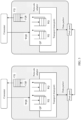
- an MTT a corresponding to the network adapter a, an MTT b corresponding to the network adapter b, and an MTT c corresponding to the network adapter c are generated.
- an MTT is independently created for each of the plurality of network adapters.
- a quantity of MTTs corresponding to MR x is in proportional to a quantity of corresponding network adapters.
- the MTT includes a plurality of translation entries.
- Each translation entry may record a physical address corresponding to a virtual address, and need to occupy 8-byte space.
- a 4 KB MTT is consumed each time an MR of 2 MB bytes is registered. Therefore, in the solution shown in FIG. 6 , the memory of the controller has large storage resource overheads.
- a process of registering and deregistering an MR is time-consuming, and time required is in proportional to a quantity of network adapters. Specifically, it takes a long processing time to separately register the MR for each network adapter. In addition, when the MR is deregistered from a network adapter, releasing a corresponding MTT also takes time. Generally, a process of registering and deregistering one MR takes more than dozens of microseconds, and time required increases as a size of an MR space grows. Therefore, the solution shown in FIG. 6 is not friendly to dynamic memory management.
- An embodiment of this application provides a computer device and a memory registration solution.
- one MR is registered with a plurality of network adapters
- only one MTT may be created, to record a correspondence between a virtual address and a physical address of the MR.
- the MR is a shared MR of the plurality of network adapters. Different network adapters in the plurality of network adapters may access the shared MR by using the MTT. Therefore, there is no need to separately create an MTT for each network adapter to enable the different network adapters to access the shared MR. This reduces memory overheads.
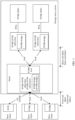
- FIG. 7 shows a storage system.
- the storage system may include a controller 100 and a host client 200.
- the controller 100 may include a processor 110, a memory 120, a network adapter 130a, and a network adapter 130a.
- each of the network adapter 130a, the network adapter 130b, and the memory 120 may be connected to the processor 110 to exchange information.
- the network adapter 130a and the network adapter 130b each may be connected to the processor 110 through a PCIe interface
- the memory 120 may be connected to the processor 110 through a DDR interface.
- the processor 110 may register one or more memory spaces in the memory 120 with the network adapter 130a and the network adapter 130b in a form of an MR, serving as a shared MR 121 of the network adapter 130a and the network adapter 130b.
- the host client 200 may include a processor 210 and a network adapter 220.
- the controller 100 may establish a link to one or more host clients including the host client 200, to provide a storage service for the one or more host clients.
- the host client 200 may include a processor 210 and a network adapter 220.
- the host client 200 may initiate a read/write operation under control of the processor 210.
- the controller 100 may perform related processing in response to the read/write operation. Specifically, when the host client 200 initiates a read operation (for example, an IO read operation), the host client 200 may send a read request for the shared MR 121 to the controller 100 through the network adapter 220.
- the controller 100 may send, in response to the read request, data stored in the shared MR 121 to the host client 200 through the network adapter 130a and/or the network adapter 130b.
- the controller 100 may receive data from the host client 200 through the network adapter 130a and/or the network adapter 130b, and write the data into the shared MR 121.
- the controller 100 is used as a head of a storage array system, and may be used as a target (target, TGT) in a NoF protocol.
- the controller 100 may implement a function of the TGT in the NoF protocol.
- the processor 110 may perform a TGT function defined in the NoF protocol, so that the controller 100 can implement the TGT function in the NoF protocol.
- the host client 200 may be used as an initiator (initiator, INI) in the NoF protocol to exchange information with the controller 100.
- the processor 210 may execute an INI function defined in the NoF protocol, so that the host client can implement the function in the NoF protocol.
- the network adapter 130a, the network adapter 130b, and the network adapter 220 may be referred to as network adapter for short when they are not specially distinguished.
- the processor 110 and the processor 210 may be referred to as processor for short when they are not specially distinguished.
- the network adapter may be an RNIC network adapter.
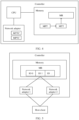
- FIG. 8 shows software modules possibly related in this embodiment of this application.
- the processor 110 may include an upper layer protocol (upper layer protocol, ULP) module, a registration interface module, and a network adapter driver module.
- ULP upper layer protocol
- the upper layer protocol module may execute or implement a function defined or specified by an upper layer protocol.
- the upper layer protocol is relative to a lower layer protocol.
- a lower layer protocol For example, in seven layers in a network, namely, an application layer, a presentation layer, a session layer, a transport layer, a network layer, a data link layer, and a physical layer from top to bottom, the application layer, presentation layer, session layer, or the like is an upper layer protocol.
- the upper layer protocol module may be a protocol stack of a target in the NoF protocol.
- the registration interface module has an MR registration function. Specifically, the registration interface module may be invoked by the upper layer protocol module to register the one or more memory spaces in the memory 120 as an MR of the one or more network adapters. After the memory space is registered as the MR of the network adapter, the memory space may be referred to as a memory region.
- the upper layer protocol module may specify a memory space and a network adapter, so that the registration interface module performs an MR registration function.
- the registration interface module may be an OpenFabrics enterprise distribution (openfabrics enterprise distribution, OFED) interface.
- the network adapter driver module has a network adapter management function, and is configured to manage a network adapter of the controller 100, for example, the network adapter 130a and the network adapter 130b.
- the network adapter driver module may manage an MTT and an MPT of the network adapter, for example, may create and update an MTT, create an MPT, and update an MPT.
- the upper layer protocol module, the registration interface module, or the network adapter driver module may be a software module or a virtual function module, and a function of the software module or the virtual function module may be implemented by the processor 110 by executing a computer instruction.
- the upper layer protocol module, the registration interface module, or the network adapter driver module may be an entity functional module. An implementation form or a product form of the upper layer protocol module, the registration interface module, or the network adapter driver module is not specifically limited in this embodiment of this application.
- a process of registering a shared memory is described with an example of registration of a shared memory of the network adapter 130a and the network adapter 130b with reference to the accompanying drawings.
- a storage space of the memory 130 may be divided into one or more memory spaces, and the one or more memory spaces may include a memory space 121.
- the controller 100 may first register the memory space 121 as an MR of the network adapter 130a.
- the ULP module may invoke the registration interface module and the network adapter driver module to register the memory space 121 as the MR of the network adapter 130a.
- the memory space 121 may also be referred to as a memory region 121.
- the controller 100 may create an MTT 1211.
- the MTT 1211 records a correspondence between a virtual address and a physical address of the memory space 121.
- the controller 100 may query whether an MTT corresponding to the memory space 121 already exists, or in other words, the memory space 121 has been registered as an MR. For example, the memory 120 may be queried for an MTT including the physical address and/or virtual address of the memory space 121. If the MTT including the physical address and/or virtual address of the memory space 121 already exists, it may be determined that the MTT corresponding to the memory space 121 already exists.
- the MTT including the physical address and/or virtual address of the memory space 121 may be determined that the MTT corresponding to the memory space 121 has not been created. As described above, it is assumed that before the memory space is registered as the MR of the network adapter 130a, the memory space has not been registered as an MR. In other words, the MTT corresponding to the memory space 121 has not been created. In this case, the MTT corresponding to the memory space 121, namely, the MTT 1211, may be created.
- the operation of creating the MTT 1211 may be specifically performed by the network adapter driver module.
- the controller 100 may further generate an MKEY used to identify the memory space 121.
- the controller 100 may select an MKEY A1 from MKEY resources of the network adapter 130a, to identify the memory space 121.
- the MKEY A1 in the MKEY resources of the network adapter 130a is used as the MKEY used to identify the memory space 121.
- the MKEYA1 used to identify the memory space 121 is generated.
- the MKEY used to identify a memory space may be referred to as an MKEY of the memory space for short.
- the MKEY used as the MKEY used to identify a memory space may be referred to as a used MKEY
- the MKEYA1 is an MKEY of the memory space 121.
- the MKEY A1 is a used MKEY
- the MKEY resources of the network adapter may be understood as a resource pool, and may include a plurality of MKEYs that can be used to identify a memory space but have not been used to identify a memory space.
- an MKEY that can be used to identify a memory space but has not been used to identify a memory space may be referred to as an unused MKEY for short.
- an MKEY used to identify a memory space for example, the memory space 121
- one MKEY may be selected from the plurality of unused MKEYs as the MKEY of the memory space.
- the MKEYA1 is used as the MKEY of the memory space 121.
- both the network adapter 130a and the network adapter 130b have MKEY resources.
- the MKEY resources of the network adapter 130a may be classified into a shared resource and an exclusive resource
- the MKEY resources of the network adapter 130b may be classified into a shared resource and an exclusive resource.
- the exclusive resource of the network adapter 130a and the exclusive resource of the network adapter 130b are independent of each other and do not affect each other.
- the shared resource of the network adapter 130a is the same as the shared resource of the network adapter 130b.
- the shared resource is an MKEY resource shared by the network adapter 130a and the network adapter 130b, and may be jointly managed.
- the MKEY in the shared resource of the network adapter 130b is also used as an MKEY of the memory space and is no longer used as an MKEY of another memory space.
- the MKEY in the shared resource may also be referred to as a shared identifier.
- the shared identifier may be used to identify or represent an MR registered with different network adapters.
- an MKEY in the exclusive resource may also be referred to as an exclusive identifier or an independent identifier, and may represent an MR that is registered only with a corresponding network adapter.
- the MKEY resources of the network adapter 130a include 100 integers between 1 and 100, where each integer may be one MKEY; and the MKEY resources of the network adapter 130b include 100 integers between 1 and 100, where each integer is one MKEY
- the MKEY resources of the network adapter 130a 20 integers between 1 and 20 may be used as shared resources of the network adapter 130a, and 80 integers between 21 and 100 may be used as exclusive resources of the network adapter 130a.
- 20 integers between 1 and 20 may be used as shared resources of the network adapter 130b, and 80 integers between 21 and 100 may be used as exclusive resources of the network adapter 130a.
- the MKEY resources of the network adapter 130a When an integer between 1 and 20 in the MKEY resources of the network adapter 130a, for example, 15, is used as an MKEY of a memory space, 15 in the MKEY resources of the network adapter 130b is also used as the MKEY of the memory space.
- the exclusive resources of the network adapter 130a and the exclusive resources of the network adapter 130b are independent of each other. For example, a value 30 in the exclusive resources of the network adapter 130a may be used as an MKEY of a memory space, and a value 30 in the exclusive resources of the network adapter 130b may be used as an MKEY of another memory space.
- the MKEY A1 is selected from the shared resources of the network adapter 130a. Therefore, for the network adapter 130a and the network adapter 130a, the MKEY of the memory space 121 is the MKEYA1.
- the operation of generating the MKEY used to identify the memory space 121 may be specifically performed by the network adapter driver module.
- an entry 12111 may be added to an MPT (that is, the MPT 131a) of the network adapter 130a, and access permission (for example, read-only permission or read/write permission) of the network adapter 130a for the memory space 121, the MKEY (namely, the MKEY A1) of the memory space 121, and a memory address of the MTT 1211 are recorded in the entry 12111.
- access permission for example, read-only permission or read/write permission
- the network adapter 130a may determine, by searching the entry 12111, the access permission of the network adapter 130a for the memory region (namely, the memory space 121) identified by the MKEY A1.
- the network adapter 130a may read the MTT 1211 based on the memory address of the MTT 1211 recorded in the entry 12111, to obtain the physical address of the memory space 121, and then may further obtain the memory space 121 based on the physical address.
- access permission for example, read-only permission or read/write permission
- a prototype of a registration interface of a shared MR used to register the memory space 121 with the network adapter 130a may be struct mr* smr_reg (struct pd*, va, length, access), where pd represents a pointer of a protection domain data structure, and each network adapter device corresponds to one or more protection domain data structures; va represents a start virtual address of the shared MR; length represents a length of the shared MR; and access represents access permission for the shared MR, for example, read-only permission or read/write permission.
- a return value is a pointer that points to a data structure that describes the shared MR.
- the controller 100 may further register the memory space 121 with the network adapter 130b, so that the memory space 121 becomes a shared MR of the network adapter 130a and the network adapter 130b.
- the ULP module may invoke an OFED interface module to fork (fork) the memory space 121 from another network adapter, for example, the network adapter 130b, other than the network adapter 130a, so that the memory space 121 becomes a shared MR of the network adapter 130a and the another network adapter.
- a prototype of a fork interface of a shared MR used to fork the memory space 121 is struct mr* smr_fork (struct pd*, struct *smr), where pd herein has the same meaning as pd in the registration interface, smr herein has the same meaning as a return value in the registration interface, and a return value herein has the same meaning as a return value in the registration interface.
- the controller 100 may query whether an MTT corresponding to the memory space 121 already exists, or in other words, the memory space 121 has been registered as an MR.
- the MTT 1211 has been created, the MTT corresponding to the memory space 121, namely, the MTT 1211 may be found.
- the controller 100 may no longer create an MTT corresponding to the memory space 121, but directly use the MTT 1211 to perform registration or continue a registration process.
- the controller 100 may add an entry 12112 to an MPT (namely, an MPT 131b) of the network adapter 130b, and record access permission (for example, read-only permission or read/write permission) of the network adapter 130b for the memory space 121, the MKEY (namely, the MKEYA1) of the memory space 121, and the memory address of the MTT 1211 in the entry 12112.
- MPT namely, an MPT 131b
- MKEY namely, the MKEYA1
- the network adapter 130b may determine, by searching the entry 12112, the access permission of the network adapter 130b for the memory region (namely, the memory space 121) identified by the MKEYA1.
- the network adapter 130b may read the MTT 1211 based on the memory address of the MTT 1211 recorded in the entry 12112, to obtain the physical address of the memory space 121, and then may further obtain the memory space 121 based on the physical address.
- the host client 200 may send an access request to the controller 100.
- the controller 100 may obtain the virtual address of the memory space 121 and the MKEY of the memory space 121 based on the access request.
- the controller 100 may receive the access request through the network adapter 130a or the network adapter 130b.
- the network adapter 130a or the network adapter 130b may determine, from the MPT of the network adapter 130a or the MPT of the network adapter 130b based on the MKEY of the memory space 121, a memory address of the MTT corresponding to the memory space 121 (namely, the memory address of the MTT 1211).
- the network adapter 130a or the network adapter 130b may access the MTT 1211 based on the memory address, and determine the physical address of the memory space 121 based on the virtual address of the memory space 121. In this way, the network adapter 130a or the network adapter 130b can access the memory space 121 based on the physical address.
- the memory space 121 can be registered with the network adapter 130a and the network adapter 130b, so that the memory space 121 becomes the shared MR of the network adapter 130a and the network adapter 130b. This saves storage resources.
- the foregoing describes the solution of registering a shared MR of a plurality of network adapters by using the example of registration of the shared MR of the network adapter 130a and the network adapter 130b.
- registration may be performed with reference to the foregoing solution.
- MKEY resources of each of the three or more network adapters may be classified into a shared resource and an independent resource, where a shared resource of different network adapters is shared by the different network adapters, and an MKEY may be selected from the shared resource to identify a shared MR.
- MKEY resources of each of the three or more network adapters may be classified into a shared resource and an independent resource, where a shared resource of different network adapters is shared by the different network adapters, and an MKEY may be selected from the shared resource to identify a shared MR.
- This embodiment of this application may further implement fast deregistration of a shared MR.
- the following describes the fast deregistration solution of a shared MR.
- the controller 100 may further create a counter (counter, CNT) 1212.
- An initial value of a count of the counter 1212 is 0.
- the count of the counter 1212 may be incremented by 1.
- the controller 100 records the memory address of the MR 121 or the memory space 121 in the MPT 131b
- the count of the counter 1212 may be incremented by 1 again.
- the count of the counter 1212 records a quantity of network adapters corresponding to the memory space 121.
- the controller 100 may enable the network adapter to deregister the MR. That the network adapter deregisters the MR specifically refers to that the MR is no longer associated with the network adapter, or in other words, after the MR is deregistered, the MR is no longer an MR of the network adapter.
- the ULR module may invoke a registration module interface and the network adapter driver module, to enable the network adapter to deregister the MR.
- the controller 100 may enable the network adapter 130a to deregister the shared MR 121. Specifically, the controller 100 may delete the entry 12111 from the MPT 131a, that is, delete the memory address of the MR 121, the MKEY of the MR 121, and the like from the MPT 131a, so that the shared MR 121 is no longer associated with the network adapter 130a. When or after the entry 12111 is deleted from the MPT 13 1a, the controller 100 may decrement the count of the counter 1212 by 1. The controller 100 may enable the network adapter 130b to deregister the shared MR 121.
- the controller 100 may delete the entry 12112 from the MPT 131b, that is, delete the memory address of the MR 121, the MKEY of the MR 121, and the like from the MPT 131a, so that the shared MR 121 is no longer associated with the network adapter 130b.
- the controller 100 may decrement the count of the counter 1212 by 1 again. In this way, the count of the counter 1212 returns to the initial value, that is, 0.
- the controller 100 may delete the MTT 1211 to release a memory space occupied by the MTT 1211.
- a prototype of a deregistration interface of a shared MR used by the network adapter to deregister the shared MR may be int smr dereg (struct pd*, mkey), where a meaning of pd is the same as that of pd in the registration interface, and mkey represents an index of an MPT entry.
- the controller 100 may enable the network adapter 130b to deregister the shared MR 121. Specifically, the controller 100 may delete the entry 12112 from the MPT 131b, so that the shared MR 121 is no longer associated with the network adapter 130b. When or after the entry 12112 is deleted from the MPT 131b, the controller 100 may decrement the count of the counter 1212 by 1. The controller 100 may enable the network adapter 130a to deregister the shared MR 121. Specifically, the controller 100 may delete the entry 12111 from the MPT 131a, so that the shared MR 121 is no longer associated with the network adapter 130a.
- the controller 100 may decrement the count of the counter 1212 by 1 again. In this way, the count of the counter 1212 returns to the initial value, that is, 0.
- the controller 100 may delete the MTT 1211 to release a memory space occupied by the MTT 1211.
- the controller 100 may release an MKEY resource occupied by the memory space 121, that is, restore the MKEY A1 to an unused MKEY
- the shared MR can be deregistered, so that the memory space occupied by the MTT can be released as soon as possible, thereby reducing storage resource overheads.
- both the network adapter 130a and the network adapter 130b are connected to the processor 110 (for example, through the PCIe interface), the memory 120 is also connected to a CPU, and a shared MR is allocated to the two network adapters for use.
- a shared MTT in the memory, and the shared MTT is used to translate virtual addresses sent by the network adapter 130a and the network adapter 130b into physical addresses, so as to implement read/write access to the shared MR.
- a reference counter MTT_CNT (namely, the counter 1212) is further set in the memory with an initial value of 0, and is created and managed by the network adapter driver module.
- a count of the counter is incremented by 1.
- the count of the counter is decremented by 1. Once the counter is decremented to 0, it indicates that no network adapter device needs to use the shared MR, and a memory space occupied by the MTT and a memory space occupied by the MTT_CNT counter are released.
- the network adapter driver module may classify MPT resources into two parts, that is, a shared part and an exclusive part based on a requirement specification of the ULP module, where the MPT resources have been reserved before registration is performed.
- the shared part is used to register the shared MR (that is, used to record an MKEY, an MTT address, access permission, and the like of the shared MR), and the exclusive part is used to register a non-shared MR (that is, used to record an MKEY, an MTT address, access permission, and the like of the non-shared MR).
- the MKEY of the MR may be used as an index of an MPT entry.
- a procedure of registering a shared MR of a plurality of network adapters may be as follows:
- the ULP module invokes the deregistration interface to deregister the shared MR from a network adapter. Then, the network adapter driver module releases a corresponding MPT entry, and decrements the MTT counter by 1. When the MTT counter is decremented to 0, the MTT entry is released. This step is performed once for each network adapter that needs to deregister the shared MR.
- N network adapters may use only one MTT table. Compared with the solution shown in FIG. 6 , (N-1) memory spaces are saved. N is an integer greater than 1.
- the solution shown in FIG. 9 and FIG. 10 reduce time spent on MR registration/deregistration. Specifically, when a shared MR is registered/deregistered, the MTT table needs to be applied for, initialized, and released only once. Compared with the solution shown in FIG. 6 , (N-1) MTT table operations are saved, where N is a quantity of RNIC network adapters.
- An embodiment of this application provides another memory registration solution.
- the solution may be applied to the system shown in FIG. 7 .
- the solution may be specifically executed by the controller 100.
- a virtual network adapter device namely, a virtual PCIe device in the foregoing figure, is virtualized in the system (which is a conventional technology, similar to creating a virtual device by using QEMU software), and the virtual network adapter device is never faulty.
- a virtual network adapter 122 may be created, and the virtual network adapter is never faulty.
- the virtual network adapter may be a virtual PCIe device.
- a virtual network adapter may be created by using a virtual operating system emulator (Quick EMUlator, QEMU).
- QEMU virtual operating system emulator
- the network adapter 130a and the network adapter 130b are physical network adapters.
- the virtual network adapter has preset MKEY resources, which include at least one unused MKEY
- the controller 100 may first register the memory space 121 as an MR of the virtual network adapter.
- an MTT 1211 may be created.
- the MTT 1211 is configured to record a correspondence between a virtual address and a physical address of the memory space 121.
- an MKEY may be selected from at least one unused MKEY included in the MKEY resources of the virtual network adapter, and is used as an MKEY of the memory space 121, namely, an MKEY A1.
- the controller 100 may fork the MKEY A1 and the MTT 1211 to physical network adapters such as the network adapter 130a and the network adapter 130b, to register the memory space 121 as a shared MR of the network adapter 130a and the network adapter 130b. Specifically, the controller 100 may add an entry 12111 to an MPT (namely, an MPT 131a) of the network adapter 130a, and record access permission (for example, read-only permission or read/write permission) of the network adapter 130a for the memory space 121, the MKEY (namely, the MKEYA1) of the memory space 121, and a memory address of the MTT 1211 in the entry 12111. In this way, the memory space 121 is registered with the network adapter 130a.
- MPT namely, an MPT 131a
- record access permission for example, read-only permission or read/write permission
- the controller 100 may add an entry 12112 to an MPT (namely, an MPT 131b) of the network adapter 130b, and record access permission (for example, read-only permission or read/write permission) of the network adapter 130b for the memory space 121, the MKEY (namely, the MKEY A1) of the memory space 121, and the memory address of the MTT 1211 in the entry 12112.
- MPT namely, an MPT 131b
- record access permission for example, read-only permission or read/write permission
- the shared MR of the physical network adapters is first deregistered, that is, the shared MR is deregistered from the network adapter 130a and the network adapter 130b. Then, the MKEY resources and a memory space occupied by the MTT are released based on the virtual network adapter 122.
- the MKEY resources and a memory space occupied by the MTT are released based on the virtual network adapter 122.
- the network adapter driver module may classify MPT resources of the network adapter into two parts, that is, a shared part and an exclusive part based on a requirement specification of the ULP module.
- the shared part is used to register the shared MR (that is, used to record an MKEY, an MTT address, access permission, and the like of the shared MR), and the exclusive part is used to register a non-shared MR, that is, used to record an MKEY, an MTT address, access permission, and the like of the non-shared MR).
- a procedure of registering a shared MR of a plurality of network adapters may be as follows:
- the memory space 121 can be registered with the network adapter 130a and the network adapter 130b, so that the memory space 121 becomes the shared MR of the network adapter 130a and the network adapter 130b. This saves storage resources.
- a computer device provided in an embodiment of this application is described below based on the memory registration solution described above. It may be understood that a function of the computer device is another expression of the memory registration solution described above, and the two are combined. Functions of the computer device are proposed based on the foregoing described data processing solution. For some or all of the functions of the computer device, refer to the foregoing descriptions of the memory registration solution.
- An embodiment of this application provides a computer device, including a processor, a memory connected to the processor, where the memory includes a first memory region, and a plurality of network adapters connected to the processor.
- the processor is configured to: when registering the first memory region with the plurality of network adapters, record a first memory address in a first memory address translation table MTT into a memory protection table MPT of each network adapter in the plurality of network adapters, so that each of the network adapters is capable of accessing the first memory region by using the first memory address translation table.
- the first memory address translation table is used to indicate a correspondence between a virtual address of the first memory region and a physical address of the first memory region.
- the computer device may be the controller 100 described above.
- the processor in the computer device may be the processor 110.
- the memory in the computer device may be the memory 120.
- the first network adapter may be the network adapter 130a.
- the second network adapter may be the network adapter 130b.
- the plurality of network adapters include a first network adapter and a second network adapter.
- the processor is configured to: when registering the first memory region with the first network adapter, record the first memory address into a memory protection table of the first network adapter.
- the processor is configured to: when registering the first memory region with the second network adapter, record the first memory address into a memory protection table of the second network adapter.
- the plurality of network adapters include a first network adapter.
- the processor is configured to register the first memory region with the first network adapter, and then register the first memory region with a network adapter other than the first network adapter in the plurality of network adapters.
- the processor is configured to create the first memory address translation table when registering the first memory region with the first network adapter.
- the processor is configured to record the first memory address and a first identifier of the first memory region into the memory protection table of each network adapter in the plurality of network adapters, so that each of the network adapters is capable of reading the first memory address translation table by using the first identifier.
- different network adapters in the plurality of network adapters share a first resource
- the first resource includes at least one shared identifier
- the shared identifier is used to represent a memory region registered with the plurality of network adapters
- the first identifier is determined from the first resource
- a second resource is further configured for a first network adapter in the plurality of network adapters, the second resource includes at least one independent identifier, and the independent identifier is used to represent a memory region registered with only the first network adapter.
- the processor is configured to increment a count of a preset counter by 1 each time the first memory address is recorded into a memory protection table of one network adapter in the plurality of network adapters.
- the processor is further configured to decrement the count of the counter by 1 each time the first memory address is deleted from a memory protection table of one network adapter in the plurality of network adapters.
- the processor is configured to delete the first memory address translation table when the count of the counter returns to 0.
- the plurality of network adapters are physical network adapters; the processor is further configured to run a virtual network adapter; and the processor is configured to: before registering the first memory region with the plurality of network adapters, create the first memory address translation table based on the virtual network adapter.
- the processor is further configured to delete the first memory address translation table when the first memory address has been deleted from memory protection tables of all the plurality of network adapters.
- a shared MR of a plurality of network adapters can be registered with only one MTT created. This reduces storage resource overheads.
- a memory registration method provided in an embodiment of this application is described below based on the memory registration solution described above. It may be understood that the method is another expression of the memory registration solution described above, and the two are combined. The method is proposed based on the foregoing described memory registration solution. For a part or all of the method, refer to the foregoing descriptions of the memory registration solution.
- the memory registration method may be applied to a computer device.
- the computer device includes a processor; a memory connected to the processor, where the memory includes a first memory region; and a plurality of network adapters connected to the processor.
- the method includes the following steps: recording, by the processor when registering the first memory region with the plurality of network adapters, a first memory address in a first memory address translation table MTT into a memory protection table MPT of each network adapter in the plurality of network adapters, so that each of the network adapters is capable of accessing the first memory region by using the first memory address translation table.
- the first memory address translation table is used to indicate a correspondence between a virtual address of the first memory region and a physical address of the first memory region.
- the plurality of network adapters include a first network adapter and a second network adapter; and the recording, by the processor, a first memory address in a first memory address translation table MTT into a memory protection table MPT of each network adapter in the plurality of network adapters includes: when registering the first memory region with the first network adapter, recording the first memory address into a memory protection table of the first network adapter; and when registering the first memory region with the second network adapter, recording the first memory address into a memory protection table of the second network adapter.
- the plurality of network adapters include a first network adapter; and the registering, by the processor, the first memory region with the plurality of network adapters includes: registering, by the processor, the first memory region with the first network adapter, and then registering the first memory region with a network adapter other than the first network adapter in the plurality of network adapters.
- the processor creates the first memory address translation table when registering the first memory region with the first network adapter.
- the method further includes: recording, by the processor, the first memory address and a first identifier of the first memory region into the memory protection table of each network adapter in the plurality of network adapters, so that each of the network adapters is capable of reading the first memory address translation table by using the first identifier.
- different network adapters in the plurality of network adapters share a first resource
- the first resource includes at least one shared identifier
- the shared identifier is used to represent a memory region registered with the plurality of network adapters
- the first identifier is determined from the first resource
- a second resource is further configured for a first network adapter in the plurality of network adapters, the second resource includes at least one independent identifier, and the independent identifier is used to represent a memory region registered with only the first network adapter.
- the method further includes: incrementing, by the processor, a count of a preset counter by 1 each time the first memory address is recorded into a memory protection table of one network adapter in the plurality of network adapters; decrementing, by the processor, the count of the counter by 1 each time the first memory address is deleted from a memory protection table of one network adapter in the plurality of network adapters; and deleting, by the processor, the first memory address translation table when the count of the counter returns to 0.
- the plurality of network adapters are physical network adapters; the processor is further configured to run a virtual network adapter; and the method further includes: creating, by the processor before registering the first memory region with the plurality of network adapters, the first memory address translation table based on the virtual network adapter.
- the method further includes: deleting, by the processor, the first memory address translation table when the first memory address has been deleted from memory protection tables of all the plurality of network adapters.
- a shared MR of a plurality of network adapters can be registered with only one MTT created. This reduces storage resource overheads.
- An embodiment of this application provides a computer storage medium.
- the computer storage medium stores a computer program.
- the computer program is executed by a processor, a function of a controller 100 in the foregoing embodiments may be implemented.
- An embodiment of this application provides a computer program product.
- the computer program product runs on one or more processors, a function of a controller 100 in the foregoing embodiments may be implemented.
- An embodiment of this application provides a processor, configured to perform the foregoing memory registration method.
- the processor in embodiments of this application may be a central processing unit (central processing unit, CPU), or may be another general-purpose processor, a digital signal processor (digital signal processor, DSP), an application-specific integrated circuit (application-specific integrated circuit, ASIC), a field programmable gate array (field programmable gate array, FPGA) or another programmable logic device, a transistor logic device, a hardware component, or any combination thereof.
- the general-purpose processor may be a microprocessor or any conventional processor.
- the method steps in embodiments of this application may be implemented by hardware, or may be implemented by a processor executing software instructions.
- the software instructions may include a corresponding software module.
- the software module may be stored in a random access memory (random access memory, RAM), a flash memory, a read-only memory (read-only memory, ROM), a programmable read-only memory (programmable ROM, PROM), an erasable programmable read-only memory (erasable PROM, EPROM), an electrically erasable programmable read-only memory (electrically EPROM, EEPROM), a register, a hard disk, a removable hard disk, a CD-ROM, or any other form of storage medium well-known in the art.
- a storage medium is coupled to a processor, so that the processor can read information from the storage medium and write information into the storage medium.
- the storage medium may be a component of the processor.
- the processor and the storage medium may be located in an ASIC.
- All or some of the foregoing embodiments may be implemented by software, hardware, firmware, or any combination thereof.
- embodiments When embodiments are implemented by software, all or some of the embodiments may be implemented in a form of a computer program product.
- the computer program product includes one or more computer instructions. When the computer program instructions are loaded and executed on the computer, the procedures or functions according to the embodiments of this application are all or partially generated.
- the computer may be a general-purpose computer, a special-purpose computer, a computer network, or another programmable apparatus.
- the computer instructions may be stored in a computer-readable storage medium, or may be transmitted through the computer-readable storage medium.
- the computer instructions may be transmitted from a website, computer, server, or data center to another website, computer, server, or data center in a wired (for example, a coaxial cable, an optical fiber, or a digital subscriber line (DSL)) or wireless (for example, infrared, radio, or microwave) manner.
- the computer-readable storage medium may be any usable medium accessible by the computer, or a data storage device, such as a server or a data center, integrating one or more usable media.
- the usable medium may be a magnetic medium (for example, a floppy disk, a hard disk, or a magnetic tape), an optical medium (for example, a DVD), a semiconductor medium (for example, a solid state drive (solid state disk, SSD)), or the like.
Landscapes
- Engineering & Computer Science (AREA)
- Theoretical Computer Science (AREA)
- Physics & Mathematics (AREA)
- General Engineering & Computer Science (AREA)
- General Physics & Mathematics (AREA)
- Human Computer Interaction (AREA)
- Computer Security & Cryptography (AREA)
- Storage Device Security (AREA)
Applications Claiming Priority (2)
| Application Number | Priority Date | Filing Date | Title |
|---|---|---|---|
| CN202110496244.3A CN115309665A (zh) | 2021-05-07 | 2021-05-07 | 计算机设备及内存注册方法 |
| PCT/CN2022/077441 WO2022233174A1 (zh) | 2021-05-07 | 2022-02-23 | 计算机设备及内存注册方法 |
Publications (2)
| Publication Number | Publication Date |
|---|---|
| EP4322013A1 true EP4322013A1 (de) | 2024-02-14 |
| EP4322013A4 EP4322013A4 (de) | 2024-10-09 |
Family
ID=83853449
Family Applications (1)
| Application Number | Title | Priority Date | Filing Date |
|---|---|---|---|
| EP22798516.5A Pending EP4322013A4 (de) | 2021-05-07 | 2022-02-23 | Computervorrichtung und speicherregistrierungsverfahren |
Country Status (4)
| Country | Link |
|---|---|
| US (1) | US20240070087A1 (de) |
| EP (1) | EP4322013A4 (de) |
| CN (1) | CN115309665A (de) |
| WO (1) | WO2022233174A1 (de) |
Families Citing this family (3)
| Publication number | Priority date | Publication date | Assignee | Title |
|---|---|---|---|---|
| CN118349972A (zh) * | 2023-01-16 | 2024-07-16 | 华为技术有限公司 | 内存管理方法和装置 |
| CN117873920B (zh) * | 2023-12-18 | 2025-01-10 | 中科驭数(北京)科技有限公司 | 一种rdma的内存翻译表应用方法及系统 |
| CN118093468B (zh) * | 2024-04-23 | 2024-07-02 | 北京数渡信息科技有限公司 | 具有RDMA加速功能的PCIe交换芯片及PCIe交换机 |
Family Cites Families (9)
| Publication number | Priority date | Publication date | Assignee | Title |
|---|---|---|---|---|
| US7350028B2 (en) * | 1999-05-21 | 2008-03-25 | Intel Corporation | Use of a translation cacheable flag for physical address translation and memory protection in a host |
| US6947970B2 (en) * | 2000-12-19 | 2005-09-20 | Intel Corporation | Method and apparatus for multilevel translation and protection table |
| US6748499B2 (en) * | 2001-11-15 | 2004-06-08 | International Business Machines Corporation | Sharing memory tables between host channel adapters |
| US20060004941A1 (en) * | 2004-06-30 | 2006-01-05 | Shah Hemal V | Method, system, and program for accessesing a virtualized data structure table in cache |
| CN100414519C (zh) * | 2004-11-24 | 2008-08-27 | 中国科学院计算技术研究所 | 一种从虚拟地址向物理地址变换的方法及其装置 |
| US7464191B2 (en) * | 2005-02-25 | 2008-12-09 | International Business Machines Corporation | System and method for host initialization for an adapter that supports virtualization |
| US8645663B2 (en) * | 2011-09-12 | 2014-02-04 | Mellanox Technologies Ltd. | Network interface controller with flexible memory handling |
| CN103488588A (zh) * | 2013-10-09 | 2014-01-01 | 中国科学院计算技术研究所 | 一种内存保护方法、系统及网络接口控制器 |
| CN111221758B (zh) * | 2019-09-30 | 2023-06-27 | 华为技术有限公司 | 处理远程直接内存访问请求的方法和计算机设备 |
-
2021
- 2021-05-07 CN CN202110496244.3A patent/CN115309665A/zh active Pending
-
2022
- 2022-02-23 EP EP22798516.5A patent/EP4322013A4/de active Pending
- 2022-02-23 WO PCT/CN2022/077441 patent/WO2022233174A1/zh not_active Ceased
-
2023
- 2023-11-06 US US18/502,234 patent/US20240070087A1/en active Pending
Also Published As
| Publication number | Publication date |
|---|---|
| CN115309665A (zh) | 2022-11-08 |
| EP4322013A4 (de) | 2024-10-09 |
| US20240070087A1 (en) | 2024-02-29 |
| WO2022233174A1 (zh) | 2022-11-10 |
Similar Documents
| Publication | Publication Date | Title |
|---|---|---|
| US20240070087A1 (en) | Computer device and memory registration method | |
| TWI732110B (zh) | 對非揮發性快閃記憶體進行低延遲直接資料存取的系統及方法 | |
| US11755513B2 (en) | Data processing and writing method based on virtual machine memory identification field and devise | |
| US20230153264A1 (en) | Data transmission method, chip, and device | |
| US20230267022A1 (en) | Network interface card, storage apparatus, and packet receiving method and sending method | |
| US20240354267A1 (en) | Data Storage Method and System, Storage Access Configuration Method, and Related Device | |
| US11341061B2 (en) | Address translation method, apparatus, and system | |
| EP3441884B1 (de) | Verfahren zur verwaltung eines übersetzungspuffers und mehrkernprozessor | |
| US12535949B2 (en) | Method and apparatus for processing access request, storage apparatus, and storage medium | |
| US12321635B2 (en) | Method for accessing solid state disk and storage device | |
| US12519745B2 (en) | Network node configuration method and apparatus, and access request processing method and apparatus | |
| US12493599B2 (en) | Data processing method, server, and system | |
| CN110018879B (zh) | 应用于分布式系统的延迟加载方法及装置 | |
| WO2026031990A1 (zh) | 数据恢复方法、装置、设备、计算机非易失性可读存储介质及计算机程序产品 | |
| WO2025118533A1 (zh) | 一种数据传输的方法和计算设备 | |
| CN118860913A (zh) | 一种gpu访问分布式存储的方法、装置及计算机设备 | |
| WO2022262623A1 (zh) | 一种数据交换方法及装置 | |
| WO2024152588A1 (zh) | 内存访问的页错误处理方法及装置 | |
| EP3913488B1 (de) | Datenverarbeitungsverfahren und -vorrichtung | |
| WO2023060891A1 (zh) | 数据处理方法、装置、系统、设备、存储介质及程序产品 | |
| CN119960912A (zh) | 内存访问的方法、装置、服务器、存储介质及计算机程序产品 | |
| US20230244417A1 (en) | Storage node, storage device, and network chip | |
| US10430220B1 (en) | Virtual devices as protocol neutral communications mediators | |
| US20260093549A1 (en) | Host memory resource processing method and apparatus for data processing unit virtualization scenario, electronic device, and storage medium | |
| WO2025195208A1 (zh) | 一种访问方法、相关设备以及存储介质 |
Legal Events
| Date | Code | Title | Description |
|---|---|---|---|
| STAA | Information on the status of an ep patent application or granted ep patent |
Free format text: STATUS: THE INTERNATIONAL PUBLICATION HAS BEEN MADE |
|
| PUAI | Public reference made under article 153(3) epc to a published international application that has entered the european phase |
Free format text: ORIGINAL CODE: 0009012 |
|
| STAA | Information on the status of an ep patent application or granted ep patent |
Free format text: STATUS: REQUEST FOR EXAMINATION WAS MADE |
|
| 17P | Request for examination filed |
Effective date: 20231109 |
|
| AK | Designated contracting states |
Kind code of ref document: A1 Designated state(s): AL AT BE BG CH CY CZ DE DK EE ES FI FR GB GR HR HU IE IS IT LI LT LU LV MC MK MT NL NO PL PT RO RS SE SI SK SM TR |
|
| DAV | Request for validation of the european patent (deleted) | ||
| DAX | Request for extension of the european patent (deleted) | ||
| REG | Reference to a national code |
Ref country code: DE Ref legal event code: R079 Free format text: PREVIOUS MAIN CLASS: G06F0013280000 Ipc: G06F0003060000 |
|
| A4 | Supplementary search report drawn up and despatched |
Effective date: 20240910 |
|
| RIC1 | Information provided on ipc code assigned before grant |
Ipc: G06F 12/02 20060101ALI20240904BHEP Ipc: G06F 3/06 20060101AFI20240904BHEP |
|
| STAA | Information on the status of an ep patent application or granted ep patent |
Free format text: STATUS: EXAMINATION IS IN PROGRESS |
|
| 17Q | First examination report despatched |
Effective date: 20250911 |