EP4322259A1 - Matériau d'électrode positive, son procédé de fabrication et batterie secondaire le comprenant - Google Patents
Matériau d'électrode positive, son procédé de fabrication et batterie secondaire le comprenant Download PDFInfo
- Publication number
- EP4322259A1 EP4322259A1 EP22930149.4A EP22930149A EP4322259A1 EP 4322259 A1 EP4322259 A1 EP 4322259A1 EP 22930149 A EP22930149 A EP 22930149A EP 4322259 A1 EP4322259 A1 EP 4322259A1
- Authority
- EP
- European Patent Office
- Prior art keywords
- positive electrode
- electrode material
- transition metal
- lithium
- rich manganese
- Prior art date
- Legal status (The legal status is an assumption and is not a legal conclusion. Google has not performed a legal analysis and makes no representation as to the accuracy of the status listed.)
- Pending
Links
Images


Classifications
-
- H—ELECTRICITY
- H01—ELECTRIC ELEMENTS
- H01M—PROCESSES OR MEANS, e.g. BATTERIES, FOR THE DIRECT CONVERSION OF CHEMICAL ENERGY INTO ELECTRICAL ENERGY
- H01M4/00—Electrodes
- H01M4/02—Electrodes composed of, or comprising, active material
- H01M4/36—Selection of substances as active materials, active masses, active liquids
- H01M4/362—Composites
- H01M4/366—Composites as layered products
-
- H—ELECTRICITY
- H01—ELECTRIC ELEMENTS
- H01M—PROCESSES OR MEANS, e.g. BATTERIES, FOR THE DIRECT CONVERSION OF CHEMICAL ENERGY INTO ELECTRICAL ENERGY
- H01M10/00—Secondary cells; Manufacture thereof
- H01M10/05—Accumulators with non-aqueous electrolyte
- H01M10/052—Li-accumulators
- H01M10/0525—Rocking-chair batteries, i.e. batteries with lithium insertion or intercalation in both electrodes; Lithium-ion batteries
-
- H—ELECTRICITY
- H01—ELECTRIC ELEMENTS
- H01M—PROCESSES OR MEANS, e.g. BATTERIES, FOR THE DIRECT CONVERSION OF CHEMICAL ENERGY INTO ELECTRICAL ENERGY
- H01M4/00—Electrodes
- H01M4/02—Electrodes composed of, or comprising, active material
- H01M4/04—Processes of manufacture in general
- H01M4/0471—Processes of manufacture in general involving thermal treatment, e.g. firing, sintering, backing particulate active material, thermal decomposition, pyrolysis
-
- H—ELECTRICITY
- H01—ELECTRIC ELEMENTS
- H01M—PROCESSES OR MEANS, e.g. BATTERIES, FOR THE DIRECT CONVERSION OF CHEMICAL ENERGY INTO ELECTRICAL ENERGY
- H01M4/00—Electrodes
- H01M4/02—Electrodes composed of, or comprising, active material
- H01M4/13—Electrodes for accumulators with non-aqueous electrolyte, e.g. for lithium-accumulators; Processes of manufacture thereof
- H01M4/131—Electrodes based on mixed oxides or hydroxides, or on mixtures of oxides or hydroxides, e.g. LiCoOx
-
- H—ELECTRICITY
- H01—ELECTRIC ELEMENTS
- H01M—PROCESSES OR MEANS, e.g. BATTERIES, FOR THE DIRECT CONVERSION OF CHEMICAL ENERGY INTO ELECTRICAL ENERGY
- H01M4/00—Electrodes
- H01M4/02—Electrodes composed of, or comprising, active material
- H01M4/36—Selection of substances as active materials, active masses, active liquids
-
- H—ELECTRICITY
- H01—ELECTRIC ELEMENTS
- H01M—PROCESSES OR MEANS, e.g. BATTERIES, FOR THE DIRECT CONVERSION OF CHEMICAL ENERGY INTO ELECTRICAL ENERGY
- H01M4/00—Electrodes
- H01M4/02—Electrodes composed of, or comprising, active material
- H01M4/36—Selection of substances as active materials, active masses, active liquids
- H01M4/48—Selection of substances as active materials, active masses, active liquids of inorganic oxides or hydroxides
- H01M4/50—Selection of substances as active materials, active masses, active liquids of inorganic oxides or hydroxides of manganese
- H01M4/505—Selection of substances as active materials, active masses, active liquids of inorganic oxides or hydroxides of manganese of mixed oxides or hydroxides containing manganese for inserting or intercalating light metals, e.g. LiMn2O4 or LiMn2OxFy
-
- H—ELECTRICITY
- H01—ELECTRIC ELEMENTS
- H01M—PROCESSES OR MEANS, e.g. BATTERIES, FOR THE DIRECT CONVERSION OF CHEMICAL ENERGY INTO ELECTRICAL ENERGY
- H01M4/00—Electrodes
- H01M4/02—Electrodes composed of, or comprising, active material
- H01M4/36—Selection of substances as active materials, active masses, active liquids
- H01M4/48—Selection of substances as active materials, active masses, active liquids of inorganic oxides or hydroxides
- H01M4/52—Selection of substances as active materials, active masses, active liquids of inorganic oxides or hydroxides of nickel, cobalt or iron
- H01M4/525—Selection of substances as active materials, active masses, active liquids of inorganic oxides or hydroxides of nickel, cobalt or iron of mixed oxides or hydroxides containing iron, cobalt or nickel for inserting or intercalating light metals, e.g. LiNiO2, LiCoO2 or LiCoOxFy
-
- H—ELECTRICITY
- H01—ELECTRIC ELEMENTS
- H01M—PROCESSES OR MEANS, e.g. BATTERIES, FOR THE DIRECT CONVERSION OF CHEMICAL ENERGY INTO ELECTRICAL ENERGY
- H01M4/00—Electrodes
- H01M4/02—Electrodes composed of, or comprising, active material
- H01M4/62—Selection of inactive substances as ingredients for active masses, e.g. binders, fillers
-
- H—ELECTRICITY
- H01—ELECTRIC ELEMENTS
- H01M—PROCESSES OR MEANS, e.g. BATTERIES, FOR THE DIRECT CONVERSION OF CHEMICAL ENERGY INTO ELECTRICAL ENERGY
- H01M4/00—Electrodes
- H01M4/02—Electrodes composed of, or comprising, active material
- H01M4/62—Selection of inactive substances as ingredients for active masses, e.g. binders, fillers
- H01M4/624—Electric conductive fillers
- H01M4/625—Carbon or graphite
-
- H—ELECTRICITY
- H01—ELECTRIC ELEMENTS
- H01M—PROCESSES OR MEANS, e.g. BATTERIES, FOR THE DIRECT CONVERSION OF CHEMICAL ENERGY INTO ELECTRICAL ENERGY
- H01M4/00—Electrodes
- H01M4/02—Electrodes composed of, or comprising, active material
- H01M2004/021—Physical characteristics, e.g. porosity, surface area
-
- H—ELECTRICITY
- H01—ELECTRIC ELEMENTS
- H01M—PROCESSES OR MEANS, e.g. BATTERIES, FOR THE DIRECT CONVERSION OF CHEMICAL ENERGY INTO ELECTRICAL ENERGY
- H01M4/00—Electrodes
- H01M4/02—Electrodes composed of, or comprising, active material
- H01M2004/026—Electrodes composed of, or comprising, active material characterised by the polarity
- H01M2004/028—Positive electrodes
-
- Y—GENERAL TAGGING OF NEW TECHNOLOGICAL DEVELOPMENTS; GENERAL TAGGING OF CROSS-SECTIONAL TECHNOLOGIES SPANNING OVER SEVERAL SECTIONS OF THE IPC; TECHNICAL SUBJECTS COVERED BY FORMER USPC CROSS-REFERENCE ART COLLECTIONS [XRACs] AND DIGESTS
- Y02—TECHNOLOGIES OR APPLICATIONS FOR MITIGATION OR ADAPTATION AGAINST CLIMATE CHANGE
- Y02E—REDUCTION OF GREENHOUSE GAS [GHG] EMISSIONS, RELATED TO ENERGY GENERATION, TRANSMISSION OR DISTRIBUTION
- Y02E60/00—Enabling technologies; Technologies with a potential or indirect contribution to GHG emissions mitigation
- Y02E60/10—Energy storage using batteries
Definitions
- This application relates to the electrochemical field, and in particular, to a positive electrode material, a preparation method thereof, and a secondary battery, a battery module, a battery pack, and an electric apparatus including the same.
- Lithium-rich manganese-based materials have a high discharge voltage plateau and a high theoretical specific capacity, thus possessing a high theoretical specific energy density.
- some lithium ions in the transition metal layer of a lithium-rich manganese-based material may be removed together with oxygen, resulting in extraction of Li 2 O. It is difficult for these crystal vacancies to accept lithium ions in subsequent charge-discharge processes, leading to a lower initial charge-discharge efficiency of the material.
- the formation of a large number of oxygen vacancies causes migration of transition metal ions and rearrangement of the crystal structure, resulting in instability in material structure and deterioration of cycling performance.
- the low electronic and ionic conductivity of lithium-rich materials coupled with intensified side reactions between the material surface and the electrolyte under high voltage, leads to poor rate performance of the material.
- An objective of this application is to provide a positive electrode material and a preparation method thereof, and a secondary battery, a battery module, a battery pack, and an electric apparatus including the positive electrode material.
- the secondary battery prepared using the positive electrode material exhibits characteristics of high energy density, initial charge-discharge efficiency, cycling performance, and rate performance.
- a first aspect of this application provides a positive electrode material, including a core containing a lithium-rich manganese-based positive electrode material and a coating layer enveloping outer surface of the core and including a composite material of a transition metal oxoacid salt and carbon, where the transition metal in the transition metal oxoacid salt is at least one selected from Ti, Mo, W, V, Ta, Nb, or Nd, and the composite material has a mesh structure.
- the secondary battery prepared using the above positive electrode material exhibits characteristics of high energy density, initial charge-discharge efficiency, cycling performance, and rate performance.
- the transition metal in the transition metal oxoacid salt is at least one selected from Ti, Mo, W, or V Therefore, the surface of the lithium-rich manganese-based material be easily coated with the composite material of transition metal oxoacid salt and carbon.
- the transition metal oxoacid salt is at least one of Li, Na, K, Mg, or Al salts.
- the transition metal oxoacid salt is at least one of Li, Na, or K salts. Therefore, the surface of the lithium-rich manganese-based material be easily coated with the composite material of transition metal oxoacid salt and carbon.
- the molecular formula of the lithium-rich manganese-based positive electrode material is xLi 2 MnO 3 •(1-x)LiNi y Co z Mn a M 1-y-z-a O r A 2-r , where 0 ⁇ x ⁇ 1, 0 ⁇ y ⁇ 1, 0 ⁇ z ⁇ 1, 0 ⁇ a ⁇ 1, 0 ⁇ r ⁇ 2, and 0 ⁇ y+z+a ⁇ 1; M is at least one of Mg, B, Al, V, Ti, Zr, Sn, and Mo; and A is at least one of F, S, N, and Cl. Therefore, the surface of various lithium-rich manganese-based materials can be coated with the composite material of transition metal oxoacid salt and carbon.
- the transition metal oxoacid salt in the coating layer, contains oxygen vacancies.
- the transition metal oxoacid salt satisfies the conditions: peak intensity ratio of IO 2 2- /IO 2- is 0.5 to 1.2, optionally 0.6 to 0.8; where IO 2 2- represents a peak intensity value of oxygen vacancy at 531 eV in an X-ray photoelectron spectroscopy (XPS) test, and IO 2- represents a peak intensity value of lattice oxygen at 529 eV in the X-ray photoelectron spectroscopy (XPS) test.
- XPS X-ray photoelectron spectroscopy
- the presence of oxygen vacancies on the surface of the lithium-rich manganese-based positive electrode material can be corroborated by the peak intensity ratio of IO 2 2- /IO 2 in the coating material. More oxygen vacancies indicate a higher the peak intensity ratio. This provides the ability to keep the oxygen vacancies formed on the surface of the lithium-rich manganese-based material in a suitable range, so that the release of oxygen during the charge and discharge process of the material can be suppressed; and in addition, the extractable capability of the material can be ensured.
- a powder resistivity of the positive electrode material at 12 MPa is less than or equal to 3000 ⁇ cm, preferably less than or equal to 2000 ⁇ cm.
- the oxygen vacancies in the surface layer of the lithium-rich manganese-based positive electrode material can promote the transport of electrons and lithium ions of the material.
- the surface carbon coating can further enhance the electronic conductivity of the material, thereby further improving the initial charge-discharge efficiency and rate performance of the positive electrode material.
- a particle type of the positive electrode material is secondary particle, single crystal, or quasi-single crystal, and particle size D v 50 of the particles is between 1 ⁇ m to 20 ⁇ m, optionally 3 ⁇ m to 15 ⁇ m. Therefore, the lithium-rich manganese-based positive electrode material has a regular morphology, uniform particle size distribution, and stable structure, thereby ensuring that a lithium-rich manganese-based battery has a high energy density and excellent cycling performance.
- a specific surface area of the positive electrode material is less than 2.0 m 2 /g, optionally 0.1 m 2 /g to 1 m 2 /g. Therefore, the lithium-rich manganese-based positive electrode material has a low specific surface area and a high compacted density, thereby ensuring that a lithium-rich manganese-based battery has a high energy density and excellent cycling performance.
- the second aspect of this application provides a preparation method of the positive electrode material according to the first aspect of this application.
- the method includes the following processes: solution preparation process: dispersing a transition metal oxide in deionized water, adding an organic acid salt, adjusting solution pH to a neutral to alkaline range, and then stirring thoroughly to obtain a solution; hydrothermal reaction process: slowly adding lithium-rich manganese-based positive electrode material to the solution for reaction at a constant temperature of 50°C to 100°C for about 2 h to 10 h; drying process: filtering a product of the hydrothermal reaction, and drying a solid obtained by filtration; and sintering process: sintering the dried solid at 300 °C to 600 °C in an inert atmosphere for 4 h to 15 h to obtain a surface modified lithium-rich manganese-based positive electrode material; where the transition metal oxide includes at least one of Ti, Mo, W, V, Ta, Nb, or Nd oxides; and an acid ion of the organic acid salt is at least
- the transition metal oxide and organic acid salt are uniformly coated on the surface of the lithium-rich manganese-based material through a hydrothermal process.
- the organic acid salt undergoes thermal decomposition, resulting in the simultaneous formation of carbon and transition metal oxoacid salt generated from the reactions between the transition metal oxide and the organic acid salt.
- the presence of carbon promotes the generation of oxygen vacancies in the transition metal oxoacid salt.
- a composite material including transition metal oxoacid salt containing oxygen vacancies and carbon is coated on the surface of the lithium-rich manganese-based material.
- a counter ion of the organic acid ion in the organic acid salt is an ion of at least one metal selected from Li, Na, K, Mg, or Al, preferably an ion of at least one metal selected from Li, Na, or K. Therefore, the surface of the lithium-rich manganese-based material can be easily coated with the composite material of transition metal oxoacid salt and carbon.
- a pH of the solution is controlled within the range of 7 to 15, preferably within the range of 8 to 10. Therefore, the surface of the lithium-rich manganese-based material can be easily coated with the composite material of transition metal oxoacid salt and carbon.
- a mass ratio of the transition metal oxide to the organic acid salt is (0.05-10):1, preferably (0.5-2):1. Therefore, the composite material of transition metal oxoacid salt and carbon coated on the surface of the lithium-rich manganese-based material can be stably formed, and the amount of oxygen vacancies in the transition metal oxoacid salt can be adjusted appropriately.
- a ratio of the mass of the lithium-rich manganese-based material added to the mass sum of the transition metal oxide and the organic acid salt is 100:(0.1-30), preferably 100:(1-10). Therefore, by adjusting the ratio of the mass of lithium-rich manganese-based material to the mass sum of the transition metal oxide and the organic acid salt within the above ranges, it is advantageous to regulate the thickness of the coating layer. An increase in the coating amount enables more oxygen vacancies in the transition metal oxoacid salt to be formed within the coating layer.
- the drying temperature is 60°C to 120°C, preferably 80°C to 100°C; and/or the drying time is 1 h to 10 h, preferably 5 h to 8; and/or the drying atmosphere is a vacuum atmosphere, with a vacuum degree maintained at -0.5 bar to -1 bar. Therefore, through vacuum drying, excess moisture on the surface of the material is removed, preventing oxidation of the material surface and avoiding the destruction of oxygen vacancies formed on the surface layer. This allows for appropriate adjustment of the amount of oxygen vacancies in the transition metal oxoacid salt.
- the inert atmosphere is a nitrogen or argon atmosphere. Therefore, the formation of oxygen vacancies in the transition metal oxoacid salt can be further promoted, while a uniform and tight coating effect of the coating on the surface is achieved.
- a third aspect of this application provides a secondary battery, where the secondary battery includes the positive electrode material according to the first aspect of this application or a positive electrode material prepared using the preparation method according to the second aspect of this application.
- a fourth aspect of this application provides a battery module, where the battery module includes the secondary battery according to the third aspect of this application.
- a fifth aspect of this application provides a battery pack, where the battery pack includes the battery module according to the fourth aspect of this application.
- a sixth aspect of this application provides an electric apparatus, where the electric apparatus includes at least one of the secondary battery according to the third aspect of this application, the battery module according to the fourth aspect of this application, or the battery pack according to the fifth aspect of this application.
- the secondary battery it is possible to enable the secondary battery to exhibit characteristics of high energy density, initial charge-discharge efficiency, cycling performance, and rate performance.
- Ranges disclosed in this application are defined in the form of lower and upper limits.
- a given range is defined by one lower limit and one upper limit selected, where the selected lower and upper limits define boundaries of that particular range. Ranges defined in this method may or may not include end values, and any combinations may be used, meaning any lower limit may be combined with any upper limit to form a range. For example, if ranges of 60-120 and 80-110 are provided for a specific parameter, it is understood that ranges of 60-110 and 80-120 can also be envisioned.
- lower limit values of a range are given as 1 and 2
- upper limit values of the range are given as 3, 4, and 5, the following ranges can all be envisioned: 1-3, 1-4, 1-5, 2-3, 2-4, and 2-5.
- a value range of "a-b” is a short representation of any combinations of real numbers between a and b, where both a and b are real numbers.
- a value range of "0-5" means that all real numbers in the range of "0-5" are listed herein and "0-5" is just a short representation of combinations of these values.
- a parameter expressed as an integer greater than or equal to 2 is equivalent to disclosure that the parameter is, for example, an integer among 2, 3, 4, 5, 6, 7, 8, 9, 10, 11, 12, and so on.
- the term "or” is inclusive.
- the phrase “A or B” means “A, B, or both A and B”. More specifically, any one of the following conditions satisfies the condition "A or B”: A is true (or present) and B is false (or not present); A is false (or not present) and B is true (or present); or both A and B are true (or present).
- a positive electrode material including a core, where the core includes a lithium-rich manganese-based positive electrode material; and a coating layer, where the coating layer envelops an outer surface of the core and includes a composite material of a transition metal oxoacid salt and carbon, where the transition metal in the transition metal oxoacid salt is selected from at least one of Ti, Mo, W, V, Ta, Nb, or Nd and the composite material has a mesh structure.
- the inventors of this application have surprisingly found that: by coating the transition metal oxoacid salt and a composite material with a mesh structure on the outer surface of a lithium-rich manganese-based positive electrode material, it is possible to enable the secondary battery to exhibit characteristics of high energy density, initial charge-discharge efficiency, cycling performance, and rate performance.
- the inventors of this application speculate that: in contrast to the conventional way of forming oxygen vacancies directly on the surface layer of the material, coating the surface of a lithium-rich manganese-based material with the transition metal oxoacid salt rich in oxygen vacancies and a composite material with a mesh structure will not cause the structure of the surface layer of the material to be reconstructed or destroyed. This facilitates the stability of the structure of the material itself. Particularly, when the composite material with a mesh structure contains carbon, through the synergistic effect of carbon coating, not only the formation and protection of oxygen vacancies are promoted, but also the problem of low electronic conductivity of the material itself is alleviated. This reduces the release of lattice oxygens and improves the reversibility of the oxidation-reduction reaction of oxygen anions during high-voltage cycling processes of the material. In addition, the rate performance of the material can also be improved efficiently.
- FIG. 1 is a scanning electron microscope image of the positive electrode material obtained in Example 1 described below in this application.
- FIG. 2 is a scanning electron microscope image of the positive electrode material shown in FIG. 1 at a different magnification.
- the outer surface of the lithium-rich manganese-based material is coated with a composite material of transition metal oxoacid salt and carbon.
- the composite material has a mesh structure.
- the coating layer contains a composite material with a mesh structure, the stability of the coating structure can be maintained, and in addition, the electrical conductivity of the lithium-rich manganese based material can be increased.
- the transition metal in the transition metal oxoacid salt is at least one selected from Ti, Mo, W, or V Therefore, the surface of the lithium-rich manganese-based material be easily coated with the composite material of transition metal oxoacid salt and carbon.
- the transition metal oxoacid salt is at least one of Li, Na, K, Mg, or Al salts.
- the transition metal oxoacid salt is at least one of Li, Na, or K salts. Therefore, the surface of the lithium-rich manganese-based material can be easily coated with the composite material of transition metal oxoacid salt and carbon.
- the molecular formula of the lithium-rich manganese-based positive electrode material is xLi 2 MnO 3 •(1-x)LiNi y Co z Mn a M 1-y-z-a O r A 2-r , where 0 ⁇ x ⁇ 1, 0 ⁇ y ⁇ 1, 0 ⁇ z ⁇ 1, 0 ⁇ a ⁇ 1, 0 ⁇ r ⁇ 2, and 0 ⁇ y+z+a ⁇ 1; M is at least one of Mg, B, Al, V, Ti, Zr, Sn, and Mo; and A is at least one of F, S, N, and Cl. Therefore, the surface of various lithium-rich manganese-based materials can be coated with the composite material of transition metal oxoacid salt and carbon.
- FIG. 3 is an XPS spectrum of the positive electrode material in Example 1 described below in this application.
- the transition metal oxoacid salt contains oxygen vacancies
- the transition metal oxoacid salt satisfies the following conditions: peak intensity ratio of IO 2 2- /IO 2- is 0.5 to 1.2, optionally 0.6 to 0.8; where IO 2 2- represents a peak intensity value of oxygen vacancy at 531 eV in an X-ray photoelectron spectroscopy (XPS) test, and IO 2- represents a peak intensity value of lattice oxygen at 529 eV in the X-ray photoelectron spectroscopy (XPS) test.
- XPS X-ray photoelectron spectroscopy
- the presence of oxygen vacancies on the surface of the lithium-rich manganese-based positive electrode material can be corroborated by the peak intensity ratio of IO 2 2- /IO 2- in the coating material. More oxygen vacancies indicate a higher peak intensity ratio. This provides the ability to keep the oxygen vacancies formed on the surface of the lithium-rich manganese-based material in a suitable range, so that the release of oxygen during the charge and discharge process of the material can be suppressed; and in addition, the extractable capability of the material can be ensured.
- a powder resistivity of the positive electrode material at 12 MPa is less than or equal to 3000 Q cm, preferably less than or equal to 2000 ⁇ cm.
- the oxygen vacancies in the surface layer of the lithium-rich manganese-based positive electrode material can promote the transport of electrons and lithium ions of the material.
- the surface carbon coating can further enhance the electronic conductivity of the material, thereby further improving the initial charge-discharge efficiency and rate performance of the positive electrode material.
- a particle type of the positive electrode material is secondary particle, single crystal, or quasi-single crystal, and particle size D v 50 of the particles is between 1 ⁇ m to 20 ⁇ m, optionally 3 ⁇ m to 15 ⁇ m. Therefore, the lithium-rich manganese-based positive electrode material has a regular morphology, uniform particle size distribution, and stable structure, thereby ensuring that a lithium-rich manganese-based battery has a high energy density and excellent cycling performance.
- the specific surface area of the positive electrode material is less than 2.0 m 2 /g, optionally 0.1 m 2 /g to 1 m 2 /g. Therefore, the lithium-rich manganese-based positive electrode material has a low specific surface area and a high compacted density, thereby ensuring that a lithium-rich manganese-based battery has a high energy density and excellent cycling performance.
- this application provides a preparation method of positive electrode material, including the following processes: solution preparation process: dispersing a transition metal oxide in deionized water, adding an organic acid salt, adjusting solution pH to a neutral to alkaline range, and then stirring thoroughly to obtain the solution; hydrothermal reaction process: slowly adding lithium-rich manganese-based positive electrode material to the solution for reaction at a constant temperature of 50°C to 100°C for about 2 h to 10 h; drying process: filtering a product of the hydrothermal reaction, and drying a solid obtained by filtration; and sintering process: sintering the dried solid at 300 °C to 600 °C in an inert atmosphere for 4 h to 15 h to obtain a surface modified lithium-rich manganese-based positive electrode material; wherein the transition metal oxide includes at least one of Ti, Mo, W, V, Ta, Nb, or Nd oxides; and an acid ion of the organic acid salt is at least one of an acetate ion
- the transition metal oxide and organic acid salt are uniformly coated on the surface of the lithium-rich manganese-based material through a hydrothermal process.
- the organic acid salt undergoes thermal decomposition, resulting in the simultaneous formation of carbon and transition metal oxoacid salt generated from the reactions between the transition metal oxide and the organic acid salt.
- the presence of carbon promotes the generation of oxygen vacancies in the transition metal oxoacid salt.
- a composite material including transition metal oxoacid salt containing oxygen vacancies and carbon is coated on the surface of the lithium-rich manganese-based material.
- a counter ion of the organic acid ion in the organic acid salt is an ion of at least one metal selected from Li, Na, K, Mg, or Al, preferably an ion of at least one metal selected from Li, Na, or K. Therefore, the surface of the lithium-rich manganese-based material be easily coated with the composite material of transition metal oxoacid salt and carbon.
- a pH of the solution is controlled within the range of 7 to 15, preferably within the range of 8 to 10. Therefore, the surface of the lithium-rich manganese-based material be easily coated with the composite material of transition metal oxoacid salt and carbon.
- a mass ratio of the transition metal oxide to the organic acid salt is (0.05-10):1, preferably (0.5-2):1. Therefore, the composite material of transition metal oxoacid salt and carbon coated on the surface of the lithium-rich manganese-based material can be stably formed, and the amount of oxygen vacancies in the transition metal oxoacid salt can be adjusted appropriately.
- a ratio of the mass of the lithium-rich manganese-based material added to the mass sum of the transition metal oxide and the organic acid salt is 100:(0.1-30), preferably 100:(1-10). Therefore, by adjusting the ratio of the mass of lithium-rich manganese-based material to the mass sum of the transition metal oxide and the organic acid salt within the above ranges, it is advantageous to regulate the thickness of the coating layer. An increase in the coating amount enables more oxygen vacancies in the transition metal oxoacid salt to be formed within the coating layer.
- the drying temperature is 60°C to 120°C, preferably 80°C to 100°C; and/or the drying time is 1 h to 10 h, preferably 5 h to 8; and/or the drying atmosphere is a vacuum atmosphere, with a vacuum degree maintained at -0.5 bar to -1 bar. Therefore, through vacuum drying, excess moisture on the surface of the material is removed, preventing oxidation of the material surface and avoiding the destruction of oxygen vacancies formed on the surface layer. This allows for appropriate adjustment of the amount of oxygen vacancies in the transition metal oxoacid salt.
- the inert atmosphere is a nitrogen or argon atmosphere. Therefore, the formation of oxygen vacancies in the transition metal oxoacid salt can be further promoted, while a uniform and tight coating effect of the coating on the surface is achieved.
- An embodiment of this application provides a secondary battery.
- the secondary battery includes a negative electrode plate, a positive electrode plate, an electrolyte, and a separator.
- active ions are intercalated and deintercalated back and forth between the positive electrode plate and the negative electrode plate.
- the electrolyte conducts ions between the positive electrode plate and the negative electrode plate.
- the separator is disposed between the positive electrode plate and the negative electrode plate to mainly prevent a short circuit between positive and negative electrodes and to allow the ions to pass through.
- the positive electrode plate includes a positive electrode current collector and a positive electrode film layer disposed on at least one surface of the positive electrode current collector, where the positive electrode film layer includes the positive electrode active material according to the first aspect of this application
- the positive electrode current collector includes two opposite surfaces in its thickness direction, and the positive electrode film layer is disposed on either or both of the two opposite surfaces of the positive electrode current collector.
- the positive electrode current collector may be a metal foil current collector or a composite current collector.
- an aluminum foil may be used as the metal foil.
- the composite current collector may include a polymer material matrix and a metal layer formed on at least one surface of the polymer material matrix.
- the composite current collector may be formed by forming a metal material (aluminum, aluminum alloy, nickel, nickel alloy, titanium, titanium alloy, silver, silver alloy, or the like) on a polymer material matrix (for example, matrices of polypropylene (PP), polyethylene terephthalate (PET), polybutylene terephthalate (PBT), polystyrene (PS), and polyethylene (PE)).
- PP polypropylene
- PET polyethylene terephthalate
- PBT polybutylene terephthalate
- PS polystyrene
- PE polyethylene
- positive electrode active materials may be positive electrode active materials well-known in the art and used for batteries.
- the positive electrode active material may include at least one of the following materials: olivine-structured lithium-containing phosphate, lithium transition metal oxide, and respective modified compounds thereof.
- this application is not limited to such materials, and may alternatively use other conventional materials that can be used as positive electrode active materials for batteries.
- One of these positive electrode active materials may be used alone, or two or more of them may be used in combination.
- lithium transition metal oxide may include but are not limited to at least one of lithium cobalt oxide (for example, LiCoO 2 ), lithium nickel oxide (for example, LiNiO 2 ), lithium manganese oxide (for example, LiMnO 2 and LiMn 2 O 4 ), lithium nickel cobalt oxide, lithium manganese cobalt oxide, lithium nickel manganese oxide, lithium nickel cobalt manganese oxide (for example, LiNi 1/3 Co 1/3 Mn 1/3 O 2 (NCM333 for short), LiNi 0.5 Co 0.2 Mn 0.3 O 2 (NCM523 for short), LiNi 0.5 Co 0.25 Mn 0.25 O 2 (NCM211 for short), LiNi 0.6 Co 0.2 Mn 0.2 O 2 (NCM622 for short), and LiNi 0.8 Co 0.1 Mn 0.1 O 2 (NCM811 for short)), lithium nickel cobalt aluminum oxide (for example, LiNi 0.85 Co 0.15 Al 0.05 O 2 ), and modified compounds thereof.
- lithium cobalt oxide for example, LiCoO
- Examples of the olivine-structured lithium-containing phosphate may include but are not limited to at least one of lithium iron phosphate (for example, LiFePO 4 (LFP for short)), a composite material of lithium iron phosphate and carbon, lithium manganese phosphate (for example, LiMnPO 4 ), composite materials of lithium manganese phosphate and carbon, lithium manganese iron phosphate, and composite materials of lithium manganese iron phosphate and carbon.
- lithium iron phosphate for example, LiFePO 4 (LFP for short)
- LiMnPO 4 lithium manganese phosphate
- composite materials of lithium manganese phosphate and carbon lithium manganese iron phosphate and carbon.
- the positive electrode film layer further optionally includes a binder.
- the binder may include at least one of polyvinylidene fluoride (PVDF), polytetrafluoroethylene (PTFE), vinylidene fluoride-tetrafluoroethylene-propylene terpolymer, vinylidene fluoride-hexafluoropropylene-tetrafluoroethylene terpolymer, tetrafluoroethylene-hexafluoropropylene copolymer, and fluorine-containing acrylic resin.
- PVDF polyvinylidene fluoride
- PTFE polytetrafluoroethylene
- PTFE polytetrafluoroethylene
- vinylidene fluoride-tetrafluoroethylene-propylene terpolymer vinylidene fluoride-hexafluoropropylene-tetrafluoroethylene terpolymer
- the positive electrode film layer further optionally includes a conductive agent.
- the conductive agent may include at least one of superconducting carbon, acetylene black, carbon black, Ketjen black, carbon dots, carbon nanotubes, graphene, and carbon nanofibers.
- the positive electrode plate may be prepared in the following manner: the foregoing constituents used for preparing the positive electrode plate, for example, the positive electrode active material, the conductive agent, the binder, and any other constituent, are dispersed in a solvent (for example, N-methylpyrrolidone) to form a positive electrode slurry; and the positive electrode slurry is applied onto the positive electrode current collector, followed by processes such as drying and cold pressing to obtain the positive electrode plate.
- a solvent for example, N-methylpyrrolidone
- the negative electrode plate includes a negative electrode current collector and a negative electrode film layer disposed on at least one surface of the negative electrode current collector, where the negative electrode film layer includes a negative electrode active material.
- the negative electrode current collector includes two opposite surfaces in its thickness direction, and the negative electrode film layer is disposed on either or both of the two opposite surfaces of the negative electrode current collector.
- the negative electrode current collector may be a metal foil current collector or a composite current collector.
- a metal foil a copper foil may be used.
- the composite current collector may include a polymer material matrix and a metal layer formed on at least one surface of the polymer material matrix.
- the composite current collector may be formed by forming a metal material (copper, copper alloy, nickel, nickel alloy, titanium, titanium alloy, silver, silver alloy, or the like) on a polymer material matrix (for example, matrices of polypropylene (PP), polyethylene terephthalate (PET), polybutylene terephthalate (PBT), polystyrene (PS), and polyethylene (PE)).
- PP polypropylene
- PET polyethylene terephthalate
- PBT polybutylene terephthalate
- PS polystyrene
- PE polyethylene
- the negative electrode active material may be a negative electrode active material well-known in the art and used for batteries.
- the negative electrode active material may include at least one of the following materials: artificial graphite, natural graphite, soft carbon, hard carbon, a silicon-based material, a tin-based material, and lithium titanate.
- the silicon-based material may be at least one selected from elemental silicon, silicon-oxygen compound, silicon-carbon composite, silicon-nitrogen composite, and silicon alloy.
- the tin-based material may be at least one selected from elemental tin, tin-oxygen compound, and tin alloy.
- this application is not limited to these materials, but may use other conventional materials that can be used as negative electrode active materials for batteries instead.
- One of these negative electrode active materials may be used alone, or two or more of them may be used in combination.
- the negative electrode film layer further optionally includes a binder.
- the binder may be selected from at least one of styrene-butadiene rubber (SBR), polyacrylic acid (PAA), polyacrylic acid sodium (PAAS), polyacrylamide (PAM), polyvinyl alcohol (PVA), sodium alginate (SA), polymethacrylic acid (PMAA), and carboxymethyl chitosan (CMCS).
- the negative-electrode film layer further optionally includes a conductive agent.
- the conductive agent may be selected from at least one of superconducting carbon, acetylene black, carbon black, Ketjen black, carbon dots, carbon nanotubes, graphene, and carbon nanofibers.
- the negative electrode film layer may further optionally include other promoters such as a thickener (for example, sodium carboxymethyl cellulose (CMC-Na)).
- a thickener for example, sodium carboxymethyl cellulose (CMC-Na)
- the negative electrode plate may be prepared in the following manner: the constituents used for preparing the negative electrode plate, for example, the negative electrode active material, the conductive agent, the binder, and any other constituent, are dispersed in a solvent (for example, deionized water) to form a negative electrode slurry; and the negative electrode slurry is applied onto the negative electrode current collector, followed by processes such as drying and cold pressing to obtain the negative electrode plate.
- a solvent for example, deionized water
- the electrolyte conducts ions between the positive electrode plate and the negative electrode plate.
- the electrolyte is not specifically limited to any particular type in this application, and may be selected based on needs.
- the electrolyte may be in a liquid state, a gel state, or an all-solid state.
- the electrolyte is a liquid electrolyte.
- the liquid electrolyte includes an electrolytic salt and a solvent.
- the electrolytic salt may be selected from at least one of lithium hexafluorophosphate, lithium tetrafluoroborate, lithium perchlorate, lithium hexafluoroborate, lithium bis(fluorosulfonyl)imide, lithium bis-trifluoromethanesulfon imide, lithium trifluoromethanesulfonate, lithium difluorophosphate, lithium difluorooxalatoborate, lithium bisoxalatoborate, lithium difluorobisoxalate phosphate, and lithium tetrafluoro oxalate phosphate.
- the solvent may be selected from at least one of ethylene carbonate, propylene carbonate, ethyl methyl carbonate, diethyl carbonate, dimethyl carbonate, dipropyl carbonate, methyl propyl carbonate, ethyl propyl carbonate, butylene carbonate, fluoroethylene carbonate, methyl formate, methyl acetate, ethyl acetate, propyl acetate, methyl propionate, ethyl propionate, propyl propionate, methyl butyrate, ethyl butyrate, 1,4-butyrolactone, sulfolane, methyl sulfonyl methane, ethyl methanesulfonate, and diethyl sulfone.
- the liquid electrolyte further optionally includes an additive.
- the additive may include a negative electrode film-forming additive, a positive electrode film-forming additive, or may include an additive that can improve some performance of batteries, for example, an additive for improving over-charge performance of batteries, an additive for improving high-temperature performance or low-temperature performance of batteries, and the like.
- the secondary battery further includes a separator.
- the separator is not limited to any particular type in this application, and may be any well-known porous separator with good chemical stability and mechanical stability.
- a material of the separator may be selected from at least one of glass fiber, non-woven fabric, polyethylene, polypropylene, and polyvinylidene fluoride.
- the separator may be a single-layer film or a multi-layer composite film, and is not particularly limited. When the separator is a multi-layer composite film, all layers may be made of same or different materials, which is not particularly limited.
- the positive electrode plate, the negative electrode plate, and the separator may be made into an electrode assembly through winding or lamination.
- the secondary battery may include an outer package.
- the outer package may be used for packaging the foregoing electrode assembly and electrolyte.
- the outer package of the secondary battery may be a hard shell, for example, a hard plastic shell, an aluminum shell, or a steel shell.
- the outer package of the secondary battery may alternatively be a soft pack, for example, a soft pouch.
- Material of the soft pack may be plastic, which, for example, may be polypropylene, polybutylene terephthalate, and polybutylene succinate.
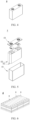
- FIG. 4 shows a secondary battery 5 of a rectangular structure as an example.
- the outer package may include a housing 51 and a cover plate 53.
- the housing 51 may include a base plate and side plates connected onto the base plate, and the base plate and the side plates enclose an accommodating cavity.
- the housing 51 has an opening communicating with the accommodating cavity, and the cover plate 53 can cover the opening to close the accommodating cavity.
- the positive electrode plate, the negative electrode plate, and the separator may be made into an electrode assembly 52 through winding or lamination.
- the electrode assembly 52 is packaged in the accommodating cavity.
- the electrolyte infiltrates the electrode assembly 52.
- the secondary battery may be assembled into a battery module, and the battery module may include one or more secondary batteries.
- the specific quantity may be chosen by persons skilled in the art according to use and capacity of the battery module.
- FIG. 6 shows a battery module 4 as an example.
- a plurality of secondary batteries 5 may be sequentially arranged in a length direction of the battery module 4.
- the batteries may alternatively be arranged in any other manners.
- the plurality of secondary batteries 5 may be fastened by using fasteners.
- the battery module 4 may further include a housing with accommodating space, and the plurality of secondary batteries 5 are accommodated in the accommodating space.
- the battery module may be further assembled into a battery pack, and the battery pack may include one or more battery modules.
- the specific quantity may be chosen by persons skilled in the art according to use and capacity of the battery pack.
- FIGs. 7 and 8 show a battery pack 1 as an example.
- the battery pack 1 may include a battery box and a plurality of battery modules 4 arranged in the battery box.
- the battery box includes an upper box body 2 and a lower box body 3.
- the upper box body 2 can cover the lower box body 3 to form an enclosed space for accommodating the battery module 4.
- the plurality of battery modules 4 may be arranged in the battery box in any manner.
- this application further provides an electric apparatus.
- the electric apparatus includes at least one of the secondary battery, the battery module, or the battery pack provided in this application.
- the secondary battery, the battery module, or the battery pack may be used as a power source for the electric apparatus or an energy storage unit of the electric apparatus.
- the electric apparatus may include a mobile device (for example, a mobile phone or a notebook computer), an electric vehicle (for example, a battery electric vehicle, a hybrid electric vehicle, a plug-in hybrid electric vehicle, an electric bicycle, an electric scooter, an electric golf vehicle, or an electric truck), an electric train, a ship, a satellite system, an energy storage system, or the like, but is not limited thereto.
- the secondary battery, the battery module, or the battery pack may be selected for the electric apparatus based on requirements for using the electric apparatus.
- FIG. 9 shows an electric apparatus as an example.
- This electric apparatus is a battery electric vehicle, a hybrid electric vehicle, a plug-in hybrid electric vehicle, or the like.
- a battery pack or a battery module may be used.
- the apparatus may be a mobile phone, a tablet computer, a notebook computer, or the like.
- the apparatus usually requires to be light and thin, and a secondary battery may be used as a power source.
- Example 1 the preparation method of positive electrode material includes the following processes:
- the negative electrode active material artificial graphite, conductive agent carbon black, and binder SBR were mixed at a mass ratio of 96:2.5:1.5 and fully stirred in an appropriate amount of deionized water to form a uniform negative electrode slurry.
- the negative electrode slurry was applied onto a surface of the negative electrode current collector copper foil, followed by drying and cold pressing, to obtain a negative electrode plate.
- SP carbon black
- PVDF polyvinylidene fluoride
- NMP N-methylpyrrolidone
- the positive electrode slurry was prepared by mixing the positive electrode material prepared through the above method, SP, and PVDF at a mass ratio of 90:7:3.
- the positive electrode slurry was applied onto the surface of the positive electrode current collector aluminum foil and, followed by drying and cold pressing, to obtain a positive electrode plate.
- Ethylene carbonate (EC), ethyl methyl carbonate (EMC), and diethyl carbonate (DEC) were mixed at a volume ratio of 1:1:1, and then LiPF 6 was uniformly dissolved in the foregoing solution to obtain an electrolyte, where a concentration of LiPF 6 was 1 mol/L.
- a polyethylene (PE) film was used.
- the positive electrode plate, separator, and negative electrode plate were stacked in sequence and wound to obtain an electrode assembly.
- the electrode assembly was placed in an outer package, the foregoing electrolyte was added, and steps such as packaging, standing, formation, and aging were performed to obtain a secondary battery.
- the morphology of the positive electrode active material may be determined and measured using a well-known method. For example, a scanning electron microscopy or transmission electron microscopy can be used for the determination.
- the peak intensity ratio of oxygen vacancy to lattice oxygen in the coating layer of the positive electrode active material may be determined and measured by using a well-known method, such as X-ray photoelectron spectroscopy (XPS) analysis, and the peak intensity ratio of oxygen vacancy to lattice oxygen is increased in the coating layer containing oxygen vacancies.
- XPS X-ray photoelectron spectroscopy
- the resistivity of the positive electrode active material was determined and measured using a well-known method, for example, it can be measured by using a powder resistivity testing instrument (such as lattice ST-2722) with reference to the standard GBT30853-2014.
- the D v 50 of the positive electrode active material has a well-known meaning in the art and may be tested by using a method known in the art. For example, a test may be carried out with reference to the standard GB/T 19077.1-2016 by using a laser particle size analyzer (for example, Malvern Master Size 3000).
- the physical definition of D v 50 is: a corresponding particle size when a cumulative volume distribution percentage of the positive electrode active material reaches 50%.
- the specific surface area of the positive electrode active material has a well-known meaning in the art and may be measured by using a method known in the art.
- the specific surface area can be measured by using the test method of nitrogen adsorption specific surface area analysis with reference to the GB/T 19587-2017 standard, and calculated by using the BET (Brunauer Emmett Teller) method, where the nitrogen adsorption specific surface area analysis test may be performed using the Tri-Star 3020 specific surface area and pore size analyzer and tester from Micromeritics company in USA.
- the coating layer thickness of the positive electrode active material has a well-known meaning in the art and may be tested by using a known method in the art. For example, a high-resolution transmission electron microscope can be used for measurement. More precisely, thicknesses of the coating layer at a plurality of (more than 3, for example, 8, 10, or 12) different locations may be measured, and an average thereof is recorded as a thickness of the coating layer.
- the pouch battery was charged at a constant current of 0.02C to 3.4 V at 45°C. After being left standing for 5 minutes, the battery was further charged at a constant current of 0.1C to 3.75 V, and the capacity was recorded and denoted as Z1. Then, degassing and second sealing were performed on the battery, and the second-sealed battery was placed at 25°C and charged at a constant current of 0.33C to 4.5 V, then charged at a constant voltage to 0.02C, and left standing for 5 minutes. The capacity was recorded and denoted as Z2. Subsequently, the battery was discharged at 0.33C to 2.0 V, and the capacity was recorded and denoted as D1.
- the lithium-ion battery In a constant temperature environment at 25°C, at 2.0 V to 4.5 V, the lithium-ion battery was charged to 4.5 V at 0.33C, and then charged at a constant voltage of 4.5 V to a current of 0.05C. After being left standing for 5 minutes, the battery was discharged at 0.33C to 2.0 V, and the specific capacity of the lithium-ion battery at the 0.33C discharge rate was recorded. After being left standing for 5 minutes, the battery was charged at 0.33C to 4.5 V, and then charged at a constant voltage of 4.5 V to a current of 0.05C. After being left standing for 5 minutes, the battery was discharged at 0.5C to 2.0 V, and the specific capacity of the lithium-ion battery at the 0.5C discharge rate was recorded.
- Cycle test In a constant temperature environment at 25°C or 45°C, the full battery was charged at a constant current of 0.5C to a voltage of 4.46 V, then charged at a constant voltage of 4.46 V to a current of 0.05C. After being left standing for 5 minutes, the battery was discharged at a constant current of 0.5C to a voltage of 2.3 V This was one charge and discharge cycle. The discharge capacity of this cycle was the discharge capacity of the first cycle. After 500 cycles of charge and discharge tests were performed on the full battery, the remaining reversible discharge capacity was recorded.
- the positive electrode plate was obtained by using the same preparation method as that in Example 1.
- the positive electrode plate was obtained by using the same preparation method as that in Example 1.
- Example 4 except that the core composition of the positive electrode material was changed as shown in Table 1, the positive electrode material was obtained by using the same preparation method as that in Example 1.
- Example 6 In Examples 6 to 10, except that the conditions in each preparation process was changed as shown in Table 2, the positive electrode material was obtained by using the same raw material composition and a similar preparation method as those in Example 1.
- the positive electrode material in Comparative Example 1 was prepared by using the following steps.
- Potassium vanadate and lithium-rich manganese-based material 0.5Li 2 MnO 3 -0.5LiNi 0.33 Co 0.33 Mn 0.33 O 2 at a mass ratio of 5:100 were ball-milled for 2 hours, then sintered for 10 hours at 500°C in an inert atmosphere, and a lithium-rich manganese-based positive electrode material with surface coating of potassium vanadate was obtained.
- the positive electrode material for Comparative Example 2 were prepared by using the following steps.
- Glucose vanadate and lithium-rich manganese-based material 0.5Li 2 MnO 3 -0.5LiNi 0.33 Co 0.33 Mn 0.33 O 2 at a mass ratio of 2:100 were ball-milled for 2 hours, then sintered for 10 hours at 500°C in an inert atmosphere, and a lithium-rich manganese-based positive electrode material with surface coating of carbon was obtained.
- the positive electrode material for Comparative Example 3 were prepared by using the following steps.
- Potassium vanadate and glucose were mixed at a mass ratio of 2:1 and then lithium-rich manganese-based material 0.5Li 2 MnO 3 -0.5LiNi 0.33 Co 0.33 Mn 0.33 O 2 was added. A ratio of the amount added to the mass sum of potassium vanadate and glucose was 100:5. A resulting mixture was ball-milled for 2 hours, then sintered for 10 hours at 500°C in an inert atmosphere, and a lithium-rich manganese-based positive electrode material with a surface coating of potassium vanadate and carbon was obtained.
- Example 17 to 22 except that the raw material ratios in the hydrothermal reaction process were changed as shown in Table 2, the positive electrode material was obtained by using the same preparation method as that in Example 1.
Landscapes
- Chemical & Material Sciences (AREA)
- Chemical Kinetics & Catalysis (AREA)
- Electrochemistry (AREA)
- General Chemical & Material Sciences (AREA)
- Engineering & Computer Science (AREA)
- Composite Materials (AREA)
- Inorganic Chemistry (AREA)
- Manufacturing & Machinery (AREA)
- Materials Engineering (AREA)
- Battery Electrode And Active Subsutance (AREA)
Applications Claiming Priority (1)
| Application Number | Priority Date | Filing Date | Title |
|---|---|---|---|
| PCT/CN2022/099191 WO2023240544A1 (fr) | 2022-06-16 | 2022-06-16 | Matériau d'électrode positive, son procédé de fabrication et batterie secondaire le comprenant |
Publications (2)
| Publication Number | Publication Date |
|---|---|
| EP4322259A1 true EP4322259A1 (fr) | 2024-02-14 |
| EP4322259A4 EP4322259A4 (fr) | 2024-06-12 |
Family
ID=89192843
Family Applications (1)
| Application Number | Title | Priority Date | Filing Date |
|---|---|---|---|
| EP22930149.4A Pending EP4322259A4 (fr) | 2022-06-16 | 2022-06-16 | Matériau d'électrode positive, son procédé de fabrication et batterie secondaire le comprenant |
Country Status (4)
| Country | Link |
|---|---|
| US (1) | US20240014386A1 (fr) |
| EP (1) | EP4322259A4 (fr) |
| CN (1) | CN118043997B (fr) |
| WO (1) | WO2023240544A1 (fr) |
Families Citing this family (4)
| Publication number | Priority date | Publication date | Assignee | Title |
|---|---|---|---|---|
| CN118099409B (zh) * | 2024-01-18 | 2025-03-11 | 国联汽车动力电池研究院有限责任公司 | 一种单晶富锂锰基正极材料及其制备方法和锂离子电池 |
| CN117800399B (zh) * | 2024-02-29 | 2024-06-18 | 河南师范大学 | 一种聚合物碳点耦合锰氧化物正极材料的制备方法及其在水系锌离子电池中的应用 |
| CN118782737B (zh) * | 2024-03-08 | 2026-03-24 | 宁德时代新能源科技股份有限公司 | 电池单体、电池和用电装置 |
| CN120015787A (zh) * | 2024-08-08 | 2025-05-16 | 宁德时代新能源科技股份有限公司 | 电池单体、电池装置和用电装置 |
Family Cites Families (8)
| Publication number | Priority date | Publication date | Assignee | Title |
|---|---|---|---|---|
| JP2010055778A (ja) * | 2008-08-26 | 2010-03-11 | Sony Corp | 正極活物質の製造方法および正極活物質 |
| WO2015076323A1 (fr) * | 2013-11-22 | 2015-05-28 | 住友金属鉱山株式会社 | Matériau actif d'électrode positive pour batteries rechargeables à électrolyte non aqueux, son procédé de fabrication, et batterie rechargeable à électrolyte non aqueux |
| CN105185969B (zh) * | 2015-10-20 | 2018-04-06 | 湘潭大学 | 一种正极材料及其制备方法 |
| KR102448302B1 (ko) * | 2017-04-28 | 2022-09-29 | 삼성전자주식회사 | 복합양극활물질, 이를 채용한 양극과 리튬전지 및 그 제조방법 |
| CN108321366B (zh) * | 2017-12-28 | 2020-07-17 | 合肥国轩高科动力能源有限公司 | 一种提高高镍三元镍钴锰正极材料电化学性能的包覆方法 |
| CN111916710A (zh) * | 2020-08-17 | 2020-11-10 | 中国科学院宁波材料技术与工程研究所 | 一种复合型富锂锰基正极材料及其制备方法和应用 |
| CN112635767B (zh) * | 2020-12-18 | 2022-02-08 | 浙江帕瓦新能源股份有限公司 | 一种三维多孔结构的纳米碳/钛酸锂复合包覆正极材料的制备方法 |
| CN114256457B (zh) * | 2021-12-31 | 2023-12-05 | 国联汽车动力电池研究院有限责任公司 | 具有均质复合包覆层的富锂锰基正极材料及其制备方法 |
-
2022
- 2022-06-16 CN CN202280063310.0A patent/CN118043997B/zh active Active
- 2022-06-16 WO PCT/CN2022/099191 patent/WO2023240544A1/fr not_active Ceased
- 2022-06-16 EP EP22930149.4A patent/EP4322259A4/fr active Pending
-
2023
- 2023-09-21 US US18/472,030 patent/US20240014386A1/en active Pending
Also Published As
| Publication number | Publication date |
|---|---|
| WO2023240544A1 (fr) | 2023-12-21 |
| CN118043997A (zh) | 2024-05-14 |
| US20240014386A1 (en) | 2024-01-11 |
| CN118043997B (zh) | 2026-02-03 |
| EP4322259A4 (fr) | 2024-06-12 |
Similar Documents
| Publication | Publication Date | Title |
|---|---|---|
| JP7375222B2 (ja) | 正極活性材料、リチウムイオン二次電池、電池モジュール、電池パックおよび電気装置 | |
| CN1323447C (zh) | 正极活性物质及无水电解质二次电池 | |
| EP3352288B1 (fr) | Module de batterie et bloc-batterie | |
| US11605816B2 (en) | Lithium secondary battery and battery module, battery pack, and electric apparatus containing same | |
| EP4322259A1 (fr) | Matériau d'électrode positive, son procédé de fabrication et batterie secondaire le comprenant | |
| US12230810B2 (en) | Secondary battery and apparatus containing the same | |
| EP4220767B1 (fr) | Matériau d'électrode positive ternaire à haute teneur en nickel modifié et son procédé de préparation, et appareil de consommation d'énergie | |
| KR20230042208A (ko) | 고-니켈 양극 활물질, 이의 제조 방법, 이를 포함하는 리튬 이온 전지, 전지 모듈, 전지 팩 및 전기 장치 | |
| EP4672355A1 (fr) | Élément de batterie, batterie et dispositif électrique | |
| EP4358182A1 (fr) | Matériau à base de manganèse riche en lithium modifié, procédé de modification de matériau à base de manganèse riche en lithium, batterie secondaire et dispositif électrique | |
| KR20210130780A (ko) | 이차 전지 및 이차 전지를 포함하는 장치 | |
| EP4333117A1 (fr) | Matériau actif d'électrode positive et son procédé de préparation, batterie au lithium-ion le comprenant, module de batterie, bloc-batterie et appareil électrique | |
| US12438149B2 (en) | Assembly, battery cell, battery, and electric apparatus containing same | |
| EP4280300A1 (fr) | Matériau actif d'électrode positive, son procédé de préparation et plaque d'électrode positive, batterie secondaire et dispositif électrique le comprenant | |
| CN115133020B (zh) | 锰酸锂正极活性材料及包含其的正极极片、二次电池、电池模块、电池包和用电装置 | |
| EP4293777A1 (fr) | Batterie secondaire, module de batterie, bloc-batterie, et dispositif électrique | |
| US12230836B2 (en) | Organic-inorganic hybrid complex and coating composition comprising same, separator, secondary battery, battery module, battery pack and power consuming device | |
| US20260024762A1 (en) | Negative electrode plate, secondary battery, and electric apparatus | |
| EP4425607A1 (fr) | Batterie secondaire, module de batterie, bloc-batterie et dispositif électrique | |
| CN117941101B (zh) | 正极活性材料及其制备方法、极片、二次电池及用电装置 | |
| EP4645477A1 (fr) | Feuille d'électrode positive, batterie et dispositif électrique | |
| EP4682979A1 (fr) | Procédé de préparation de matériau d'électrode positive, matériau d'électrode positive, feuille d'électrode positive, batterie et dispositif électrique | |
| EP4601040A1 (fr) | Matériau actif d'électrode positive, feuille d'électrode positive, batterie secondaire, dispositif électrique et procédé de préparation | |
| EP4322254A1 (fr) | Matériau actif d'électrode positive ayant une structure c¿ur-écorce et son procédé de préparation, plaque d'électrode positive, batterie secondaire, module de batterie, bloc-batterie et dispositif électrique | |
| EP4228079A1 (fr) | Bloc-batterie et son dispositif électrique |
Legal Events
| Date | Code | Title | Description |
|---|---|---|---|
| STAA | Information on the status of an ep patent application or granted ep patent |
Free format text: STATUS: UNKNOWN |
|
| STAA | Information on the status of an ep patent application or granted ep patent |
Free format text: STATUS: THE INTERNATIONAL PUBLICATION HAS BEEN MADE |
|
| PUAI | Public reference made under article 153(3) epc to a published international application that has entered the european phase |
Free format text: ORIGINAL CODE: 0009012 |
|
| STAA | Information on the status of an ep patent application or granted ep patent |
Free format text: STATUS: REQUEST FOR EXAMINATION WAS MADE |
|
| 17P | Request for examination filed |
Effective date: 20230914 |
|
| AK | Designated contracting states |
Kind code of ref document: A1 Designated state(s): AL AT BE BG CH CY CZ DE DK EE ES FI FR GB GR HR HU IE IS IT LI LT LU LV MC MK MT NL NO PL PT RO RS SE SI SK SM TR |
|
| A4 | Supplementary search report drawn up and despatched |
Effective date: 20240510 |
|
| RIC1 | Information provided on ipc code assigned before grant |
Ipc: H01M 4/02 20060101ALI20240503BHEP Ipc: H01M 4/525 20100101ALI20240503BHEP Ipc: H01M 4/36 20060101ALI20240503BHEP Ipc: H01M 4/131 20100101ALI20240503BHEP Ipc: H01M 4/04 20060101ALI20240503BHEP Ipc: H01M 10/0525 20100101ALI20240503BHEP Ipc: H01M 4/62 20060101ALI20240503BHEP Ipc: H01M 4/505 20100101AFI20240503BHEP |
|
| RAP1 | Party data changed (applicant data changed or rights of an application transferred) |
Owner name: CONTEMPORARY AMPEREX TECHNOLOGY(HONG KONG) LIMITED |
|
| DAV | Request for validation of the european patent (deleted) | ||
| DAX | Request for extension of the european patent (deleted) |