EP4323857B1 - Benutzerschnittstellen für avatar-aufklebereditor - Google Patents
Benutzerschnittstellen für avatar-aufklebereditor Download PDFInfo
- Publication number
- EP4323857B1 EP4323857B1 EP22729935.1A EP22729935A EP4323857B1 EP 4323857 B1 EP4323857 B1 EP 4323857B1 EP 22729935 A EP22729935 A EP 22729935A EP 4323857 B1 EP4323857 B1 EP 4323857B1
- Authority
- EP
- European Patent Office
- Prior art keywords
- avatar
- representation
- displaying
- sticker
- user
- Prior art date
- Legal status (The legal status is an assumption and is not a legal conclusion. Google has not performed a legal analysis and makes no representation as to the accuracy of the status listed.)
- Active
Links
Images















Classifications
-
- G—PHYSICS
- G06—COMPUTING OR CALCULATING; COUNTING
- G06F—ELECTRIC DIGITAL DATA PROCESSING
- G06F3/00—Input arrangements for transferring data to be processed into a form capable of being handled by the computer; Output arrangements for transferring data from processing unit to output unit, e.g. interface arrangements
- G06F3/01—Input arrangements or combined input and output arrangements for interaction between user and computer
- G06F3/048—Interaction techniques based on graphical user interfaces [GUI]
- G06F3/0481—Interaction techniques based on graphical user interfaces [GUI] based on specific properties of the displayed interaction object or a metaphor-based environment, e.g. interaction with desktop elements like windows or icons, or assisted by a cursor's changing behaviour or appearance
- G06F3/04817—Interaction techniques based on graphical user interfaces [GUI] based on specific properties of the displayed interaction object or a metaphor-based environment, e.g. interaction with desktop elements like windows or icons, or assisted by a cursor's changing behaviour or appearance using icons
-
- A—HUMAN NECESSITIES
- A63—SPORTS; GAMES; AMUSEMENTS
- A63F—CARD, BOARD, OR ROULETTE GAMES; INDOOR GAMES USING SMALL MOVING PLAYING BODIES; VIDEO GAMES; GAMES NOT OTHERWISE PROVIDED FOR
- A63F13/00—Video games, i.e. games using an electronically generated display having two or more dimensions
- A63F13/70—Game security or game management aspects
- A63F13/79—Game security or game management aspects involving player-related data, e.g. identities, accounts, preferences or play histories
-
- G—PHYSICS
- G06—COMPUTING OR CALCULATING; COUNTING
- G06F—ELECTRIC DIGITAL DATA PROCESSING
- G06F3/00—Input arrangements for transferring data to be processed into a form capable of being handled by the computer; Output arrangements for transferring data from processing unit to output unit, e.g. interface arrangements
- G06F3/01—Input arrangements or combined input and output arrangements for interaction between user and computer
- G06F3/048—Interaction techniques based on graphical user interfaces [GUI]
- G06F3/0481—Interaction techniques based on graphical user interfaces [GUI] based on specific properties of the displayed interaction object or a metaphor-based environment, e.g. interaction with desktop elements like windows or icons, or assisted by a cursor's changing behaviour or appearance
- G06F3/0482—Interaction with lists of selectable items, e.g. menus
-
- G—PHYSICS
- G06—COMPUTING OR CALCULATING; COUNTING
- G06F—ELECTRIC DIGITAL DATA PROCESSING
- G06F3/00—Input arrangements for transferring data to be processed into a form capable of being handled by the computer; Output arrangements for transferring data from processing unit to output unit, e.g. interface arrangements
- G06F3/01—Input arrangements or combined input and output arrangements for interaction between user and computer
- G06F3/048—Interaction techniques based on graphical user interfaces [GUI]
- G06F3/0484—Interaction techniques based on graphical user interfaces [GUI] for the control of specific functions or operations, e.g. selecting or manipulating an object, an image or a displayed text element, setting a parameter value or selecting a range
- G06F3/04842—Selection of displayed objects or displayed text elements
-
- G—PHYSICS
- G06—COMPUTING OR CALCULATING; COUNTING
- G06F—ELECTRIC DIGITAL DATA PROCESSING
- G06F3/00—Input arrangements for transferring data to be processed into a form capable of being handled by the computer; Output arrangements for transferring data from processing unit to output unit, e.g. interface arrangements
- G06F3/01—Input arrangements or combined input and output arrangements for interaction between user and computer
- G06F3/048—Interaction techniques based on graphical user interfaces [GUI]
- G06F3/0484—Interaction techniques based on graphical user interfaces [GUI] for the control of specific functions or operations, e.g. selecting or manipulating an object, an image or a displayed text element, setting a parameter value or selecting a range
- G06F3/04845—Interaction techniques based on graphical user interfaces [GUI] for the control of specific functions or operations, e.g. selecting or manipulating an object, an image or a displayed text element, setting a parameter value or selecting a range for image manipulation, e.g. dragging, rotation, expansion or change of colour
-
- G—PHYSICS
- G06—COMPUTING OR CALCULATING; COUNTING
- G06F—ELECTRIC DIGITAL DATA PROCESSING
- G06F3/00—Input arrangements for transferring data to be processed into a form capable of being handled by the computer; Output arrangements for transferring data from processing unit to output unit, e.g. interface arrangements
- G06F3/01—Input arrangements or combined input and output arrangements for interaction between user and computer
- G06F3/048—Interaction techniques based on graphical user interfaces [GUI]
- G06F3/0484—Interaction techniques based on graphical user interfaces [GUI] for the control of specific functions or operations, e.g. selecting or manipulating an object, an image or a displayed text element, setting a parameter value or selecting a range
- G06F3/04847—Interaction techniques to control parameter settings, e.g. interaction with sliders or dials
-
- G—PHYSICS
- G06—COMPUTING OR CALCULATING; COUNTING
- G06F—ELECTRIC DIGITAL DATA PROCESSING
- G06F3/00—Input arrangements for transferring data to be processed into a form capable of being handled by the computer; Output arrangements for transferring data from processing unit to output unit, e.g. interface arrangements
- G06F3/01—Input arrangements or combined input and output arrangements for interaction between user and computer
- G06F3/048—Interaction techniques based on graphical user interfaces [GUI]
- G06F3/0487—Interaction techniques based on graphical user interfaces [GUI] using specific features provided by the input device, e.g. functions controlled by the rotation of a mouse with dual sensing arrangements, or of the nature of the input device, e.g. tap gestures based on pressure sensed by a digitiser
- G06F3/0488—Interaction techniques based on graphical user interfaces [GUI] using specific features provided by the input device, e.g. functions controlled by the rotation of a mouse with dual sensing arrangements, or of the nature of the input device, e.g. tap gestures based on pressure sensed by a digitiser using a touch-screen or digitiser, e.g. input of commands through traced gestures
- G06F3/04883—Interaction techniques based on graphical user interfaces [GUI] using specific features provided by the input device, e.g. functions controlled by the rotation of a mouse with dual sensing arrangements, or of the nature of the input device, e.g. tap gestures based on pressure sensed by a digitiser using a touch-screen or digitiser, e.g. input of commands through traced gestures for inputting data by handwriting, e.g. gesture or text
-
- G—PHYSICS
- G06—COMPUTING OR CALCULATING; COUNTING
- G06T—IMAGE DATA PROCESSING OR GENERATION, IN GENERAL
- G06T11/00—Two-dimensional [2D] image generation
- G06T11/60—Creating or editing images; Combining images with text
-
- H—ELECTRICITY
- H04—ELECTRIC COMMUNICATION TECHNIQUE
- H04L—TRANSMISSION OF DIGITAL INFORMATION, e.g. TELEGRAPHIC COMMUNICATION
- H04L51/00—User-to-user messaging in packet-switching networks, transmitted according to store-and-forward or real-time protocols, e.g. e-mail
- H04L51/07—User-to-user messaging in packet-switching networks, transmitted according to store-and-forward or real-time protocols, e.g. e-mail characterised by the inclusion of specific contents
- H04L51/10—Multimedia information
-
- A—HUMAN NECESSITIES
- A63—SPORTS; GAMES; AMUSEMENTS
- A63F—CARD, BOARD, OR ROULETTE GAMES; INDOOR GAMES USING SMALL MOVING PLAYING BODIES; VIDEO GAMES; GAMES NOT OTHERWISE PROVIDED FOR
- A63F2300/00—Features of games using an electronically generated display having two or more dimensions, e.g. on a television screen, showing representations related to the game
- A63F2300/50—Features of games using an electronically generated display having two or more dimensions, e.g. on a television screen, showing representations related to the game characterized by details of game servers
- A63F2300/55—Details of game data or player data management
- A63F2300/5546—Details of game data or player data management using player registration data, e.g. identification, account, preferences, game history
- A63F2300/5553—Details of game data or player data management using player registration data, e.g. identification, account, preferences, game history user representation in the game field, e.g. avatar
-
- G—PHYSICS
- G06—COMPUTING OR CALCULATING; COUNTING
- G06F—ELECTRIC DIGITAL DATA PROCESSING
- G06F2203/00—Indexing scheme relating to G06F3/00 - G06F3/048
- G06F2203/048—Indexing scheme relating to G06F3/048
- G06F2203/04806—Zoom, i.e. interaction techniques or interactors for controlling the zooming operation
Definitions
- the present disclosure relates generally to computer user interfaces, and more specifically to techniques for editing avatars.
- Avatars are used to represent the users of electronic devices.
- the avatars can represent the appearance of a user or can represent an idealized or completely fictional representation of the user.
- Avatars can then be associated with a user so that the appearance of the avatar to others triggers an association or link with the user.
- Avatars can be created and edited for such use, including use in multimedia communications.
- Prior art document WO2020226785 relates to user interfaces for displaying and using avatars.
- Some techniques for editing avatars using electronic devices are generally cumbersome and inefficient. For example, some existing techniques use a complex and time-consuming user interface, which may include multiple key presses or keystrokes. Existing techniques require more time than necessary, wasting user time and device energy. This latter consideration is particularly important in battery-operated devices.
- the present technique provides electronic devices with faster, more efficient methods and interfaces for editing avatar stickers.
- Such methods and interfaces optionally complement or replace other methods for editing avatars.
- Such methods and interfaces reduce the cognitive burden on a user and produce a more efficient human-machine interface.
- For battery-operated computing devices, such methods and interfaces conserve power and increase the time between battery charges.
- a method is described. The method is performed at a computer system that is in communication with a display generation component and one or more input devices.
- the method comprises: displaying, via the display generation component, an avatar editing interface that includes: a representation of a virtual avatar having a plurality of avatar features, wherein the virtual avatar is associated with a set of stickers including a first avatar sticker that shows the virtual avatar in a first pose and a second avatar sticker that shows the virtual avatar in a second pose different from the first pose; and a first set of one or more graphical interface objects that are selectable for modifying a first avatar feature of the plurality of avatar features that are visible in the representation of the virtual avatar: while displaying the avatar editing interface including the representation of the virtual avatar, detecting, via the one or more input devices, an input corresponding to a request to display editing options for a second avatar feature of the plurality of avatar features; and in response to detecting the input, updating display of the avatar editing interface, including: displaying a representation of the first avatar sticker having an appearance
- a non-transitory computer-readable storage medium stores one or more programs configured to be executed by one or more processors of a computer system that is in communication with a display generation component, and one or more input devices, the one or more programs including instructions for: displaying, via the display generation component, an avatar editing interface that includes: a representation of a virtual avatar having a plurality of avatar features, wherein the virtual avatar is associated with a set of stickers including a first avatar sticker that shows the virtual avatar in a first pose and a second avatar sticker that shows the virtual avatar in a second pose different from the first pose; and a first set of one or more graphical interface objects that are selectable for modifying a first avatar feature of the plurality of avatar features that are visible in the representation of the virtual avatar: while displaying the avatar editing interface including the representation of the virtual avatar, detecting, via the one or more input devices, an input corresponding to a request to display editing options for a second avatar feature of the pluralit
- a transitory computer-readable storage medium stores one or more programs configured to be executed by one or more processors of a computer system that is in communication with a display generation component, and one or more input devices, the one or more programs including instructions for: displaying, via the display generation component, an avatar editing interface that includes: a representation of a virtual avatar having a plurality of avatar features, wherein the virtual avatar is associated with a set of stickers including a first avatar sticker that shows the virtual avatar in a first pose and a second avatar sticker that shows the virtual avatar in a second pose different from the first pose: and a first set of one or more graphical interface objects that are selectable for modifying a first avatar feature of the plurality of avatar features that are visible in the representation of the virtual avatar: while displaying the avatar editing interface including the representation of the virtual avatar, detecting, via the one or more input devices, an input corresponding to a request to display editing options for a second avatar feature of the plurality of avatar features
- a computer system comprises: a display generation component; one or more input devices: one or more processors; and memory storing one or more programs configured to be executed by the one or more processors, the one or more programs including instructions for: displaying, via the display generation component, an avatar editing interface that includes: a representation of a virtual avatar having a plurality of avatar features, wherein the virtual avatar is associated with a set of stickers including a first avatar sticker that shows the virtual avatar in a first pose and a second avatar sticker that shows the virtual avatar in a second pose different from the first pose; and a first set of one or more graphical interface objects that are selectable for modifying a first avatar feature of the plurality of avatar features that are visible in the representation of the virtual avatar: while displaying the avatar editing interface including the representation of the virtual avatar, detecting, via the one or more input devices, an input corresponding to a request to display editing options for a second avatar feature of the plurality of avatar features; and in response to detecting the input,
- a computer system comprises: a display generation component: one or more input devices; means for displaying, via the display generation component, a communication request interface that includes: means for displaying, via the display generation component, an avatar editing interface that includes: a representation of a virtual avatar having a plurality of avatar features, wherein the virtual avatar is associated with a set of stickers including a first avatar sticker that shows the virtual avatar in a first pose and a second avatar sticker that shows the virtual avatar in a second pose different from the first pose; and a first set of one or more graphical interface objects that are selectable for modifying a first avatar feature of the plurality of avatar features that are visible in the representation of the virtual avatar; means for, while displaying the avatar editing interface including the representation of the virtual avatar, detecting, via the one or more input devices, an input corresponding to a request to display editing options for a second avatar feature of the plurality of avatar features; and means for, in response to detecting the input, updating display of the avatar editing interface,
- a computer program product comprises one or more programs configured to be executed by one or more processors of a computer system that is in communication with a display generation component and one or more input devices, the one or more programs including instructions for: displaying, via the display generation component, an avatar editing interface that includes: a representation of a virtual avatar having a plurality of avatar features, wherein the virtual avatar is associated with a set of stickers including a first avatar sticker that shows the virtual avatar in a first pose and a second avatar sticker that shows the virtual avatar in a second pose different from the first pose; and a first set of one or more graphical interface objects that are selectable for modifying a first avatar feature of the plurality of avatar features that are visible in the representation of the virtual avatar; while displaying the avatar editing interface including the representation of the virtual avatar, detecting, via the one or more input devices, an input corresponding to a request to display editing options for a second avatar feature of the plurality of avatar features; and in response to detecting the input, updating
- a method is described. The method is performed at a computer system that is in communication with a display generation component and one or more input devices.
- the method comprises: displaying, via the display generation component, an avatar editing interface that includes: a representation of a virtual avatar, wherein the representation of the virtual avatar includes a first avatar feature and the first avatar feature includes a first color; a first graphical interface object that is selectable to initiate a process for modifying an appearance of the first avatar feature to include a second color: and a plurality of selectable options for modifying a characteristic of the first avatar feature, wherein the plurality of selectable options includes respective representations of the first avatar feature and the first avatar feature includes the first color; while displaying the avatar editing interface, detecting, via the one or more input devices, an input directed to the first graphical interface object; and in response to detecting the input directed to the first graphical interface object, updating display of the avatar editing interface, including: displaying an updated representation of the virtual avatar, wherein the updated representation of the virtual avatar includes the first
- a non-transitory computer-readable storage medium stores one or more programs configured to be executed by one or more processors of a computer system that is in communication with a display generation component, and one or more input devices, the one or more programs including instructions for: displaying, via the display generation component, an avatar editing interface that includes: a representation of a virtual avatar, wherein the representation of the virtual avatar includes a first avatar feature and the first avatar feature includes a first color: a first graphical interface object that is selectable to initiate a process for modifying an appearance of the first avatar feature to include a second color; and a plurality of selectable options for modifying a characteristic of the first avatar feature, wherein the plurality of selectable options includes respective representations of the first avatar feature and the first avatar feature includes the first color; while displaying the avatar editing interface, detecting, via the one or more input devices, an input directed to the first graphical interface object; and in response to detecting the input directed to the first
- a transitory computer-readable storage medium stores one or more programs configured to be executed by one or more processors of a computer system that is in communication with a display generation component, and one or more input devices, the one or more programs including instructions for: displaying, via the display generation component, an avatar editing interface that includes: a representation of a virtual avatar, wherein the representation of the virtual avatar includes a first avatar feature and the first avatar feature includes a first color; a first graphical interface object that is selectable to initiate a process for modifying an appearance of the first avatar feature to include a second color: and a plurality of selectable options for modifying a characteristic of the first avatar feature, wherein the plurality of selectable options includes respective representations of the first avatar feature and the first avatar feature includes the first color: while displaying the avatar editing interface, detecting, via the one or more input devices, an input directed to the first graphical interface object; and in response to detecting the input directed to the first graphical interface object
- a computer system comprises: a display generation component; one or more input devices; one or more processors: and memory storing one or more programs configured to be executed by the one or more processors, the one or more programs including instructions for: displaying, via the display generation component, an avatar editing interface that includes: a representation of a virtual avatar, wherein the representation of the virtual avatar includes a first avatar feature and the first avatar feature includes a first color: a first graphical interface object that is selectable to initiate a process for modifying an appearance of the first avatar feature to include a second color; and a plurality of selectable options for modifying a characteristic of the first avatar feature, wherein the plurality of selectable options includes respective representations of the first avatar feature and the first avatar feature includes the first color: while displaying the avatar editing interface, detecting, via the one or more input devices, an input directed to the first graphical interface object; and in response to detecting the input directed to the first graphical interface object, updating display of the avatar editing interface, including
- Executable instructions for performing these functions are, optionally, included in a non-transitory computer-readable storage medium or other computer program product configured for execution by one or more processors. Executable instructions for performing these functions are, optionally, included in a transitory computer-readable storage medium or other computer program product configured for execution by one or more processors.
- Such techniques can reduce the cognitive burden on a user who edits avatars, thereby enhancing productivity. Further, such techniques can reduce processor and battery power otherwise wasted on redundant user inputs.
- FIGS. 1A-1B . 2 , 3 , 4A-4B . and 5A-5B provide a description of exemplary devices for performing the techniques for editing avatars.
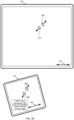
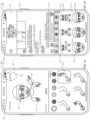
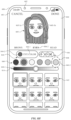
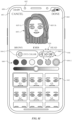
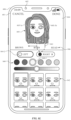
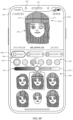
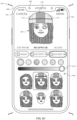
- FIGS. 6A-6R illustrate exemplary user interfaces for editing avatar stickers.
- FIG. 7 is a flow diagram illustrating methods of editing avatar stickers in accordance with some embodiments. The user interfaces in FIGS. 6A-6R are used to illustrate the processes described below, including the processes in FIG. 7 .
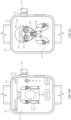
- FIGS. 8A-8U illustrate exemplary user interfaces for editing avatars.
- FIG. 9 is a flow diagram illustrating methods of editing avatars in accordance with some embodiments. The user interfaces in FIGS. 8A-8U are used to illustrate the processes described below, including the processes in FIG. 9 .
- system or computer readable medium contains instructions for performing the contingent operations based on the satisfaction of the corresponding one or more conditions and thus is capable of determining whether the contingency has or has not been satisfied without explicitly repeating steps of a method until all of the conditions upon which steps in the method are contingent have been met.
- a system or computer readable storage medium can repeat the steps of a method as many times as are needed to ensure that all of the contingent steps have been performed.
- first means "first,” “second,” etc. to describe various elements, these elements should not be limited by the terms. In some embodiments, these terms are used to distinguish one element from another. For example, a first touch could be termed a second touch, and, similarly, a second touch could be termed a first touch, without departing from the scope of the various described embodiments. In some embodiments, the first touch and the second touch are two separate references to the same touch. In some embodiments, the first touch and the second touch are both touches, but they are not the same touch.
- if is, optionally, construed to mean “when” or “upon” or “in response to determining” or “in response to detecting,” depending on the context.
- phrase “if it is determined” or “if [a stated condition or event] is detected” is, optionally, construed to mean “upon determining” or “in response to determining” or “upon detecting [the stated condition or event]” or “in response to detecting [the stated condition or event],” depending on the context.
- the device is a portable communications device, such as a mobile telephone, that also contains other functions, such as PDA and/or music player functions.
- portable multifunction devices include, without limitation, the iPhone ® , iPod Touch ® , and iPad ® devices from Apple Inc. of Cupertino, California.
- Other portable electronic devices such as laptops or tablet computers with touch-sensitive surfaces (e.g., touch screen displays and/or touchpads), are, optionally, used.
- the device is not a portable communications device, but is a desktop computer with a touch-sensitive surface (e.g., a touch screen display and/or a touchpad).
- the electronic device is a computer system that is in communication (e.g., via wireless communication, via wired communication) with a display generation component.
- the display generation component is configured to provide visual output such as display via a CRT display, display via an LED display, or display via image projection.
- the display generation component is integrated with the computer system.
- the display generation component is separate from the computer system.
- displaying includes causing to display the content (e.g., video data rendered or decoded by display controller 156) by transmitting, via a wired or wireless connection, data (e.g., image data or video data) to an integrated or external display generation component to visually produce the content.
- content e.g., video data rendered or decoded by display controller 1566
- data e.g., image data or video data
- an electronic device that includes a display and a touch-sensitive surface is described. It should be understood, however, that the electronic device optionally includes one or more other physical user-interface devices, such as a physical keyboard, a mouse, and/or a joystick.
- the device typically supports a variety of applications, such as one or more of the following: a drawing application, a presentation application, a word processing application, a website creation application, a disk authoring application, a spreadsheet application, a gaming application, a telephone application, a video conferencing application, an e-mail application, an instant messaging application, a workout support application, a photo management application, a digital camera application, a digital video camera application, a web browsing application, a digital music player application, and/or a digital video player application.
- applications such as one or more of the following: a drawing application, a presentation application, a word processing application, a website creation application, a disk authoring application, a spreadsheet application, a gaming application, a telephone application, a video conferencing application, an e-mail application, an instant messaging application, a workout support application, a photo management application, a digital camera application, a digital video camera application, a web browsing application, a digital music player application, and/or a digital video player application.
- the various applications that are executed on the device optionally use at least one common physical user-interface device, such as the touch-sensitive surface.
- One or more functions of the touch-sensitive surface as well as corresponding information displayed on the device are, optionally, adjusted and/or varied from one application to the next and/or within a respective application.
- a common physical architecture (such as the touch-sensitive surface) of the device optionally supports the variety of applications with user interfaces that are intuitive and transparent to the user.
- FIG. 1A is a block diagram illustrating portable multifunction device 100 with touch-sensitive display system 112 in accordance with some embodiments.
- Touch-sensitive display 112 is sometimes called a "touch screen” for convenience and is sometimes known as or called a "touch-sensitive display system.”
- Device 100 includes memory 102 (which optionally includes one or more computer-readable storage mediums), memory controller 122. one or more processing units (CPUs) 120, peripherals interface 118, RF circuitry 108, audio circuitry 110, speaker 111, microphone 113, input/output (I/O) subsystem 106, other input control devices 116, and external port 124.
- Device 100 optionally includes one or more optical sensors 164.
- Device 100 optionally includes one or more contact intensity sensors 165 for detecting intensity of contacts on device 100 (e.g., a touch-sensitive surface such as touch-sensitive display system 112 of device 100).
- Device 100 optionally includes one or more tactile output generators 167 for generating tactile outputs on device 100 (e.g., generating tactile outputs on a touch-sensitive surface such as touch-sensitive display system 112 of device 100 or touchpad 355 of device 300). These components optionally communicate over one or more communication buses or signal lines 103.
- the term "intensity" of a contact on a touch-sensitive surface refers to the force or pressure (force per unit area) of a contact (e.g., a finger contact) on the touch-sensitive surface, or to a substitute (proxy) for the force or pressure of a contact on the touch-sensitive surface.
- the intensity of a contact has a range of values that includes at least four distinct values and more typically includes hundreds of distinct values (e.g., at least 256).
- Intensity of a contact is, optionally, determined (or measured) using various approaches and various sensors or combinations of sensors. For example, one or more force sensors underneath or adjacent to the touch-sensitive surface are, optionally, used to measure force at various points on the touch-sensitive surface.
- force measurements from multiple force sensors are combined (e.g., a weighted average) to determine an estimated force of a contact.
- a pressure-sensitive tip of a stylus is, optionally, used to determine a pressure of the stylus on the touch-sensitive surface.
- the size of the contact area detected on the touch-sensitive surface and/or changes thereto, the capacitance of the touch-sensitive surface proximate to the contact and/or changes thereto, and/or the resistance of the touch-sensitive surface proximate to the contact and/or changes thereto are, optionally, used as a substitute for the force or pressure of the contact on the touch-sensitive surface.
- the substitute measurements for contact force or pressure are used directly to determine whether an intensity threshold has been exceeded (e.g., the intensity threshold is described in units corresponding to the substitute measurements).
- the substitute measurements for contact force or pressure are converted to an estimated force or pressure, and the estimated force or pressure is used to determine whether an intensity threshold has been exceeded (e.g., the intensity threshold is a pressure threshold measured in units of pressure).
- intensity of a contact as an attribute of a user input allows for user access to additional device functionality that may otherwise not be accessible by the user on a reduced-size device with limited real estate for displaying affordances (e.g., on a touch-sensitive display) and/or receiving user input (e.g., via a touch-sensitive display, a touch-sensitive surface, or a physical/mechanical control such as a knob or a button).
- the term "tactile output” refers to physical displacement of a device relative to a previous position of the device, physical displacement of a component (e.g., a touch-sensitive surface) of a device relative to another component (e.g., housing) of the device, or displacement of the component relative to a center of mass of the device that will be detected by a user with the user's sense of touch.
- a component e.g., a touch-sensitive surface
- another component e.g., housing
- the tactile output generated by the physical displacement will be interpreted by the user as a tactile sensation corresponding to a perceived change in physical characteristics of the device or the component of the device.
- a touch-sensitive surface e.g., a touch-sensitive display or trackpad
- movement of a touch-sensitive surface is, optionally, interpreted by the user as a "down click" or "up click" of a physical actuator button.
- a user will feel a tactile sensation such as an "down click” or “up click” even when there is no movement of a physical actuator button associated with the touch-sensitive surface that is physically pressed (e.g., displaced) by the user's movements.
- movement of the touch-sensitive surface is, optionally, interpreted or sensed by the user as "roughness" of the touch-sensitive surface, even when there is no change in smoothness of the touch-sensitive surface. While such interpretations of touch by a user will be subject to the individualized sensory perceptions of the user, there are many sensory perceptions of touch that are common to a large majority of users.
- a tactile output is described as corresponding to a particular sensory perception of a user (e.g., an "up click.” a “down click,” “roughness”)
- the generated tactile output corresponds to physical displacement of the device or a component thereof that will generate the described sensory perception for a typical (or average) user.
- device 100 is only one example of a portable multifunction device, and that device 100 optionally has more or fewer components than shown, optionally combines two or more components, or optionally has a different configuration or arrangement of the components.
- the various components shown in FIG. 1A are implemented in hardware, software, or a combination of both hardware and software, including one or more signal processing and/or application-specific integrated circuits.
- Memory 102 optionally includes high-speed random access memory and optionally also includes non-volatile memory, such as one or more magnetic disk storage devices, flash memory devices, or other non-volatile solid-state memory devices.
- Memory controller 122 optionally controls access to memory 102 by other components of device 100.
- Peripherals interface 118 can be used to couple input and output peripherals of the device to CPU 120 and memory 102.
- the one or more processors 120 run or execute various software programs (such as computer programs (e.g., including instructions)) and/or sets of instructions stored in memory 102 to perform various functions for device 100 and to process data.
- peripherals interface 118, CPU 120, and memory controller 122 are, optionally, implemented on a single chip, such as chip 104. In some other embodiments, they are, optionally, implemented on separate chips.
- RF (radio frequency) circuitry 108 receives and sends RF signals, also called electromagnetic signals.
- RF circuitry 108 converts electrical signals to/from electromagnetic signals and communicates with communications networks and other communications devices via the electromagnetic signals.
- RF circuitry 108 optionally includes well-known circuitry for performing these functions, including but not limited to an antenna system, an RF transceiver, one or more amplifiers, a tuner, one or more oscillators, a digital signal processor, a CODEC chipset, a subscriber identity module (SIM) card, memory, and so forth.
- an antenna system an RF transceiver, one or more amplifiers, a tuner, one or more oscillators, a digital signal processor, a CODEC chipset, a subscriber identity module (SIM) card, memory, and so forth.
- SIM subscriber identity module
- the wireless communication optionally uses any of a plurality of communications standards, protocols, and technologies, including but not limited to Global System for Mobile Communications (GSM), Enhanced Data GSM Environment (EDGE), high-speed downlink packet access (HSDPA), high-speed uplink packet access (HSUPA), Evolution, Data-Only (EV-DO), HSPA, HSPA+.
- GSM Global System for Mobile Communications
- EDGE Enhanced Data GSM Environment
- HSDPA high-speed downlink packet access
- HSUPA high-speed uplink packet access
- HSPA HSPA+.
- Dual-Cell HSPA DC-HSPDA
- LTE long tenn evolution
- NFC wideband code division multiple access
- W-CDMA wideband code division multiple access
- CDMA code division multiple access
- TDMA time division multiple access
- Bluetooth Low Energy BTLE
- Wi-Fi Wireless Fidelity
- VoIP Voice over Internet Protocol
- Wi-MAX Wi-MAX
- a protocol for e-mail e.g., Internet message access protocol (IMAP) and/or post office protocol (POP)
- instant messaging e.g., extensible messaging and presence protocol (XMPP), Session Initiation Protocol for Instant Messaging and Presence Leveraging Extensions (SIMPLE), Instant Messaging and Presence Service (IMPS)), and/or Short Message Service (SMS), or any other suitable communication protocol, including communication protocols not yet developed as of the filing date of this document.
- Audio circuitry 110, speaker 111, and microphone 113 provide an audio interface between a user and device 100.
- Audio circuitry 110 receives audio data from peripherals interface 118, converts the audio data to an electrical signal, and transmits the electrical signal to speaker 111.
- Speaker 111 converts the electrical signal to human-audible sound waves.
- Audio circuitry 110 also receives electrical signals converted by microphone 113 from sound waves.
- Audio circuitry 110 converts the electrical signal to audio data and transmits the audio data to peripherals interface 118 for processing. Audio data is, optionally, retrieved from and/or transmitted to memory 102 and/or RF circuitry 108 by peripherals interface 118.
- audio circuitry 110 also includes a headset jack (e.g., 212, FIG. 2 ). The headset jack provides an interface between audio circuitry 110 and removable audio input/output peripherals, such as output-only headphones or a headset with both output (e.g.. a headphone for one or both ears) and input (e.g., a microphone
- I/O subsystem 106 couples input/output peripherals on device 100, such as touch screen 112 and other input control devices 116, to peripherals interface 118.
- I/O subsystem 106 optionally includes display controller 156, optical sensor controller 158, depth camera controller 169, intensity sensor controller 159, haptic feedback controller 161, and one or more input controllers 160 for other input or control devices.
- the one or more input controllers 160 receive/send electrical signals from/to other input control devices 116.
- the other input control devices 116 optionally include physical buttons (e.g., push buttons, rocker buttons, etc.), dials, slider switches, joysticks, click wheels, and so forth.
- input controller(s) 160 are, optionally, coupled to any (or none) of the following: a keyboard, an infrared port, a USB port, and a pointer device such as a mouse.
- the one or more buttons optionally include an up/down button for volume control of speaker 111 and/or microphone 113.
- the one or more buttons optionally include a push button (e.g., 206, FIG. 2 ).
- the electronic device is a computer system that is in communication (e.g., via wireless communication, via wired communication) with one or more input devices.
- the one or more input devices include a touch-sensitive surface (e.g., a trackpad, as part of a touch-sensitive display).
- the one or more input devices include one or more camera sensors (e.g., one or more optical sensors 164 and/or one or more depth camera sensors 175), such as for tracking a user's gestures (e.g., hand gestures and/or air gestures) as input.
- the one or more input devices are integrated with the computer system. In some embodiments, the one or more input devices are separate from the computer system.
- an air gesture is a gesture that is detected without the user touching an input element that is part of the device (or independently of an input element that is a part of the device) and is based on detected motion of a portion of the user's body through the air including motion of the user's body relative to an absolute reference (e.g., an angle of the user's arm relative to the ground or a distance of the user's hand relative to the ground), relative to another portion of the user's body (e.g..
- a touch-sensitive display in some embodiments of touch screen 112 is, optionally, analogous to the multi-touch sensitive touchpads described in the following U.S. Patents: 6,323,846 (Westerman et al. ), 6,570,557 (Westerman et al. ) , and/or 6,677,932 (Westerman ), and/or U.S. Patent Publication 2002/0015024A1 .
- touch screen 112 displays visual output from device 100. whereas touch-sensitive touchpads do not provide visual output.
- a touch-sensitive display in some embodiments of touch screen 112 is described in the following applications: (1) U.S. Patent Application No. 11/381,313, "Multipoint Touch Surface Controller,” filed May 2, 2006 ; (2) U.S. Patent Application No. 10/840,862, “Multipoint Touchscreen,” filed May 6. 2004 ; (3) U.S. Patent Application No. 10/903,964, “Gestures For Touch Sensitive Input Devices,” filed July 30, 2004 ; (4) U.S. Patent Application No. 11/048,264, “Gestures For Touch Sensitive Input Devices,” filed January 31, 2005 ; (5) U.S. Patent Application No.
- Touch screen 112 optionally has a video resolution in excess of 100 dpi. In some embodiments, the touch screen has a video resolution of approximately 160 dpi.
- the user optionally makes contact with touch screen 112 using any suitable object or appendage, such as a stylus, a finger, and so forth.
- the user interface is designed to work primarily with finger-based contacts and gestures, which can be less precise than stylus-based input due to the larger area of contact of a finger on the touch screen.
- the device translates the rough finger-based input into a precise pointer/cursor position or command for performing the actions desired by the user.
- device 100 in addition to the touch screen, device 100 optionally includes a touchpad for activating or deactivating particular functions.
- the touchpad is a touch-sensitive area of the device that, unlike the touch screen, does not display visual output.
- the touchpad is, optionally, a touch-sensitive surface that is separate from touch screen 112 or an extension of the touch-sensitive surface formed by the touch screen.
- Power system 162 for powering the various components.
- Power system 162 optionally includes a power management system, one or more power sources (e.g., battery, alternating current (AC)), a recharging system, a power failure detection circuit, a power converter or inverter, a power status indicator (e.g., a light-emitting diode (LED)) and any other components associated with the generation, management and distribution of power in portable devices.
- power sources e.g., battery, alternating current (AC)
- AC alternating current
- a recharging system e.g., a recharging system
- a power failure detection circuit e.g., a power failure detection circuit
- a power converter or inverter e.g., a power converter or inverter
- a power status indicator e.g., a light-emitting diode (LED)
- Device 100 optionally also includes one or more optical sensors 164.
- FIG. 1A shows an optical sensor coupled to optical sensor controller 158 in I/O subsystem 106.
- Optical sensor 164 optionally includes charge-coupled device (CCD) or complementary metal-oxide semiconductor (CMOS) phototransistors.
- CCD charge-coupled device
- CMOS complementary metal-oxide semiconductor
- Optical sensor 164 receives light from the environment, projected through one or more lenses, and converts the light to data representing an image.
- imaging module 143 also called a camera module
- optical sensor 164 optionally captures still images or video.
- an optical sensor is located on the back of device 100, opposite touch screen display 112 on the front of the device so that the touch screen display is enabled for use as a viewfinder for still and/or video image acquisition.
- an optical sensor is located on the front of the device so that the user's image is, optionally, obtained for video conferencing while the user views the other video conference participants on the touch screen display.
- the position of optical sensor 164 can be changed by the user (e.g., by rotating the lens and the sensor in the device housing) so that a single optical sensor 164 is used along with the touch screen display for both video conferencing and still and/or video image acquisition.
- FIG. 1A shows a depth camera sensor coupled to depth camera controller 169 in I/O subsystem 106.
- Depth camera sensor 175 receives data from the environment to create a three dimensional model of an object (e.g., a face) within a scene from a viewpoint (e.g., a depth camera sensor).
- a viewpoint e.g., a depth camera sensor.
- depth camera sensor 175 is optionally used to determine a depth map of different portions of an image captured by the imaging module 143. In some embodiments.
- a depth camera sensor is located on the front of device 100 so that the user's image with depth information is, optionally, obtained for video conferencing while the user views the other video conference participants on the touch screen display and to capture scifies with depth map data.
- the depth camera sensor 175 is located on the back of device, or on the back and the front of the device 100.
- the position of depth camera sensor 175 can be changed by the user (e.g., by rotating the lens and the sensor in the device housing) so that a depth camera sensor 175 is used along with the touch screen display for both video conferencing and still and/or video image acquisition.
- a depth map (e.g., depth map image) contains information (e.g., values) that relates to the distance of objects in a scene from a viewpoint (e.g., a camera, an optical sensor, a depth camera sensor).
- a viewpoint e.g., a camera, an optical sensor, a depth camera sensor.
- each depth pixel defines the position in the viewpoint's Z-axis where its corresponding two-dimensional pixel is located.
- a depth map is composed of pixels wherein each pixel is defined by a value (e.g., 0 - 255).
- the "0" value represents pixels that are located at the most distant place in a "three dimensional” scene and the "255" value represents pixels that are located closest to a viewpoint (e.g., a camera, an optical sensor. a depth camera sensor) in the "three dimensional” scene.
- a depth map represents the distance between an object in a scene and the plane of the viewpoint.
- the depth map includes information about the relative depth of various features of an object of interest in view of the depth camera (e.g., the relative depth of eyes, nose, mouth, ears of a user's face).
- the depth map includes information that enables the device to determine contours of the object of interest in a z direction.
- Device 100 optionally also includes one or more contact intensity sensors 165.
- FIG. 1A shows a contact intensity sensor coupled to intensity sensor controller 159 in I/O subsystem 106.
- Contact intensity sensor 165 optionally includes one or more piezoresistive strain gauges, capacitive force sensors, electric force sensors, piezoelectric force sensors, optical force sensors, capacitive touch-sensitive surfaces, or other intensity sensors (e.g., sensors used to measure the force (or pressure) of a contact on a touch-sensitive surface).
- Contact intensity sensor 165 receives contact intensity information (e.g., pressure information or a proxy for pressure information) from the environment.
- at least one contact intensity sensor is collocated with. or proximate to. a touch-sensitive surface (e.g., touch-sensitive display system 112).
- at least one contact intensity sensor is located on the back of device 100, opposite touch screen display 112, which is located on the front of device 100.
- Device 100 optionally also includes one or more proximity sensors 166.
- FIG. 1A shows proximity sensor 166 coupled to peripherals interface 118. Alternately, proximity sensor 166 is, optionally, coupled to input controller 160 in I/O subsystem 106.
- Proximity sensor 166 optionally performs as described in U.S. Patent Application Nos. 11/241,839, "Proximity Detector In Handheld Device” ; 11/240,788, “Proximity Detector In Handheld Device”; 11/620.702.
- the proximity sensor turns off and disables touch screen 112 when the multifunction device is placed near the user's ear (e.g., when the user is making a phone call).
- Device 100 optionally also includes one or more tactile output generators 167.
- FIG. 1A shows a tactile output generator coupled to haptic feedback controller 161 in I/O subsystem 106.
- Tactile output generator 167 optionally includes one or more electroacoustic devices such as speakers or other audio components and/or electromechanical devices that convert energy into linear motion such as a motor, solenoid, electroactive polymer, piezoelectric actuator, electrostatic actuator, or other tactile output generating component (e.g., a component that converts electrical signals into tactile outputs on the device).
- Contact intensity sensor 165 receives tactile feedback generation instructions from haptic feedback module 133 and generates tactile outputs on device 100 that are capable of being sensed by a user of device 100.
- At least one tactile output generator is collocated with, or proximate to, a touch-sensitive surface (e.g., touch-sensitive display system 112) and, optionally, generates a tactile output by moving the touch-sensitive surface vertically (e.g., in/out of a surface of device 100) or laterally (e.g., back and forth in the same plane as a surface of device 100).
- a touch-sensitive surface e.g., touch-sensitive display system 112
- at least one tactile output generator sensor is located on the back of device 100, opposite touch screen display 112, which is located on the front of device 100.
- Device 100 optionally also includes one or more accelerometers 168.
- FIG. 1A shows accelerometer 168 coupled to peripherals interface 118.
- accelerometer 168 is, optionally, coupled to an input controller 160 in I/O subsystem 106.
- Accelerometer 168 optionally performs as described in U.S. Patent Publication No. 20050190059 , "Acceleration-based Theft Detection System for Portable Electronic Devices," and U.S. Patent Publication No. 20060017692 , “Methods And Apparatuses For Operating A Portable Device Based On An Accelerometer,".
- information is displayed on the touch screen display in a portrait view or a landscape view based on an analysis of data received from the one or more accelerometers.
- Device 100 optionally includes, in addition to accelerometer(s) 168, a magnetometer and a GPS (or GLONASS or other global navigation system) receiver for obtaining information concerning the location and orientation (e.g., portrait or landscape) of device 100.
- GPS or
- Device/global internal state 157 includes one or more of: active application state, indicating which applications, if any, are currently active; display state, indicating what applications, views or other information occupy various regions of touch screen display 112; sensor state, including information obtained from the device's various sensors and input control devices 116; and location information concerning the device's location and/or attitude.
- Operating system 126 e.g., Darwin, RTXC, LINUX. UNIX, OS X. iOS, WINDOWS. or an embedded operating system such as VxWorks
- Operating system 126 includes various software components and/or drivers for controlling and managing general system tasks (e.g., memory management, storage device control, power management, etc.) and facilitates communication between various hardware and software components.
- Communication module 128 facilitates communication with other devices over one or more external ports 124 and also includes various software components for handling data received by RF circuitry 108 and/or external port 124.
- External port 124 e.g., Universal Serial Bus (USB), FIREWIRE, etc.
- USB Universal Serial Bus
- FIREWIRE FireWire
- the external port is a multi-pin (e.g., 30-pin) connector that is the same as, or similar to and/or compatible with, the 30-pin connector used on iPod ® (trademark of Apple Inc.) devices.
- Contact/motion module 130 optionally detects contact with touch screen 112 (in conjunction with display controller 156) and other touch-sensitive devices (e.g.. a touchpad or physical click wheel).
- Contact/motion module 130 includes various software components for performing various operations related to detection of contact, such as determining if contact has occurred (e.g., detecting a finger-down event), determining an intensity of the contact (e.g., the force or pressure of the contact or a substitute for the force or pressure of the contact), determining if there is movement of the contact and tracking the movement across the touch-sensitive surface (e.g., detecting one or more finger-dragging events), and determining if the contact has ceased (e.g.. detecting a finger-up event or a break in contact).
- Contact/motion module 130 receives contact data from the touch-sensitive surface. Determining movement of the point of contact, which is represented by a series of contact data, optionally includes determining speed (magnitude), velocity (magnitude and direction), and/or an acceleration (a change in magnitude and/or direction) of the point of contact. These operations are, optionally, applied to single contacts (e.g., one finger contacts) or to multiple simultaneous contacts (e.g., "multitouch"/multiple finger contacts). In some embodiments, contact/motion module 130 and display controller 156 detect contact on a touchpad.
- contact/motion module 130 uses a set of one or more intensity thresholds to determine whether an operation has been performed by a user (e.g.. to determine whether a user has "clicked” on an icon).
- at least a subset of the intensity thresholds are determined in accordance with software parameters (e.g., the intensity thresholds are not determined by the activation thresholds of particular physical actuators and can be adjusted without changing the physical hardware of device 100). For example, a mouse "click" threshold of a trackpad or touch screen display can be set to any of a large range of predefined threshold values without changing the trackpad or touch screen display hardware.
- a user of the device is provided with software settings for adjusting one or more of the set of intensity thresholds (e.g., by adjusting individual intensity thresholds and/or by adjusting a plurality of intensity thresholds at once with a system-level click "intensity" parameter).
- Contact/motion module 130 optionally detects a gesture input by a user.
- Different gestures on the touch-sensitive surface have different contact patterns (e.g.. different motions, timings, and/or intensities of detected contacts).
- a gesture is, optionally, detected by detecting a particular contact pattern.
- detecting a finger tap gesture includes detecting a finger-down event followed by detecting a finger-up (liftoff) event at the same position (or substantially the same position) as the finger-down event (e.g., at the position of an icon).
- detecting a finger swipe gesture on the touch-sensitive surface includes detecting a finger-down event followed by detecting one or more finger-dragging events, and subsequently followed by detecting a finger-up (liftoff) event.
- Graphics module 132 includes various known software components for rendering and displaying graphics on touch screen 112 or other display, including components for changing the visual impact (e.g., brightness, transparency, saturation, contrast, or other visual property) of graphics that are displayed.
- graphics includes any object that can be displayed to a user, including, without limitation, text, web pages, icons (such as user-interface objects including soft keys), digital images, videos, animations, and the like.
- graphics module 132 stores data representing graphics to be used. Each graphic is, optionally, assigned a corresponding code. Graphics module 132 receives, from applications etc.. one or more codes specifying graphics to be displayed along with, if necessary, coordinate data and other graphic property data, and then generates screen image data to output to display controller 156.
- Haptic feedback module 133 includes various software components for generating instructions used by tactile output generator(s) 167 to produce tactile outputs at one or more locations on device 100 in response to user interactions with device 100.
- Text input module 134 which is, optionally, a component of graphics module 132, provides soft keyboards for entering text in various applications (e.g., contacts 137, e-mail 140, IM 141, browser 147, and any other application that needs text input).
- applications e.g., contacts 137, e-mail 140, IM 141, browser 147, and any other application that needs text input).
- GPS module 135 determines the location of the device and provides this information for use in various applications (e.g., to telephone 138 for use in location-based dialing; to camera 143 as picture/video metadata; and to applications that provide location-based services such as weather widgets, local yellow page widgets, and map/navigation widgets).
- applications e.g., to telephone 138 for use in location-based dialing; to camera 143 as picture/video metadata; and to applications that provide location-based services such as weather widgets, local yellow page widgets, and map/navigation widgets).
- Applications 136 optionally include the following modules (or sets of instructions), or a subset or superset thereof:
- Examples of other applications 136 that are, optionally, stored in memory 102 include other word processing applications, other image editing applications, drawing applications, presentation applications, JAVA-enabled applications, encryption, digital rights management, voice recognition, and voice replication.
- contacts module 137 are, optionally, used to manage an address book or contact list (e.g., stored in application internal state 192 of contacts module 137 in memory 102 or memory 370), including: adding name(s) to the address book; deleting name(s) from the address book; associating telephone number(s), e-mail address(es), physical address(es) or other information with a name; associating an image with a name: categorizing and sorting names; providing telephone numbers or e-mail addresses to initiate and/or facilitate communications by telephone 138, video conference module 139, e-mail 140, or IM 141; and so forth.
- an address book or contact list e.g., stored in application internal state 192 of contacts module 137 in memory 102 or memory 370
- video conference module 139 includes executable instructions to initiate, conduct, and terminate a video conference between a user and one or more other participants in accordance with user instructions.
- e-mail client module 140 includes executable instructions to create, send, receive, and manage e-mail in response to user instructions.
- e-mail client module 140 makes it very easy to create and send e-mails with still or video images taken with camera module 143.
- the instant messaging module 141 includes executable instructions to enter a sequence of characters corresponding to an instant message, to modify previously entered characters, to transmit a respective instant message (for example, using a Short Message Service (SMS) or Multimedia Message Service (MMS) protocol for telephony-based instant messages or using XMPP, SIMPLE, or IMPS for Internet-based instant messages), to receive instant messages, and to view received instant messages.
- SMS Short Message Service
- MMS Multimedia Message Service
- XMPP extensible Markup Language
- SIMPLE Session Initiation Protocol
- IMPS Internet Messaging Protocol
- transmitted and/or received instant messages optionally include graphics, photos, audio files, video files and/or other attachments as are supported in an MMS and/or an Enhanced Messaging Service (EMS).
- EMS Enhanced Messaging Service
- instant messaging refers to both telephony-based messages (e.g., messages sent using SMS or MMS) and internet-based messages (e.g.. messages sent using XMP
- workout support module 142 includes executable instructions to create workouts (e.g., with time, distance, and/or calorie burning goals): communicate with workout sensors (sports devices); receive workout sensor data; calibrate sensors used to monitor a workout; select and play music for a workout: and display, store, and transmit workout data.
- create workouts e.g., with time, distance, and/or calorie burning goals
- communicate with workout sensors sports devices
- receive workout sensor data calibrate sensors used to monitor a workout
- select and play music for a workout and display, store, and transmit workout data.
- camera module 143 includes executable instructions to capture still images or video (including a video stream) and store them into memory 102. modify characteristics of a still image or video, or delete a still image or video from memory 102.
- image management module 144 includes executable instructions to arrange, modify (e.g., edit), or otherwise manipulate, label, delete, present (e.g., in a digital slide show or album), and store still and/or video images.
- modify e.g., edit
- present e.g., in a digital slide show or album
- browser module 147 includes executable instructions to browse the Internet in accordance with user instructions, including searching, linking to, receiving, and displaying web pages or portions thereof, as well as attachments and other files linked to web pages.
- calendar module 148 includes executable instructions to create, display, modify, and store calendars and data associated with calendars (e.g., calendar entries, to-do lists, etc.) in accordance with user instructions.
- widget modules 149 are mini-applications that are, optionally, downloaded and used by a user (e.g., weather widget 149-1, stocks widget 149-2, calculator widget 149-3, alarm clock widget 149-4, and dictionary widget 149-5) or created by the user (e.g., user-created widget 149-6).
- a widget includes an HTML (Hypertext Markup Language) file, a CSS (Cascading Style Sheets) file, and a JavaScript file.
- a widget includes an XML (Extensible Markup Language) file and a JavaScript file (e.g., Yahoo! Widgets).
- the widget creator module 150 are, optionally, used by a user to create widgets (e.g., turning a user-specified portion of a web page into a widget).
- search module 151 includes executable instructions to search for text, music, sound, image, video, and/or other files in memory 102 that match one or more search criteria (e.g., one or more user-specified search terms) in accordance with user instructions.
- search criteria e.g., one or more user-specified search terms
- video and music player module 152 includes executable instructions that allow the user to download and play back recorded music and other sound files stored in one or more file formats, such as MP3 or AAC files, and executable instructions to display, present, or otherwise play back videos (e.g., on touch screen 112 or on an external, connected display via external port 124).
- device 100 optionally includes the functionality of an MP3 player, such as an iPod (trademark of Apple Inc.).
- notes module 153 includes executable instructions to create and manage notes, to-do lists, and the like in accordance with user instructions.
- map module 154 are, optionally, used to receive, display, modify, and store maps and data associated with maps (e.g., driving directions, data on stores and other points of interest at or near a particular location, and other location-based data) in accordance with user instructions.
- maps e.g., driving directions, data on stores and other points of interest at or near a particular location, and other location-based data
- online video module 155 includes instructions that allow the user to access, browse, receive (e.g., by streaming and/or download), play back (e.g., on the touch screen or on an external, connected display via external port 124), send an e-mail with a link to a particular online video, and otherwise manage online videos in one or more file formats, such as H.264.
- instant messaging module 141 rather than e-mail client module 140, is used to send a link to a particular online video.
- modules and applications corresponds to a set of executable instructions for performing one or more functions described above and the methods described in this application (e.g., the computer-implemented methods and other information processing methods described herein).
- modules e.g., sets of instructions
- These modules need not be implemented as separate software programs (such as computer programs (e.g., including instructions)), procedures, or modules, and thus various subsets of these modules are, optionally, combined or otherwise rearranged in various embodiments.
- video player module is, optionally, combined with music player module into a single module (e.g., video and music player module 152, FIG. 1A ).
- memory 102 optionally stores a subset of the modules and data structures identified above.
- memory 102 optionally stores additional modules and data structures not described above.
- device 100 is a device where operation of a predefined set of functions on the device is performed exclusively through a touch screen and/or a touchpad.
- a touch screen and/or a touchpad as the primary input control device for operation of device 100, the number of physical input control devices (such as push buttons, dials, and the like) on device 100 is, optionally, reduced.
- the predefined set of functions that are performed exclusively through a touch screen and/or a touchpad optionally include navigation between user interfaces.
- the touchpad when touched by the user, navigates device 100 to a main, home, or root menu from any user interface that is displayed on device 100.
- a "menu button" is implemented using a touchpad.
- the menu button is a physical push button or other physical input control device instead of a touchpad.
- FIG. 1B is a block diagram illustrating exemplary components for event handling in accordance with some embodiments.
- memory 102 FIG. 1A
- 370 FIG. 3
- event sorter 170 e.g., in operating system 126
- application 136-1 e.g., any of the aforementioned applications 137-151, 155, 380-390.
- Event sorter 170 receives event information and determines the application 136-1 and application view 191 of application 136-1 to which to deliver the event information.
- Event sorter 170 includes event monitor 171 and event dispatcher module 174.
- application 136-1 includes application internal state 192, which indicates the current application view(s) displayed on touch-sensitive display 112 when the application is active or executing.
- device/global internal state 157 is used by event sorter 170 to determine which application(s) is (are) currently active, and application internal state 192 is used by event sorter 170 to determine application views 191 to which to deliver event information.
- application internal state 192 includes additional information, such as one or more of: resume information to be used when application 136-1 resumes execution, user interface state information that indicates information being displayed or that is ready for display by application 136-1, a state queue for enabling the user to go back to a prior state or view of application 136-1, and a redo/undo queue of previous actions taken by the user.
- Event monitor 171 receives event information from peripherals interface 118.
- Event information includes information about a sub-event (e.g., a user touch on touch-sensitive display 112, as part of a multi-touch gesture).
- Peripherals interface 118 transmits information it receives from I/O subsystem 106 or a sensor, such as proximity sensor 166, accelerometer(s) 168, and/or microphone 113 (through audio circuitry 110).
- Information that peripherals interface 118 receives from I/O subsystem 106 includes information from touch-sensitive display 112 or a touch-sensitive surface.
- event monitor 171 sends requests to the peripherals interface 118 at predetermined intervals. In response, peripherals interface 118 transmits event information. In other embodiments, peripherals interface 118 transmits event information only when there is a significant event (e.g., receiving an input above a predetermined noise threshold and/or for more than a predetermined duration).
- event sorter 170 also includes a hit view determination module 172 and/or an active event recognizer determination module 173.
- Hit view determination module 172 provides software procedures for determining where a sub-event has taken place within one or more views when touch-sensitive display 112 displays more than one view. Views are made up of controls and other elements that a user can see on the display.
- the application views (of a respective application) in which a touch is detected optionally correspond to programmatic levels within a programmatic or view hierarchy of the application. For example, the lowest level view in which a touch is detected is, optionally, called the hit view, and the set of events that are recognized as proper inputs are, optionally, determined based, at least in part, on the hit view of the initial touch that begins a touch-based gesture.
- Hit view determination module 172 receives information related to sub-events of a touch-based gesture.
- hit view determination module 172 identifies a hit view as the lowest view in the hierarchy which should handle the sub-event. In most circumstances, the hit view is the lowest level view in which an initiating sub-event occurs (e.g., the first sub-event in the sequence of sub-events that form an event or potential event).
- the hit view typically receives all sub-events related to the same touch or input source for which it was identified as the hit view.
- Active event recognizer determination module 173 determines which view or views within a view hierarchy should receive a particular sequence of sub-events. In some embodiments, active event recognizer determination module 173 determines that only the hit view should receive a particular sequence of sub-events. In other embodiments, active event recognizer determination module 173 determines that all views that include the physical location of a sub-event are actively involved views, and therefore determines that all actively involved views should receive a particular sequence of sub-events. In other embodiments, even if touch sub-events were entirely confined to the area associated with one particular view, views higher in the hierarchy would still remain as actively involved views.
- Event dispatcher module 174 dispatches the event information to an event recognizer (e.g., event recognizer 180). In embodiments including active event recognizer determination module 173, event dispatcher module 174 delivers the event information to an event recognizer determined by active event recognizer determination module 173. In some embodiments, event dispatcher module 174 stores in an event queue the event information, which is retrieved by a respective event receiver 182.
- an event recognizer e.g., event recognizer 180.
- event dispatcher module 174 delivers the event information to an event recognizer determined by active event recognizer determination module 173.
- event dispatcher module 174 stores in an event queue the event information, which is retrieved by a respective event receiver 182.
- operating system 126 includes event sorter 170.
- application 136-1 includes event sorter 170.
- event sorter 170 is a stand-alone module, or a part of another module stored in memory 102, such as contact/motion module 130.
- application 136-1 includes a plurality of event handlers 190 and one or more application views 191, each of which includes instructions for handling touch events that occur within a respective view of the application's user interface.
- Each application view 191 of the application 136-1 includes one or more event recognizers 180.
- a respective application view 191 includes a plurality of event recognizers 180.
- one or more of event recognizers 180 are part of a separate module, such as a user interface kit or a higher level object from which application 136-1 inherits methods and other properties.
- a respective event handler 190 includes one or more of: data updater 176, object updater 177, GUI updater 178, and/or event data 179 received from event sorter 170.
- Event handler 190 optionally utilizes or calls data updater 176, object updater 177, or GUI updater 178 to update the application internal state 192.
- one or more of the application views 191 include one or more respective event handlers 190.
- one or more of data updater 176, object updater 177, and GUI updater 178 are included in a respective application view 191.
- a respective event recognizer 180 receives event information (e.g., event data 179) from event sorter 170 and identifies an event from the event information.
- Event recognizer 180 includes event receiver 182 and event comparator 184.
- event recognizer 180 also includes at least a subset of: metadata 183, and event delivery instructions 188 (which optionally include sub-event delivery instructions).
- Event receiver 182 receives event information from event sorter 170.
- the event information includes information about a sub-event, for example, a touch or a touch movement.
- the event information also includes additional information, such as location of the sub-event.
- the event information optionally also includes speed and direction of the sub-event.
- events include rotation of the device from one orientation to another (e.g., from a portrait orientation to a landscape orientation, or vice versa), and the event information includes corresponding information about the current orientation (also called device attitude) of the device.
- Event comparator 184 compares the event information to predefined event or sub-event definitions and, based on the comparison, determines an event or sub-event, or determines or updates the state of an event or sub-event.
- event comparator 184 includes event definitions 186.
- Event definitions 186 contain definitions of events (e.g., predefined sequences of sub-events), for example, event 1 (187-1), event 2 (187-2), and others.
- sub-events in an event include, for example, touch begin, touch end, touch movement, touch cancellation, and multiple touching.
- the definition for event 1 (187-1) is a double tap on a displayed object.
- the double tap for example, comprises a first touch (touch begin) on the displayed object for a predetermined phase, a first liftoff (touch end) for a predetermined phase, a second touch (touch begin) on the displayed object for a predetermined phase, and a second liftoff (touch end) for a predetermined phase.
- the definition for event 2 (187-2) is a dragging on a displayed object.
- the dragging for example, comprises a touch (or contact) on the displayed object for a predetermined phase, a movement of the touch across touch-sensitive display 112, and liftoff of the touch (touch end).
- the event also includes information for one or more associated event handlers 190.
- event definitions 186 include a definition of an event for a respective user-interface object.
- event comparator 184 performs a hit test to determine which user-interface object is associated with a sub-event. For example, in an application view in which three user-interface objects are displayed on touch-sensitive display 112, when a touch is detected on touch-sensitive display 112. event comparator 184 performs a hit test to determine which of the three user-interface objects is associated with the touch (sub-event). If each displayed object is associated with a respective event handler 190, the event comparator uses the result of the hit test to determine which event handler 190 should be activated. For example, event comparator 184 selects an event handler associated with the sub-event and the object triggering the hit test.
- the definition for a respective event (187) also includes delayed actions that delay delivery of the event information until after it has been determined whether the sequence of sub-events does or does not correspond to the event recognizer's event type.
- a respective event recognizer 180 determines that the series of sub-events do not match any of the events in event definitions 186, the respective event recognizer 180 enters an event impossible, event failed, or event ended state, after which it disregards subsequent sub-events of the touch-based gesture. In this situation, other event recognizers, if any, that remain active for the hit view continue to track and process sub-events of an ongoing touch-based gesture.
- a respective event recognizer 180 includes metadata 183 with configurable properties, flags, and/or lists that indicate how the event delivery system should perform sub-event delivery to actively involved event recognizers.
- metadata 183 includes configurable properties, flags, and/or lists that indicate how event recognizers interact, or are enabled to interact, with one another.
- metadata 183 includes configurable properties, flags, and/or lists that indicate whether sub-events are delivered to varying levels in the view or programmatic hierarchy.
- a respective event recognizer 180 activates event handler 190 associated with an event when one or more particular sub-events of an event are recognized.
- a respective event recognizer 180 delivers event information associated with the event to event handler 190. Activating an event handler 190 is distinct from sending (and deferred sending) sub-events to a respective hit view.
- event recognizer 180 throws a flag associated with the recognized event, and event handler 190 associated with the flag catches the flag and performs a predefined process.
- event delivery instructions 188 include sub-event delivery instructions that deliver event information about a sub-event without activating an event handler. Instead, the sub-event delivery instructions deliver event information to event handlers associated with the series of sub-events or to actively involved views. Event handlers associated with the series of sub-events or with actively involved views receive the event information and perform a predetermined process.
- data updater 176 creates and updates data used in application 136-1. For example, data updater 176 updates the telephone number used in contacts module 137, or stores a video file used in video player module.
- object updater 177 creates and updates objects used in application 136-1. For example, object updater 177 creates a new user-interface object or updates the position of a user-interface object.
- GUI updater 178 updates the GUI. For example, GUI updater 178 prepares display information and sends it to graphics module 132 for display on a touch-sensitive display.
- event handler(s) 190 includes or has access to data updater 176, object updater 177, and GUI updater 178.
- data updater 176, object updater 177, and GUI updater 178 are included in a single module of a respective application 136-1 or application view 191. In other embodiments, they are included in two or more software modules.
- event handling of user touches on touch-sensitive displays also applies to other forms of user inputs to operate multifunction devices 100 with input devices, not all of which are initiated on touch screens.
- mouse movement and mouse button presses optionally coordinated with single or multiple keyboard presses or holds; contact movements such as taps, drags, scrolls, etc. on touchpads; pen stylus inputs: movement of the device: oral instructions; detected eye movements; biometric inputs: and/or any combination thereof are optionally utilized as inputs corresponding to sub-events which define an event to be recognized.
- FIG. 2 illustrates a portable multifunction device 100 having a touch screen 112 in accordance with some embodiments.
- the touch screen optionally displays one or more graphics within user interface (UI) 200.
- UI user interface
- a user is enabled to select one or more of the graphics by making a gesture on the graphics, for example, with one or more fingers 202 (not drawn to scale in the figure) or one or more styluses 203 (not drawn to scale in the figure).
- selection of one or more graphics occurs when the user breaks contact with the one or more graphics.
- the gesture optionally includes one or more taps, one or more swipes (from left to right, right to left, upward and/or downward), and/or a rolling of a finger (from right to left, left to right, upward and/or downward) that has made contact with device 100.
- inadvertent contact with a graphic does not select the graphic.
- a swipe gesture that sweeps over an application icon optionally does not select the corresponding application when the gesture corresponding to selection is a tap.
- Device 100 optionally also include one or more physical buttons, such as "home" or menu button 204.
- menu button 204 is, optionally, used to navigate to any application 136 in a set of applications that are, optionally, executed on device 100.
- the menu button is implemented as a soft key in a GUI displayed on touch screen 112.
- device 100 includes touch screen 112, menu button 204, push button 206 for powering the device on/off and locking the device, volume adjustment button(s) 208. subscriber identity module (SIM) card slot 210, headset jack 212. and docking/charging external port 124.
- Push button 206 is, optionally, used to turn the power on/off on the device by depressing the button and holding the button in the depressed state for a predefined time interval; to lock the device by depressing the button and releasing the button before the predefined time interval has elapsed: and/or to unlock the device or initiate an unlock process.
- device 100 also accepts verbal input for activation or deactivation of some functions through microphone 113.
- Device 100 also, optionally, includes one or more contact intensity sensors 165 for detecting intensity of contacts on touch screen 112 and/or one or more tactile output generators 167 for generating tactile outputs for a user of device 100.
- FIG. 3 is a block diagram of an exemplary multifunction device with a display and a touch-sensitive surface in accordance with some embodiments.
- Device 300 need not be portable.
- device 300 is a laptop computer, a desktop computer, a tablet computer, a multimedia player device, a navigation device, an educational device (such as a child's learning toy), a gaming system, or a control device (e.g., a home or industrial controller).
- Device 300 typically includes one or more processing units (CPUs) 310, one or more network or other communications interfaces 360, memory 370, and one or more communication buses 320 for interconnecting these components.
- Communication buses 320 optionally include circuitry (sometimes called a chipset) that interconnects and controls communications between system components.
- Device 300 includes input/output (I/O) interface 330 comprising display 340, which is typically a touch screen display.
- I/O interface 330 also optionally includes a keyboard and/or mouse (or other pointing device) 350 and touchpad 355, tactile output generator 357 for generating tactile outputs on device 300 (e.g., similar to tactile output generator(s) 167 described above with reference to FIG. 1A ), sensors 359 (e.g., optical, acceleration, proximity, touch-sensitive, and/or contact intensity sensors similar to contact intensity sensor(s) 165 described above with reference to FIG. 1A ).
- sensors 359 e.g., optical, acceleration, proximity, touch-sensitive, and/or contact intensity sensors similar to contact intensity sensor(s) 165 described above with reference to FIG. 1A ).
- Memory 370 includes high-speed random access memory, such as DRAM, SRAM, DDR RAM, or other random access solid state memory devices; and optionally includes non-volatile memory, such as one or more magnetic disk storage devices, optical disk storage devices, flash memory devices, or other non-volatile solid state storage devices. Memory 370 optionally includes one or more storage devices remotely located from CPU(s) 310. In some embodiments, memory 370 stores programs, modules, and data structures analogous to the programs, modules, and data structures stored in memory 102 of portable multifunction device 100 ( FIG. 1A ), or a subset thereof. Furthermore, memory 370 optionally stores additional programs, modules, and data structures not present in memory 102 of portable multifunction device 100.
- memory 370 of device 300 optionally stores drawing module 380, presentation module 382, word processing module 384, website creation module 386, disk authoring module 388, and/or spreadsheet module 390, while memory 102 of portable multifunction device 100 ( FIG. 1A ) optionally does not store these modules.
- Each of the above-identified elements in FIG. 3 is, optionally, stored in one or more of the previously mentioned memory devices.
- Each of the above-identified modules corresponds to a set of instructions for performing a function described above.
- the above-identified modules or computer programs e.g., sets of instructions or including instructions
- memory 370 optionally stores a subset of the modules and data structures identified above.
- memory 370 optionally stores additional modules and data structures not described above.
- FIG. 4A illustrates an exemplary user interface for a menu of applications on portable multifunction device 100 in accordance with some embodiments. Similar user interfaces are, optionally, implemented on device 300.
- user interface 400 includes the following elements, or a subset or superset thereof:
- icon labels illustrated in FIG. 4A are merely exemplary.
- icon 422 for video and music player module 152 is labeled "Music" or "Music Player.”
- Other labels are, optionally, used for various application icons.
- a label for a respective application icon includes a name of an application corresponding to the respective application icon.
- a label for a particular application icon is distinct from a name of an application corresponding to the particular application icon.
- FIG. 4B illustrates an exemplary user interface on a device (e.g., device 300, FIG. 3 ) with a touch-sensitive surface 451 (e.g., a tablet or touchpad 355, FIG. 3 ) that is separate from the display 450 (e.g., touch screen display 112).
- Device 300 also, optionally, includes one or more contact intensity sensors (e.g., one or more of sensors 359) for detecting intensity of contacts on touch-sensitive surface 451 and/or one or more tactile output generators 357 for generating tactile outputs for a user of device 300.
- one or more contact intensity sensors e.g., one or more of sensors 359
- tactile output generators 357 for generating tactile outputs for a user of device 300.
- the device detects inputs on a touch-sensitive surface that is separate from the display, as shown in FIG. 4B .
- the touch-sensitive surface e.g., 451 in FIG. 4B
- the touch-sensitive surface has a primary axis (e.g., 452 in FIG. 4B ) that corresponds to a primary axis (e.g., 453 in FIG. 4B ) on the display (e.g., 450).
- the device detects contacts (e.g.. 460 and 462 in FIG.
- finger inputs e.g.. finger contacts, finger tap gestures, finger swipe gestures
- one or more of the finger inputs are replaced with input from another input device (e.g., a mouse-based input or stylus input).
- a swipe gesture is, optionally, replaced with a mouse click (e.g., instead of a contact) followed by movement of the cursor along the path of the swipe (e.g., instead of movement of the contact).
- a tap gesture is, optionally, replaced with a mouse click while the cursor is located over the location of the tap gesture (e.g., instead of detection of the contact followed by ceasing to detect the contact).
- multiple user inputs are simultaneously detected, it should be understood that multiple computer mice are, optionally, used simultaneously, or a mouse and finger contacts are, optionally, used simultaneously.
- FIG. 5A illustrates exemplary personal electronic device 500.
- Device 500 includes body 502.
- device 500 can include some or all of the features described with respect to devices 100 and 300 (e.g., FIGS. 1A-4B ).
- device 500 has touch-sensitive display screen 504, hereafter touch screen 504.
- touch screen 504 optionally includes one or more intensity sensors for detecting intensity of contacts (e.g., touches) being applied.
- the one or more intensity sensors of touch screen 504 (or the touch-sensitive surface) can provide output data that represents the intensity of touches.
- the user interface of device 500 can respond to touches based on their intensity, meaning that touches of different intensities can invoke different user interface operations on device 500.
- Exemplary techniques for detecting and processing touch intensity are found, for example, in related applications: International Patent Application Serial No. PCT/US2013/040061, titled “Device, Method, and Graphical User Interface for Displaying User Interface Objects Corresponding to an Application," filed May 8, 2013 . published as WIPO Publication No. WO/2013/169849 , and International Patent Application Serial No. PCT/US2013/069483, titled “Device, Method, and Graphical User Interface for Transitioning Between Touch Input to Display Output Relationships," filed November 11, 2013 , published as WIPO Publication No. WO/2014/105276
- device 500 has one or more input mechanisms 506 and 508.
- device 500 has one or more attachment mechanisms. Such attachment mechanisms, if included, can permit attachment of device 500 with, for example, hats, eyewear, earrings, necklaces, shirts, jackets, bracelets, watch straps, chains, trousers, belts, shoes, purses, backpacks, and so forth. These attachment mechanisms permit device 500 to be worn by a user.
- FIG. 5B depicts exemplary personal electronic device 500.
- device 500 can include some or all of the components described with respect to FIGS. 1A , 1B , and 3 .
- Device 500 has bus 512 that operatively couples I/O section 514 with one or more computer processors 516 and memory 518.
- I/O section 514 can be connected to display 504, which can have touch-sensitive component 522 and, optionally, intensity sensor 524 (e.g., contact intensity sensor).
- I/O section 514 can be connected with communication unit 530 for receiving application and operating system data, using Wi-Fi, Bluetooth, near field communication (NFC), cellular, and/or other wireless communication techniques.
- Device 500 can include input mechanisms 506 and/or 508.
- Input mechanism 506 is, optionally, a rotatable input device or a depressible and rotatable input device, for example.
- Input mechanism 508 is, optionally, a button, in some examples.
- Input mechanism 508 is, optionally, a microphone, in some examples.
- Personal electronic device 500 optionally includes various sensors, such as GPS sensor 532, accelerometer 534, directional sensor 540 (e.g., compass), gyroscope 536, motion sensor 538, and/or a combination thereof, all of which can be operatively connected to I/O section 514.
- sensors such as GPS sensor 532, accelerometer 534, directional sensor 540 (e.g., compass), gyroscope 536, motion sensor 538, and/or a combination thereof, all of which can be operatively connected to I/O section 514.
- Memory 518 of personal electronic device 500 can include one or more non-transitory computer-readable storage mediums, for storing computer-executable instructions, which, when executed by one or more computer processors 516, for example, can cause the computer processors to perform the techniques described below, including processes 700 and 900 ( FIGS. 7 and 9 ).
- a computer-readable storage medium can be any medium that can tangibly contain or store computer-executable instructions for use by or in connection with the instruction execution system, apparatus. or device.
- the storage medium is a transitory computer-readable storage medium.
- the storage medium is a non-transitory computer-readable storage medium.
- the non-transitory computer-readable storage medium can include, but is not limited to, magnetic, optical, and/or semiconductor storages.
- Personal electronic device 500 is not limited to the components and configuration of FIG. 5B . but can include other or additional components in multiple configurations.
- the term "affordance” refers to a user-interactive graphical user interface object that is, optionally, displayed on the display screen of devices 100, 300, and/or 500 ( FIGS. 1A , 3 , and 5A-5B ).
- an image e.g., icon
- a button e.g., button
- text e.g., hyperlink
- the term "focus selector” refers to an input element that indicates a current part of a user interface with which a user is interacting.
- the cursor acts as a "focus selector” so that when an input (e.g., a press input) is detected on a touch-sensitive surface (e.g., touchpad 355 in FIG. 3 or touch-sensitive surface 451 in FIG. 4B ) while the cursor is over a particular user interface element (e.g., a button, window, slider, or other user interface element), the particular user interface element is adjusted in accordance with the detected input.
- a touch screen display e.g., touch-sensitive display system 112 in FIG.
- a detected contact on the touch screen acts as a "focus selector" so that when an input (e.g., a press input by the contact) is detected on the touch screen display at a location of a particular user interface element (e.g., a button, window, slider, or other user interface element), the particular user interface element is adjusted in accordance with the detected input.
- an input e.g., a press input by the contact
- a particular user interface element e.g., a button, window, slider, or other user interface element
- focus is moved from one region of a user interface to another region of the user interface without corresponding movement of a cursor or movement of a contact on a touch screen display (e.g., by using a tab key or arrow keys to move focus from one button to another button); in these implementations, the focus selector moves in accordance with movement of focus between different regions of the user interface.
- the focus selector is generally the user interface element (or contact on a touch screen display) that is controlled by the user so as to communicate the user's intended interaction with the user interface (e.g., by indicating, to the device, the element of the user interface with which the user is intending to interact).
- a focus selector e.g., a cursor, a contact, or a selection box
- a press input is detected on the touch-sensitive surface (e.g., a touchpad or touch screen) will indicate that the user is intending to activate the respective button (as opposed to other user interface elements shown on a display of the device).
- the term "characteristic intensity" of a contact refers to a characteristic of the contact based on one or more intensities of the contact.
- the characteristic intensity is based on multiple intensity samples.
- the characteristic intensity is, optionally, based on a predefined number of intensity samples, or a set of intensity samples collected during a predetermined time period (e.g., 0.05, 0.1, 0.2, 0.5, 1, 2, 5, 10 seconds) relative to a predefined event (e.g., after detecting the contact, prior to detecting liftoff of the contact, before or after detecting a start of movement of the contact, prior to detecting an end of the contact, before or after detecting an increase in intensity of the contact, and/or before or after detecting a decrease in intensity of the contact).
- a predefined time period e.g., 0.05, 0.1, 0.2, 0.5, 1, 2, 5, 10 seconds
- a characteristic intensity of a contact is, optionally, based on one or more of: a maximum value of the intensities of the contact a mean value of the intensities of the contact, an average value of the intensities of the contact, a top 10 percentile value of the intensities of the contact, a value at the half maximum of the intensities of the contact, a value at the 90 percent maximum of the intensities of the contact, or the like.
- the duration of the contact is used in determining the characteristic intensity (e.g., when the characteristic intensity is an average of the intensity of the contact over time).
- the characteristic intensity is compared to a set of one or more intensity thresholds to determine whether an operation has been performed by a user.
- the set of one or more intensity thresholds optionally includes a first intensity threshold and a second intensity threshold.
- a contact with a characteristic intensity that does not exceed the first threshold results in a first operation.
- a contact with a characteristic intensity that exceeds the first intensity threshold and does not exceed the second intensity threshold results in a second operation
- a contact with a characteristic intensity that exceeds the second threshold results in a third operation.
- a comparison between the characteristic intensity and one or more thresholds is used to determine whether or not to perform one or more operations (e.g., whether to perform a respective operation or forgo performing the respective operation). rather than being used to determine whether to perform a first operation or a second operation.
- UI user interfaces
- portable multifunction device 100 such as portable multifunction device 100, device 300, or device 500.
- FIGS. 6A-6R illustrate exemplary user interfaces for editing avatar stickers, in accordance with some embodiments.
- the user interfaces in these figures are used to illustrate the processes described below, including the processes in FIG. 7 .
- FIG. 6A illustrates device 600 displaying, via display 601 (e.g., a touch-sensitive display), editing interface 604, which is an interface for editing an appearance of an avatar (e.g.. a virtual avatar) and/or avatar sticker.
- Device 600 includes camera 602 for detecting an appearance of user 615, which, in some embodiments, is used to control or modify a displayed pose or appearance of the displayed avatar to track the face of the user. For example, as user 615 moves his head and makes different facial expressions, device 600 detects the user's movements, poses. and facial expressions using camera 602 and modifies the appearance of avatar 605 in real time to replicate the movements, poses, and facial expressions of user 615.
- Device 600 includes one or more elements of devices 100, 300, or 500.
- editing interface 604 includes avatar 605.
- the appearance of avatar 605 is edited by selecting different avatar feature options from various avatar feature categories 606.
- headwear category 606-1 is currently selected (as indicated by the centered and bolded appearance of "Headwear"), and different headwear options 610 are displayed for modifying the headwear of avatar 605.
- Color options 608 can be selected to modify the color of a selected headwear option.
- headwear option 610-1 is currently selected. Headwear option 610-1 corresponds to a no-headwear option, thus, avatar 605 is displayed without any headwear.
- Device 600 detects the change in pose using camera 602 and, in response, modifies the appearance of avatar 605 to tilt the avatar's head and stick out its tongue.
- Device 600 detects selection of glasses option 618-1 via input 620, and detects swipe gesture 622 on the feature categories.
- device 600 updates the avatar to have glasses 626 corresponding to glasses option 618-1, and selects outfit category 606-3, as shown in FIG. 6C .
- device 600 when a particular avatar feature is selected for editing, device 600 replaces the displayed, dynamic avatar with a static avatar sticker that shows a representation of the avatar having one or more features that are selected for editing.
- outfit category 606-3 is a category for editing the avatar's outfit, which is not displayed with avatar 605.
- device 600 transitions from displaying avatar 605 to displaying an avatar sticker that shows the avatar's outfit (and, optionally, other related features such as arms, hands, and neck). so that the user can see the outfit on the avatar and any changes the user makes to the outfit.
- the transition includes an animation in which the avatar transforms into the sticker. For example, FIG.
- FIG. 6C depicts an interstitial depiction 624 of the avatar transitioning from the dynamic avatar to the avatar sticker.
- the depiction shows the updated appearance of the avatar having hat 616 and glasses 626, and shows a zooming-out effect to begin displaying the avatar's body. Additionally, the avatar stops tracking the user's face as the avatar's head and facial features transition to the pose of the sticker shown in FIG. 6D .
- the avatar is shown closing its eyes and closing its mouth (having withdrawn the tongue) as the avatar's head moves to an upright position, while user 615 maintains the head tilt and tongue-out pose.
- the transition is depicted as a cross-fade from the avatar to the avatar sticker. where the avatar sticker fades in as the avatar fades out.
- FIG. 6D depicts the completed transition from avatar 605 to avatar sticker 625.
- Avatar sticker 625 represents the current appearance of the avatar, as edited in FIGS. 6A and 6B . Accordingly, sticker 625 includes hat 616 and glasses 626.
- Sticker 625 includes avatar head 625-1, body 625-2, and arms 625-3, and is shown with outfit 632 corresponding to outfit option 630-1. Contrary to avatar 605, avatar sticker 625 is static. Accordingly, device 600 does not modify the appearance of the avatar sticker to track the user's face. For example, in FIG. 6D , user 615 is looking forward with eyes open and smiling, whereas sticker 625 shows the avatar in a praying pose with its eyes closed without smiling.
- editing interface 604 is updated to include outfit options 630 for selecting an outfit for the avatar (which is shown on the avatar sticker) and color options 628 for selecting a color for the selected outfit.
- device 600 detects input 634, selecting outfit option 630-2.
- device 600 updates sticker 625 to display outfit 636 corresponding to outfit option 630-2, as shown in FIG. 6E .
- a user can interact with device 600 to change the sticker that is displayed in editing interface 604. For example, in FIG. 6E , device 600 displays prompt 628 prompting the user to swipe on the displayed sticker to display a different sticker.
- the stickers displayed by device 600 are a subset of a larger collection of stickers. where the stickers in the subset include those that depict the avatar feature that is currently selected for editing, and does not include stickers that do not depict the avatar feature that is currently selected for editing. Because the user is currently editing the avatar's outfit, the stickers that are currently available to be displayed by device 600 are those that show the avatar's outfit.
- device 600 replaces sticker 625 with sticker 627, which is a different sticker that depicts the avatar's outfit with the avatar in a hand-raised pose.
- Sticker 627 depicts the avatar's head 627-1, body 627-2, and arms 627-3 while wearing outfit 636 corresponding to selected avatar option 630-2.
- device 600 detects input 640 selecting outfit option 630-3 and, in response, updates sticker 627 to include outfit 642, as shown in FIG. 6G .
- device 600 detects input 644 to select arms category 606-4.
- device 600 updates editing interface 604 to display arms options 648 and color options 646.
- Avatar arm option 648-1 is currently selected.
- Device 600 detects input 650 to select arms option 648-2.
- a selection of an arm option can be applied to both of the avatar's arms.
- a selection of an arm option can be applied to the avatar's left or right arm.
- editing interface 604 includes an option that can be selected to dictate whether a selected arm option is applied to the avatar's left arm, right arm, or both.
- device 600 depicts sticker 627 with avatar arms 652 corresponding to selected avatar arm option 648-2.
- editing interface 804 can be accessed from a messaging application and, in some embodiments, stickers editing using editing interface 804 can be used in the messaging application.
- device 600 detects input 654 and, in response, displays messaging interface 656, as shown in FIG. 6J .
- Messages interface 656 includes message display region 656-1 showing messages sent to participants of a group messaging conversation.
- Messaging interface 656 also includes sticker region 656-3 that displays stickers 658 that can be selected to be added to the message conversation.
- sticker 658-1 can be selected and, in response, device 600 displays sticker 658-1 in message compose region 656-2 and/or in message display region 656-1.
- Stickers 658 include stickers that were included in the subset available for display while editing the avatar's outfit or arms (e.g., stickers 658-1, 658-2, and 658-3) and stickers that were not included in the subset (e.g., stickers 658-4, 658-5. and 658-6) because these stickers do not include a representation of the avatar's outfit or arms.
- FIGS. 6K-6R illustrate example embodiments of an avatar editing interface displayed on device 650.
- Device 650 includes display 651 (e.g., a touch-sensitive display), and input mechanism 652.
- Display 651 e.g., a touch-sensitive display
- Device 650 includes one or more elements of devices 100, 300, 500, or 600.
- device 650 displays editing interface 670, which includes avatar 660 (similar to avatar 605) and avatar feature category options 662. 664, and 666, which can be selected to edit a feature of avatar 660.
- avatar 660 can be selected to display the avatar having different facial expressions.
- device 650 displays avatar 660 sticking its tongue out, as shown in FIG. 6L .
- device 650 displays the avatar having different facial expressions in response to an input using input mechanism 652 (e.g., a rotation and/or depress of the input mechanism).
- outfit editing interface 676 is an interface for editing an outfit of avatar 660, similar to that depicted in FIG. 6D , for example.
- additional features of the avatar such as the avatar's arms 678 and outfit 680, are displayed to illustrate the changes to the avatar's outfit.
- the avatar outfit is modified using input mechanism 652.
- the avatar outfit is modified using touch inputs on display 651.
- device 650 cycles through displaying various stickers that correspond to the avatar feature that is currently selected for editing. For example, in response to input 682 or input 684 (or, in some embodiments, after a predetermined amount of time), device 650 displays sticker 685. as shown in FIG. 6N .
- Sticker 685 is similar to sticker 625, but updated to reflect the features selected in FIGS. 6F and 6H . Accordingly, sticker 685 shows the avatar with hat 686 (similar to hat 616), glasses 688 (similar to glasses 626), avatar arms 678 (similar to arms 652), and outfit 680 (similar to outfit 642).
- device 650 cycles to sticker 690, shown in FIG. 6O .
- device 650 is editing the avatar's outfit and, therefore, cycles through stickers that show the avatar's outfit, and does not cycle through stickers that do not illustrate the avatar's outfit.
- device 650 displays skin editing interface 692 in response to input 672 on skin option 662 in FIG. 6L .
- Skin editing interface 692 is an interface for editing the skin of avatar 660.
- the avatar's arms and outfit are not displayed.
- the avatar's skin is modified using input mechanism 652.
- the avatar's skin is modified using touch inputs on display 651.
- device 650 cycles through displaying stickers that depict the avatar's skin, but not stickers that include the avatar's outfit or arms. For example, in response to input 691, input 693, or after a predetermined amount of time, device 650 displays sticker 694, as shown in FIG. 6Q . In response to input 695. input 697, or after a predetermined amount of time, device 650 displays sticker 696, as shown in FIG. 6R .
- FIG. 7 is a flow diagram illustrating a method for editing avatar stickers using a computer system in accordance with some embodiments.
- Method 700 is performed at a computer system (e.g., a smartphone, a tablet, a smartwatch) that is in communication with a display generation component (e.g., a display controller, a touch-sensitive display system) and one or more input devices (e.g., a touch-sensitive surface).
- a display generation component e.g., a display controller, a touch-sensitive display system
- input devices e.g., a touch-sensitive surface.
- method 700 provides an intuitive way for editing avatar stickers.
- the method reduces the cognitive burden on a user for editing avatar stickers. thereby creating a more efficient human-machine interface.
- the computer system displays (702) via the display generation component (e.g., 601 or 651), an avatar editing interface (e.g., 604 or 670) (e.g., an interface for editing one or more features of an avatar character) that includes (e.g., concurrently displaying): (704) a representation of a virtual avatar (e.g., 605 or 660) (e.g., an avatar that can be customized and, optionally, created by a user of the computer system) (e.g., a live preview of a virtual avatar that tracks movement of a face of a user) having a plurality of avatar features (e.g., 616 and/or 626), wherein the virtual avatar is associated with a set of stickers including a first avatar sticker (e.g., 625 or 685) that shows the virtual avatar in a first pose and a second avatar sticker (e.g., 627 or 690) that shows the virtual avatar in a second pose different from the
- the virtual avatar is modeled to represent a human character, and the avatar features generally correspond to physical traits of a human.
- an avatar may include a representation of a person having various physical, human features or characteristics (e.g., an older woman with a dark skin tone and having long, straight, brown hair).
- Such an avatar would also include a representation of a person having various non-human characteristics that are typically associated with an appearance of a human (e.g., cosmetic enhancements, hats, eyeglasses, sunglasses, etc.).
- the representation of the virtual avatar includes the avatar's head and avatar features located on, or immediately adjacent to. the avatar's head, such as facial features, the avatar's neck, a hat, eyeglasses, and the like.
- the representation of the virtual avatar does not include a portion of the avatar, such as the avatar's body or avatar features that are not located on. or immediately adjacent to. the avatar's head.
- the computer system detects (708), via the one or more input devices (e.g., 601: 602; 651; and/or 652), an input corresponding to a request to display editing options for a second avatar feature of the plurality of avatar features (e.g., 622 or 674) (e.g., a feature of the avatar's body (e.g., the avatar's outfit (e.g., shirt); or the avatar's arms)).
- a second avatar feature of the plurality of avatar features e.g., 622 or 674
- a feature of the avatar's body e.g., the avatar's outfit (e.g., shirt); or the avatar's arms
- the computer system In response to detecting the input (e.g., 622) (in some embodiments, after detecting the input (e.g.. 674)), the computer system (e.g.. 600 or 650) updates (710) display of the avatar editing interface (e.g., 604 or 670), including: the computer system displays (712) (e.g., in a region of the avatar editing interface that was previously occupied by at least a portion of the representation of the virtual avatar) a representation of the first avatar sticker (e.g., 625 or 685) having an appearance that includes the second avatar feature (e.g., 632, 636, 642, 652, 678, and/or 680) and is based on an appearance of the virtual avatar (e.g., a static representation of the avatar having a static pose and an appearance based on the avatar including the second avatar feature and, optionally, features used to create and/or modify an appearance of the avatar (e.g., a hat, sunglasses, hair style/color.
- a second set of one or more graphical interface objects e.g., 630 or 648 that are selectable for modifying one or more of the avatar features (e.g., the second avatar feature) that are visible in the first avatar sticker (e.g., different outfit options. different arm options, different headwear options; different eye color options) (in some embodiments, replacing the first set of one or more graphical interface objects with the second set of one or more graphical interface objects) (in some embodiments, the one or more avatar features that are modified using the second set of one or more graphical interface objects are also visible in the second avatar sticker).
- a second set of one or more graphical interface objects e.g., 630 or 648 that are selectable for modifying one or more of the avatar features (e.g., the second avatar feature) that are visible in the first avatar sticker (e.g., different outfit options. different arm options, different headwear options; different eye color options) (in some embodiments, replacing the first set of one or more graphical interface objects with the second set of one or
- Displaying the representation of the first avatar sticker having an appearance that includes the second avatar feature and is based on an appearance of the virtual avatar reduces the number of inputs at the computer system (e.g.. 600 or 650) by automatically adjusting a displayed appearance of the virtual avatar to emphasize the avatar features being edited without requiring additional input from the user. Reducing the number of inputs needed to perform an operation enhances the operability of the computer system and makes the user-system interface more efficient (e.g., by helping the user to provide proper inputs and reducing user mistakes when operating/interacting with the computer system) which, additionally, reduces power usage and improves battery life of the computer system by enabling the user to use the system more quickly and efficiently.
- the specific avatar sticker that is displayed in response to the input is automatically selected by the computer system (e.g., 600 or 650) (e.g., without further user input), and is selected to emphasize the second avatar feature.
- the avatar sticker includes one or more avatar features that are not located on, or immediately adjacent to, the avatar's head. such as a shirt. arms, and/or hands, for example.
- the avatar sticker includes features (e.g.. additional features compared to the representation of the virtual avatar) that are displayed to modify an appearance of the avatar in order to convey a particular expression, emotion, sentiment, etc.
- stickers can include a heart over the avatar's eyes to convey love or a tear under the avatar's eye(s) to convey sadness.
- the avatar sticker includes slight modifications to the appearance of the avatar, such as altering a portion of the avatar while still retaining an overall recognizable representation of the avatar.
- An example of one such modification is a "mind blown" sticker in which the sticker is a representation of the avatar with a top portion of the avatar's head removed and displaying an exploded state of the avatar's brain.
- the first avatar sticker (e.g., 625 or 685) that shows the virtual avatar in the first pose includes a first portion of the virtual avatar (e.g., 625-2 or 625-3) (e.g., avatar arm(s)) that is not visible in the representation of the virtual avatar (e.g., 605) displayed in the avatar editing interface (e.g., 604) (e.g., the first portion of the virtual avatar is not displayed in the representation of the virtual avatar).
- a first portion of the virtual avatar e.g., 625-2 or 625-3
- avatar arm(s) e.g., avatar arm(s)
- the second avatar sticker (e.g., 627 or 690) that shows the virtual avatar in the second pose includes a second portion of the virtual avatar (e.g., 627-2 or 627-3) (e.g., an avatar torso) (in some embodiments, the second portion of the virtual avatar is the same as the first portion) that is not visible in the representation of the virtual avatar (e.g., 605) displayed in the avatar editing interface (e.g.. 604) (e.g., the second portion of the virtual avatar is not displayed in the representation of the virtual avatar).
- a second portion of the virtual avatar e.g., 627-2 or 627-3
- the second portion of the virtual avatar is the same as the first portion
- the representation of the virtual avatar e.g., 605
- the avatar editing interface e.g. 604
- Displaying the first avatar sticker showing the virtual avatar in the first pose and including a first portion of the virtual avatar that is not visible in the representation of the virtual avatar and displaying the second avatar sticker showing the virtual avatar in the second pose and including a second portion of the virtual avatar that is not visible in the representation of the virtual avatar provides feedback to a user of the computer system (e.g., 600 or 650) that the first or second portion of the virtual avatar is being edited (or is at least relevant to the feature of the avatar that is being edited) and reduces the number of inputs at the computer system by automatically adjusting display of the virtual avatar to emphasize features being edited without requiring additional input from the user.
- a user of the computer system e.g. 600 or 650
- Providing improved feedback and reducing the number of inputs needed to perform an operation enhances the operability of the computer system and makes the user-system interface more efficient (e.g., by helping the user to provide proper inputs and reducing user mistakes when operating/interacting with the computer system) which, additionally, reduces power usage and improves battery life of the computer system by enabling the user to use the system more quickly and efficiently.
- the computer system while displaying the representation of the first avatar sticker (e.g., 625), the computer system (e.g., 600 or 650) detects, via the one or more input devices (e.g., 601; 602: 651; 652), a second input (e.g., 638) (e.g., a tap or swipe gesture directed to the representation of the first avatar sticker).
- a second input e.g., 638
- the computer system In response to detecting the second input, displays (e.g., in a region of the avatar editing interface that was previously occupied by at least a portion of the representation of the first avatar sticker) a representation of the second avatar sticker (e.g., 627) having an appearance that includes the second avatar feature (e.g., 627-2 or 627-3) and is based on an appearance of the virtual avatar.
- the computer system continues to display the second set of one or more graphical interface objects that are selectable for modifying one or more of the avatar features that are visible in the first avatar sticker (and/or the second avatar sticker).
- the computer system displays a set of one or more graphical interface objects that are selectable for modifying one or more of the avatar features that are visible in the second avatar sticker (in some embodiments, replacing the second set of one or more graphical interface objects with a different set of one or more graphical interface objects).
- Displaying the representation of the second avatar sticker having an appearance that includes the second avatar feature and is based on an appearance of the virtual avatar reduces the number of inputs at the computer system by automatically adjusting a displayed appearance of the virtual avatar to emphasize the avatar features being edited without requiring additional input from the user.
- Reducing the number of inputs needed to perform an operation enhances the operability of the computer system and makes the user-system interface more efficient (e.g., by helping the user to provide proper inputs and reducing user mistakes when operating/interacting with the computer system) which, additionally, reduces power usage and improves battery life of the computer system by enabling the user to use the system more quickly and efficiently.
- Providing improved feedback and reducing the number of inputs needed to perform an operation enhances the operability of the computer system and makes the user-system interface more efficient (e.g., by helping the user to provide proper inputs and reducing user mistakes when operating/interacting with the computer system) which, additionally, reduces power usage and improves battery life of the computer system by enabling the user to use the system more quickly and efficiently.
- the computer system while displaying the avatar editing interface (e.g., 604) including the representation of the virtual avatar (e.g., 605), the computer system (e.g., 600; 650) detects, via the one or more input devices (e.g., 601; 602; 651; and/or 652), an input (e.g.. 614) corresponding to a request to display editing options for a third avatar feature (e.g., avatar eyewear) of the plurality of avatar features.
- the one or more input devices e.g., 601; 602; 651; and/or 652
- an input e.g.. 614 corresponding to a request to display editing options for a third avatar feature (e.g., avatar eyewear) of the plurality of avatar features.
- a third avatar feature e.g., avatar eyewear
- the computer system In response to detecting the input corresponding to the request to display editing options for the third avatar feature of the plurality of avatar features, the computer system displays a third set of one or more graphical interface objects (e.g., 618) (e.g., avatar eyewear options) that are selectable for modifying the third avatar feature (in some embodiments, replacing the first set of one or more graphical interface objects with the third set of one or more graphical interface objects).
- a third set of one or more graphical interface objects e.g., 618
- avatar eyewear options e.g., avatar eyewear options
- Displaying a third set of one or more graphical interface objects that are selectable for modifying the third avatar feature while displaying the avatar editing interface including the representation of the virtual avatar provides feedback to a user of the computer system that the third avatar feature has been selected for editing and reduces the number of inputs at the computer system by automatically adjusting a displayed appearance of the virtual avatar to emphasize the avatar features being edited without requiring additional input from the user.
- Providing improved feedback and reducing the number of inputs needed to perform an operation enhances the operability of the computer system and makes the user-system interface more efficient (e.g.. by helping the user to provide proper inputs and reducing user mistakes when operating/interacting with the computer system) which, additionally, reduces power usage and improves battery life of the computer system by enabling the user to use the system more quickly and efficiently.
- the computer system detects, via the one or more input devices (e.g., 601; 602; 651; and/or 652), an input (e.g., 644) corresponding to a request to display editing options for a fourth avatar feature (e.g., avatar arms) of the plurality of avatar features.
- an input e.g., 644
- the computer system In response to detecting the input corresponding to the request to display editing options for the fourth avatar feature of the plurality of avatar features, the computer system displays a fourth set of one or more graphical interface objects (e.g., 648) (e.g., avatar arms options) that are selectable for modifying the fourth avatar feature (in some embodiments, replacing the second set of one or more graphical interface objects with the fourth set of one or more graphical interface objects).
- a fourth set of one or more graphical interface objects e.g., 648
- avatar arms options e.g., graphical interface objects
- Displaying a fourth set of one or more graphical interface objects that are selectable for modifying the fourth avatar feature while displaying the avatar editing interface including the representation of the first avatar sticker provides improved feedback to a user of the computer system that the fourth avatar feature is selected for editing and reduces the number of inputs at the computer system by automatically adjusting a displayed appearance of the virtual avatar to emphasize the avatar features being edited without requiring additional input from the user.
- Providing improved feedback and reducing the number of inputs needed to perform an operation enhances the operability of the computer system and makes the user-system interface more efficient (e.g., by helping the user to provide proper inputs and reducing user mistakes when operating/interacting with the computer system) which, additionally, reduces power usage and improves battery life of the computer system by enabling the user to use the system more quickly and efficiently.
- the computer system detects, via the one or more input devices (e.g., 601; 602; 651; and/or 652), a selection (e.g., 612) of one of the graphical interface objects (e.g., 610-2) in the first set of one or more graphical interface objects (e.g., 610) (e.g., selecting a hat for the virtual avatar).
- the one or more input devices e.g., 601; 602; 651; and/or 652
- a selection e.g., 612 of one of the graphical interface objects (e.g., 610-2) in the first set of one or more graphical interface objects (e.g., 610) (e.g., selecting a hat for the virtual avatar).
- the computer system In response to detecting the selection of one of the graphical interface objects in the first set of one or more graphical interface objects, the computer system displays the representation of the virtual avatar having a second appearance of the first avatar feature that is different from the first appearance and based on the selected graphical interface object in the first set of one or more graphical interface objects (e.g., 605 in FIG. 6B ) (e.g.. displaying the representation of the virtual avatar with the selected hat).
- Providing improved feedback and reducing the number of inputs needed to perform an operation enhances the operability of the computer system and makes the user-system interface more efficient (e.g., by helping the user to provide proper inputs and reducing user mistakes when operating/interacting with the computer system) which, additionally, reduces power usage and improves battery life of the computer system by enabling the user to use the system more quickly and efficiently.
- the computer system detects. via the one or more input devices (e.g.. 601; 602: 651; and/or 652), a selection (e.g.. 634) of one of the graphical interface objects (e.g., 630-2) in the second set of one or more graphical interface objects (e.g.. 630) (e.g.. selecting a different outfit for the virtual avatar; selecting different arms for the virtual avatar).
- a selection e.g.. 634 of one of the graphical interface objects (e.g., 630-2) in the second set of one or more graphical interface objects (e.g.. 630) (e.g.. selecting a different outfit for the virtual avatar; selecting different arms for the virtual avatar).
- the computer system In response to detecting the selection, displays the representation of the first avatar sticker having a second appearance of the second avatar feature that is different from the first appearance and based on the selected graphical interface object in the second set of one or more graphical interface objects (e.g., 625 in FIG. 6E ) (e.g., displaying the representation of the first avatar sticker with the different outfit that was selected for the virtual avatar; displaying the representation of the first avatar sticker with the different arms that were selected for the virtual avatar).
- Displaying the representation of the first avatar sticker having a second appearance of the second avatar feature that is different from the first appearance and based on the selected graphical interface object in the second set of one or more graphical interface objects provides feedback to a user of the computer system that an appearance of the virtual avatar has been edited and reduces the number of inputs at the computer system by automatically adjusting a displayed appearance of the virtual avatar to emphasize the avatar features being edited without requiring additional input from the user.
- Providing improved feedback and reducing the number of inputs needed to perform an operation enhances the operability of the computer system and makes the user-system interface more efficient (e.g., by helping the user to provide proper inputs and reducing user mistakes when operating/interacting with the computer system) which, additionally, reduces power usage and improves battery life of the computer system by enabling the user to use the system more quickly and efficiently.
- the second avatar feature includes avatar clothing (e.g., 616, 626, 632, 636, or 642) (e.g., a hat or an outfit).
- the second avatar feature includes avatar arms (e.g., 625-3, 627-3, or 652) (e.g., a style or type of avatar arm).
- displaying the avatar editing interface (e.g., 604) that includes the representation of the virtual avatar (e.g.. 605) includes displaying an animation of the representation of the virtual avatar (e.g., 605 in FIG. 6B ) (e.g., the virtual avatar changes poses and/or facial expressions).
- the animation of the representation of the virtual avatar is based on a face (e.g., face of user 615) (e.g., one or more facial features of a user of the computer system) that is detected by one or more cameras (e.g., 602) (e.g., a visible light camera, a depth camera.
- the representation of the virtual avatar changes in response to detecting one or more changes (e.g.. a change in pose, position, and/or orientation) in a face positioned within a field-of-view of one or more cameras (e.g., the representation of the virtual avatar mimics changes in the movement and/or facial expressions of a face detected within a field-of-view of one or more cameras (e.g., one or more cameras in communication with the computer system))).
- the representation of the virtual avatar changes in response to detecting one or more changes (e.g.. a change in pose, position, and/or orientation) in a face positioned within a field-of-view of one or more cameras (e.g., the representation of the virtual avatar mimics changes in the movement and/or facial expressions of a face detected within a field-of-view of one or more cameras (e.g., one or more cameras in communication with the computer system))).
- Animating the representation of the virtual avatar based on a face that is detected by one or more cameras associated with the computer system provides additional controls for viewing different features of the virtual avatar without cluttering the user interface with additional displayed controls.
- Providing additional control options without cluttering the user interface with additional displayed controls enhances the operability of the computer system and makes the user-system interface more efficient (e.g., by helping the user to provide proper inputs and reducing user mistakes when operating/interacting with the computer system) which, additionally, reduces power usage and improves battery life of the computer system by enabling the user to use the system more quickly and efficiently.
- the representation of the first avatar sticker (e.g., 625. 627, 685, or 690) is static (e.g., the virtual avatar does not change poses and/or facial expressions over time) (e.g., the appearance of the first avatar sticker is not responsive to changes in the user's face).
- Displaying the static representation of the first avatar sticker enhances the user experience by permitting the user to modify the appearance of the virtual avatar, and to view the corresponding changes, without having to maintain a particular pose in order to view the avatar features that are being modified and reduces the number of inputs at the computer system (e.g., 600; 650) by eliminating the need to track the face of the user while the user is editing the virtual avatar.
- Enhancing the user experience and reducing the number of inputs needed to perform an operation enhances the operability of the computer system and makes the user-system interface more efficient (e.g., by helping the user to provide proper inputs and reducing user mistakes when operating/interacting with the computer system) which, additionally, reduces power usage and improves battery life of the computer system by enabling the user to use the system more quickly and efficiently.
- displaying the avatar editing interface (e.g., 670) that includes the representation of the virtual avatar (e.g., 660) includes displaying the representation of the virtual avatar with a first facial pose of the virtual avatar (e.g., 660 in FIG. 6K ) (and, in some embodiments, the first avatar feature) (e.g., the representation of the virtual avatar has a first facial expression (e.g., a surprised expression)).
- the computer system While displaying the avatar editing interface including the representation of the virtual avatar with the first facial pose of the virtual avatar, the computer system (e.g., 600; 650) detects, via the one or more input devices (e.g., 601; 602; 651; 652), a first input (e.g., 668) (e.g., a tap gesture; a swipe gesture) (e.g., an input directed to the representation of the virtual avatar).
- a first input e.g., 668
- the computer system transitions the representation of the virtual avatar from the first facial pose of the virtual avatar to a second facial pose of the virtual avatar (e.g., 660 in FIG. 6L ) (e.g., the representation of the virtual avatar changes to a second facial expression (e.g...
- Transitioning the representation of the virtual avatar from the first facial pose of the virtual avatar to a second facial pose of the virtual avatar that is different from the first facial pose provides controls for adjusting the view of the avatar to display different poses that show the first avatar feature without cluttering the user interface with additional displayed controls.
- Providing additional control options without cluttering the user interface with additional displayed controls enhances the operability of the computer system (e.g., 600; 650) and makes the user-system interface more efficient (e.g., by helping the user to provide proper inputs and reducing user mistakes when operating/interacting with the computer system) which, additionally, reduces power usage and improves battery life of the computer system by enabling the user to use the system more quickly and efficiently.
- the computer system changes the facial pose (e.g., facial expression) of the representation of the virtual avatar in response to detecting an input on the representation of the virtual avatar.
- the computer system while displaying the avatar editing interface (e.g., 670) including a representation of a respective avatar sticker in the set of stickers (e.g., 685), the computer system (e.g., 600 or 650) detects expiration of a predetermined amount of time. In response to detecting expiration of the predetermined amount of time, the computer system displays a representation of a subsequent avatar sticker (e.g.. 690) in the set of stickers different from the respective avatar sticker (e.g., automatically (e.g., without user input) transitioning from displaying a first sticker in the set of stickers to a second sticker in the set of stickers).
- a representation of a subsequent avatar sticker e.g.. 690
- Displaying a representation of a subsequent avatar sticker in the set of stickers different from the respective avatar sticker in response to detecting expiration of the predetermined amount of time automatically adjusts the view of the avatar to display different poses that show the respective avatar feature being edited without requiring additional user input.
- Performing an operation automatically when a set of conditions has been met reduces the number of inputs at the computer system (e.g., 600 or 650), enhances the operability of the computer system, and makes the user-system interface more efficient (e.g., by helping the user to provide proper inputs and reducing user mistakes when operating/interacting with the computer system) which, additionally, reduces power usage and improves battery life of the computer system by enabling the user to use the system more quickly and efficiently.
- the set of stickers includes one or more avatar stickers (e.g., 625, 627, 658-1, 658-2, 658-3, 685, or 690) that show a respective avatar feature that is currently selected for editing (e.g., the second avatar feature) and one or more avatar stickers (e.g., 658-4, 658-5, 658-6, 694, or 696) that do not show the respective avatar feature that is currently selected for editing.
- the respective avatar sticker (e.g., 625 or 685) and the subsequent avatar sticker (e.g.. 627 or 690) are selected from a first subset of avatar stickers that includes multiple stickers that show the respective avatar feature and does not include stickers that do not show the respective avatar feature.
- Displaying stickers that are selected from a first subset of avatar stickers that includes multiple stickers that show the respective avatar feature and does not include stickers that do not show the respective avatar feature conserves computational resources by displaying only the avatar stickers that show the feature being edited and eliminating display of stickers that are not relevant to the user.
- conserveing computational resources enhances the operability of the computer system (e.g., 600 or 650) and makes the user-system interface more efficient (e.g., by helping the user to provide proper inputs and reducing user mistakes when operating/interacting with the computer system) which, additionally, reduces power usage and improves battery life of the computer system by enabling the user to use the system more quickly and efficiently.
- the computer system displays avatar stickers that correspond to (e.g., show or depict) the avatar feature that is currently selected for editing. and does not display (e.g., skips display of) avatar stickers that do not correspond to the avatar feature that is currently selected for editing.
- Displaying representations of a first sticker that is selected from a second subset of avatar stickers that includes multiple stickers that show the fifth avatar feature and does not include stickers that do not show the fifth avatar feature conserves computational resources by displaying only the avatar stickers that show the feature being edited and eliminating display of stickers that are not relevant to the user.
- Conserving computational resources enhances the operability of the computer system and makes the user-system interface more efficient (e.g., by helping the user to provide proper inputs and reducing user mistakes when operating/interacting with the computer system) which, additionally, reduces power usage and improves battery life of the computer system by enabling the user to use the system more quickly and efficiently.
- the computer system transitions from displaying the first sticker that is selected from the second subset of avatar stickers to displaying a second sticker that is selected from the second subset of avatar stickers.
- the transition from the first sticker in the second subset to the second sticker in the second subset occurs automatically (e.g., after expiration of a predetermined amount of time) or manually (e.g., in response to an input (e.g., an input on the first sticker in the second subset)).
- the transition is depicted as an animation in which the representation of the virtual avatar transitions to the representation of the first avatar sticker.
- the animation (e.g., 624) of the representation of the virtual avatar (e.g., 605) transitioning to the representation of the first avatar sticker (e.g., 625) includes adjusting a zoom level of the representation of the virtual avatar (e.g., zooming out) and, after adjusting the zoom level of the representation of the virtual avatar, displaying the representation of the first avatar sticker.
- Displaying the animation including adjusting a zoom level of the representation of the virtual avatar and then displaying the representation of the first avatar sticker provides feedback to a user of the computer system (e.g.. 600 or 650) indicating that the avatar feature selected for editing is being emphasized or displayed in the representation of the first avatar sticker.
- the animation includes a crossfade effect where the representation of the virtual avatar gradually fades away while the representation of the first avatar sticker gradually fades into view.
- the animation (e.g., 624) of the representation of the virtual avatar (e.g., 605) transitioning to the representation of the first avatar sticker (e.g.. 625) includes displaying facial features of the representation of the virtual avatar moving to the first pose shown in the representation of the first avatar sticker. Displaying facial features of the representation of the virtual avatar moving to the first pose shown in the representation of the first avatar sticker provides feedback to a user of the computer system (e.g., 600 or 650) indicating that the avatar feature selected for editing is being emphasized or displayed in the pose shown in the representation of the first avatar sticker.
- Providing improved feedback enhances the operability of the computer system and makes the user-system interface more efficient (e.g., by helping the user to provide proper inputs and reducing user mistakes when operating/interacting with the computer system) which, additionally, reduces power usage and improves battery life of the computer system by enabling the user to use the system more quickly and efficiently.
- the computer system displays, via the display generation component (e.g., 601 or 651), a messaging interface (e.g., 656) for a conversation between a first participant and a second participant, wherein the messaging interface includes a sticker display region (e.g., 656-3) that includes one or more avatar stickers (e.g., 658) in the set of stickers (e.g., the first avatar sticker and/or the second avatar sticker), wherein the avatar stickers are selectable to initiate a process to add a respective avatar sticker (e.g., 658-2) (e.g., a representation of the avatar sticker) to the conversation (e.g., 656-1).
- a respective avatar sticker e.g., 658-2
- a representation of the avatar sticker e.g., 656-1
- Displaying a messaging interface that includes a sticker display region that includes avatar stickers in the set of stickers provides additional controls for adding an avatar sticker to a conversation without cluttering the user interface with additional displayed controls.
- Providing additional control options without cluttering the user interface with additional displayed controls enhances the operability of the computer system and makes the user-system interface more efficient (e.g., by helping the user to provide proper inputs and reducing user mistakes when operating/interacting with the computer system) which, additionally, reduces power usage and improves battery life of the computer system by enabling the user to use the system more quickly and efficiently.
- the messaging interface includes a message display region (e.g., a region that includes a message that is received or transmitted by a participant of the conversation: a region that includes a message that is being composed for the conversation).
- a message display region e.g., a region that includes a message that is received or transmitted by a participant of the conversation: a region that includes a message that is being composed for the conversation.
- selecting a respective avatar sticker adds the avatar sticker to the message display region.
- the sticker display region 656-3 includes one or more stickers (e.g., 658-4. 658-5, or 658-6) from a second set of stickers based on the virtual avatar that includes one or more stickers that are different from stickers in the set of stickers that includes the first avatar sticker (e.g., 658-2) and the second avatar sticker (e.g., 658-1).
- the second set of stickers are not accessible in the avatar editing interface.
- such stickers can include stickers that do not include the portions of the virtual avatar that can be edited using the avatar editing interface (e.g., stickers that do not include avatar arms/hands/torso).
- method 900 optionally includes one or more of the characteristics of the various methods described above with reference to method 700.
- the display of an avatar sticker for editing can be used in combination with the avatar editing depicted in FIGS. 8A-8U and described with respect to method 900. For brevity, these details are not repeated.
- FIGS. 8A-8U illustrate exemplary user interfaces for editing avatars, in accordance with some embodiments.
- the user interfaces in these figures are used to illustrate the processes described below, including the processes in FIG. 9 .
- FIG. 8A illustrates device 600 displaying editing interface 804 (similar to editing interface 604), which is an interface for editing an appearance of an avatar and/or avatar sticker.
- Editing interface 804 includes avatar 805 (similar to avatar 605).
- the appearance of avatar 805 is edited by selecting different avatar feature options from various avatar feature categories 806 (similar to feature categories 606).
- hairstyle category 806-1 is currently selected (as indicated by the centered and bolded appearance of "Hairstyle"), and hairstyle options 812 are displayed for modifying the hairstyle of avatar 805.
- editing interface 804 includes color options 810 for selecting a hair color for avatar 805 and slider 814, which is adjustable to modify a selected color by moving tab 814-1 along track 814-2.
- color option 810-1 is currently selected, and avatar hair 805-1 (and the hair of hairstyle options 812) has the color corresponding to selected color option 810-1.
- editing interface 804 includes tabs that are selectable to add and switch between the color options that are displayed for a respective avatar feature.
- editing interface 804 includes hair tab 816 and highlights tab 818.
- Hair tab 816 is selected, as depicted in FIG. 8A by the enlarged and, optionally, bolded appearance of the tab.
- device 600 displays color options 810 for modifying the avatar hair color.
- Hair tab 816 includes text 816-1 indicating the feature that is modified by color options 810 and. in some embodiments.
- color indicator 816-2 which depicts the color that is currently selected for the avatar hair. Accordingly, in FIG. 8A , color indicator 816-2 is the same color as color option 810-1.
- Highlights tab 818 is shown having a shaded effect indicating that highlights are currently disabled for the avatar hair.
- Highlights tab 818 can be selected to enable highlights for the avatar hair.
- device 600 detects input 820 on highlights tab 818 and, in response. replaces color options 810 with color options 822, as shown in FIG. 8B .
- Device 600 automatically selects a color option for the highlights, as indicated by selected color option 822-1.
- avatar hair 805-1 is modified to include highlights 805-2 having a color corresponding to selected color option 822-1.
- the selected highlight color is also applied to hairstyle options 812.
- Highlights tab 818 is modified to have a selected appearance, as indicated by the enlarged and bolded appearance of the tab. Additionally, the shading is removed from tab 818, revealing text 818-1, and color indicator 818-2 is displayed to indicate the current color that is selected for the highlights.
- Remove affordance 826 is displayed on highlights tab 826 and is selectable to remove the highlights from the avatar.
- device 600 When highlights tab 818 is selected.
- device 600 displays highlight style options 824, which are selectable to change a highlighting style for the avatar's hair.
- modem style 824-1 is currently selected.
- Device 600 detects input 828 selecting gradient style 824-2 and, in response, updates highlighting 805-2, and the highlighting depicted on hairstyle options 812, to the gradient style, as shown in FIG. 8C .
- device 600 detects input 830 selecting highlight color 822-2 and, in response, updates highlighting 805-2, color indicator 818-2, and the highlighting depicted in hairstyle options 812 and highlight style options 824, to the selected color of color option 822-2, as shown in FIG. 8D .
- Device 600 detects input 832 selecting hair tab 816 and, in response, updates editing interface 804 to display color options 810, as shown in FIG. 8E .
- device 600 detects input 834 selecting hair color option 810-2 and, in response, updates avatar hair 805-1, color indicator 816-2, and hairstyle options 812 to have the selected hair color option 810-2. while continuing to display the highlights, as shown in FIG. 8F .
- device 600 detects input 836 to select remove affordance 826.
- device 600 updates editing interface 804 by removing the highlights from avatar hair 805-1 and hairstyle options 812, and returning highlights tab 818 to the disabled state, as shown in FIG. 8G .
- Device 600 detects input 838 on feature categories 806 and, in response, changes to the avatar eyes category 806-2, as shown in FIG. 8H .
- FIGS. 8H-8L illustrate example embodiments for selecting eye colors.
- device 600 displays editing interface 804 having eye color options 840, eye style options 842, and eye color tabs 844 and 846.
- tab 846 includes text 846-1 indicating that selection of tab 846 enables selection of a second eye color
- tab 844 includes text 844-1 indicating color options 840 are selectable to change the color of both avatar eyes 805-3a and 805-3b.
- Eye color 840-1 is currently selected for both avatar eyes, and shown in avatar eyes 805-3a and 805-3b.
- Device 600 detects input 848 selecting eye color option 840-2 and, in response, updates the avatar eye color, as shown in FIG. 8I .
- device 600 detects input 850 selecting tab 846 and, in response, updates editing interface 804 to enable a mode where colors can be selected separately for respective avatar eyes 805-3a and 805-3b, as shown in FIG. 8J .
- tab 846 is updated to display color indicator 846-2 and text 846-3 indicating that color options 852 are selectable to choose a right eye color for right avatar eye 805-3a.
- tab 844 is updated to display text 844-3 indicating that color options 840 are selectable to choose a left eye color for left avatar eye 805-3b when tab 844 is selected and separate eye colors are enabled.
- Tab 846 also includes remove affordance 854, which is selectable to remove the separate eye color for right avatar eye 805-3a.
- device 600 detects input 856 on color option 852-2 to change the color of right avatar eye 805-3a and input 858 to select tab 844 and return to the color options for choosing a left eye color.
- FIG. 8K illustrates editing interface 804 in response to inputs 856 and 858.
- device 600 displays color options 840 (which are now selectable for choosing a left eye color), and displays right avatar eye 805-3a. color indicator 846-2. and the right avatar eyes in avatar eye style options 842 having the color corresponding to selected color option 852-2.
- Device 600 detects input 860 selecting color option 844-2 for left eye 805-3b. Accordingly, device 600 displays left avatar eye 805-3b, color indicator 844-2, and the left avatar eyes in avatar eye style options 842 having the color corresponding to selected color option 840-3, as shown in FIG. 8L .
- device 600 detects input 862 on avatar feature categories 806 and, in response, changes to the avatar headwear category 806-3, as shown in FIG. 8M .
- FIGS. 8M-8U illustrate example embodiments for selecting colors for avatar accessories.
- headwear category 806-3 is selected, and editing interface 804 includes headwear color options 864, headwear options 866, and headwear color tabs 868 and 870.
- tab 868 is selected, device 600 displays color options 864 for modifying a main color of the avatar headwear color.
- Tab 868 includes color indicator 868-2 and text 868-1 indicating that a main portion of the headwear is modified by the color options associated with tab 868.
- Tab 870 is currently disabled and includes text 870-1 indicating that tab 870 can be used to add a color to the avatar headwear.
- Headwear option 866-1 is selected, and avatar 805 is shown with hat 805-4 corresponding to headwear option 866-1.
- device 600 detects input 872 on tab 870 to add a second color to hat 805-4, as shown in FIG. 8N .
- Device 600 updates editing interface 804 to display first accent color options 876, which are selectable to choose an accent color for the avatar headwear.
- Accent color option 876-1 is selected, and hat 805-4 is shown with main portion 873 having the main color option 864-1, and an accent portion 875 having accent color option 876-1.
- Headwear options 866 are updated similarly to include the two colors, and color indicator 870-2 is shown with the selected color on accent tab 870.
- an additional option is displayed for adding a subsequent color to the avatar feature.
- FIG. 8N after adding the second color to the avatar headwear, device 600 displays tab 874, which is selectable to add a third color to the avatar headwear.
- Tab 874 includes text 874-1 indicating that an additional accent color can be added using tab 874.
- Device 600 detects input 878 selecting tab 874 and, in response, adds a third color (e.g., a second accent color) to the avatar headwear, as shown in FIG. 8O .
- a third color e.g., a second accent color
- device 600 updates editing interface 804 to display second accent color options 880, with option 880-1 selected. Accordingly, device 600 displays avatar hat 805-4 updated to include second accent portion 877 (headwear options 866 are similarly updated to include a third color). Second accent portion 877, color indicator 874-2. and avatar headwear options 866 include a color corresponding to option 880-1, as shown in FIG. 8O .
- the text depicted on tabs 870 and 874 is updated based on the addition of a second accent color. Specifically, text 870-1 indicates that tab 870 corresponds to the first accent color, and text 874-1 indicates that tab 874 corresponds to the second accent color.
- Tab 870 includes remove affordance 881, which is selectable to remove the first accent color
- tab 874 includes remove affordance 883, which is selectable to remove the second accent color.
- Device 600 detects input 882 to select main color tab 868 and, in response, displays color options 864, which are selectable to choose the main color for the avatar headwear.
- slider 814 can be used to modify one or more visual characteristics of a selected color option such as shading, highlighting, brightness, tone, hue, contrast, or other visual characteristic.
- a selected color option such as shading, highlighting, brightness, tone, hue, contrast, or other visual characteristic.
- FIGS. 8P-8U slider 814 is used to modify a shading of a selected color option.
- device 600 detects input 884 dragging tab 814-1 to the far end of slider track 814-2 to reduce the shading of the color corresponding to main color option 864-1.
- FIG. 8Q main color portion 873 of avatar hat 805-4 is shown with no shading, and headwear options 866 are updated similarly.
- adjusting the slider also adjusts the corresponding color option (e.g., 864-1) and color indicator (e.g., 868-2) displayed in editing interface 804.
- device 600 detects input 886 selecting second accent color tab 874 and, in response, displays color options 880, as shown in FIG. 8R .
- the slider when adjusting a secondary color (e.g., first accent color or second accent color) using slider 814, the slider is biased to achieve a position along track 814-2 that matches the main accessory color.
- a secondary color e.g., first accent color or second accent color
- device 600 automatically snaps the tab to the matching position so that the accessory color matches the main color, thereby allowing the user to easily and accurately match the accessory color to the main color.
- FIGS. 8R-8U demonstrate an example of such an embodiment.
- device 600 detects input 888 selecting second accessory color option 880-2, which is a same color as main color option 864-1.
- Device 600 updates editing interface 804 in response to the selection, as shown in FIG. 8S .
- main color portion 873 and second accent portion 877 are shown having the same color (as indicated by the same hatching patterns) in avatar hat 805-4 and headwear options 866.
- Device 600 detects input 890, which is a drag gesture moving tab 814-1 to the right. but not to the end of track 814-2. as shown in FIG. 8T .
- input 890 which is a drag gesture moving tab 814-1 to the right. but not to the end of track 814-2.
- device 600 snaps tab 814-1 to the far end of track 814-2, which corresponds to the shading for the color of main portion 873. as shown in FIG. 8U .
- device 600 generates haptic response 892, when tab 814-1 is snapped to a position (e.g., the end of track 814-2), as shown in FIG. 8U .
- FIG. 9 is a flow diagram illustrating a method for editing avatars using a computer system in accordance with some embodiments.
- Method 900 is performed at a computer system (e.g., a smartphone, a tablet, a smartwatch) that is in communication with a display generation component (e.g., a display controller, a touch-sensitive display system) and one or more input devices (e.g., a touch-sensitive surface).
- a display generation component e.g., a display controller, a touch-sensitive display system
- input devices e.g., a touch-sensitive surface.
- method 900 provides an intuitive way for editing avatars.
- the method reduces the cognitive burden on a user for editing avatars, thereby creating a more efficient human-machine interface.
- enabling a user to edit avatars faster and more efficiently conserves power and increases the time between battery charges.
- each avatar outfit option includes a representation of the first avatar feature (e.g., the avatar outfit or shirt) having the first color).
- the computer system detects (910), via the one or more input devices (e.g., 601; 602; 651; or 652), an input (e.g., 820, 850, or 872) directed to the first graphical interface object (e.g., 818, 846, or 870).
- the one or more input devices e.g., 601; 602; 651; or 652
- an input e.g., 820, 850, or 872 directed to the first graphical interface object (e.g., 818, 846, or 870).
- the computer system In response to detecting the input (e.g., 820, 850, or 872) directed to the first graphical interface object (e.g., 818, 846, or 870), the computer system (e.g., 600: 650) updates (912) display of the avatar editing interface (e.g., 804), including: displaying (914) an updated representation of the virtual avatar (e.g., 805).
- the updated representation of the virtual avatar includes the first avatar feature (e.g., 805-1, 805-3. or 805-4) and the first avatar feature includes the first color (e.g.. 810-1, 840-1, or 864-1) and the second color (e.g., 822-1.
- the computer system displays (916) an updated plurality of selectable options (e.g., 812 in FIG. 8B . 842 in FIG. 8J , or 866 in FIG. 8N ).
- the updated plurality of selectable options includes respective updated representations of the first avatar feature and the first avatar feature includes the first color and the second color (e.g.. for each avatar outfit option, the representation of the first avatar feature (e.g., the avatar outfit or shirt) is updated to have the first color and the second color).
- the computer system displays (918) controls (e.g., 822, 852, or 876) (e.g., a set of different color options for selecting the second color) for modifying the second color that were not displayed prior to detecting the input (e.g., replacing display of a first set of color options for selecting the first color with a second set of color options for selecting the second color).
- controls e.g., 822, 852, or 876
- modifying the second color that were not displayed prior to detecting the input e.g., replacing display of a first set of color options for selecting the first color with a second set of color options for selecting the second color.
- Providing additional control options without cluttering the user interface with additional displayed controls and avoiding accidental inputs enhances the operability of the computer system and makes the user-system interface more efficient (e.g., by helping the user to provide proper inputs and reducing user mistakes when operating/interacting with the computer system) which. additionally, reduces power usage and improves battery life of the computer system by enabling the user to use the system more quickly and efficiently.
- the second color (e.g., 822-1, 852-1, or 876-1) is selected (e.g., automatically; without further input from a user of the computer system) from a set of color options (e.g., 822, 852, or 876) (e.g., color options that can be selected via the controls for modifying the second color) in response to detecting the input (e.g., 820, 850, or 872) directed to the first graphical interface object (e.g., 818, 846, or 870).
- a set of color options e.g., 822, 852, or 876
- the input e.g., 820, 850, or 872
- the first graphical interface object e.g., 818, 846, or 870
- Selecting the second color from a set of color options in response to detecting the input directed to the first graphical interface object automatically applies the second color to the representation of the virtual avatar and the plurality of selectable options without requiring additional user input.
- Performing an operation automatically when a set of conditions has been met reduces the number of inputs at the computer system (e.g., 600; 650), enhances the operability of the computer system, and makes the user-system interface more efficient (e.g., by helping the user to provide proper inputs and reducing user mistakes when operating/interacting with the computer system) which, additionally, reduces power usage and improves battery life of the computer system by enabling the user to use the system more quickly and efficiently.
- updating display of the avatar editing interface includes displaying a second graphical interface object (e.g., 874) (e.g., a second "add color” affordance) that is selectable to initiate a process for modifying the appearance of the first avatar feature (e.g., 805-4) to include a third color (e.g., 880-1) (e.g., to add a third color that is displayed with the first and second colors).
- a second graphical interface object e.g., 874
- a third color e.g., 880-1
- Displaying a second graphical interface object that is selectable to initiate a process for modifying the appearance of the first avatar feature to include a third color provides additional control options for adding a color to the first avatar feature without cluttering the user interface with additional displayed controls until they are desired and avoids accidental inputs while the additional control options are not displayed.
- Providing additional control options without cluttering the user interface with additional displayed controls and avoiding accidental inputs enhances the operability of the computer system and makes the user-system interface more efficient (e.g., by helping the user to provide proper inputs and reducing user mistakes when operating/interacting with the computer system) which, additionally, reduces power usage and improves battery life of the computer system by enabling the user to use the system more quickly and efficiently.
- the avatar editing interface includes a first selectable object (e.g., 868) (e.g., a primary color tab (e.g., a "main" color tab)) associated with a first portion (e.g., 873) of the first avatar feature (e.g., 805-4) (e.g., a crown portion of an avatar hat) and a second selectable object (e.g., 870 or 874) (e.g., a secondary color tab (e.g., an "accent" color tab)) associated with a second portion (e.g., 875) of the first avatar feature (e.g., a brim portion of an avatar hat).
- a first selectable object e.g., 868
- a primary color tab e.g., a "main” color tab
- a secondary color tab e.g., an "accent" color tab
- the computer system receives a set of one or more inputs (e.g., 882, 884, 886, 888, or 890) that includes a selection (e.g., 884, 888, or 890) of a fourth color (e.g., from a second set of colors).
- the one or more inputs includes a selection of the first selectable object and/or the second selectable object.
- selectable options corresponding to the second set of colors are displayed as part of the controls for modifying the second color.
- selectable options corresponding to the second set of colors are displayed as at least a portion of controls for modifying the first color.
- the first avatar feature e.g., 805-4) having the fourth color (e.g., 864-1 or 880-2), including: in accordance with a detemlination that the first selectable object (e.g., 868) is in a selected state (e.g., the first selectable object is highlighted, bolded, outlined, or otherwise visually emphasized relative to the second selectable object) when the fourth color is selected, displaying the first portion of the avatar feature having the fourth color (e.g., portion 873 of 805-4 has the color of 864-1 in FIG 8Q ) (e.g., changing a color of the first portion of the avatar feature to the fourth color) (in some embodiments, forgoing changing a color of the second portion of the avatar feature (e.g., continue displaying the second portion of the avatar feature having a previously selected color (e.g., the second color))); and in accordance with a determination
- one of the first or second selectable object is in a selected state by default (and the other selectable object is in an unselected or deselected state).
- the first or second selectable object transitions to a selected state (e.g., is selected) in response to an input directed to the respective selectable object (when the respective selectable object is currently in an unselected (e.g., deselected) state). In some embodiments, selecting the first selectable object de-selects the second selectable object, and vice versa.
- displaying the plurality of selectable options includes displaying the plurality of selectable options at a first location (e.g., a location shown in FIG. 8H or a location shown in FIG. 8M ) with respect to the display generation component (e.g., 601 or 651) (e.g., a position that corresponds to a location on the display generation component).
- Displaying the updated plurality of selectable options includes displaying the updated plurality of selectable options in a first region of the user interface (e.g., at the first location with respect to the display generation component).
- the computer system After updating display of the avatar editing interface (e.g., 804) (e.g., after modifying an appearance of the first avatar feature to include the second color), the computer system (e.g., 600 or 651) receives a set of one or more inputs (e.g., 848, 856. 860) (e.g., while displaying the plurality of selectable options at the first location; while displaying the updated plurality of selectable options at the first location). In response to receiving the set of one or more inputs, the computer system updates the representation of the virtual avatar (e.g..).
- a set of one or more inputs e.g., 848, 856. 860
- the set of one or more inputs includes an input (e.g., 860) corresponding to a request to change the first color of the first avatar feature, changing the first color of the first avatar feature while displaying the plurality of selectable options in the first region of the user interface (e.g., avatar eye 805-3b changes to color 844-2 in FIG.
- the plurality of selectable options e.g., different hairstyle options: different outfit options; different arm options: different headwear options; different eye color options
- the set of one or more inputs includes an input (e.g., 856) corresponding to a request to change the second color of the first avatar feature.
- an input e.g. 856
- changing the second color of the first avatar feature while displaying the updated plurality of selectable options in the first region of the user interface e.g., avatar eye 805-3a changes to color 852-2 in FIG. 8K , and eye style options 842 remain displayed at the same location.
- Changing the first color of the first avatar feature while displaying the plurality of selectable options at the first region of the user interface, and changing the second color of the first avatar feature while displaying the updated plurality of selectable options at the first region of the user interface provides feedback to a user of the computer system (e.g., 600 or 650) illustrating the changes in the colors of the first avatar feature, while maintaining a fixed position of the selectable options that show the changed colors so that user can more easily observe the changes in the colors.
- a user of the computer system e.g. 600 or 650
- the updated plurality of selectable options e.g., different hairstyle options; different outfit options; different arm options; different headwear options; different eye color options
- the updated plurality of selectable options remain displayed at a fixed location as the user selects/changes the second color of the avatar feature.
- displaying the controls for modifying the second color that were not displayed prior to detecting the input includes displaying an option (e.g.. 826, 854. 881, or 883) that is selectable to initiate a process for removing the second color (e.g., a highlights color) from the first avatar feature (e.g., 805-1, 805-3, or 805-4) (e.g., avatar hair).
- the option that is selectable to initiate a process for removing the second color from the first avatar feature is displayed while the first avatar feature (e.g., 805-1, 805-3, or 805-4) includes the second color (e.g., while the second color is applied for the first avatar feature).
- Displaying an option that is selectable to initiate a process for removing the second color from the first avatar feature while the first avatar feature includes the second color provides additional control options for removing the second color without cluttering the user interface with additional displayed controls until they are desired and avoids accidental inputs while the additional control options are not displayed.
- Providing additional control options without cluttering the user interface with additional displayed controls and avoiding accidental inputs enhances the operability of the computer system (e.g., 600 or 650) and makes the user-system interface more efficient (e.g., by helping the user to provide proper inputs and reducing user mistakes when operating/interacting with the computer system) which, additionally, reduces power usage and improves battery life of the computer system by enabling the user to use the system more quickly and efficiently.
- the computer system in response to detecting an input directed to the option. the computer system removes the second color from the first avatar feature and updates display of the avatar editing interface, including: displaying the representation of the virtual avatar including the first avatar feature without the second color (and with the first color); displaying the plurality of selectable options including respective representations of the first avatar feature without the second color (and with the first color); and displaying controls for modifying the first color (and ceasing displaying controls for modifying the second color).
- the option to remove the second color is displayed for some avatar features and not for others.
- an option is displayed to remove a color for a portion of the avatar's body (e.g., an avatar hair highlight color, eye color, and/or skin color), but is not displayed to remove a color for an accessory of the avatar (e.g., an article of clothing such as a hat, shirt, and/or eye glasses).
- a color for a portion of the avatar's body e.g., an avatar hair highlight color, eye color, and/or skin color
- an accessory of the avatar e.g., an article of clothing such as a hat, shirt, and/or eye glasses.
- the first avatar feature is an accessory (e.g., 805-4) of the virtual avatar (e.g., 805) (e.g., an article of clothing such as a hat, shirt, glasses, and the like).
- the first avatar feature is a portion of a body (e.g., 805-1, 805-3) of the virtual avatar (e.g., a portion of the avatar's body such as the avatar's eyes, hair, and the like).
- displaying the avatar editing interface (e.g., 804) including the first graphical interface object (e.g., 818. 846, or 870) includes: in accordance with a determination that the first avatar feature is a first type of avatar feature (e.g., 805-1) (e.g., avatar hair), the first graphical interface object includes first text (e.g., 818-1) that is based on the first type of avatar feature (e.g., having text that reads "highlights") (e.g., having text that indicates how the second color will be applied to the first avatar feature or indicating which portion of the first avatar feature will receive the second color); and in accordance with a determination that the first avatar feature is a second type of avatar feature (e.g., 805-4) different from the first type of avatar feature (e.g., avatar clothing), the first graphical interface object includes second text (e.g., 870-1) different from the first text and based on the second type of avatar feature (e.g.,
- Displaying the first graphical interface object including first text that is based on a first type of avatar feature when the first avatar feature is the first type, and displaying the first graphical interface object including second text that is different from the first text and based on a second type of avatar feature when the first avatar feature is the second type provides feedback to a user of the computer system (e.g., 600 or 650) about the functionality of the controls associated with the first graphical interface object, depending on the type of the first avatar feature.
- a user of the computer system e.g. 600 or 650
- the text that is displayed on the first graphical interface object changes depending on which avatar feature is being modified to add the second color. For example, when the first avatar feature is avatar hair, the text reads "highlights”. As another example, when the first avatar feature is avatar clothing. the text reads "accent.” As yet another example, when the first avatar feature is avatar eyes, the text reads "color.”
- the avatar editing interface prior to detecting the input directed to the first graphical interface object (e.g., 818, 846, or 870): the avatar editing interface (e.g., 804) includes controls (e.g., 844) (e.g., an eye color tab) for modifying the first color; and the controls for modifying the first color include third text (e.g., 844-1) (e.g.. "eye color"): and updating display of the avatar editing interface includes displaying the controls for modifying the first color having fourth text different from the third text (e.g., 844-3) (e.g., "left").
- controls e.g., 844
- the controls for modifying the first color include third text (e.g., 844-1) (e.g.. "eye color”): and updating display of the avatar editing interface includes displaying the controls for modifying the first color having fourth text different from the third text (e.g., 844-3) (e.g., "left").
- Displaying the controls for modifying the first color having fourth text different from the third text provides feedback to a user of the computer system (e.g., 600 or 650) about the functionality of the controls for modifying the first color after the second color has been added to the first avatar feature.
- Providing improved feedback enhances the operability of the computer system and makes the user-system interface more efficient (e.g., by helping the user to provide proper inputs and reducing user mistakes when operating/interacting with the computer system) which, additionally, reduces power usage and improves battery life of the computer system by enabling the user to use the system more quickly and efficiently.
- the first graphical interface object includes fifth text (e.g. "+color") prior to the computer system detecting the input directed to the first graphical interface object.
- updating display of the avatar editing interface includes displaying the first graphical interface object having sixth text. different from the fifth text (e.g., "right").
- the first avatar feature includes avatar hair (e.g.. 805-4).
- displaying the controls for modifying the second color that were not displayed prior to detecting the input includes displaying one or more avatar hair highlight style options (e.g., 824) (and, optionally, a slider for adjusting a gradient of the avatar hair highlight color, wherein the highlight style options are displayed adjacent (e.g., below and/or above) the slider) that are selectable to change an avatar hair highlight style (e.g., an avatar hair highlight style that is displayed in a plurality of avatar hairstyle options) from a first highlight style (e.g., 824-1) (e.g..).
- Displaying one or more avatar hair highlight style options provides additional control options for changing an avatar hair highlight style without cluttering the user interface with additional displayed controls until an input is detected and avoids accidental inputs while the additional control options are not displayed.
- the method includes: while a first avatar hair highlight style option is selected and a plurality of avatar hairstyle options are displayed having the first highlight style and the second color, detecting a selection of a second avatar hair highlight style option: and in response to detecting the selection of the second avatar hair highlight style option, modifying the plurality of avatar hairstyle options from having the first highlight style and the second color to having the second highlight style and the second color.
- the avatar hair highlight style options correspond to predefined highlight styles (hair length, curly, straight, etc.) that a user would otherwise have to provide one or more input additional inputs directed to one or more additional controls and/or options to create.
- displaying the one or more avatar hair highlight style options includes: displaying a first representation of the virtual avatar having the second color and a first hair highlight style corresponding to a first avatar hair highlight style option of the one or more avatar hair highlight style options (e.g., 824-1) (e.g., a preview of the avatar having the first hair highlight style and the second color); and displaying a second representation of the virtual avatar having the second color and a second hair highlight style corresponding to a second avatar hair highlight style option of the one or more avatar hair highlight style options (e.g., 824-2) (e.g., a preview of the avatar having the second hair highlight style and the second color).
- a first representation of the virtual avatar having the second color and a first hair highlight style corresponding to a first avatar hair highlight style option of the one or more avatar hair highlight style options e.g., 824-1
- displaying one or more avatar hair highlight style options includes: displaying an indication of the first hair highlight style (e.g., 824-1) (e.g.. text or a label describing the highlight style (e.g., modem. classic, and/or gradient)); and displaying an indication of the second hair highlight style (e.g., 824-1) (e.g., text or a label describing the highlight style (e.g., modem, classic, and/or gradient)).
- the first hair highlight style e.g., 824-1
- the second hair highlight style e.g., 824-1
- text or a label describing the highlight style e.g., modem, classic, and/or gradient
- displaying the controls for modifying the second color that were not displayed prior to detecting the input includes displaying a color slider (e.g.. 814) having a selectable element (e.g., 814-1) that is adjustable to modify the second color (e.g., 880-2).
- the computer system e.g., 600: 650
- receives an input e.g., 890
- a first position on the color slider e.g., a position shown in FIG. 8T
- an input moving the selectable element to a first position on the color slider for modifying the second color e.g., an input moving the selectable element to a first position on the color slider for modifying the second color.
- the computer system In response to receiving the input corresponding to a request to adjust the selectable element to the first position on the color slider, the computer system performs the following items. In accordance with a determination that a first set of criteria is met (e.g., the first position is within a threshold distance from a color value on the color slider that matches the first color), the computer system adjusts the selectable element to a second position on the color slider (e.g., a far right position on track 814-2, shown in FIG. 8U ), different from the first position and corresponding to the first color (e.g., snapping the selectable element to a color value on the color slider that matches the first color, and updating the second color to have the first color) (e.g.. and.
- a first set of criteria e.g., the first position is within a threshold distance from a color value on the color slider that matches the first color
- the computer system adjusts the selectable element to a second position on the color slider (e.g., a far right position
- the computer system adjusts the selectable element to the first position on the color slider (e.g., moving the selectable element to a color value that corresponds to the first position on the color slider, and updating the second color to have the color value that corresponds to the first position on the color slider). Adjusting the selectable element to the second position on the color slider, different from the first position and corresponding to the first color, in accordance with a determination that the first set of criteria is met.
- Performing an operation when a set of conditions has been met without requiring further user input enhances the operability of the device and makes the user-device interface more efficient (e.g., by helping the user to provide proper inputs and reducing user mistakes when operating/interacting with the device) which, additionally, reduces power usage and improves battery life of the device by enabling the user to use the device more quickly and efficiently.
- method 700 optionally includes one or more of the characteristics of the various methods described above with reference to method 900.
- the color editing features can be used to edit an avatar sticker. For brevity, these details are not repeated.
- this gathered data may include personal information data that uniquely identifies or can be used to contact or locate a specific person.
- personal information data can include demographic data, location-based data, telephone numbers, email addresses, social network IDs, home addresses, data or records relating to a user's health or level of fitness (e.g., vital signs measurements, medication information, exercise information), date of birth, or any other identifying or personal information.
- the present disclosure recognizes that the use of such personal information data, in the present technology, can be used to the benefit of users.
- the personal information data can be used to deliver avatars having a particular appearance or features that are of greater interest to the user. Accordingly, use of such personal information data enables users to have calculated control of the delivered content.
- other uses for personal information data that benefit the user are also contemplated by the present disclosure. For instance, health and fitness data may be used to provide insights into a user's general wellness, or may be used as positive feedback to individuals using technology to pursue wellness goals.
- the present disclosure contemplates that the entities responsible for the collection, analysis, disclosure, transfer. storage, or other use of such personal information data will comply with well-established privacy policies and/or privacy practices.
- such entities should implement and consistently use privacy policies and practices that are generally recognized as meeting or exceeding industry or governmental requirements for maintaining personal information data private and secure.
- Such policies should be easily accessible by users, and should be updated as the collection and/or use of data changes.
- Personal information from users should be collected for legitimate and reasonable uses of the entity and not shared or sold outside of those legitimate uses. Further, such collection/sharing should occur after receiving the informed consent of the users. Additionally.
- such entities should consider taking any needed steps for safeguarding and securing access to such personal information data and ensuring that others with access to the personal information data adhere to their privacy policies and procedures. Further.
- policies and practices should be adapted for the particular types of personal information data being collected and/or accessed and adapted to applicable laws and standards, including jurisdiction-specific considerations. For instance. in the US, collection of or access to certain health data may be governed by federal and/or state laws, such as the Health Insurance Portability and Accountability Act (HIPAA); whereas health data in other countries may be subject to other regulations and policies and should be handled accordingly. Hence different privacy practices should be maintained for different personal data types in each country.
- HIPAA Health Insurance Portability and Accountability Act
- the present disclosure also contemplates embodiments in which users selectively block the use of, or access to. personal information data. That is, the present disclosure contemplates that hardware and/or software elements can be provided to prevent or block access to such personal information data.
- the present technology can be configured to allow users to select to "opt in” or “opt out” of participation in the collection of personal information data.
- the present disclosure contemplates providing notifications relating to the access or use of personal information. For instance, a user may be notified upon downloading an app that their personal information data will be accessed and then reminded again just before personal information data is accessed by the app.
- personal information data should be managed and handled in a way to minimize risks of unintentional or unauthorized access or use. Risk can be minimized by limiting the collection of data and deleting data once it is no longer needed.
- data de-identification can be used to protect a user's privacy. De-identification may be facilitated, when appropriate, by removing specific identifiers (e.g., date of birth, etc.), controlling the amount or specificity of data stored (e.g., collecting location data a city level rather than at an address level), controlling how data is stored (e.g.. aggregating data across users), and/or other methods.
- the present disclosure broadly covers use of personal information data to implement one or more various disclosed embodiments
- the present disclosure also contemplates that the various embodiments can also be implemented without the need for accessing such personal information data. That is. the various embodiments of the present technology are not rendered inoperable due to the lack of all or a portion of such personal information data.
- avatar content can be selected and delivered to users by inferring preferences based on non-personal information data or a bare minimum amount of personal information, such as the content being requested by the device associated with a user, other non-personal information available to the device, or publicly available information.
Landscapes
- Engineering & Computer Science (AREA)
- Theoretical Computer Science (AREA)
- General Engineering & Computer Science (AREA)
- Physics & Mathematics (AREA)
- General Physics & Mathematics (AREA)
- Human Computer Interaction (AREA)
- Multimedia (AREA)
- Computer Networks & Wireless Communication (AREA)
- Signal Processing (AREA)
- Business, Economics & Management (AREA)
- Computer Security & Cryptography (AREA)
- General Business, Economics & Management (AREA)
- User Interface Of Digital Computer (AREA)
- Processing Or Creating Images (AREA)
Claims (15)
- Verfahren, umfassend:
an einem Computersystem, das mit einer Anzeigeerzeugungskomponente und einer oder mehreren Eingabevorrichtungen in Verbindung steht:
Anzeigen, über die Anzeigeerzeugungskomponente, einer Avatar-Bearbeitungsschnittstelle, die einschließt:eine Darstellung eines virtuellen Avatars mit einer Vielzahl von Avatar-Merkmalen, wobei dem virtuellen Avatar ein Satz von Stickern zugeordnet ist, einschließlich eines ersten Avatar-Stickers, der den virtuellen Avatar in einer ersten Pose zeigt, und eines zweiten Avatar-Stickers, der den virtuellen Avatar in einer zweiten Pose zeigt, die sich von der ersten Pose unterscheidet; undeinen ersten Satz von einem oder mehreren grafischen Schnittstellenobjekten, die auswählbar sind, um ein erstes Avatar-Merkmal der Vielzahl von Avatar-Merkmalen, die in der Darstellung des virtuellen Avatars sichtbar sind, zu ändern;während des Anzeigens der Avatar-Bearbeitungsschnittstelle, die die Darstellung des virtuellen Avatars einschließt, Erkennen, über die eine oder mehrere Eingabevorrichtungen, einer Eingabe, die einer Anforderung entspricht, Bearbeitungsoptionen für ein zweites Avatar-Merkmal der Vielzahl von Avatar-Merkmalen anzuzeigen; undals Reaktion auf das Erkennen der Eingabe, Aktualisieren der Anzeige der Avatar-Bearbeitungsschnittstelle, einschließlich:Anzeigen einer Darstellung des ersten Avatar-Stickers mit einem Erscheinungsbild, das das zweite Avatar-Merkmal umfasst und auf einem Erscheinungsbild des virtuellen Avatars basiert; undAnzeigen eines zweiten Satzes von einem oder mehreren grafischen Schnittstellenobjekten, die zum Ändern einer oder mehrerer der Avatar-Merkmale auswählbar sind, die im ersten Avatar-Sticker sichtbar sind. - Verfahren nach Anspruch 1, wobei:der erste Avatar-Sticker, der den virtuellen Avatar in der ersten Pose zeigt, einen ersten Abschnitt des virtuellen Avatars einschließt, der in der Darstellung des virtuellen Avatars, die in der Avatar-Bearbeitungsschnittstelle angezeigt wird, nicht sichtbar ist; undder zweite Avatar-Sticker, der den virtuellen Avatar in der zweiten Pose zeigt, einen zweiten Abschnitt des virtuellen Avatars einschließt, der in der Darstellung des virtuellen Avatars, die in der Avatar-Bearbeitungsschnittstelle angezeigt wird, nicht sichtbar ist.
- Verfahren nach einem der Ansprüche 1 bis 2, ferner umfassend:während des Anzeigens der Darstellung des ersten Avatar- Stickers, Erkennen einer zweiten Eingabe über die eine oder mehrere Eingabevorrichtungen; undals Reaktion auf das Erkennen der zweiten Eingabe, Anzeigen einer Darstellung des zweiten Avatar-Stickers mit einem Erscheinungsbild, das das zweite Avatar-Merkmal einschließt und auf einem Erscheinungsbild des virtuellen Avatars basiert.
- Verfahren nach einem der Ansprüche 1 bis 3, ferner umfassend:
während des Anzeigens der Avatar-Bearbeitungsschnittstelle, die die Darstellung des virtuellen Avatars einschließt:Erkennen, über die eine oder mehrere Eingabevorrichtungen, einer Eingabe, die einer Anforderung entspricht, Bearbeitungsoptionen für ein drittes Avatar-Merkmal der Vielzahl von Avatar-Merkmalen anzuzeigen; undals Reaktion auf das Erkennen der Eingabe, die der Anforderung zum Anzeigen von Bearbeitungsoptionen für das dritte Avatar-Merkmal der Vielzahl von Avatar-Merkmalen entspricht, Anzeigen eines dritten Satzes von einem oder mehreren grafischen Schnittstellenobjekten die zum Ändern des dritten Avatar-Merkmals auswählbar sind. - Verfahren nach einem der Ansprüche 1 bis 4, ferner umfassend:
während des Anzeigens der Avatar-Bearbeitungsschnittstelle, die die Darstellung des ersten Avatar-Stickers einschließt:Erkennen, über die eine oder mehrere Eingabevorrichtungen, einer Eingabe, die einer Anforderung entspricht, Bearbeitungsoptionen für ein viertes Avatar-Merkmal der Vielzahl von Avatar-Merkmalen anzuzeigen; undals Reaktion auf das Erkennen der Eingabe, die der Anforderung zum Anzeigen von Bearbeitungsoptionen für das vierte Avatar-Merkmal der Vielzahl von Avatar-Merkmalen entspricht, Anzeigen eines vierten Satzes von einem oder mehreren grafischen Schnittstellenobjekten, die zum Ändern des vierten Avatar-Merkmals auswählbar sind. - Verfahren nach einem der Ansprüche 1 bis 5, ferner umfassend:während des Anzeigens der Avatar- Bearbeitungsschnittstelle, die die Darstellung des ersten Avatar-Stickers mit einem ersten Erscheinungsbild des zweiten Avatar-Merkmals enthält, Erkennen einer Auswahl eines der graphischen Schnittstellenobjekte in dem zweiten Satz von einem oder mehreren graphischen Schnittstellenobjekten über die eine oder mehrere Eingabevorrichtungen; undals Reaktion auf das Erkennen der Auswahl, Anzeigen der Darstellung des ersten Avatar-Stickers mit einem zweiten Aussehen des zweiten Avatar-Merkmals, das sich von dem ersten Aussehen unterscheidet und auf dem ausgewählten grafischen Schnittstellenobjekt in dem zweiten Satz von einem oder mehreren grafischen Schnittstellenobjekten basiert.
- Verfahren nach einem der Ansprüche 1 bis 6, wobei das Anzeigen der Avatar-Bearbeitungsschnittstelle, die die Darstellung des virtuellen Avatars einschließt, das Anzeigen der Darstellung des virtuellen Avatars mit einer ersten Gesichtspose des virtuellen Avatars einschließt, wobei das Verfahren ferner umfasst:während des Anzeigens der Avatar- Bearbeitungsschnittstelle, die die Darstellung des virtuellen Avatars mit der ersten Gesichtshaltung des virtuellen Avatars einschließt, Erkennen einer ersten Eingabe über die eine oder mehrere Eingabevorrichtungen; undals Reaktion auf das Erkennen der ersten Eingabe, Überführen der Darstellung des virtuellen Avatars von der ersten Gesichtsposition des virtuellen Avatars in eine zweite Gesichtsposition des virtuellen Avatars, die sich von der ersten Gesichtsposition unterscheidet.
- Verfahren nach einem der Ansprüche 1 bis 7, ferner umfassend:während des Anzeigens der Avatar-Bearbeitungsschnittstelle, die eine Darstellung eines jeweiligen Avatar-Stickers in dem Satz von Stickern einschließt, Erkennen des Ablaufs einer vorbestimmten Zeitspanne; undals Reaktion auf das Erkennen des Ablaufs der vorbestimmten Zeitspanne, Anzeigen einer Darstellung eines nachfolgenden Avatar-Stickers in dem Satz von Stickern, der sich von dem jeweiligen Avatar-Sticker unterscheidet.
- Verfahren nach Anspruch 8, wobei:der Satz von Stickern einen oder mehrere Avatar-Sticker einschließt, die ein jeweiliges Avatar-Merkmal zeigen, das gegenwärtig zum Bearbeiten ausgewählt ist, und einen oder mehrere Avatar-Sticker, die das jeweilige Avatar-Merkmal, das gegenwärtig zum Bearbeiten ausgewählt ist, nicht zeigen; undder jeweilige Avatar-Sticker und der nachfolgende Avatar-Sticker aus einem ersten Teilsatz von Avatar-Stickern ausgewählt werden, die mehrere Sticker einschließt, die das jeweilige Avatar-Merkmal zeigen, und keine Sticker einschließt, die das jeweilige Avatar-Merkmal nicht zeigen.
- Verfahren nach Anspruch 8, ferner umfassend:während des Anzeigens einer Darstellung eines Stickers aus dem Satz von Stickern, Erkennen einer Eingabe, die einer Anforderung entspricht, Bearbeitungsoptionen für ein fünftes Avatar-Merkmal aus der Vielzahl von Avatar-Merkmalen anzuzeigen; undals Reaktion auf das Erkennen der Eingabe, die der Anforderung zum Anzeigen von Bearbeitungsoptionen für das fünfte Avatar-Merkmal entspricht, Anzeigen einer Darstellung eines ersten Stickers, der aus einem zweiten Teilsatz von Avatar-Stickern ausgewählt wird, die mehrere Sticker einschließt, die das fünfte Avatar-Merkmal zeigen, und keine Sticker einschließt, die das fünfte Avatar-Merkmal nicht zeigen.
- Verfahren nach einem der Ansprüche 1 bis 10, wobei das Aktualisieren der Anzeige der Avatar-Bearbeitungsschnittstelle das Anzeigen einer Animation der Darstellung des virtuellen Avatars, die zu der Darstellung des ersten Avatar-Stickers übergeht, umfasst, und wobei die Animation der Darstellung des virtuellen Avatars, die zu der Darstellung des ersten Avatar-Stickers übergeht, das Einstellen einer Zoom-Stufe der Darstellung des virtuellen Avatars und, nach dem Einstellen der Zoom-Stufe der Darstellung des virtuellen Avatars, das Anzeigen der Darstellung des ersten Avatar-Stickers umfasst.
- Verfahren gemäß einem der Ansprüche 1 bis 11, wobei das Aktualisieren der Anzeige der Avatar-Bearbeitungsschnittstelle das Anzeigen einer Animation der Darstellung des virtuellen Avatars beim Übergehen in die Darstellung des ersten Avatar-Stickers umfasst, und wobei die Animation der Darstellung des virtuellen Avatars beim Übergehen in die Darstellung des ersten Avatar-Stickers das Anzeigen von Gesichtsmerkmalen der Darstellung des virtuellen Avatars umfasst, die sich in die erste Pose bewegen, die in der Darstellung des ersten Avatar-Stickers gezeigt wird.
- Verfahren nach einem der Ansprüche 1 bis 12, ferner umfassend:
Anzeigen einer Messaging-Schnittstelle für eine Konversation zwischen einem ersten Teilnehmer und einem zweiten Teilnehmer über die Anzeigeerzeugungskomponente, wobei die Messaging-Schnittstelle einen Sticker-Anzeigebereich einschließt, der einen oder mehrere Avatar-Sticker in dem Satz von Stickern einschließt, wobei die Avatar-Sticker auswählbar sind, um einen Prozess zum Hinzufügen eines jeweiligen Avatar-Stickers zu der Konversation einzuleiten. - Computerlesbares Speicherungsmedium, das ein oder mehrere Programme speichert, die konfiguriert sind, um durch einen oder mehrere Prozessoren eines Computersystems, das mit einer Anzeigeerzeugungskomponente und einer oder mehreren Eingabevorrichtungen in Kommunikation steht, ausgeführt zu werden, wobei das eine oder die mehreren Programme Anweisungen zum Durchführen des Verfahrens nach einem der Ansprüche 1 bis 13 einschließen.
- Computersystem, das mit einer Anzeigeerzeugungskomponente und einer oder mehreren Eingabevorrichtungen in Verbindung steht, umfassend:einen oder mehrere Prozessoren; undeinen Speicher, der ein oder mehrere Programme speichert, die konfiguriert sind, um durch den einen oder die mehreren Prozessoren ausgeführt zu werden, wobei das eine oder die mehreren Programme Anweisungen zum Durchführen des Verfahrens nach einem der Ansprüche 1 bis 13 einschließen.
Priority Applications (1)
| Application Number | Priority Date | Filing Date | Title |
|---|---|---|---|
| EP25160012.8A EP4538846A3 (de) | 2021-05-21 | 2022-05-18 | Benutzerschnittstellen für avatar-aufklebereditor |
Applications Claiming Priority (3)
| Application Number | Priority Date | Filing Date | Title |
|---|---|---|---|
| US202163191864P | 2021-05-21 | 2021-05-21 | |
| US17/746,179 US11714536B2 (en) | 2021-05-21 | 2022-05-17 | Avatar sticker editor user interfaces |
| PCT/US2022/029811 WO2022245928A1 (en) | 2021-05-21 | 2022-05-18 | Avatar sticker editor user interfaces |
Related Child Applications (2)
| Application Number | Title | Priority Date | Filing Date |
|---|---|---|---|
| EP25160012.8A Division EP4538846A3 (de) | 2021-05-21 | 2022-05-18 | Benutzerschnittstellen für avatar-aufklebereditor |
| EP25160012.8A Division-Into EP4538846A3 (de) | 2021-05-21 | 2022-05-18 | Benutzerschnittstellen für avatar-aufklebereditor |
Publications (2)
| Publication Number | Publication Date |
|---|---|
| EP4323857A1 EP4323857A1 (de) | 2024-02-21 |
| EP4323857B1 true EP4323857B1 (de) | 2025-04-23 |
Family
ID=82020180
Family Applications (2)
| Application Number | Title | Priority Date | Filing Date |
|---|---|---|---|
| EP22729935.1A Active EP4323857B1 (de) | 2021-05-21 | 2022-05-18 | Benutzerschnittstellen für avatar-aufklebereditor |
| EP25160012.8A Pending EP4538846A3 (de) | 2021-05-21 | 2022-05-18 | Benutzerschnittstellen für avatar-aufklebereditor |
Family Applications After (1)
| Application Number | Title | Priority Date | Filing Date |
|---|---|---|---|
| EP25160012.8A Pending EP4538846A3 (de) | 2021-05-21 | 2022-05-18 | Benutzerschnittstellen für avatar-aufklebereditor |
Country Status (5)
| Country | Link |
|---|---|
| US (2) | US12147655B2 (de) |
| EP (2) | EP4323857B1 (de) |
| JP (2) | JP7494404B1 (de) |
| KR (2) | KR102727386B1 (de) |
| WO (1) | WO2022245928A1 (de) |
Families Citing this family (10)
| Publication number | Priority date | Publication date | Assignee | Title |
|---|---|---|---|---|
| CN110109592B (zh) | 2016-09-23 | 2022-09-23 | 苹果公司 | 头像创建和编辑 |
| US12033296B2 (en) | 2018-05-07 | 2024-07-09 | Apple Inc. | Avatar creation user interface |
| CN113315924A (zh) * | 2020-02-27 | 2021-08-27 | 北京字节跳动网络技术有限公司 | 图像特效处理方法及装置 |
| US11921998B2 (en) | 2020-05-11 | 2024-03-05 | Apple Inc. | Editing features of an avatar |
| US12457476B2 (en) * | 2020-08-26 | 2025-10-28 | Rizz Ip Ltd | Complex computing network for improving establishment and access of communication among computing devices |
| USD981445S1 (en) * | 2020-09-21 | 2023-03-21 | Beijing Dajia Internet Information Technology Co., Ltd. | Display screen or portion thereof with graphical user interface |
| US12417596B2 (en) | 2022-09-23 | 2025-09-16 | Apple Inc. | User interfaces for managing live communication sessions |
| US12474900B2 (en) * | 2023-09-08 | 2025-11-18 | Servicenow, Inc. | Interface element configuration and management for application platforms |
| CN117687553A (zh) * | 2023-12-08 | 2024-03-12 | 北京字跳网络技术有限公司 | 用于图像生成的方法、装置、设备和存储介质 |
| WO2026038714A1 (ko) * | 2024-08-12 | 2026-02-19 | 삼성전자주식회사 | 행동 역량을 이용한 스티커를 생성하는 장치 및 방법 |
Family Cites Families (289)
| Publication number | Priority date | Publication date | Assignee | Title |
|---|---|---|---|---|
| US3859005A (en) | 1973-08-13 | 1975-01-07 | Albert L Huebner | Erosion reduction in wet turbines |
| US4826405A (en) | 1985-10-15 | 1989-05-02 | Aeroquip Corporation | Fan blade fabrication system |
| JPH099072A (ja) | 1995-06-26 | 1997-01-10 | Aibitsukusu Kk | 情報通信システム |
| JPH10293860A (ja) | 1997-02-24 | 1998-11-04 | Nippon Telegr & Teleph Corp <Ntt> | 音声駆動を用いた人物画像表示方法およびその装置 |
| KR100595926B1 (ko) | 1998-01-26 | 2006-07-05 | 웨인 웨스터만 | 수동 입력 통합 방법 및 장치 |
| US6466213B2 (en) | 1998-02-13 | 2002-10-15 | Xerox Corporation | Method and apparatus for creating personal autonomous avatars |
| WO1999066394A1 (en) | 1998-06-17 | 1999-12-23 | Microsoft Corporation | Method for adapting user interface elements based on historical usage |
| US6232972B1 (en) | 1998-06-17 | 2001-05-15 | Microsoft Corporation | Method for dynamically displaying controls in a toolbar display based on control usage |
| JP2000076460A (ja) | 1998-06-18 | 2000-03-14 | Minolta Co Ltd | モニタ表示装置 |
| KR20010056965A (ko) | 1999-12-17 | 2001-07-04 | 박희완 | 부분 이미지 합성에 의한 인물 캐릭터 생성 방법 |
| WO2002008882A1 (de) | 2000-07-21 | 2002-01-31 | Raphael Bachmann | Verfahren für ein schnellschreibsystem und schnellschreibgerät |
| US7688306B2 (en) | 2000-10-02 | 2010-03-30 | Apple Inc. | Methods and apparatuses for operating a portable device based on an accelerometer |
| US7218226B2 (en) | 2004-03-01 | 2007-05-15 | Apple Inc. | Acceleration-based theft detection system for portable electronic devices |
| KR100377936B1 (ko) | 2000-12-16 | 2003-03-29 | 삼성전자주식회사 | 이동통신 단말기의 감정 아이콘 입력방법 |
| GB2370208B (en) | 2000-12-18 | 2005-06-29 | Symbian Ltd | Computing device with user interface for navigating a contacts list |
| US6677932B1 (en) | 2001-01-28 | 2004-01-13 | Finger Works, Inc. | System and method for recognizing touch typing under limited tactile feedback conditions |
| US7698652B2 (en) | 2001-02-09 | 2010-04-13 | Koninklijke Philips Electronics N.V. | Rapid retrieval user interface designed around small displays and few buttons for searching long lists |
| US6570557B1 (en) | 2001-02-10 | 2003-05-27 | Finger Works, Inc. | Multi-touch system and method for emulating modifier keys via fingertip chords |
| US20030074647A1 (en) | 2001-10-12 | 2003-04-17 | Andrew Felix G.T.I. | Automatic software input panel selection based on application program state |
| US8004496B2 (en) | 2002-01-08 | 2011-08-23 | Koninklijke Philips Electronics N.V. | User interface for electronic devices for controlling the displaying of long sorted lists |
| JP2003219217A (ja) | 2002-01-22 | 2003-07-31 | Fuji Photo Film Co Ltd | 撮像装置、撮像方法、及びプログラム |
| US7751650B2 (en) | 2002-03-05 | 2010-07-06 | Sony Corporation | Image processing device image processing program and image processing method |
| US7227976B1 (en) | 2002-07-08 | 2007-06-05 | Videomining Corporation | Method and system for real-time facial image enhancement |
| US7180524B1 (en) | 2002-09-30 | 2007-02-20 | Dale Axelrod | Artists' color display system |
| KR100471594B1 (ko) | 2002-11-26 | 2005-03-10 | 엔에이치엔(주) | 사용자 정의 이모티콘 이미지를 이용한 컴퓨터 네트워크상에서의 데이터 전송 서비스 제공방법 및 그를 구현하기위한 응용 프로그램을 기록한 컴퓨터가 읽을 수 있는기록매체 |
| WO2004079530A2 (en) | 2003-03-03 | 2004-09-16 | America Online, Inc. | Using avatars to communicate |
| US7908554B1 (en) | 2003-03-03 | 2011-03-15 | Aol Inc. | Modifying avatar behavior based on user action or mood |
| US20040179039A1 (en) | 2003-03-03 | 2004-09-16 | Blattner Patrick D. | Using avatars to communicate |
| US20050125744A1 (en) | 2003-12-04 | 2005-06-09 | Hubbard Scott E. | Systems and methods for providing menu availability help information to computer users |
| KR20070007799A (ko) | 2004-02-12 | 2007-01-16 | 비숀 알리반디 | 가상 환경으로부터 상품을 생산하는 시스템 및 방법 |
| US20050231512A1 (en) | 2004-04-16 | 2005-10-20 | Niles Gregory E | Animation of an object using behaviors |
| US7580363B2 (en) | 2004-08-16 | 2009-08-25 | Nokia Corporation | Apparatus and method for facilitating contact selection in communication devices |
| JP4636845B2 (ja) | 2004-10-07 | 2011-02-23 | 任天堂株式会社 | ゲーム装置およびゲームプログラム |
| JP4449723B2 (ja) | 2004-12-08 | 2010-04-14 | ソニー株式会社 | 画像処理装置、画像処理方法、およびプログラム |
| KR100511210B1 (ko) | 2004-12-27 | 2005-08-30 | 주식회사지앤지커머스 | 의사 쓰리디 이미지 생성기법을 토대로 한 이용자 적응인공지능 토탈 코디네이션 방법과, 이를 이용한 서비스사업방법 |
| US8488023B2 (en) | 2009-05-20 | 2013-07-16 | DigitalOptics Corporation Europe Limited | Identifying facial expressions in acquired digital images |
| JP5550211B2 (ja) | 2005-03-04 | 2014-07-16 | アップル インコーポレイテッド | 多機能ハンドヘルド装置 |
| CN101133385B (zh) | 2005-03-04 | 2014-05-07 | 苹果公司 | 手持电子设备、手持设备及其操作方法 |
| US20060294465A1 (en) | 2005-06-22 | 2006-12-28 | Comverse, Inc. | Method and system for creating and distributing mobile avatars |
| ATE463783T1 (de) | 2005-10-11 | 2010-04-15 | Research In Motion Ltd | System und verfahren zur organisation von anwendungsindikatoren auf einer elektronischen vorrichtung |
| KR100679039B1 (ko) | 2005-10-21 | 2007-02-05 | 삼성전자주식회사 | 3차원 그래픽 유저 인터페이스, 이를 제공하는 장치 및방법 |
| US7657849B2 (en) | 2005-12-23 | 2010-02-02 | Apple Inc. | Unlocking a device by performing gestures on an unlock image |
| KR101181766B1 (ko) | 2005-12-23 | 2012-09-12 | 엘지전자 주식회사 | 이동통신 단말기에서의 메뉴 표시 방법, 및 그 방법을구현하기 위한 이동통신 단말기 |
| US8620038B2 (en) | 2006-05-05 | 2013-12-31 | Parham Aarabi | Method, system and computer program product for automatic and semi-automatic modification of digital images of faces |
| US20080046839A1 (en) | 2006-06-27 | 2008-02-21 | Pixtel Media Technology (P) Ltd. | Input mode switching methods and devices utilizing the same |
| US20080052242A1 (en) | 2006-08-23 | 2008-02-28 | Gofigure! Llc | Systems and methods for exchanging graphics between communication devices |
| US7941760B2 (en) | 2006-09-06 | 2011-05-10 | Apple Inc. | Soft keyboard display for a portable multifunction device |
| JP4884912B2 (ja) | 2006-10-10 | 2012-02-29 | 三菱電機株式会社 | 電子機器 |
| KR100912877B1 (ko) | 2006-12-02 | 2009-08-18 | 한국전자통신연구원 | 3차원 아바타 생성 기능을 구비한 이동통신 단말기 및3차원 아바타 생성 방법 |
| KR100784969B1 (ko) | 2006-12-20 | 2007-12-11 | 삼성전자주식회사 | 휴대 단말기의 사용기록 기반 메뉴 표시 방법 |
| JP5219184B2 (ja) | 2007-04-24 | 2013-06-26 | 任天堂株式会社 | トレーニングプログラム、トレーニング装置、トレーニングシステムおよびトレーニング方法 |
| CN100487637C (zh) | 2007-04-30 | 2009-05-13 | 陈灿华 | 触摸式外接键盘 |
| WO2008151421A1 (en) | 2007-06-11 | 2008-12-18 | Darwin Dimensions Inc. | User defined characteristics for inheritance based avatar generation |
| WO2008151422A1 (en) | 2007-06-11 | 2008-12-18 | Darwin Dimensions Inc. | Dynamic user interface for inheritance based avatar generation |
| KR20090002176A (ko) | 2007-06-20 | 2009-01-09 | 엔에이치엔(주) | 네트워크 상에서 게임 아바타의 랭킹을 제공하는 시스템 및그 방법 |
| GB2450757A (en) | 2007-07-06 | 2009-01-07 | Sony Comp Entertainment Europe | Avatar customisation, transmission and reception |
| US8726194B2 (en) | 2007-07-27 | 2014-05-13 | Qualcomm Incorporated | Item selection using enhanced control |
| US8146005B2 (en) | 2007-08-07 | 2012-03-27 | International Business Machines Corporation | Creating a customized avatar that reflects a user's distinguishable attributes |
| US8509854B2 (en) | 2007-09-18 | 2013-08-13 | Lg Electronics Inc. | Mobile terminal and method of controlling operation of the same |
| CN101874404B (zh) | 2007-09-24 | 2013-09-18 | 高通股份有限公司 | 用于语音和视频通信的增强接口 |
| US20090100342A1 (en) | 2007-10-12 | 2009-04-16 | Gabriel Jakobson | Method and system for presenting address and mapping information |
| US8892999B2 (en) | 2007-11-30 | 2014-11-18 | Nike, Inc. | Interactive avatar for social network services |
| CN101981987B (zh) | 2008-01-30 | 2014-12-03 | 谷歌公司 | 移动设备事件的通知 |
| WO2009101153A2 (en) | 2008-02-13 | 2009-08-20 | Ubisoft Entertainment S.A. | Live-action image capture |
| US9513704B2 (en) | 2008-03-12 | 2016-12-06 | Immersion Corporation | Haptically enabled user interface |
| US20090231356A1 (en) | 2008-03-17 | 2009-09-17 | Photometria, Inc. | Graphical user interface for selection of options from option groups and methods relating to same |
| US8169438B1 (en) | 2008-03-31 | 2012-05-01 | Pixar | Temporally coherent hair deformation |
| CN102084354A (zh) | 2008-04-05 | 2011-06-01 | 社会传播公司 | 基于共享虚拟区域通信环境的装置和方法 |
| US20090254624A1 (en) | 2008-04-08 | 2009-10-08 | Jeff Baudin | E-mail message management system |
| JP5383668B2 (ja) | 2008-04-30 | 2014-01-08 | 株式会社アクロディア | キャラクタ表示用データの生成装置および方法 |
| US8401284B2 (en) | 2008-05-28 | 2013-03-19 | Apple Inc. | Color correcting method and apparatus |
| EP2293855A1 (de) | 2008-06-02 | 2011-03-16 | Nike International Ltd. | System und verfahren zur erzeugung eines avatars |
| WO2010000300A1 (en) | 2008-06-30 | 2010-01-07 | Accenture Global Services Gmbh | Gaming system |
| US10983665B2 (en) | 2008-08-01 | 2021-04-20 | Samsung Electronics Co., Ltd. | Electronic apparatus and method for implementing user interface |
| US8941642B2 (en) | 2008-10-17 | 2015-01-27 | Kabushiki Kaisha Square Enix | System for the creation and editing of three dimensional models |
| US8584031B2 (en) | 2008-11-19 | 2013-11-12 | Apple Inc. | Portable touch screen device, method, and graphical user interface for using emoji characters |
| JP5256001B2 (ja) | 2008-11-20 | 2013-08-07 | 京セラドキュメントソリューションズ株式会社 | 色調整装置、方法及びプログラム |
| US8289286B2 (en) | 2008-12-19 | 2012-10-16 | Verizon Patent And Licensing Inc. | Zooming keyboard/keypad |
| US20100251176A1 (en) | 2009-03-24 | 2010-09-30 | Microsoft Corporation | Virtual keyboard with slider buttons |
| CN105761054B (zh) * | 2009-06-30 | 2022-01-04 | 耐克创新有限合伙公司 | 消费产品的设计 |
| US9213466B2 (en) | 2009-07-20 | 2015-12-15 | Apple Inc. | Displaying recently used functions in context sensitive menu |
| US9563342B2 (en) | 2009-07-22 | 2017-02-07 | Behr Process Corporation | Automated color selection method and apparatus with compact functionality |
| US9639983B2 (en) | 2009-07-22 | 2017-05-02 | Behr Process Corporation | Color selection, coordination and purchase system |
| JP5278259B2 (ja) | 2009-09-07 | 2013-09-04 | ソニー株式会社 | 入力装置、入力方法及びプログラム |
| US9317116B2 (en) | 2009-09-09 | 2016-04-19 | Immersion Corporation | Systems and methods for haptically-enhanced text interfaces |
| CN101692681A (zh) | 2009-09-17 | 2010-04-07 | 杭州聚贝软件科技有限公司 | 一种在话机终端上实现虚拟形象互动界面的方法和系统 |
| US8624933B2 (en) | 2009-09-25 | 2014-01-07 | Apple Inc. | Device, method, and graphical user interface for scrolling a multi-section document |
| US20110074807A1 (en) | 2009-09-30 | 2011-03-31 | Hitachi, Ltd. | Method of color customization of content screen |
| JP5232119B2 (ja) * | 2009-09-30 | 2013-07-10 | 株式会社日立製作所 | コンテンツ画面の色カスタマイズ方法 |
| US10705794B2 (en) | 2010-01-18 | 2020-07-07 | Apple Inc. | Automatically adapting user interfaces for hands-free interaction |
| JP2011170834A (ja) | 2010-01-19 | 2011-09-01 | Sony Corp | 情報処理装置、操作予測方法及び操作予測プログラム |
| JP2011175440A (ja) | 2010-02-24 | 2011-09-08 | Sony Corp | 情報処理装置、情報処理方法およびコンピュータ読み取り可能な記録媒体 |
| JP2011209887A (ja) | 2010-03-29 | 2011-10-20 | Sannetto:Kk | アバター作成方法、アバター作成プログラム、およびネットワークサービスシステム |
| US9542038B2 (en) * | 2010-04-07 | 2017-01-10 | Apple Inc. | Personalizing colors of user interfaces |
| TWI439960B (zh) | 2010-04-07 | 2014-06-01 | 蘋果公司 | 虛擬使用者編輯環境 |
| CA2792987C (en) | 2010-04-21 | 2014-09-09 | Research In Motion Limited | Method of interacting with a scrollable area on a portable electronic device |
| WO2011146740A2 (en) | 2010-05-19 | 2011-11-24 | Google Inc. | Sliding motion to change computer keys |
| US8694899B2 (en) | 2010-06-01 | 2014-04-08 | Apple Inc. | Avatars reflecting user states |
| US20110302518A1 (en) | 2010-06-07 | 2011-12-08 | Google Inc. | Selecting alternate keyboard characters via motion input |
| JP5134653B2 (ja) | 2010-07-08 | 2013-01-30 | 株式会社バンダイナムコゲームス | プログラム及びユーザ端末 |
| US20120011449A1 (en) | 2010-07-09 | 2012-01-12 | Ori Sasson | Messaging system |
| KR20120013727A (ko) | 2010-08-06 | 2012-02-15 | 삼성전자주식회사 | 디스플레이장치 및 그 제어방법 |
| US8620850B2 (en) | 2010-09-07 | 2013-12-31 | Blackberry Limited | Dynamically manipulating an emoticon or avatar |
| US8830226B2 (en) | 2010-09-28 | 2014-09-09 | Apple Inc. | Systems, methods, and computer-readable media for integrating a three-dimensional asset with a three-dimensional model |
| US8558844B2 (en) | 2010-09-28 | 2013-10-15 | Apple Inc. | Systems, methods, and computer-readable media for changing colors of displayed assets |
| KR101708821B1 (ko) | 2010-09-30 | 2017-02-21 | 엘지전자 주식회사 | 이동 단말기 및 그 제어 방법 |
| US8732609B1 (en) | 2010-10-18 | 2014-05-20 | Intuit Inc. | Method and system for providing a visual scrollbar position indicator |
| US8677238B2 (en) | 2010-10-21 | 2014-03-18 | Sony Computer Entertainment Inc. | Navigation of electronic device menu without requiring visual contact |
| US20120113008A1 (en) | 2010-11-08 | 2012-05-10 | Ville Makinen | On-screen keyboard with haptic effects |
| JP2012123475A (ja) | 2010-12-06 | 2012-06-28 | Fujitsu Ten Ltd | 情報処理装置及び表示方法 |
| US20120158515A1 (en) | 2010-12-21 | 2012-06-21 | Yahoo! Inc. | Dynamic advertisement serving based on an avatar |
| CN102142149A (zh) | 2011-01-26 | 2011-08-03 | 深圳市同洲电子股份有限公司 | 一种联系人形象的获取方法及装置 |
| GB201102794D0 (en) | 2011-02-17 | 2011-03-30 | Metail Ltd | Online retail system |
| US9489074B2 (en) | 2011-03-23 | 2016-11-08 | Kyocera Corporation | Electronic device, operation control method, and operation control program |
| US9215506B2 (en) | 2011-03-31 | 2015-12-15 | Tivo Inc. | Phrase-based communication system |
| US8643680B2 (en) | 2011-04-08 | 2014-02-04 | Amazon Technologies, Inc. | Gaze-based content display |
| US10198097B2 (en) | 2011-04-26 | 2019-02-05 | Sentons Inc. | Detecting touch input force |
| US8665345B2 (en) | 2011-05-18 | 2014-03-04 | Intellectual Ventures Fund 83 Llc | Video summary including a feature of interest |
| CN102790826A (zh) | 2011-05-20 | 2012-11-21 | 腾讯科技(深圳)有限公司 | 首字母列表定位方法及移动终端 |
| US9013489B2 (en) | 2011-06-06 | 2015-04-21 | Microsoft Technology Licensing, Llc | Generation of avatar reflecting player appearance |
| JP5915000B2 (ja) | 2011-06-13 | 2016-05-11 | ソニー株式会社 | 情報処理装置及びプログラム |
| US9411506B1 (en) | 2011-06-28 | 2016-08-09 | Google Inc. | Providing additional functionality for a group messaging application |
| KR20130004857A (ko) | 2011-07-04 | 2013-01-14 | 삼성전자주식회사 | 인터넷 서비스를 위한 사용자 인터페이스 제공 방법 및 장치 |
| US9082235B2 (en) | 2011-07-12 | 2015-07-14 | Microsoft Technology Licensing, Llc | Using facial data for device authentication or subject identification |
| CN102890598A (zh) | 2011-07-21 | 2013-01-23 | 国际商业机器公司 | 预设输入框的输入法模式的方法和系统 |
| US20130024781A1 (en) | 2011-07-22 | 2013-01-24 | Sony Corporation | Multi-Modal and Updating Interface for Messaging |
| KR101832959B1 (ko) | 2011-08-10 | 2018-02-28 | 엘지전자 주식회사 | 휴대 전자기기 및 이의 제어방법 |
| US20150195179A1 (en) | 2011-08-17 | 2015-07-09 | Google Inc. | Method and system for customizing toolbar buttons based on usage |
| CN102298797A (zh) | 2011-08-31 | 2011-12-28 | 深圳市美丽同盟科技有限公司 | 三维虚拟试衣的方法、装置及系统 |
| CN102271241A (zh) | 2011-09-02 | 2011-12-07 | 北京邮电大学 | 一种基于面部表情/动作识别的图像通信方法及系统 |
| US10353566B2 (en) | 2011-09-09 | 2019-07-16 | Microsoft Technology Licensing, Llc | Semantic zoom animations |
| US20130063366A1 (en) | 2011-09-13 | 2013-03-14 | Google Inc. | User inputs of a touch-sensitive device |
| JP2013097760A (ja) | 2011-11-07 | 2013-05-20 | Toshiba Corp | 認証システム、端末装置、認証プログラム、認証方法 |
| US8688793B2 (en) | 2011-11-08 | 2014-04-01 | Blackberry Limited | System and method for insertion of addresses in electronic messages |
| US9743357B2 (en) | 2011-12-16 | 2017-08-22 | Joseph Akwo Tabe | Energy harvesting computer device in association with a communication device configured with apparatus for boosting signal reception |
| KR102022318B1 (ko) | 2012-01-11 | 2019-09-18 | 삼성전자 주식회사 | 음성 인식을 사용하여 사용자 기능을 수행하는 방법 및 장치 |
| KR101907136B1 (ko) | 2012-01-27 | 2018-10-11 | 라인 가부시키가이샤 | 유무선 웹을 통한 아바타 서비스 시스템 및 방법 |
| WO2013120851A1 (en) | 2012-02-13 | 2013-08-22 | Mach-3D Sàrl | Method for sharing emotions through the creation of three-dimensional avatars and their interaction through a cloud-based platform |
| US8910063B2 (en) | 2012-03-27 | 2014-12-09 | Cisco Technology, Inc. | Assisted display for command line interfaces |
| CN102622085A (zh) | 2012-04-11 | 2012-08-01 | 北京航空航天大学 | 多维感官人机交互系统及交互方法 |
| US8996997B2 (en) | 2012-04-18 | 2015-03-31 | Sap Se | Flip-through format to view notification and related items |
| US20130286161A1 (en) | 2012-04-25 | 2013-10-31 | Futurewei Technologies, Inc. | Three-dimensional face recognition for mobile devices |
| US20130293686A1 (en) | 2012-05-03 | 2013-11-07 | Qualcomm Incorporated | 3d reconstruction of human subject using a mobile device |
| EP2847662B1 (de) | 2012-05-09 | 2020-02-19 | Apple Inc. | Vorrichtung, verfahren und grafische benutzeroberfläche zur bereitstellung von feedback für sich ändernde aktivierungszustände eines benutzeroberflächenobjekts |
| WO2013169849A2 (en) | 2012-05-09 | 2013-11-14 | Industries Llc Yknots | Device, method, and graphical user interface for displaying user interface objects corresponding to an application |
| WO2013169851A2 (en) | 2012-05-09 | 2013-11-14 | Yknots Industries Llc | Device, method, and graphical user interface for facilitating user interaction with controls in a user interface |
| JP6031186B2 (ja) | 2012-05-09 | 2016-11-24 | アップル インコーポレイテッド | ユーザインタフェースオブジェクトを選択するためのデバイス、方法及びグラフィカルユーザインタフェース |
| EP2847659B1 (de) | 2012-05-09 | 2019-09-04 | Apple Inc. | Vorrichtung, verfahren und grafische benutzerschnittstelle zum übergang zwischen anzeigezuständen als reaktion auf eine geste |
| US9361021B2 (en) | 2012-05-22 | 2016-06-07 | Irobot Corporation | Graphical user interfaces including touchpad driving interfaces for telemedicine devices |
| KR101963589B1 (ko) | 2012-06-18 | 2019-03-29 | 삼성전자주식회사 | 휴대단말기에서 RCS(Rich Communication Suite)의 Capability Discovery 수행 방법 및 장치 |
| EP2680616A1 (de) | 2012-06-25 | 2014-01-01 | LG Electronics Inc. | Mobiles Endgerät und Audiozoomverfahren dafür |
| WO2014024000A1 (en) | 2012-08-08 | 2014-02-13 | Freescale Semiconductor, Inc. | A method and system for scrolling a data set across a screen |
| US9936165B2 (en) | 2012-09-06 | 2018-04-03 | Intel Corporation | System and method for avatar creation and synchronization |
| US20140078144A1 (en) | 2012-09-14 | 2014-03-20 | Squee, Inc. | Systems and methods for avatar creation |
| US20140098296A1 (en) | 2012-10-04 | 2014-04-10 | Ati Technologies Ulc | Method and apparatus for changing a perspective of a video |
| KR102045841B1 (ko) | 2012-10-09 | 2019-11-18 | 삼성전자주식회사 | 전자 장치에서 태스크 추천 아이콘을 생성하는 방법 및 장치 |
| US20140123005A1 (en) | 2012-10-25 | 2014-05-01 | Apple Inc. | User interface for streaming media stations with virtual playback |
| KR102004287B1 (ko) | 2012-10-17 | 2019-07-26 | 에스케이플래닛 주식회사 | 이모티콘 생성 장치 및 이모티콘 생성 방법 |
| KR101390228B1 (ko) | 2012-10-22 | 2014-05-07 | (주)카카오 | 채팅 영역에 이미지를 표시하는 디바이스 및 방법, 그리고 채팅 데이터를 관리하는 서버 |
| US9696898B2 (en) | 2012-11-14 | 2017-07-04 | Facebook, Inc. | Scrolling through a series of content items |
| US10410180B2 (en) | 2012-11-19 | 2019-09-10 | Oath Inc. | System and method for touch-based communications |
| US9766778B2 (en) | 2012-11-27 | 2017-09-19 | Vonage Business Inc. | Method and apparatus for rapid access to a contact in a contact list |
| US20140157167A1 (en) | 2012-12-05 | 2014-06-05 | Huawei Technologies Co., Ltd. | Method and Device for Controlling Icon |
| KR20140073232A (ko) | 2012-12-06 | 2014-06-16 | 엘지전자 주식회사 | 휴대 단말기 및 그 동작 방법 |
| US9189131B2 (en) | 2012-12-11 | 2015-11-17 | Hewlett-Packard Development Company, L.P. | Context menus |
| WO2014094199A1 (en) | 2012-12-17 | 2014-06-26 | Intel Corporation | Facial movement based avatar animation |
| US10270720B2 (en) | 2012-12-20 | 2019-04-23 | Microsoft Technology Licensing, Llc | Suggesting related items |
| AU2013368443B2 (en) | 2012-12-29 | 2016-03-24 | Apple Inc. | Device, method, and graphical user interface for transitioning between touch input to display output relationships |
| AU2013368441B2 (en) | 2012-12-29 | 2016-04-14 | Apple Inc. | Device, method, and graphical user interface for forgoing generation of tactile output for a multi-contact gesture |
| WO2014105279A1 (en) | 2012-12-29 | 2014-07-03 | Yknots Industries Llc | Device, method, and graphical user interface for switching between user interfaces |
| US20140195972A1 (en) | 2013-01-07 | 2014-07-10 | Electronics And Telecommunications Research Institute | Method and apparatus for managing programs or icons |
| CN103927190A (zh) | 2013-01-11 | 2014-07-16 | 腾讯科技(深圳)有限公司 | 网络表情下载方法与装置 |
| CN103092469A (zh) | 2013-01-30 | 2013-05-08 | 东莞宇龙通信科技有限公司 | 终端和图标移动方法 |
| US9654761B1 (en) | 2013-03-15 | 2017-05-16 | Google Inc. | Computer vision algorithm for capturing and refocusing imagery |
| US20140306898A1 (en) | 2013-04-10 | 2014-10-16 | Barnesandnoble.Com Llc | Key swipe gestures for touch sensitive ui virtual keyboard |
| JP5603452B1 (ja) | 2013-04-11 | 2014-10-08 | 株式会社スクウェア・エニックス | ビデオゲーム処理装置、及びビデオゲーム処理プログラム |
| US9721166B2 (en) | 2013-05-05 | 2017-08-01 | Qognify Ltd. | System and method for identifying a particular human in images using an artificial image composite or avatar |
| GB2515266B (en) | 2013-05-09 | 2018-02-28 | Disney Entpr Inc | Manufacturing Process for 3D Printed Objects |
| CN104184760B (zh) | 2013-05-22 | 2018-08-07 | 阿里巴巴集团控股有限公司 | 通讯过程中的信息交互方法、客户端及服务器 |
| CN105190700A (zh) | 2013-06-04 | 2015-12-23 | 英特尔公司 | 基于化身的视频编码 |
| US10289265B2 (en) | 2013-08-15 | 2019-05-14 | Excalibur Ip, Llc | Capture and retrieval of a personalized mood icon |
| US10001817B2 (en) | 2013-09-03 | 2018-06-19 | Apple Inc. | User interface for manipulating user interface objects with magnetic properties |
| US20150100537A1 (en) | 2013-10-03 | 2015-04-09 | Microsoft Corporation | Emoji for Text Predictions |
| US8996639B1 (en) | 2013-10-15 | 2015-03-31 | Google Inc. | Predictive responses to incoming communications |
| US9461945B2 (en) | 2013-10-18 | 2016-10-04 | Jeffrey P. Phillips | Automated messaging response |
| US10606476B2 (en) | 2013-12-04 | 2020-03-31 | Autodesk, Inc. | Techniques for interacting with handheld devices |
| CN103744671B (zh) | 2013-12-31 | 2017-06-27 | 联想(北京)有限公司 | 一种信息处理的方法及电子设备 |
| CN104753762B (zh) | 2013-12-31 | 2018-07-27 | 北京发现角科技有限公司 | 应用于即时通信的向头像图标中添加装饰物的方法和系统 |
| EP3100672A1 (de) | 2014-01-30 | 2016-12-07 | Konica Minolta, Inc. | Organbilderfassungsvorrichtung |
| CN105979854B (zh) | 2014-01-31 | 2019-08-16 | 苹果公司 | 可穿戴设备的取决于穿戴情况的操作 |
| US10691332B2 (en) | 2014-02-28 | 2020-06-23 | Samsung Electronics Company, Ltd. | Text input on an interactive display |
| US10845982B2 (en) | 2014-04-28 | 2020-11-24 | Facebook, Inc. | Providing intelligent transcriptions of sound messages in a messaging application |
| US9507420B2 (en) | 2014-05-13 | 2016-11-29 | Qualcomm Incorporated | System and method for providing haptic feedback to assist in capturing images |
| EP4332759A1 (de) * | 2014-06-23 | 2024-03-06 | Nike Innovate C.V. | Werkzeug für den entwurf von schuhen |
| CN104063280B (zh) | 2014-06-25 | 2017-09-12 | 华为技术有限公司 | 一种智能终端的控制方法 |
| US9589362B2 (en) | 2014-07-01 | 2017-03-07 | Qualcomm Incorporated | System and method of three-dimensional model generation |
| US20160134840A1 (en) | 2014-07-28 | 2016-05-12 | Alexa Margaret McCulloch | Avatar-Mediated Telepresence Systems with Enhanced Filtering |
| US9561444B2 (en) | 2014-08-01 | 2017-02-07 | Electronic Arts Inc. | Resolving graphical conflicts between objects |
| JP6322765B2 (ja) | 2014-08-02 | 2018-05-09 | アップル インコーポレイテッド | コンテキスト特化ユーザインターフェース |
| KR102367550B1 (ko) | 2014-09-02 | 2022-02-28 | 삼성전자 주식회사 | 생체 신호를 이용한 카메라 모듈의 제어 |
| JP2017527033A (ja) | 2014-09-02 | 2017-09-14 | アップル インコーポレイテッド | ユーザ入力を受信するためのユーザインタフェース |
| KR101540544B1 (ko) | 2014-09-05 | 2015-07-30 | 서용창 | 캐릭터를 이용한 메시지 서비스 방법, 상기 방법을 수행하는 사용자 단말, 상기 방법을 포함하는 메시지 애플리케이션 |
| CN104182741A (zh) | 2014-09-15 | 2014-12-03 | 联想(北京)有限公司 | 一种图像采集提示方法、装置及电子设备 |
| WO2016042926A1 (ja) | 2014-09-19 | 2016-03-24 | 日本電気株式会社 | 画像処理装置、画像処理方法、及びプログラム |
| WO2016045005A1 (en) | 2014-09-24 | 2016-03-31 | Intel Corporation | User gesture driven avatar apparatus and method |
| US10572103B2 (en) | 2014-09-30 | 2020-02-25 | Apple Inc. | Timeline view of recently opened documents |
| CN104376160A (zh) | 2014-11-07 | 2015-02-25 | 薛景 | 真人模拟个性装饰搭配系统 |
| US9906772B2 (en) | 2014-11-24 | 2018-02-27 | Mediatek Inc. | Method for performing multi-camera capturing control of an electronic device, and associated apparatus |
| KR101639894B1 (ko) | 2014-11-26 | 2016-07-14 | 홍익대학교세종캠퍼스산학협력단 | 터치스크린에서의 아바타 편집방법 |
| KR20170094279A (ko) | 2014-12-16 | 2017-08-17 | 미테일 리미티드 | 3d 의복 이미지와 조합되는 사람의 3d 가상 신체 모델을 생성하기 위한 방법들, 및 관련 디바이스들, 시스템들 및 컴퓨터 프로그램 제품들 |
| WO2016101131A1 (en) | 2014-12-23 | 2016-06-30 | Intel Corporation | Augmented facial animation |
| US9824502B2 (en) | 2014-12-23 | 2017-11-21 | Intel Corporation | Sketch selection for rendering 3D model avatar |
| JP6152125B2 (ja) | 2015-01-23 | 2017-06-21 | 任天堂株式会社 | プログラム、情報処理装置、情報処理システム及びアバター画像の生成方法 |
| WO2016144385A1 (en) | 2015-03-08 | 2016-09-15 | Apple Inc. | Sharing user-configurable graphical constructs |
| US9632664B2 (en) | 2015-03-08 | 2017-04-25 | Apple Inc. | Devices, methods, and graphical user interfaces for manipulating user interface objects with visual and/or haptic feedback |
| KR101587115B1 (ko) | 2015-03-11 | 2016-01-21 | 이영규 | 아바타 메신저 서비스 시스템 |
| US9852543B2 (en) | 2015-03-27 | 2017-12-26 | Snap Inc. | Automated three dimensional model generation |
| KR102450865B1 (ko) | 2015-04-07 | 2022-10-06 | 인텔 코포레이션 | 아바타 키보드 |
| WO2016161553A1 (en) | 2015-04-07 | 2016-10-13 | Intel Corporation | Avatar generation and animations |
| US10089056B2 (en) * | 2015-06-07 | 2018-10-02 | Apple Inc. | Device, method, and graphical user interface for collaborative editing in documents |
| DE102016110903A1 (de) | 2015-06-14 | 2016-12-15 | Facense Ltd. | Head-Mounted-Devices zur Messung physiologischer Reaktionen |
| CN105100462A (zh) | 2015-07-10 | 2015-11-25 | 广州市久邦数码科技有限公司 | 一种自定义编辑主题的短信系统 |
| US10311366B2 (en) | 2015-07-29 | 2019-06-04 | Adobe Inc. | Procedurally generating sets of probabilistically distributed styling attributes for a digital design |
| GB2543893A (en) | 2015-08-14 | 2017-05-03 | Metail Ltd | Methods of generating personalized 3D head models or 3D body models |
| US9349414B1 (en) | 2015-09-18 | 2016-05-24 | Odile Aimee Furment | System and method for simultaneous capture of two video streams |
| WO2017048898A1 (en) | 2015-09-18 | 2017-03-23 | Mazur Kai | Human-computer interface |
| US10025972B2 (en) | 2015-11-16 | 2018-07-17 | Facebook, Inc. | Systems and methods for dynamically generating emojis based on image analysis of facial features |
| KR102479462B1 (ko) | 2015-12-07 | 2022-12-21 | 삼성전자주식회사 | 플렉서블 전자장치 및 그 동작 방법 |
| US10664741B2 (en) | 2016-01-14 | 2020-05-26 | Samsung Electronics Co., Ltd. | Selecting a behavior of a virtual agent |
| EP3207823A1 (de) | 2016-02-16 | 2017-08-23 | Braun GmbH | Aufbaukonzept eines interaktiven systems |
| US9532004B1 (en) | 2016-05-12 | 2016-12-27 | Google Inc. | Animated user identifiers |
| US9912860B2 (en) | 2016-06-12 | 2018-03-06 | Apple Inc. | User interface for camera effects |
| EP3264251B1 (de) | 2016-06-29 | 2019-09-04 | Dassault Systèmes | Erzeugung einer farbe eines auf einer grafischen benutzeroberfläche angezeigten objekts |
| US10360708B2 (en) | 2016-06-30 | 2019-07-23 | Snap Inc. | Avatar based ideogram generation |
| US20180024726A1 (en) | 2016-07-21 | 2018-01-25 | Cives Consulting AS | Personified Emoji |
| US20180047200A1 (en) | 2016-08-11 | 2018-02-15 | Jibjab Media Inc. | Combining user images and computer-generated illustrations to produce personalized animated digital avatars |
| US10466891B2 (en) | 2016-09-12 | 2019-11-05 | Apple Inc. | Special lock mode user interface |
| CN110109592B (zh) | 2016-09-23 | 2022-09-23 | 苹果公司 | 头像创建和编辑 |
| US20180095635A1 (en) | 2016-10-04 | 2018-04-05 | Facebook, Inc. | Controls and Interfaces for User Interactions in Virtual Spaces |
| JP6266736B1 (ja) | 2016-12-07 | 2018-01-24 | 株式会社コロプラ | 仮想空間を介して通信するための方法、当該方法をコンピュータに実行させるためのプログラム、および当該プログラムを実行するための情報処理装置 |
| JP6240301B1 (ja) | 2016-12-26 | 2017-11-29 | 株式会社コロプラ | 仮想空間を介して通信するための方法、当該方法をコンピュータに実行させるためのプログラム、および当該プログラムを実行するための情報処理装置 |
| US10438393B2 (en) | 2017-03-16 | 2019-10-08 | Linden Research, Inc. | Virtual reality presentation of body postures of avatars |
| CN110495125B (zh) | 2017-03-24 | 2022-07-15 | 苹果公司 | 用于传输或接收下行链路控制信息的方法和装置 |
| EP3616210A1 (de) | 2017-04-23 | 2020-03-04 | Orcam Technologies Ltd. | Wearable-vorrichtung und verfahren zur analyse von bildern |
| DK179412B1 (en) | 2017-05-12 | 2018-06-06 | Apple Inc | Context-Specific User Interfaces |
| EP4366317A3 (de) | 2017-05-16 | 2024-08-07 | Apple Inc. | Emoji aufnahme und senden |
| DK179948B1 (en) | 2017-05-16 | 2019-10-22 | Apple Inc. | Recording and sending Emoji |
| US11144845B2 (en) | 2017-06-02 | 2021-10-12 | Stitch Fix, Inc. | Using artificial intelligence to design a product |
| KR102185854B1 (ko) | 2017-09-09 | 2020-12-02 | 애플 인크. | 생체측정 인증의 구현 |
| KR102661019B1 (ko) | 2018-02-23 | 2024-04-26 | 삼성전자주식회사 | 얼굴에 대응하는 3차원 아바타를 이용하여 얼굴의 움직임이 반영된 3차원 아바타를 포함하는 이미지를 생성하는 전자 장치 및 그 동작 방법 |
| KR20190101832A (ko) | 2018-02-23 | 2019-09-02 | 삼성전자주식회사 | 전자 장치 및 아바타 기반의 커스텀 객체 운용 방법 |
| KR102565755B1 (ko) | 2018-02-23 | 2023-08-11 | 삼성전자주식회사 | 얼굴의 특징점의 움직임에 따라 모션이 수행된 아바타를 표시하는 전자 장치와 이의 동작 방법 |
| US20190295056A1 (en) | 2018-03-20 | 2019-09-26 | Rocky Jerome Wright | Augmented Reality and Messaging |
| US10198871B1 (en) | 2018-04-27 | 2019-02-05 | Nicholas T. Hariton | Systems and methods for generating and facilitating access to a personalized augmented rendering of a user |
| CN110456965A (zh) * | 2018-05-07 | 2019-11-15 | 苹果公司 | 头像创建用户界面 |
| JP7073238B2 (ja) * | 2018-05-07 | 2022-05-23 | アップル インコーポレイテッド | クリエイティブカメラ |
| US12033296B2 (en) | 2018-05-07 | 2024-07-09 | Apple Inc. | Avatar creation user interface |
| DK179874B1 (en) | 2018-05-07 | 2019-08-13 | Apple Inc. | USER INTERFACE FOR AVATAR CREATION |
| US10375313B1 (en) | 2018-05-07 | 2019-08-06 | Apple Inc. | Creative camera |
| US10809898B2 (en) * | 2018-05-15 | 2020-10-20 | Adobe Inc. | Color picker |
| US11023093B2 (en) * | 2018-05-30 | 2021-06-01 | Microsoft Technology Licensing, Llc | Human-computer interface for computationally efficient placement and sizing of virtual objects in a three-dimensional representation of a real-world environment |
| US10796470B2 (en) | 2018-06-03 | 2020-10-06 | Apple Inc. | Optimized avatar asset resource |
| US20200034025A1 (en) | 2018-07-26 | 2020-01-30 | Lois Jean Brady | Systems and methods for multisensory semiotic communications |
| KR102530264B1 (ko) * | 2018-08-08 | 2023-05-09 | 삼성전자 주식회사 | 아바타에 대응하는 속성에 따른 아이템을 제공하는 방법 및 장치 |
| CN110932673B (zh) | 2018-09-19 | 2025-02-21 | 恩智浦美国有限公司 | 一种包含并联陷波滤波器的斩波稳定放大器 |
| US11100349B2 (en) | 2018-09-28 | 2021-08-24 | Apple Inc. | Audio assisted enrollment |
| US10505726B1 (en) | 2018-12-07 | 2019-12-10 | Nike, Inc. | System and method for providing cryptographically secured digital assets |
| US11288880B2 (en) | 2019-01-18 | 2022-03-29 | Snap Inc. | Template-based generation of personalized videos |
| US11107261B2 (en) | 2019-01-18 | 2021-08-31 | Apple Inc. | Virtual avatar animation based on facial feature movement |
| KR102664688B1 (ko) * | 2019-02-19 | 2024-05-10 | 삼성전자 주식회사 | 가상 캐릭터 기반 촬영 모드를 제공하는 전자 장치 및 이의 동작 방법 |
| KR102730751B1 (ko) | 2019-02-19 | 2024-11-15 | 삼성전자 주식회사 | 아바타 추천 및 다운로드를 지원하는 전자 장치 |
| EP3752904B1 (de) * | 2019-05-06 | 2024-04-17 | Apple Inc. | Avatar-integration mit mehreren anwendungen |
| DK201970531A1 (en) | 2019-05-06 | 2021-07-09 | Apple Inc | Avatar integration with multiple applications |
| US11188190B2 (en) | 2019-06-28 | 2021-11-30 | Snap Inc. | Generating animation overlays in a communication session |
| US20220301041A1 (en) | 2019-08-12 | 2022-09-22 | Lg Electronics Inc. | Virtual fitting provision device and provision method therefor |
| US11217036B1 (en) | 2019-10-07 | 2022-01-04 | Facebook Technologies, Llc | Avatar fidelity and personalization |
| DE112019007807T5 (de) | 2019-10-10 | 2022-08-11 | Google LLC | Rasterbasierte Registrierung zur Gesichtsauthentifizierung |
| US11372520B2 (en) | 2020-04-06 | 2022-06-28 | Kyocera Document Solutions Inc. | Display input apparatus and image forming apparatus capable of moving plurality of icons from one page to another on display device and displaying moved icons thereon |
| US11921998B2 (en) | 2020-05-11 | 2024-03-05 | Apple Inc. | Editing features of an avatar |
| EP4172948B1 (de) * | 2020-06-25 | 2026-02-18 | Snap Inc. | Aktualisierung von avatarkleidung in einem nachrichtenübermittlungssystem |
| US12321577B2 (en) | 2020-12-31 | 2025-06-03 | Snap Inc. | Avatar customization system |
| WO2022147146A1 (en) | 2021-01-04 | 2022-07-07 | Apple Inc. | Devices, methods, and graphical user interfaces for interacting with three-dimensional environments |
| CN116762103A (zh) | 2021-01-13 | 2023-09-15 | 三星电子株式会社 | 电子装置及在该电子装置中运行化身视频服务的方法 |
| US11995230B2 (en) | 2021-02-11 | 2024-05-28 | Apple Inc. | Methods for presenting and sharing content in an environment |
| US12165243B2 (en) | 2021-03-30 | 2024-12-10 | Snap Inc. | Customizable avatar modification system |
| US11714536B2 (en) | 2021-05-21 | 2023-08-01 | Apple Inc. | Avatar sticker editor user interfaces |
| US20230171484A1 (en) | 2021-11-29 | 2023-06-01 | Apple Inc. | Devices, methods, and graphical user interfaces for generating and displaying a representation of a user |
| US20230384860A1 (en) | 2022-05-24 | 2023-11-30 | Apple Inc. | Devices, methods, and graphical user interfaces for generating and displaying a representation of a user |
| US12417596B2 (en) | 2022-09-23 | 2025-09-16 | Apple Inc. | User interfaces for managing live communication sessions |
-
2022
- 2022-05-18 EP EP22729935.1A patent/EP4323857B1/de active Active
- 2022-05-18 KR KR1020237039673A patent/KR102727386B1/ko active Active
- 2022-05-18 WO PCT/US2022/029811 patent/WO2022245928A1/en not_active Ceased
- 2022-05-18 KR KR1020247036618A patent/KR20240160253A/ko active Pending
- 2022-05-18 JP JP2023572180A patent/JP7494404B1/ja active Active
- 2022-05-18 EP EP25160012.8A patent/EP4538846A3/de active Pending
-
2023
- 2023-06-01 US US18/204,908 patent/US12147655B2/en active Active
-
2024
- 2024-05-22 JP JP2024083562A patent/JP7801395B2/ja active Active
- 2024-10-22 US US18/923,523 patent/US20250044921A1/en active Pending
Also Published As
| Publication number | Publication date |
|---|---|
| EP4323857A1 (de) | 2024-02-21 |
| JP2024153611A (ja) | 2024-10-29 |
| US20230305688A1 (en) | 2023-09-28 |
| EP4538846A2 (de) | 2025-04-16 |
| WO2022245928A1 (en) | 2022-11-24 |
| EP4538846A3 (de) | 2025-07-09 |
| KR20230169370A (ko) | 2023-12-15 |
| US12147655B2 (en) | 2024-11-19 |
| JP7494404B1 (ja) | 2024-06-03 |
| JP2024522087A (ja) | 2024-06-11 |
| US20250044921A1 (en) | 2025-02-06 |
| KR102727386B1 (ko) | 2024-11-08 |
| JP7801395B2 (ja) | 2026-01-16 |
| KR20240160253A (ko) | 2024-11-08 |
Similar Documents
| Publication | Publication Date | Title |
|---|---|---|
| US11714536B2 (en) | Avatar sticker editor user interfaces | |
| US12379834B2 (en) | Editing features of an avatar | |
| EP4323857B1 (de) | Benutzerschnittstellen für avatar-aufklebereditor | |
| AU2021250944B2 (en) | Image data for enhanced user interactions | |
| US11579721B2 (en) | Displaying a representation of a user touch input detected by an external device | |
| US12218894B2 (en) | Avatar integration with a contacts user interface | |
| EP3752904B1 (de) | Avatar-integration mit mehreren anwendungen | |
| EP4568265A2 (de) | Benutzerschnittstellen für simulierte tiefeneffekte | |
| EP4528394A2 (de) | Benutzerschnittstellen für informationen über physische aktivitäten | |
| DK180359B1 (en) | Accelerated scrolling and selection | |
| WO2018057268A1 (en) | Image data for enhanced user interactions | |
| US20240364645A1 (en) | User interfaces and techniques for editing, creating, and using stickers | |
| US12474589B2 (en) | Techniques for receiving user information and/or device fit information | |
| KR20200122332A (ko) | 가속화된 스크롤 및 선택 | |
| CN119697337A (zh) | 创意相机 | |
| US20240385795A1 (en) | Techniques for managing one or more displays | |
| US20260056695A1 (en) | Techniques for managing one or more displays | |
| CN117321556A (zh) | 头像贴纸编辑器用户界面 | |
| WO2024196579A1 (en) | Techniques for receiving user information and/or device fit information | |
| CN112181258A (zh) | 加速滚动和选择 |
Legal Events
| Date | Code | Title | Description |
|---|---|---|---|
| STAA | Information on the status of an ep patent application or granted ep patent |
Free format text: STATUS: UNKNOWN |
|
| STAA | Information on the status of an ep patent application or granted ep patent |
Free format text: STATUS: THE INTERNATIONAL PUBLICATION HAS BEEN MADE |
|
| PUAI | Public reference made under article 153(3) epc to a published international application that has entered the european phase |
Free format text: ORIGINAL CODE: 0009012 |
|
| STAA | Information on the status of an ep patent application or granted ep patent |
Free format text: STATUS: REQUEST FOR EXAMINATION WAS MADE |
|
| 17P | Request for examination filed |
Effective date: 20231117 |
|
| AK | Designated contracting states |
Kind code of ref document: A1 Designated state(s): AL AT BE BG CH CY CZ DE DK EE ES FI FR GB GR HR HU IE IS IT LI LT LU LV MC MK MT NL NO PL PT RO RS SE SI SK SM TR |
|
| STAA | Information on the status of an ep patent application or granted ep patent |
Free format text: STATUS: EXAMINATION IS IN PROGRESS |
|
| 17Q | First examination report despatched |
Effective date: 20240510 |
|
| DAV | Request for validation of the european patent (deleted) | ||
| DAX | Request for extension of the european patent (deleted) | ||
| GRAP | Despatch of communication of intention to grant a patent |
Free format text: ORIGINAL CODE: EPIDOSNIGR1 |
|
| STAA | Information on the status of an ep patent application or granted ep patent |
Free format text: STATUS: GRANT OF PATENT IS INTENDED |
|
| INTG | Intention to grant announced |
Effective date: 20241122 |
|
| GRAS | Grant fee paid |
Free format text: ORIGINAL CODE: EPIDOSNIGR3 |
|
| GRAA | (expected) grant |
Free format text: ORIGINAL CODE: 0009210 |
|
| STAA | Information on the status of an ep patent application or granted ep patent |
Free format text: STATUS: THE PATENT HAS BEEN GRANTED |
|
| P01 | Opt-out of the competence of the unified patent court (upc) registered |
Free format text: CASE NUMBER: APP_11540/2025 Effective date: 20250310 |
|
| AK | Designated contracting states |
Kind code of ref document: B1 Designated state(s): AL AT BE BG CH CY CZ DE DK EE ES FI FR GB GR HR HU IE IS IT LI LT LU LV MC MK MT NL NO PL PT RO RS SE SI SK SM TR |
|
| REG | Reference to a national code |
Ref country code: GB Ref legal event code: FG4D |
|
| REG | Reference to a national code |
Ref country code: CH Ref legal event code: EP |
|
| REG | Reference to a national code |
Ref country code: DE Ref legal event code: R096 Ref document number: 602022013602 Country of ref document: DE |
|
| REG | Reference to a national code |
Ref country code: IE Ref legal event code: FG4D |
|
| PGFP | Annual fee paid to national office [announced via postgrant information from national office to epo] |
Ref country code: DE Payment date: 20250529 Year of fee payment: 4 |
|
| PGFP | Annual fee paid to national office [announced via postgrant information from national office to epo] |
Ref country code: AT Payment date: 20250721 Year of fee payment: 4 |
|
| REG | Reference to a national code |
Ref country code: NL Ref legal event code: MP Effective date: 20250423 |
|
| PG25 | Lapsed in a contracting state [announced via postgrant information from national office to epo] |
Ref country code: NL Free format text: LAPSE BECAUSE OF FAILURE TO SUBMIT A TRANSLATION OF THE DESCRIPTION OR TO PAY THE FEE WITHIN THE PRESCRIBED TIME-LIMIT Effective date: 20250423 |
|
| REG | Reference to a national code |
Ref country code: AT Ref legal event code: MK05 Ref document number: 1788411 Country of ref document: AT Kind code of ref document: T Effective date: 20250423 |
|
| PG25 | Lapsed in a contracting state [announced via postgrant information from national office to epo] |
Ref country code: FI Free format text: LAPSE BECAUSE OF FAILURE TO SUBMIT A TRANSLATION OF THE DESCRIPTION OR TO PAY THE FEE WITHIN THE PRESCRIBED TIME-LIMIT Effective date: 20250423 Ref country code: PT Free format text: LAPSE BECAUSE OF FAILURE TO SUBMIT A TRANSLATION OF THE DESCRIPTION OR TO PAY THE FEE WITHIN THE PRESCRIBED TIME-LIMIT Effective date: 20250825 Ref country code: ES Free format text: LAPSE BECAUSE OF FAILURE TO SUBMIT A TRANSLATION OF THE DESCRIPTION OR TO PAY THE FEE WITHIN THE PRESCRIBED TIME-LIMIT Effective date: 20250423 |
|
| REG | Reference to a national code |
Ref country code: LT Ref legal event code: MG9D |
|
| PG25 | Lapsed in a contracting state [announced via postgrant information from national office to epo] |
Ref country code: GR Free format text: LAPSE BECAUSE OF FAILURE TO SUBMIT A TRANSLATION OF THE DESCRIPTION OR TO PAY THE FEE WITHIN THE PRESCRIBED TIME-LIMIT Effective date: 20250724 Ref country code: NO Free format text: LAPSE BECAUSE OF FAILURE TO SUBMIT A TRANSLATION OF THE DESCRIPTION OR TO PAY THE FEE WITHIN THE PRESCRIBED TIME-LIMIT Effective date: 20250723 |
|
| PG25 | Lapsed in a contracting state [announced via postgrant information from national office to epo] |
Ref country code: PL Free format text: LAPSE BECAUSE OF FAILURE TO SUBMIT A TRANSLATION OF THE DESCRIPTION OR TO PAY THE FEE WITHIN THE PRESCRIBED TIME-LIMIT Effective date: 20250423 |
|
| PG25 | Lapsed in a contracting state [announced via postgrant information from national office to epo] |
Ref country code: BG Free format text: LAPSE BECAUSE OF FAILURE TO SUBMIT A TRANSLATION OF THE DESCRIPTION OR TO PAY THE FEE WITHIN THE PRESCRIBED TIME-LIMIT Effective date: 20250423 |
|
| PG25 | Lapsed in a contracting state [announced via postgrant information from national office to epo] |
Ref country code: AT Free format text: LAPSE BECAUSE OF FAILURE TO SUBMIT A TRANSLATION OF THE DESCRIPTION OR TO PAY THE FEE WITHIN THE PRESCRIBED TIME-LIMIT Effective date: 20250423 Ref country code: HR Free format text: LAPSE BECAUSE OF FAILURE TO SUBMIT A TRANSLATION OF THE DESCRIPTION OR TO PAY THE FEE WITHIN THE PRESCRIBED TIME-LIMIT Effective date: 20250423 |
|
| PG25 | Lapsed in a contracting state [announced via postgrant information from national office to epo] |
Ref country code: RS Free format text: LAPSE BECAUSE OF FAILURE TO SUBMIT A TRANSLATION OF THE DESCRIPTION OR TO PAY THE FEE WITHIN THE PRESCRIBED TIME-LIMIT Effective date: 20250723 |
|
| PG25 | Lapsed in a contracting state [announced via postgrant information from national office to epo] |
Ref country code: IS Free format text: LAPSE BECAUSE OF FAILURE TO SUBMIT A TRANSLATION OF THE DESCRIPTION OR TO PAY THE FEE WITHIN THE PRESCRIBED TIME-LIMIT Effective date: 20250823 |
|
| PG25 | Lapsed in a contracting state [announced via postgrant information from national office to epo] |
Ref country code: LV Free format text: LAPSE BECAUSE OF FAILURE TO SUBMIT A TRANSLATION OF THE DESCRIPTION OR TO PAY THE FEE WITHIN THE PRESCRIBED TIME-LIMIT Effective date: 20250423 |
|
| REG | Reference to a national code |
Ref country code: CH Ref legal event code: H13 Free format text: ST27 STATUS EVENT CODE: U-0-0-H10-H13 (AS PROVIDED BY THE NATIONAL OFFICE) Effective date: 20251223 |
|
| PG25 | Lapsed in a contracting state [announced via postgrant information from national office to epo] |
Ref country code: SM Free format text: LAPSE BECAUSE OF FAILURE TO SUBMIT A TRANSLATION OF THE DESCRIPTION OR TO PAY THE FEE WITHIN THE PRESCRIBED TIME-LIMIT Effective date: 20250423 Ref country code: DK Free format text: LAPSE BECAUSE OF FAILURE TO SUBMIT A TRANSLATION OF THE DESCRIPTION OR TO PAY THE FEE WITHIN THE PRESCRIBED TIME-LIMIT Effective date: 20250423 |
|
| PG25 | Lapsed in a contracting state [announced via postgrant information from national office to epo] |
Ref country code: LU Free format text: LAPSE BECAUSE OF NON-PAYMENT OF DUE FEES Effective date: 20250518 |
|
| PG25 | Lapsed in a contracting state [announced via postgrant information from national office to epo] |
Ref country code: CH Free format text: LAPSE BECAUSE OF NON-PAYMENT OF DUE FEES Effective date: 20250531 |
|
| PG25 | Lapsed in a contracting state [announced via postgrant information from national office to epo] |
Ref country code: CZ Free format text: LAPSE BECAUSE OF FAILURE TO SUBMIT A TRANSLATION OF THE DESCRIPTION OR TO PAY THE FEE WITHIN THE PRESCRIBED TIME-LIMIT Effective date: 20250423 |
|
| PG25 | Lapsed in a contracting state [announced via postgrant information from national office to epo] |
Ref country code: EE Free format text: LAPSE BECAUSE OF FAILURE TO SUBMIT A TRANSLATION OF THE DESCRIPTION OR TO PAY THE FEE WITHIN THE PRESCRIBED TIME-LIMIT Effective date: 20250423 |
|
| REG | Reference to a national code |
Ref country code: DE Ref legal event code: R097 Ref document number: 602022013602 Country of ref document: DE |
|
| PG25 | Lapsed in a contracting state [announced via postgrant information from national office to epo] |
Ref country code: SK Free format text: LAPSE BECAUSE OF FAILURE TO SUBMIT A TRANSLATION OF THE DESCRIPTION OR TO PAY THE FEE WITHIN THE PRESCRIBED TIME-LIMIT Effective date: 20250423 |
|
| PG25 | Lapsed in a contracting state [announced via postgrant information from national office to epo] |
Ref country code: IT Free format text: LAPSE BECAUSE OF FAILURE TO SUBMIT A TRANSLATION OF THE DESCRIPTION OR TO PAY THE FEE WITHIN THE PRESCRIBED TIME-LIMIT Effective date: 20250423 |
|
| REG | Reference to a national code |
Ref country code: BE Ref legal event code: MM Effective date: 20250531 |
|
| PG25 | Lapsed in a contracting state [announced via postgrant information from national office to epo] |
Ref country code: MC Free format text: LAPSE BECAUSE OF FAILURE TO SUBMIT A TRANSLATION OF THE DESCRIPTION OR TO PAY THE FEE WITHIN THE PRESCRIBED TIME-LIMIT Effective date: 20250423 |
|
| PLBE | No opposition filed within time limit |
Free format text: ORIGINAL CODE: 0009261 |
|
| STAA | Information on the status of an ep patent application or granted ep patent |
Free format text: STATUS: NO OPPOSITION FILED WITHIN TIME LIMIT |
|
| REG | Reference to a national code |
Ref country code: CH Ref legal event code: L10 Free format text: ST27 STATUS EVENT CODE: U-0-0-L10-L00 (AS PROVIDED BY THE NATIONAL OFFICE) Effective date: 20260304 |
|
| PG25 | Lapsed in a contracting state [announced via postgrant information from national office to epo] |
Ref country code: RO Free format text: LAPSE BECAUSE OF FAILURE TO SUBMIT A TRANSLATION OF THE DESCRIPTION OR TO PAY THE FEE WITHIN THE PRESCRIBED TIME-LIMIT Effective date: 20250423 |
|
| 26N | No opposition filed |
Effective date: 20260126 |
|
| PG25 | Lapsed in a contracting state [announced via postgrant information from national office to epo] |
Ref country code: IE Free format text: LAPSE BECAUSE OF NON-PAYMENT OF DUE FEES Effective date: 20250518 |
|
| PG25 | Lapsed in a contracting state [announced via postgrant information from national office to epo] |
Ref country code: BE Free format text: LAPSE BECAUSE OF NON-PAYMENT OF DUE FEES Effective date: 20250531 |
|
| PG25 | Lapsed in a contracting state [announced via postgrant information from national office to epo] |
Ref country code: FR Free format text: LAPSE BECAUSE OF NON-PAYMENT OF DUE FEES Effective date: 20250623 |