EP4325422A1 - Verfahren und system zur bereitstellung eines parkdienstes - Google Patents
Verfahren und system zur bereitstellung eines parkdienstes Download PDFInfo
- Publication number
- EP4325422A1 EP4325422A1 EP22816350.7A EP22816350A EP4325422A1 EP 4325422 A1 EP4325422 A1 EP 4325422A1 EP 22816350 A EP22816350 A EP 22816350A EP 4325422 A1 EP4325422 A1 EP 4325422A1
- Authority
- EP
- European Patent Office
- Prior art keywords
- parking
- vehicle
- area
- target vehicle
- sensor
- Prior art date
- Legal status (The legal status is an assumption and is not a legal conclusion. Google has not performed a legal analysis and makes no representation as to the accuracy of the status listed.)
- Pending
Links
Images



Classifications
-
- G—PHYSICS
- G08—SIGNALLING
- G08G—TRAFFIC CONTROL SYSTEMS
- G08G1/00—Traffic control systems for road vehicles
- G08G1/14—Traffic control systems for road vehicles indicating individual free spaces in parking areas
- G08G1/145—Traffic control systems for road vehicles indicating individual free spaces in parking areas where the indication depends on the parking areas
- G08G1/148—Management of a network of parking areas
-
- G—PHYSICS
- G06—COMPUTING OR CALCULATING; COUNTING
- G06V—IMAGE OR VIDEO RECOGNITION OR UNDERSTANDING
- G06V20/00—Scenes; Scene-specific elements
- G06V20/60—Type of objects
- G06V20/62—Text, e.g. of license plates, overlay texts or captions on TV images
-
- G—PHYSICS
- G06—COMPUTING OR CALCULATING; COUNTING
- G06Q—INFORMATION AND COMMUNICATION TECHNOLOGY [ICT] SPECIALLY ADAPTED FOR ADMINISTRATIVE, COMMERCIAL, FINANCIAL, MANAGERIAL OR SUPERVISORY PURPOSES; SYSTEMS OR METHODS SPECIALLY ADAPTED FOR ADMINISTRATIVE, COMMERCIAL, FINANCIAL, MANAGERIAL OR SUPERVISORY PURPOSES, NOT OTHERWISE PROVIDED FOR
- G06Q50/00—Information and communication technology [ICT] specially adapted for implementation of business processes of specific business sectors, e.g. utilities or tourism
- G06Q50/40—Business processes related to the transportation industry
-
- G—PHYSICS
- G06—COMPUTING OR CALCULATING; COUNTING
- G06N—COMPUTING ARRANGEMENTS BASED ON SPECIFIC COMPUTATIONAL MODELS
- G06N20/00—Machine learning
-
- G—PHYSICS
- G06—COMPUTING OR CALCULATING; COUNTING
- G06N—COMPUTING ARRANGEMENTS BASED ON SPECIFIC COMPUTATIONAL MODELS
- G06N3/00—Computing arrangements based on biological models
- G06N3/02—Neural networks
- G06N3/04—Architecture, e.g. interconnection topology
- G06N3/0464—Convolutional networks [CNN, ConvNet]
-
- G—PHYSICS
- G06—COMPUTING OR CALCULATING; COUNTING
- G06N—COMPUTING ARRANGEMENTS BASED ON SPECIFIC COMPUTATIONAL MODELS
- G06N3/00—Computing arrangements based on biological models
- G06N3/02—Neural networks
- G06N3/08—Learning methods
-
- G—PHYSICS
- G06—COMPUTING OR CALCULATING; COUNTING
- G06Q—INFORMATION AND COMMUNICATION TECHNOLOGY [ICT] SPECIALLY ADAPTED FOR ADMINISTRATIVE, COMMERCIAL, FINANCIAL, MANAGERIAL OR SUPERVISORY PURPOSES; SYSTEMS OR METHODS SPECIALLY ADAPTED FOR ADMINISTRATIVE, COMMERCIAL, FINANCIAL, MANAGERIAL OR SUPERVISORY PURPOSES, NOT OTHERWISE PROVIDED FOR
- G06Q10/00—Administration; Management
- G06Q10/02—Reservations, e.g. for tickets, services or events
-
- G—PHYSICS
- G06—COMPUTING OR CALCULATING; COUNTING
- G06Q—INFORMATION AND COMMUNICATION TECHNOLOGY [ICT] SPECIALLY ADAPTED FOR ADMINISTRATIVE, COMMERCIAL, FINANCIAL, MANAGERIAL OR SUPERVISORY PURPOSES; SYSTEMS OR METHODS SPECIALLY ADAPTED FOR ADMINISTRATIVE, COMMERCIAL, FINANCIAL, MANAGERIAL OR SUPERVISORY PURPOSES, NOT OTHERWISE PROVIDED FOR
- G06Q30/00—Commerce
- G06Q30/02—Marketing; Price estimation or determination; Fundraising
- G06Q30/0283—Price estimation or determination
- G06Q30/0284—Time or distance, e.g. usage of parking meters or taximeters
-
- G—PHYSICS
- G06—COMPUTING OR CALCULATING; COUNTING
- G06Q—INFORMATION AND COMMUNICATION TECHNOLOGY [ICT] SPECIALLY ADAPTED FOR ADMINISTRATIVE, COMMERCIAL, FINANCIAL, MANAGERIAL OR SUPERVISORY PURPOSES; SYSTEMS OR METHODS SPECIALLY ADAPTED FOR ADMINISTRATIVE, COMMERCIAL, FINANCIAL, MANAGERIAL OR SUPERVISORY PURPOSES, NOT OTHERWISE PROVIDED FOR
- G06Q50/00—Information and communication technology [ICT] specially adapted for implementation of business processes of specific business sectors, e.g. utilities or tourism
- G06Q50/50—Business processes related to the communications industry
-
- G—PHYSICS
- G06—COMPUTING OR CALCULATING; COUNTING
- G06T—IMAGE DATA PROCESSING OR GENERATION, IN GENERAL
- G06T7/00—Image analysis
- G06T7/70—Determining position or orientation of objects or cameras
-
- G—PHYSICS
- G06—COMPUTING OR CALCULATING; COUNTING
- G06V—IMAGE OR VIDEO RECOGNITION OR UNDERSTANDING
- G06V20/00—Scenes; Scene-specific elements
- G06V20/50—Context or environment of the image
- G06V20/52—Surveillance or monitoring of activities, e.g. for recognising suspicious objects
-
- G—PHYSICS
- G07—CHECKING-DEVICES
- G07B—TICKET-ISSUING APPARATUS; FARE-REGISTERING APPARATUS; FRANKING APPARATUS
- G07B15/00—Arrangements or apparatus for collecting fares, tolls or entrance fees at one or more control points
- G07B15/02—Arrangements or apparatus for collecting fares, tolls or entrance fees at one or more control points taking into account a variable factor such as distance or time, e.g. for passenger transport, parking systems or car rental systems
-
- G—PHYSICS
- G08—SIGNALLING
- G08G—TRAFFIC CONTROL SYSTEMS
- G08G1/00—Traffic control systems for road vehicles
- G08G1/01—Detecting movement of traffic to be counted or controlled
- G08G1/017—Detecting movement of traffic to be counted or controlled identifying vehicles
-
- G—PHYSICS
- G08—SIGNALLING
- G08G—TRAFFIC CONTROL SYSTEMS
- G08G1/00—Traffic control systems for road vehicles
- G08G1/01—Detecting movement of traffic to be counted or controlled
- G08G1/04—Detecting movement of traffic to be counted or controlled using optical or ultrasonic detectors
-
- G—PHYSICS
- G08—SIGNALLING
- G08G—TRAFFIC CONTROL SYSTEMS
- G08G1/00—Traffic control systems for road vehicles
- G08G1/14—Traffic control systems for road vehicles indicating individual free spaces in parking areas
- G08G1/141—Traffic control systems for road vehicles indicating individual free spaces in parking areas with means giving the indication of available parking spaces
-
- G—PHYSICS
- G08—SIGNALLING
- G08G—TRAFFIC CONTROL SYSTEMS
- G08G1/00—Traffic control systems for road vehicles
- G08G1/14—Traffic control systems for road vehicles indicating individual free spaces in parking areas
- G08G1/145—Traffic control systems for road vehicles indicating individual free spaces in parking areas where the indication depends on the parking areas
- G08G1/146—Traffic control systems for road vehicles indicating individual free spaces in parking areas where the indication depends on the parking areas where the parking area is a limited parking space, e.g. parking garage, restricted space
-
- G—PHYSICS
- G06—COMPUTING OR CALCULATING; COUNTING
- G06Q—INFORMATION AND COMMUNICATION TECHNOLOGY [ICT] SPECIALLY ADAPTED FOR ADMINISTRATIVE, COMMERCIAL, FINANCIAL, MANAGERIAL OR SUPERVISORY PURPOSES; SYSTEMS OR METHODS SPECIALLY ADAPTED FOR ADMINISTRATIVE, COMMERCIAL, FINANCIAL, MANAGERIAL OR SUPERVISORY PURPOSES, NOT OTHERWISE PROVIDED FOR
- G06Q2240/00—Transportation facility access, e.g. fares, tolls or parking
Definitions
- the present invention relates to a method and a system for providing a parking service.
- a user using a parking area of a parking lot generally pays parking fee to a parking service provider by a parking duration when he goes out the parking lot.
- the parking service provider installs a parking barrier including a recognition function of a vehicle number at an entrance of the parking lot and charges the parking fee based on difference of an entrance time and an exit time of the vehicle or charges the parking fee based on entrance information and exit information provided manually by the user through a telephone, an application or a website.
- the user should reserve a parking service with a predicted parking time irrespective of real parking time and prepay the parking fee.
- the parking service provider should charge the parking fee depending on entrance information and exit information provided by the user's action. In this case, it is difficult to get the change when the real parking time is smaller than the time of the prepaid parking fee and it is impossible to extend a parking time if other person reserves corresponding parking area.
- the present invention provides a system for providing a parking service manageable a parking without recognition of the vehicle number.
- the system may detect automatically an exit of a vehicle by tracking the vehicle based on artificial intelligence by using an image obtained from a sensor installed at the parking lot and receive automatically the parking fee by real parking time when the vehicle is exited though the vehicle number is not recognized, or it is impossible to recognize the vehicle number.
- the present invention is to provide a method and a system for providing a parking service realizable convenient payment function though a vehicle number is not recognized or fails the recognition of the vehicle number.
- the present invention is to provide a method and a system for providing a parking service which detect and track a vehicle based on an artificial intelligence by using an image obtained from a sensor installed at a parking lot, automatically discriminate an exit of a vehicle from a parking area through the detecting and the tracking and realize automatic payment by using the discriminated result.
- the present invention is to provide a method and a system for providing a parking service which calculates accurately an exit time of the vehicle from the parking area based on AI and charge the parking fee depending on the calculated result.
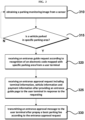
- a method of providing a parking service includes calculating overlap degree of a target vehicle and specific parking area by analyzing a parking monitoring image obtained from a sensor for monitoring specific parking monitoring area of a parking lot at a first time of point and determining through the calculated overlap degree whether the target vehicle is parked; recording the target vehicle in an exit queue when it is determined that the target vehicle goes out of the specific parking area by analyzing a parking monitoring image obtained from the sensor at a second time of point; performing an exit process when it is detected that the target vehicle included in the exit queue moves to go out of the specific parking monitoring area by analyzing a parking monitoring image obtained from the sensor at a third time of point.
- a payment process in accordance with an exit of the target vehicle is performed based on payment information preregistered when the target vehicle is parked.
- a method of providing a parking service includes (a) calculating overlap degree of a target vehicle and specific parking area by analyzing a parking monitoring image obtained from a first sensor for monitoring a first parking monitoring area of a parking lot at a first time of point and determining through the calculated overlap degree whether the target vehicle is parked; (b) recording the target vehicle in an exit queue when it is detected that the target vehicle parked in the specific parking area moves by analyzing a parking monitoring image obtained from the first sensor at a second time of point; and (c) matching a vehicle detected by analyzing a parking monitoring image obtained from a second sensor for monitoring a second parking monitoring area of the parking lot at a third time of point with the target vehicle when the detected vehicle is identical to the target vehicle included in the exit queue and performing an exit process.
- a payment process in accordance with an exit of the target vehicle is performed based on payment information preregistered when the target vehicle is parked.
- the overlap degree is calculated by using an area of the target vehicle and an area of the specific parking area, the overlap degree being calculated by dividing an overlap area of the target vehicle and the specific parking area by sum of the area of the target vehicle and the area of the specific parking area, in the step of (a), it is determined that the target vehicle is parked in the specific parking area when the overlap degree is included in a reference range.
- the method further includes before the step of (b), performing first prepayment process by basic parking fee by obtaining device information, vehicle information and payment information from a user device after transmitting an entrance guide message to the user device, when a unique number of the specific parking area in accordance with recognition of an electronic code mapped with the specific parking area is received from the user device according as the target vehicle is parked in the specific parking area; and updating a parking state table depending on the parking of the target vehicle in the specific parking area when the first prepayment process is completed.
- the parking state table includes parking state of parking areas and information related to vehicles, and the method further includes transmitting an illegal parking checking request message to a manager device when it is detected that a vehicle not registered in the parking state table is parked in corresponding parking area by analyzing a parking monitoring area obtained through a sensor for monitoring the parking lot.
- the step of performing the payment process includes performing the payment process considering money of the first prepayment process with reference to the parking state table and updating the parking state table to change state of the specific parking area into no parking.
- the step of (c) includes generating a feature vector by applying appearance of the detected vehicle to a machine learning algorithm or a deep learning algorithm and discriminating through the generated feature vector whether the detected vehicle and the target vehicle included in the exit queue are the same vehicle.
- the feature vector includes at least one of a global feature based on appearance of the detected vehicle and a local feature.
- a system for using a parking service when a sensor fails recognition of a vehicle number, or no sensor exists and performing automatic payment when the vehicle is exited is provided.
- a server includes a communication unit; a memory configured to store at least one command; a processor configured to execute the command stored in the memory.
- the command executed by the processor includes: calculating overlap degree of a target vehicle and specific parking area by analyzing a parking monitoring image obtained from a sensor for monitoring specific parking monitoring area of a parking lot at a first time of point and determining through the calculated overlap degree whether the target vehicle is parked; recording the target vehicle in an exit queue when it is determined that the target vehicle goes out of the specific parking area by analyzing a parking monitoring image obtained from the sensor at a second time of point; performing an exit process when it is detected that the target vehicle included in the exit queue moves to go out of the specific parking monitoring area by analyzing a parking monitoring image obtained from the sensor at a third time of point.
- a payment process in accordance with an exit of the target vehicle is performed based on payment information preregistered when the target vehicle is parked.
- a server includes a communication unit; a memory configured to store at least one command; and a processor configured to execute the command stored in the memory.
- the command executed by the processor includes (a) calculating overlap degree of a target vehicle and specific parking area by analyzing a parking monitoring image obtained from a first sensor for monitoring a first parking monitoring area of a parking lot at a first time of point through the communication unit and determining through the calculated overlap degree whether the target vehicle is parked; (b) recording the target vehicle in an exit queue when it is determined that the target vehicle parked in the specific parking area moves by analyzing a parking monitoring image obtained from the first sensor at a second time of point through the communication unit; and (c) matching a vehicle detected by analyzing a parking monitoring image obtained from a second sensor for monitoring a second parking monitoring area of the parking lot at a third time of point through the communication unit with the target vehicle when the detected vehicle is identical to the target vehicle included in the exit queue and performing an exit process.
- a system includes a sensor configured to monitor a parking monitoring area of a parking lot; and a server configured to determine that a vehicle is exited when the vehicle moves to go out of the parking monitoring area after it is detected that the vehicle in a parking area moves by analyzing a parking monitoring image obtained from the sensor and perform a payment process in accordance with an exit of a vehicle based on preregistered payment information when it is determined that the vehicle is exited.
- a system includes a first sensor configured to monitor a first parking monitoring area of a parking lot; a second sensor configured to monitor a second parking monitoring area of the parking lot; and a server configured to determine that a vehicle is exited when the vehicle is detected by analyzing the second parking monitoring image obtained from the second sensor after it is detected that the vehicle in a parking area moves by analyzing the first parking monitoring image obtained from the first sensor and perform a payment process in accordance with an exit of a vehicle based on preregistered payment information when it is determined that the vehicle is exited.
- a method and a system for providing a parking service may provide the parking service for managing a parking without recognition of a vehicle number.
- the method and the system of the present invention detect, and track of the vehicle based on AI by using an image obtained from a sensor installed at the parking lot to detect automatically an exit of the vehicle from a parking area and realize automatic payment by real parking time when the vehicle goes out though a vehicle number is not recognized or it is impossible to recognize the vehicle number.
- the method and the system of the present invention may charge a parking fee by calculating accurately an exit time of the vehicle on the parking area based on AI.
- FIG. 1 is a view illustrating a parking service according to an embodiment of the present invention.
- the parking service of the present invention is performed for a road parking lot formed on a backside road, etc. or an off-street parking lot.
- the parking service may be used for a parking lot which a parking barrier for an entrance and an exit of the parking lot is not installed, unlike conventional public parking lot.
- FIG. 1 shows an example of a parking lot on the backside road. It is assumed that a parking barrier is not equipped in the parking lot as shown in FIG. 1 , a parking space(parking area) is formed on a road, and no people or few people manage the parking lot.
- the parking areas are formed in a row in FIG. 1 , but the parking areas are not limited as in Fig. 1 .
- the design of the parking areas may be variously modified depending on the situation of the road.
- a system for providing a parking service of the present invention may monitor areas (hereinafter, referred to as “a parking monitoring area”) of the parking lot in real time by using a sensor, detect vehicles by analyzing images (hereinafter, referred to as “a parking monitoring image") obtained through each of the sensors, and give respectively an identification information ID to the detected vehicles. Additionally, the system may determine whether the vehicle parks in specific parking space (parking area) by analyzing the parking monitoring image and determine whether the vehicles go out by detecting moving of the vehicle parked in the specific parking space (parking area).
- the system for providing the parking service may recognize a vehicle number through analysis of the parking monitoring image obtained by the sensor. If the vehicle number is not recognized or a sensor does not exist in corresponding region, the system may give temporary identification information to the detected vehicle and manage the parking or the exit or payment process, etc. based on the given temporary identification information.
- the system for providing the parking service may give the same identification information to the same vehicle, and thus the vehicle can be tracked though the vehicle number is not recognized.
- a process of matching the identification information of the vehicle includes a step of detecting location of the vehicle by analyzing an image obtained by each of the sensors and a step of giving the same identification information to the same vehicle by reconstructing appearance information of the detected vehicle to a feature vector through a machine learning or a deep learning, thereby matching the identification information.
- the appearance information may include both global and local features.
- the global feature means feature shared by the same model of vehicles, e.g., appearance or color of the vehicle, etc.
- the local feature indicates detailed features of the vehicle, e.g., unique scratch of the vehicle or a sticker adhered to a glass, etc.
- the system for providing the parking service may compare feature vectors of the vehicles obtained by different cameras, determines that the vehicles are the same vehicle when the feature vectors are similar, and determines that the vehicles are different when the feature vectors are not similar.
- the similarity of two feature vectors may be calculated by using e.g., a Euclidean distance.
- the method of calculating the similarity may depend on the machine learning or the deep learning used when the feature vector is calculated.
- FIG. 2 is a view illustrating schematically a system for providing a parking service according to an embodiment of the present invention.
- a system 200 of providing a parking service of the present embodiment includes at least one sensor 210 and a server 220.
- the sensor 210 monitors a partial area (hereinafter, referred to as "parking monitoring area”) of a parking lot in real time.
- the sensor 210 may obtain a parking monitoring image by monitoring corresponding parking monitoring area of the parking lot in real time.
- the senor 210 may be an image photographing device, e.g., a CCTV installed at the parking lot or vicinity of the parking lot.
- the parking monitoring area monitored by the sensor 210 may include plural parking areas, and information concerning the parking areas may be pre-stored in the server 220.
- the server 220 provides the parking service by using the parking monitoring image transmitted from the sensor 210.
- the server 220 may detect a vehicle object without recognizing a vehicle number by analyzing the parking monitoring image transmitted from the sensor 210, detect specific parking area in which the vehicle parks through the detecting of the vehicle object, and then discriminate whether the vehicle parks, discriminate whether the vehicle is exited and perform a payment process, etc. according to the parking. This will be described in detail below.
- FIG. 3 is a flowchart illustrating a process of providing a parking service when a vehicle enters a parking lot according to an embodiment of the present invention
- FIG. 4 and FIG. 5 are views illustrating blocking of a parking area by a vehicle according to an embodiment of the present invention.
- the server 220 obtains a parking monitoring image from the sensor.
- the server 220 may obtain by one time the parking monitoring image from the sensor but obtain periodically the parking monitoring image from the sensor. That is, the server 220 may discriminate parking, moving or an exit of the vehicle, etc. by using the parking monitoring images obtained from the sensor at different time. Accordingly, hereinafter, it will be interpreted that the parking monitoring image used for discriminating the parking, the moving or the exit of the vehicle is obtained from a sensor or plural sensors at different time, though no description is mentioned.
- the server 220 discriminates whether the vehicle parks in specific parking area by analyzing the parking monitoring image obtained from the sensor.
- the server 220 gives an identification information ID to the vehicle when the vehicle is detected by analyzing the parking monitoring image obtained by the sensor. Additionally, the server 220 detects an area of the vehicle detected by analyzing the parking monitoring image obtained from the sensor. It is assumed that the area of each of the parking areas and coordinate information of each of the parking areas is prestored in the server 220.
- the server 220 may calculate information concerning overlap of the vehicle and the specific parking area by using the area of the detected vehicle and the area of the parking area and discriminate whether the vehicle parks in the specific parking area by using the calculated result.
- the server 220 may calculate overlap degree by dividing an overlapped area (hereinafter, referred to as "overlap area”) of the detected vehicle and the specific parking area by sum of the area of the detected vehicle and the area of the specific parking area when the detected vehicle locates in the specific parking area.
- overlap area an overlapped area
- the server 220 may determine that the vehicle parks in the specific parking area when the calculated overlap degree is included in a reference range. However, the server 220 may determine that the vehicle does not park in the specific parking area when the calculated overlap degree is beyond the reference range.
- FIG. 4 shows a case that the vehicle parks normally in the specific parking area
- FIG. 5 illustrates a case where the specific parking area is blocked by another vehicle. If a vehicle is located in front of the specific parking area not in the specific parking area as shown in FIG. 5 , the overlap area of the vehicle and the specific parking area increases and thus it becomes higher than preset reference range.
- the server 220 determines that the vehicle isn't parked normally in the specific parking area, and it may request crackdown to a device of a manager when the vehicle is continuously parking in front of the specific parking area more than predetermined time.
- the step of 310 is performed when the vehicle is not parked in the specific parking area.
- the server 220 receives an entrance guide request in accordance with an electronic code mapped with the specific parking area from a user device corresponding to the detected vehicle when it is determined that the vehicle is parked in the specific parking area.
- the entrance guide request may include a unique number for the specific parking area obtained from the electronic code.
- the user may request parking guide by inputting directly a unique number shown in the parking area in a website or an application through the user device.
- the server 220 provides an entrance guide page to the user device in response to the request, and it receives an entrance approval request including information, e.g., phone number, etc. of the user device, information of the vehicle and payment information.
- the server 220 processes prepayment by basic parking fee, e.g., preset amount of money in response to the entrance approval request, and then it transmits an entrance approval message to the user device.
- basic parking fee e.g., preset amount of money
- the server 220 may change current state of the specific parking area to "parking" by updating a parking state table.
- the parking state table records the parking state of parking areas.
- the parking state may include information as to whether a vehicle is parked in the corresponding parking area, information of the vehicle, information of the user device, a parking start time, etc.
- FIG. 6 is a flowchart illustrating a process of providing a parking service when a vehicle goes out according to an embodiment of the present invention
- FIG. 7 is a view describing an exit of the vehicle according to an embodiment of the present invention.
- a method of providing the parking service in accordance with the exit of the vehicle when it is detected by the sensor that the vehicle parked in the parking area moves will be described in detail.
- the server 220 discriminates whether the vehicle parked in the specific parking area goes out by analyzing the parking monitoring image obtained from the sensor at any time of point.
- the step of 610 is performed when the vehicle does not go out.
- the server 220 records information related to the vehicle parked in the specific parking area in an exit queue when the vehicle goes out of the specific parking area.
- the information related to the vehicle may include identification information given to a vehicle object and the vehicle.
- the server 220 discriminates whether the vehicle goes out of a sensing area of the sensor by analyzing the parking monitoring image obtained from the sensor after any time of point.
- the server 220 may determine that the vehicle goes out of the sensing area (monitoring area) of corresponding sensor when the vehicle exited from the parking area is not detected in the parking monitoring image obtained from corresponding sensor by analyzing continually the parking monitoring images obtained periodically from the sensor.
- the step of 620 is performed when it is determined that the vehicle does not go out of the sensing area of the sensor.
- the server 220 performs a payment process for exit of the vehicle by using preregistered payment information based on the identification information of the vehicle when it is determined that the vehicle goes out of the sensing area of the sensor.
- FIG. 8 is a flowchart illustrating a process of providing a parking service in accordance with exit of the vehicle according to another embodiment of the present invention
- FIG. 9 is a view describing a process of matching identification number of a vehicle (re-identification or re-id) according to an embodiment of the present invention.
- the vehicle moves to exit from specific parking area as described in FIG. 3 .
- a system of providing a parking service may perform an exit process when it is detected that a vehicle moves by at least two sensors. It is assumed that a first sensor monitors the specific parking area in which the vehicle is parked, and a second sensor monitors another area.
- the server 220 discriminates whether the vehicle parked in the specific parking area moves by analyzing a parking monitoring area obtained from the first sensor.
- the step of 810 is performed when the vehicle does not move.
- the server 220 records information related to the vehicle in an exit queue when the vehicle moves.
- the information related to the vehicle may include identification information given to a vehicle object and the vehicle.
- the server 220 detects the vehicle by analyzing a parking monitoring image obtained from the second sensor for monitoring another parking monitoring area of a parking lot.
- the system for providing the parking service provides an unmanned parking managing service by using sensors for monitoring different parking areas.
- the server 220 may give identification information to vehicles after detecting the vehicles from parking monitoring images obtained from the sensors, and it may track the vehicle by using the given identification information.
- different identification information may be given to the vehicles detected from the parking monitoring images obtained by different sensors.
- different identification information may be given to the same vehicle though the vehicles are the same vehicle in the event that the same vehicle is sensed by different sensors due to moving of the vehicle.
- the system may discriminate whether the vehicles detected from the parking monitoring images obtained from the sensors are the same vehicle and perform in advance a process of matching identification information depending on the discriminated result. This will be described in detail with reference to accompanying drawing FIG. 9 .
- the vehicle is sensed by the second sensor when the vehicle parked in a parking area moves for exit, the parking in the parking area being sensed by the first sensor.
- the vehicle is sensed by the second sensor when the vehicle parked in a parking area moves for exit, the parking in the parking area being sensed by the first sensor.
- it is difficult to track the vehicle because different identification information is given to the vehicles sensed by the sensors.
- the system may discriminate whether vehicles detected from parking monitoring images obtained from different sensors in a certain time are the same vehicle and match identification information of the vehicles according to the discriminated result.
- the server 220 discriminates whether the vehicle detected from the parking monitoring image obtained from the second sensor is matched with one of vehicles included in the exit queue.
- the server 220 records information related to the detected vehicle in the entrance queue or the exit queue when the detected vehicle is not matched with the vehicles included in the exit queue. That is, the server 220 may discriminate that the detected vehicle moves for the exit or moves to the parking lot for the purpose of the entrance. Subsequently, an exit process or an entrance process may be performed when the same vehicle is detected through the parking monitoring image obtained from another sensor.
- the server 220 performs the payment process for the exit by using the preregistered payment information based on the identification information of the vehicle when the detected vehicle is matched with one of the vehicles included in the exit queue. Then, the server 220 may change state of a parking area in which the vehicle is parked to "no parking" by updating a parking state table.
- FIG. 10 is a block diagram schematically illustrating a server according to an embodiment of the present invention.
- the server 220 includes a communication unit 1010, a memory 1020 and a processor 1030.
- the communication unit 1010 transmits data to another device, e.g. at least one sensor 210, a user device or a manager device or receives data from another device through a communication network.
- another device e.g. at least one sensor 210, a user device or a manager device or receives data from another device through a communication network.
- the memory 1020 stores commands needed for performing the method of providing the parking service which performs a parking management without recognizing a vehicle number.
- the processor 1030 controls elements of the server 220, e.g., the communication unit 1010 and the memory 1020, etc.
- the processor 1030 may execute the commands stored in the memory 1020, and the commands may execute the method of providing the parking service as shown in FIG. 3 to FIG. 9 .
- a computer-readable medium can include program instructions, data files, data structures, etc., alone or in combination.
- the program instructions recorded on the medium can be designed and configured specifically for the present invention or can be a type of medium known to and used by the skilled person in the field of computer software.
- Examples of a computer-readable medium may include magnetic media such as hard disks, floppy disks, magnetic tapes, etc., optical media such as CD-ROM's, DVD's, etc., magneto-optical media such as floptical disks, etc., and hardware devices such as ROM, RAM, flash memory, etc.
- Examples of the program of instructions may include not only machine language codes produced by a compiler but also high-level language codes that can be executed by a computer through the use of an interpreter, etc.
Landscapes
- Engineering & Computer Science (AREA)
- Physics & Mathematics (AREA)
- General Physics & Mathematics (AREA)
- Theoretical Computer Science (AREA)
- Business, Economics & Management (AREA)
- Software Systems (AREA)
- Evolutionary Computation (AREA)
- Mathematical Physics (AREA)
- Data Mining & Analysis (AREA)
- Health & Medical Sciences (AREA)
- General Health & Medical Sciences (AREA)
- Artificial Intelligence (AREA)
- Computing Systems (AREA)
- General Engineering & Computer Science (AREA)
- Strategic Management (AREA)
- Tourism & Hospitality (AREA)
- Marketing (AREA)
- Finance (AREA)
- General Business, Economics & Management (AREA)
- Economics (AREA)
- Development Economics (AREA)
- Computer Vision & Pattern Recognition (AREA)
- Molecular Biology (AREA)
- Computational Linguistics (AREA)
- Human Resources & Organizations (AREA)
- Biophysics (AREA)
- Life Sciences & Earth Sciences (AREA)
- Biomedical Technology (AREA)
- Medical Informatics (AREA)
- Primary Health Care (AREA)
- Accounting & Taxation (AREA)
- Entrepreneurship & Innovation (AREA)
- Multimedia (AREA)
- Operations Research (AREA)
- Game Theory and Decision Science (AREA)
- Quality & Reliability (AREA)
- Devices For Checking Fares Or Tickets At Control Points (AREA)
- Traffic Control Systems (AREA)
- Management, Administration, Business Operations System, And Electronic Commerce (AREA)
Applications Claiming Priority (2)
| Application Number | Priority Date | Filing Date | Title |
|---|---|---|---|
| KR1020210070232A KR102699707B1 (ko) | 2021-05-31 | 2021-05-31 | 주차 서비스 제공 방법 및 시스템 |
| PCT/KR2022/007097 WO2022255691A1 (ko) | 2021-05-31 | 2022-05-18 | 주차 서비스 제공 방법 및 시스템 |
Publications (2)
| Publication Number | Publication Date |
|---|---|
| EP4325422A1 true EP4325422A1 (de) | 2024-02-21 |
| EP4325422A4 EP4325422A4 (de) | 2025-04-09 |
Family
ID=84323360
Family Applications (1)
| Application Number | Title | Priority Date | Filing Date |
|---|---|---|---|
| EP22816350.7A Pending EP4325422A4 (de) | 2021-05-31 | 2022-05-18 | Verfahren und system zur bereitstellung eines parkdienstes |
Country Status (7)
| Country | Link |
|---|---|
| US (1) | US12603002B2 (de) |
| EP (1) | EP4325422A4 (de) |
| JP (1) | JP7694972B2 (de) |
| KR (1) | KR102699707B1 (de) |
| CN (1) | CN117377990A (de) |
| CA (1) | CA3219313A1 (de) |
| WO (1) | WO2022255691A1 (de) |
Families Citing this family (3)
| Publication number | Priority date | Publication date | Assignee | Title |
|---|---|---|---|---|
| US12462615B2 (en) * | 2022-10-07 | 2025-11-04 | Automotus Inc. | System and method for computer vision assisted parking space monitoring with automatic fee payments |
| US20240177489A1 (en) * | 2022-11-29 | 2024-05-30 | IPC Technology Group, LLC | Frictionless parking management system |
| KR20250071006A (ko) | 2023-11-14 | 2025-05-21 | 한국건설기술연구원 | 스마트 주차 시스템 및 이를 이용한 주차 방법 |
Family Cites Families (18)
| Publication number | Priority date | Publication date | Assignee | Title |
|---|---|---|---|---|
| JP2001084418A (ja) * | 1999-09-13 | 2001-03-30 | Chushajo Sogo Kenkyusho:Kk | 駐車場管理方法及び駐車場管理システム |
| KR20060077550A (ko) | 2004-12-30 | 2006-07-05 | 주식회사 위쥬테크 | 공영 주차장 통합 관리 시스템 및 그 방법 |
| CA2798925C (en) * | 2010-05-10 | 2022-09-27 | Park Assist Llc. | Method and system for managing a parking lot based on intelligent imaging |
| CN102855671A (zh) * | 2012-09-29 | 2013-01-02 | 深圳市泊慧停车管理科技有限公司 | 无阻碍停车收费系统及其方法 |
| KR101505459B1 (ko) * | 2013-02-05 | 2015-03-30 | 장보영 | 차량 위치 추적을 통한 주차 관리 시스템 및 주차 관리 방법 |
| KR20150024494A (ko) * | 2013-08-26 | 2015-03-09 | 주식회사 케이티 | 주차 관제 시스템 및 방법 |
| US20170069211A1 (en) * | 2015-09-08 | 2017-03-09 | Honeywell International Inc. | Parking application and management system |
| CA2908762C (en) * | 2015-10-16 | 2024-01-02 | Imperial Parking Canada Corporation | Method and system for managing parking by dual location verification |
| WO2018025381A1 (ja) * | 2016-08-04 | 2018-02-08 | 三菱電機株式会社 | 駐車場監視システム |
| KR101908611B1 (ko) * | 2016-12-13 | 2018-12-10 | 동아대학교 산학협력단 | 차량 주차관리 방법 |
| JP7220530B2 (ja) * | 2018-07-18 | 2023-02-10 | アマノ株式会社 | 駐車場管理システム、駐車場管理装置、駐車場管理方法、及びプログラム |
| US11046313B2 (en) * | 2018-12-11 | 2021-06-29 | Beijing Voyager Technology Co., Ltd. | Autonomous vehicle train |
| JP6539775B1 (ja) * | 2018-12-17 | 2019-07-03 | 株式会社プロロジス | 車両施設監視システム |
| CN110009929A (zh) * | 2019-03-15 | 2019-07-12 | 北京筑梦园科技有限公司 | 一种车辆泊位管理方法、设备及系统 |
| KR102298725B1 (ko) * | 2019-04-30 | 2021-09-06 | 에스케이텔레콤 주식회사 | 주차장 내 차량 모니터링 장치 및 방법 |
| KR102108383B1 (ko) * | 2019-09-05 | 2020-05-08 | 서민수 | 실시간 이동경로 및 점유상태를 제공하는 스마트 주차공간 안내 서비스 제공 방법 |
| CN110910655A (zh) * | 2019-12-11 | 2020-03-24 | 深圳市捷顺科技实业股份有限公司 | 一种停车管理方法、装置及设备 |
| CN111784857A (zh) * | 2020-06-22 | 2020-10-16 | 浙江大华技术股份有限公司 | 一种停车位管理方法、装置以及计算机存储介质 |
-
2021
- 2021-05-31 KR KR1020210070232A patent/KR102699707B1/ko active Active
-
2022
- 2022-05-18 CN CN202280036617.1A patent/CN117377990A/zh active Pending
- 2022-05-18 EP EP22816350.7A patent/EP4325422A4/de active Pending
- 2022-05-18 CA CA3219313A patent/CA3219313A1/en active Pending
- 2022-05-18 WO PCT/KR2022/007097 patent/WO2022255691A1/ko not_active Ceased
- 2022-05-18 JP JP2023570457A patent/JP7694972B2/ja active Active
-
2023
- 2023-11-23 US US18/518,544 patent/US12603002B2/en active Active
Also Published As
| Publication number | Publication date |
|---|---|
| WO2022255691A1 (ko) | 2022-12-08 |
| KR20220161912A (ko) | 2022-12-07 |
| KR102699707B1 (ko) | 2024-08-29 |
| JP7694972B2 (ja) | 2025-06-18 |
| CN117377990A (zh) | 2024-01-09 |
| US12603002B2 (en) | 2026-04-14 |
| JP2024518590A (ja) | 2024-05-01 |
| CA3219313A1 (en) | 2022-12-08 |
| US20240087457A1 (en) | 2024-03-14 |
| EP4325422A4 (de) | 2025-04-09 |
Similar Documents
| Publication | Publication Date | Title |
|---|---|---|
| US12603002B2 (en) | Method and system for providing parking service | |
| KR101343102B1 (ko) | 지능형 주차장 관리 시스템 및 방법 | |
| KR102274728B1 (ko) | 영상 기반의 주정차 모션 식별 자율 주차정산 시스템 및 방법 | |
| KR101908611B1 (ko) | 차량 주차관리 방법 | |
| CN106205139A (zh) | 车辆出入管理方法及装置 | |
| WO2008001714A1 (en) | Automatic toll receiving system with no vehicle type judging device | |
| KR20130097868A (ko) | 카메라 기반 지능형 주차관제 방법 및 시스템 | |
| KR102449307B1 (ko) | 차량 무선검지센서를 이용한 인공지능 기반 주차유도 통합서비스 시스템 및 이를 이용한 주차 예매 방법 | |
| CN107516433B (zh) | 停车场停车控制方法及装置 | |
| US20250014346A1 (en) | Parking management system for idendifying accurately vehicle without traffic congestion or using identifier | |
| KR20230142326A (ko) | 식별자를 이용하는 주차 관리 시스템 | |
| KR102551920B1 (ko) | 사용자가 원하는 위치의 주차장을 도착시간에 맞춰 빈자리를 예측하는 주차장 검출 시스템 | |
| KR102368122B1 (ko) | 딥러닝 영상 인식 기반의 차량 검출 및 추적 기술을 이용한 차량 번호 인식 방법 및 시스템 | |
| KR20220072789A (ko) | Cctv 영상 분석 기반의 주차 유도 관제 시스템 | |
| US20220371512A1 (en) | Information processing device and method, and program | |
| KR101740475B1 (ko) | 위치 정보를 이용한 주차 관리 방법 및 시스템 | |
| KR102452756B1 (ko) | 딥러닝 기반의 전기차 충전 구역 불법 주정차 관리 방법, 및 전기자동차용 충전 장치 | |
| KR101835757B1 (ko) | 부착형 주차 관리 모듈을 기반으로 한 차량 정보 인식 방법 및 이러한 부착형 주차 관리 모듈을 사용한 주차 관리 장치 | |
| KR102320495B1 (ko) | 주차장 자동결제장치 및 그 장치의 구동방법 | |
| KR102615880B1 (ko) | 스마트폰의 식별정보 기반 주차 결제 및 관제 서비스 제공 방법, 장치 및 시스템 | |
| JP6963920B2 (ja) | 一時停車料金精算方法と一時停車料金精算用ソフトウエア | |
| KR20240028777A (ko) | 주차장 내의 전기차 주차와 충전소 관리 시스템 및 방법 | |
| KR20240028778A (ko) | 주차장 내의 전기차 충전소 안내 시스템 및 방법 | |
| KR20230040417A (ko) | 딥 러닝을 이용한 주차 관리 방법 및 시스템 | |
| KR20220168521A (ko) | 주거지용 주차 관리 방법 |
Legal Events
| Date | Code | Title | Description |
|---|---|---|---|
| STAA | Information on the status of an ep patent application or granted ep patent |
Free format text: STATUS: THE INTERNATIONAL PUBLICATION HAS BEEN MADE |
|
| PUAI | Public reference made under article 153(3) epc to a published international application that has entered the european phase |
Free format text: ORIGINAL CODE: 0009012 |
|
| STAA | Information on the status of an ep patent application or granted ep patent |
Free format text: STATUS: REQUEST FOR EXAMINATION WAS MADE |
|
| 17P | Request for examination filed |
Effective date: 20231117 |
|
| AK | Designated contracting states |
Kind code of ref document: A1 Designated state(s): AL AT BE BG CH CY CZ DE DK EE ES FI FR GB GR HR HU IE IS IT LI LT LU LV MC MK MT NL NO PL PT RO RS SE SI SK SM TR |
|
| DAV | Request for validation of the european patent (deleted) | ||
| DAX | Request for extension of the european patent (deleted) | ||
| REG | Reference to a national code |
Ref country code: DE Ref legal event code: R079 Free format text: PREVIOUS MAIN CLASS: G06Q0050300000 Ipc: G06T0007700000 |
|
| A4 | Supplementary search report drawn up and despatched |
Effective date: 20250311 |
|
| RIC1 | Information provided on ipc code assigned before grant |
Ipc: G06Q 30/0283 20230101ALI20250305BHEP Ipc: G06V 20/62 20220101ALI20250305BHEP Ipc: G06V 20/52 20220101ALI20250305BHEP Ipc: G06Q 10/02 20120101ALI20250305BHEP Ipc: G07B 15/02 20110101ALI20250305BHEP Ipc: G06N 3/08 20230101ALI20250305BHEP Ipc: G06N 20/00 20190101ALI20250305BHEP Ipc: G06T 7/70 20170101AFI20250305BHEP |