EP4325630A2 - Appareils, procédés et systèmes de détection de fuite de module de batterie - Google Patents
Appareils, procédés et systèmes de détection de fuite de module de batterie Download PDFInfo
- Publication number
- EP4325630A2 EP4325630A2 EP23188758.9A EP23188758A EP4325630A2 EP 4325630 A2 EP4325630 A2 EP 4325630A2 EP 23188758 A EP23188758 A EP 23188758A EP 4325630 A2 EP4325630 A2 EP 4325630A2
- Authority
- EP
- European Patent Office
- Prior art keywords
- battery module
- pressure
- temperature
- value
- baseline
- Prior art date
- Legal status (The legal status is an assumption and is not a legal conclusion. Google has not performed a legal analysis and makes no representation as to the accuracy of the status listed.)
- Pending
Links
- 238000000034 method Methods 0.000 title claims abstract description 136
- 238000001514 detection method Methods 0.000 claims abstract description 124
- 230000004044 response Effects 0.000 claims abstract description 50
- 238000004891 communication Methods 0.000 claims abstract description 14
- 238000007789 sealing Methods 0.000 claims description 39
- 230000008569 process Effects 0.000 claims description 38
- 230000008859 change Effects 0.000 description 23
- 230000015654 memory Effects 0.000 description 17
- 230000006870 function Effects 0.000 description 14
- 230000008901 benefit Effects 0.000 description 12
- 238000010586 diagram Methods 0.000 description 12
- 238000013022 venting Methods 0.000 description 11
- 230000007423 decrease Effects 0.000 description 10
- 238000007599 discharging Methods 0.000 description 10
- 238000003860 storage Methods 0.000 description 10
- 238000004590 computer program Methods 0.000 description 9
- 230000007246 mechanism Effects 0.000 description 8
- 230000033228 biological regulation Effects 0.000 description 6
- 238000005336 cracking Methods 0.000 description 4
- 239000000428 dust Substances 0.000 description 4
- 229920001971 elastomer Polymers 0.000 description 4
- 239000000806 elastomer Substances 0.000 description 4
- 238000013023 gasketing Methods 0.000 description 4
- 230000004043 responsiveness Effects 0.000 description 4
- -1 but not limited to Substances 0.000 description 3
- 239000003792 electrolyte Substances 0.000 description 3
- 230000001960 triggered effect Effects 0.000 description 3
- XLYOFNOQVPJJNP-UHFFFAOYSA-N water Substances O XLYOFNOQVPJJNP-UHFFFAOYSA-N 0.000 description 3
- 238000003491 array Methods 0.000 description 2
- 238000004422 calculation algorithm Methods 0.000 description 2
- 238000004364 calculation method Methods 0.000 description 2
- 230000007613 environmental effect Effects 0.000 description 2
- 239000007788 liquid Substances 0.000 description 2
- 239000012528 membrane Substances 0.000 description 2
- 229920001343 polytetrafluoroethylene Polymers 0.000 description 2
- 239000004810 polytetrafluoroethylene Substances 0.000 description 2
- 230000002035 prolonged effect Effects 0.000 description 2
- WHXSMMKQMYFTQS-UHFFFAOYSA-N Lithium Chemical compound [Li] WHXSMMKQMYFTQS-UHFFFAOYSA-N 0.000 description 1
- HBBGRARXTFLTSG-UHFFFAOYSA-N Lithium ion Chemical compound [Li+] HBBGRARXTFLTSG-UHFFFAOYSA-N 0.000 description 1
- 101100000443 Saccharomyces cerevisiae (strain ATCC 204508 / S288c) ACC1 gene Proteins 0.000 description 1
- 101100489940 Schizosaccharomyces pombe (strain 972 / ATCC 24843) abp2 gene Proteins 0.000 description 1
- XUIMIQQOPSSXEZ-UHFFFAOYSA-N Silicon Chemical compound [Si] XUIMIQQOPSSXEZ-UHFFFAOYSA-N 0.000 description 1
- 101100108219 Zea mays ADF2 gene Proteins 0.000 description 1
- 239000002253 acid Substances 0.000 description 1
- 239000003570 air Substances 0.000 description 1
- 230000008878 coupling Effects 0.000 description 1
- 238000010168 coupling process Methods 0.000 description 1
- 238000005859 coupling reaction Methods 0.000 description 1
- 238000000354 decomposition reaction Methods 0.000 description 1
- 230000007812 deficiency Effects 0.000 description 1
- 230000000694 effects Effects 0.000 description 1
- 230000005669 field effect Effects 0.000 description 1
- 229910052744 lithium Inorganic materials 0.000 description 1
- 229910001416 lithium ion Inorganic materials 0.000 description 1
- 238000004519 manufacturing process Methods 0.000 description 1
- 239000000463 material Substances 0.000 description 1
- 229910052987 metal hydride Inorganic materials 0.000 description 1
- 238000012986 modification Methods 0.000 description 1
- 230000004048 modification Effects 0.000 description 1
- 238000012544 monitoring process Methods 0.000 description 1
- 230000003287 optical effect Effects 0.000 description 1
- 229920000642 polymer Polymers 0.000 description 1
- 238000012545 processing Methods 0.000 description 1
- 230000006903 response to temperature Effects 0.000 description 1
- 230000000630 rising effect Effects 0.000 description 1
- 239000004065 semiconductor Substances 0.000 description 1
- 229910052710 silicon Inorganic materials 0.000 description 1
- 239000010703 silicon Substances 0.000 description 1
- 239000000126 substance Substances 0.000 description 1
- 230000008961 swelling Effects 0.000 description 1
Images





Classifications
-
- G—PHYSICS
- G01—MEASURING; TESTING
- G01M—TESTING STATIC OR DYNAMIC BALANCE OF MACHINES OR STRUCTURES; TESTING OF STRUCTURES OR APPARATUS, NOT OTHERWISE PROVIDED FOR
- G01M3/00—Investigating fluid-tightness of structures
- G01M3/02—Investigating fluid-tightness of structures by using fluid or vacuum
- G01M3/26—Investigating fluid-tightness of structures by using fluid or vacuum by measuring rate of loss or gain of fluid, e.g. by pressure-responsive devices, by flow detectors
-
- G—PHYSICS
- G01—MEASURING; TESTING
- G01M—TESTING STATIC OR DYNAMIC BALANCE OF MACHINES OR STRUCTURES; TESTING OF STRUCTURES OR APPARATUS, NOT OTHERWISE PROVIDED FOR
- G01M3/00—Investigating fluid-tightness of structures
-
- G—PHYSICS
- G01—MEASURING; TESTING
- G01M—TESTING STATIC OR DYNAMIC BALANCE OF MACHINES OR STRUCTURES; TESTING OF STRUCTURES OR APPARATUS, NOT OTHERWISE PROVIDED FOR
- G01M3/00—Investigating fluid-tightness of structures
- G01M3/40—Investigating fluid-tightness of structures by using electric means, e.g. by observing electric discharges
-
- H—ELECTRICITY
- H01—ELECTRIC ELEMENTS
- H01M—PROCESSES OR MEANS, e.g. BATTERIES, FOR THE DIRECT CONVERSION OF CHEMICAL ENERGY INTO ELECTRICAL ENERGY
- H01M10/00—Secondary cells; Manufacture thereof
- H01M10/42—Methods or arrangements for servicing or maintenance of secondary cells or secondary half-cells
- H01M10/4207—Methods or arrangements for servicing or maintenance of secondary cells or secondary half-cells for several batteries or cells simultaneously or sequentially
-
- H—ELECTRICITY
- H01—ELECTRIC ELEMENTS
- H01M—PROCESSES OR MEANS, e.g. BATTERIES, FOR THE DIRECT CONVERSION OF CHEMICAL ENERGY INTO ELECTRICAL ENERGY
- H01M10/00—Secondary cells; Manufacture thereof
- H01M10/42—Methods or arrangements for servicing or maintenance of secondary cells or secondary half-cells
- H01M10/4228—Leak testing of cells or batteries
-
- H—ELECTRICITY
- H01—ELECTRIC ELEMENTS
- H01M—PROCESSES OR MEANS, e.g. BATTERIES, FOR THE DIRECT CONVERSION OF CHEMICAL ENERGY INTO ELECTRICAL ENERGY
- H01M10/00—Secondary cells; Manufacture thereof
- H01M10/42—Methods or arrangements for servicing or maintenance of secondary cells or secondary half-cells
- H01M10/48—Accumulators combined with arrangements for measuring, testing or indicating the condition of cells, e.g. the level or density of the electrolyte
-
- H—ELECTRICITY
- H01—ELECTRIC ELEMENTS
- H01M—PROCESSES OR MEANS, e.g. BATTERIES, FOR THE DIRECT CONVERSION OF CHEMICAL ENERGY INTO ELECTRICAL ENERGY
- H01M10/00—Secondary cells; Manufacture thereof
- H01M10/42—Methods or arrangements for servicing or maintenance of secondary cells or secondary half-cells
- H01M10/48—Accumulators combined with arrangements for measuring, testing or indicating the condition of cells, e.g. the level or density of the electrolyte
- H01M10/482—Accumulators combined with arrangements for measuring, testing or indicating the condition of cells, e.g. the level or density of the electrolyte for several batteries or cells simultaneously or sequentially
-
- H—ELECTRICITY
- H01—ELECTRIC ELEMENTS
- H01M—PROCESSES OR MEANS, e.g. BATTERIES, FOR THE DIRECT CONVERSION OF CHEMICAL ENERGY INTO ELECTRICAL ENERGY
- H01M10/00—Secondary cells; Manufacture thereof
- H01M10/42—Methods or arrangements for servicing or maintenance of secondary cells or secondary half-cells
- H01M10/48—Accumulators combined with arrangements for measuring, testing or indicating the condition of cells, e.g. the level or density of the electrolyte
- H01M10/486—Accumulators combined with arrangements for measuring, testing or indicating the condition of cells, e.g. the level or density of the electrolyte for measuring temperature
-
- H—ELECTRICITY
- H01—ELECTRIC ELEMENTS
- H01M—PROCESSES OR MEANS, e.g. BATTERIES, FOR THE DIRECT CONVERSION OF CHEMICAL ENERGY INTO ELECTRICAL ENERGY
- H01M10/00—Secondary cells; Manufacture thereof
- H01M10/42—Methods or arrangements for servicing or maintenance of secondary cells or secondary half-cells
- H01M10/48—Accumulators combined with arrangements for measuring, testing or indicating the condition of cells, e.g. the level or density of the electrolyte
- H01M10/488—Cells or batteries combined with indicating means for external visualization of the condition, e.g. by change of colour or of light density
-
- H—ELECTRICITY
- H01—ELECTRIC ELEMENTS
- H01M—PROCESSES OR MEANS, e.g. BATTERIES, FOR THE DIRECT CONVERSION OF CHEMICAL ENERGY INTO ELECTRICAL ENERGY
- H01M10/00—Secondary cells; Manufacture thereof
- H01M10/42—Methods or arrangements for servicing or maintenance of secondary cells or secondary half-cells
- H01M10/425—Structural combination with electronic components, e.g. electronic circuits integrated to the outside of the casing
-
- H—ELECTRICITY
- H01—ELECTRIC ELEMENTS
- H01M—PROCESSES OR MEANS, e.g. BATTERIES, FOR THE DIRECT CONVERSION OF CHEMICAL ENERGY INTO ELECTRICAL ENERGY
- H01M10/00—Secondary cells; Manufacture thereof
- H01M10/42—Methods or arrangements for servicing or maintenance of secondary cells or secondary half-cells
- H01M10/425—Structural combination with electronic components, e.g. electronic circuits integrated to the outside of the casing
- H01M2010/4271—Battery management systems including electronic circuits, e.g. control of current or voltage to keep battery in healthy state, cell balancing
-
- H—ELECTRICITY
- H01—ELECTRIC ELEMENTS
- H01M—PROCESSES OR MEANS, e.g. BATTERIES, FOR THE DIRECT CONVERSION OF CHEMICAL ENERGY INTO ELECTRICAL ENERGY
- H01M2200/00—Safety devices for primary or secondary batteries
- H01M2200/10—Temperature sensitive devices
-
- H—ELECTRICITY
- H01—ELECTRIC ELEMENTS
- H01M—PROCESSES OR MEANS, e.g. BATTERIES, FOR THE DIRECT CONVERSION OF CHEMICAL ENERGY INTO ELECTRICAL ENERGY
- H01M2200/00—Safety devices for primary or secondary batteries
- H01M2200/20—Pressure-sensitive devices
-
- Y—GENERAL TAGGING OF NEW TECHNOLOGICAL DEVELOPMENTS; GENERAL TAGGING OF CROSS-SECTIONAL TECHNOLOGIES SPANNING OVER SEVERAL SECTIONS OF THE IPC; TECHNICAL SUBJECTS COVERED BY FORMER USPC CROSS-REFERENCE ART COLLECTIONS [XRACs] AND DIGESTS
- Y02—TECHNOLOGIES OR APPLICATIONS FOR MITIGATION OR ADAPTATION AGAINST CLIMATE CHANGE
- Y02E—REDUCTION OF GREENHOUSE GAS [GHG] EMISSIONS, RELATED TO ENERGY GENERATION, TRANSMISSION OR DISTRIBUTION
- Y02E60/00—Enabling technologies; Technologies with a potential or indirect contribution to GHG emissions mitigation
- Y02E60/10—Energy storage using batteries
Definitions
- the present disclosure relates generally to apparatuses, systems, and methods for detecting leakage associated with battery modules such as, but not limited to, hermetically sealed battery modules, ingress protection (IP) sealed battery modules, and/or the like.
- battery modules such as, but not limited to, hermetically sealed battery modules, ingress protection (IP) sealed battery modules, and/or the like.
- IP ingress protection
- various embodiments of the present disclosure provide example battery module leakage detection devices (as well as example methods carried out by example battery module leakage detection devices) for generating leakage warning signals in response to detecting a leakage associated with a battery module (including, but not limited to, hermetically sealed battery modules and IP sealed battery modules).
- battery module refers to a device that includes multiple battery cells packaged together within the same battery module casing.
- a battery module may be manufactured through a sealing process (such as, but not limited to, a hermetic sealing process or an ingress protection (IP) sealing process) to isolate and protect battery cells within the battery module from the outside environment.
- a sealing process such as, but not limited to, a hermetic sealing process or an ingress protection (IP) sealing process
- Battery modules can be implemented to provide power to transportation systems such as, but not limited to, electric vehicles (EVs), electric motorcycles, electric bicycles, electric scooters, and/or the like.
- battery modules are prone to cracking that can compromise sealings of battery modules and result in leakages of the battery modules (such as, but not limited to, leakage of liquid from outside environment into the battery modules, leakage of electrolytes from battery cells within the battery modules, and/or the like).
- Applicant has identified many deficiencies and problems associated with existing methods, apparatus, and systems related to detecting leakages from battery modules.
- Various embodiments described herein relate to methods, apparatuses, and systems that provide technical advantages and benefits on detecting leakage in battery modules.
- a battery module leakage detection device is provided.
- the battery module leakage detection device comprises a pressure and temperature sensor and a controller.
- the pressure and temperature sensor is positioned within a battery module casing of a battery module.
- the controller is in electronic communication with the pressure and temperature sensor.
- the controller is configured to: receive a plurality of detected pressure signals and a plurality of detected temperature signals from the pressure and temperature sensor; calculate a detected pressure-to-temperature value based on the plurality of detected pressure signals and the plurality of detected temperature signals; calculate a pressure-to-temperature difference value between the detected pressure-to-temperature value and a baseline pressure-to-temperature value associated with the battery module; and in response to determining that the pressure-to-temperature difference value is outside a tolerance threshold, generate a leakage warning signal associated with the battery module.
- the battery module comprises: a plurality of battery cells positioned within the battery module casing; and a battery management system positioned within the battery module casing and in electronic communication with the controller.
- the plurality of detected pressure signals indicates a plurality of detected pressure values associated with the battery module. In some embodiments, the plurality of detected temperature signals indicates a plurality of detected temperature values associated with the battery module.
- the battery module is manufactured based on a hermetic sealing process.
- the controller is configured to: receive a baseline pressure signal indicating a baseline pressure value and a baseline temperature signal indicating a baseline temperature value that are associated with a baseline battery module that is hermetically sealed; and calculate the baseline pressure-to-temperature value by dividing the baseline pressure value by the baseline temperature value.
- the controller is configured to: calculate the detected pressure-to-temperature value based on dividing a detected pressure value of the plurality of detected pressure values by a detected temperature value of the plurality of detected temperature values.
- the controller is configured to: in response to determining that the detected pressure-to-temperature value is below the baseline pressure-to-temperature value, generate the leakage warning signal indicating a crack on the battery module casing.
- the controller is configured to: calculate a crack size estimation value associated with the crack on the battery module casing based on the pressure-to-temperature difference value.
- the controller is configured to: in response to determining that the detected pressure-to-temperature value is above the baseline pressure-to-temperature value, generate the leakage warning signal indicating a gas release within the battery module casing.
- the controller is configured to: calculate a gas volume estimation value associated with the gas release within the battery module casing based on the pressure-to-temperature difference value.
- the battery module is manufactured based on an ingress protection (IP) process.
- IP ingress protection
- the controller is configured to: receive a plurality of baseline pressure signals indicating a plurality of baseline pressure values and a plurality of baseline temperature signals indicating a plurality of baseline temperature values that are associated with a baseline battery module that is IP sealed; calculate a baseline pressure ramp value between a previous baseline pressure value and a subsequent baseline pressure value from the plurality of baseline pressure values; calculate a baseline temperature ramp value between a previous baseline temperature value and a subsequent baseline temperature value from the plurality of baseline temperature values; and calculate the baseline pressure-to-temperature value by dividing the baseline pressure ramp value by the baseline temperature ramp value.
- the controller is configured to: calculate a detected pressure ramp value between a previously detected pressure value and a subsequently detected pressure value from the plurality of detected pressure values; calculate a detected temperature ramp value between a previously detected temperature value and a subsequently detected temperature value from the plurality of detected temperature values; and calculate the detected pressure-to-temperature value by dividing the detected pressure ramp value by the detected temperature ramp value.
- the controller is configured to: in response to determining that the detected pressure-to-temperature value is below the baseline pressure-to-temperature value, generate the leakage warning signal indicating a crack on the battery module casing.
- the controller is configured to: calculate a crack size estimation value associated with the crack on the battery module casing based on the pressure-to-temperature difference value.
- a computer-implemented method for detecting battery module leakage comprises receiving a plurality of baseline pressure signals indicating a plurality of baseline pressure values and a plurality of baseline temperature signals indicating a plurality of baseline temperature values that are associated with a baseline battery module that is IP sealed; calculating a baseline pressure ramp value between a previous baseline pressure value and a subsequent baseline pressure value from the plurality of baseline pressure values; calculating a baseline temperature ramp value between a previous baseline temperature value and a subsequent baseline temperature value from the plurality of baseline temperature values; and calculating the baseline pressure-to-temperature value by dividing the baseline pressure ramp value by the baseline temperature ramp value.
- a computer program product for detecting battery module leakage.
- the computer program product comprises at least one non-transitory computer-readable storage medium having computer-readable program code portions stored therein.
- the computer-readable program code portions comprise an executable portion configured to receive a plurality of detected pressure signals and a plurality of detected temperature signals from the pressure and temperature sensor; calculate a detected pressure-to-temperature value based on the plurality of detected pressure signals and the plurality of detected temperature signals; calculate a pressure-to-temperature difference value between the detected pressure-to-temperature value and a baseline pressure-to-temperature value associated with the battery module; and in response to determining that the pressure-to-temperature difference value is outside a tolerance threshold, generate a leakage warning signal associated with the battery module.
- ком ⁇ онент or feature may,” “can,” “could,” “should,” “would,” “preferably,” “possibly,” “typically,” “optionally,” “for example,” “often,” or “might” (or other such language) be included or have a characteristic, that a specific component or feature is not required to be included or to have the characteristic. Such a component or feature may be optionally included in some embodiments, or it may be excluded.
- electroctronically coupled refers to two or more elements or components being connected through wired means and/or wireless means, such that signals, voltage/current, data and/or information may be transmitted to and/or received from these elements or components.
- a battery module comprises multiple battery cells packaged together within the same battery module casing.
- an example battery module is manufactured through a sealing process to isolate and protect battery cells within the battery module from the outside environment.
- an example battery module may be ingress protection (IP) sealed.
- IP ingress protection
- the example battery module provides a battery module casing for housing battery cells, and such a battery module casing is not only waterproof and dust proof, but also provides one or more mechanisms for releasing pressure within the battery module.
- an IP sealed battery module may be manufactured through an IP sealing process.
- the battery module casing of the battery module may comprise a battery module casing top cover and a battery module casing bottom container.
- the battery module casing top cover and the battery module casing bottom container may be sealed to one another through, such as, but not limited to, one or more elastomeric O-ring seals, one or more elastomer liners, and/or the like.
- an IP sealing process may comprise gasketing the perimeters of the battery module casing top cover with the perimeters of the battery module casing bottom container.
- an example battery module may be IP sealed through other IP sealing processes and/or other IP sealing mechanisms.
- the battery module casing of an IP sealed battery module provides one or more mechanisms for releasing pressure from within the battery module.
- one or more pressure relief valves are disposed and/or formed on the battery module casing of the battery module.
- Such pressure relief valves can regulate pressure within the battery module. For example, when the inner pressure value of the battery module exceeds a threshold pressure value (for example, due to an increase of temperature within the battery module), the one or more pressure relief valves may be triggered / opened, releasing pressure that is built up within the battery module.
- an example IP sealed battery module may comprise one or more additional and/or alternative pressure releasing mechanisms.
- a battery module casing of an IP sealed battery module may comprise one or more vent membrane materials (such as, but not limited to, polytetrafluoroethylene polymer (PTFE) membranes), which allows air to flow through and prevent water, dust, and/or the like from entering the battery module.
- PTFE polytetrafluoroethylene polymer
- an example battery module may be hermetically sealed.
- the example battery module provides a battery module casing for housing battery cells, and such a battery module casing is waterproof, dust proof, and airproof.
- the battery module casing of the battery module creates an airtight enclosure for battery cells, so that there is no passage of air, water, and dust between the enclosure within the battery module casing and the environment outside the battery module casing.
- a hermetically sealed battery module may be manufactured through a hermetic sealing process. Similar to those described above, the battery module casing of the battery module may comprise a battery module casing top cover and a battery module casing bottom container. During the hermetic sealing process, the battery module casing top cover and the battery module casing bottom container may be hermetically sealed to one another through, such as, but not limited to, one or more elastomeric O-ring seals, one or more elastomer liners, and/or the like. Additionally, or alternatively, a hermetic sealing process may comprise gasketing the perimeters of the battery module casing top cover with the perimeters of the battery module casing bottom container. Additionally, or alternatively, an example battery module may be hermetically sealed through other hermetic sealing processes and/or other hermetic sealing mechanisms.
- the hermetic sealing process does not provide any mechanisms for releasing pressure from within the battery module.
- the battery module casing of a hermetically sealed battery module does not comprise any pressure releasing mechanisms (for example, the battery module casing does not comprise any pressure relief valve). In other words, there is no exchange of air between inside the hermetically sealed battery module and outside the hermetically sealed battery module.
- battery modules can be implemented to provide power to many systems.
- EVs use one or more IP sealed battery modules as power sources.
- hermetically sealed battery modules may be applied in, such as but not limited to, industrial battery banks.
- battery modules are prone to leakage that is caused by cracking and/or thermal runaway, compromising the seals of the battery modules.
- an IP sealed battery module that is used in an EV is subject to shaking and vibration from the EV.
- the battery module casing of the IP sealed battery module may crack, causing one or more gaps or cracks to be formed on the battery module casing.
- conductive substances such as, but not limited to, water
- Thermal runaway may be caused by mechanical abuse (such as, but not limited to, puncture of the battery module), environmental issues (such as, but not limited to, a high environmental temperature) and/or internal short circuit (for example, one of the battery cells within the battery module short-circuited with another battery cell).
- mechanical abuse such as, but not limited to, puncture of the battery module
- environmental issues such as, but not limited to, a high environmental temperature
- internal short circuit for example, one of the battery cells within the battery module short-circuited with another battery cell.
- the internal temperature of the battery module continues rising, creating a domino effect where other battery cells in the battery module decompose and swell.
- the decomposition and swelling of battery cells in the battery module can release heat and gas, which causes rapidly increasing temperatures and pressures and may further cause rupture of the battery module casing of the battery module.
- Some devices and methods may detect battery module leakage based on detecting the humidity within the battery module.
- such devices may comprise a humidity sensor that generates humidity detection signals indicating the humidity levels within the battery module casing of the battery module.
- a rapid increase of humidity level within the battery module casing of the battery module may likely be caused by liquid leaking into the battery module (for example, through one or more cracks or gaps on the battery module casing of the battery module).
- the time it takes to reach a certain amount of humidity level increase is shorter when there is leakage.
- a threshold e.g. when it takes less time to achieve a certain amount of humidity level increase
- humidity-based leakage detection devices and methods are plagued with technical limitations.
- the humidity levels at different locations within the battery module casing of the battery module can be different, and the rate of humidity level increase may vary based on where the humidity sensor is located.
- a rapid increase of humidity level may be due to the placement / location of the humidity sensor, rather than due to leakage.
- the location-specific nature of humidity levels within the battery module casing can render humidity-based leakage detection devices and methods ineffective and even invalid.
- example apparatuses, systems, and methods for detecting leakage associated with battery modules based on temperature and pressure within the battery modules.
- example apparatuses, systems, and methods in accordance with some embodiments of the present disclosure utilize a pressure and temperature sensor that is positioned with the battery module casing and generates detected pressure signals and detected temperature signals.
- the detected pressure signals and detected temperature signals are provided to a controller, which determines whether there is leakage based on the detected pressure signals and detected temperature signals.
- the controller determines that there is leakage, the controller generates leakage warning signal(s).
- example methods, systems, and apparatuses for detecting leakage (such as, but not limited to, gas leak, crack, and/or the like) in a hermetically sealed battery module are provided.
- an example battery module leakage detection device for detecting leakage in a hermetically sealed battery module comprises a pressure and temperature sensor.
- the example battery module leakage detection device monitors pressure variation within the battery module casing in relation to the temperature.
- the example battery module leakage detection device characterizes these pressure variations in a baseline battery module (that is hermetically sealed and without any crack) based on temperature trend. For example, the example battery module leakage detection device calculates pressure-to-temperature values associated with the hermetically sealed battery module. In some embodiments, such pressure-to-temperature values (along with a certain amount of tolerance) may be established as baseline data for detecting leakage in the hermetically sealed battery module. After establishing the baseline data, the example battery module leakage detection device monitors pressure variations in a battery module that is of the same type as the baseline battery module (e.g.
- various embodiments of the present disclosure may determine that there is a leakage of the battery module due to a crack on the battery module casing.
- various embodiments of the present disclosure may determine that there is gas released by one or more battery cells within the battery module casing of the battery module due to thermal runaway.
- example methods, systems, and apparatuses for detecting leakage (such as, but not limited to, gas leak, crack, and/or the like) in an IP sealed battery module are provided.
- an example battery module leakage detection device for detecting leakage in an IP sealed battery module comprises a pressure and temperature sensor.
- the example battery module leakage detection device detects leakage based on pressure within the battery module casing as a function of temperature within the battery module casing.
- the battery module leakage detection device uses temperature within the battery module casing as a parameter in determining whether there is leakage (e.g. gas leak or crack on the battery module casing) in the IP sealed battery module.
- the battery module leakage detection device may establish baseline data based on calculating baseline pressure ramp values and baseline temperature ramp values.
- the pressure ramp value with the temperature ramp value in a baseline battery module (that is IP sealed and without any crack) is used as baseline data.
- the example battery module leakage detection device calculates baseline pressure ramp values and baseline temperature ramp values associated with a battery module that is of the same type as the baseline battery module (e.g. also IP sealed), and calculates detected pressure-to-temperature values.
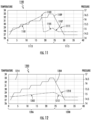
- the pressure ramp up rate will be lower and may not trigger the pressure relief valves of the battery module casing. Even if the pressure does trigger the pressure relief valves, it may take a prolonged time to vent and release pressure as compared to that from the baseline data. As such, when the detected pressure-to-temperature values are below the baseline data, various embodiments of the present disclosure may determine that there is a leakage of the battery module due to a crack on the battery module casing.
- various embodiments of the present disclosure can detect battery module leakage in a variety of implementations.
- various embodiments may be implemented to detect leakage / cracking of a battery module in an EV.
- various embodiments of the present disclosure can alert the user upfront when a battery module leakage is detected, avoiding ingress and potential thermal runaway conditions and increasing the safety of operating EVs.
- FIG. 1 an example portion of an example exploded view of an example battery module 100 in accordance with some embodiments of the present disclosure is illustrated.
- the example battery module 100 comprises a battery module casing top cover 101 and a battery module casing bottom container 109.
- the battery module casing top cover 101 and the battery module casing bottom container 109 are sealed to one another, defining a battery module casing that provides an enclosure for housing various components (such as, but not limited to, a plurality of battery cells 103, a battery management system 105, and a battery module leakage detection device 107).
- the battery module casing defined by the battery module casing top cover 101 and the battery module casing bottom container 109 provide an IP seal for the battery module 100.
- an IP sealing process may comprise gasketing the perimeters of the battery module casing top cover 101 with the perimeters of the battery module casing bottom container 109.
- the battery module casing top cover 101 and the battery module casing bottom container 109 may be sealed to one another through, such as, but not limited to, one or more elastomeric O-ring seals, one or more elastomer liners, and/or the like.
- the battery module casing top cover 101 comprises a pressure relief valve 111 for releasing pressure from within the battery module 100 when the pressure inside the battery module 100 exceeds a threshold.
- the battery module casing defined by the battery module casing top cover 101 and the battery module casing bottom container 109 may provide a hermetic seal for the battery module 100. Similar to those described above, the hermetic sealing process may comprise gasketing the perimeters of the battery module casing top cover 101 with the perimeters of the battery module casing bottom container 109. Additionally, or alternatively, the battery module casing top cover 101 and the battery module casing bottom container 109 may be sealed to one another through, such as, but not limited to, one or more elastomeric O-ring seals, one or more elastomer liners, and/or the like. When the battery module casing provides a hermetic seal, the battery module casing top cover 101 (and the battery module casing bottom container 109) does not comprise any pressure relief valves.
- the example battery module 100 comprises a plurality of battery cells 103 and a battery management system 105.
- the plurality of battery cells 103 are positioned within the battery module casing that is defined by the battery module casing top cover 101 and the battery module casing bottom container 109.
- the plurality of battery cells 103 comprises one or more types of battery cells such as, but not limited to, lithium batteries, lithium-ion batteries, nickel-metal hydride batteries, lead-acid batteries, ultracapacitors, and/or the like.
- the battery management system 105 is positioned within the battery module casing that is defined by the battery module casing top cover 101 and the battery module casing bottom container 109.
- the battery management system 105 is an electronic system that monitors the discharging, charging, and/or other factors that are associated with the operation state of the plurality of battery cells 103.
- the battery management system 105 may be connected to the plurality of battery cells 103 and may comprise a voltage monitor circuit (for example, but not limited to, a voltage supervisor circuit).
- the battery management system 105 may comprise gate circuits such as, but not limited to, metal-oxide-semiconductor field-effect transistors (MOSFETs) to regulate the charging and discharging of the plurality of battery cells 103. Additionally, or alternatively, the battery management system 105 may comprise one or more other circuitries.
- MOSFETs metal-oxide-semiconductor field-effect transistors
- the example battery module 100 comprises a battery module leakage detection device 107.
- the battery module leakage detection device 107 comprises a controller and a pressure and temperature sensor.
- the battery module leakage detection device 107 is positioned within the battery module casing (e.g. defined by the enclosure between the battery module casing top cover 101 and the battery module casing bottom container 109 as described above). Because the battery module leakage detection device 107 comprises the pressure and temperature sensor, the pressure and temperature sensor of the battery module leakage detection device 107 is positioned within the battery module casing of a battery module 100.
- the pressure and temperature sensor generates a plurality of detected pressure signals and a plurality of detected temperature signals.
- the plurality of detected pressure signals indicates a plurality of detected pressure values associated with the battery module 100 (for example, pressures within the battery module casing defined by the enclosure between the battery module casing top cover 101 and the battery module casing bottom container 109).
- the plurality of detected temperature signals indicates a plurality of detected temperature values associated with the battery module 100 (for example, temperatures within the battery module casing defined by the enclosure between the battery module casing top cover 101 and the battery module casing bottom container 109).
- the battery management system 105 is in electronic communication with the controller of the battery module leakage detection device 107.
- the battery management system 105 is connected to the battery module leakage detection device 107 and receives data and/or information from the controller of the battery module leakage detection device 107 (such as, but not limited to, leakage warning signals, pressure signals, temperature signals, and/or crack estimation signals). Additional details of the battery module leakage detection device 107 are described herein, including, but not limited to, those described in connection with at least FIG. 2 .
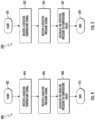
- FIG. 2 an example block diagram showing example components of the example battery module leakage detection device 107 in accordance with some embodiments of the present disclosure is provided.
- the example battery module leakage detection device 107 comprises a pressure and temperature sensor 206 positioned within a battery module casing of a battery module, as well as a controller 204 that is in electronic communication with the pressure and temperature sensor 206.
- the pressure and temperature sensor 206 can detect both pressure and temperature within the battery module casing of the battery module at the same time.
- the pressure and temperature sensor 206 may comprise a pressure sensor and a temperature sensor that are secured within a single transducer package.
- the pressure and temperature sensor 206 may comprise a capacitive sensing element that translates mechanical deflection due to ambient pressure into change in capacitance, which in turn can be determined based on a change in voltage output.
- the pressure and temperature sensor 206 may comprise a piezoresistive silicon pressure sensing element that offers a digital or analog output for reading pressure over a specified full scale pressure span and temperature range.
- the pressure and temperature sensor 206 may comprise a thermistor that translates temperature change to resistance change, which can in turn be determined based on a change in voltage output.
- the pressure and temperature sensor 206 may be in the form of ABP2 series sensors that are manufactured by Honeywell ® .
- an example pressure and temperature sensor 206 may comprise one or more additional and/or alternative elements to detect pressure and/or temperature.
- the pressure and temperature sensor 206 is positioned within a battery module casing of a battery module. As such, the pressure and temperature sensor 206 can generate detected pressure signals that indicate pressures within the battery module casing of the battery module, as well as detected temperature signals that indicate temperatures within the battery module casing of the battery module. In some embodiments, the detected pressure signals and the detected temperature signals are non-transitory.
- the pressure and temperature sensor 206 and the controller 204 are in electronic communications with one another.
- the controller 204 receives the detected pressure signals and the detected temperature signals from the pressure and temperature sensor 206.
- the controller 204 may be embodied in a number of different ways.
- the controller 204 may be embodied as one or more complex programmable logic devices (CPLDs), microprocessors, multi-core processors, coprocessing entities, application-specific instruction-set processors (ASIPs), and/or controllers.
- CPLDs complex programmable logic devices
- ASIPs application-specific instruction-set processors
- controllers may be embodied as one or more other processing devices or circuitry.
- the term circuitry may refer to an entirely hardware embodiment or a combination of hardware and computer program products.
- the controller 204 may be embodied as integrated circuits, application specific integrated circuits (ASICs), field programmable gate arrays (FPGAs), programmable logic arrays (PLAs), hardware accelerators, other circuitry, and/or the like.
- ASICs application specific integrated circuits
- FPGAs field programmable gate arrays
- PDAs programmable logic arrays
- the controller 204 may be configured for a particular use or configured to execute instructions stored in volatile or non-volatile media or otherwise accessible to the controller 204.
- the controller 204 may be capable of performing steps or operations according to embodiments of the present disclosure when configured accordingly.
- the example battery module leakage detection device 107 comprises a memory 208 that is in electronic communication with the controller 204.
- the controller 204 may be in communication with the memory 208 via a bus.
- the memory 208 is non-transitory and may include, for example, one or more volatile and/or non-volatile memories.
- the one or more volatile memories may include, but not limited to, RAM, DRAM, SRAM, FPM DRAM, EDO DRAM, SDRAM, DDR SDRAM, DDR2 SDRAM, DDR3 SDRAM, RDRAM, RIMM, DIMM, SIMM, VRAM, cache memory, register memory, and/or the like.
- the one or more non-volatile memories may include, but are not limited to, hard disks, ROM, PROM, EPROM, EEPROM, flash memory, MMCs, SD memory cards, Memory Sticks, CBRAM, PRAM, FeRAM, RRAM, SONOS, racetrack memory, and/or the like.
- the memory 208 may be an electronic storage device ( e.g. , a computer-readable storage medium). The memory 208 may be configured to store information, data, content, applications, instructions, or the like for enabling the apparatus to carry out various functions in accordance with example embodiments of the present disclosure.
- the example battery module leakage detection device 107 comprises a supply regulation / filter circuitry 202.
- the supply regulation / filter circuitry 202 receives power from a power supply (such as, but not limited to, a battery) and conveys power to the other components of the battery module leakage detection device 107 (such as, but not limited to, the pressure and temperature sensor 206 and/or the controller 204).
- the supply regulation / filter circuitry 202 is connected to the ground to provide safety.
- the supply regulation / filter circuitry 202 may comprise one or more circuits that regulate the flow of power from the power source to the battery module leakage detection device 107 (such as, but not limited to, one or more MOSFETs described above). Additionally, or alternatively, the supply regulation / filter circuitry 202 may comprise one or more other circuits.
- the example battery module leakage detection device 107 comprises an output and protection circuitry 210 in electronic communication with the controller 204.
- the supply regulation / filter circuitry 202 receives signals from the controller 204, including, but not limited to, leakage warning signals, pressure signals, temperature signals, and crack estimation signals.
- the leakage warning signals, the pressure signals, the temperature signals, and the crack estimation signals are non-transitory.
- the output and protection circuitry 210 receives a leakage warning signal from the controller 204.
- the leakage warning signal indicates that there is a leakage of the battery module (for example, due to a crack on the battery module casing or due to the gas released from a battery cell within the battery module). Additional details associated with the leakage warning signal are described herein, including but not limited to, those described in connection with at least FIG. 3 , FIG. 6 , and FG. 10.
- the output and protection circuitry 210 receives a pressure signal from the controller 204.
- the pressure signal indicates a detected pressure within the battery module casing of a battery module.
- the output and protection circuitry 210 receives a temperature signal from the controller 204.
- the temperature signal indicates a detected temperature within the battery module casing of a battery module.
- the output and protection circuitry 210 receives a crack estimation signal from the controller 204.
- the crack estimation signal indicates a crack size estimation value associated with a crack on the battery module casing of the battery module. Additional details associated with the crack estimation signal are described herein, including but not limited to, those described in connection with at least FIG. 6 and FIG. 10 .
- the output and protection circuitry 210 transmits these signals to other electronic components (such as, but not limited to, a battery management system described above).
- the output and protection circuitry 210 may comprise one or more networks and/or communication interfaces (such as, but not limited to, a data bus).
- the output and protection circuitry 210 comprises one or more protection circuits that provide a failsafe in the event that there is a high current that flows out of the battery module leakage detection device 107 and/or a current that flows back to the battery module leakage detection device 107.
- the output and protection circuitry 210 may comprise reverse-current circuits such as, but not limited to, one or more diodes.
- the output and protection circuitry 210 may comprise one or more other circuit(s).
- each block of the flowchart, and combinations of blocks in the flowchart may be implemented by various means such as hardware, firmware, circuitry and/or other devices associated with execution of software including one or more computer program instructions.
- one or more of the procedures described in FIG. 3 to FIG. 6 and FIG. 8 to FIG. 10 may be embodied by computer program instructions, which may be stored by a non-transitory memory of an apparatus employing an embodiment of the present disclosure and executed by a processor in the apparatus.
- These computer program instructions may direct a computer or other programmable apparatus to function in a particular manner, such that the instructions stored in the computer-readable storage memory produce an article of manufacture, the execution of which implements the function specified in the flowchart block(s).
- embodiments of the present disclosure may be configured as methods, mobile devices, backend network devices, and the like. Accordingly, embodiments may comprise various means including entirely of hardware or any combination of software and hardware. Furthermore, embodiments may take the form of a computer program product on at least one non-transitory computer-readable storage medium having computer-readable program instructions (e.g., computer software) embodied in the storage medium. Similarly, embodiments may take the form of a computer program code stored on at least one non-transitory computer-readable storage medium. Any suitable computer-readable storage medium may be utilized including non-transitory hard disks, CD-ROMs, flash memory, optical storage devices, or magnetic storage devices.
- the example method 300 provides technical advantages and benefits such as, but not limited to, improving the accuracy and responsiveness in detecting leakage in battery modules.
- a battery module leakage detection device (such as, but not limited to, the battery module leakage detection device 107 described above in connection with at least FIG. 1 and/or FIG. 2 ) includes a controller (such as, but not limited to, the controller 204 illustrated and described above in connection with at least FIG. 2 ) that receives detected pressure signals and detected temperature signals.
- the controller receives a plurality of detected pressure signals and a plurality of detected temperature signals from a pressure and temperature sensor.
- the pressure and temperature sensor is positioned within a battery module casing of a battery module.
- the plurality of detected pressure signals indicates a plurality of detected pressure values associated with the battery module
- the plurality of detected temperature signals indicates a plurality of detected temperature values associated with the battery module.
- each of the plurality of detected pressure values may be in the unit of pounds per square inch gauge (Psig). In some embodiments, each of the plurality of detected temperature values may be in the unit of Celsius. In some embodiments, the detected pressure values and/or the detected temperature values may be in other unit(s).
- a battery module leakage detection device (such as, but not limited to, the battery module leakage detection device 107 described above in connection with at least FIG. 1 and/or FIG. 2 ) includes a controller (such as, but not limited to, the controller 204 illustrated and described above in connection with at least FIG. 2 ) that calculates a detected pressure-to-temperature value.
- the controller calculates the detected pressure-to-temperature value at step/operation 305 based on the plurality of detected pressure signals and the plurality of detected temperature signals received at step/operation 303.
- various embodiments of the present disclosure detect crack in the battery module casing of a battery module based on the pressure within the battery module as related to the temperature within the battery module.
- a pressure-to-temperature value refers to a value that represents pressure as a function of temperature.
- R d is the detected pressure-to-temperature value
- P d ( T d ) represents the detected pressure P d as a function of the detected temperature T d .
- the controller determines a calculation algorithm for the detected pressure-to-temperature value at step/operation 305 based on whether the battery module is manufactured through a hermetic sealing process or through an IP sealing process.
- the controller may calculate the detected pressure-to-temperature value based on at least the example method 500 of FIG. 5 , details of which are described herein.
- the controller may calculate the detected pressure-to-temperature value based on at least the example method 900 of FIG. 9 , details of which are described herein.
- a battery module leakage detection device (such as, but not limited to, the battery module leakage detection device 107 described above in connection with at least FIG. 1 and/or FIG. 2 ) includes a controller (such as, but not limited to, the controller 204 illustrated and described above in connection with at least FIG. 2 ) that calculates a pressure-to-temperature difference value.
- the controller calculates the pressure-to-temperature difference value as a difference between the detected pressure-to-temperature value calculated at step/operation 305 and a baseline pressure-to-temperature value associated with the battery module.
- the controller determines a calculation algorithm for the baseline pressure-to-temperature value based on whether the battery module is manufactured through a hermetic sealing process or through an IP sealing process.
- the controller may calculate the baseline pressure-to-temperature value based on at least the example method 400 of FIG. 4 , details of which are described herein.
- the controller may calculate the baseline pressure-to-temperature value based on at least the example method 800 of FIG. 8 , details of which are described herein.
- C is the pressure-to-temperature difference value
- R d is the detected pressure-to-temperature value
- P d ( T d ) represents the detected pressure P d as a function of the detected temperature T d
- R b is the baseline pressure-to-temperature value
- P b ( T b ) represents the baseline pressure P b as a function of the baseline temperature T b .
- the pressure-to-temperature difference value factors in not only the difference of pressure between the baseline value and detected value, but also the difference of temperature between the baseline value and detected value.
- a battery module leakage detection device (such as, but not limited to, the battery module leakage detection device 107 described above in connection with at least FIG. 1 and/or FIG. 2 ) includes a controller (such as, but not limited to, the controller 204 illustrated and described above in connection with at least FIG. 2 ) that determines whether the pressure-to-temperature difference value is outside the tolerance threshold.
- the baseline pressure-to-temperature value characterizes the environment within an ideal battery module (that does not have any crack or leakage) in terms of pressure variance relative to temperature trend.
- the detected pressure-to-temperature value characterizes the environment within a battery module (that the battery module leakage detection device is implemented to detect crack or leakage) in terms of pressure variance relative to temperature trend.
- the pressure-to-temperature difference value i.e. the difference between the baseline pressure-to-temperature value and the detected pressure-to-temperature value
- the tolerance threshold represents a maximum allowable departure from the baseline pressure-to-temperature value. In other words, the tolerance threshold sets a quantitively measure of whether a deviation is significant. When the pressure-to-temperature difference value is outside the tolerance threshold, it indicates that the detected pressure-to-temperature value deviates so significantly from the baseline pressure-to-temperature value that is likely caused by a leakage associated with the battery module.
- the tolerance threshold may be set as 10% of the baseline pressure-to-temperature value.
- the pressure-to-temperature difference value is more than 10% of the baseline pressure-to-temperature value, it indicates that the detected pressure-to-temperature value deviates significantly from the baseline pressure-to-temperature value, indicating that there is a leakage associated with the battery module.
- the pressure-to-temperature difference value is less than 10% of the baseline pressure-to-temperature value, it indicates that the detected pressure-to-temperature value deviates within a tolerance from the baseline pressure-to-temperature value (e.g. does not deviate significantly from the baseline pressure-to-temperature value), indicating that there is no leakage of the battery module.
- an example tolerance threshold of 10% of the baseline pressure-to-temperature value
- an example tolerance threshold may be of other value(s).
- a battery module leakage detection device (such as, but not limited to, the battery module leakage detection device 107 described above in connection with at least FIG. 1 and/or FIG. 2 ) includes a controller (such as, but not limited to, the controller 204 illustrated and described above in connection with at least FIG. 2 ) that generates a leakage warning signal associated with the battery module.
- the controller in response to determining that the pressure-to-temperature difference value is outside a tolerance threshold (for example, more than 10% of the baseline pressure-to-temperature value), the controller generates a leakage warning signal associated with the battery module.
- a tolerance threshold for example, more than 10% of the baseline pressure-to-temperature value
- the leakage warning signal provides an electronic indication (for example, an electronic message, a system message, and/or the like) that there is a leakage associated with the battery module.
- the leakage warning signal may indicate that the leakage is caused by a crack on the battery module casing of the battery module.
- the leakage warning signal may indicate that the leakage is caused by gas that is released by battery cells within the battery module. Additional details are described in connection with at least FIG. 6 and FIG. 10 .
- step/operation 313 the example method 300 proceeds to step/operation 313 and ends.
- step/operation 309 the battery module leakage detection device determines that the pressure-to-temperature difference value is not outside the tolerance threshold, the example method 300 proceeds to step/operation 313 and ends.
- the controller determines that the pressure-to-temperature difference value is not outside the tolerance threshold, the controller determines that the detected pressure-to-temperature value does not deviate significantly from the baseline pressure-to-temperature value. As such, there is likely no leakage associated with the battery module.
- an example battery module leakage detection device may determine whether there is a leakage of a battery module based on pressure-to-temperature values (such as detected pressure-to-temperature values, baseline pressure-to-temperature values, and pressure-to-temperature difference values).
- pressure-to-temperature values such as detected pressure-to-temperature values, baseline pressure-to-temperature values, and pressure-to-temperature difference values
- pressure-to-temperature values are calculated differently based on whether the battery module is hermetically sealed or IP sealed.
- FIG. 4 to FIG. 7 example diagrams and flowcharts associated with example calculations of pressure-to-temperature values of a hermetically sealed battery module are illustrated.
- the example methods illustrated and described in connection with FIG. 4 to FIG. 7 can be implemented to detect leakage of a battery module that is manufactured based on a hermetic sealing process.
- leak can be detected by monitoring pressure variations.
- pressure within the battery module fluctuates during the charging and discharging cycles because of thermal variations.
- temperature increases, which in turn causes the pressure to increase.
- temperature decreases, which in turn causes the pressure to decrease.
- these pressure variations can be characterized for temperature trend as pressure-to-temperature values, and these pressure-to-temperature values (with certain amount of tolerance) will be the baseline data for hermetically sealed battery modules.
- a crack can be detected when a detected pressure-to-temperature value is below the baseline pressure-to-temperature value.
- a gas release within the battery module (for example, due to an electrolyte leak of battery cells) can be detected when a detected pressure-to-temperature value is above the baseline pressure-to-temperature value.
- the example method 400 establishes baseline data for detecting leakage in a hermetically sealed battery module.
- a battery module leakage detection device (such as, but not limited to, the battery module leakage detection device 107 described above in connection with at least FIG. 1 and/or FIG. 2 ) includes a controller (such as, but not limited to, the controller 204 illustrated and described above in connection with at least FIG. 2 ) that receives a baseline temperature signal.
- the baseline temperature signal indicates a baseline temperature value that is associated with a baseline battery module that is hermetically sealed.
- the pressure and temperature sensor is placed within a baseline battery module that is confirmed to be hermetically sealed and without any leakage.
- the baseline temperature value indicates a temperature within an ideal battery module that is hermetically sealed.
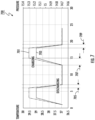
- an example diagram 700 illustrates an example temperature value curve 703 associated with a battery module that is hermetically sealed.
- the hermetically sealed battery module operates between discharging cycles (such as during time period 705 and time period 709) and charging cycles (such as during time period 707).
- the temperature within the hermetically sealed battery module decreases. In the example shown in FIG. 7 , the temperature within the hermetically sealed battery module reaches a lowest point at 26.5 degrees Celsius.
- the temperature within the hermetically sealed battery module increases.
- the temperature within the hermetically sealed battery module reaches a highest point at 29 degrees Celsius.
- the baseline temperature signal when the controller receives the baseline temperature signal, the baseline temperature signal indicates a baseline temperature between 26.5 degrees Celsius and 29 degrees Celsius, depending on the time code associated with the baseline temperature signal (e.g. whether the hermetically sealed battery module is charging or discharging).
- a battery module leakage detection device (such as, but not limited to, the battery module leakage detection device 107 described above in connection with at least FIG. 1 and/or FIG. 2 ) includes a controller (such as, but not limited to, the controller 204 illustrated and described above in connection with at least FIG. 2 ) that receives a baseline pressure signal.
- the baseline pressure signal indicates a baseline pressure value that is associated with a baseline battery module that is hermetically sealed.
- the pressure and temperature sensor is placed within a battery module that is confirmed to be hermetically sealed and without any leakage.
- the baseline pressure value indicates a pressure within an ideal battery module that is hermetically sealed.
- the baseline pressure signal received at step/operation 406 is associated with the same time code as the baseline temperature signal received at step/operation 404.
- the baseline pressure signal received at step/operation 406 reflects a baseline pressure value that is detected by the pressure and temperature sensor at the same time as the baseline temperature value from the baseline temperature signal received at step/operation 404.
- an example diagram 700 illustrates an example pressure value curve 701 associated with the battery module that is hermetically sealed.
- the temperature in the hermetically sealed battery module fluctuates due to the charging and discharging cycles. Because the battery module is hermetically sealed, an increase of the temperature within the battery module causes an increase in the pressure within the battery module, and a decrease of the temperature within the battery module causes a decrease of the temperature within the battery module.
- the relationship between temperature and pressure is reflected by the example temperature value curve 703 and the example pressure value curve 701 shown in FIG. 7 .
- the pressure within the hermetically sealed battery module reaches a lowest point below 14.7 Psig and a highest point above 15.3 Psig.
- the baseline pressure signal indicates a baseline pressure between 14.7 Psig Celsius and 15.3 Psig, depending on the time code associated with the baseline pressure signal (e.g. whether the hermetically sealed battery module is charging or discharging).
- a battery module leakage detection device (such as, but not limited to, the battery module leakage detection device 107 described above in connection with at least FIG. 1 and/or FIG. 2 ) includes a controller (such as, but not limited to, the controller 204 illustrated and described above in connection with at least FIG. 2 ) that calculates the baseline pressure-to-temperature value.
- the controller calculates the baseline pressure-to-temperature value based on the baseline pressure value from the baseline pressure signal received at step/operation 406 and the baseline temperature value from the baseline temperature signal received at step/operation 404.
- the controller divides the baseline pressure value by the baseline temperature value to calculate the baseline pressure-to-temperature value.
- R b is the baseline pressure-to-temperature value
- P b is the baseline pressure value from the baseline pressure signal received at step/operation 406
- T b is the baseline temperature value from the baseline temperature signal received at step/operation 404
- P b ( T b ) represents the baseline pressure P b as a function of the baseline temperature value T b .
- the baseline pressure signal received at step/operation 406 and the baseline temperature signal received at step/operation 404 are associated with the same time code.
- the baseline pressure-to-temperature value R b characterizes the battery module based on the pressure variation relative to the temperature trend within the battery module.
- step/operation 410 the example method 400 proceeds to step/operation 410 and ends.
- the example method 500 calculates a detected pressure-to-temperature value associated with a battery module that is manufactured through a hermetic sealing process.
- the battery module in connection with FIG. 4 and the battery module in connection with FIG. 5 are of the same type.
- the battery module in connection with FIG. 4 is a battery module that is confirmed to be hermetically sealed and without any leakage.
- the battery module in connection with FIG. 5 is a battery module that is the same type as the battery module in connection with FIG. 4 , but may or may not comprise leakage.
- the detected pressure-to-temperature value provides a basis for determining whether there is a leakage in the battery module in connection with FIG. 5 .
- a battery module leakage detection device (such as, but not limited to, the battery module leakage detection device 107 described above in connection with at least FIG. 1 and/or FIG. 2 ) includes a controller (such as, but not limited to, the controller 204 illustrated and described above in connection with at least FIG. 2 ) that receives a detected temperature signal.
- the detected temperature signal indicates a detected temperature value that is associated with a battery module
- the battery module leakage detection device determines whether there is a leakage of the battery module.
- the pressure and temperature sensor is placed within the battery module in order to determine whether there is any leakage.
- the detected temperature value indicates a temperature within the battery module.
- a battery module leakage detection device (such as, but not limited to, the battery module leakage detection device 107 described above in connection with at least FIG. 1 and/or FIG. 2 ) includes a controller (such as, but not limited to, the controller 204 illustrated and described above in connection with at least FIG. 2 ) that receives a detected pressure signal.
- the detected pressure signal indicates a detected pressure value that is associated with a battery module
- the battery module leakage detection device determines whether there is a leakage of the battery module.
- the pressure and temperature sensor is placed within the battery module in order to determine whether there is any leakage.
- the detected pressure value indicates a pressure within the battery module.
- a battery module leakage detection device (such as, but not limited to, the battery module leakage detection device 107 described above in connection with at least FIG. 1 and/or FIG. 2 ) includes a controller (such as, but not limited to, the controller 204 illustrated and described above in connection with at least FIG. 2 ) that calculates the detected pressure-to-temperature value.
- the controller calculates the detected pressure-to-temperature value based on the detected pressure value from the detected pressure signal received at step/operation 505 and the detected temperature value from the detected temperature signal received at step/operation 503.
- the controller divides the detected pressure value by the detected temperature value to calculate the detected pressure-to-temperature value.
- R d is the detected pressure-to-temperature value
- P d is the detected pressure from the detected pressure signal received at step/operation 505
- T d is the detected temperature from the detected temperature signal received at step/operation 503
- P d ( T d ) represents the detected pressure P d as a function of the detected temperature T d .
- step/operation 507 the example method 500 proceeds to step/operation 509 and ends.
- an example method 600 in accordance with some embodiments of the present disclosure is illustrated.
- the example method 600 illustrates an example of detecting leakage in a battery module that is manufactured through a hermetic sealing process.
- the example method 600 provides technical advantages and benefits such as, but not limited to, improving the accuracy and responsiveness in detecting leakage in battery modules.
- a battery module leakage detection device (such as, but not limited to, the battery module leakage detection device 107 described above in connection with at least FIG. 1 and/or FIG. 2 ) includes a controller (such as, but not limited to, the controller 204 illustrated and described above in connection with at least FIG. 2 ) that calculates a pressure-to-temperature difference value.
- the controller calculates the pressure-to-temperature difference value based on the baseline pressure-to-temperature value (for example, calculated in accordance with the example method 400 shown in FIG. 4 ) and the detected pressure-to-temperature value (for example, calculated in accordance with the example method 500 shown in FIG. 5 ) that are associated with a hermetically sealed battery module.
- C is the pressure-to-temperature difference value
- R b is the baseline pressure-to-temperature value
- R d is the detected pressure-to-temperature value
- a battery module leakage detection device (such as, but not limited to, the battery module leakage detection device 107 described above in connection with at least FIG. 1 and/or FIG. 2 ) includes a controller (such as, but not limited to, the controller 204 illustrated and described above in connection with at least FIG. 2 ) that determines whether the pressure-to-temperature difference value is outside the tolerance threshold.
- the controller determines whether the pressure-to-temperature difference value is outside the tolerance threshold similar to those described above in connection with at least step/operation 309 of FIG. 3 .
- step/operation 606 the battery module leakage detection device determines that the pressure-to-temperature difference value is not outside the tolerance threshold, the example method 600 proceeds to step/operation 618 and ends.
- the controller determines that the pressure-to-temperature difference value is not outside the tolerance threshold, the controller determines that the detected pressure-to-temperature value does not deviate significantly from the baseline pressure-to-temperature value. As such, there is likely no leakage associated with the battery module that is hermetically sealed.
- a battery module leakage detection device (such as, but not limited to, the battery module leakage detection device 107 described above in connection with at least FIG. 1 and/or FIG. 2 ) includes a controller (such as, but not limited to, the controller 204 illustrated and described above in connection with at least FIG. 2 ) that determines whether the detected pressure-to-temperature value is below or above the baseline pressure-to-temperature value.
- the detected pressure-to-temperature value when the detected pressure-to-temperature value is below the baseline pressure-to-temperature value, it indicates that the pressure changes slower in response to a temperature change in the battery module (as compared to the pressure change in response to a temperature change in a battery module that is confirmed to be hermetically sealed and does not have leakage).
- the slower pressure change is due to a crack on the battery module casing of the battery module that was originally hermetically sealed.
- the crack releases pressure from within the battery module, causing pressure to change slower in response to a temperature change.
- the faster pressure change is due to gas released by battery cells in the battery module.
- thermal runaway in a battery module may cause battery cells within the battery module to release gas (for example, due to electrolytes leaking from the battery cells).
- the gas release increases the pressure within the battery module, causing the pressure to change faster in response to a temperature change.
- a battery module leakage detection device (such as, but not limited to, the battery module leakage detection device 107 described above in connection with at least FIG. 1 and/or FIG. 2 ) includes a controller (such as, but not limited to, the controller 204 illustrated and described above in connection with at least FIG. 2 ) that generates the leakage warning signal indicating a crack on the battery module casing.
- the controller in response to determining that the detected pressure-to-temperature value is below the baseline pressure-to-temperature value, the controller generates the leakage warning signal indicating a crack on the battery module casing.
- the leakage warning signal provides an electronic indication (for example, an electronic message, a system message, and/or the like) that not only indicates a leakage associated with the battery module, but also indicates that the leakage is caused by a crack on the battery module casing of the battery module.
- a battery module leakage detection device (such as, but not limited to, the battery module leakage detection device 107 described above in connection with at least FIG. 1 and/or FIG. 2 ) includes a controller (such as, but not limited to, the controller 204 illustrated and described above in connection with at least FIG. 2 ) that calculates a crack size estimation value.
- the crack size estimation value indicates an estimated size of the crack on the battery module that causes the leakage.
- the controller calculates the crack size estimation value associated with the crack on the battery module casing based on the pressure-to-temperature difference value calculated at step/operation 604.
- the crack size estimation value is proportional to the pressure-to-temperature difference value. In other words, the bigger the crack on the battery module, the more pressure being released through the crack, and the higher the pressure-to-temperature difference value.
- step/operation 618 proceeds to step/operation 618 and ends.
- a battery module leakage detection device (such as, but not limited to, the battery module leakage detection device 107 described above in connection with at least FIG. 1 and/or FIG. 2 ) includes a controller (such as, but not limited to, the controller 204 illustrated and described above in connection with at least FIG. 2 ) that generates the leakage warning signal indicating a gas release within the battery module casing.
- the controller in response to determining that the detected pressure-to-temperature value is above the baseline pressure-to-temperature value, the controller generates the leakage warning signal indicating a gas release within the battery module casing.
- the leakage warning signal provides an electronic indication (for example, an electronic message, a system message, and/or the like) that not only indicates a leakage associated with the battery module, but also indicates that the leakage is caused a gas release within the battery module casing (which, for example, is in turn caused by thermal runaway of battery cells).
- a battery module leakage detection device (such as, but not limited to, the battery module leakage detection device 107 described above in connection with at least FIG. 1 and/or FIG. 2 ) includes a controller (such as, but not limited to, the controller 204 illustrated and described above in connection with at least FIG. 2 ) that calculates a gas volume estimation value.
- the gas volume estimation value indicates an estimated size of the gas released within the battery module that is caused by the thermal runaway of battery cells.
- the controller calculates the gas volume estimation value associated with the gas release within the battery module casing based on the pressure-to-temperature difference value calculated at step/operation 604. For example, the gas volume estimation value is proportional to the pressure-to-temperature difference value. In other words, the more gas is released within the battery module, the more pressure being built within the battery module, and the higher the pressure-to-temperature difference value.
- step/operation 618 proceeds to step/operation 618 and ends.
- FIG. 8 to FIG. 12 example diagrams and flowcharts associated with example calculations of pressure-to-temperature values of an IP sealed battery module are illustrated.
- the example methods illustrated and described in connection with FIG. 8 to FIG. 12 can be implemented to detect leakage of a battery module that is manufactured based on an IP sealing process.
- baseline data can be calculated based on the baseline pressure ramp value and the baseline temperature ramp value, which show the rate at which pressure varies (ramp up or down) in relation to temperature changes.
- the pressure ramp rate will be lower and may not trigger the pressure relief valve, resulting in a prolonged time to vent compared to that of the baseline data.
- an example method 800 in accordance with some embodiments of the present disclosure is illustrated.
- the example method 800 establishes baseline data for detecting leakage in an IP sealed battery module.
- a battery module leakage detection device (such as, but not limited to, the battery module leakage detection device 107 described above in connection with at least FIG. 1 and/or FIG. 2 ) includes a controller (such as, but not limited to, the controller 204 illustrated and described above in connection with at least FIG. 2 ) that receives a plurality of baseline pressure signals and a plurality of baseline temperature signals.
- the plurality of baseline pressure signals indicate a plurality of baseline pressure values that are associated with a baseline battery module that is IP sealed.
- the plurality of baseline temperature signals indicate a plurality of baseline temperature values that are associated with the baseline battery module that is IP sealed.
- the pressure and temperature sensor is placed within a battery module that is confirmed to be IP sealed and without any leakage.
- the plurality of baseline pressure values indicate pressures within the battery module that is IP sealed and without any crack or leakage
- the plurality of baseline temperature values indicate temperatures within the battery module that is IP sealed and without any crack or leakage.
- a battery module leakage detection device (such as, but not limited to, the battery module leakage detection device 107 described above in connection with at least FIG. 1 and/or FIG. 2 ) includes a controller (such as, but not limited to, the controller 204 illustrated and described above in connection with at least FIG. 2 ) that calculates a baseline pressure ramp value.
- an example diagram 1100 illustrates an example pressure value curve 1101 associated with a battery module that is IP sealed.
- the pressure values in the example pressure value curve 1101 continue to increase until the pressure venting point 1103.
- the pressure value reaches a pressure venting threshold (for example, 16.6 Psig).
- a pressure venting threshold for example, 16.6 Psig.
- the pressure relief valve of the IP sealed battery module is triggered to open, releasing pressure from within the battery module. Subsequently, pressure value fluctuates (as shown by the pressure value curve portion 1105), and eventually ramps down (as shown by the pressure value curve portion 1107).
- ⁇ P b is the baseline pressure ramp value
- P b 2 is the subsequently baseline pressure value that is captured at a subsequent time point
- P b 1 is the previously baseline pressure value that is captured at a previous time point. In some embodiments, the previous time point occurs before the subsequent time point.
- a battery module leakage detection device (such as, but not limited to, the battery module leakage detection device 107 described above in connection with at least FIG. 1 and/or FIG. 2 ) includes a controller (such as, but not limited to, the controller 204 illustrated and described above in connection with at least FIG. 2 ) that calculates a baseline temperature ramp value.
- the temperature within the battery module also fluctuates as the pressure relief valve opens and closes.
- the example diagram 1100 illustrates an example temperature value curve 1109 associated with a battery module that is IP sealed.
- the timeline can be divided based on the temperature values in the example temperature value curve 1109.
- the timeline may include an exothermic phase 1113 (where the temperature within the battery module increases) and a cool down phase 1115 (where the temperature within the battery module decreases).
- the temperature value in the temperature value curve 1109 decreases (as reflected in the temperature value curve portion 1111).
- ⁇ T b is the baseline temperature ramp value
- T b 2 is the subsequent baseline temperature value that is captured at the subsequent time point
- T b 1 is the previous baseline temperature value that is captured at the previous time point. As described above, the previous time point occurs before the subsequent time point.
- a battery module leakage detection device (such as, but not limited to, the battery module leakage detection device 107 described above in connection with at least FIG. 1 and/or FIG. 2 ) includes a controller (such as, but not limited to, the controller 204 illustrated and described above in connection with at least FIG. 2 ) that calculates the baseline pressure-to-temperature value.
- the controller calculates the baseline pressure-to-temperature value based on the baseline pressure ramp value calculated at step/operation 806 and the baseline temperature ramp value calculated at step/operation 808.
- the controller divides the baseline pressure ramp value by the baseline temperature ramp value to calculate the baseline pressure-to-temperature value.
- ⁇ R b is the baseline pressure-to-temperature value.
- ⁇ P b ( ⁇ T b ) represents the baseline pressure ramp value ⁇ P b as a function of the baseline temperature ramp value ⁇ T b . Both P b 1 and T b 1 are recorded at the same previous time point. Both P b 2 and T b 2 are recorded at the same subsequent time point.
- step/operation 810 the example method 800 proceeds to step/operation 812 and ends.
- the example method 900 calculates a detected pressure-to-temperature value associated with a battery module that is manufactured through an IP sealing process.
- the battery module leakage detection device determines whether there is a leakage of the battery module.
- the pressure and temperature sensor is placed within the battery module in order to determine whether there is any leakage.
- a battery module leakage detection device (such as, but not limited to, the battery module leakage detection device 107 described above in connection with at least FIG. 1 and/or FIG. 2 ) includes a controller (such as, but not limited to, the controller 204 illustrated and described above in connection with at least FIG. 2 ) that calculates a detected pressure ramp value.
- ⁇ P d is the detected pressure ramp value
- P d 2 is the subsequently detected pressure value that is captured at a subsequent time point
- P d 1 is the previously detected pressure value that is captured at a previous time point. In some embodiments, the previous time point occurs before the subsequent time point.
- a battery module leakage detection device (such as, but not limited to, the battery module leakage detection device 107 described above in connection with at least FIG. 1 and/or FIG. 2 ) includes a controller (such as, but not limited to, the controller 204 illustrated and described above in connection with at least FIG. 2 ) that calculates a detected temperature ramp value.
- ⁇ T d is the detected temperature ramp value
- T d 2 is the subsequently detected temperature value that is captured at the subsequent time point
- T d 1 is the previously detected temperature value that is captured at the previous time point. As described above, the previous time point occurs before the subsequent time point.
- a battery module leakage detection device (such as, but not limited to, the battery module leakage detection device 107 described above in connection with at least FIG. 1 and/or FIG. 2 ) includes a controller (such as, but not limited to, the controller 204 illustrated and described above in connection with at least FIG. 2 ) that calculates the detected pressure-to-temperature value.
- the controller calculates the detected pressure-to-temperature value based on the detected pressure ramp value calculated at step/operation 903 and the detected temperature ramp value calculated at step/operation 905.
- the controller divides the detected pressure ramp value by the detected temperature ramp value to calculate the detected pressure-to-temperature value.
- ⁇ R d is the detected pressure-to-temperature value.
- ⁇ P d ( ⁇ T d ) represents the detected pressure ramp value ⁇ P d as a function of the detected temperature ramp value ⁇ T d . Both P d 1 and T d 1 are recorded at the same previous time point. Both P d 2 and T d 2 are recorded at the same subsequent time point.
- step/operation 909 proceeds to step/operation 909 and ends.
- the example method 1000 provides technical advantages and benefits such as, but not limited to, improving the accuracy and responsiveness in detecting leakage in battery modules.
- a battery module leakage detection device (such as, but not limited to, the battery module leakage detection device 107 described above in connection with at least FIG. 1 and/or FIG. 2 ) includes a controller (such as, but not limited to, the controller 204 illustrated and described above in connection with at least FIG. 2 ) that calculates the detected pressure-to-temperature value.
- the controller calculates the detected pressure-to-temperature value similar to those described above in connection with at least FIG. 9 .
- a battery module leakage detection device (such as, but not limited to, the battery module leakage detection device 107 described above in connection with at least FIG. 1 and/or FIG. 2 ) includes a controller (such as, but not limited to, the controller 204 illustrated and described above in connection with at least FIG. 2 ) that determines whether the detected pressure-to-temperature value is below the baseline pressure-to-temperature value.
- the baseline pressure-to-temperature value is calculated in a way similar to those described above in connection with at least FIG. 8 .
- the detected pressure-to-temperature value when the detected pressure-to-temperature value is below the baseline pressure-to-temperature value, it indicates that the pressure changes slower in response to a temperature change in the battery module (as compared to the pressure change in response to temperature change in a battery module that is confirmed to be IP sealed and does not have leakage).
- the slower pressure change is due to a crack on the battery module casing of the battery module that was originally IP sealed.
- the crack releases pressure from within the battery module, causing pressure to change slower in response to a temperature change.
- an example diagram 1200 illustrates an example pressure value curve 1202 and an example temperature value curve 1204 that associated with a battery module that is IP sealed but has cracks/leaks.
- the timeline can be divided based on the temperature values in the example temperature value curve 1204.
- the timeline may include an exothermic phase 1206 (where the temperature within the battery module increases) and a cool down phase 1208 (where the temperature within the battery module decreases).
- the temperature value in the temperature value curve 1204 decreases (as reflected in the temperature value curve portion 1210).
- the pressure values in the example pressure value curve 1202 increases at a slower rate as compared to that of the example shown in FIG. 11 .
- the slower rate indicates that there is a crack on the battery module casing of the battery module.
- the example pressure value curve 1202 never reaches the pressure venting threshold 1214 because of the crack on the battery module casing.
- the pressure values in the example pressure value curve 1202 decreases as shown by the pressure value curve portion 1212.
- step/operation 1006 the battery module leakage detection device determines that detected pressure-to-temperature value is not below the baseline pressure-to-temperature value, the example method 1000 proceeds to step/operation 1012 and ends.
- a battery module leakage detection device (such as, but not limited to, the battery module leakage detection device 107 described above in connection with at least FIG. 1 and/or FIG. 2 ) includes a controller (such as, but not limited to, the controller 204 illustrated and described above in connection with at least FIG. 2 ) that generates the leakage warning signal indicating a crack on the battery module casing.
- the controller in response to determining that the detected pressure-to-temperature value is below the baseline pressure-to-temperature value, the controller generates the leakage warning signal indicating a crack on the battery module casing.
- the leakage warning signal provides an electronic indication (for example, an electronic message, a system message, and/or the like) that not only indicates a leakage associated with the battery module, but also indicates that the leakage is caused by a crack on the battery module casing of the battery module.
- a battery module leakage detection device (such as, but not limited to, the battery module leakage detection device 107 described above in connection with at least FIG. 1 and/or FIG. 2 ) includes a controller (such as, but not limited to, the controller 204 illustrated and described above in connection with at least FIG. 2 ) that calculates a crack size estimation value.
- the crack size estimation value indicates an estimated size of the crack on the battery module that causes the leakage.
- the controller calculates the crack size estimation value associated with the crack on the battery module casing based on a pressure-to-temperature difference value.
- the controller calculates the pressure-to-temperature difference value based on the baseline pressure-to-temperature value (for example, calculated in accordance with the example method 800 shown in FIG. 8 ) and the detected pressure-to-temperature value (for example, calculated in accordance with the example method 900 shown in FIG. 9 ) that are associated with an IP sealed battery module.
- C is the pressure-to-temperature difference value.
- ⁇ R b is the baseline pressure-to-temperature value.
- ⁇ R d is the detected pressure-to-temperature value.
- ⁇ P b ( ⁇ T b ) represents the baseline pressure ramp value ⁇ P b as a function of the baseline temperature ramp value ⁇ T b .
- ⁇ P d ( ⁇ T d ) represents the detected pressure ramp value ⁇ P d as a function of the detected temperature ramp value ⁇ T d .
- the crack size estimation value is proportional to the pressure-to-temperature difference value. In other words, the bigger the crack on the battery module, the more pressure being released through the crack on the battery module, and the higher the pressure-to-temperature difference value.
- step/operation 1010 or step/operation 1008 the example method 1000 proceeds to step/operation 1012 and ends.
- an example method of detecting leakage in an IP sealed battery module may record the pressure venting threshold of the pressure relief valve.
- the pressure venting threshold is the pressure value that triggers the pressure relief valve to open.
- the pressure and temperature sensor provides detected pressure signals to the controller, and the controller compares the detected pressure from these signals with the pressure venting threshold of the pressure relief valve. If the detected pressure is the same as the pressure venting threshold, the controller determines that the drop of pressure (for a time period after the detected pressure reaches the pressure venting threshold) is due to the opening of the pressure relief valve.
- the controller forgoes determining whether there is a leakage of the IP sealed battery module for the time period after the detected pressure reaches the pressure venting threshold.
- the time period corresponds to the time duration of opening of the pressure relief valve.
- the controller stays idle and waits for the time period to pass. Subsequent to the time period, the controller resumes determining whether there is a leakage of the IP sealed battery module in accordance with various embodiments of the present disclosure.
Landscapes
- Engineering & Computer Science (AREA)
- Manufacturing & Machinery (AREA)
- Chemical & Material Sciences (AREA)
- Chemical Kinetics & Catalysis (AREA)
- Electrochemistry (AREA)
- General Chemical & Material Sciences (AREA)
- Physics & Mathematics (AREA)
- General Physics & Mathematics (AREA)
- Microelectronics & Electronic Packaging (AREA)
- Secondary Cells (AREA)
Applications Claiming Priority (1)
| Application Number | Priority Date | Filing Date | Title |
|---|---|---|---|
| IN202211047327 | 2022-08-19 |
Publications (2)
| Publication Number | Publication Date |
|---|---|
| EP4325630A2 true EP4325630A2 (fr) | 2024-02-21 |
| EP4325630A3 EP4325630A3 (fr) | 2024-10-30 |
Family
ID=87553510
Family Applications (1)
| Application Number | Title | Priority Date | Filing Date |
|---|---|---|---|
| EP23188758.9A Pending EP4325630A3 (fr) | 2022-08-19 | 2023-07-31 | Appareils, procédés et systèmes de détection de fuite de module de batterie |
Country Status (3)
| Country | Link |
|---|---|
| US (1) | US20240063441A1 (fr) |
| EP (1) | EP4325630A3 (fr) |
| CN (1) | CN117589386A (fr) |
Cited By (1)
| Publication number | Priority date | Publication date | Assignee | Title |
|---|---|---|---|---|
| CN118589075A (zh) * | 2024-06-18 | 2024-09-03 | 北京迅巢科技有限公司 | 电池温度实时监测系统 |
Families Citing this family (1)
| Publication number | Priority date | Publication date | Assignee | Title |
|---|---|---|---|---|
| US20260030937A1 (en) * | 2024-07-24 | 2026-01-29 | Fca Us Llc | Coolant monitoring system |
Family Cites Families (3)
| Publication number | Priority date | Publication date | Assignee | Title |
|---|---|---|---|---|
| DE102018204374A1 (de) * | 2018-03-22 | 2019-09-26 | Bayerische Motoren Werke Aktiengesellschaft | Hochvoltbatterie für ein Kraftfahrzeug mit einer Erfassungsvorrichtung zum Erfassen einer Beschädigung der Hochvoltbatterie, Verfahren zum Erfassen einer Beschädigung der Hochvoltbatterie sowie Kraftfahrzeug |
| KR102892949B1 (ko) * | 2020-03-17 | 2025-11-27 | 주식회사 엘지에너지솔루션 | 배터리 이상 감지 장치 및 방법, 그 방법을 제공하는 배터리 관리 시스템 |
| US20220200070A1 (en) * | 2020-12-23 | 2022-06-23 | Brunswick Corporation | Marine battery with water ingress and shock detection |
-
2023
- 2023-07-31 EP EP23188758.9A patent/EP4325630A3/fr active Pending
- 2023-08-04 US US18/365,730 patent/US20240063441A1/en active Pending
- 2023-08-07 CN CN202310981740.7A patent/CN117589386A/zh active Pending
Cited By (1)
| Publication number | Priority date | Publication date | Assignee | Title |
|---|---|---|---|---|
| CN118589075A (zh) * | 2024-06-18 | 2024-09-03 | 北京迅巢科技有限公司 | 电池温度实时监测系统 |
Also Published As
| Publication number | Publication date |
|---|---|
| CN117589386A (zh) | 2024-02-23 |
| US20240063441A1 (en) | 2024-02-22 |
| EP4325630A3 (fr) | 2024-10-30 |
Similar Documents
| Publication | Publication Date | Title |
|---|---|---|
| EP4325630A2 (fr) | Appareils, procédés et systèmes de détection de fuite de module de batterie | |
| CN110285749B (zh) | 电池包防爆检测方法、防爆检测装置及电池包 | |
| CN103915598B (zh) | 冷却剂激活可再充电能量存储系统排放塞 | |
| CN115735106B (zh) | 泄漏检测方法和系统 | |
| KR20230088157A (ko) | 연료전지차량의 수소 누출 감지 장치 및 방법 | |
| CN110542520A (zh) | 一种发动机漏液监测方法及系统 | |
| US20140077816A1 (en) | Sensor device and method for producing a sensor device for accommodation in a galvanic cell | |
| CN113505481B (zh) | 壳体密封失效压力的确定方法、装置和电子设备 | |
| US6539927B2 (en) | Leak detection in a closed vapor handling system using pressure, temperature and time | |
| CN114388916B (zh) | 用于探测电池组壳体中的湿度的方法以及电池组系统 | |
| CN112952248A (zh) | 电池组水凝结缓解 | |
| US12523562B2 (en) | Apparatus and method for monitoring hydrogen storage system of vehicle | |
| CN102401234B (zh) | 防止容器压力下降低于最小许可压力的方法 | |
| CN117091772A (zh) | 气密性检测方法及气密性检测系统 | |
| JP7160909B2 (ja) | 電源装置と電源装置の排出弁の開弁検出方法 | |
| CN113125638A (zh) | 一种氢气浓度传感器性能测试装置 | |
| WO2021089700A1 (fr) | Système et procédé de détection d'un dysfonctionnement dans une batterie | |
| US6769290B2 (en) | Leak detection in a closed vapor handling system using a pressure switch, temperature and statistics | |
| CN118888887A (zh) | 监测电池热失控的方法和系统、设备、介质和用电系统 | |
| CN115824523A (zh) | 一种主动式电池包的气密性检测方法以及装置 | |
| CN113725501A (zh) | 具有早期识别系统的电池系统和用于进行早期识别的方法 | |
| US20250283773A1 (en) | Systems, apparatuses, and methods for leak detection using a capillary tube | |
| CN113984299A (zh) | 预防电池开阀失效的检测方法、电池及存储介质 | |
| KR102953640B1 (ko) | 전지셀 부피 측정 장치 및 이를 사용한 전지셀 부피 측정 방법 | |
| CN117554826A (zh) | 用于确定电池漏液风险的方法、装置、车辆和存储介质 |
Legal Events
| Date | Code | Title | Description |
|---|---|---|---|
| PUAI | Public reference made under article 153(3) epc to a published international application that has entered the european phase |
Free format text: ORIGINAL CODE: 0009012 |
|
| STAA | Information on the status of an ep patent application or granted ep patent |
Free format text: STATUS: REQUEST FOR EXAMINATION WAS MADE |
|
| 17P | Request for examination filed |
Effective date: 20230731 |
|
| AK | Designated contracting states |
Kind code of ref document: A2 Designated state(s): AL AT BE BG CH CY CZ DE DK EE ES FI FR GB GR HR HU IE IS IT LI LT LU LV MC ME MK MT NL NO PL PT RO RS SE SI SK SM TR |
|
| PUAL | Search report despatched |
Free format text: ORIGINAL CODE: 0009013 |
|
| AK | Designated contracting states |
Kind code of ref document: A3 Designated state(s): AL AT BE BG CH CY CZ DE DK EE ES FI FR GB GR HR HU IE IS IT LI LT LU LV MC ME MK MT NL NO PL PT RO RS SE SI SK SM TR |
|
| RIC1 | Information provided on ipc code assigned before grant |
Ipc: H01M 10/42 20060101ALI20240920BHEP Ipc: H01M 10/48 20060101AFI20240920BHEP |