EP4327659A2 - Mikrobielle impfmittel und verfahren - Google Patents
Mikrobielle impfmittel und verfahren Download PDFInfo
- Publication number
- EP4327659A2 EP4327659A2 EP23193483.7A EP23193483A EP4327659A2 EP 4327659 A2 EP4327659 A2 EP 4327659A2 EP 23193483 A EP23193483 A EP 23193483A EP 4327659 A2 EP4327659 A2 EP 4327659A2
- Authority
- EP
- European Patent Office
- Prior art keywords
- microbial inoculant
- seq
- microbial
- nucleotide sequence
- region
- Prior art date
- Legal status (The legal status is an assumption and is not a legal conclusion. Google has not performed a legal analysis and makes no representation as to the accuracy of the status listed.)
- Withdrawn
Links
Images

Classifications
-
- A—HUMAN NECESSITIES
- A01—AGRICULTURE; FORESTRY; ANIMAL HUSBANDRY; HUNTING; TRAPPING; FISHING
- A01N—PRESERVATION OF BODIES OF HUMANS OR ANIMALS OR PLANTS OR PARTS THEREOF; BIOCIDES, e.g. AS DISINFECTANTS, AS PESTICIDES OR AS HERBICIDES; PEST REPELLANTS OR ATTRACTANTS; PLANT GROWTH REGULATORS
- A01N63/00—Biocides, pest repellants or attractants, or plant growth regulators containing microorganisms, viruses, microbial fungi, animals or substances produced by, or obtained from, microorganisms, viruses, microbial fungi or animals, e.g. enzymes or fermentates
- A01N63/20—Bacteria; Substances produced thereby or obtained therefrom
-
- A—HUMAN NECESSITIES
- A01—AGRICULTURE; FORESTRY; ANIMAL HUSBANDRY; HUNTING; TRAPPING; FISHING
- A01N—PRESERVATION OF BODIES OF HUMANS OR ANIMALS OR PLANTS OR PARTS THEREOF; BIOCIDES, e.g. AS DISINFECTANTS, AS PESTICIDES OR AS HERBICIDES; PEST REPELLANTS OR ATTRACTANTS; PLANT GROWTH REGULATORS
- A01N63/00—Biocides, pest repellants or attractants, or plant growth regulators containing microorganisms, viruses, microbial fungi, animals or substances produced by, or obtained from, microorganisms, viruses, microbial fungi or animals, e.g. enzymes or fermentates
- A01N63/20—Bacteria; Substances produced thereby or obtained therefrom
- A01N63/27—Pseudomonas
-
- A—HUMAN NECESSITIES
- A01—AGRICULTURE; FORESTRY; ANIMAL HUSBANDRY; HUNTING; TRAPPING; FISHING
- A01P—BIOCIDAL, PEST REPELLANT, PEST ATTRACTANT OR PLANT GROWTH REGULATORY ACTIVITY OF CHEMICAL COMPOUNDS OR PREPARATIONS
- A01P21/00—Plant growth regulators
-
- C—CHEMISTRY; METALLURGY
- C05—FERTILISERS; MANUFACTURE THEREOF
- C05F—ORGANIC FERTILISERS NOT COVERED BY SUBCLASSES C05B, C05C, e.g. FERTILISERS FROM WASTE OR REFUSE
- C05F11/00—Other organic fertilisers
- C05F11/08—Organic fertilisers containing added bacterial cultures, mycelia or the like
-
- C—CHEMISTRY; METALLURGY
- C12—BIOCHEMISTRY; BEER; SPIRITS; WINE; VINEGAR; MICROBIOLOGY; ENZYMOLOGY; MUTATION OR GENETIC ENGINEERING
- C12N—MICROORGANISMS OR ENZYMES; COMPOSITIONS THEREOF; PROPAGATING, PRESERVING, OR MAINTAINING MICROORGANISMS; MUTATION OR GENETIC ENGINEERING; CULTURE MEDIA
- C12N1/00—Microorganisms; Compositions thereof; Processes of propagating, maintaining or preserving microorganisms or compositions thereof; Processes of preparing or isolating a composition containing a microorganism; Culture media therefor
- C12N1/20—Bacteria; Culture media therefor
-
- C—CHEMISTRY; METALLURGY
- C12—BIOCHEMISTRY; BEER; SPIRITS; WINE; VINEGAR; MICROBIOLOGY; ENZYMOLOGY; MUTATION OR GENETIC ENGINEERING
- C12N—MICROORGANISMS OR ENZYMES; COMPOSITIONS THEREOF; PROPAGATING, PRESERVING, OR MAINTAINING MICROORGANISMS; MUTATION OR GENETIC ENGINEERING; CULTURE MEDIA
- C12N1/00—Microorganisms; Compositions thereof; Processes of propagating, maintaining or preserving microorganisms or compositions thereof; Processes of preparing or isolating a composition containing a microorganism; Culture media therefor
- C12N1/20—Bacteria; Culture media therefor
- C12N1/205—Bacterial isolates
-
- C—CHEMISTRY; METALLURGY
- C12—BIOCHEMISTRY; BEER; SPIRITS; WINE; VINEGAR; MICROBIOLOGY; ENZYMOLOGY; MUTATION OR GENETIC ENGINEERING
- C12R—INDEXING SCHEME ASSOCIATED WITH SUBCLASSES C12C - C12Q, RELATING TO MICROORGANISMS
- C12R2001/00—Microorganisms ; Processes using microorganisms
- C12R2001/01—Bacteria or Actinomycetales ; using bacteria or Actinomycetales
-
- C—CHEMISTRY; METALLURGY
- C12—BIOCHEMISTRY; BEER; SPIRITS; WINE; VINEGAR; MICROBIOLOGY; ENZYMOLOGY; MUTATION OR GENETIC ENGINEERING
- C12R—INDEXING SCHEME ASSOCIATED WITH SUBCLASSES C12C - C12Q, RELATING TO MICROORGANISMS
- C12R2001/00—Microorganisms ; Processes using microorganisms
- C12R2001/01—Bacteria or Actinomycetales ; using bacteria or Actinomycetales
- C12R2001/38—Pseudomonas
-
- C—CHEMISTRY; METALLURGY
- C12—BIOCHEMISTRY; BEER; SPIRITS; WINE; VINEGAR; MICROBIOLOGY; ENZYMOLOGY; MUTATION OR GENETIC ENGINEERING
- C12R—INDEXING SCHEME ASSOCIATED WITH SUBCLASSES C12C - C12Q, RELATING TO MICROORGANISMS
- C12R2001/00—Microorganisms ; Processes using microorganisms
- C12R2001/01—Bacteria or Actinomycetales ; using bacteria or Actinomycetales
- C12R2001/425—Serratia
Definitions
- the present invention relates to microbial inoculants and more specifically to microbial inoculants that promoted leafy green plant growth either singly or in specific combinations.
- the plant microbiome is the community of bacteria, archaea, fungi, and viruses that live on, around, and inside of a plant.
- Microbes play an important role in the health and wellbeing of plants, including helping plants respond better to environmental stresses. 2 These microbes can help provide nutrients for the plant, promote plant growth, and regulate hormone levels. For some plants it is known that microbial inoculants can increase crop yields by reducing negative stress effects such as leaf yellowing, leaf loss, and impaired plant growth. Microbial inoculants have also been shown to increase crop yields by improving the uptake or availability to the plant of nutrients, such as iron or phosphorus. 3
- Microbial inoculants are compositions comprising beneficial microbes that promote plant health. Microbial inoculants can help farmers significantly increase crop yields. However, bacterial species are specific to the type of plants that they can interact with, 4-5 and many microbes cannot make the transition to soilless based growing systems.
- the nutritional composition of the plant root exudates contains a complex mixture of sugars, amino acids, hormones, antimicrobials, and vitamins. 1 The variation in root exudates between plants is one of the main drivers that determines which microorganisms can associate with the roots of each species. 1 By extension, previous research has determined that root colonization capacity does not predict the ability of an organism to survive in hydroponics systems.
- the present invention relates to a microbial inoculant for promoting leafy green plant growth comprising the bacterial species:
- the present invention is a microbial inoculant for promoting leafy green plant growth comprising Rhodococcus erythropolis.
- the present invention is a microbial inoculant for promoting leafy green plant growth comprising Rhodococcus erythropolis with a 98% nucleotide sequence similarity to the 16S region of SEQ ID NO: 1.
- the present invention is a microbial inoculant for promoting leafy green plant growth comprising Rhodococcus erythropolis and Serratia grimesii.
- the present invention is a microbial inoculant for promoting leafy green plant growth comprising Serratia grimesii.
- the present invention is a microbial inoculant for promoting leafy green plant growth comprising Serratia grimesii with a 98% nucleotide sequence similarity to the 16S region of SEQ ID NO:2.
- the present invention is a microbial inoculant for promoting leafy green plant growth comprising Serratia grimesii with a 98% nucleotide sequence similarity to the 16S region of SEQ ID NO:2 and Rhodococcus erythropolis with a 98% nucleotide sequence similarity to the 16S region of SEQ ID NO: 1.
- the present invention is a microbial inoculant for promoting leafy green plant growth comprising Serratia grimesii and Pseudomonas toyotomiensis.
- the present invention is a microbial inoculant for promoting leafy green plant growth comprising Serratia grimesii with a 98% nucleotide sequence similarity to the 16S region of SEQ ID NO:2 and Pseudomonas toyotomiensis with a 98% nucleotide sequence similarity to the 16S region of SEQ ID NO:4.
- the present invention is a microbial inoculant for promoting leafy green plant growth comprising Stenotrophomonas maltophilia and Pseudomonas toyotomiensis.
- the present invention is a microbial inoculant for promoting leafy green plant growth comprising Stenotrophomonas maltophilia with a 98% nucleotide sequence similarity to the 16S region of SEQ ID NO:3 and Pseudomonas toyotomiensis with a 98% nucleotide sequence similarity to the 16S region of SEQ ID NO:4.
- the present invention is a microbial inoculant for promoting leafy green plant growth comprising Stenotrophomonas maltophilia and Pseudomonas toyotomiensis and Rhodococcus erythropolis.
- the present invention is a microbial inoculant for promoting leafy green plant growth comprising Stenotrophomonas maltophilia with a 98% nucleotide sequence similarity to the 16S region of SEQ ID NO:3 and Pseudomonas toyotomiensis with a 98% nucleotide sequence similarity to the 16S region of SEQ ID NO:4 and Rhodococcus erythropolis with a 98% nucleotide sequence similarity to the 16S region of SEQ ID NO: 1.
- the present invention is a microbial inoculant for promoting leafy green plant growth comprising Stenotrophomonas maltophilia and Pseudomonas toyotomiensis and Rhodococcus erythropolis and Serratia grimesii.
- the present invention is a microbial inoculant for promoting leafy green plant growth comprising Stenotrophomonas maltophilia with a 98% nucleotide sequence similarity to the 16S region of SEQ ID NO:3 and Pseudomonas toyotomiensis with a 98% nucleotide sequence similarity to the 16S region of SEQ ID NO:4 and Rhodococcus erythropolis with a 98% nucleotide sequence similarity to the 16S region of SEQ ID NO:1 and Serratia grimesii with a 98% nucleotide sequence similarity to the 16S region of SEQ ID NO:2.
- the present invention is a microbial inoculant for promoting leafy green plant growth comprising Shinella zoogloeoides.
- the present invention is a microbial inoculant for promoting leafy green plant growth comprising Shinella zoogloeoides with a 98% nucleotide sequence similarity to the 16S region of SEQ ID NO:5.
- the present invention is a microbial inoculant for promoting leafy green plant growth comprising Stenotrophomonas maltophilia and Pseudomonas toyotomiensis and Rhodococcus erythropolis and Serratia grimesii and Shinella zoogloeoides.
- the present invention is a microbial inoculant for promoting leafy green plant growth comprising Stenotrophomonas maltophilia with a 98% nucleotide sequence similarity to the 16S region of SEQ ID NO:3 and Pseudomonas toyotomiensis with a 98% nucleotide sequence similarity to the 16S region of SEQ ID NO:4 and Rhodococcus erythropolis with a 98% nucleotide sequence similarity to the 16S region of SEQ ID NO:1 and Serratia grimesii with a 98% nucleotide sequence similarity to the 16S region of SEQ ID NO:2 and Shinella zoogloeoides with a 98% nucleotide sequence similarity to the 16S region of SEQ ID NO:5.
- the present invention is any one of the above microbial inoculants in which the leafy green plant is Lactuca sativa.
- the present invention is the use of a composition comprising the microbial inoculant, the inoculant as broadly defined herein, promoting plant growth.
- the use comprises inoculating the roots of leafy green plants, directly or through a water supply, with the inoculant as broadly defined herein.
- the present invention is the use of any one of the above microbial inoculants in one of the growing systems of hydroponic, aeroponic, soilless or soil based.
- the present invention is a method for promoting plant growth comprising applying a composition of any one of the above microbial inoculants directly or through a water supply to the roots of the leafy green plants in an amount that provides for positive benefits relative to a control leafy green plant that does not receive an application of said microbial inoculant.
- the present invention is a microbial inoculant for increasing leafy green growth.
- the microbial inoculant comprises Rhodococcus erythropolis.
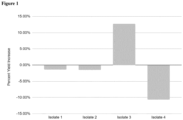
- Isolate 3 is a pure culture of Rhodococcus erythropolis.
- Figure 1 shows the average percent yield increases for a hydroponic lettuce inoculant trial in comparison to the control plants that received no inoculant.
- Isolate 1 comprises a pure culture of Pseudomonas putida.
- Isolate 2 comprises a pure culture of Curvibacter putative.
- Isolate 4 comprises a pure culture of Xylophilus rhododendri.
- the microbial inoculant of Rhodococcus erythropolis is the only one to demonstrate increased yields in hydroponic lettuce. The increased yields from a microbial inoculant of Rhodococcus erythropolis is also demonstrated in Figure 4 .
- the microbial inoculant is Serratia grimesii.
- the microbial inoculant is a combination of Pseudomonas toyotomiensis and Serratia grimesii.
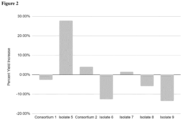
- Isolate 5 comprises a pure culture of Serratia grimesii and Consortium 2 comprises a combination of Pseudomonas toyotomiensis and Serratia grimesii.
- Figure 2 shows the average percent yield increases for a hydroponic lettuce inoculant trial in comparison to the control plants that received no inoculant.
- Consortium 1 comprises a combination of Stenotrophomonas maltophilia and Serratia grimesii.
- Isolate 6 comprises a pure culture of Pseudomonas rhizophila.
- Isolate 7 is a pure culture of Pseudomonas zarinae.
- Isolate 8 is a pure culture of Pseudarthrobacter psychrotolerans.
- Isolate 9 comprises a pure culture of Paenarthrobacter aurescens.
- the microbial inoculant comprising Serratia grimesii and the microbial inoculant comprising the combination of Pseudomonas toyotomiensis and Serratia grimesii are the only ones to demonstrate significantly increased yields in hydroponic lettuce. The increased yields from a microbial inoculant of Serratia grimesii is also demonstrated in Figure 3 .
- the microbial inoculant is a combination of Stenotrophomonas maltophilia and Pseudomonas toyotomiensis. In a fifth embodiment of the present invention, the microbial inoculant is a combination of Serratia grimesii and Rhodococcus erythropolis.
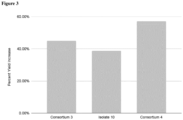
- Figure 3 shows the average percent yield increases for a hydroponic lettuce inoculant trial in comparison to the control plants that received no inoculant.
- Consortium 3 comprises a combination of Stenotrophomonas maltophilia, and Pseudomonas toyotomiensis.
- Isolate 10 comprises a pure culture of Serratia grimesii.
- Consortium 4 comprises a combination of Serratia grimesii and Rhodococcus erythropolis. The increased yields from a microbial inoculant comprising a combination of Serratia grimesii and Rhodococcus erythropolis is also demonstrated in Figure 4 .
- the microbial inoculant is a combination of Rhodococcus erythropolis , Pseudomonas toyotomiensis , and Stenotrophomonas maltophilia.
- the microbial inoculant comprises a combination of Rhodococcus erythropolis, Serratia grimesii, Stenotrophomonas maltophilia, and Pseudomonas toyotomiensis.
- Consortium 5 comprises a combination of Rhodococcus erythropolis, Pseudomonas toyotomiensis, and Stenotrophomonas maltophilia and Consortium 7 comprises a combination of Rhodococcus erythropolis, Serratia grimesii, Stenotrophomonas maltophilia, and Pseudomonas toyotomiensis.
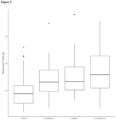
- Figure 4 shows the average percent yield increases for a hydroponic lettuce inoculant trial in comparison to the control plants that received no inoculant.
- Consortium 4 comprises a combination of Serratia grimesii and Rhodococcus erythropolis.
- Consortium 6 comprises a combination of Rhodococcus erythropolis and Pseudomonas stutzeri.
- Isolate 3 comprises a pure culture of Rhodococcus erythropolis.
- Consortium 6 is the only microbial inoculant not to show increased yield.
- the seventh embodiment of the present invention which is a combination of Rhodococcus erythropolis, Serratia grimesii, Stenotrophomonas maltophilia , and Pseudomonas toyotomiensis shows improved weight yields compared to the average fresh lettuce yields for a hydroponic lettuce which received no microbial inoculant, in alignment with the percent yield increase shown for the seventh embodiment in Figure 4 .
- the present invention is the use of these microbial inoculants comprising Rhodococcus erythropolis, Stenotrophomonas maltophilia , Serratia grimesii Pseudomonas toyotomiensis, and Shinella zoogloeoides for hydroponic lettuce or other leafy plants, including kale, arugula, and spinach.
- lettuce roots were processed to obtain root associated microbes.
- the bacteria were purified to single isolates. In total, 105 unique lettuce isolates were obtained. These isolates were not genetically modified.
- the bacterial strains were screened for a wide range of biochemical and genetic characteristics that are known to increase agricultural yields. Additionally, bacterial strains were tested against a set of nine antibiotics covering the major antibiotic classes. Bacteria with high levels of multi-drug resistance were excluded from downstream testing.
- the 105 bacterial strains underwent whole genome sequencing using Oxford Nanopore MinION technology. Using an in-house bioinformatics pipeline, their genes were analyzed for plant growth promoting capabilities. Bacteria that had both low antibiotic resistance and high levels of favourable genetic traits and biochemical lab results were tested in hydroponics lettuce to measure increases in growth rate.
- the microbial inoculants of the present invention are applied to the root zone of the plant either through direct application or by addition to the watering system.
- the microbial inoculant may also comprise bacterial growth medium and stabilizing agents to increase shelf life.
- the trials set out in the figures use the leafy green plant of lettuce, namely Lactuca sativa, grown hydroponically. It will be understood that the microbial inoculants may be used on other leafy green plants that are grown hydroponically. Hydroponics growers often have multiple species of leafy green varieties growing concurrently within their farming setup. Examples of other leafy green plants that will receive the positive benefits of the present invention's microbial inoculants are kale, arugula, and spinach.
- the microbial inoculants of the present invention were developed to be compatible with use in multiple different hydroponics growing systems and hydroponics substrates (e.g. sponges, coco coir, rockwool, and peat moss).
- the microbial inoculants of the present invention may be used with leafy green plants in hydroponic based growing systems, aeroponic based growing systems, and other soilless based growing systems, since the microbes are root associated and substrate independent.
- the microbial inoculant can be applied to whatever medium the leafy green plants are growing in or be added to the water supplying the plants so that the microbial inoculant can contact the roots and begin colonization.
- the microbial inoculants of the present invention include probiotics with identical or nearly identical 16S gene sequences as in the sequence listings.
- Sequence listing 1 is that of Rhodococcus erythropolis
- sequence listing 2 is that of Serratia grimesii
- sequence listing 3 is that of Stenotrophomonas maltophilia
- sequence listing 4 is that of Pseudomonas toyotomiensis
- sequnece listing 5 is that of Shinella zoogloeoides.
- the present invention includes microbial inoculants comprising a probiotic or combination of probiotics identical or nearly identical or 98% identical to the respective sequence listings 1 to 5 of:
- Probiotics with similar or corresponding 16S gene sequences, including 98% similarity, may generally be expected to have similar characteristics and similar beneficial effects on leafy green plants.
- a higher percent identity indicates a closer relationship between two or more microbial strains or isolates.
- a high degree of similarity or relatedness between two closely related microbial strains or isolates may also indicate a similar ability to impart the same or similar positive agricultural trait or benefit to a leafy green plant.
- a 16S gene sequence of sequence listing 1 to 5 corresponds to a 16S gene sequence of a second microbial strain if the two stains optimally align.
- Probiotic cultures of the microbial inoculants of the present invention may be prepared using any standard or known fermentation techniques, or developed. Those skilled in microbial growth parameters are capable of determining the appropriate nutrients and conditions, including media and incubation conditions. Similarly, the microbial inoculants may comprise various formulations to support the maintenance and stability of the probiotic. Microbial inoculant compositions may comprise a pure or substantially pure population or culture of the microbial strain or isolate, or combination described herein. The term microbial inoculant refers to the combination of microbial strain or isolate combined with one or more other ingredients to form a composition that can be applied to the media or into the water for leafy green plants.
- the microbial inoculants of the present invention comprise an effective amount of the probiotic or combination of probiotics to impart a positive benefit on a leafy green plant.
- Compositions of the microbial inoculant include any agricultural carrier or other materials that benefit the probiotic culture and/or benefit or have no adverse effect on the leafy green plant.
Landscapes
- Life Sciences & Earth Sciences (AREA)
- Engineering & Computer Science (AREA)
- Zoology (AREA)
- Health & Medical Sciences (AREA)
- Chemical & Material Sciences (AREA)
- Wood Science & Technology (AREA)
- General Health & Medical Sciences (AREA)
- Biotechnology (AREA)
- Pest Control & Pesticides (AREA)
- Plant Pathology (AREA)
- Environmental Sciences (AREA)
- Virology (AREA)
- Microbiology (AREA)
- Organic Chemistry (AREA)
- Bioinformatics & Cheminformatics (AREA)
- Genetics & Genomics (AREA)
- Dentistry (AREA)
- Agronomy & Crop Science (AREA)
- Biochemistry (AREA)
- General Chemical & Material Sciences (AREA)
- Chemical Kinetics & Catalysis (AREA)
- Botany (AREA)
- Tropical Medicine & Parasitology (AREA)
- General Engineering & Computer Science (AREA)
- Biomedical Technology (AREA)
- Medicinal Chemistry (AREA)
- Micro-Organisms Or Cultivation Processes Thereof (AREA)
- Agricultural Chemicals And Associated Chemicals (AREA)
Applications Claiming Priority (2)
| Application Number | Priority Date | Filing Date | Title |
|---|---|---|---|
| US202263400799P | 2022-08-25 | 2022-08-25 | |
| US202363452849P | 2023-03-17 | 2023-03-17 |
Publications (2)
| Publication Number | Publication Date |
|---|---|
| EP4327659A2 true EP4327659A2 (de) | 2024-02-28 |
| EP4327659A3 EP4327659A3 (de) | 2024-08-14 |
Family
ID=87845677
Family Applications (1)
| Application Number | Title | Priority Date | Filing Date |
|---|---|---|---|
| EP23193483.7A Withdrawn EP4327659A3 (de) | 2022-08-25 | 2023-08-25 | Mikrobielle impfmittel und verfahren |
Country Status (3)
| Country | Link |
|---|---|
| US (1) | US20240081338A1 (de) |
| EP (1) | EP4327659A3 (de) |
| CA (1) | CA3209635A1 (de) |
Family Cites Families (8)
| Publication number | Priority date | Publication date | Assignee | Title |
|---|---|---|---|---|
| DE60237468D1 (de) * | 2002-01-07 | 2010-10-07 | Brettyoung Seeds Ltd | Schwefel-oxidierende bakterien zur unterstützung des pflanzenwachstums |
| US7521236B2 (en) * | 2002-01-07 | 2009-04-21 | Manas Ranjan Banerjee | Sulfur-oxidizing plant growth promoting rhizobacteria for enhanced canola performance |
| JP2005261218A (ja) * | 2004-03-16 | 2005-09-29 | Ebara Corp | 脂肪族炭化水素分解能を有する新菌株およびその利用方法 |
| CA3250854A1 (en) * | 2015-02-09 | 2025-02-24 | Bioconsortia, Inc. | Agriculturally beneficial microbes, microbial compositions, and consortia |
| EP4036213A1 (de) * | 2015-07-25 | 2022-08-03 | BioConsortia, Inc. | Landwirtschaftlich nützliche mikroben, mikrobielle zusammensetzungen und konsortien |
| US20200245627A1 (en) * | 2016-01-19 | 2020-08-06 | Bioconsortia, Inc. | Agriculturally beneficial microbes, microbial compositions, and consortia |
| CN105820982B (zh) * | 2016-04-29 | 2019-06-28 | 河北省科学院生物研究所 | 一种赤红球菌xs-2、其生物菌剂及制备方法和应用 |
| IT201900014121A1 (it) * | 2019-08-06 | 2021-02-06 | Univ Degli Studi Di Camerino | Marinomonas ef1 e rhodococcus ef1 per la produzione di metaboliti secondari |
-
2023
- 2023-08-15 CA CA3209635A patent/CA3209635A1/en active Pending
- 2023-08-22 US US18/453,741 patent/US20240081338A1/en active Pending
- 2023-08-25 EP EP23193483.7A patent/EP4327659A3/de not_active Withdrawn
Non-Patent Citations (26)
| Title |
|---|
| AHMADI, NFATEMI, HESMAIELPOUR, B.SOULTANI-TOLAROOD, A.A.: "Effect of bio-priming with plant growth promoting bacteria on growth and biochemical characteristics, phenol, flavonoid, vitamin C and nitrate in lettuce (Lactuca sativa L.) Rabicon cultivar in different growth substrates", JOURNAL OF SCIENCE AND TECHNOLOGY OF GREENHOUSE CULTURE, vol. 11, no. 2, 2020, pages 41 - 58 |
| AINI, NYAMIKA, W. S.D.ULUM, B: "Effect of nutrient concentration, PGPR and AMF on plant growth, yield and nutrient uptake of hydroponic lettuce", INTERNATIONAL JOURNAL OF AGRICULTURE AND BIOLOGY, vol. 21, 2019, pages 175 - 183 |
| AJIJAH, NAPRIYANA, A.Y.SRIWURYANDARI, L.PRIANTORO, E.A.JANETASARI, S.A.PERTIWI, T.Y.R.SUCIATI, A.M.ARDENISWANSEMBIRING, T.: "Beneficiary of nitrifying bacteria for enhancing lettuce (Lactuca sativa) and vetiver grass (Chrysopogon zizanioides L.) growths align with carp (Cyprinus carpio) cultivation in an aquaponic system", ENVIRONMENTAL SCIENCE AND POLLUTION RESEARCH, vol. 28, 2021, pages 880 - 889 |
| CIPRIANO., M.A.P.LUPATINI, MLOPES-SANTOS, LDA SILVA, M.J.ROESCH, L.F.W.DESTEFANO, S.A.L.FREITAS, S. S.KURAMAE, E.E.: "Lettuce and rhizosphere microbiome responses to growth promoting Pseudomonas species under field conditions", FEMS MICROBIOLOGY ECOLOGY, vol. 92, no. 12, 2016, pages 197 |
| DE ALMEIDA MOREIRA, VDA SILVA OLIVEIRA, C.E.JALAL, ABUENO GATO, I.M.SENA OLIVEIRA, T.J.S.SBOLETA, G.H.M.GIOLO, V.M.: "Inoculation with Trichoderma harzianum and Azospirillum brasilense increases nutrition and yield of hydroponic lettuce", ARCHIVES OF MICROBIOLOGY, vol. 204, 2022, pages 440, XP037883155, DOI: 10.1007/s00203-022-03047-w |
| DROGUE, BDORE HBORLAND, SWISNIEWSKI-DYEF. PRIGENT-COMBARET, C.: "Which specificity in cooperation between phytostimulating rhizobacteria and plants?", RESEARCH IN MICROBIOLOGY, vol. 163, no. 8, 2012, pages 500 - 510 |
| FERREIRA, J.T.P.SANTOS, T.M.C.ALBUQUERQUE, L.S.SANTOS, J.V.CARDOSO FILHO, J.A.C.RAMALHO NETO, C.E.: "Isolation and selection of growth-promoting bacteria of the genus Bacillus and its effect on two varieties of lettuce (Lactuca sativa L.", INTERNATIONAL RESEARCH JOURNAL OF MICROBIOLOGY, vol. 2, no. 2, 2011, pages 070 - 078 |
| GLICK, B.R.: "Bacteria with ACC deaminase can promote plant growth and help to feed the world", MICROBIOLOGICAL RESEARCH, vol. 169, no. 1, 2014, pages 30 - 39, XP028793140, DOI: 10.1016/j.micres.2013.09.009 |
| KANG, S.M.KHAN, A.L.HUSSAIN, JALI, LKAMRAN, MWAQAS, MLEE, I.J.: "Rhizonin A from Burkholderia sp. KCTC11096 and its growth promoting role in lettuce seed germination", MOLECULES, vol. 17, no. 7, 2012, pages 7980 - 7988 |
| KOHLER, JCARAVACA, FCARRASCO, LROLDAN, A.: "Contribution of Pseudomonas mendocina and Glomus intraradices to aggregate stabilization and promotion of biological fertility in rhizosphere soil of lettuce plants under field conditions", SOIL USE AND MANAGEMENT, vol. 22, 2006, pages 298 - 304 |
| MONCADA, AVETRANO, FMICELI, A: "Alleviation of salt stress by plant growth-promoting bacteria in hydroponic leaf lettuce", AGRONOMY, vol. 2020, no. 10, 2020, pages 1523 |
| MORALLES, AGARLAND, J.L.LIM, D.V.: "Survival of potentially pathogenic human-associated bacteria in the rhizosphere of hydroponically grown wheat", FEMS MICROBIOLOGY ECOLOGY, vol. 20, no. 1996, 1996, pages 155 - 162 |
| PAULITZ, T.C.ZHOU, TRANKIN, L: "Selection of rhizosphere bacteria for biological control of Pythium aphanidermatum on hydroponically grown cucumber", BIOLOGICAL CONTROL, vol. 2, no. 3, 1992, pages 226 - 237 |
| RISER, E.C.GRABOWSKI, JGLENN, E.P.: "Microbiology of hydroponically-grown lettuce", JOURNAL OF FOOD PROTECTION, vol. 47, no. 10, 1984, pages 765 - 769 |
| SAHIN, UEKINCI, MKIZILOGLU, F.M.YILDIRIM, ETURAN, MKOTAN, RORS, S: "Ameliorative effects of plant growth promoting bacteria on water-yield relationships, growth, and nutrient uptake of lettuce plants under different irrigation levels", HORTSCIENCE, vol. 50, no. 9, 2015, pages 1379 - 1386 |
| SAMMAURIA, R., KUMAWAT, S., KUMAWAT, P., SINGH, J., & JATWA, T.K.: " Microbial inoculants: potential tool for sustainability of agricultural production systems", ARCHIVES OF MICROBIOLOGY, vol. 202, 2020, pages 677 - 693, XP037095683, DOI: 10.1007/s00203-019-01795-w |
| SANCHIS-LOPEZ, CCERNA-VARGAS, J.P.SANTAMARIA-HERNANDO, SRAMOS, CKRELL, TRODRIGUEZ-PALENZUELA, PLOPEZ-SOLANILLA, EHUERTA-CEPAS, JRO: "Prevalence and specificity of chemoreceptor profiles in plant associated bacteria", MSYSTEMS, vol. 6, no. 5, 2021, pages 00951 - 21 |
| SCHONWITZ, RZIEGLER, H: "Quantitative and qualitative aspects of a developing rhizosphere microflora of hydroponically grown maize seedling", JOURNAL OF PLANT NUTRITION AND SOIL SCIENCE, vol. 149, 1986, pages 623 - 634 |
| SEBRING, R.L.DUIKER, S.W.BERGHAGE, R.D.REGAN, J.M.LAMBERT, J.D.BRYANT, R.B.: "Gluconacetobacter diazotrophicus inoculation of two lettuce cultivars affects leaf and root growth under hydroponic conditions", APPLIED SCIENCES, vol. 12, 2022, pages 1585 |
| SOTTERO, A.N.DOS SANTOS FREITAS, STAVARES DE MELO., A.M.TRANI, P.E: "Rhizobacteria and lettuce: root colonization, plant growth promotion and biological control", REVISTA BRASILEIRA DE CIENCIA DO SOLO, vol. 30, no. 2, 2006 |
| SUZUKI, WSUGAWARA, MMIWA, KMORIKAWA, M: "Plant growth-promoting bacterium Acinetobacter calcoaceticus P23 increases the chlorophyll content of the monocot Lemna minor (duckweed) and the dicot Lactuca sativa (lettuce", JOURNAL OF BIOSCIENCE AND BIOENGINEERING, vol. 118, no. 1, 2014, pages 41 - 44 |
| SZCZECH, MSZAFIROWSKA, AKOWALCZYK, WSZWEJDA-GRZYBOWSKA, J.WLODAREK, AMACIOROWSKI, R: "The effect of plant growth promoting bacteria on transplants growth and lettuce yield in organic production", JOURNAL OF HORTICULTURAL RESEARCH, vol. 24, no. 2, 2016, pages 101 - 107 |
| TURNER, T.R.JAMES, E.K.POOLE, P.S.: "The plant microbiome", GENOME BIOLOGY, vol. 14, 2013, pages 209 |
| UTKHEDE, R.S.LEVESQUE, C.A.DINH, D.: "Pythium aphanidermatum root rot in hydroponically grown lettuce and the effect of chemical and biological agents on its control", CANADIAN JOURNAL OF PLANT PATHOLOGY, vol. 22, no. 2, 2000, pages 138 - 144 |
| VERMA, MSINGH, ADWIVEDI, D.H.ARORA, N.K.: "Zinc and phosphate solubilizing Rhizobium radiobacter (LB2) for enhancing quality and yield of loose leaf lettuce in saline soil", ENVIRONMENTAL SUSTAINABILITY, vol. 3, 2020, pages 209 - 218 |
| VETRANO, FMICELI, CANGILERI, VFRANGIPANE, BMONCADA, AMICELI, A: "Effect of bacterial inoculum and fertigation management on nursery and field production of lettuce plants", AGRONOMY, vol. 10, no. 10, 2020, pages 1477 |
Also Published As
| Publication number | Publication date |
|---|---|
| CA3209635A1 (en) | 2024-02-25 |
| US20240081338A1 (en) | 2024-03-14 |
| EP4327659A3 (de) | 2024-08-14 |
Similar Documents
| Publication | Publication Date | Title |
|---|---|---|
| Çakmakçi et al. | Growth promotion of plants by plant growth-promoting rhizobacteria under greenhouse and two different field soil conditions | |
| Alves et al. | Differential plant growth promotion and nitrogen fixation in two genotypes of maize by several Herbaspirillum inoculants | |
| Di et al. | Identification and characterization of Bacillus subtilis B9: A diazotrophic plant growth-promoting endophytic bacterium isolated from sugarcane root | |
| Abdelmoteleb et al. | Isolation and identification of phosphate solubilizing Bacillus spp. from Tamarix ramosissima rhizosphere and their effect on growth of Phaseolus vulgaris under salinity stress | |
| Singh et al. | Evaluating the potential of combined inoculation of Trichoderma harzianum and Brevibacterium halotolerans for increased growth and oil yield in Mentha arvensis under greenhouse and field conditions | |
| Wong et al. | Promoting effects of a single Rhodopseudomonas palustris inoculant on plant growth by Brassica rapa chinensis under low fertilizer input | |
| Piromyou et al. | Preferential association of endophytic bradyrhizobia with different rice cultivars and its implications for rice endophyte evolution | |
| Hassen et al. | Root colonization and growth enhancement in wheat and tomato by rhizobacteria isolated from the rhizoplane of grasses | |
| Marsudi et al. | Identification and characterization of fast-and slow-growing root nodule bacteria from South-Western Australian soils able to nodulate Acacia saligna | |
| Posada et al. | Bioprospecting of aerobic endospore-forming bacteria with biotechnological potential for growth promotion of banana plants | |
| US20120192605A1 (en) | Fertilizer composition and method | |
| da Silva et al. | Screening of plant growth promotion ability among bacteria isolated from field-grown sorghum under different managements in Brazilian drylands | |
| Chang | Effects of seven different companion plants on cucumber productivity, soil chemical characteristics and Pseudomonas community | |
| Heredia-Acuña et al. | Isolation, characterization and effect of plant-growth-promoting rhizobacteria on pine seedlings (Pinus pseudostrobus Lindl.) | |
| Bangash et al. | Formulation of biofertilizer for improving growth and yield of wheat in rain dependent farming system | |
| Braga et al. | Polyphasic characterization of bacteria obtained from upland rice cultivated in Cerrado soil | |
| Aung et al. | Enhanced soybean biomass by co-inoculation of Bradyrhizobium japonicum and plant growth promoting rhizobacteria and its effects on microbial community structures | |
| Humphry et al. | Phylogenetic assignment and mechanism of action of a crop growth promoting Rhizobium radiobacter strain used as a biofertiliser on graminaceous crops in Russia | |
| Tounsi-Hammami et al. | Optimizing tomato seedling growth with indigenous mangrove bacterial inoculants and reduced NPK fertilization | |
| CN118475233A (zh) | 用于改善植物生长特征的产品和方法 | |
| Taha et al. | Beneficial effect of Rhizobium laguerreae co-inoculated with native Bacillus sp. and Enterobacter aerogenes on lentil growth under drought stress | |
| Notununu et al. | Enhancing maize drought and heat tolerance: single vs combined plant growth promoting rhizobacterial inoculation | |
| Fernandes Júnior et al. | Diazotrophic bacteria isolated from wild rice Oryza glumaepatula (Poaceae) in the Brazilian Amazon | |
| Chai et al. | Optimization of compound bacterial inoculant enhances soil nutrients and bacterial community richness in alpine grassland | |
| WO2018105722A1 (ja) | 植物共生微生物群の選抜方法、及び微生物混合物 |
Legal Events
| Date | Code | Title | Description |
|---|---|---|---|
| PUAI | Public reference made under article 153(3) epc to a published international application that has entered the european phase |
Free format text: ORIGINAL CODE: 0009012 |
|
| STAA | Information on the status of an ep patent application or granted ep patent |
Free format text: STATUS: THE APPLICATION HAS BEEN PUBLISHED |
|
| AK | Designated contracting states |
Kind code of ref document: A2 Designated state(s): AL AT BE BG CH CY CZ DE DK EE ES FI FR GB GR HR HU IE IS IT LI LT LU LV MC ME MK MT NL NO PL PT RO RS SE SI SK SM TR |
|
| PUAL | Search report despatched |
Free format text: ORIGINAL CODE: 0009013 |
|
| AK | Designated contracting states |
Kind code of ref document: A3 Designated state(s): AL AT BE BG CH CY CZ DE DK EE ES FI FR GB GR HR HU IE IS IT LI LT LU LV MC ME MK MT NL NO PL PT RO RS SE SI SK SM TR |
|
| RIC1 | Information provided on ipc code assigned before grant |
Ipc: C12R 1/01 20060101ALI20240710BHEP Ipc: A01P 21/00 20060101ALI20240710BHEP Ipc: C12N 1/20 20060101ALI20240710BHEP Ipc: A01N 63/27 20200101ALI20240710BHEP Ipc: C05F 11/08 20060101ALI20240710BHEP Ipc: A01N 63/20 20200101AFI20240710BHEP |
|
| STAA | Information on the status of an ep patent application or granted ep patent |
Free format text: STATUS: THE APPLICATION IS DEEMED TO BE WITHDRAWN |
|
| 18D | Application deemed to be withdrawn |
Effective date: 20250215 |