EP4329344A2 - Système et procédé de sélection de protocole client pour service de données courtes - Google Patents
Système et procédé de sélection de protocole client pour service de données courtes Download PDFInfo
- Publication number
- EP4329344A2 EP4329344A2 EP24151690.5A EP24151690A EP4329344A2 EP 4329344 A2 EP4329344 A2 EP 4329344A2 EP 24151690 A EP24151690 A EP 24151690A EP 4329344 A2 EP4329344 A2 EP 4329344A2
- Authority
- EP
- European Patent Office
- Prior art keywords
- mcdata
- sds
- group
- size
- data
- Prior art date
- Legal status (The legal status is an assumption and is not a legal conclusion. Google has not performed a legal analysis and makes no representation as to the accuracy of the status listed.)
- Granted
Links
Images
Classifications
-
- H—ELECTRICITY
- H04—ELECTRIC COMMUNICATION TECHNIQUE
- H04W—WIRELESS COMMUNICATION NETWORKS
- H04W24/00—Supervisory, monitoring or testing arrangements
- H04W24/02—Arrangements for optimising operational condition
-
- H—ELECTRICITY
- H04—ELECTRIC COMMUNICATION TECHNIQUE
- H04W—WIRELESS COMMUNICATION NETWORKS
- H04W4/00—Services specially adapted for wireless communication networks; Facilities therefor
- H04W4/90—Services for handling of emergency or hazardous situations, e.g. earthquake and tsunami warning systems [ETWS]
-
- H—ELECTRICITY
- H04—ELECTRIC COMMUNICATION TECHNIQUE
- H04W—WIRELESS COMMUNICATION NETWORKS
- H04W4/00—Services specially adapted for wireless communication networks; Facilities therefor
- H04W4/12—Messaging; Mailboxes; Announcements
- H04W4/14—Short messaging services, e.g. short message services [SMS] or unstructured supplementary service data [USSD]
-
- H—ELECTRICITY
- H04—ELECTRIC COMMUNICATION TECHNIQUE
- H04W—WIRELESS COMMUNICATION NETWORKS
- H04W4/00—Services specially adapted for wireless communication networks; Facilities therefor
- H04W4/50—Service provisioning or reconfiguring
-
- H—ELECTRICITY
- H04—ELECTRIC COMMUNICATION TECHNIQUE
- H04W—WIRELESS COMMUNICATION NETWORKS
- H04W8/00—Network data management
- H04W8/18—Processing of user or subscriber data, e.g. subscribed services, user preferences or user profiles; Transfer of user or subscriber data
Definitions
- the embodiments herein relate to Mission Critical Data (MCData) communication system, and more particularly relates to a method for managing short data service (SDS) communication in mission critical data (MCData) communication system.
- SDS short data service
- MCData mission critical data
- MCData Mission Critical
- EPS evolved packet system
- a MCData server provides centralized support for such MCData services.
- the MCData server further can facilitate or govern MCData communication among various users part of the network.
- such MCData services can be off-network.
- the MCData devices communicate directly with each other without a server for centralized support for the service.
- the MCData services are designed to provide one-to-one, one-to-many, and group communications between users.
- the public safety community requires services beyond voice i.e. data and video applications.
- MCData makes frequent use of a set of capabilities and enablers that allows for many end user services to be built on a common platform.
- a Short data service (SDS) feature is one such capability for use in the MCData Service.
- the SDS can be used on its own or in combination with other services, or may be used by other services to realize certain features such as sharing of a location, presence-like data, and command instructions to perform specific operations.
- the SDS functionality may include one-to-one messaging or one-to-many or group messaging.
- MCData SDS a MCData User Equipment (LTE) can send short data messages to other MCData users, both in on-network and in off-network.
- the SDS service may offer the ability to providing thread management to allow for multiple message flows.
- an effective system and methods which consider various factors and then for selecting an appropriate protocol and method is necessary for MCData SDS.
- the principal object of the embodiments herein is to provide a method and system for managing short data service (SDS) communication in a mission critical data (MCData) communication system
- Another object of the embodiments herein is to provide a method for determining whether a pre-determined criteria is met for transmitting a one-to-one standalone SDS message or a group standalone SDS message to a receiving MCData UE
- Another object of the embodiments herein is to provide a method for determining data size of the one-to-one standalone and the group standalone SDS message.
- Another object of the embodiments herein is to provide a method for transmitting the one-to-one standalone SDS message or the group standalone SDS message to the receiving MCData UE for one-to-one communication and group communication using one of a signaling control plane and a media plane based on the determined data size of the one-to-one standalone SDS message or the group standalone SDS message.
- Another object of the embodiments herein is to provide a method in which the transmitting MCData UE determines presence of the allow-to-transmit data in a MCData user profile configuration data for transmitting the one-to-one standalone SDS message to the receiving MCData UE.
- Another object of the embodiments herein is to provide a method for transmitting the one-to-one standalone SDS message or group standalone SDS message using one of signaling control plane and media plane when the size of the one-to-one standalone or the group standalone SDS message is less than or greater than Maximum data size for SDS over signaling control plane.
- Another object of the embodiments herein is to provide a method for transmitting the one-to-one standalone SDS message or the group standalone SDS message using User Datagram Protocol (UDP) for signaling control plane when the determined data size of the one-to-one standalone SDS message is less than MTU size and less than Maximum data size for SDS over signaling control plane.
- UDP User Datagram Protocol
- Another object of the embodiments herein is to provide a method for transmitting the one-to-one standalone SDS message or group standalone SDS message using Transmission Control Protocol (TCP) for signaling control plane when the determined data size of the one-to-one standalone SDS message or group standalone SDS message is greater than MTU size and less than Maximum data size for SDS over signaling control plane.
- TCP Transmission Control Protocol
- Another object of the embodiments herein is to provide a method for method for transmitting the one-to-one standalone SDS message or group standalone SDS message using media plane when the data size of the one-to-one standalone SDS message or group standalone SDS message is greater than Maximum data size for SDS over signaling control plane.
- Another object of the embodiments herein is to provide a method for transmitting the one-to-one standalone SDS message or group standalone SDS message using media plane when the data size of the one-to-one standalone SDS message is greater than maximum data size for automatically receiving the SDS message (maximum-data-size-for-auto-receive).
- the proposed method and system provides an effective mechanism which considers various factors and then selects an appropriate protocol and method for MCData SDS.
- the proposed method allows selection of appropriate protocol by a MCData client at the transmitting MCData LTE for SDS.
- the embodiments herein provide a method for managing short data service (SDS) communication in a mission critical data (MCData) communication system, the method comprising:
- the transmitting MCData UE determines the pre-determined criteria by determining presence of one or more MCData SDS transmission control parameters for the one-to-one SDS communication.
- the MCData SDS transmission control parameters comprises at least one of allow-to-transmit data, max-data-size-SDS-bytes and maximum amount of data for transmission in a single request.
- the transmitting MCData LTE determines presence of the allow-to-transmit data in a MCData user profile configuration data for transmitting the one-to-one standalone SDS message to the receiving MCData UE.
- the transmitting MCData LTE compares a size of the payload in the SDS message with a value associated with the max-data-size-SDS-bytes in MCData service configuration data for transmitting the one-to-one standalone SDS message to the receiving MCData UE.
- the transmitting MCData UE determines to transmit the one-to-one standalone SDS message to the receiving MCData LTE when the data size of the payload in the SDS message is less than the value associated with the max-data-size-SDS-bytes.
- the transmitting MCData UE determines to transmit the one-to-one standalone SDS message to the receiving MCData UE in a single request message based on the data size of the payload of the SDS message.
- the transmitting MCData UE determines to transmit the one-to-one standalone SDS message to the receiving MCData UE in a single request when the size of the payload of the SDS message is within the maximum amount of data for transmission in a single request.
- the transmitting the one-to-one standalone SDS message to the receiving MCData UE using one of the signaling control plane and the media control plane based on the determined data size of the SDS message includes:
- the one-to-one standalone SDS message is transmitted using User Datagram Protocol (UDP) for signaling control plane when the determined data size of the one-to-one standalone SDS message is less than MTU size and less than Maximum data size for SDS over signaling control plane.
- UDP User Datagram Protocol
- the one-to-one standalone SDS message is transmitted using Transmission Control Protocol (TCP) for signaling control plane when the determined data size of the one-to-one standalone SDS message is greater than MTU size and less than Maximum data size for SDS over signaling control plane.
- TCP Transmission Control Protocol
- the one-to-one standalone SDS message is transmitted using media plane when the data size of the one-to-one standalone SDS message is greater than Maximum data size for SDS over signaling control plane.
- the transmitting MCData UE transmits the one-to-one standalone SDS message using media plane when the data size of the one-to-one standalone SDS message is greater than maximum data size for automatically receiving the SDS message (maximum-data-size-for-auto-receive).
- the embodiments herein provide a method for managing short data service (SDS) communication in a mission critical data (MCData) communication system, the method includes:
- the transmitting MCData UE determines the pre-determined criteria by determining presence of one or more MCData SDS transmission control parameters for group SDS communication.
- the MCData SDS transmission control parameters comprises mcdata-allow-transmit-data to the group, mcdata-on-network-max-data-size-for-SDS and maximum amount of data for transmission in a single request to the group.
- the transmitting MCData UE determines presence of the mcdata-allow-transmit-data to the group in MCData related group configuration data for transmitting the group standalone SDS message to the plurality of receiving MCData UEs.
- the transmitting MCData UE compares a size of the data in the SDS message with a value associated with the mcdata-on-network-max-data-size-for-SDS in MCData related group configuration data for transmitting the group standalone SDS message to the plurality of receiving MCData UEs.
- the transmitting MCData LTE determines to transmit the group standalone SDS message to the plurality of receiving MCData UEs when the data size of the payload in the SDS message is less than the value contained in the mcdata-on-network-max-data-size-for-SDS.
- the transmitting MCData LTE determines to transmit the group standalone SDS message to the plurality of receiving MCData UEs in a single request message based on size of the payload of the SDS message.
- the transmitting MCData LTE determines to transmit the group standalone SDS message to the receiving MCData UEs in a single request when the data size of the payload of the SDS message is within the maximum amount of data for transmission in a single request.
- transmitting the group standalone SDS message to the receiving MCData UE using one of the signaling control plane and the media control plane based on the determined data size of the SDS message comprises:
- the group standalone SDS message is transmitted using User Datagram Protocol (UDP) for signaling control plane when the determined data size of the one-to-one standalone SDS message is less than MTU size and less than Maximum data size for SDS over signaling control plane.
- UDP User Datagram Protocol
- the group standalone SDS message is transmitted using Transmission Control Protocol (TCP) for signaling control plane when the determined data size of the group standalone SDS message is greater than MTU size and less than Maximum data size for SDS over signaling control plane.
- TCP Transmission Control Protocol
- the group standalone SDS message using media plane when the data size of the group standalone SDS message is greater than Maximum data size for SDS over signaling control plane.
- the transmitting MCData UE transmits the group standalone SDS message using media plane when the data size of the group standalone SDS message is greater than maximum data size for automatically receiving the SDS message (maximum-data-size-for-auto-receive).
- the embodiments herein provide a transmitting MCData UE for managing short data service (SDS) communication in a mission critical data (MCData) communication system.
- the transmitting Data UE comprises a SDS manager configured to:
- the SDS manager is configured to determine the pre-determined criteria by determining presence of one or more MCData SDS transmission control parameters for the one-to-one SDS communication.
- the MCData SDS transmission control parameters comprises at least one of allow-to-transmit data, max-data-size-SDS-bytes and maximum amount of data for transmission in a single request.
- the SDS manager is configured to determine presence of the allow-to-transmit data in a MCData user profile configuration data for transmitting the one-to-one standalone SDS message to the receiving MCData UE.
- the SDS manager is configured to compare a size of the payload in the SDS message with a value associated with the max-data-size-SDS-bytes in MCData service configuration data for transmitting the one-to-one standalone SDS message to the receiving MCData UE.
- the SDS manager is configured to determine to transmit the one-to-one standalone SDS message to the receiving MCData UE when the size of the payload in the SDS message is less than the value associated with the max-data-size-SDS-bytes.
- the SDS manager is configured to determine to transmit the one-to-one standalone SDS message to the receiving MCData LTE in a single request message based on the size of the payload of the SDS message.
- the SDS manager is configured to determine to transmit the one-to-one standalone SDS message to the receiving MCData UE in a single request when the size of the payload of the SDS message is within the maximum amount of data for transmission in a single request.
- the SDS manager is configured to transmitting the one-to-one standalone SDS message to the receiving MCData LTE using one of the signaling control plane and the media control plane based on the determined size of the SDS message by:
- the SDS manager is configured to transmit the group standalone SDS message using User Datagram Protocol (UDP) for signaling control plane when the determined data size of the one-to-one standalone SDS message is less than MTU size and less than Maximum data size for SDS over signaling control plane.
- UDP User Datagram Protocol
- the SDS manager is configured to transmit the one-to-one standalone SDS message using Transmission Control Protocol (TCP) for signaling control plane when the determined data size of the group standalone SDS message is greater than MTU size and less than Maximum data size for SDS over signaling control plane.
- TCP Transmission Control Protocol
- the SDS manager is configured to transmit the group standalone SDS message using media plane when the data size of the group standalone SDS message is greater than Maximum data size for SDS over signaling control plane.
- the SDS manager is configured to transmit the group standalone SDS message using media plane when the data size of the group standalone SDS message is greater than maximum data size for automatically receiving the SDS message (maximum-data-size-for-auto-receive).
- the embodiments herein provide a transmitting MCData LTE for managing short data service (SDS) communication in a mission critical data (MCData) communication system.
- the transmitting MCData UE comprises a SDS manager configured to:
- the SDS manager is configured to determine the pre-determined criteria by determining presence of one or more MCData SDS transmission control parameters for group SDS communication.
- the MCData SDS transmission control parameters comprises mcdata-allow-transmit-data to the group, mcdata-on-network-max-data-size-for-SDS and maximum amount of data for transmission in a single request to the group.
- the SDS manager is configured to determine presence of the mcdata-allow-transmit-data to the group in MCData related group configuration data for transmitting the group standalone SDS message to the plurality of receiving MCData UEs.
- the SDS manager is configured to compare a size of the data in the SDS message with a value associated with the mcdata-on-network-max-data-size-for-SDS in MCData related group configuration data for transmitting the group standalone SDS message to the plurality of receiving MCData UEs.
- the SDS manager is configured to determine to transmit the group standalone SDS message to the plurality of receiving MCData UEs when the size of the payload in the SDS message is less than the value contained in the mcdata-on-network-max-data-size-for-SDS.
- the SDS manager is configured to determines to transmit the group standalone SDS message to the plurality of receiving MCData UEs in a single request message based on size of the payload of the SDS message.
- the SDS manager is configured to determine to transmit the group standalone SDS message to the receiving MCData LTEs in a single request when the size of the payload of the SDS message is within the maximum amount of data for transmission in the single request.
- the SDS manager is configured to transmitting the group standalone SDS message to the receiving MCData UE using one of the signaling control plane and the media control plane based on the determined size of the SDS message by:
- the SDS manager is configured to transmit the group standalone SDS message using User Datagram Protocol (UDP) for signaling control plane when the determined size of the group standalone SDS message is less than MTU size and less than Maximum data size for SDS over signaling control plane.
- UDP User Datagram Protocol
- the SDS manager is configured to transmit the group standalone SDS message using Transmission Control Protocol (TCP) for signaling control plane when the determined data size of the one-to-one standalone SDS message is greater than MTU size and less than Maximum data size for SDS over signaling control plane.
- TCP Transmission Control Protocol
- the SDS manager is configured to transmit the group standalone SDS message using media plane when the data size of the group standalone SDS message is greater than Maximum data size for SDS over signaling control plane.
- the SDS manager is configured to transmit the group standalone SDS message using media plane when the data size of the group standalone SDS message is greater than maximum data size for automatically receiving the SDS message (maximum-data-size-for-auto-receive).
- embodiments may be described and illustrated in terms of blocks which carry out a described function or functions.
- These blocks which may be referred to herein as managers, units or modules or the like, are physically implemented by analogue and/or digital circuits such as logic gates, integrated circuits, microprocessors, microcontrollers, memory circuits, passive electronic components, active electronic components, optical components, hardwired circuits and the like, and may optionally be driven by firmware and software.
- the circuits may, for example, be embodied in one or more semiconductor chips, or on substrate supports such as printed circuit boards and the like.
- circuits constituting a block may be implemented by dedicated hardware, or by a processor (e.g., one or more programmed microprocessors and associated circuitry), or by a combination of dedicated hardware to perform some functions of the block and a processor to perform other functions of the block.
- a processor e.g., one or more programmed microprocessors and associated circuitry
- Each block of the embodiments may be physically separated into two or more interacting and discrete blocks without departing from the scope of the disclosure.
- the blocks of the embodiments may be physically combined into more complex blocks without departing from the scope of the disclosure.
- the embodiments herein provide a method for managing short data service (SDS) communication in a mission critical data (MCData) communication system.
- the method includes determining, by a transmitting MCData UE, whether a pre-determined criteria is met for transmitting a one-to-one standalone SDS message to a receiving MCData UE. Further, the method includes determining data size of the one-to-one standalone SDS message. Furthermore, the method includes transmitting the one-to-one standalone SDS message to the receiving MCData LTE for one-to-one communication using one of a signaling control plane and a media plane based on the determined data size of the one-to-one standalone SDS message.
- the embodiments herein provide a method for managing short data service (SDS) communication in a mission critical data (MCData) communication system.
- the method includes determining, by a transmitting MCData UE, whether a pre-determined criteria is met for transmitting a group standalone SDS message to a receiving MCData UE. Further, the method includes determining, by the transmitting MCData UE, data size of the group standalone SDS message. Furthermore, the method includes transmitting, by the transmitting MCData UE, the group standalone SDS message to a plurality of receiving MCData UEs for a group communication using one of a signaling control plane and a media control plane based on the determined data size of the group standalone SDS message.
- the proposed method and system provides an effective mechanism which considers various factors and then selects an appropriate protocol and method for MCData SDS.
- the proposed method allows selection of appropriate protocol by a MCData client at the transmitting MCData LTE for SDS.
- FIGS. 1 through 6 where similar reference characters denote corresponding features consistently throughout the figures, there are shown preferred embodiments.
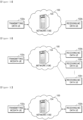
- FIGS.1A-1D illustrate example on-network MCData communication systems for managing SDS communication, according to an embodiment as disclosed herein.
- a MCData communication system 100 includes a transmitting MCData UE 102a, a group of receiving MCData UEs 102b-102n and a MCData server 104 in a network 106.
- the MCData server 104 serves as a centralized server to enable the network 106 to provide MCData service to MCData LTEs 102a-102n.
- the network 106 includes 3GPP E-UTRAN access elements (not shown) and 3GPP E-UTRAN core elements (not shown).
- the first MCData UE 102a gains access to the network 106 through a LTE-Uu interface (not shown) or through an evolved Node B (eNB, not shown).
- the MCData server 104 may couple to various access/core elements of the network 106.
- the MCData server 104 can couple to a serving gateway/packet data gateway through one or more suitable interface reference points.
- MME mobile management entity
- MBMS GW multimedia broadcast/multicast service gateway
- the MCData UEs 102a-102n can be for e.g., an electronic device, a User Equipment (UE), or the like.
- Each of the MCData UEs 102a-102n can include a MCData client (i.e., an application) for communicating with the MCData server 104.
- the first MCData UE 102a includes a first MCData client; the second MCData UE 102b includes a second MCData client and so on.
- the MCData client residing at each of the MCData UEs 102a- 102n, acts as user agent for all the MCData application transactions.
- the MCData client supports SDS, file distribution, data streaming and IP connectivity MCData capabilities utilized by MCData services like conversation management, robots control, enhanced status, database enquiries and secured internet.
- the MCData server 104 provides centralized support for MCData services suite. Conversation management, robots, enhanced status, database enquiries and secured internet MCData services requiring one-to-one data or group communication are realized using SDS, file distribution, data streaming and Internet Protocol (IP) connectivity MCData communication capabilities. All the MCData clients supporting users belonging to a single group are required to use the same MCData server 104 for that group.
- HTTP is used as communication transport means for MCData communication.
- the MCData communication system 100 includes the transmitting MCData UE 102a, the MCData server 104 in the network 106 and the receiving MCData UE 102b.
- the MCData server 104 facilitates/provides one-to-one unidirectional SDS communication between the transmitting MCData UE 102a and the receiving MCData LTE 102b through the network 106.
- the MCData communication system 100 includes the transmitting MCData LTE 102a, the MCData server 104 in the network 106 and the group of receiving MCData LTEs 102b-102n.
- the MCData server 104 provides group unidirectional SDS communication between the first MCData LTE 102a and the group of second MCData UEs 102b-102n.
- the MCData communication system 100 includes the transmitting MCData UE 102a, the MCData server 104 in the network 106 and the receiving MCData UE 102b.
- the MCData server 104 provides one-to-one bidirectional SDS communication between the transmitting MCData UE 102a and the receiving MCData UE 102b.
- the MCData communication system 100 includes the transmitting MCData LTE 102a, the MCData server 104 in the network 106 and the group of receiving MCData UEs 102b-102n.
- the MCData server 104 provides bidirectional SDS communication between the transmitting MCData UE 102a and the group of receiving MCData UEs 102b-102n.
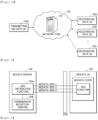
- FIG. 2 is a functional model illustrating various entities in a MCData server and a MCData UE for an application plane in SDS communication, according to an embodiment as disclosed herein.
- a MCData-SDS-1 reference point is used for uplink and downlink unicast SDS data transaction over a signaling control plane by a SDS distribution function of the MCData server 104 and SDS function of the MCData client which is within the first MCData LTE 102a. Further, the MCData-SDS-1 reference point is also used for MCData application signaling during session establishment in support of a SDS data transfer.
- a MCData-SDS-2 reference point is used to carry uplink and downlink unicast SDS data over a media plane between the SDS distribution function of the MCData server 104 and the SDS function of the first MCData UE 102a.
- a MCData-SDS-3 reference point is used to carry downlink multicast SDS data over the media plane from the SDS distribution function of the MCData server 104 to the SDS function of the first MCData UE 102a.
- the SDS data can be in the form of text, binary, application data, URL or combinations of these.
- the SDS data can be at least one of information pertaining to applications (e.g. health parameters of first MCData LTE 102a for situational awareness application); information pertaining to enhanced status service; text or URL data between multiple MCData users; application data (e.g. health parameters) to the first MCData UE 102a; location information (independent or along with user or application provided data); command instructions to invoke certain operations on the first MCData UE 102a (e.g. invoking UE specific applications); and application plane identities for the first MCData UE 102a and the MCData application.
- applications e.g. health parameters of first MCData LTE 102a for situational awareness application
- information pertaining to enhanced status service e.g. health parameters
- text or URL data between multiple MCData users e.g. health parameters
- application data e.g. health parameters
- location information independent or along with user or application provided data
- a Transmission/Reception control element 104b is responsible for transmission and reception control of MCData between a transmitting MCData UE 102a, the MCData server 104, and a receiving MCData LTE 102b.
- the transmission and reception control function is used to provide arbitration between multiple data requests and apply the necessary policy to ensure that appropriate data is transmitted between the multiple MCData LTEs.
- transmission/reception control may not apply due to small data messages, and the application of "auto-send" and "auto-receive" configurations.
- the data requests are exceeding a certain size such as large blogs of data, files or streams, it may be necessary to control the data that is transmitted or received by the MCData UEs.
- SDS Variables can be, for e.g., MTU size-whether UDP/IP or TCP/IP is required, Auto-send size-whether data can be sent without "grant” from the server, and Auto-receive size-whether data can be sent to the recipient without "consent” from the recipient.
- MTU size-whether UDP/IP or TCP/IP is required
- Auto-send size-whether data can be sent without "grant” from the server
- Auto-receive size-whether data can be sent to the recipient without "consent” from the recipient.
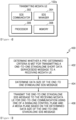
- FIG. 3 is a block diagram illustrating various hardware components of a transmitting MCData UE 102a for SDS communication, according to an embodiment as disclosed herein.
- the first MC Data LTE 102a includes a communicator 302, a SDS manager 304, a processor 306 and a memory 308.
- the SDS communicator 302 can be configured to transmit the one-to-one standalone message or the group standalone SDS message to second MCData UE(s) 102b-102n for one-to-one communication or the group communication when the pre-determined criteria is met and also utilizes either the signaling control plane or the media plane for transmitting the one-to-one standalone message or the group standalone SDS message to second MCData UE(s) 102b-102n.
- the SDS communicator 302 is coupled to the SDS manager 304 which performs various actions which includes determining the size of the one-to-one standalone SDS message or the group standalone SDS message and comparing the determined size with pre-configured parameters which include but not limited to the MTU size, Maximum data size for SDS over signaling control plane and Maximum data size for auto-receive in order to decide on the usage of signaling control plane or the media plane for transmitting the one-to-one standalone SDS message (i.e., for the one-to-one communication) or the group standalone SDS message for the group communication.
- the SDS manager 304 decides for the use of signaling control plane or the media plane based on the pre-configured parameters and indicates its decision to the SDS communicator 302.
- the SDS communicator 302 upon receiving the indication, transmits the one-to-one standalone message or the group standalone SDS message to the second MCData LTE(s) 102b-102n either through the signaling control plane or through the media plane.
- the processor 306 (for example; a hardware unit, an apparatus, a Central Processing Unit (CPU), a Graphics Processing Unit (GPU), etc.,) communicatively coupled to a memory 306 (e.g., a volatile memory and/or a non-volatile memory); the memory 306 includes storage locations configured to be addressable through the processor 306.
- a memory 306 e.g., a volatile memory and/or a non-volatile memory
- the memory 306 includes storage locations configured to be addressable through the processor 306.
- the memory 308 may include non-volatile storage elements. Examples of such non-volatile storage elements may include magnetic hard discs, optical discs, floppy discs, flash memories, or forms of electrically programmable memories (EPROM) or electrically erasable and programmable (EEPROM) memories.
- the memory 308 may, in some examples, be considered a non-transitory storage medium.
- the term "non-transitory” may indicate that the storage medium is not embodied in a carrier wave or a propagated signal. However, the term “non-transitory” should not be interpreted that the memory 308 is non-movable.
- the memory 308 can be configured to store larger amounts of information than the memory.
- a non-transitory storage medium may store data that can, over time, change (e.g., in Random Access Memory (RAM) or cache).
- RAM Random Access Memory
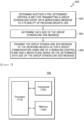
- FIG. 4 is a flow chart 400 illustrating a method for managing one-to-one SDS communication in the MCData communication system 100, according to an embodiment as disclosed herein. The various steps of the flow chart 400 are performed by the SDS manager 304 in the transmitting MCData UE 102a.
- the method includes determining whether a pre-determined criteria is met for transmitting the one-to-one standalone SDS message to a receiving MCData UE 102b.
- the SDS manager 304 determines the pre-determined criteria by determining presence of one or more MCData SDS transmission control parameters for the one-to-one SDS communication.
- the MCData SDS transmission control parameters include but not limited to allow-to-transmit data, max-data-size-SDS-bytes and maximum amount of data for transmission in a single request.
- the SDS manager 304 determines the following condition.
- the transmitting MCData client and participating MCData function shall determine that the MCData user is not allowed to send MCData communications and shall not continue with the rest of the steps.
- the SDS manager 304 determines presence of the allow-to-transmit data in a MCData user profile configuration data for transmitting the one-to-one standalone SDS message to the receiving MCData UE 102b.
- the SDS manager 304 compares a size of the payload in the SDS message with a value associated with the max-data-size-SDS-bytes in MCData service configuration data for transmitting the one-to-one standalone SDS message to the receiving MCData UE. Further, the SDS manager 304 determines to transmit one-to-one standalone SDS message to the receiving MCData UE 102b when the size of the payload in the SDS message is less than the value associated with the max-data-size-SDS-bytes. The SDS manager 304 determines the following condition.
- the MCData client and controlling MCData function shall determine that the MCData user is not allowed to send SDS communications due to message size.
- the SDS manager 304 determines to transmit the one-to-one standalone SDS message to the receiving MCData UE 102a in a single request message based on the size of the payload of the SDS message. Further, the SDS manager 304 decides to transmit the one-to-one standalone SDS message to the receiving MCData UE in a single request when the size of the payload of the SDS message is within the maximum amount of data for transmission in a single request. The SDS manager 304 determines the following condition.
- the MCData client and participating MCData function shall determine that the MCData user is not allowed to send one-to-one MCData communications due to exceeding the maximum amount of data that can be sent in a single request.
- the SDS manager 304 determines the pre-determined criteria by determining presence of one or more MCData SDS transmission control parameters for the group SDS communication.
- the MCData SDS transmission control parameters include but not limited to mcdata-allow-transmit-data to the group, mcdata-on-network-max-data-size-for-SDS and maximum amount of data for transmission in a single request to the group.
- the SDS manager 304 determines presence of the mcdata-allow-transmit-data to the group in MCData related group configuration data for transmitting the group standalone SDS message to the plurality of receiving MCData UEs.
- the SDS manager 304 determines the following condition. If the MCData user wishes to send group MCData communications on an MCData group identity and the ⁇ mcdata-allow-transmit-data-in-this-group> element of an ⁇ actions> element is not present in the MCData group document or is present with the value "false" as specified in 3GPP TS 24.481, the MCData client and controlling MCData function shall determine that the MCData user is not allowed to send group MCData communications on this group identity.
- the SDS manager 304 compares a size of the data in the SDS message with a value associated with the mcdata-on-network-max-data-size-for-SDS in MCData related group configuration data for transmitting the group standalone SDS message to the plurality of receiving MCData UEs.
- the SDS manager determines the following condition.
- the MCData client and the controlling MCData function shall determine that the MCData user is not allowed to send SDS communications on this group identity due to message size.
- the SDS manager 304 determines to transmit the group standalone SDS message to the plurality of receiving MCData UEs when the size of the payload in the SDS message is less than the value contained in the mcdata-on-network-max-data-size-for-SDS.
- the SDS manager 304 determines to transmit the group standalone SDS message to the plurality of receiving MCData UEs in a single request message based on size of the payload of the SDS message.
- the SDS manager 304 transmits the group standalone SDS message to the receiving MCData UE in a single request when the size of the payload of the SDS message is within the maximum amount of data for transmission in the single request.
- the SDS manager 304 determines the following condition.
- the MCData client and the controlling MCData function shall determine that the MCData user is not allowed to send group MCData communications on this group identity due to exceeding the maximum amount of data that can be sent in a single request.
- the method includes determining the data size of the one-to-one standalone SDS message.
- the method allows the SDS manager 304 to determine the data size of the one-to-one standalone SDS message.
- the method includes transmitting the one-to-one standalone SDS message to the receiving MCData UE 102b for one-to-one communication using one of the signaling control plane and a media plane based on comparison of the determined data size of the one-to-one standalone SDS message.
- the method allows the SDS manager 304 to to transmit the one-to-one standalone SDS message to the receiving MCData UE 102b for one-to-one communication using one of the signaling control plane and a media plane based on the determined data size of the one-to-one standalone SDS message.
- the SDS manager compares the determined data size with one or more pre-configured parameters which include but not limited to MTU size, Maximum data size for SDS over signaling control plane and Maximum data size for auto-receive.
- the SDS manager 304 determines whether the data size of the one-to-one standalone SDS message or the group standalone SDS message is less than or greater than Maximum data size for SDS over signaling control plane. Further, the SDS manager 304 transmits the one-to-one standalone SDS message using one of the signaling control plane and the media plane in response to determining that the data size of the one-to-one standalone SDS message is less than or greater than Maximum data size for SDS over signaling control plane.
- the one-to-one standalone SDS message is transmitted using User Datagram Protocol (UDP) for signaling control plane when the determined size of the one-to-one standalone SDS message is less than MTU size and less than Maximum data size for SDS over signaling control plane.
- UDP User Datagram Protocol
- the SDS manager 304 transmits the one-to-one standalone SDS message using Transmission Control Protocol (TCP) for signaling control plane when the determined data size of the one-to-one standalone SDS message is greater than MTU size and less than Maximum data size for SDS over signaling control plane.
- TCP Transmission Control Protocol
- the SDS manager 304 transmits the one-to-one standalone SDS message using media plane when the data size of the one-to-one standalone SDS message is greater than Maximum data size for SDS over signaling control plane.
- the SDS manager 304 transmits one-to-one standalone SDS message using media plane when the data size of the one-to-one standalone SDS message is greater than maximum data size for automatically receiving the SDS message (maximum-data-size-for-auto-receive).
- the transmitting MCData UE 102a is configured to perform the following steps as detailed below for selecting the signaling control plane or media plane for transmitting the one-to-one standalone SDS message to the receiving MCData UE 102b:
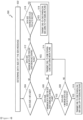
- FIG. 5 is a flow chart 500 illustrating various steps involved in selection of signaling control plane or media plane for one-to-one SDS communication in the MCData communication system, according to an embodiment as disclosed herein.
- the various steps of the flow chart 500 are performed by the SDS manager 304 at the transmitting MCData UE 102a.
- the method includes determining the data size of the SDS message (i.e., the one-to-one standalone SDS message or the group standalone SDS message)
- the method includes determining whether the data size of the SDS message is less than the MTU size (i.e., typically 1300 bytes). In case, it is determined that the data size of the SDS message is less than the MTU size, at step 506, the method includes determining that whether data size is less than the Maximum data size for SDS over the signaling control plane. In case, at step 506, it is determined that data size is less than the Maximum data size for SDS over the signaling control plane, at step 508, the method includes determining whether the data size is less than the Maximum data size for auto receive. In case, at step 508, it is determined that the data size is less than the Maximum data size for auto receive, then at step 510, the method includes transmitting the standalone SDS message using the User Datagram Protocol (UDP) for signaling control plane.
- UDP User Datagram Protocol
- the method includes transmitting the standalone SDS message using the media plane.
- the method includes transmitting the standalone SDS message using the media plane.
- the method includes determining whether the data size is greater than the maximum data size for SDS over signaling control plane. If it is determined at step 512 that the data size is not greater than the maximum data size for SDS over signaling control plane, then at step 516, the method includes determining that the data size is greater than the maximum data size for auto receive. If at step 516, it is determined that the data size is less than the maximum data size for auto receive, then at step 518, the method includes transmitting the one-to-one standalone SDS message using TCP for signaling control plane.
- the method includes transmitting the standalone SDS message using the media plane.
- the method includes determining whether the data size is greater than the maximum data size for SDS over signaling control plane. If it is determined at step 512 that the data size is greater than the maximum data size for SDS over signaling control plane, then at step 514, the method includes transmitting the standalone SDS message using the media plane.
- FIG. 5 is describing the various embodiments related to the transmission of the one-to-one standalone SDS message using one of the signaling control plane or the media plane, it should be noted that these embodiments shown in the FIG. 5 are also applicable for transmission of the group standalone SDS message using one of the signaling control plane or the media plane.
- FIG. 6 is a flow chart 600 illustrating a method for managing group SDS communication in the MCData communication system 100, according to an embodiment as disclosed herein. The various steps of the flow chart 600 are performed by the SDS manager 304 at the transmitting MCData UE 102a.
- the method includes determining whether a pre-determined criteria is met for transmitting the group standalone SDS message to the plurality of receiving MCData UEs 102b-102n.
- the SDS manager 304 determines the pre-determined criteria by determining presence of one or more MCData SDS transmission control parameters for the group SDS communication.
- the MCData SDS transmission control parameters include but not limited to mcdata-allow-transmit-data to the group, mcdata-on-network-max-data-size-for-SDS and maximum amount of data for transmission in a single request to the group.
- the SDS manager 304 determines presence of the mcdata-allow-transmit-data in a MCData related group configuration data for transmitting the group standalone SDS message to the receiving MCData UE 102b.
- the SDS manager 304 compares a size of the payload in the SDS message with a value associated with the mcdata-on-network-max-data-size-for-SDS in MCData group configuration data for transmitting the group standalone SDS message to the receiving MCData LTE 102b. Further, the SDS manager 304 decides to transmit the group standalone SDS message to the receiving MCData LTE 102b when the size of the payload in the SDS message is less than the value associated with the mcdata-on-network-max-data-size-for-SDS.
- the SDS manager 304 determines to transmit the group standalone SDS message to the receiving MCData UE 102a in a single request message in a single request when the data size of the payload of the SDS message is within the maximum amount of data for transmission in a single request.
- the SDS manager 304 decides to transmit the group standalone SDS message to the receiving MCData UE in a single request when in a single request when the data size of the payload of the SDS message is within the maximum amount of data for transmission in a single request.
- the method includes determining the data size of the group standalone SDS message.
- the method allows the SDS manager 304 to determine the data size of the group standalone SDS message.
- the method includes transmitting the group standalone SDS message to the one or more receiving MCData UEs 102b-102n for the group communication using one of the signaling control plane and the media plane based on the determined data size of the group standalone SDS message.
- the method allows the SDS manager 304 transmit the group standalone SDS message to the receiving MCData UEs 102b-102n for group communication using one of the signaling control plane and the media plane based on the determined data size of the group standalone SDS message.
- the determined size of the group standalone SDS message is compared with one or more pre-configured parameters which include but not limited to MTU size, Maximum data size for SDS over signaling control plane and Maximum data size for auto-receive.
- the SDS manager 304 determines whether the data size of the group standalone SDS message is less than or greater than Maximum data size for SDS over signaling control plane. Further, the SDS manager 304 transmits the group standalone SDS message using one of the signaling control plane and the media plane in response to determining that the size of the group standalone SDS message is less than or greater than Maximum data size for SDS over signaling control plane..
- the group standalone SDS message is transmitted using User Datagram Protocol (UDP) for signaling control plane when the determined size of the group standalone SDS message is less than MTU size and less than Maximum data size for SDS over signaling control plane.
- UDP User Datagram Protocol
- the SDS manager 304 transmits the group standalone SDS message using Transmission Control Protocol (TCP) for signaling control plane when the determined data size of the group standalone SDS message is greater than MTU size and less than Maximum data size for SDS over signaling control plane.
- TCP Transmission Control Protocol
- the SDS manager 304 transmits the group standalone SDS message using media plane when the data size of the group standalone SDS message is greater than Maximum data size for SDS over signaling control plane.
- the SDS manager 304 transmits group standalone SDS message using media plane when the data size of the group standalone SDS message is greater than maximum data size for automatically receiving the SDS message (maximum-data-size-for-auto-receive).
- the various scenarios in which the transmitting MCData UE selects the signaling plane or media plane for transmitting the one-to-one standalone SDS message to the receiving MCData LTE 102b are as detailed below.
- the transmitting MCData UE 102a is able to check Maximum data size for SDS over signaling control plane and Maximum data size for auto-receive
- the actual data size check for Maximum data size for SDS over signaling control plane is still performed at the MCData server 104 and the actual data size check for Maximum data size for auto-receive (consent) is still performed at the receiving MCData UE 102b.
- the MCData server 104 can always reject the sending of the data via the signaling plane for rare cases where the transmitting MCData UE 102a does not comply with the determinations of Maximum data size for SDS over signaling control plane and Maximum data size for auto-receive. For the Maximum data size for auto-receive case, this prevents the SIP MESSAGE being sent to the receiving MCData UE 102b when it is likely not to be accepted.
- the MCData server 104 and the receiving MCData UE 102b can only perform data size checks (against Maximum data size for SDS over signaling control plane and Maximum data size for auto-receive) when the media plane has been set up and the data has been transmitted.
- the MCData server 104 just forwards the SIP INVITE to the receiving MCData UE 102b (i.e., terminating user); and the terminating user will just accept the SIP INVITE.
- the transmitting MCData UE 102a can transmit the data to the MCData server 104 and if the transmitting MCData UE's data size is greater than the Maximum data size for SDS over signaling control plane, then the transmitting MCData UE requests for a grant from the MCData server 104 before transmitting the data.
- media plane e.g., security mechanisms to protect signaling and payload.
- MCData server i.e., originating participating function, controlling function and terminating participating function
- terminating MCData client The following sections describe the procedures at the originating MCData client, MCData server (i.e., originating participating function, controlling function and terminating participating function) and the terminating MCData client.
- the transmitting MCData UE 102a shall determine whether the SDS message is sent via the signaling plane or media plane by following the procedure below:
- the transmitting MCData UE 102a shall determine whether the SDS message is sent via the signaling plane or media plane by following the procedure below:
- the controlling MCData function shall verify that the MCData UE can use the signaling plane to transfer data by following the procedure below:
- the procedure for sending the SDS message is as detailed below.
- the size of a standalone SDS message refers to the overall size of message which includes the SIP header fields, application signaling and application payload.
- the transmitting MCData UE 102a intends to send: a one-to-one standalone SDS message to another MCData user; or a group standalone SDS message to a pre-configured group or to particular members of the pre-configured group.
- the transmitting MCData UE's participating MCData function procedures are detailed below.
- the participating MCData function Upon receipt of a "SIP MESSAGE request for standalone SDS for originating participating MCData function", the participating MCData function does the following checks for transmission and reception control:
- FIG. 7 is a block diagram illustrating the MCData UE according to an embodiment as disclosed herein.
- the MCData LTE 700 may include a processor 710, a transceiver 720 and a memory 730. However, all of the illustrated components are not essential. The MCData UE 700 may be implemented by more or less components than those illustrated in FIG. 7 . In addition, the processor 710 and the transceiver 720 and the memory 730 may be implemented as a single chip according to another embodiment.
- the processor 710 may include one or more processors or other processing devices that control the proposed function, process, and/or method. Operation of the transmitting MCData UE or receiving MCData UE may be implemented by the processor 710.
- the term "transmitting” and “receiving” herein are used merely for labeling purpose and can be used interchangeably without departing from the scope of the embodiments.
- the processor 710 may identify SDS disposition request type Information Element (IE) in a SDS message received from a transmitting MCData LTE.
- the processor 710 may initiate a timer when the disposition request type Information Element (IE) is set as Delivery and Read.
- the processor 710 may transmittinga consolidated disposition notification through the transceiver 720 to the transmitting MCData UE by stopping the timer when the SDS message is read before expiry of the timer.
- the transceiver 720 may include a RF transmitter for up-converting and amplifying a transmitted signal, and a RF receiver for down-converting a frequency of a received signal.
- the transceiver 720 may be implemented by more or less components than those illustrated in components.
- the transceiver 720 may be connected to the processor 710 and transmit and/or receive a signal.
- the signal may include control information and data.
- the transceiver 720 may receive the signal through a wireless channel and output the signal to the processor 710.
- the transceiver 720 may transmit a signal output from the processor 1010 through the wireless channel.
- the memory 730 may store the control information or the data included in a signal obtained by the MCData LTE 700.
- the memory 730 may be connected to the processor 710 and store at least one instruction or a protocol or a parameter for the proposed function, process, and/or method.
- the memory 730 may include read-only memory (ROM) and/or random access memory (RAM) and/or hard disk and/or CD-ROM and/or DVD and/or other storage devices.
- the embodiments disclosed herein can be implemented through at least one software program running on at least one hardware device and performing network management functions to control the elements.
- the elements shown in FIGS. 1 through 6 include blocks which can be at least one of a hardware device, or a combination of hardware device and software module.
- a method for managing short data service (SDS) communication in a mission critical data (MCData) communication system comprising:
- MCData SDS transmission control parameters comprises at least one of allow-to-transmit data, max-data-size-SDS-bytes and maximum amount of data for transmission in a single request.
- a method for managing short data service (SDS) communication in a mission critical (MC) data communication system comprising:
- MCData SDS transmission control parameters comprises mcdata-allow-transmit-data to the group, mcdata-on-network-max-data-size-for-SDS and maximum amount of data for transmission in a single request to the group.
- a transmitting MCData LTE for managing short data service (SDS) communication in a mission critical data (MCData) communication system comprises a SDS manager configured to:
- a transmitting MCData LTE for managing short data service (SDS) communication in a mission critical (MC) data communication system comprises a SDS manager configured to:
Landscapes
- Engineering & Computer Science (AREA)
- Computer Networks & Wireless Communication (AREA)
- Signal Processing (AREA)
- Business, Economics & Management (AREA)
- Health & Medical Sciences (AREA)
- Emergency Management (AREA)
- Environmental & Geological Engineering (AREA)
- Public Health (AREA)
- Databases & Information Systems (AREA)
- Mobile Radio Communication Systems (AREA)
Applications Claiming Priority (3)
| Application Number | Priority Date | Filing Date | Title |
|---|---|---|---|
| IN201741010504 | 2017-03-24 | ||
| EP18771611.3A EP3580941B1 (fr) | 2017-03-24 | 2018-03-26 | Système et procédé de sélection de protocole client pour un service de données courtes |
| PCT/KR2018/003516 WO2018174675A1 (fr) | 2017-03-24 | 2018-03-26 | Système et procédé de sélection de protocole client pour un service de données courtes |
Related Parent Applications (2)
| Application Number | Title | Priority Date | Filing Date |
|---|---|---|---|
| EP18771611.3A Division EP3580941B1 (fr) | 2017-03-24 | 2018-03-26 | Système et procédé de sélection de protocole client pour un service de données courtes |
| EP18771611.3A Division-Into EP3580941B1 (fr) | 2017-03-24 | 2018-03-26 | Système et procédé de sélection de protocole client pour un service de données courtes |
Publications (4)
| Publication Number | Publication Date |
|---|---|
| EP4329344A2 true EP4329344A2 (fr) | 2024-02-28 |
| EP4329344A3 EP4329344A3 (fr) | 2024-04-24 |
| EP4329344B1 EP4329344B1 (fr) | 2026-06-17 |
| EP4329344C0 EP4329344C0 (fr) | 2026-06-17 |
Family
ID=63586629
Family Applications (2)
| Application Number | Title | Priority Date | Filing Date |
|---|---|---|---|
| EP18771611.3A Active EP3580941B1 (fr) | 2017-03-24 | 2018-03-26 | Système et procédé de sélection de protocole client pour un service de données courtes |
| EP24151690.5A Active EP4329344B1 (fr) | 2017-03-24 | 2018-03-26 | Système et procédé de sélection de protocole client pour service de données courtes |
Family Applications Before (1)
| Application Number | Title | Priority Date | Filing Date |
|---|---|---|---|
| EP18771611.3A Active EP3580941B1 (fr) | 2017-03-24 | 2018-03-26 | Système et procédé de sélection de protocole client pour un service de données courtes |
Country Status (5)
| Country | Link |
|---|---|
| US (4) | US11343657B2 (fr) |
| EP (2) | EP3580941B1 (fr) |
| KR (2) | KR102492523B1 (fr) |
| CN (2) | CN115022825B (fr) |
| WO (1) | WO2018174675A1 (fr) |
Families Citing this family (5)
| Publication number | Priority date | Publication date | Assignee | Title |
|---|---|---|---|---|
| KR102574099B1 (ko) * | 2018-07-24 | 2023-09-04 | 주식회사 아이티엘 | 차량 통신을 지원하는 무선통신 시스템에서 무선 통신을 수행하는 방법 및 그 장치 |
| WO2022080867A1 (fr) | 2020-10-13 | 2022-04-21 | Samsung Electronics Co., Ltd. | Procédé et appareil de partage d'informations de capteur sur un appel |
| EP4454317A4 (fr) * | 2022-01-06 | 2025-03-26 | Samsung Electronics Co., Ltd. | Procédé et système d'autorisation d'un serveur de services critiques de mission (mcx) |
| US20240381058A1 (en) * | 2023-05-14 | 2024-11-14 | Samsung Electronics Co., Ltd. | Method and apparatus for supporting ad hoc group standalone short data services in a wireless communication system |
| KR102899834B1 (ko) | 2023-06-14 | 2025-12-11 | 장은영 | 작업기준 위반을 감지하기 위한 시스템 및 방법 |
Family Cites Families (34)
| Publication number | Priority date | Publication date | Assignee | Title |
|---|---|---|---|---|
| FI20045175A0 (fi) * | 2004-05-12 | 2004-05-12 | Nokia Corp | Istunnon käynnistys reaaliaikaista mediakommunikaatiopalvelua varten |
| KR101458634B1 (ko) | 2007-04-06 | 2014-11-12 | 삼성전자주식회사 | 사전 설정 세션을 관리하기 위한 방법 및 이를 구현하기위한 PoC 시스템과 PoC 단말 |
| GB0903313D0 (en) * | 2009-02-26 | 2009-04-08 | Sepura Plc | Mobile communications systems |
| CN101741857B (zh) | 2009-12-11 | 2014-04-30 | 中兴通讯股份有限公司 | 机顶盒基于sip协议与pc客户端互通的方法及系统 |
| CN102118526A (zh) | 2009-12-30 | 2011-07-06 | 北京大唐高鸿数据网络技术有限公司 | 一种基于SIP协议的VoIP媒体通信方法 |
| US8493981B2 (en) * | 2010-11-03 | 2013-07-23 | Broadcom Corporation | Switch module |
| US20150381381A1 (en) * | 2014-06-30 | 2015-12-31 | Motorola Solutions, Inc | Methods and systems for transmitting group data using a downlink group data channel |
| CN104159165A (zh) | 2014-07-26 | 2014-11-19 | 佳都新太科技股份有限公司 | 一种基于sip协议下的通过tcp传输rtp媒体流的方法 |
| US9622080B2 (en) * | 2014-10-21 | 2017-04-11 | Qualcomm Incorporated | Cell update message management |
| US10126950B2 (en) | 2014-12-22 | 2018-11-13 | Intel Corporation | Allocating and configuring persistent memory |
| CN108141751B (zh) * | 2015-09-24 | 2021-11-02 | 三星电子株式会社 | 用于在网络中支持对远程邻近服务ue的合法监听的方法 |
| US10863576B2 (en) * | 2015-10-01 | 2020-12-08 | Samsung Electronics Co., Ltd. | Method and apparatus for managing MCPTT service |
| US10367530B2 (en) * | 2016-01-14 | 2019-07-30 | Qualcomm Incorporated | Unified code block segmentation providing a cyclic redundancy check for low density parity check code codewords |
| US10749635B2 (en) * | 2016-02-26 | 2020-08-18 | Apple Inc. | Random-access and scheduling-request in new radio-things sidelink |
| WO2017146762A1 (fr) * | 2016-02-26 | 2017-08-31 | Intel IP Corporation | Procédés de canal physique de commande de liaison montante |
| US20170257751A1 (en) * | 2016-03-05 | 2017-09-07 | Ofinno Technologies, Llc | Off-Network Wireless Mission Critical Session Initiation |
| ES2999290T3 (en) * | 2016-04-26 | 2025-02-25 | Umbra Tech Ltd | Sling-routing logic and load balancing |
| US10382196B2 (en) * | 2016-04-29 | 2019-08-13 | Olympus Sky Technologies, S.A. | System and method for secure communications based on locally stored values |
| US10382208B2 (en) * | 2016-04-29 | 2019-08-13 | Olympus Sky Technologies, S.A. | Secure communications using organically derived synchronized processes |
| US10630410B2 (en) * | 2016-05-13 | 2020-04-21 | Telefonaktiebolaget Lm Ericsson (Publ) | Network architecture, methods, and devices for a wireless communications network |
| US10313057B2 (en) * | 2016-06-01 | 2019-06-04 | Qualcomm Incorporated | Error detection in wireless communications using sectional redundancy check information |
| US10505995B2 (en) * | 2016-06-25 | 2019-12-10 | Ofinno, Llc | Wireless device media control session |
| RU2711023C1 (ru) * | 2016-07-15 | 2020-01-14 | Хуавей Текнолоджиз Ко., Лтд. | Способ обращения за разрешением на медиапередачу и способ и устройство для отмены разрешения на медиапередачу |
| US10986471B2 (en) * | 2016-10-04 | 2021-04-20 | Samsung Electronics Co., Ltd. | Method and apparatus for transmitting a mission critical data message in a communication system |
| US10524257B2 (en) * | 2016-10-09 | 2019-12-31 | Qualcomm Incorporated | TTI bundling for URLLC UL/DL transmissions |
| CN110383940B (zh) * | 2016-11-04 | 2021-09-24 | 三星电子株式会社 | 用于释放任务关键数据通信的方法、用户设备和服务器 |
| US11284416B2 (en) * | 2016-12-22 | 2022-03-22 | Qualcomm Incorporated | Adaptive ultra-reliable low-latency communications (URLLC) semi-persistent scheduling |
| EP3554037B1 (fr) * | 2017-01-09 | 2023-07-26 | Huawei Technologies Co., Ltd. | Procédé de commande de transmission multimédia de liaison descendante, et dispositif associé |
| US10411864B2 (en) * | 2017-02-06 | 2019-09-10 | Qualcomm Incorporated | Resource allocation for physical uplink control channel (PUCCH) |
| EP3367625B1 (fr) * | 2017-02-24 | 2019-06-12 | Kapsch CarrierCom AG | Procédé de communication entre deux entités de signalisation de chemin de fer |
| WO2018175553A1 (fr) * | 2017-03-23 | 2018-09-27 | Intel Corporation | Messagerie prioritisée et sélection de ressources dans une communication de liaison latérale de véhicule à véhicule (v2v) |
| KR102362244B1 (ko) * | 2017-03-25 | 2022-02-11 | 삼성전자주식회사 | 미션 크리티컬 데이터 통신 시스템에서의 데이터 송수신 방법 및 장치 |
| US10375530B2 (en) * | 2017-06-09 | 2019-08-06 | Blackberry Limited | Providing data file updates using multimedia broadcast multicast services |
| US11128673B2 (en) * | 2017-08-04 | 2021-09-21 | Blackberry Limited | Method and system for access and use of multiple ISIM or ISIM credentials |
-
2018
- 2018-03-26 US US16/497,435 patent/US11343657B2/en active Active
- 2018-03-26 CN CN202210639403.5A patent/CN115022825B/zh active Active
- 2018-03-26 EP EP18771611.3A patent/EP3580941B1/fr active Active
- 2018-03-26 KR KR1020227025533A patent/KR102492523B1/ko active Active
- 2018-03-26 WO PCT/KR2018/003516 patent/WO2018174675A1/fr not_active Ceased
- 2018-03-26 KR KR1020197027968A patent/KR102425584B1/ko active Active
- 2018-03-26 EP EP24151690.5A patent/EP4329344B1/fr active Active
- 2018-03-26 CN CN201880020661.7A patent/CN110463233B/zh active Active
-
2022
- 2022-05-23 US US17/664,611 patent/US11818632B2/en active Active
-
2023
- 2023-10-03 US US18/480,311 patent/US12245108B2/en active Active
-
2024
- 2024-03-07 US US18/599,089 patent/US12328647B2/en active Active
Also Published As
| Publication number | Publication date |
|---|---|
| US20240214781A1 (en) | 2024-06-27 |
| US20220295241A1 (en) | 2022-09-15 |
| CN115022825A (zh) | 2022-09-06 |
| KR102425584B1 (ko) | 2022-07-26 |
| EP4329344A3 (fr) | 2024-04-24 |
| US11818632B2 (en) | 2023-11-14 |
| KR102492523B1 (ko) | 2023-01-27 |
| EP3580941A1 (fr) | 2019-12-18 |
| US11343657B2 (en) | 2022-05-24 |
| EP3580941C0 (fr) | 2024-08-07 |
| EP4329344B1 (fr) | 2026-06-17 |
| US12328647B2 (en) | 2025-06-10 |
| US20240031779A1 (en) | 2024-01-25 |
| EP3580941B1 (fr) | 2024-08-07 |
| KR20190125361A (ko) | 2019-11-06 |
| CN110463233B (zh) | 2022-06-24 |
| KR20220110595A (ko) | 2022-08-08 |
| US20210321229A1 (en) | 2021-10-14 |
| CN115022825B (zh) | 2024-02-09 |
| US12245108B2 (en) | 2025-03-04 |
| WO2018174675A1 (fr) | 2018-09-27 |
| CN110463233A (zh) | 2019-11-15 |
| EP4329344C0 (fr) | 2026-06-17 |
| EP3580941A4 (fr) | 2020-02-26 |
Similar Documents
| Publication | Publication Date | Title |
|---|---|---|
| US12245108B2 (en) | System and method for client protocol selection for short data service | |
| US10992618B2 (en) | Method for managing short data service (SDS) in mission critical data (MC data) communication system | |
| US11019465B2 (en) | Method and system for notifying state of members of mission critical service (MCX) groups | |
| CN113411857B (zh) | 通信方法及装置 | |
| US11689897B2 (en) | Method and apparatus for transmitting and receiving data in mission critical data communication system | |
| US11026078B2 (en) | Priority handling for data flow transport in communication systems | |
| US11324070B2 (en) | Method of and apparatus for releasing mission critical data communication | |
| US20210168199A1 (en) | Peer to peer communications for repairing wireless multicast/broadcast delivered content | |
| EP4154469A1 (fr) | Appareil, procédés et programmes informatiques pour la gestion de session de multidiffusion dans des réseaux 5g | |
| US20240015483A1 (en) | Procedure to join a multicast session |
Legal Events
| Date | Code | Title | Description |
|---|---|---|---|
| PUAI | Public reference made under article 153(3) epc to a published international application that has entered the european phase |
Free format text: ORIGINAL CODE: 0009012 |
|
| STAA | Information on the status of an ep patent application or granted ep patent |
Free format text: STATUS: THE APPLICATION HAS BEEN PUBLISHED |
|
| AC | Divisional application: reference to earlier application |
Ref document number: 3580941 Country of ref document: EP Kind code of ref document: P |
|
| AK | Designated contracting states |
Kind code of ref document: A2 Designated state(s): AL AT BE BG CH CY CZ DE DK EE ES FI FR GB GR HR HU IE IS IT LI LT LU LV MC MK MT NL NO PL PT RO RS SE SI SK SM TR |
|
| REG | Reference to a national code |
Ref country code: DE Ref legal event code: R079 Free format text: PREVIOUS MAIN CLASS: H04W0004900000 Ipc: H04W0004140000 Ref document number: 602018091897 Country of ref document: DE |
|
| PUAL | Search report despatched |
Free format text: ORIGINAL CODE: 0009013 |
|
| AK | Designated contracting states |
Kind code of ref document: A3 Designated state(s): AL AT BE BG CH CY CZ DE DK EE ES FI FR GB GR HR HU IE IS IT LI LT LU LV MC MK MT NL NO PL PT RO RS SE SI SK SM TR |
|
| RIC1 | Information provided on ipc code assigned before grant |
Ipc: H04W 4/90 20180101ALI20240320BHEP Ipc: H04W 4/50 20180101ALI20240320BHEP Ipc: H04W 4/14 20090101AFI20240320BHEP |
|
| STAA | Information on the status of an ep patent application or granted ep patent |
Free format text: STATUS: REQUEST FOR EXAMINATION WAS MADE |
|
| 17P | Request for examination filed |
Effective date: 20240805 |
|
| RBV | Designated contracting states (corrected) |
Designated state(s): AL AT BE BG CH CY CZ DE DK EE ES FI FR GB GR HR HU IE IS IT LI LT LU LV MC MK MT NL NO PL PT RO RS SE SI SK SM TR |
|
| STAA | Information on the status of an ep patent application or granted ep patent |
Free format text: STATUS: EXAMINATION IS IN PROGRESS |
|
| 17Q | First examination report despatched |
Effective date: 20250303 |
|
| GRAP | Despatch of communication of intention to grant a patent |
Free format text: ORIGINAL CODE: EPIDOSNIGR1 |
|
| STAA | Information on the status of an ep patent application or granted ep patent |
Free format text: STATUS: GRANT OF PATENT IS INTENDED |
|
| INTG | Intention to grant announced |
Effective date: 20260218 |
|
| GRAS | Grant fee paid |
Free format text: ORIGINAL CODE: EPIDOSNIGR3 |
|
| GRAA | (expected) grant |
Free format text: ORIGINAL CODE: 0009210 |
|
| STAA | Information on the status of an ep patent application or granted ep patent |
Free format text: STATUS: THE PATENT HAS BEEN GRANTED |
|
| AC | Divisional application: reference to earlier application |
Ref document number: 3580941 Country of ref document: EP Kind code of ref document: P |
|
| AK | Designated contracting states |
Kind code of ref document: B1 Designated state(s): AL AT BE BG CH CY CZ DE DK EE ES FI FR GB GR HR HU IE IS IT LI LT LU LV MC MK MT NL NO PL PT RO RS SE SI SK SM TR |
|
| REG | Reference to a national code |
Ref country code: CH Ref legal event code: F10 Free format text: ST27 STATUS EVENT CODE: U-0-0-F10-F00 (AS PROVIDED BY THE NATIONAL OFFICE) Effective date: 20260617 Ref country code: GB Ref legal event code: FG4D |
|
| REG | Reference to a national code |
Ref country code: DE Ref legal event code: R096 Ref document number: 602018091897 Country of ref document: DE |
|
| REG | Reference to a national code |
Ref country code: IE Ref legal event code: FG4D |
|
| U01 | Request for unitary effect filed |
Effective date: 20260703 |
|
| U07 | Unitary effect registered |
Designated state(s): AT BE BG DE DK EE FI FR IT LT LU LV MT NL PT RO SE SI Effective date: 20260709 |