EP4331180B1 - Validierung von chiffriertext - Google Patents
Validierung von chiffriertext Download PDFInfo
- Publication number
- EP4331180B1 EP4331180B1 EP22720079.7A EP22720079A EP4331180B1 EP 4331180 B1 EP4331180 B1 EP 4331180B1 EP 22720079 A EP22720079 A EP 22720079A EP 4331180 B1 EP4331180 B1 EP 4331180B1
- Authority
- EP
- European Patent Office
- Prior art keywords
- data content
- encrypted data
- encrypted
- subset
- network
- Prior art date
- Legal status (The legal status is an assumption and is not a legal conclusion. Google has not performed a legal analysis and makes no representation as to the accuracy of the status listed.)
- Active
Links
Images




Classifications
-
- H—ELECTRICITY
- H04—ELECTRIC COMMUNICATION TECHNIQUE
- H04L—TRANSMISSION OF DIGITAL INFORMATION, e.g. TELEGRAPHIC COMMUNICATION
- H04L63/00—Network architectures or network communication protocols for network security
- H04L63/12—Applying verification of the received information
- H04L63/126—Applying verification of the received information the source of the received data
-
- G—PHYSICS
- G06—COMPUTING OR CALCULATING; COUNTING
- G06F—ELECTRIC DIGITAL DATA PROCESSING
- G06F21/00—Security arrangements for protecting computers, components thereof, programs or data against unauthorised activity
- G06F21/10—Protecting distributed programs or content, e.g. vending or licensing of copyrighted material ; Digital rights management [DRM]
-
- H—ELECTRICITY
- H04—ELECTRIC COMMUNICATION TECHNIQUE
- H04L—TRANSMISSION OF DIGITAL INFORMATION, e.g. TELEGRAPHIC COMMUNICATION
- H04L63/00—Network architectures or network communication protocols for network security
- H04L63/04—Network architectures or network communication protocols for network security for providing a confidential data exchange among entities communicating through data packet networks
- H04L63/0428—Network architectures or network communication protocols for network security for providing a confidential data exchange among entities communicating through data packet networks wherein the data content is protected, e.g. by encrypting or encapsulating the payload
-
- H—ELECTRICITY
- H04—ELECTRIC COMMUNICATION TECHNIQUE
- H04L—TRANSMISSION OF DIGITAL INFORMATION, e.g. TELEGRAPHIC COMMUNICATION
- H04L63/00—Network architectures or network communication protocols for network security
- H04L63/04—Network architectures or network communication protocols for network security for providing a confidential data exchange among entities communicating through data packet networks
- H04L63/0428—Network architectures or network communication protocols for network security for providing a confidential data exchange among entities communicating through data packet networks wherein the data content is protected, e.g. by encrypting or encapsulating the payload
- H04L63/0435—Network architectures or network communication protocols for network security for providing a confidential data exchange among entities communicating through data packet networks wherein the data content is protected, e.g. by encrypting or encapsulating the payload wherein the sending and receiving network entities apply symmetric encryption, i.e. same key used for encryption and decryption
-
- H—ELECTRICITY
- H04—ELECTRIC COMMUNICATION TECHNIQUE
- H04L—TRANSMISSION OF DIGITAL INFORMATION, e.g. TELEGRAPHIC COMMUNICATION
- H04L63/00—Network architectures or network communication protocols for network security
- H04L63/12—Applying verification of the received information
- H04L63/123—Applying verification of the received information received data contents, e.g. message integrity
-
- H—ELECTRICITY
- H04—ELECTRIC COMMUNICATION TECHNIQUE
- H04L—TRANSMISSION OF DIGITAL INFORMATION, e.g. TELEGRAPHIC COMMUNICATION
- H04L67/00—Network arrangements or protocols for supporting network services or applications
- H04L67/01—Protocols
- H04L67/10—Protocols in which an application is distributed across nodes in the network
- H04L67/104—Peer-to-peer [P2P] networks
-
- H—ELECTRICITY
- H04—ELECTRIC COMMUNICATION TECHNIQUE
- H04L—TRANSMISSION OF DIGITAL INFORMATION, e.g. TELEGRAPHIC COMMUNICATION
- H04L67/00—Network arrangements or protocols for supporting network services or applications
- H04L67/01—Protocols
- H04L67/10—Protocols in which an application is distributed across nodes in the network
- H04L67/104—Peer-to-peer [P2P] networks
- H04L67/1074—Peer-to-peer [P2P] networks for supporting data block transmission mechanisms
- H04L67/1078—Resource delivery mechanisms
- H04L67/108—Resource delivery mechanisms characterised by resources being split in blocks or fragments
-
- H—ELECTRICITY
- H04—ELECTRIC COMMUNICATION TECHNIQUE
- H04L—TRANSMISSION OF DIGITAL INFORMATION, e.g. TELEGRAPHIC COMMUNICATION
- H04L9/00—Cryptographic mechanisms or cryptographic arrangements for secret or secure communications; Network security protocols
- H04L9/06—Cryptographic mechanisms or cryptographic arrangements for secret or secure communications; Network security protocols the encryption apparatus using shift registers or memories for block-wise or stream coding, e.g. DES systems or RC4; Hash functions; Pseudorandom sequence generators
- H04L9/0618—Block ciphers, i.e. encrypting groups of characters of a plain text message using fixed encryption transformation
- H04L9/0631—Substitution permutation network [SPN], i.e. cipher composed of a number of stages or rounds each involving linear and nonlinear transformations, e.g. AES algorithms
-
- H—ELECTRICITY
- H04—ELECTRIC COMMUNICATION TECHNIQUE
- H04L—TRANSMISSION OF DIGITAL INFORMATION, e.g. TELEGRAPHIC COMMUNICATION
- H04L9/00—Cryptographic mechanisms or cryptographic arrangements for secret or secure communications; Network security protocols
- H04L9/08—Key distribution or management, e.g. generation, sharing or updating, of cryptographic keys or passwords
- H04L9/0894—Escrow, recovery or storing of secret information, e.g. secret key escrow or cryptographic key storage
-
- H—ELECTRICITY
- H04—ELECTRIC COMMUNICATION TECHNIQUE
- H04L—TRANSMISSION OF DIGITAL INFORMATION, e.g. TELEGRAPHIC COMMUNICATION
- H04L9/00—Cryptographic mechanisms or cryptographic arrangements for secret or secure communications; Network security protocols
- H04L9/32—Cryptographic mechanisms or cryptographic arrangements for secret or secure communications; Network security protocols including means for verifying the identity or authority of a user of the system or for message authentication, e.g. authorization, entity authentication, data integrity or data verification, non-repudiation, key authentication or verification of credentials
- H04L9/3215—Cryptographic mechanisms or cryptographic arrangements for secret or secure communications; Network security protocols including means for verifying the identity or authority of a user of the system or for message authentication, e.g. authorization, entity authentication, data integrity or data verification, non-repudiation, key authentication or verification of credentials using a plurality of channels
-
- H—ELECTRICITY
- H04—ELECTRIC COMMUNICATION TECHNIQUE
- H04L—TRANSMISSION OF DIGITAL INFORMATION, e.g. TELEGRAPHIC COMMUNICATION
- H04L9/00—Cryptographic mechanisms or cryptographic arrangements for secret or secure communications; Network security protocols
- H04L9/32—Cryptographic mechanisms or cryptographic arrangements for secret or secure communications; Network security protocols including means for verifying the identity or authority of a user of the system or for message authentication, e.g. authorization, entity authentication, data integrity or data verification, non-repudiation, key authentication or verification of credentials
- H04L9/3263—Cryptographic mechanisms or cryptographic arrangements for secret or secure communications; Network security protocols including means for verifying the identity or authority of a user of the system or for message authentication, e.g. authorization, entity authentication, data integrity or data verification, non-repudiation, key authentication or verification of credentials involving certificates, e.g. public key certificate [PKC] or attribute certificate [AC]; Public key infrastructure [PKI] arrangements
- H04L9/3268—Cryptographic mechanisms or cryptographic arrangements for secret or secure communications; Network security protocols including means for verifying the identity or authority of a user of the system or for message authentication, e.g. authorization, entity authentication, data integrity or data verification, non-repudiation, key authentication or verification of credentials involving certificates, e.g. public key certificate [PKC] or attribute certificate [AC]; Public key infrastructure [PKI] arrangements using certificate validation, registration, distribution or revocation, e.g. certificate revocation list [CRL]
-
- H—ELECTRICITY
- H04—ELECTRIC COMMUNICATION TECHNIQUE
- H04N—PICTORIAL COMMUNICATION, e.g. TELEVISION
- H04N21/00—Selective content distribution, e.g. interactive television or video on demand [VOD]
- H04N21/40—Client devices specifically adapted for the reception of or interaction with content, e.g. set-top-box [STB]; Operations thereof
- H04N21/43—Processing of content or additional data, e.g. demultiplexing additional data from a digital video stream; Elementary client operations, e.g. monitoring of home network or synchronising decoder's clock; Client middleware
- H04N21/44—Processing of video elementary streams, e.g. splicing a video clip retrieved from local storage with an incoming video stream or rendering scenes according to encoded video stream scene graphs
- H04N21/4405—Processing of video elementary streams, e.g. splicing a video clip retrieved from local storage with an incoming video stream or rendering scenes according to encoded video stream scene graphs involving video stream decryption
-
- H—ELECTRICITY
- H04—ELECTRIC COMMUNICATION TECHNIQUE
- H04L—TRANSMISSION OF DIGITAL INFORMATION, e.g. TELEGRAPHIC COMMUNICATION
- H04L2209/00—Additional information or applications relating to cryptographic mechanisms or cryptographic arrangements for secret or secure communication H04L9/00
- H04L2209/60—Digital content management, e.g. content distribution
- H04L2209/603—Digital right managament [DRM]
-
- H—ELECTRICITY
- H04—ELECTRIC COMMUNICATION TECHNIQUE
- H04L—TRANSMISSION OF DIGITAL INFORMATION, e.g. TELEGRAPHIC COMMUNICATION
- H04L2463/00—Additional details relating to network architectures or network communication protocols for network security covered by H04L63/00
- H04L2463/101—Additional details relating to network architectures or network communication protocols for network security covered by H04L63/00 applying security measures for digital rights management
Definitions
- the present disclosure relates to a method of a data publishing device of distributing data content to receiving devices in a network and a method of a device of receiving data content in a network, as well as devices performing the methods.
- verification of received data is important.
- data such as software installers, video, audio, text content, etc.
- This includes third party caches or peer-to-peer (P2P) distribution where a data consumer trusts the data publisher but not necessarily trusts intermediary data sources.
- P2P peer-to-peer
- a common solution is for the data publisher to either digitally sign the content or provide a separate cryptographic hash, allowing the end data consumer to safely verify the publisher and/or integrity of the received data.
- US 2011/0125849 discloses a method for distributing content using a P2P distribution system.
- the distribution system comprises a P2P network connected to a server system, wherein the server system is configured to divide the content in pieces and to provide the P2P network with piece variants of one or more pieces.
- the method comprises the steps of providing a communication session between a client and the server system; the client sending a content request to the server system, the client receiving in response to the content request one more piece variant identifiers and distribution information comprising integrity information of all piece variants provided by the server system.
- US 2004/0158546 discloses a system for downloading a target file from a source computer.
- the target file is broken up into a plurality of chunks.
- the integrity of each chunk is verified by calculating a digest for each chunk and comparing the calculated digest with a prestored digest for that chunk.
- a manifest file is created which contains the digest for each chunk.
- US 2007 /0150596 discloses publishing content using a peer-to-peer content distribution system.
- a publisher is required to request authorization to publish from an authorization body.
- Resources such as tracker and seed nodes are allocated in a peer-to-peer content distribution system and pre-processing of content to be published is carried out.
- One objective is to solve, or at least mitigate, this problem in the art and thus to provide improved methods of distributing and downloading data content in a network.
- a method of a data publishing device of distributing data content to receiving devices in a network comprises encrypting the data content with a secret encryption key shared with the receiving devices, distributing the encrypted data content to at least one of the receiving devices, and sending a subset of the encrypted data content to at least another one of the receiving devices upon request, which downloads the encrypted data content from one or more other receiving devices in the network.
- the method comprises receiving encrypted data content from another device in the network, the data content having been encrypted with a symmetric key shared with a trusted data content publisher device, requesting from the trusted data content publisher device a subset of the encrypted data content received from said another device (11) in the network, and verifying whether or not the subset of the encrypted data content received from the trusted data content publisher device matches a selected section of the encrypted data content received from said another device in the network, wherein a match indicates that the encrypted data content received from said another device can be trusted.
- a data publishing device configured to distribute data content to receiving devices in a network
- the data publishing device comprising a processing unit and a memory, said memory containing instructions executable by said processing.
- the data publishing device is operative to encrypt the data content with a secret encryption key shared with the receiving devices, distribute the encrypted data content to at least one of the receiving devices, and send a subset of the encrypted data content to at least another one of the receiving devices upon request, which downloads the encrypted data content from one or more other receiving devices in the network.
- a device configured to receive data content in a network
- the device comprising a processing unit and a memory, said memory containing instructions (212) executable by said processing unit.
- the device is operative to receive encrypted data content from another device in the network, the data content having been encrypted with a symmetric key shared with a trusted data content publisher device, request from the trusted data content publisher device a subset of the encrypted data content received from said another device in the network, and verify whether or not the subset of the encrypted data content received from the trusted data content publisher device matches a selected section of the encrypted data content received from said another device in the network, wherein a match indicates that the encrypted data content received from said another device (11) can be trusted.
- a data publisher distributes a piece of content in the network, referred to as a stream or a fragment, which is encrypted by a symmetric key shared by indented receiving client devices in the network.
- the encrypted content is for instance distributed to a first client device which in its turn distributes the encrypted content to a second client device.
- the second client device may thus use the shared key to decrypt and subsequently render the content, being e.g. a video stream.
- the encrypted data content may have a size of 1 GB while the subset only constitutes 256 bits of the 1-GB encrypted content.
- the subset may constitute the last 256 bits of the total 1 GB encrypted data content. In other words, the subset constitutes a very small part of the encrypted data content from which it is derived.
- the second client device will thus compare the 256-bit subset with the last 256 bits of the received encrypted data content, and if the two 256-bit sets are identical, the data content is considered to not have been manipulated wherein the received encrypted data content is decrypted and the plaintext data content is rendered at the second client device. If the two 256-bit sets do not match, the received encrypted data content is discarded.
- Figure 1 illustrates a problem in the art of distributing data in a P2P scheme (even though this problem is relevant for other types of distribution systems as well).
- a data publisher 10 in the form of e.g. a content delivery network (CDN) distributes data content to a first client device 11, such as a smart phone, laptop, tablet, etc., utilizing for instance Hypertext Transfer Protocol Secure (HTTPS) in step S101.
- CDN content delivery network
- HTTPS Hypertext Transfer Protocol Secure
- the data content is encrypted with a shared key which may be provided to the first client device 11 and second client device 12 by for instance a digital rights management (DRM) service 13.
- DRM digital rights management
- Any appropriate encryption algorithm may be employed, such as e.g. Advanced Encryption Standard (AES).
- the client devices 11, 12 may share data content among each other.
- the first peer device 11 may in step S102 share at least a fragment or stream of the encrypted data content downloaded from the data publisher 10 with the second peer device 12, while the second peer device 12 may download other fragments of the data content from other peer devices (or from the source 10).
- a benefit with this approach is that the second peer device 12 will not burden the data publisher 10 with downloading the data content.
- Embodiments will be described with reference to a P2P system, but may be applied in any appropriate system where data content is distributed from a source to clients.
- the first peer device 11 downloads in step S101 encrypted data content from the publisher 10, decrypts the encrypted data content using the shared key acquired from the DRM service 13 in step S103 and renders the content on a video player in case the data content constitutes video data.
- the second peer downloads in step S102 all, or fragments of, the encrypted data content shared by the first peer device 11, decrypts the encrypted data content using the same shared key acquired from the DRM service 13 in step S103 and renders the content on a video player.
- the peer devices 12, 13 not necessarily download the key from the DRM service 13, but may have been preconfigured with the key.
- a malicious device 14 has access to the shared key distributed by the DRM service 13, it is possible for the malicious device 14 to encrypt malicious data (for instance with purpose to inject data causing inconvenience or even damage to the second per device 12 and/or its user) and distribute the encrypted malicious data to the second peer device 12 (or any other device using the shared key) in step S201.
- the malicious device 14 hence acts as an intermediary data source injecting malicious data encrypted with the correct, shared key.
- the second peer device 12 cannot validate the received encrypted fragment since the correct key has been used for the symmetric encryption.
- Figure 3 illustrates a solution to this problem as provided by an embodiment.
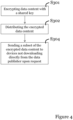
- the data publisher 10 encrypts the data content to be distributed using a key shared with the other peer devices 11, 12 in the network as previously described and distributes the encrypted data content to the first peer device 11 in step S302.
- the network may comprise hundreds or even thousands of peer devices and the publisher 10 will typically perform direct distribution of the encrypted data content to a plurality of peer devices.
- the second peer device 12 downloads, from the first peer device 11 in step S303, at least a fragment of the encrypted data content downloaded by the first peer device 11 in step S302 from the data publisher 10.
- the receiver - in this case being the second peer device 12 - further downloads a small subset of the encrypted data content from the original data publisher 10 in step S304.
- intended receivers in the distribution network which do not download the data content directly from the data publisher 10 but from another peer device further downloads said small subset from the publisher 10.
- the first peer device 11 since the first peer device 11 does not download the data content from another peer device, but directly from the data publisher 10, the first peer device 11 does not require said subset in order to verify correctness of the encrypted data content received in step S302. Typically, the first peer device 11 verifies the data publisher 10 using a certificate received from the publisher 10, and the first peer device 11 may thus authenticate the received encrypted data content by verifying a digital signature provided to the encrypted data content by the data publisher 10.
- a fragment or stream distributed by the first peer device 11 (or the malicious device 14) to the second peer device 12 typically has a size of gigabytes (GBs), such as for instance somewhere in the range of 2-20 GB.
- GBs gigabytes
- the subset of the encrypted data fragment is typically in the order of hundreds of bits, such as e.g. 32 x 8 bits (i.e. 32 bytes).
- the second peer device 12 receiving the encrypted subset must trust the issuer of said encrypted subset, i.e. the data publisher 10.
- the data publisher 10 may have distributed its certificate to the peer devices of the network, thereby ensuring the authenticity of any data downloaded from the data publisher 10 by means of providing the data with a digital signature.
- the data publisher 10 may provide a trusted certificate having been signed by a root certificate.
- the length of the encrypted data subset stipulates level of security; the greater the subset, the stronger the security, much like the length of an encryption key.
- the encrypted data subset generally provides the same level of security as a hash function of corresponding length.
- a 256-bit encrypted data subset would provide the same level of security as a 256-bit hashing function such as SHA-256 ("Secure Hash Algorithm"), while a 512-bit encrypted data subset would provide the same level of security as SHA-512.
- the size of the encrypted data content to be rendered by a peer device - from which content the encrypted data subset is derived - is typically in the range of 1-20 GB, while the size of the derived subset is, say, 128-512 bits (i.e. 16-64 bytes).
- a small subset of the encrypted data content being distributed by the data publisher 10 in step S302 to the first peer device 11 (and further to the second peer device 12 in step S303) is downloaded in step S304 by the second peer device 12 from the data publisher 10. That is, intended recipients in the distribution network which downloads the data content from sources other than the data publisher 10 will turn to the data publisher for downloading the encrypted data subset having been derived from the downloaded encrypted data content.
- the data publisher 10 is typically identified by a Uniform Resource Locator (URL) included in a so-called manifest file initially distributed to the peer devices in the network, which identifies the data publisher 10 and the data content fragments/streams which are distributed by the data publisher 10.
- URL Uniform Resource Locator
- the second peer device 12 identifies the URL of the data publisher 10 in the manifest file for the particular fragment (which may be provided with an identifier to be matched to a corresponding identifier in the manifest file) and downloads the encrypted data subset in step S304.
- a piece of data content of 1 GB is encrypted by the data publisher in step S301 and distributed in step S302 to one or more peer devices in the network and further that a 32-byte (256 bits) subset of the encrypted data content is downloaded from the data publisher 10 by peer devices which downloads the encrypted data content from other peer devices.
- the 32-byte subset may be the first or last 32 bytes of the 1 GB encrypted data content or any consecutive 32 bytes of the 1 GB content.
- the subset is exemplified as being the last 32 bytes of the 1 GB encrypted data content.
- the second peer device 12 must be aware of which part of the encrypted data fragment that the subset corresponds to, which may be information with which the second peer device 12 is preconfigured.
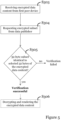
- the second peer device 11 Upon receiving the encrypted data content from the first peer device 11 in step S303, the second peer device 11 will in step S305 verify whether or not the 32-byte subset downloaded in step S304 matches the last 32 bytes of the received encrypted data content. In this particular embodiment, the second peer device 12 compares the 32-byte subset received in step S304 with the last 32 bytes of the received encrypted data content. If the two 32-byte data sets are identical, the second peer device 12 is ensured that the received encrypted data content indeed originally was issued by the trusted data publisher 10 and has not been tampered with.
- a 256-bit encrypted data subset may be used with AES-128 while a 512-bit encrypted subset is used with AES-256. That is, when utilizing AES at the data publisher 10 as the symmetric encryption scheme, the encrypted data subset downloaded from the data publisher 10 in step S304 may be selected to have twice the length of the shared symmetric key used for encryption/decryption.
- Verification of the encrypted data content received in step S305 is thus advantageously successful and the encrypted data content may thus optionally be decrypted with the shared key provided by the DRM service 13, as illustrated in step S306 of Figure 5 , and securely rendered by the second peer device 12, for instance on a video player.
- the malicious device 14 if the malicious device 14 provides the second peer device 12 with encrypted malicious data in step S307, the second peer device 12 will download an encrypted data subset content from the data publisher 10 in step S308 and compare the last 32 bytes of the encrypted malicious data with the 32-byte encrypted data subset received from the data publisher 10 in step S309, and conclude that there is a mismatch. It is here assumed that the malicious device 14 is capable of labelling the encrypted malicious data with a correct identifier such that the second peer device 12 indeed successfully associates (based on said identifier) the malicious data with a fragment identified in the manifest file to belong to the URL of the data publisher 10. Should the malicious device 14 provide the second peer device 12 with encrypted malicious data which is not indicated in the manifest file to originate from the data publisher 10, no encrypted data subset will be downloaded in step S308 and the encrypted malicious data will be discarded.
- step S308 of acquiring the subset from the data publisher 10 and the comparing in step S309 of the subset to a selected section of the encrypted malicious data such spoofing attempt is detected and can successfully be averted.
- the second peer device 12 since the 32-byte encrypted data subset received from the publisher 10 in step S308 is not identical to the 32 last bytes of the encrypted malicious data received in step S307, the second peer device 12 will advantageously not validate the received malicious data in step S309, and will thus not proceed with decrypting the encrypted malicious data for subsequent execution (potentially with a fatal result). Thus, verification of the encrypted (malicious) data in step S309 failed, being a purpose of the encrypted subset provided by the data publisher 10.
- cipher text For a modern symmetric encryption algorithm like AES, a plaintext and its encrypted counterpart, commonly referred as cipher text, have a relationship being such that a single bit changed in the plain text has a 50% chance of changing also in the cipher text (i.e. a so-called bit avalanche occurs).
- the security issues are resolved by having the data publisher apply asymmetric signing or use hashes, which would require corresponding actions to be taken at the peer devices.
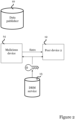
- Figure 7 illustrates a data publishing device 10 according to an embodiment, where the steps of the method performed by the data publisher device 10 in practice are performed by a processing unit 111 embodied in the form of one or more microprocessors arranged to execute a computer program 112 downloaded to a storage medium 113 associated with the microprocessor, such as a Random Access Memory (RAM), a Flash memory or a hard disk drive.
- the processing unit 111 is arranged to cause the data publishing device 10 to carry out the method according to embodiments when the appropriate computer program 112 comprising computer-executable instructions is downloaded to the storage medium 113 and executed by the processing unit 111.
- the storage medium 113 may also be a computer program product comprising the computer program 112.
- the computer program 112 may be transferred to the storage medium 113 by means of a suitable computer program product, such as a Digital Versatile Disc (DVD) or a memory stick.
- a suitable computer program product such as a Digital Versatile Disc (DVD) or a memory stick.
- the computer program 112 may be downloaded to the storage medium 113 over a network.
- the processing unit 111 may alternatively be embodied in the form of a digital signal processor (DSP), an application specific integrated circuit (ASIC), a field-programmable gate array (FPGA), a complex programmable logic device (CPLD), etc.
- the data publishing device 10 further comprises a communication interface 114 (wired or wireless) over which the data publishing device 10 is configured to transmit and receive data.
- Figure 8 illustrates a client device 12 according to an embodiment, where the steps of the method performed by the client device 12 in practice are performed by a processing unit 211 embodied in the form of one or more microprocessors arranged to execute a computer program 212 downloaded to a storage medium 213 associated with the microprocessor, such as a RAM, a Flash memory or a hard disk drive.
- the processing unit 211 is arranged to cause client device 12 to carry out the method according to embodiments when the appropriate computer program 212 comprising computer-executable instructions is downloaded to the storage medium 213 and executed by the processing unit 211.
- the storage medium 213 may also be a computer program product comprising the computer program 212.
- the computer program 212 may be transferred to the storage medium 213 by means of a suitable computer program product, such as a DVD or a memory stick.
- the computer program 212 may be downloaded to the storage medium 213 over a network.
- the processing unit 211 may alternatively be embodied in the form of a DSP, an ASIC, an FPGA, a CPLD, etc.
- the client device 12 further comprises a communication interface 214 (wired or wireless) over which the client device 12 is configured to transmit and receive data.
Landscapes
- Engineering & Computer Science (AREA)
- Computer Security & Cryptography (AREA)
- Signal Processing (AREA)
- Computer Networks & Wireless Communication (AREA)
- Computer Hardware Design (AREA)
- General Engineering & Computer Science (AREA)
- Computing Systems (AREA)
- Software Systems (AREA)
- Theoretical Computer Science (AREA)
- Multimedia (AREA)
- Technology Law (AREA)
- Physics & Mathematics (AREA)
- General Physics & Mathematics (AREA)
- Storage Device Security (AREA)
- Two-Way Televisions, Distribution Of Moving Picture Or The Like (AREA)
- Detergent Compositions (AREA)
- Polysaccharides And Polysaccharide Derivatives (AREA)
- Developing Agents For Electrophotography (AREA)
Claims (15)
- Verfahren in einem Netzwerk einer Datenherausgebervorrichtung (10), die Dateninhalte an empfangende Vorrichtungen (11, 12) in dem Netzwerk verteilt, dadurch gekennzeichnet, dass es umfasst:Verschlüsseln (S301), in der Datenherausgebervorrichtung (10), der Dateninhalte mit einem symmetrischen Verschlüsselungsschlüssel, der mit den empfangende Vorrichtungen (11, 12) gemeinsam genutzt wird;Verteilen (S302), von der Datenherausgebervorrichtung (10), der verschlüsselten Dateninhalte an eine der empfangenden Vorrichtungen (11);Empfangen (S303, S307), in einer anderen der empfangenden Vorrichtungen (12), der verschlüsselten Dateninhalte von der einen der empfangenden Vorrichtungen (11);Senden (S304), von der Datenherausgebervorrichtung (10), einer Teilmenge der verschlüsselten Dateninhalte auf Anforderung an die andere der empfangenden Vorrichtungen (12); undVerifizieren (S305), in der anderen der empfangenden Vorrichtungen (12), ob die Teilmenge der von der Datenherausgebervorrichtung (10) empfangenen verschlüsselten Dateninhalte mit einem ausgewählten Abschnitt der von der einen der empfangenden Vorrichtungen (11) in dem Netzwerk empfangenen verschlüsselten Dateninhalte übereinstimmt oder nicht, wobei eine Übereinstimmung angibt, dass den von der einen der empfangenden Vorrichtungen (11) empfangenen verschlüsselten Dateninhalten vertraut werden kann.
- Verfahren nach Anspruch 1, wobei die Teilmenge der verschlüsselten Dateninhalte eine Größe von weniger als 1 ppm der verschlüsselten Dateninhalte, von denen sie abgeleitet ist, aufweist.
- Verfahren einer Vorrichtung (12) zum Empfangen von Dateninhalten in einem Netzwerk, dadurch gekennzeichnet, dass es umfasst:Empfangen (S303, S307) verschlüsselter Dateninhalte von einer anderen Vorrichtung (11, 14) in dem Netzwerk, wobei die Dateninhalte mit einem symmetrischen Schlüssel verschlüsselt wurden, der mit einer vertrauenswürdigen Datenherausgebervorrichtung (10) gemeinsam genutzt wird;Anfordern (S304), von der vertrauenswürdigen Datenherausgebervorrichtung (10), einer Teilmenge der verschlüsselten Dateninhalte, die von der anderen Vorrichtung (11) in dem Netzwerk empfangen wurden;Verifizieren (S305), ob die Teilmenge der von der vertrauenswürdigen Datenherausgebervorrichtung (10) empfangenen verschlüsselten Dateninhalte mit einem ausgewählten Abschnitt der von der anderen Vorrichtung (11, 14) in dem Netzwerk empfangenen verschlüsselten Dateninhalte übereinstimmt oder nicht, wobei eine Übereinstimmung angibt, dass den von der anderen Vorrichtung (11) empfangenen verschlüsselten Dateninhalten vertraut werden kann.
- Verfahren nach Anspruch 3, wobei das Verifizieren (S305), ob die Teilmenge der von der vertrauenswürdigen Datenherausgebervorrichtung (10) empfangenen verschlüsselten Dateninhalte mit dem ausgewählten Abschnitt der verschlüsselten Dateninhalte von einer anderen Vorrichtung (11) in dem Netzwerk übereinstimmt oder nicht, umfasst:
Vergleichen der Teilmenge der von der vertrauenswürdigen Datenherausgebervorrichtung (10) empfangenen verschlüsselten Dateninhalte mit dem ausgewählten Abschnitt der von der anderen Vorrichtung (11) empfangenen verschlüsselten Dateninhalte, wobei eine Übereinstimmung verifiziert wird, falls die Teilmenge der verschlüsselten Dateninhalte mit dem ausgewählten Abschnitt der verschlüsselten Dateninhalte identisch ist. - Verfahren nach einem der Ansprüche 3 oder 4, das des Weiteren umfasst, falls eine Übereinstimmung verifiziert wird:
Entschlüsseln (S306) und Wiedergeben der von der anderen Vorrichtung (11) empfangenen verschlüsselten Dateninhalte, wobei die Entschlüsselung unter Verwendung des symmetrischen Schlüssels durchgeführt wird, der mit der vertrauenswürdigen Datenherausgebervorrichtung (10) gemeinsam genutzt wird. - Verfahren nach einem der Ansprüche 3-5, das des Weiteren umfasst:
Empfangen eines Zertifikats von der Datenherausgebervorrichtung (10), wobei die Datenherausgebervorrichtung (10) als vertrauenswürdig angesehen wird. - Verfahren nach einem der Ansprüche 3-6, das des Weiteren umfasst:
Identifizieren, ob die empfangenen verschlüsselten Dateninhalte in einer Manifestdatei als verschlüsselte Dateninhalte angegeben sind, die durch die vertrauenswürdige Datenherausgebervorrichtung (10) zu verteilen sind, und falls ja, Anfordern (S304) der Teilmenge der verschlüsselten Dateninhalte von der vertrauenswürdigen Datenherausgebervorrichtung (10), wie in der Manifestdatei angegeben. - Verfahren nach Anspruch 8, wobei in dem Fall, dass die empfangenen verschlüsselten Dateninhalte in der Manifestdatei nicht als verschlüsselte Dateninhalte angegeben sind, die durch die vertrauenswürdige Datenherausgebervorrichtung (10) zu verteilen sind, die empfangenen verschlüsselten Dateninhalte verworfen werden.
- Verfahren nach einem der Ansprüche 3-8, wobei die Teilmenge der verschlüsselten Dateninhalte eine Größe von weniger als 1 ppm der verschlüsselten Dateninhalte, von denen sie abgeleitet ist, aufweist.
- Computerprogramm (112), das computerausführbare Instruktionen umfasst, um eine Datenherausgebervorrichtung (10) zu veranlassen, die in einem der Ansprüche 1 und 2 genannten Schritte durchzuführen, wenn die computerausführbaren Instruktionen in einer Verarbeitungseinheit (111), die in der Datenherausgebervorrichtung (10) enthalten ist, ausgeführt werden.
- Computerprogrammprodukt, das ein computerlesbares Medium (113) umfasst, wobei auf dem computerlesbaren Medium das Computerprogramm (112) nach Anspruch 10 verkörpert ist.
- Computerprogramm (112), das computerausführbare Instruktionen umfasst, um eine Vorrichtung (12) zu veranlassen, die in einem der Ansprüche 3-9 genannten Schritte durchzuführen, wenn die computerausführbaren Instruktionen in einer Verarbeitungseinheit (211), die in der Vorrichtung (12) enthalten ist, ausgeführt werden.
- Computerprogrammprodukt, das ein computerlesbares Medium (213) umfasst, wobei auf dem computerlesbaren Medium das Computerprogramm (212) nach Anspruch 12 verkörpert ist.
- Netzwerk, das eine Datenherausgebervorrichtung (10) umfasst, die dazu eingerichtet ist, Dateninhalte an empfangende Vorrichtungen (11, 12) in dem Netzwerk zu verteilen, wobei die Datenherausgebervorrichtung (10) eine Verarbeitungseinheit (111) und einen Speicher (113) umfasst, wobei der Speicher Instruktionen (112) enthält, die durch die Verarbeitungseinheit (111) ausführbar sind, wobei die Datenherausgebervorrichtung (10) dadurch gekennzeichnet ist, dass sie geeignet ist zum:Verschlüsseln der Dateninhalte mit einem geheimen Verschlüsselungsschlüssel, der mit den empfangenden Vorrichtungen (11, 12) gemeinsam genutzt wird;Verteilen der verschlüsselten Dateninhalte an eine der empfangenden Vorrichtungen (11);wobei eine andere der empfangenden Vorrichtungen (12) geeignet ist, die verschlüsselten Dateninhalte von der einen der empfangenden Vorrichtungen (11) zu empfangen;wobei die Datenherausgebervorrichtung (10) des Weiteren geeignet ist zum: Senden einer Teilmenge der verschlüsselten Dateninhalte auf Anforderung an die andere der empfangenden Vorrichtungen (12); undVerifizieren, in der anderen der empfangenden Vorrichtungen (12), ob die Teilmenge der von der Datenherausgebervorrichtung (10) empfangenen verschlüsselten Dateninhalte mit einem ausgewählten Abschnitt der von der einen der empfangenden Vorrichtungen (11) in dem Netzwerk empfangenen verschlüsselten Dateninhalte übereinstimmt oder nicht, wobei eine Übereinstimmung angibt, dass den von der einen der empfangenden Vorrichtungen (11) empfangenen verschlüsselten Dateninhalten vertraut werden kann.
- Vorrichtung (12), die dazu eingerichtet ist, Dateninhalte in einem Netzwerk zu empfangen, umfassend eine Verarbeitungseinheit (211) und einen Speicher (213), wobei der Speicher Instruktionen (212) enthält, die durch die Verarbeitungseinheit (211) ausführbar sind, wobei die Vorrichtung (12) dadurch gekennzeichnet ist, dass sie geeignet ist zum:Empfangen verschlüsselter Dateninhalte von einer anderen Vorrichtung (11, 14) in dem Netzwerk, wobei die Dateninhalte mit einem symmetrischen Schlüssel verschlüsselt wurden, der mit einer vertrauenswürdigen Datenherausgebervorrichtung (10) gemeinsam genutzt wird;Anfordern, von der vertrauenswürdigen Datenherausgebervorrichtung (10), einer Teilmenge der verschlüsselten Dateninhalte, die von der anderen Vorrichtung (11) in dem Netzwerk empfangen wurden;Verifizieren, ob die Teilmenge der von der vertrauenswürdigen Datenherausgebervorrichtung (10) empfangenen verschlüsselten Dateninhalte mit einem ausgewählten Abschnitt der von der anderen Vorrichtung (11, 14) in dem Netzwerk empfangenen verschlüsselten Dateninhalte übereinstimmt oder nicht, wobei eine Übereinstimmung angibt, dass den von der anderen Vorrichtung (11) empfangenen verschlüsselten Dateninhalten vertraut werden kann.
Applications Claiming Priority (2)
| Application Number | Priority Date | Filing Date | Title |
|---|---|---|---|
| SE2150527A SE2150527A1 (en) | 2021-04-26 | 2021-04-26 | Cipher text validation |
| PCT/SE2022/050394 WO2022231502A1 (en) | 2021-04-26 | 2022-04-22 | Cipher text validation |
Publications (3)
| Publication Number | Publication Date |
|---|---|
| EP4331180A1 EP4331180A1 (de) | 2024-03-06 |
| EP4331180C0 EP4331180C0 (de) | 2025-04-02 |
| EP4331180B1 true EP4331180B1 (de) | 2025-04-02 |
Family
ID=81449114
Family Applications (1)
| Application Number | Title | Priority Date | Filing Date |
|---|---|---|---|
| EP22720079.7A Active EP4331180B1 (de) | 2021-04-26 | 2022-04-22 | Validierung von chiffriertext |
Country Status (8)
| Country | Link |
|---|---|
| US (1) | US20240205199A1 (de) |
| EP (1) | EP4331180B1 (de) |
| JP (1) | JP2024515309A (de) |
| CN (1) | CN117203940A (de) |
| AU (1) | AU2022265383A1 (de) |
| CA (1) | CA3216309A1 (de) |
| SE (1) | SE2150527A1 (de) |
| WO (1) | WO2022231502A1 (de) |
Family Cites Families (14)
| Publication number | Priority date | Publication date | Assignee | Title |
|---|---|---|---|---|
| WO2002014991A2 (en) * | 2000-08-11 | 2002-02-21 | Incanta, Inc. | Resource distribution in network environment |
| EP1358543A4 (de) * | 2001-01-25 | 2005-03-30 | David Sidman | Verfahren, vorrichtung und system zur registration zur bewirkung des informationszugangs |
| US20040158546A1 (en) * | 2003-02-06 | 2004-08-12 | Sobel William E. | Integrity checking for software downloaded from untrusted sources |
| JP2007156508A (ja) * | 2004-01-06 | 2007-06-21 | Victor Co Of Japan Ltd | 再生端末、コンテンツ保管装置及びコンテンツ配信システム |
| US20050273629A1 (en) * | 2004-06-04 | 2005-12-08 | Vitalsource Technologies | System, method and computer program product for providing digital rights management of protected content |
| US7680937B2 (en) * | 2005-12-22 | 2010-03-16 | Microsoft Corporation | Content publication |
| AU2008205545B2 (en) * | 2007-01-17 | 2012-03-08 | Intertrust Technologies Corporation | Methods, systems, and apparatus for fragmented file sharing |
| EP2148488A1 (de) * | 2008-07-24 | 2010-01-27 | Irdeto Access B.V. | Peer-to-Peer-Inhaltsverteilung |
| US20150271541A1 (en) * | 2014-03-19 | 2015-09-24 | Time Warner Cable Enterprises Llc | Apparatus and methods for recording a media stream |
| US9571288B2 (en) * | 2014-12-27 | 2017-02-14 | Airwatch Llc | Peer to peer enterprise file sharing |
| US10715498B2 (en) * | 2017-07-18 | 2020-07-14 | Google Llc | Methods, systems, and media for protecting and verifying video files |
| CN109660496B (zh) * | 2017-10-12 | 2021-09-03 | 阿里巴巴集团控股有限公司 | 校验信息的获取、资源校验和发布方法、装置及电子设备 |
| CN108737498A (zh) * | 2018-04-18 | 2018-11-02 | 中国地质大学(武汉) | 一种基于区块链的p2p安全下载检测方法及系统 |
| EP4202734B1 (de) * | 2019-03-26 | 2026-02-11 | Google LLC | Trennung der autorisierung des inhaltszugriffs und der inhaltsbereitstellung unter verwendung mehrerer kryptographischer digitaler signaturen |
-
2021
- 2021-04-26 SE SE2150527A patent/SE2150527A1/en not_active Application Discontinuation
-
2022
- 2022-04-22 AU AU2022265383A patent/AU2022265383A1/en active Pending
- 2022-04-22 US US18/556,961 patent/US20240205199A1/en active Pending
- 2022-04-22 CN CN202280030387.8A patent/CN117203940A/zh active Pending
- 2022-04-22 JP JP2023565298A patent/JP2024515309A/ja active Pending
- 2022-04-22 EP EP22720079.7A patent/EP4331180B1/de active Active
- 2022-04-22 WO PCT/SE2022/050394 patent/WO2022231502A1/en not_active Ceased
- 2022-04-22 CA CA3216309A patent/CA3216309A1/en active Pending
Also Published As
| Publication number | Publication date |
|---|---|
| CA3216309A1 (en) | 2022-11-03 |
| JP2024515309A (ja) | 2024-04-08 |
| SE2150527A1 (en) | 2022-10-27 |
| CN117203940A (zh) | 2023-12-08 |
| WO2022231502A1 (en) | 2022-11-03 |
| EP4331180C0 (de) | 2025-04-02 |
| AU2022265383A1 (en) | 2023-11-02 |
| US20240205199A1 (en) | 2024-06-20 |
| EP4331180A1 (de) | 2024-03-06 |
Similar Documents
| Publication | Publication Date | Title |
|---|---|---|
| US10652015B2 (en) | Confidential communication management | |
| EP3476078B1 (de) | Systeme und verfahren zur authentifizierung von kommunikation unter verwendung eines einzelnachrichtenaustauschs und symmetrischen schlüssels | |
| KR101754308B1 (ko) | 모바일 민감 데이터 관리 방법 및 이를 수행하는 위탁 서버 | |
| CN103516516B (zh) | 文件安全共享方法、系统 | |
| US8312518B1 (en) | Island of trust in a service-oriented environment | |
| US11265154B2 (en) | Network device and trusted third party device | |
| CN110519304A (zh) | 基于tee的https双向认证方法 | |
| WO2026045825A1 (zh) | 开放身份连接协议的抗量子安全增强方法 | |
| KR101311059B1 (ko) | 취소 정보 관리 | |
| US20090239500A1 (en) | Maintaining secure communication of a network device | |
| CN112948896A (zh) | 签名信息的验证方法以及信息签名方法 | |
| CN114499837B (zh) | 一种报文防泄露方法、装置、系统和设备 | |
| EP4331180B1 (de) | Validierung von chiffriertext | |
| CN116488855B (zh) | 基于链式存储结构加密技术的轻量级确权系统及方法 | |
| CN109104393B (zh) | 一种身份认证的方法、装置和系统 | |
| CN112751858B (zh) | 数据加密通信终端方法、装置、终端、服务器及存储介质 | |
| CN109981678B (zh) | 一种信息同步方法及装置 | |
| Su et al. | A novel stochastic-encryption-based P2P digital rights management scheme | |
| CN120185818A (zh) | 一种电子信息传输方法及电子设备 | |
| CN118214587A (zh) | 邮件安全通信方法、装置、设备和介质 | |
| CN121217942A (zh) | 一种智能环卫车远程驾驶视频流的防盗方法及系统 | |
| McKay et al. | Release of NIST Special Publication 800-52 Revision 1, Guidelines for the Selection, Configuration, and Use of Transport Layer Security (TLS) Implementations |
Legal Events
| Date | Code | Title | Description |
|---|---|---|---|
| STAA | Information on the status of an ep patent application or granted ep patent |
Free format text: STATUS: UNKNOWN |
|
| STAA | Information on the status of an ep patent application or granted ep patent |
Free format text: STATUS: THE INTERNATIONAL PUBLICATION HAS BEEN MADE |
|
| PUAI | Public reference made under article 153(3) epc to a published international application that has entered the european phase |
Free format text: ORIGINAL CODE: 0009012 |
|
| STAA | Information on the status of an ep patent application or granted ep patent |
Free format text: STATUS: REQUEST FOR EXAMINATION WAS MADE |
|
| 17P | Request for examination filed |
Effective date: 20231114 |
|
| AK | Designated contracting states |
Kind code of ref document: A1 Designated state(s): AL AT BE BG CH CY CZ DE DK EE ES FI FR GB GR HR HU IE IS IT LI LT LU LV MC MK MT NL NO PL PT RO RS SE SI SK SM TR |
|
| DAV | Request for validation of the european patent (deleted) | ||
| DAX | Request for extension of the european patent (deleted) | ||
| GRAP | Despatch of communication of intention to grant a patent |
Free format text: ORIGINAL CODE: EPIDOSNIGR1 |
|
| STAA | Information on the status of an ep patent application or granted ep patent |
Free format text: STATUS: GRANT OF PATENT IS INTENDED |
|
| RIC1 | Information provided on ipc code assigned before grant |
Ipc: H04N 21/4405 20110101ALI20241018BHEP Ipc: H04L 67/104 20220101ALI20241018BHEP Ipc: G06F 21/10 20130101ALI20241018BHEP Ipc: H04L 9/32 20060101ALI20241018BHEP Ipc: H04L 9/40 20220101AFI20241018BHEP |
|
| INTG | Intention to grant announced |
Effective date: 20241106 |
|
| GRAS | Grant fee paid |
Free format text: ORIGINAL CODE: EPIDOSNIGR3 |
|
| GRAA | (expected) grant |
Free format text: ORIGINAL CODE: 0009210 |
|
| STAA | Information on the status of an ep patent application or granted ep patent |
Free format text: STATUS: THE PATENT HAS BEEN GRANTED |
|
| AK | Designated contracting states |
Kind code of ref document: B1 Designated state(s): AL AT BE BG CH CY CZ DE DK EE ES FI FR GB GR HR HU IE IS IT LI LT LU LV MC MK MT NL NO PL PT RO RS SE SI SK SM TR |
|
| REG | Reference to a national code |
Ref country code: GB Ref legal event code: FG4D |
|
| REG | Reference to a national code |
Ref country code: CH Ref legal event code: EP |
|
| REG | Reference to a national code |
Ref country code: IE Ref legal event code: FG4D |
|
| REG | Reference to a national code |
Ref country code: DE Ref legal event code: R096 Ref document number: 602022012606 Country of ref document: DE |
|
| U01 | Request for unitary effect filed |
Effective date: 20250424 |
|
| U07 | Unitary effect registered |
Designated state(s): AT BE BG DE DK EE FI FR IT LT LU LV MT NL PT RO SE SI Effective date: 20250430 |
|
| U20 | Renewal fee for the european patent with unitary effect paid |
Year of fee payment: 4 Effective date: 20250715 |
|
| PG25 | Lapsed in a contracting state [announced via postgrant information from national office to epo] |
Ref country code: ES Free format text: LAPSE BECAUSE OF FAILURE TO SUBMIT A TRANSLATION OF THE DESCRIPTION OR TO PAY THE FEE WITHIN THE PRESCRIBED TIME-LIMIT Effective date: 20250402 |
|
| PG25 | Lapsed in a contracting state [announced via postgrant information from national office to epo] |
Ref country code: GR Free format text: LAPSE BECAUSE OF FAILURE TO SUBMIT A TRANSLATION OF THE DESCRIPTION OR TO PAY THE FEE WITHIN THE PRESCRIBED TIME-LIMIT Effective date: 20250703 Ref country code: NO Free format text: LAPSE BECAUSE OF FAILURE TO SUBMIT A TRANSLATION OF THE DESCRIPTION OR TO PAY THE FEE WITHIN THE PRESCRIBED TIME-LIMIT Effective date: 20250702 |
|
| PG25 | Lapsed in a contracting state [announced via postgrant information from national office to epo] |
Ref country code: PL Free format text: LAPSE BECAUSE OF FAILURE TO SUBMIT A TRANSLATION OF THE DESCRIPTION OR TO PAY THE FEE WITHIN THE PRESCRIBED TIME-LIMIT Effective date: 20250402 |
|
| PG25 | Lapsed in a contracting state [announced via postgrant information from national office to epo] |
Ref country code: HR Free format text: LAPSE BECAUSE OF FAILURE TO SUBMIT A TRANSLATION OF THE DESCRIPTION OR TO PAY THE FEE WITHIN THE PRESCRIBED TIME-LIMIT Effective date: 20250402 |
|
| PG25 | Lapsed in a contracting state [announced via postgrant information from national office to epo] |
Ref country code: RS Free format text: LAPSE BECAUSE OF FAILURE TO SUBMIT A TRANSLATION OF THE DESCRIPTION OR TO PAY THE FEE WITHIN THE PRESCRIBED TIME-LIMIT Effective date: 20250702 |
|
| PG25 | Lapsed in a contracting state [announced via postgrant information from national office to epo] |
Ref country code: IS Free format text: LAPSE BECAUSE OF FAILURE TO SUBMIT A TRANSLATION OF THE DESCRIPTION OR TO PAY THE FEE WITHIN THE PRESCRIBED TIME-LIMIT Effective date: 20250802 |
|
| REG | Reference to a national code |
Ref country code: CH Ref legal event code: H13 Free format text: ST27 STATUS EVENT CODE: U-0-0-H10-H13 (AS PROVIDED BY THE NATIONAL OFFICE) Effective date: 20251125 |
|
| PG25 | Lapsed in a contracting state [announced via postgrant information from national office to epo] |
Ref country code: SM Free format text: LAPSE BECAUSE OF FAILURE TO SUBMIT A TRANSLATION OF THE DESCRIPTION OR TO PAY THE FEE WITHIN THE PRESCRIBED TIME-LIMIT Effective date: 20250402 |
|
| PG25 | Lapsed in a contracting state [announced via postgrant information from national office to epo] |
Ref country code: CH Free format text: LAPSE BECAUSE OF NON-PAYMENT OF DUE FEES Effective date: 20250430 |
|
| PG25 | Lapsed in a contracting state [announced via postgrant information from national office to epo] |
Ref country code: CZ Free format text: LAPSE BECAUSE OF FAILURE TO SUBMIT A TRANSLATION OF THE DESCRIPTION OR TO PAY THE FEE WITHIN THE PRESCRIBED TIME-LIMIT Effective date: 20250402 |
|
| PG25 | Lapsed in a contracting state [announced via postgrant information from national office to epo] |
Ref country code: SK Free format text: LAPSE BECAUSE OF FAILURE TO SUBMIT A TRANSLATION OF THE DESCRIPTION OR TO PAY THE FEE WITHIN THE PRESCRIBED TIME-LIMIT Effective date: 20250402 |
|
| PG25 | Lapsed in a contracting state [announced via postgrant information from national office to epo] |
Ref country code: MC Free format text: LAPSE BECAUSE OF FAILURE TO SUBMIT A TRANSLATION OF THE DESCRIPTION OR TO PAY THE FEE WITHIN THE PRESCRIBED TIME-LIMIT Effective date: 20250402 |
|
| PLBE | No opposition filed within time limit |
Free format text: ORIGINAL CODE: 0009261 |
|
| STAA | Information on the status of an ep patent application or granted ep patent |
Free format text: STATUS: NO OPPOSITION FILED WITHIN TIME LIMIT |
|
| REG | Reference to a national code |
Ref country code: CH Ref legal event code: L10 Free format text: ST27 STATUS EVENT CODE: U-0-0-L10-L00 (AS PROVIDED BY THE NATIONAL OFFICE) Effective date: 20260211 |
|
| 26N | No opposition filed |
Effective date: 20260105 |
|
| PGFP | Annual fee paid to national office [announced via postgrant information from national office to epo] |
Ref country code: GB Payment date: 20260325 Year of fee payment: 5 |
|
| PG25 | Lapsed in a contracting state [announced via postgrant information from national office to epo] |
Ref country code: IE Free format text: LAPSE BECAUSE OF NON-PAYMENT OF DUE FEES Effective date: 20250422 |